As someone passionate about the convergence of AI and healthcare, I’m thrilled to share monthly updates from the Goodie team. We dive into the latest breakthroughs and trends in artificial intelligence and the medical field. It’s all here, waiting for you to explore.
I’m excited to introduce you to a game-changing development in the world of research and data analysis. With Profound’s Prompt Research Reports, I have the power to pull insights from a staggering 1.5+ billion real user prompts. This transformative tool utilizes a proprietary ranking and clustering model, paving the way for data-driven decision making. Now, I no longer have to rely on guesswork when choosing prompts.
The system we use classifies and ranks user prompts, enabling me to access the most relevant data quickly and efficiently. This innovation not only optimizes my research process but also significantly enhances its accuracy and impact. By integrating such cutting-edge technology, I am able to stay ahead of the curve and meet my data needs with precision.
You have an AI-search dashboard full of charts, but the decision in front of you is much smaller: Why did visibility change? Which competitor gained ground? What should your team investigate before it edits another page?
Conversational AI can shorten the distance between that question and a useful slice of data. The catch is that a polished answer can hide ambiguous metrics, altered filters, weak evidence, or an unsupported explanation. You need a workflow that uses the conversation for speed without outsourcing analytical judgment.
Key takeaways
Start with the decision you need to make, not a broad request to find insights.
Tell the assistant which dataset, period, filters, definitions, and comparison it may use.
Move from baseline to segments, exceptions, evidence, and possible actions in separate questions.
Require every important claim to be traceable to records, rows, prompts, or another inspectable result.
Save the validated analysis specification, not merely the chat transcript, so the work can be reproduced.
Treat the conversation as an analysis interface
Some AI-search platforms now provide a conversational layer that lets customers engage directly with their AI Search data. That can make a complex dataset easier to explore, especially when the question is still taking shape.
The conversational layer is still an interface, not evidence in its own right. At its most useful, it translates your request into operations such as filtering, grouping, comparing, aggregating, and retrieving examples. The prose answer then explains the result. Your confidence should come from the operations and evidence beneath that prose.
Before you ask a substantive question, establish four boundaries:
Access: Which datasets, tables, reports, or workspaces can the assistant actually query?
Meaning: How does the platform define visibility, mention, citation, sentiment, share, or any other metric you plan to use?
Grain: Does one record represent a prompt, response, model run, page, query cluster, market, or reporting period?
Allowed operation: Are you asking for a description, comparison, hypothesis, forecast, or recommendation?
Those boundaries matter because the same sentence can conceal several different analyses. Consider the request: Why did our AI visibility fall? The word visibility might refer to brand appearances, linked citations, a weighted platform score, or another vendor-specific measure. Fall requires two comparable periods. Why asks for causation, even though the dataset may support only a description of where the change occurred.
A better first question is: Using the platform’s documented visibility metric, identify where the measured change is concentrated between these two selected periods. Do not infer a cause. That phrasing gives you a defensible observation before anyone starts explaining it.
Conversational analysis is particularly useful for exploration, segmentation, exception finding, evidence retrieval, and plain-language explanation. It is much less reliable when you ask it to certify causation, reconcile conflicting business definitions silently, or make a high-consequence decision without showing its work.
Ask questions in a sequence that preserves context
One giant prompt tends to mix discovery, interpretation, and action. Use a question ladder instead. Each answer becomes a checkpoint that you can inspect before moving to the next analytical operation.
Write the decision sentence first: We need to determine whether the change is broad or isolated so we can choose what to investigate before changing content. Then work through this sequence:
Set the scope. Name the permitted dataset, selected periods, market or locale, engine or model, brand, and exclusions. Ask the assistant to state any requested field it cannot access.
Confirm definitions. Ask it to define the main metric, denominator, grouping level, and treatment of missing values before calculating anything.
Establish the baseline. Request the overall result for the chosen scope, together with the filters and calculation used.
Segment the result. Break it down by the dimensions that could change your decision, such as query cluster, market, competitor, content category, cited domain, or model.
Find exceptions. Ask which segments moved against the overall pattern, which were unchanged, and which lack enough usable data for a conclusion.
Retrieve evidence. Request the underlying prompts, responses, pages, records, or report views supporting each material claim.
Separate explanations from facts. Ask for candidate hypotheses in a distinct section, with the additional evidence needed to confirm or reject each one.
Choose the next action. Request actions that follow only from validated observations, with unresolved assumptions listed beside them.
This sequence prevents a common analytical shortcut. If you begin with What caused the decline and what should we publish?, the assistant is invited to invent a coherent bridge between a measured change and an editorial recommendation. If you first locate the change, inspect examples, and test alternative explanations, the recommendation has a visible chain of support.
A reusable opening prompt can be simple:
Analysis brief: Use only the named AI Search dataset and the selected comparison periods. Restate the metric definition, denominator, grain, filters, and exclusions. Separate observed results from hypotheses. For every important result, identify the records or report view that supports it. If required data is unavailable, say what is missing instead of estimating it.
Long chats can accumulate ambiguity. A later reference to our visibility may inherit an earlier competitor filter or a different period without making that scope obvious. After several analytical turns, use a checkpoint prompt: Restate the active dataset, periods, filters, metric definitions, groupings, and unresolved assumptions before continuing.
Start a new conversation when you change the business decision, dataset, metric definition, or audience for the result. Carry the validated scope into the new thread explicitly. Do not rely on the assistant to decide which earlier context still applies.
Verify every answer before you act on it
A useful answer should let you distinguish three layers:
Observation: What the selected data shows under declared filters and definitions.
Hypothesis: A possible explanation that still needs evidence.
Recommendation: An action justified by the observation, the tested explanation, or both.
Do not allow those layers to collapse into one paragraph. A concentrated decline in one query cluster is an observation. A competitor’s stronger coverage might be a hypothesis. Reviewing the affected prompts, competitor appearances, cited pages, and content differences is a reasonable next action. Rewriting an entire content library is not justified by the observation alone.
For every answer that could change a report, roadmap, campaign, or content plan, complete this verification card:
Question: What exact decision was the analysis meant to inform?
Dataset: Which workspace, report, table, or connected system was queried?
Time scope: Which periods and timezone were used, and are the periods comparable?
Filters: Which brands, competitors, markets, models, prompt groups, content types, and exclusions were active?
Metric: What is the metric’s definition, numerator, denominator, and treatment of missing responses?
Grain: What does one underlying record represent, and at what level was the result grouped?
Evidence: Which rows, prompts, responses, URLs, or report views support the claim?
Uncertainty: What data is unavailable, ambiguous, or insufficient?
Next check: What independent query or manual inspection would challenge the conclusion?
AI-search analysis deserves extra care around denominators. A visibility result can change because brand performance changed inside a stable tracked set, because the tracked prompt set changed, or because a filter, market, model, competitor list, or metric definition changed. Ask the assistant to distinguish those possibilities before you interpret the movement as a performance result.
Definitions also need to travel with the answer. A brand mention is not necessarily a linked citation. A cited page is not necessarily the page you intended to rank. An overall score may combine components that behave differently. Ask for component-level results whenever the combined metric cannot tell you what action to take.
Use reconciliation to catch silent mistakes. Run the same scoped calculation in the original report or with a trusted manual query. If the totals disagree, stop at the discrepancy. Check filters, date boundaries, grouping, duplicates, missing values, and denominators before requesting more interpretation.
If the assistant cannot expose the evidence behind an answer, treat the output as a lead for investigation, not a conclusion. Fluency can help you understand a result, but it cannot compensate for missing lineage.
Turn a useful conversation into repeatable analysis
Save the specification, not just the transcript
A chat log records what was said. It may not record the exact state of the dataset, inherited filters, calculation logic, or later corrections. For recurring work, save an analysis specification containing:
The decision and analytical question.
The dataset and required access.
The comparison periods and timezone.
The filters, exclusions, dimensions, and grouping level.
The approved definitions for every metric.
The required output fields and evidence links.
The checks used to reconcile the result.
The boundary between observations, hypotheses, and recommendations.
Keep a human-approved metric glossary beside that specification. If visibility, citation, or share has a platform-specific meaning, copy the approved definition into the analytical brief. Do not ask the assistant to infer your team’s preferred meaning from earlier conversations.
Record corrections as part of the recipe. If a reviewer discovers that a competitor filter was wrong or a prompt group was incomplete, update the reusable specification and rerun the analysis. A corrected answer trapped inside an old chat does not protect the next reporting cycle.
Require evidence and control when choosing a tool
If you are evaluating conversational analytics software, do not judge it by how confidently it answers a demo question. Give each candidate the same small analysis whose result you can already verify. Then look for operational capabilities:
Clear disclosure of the datasets and fields available to the assistant.
Visible filters, metric definitions, calculations, and grouping choices.
Drill-down access from a claim to the supporting records or report view.
A way to export the answer together with its scope and evidence.
Permission controls that respect the underlying dataset’s access rules.
A reliable way to reset context and begin a clean analysis.
Repeatable prompts or saved workflows that another analyst can inspect.
Explicit handling of missing, conflicting, or inaccessible data.
A tool that produces elegant prose but hides its scope creates review work rather than removing it. A shorter answer with inspectable evidence is more valuable when the result will shape SEO, AEO, GEO, content, or competitive strategy.
Begin with one narrow recurring decision
Choose a question your team already answers repeatedly, such as identifying which tracked query clusters deserve manual review after a visibility change. Document the current method, run the conversational workflow against the same scope, and reconcile the two results.
Keep the pilot narrow enough that a person can inspect the evidence. The aim is not to prove that the assistant can discuss the whole business. It is to determine whether the conversational layer helps your team reach a reproducible, reviewable answer with less friction.
On your next reporting cycle, write one decision sentence, define one metric completely, and require one evidence path for every conclusion. Once that chain holds up under review, save it as a reusable analysis specification and expand from there.
If your AI workflow begins with exporting campaign data, pasting it into a chat, and explaining the same business context again, you do not have an agent. You have a capable analyst waiting for a manual data delivery.
The fix is not a longer prompt. You need a controlled path from your marketing systems to the agent, with enough current context to support a decision and enough guardrails to stop a bad decision from becoming an expensive action.
Live means decision-ready, not merely connected
Live marketing data does not have to mean that every event reaches the agent within milliseconds. It means the information is refreshed before the decision it supports becomes stale. A pacing decision may need current spend and budget data. A lead-quality decision may need the latest CRM disposition. A promotion may need inventory availability before the agent recommends sending more traffic to it.
That distinction matters because access alone is not enough. An agent can be connected to Google Ads and still make a poor decision if it cannot see what happened after a conversion. It can be connected to a CRM and still misread performance if campaign identifiers do not match. It can see inventory data and still act on an item whose availability record is old.
A familiar failure starts with a keyword that appears healthy inside the ad platform. It has useful volume and an acceptable cost per acquisition. The CRM, however, shows that the resulting leads are being disqualified. Without that downstream outcome, the agent will keep treating the keyword as successful and may continue spending until a person reconciles the systems. Repeated exports and delayed cross-checks preserve this blind spot; they do not create automation.
System
What the agent can learn
Decision it can improve
Ad platform
Spend, conversions, volume, and campaign performance
Where traffic appears efficient
CRM
Qualification, sales progression, and lead disposition
Whether reported conversions have business value
Inventory system
Availability and stock constraints
Whether demand should be increased for a product
Before integrating anything, write down the decision the agent will support and how fresh each input must be for that decision. If you cannot define when the data becomes too old to trust, the word live is doing no useful work.
Build a decision context, not a giant data dump
An agent rarely needs unrestricted access to every field in every marketing system. It needs a compact, reliable view of the variables that determine one decision. Sending more data without defining its meaning can make the workflow harder to inspect and easier to misconfigure.
Build that view from the decision backward:
Name the decision. Be precise: recommend a bid change, flag a lead-quality problem, pause promotion of unavailable inventory, or produce a daily exception list.
List the evidence required. Separate platform metrics from business outcomes. A conversion count is not the same thing as a qualified lead, a sale, or an item that can still be fulfilled.
Choose the join keys. Decide how campaign, ad group, keyword, click, lead, customer, product, and order records connect. If systems use different identifiers, define the mapping before the agent sees the data.
Normalize time and meaning. Record the reporting window, timezone, attribution context, currency, and status definitions relevant to the decision. The agent should not have to infer whether two similarly named fields measure the same event.
Attach provenance and freshness. Return the originating system and update time with the value. The agent needs to distinguish a current zero from a missing or stale record.
Define conflict behavior. Decide which system controls when records disagree. If the CRM says a lead is disqualified while the ad platform counts a conversion, the workflow should preserve both facts and use the business outcome for the decision you defined.
This turns integration into a data contract. Each input has a source, definition, identity, update time, and permitted use. That contract also gives your team something concrete to test when the agent behaves unexpectedly.
Use MCP as the connection layer, not the policy
The Model Context Protocol, or MCP, provides a standardized way for an AI client to connect to external tools and data sources. In a marketing workflow, an MCP implementation can expose ad performance, CRM outcomes, and inventory information through a consistent interface instead of forcing you to create a separate conversational integration for every system. This can remove much of the manual handoff that keeps an agent from working with current data.
MCP does not decide what a qualified lead means, repair broken campaign identifiers, choose a safe budget policy, or determine whether the agent should be allowed to change a bid. It is the connection layer. Your data contract and control layer still carry the business logic.
Expose narrow tools that correspond to real tasks. A useful initial tool set might let the agent read campaign performance, retrieve CRM dispositions, check product availability, and generate a recommendation. A later tool could execute a preapproved campaign rule. A generic tool with unrestricted account access is harder to audit and creates a much larger failure surface.
The tool description should also tell the agent what the result does not prove. For example, ad-platform conversions describe recorded conversion events; they do not by themselves establish lead quality. Inventory availability can constrain promotion; it does not establish campaign profitability. Clear boundaries reduce the chance that the model treats one system’s partial view as the complete business outcome.
Put enforceable guardrails between reasoning and action
Read access and write access are different risk decisions. A mistaken read may produce a bad recommendation. A mistaken write can change bids, pause campaigns, redirect spend, or promote stock that is not available. Do not grant unrestricted write access merely because the agent has produced sensible analysis in a chat window.
A prompt is not a permission system. Instructions such as be careful or do not overspend can influence behavior, but they do not enforce account boundaries. Operational constraints need to sit around the agent, where the integration can reject an action that falls outside policy.
Define every write-capable action with these controls:
Permission: Specify whether the agent can read, recommend, or execute. Default new workflows to read-only.
Scope: Restrict access to the relevant accounts, campaigns, markets, products, and action types.
Preconditions: Require the necessary data sources to be available and fresh before an action can run.
Policy limits: Encode the budget, bid, status, and inventory rules the action must satisfy. The surrounding system, not the model’s prose, should enforce them.
Approval: Route high-impact or ambiguous changes to a person. The agent should return the proposed action, supporting evidence, and reason for escalation.
Auditability: Record the inputs, tool calls, decision, approver when applicable, and resulting change.
Recovery: Preserve enough prior state to reverse a change when the platform and action type allow it.
Roll out those permissions in stages. Begin with read-only analysis and verify that the agent retrieves the right records. Next, let it recommend actions while a person compares those recommendations with actual decisions. Then allow only bounded, reversible writes with enforced preconditions. Expand the scope after the data and control layers have proved reliable, not merely after the model has written persuasive explanations.
Test the data path before judging the agent
When an agent produces a questionable answer, teams often adjust the prompt first. That is useful only if the required evidence reached the model correctly. A polished prompt cannot recover a missing CRM record, an incorrect join, or inventory data that failed to refresh.
Test the pipeline with cases that reveal those failures:
Freshness: Can you see when each source last updated, and does the workflow stop when a required input is stale?
Coverage: Are all in-scope campaigns, leads, products, and accounts represented, or does the connector silently omit some records?
Identity: Can a conversion be connected to the correct lead or order and then traced back to the responsible campaign entity?
Semantics: Do conversion, qualified lead, sale, availability, and revenue have explicit definitions in the systems that provide them?
Missing data: Does the agent distinguish no activity from unavailable data? Treating both as zero can trigger the wrong action.
Conflicts: What happens when two systems disagree? The workflow should surface the disagreement rather than silently choosing whichever value arrived first.
Failure mode: If the CRM or inventory service is unavailable, does the agent stop, fall back to recommendation-only mode, or request review? Continuing with partial context should be an explicit policy choice.
Evaluate the system against the decision it was built to improve. For a lead-quality workflow, inspect whether it identifies campaigns producing disqualified leads. For an inventory-aware workflow, inspect whether it avoids recommending more demand for unavailable products. Fluent explanations are useful for review, but they are not evidence that the underlying joins and controls work.
Key takeaways
Live data is data that arrives before the supported decision becomes stale; it is not simply data behind an API.
An agent needs business outcomes from systems such as the CRM and inventory platform, not only the conversion view inside an ad platform.
Start with one decision and build a defined data contract for its evidence, identifiers, timing, provenance, and conflict rules.
MCP can standardize how AI clients reach tools and data, but it does not replace data modeling, permissions, or business policy.
Keep new agents read-only until you have validated retrieval, joins, freshness, and failure behavior.
Enforce write limits outside the prompt, and log the evidence and action so a person can inspect what happened.
Choose one recurring marketing decision that still depends on an export or spreadsheet reconciliation. Map the platform metric, downstream business outcome, join key, freshness requirement, and permitted action. That small, inspectable workflow is the right place to prove live data access before you give an agent broader reach.
I’ve recently delved into the fascinating world of conversational commerce AI, and I can’t help but feel excited about how it’s changing the shopping landscape. From how we discover products to the actual purchasing process, this technology is redefining our retail experiences.
What really intrigues me is what these changes mean for brands operating in an AI-dominated retail space. The implications are huge, and it could very well spell the end for traditional shopping carts as we know them.
Your agent can draft pages, change metadata, select audiences, trigger campaigns, and coordinate customer journeys. The hard question isn’t whether it can perform those actions. It’s whether it should be allowed to perform each one without stopping for a person.
If you’re deciding how much autonomy to grant, treat the deployment as an operating-model decision rather than a software installation. Define who owns the outcome, which actions require approval, how people will detect a bad decision, and how they can stop or reverse it. Those human controls determine whether the agent produces useful leverage or merely executes mistakes faster.
Start with a decision, not an AI agent
Agentic AI projects often begin with a capability demonstration: the system can plan a campaign, create content, update a workflow, or act across several tools. A convincing demonstration doesn’t establish that the workflow is worth automating or safe to delegate.
The warning is concrete. Gartner expects more than 40% of agentic AI projects to be canceled by the end of 2027. The projection, based on more than 3,400 organizations investing in the technology, points to unclear value, weak governance, and hype-led experimentation rather than a simple lack of technical capability. Treat that percentage as a forecast, not a settled outcome, but don’t miss the operational problem behind it.
Before you select a product or build an agent, write a decision brief for one workflow. It should answer these questions:
What outcome changes? Name the business result, not the AI activity. “Reduce the time required to prepare a technically reviewed content brief” is an outcome. “Use an agent for briefs” is not.
What does the workflow look like now? Record its inputs, decisions, handoffs, failure points, review work, and final action. Otherwise, you won’t know whether the agent improved the process or merely moved effort into supervision and repair.
Which judgment is scarce? Separate repetitive coordination from decisions that depend on audience knowledge, brand context, ethics, or commercial priorities. Automating the former may create capacity. Hiding the latter inside a prompt creates unmanaged risk.
What evidence would justify continuation? Choose outcome, quality, intervention, and recovery measures before launch. A pilot without an exit rule tends to survive because it exists, not because it works.
Who can stop it? Assign a named operational owner with authority to pause actions, narrow scope, and require remediation.
This brief also protects you from “agent washing.” A conventional chatbot or fixed automation shouldn’t be purchased as an autonomous agent simply because the label changed. Ask the vendor or internal team to demonstrate the operating loop: what the system observes, which choices it makes, what it can change, how it checks the result, when it stops, and when it escalates. If every meaningful path was predetermined, you may still have useful automation, but you don’t have the adaptive autonomy the name implies.
For an SEO or GEO workflow, make the distinction visible. An agent that recommends schema corrections is materially different from one that edits production markup. An agent that identifies possible internal links is different from one that publishes them. An agent that proposes a redirect is different from one that changes routing. Evaluate the authority being granted, not just the sophistication of the output.
Design human control before you grant autonomy
“Human in the loop” is too vague to serve as a control. A person can technically appear in a workflow while lacking the context, time, authority, or evidence needed to catch a problem. Effective oversight specifies the decision rights on both sides of the human-agent boundary.
Classify every action the agent may take using four practical questions:
Can it be reversed? Saving a draft is easy to undo. Sending a customer message, changing access, publishing an unsupported claim, or allowing a damaging URL change to propagate may not be.
How wide is the impact? A suggestion affecting one draft has a smaller blast radius than a template change affecting thousands of pages or an audience rule applied across campaigns.
How much context does the decision require? Stable rules are easier to delegate than choices involving brand nuance, conflicting evidence, unusual customer circumstances, or several acceptable outcomes.
Will failure be visible quickly? A malformed output may be obvious. A plausible but strategically wrong recommendation can remain unnoticed while it influences content, spend, or customer treatment.
Use the answers to assign authority. Reversible, narrow, observable actions with clear rules are reasonable candidates for bounded autonomy. Irreversible, broad, ambiguous, or slow-to-detect actions should require approval or remain human-owned. Don’t use one autonomy setting for the entire workflow.
Control
Question it must answer
Evidence to retain
Named owner
Who is accountable for the business outcome and failure response?
Owner, backup, authority, and escalation route
Scope boundary
Which systems, records, audiences, and actions may the agent touch?
Allowlist, denied actions, and permission configuration
Approval gate
Which conditions force a person to decide?
Trigger, reviewer, required context, and decision record
Stop control
How can a person halt new actions without waiting for the agent?
Pause procedure, access owner, and confirmation that execution stopped
Recovery path
How will the team contain and reverse a bad action?
Rollback method, affected-system inventory, and notification route
Audit trail
Can reviewers reconstruct what the agent knew, chose, and changed?
Inputs, retrieved context, proposed action, approval, execution result, and exceptions
The audit trail needs to capture more than generated text. Store the context used for the decision, the action requested, the tools called, the result returned, any human intervention, and the final system state. A polished explanation generated after the event isn’t a substitute for an execution record.
Approval interfaces deserve the same care. Don’t ask a reviewer to click “approve” after showing only the agent’s preferred answer. Show the original input, relevant constraints, proposed change, affected assets, uncertainty or missing information, and available alternatives. Make rejection and escalation as easy as approval. Otherwise, the interface quietly trains people to accept.
For content and search operations, require explicit review before actions such as publishing factual claims, changing canonical directives, modifying crawl controls, issuing broad redirects, altering product or business data, sending outreach, or communicating with customers. Your exact gates should reflect your systems and risk, but the rule is stable: the person must intervene before the consequential action, not after the impact appears in analytics.
Increase autonomy only after the workflow becomes observable
A pilot should test the complete operating system around the agent. Testing only whether the model can produce a good answer leaves permissions, handoffs, monitoring, escalation, and recovery unexamined.
Move through these modes in order:
Shadow mode: Let the agent observe real inputs and record what it would do, but prevent external actions. Compare its proposed decisions with actual outcomes and inspect where its context is incomplete.
Advisory mode: Let it recommend actions to a responsible operator. Record approvals, edits, rejections, escalation reasons, and the time required to review. Heavy correction is evidence that the workflow or context is not ready for autonomy.
Bounded action mode: Allow a defined set of reversible actions within an allowlisted scope. Keep consequential actions behind approval gates and enforce a direct stop mechanism.
Expanded autonomy: Broaden authority only when the existing scope produces acceptable outcomes, exceptions are understood, logs support investigation, and the team can demonstrate recovery.
Promotion between modes should be an evidence decision. Don’t advance because the pilot deadline arrived or because a successful demonstration created executive enthusiasm. Review routine cases, edge cases, ambiguous requests, missing-data situations, conflicting instructions, permission failures, and attempts to push the agent beyond its assigned scope.
Measure the deployment across four layers:
Outcome: Did the workflow improve the business result named in the decision brief?
Quality: Were outputs accurate, complete, on-brand, appropriately sourced, and suitable for the intended audience?
Control: How often did people edit, reject, stop, or escalate an action, and why?
Recovery: Could the team identify affected assets, contain the problem, restore the correct state, and learn from the failure?
Don’t optimize the intervention rate toward zero. A falling rate can mean the system improved, but it can also mean reviewers stopped looking carefully. Read intervention data alongside sampled quality checks, downstream outcomes, and exception reports. The useful question is whether human attention is landing on the decisions where it changes the outcome.
FOMO creates pressure to skip this progression and move directly from demo to production. That pressure is especially dangerous when an agent can act at campaign or site scale. Speed comes from making the safe path repeatable: clear permissions, reusable evaluation cases, reliable logs, tested rollback, and known escalation owners.
Protect human judgment and customer trust as operating assets
An agent’s output can look coherent even when its recommendation is unsuitable. That makes reviewer competence part of the control environment. If the person approving an action can’t recognize a strategic, factual, or ethical error, the approval step is ceremonial.
One projection expects half of organizations to reassess their competencies as reliance on AI threatens critical thinking. You don’t need to reject automation to respond. You need to keep the relevant judgment active.
Require a reason for consequential approvals. The reviewer should identify why the action fits the goal and constraints, not merely confirm that the output reads well.
Keep people capable of performing the underlying task. Rotate qualified operators through manual cases and exception handling so the team retains a working model of what good looks like.
Separate creation from high-impact approval. The person who configured or champions the agent shouldn’t be the only person judging its production readiness.
Review disagreements, not just errors. Repeated edits and rejected recommendations reveal missing context, unclear policy, or a task that requires more human judgment than expected.
Run post-incident reviews around the system. Examine instructions, data, permissions, interface design, workload, escalation, and incentives. Telling reviewers to “be more careful” leaves the mechanism intact.
Customer trust needs its own controls. A related forecast warns that poorly applied agentic AI could damage customer relationships by 2026. The risk isn’t limited to obviously nonsensical responses. An agent can send a polished message to the wrong person, apply a reasonable rule at the wrong moment, or take an authorized action that conflicts with the customer’s circumstances.
Map each customer-facing action to an identity, authority, and escalation rule. The customer should be able to tell what happened, correct wrong information, reach a person when the automated path is unsuitable, and receive a clear resolution when an action causes harm. Internally, the team should be able to identify which agent acted, under whose authority, using what information.
Brand alignment can’t live only in a long prompt. Translate it into reviewable policies: prohibited claims, evidence requirements, tone boundaries, audience exclusions, escalation topics, and actions the agent may never take. Give each policy an owner and a process for change. That turns “use good judgment” into controls a team can inspect.
Key takeaways
Begin with one defined business decision and its current workflow, not a general mandate to deploy an agent.
Evaluate actual autonomy by inspecting what the system observes, decides, changes, verifies, and escalates.
Grant authority action by action. Reversibility, impact, ambiguity, and observability should determine where people intervene.
Test in shadow, advisory, bounded-action, and expanded-autonomy modes, with evidence required before each increase in authority.
Retain execution logs, explicit stop controls, and tested recovery paths before the agent touches consequential systems.
Treat reviewer competence and customer escalation as core infrastructure, not training tasks to add after launch.
Before your next agent demo, produce a one-page deployment contract for the workflow: outcome, owner, allowed actions, prohibited actions, approval triggers, stop mechanism, recovery path, and evidence required for more autonomy. If the team can’t agree on that page, the agent isn’t ready for broader access. Resolving those human decisions first is the shortest route to a deployment you can trust.
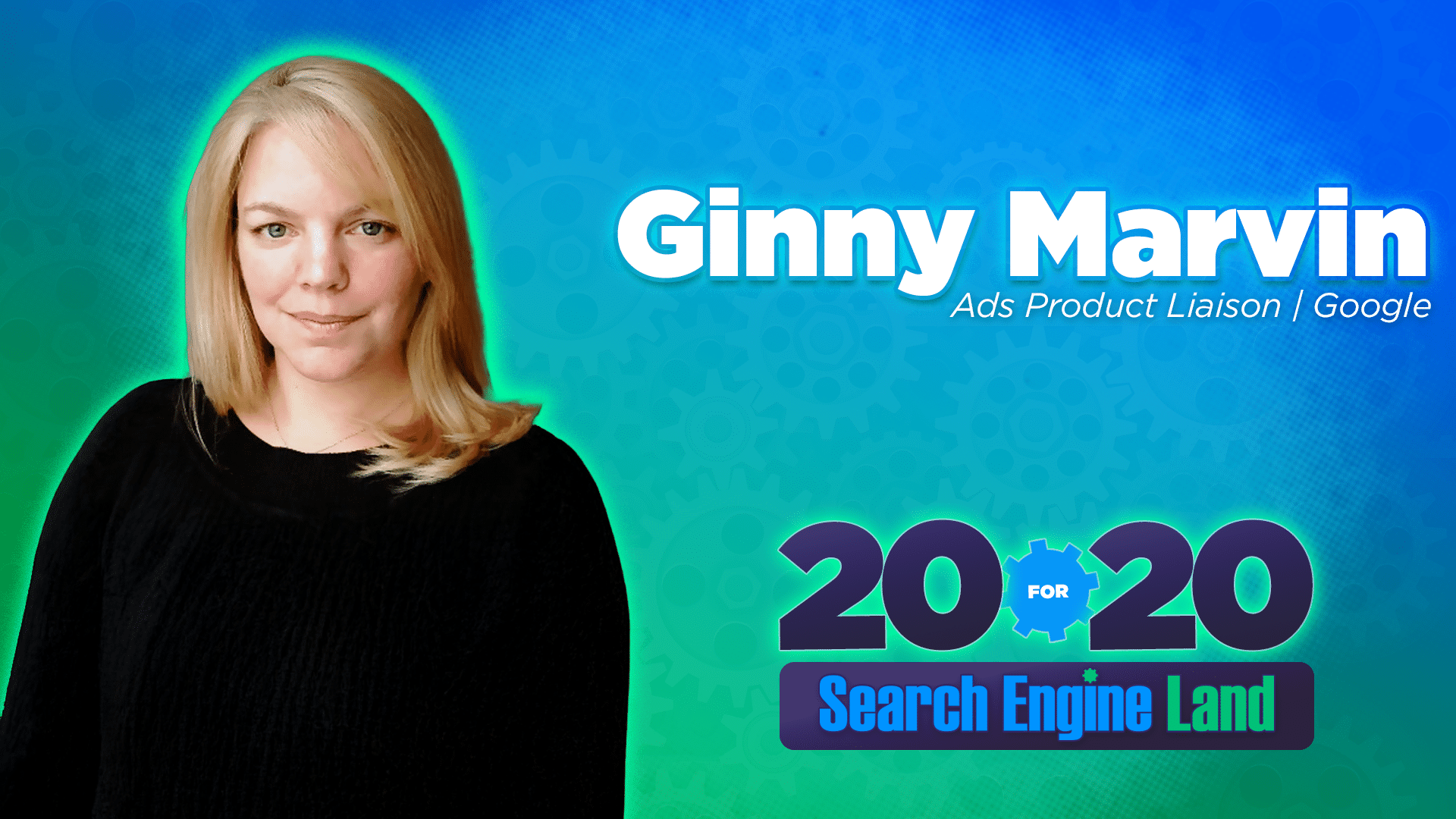
I find it quite fascinating how the world of search has transformed over the years from manual PPC efforts to AI-driven systems. Reflecting on Ginny Marvin’s journey offers a glimpse into these dynamic changes and underscores the importance of staying curious and adaptable as marketers.
My journey into PPC wasn’t fueled by a master plan but rather by a desire to reinvent myself professionally. Transitioning from print publishing and advertising sales, I found myself at a crossroads when the startup magazine I had helped establish ceased operations. That pivotal moment pushed me towards digital marketing, starting from entry level.
Starting fresh meant embracing the unknown. As Marvin put it, she didn’t know what she was doing initially, which makes her story relatable for anyone starting anew. This fresh start paved her path into search marketing, eventually leading her to significant roles at Search Engine Land and Google as the Google Ads Liaison.
During our interview, Marvin shared insights into the evolution of paid search, highlighting common misconceptions marketers still hold, and emphasized how the next era of search will value curiosity over control.
Interestingly, PPC clicked for me faster than SEO. My initial foray into the industry was through SEO at a small agency, but I quickly discovered my passion when the paid search manager took a vacation, and I temporarily managed the campaigns. This experience showed me the power of PPC’s speed and measurability, especially coming from a print background where results were slow and uncertain.
Marvin observed that Google’s clear focus and rapid iteration were key to outpacing competitors like Yahoo and Microsoft. Google’s relentless enhancement of its offerings to align with advertiser needs set it apart and solidified its leadership in the industry.
I remember the early days of PPC being a manual slog full of exhaustive keyword lists and precision-targeted campaign strategies. We spent hours meticulously crafting keyword combinations, but today’s campaigns are more sophisticated and goal-oriented, aligning more naturally with business objectives rather than conforming to platform constraints.
When Search Engine Land was in its infancy, Marvin was also establishing her footprint in the search field. The platform quickly became essential for industry news, insights, and expert analyses, fostering professional growth by making information accessible.
One standout characteristic of the search community, as Marvin noted, is its openness to sharing and collaboration. People have always been generous about sharing their experiments, successes, and failures, recognizing that ongoing learning benefits everyone. This spirit of community has been a cornerstone in my own career development.
Regarding AI, Marvin asserts that it’s not as novel as many perceive. Although the rapid advancements fueled by large language models seem sudden, machine learning has been embedded in systems like Google Ads for years, refining aspects like Smart Bidding and close variants.
The real shift lies in consumer behavior, where search patterns have become increasingly complex and diverse. With people using images, voice, and multimodal inputs, modern search engines understand intent beyond simple keywords, necessitating a comprehensive view of the customer journey.
Despite all these changes, the essence of search success remains tied to business results. What’s different now is the enhanced ability to accurately measure outcomes and align campaign activities with strategic business goals, highlighting the critical role of data and first-party signals.
Looking ahead, Marvin champions curiosity as the trait that will define successful marketers over the next two decades. Adaptability, understanding customer behavior, and proactively learning new technologies like AI will keep marketers ahead of the curve.
Marvin candidly remarks that while PPC marketers often claim to embrace change, they can be resistant when major shifts occur. Her advice is to adopt a long-term perspective because seemingly abrupt changes often have deep-seated, gradual developments.
Experimentation is key, according to Marvin. Even if a new feature doesn’t yield immediate success, dismissing it entirely could be shortsighted. As platforms and capabilities evolve rapidly, what didn’t work before might succeed now, and clinging to outdated methods could hinder progress in the evolving search landscape.
Reflecting on her career, Marvin expressed pride in the resilient and collaborative nature of the search community. Her contributions at Search Engine Land and Google have always been geared towards fostering an informed and empowered marketing community. To her, “by marketers, for marketers” is more than a motto; it’s a driving mission.
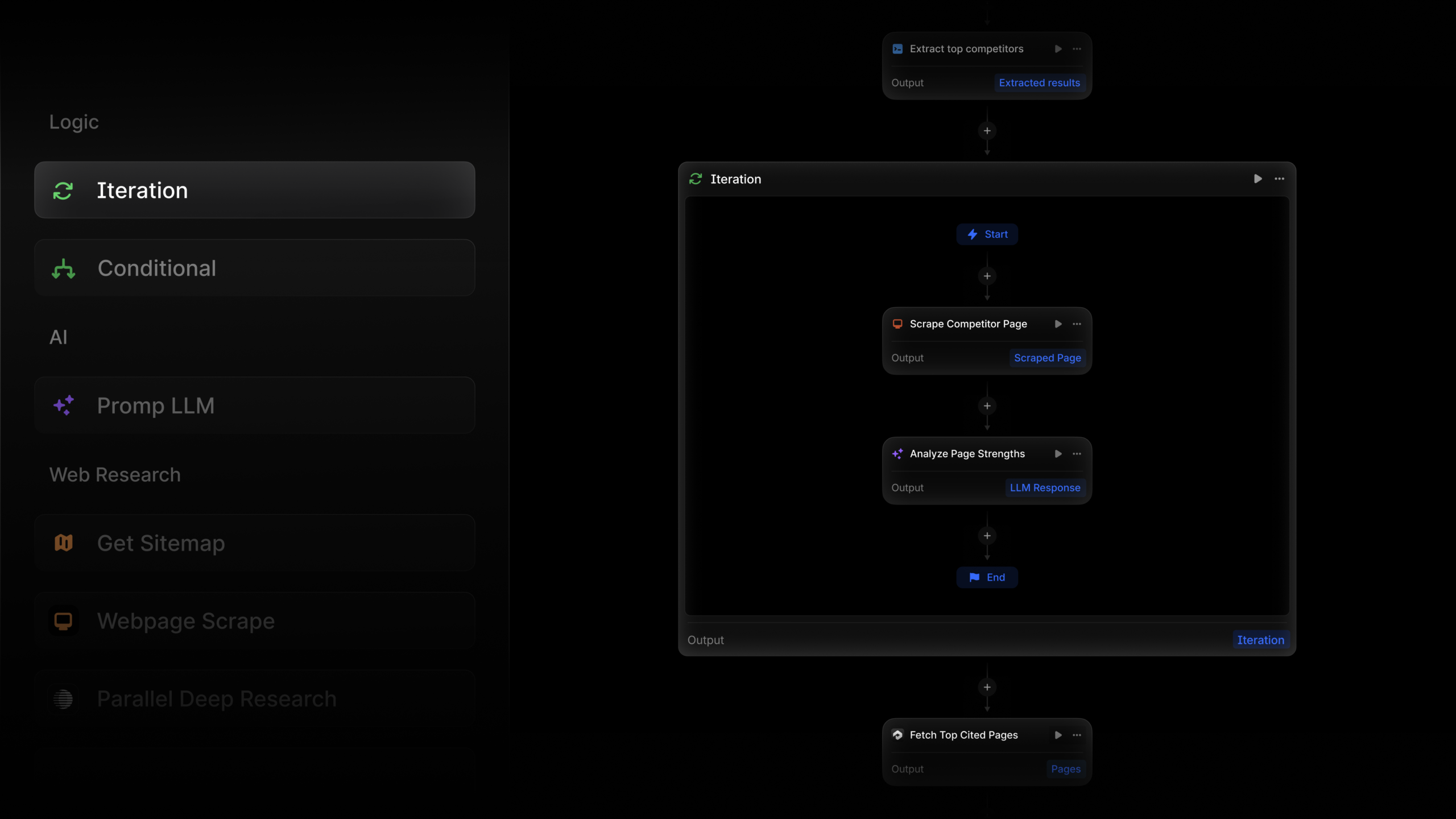
I’m excited to introduce you to the innovative iteration nodes in Profound Agents, designed to revolutionize the way we manage complex workflows.
The beauty of the iteration node lies in its ability to encapsulate a series of steps within your Agent. By setting up these steps just once, I can easily pass in a list of items, and watch as each item seamlessly progresses through the specified sequence, simultaneously.
You may have watched your AI assistant reject an unsafe request and concluded that its safeguards worked. If you tested only once, you answered the wrong question. An attacker does not need every prompt to succeed. They need one useful failure after enough retries.
Best-of-N jailbreaking turns that model variability into a search process. To manage the risk, you need to evaluate the whole campaign, enforce permissions outside the model, and control every additional chance created by retries, fallback models, tools, and automated agents.
The dangerous unit is the campaign, not the prompt
A Best-of-N attack creates or collects multiple versions of a prohibited request, submits them to an AI system, and selects the response that comes closest to the intended outcome. The essential move is to send many variations and keep the most successful result. The value of N is not fixed, and the selection can be performed by a person, a script, or another model.
This changes the security question. A per-request review asks, “Did this prompt get blocked?” A campaign-level review asks, “Did any related attempt produce a prohibited result?” The second question reflects the attacker’s objective.
The probability principle is straightforward. If each attempt has a nonzero chance of crossing a boundary, repeated opportunities can raise the chance that at least one attempt succeeds. Under the simplified assumption that attempts are independent and have the same success probability p, the probability of any success after N attempts is 1 – (1 – p)^N. Real prompt variants are often correlated, so you should not use that formula as a production risk estimate. Measure complete campaigns against your actual system instead.
Three distinctions prevent confusion during threat modeling:
A normal retry is usually an attempt to clarify a legitimate request after an incomplete or incorrect answer. Repetition alone does not establish malicious intent.
A jailbreak tries to bypass behavioral restrictions placed on a model.
Prompt injection supplies untrusted instructions that compete with the system’s intended instructions, often through user input or retrieved content. Best-of-N is a search strategy that can amplify jailbreaks, prompt injection, or other policy-evasion techniques.
Treat Best-of-N as a threat multiplier, not as the root vulnerability. It finds inconsistent decisions and weak handoffs. It cannot grant a caller a permission that your application enforces deterministically outside the model. That is why authorization architecture matters more than clever safety wording.
Where repeated attempts find extra chances
Your model is only one part of the attack surface. A typical AI workflow also has an identity layer, input filters, a router, one or more models, output checks, retrieval, tools, and application code. Every component that makes a fresh probabilistic decision can give a campaign another route to success.
Layer
Misleading green light
Campaign signal to inspect
Stronger control
Prompt policy
One prohibited request was refused
Related requests are repeatedly rephrased after denials
Aggregate policy events by actor, session, intent cluster, and protected resource
Input moderation
Each prompt remains below an individual alert threshold
Small wording, format, language, or encoding changes accumulate around the same objective
Analyze normalized forms and sequences while retaining the raw input for investigation
Model routing
The primary model refused
A fallback model, alternate endpoint, or retry path returned a different decision
Apply one canonical policy before routing and a final gate after generation
Tools and agents
The assistant’s visible text looks harmless
A tool call requests a broader scope, sensitive record, or irreversible action
Enforce authorization, parameter validation, and action limits in application code
Traffic controls
Each IP address or API key stays within its local limit
Related attempts move across sessions, keys, endpoints, or models
Correlate only the identifiers justified by your threat model, privacy obligations, and retention policy
Logging
Every prompt was stored somewhere
No record connects attempts, decisions, tool calls, and final outcomes
Assign campaign and event identifiers so an investigation can reconstruct the sequence
For an SEO, AEO, or GEO workflow, the highest-consequence result may not be a bad chat response. It may be an unauthorized CMS publication, a destructive edit, exposure of an unpublished campaign, or a tool call made with the application’s credentials. If a model generates page copy or JSON-LD, syntactic validation is necessary but insufficient. Valid structured data can still contain false, disallowed, or unapproved claims. Check the output against business rules and publishing permissions before it reaches a live page.
Build controls that survive repeated attempts
No safety prompt can carry this responsibility alone. Prompts influence model behavior, but they are not security boundaries. Use several controls with different failure modes, and place deterministic checks wherever failure could expose data, spend money, alter content, or trigger an external action.
Put authorization outside the model. Resolve the authenticated principal in application code, grant the least privilege needed for the workflow, and verify permission again when a tool executes. Never let generated text decide whether the caller may read, publish, delete, or export something.
Separate read and write capabilities. An assistant that only needs to draft content should not inherit publishing or deletion rights. When write access is required, constrain the allowed resource, action, fields, and destination.
Normalize for analysis without overwriting evidence. Retain the original request, then create a canonical representation for similarity detection. Normalization can help reveal superficial changes in spacing, character representation, formatting, or casing, but it must not silently change the content executed by downstream systems.
Maintain campaign state. Record the actor or service identity, session, endpoint, model route, normalized intent cluster, policy decision, tool request, and outcome. Look for repeated denials, rapid reformulations, alternate-route probing, and requests that converge on the same protected capability.
Add adaptive friction. As campaign risk rises, reduce retry opportunities, disable expensive fallback routes, introduce a cooldown, require stronger authentication, or move the request to human review. Apply the strongest friction to workflows with data access or irreversible effects rather than imposing the same response on harmless drafting tasks.
Gate outputs and tool calls separately. Check generated content against the output policy, validate structured fields, reject unexpected tool names or parameters, and limit the records or resources returned. A harmless-looking explanation must not conceal a disallowed action request.
Define safe failure behavior. If moderation, identity resolution, authorization, or final validation is unavailable, return a controlled error for protected operations. Do not route around a failed safeguard to preserve a smooth user experience.
Protect the control plane. Restrict who can change system prompts, policy rules, model routes, tool definitions, and safety thresholds. Log those changes and make rollbacks possible, because a campaign can exploit configuration drift as readily as model variability.
There is no universal safe retry count. A blanket limit low enough for a sensitive data-export agent may be needlessly hostile in a public brainstorming tool. Set budgets by consequence, then examine legitimate retry behavior before choosing enforcement thresholds. Track false positives alongside security outcomes so that users who are clarifying ambiguous, multilingual, or accessibility-related requests are not treated automatically as attackers.
Be careful with model-based safety judges as well. A second model can add useful evidence, but it may share blind spots with the model it evaluates. Use deterministic authorization and validation for hard boundaries, with model judgments contributing to risk scoring rather than granting privileged access on their own.
Test the full campaign without publishing an exploit kit
A single-prompt red-team check will miss the defining behavior of Best-of-N. Your evaluation runner should group related attempts, preserve production routing logic, and score whether any attempt reaches a prohibited outcome. Keep testing authorized, isolated, and away from live customer data or publishing systems.
Define the breach before generating tests. Describe prohibited outcomes in observable terms, such as returning a protected field, invoking a disallowed tool, publishing without approval, or producing content that violates a named policy. A vague label such as “unsafe response” produces inconsistent scoring.
Build campaign families. Group sanitized test cases by underlying objective, then vary the permitted dimensions relevant to your system, such as phrasing, format, language, model route, and retry sequence. Keep actionable attack strings in an access-controlled security repository rather than general documentation or analytics dashboards.
Reproduce the production topology. Include the actual order of input checks, retrieval, routing, fallback behavior, output gates, tools, and error handling. Testing the base model alone does not test the application your users can reach.
Run attempts as connected sequences. Carry session and risk state between related requests. Also test whether switching endpoints or invoking an automated agent incorrectly resets that state.
Score outcomes at two levels. Retain per-request decisions for diagnosis, but make campaign-level success the headline measure. A system can have an impressive individual refusal rate while still allowing too many campaigns to obtain one useful failure.
Review the most consequential path first. A policy-breaching paragraph matters, but a tool call that exposes private data or changes a live site demands tighter controls and faster remediation.
Version the evaluation and rerun it after changes. A new model, system prompt, router, retrieval source, guardrail, tool definition, or fallback rule can alter campaign behavior even when the visible feature appears unchanged.
Your evaluation dashboard should include the campaign any-success rate, attempts to the first breach, breach severity, detection and containment outcomes, tool or data-boundary violations, and false-positive friction for legitimate users. Do not collapse these into one average. A small number of severe authorization failures should remain visible rather than being diluted by many harmless refusals.
Stop a test immediately if it begins interacting with real user records, external recipients, paid services, or live publishing. Move the scenario into an isolated environment with synthetic data and inert tools. The purpose of the exercise is to verify containment, not to prove that production damage is possible.
Key takeaways for AI product owners
One successful refusal does not establish safety; measure whether any attempt in a related campaign succeeds.
Best-of-N exploits repeated opportunities and inconsistent decisions, so retries, fallback models, alternate endpoints, and agents all belong in the threat model.
System prompts and model-based judges can support safety, but they cannot replace deterministic authentication, authorization, validation, and tool restrictions.
Aggregate related attempts without assuming every retry is malicious; calibrate friction to the consequence of the requested capability.
Test the production workflow as a sequence, then report campaign-level success and breach severity alongside per-request refusal metrics.
Keep security payloads controlled, use synthetic data and inert tools, and never red-team an external or production system without authorization.
Before your next release, choose the AI workflow with the greatest access to data, tools, or publishing. Trace every place where a rejected request can receive another model call or another route. Then add campaign-level telemetry and a deterministic gate at the highest-consequence handoff.
That review will not eliminate model variability. It will prevent variability from becoming permission.
Your last successful pitch should not disappear into a sent folder after the coverage lands. It contains a useful asset: a sequence of editorial decisions that persuaded a particular journalist to keep reading, understand the news value, and respond.
The mistake is to copy that email and swap a few nouns. That preserves the most disposable part of the pitch while carrying stale claims, irrelevant personalization, and familiar phrasing into a new campaign. Effective pitch reuse works at a deeper level. You preserve the reasoning structure, replace every campaign-specific input, and make the new email earn its relevance on its own.
Reuse the decision path, not the surface copy
A reusable pitch is a framework for making decisions. It tells you what the subject line must accomplish, how the opening establishes relevance, where the strongest evidence appears, how the facts build an angle, and what the call to action offers the journalist’s audience.
That distinction matters because almost half of journalists receive six or more pitches a day. When attention is already scarce, faster production isn’t much of an advantage. A pitch still has to be relevant, credible, and easy to evaluate.
Reuse the parts that govern clarity. Rebuild the parts that determine whether this campaign belongs in this journalist’s inbox.
Pitch layer
What you can preserve
What you must rebuild
Subject line
The type of promise, level of specificity, and relationship to the reader
The claim, consequence, wording, and any reference to the recipient
Opening
The function it performs, such as establishing editorial relevance before presenting the campaign
The observation, context, and reason this journalist is a fit
Angle
The logical progression from finding to consequence
The actual news, audience implication, and timing
Evidence
The order in which proof becomes useful
Every fact, figure, comparison, method note, and supporting asset
Call to action
A low-friction decision focused on editorial value
The deliverable, access, expert, visual, dataset, or next step being offered
Personalization deserves particular care. You can reuse the principle that the opening should feel written for one recipient. You cannot reuse the personal detail itself. A reference to someone’s interests, work, or public comments should be accurate, current, proportionate, and connected to the pitch. If the detail has no editorial purpose, it can feel ornamental or intrusive rather than thoughtful.
The same rule applies to tone. Preserve your recognizable voice, but don’t preserve sentences simply because they once worked. Voice is a set of choices about directness, rhythm, detail, and restraint. Copy is the temporary expression of those choices.
Extract the reusable pattern from a proven pitch
A reply or placement tells you that the whole combination worked in one situation. It doesn’t prove that the subject line, personal opening, evidence order, or call to action caused the result by itself. The story’s strength, the journalist’s schedule, an existing relationship, and timing may also have mattered.
Treat the first extraction as a hypothesis, not a universal template. Your job is to identify the likely functions inside the pitch and then see whether those functions remain useful in another campaign.
Save the complete context. Keep the final subject line and body alongside the campaign brief, recipient, outlet, send timing, supporting materials, response, and eventual outcome. A winning email without its context is easy to misread.
Label each unit by its job. Mark the subject line, relevance cue, transition, central claim, proof sequence, reader consequence, asset offer, and call to action. A sentence may perform more than one job, but every sentence should have one clear primary purpose.
Separate structure from content. Replace names, topics, findings, figures, links, and personal details with functional placeholders. If the remaining framework still makes sense, you have found something reusable.
Explain why the order worked. Don’t record only that evidence appeared before the ask. Record why: the recipient needed enough proof to assess the claim before deciding whether the supporting asset was worth opening.
Mark uncertain elements. If you don’t know whether the rapport-building opening contributed to the response, say so in the template notes. This prevents a guess from hardening into a team rule.
Test the pattern in a different context. Keep it provisional until it helps produce a clear, relevant pitch for another campaign. If the structure survives while the topic, evidence, and recipient change, it is more likely to be genuinely reusable.
The resulting blueprint might look like this:
Subject: Express the audience consequence and the fresh evidence or asset behind it.
Opening: Establish a truthful reason the journalist may care.
Bridge: Move from that relevance cue to the campaign without forcing the connection.
News: State the central finding or announcement in plain language.
Proof sequence: Lead with the strongest verified evidence, then add only the context needed to interpret it.
Reader value: Explain what the finding helps the publication’s audience understand, decide, or notice.
Offer: Name the useful material available, such as methodology, visuals, underlying data, an expert, or a product demonstration.
Call to action: Ask whether that specific material would help with a relevant story.
This is more useful than a fill-in-the-blank email. It preserves editorial logic without encouraging the sender to treat a journalist’s name as the only variable.
Use AI as a constrained adapter
AI is well suited to mapping sentence functions, proposing alternative phrasing, and adapting a proven sequence to a new brief. It is poorly suited to deciding what is true, whether a personal reference is appropriate, or whether the angle genuinely fits a journalist. Those decisions need verified inputs and human judgment.
Give the model a controlled packet rather than asking it to write a pitch from the campaign name alone. That packet should contain the approved campaign brief, verified fact sheet, methodology notes where relevant, available assets, audience definition, house-voice constraints, and a short recipient profile based on public professional information. Clearly distinguish confirmed facts from working ideas.
Reusable prompt: Analyze the successful pitch below by sentence function, not by wording. Create a structural map that explains the purpose of each part. Then adapt that structure to the new campaign brief and recipient profile. Use only facts supplied in the verified fact sheet. Do not carry over names, claims, figures, personal details, examples, or distinctive phrases from the successful pitch. If the new material cannot support a structural element, mark it as [NEEDS INPUT] instead of inventing content. Return the structural map, a concise draft, alternative subject lines, a substitution ledger showing which supplied input supports each factual statement, and a list of relevance or accuracy risks for human review.
The substitution ledger is the important part. It turns review from a vague question about whether the email sounds good into a traceable check: where did this claim come from, is it approved, and does it mean what the draft says it means?
Keep generation and personalization separate. First ask AI to build the cleanest version of the campaign argument. Then add recipient-specific context after checking the journalist’s current beat and work. This makes it easier to remove generic flattery and prevents an attractive personal hook from concealing a weak editorial match.
Before keeping a personalized opening, apply a simple relevance gate:
Is the detail accurate and drawn from public professional context?
Does it explain why this campaign may suit the journalist’s coverage?
Can you connect it to the news without an abrupt or artificial transition?
Would you be comfortable explaining why you used it if the recipient asked?
Could the same sentence be sent unchanged to a large list? If so, it is probably generic rather than personal.
AI can also help challenge the blueprint. Ask it to identify sections that depend on the old campaign, places where the logic no longer holds, and phrases likely to sound mass-produced. The goal isn’t to force every new pitch through the old shape. It is to notice when the proven structure helps and when the new story needs a different route.
Review reused pitches at the fact, recipient, and system levels
A polished draft can still fail in three different ways: it can misstate the campaign, mismatch the recipient, or reveal that your template is spreading stale language across the outreach program. Review each level separately.
Check the campaign truth
Trace every factual statement to an approved input.
Confirm that figures retain their original denominator, comparison, scope, and qualification.
Make sure the headline claim is supported by the methodology, not merely adjacent to it.
Verify that every offered asset, interview, dataset, image, demonstration, or sample is actually available.
Remove claims inherited from the old pitch, including subtle carryovers such as timing language or audience assumptions.
Check the recipient fit
Confirm that the journalist covers the subject at the level your angle requires.
Read the opening without the recipient’s name. If it now sounds universal, it hasn’t established real relevance.
Check that the evidence supports a story for this publication’s audience, not merely a message your organization wants repeated.
Make the call to action answerable. Offer a specific editorial resource instead of asking vaguely whether the recipient is interested.
Delete rapport-building language that delays the news or relies on a strained connection.
Check the reuse system
Compare the new draft with the successful original and other pitches created from the same blueprint. Shared logic may be intentional; shared distinctive wording usually isn’t.
Store the blueprint separately from campaign facts so old evidence cannot be mistaken for reusable copy.
Record which structural elements were kept, changed, or removed and why.
Track replies, requests for supporting material, declines, placements, and no response without treating any single outcome as conclusive.
Revise the blueprint when the same friction appears repeatedly, such as unanswered calls to action or requests for context that should have been supplied initially.
A good pitch library therefore contains more than examples labeled successful. It contains versioned patterns, the situations in which they were used, the evidence available at the time, and notes about what remains uncertain. That context is what allows a team to learn instead of merely imitate.
It also protects your voice. If different team members can see the reasoning behind a pitch, they don’t need to mimic one person’s sentences. They can make the same kind of editorial choices in language that suits the new campaign.
Key takeaways
Reuse a successful pitch’s decision structure, not its campaign-specific copy.
Preserve functions such as relevance, evidence order, reader consequence, and a low-friction call to action.
Replace every claim, figure, personal detail, example, link, and distinctive phrase.
Treat one successful send as a useful hypothesis, not proof that every element caused the result.
Give AI verified inputs, explicit no-invention rules, and a requirement to flag missing information.
Review the output for factual support, recipient fit, and accidental duplication across campaigns.
Keep outcome context with each blueprint so your reuse system improves as more pitches are sent.
Before your next campaign, open the last pitch that earned a meaningful response and replace its sentences with labels describing what each one did. Save that map beside the original, then build the new outreach from verified inputs. You will start with something your team has learned from without making the recipient feel that they have seen it before.