Author: shivamcrushpressai

  • Boost Your Funnel: Tackle Signal Decay & Maximize Performance

    Boost Your Funnel: Tackle Signal Decay & Maximize Performance

    Have you ever wondered why those campaigns designed to introduce customers to your brand seem to get the least credit when it comes to driving revenue? Let me walk you through how to reclaim those lost conversion signals.

    In today’s digital world, conversion signals are fading from our marketing data. Personally, I’ve noticed it’s costing businesses money.

    Factors like ad blockers, strict privacy laws, and the decline of cookies are hiding crucial conversion data. According to a Deloitte study, this can cost businesses as much as $203 million annually. That’s a staggering figure!

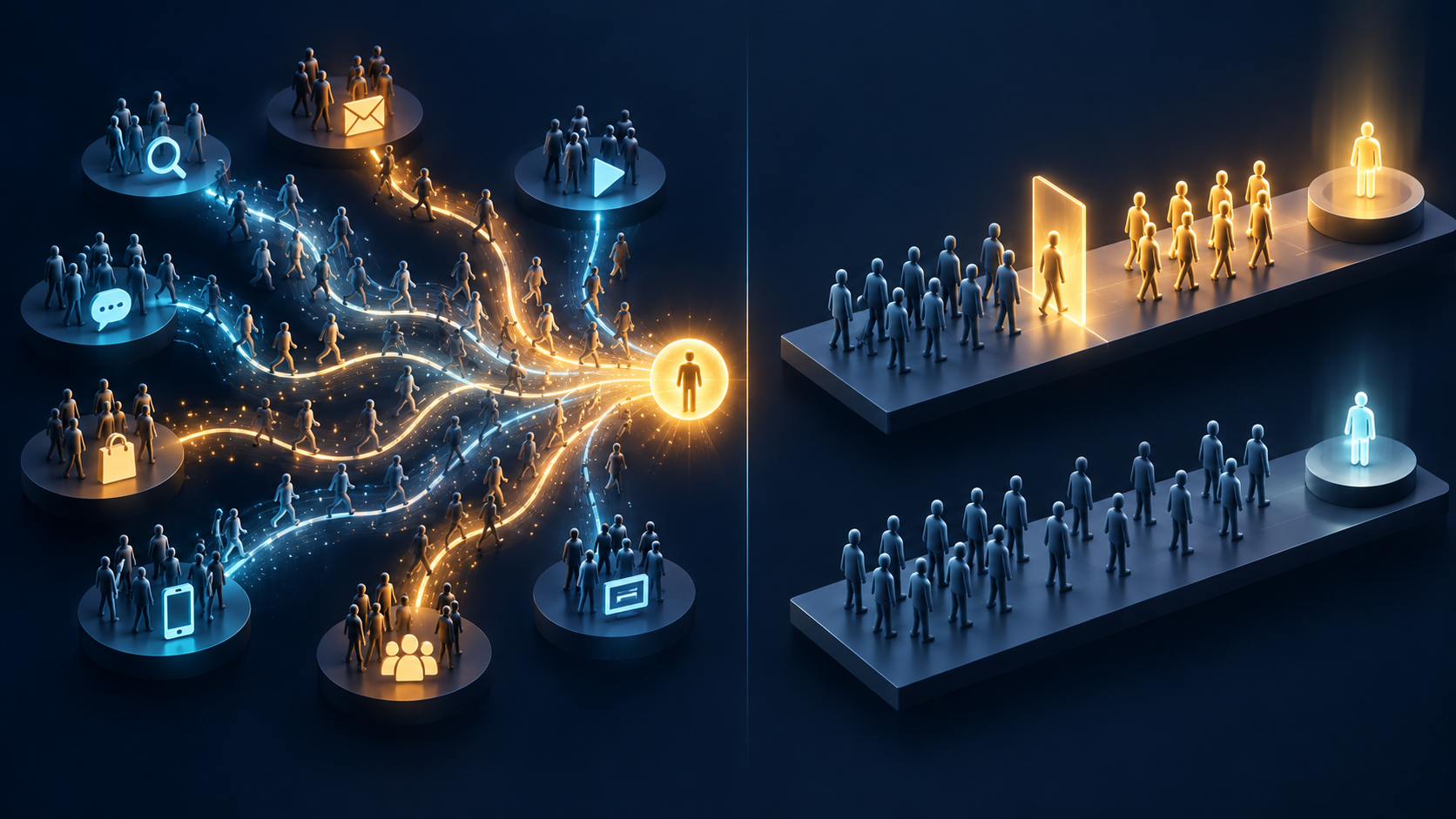
    For most brands, the journey from discovery to purchase is obscured, and this isn’t just an irritating data issue. If left unaddressed, it can prevent new customers from discovering your brand.

    It surprised me how many marketers don’t realize they’re basing decisions on incomplete data. They see top-of-funnel campaigns underperforming and shift budgets elsewhere, unaware that this could trigger a negative cycle.

    When traffic diminishes further due to algorithmic reactions, ad investments dwindle, and new customer acquisition slows, it results in a downward spiral that’s tough to reverse.

    To avoid this, rather than focusing solely on creative strategies or bigger budgets, I believe prioritizing data hygiene will offer a competitive edge by 2026. Feeding better data to Google’s algorithm can transform those top-of-funnel activities into effective customer acquisition channels.

    Why Signal Loss Hurts Discovery Channels First

    YouTube usually sits at the top of the funnel, where attribution is weakest. Unfortunately, this makes it an easy target for budget cuts because of incomplete performance data, despite its crucial role in product discovery and brand research.

    According to Google research, “YouTube is the No. 1 platform viewers turn to for brand or product research.”

    • “YouTube is the No. 1 platform viewers turn to when they want to research, vet, or make a decision about a brand or product.”

    Yet, the decay of conversion signals detrimentally impacts YouTube’s performance as a marketing channel. It often acts as the initial touchpoint, with users making purchases off-platform, disrupting the signal flow.

    Haus Research found that Google’s advertising tools underreport YouTube’s true impact by 70% or more. With improved measurement setups, advertisers can capture those missing signals, allowing for a more accurate assessment of YouTube and similar platforms.

    Closing the Cross-Device Gap with Enhanced Conversions

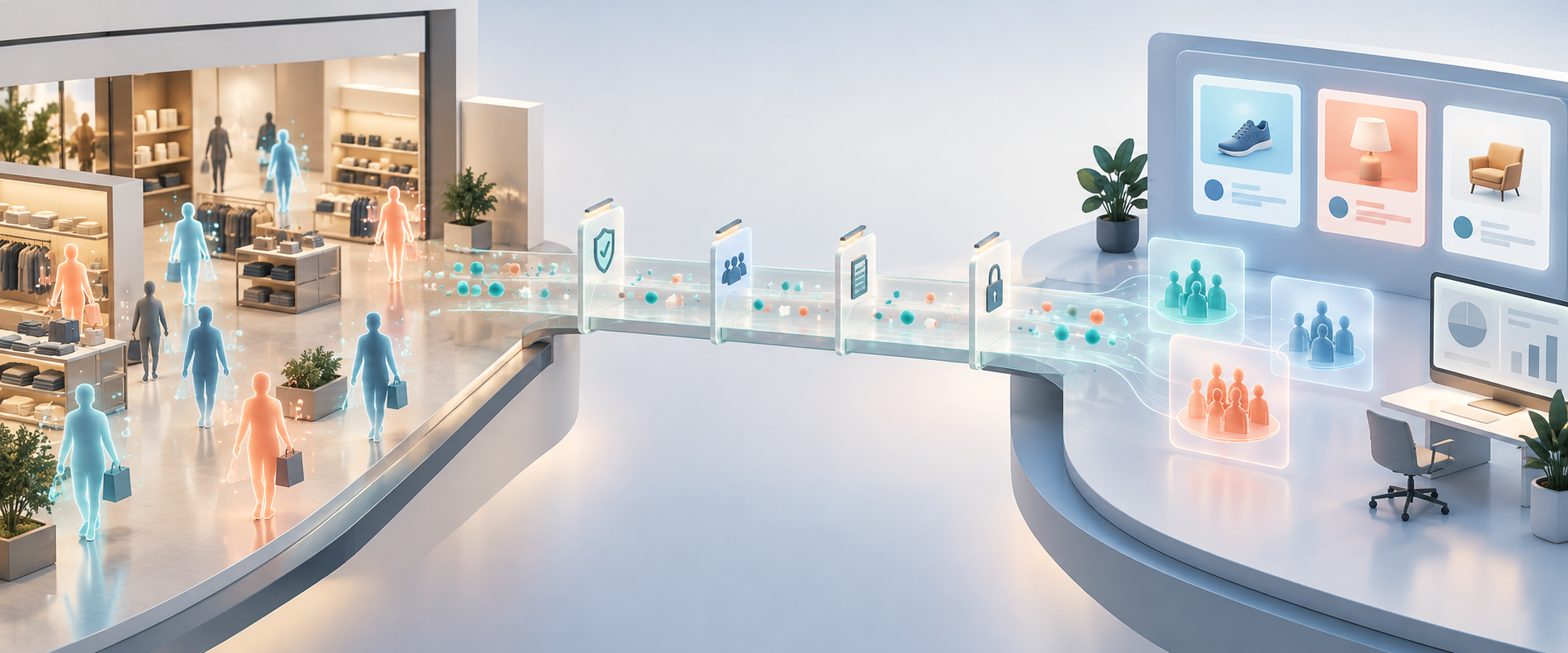
    Think about how often you watch TV while holding your phone. You might see a commercial, Google it on your phone, and complete the purchase on desktop days later. This cross-device journey complicates tracking with standard cookie-based tagging methods.

    Enhanced conversions tackle this issue by adding a layer of hashed first-party data, like an email, which Google uses to connect conversions to ad interactions securely.

    Incorporating enhanced conversions into analytics provides insights into purchase paths that begin on YouTube and conclude off-platform, highlighting YouTube’s effectiveness in driving conversions that might otherwise be missed.

    ```json
{
  "alt": "The CapmatchOne logo with a gradient circle and bold text.",
  "caption": "Discover innovation with the CapmatchOne logo, featuring sleek typography and a modern gradient circle.",
  "description": "The CapmatchOne logo features bold, modern typography coupled with a gradient circle, symbolizing connection and innovation. The sleek design conveys a sense of progress and creativity. This image can be used for branding or promotional purposes, appealing to audiences interested in innovative solutions and forward-thinking designs."
}
```

    Training the Algorithm with Offline Conversions

    Consider viewing a YouTube ad for an expensive item—something you’re not comfortable purchasing online. You close the ad only to call the seller later. Cookie-based tagging often fails to track such valuable conversions back to their origin.

    This tracking gap extends to lead generation campaigns too. Offline conversions connect CRM and call data back to Google, training the algorithm to follow which leads convert rather than just form completions, enabling smart bidding to optimize for actual revenue outcomes.

    Get the newsletter search marketers rely on.


    Defining New Top-of-Funnel Signals with Micro Conversions

    Enhanced conversions and offline tracking can retrieve lost signals, but sometimes, top-of-funnel campaigns like YouTube lack sufficient conversion data for the algorithm. That’s where micro conversions come in, feeding necessary data for ad optimization.

    Micro conversions provide early signals—like video views, adding items to a cart, or time spent on a page—allowing campaigns that lack purchase-level data to still improve performance. Depending on the campaign’s position in the funnel, you might prioritize engagement signals or actions like cart additions.

    Without these intermediate signals, distinguishing effective upper-funnel activities from wasted efforts becomes challenging. Micro conversions empower you to treat top-of-funnel actions like any other campaign, enabling data-driven decisions on what’s working.

    Recovering Lost Signals with Google Tag Gateway

    The final piece in maintaining data hygiene is recovering blocked conversion signals before they reach Google. Browsers like Safari and Firefox restrict third-party tracking, contributing to massive signal decay during online purchases.

    Google introduced Google Tag Gateway (GTG) to help reclaim lost data. GTG uses server-side technology to load tracking tags from your site’s domain instead of Google’s, bypassing some blockers.

    Google reports an 11% signal uplift for GTG users compared to advertisers not using the tech. GTG also benefits advertisers with faster page speeds, enhancing Google’s landing page experience score and reducing click costs.

    Setting up GTG is straightforward, especially if you’re on a content delivery network like Cloudflare, and it can significantly enhance your data infrastructure.

    Your Data Infrastructure is Your Competitive Advantage

    Conversion signal decay affects every brand selling online, but recognizing the real underlying problem is crucial: signal distortion from cross-device behavior, offline conversions, ad blockers, and low top-of-funnel signal volume distorts actual purchase behavior.

    Armed with inaccurate data, many opt to tweak creatives, cut budgets, or inadvertently drop channels like YouTube, which secretly contribute to discovery. This leads to a detrimental downward spiral.

    In 2026, those excelling won’t merely skirt around issues but will implement advanced data hygiene methods to feed lost data back into Google’s algorithm, gaining an edge over competitors.

    To run more successful ads, prioritizing data improvements is key. Everything else tends to fall into place thereafter.


    Inspired by this post on Search Engine Land.


    crushpress.ai community screenshot
  • Unveiling Google’s May 2026 Core Update: A New Era for SEO

    Unveiling Google’s May 2026 Core Update: A New Era for SEO

    Today, I’m excited to discuss the latest development in the world of search engines: Google has just rolled out the May 2026 core update. This follows the previous update we saw in March.

    I learned that the announcement was made by Google through their official status page. It’s a significant moment as it marks the second core update of the year after March’s update and the earlier Discover update in February.

    What Google is sharing. According to Google’s updated Search Status Dashboard, the rollout might take up to two weeks to complete. They also made a LinkedIn post explaining the aim is to enhance the visibility of relevant content.

    Core updates like these occur several times yearly. They bring broad, impactful changes to Google’s algorithms, and though they often aren’t announced, this one is attracted due attention.

    If you’ve noticed changes. Experiencing shifts in your site’s rankings? Google typically suggests focusing on producing quality content. Even if hit, it may not indicate problems with your pages.

    For further guidance, consider reviewing the questions Google advises if affected.

    ```json
{
  "alt": "The CapmatchOne logo with a gradient circle and bold text.",
  "caption": "Discover innovation with the CapmatchOne logo, featuring sleek typography and a modern gradient circle.",
  "description": "The CapmatchOne logo features bold, modern typography coupled with a gradient circle, symbolizing connection and innovation. The sleek design conveys a sense of progress and creativity. This image can be used for branding or promotional purposes, appealing to audiences interested in innovative solutions and forward-thinking designs."
}
```

    The main takeaway? Prioritize creating authentic and helpful content; let these guiding principles lead your SEO endeavors.

    For deeper insights, explore Google’s comprehensive documentation on core updates.

    Reflection on past updates. Looking back, we’ve seen similar significant updates like the March 2026 and December 2025 rollouts, each influencing search result dynamics differently. Will this update continue that trend? Only time will tell.

    Why this matters for us. Core updates can shake up the search engine landscape, causing noticeable volatility. It’s an opportunity for improved site visibility or a call to action to tweak your strategies if rankings dip. May this update bolster your SEO efforts, rewarding your dedication with increased organic traffic.


    Inspired by this post on Search Engine Land.


    crushpress.ai community screenshot
  • Mastering Multi-Channel Marketing: Stop Juggling, Start Thriving

    Mastering Multi-Channel Marketing: Stop Juggling, Start Thriving

    Every Monday, I dive into my role as a paid media manager knowing the chaos that awaits. From Google Ads to TikTok and Reddit, my task is to pull the data from each platform, put it into a comprehensible spreadsheet, and report to my boss by 10 a.m. Amidst all this, I try to decipher what worked last week and why. It’s a frenetic start to the week, to say the least.

    Remembering when managing multi-channel campaigns meant juggling just Google Ads and a Facebook campaign feels almost nostalgic now. Today, it’s a tangled web of 12 channels, each with their peculiarities in terms of attribution logic and campaign structures. The disarray is real and mostly ignored, to the detriment of performance marketers like me.

    I realize that this Monday morning ritual is less about campaign management and more about tedious chores like data entry and reformatting. Managing campaigns across numerous networks involves reopening platforms repeatedly just to align disparate data points.

    ```json
{
  "alt": "A woman in an office surrounded by four computer screens showing marketing analytics.",
  "caption": "Navigating the complexities of digital marketing metrics, a woman finds herself amid a sea of analytics data.",
  "description": "In an office setting, a woman sits at a desk surrounded by four large monitors displaying various marketing analytics figures. The screens show data such as ROAS, CPA, CTR, and CPL, highlighting campaign performances. Her expression suggests concentration or concern as she navigates complex digital marketing metrics. This image captures the intensity and focus required in data analysis and decision-making in a modern business environment."
}
```

    The prevailing problem isn’t just the time I lose, but the lag it introduces to my operations. When my performance data is scattered across various platforms, delays in identifying key insights can lead to wasted budgets. The inconsistency in strategies across channels further exacerbates the issue.

    I’ve come to understand that relying on native dashboards from Google, Meta, and others won’t rescue us from this inefficiency. These platforms prefer keeping us tethered to their interfaces, contributing to the fragmentation. But a paradigm shift is on the horizon: AI-native management tools that promise seamless cross-platform synchronization without the need for multiple dashboards.

    The change is happening right now, reimagining how campaigns are managed with AI. It means planning campaigns with simple briefs and automatically syncing creative adjustments across all channels. This reorientation is not just an incremental improvement but a transformational leap that alleviates the operational burdens we’ve carried for too long.

    ```json
{
  "alt": "Woman in office using a large monitor displaying an analytics dashboard with performance metrics.",
  "caption": "In a sleek, modern office space, a woman engages with a dynamic analytics dashboard, tracking performance metrics on her wide display.",
  "description": "A woman in a contemporary office setting is focused on an ultra-wide monitor displaying a detailed performance analytics dashboard. The screen showcases key metrics such as ROAS, CPA, conversions, and reach, alongside a visual funnel diagram, under a 'Unified Portfolio Dashboard' by adplus. Her workspace includes a keyboard, notebook, and a coffee mug, suggesting a productive environment. This image embodies themes of data analysis, modern technology, and professional settings."
}
```

    For agencies like mine, AI brings another boon: automated and branded client reports that compile multi-network performance data without the Sunday-night grind.

    What actions can we take this week? First, I’ll track where my hours truly go throughout a week — seeing is believing when it comes to confronting administrative bloat. Second, standardizing naming conventions across accounts is surprisingly effective in smoothing out cross-platform wrinkles. Third, I’ll delve into evaluating current AI-native tools, as I suspect many teams are operating on outdated assumptions about their capabilities.

    Achieving an operational edge in paid media transcends budget size. It’s about faster data-action cycles, unified cross-network performance views, and liberating our teams from the laborious chains of manual processing. This operational edge could mean the difference between thriving and merely surviving in a competitive landscape.


    Inspired by this post on Search Engine Land.


    crushpress.ai community screenshot
  • Mastering Pre-Search Visibility: The SEO Pyramid Guide

    Mastering Pre-Search Visibility: The SEO Pyramid Guide

    I’ve come to realize that my buyers often have a shortlist in mind even before hitting Google. It’s fascinating how these pre-search decisions form. Here’s my take on how I influence those vital conversations that put my brand on that list.

    The customer journey used to kick off with a simple search, but it’s evolved beyond that point. By the time potential buyers type a query into Google, they usually have some brands in mind. They’ve watched Instagram Reels featuring a product repeatedly, read threads on Reddit with unanimous recommendations, and seen similar endorsements in Facebook groups.

    Google is now more of a confirmation tool than a starting point. When someone searches, they’re looking to confirm their assumptions, not to browse aimlessly.

    The key question is, did my brand make it onto their mental shortlist before they began searching? In most cases, being visible on comparison platforms is crucial for this.

    So, where is this shortlist actually built? Peer-driven decisions are made in various industry-specific environments

    By the time these interactions prompt a Google search, choices are often boiled down to specific comparisons like “brand X review” or “brand X vs. brand Y.” Being mentioned in those off-SERP discussions is usually more influential than ranking for a head term.

    It’s worth noting that platforms like Reddit won’t hold the spotlight forever as visibility there is inherently temporary. Yet the basic behavior remains constant: people ask their peers before consulting search engines. My strategy focuses more on participating in these conversations rather than just chasing trending platforms.

    ```json
{
  "alt": "The CapmatchOne logo with a gradient circle and bold text.",
  "caption": "Discover innovation with the CapmatchOne logo, featuring sleek typography and a modern gradient circle.",
  "description": "The CapmatchOne logo features bold, modern typography coupled with a gradient circle, symbolizing connection and innovation. The sleek design conveys a sense of progress and creativity. This image can be used for branding or promotional purposes, appealing to audiences interested in innovative solutions and forward-thinking designs."
}
```

    Dig deeper into strategies to ensure pre-search visibility and why your brand might not be included in AI recommendation sets.

    The two objectives of search everywhere optimization, or SEvO, form the backbone of my campaigns:

    Direct visibility ensures my brand appears where buyers are narrowing options, measurable by direct search traffic and specific branded queries. Engine comprehension, on the other hand, leverages each brand mention next to relevant problems or solutions to enhance AI system recommendations.

    Steve Jobs famously said, “You can’t connect the dots looking forward; you can only connect them looking backward.” I can’t see how these efforts gel until they start appearing in AI responses and the buyer conversations.

    To measure effectively, I keep tabs on things like brand mention volume and trends in branded searches. These indicators suggest that pre-click visibility is working.

    When it comes to Search Everywhere Optimization, the strategy I use is all about getting discovered where my buyers spend time, even before they think to search for brands like mine.

    ```json
{
  "alt": "Pyramid diagram illustrating search optimization from audience research to authority building.",
  "caption": "Discover the power of search optimization with this pyramid, guiding from audience research to establishing authority.",
  "description": "This image depicts a pyramid diagram titled 'Search Everywhere Optimization: From Information to Authority.' It outlines a strategic progression: Audience Platform Research for finding audiences, Smart Alerts for engagement, Industry Publications for authority, Distribution for amplification, and Owned Publications for footprint building. Each layer is visually represented with icons signifying respective stages. Ideal for understanding the steps involved in comprehensive search optimization strategies."
}
```

    The Search Everywhere Optimization Pyramid organizes my efforts:

    The groundwork is Audience Platform Research, guiding me to where my customers are likely making their decisions.

    Setting up effective alert systems is key to knowing when relevant topics surface, helping me know when my brand should join the conversation.

    Next up comes credibility through industry publications, earning my brand recognition in places potential buyers trust.

    Then I focus on distribution, ensuring my content reaches my audiences effectively and keeps them engaged.

    Finally, I create and refine my own content to support everything from below, nudging my brand into view when buyers are in that crucial decision-making phase.

    Understanding that conversation is ongoing helps me navigate future shifts, even as specific platforms rise and fall in popularity.

    If my goal is making it to the buyer’s shortlist, I need to ensure visibility not just on SERPs but across all the web spaces they engage with. Through consistent and deliberate steps, the pyramid ensures that my brand is more than just a search result — it’s part of the discussion.


    Inspired by this post on Search Engine Land.


    crushpress.ai community screenshot
  • Unveiling Reddit’s Impact on AI Search Dynamics

    Unveiling Reddit’s Impact on AI Search Dynamics

    I often find myself explaining Reddit’s role in AI search. It’s frequently underestimated, yet its influence extends well beyond training data.

    Clients frequently ask how AI training, licensed access, and retrieval systems can affect SEOs and AI strategies, particularly concerning Reddit.

    Here are the typical questions I receive:

    • Should I engage with Reddit to boost my brand visibility?
    • Is advertising on Reddit beneficial if AI uses Reddit for training?
    • Our CEO suggests creating a subreddit for each product. Is that wise?
    • Why does Google’s AI reference a Reddit thread criticizing my product?

    These inquiries often conflate three separate but interrelated concepts:

    • Training data.
    • Licensed or real-time access.
    • Citation and retrieval systems.

    Although connected, they serve different purposes. Understanding these distinctions impacts how we approach SEO and AI citations, especially as Reddit increasingly appears in AI-driven results.

    ```json
{
  "alt": "The CapmatchOne logo with a gradient circle and bold text.",
  "caption": "Discover innovation with the CapmatchOne logo, featuring sleek typography and a modern gradient circle.",
  "description": "The CapmatchOne logo features bold, modern typography coupled with a gradient circle, symbolizing connection and innovation. The sleek design conveys a sense of progress and creativity. This image can be used for branding or promotional purposes, appealing to audiences interested in innovative solutions and forward-thinking designs."
}
```

    Let’s demystify AI training, access, and citation. You might think, “ChatGPT was trained on Reddit,” means every post is directly stored in its memory—an incorrect assumption.

    Training AI is akin to education. Kids learn concepts like using the Pythagorean theorem without remembering specific textbook answers. Similarly, AI learns conversational patterns, not individual Reddit posts.

    AI doesn’t remember specific threads but discerns key discussion points from Reddit, like consumer preferences on r/RockTumbling.

    Reddit partnerships with Google and OpenAI in 2024 enabled a transition from static datasets to ongoing access, allowing AI to stay updated on Reddit dialogs.

    If AI training is like schooling, licensed access is a continuous flow of information akin to subscribing to a newspaper.

    AI can cite Reddit, not because it’s preferential part of the training, but finds it useful for real-time querying, just like humans might refer to yesterday’s conversation.

    ```json
{
  "alt": "Google search results for 'Oura ring pros and cons' displaying an AI overview and articles.",
  "caption": "Exploring the Oura Ring: Pros, cons, and insights on functionality and costs, highlighted from search results.",
  "description": "The image shows Google search results for 'Oura ring pros and cons', featuring an AI overview that describes the Oura Ring as a premium, comfortable health tracker. It highlights its strengths in sleep and recovery insights but notes downsides like high costs and less detailed workout tracking. Additional articles and reviews provide further analysis, including insights from Reddit on battery life and intrusiveness. This information aids potential buyers in evaluating the ring's value."
}
```

    Reddit’s prominence in AI results impacts my SEO strategy, yet it’s not only due to formal partnerships. Reddit’s depth in human experiences enhances its informational value.

    Reddit offers what many websites lack: practical user insights and diverse opinions. Where official sites provide features, Reddit adds authentic experiences and user narratives.

    Rather than mimicking Reddit, I focus on fostering authentic discussion by leveraging user insights from reviews, interviews, or forums, enhancing the context around my content.

    I’ve realized that prioritizing nuanced details and showing reasoning can increase credibility, making my content more relatable in subjective decision-making scenarios.

    Ultimately, integrating firsthand experiences and transparency can elevate content strategy, aiding systems that synthesize human input into AI insights.


    Inspired by this post on Search Engine Land.


    crushpress.ai community screenshot
  • AI Search in Multilingual Regions: Lessons from Catalonia

    AI Search in Multilingual Regions: Lessons from Catalonia

    When I think about AI search, I realize it’s more than just translating or localizing results. It’s about deciding which sources, narratives, and realities emerge on top. This complex system is incredibly fascinating to me, especially when I consider how multilingual regions like Catalonia challenge these AI search systems.

    The unique geography of Catalonia, where Catalan and Spanish languages coexist, serves as an excellent stress test for AI technology. It’s intriguing to see the underlying patterns unfold when the same queries are entered in both languages across platforms like Google AI Overviews and ChatGPT.

    ```json
{
  "alt": "Google Translate interface translating Occitan text to Spanish.",
  "caption": "Google Translate translates 'Tradicions de Sant Jordi' from Occitan into Spanish as 'Tradiciones de San Jorge'.",
  "description": "The image shows the Google Translate interface with text input in Occitan being translated to Spanish. The Occitan text 'Tradicions de Sant Jordi' is translated to 'Tradiciones de San Jorge' in Spanish. The interface features options for translating text, images, documents, and websites. Language options include Occitan, English, Spanish, and French."
}
```

    In Catalonia, a query like Tradicions de Sant Jordi shows how AI systems can sometimes misidentify the language, often tagging Catalan as Occitan. This discovery was both surprising and revealing, shedding light on broader problems that transcend multilingual spaces.

    ```json
{
  "alt": "The CapmatchOne logo with a gradient circle and bold text.",
  "caption": "Discover innovation with the CapmatchOne logo, featuring sleek typography and a modern gradient circle.",
  "description": "The CapmatchOne logo features bold, modern typography coupled with a gradient circle, symbolizing connection and innovation. The sleek design conveys a sense of progress and creativity. This image can be used for branding or promotional purposes, appealing to audiences interested in innovative solutions and forward-thinking designs."
}
```

    Consider this: an AI system operating out of Barcelona with a local IP may choose the less prevalent language of Occitan over Catalan, a decision that feels bizarre given Catalonia’s linguistic and geographical context.

    ```json
{
  "alt": "Google search results comparing arguments for and against Catalonia's independence in Spanish and Catalan.",
  "caption": "Exploring the heated debate on Catalonia’s independence, this image compares arguments in both Spanish and Catalan, highlighting economic, cultural, and political perspectives.",
  "description": "This image captures a side-by-side comparison of Google search results detailing the main arguments for and against the independence of Catalonia, presented in Spanish on the left and Catalan on the right. Each side discusses key aspects like fiscal solvency, cultural identity, and political autonomy, contrasting them with concerns about legality, economic risks, and social cohesion. The search includes links to related YouTube videos and discussions, offering a comprehensive view of the independence debate."
}
```

    This issue isn’t isolated. In January 2023, Google acknowledged downgrading Catalan results in favor of Spanish, which sparked dissatisfaction among users. The subsequent updates improved things somewhat, but the root language-identification errors persist, affecting how AI synthesizes information today.

    ```json
{
  "alt": "Google search showing suggestion for 'business managers' corrected to 'ice cream shops' in Barcelona.",
  "caption": "A Google search mix-up turns a query for business managers into a quirky suggestion for ice cream parlors in Barcelona.",
  "description": "This image displays a Google search results page where a query for 'Millors gestories per a autònoms a Barcelona' (best business managers for freelancers in Barcelona) is humorously corrected to 'Millors gelateries per a autònoms a Barcelona' (best ice cream shops for freelancers in Barcelona). The suggestion is highlighted in blue under a prompt reading 'Quizás quisiste decir' (Did you mean). Tabs for search modes like 'Modo IA', 'Todo', and others are visible. Keywords: Google search, autocorrect fail, Barcelona, business, ice cream."
}
```

    My journey into this topic has involved documenting AI search variations across Hispanic markets, observing how it often treats diverse Spanish-speaking regions as uniform, ignoring their unique contexts. However, in Catalonia, where geography remains constant, the retrieval patterns unfold in more distinct and educational ways.

    ```json
{
  "alt": "Search results for recipes of calçots on Google, displaying webpages and YouTube videos.",
  "caption": "Discover how to make delicious calçots with these search results featuring a variety of recipes and instructional videos.",
  "description": "This image shows the Google search results page for 'recetas de calçots,' highlighting various online resources such as Estelquemenges, 3CatInfo, and Casces de colines. The results include both textual content and a section specifically for YouTube videos, offering recipes and cooking tips for preparing calçots, a popular Catalan dish. Keywords like 'calçots,' 'recipes,' and 'cooking' are relevant for discovering these culinary guides."
}
```

    For me, multilingual regions expose the foundational defaults in retrieval systems. Here, users can switch languages and observe firsthand how the system reallocates meaning, authority, and even the language of an answer.

    The reality is, the same issues will likely emerge in seemingly monolingual markets, manifesting in different ways as AI technology advances.


    Inspired by this post on Search Engine Land.


    crushpress.ai community screenshot
  • Is AI as Popular as It Seems? Insights from New Data

    Is AI as Popular as It Seems? Insights from New Data

    AI core
    Recently, I’ve been exploring the fascinating divergence in AI adoption between professional circles and general consumers. According to Datos and SparkToro’s latest data, this trend is becoming increasingly apparent.

    It was intriguing to see how AI usage is starting to plateau among consumers while remaining on the rise in professional environments. Tools like Claude, ChatGPT, and Gemini are seemingly more popular in the B2B landscape.

    Why we care. As I delve deeper into AI’s impact, it’s becoming clear that a universal AI strategy won’t work for everyone. It’s essential to identify whether my audience aligns with these broader trends or if their AI engagement habits are entirely different.

    ChatGPT desktop growth slowed. From Fishkin’s analysis, it appears that ChatGPT’s usage in the U.S. has stagnated over recent months while Claude and Gemini continue their growth trajectories. It seems that professionals are continually finding value in these tools.

    ```json
{
  "alt": "Bar chart illustrating AI usage by businesses with varying audience ranks.",
  "caption": "Exploring AI's prominence in business: A chart highlights how AI usage differs among B2B professionals, possibly influencing LinkedIn activity.",
  "description": "This image displays a bar chart from a presentation titled 'Rand’s Theory: Maybe AI use is huge with businesses, not consumers.' The chart shows percentages of US B2B professionals who have searched for AI solutions. The bars represent 'Your Audience' and 'US Average' with notable differences in usage across platforms. A red annotation suggests the data may explain LinkedIn's lower engagement in pro-AI search activities. Keywords: AI usage, B2B professionals, LinkedIn, search activity."
}
```

    At its zenith, 37% of U.S. desktop users engaged with OpenAI or ChatGPT back in September 2025. This number dipped slightly to 34% by March, a trend mirrored, albeit with higher numbers, in the EU and U.K.

    Claude gained with professionals. I noticed Claude is particularly gaining traction among professional users. Fishkin’s data suggests a significant rise in usage among business professionals, resonating with the notion that AI adoption is stronger in B2B contexts.

    The analysis even revealed that Claude’s use among B2B professionals was 373% higher than the U.S. average, reinforcing the tool’s growing popularity in business circles.

    ```json
{
  "alt": "Bar chart showing the AI usage trends among generic US consumers, comparing your audience to US average with various platforms.",
  "caption": "Exploring the AI Landscape: A bar chart reveals how generic US consumers engage with AI across different platforms, highlighting your audience's preferences versus the national average.",
  "description": "This image features a bar chart detailing AI usage among generic US consumers, with a breakdown by platform. The chart compares your audience's engagement level to the US average, highlighting various platforms ranked by usage. The data is visually represented in bars, with colors indicating different audience metrics. The chart is designed for insights into AI usage patterns, offering a visual representation of consumer interactions with technology. This can serve as a crucial resource for understanding market trends and audience behavior in AI technology adoption."
}
```

    Consumer audiences look different. Interestingly, when it comes to the retail-shopping consumer audience, ChatGPT isn’t as prevalent, being 15% less likely to be used compared to the typical American consumer. For this group, Claude isn’t even in the top four AI tools.

    This might explain why AI seems so prevalent in professional networks like LinkedIn, while its visibility is not as pronounced among general consumers.

    The research. You can view Rand Fishkin’s detailed insights on LinkedIn by watching his video here.

    View embedded content


    Inspired by this post on Search Engine Land.


    crushpress.ai community screenshot
  • 2026 AI Traffic Insights: ChatGPT Fades as Claude & Gemini Rise

    2026 AI Traffic Insights: ChatGPT Fades as Claude & Gemini Rise

    I’ve just delved into Goodie’s enlightening AI search traffic report for early 2026, covering the period from January to April, and I’m excited to share my insights with you. This report dives into trends in usership, referral traffic, and marketing considerations, offering a comprehensive view of the shifting landscape.

    You’ll want to pay particular attention to how ChatGPT’s dominance is starting to wane, with some surprising contenders like Claude and Gemini making waves. This shift could significantly impact how marketers strategize their efforts in AI-driven search optimization.

    The data reveals fascinating patterns in user habits and referral traffic, which could inform future marketing strategies and the allocation of resources. For a full dive into these emerging trends and what they might mean for businesses, I encourage you to explore the detailed findings of the report.


    Inspired by this post on HiGoodie Blog.


    crushpress.ai community screenshot
  • Explore GML 2026: AI Innovations Transforming Search & Ads

    Explore GML 2026: AI Innovations Transforming Search & Ads

    When I attended Google Marketing Live 2026, I witnessed firsthand how Gemini is reshaping the world of Search, advertising, commerce, and measurement. The event highlighted the move towards a more conversational, AI-driven ecosystem.

    This year, the focus was on agentic AI, conversational Search, automated creative production, and AI-assisted shopping. Google rolled out tools across Search, YouTube, Merchant Center, and Analytics aimed at making campaigns more autonomous, predictive, and interconnected.

    Let me take you through the biggest announcements from Google Marketing Live 2026.

    Google Introduces a New Generation of AI-Powered Search Ads

    Google rolled out new Gemini-powered ad formats that enhance AI Mode and conversational Search experiences.

    The updates include:

    • Conversational Discovery ads
    • Highlighted Answers
    • AI-powered Shopping ads
    • Business Agent for Leads

    These innovative formats are crafted to be more contextual and interactive by embedding AI-generated explanations and conversational experiences directly into Search journeys.

    Plus, Google expanded its Direct Offers pilot with AI-generated bundles, native checkout, and travel promotions seamlessly integrated into AI-assisted Search experiences.

    Full story: Google tests new conversational ad formats in AI Mode and Search

    Google Launches Ask Advisor Across Ads, Analytics, and Merchant Center

    At the event, Google introduced Ask Advisor, a Gemini-powered AI collaborator that bridges Google Ads, Analytics, Merchant Center, and the Google Marketing Platform.

    It functions as a unified assistant to help marketers:

    • Build campaigns
    • Analyze performance
    • Receive recommendations
    • Automate operational tasks

    Google assures that Ask Advisor expedites the process from planning to optimization by pulling insights across platforms.

    Full story: Google launches Ask Advisor across Ads, Analytics, and Merchant Center

    Google Expands Universal Commerce Protocol and AI Shopping Experiences

    Major updates to the Universal Commerce Protocol (UCP), Universal Cart, and AI-powered checkout experiences were announced by Google.

    New capabilities include:

    • AI-assisted checkout flows
    • Buy-now-pay-later integrations with Klarna and Affirm
    • Cross-retailer shopping experiences
    • AI-powered travel and food ordering integrations

    The expansion includes UCP integrations into Demand Gen campaigns, YouTube Shopping ads, and AI Mode experiences.

    Full story: Google expands Universal Commerce Protocol and launches new agentic shopping tools

    Asset Studio Gets Gemini-Powered Creative and Video Tools

    Asset Studio received an upgrade with multimodal Gemini-powered creative generation capabilities.

    Advertisers can now use natural language prompts to generate:

    • Images
    • Video assets
    • Text variations
    • Creative themes

    Gemini Omni was integrated into Asset Studio for video workflows, and 1-Click Creative Testing was introduced for asset optimization.

    Full story: Google upgrades Asset Studio with Gemini-powered creative generation and video tools

    Demand Gen Expands with Creator Tools, Maps Inventory, and AI Optimization

    Google announced updates to Demand Gen focusing on YouTube creators, AI-assisted optimization, and cross-platform discovery.

    The updates include:

    • Creator partnership tools
    • Google Maps inventory
    • Dynamic product video distribution
    • AI-assisted campaign setup
    • Expanded measurement integrations

    Advertisers with large product feeds continue to witness stronger conversion performance in Demand Gen campaigns.

    Full story: Google expands Demand Gen with YouTube creator tools

    Google Upgrades Measurement with Meridian and Predictive AI Tools

    Google announced new tools for measurement and forecasting within Google Analytics 360.

    Meridian, an open-source marketing mix model, is being integrated directly into Analytics 360, along with Qualified Future Conversions (QFCs), a predictive reporting metric powered by Gemini.

    These tools will assist advertisers in:

    • Improving media mix modeling
    • Forecasting campaign outcomes
    • Measuring incrementality
    • Linking current ad activity with future revenue signals

    Full story: Google brings Meridian marketing mix modeling into Analytics 360

    Merchant Center Gets AI Visibility and Conversational Commerce Updates

    Google unveiled new Merchant Center features to enhance retailers’ discoverability in AI-powered shopping environments.

    New tools include:

    • AI Performance Insights
    • Conversational Attributes
    • Merchant Center integrations with Ask Advisor

    The goal is to help retailers optimize their product feeds and descriptions for conversational shopping across Search, Gemini, and AI Mode.

    Full story: Google expands Direct Offers with AI-generated bundles, native checkout, and travel deals


    Inspired by this post on Search Engine Land.


    crushpress.ai community screenshot
  • Discover Google’s Innovative Conversational Ads in AI and Search

    Discover Google’s Innovative Conversational Ads in AI and Search

    I’m excited to share that Google is testing new conversational ad formats, powered by Gemini, across AI Mode and Search. This development is aimed at making ads more contextual and engaging, bringing a fresh approach to advertising.

    The introduction of these Gemini-powered formats was revealed at Google Marketing Live 2026. With these new ad experiences, ads are intended to feel more conversational, contextually relevant, and genuinely helpful to users like you and me.

    Driving the news: Google announced exciting additions to AI-powered Search ads. These include Conversational Discovery ads, Highlighted Answers, AI-powered Shopping ads, and the Business Agent for Leads. All these are part of Google’s strategy to integrate Gemini deeper into its Search and advertising framework.

    ```json
{
  "alt": "Smartphone screen showing Google AI mode with search results about reed diffusers.",
  "caption": "Exploring low-maintenance home fragrance options with Google AI, highlighting reed diffusers' benefits.",
  "description": "The image features a smartphone displaying Google AI mode, showing search results for home fragrance options. The highlighted text discusses the ease of using reed diffusers compared to other methods. The interface includes icons for browsing different media types like images, videos, and news. This visual represents modern tech-assisted conveniences for enhancing home environments. Keywords: smartphone, Google AI, reed diffuser, home fragrance."
}
```

    Conversational Discovery ads are really innovative! Imagine asking a question about making your home smell like a spa, and right there in AI Mode, you see creative solutions generated with Gemini that perfectly match your query.

    How it works: Google’s Gemini models analyze what you’re really asking and create ad content that fits the conversation. These ads come with an AI explainer that helps you understand the product or service better, integrating it with what the advertiser wants to tell you.

    ```json
{
  "alt": "Smartphone displaying a search result for learning Italian lessons.",
  "caption": "Discover bite-sized apps like Babbel to enhance your Italian conversational skills quickly and efficiently.",
  "description": "An image shows a smartphone screen with a Google search result regarding learning Italian. The search suggests using bite-sized apps, highlighting Babbel for real-life dialogues and understanding. The screen also displays options for AI mode, images, videos, and news. This image demonstrates a practical approach to language learning with technology, emphasizing quick and engaging methods for learners."
}
```

    I’m particularly intrigued by the Highlighted Answers, where relevant ads pop up right within AI-generated recommendations. It feels like a natural extension of the conversation!

    Additionally, Google is rolling out AI-powered Shopping ads for significant purchase decisions like buying a new TV or home appliance. Gemini steps in to create unique explainers that highlight why a product might be perfect for your needs.

    ```json
{
  "alt": "Smartphone displaying a Google search page with espresso pod machine ads.",
  "caption": "Browsing for the perfect espresso pod machine? Compare top models right from your search results!",
  "description": "Image shows a smartphone screen with Google search results for 'compact espresso pod machines.' Sponsored product ads feature models like Nespresso Vertuo Up, EF-750 SwiftPod Elite, and Rovetta Capsule Pro. Details include price, ratings, and location. The search options include filters like 'Nearby' and 'On sale.'"
}
```

    Business Agent for Leads takes interactivity to a new level by embedding an AI chat experience in lead generation ads. Instead of completing static forms, you can chat with a Gemini-powered agent to learn more, directly informed by the sponsor’s website.

    Moreover, Google is expanding its Direct Offers pilot, bringing features like promotion bundling, native checkout for UCP merchants, and AI-generated offer recommendations to the table. This ensures offers are tailored to what you might actually be shopping for!

    ```json
{
  "alt": "Smartphone screen displaying Google search results for top colleges, highlighting sponsored MBA programs.",
  "caption": "Searching for top colleges? Discover exciting MBA opportunities with sponsored listings in a Google search on your smartphone.",
  "description": "This image captures a smartphone screen showing Google search results for top colleges. The search focuses on MBA programs, highlighting sponsored results from institutions like Rainier Business School, Oakmont Business School, and Pacifica College of Commerce. Each listing provides program details such as rankings, scholarships, and application prompts. The interface is clean and user-friendly, emphasizing the educational opportunities available in 2026."
}
```

    Why we care: These updates represent a paradigm shift in how ads are rendered in AI-powered Search ecosystems. By focusing on conversational discovery and intent-rich interactions, I believe Google is paving the way for advertisers to better connect with their audiences.

    It’s crucial for advertisers, who adapt quickly to these new ad formats, to optimize experiences that resonate better, potentially gaining an edge as user search habits evolve.

    What to watch: As the rollout continues, I’ll be keeping an eye on how these conversational placements impact metrics like click-through rates and conversions. The broader implications for monetizing search with AI are enormous!

    For those wondering when they can see these innovations: Conversational Discovery ads and Highlighted Answers are currently in testing phases in the U.S. on both mobile and desktop platforms. Meanwhile, AI-powered Shopping ads and the Business Agent for Leads feature are expected to unfold soon, starting in open beta for U.S. businesses.

    Dig deeper: If you’re interested in more groundbreaking updates from Google Marketing Live 2026, check out these stories:


    Inspired by this post on Search Engine Land.


    crushpress.ai community screenshot