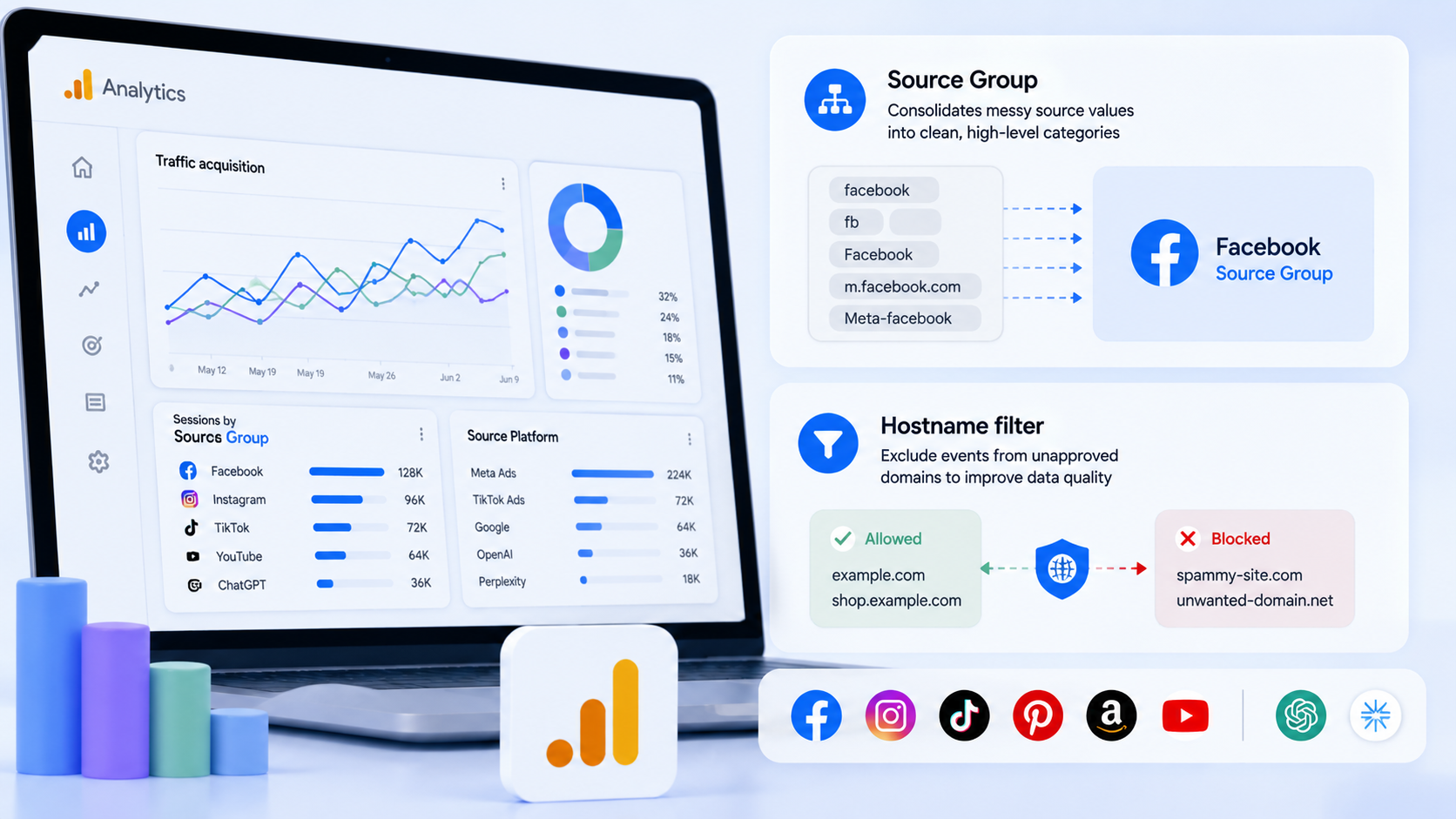
I’m excited to share that Google Analytics is introducing significant updates aimed at streamlining our data analysis efforts. The introduction of cleaner source attribution and enhanced filtering controls is set to make evaluating cross-channel performance much simpler.
With these updates, I’m finding it easier to manage fragmented traffic source reports, enhance cross-channel performance analysis, and minimize noise in the analytics data we rely on.
What’s New. The new Source Group reporting dimension consolidates different traffic source variations into one cohesive category.
For example, instead of seeing scattered source names like “facebook,” “fb,” and others, all Facebook-related traffic can now be grouped under a single identifiable value.
At the same time, Google’s improvements to the Source Platform field ensure classifications align consistently across advertising channels, providing us with clearer data insights.
Why We Care. This cleaner source classification allows me to perform more accurate attribution analysis and cross-channel reporting. Instead of dealing with traffic fragmented by inconsistent labels, I can better understand which platforms truly drive conversions and where our budgets are yielding the best performance.
Including AI traffic sources like ChatGPT and Perplexity in this analysis offers a standardized way to measure these emerging channels alongside traditional ones. New hostname filters further refine data quality by making sure that only approved domain traffic enters our reporting.
The Big Picture. As we manage campaigns across multiple platforms, inconsistent source naming complicates attribution and budget analysis. This new reporting structure is a breath of fresh air, simplifying these comparisons and enhancing our strategic decision-making.
Between the Lines. This update extends source standardization beyond Google’s properties to platforms like TikTok, Pinterest, and Amazon, while also including support for emerging AI-driven traffic sources such as ChatGPT and Perplexity.
Also New. Google has added hostname filters in the Admin section, allowing us to exclude events from unapproved domains before reporting, enhancing data accuracy.
This feature helps prevent unwanted traffic from skewing our analysis, ensuring that our data remains precise and actionable.
What Advertisers Get. The updates provide standardized source reporting, retroactive access to historical source group data, cleaner attribution analysis, and more control over which domains contribute to reporting.
The Bottom Line. Google is equipping us with new tools to maintain reporting consistency, improve attribution analysis, and keep datasets cleaner as our traffic sources continue to diversify.
Inspired by this post on Search Engine Land.

Leave a Reply