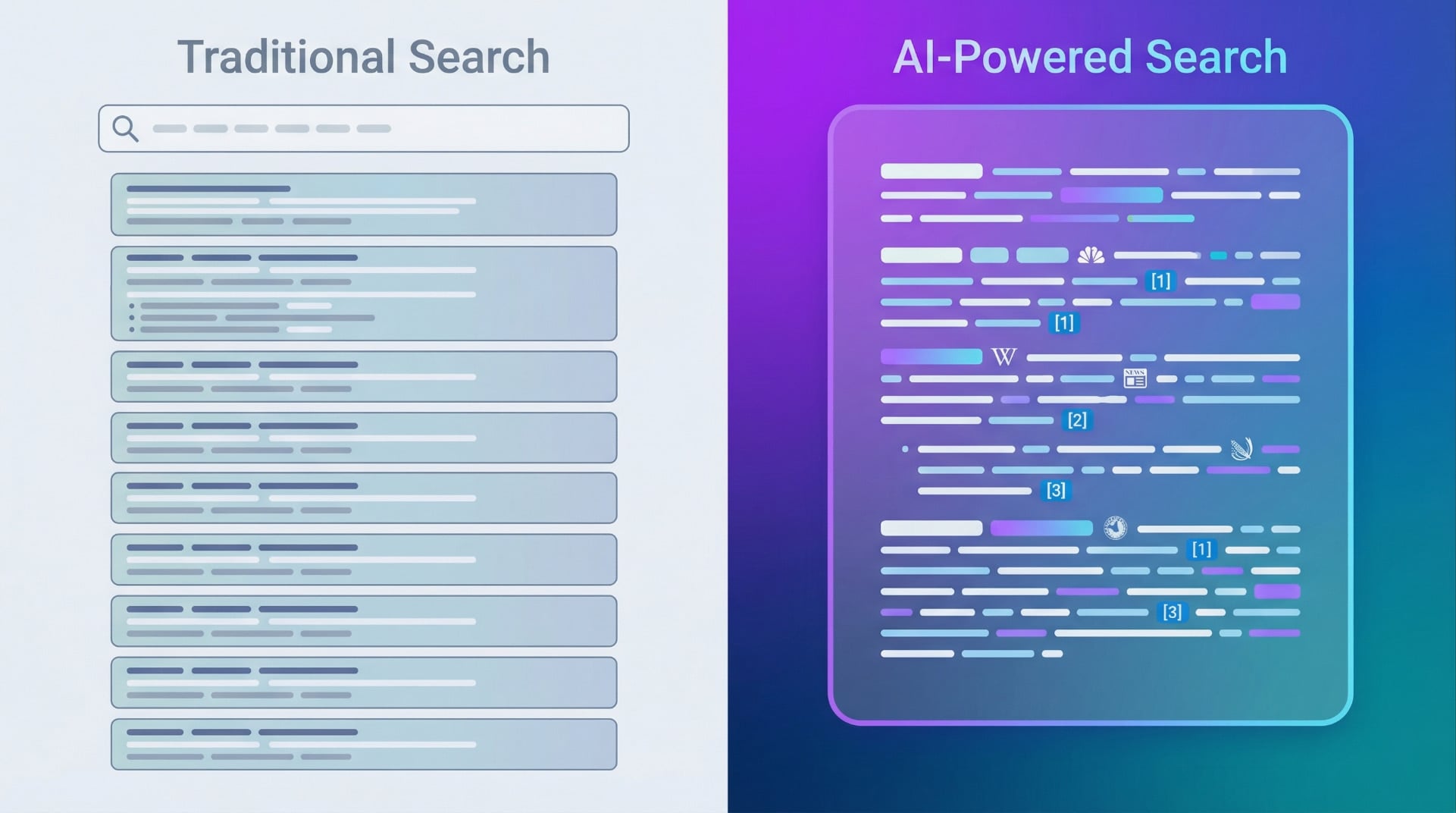

Ever wondered how to get your brand noticed by AI search engines? Let me walk you through the step-by-step process of getting your brand cited, recommended, and discovered by AI search platforms.
So, let me dive into the world of AI! Gartner forecasts a 25% drop in traditional search volume as AI engines take precedence. With Google’s AI Overviews attracting over 2 billion users monthly, and ChatGPT serving 800 million users weekly, the shift is here.
Gone are the days of just vying for a spot on Page 1. Now, it’s all about becoming the go-to source that AI engines cite in their answers.
This focus on generative engine optimization (GEO) is crucial in 2026. Here’s how to craft a GEO strategy that truly delivers.
What is GEO — and why 2026 is the tipping point
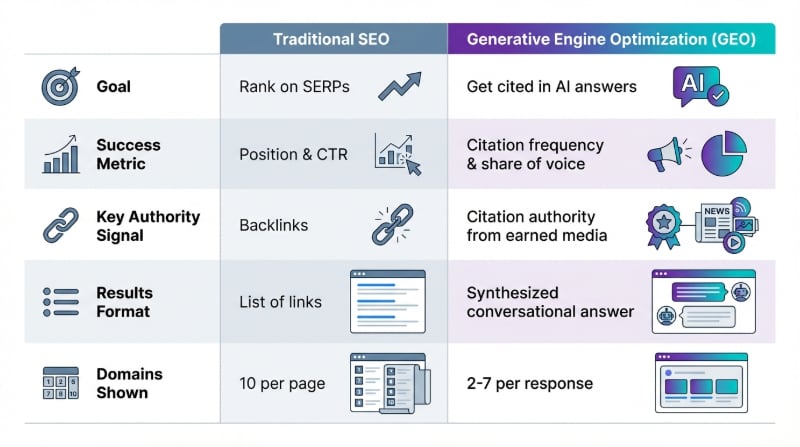
GEO is about aligning your content and digital identity so AI search platforms like ChatGPT, Google AI Overviews, Perplexity, and others, can easily find and recommend your brand.
If traditional SEO got you among the top 10 links, GEO aims to secure your position among the few domains cited in AI responses. It’s tougher in terms of competition, but the credibility from being mentioned by an AI engine is worth it.
Several forces make 2026 a milestone year. Users are becoming loyal to specific AI platforms, elevating GEO from experimental to essential. Universities and enterprises are backing this shift, highlighting AI engines’ preference for authoritative external sources over internal content.
Understanding this trend is vital for building an effective GEO strategy.
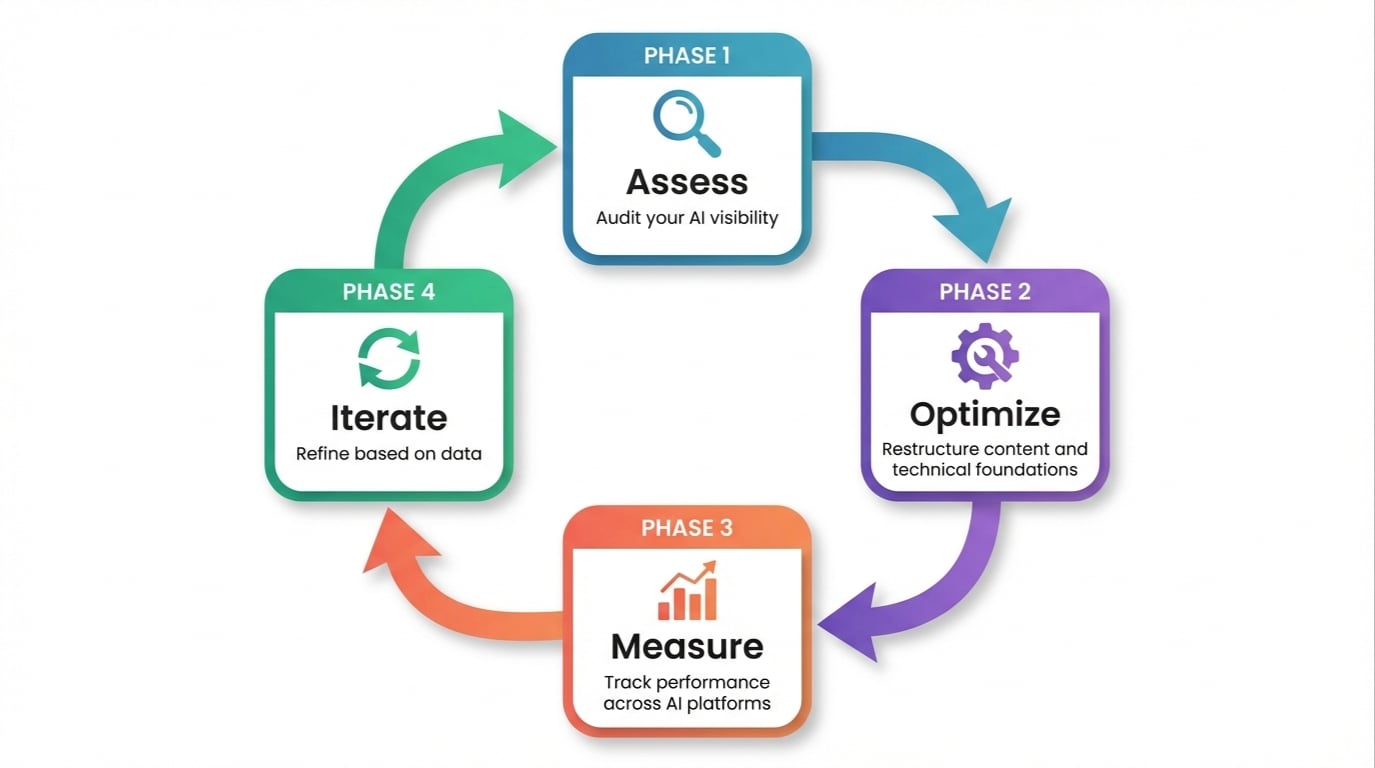
A practical GEO framework: assess, optimize, measure, iterate
Treating GEO as a mere content tweak is a misconception. Just like SEO, it requires ongoing commitment. Here’s a repeatable framework to master it.
Phase 1: Assess your AI search readiness
You need a baseline before optimization. Many brands monitor Google rankings but are blind to how AI engines portray them.
Ask yourself crucial questions: Are AI engines referencing your content? Can they read your structured data efficiently? How does your brand appear in AI-generated content? Are your competitors cited where you aren’t?
Consider using tools like Geoptie’s free GEO Audit for a quick assessment, providing actionable insights for optimization.
Phase 2: Optimize your content for AI engines
The heart of your GEO strategy is optimization. Focus on content structure, entity authority, technical foundations, and keeping content up-to-date.
Structure content for AI retrieval
AI breaks down content to assess relevance and clarity. Make sure each section stands independently.
Begin sections with straightforward answers followed by context. Use headings properly and add TL;DR summaries to enhance retrieval chances. FAQs are crucial as AI relies heavily on Q&A formats.
Build entity authority
GEO emphasizes brands and entities rather than single pages. Strengthen these signals for better recognition and citation by AI engines.
Ensure brand mentions are consistent, develop comprehensive about and author pages, and maintain a Wikipedia presence if applicable. A well-managed knowledge panel is also beneficial.
AI engines prefer coverage from third parties over personal content. Thus, digital PR and thought leadership have become essential GEO components.
Nail the technical foundations
Technical optimization in GEO includes traditional SEO elements plus AI-specific enhancements.
Utilize schema markup, verify robots.txt settings accommodate AI crawlers, and consider adding an llms.txt file to guide AI interactions with your site.
Don’t forget the basics. Fast load times, clean architecture, and mobile optimization remain crucial.
Prioritize freshness and depth
AI values recency in sources. A guide from 2024 without updates will be overshadowed by a 2026 version on the same subject.
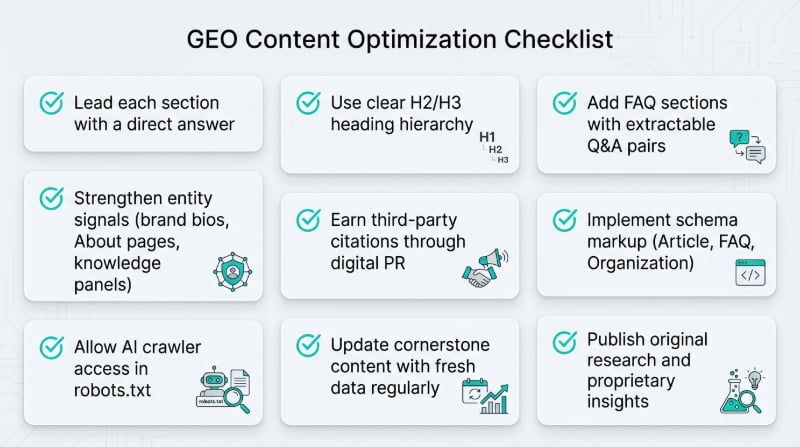
Keep cornerstone content refreshed with up-to-date data and insights, distinctly marked with a “Last updated” timestamp. Original research and exclusive data enhance your chances of being cited by providing unique value.
Phase 3: Measure your AI search performance
Measurement is often a missing piece in GEO strategies. Many marketers lack clear insights into AI search visibility after mastering traditional SEO metrics.
Important metrics include AI citation frequency, share of voice, citation sentiment, and AI-referred traffic. Traditional tools fall short in tracking these, necessitating specialized GEO platforms.
Geoptie’s free Rank Tracker is a convenient way to check your standing on various AI platforms as an initial assessment.
Phase 4: Iterate and scale
GEO doesn’t end after initial implementation. The AI landscape continuously evolves, requiring rapid adaptation.
Analyze performance data to understand citation success and refine strategies. Focus on platforms delivering the most value and monitor competitor movements.
Replicate successful content across various formats and integrate GEO tasks among content, SEO, PR, and product teams.
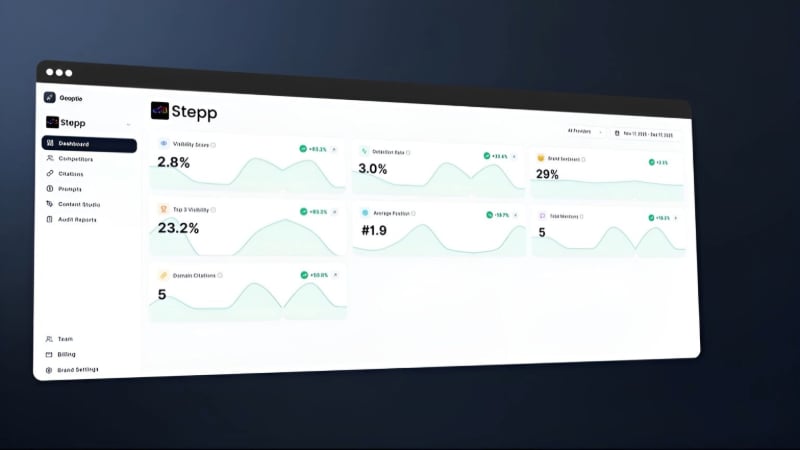
Geoptie offers a comprehensive dashboard for managing audits, competitor analysis, citation tracking, and content optimization all in one place, simplifying the GEO workflow.
Now is the time to build GEO capability
GEO is not a fleeting trend. As AI adoption surges in 2026 and beyond, an early commitment to GEO sets the stage for long-term success.
Follow this clear playbook:
- Assess your current standing
- Enhance your content and technical readiness for AI
- Track performance on relevant platforms
- Iterate continuously
Brands laying this foundation will reap ongoing benefits as AI becomes a primary tool for customer engagement.
The crucial decision is whether you’ll pioneer or be a follower in GEO.
Ready to take control of your AI visibility?
With Geoptie, you have a one-stop solution for mastering GEO. From in-depth audits to tracking AI rankings, competitor analysis, and crafting AI-specific content, Geoptie equips you from the start.
Whether beginning your GEO journey or scaling an existing plan, Geoptie helps translate insights into real progress. Start your free 14-day trial to gauge your brand’s AI search standing.
Inspired by this post on Search Engine Land.

Leave a Reply