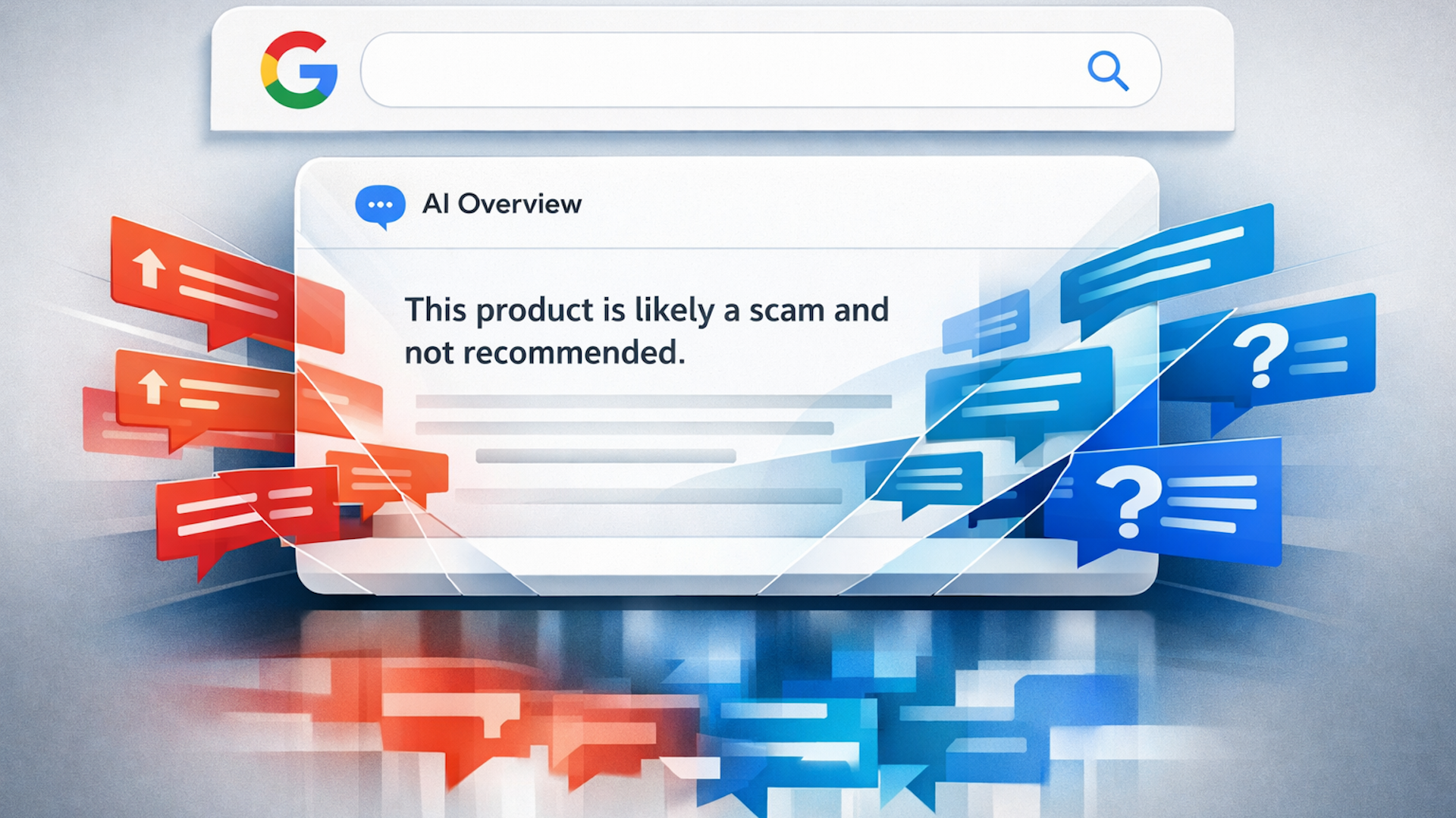
Have you ever typed a question into Google and noticed that the first answer you get is AI-generated? I think it’s fascinating how Google’s AI Overviews are becoming the new face of search results.
Personally, I find it intriguing, though I understand why some marketers and online reputation management (ORM) professionals are urging caution.
The issue stems from Google AI Overviews pulling a lot of their info from online forums like Reddit and Quora. The problem is, this user-generated content isn’t always accurate.
Google sources its AI overviews from what it deems as “high-authority” sites, with an affinity for conversational content and real user experiences.
But this approach puts firsthand anecdotes on the same pedestal as factual reporting, which can be problematic.
Moreover, Google often resurfaces threads that may be outdated or inaccurate—sometimes lacking a timestamp.
Those of us in ORM have noticed certain troubling patterns within Google AI Overviews.
Criticism from Reddit quickly becomes prominent, often overshadowing even official brand responses.
In essence, the AI takes the consensus of comments and transforms these minority opinions into something resembling facts.
There’s also what I call the amplification effect. In today’s fast-paced media world, algorithms rapidly transform opinions into facts. Think about how quickly TikTok or Instagram engross us with news and trends.
AI Overviews are no different, often delivering the most compelling, nuanced-free summaries.
To effectively counter false AI-driven narratives, businesses really need a proactive strategy.
Consider collaborating with an ORM team to stay ahead by monitoring forums, creating AI-readable content, and addressing known criticism.
We must adapt to the digital age by staying informed about AI literacy and evolving our reputation management practices.
With AI Overviews influencing public perception more than ever, it’s crucial for us as brand managers to actively manage our search reputation.
Inspired by this post on Search Engine Land.

Leave a Reply