
When I heard that Google is unveiling new measurement tools, I was eager to see how these could empower advertisers to connect data more effectively, prove their impact, and make smarter decisions.
Google’s latest tools are designed to give advertisers a better grasp of performance across increasingly complex customer journeys. As AI evolves in transforming campaigns, creative strategies, and targeting, Google is offering updates in data integration, experimentation, and media mix modeling. This helps us, as marketers, convert fragmented signals into actionable insights.
The reason why this matters to me is that while automation has simplified campaign management, understanding what truly works has become more complex. These updates aim to facilitate data connections, provide proof of what’s driving results, and enable smarter budget decisions across various channels. As AI manages more execution, robust measurement becomes crucial for performance and growth differentiation.
Data is the foundation here. Google’s expansion of its Data Manager offers a clearer view of data flow across platforms like BigQuery, HubSpot, and Shopify. A new map-based interface will allow us to visualize connections between data sources and address gaps in tracking or configuration. Additionally, updates to the Google tag are designed to simplify setups, enabling advertisers like me to enhance existing tags without additional coding.
The overall goal is to unify signals and improve data quality, which directly influences campaign performance. Google recognizes that advertisers often face more challenges in data setup and integration than in executing campaigns themselves. By streamlining tagging and data flows, Google aims to eliminate one of the biggest hurdles to effective AI adoption.
Introducing Meridian GeoX, Google provides a new geo-experimentation tool to measure incremental impact across regions. Built on an open-source framework, GeoX integrates with Google’s broader Marketing Mix Model, Meridian, offering a more robust way to validate performance — particularly when presenting results to finance teams.
This signifies a shift from merely correlating data to focusing on causal measurement.
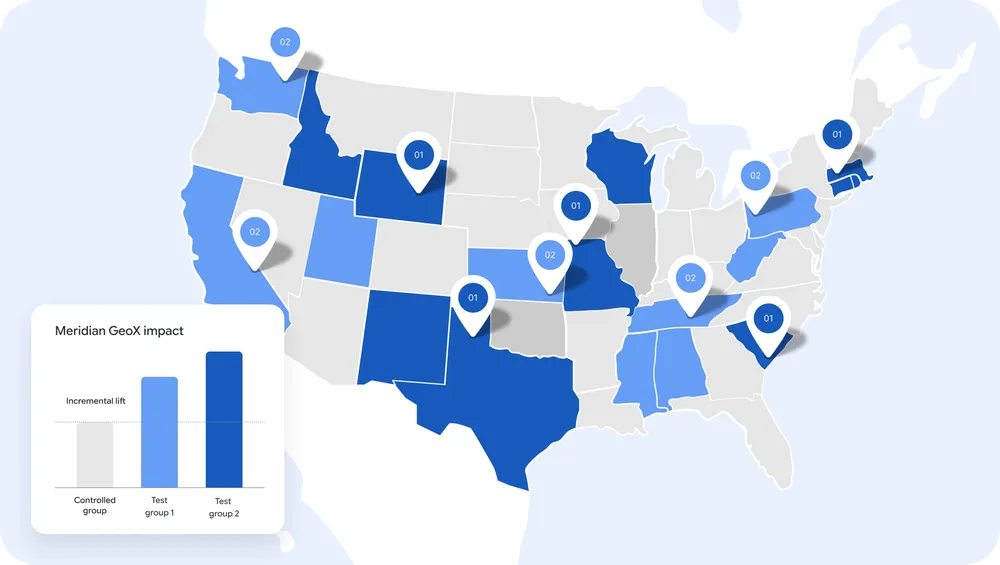
As changes in privacy reduce visibility and make attribution more complex, we’re under pressure to prove impact. Tools like GeoX aim to offer that “ground truth” which many attribution models struggle to provide.
To simplify complex Marketing Mix Models (MMMs), Google is launching Meridian Studio, a Google Cloud-powered platform. This helps teams like mine to build, customize, and scale models more efficiently, focusing on making MMMs less resource-intensive and more accessible for enterprise teams handling large datasets.
What I’m keeping an eye on:
- Whether simplified tools will encourage wider adoption of MMMs among advertisers
- The effectiveness of GeoX in proving incremental impact
- If improved data visibility will lead to better campaign performance
In summary, Google is strategically shifting focus: in our AI-driven world, it is better measurement — and not just better automation — that will dictate success.
Inspired by this post on Search Engine Land.

Leave a Reply