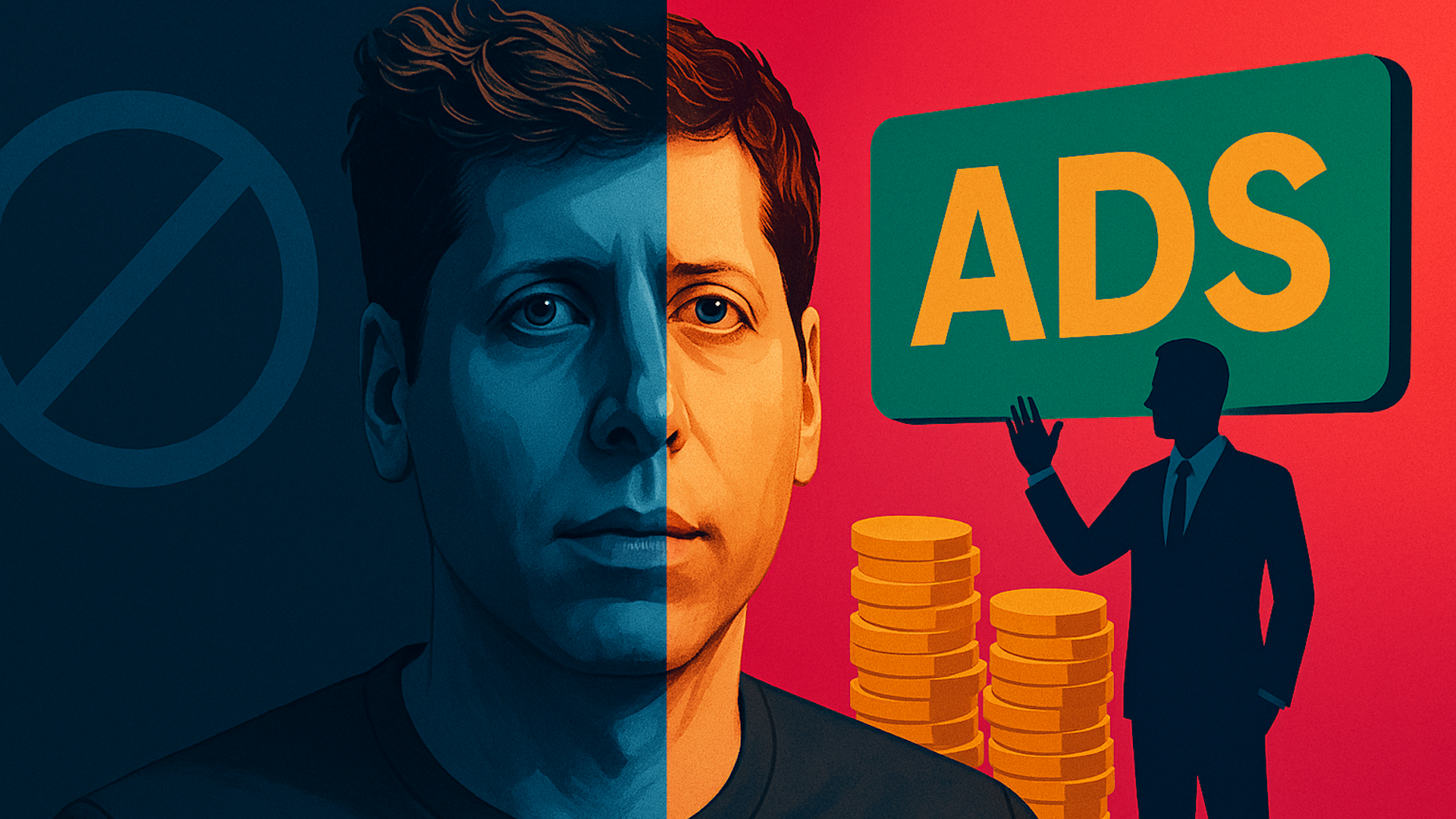
As I’ve been closely following the developments at OpenAI, I’ve found ChatGPT’s potential shift to ads quite intriguing. CEO Sam Altman has indicated that ads might become part of ChatGPT’s framework, but he remains uncertain about their exact form. He’s also not convinced that advertising represents OpenAI’s most significant revenue opportunity.
During a fascinating interview on Conversations with Tyler, Altman critiqued Google’s ad model:
- “Ads on a Google search are dependent on Google doing badly. If it was giving you the best answer, there’d be no reason ever to buy an ad above it.
- “So you’re like – that thing is not quite aligned with me. ChatGPT, maybe it gives you the best answer, maybe it doesn’t, but you’re paying it, or hopefully all are paying it, and it’s at least trying to give you the best answer.”
His point was clear to me: Google’s profits stem from subpar results. Altman suggests that ChatGPT should earn only when it genuinely gains users’ trust.
- “If ChatGPT were accepting payment to put a worse hotel above a better hotel, that’s probably catastrophic for your relationship with ChatGPT.”
Why I care about this is that if Altman’s vision for ChatGPT ads comes true, the entire journey from inquiry to purchase could unfold seamlessly within a single conversation. It’s crucial for brands and businesses to adapt to this new landscape to maintain visibility.
How Altman envisions ChatGPT Ads is captivating: Display the top recommendation first, and if I choose to book or buy with a single click, OpenAI might earn a small commission without affecting my results.
- “If ChatGPT shows you its guess – the best hotel, whatever that is – and then if you book it with one click, takes the same cut that it would take from any other hotel, and there’s nothing that influenced it … I think that’s probably OK.
- “We’ll do that for travel at some point.”
What he won’t do is allow ChatGPT to have pay-to-play answers. Altman believes that if money influences rankings, the trust users place in ChatGPT will erode.
- “There’s a kind of ad that I think would be really bad like the one we talked about. There are kinds of ads that I think would be very good – or pretty good – to do. I expect it’s something we’ll try at some point. I do not think it is our biggest revenue opportunity.”
What an OpenAI ad might look like remains a mystery even to Altman. He relies on his team’s expertise, trusting that they’ll chart the right path.
- “I’m really good about not doing the things I don’t want to do.
- “You know, we have the world expert thinking about our product strategy. I used to do that. I used to spend a lot of time thinking about product and now she’s much better at it than me. I have other things to think about. I’m sure she’ll figure it out.”
Dig deeper. For more insights, check out Sam Altman’s ChatGPT pivot: From ‘I hate ads’ to ‘maybe they don’t suck’
The interview. Dive into Sam Altman on Trust, Persuasion, and the Future of Intelligence – Live at the Progress Conference
Inspired by this post on Search Engine Land.
Leave a Reply