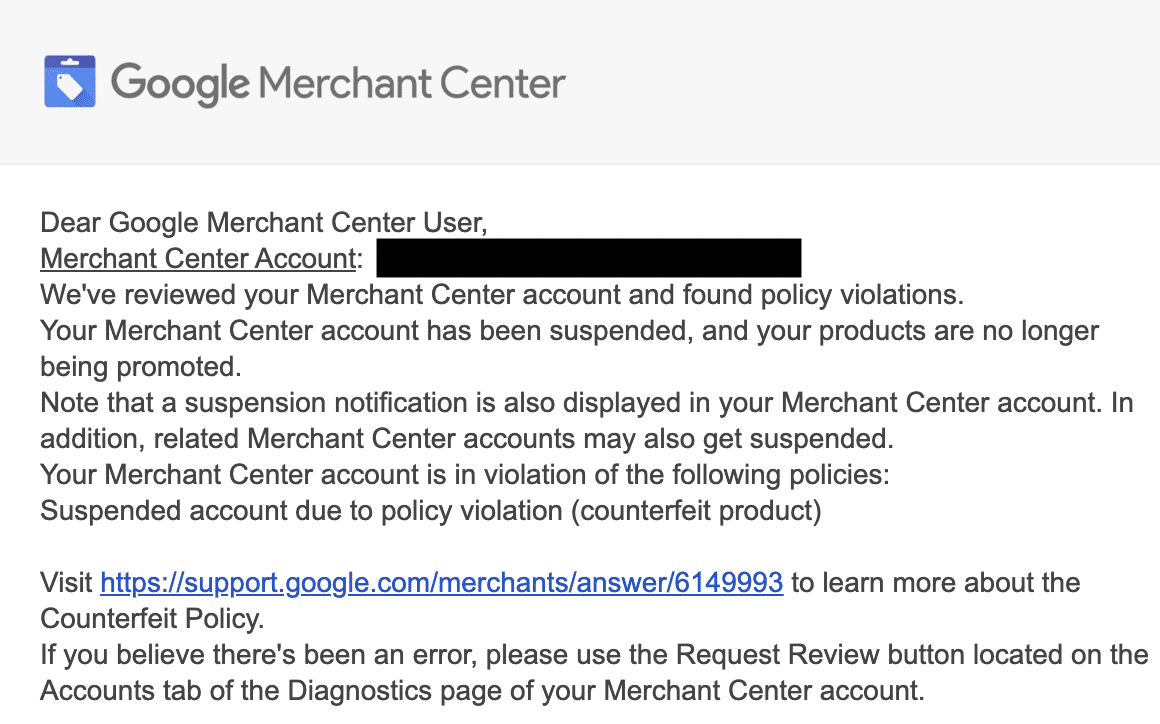
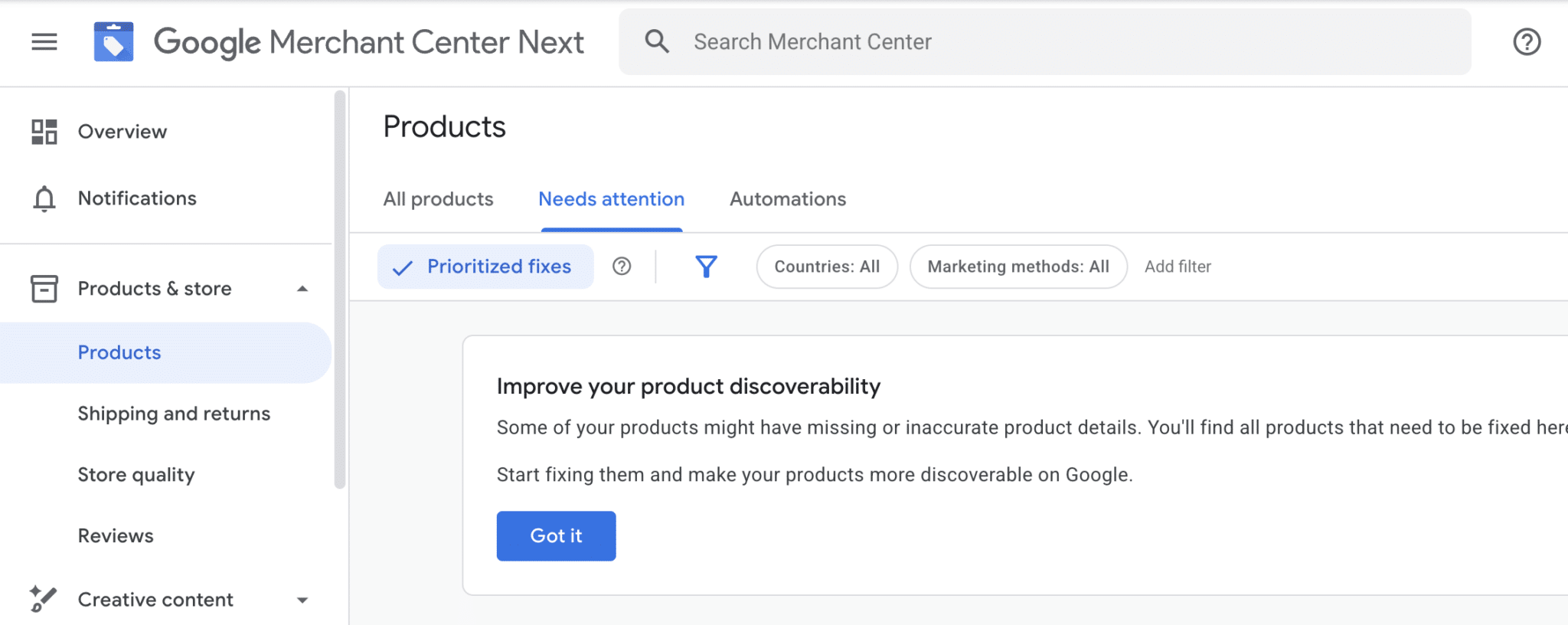
Having my Google Merchant Center account suspended felt like a gut punch. One moment, everything’s running smoothly, and the next, you’ve lost access to Google Shopping and your most lucrative sales channel is cut off. It’s daunting, but here’s how I managed to turn things around.
Initially, I needed to understand why my Merchant Center was flagged. It required a comprehensive audit of my site and feed to pinpoint and correct the issues before I could confidently request a review.
Google imposes strict policies for Google Shopping, stricter than its general advertising rules. Any perceived violation can lead straight to suspension. Let me walk you through my experience and offer some heartfelt guidance.
Here’s what I did to fix the suspension and bring my account back online. I learned it’s not just a matter of addressing one big issue; often, it’s a combination of smaller gaps that signal untrustworthiness to Google’s automated systems.
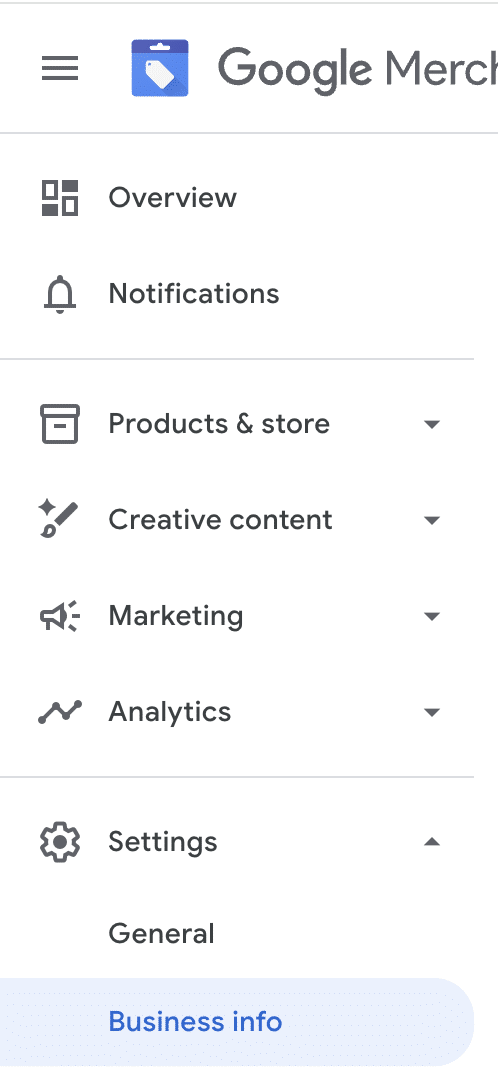
The first step was a complete compliance audit of my website and Merchant Center settings. I discovered that my Contact Us page needed a physical address and professional email. These are small details that Google flags for authenticity.
Next, I addressed policy pages like shipping, returns, and refund policies, ensuring they contained all the necessary details such as cancellation terms and payment methods.
Additionally, I ensured the functionality of my site was up to par. It was essential that Google could crawl my site without issue. I fixed URL structures and ensured product data matched across platforms.
Each change was meticulously documented and prioritized. Once everything was set, I requested a review from Google. It felt rewarding when Google approved the appeal and reinstated my account.
Key takeaway: It’s crucial to understand that reinstatement often requires addressing multiple aspects of your site and data feed. Google evaluates your entire ecosystem, not just isolated elements.
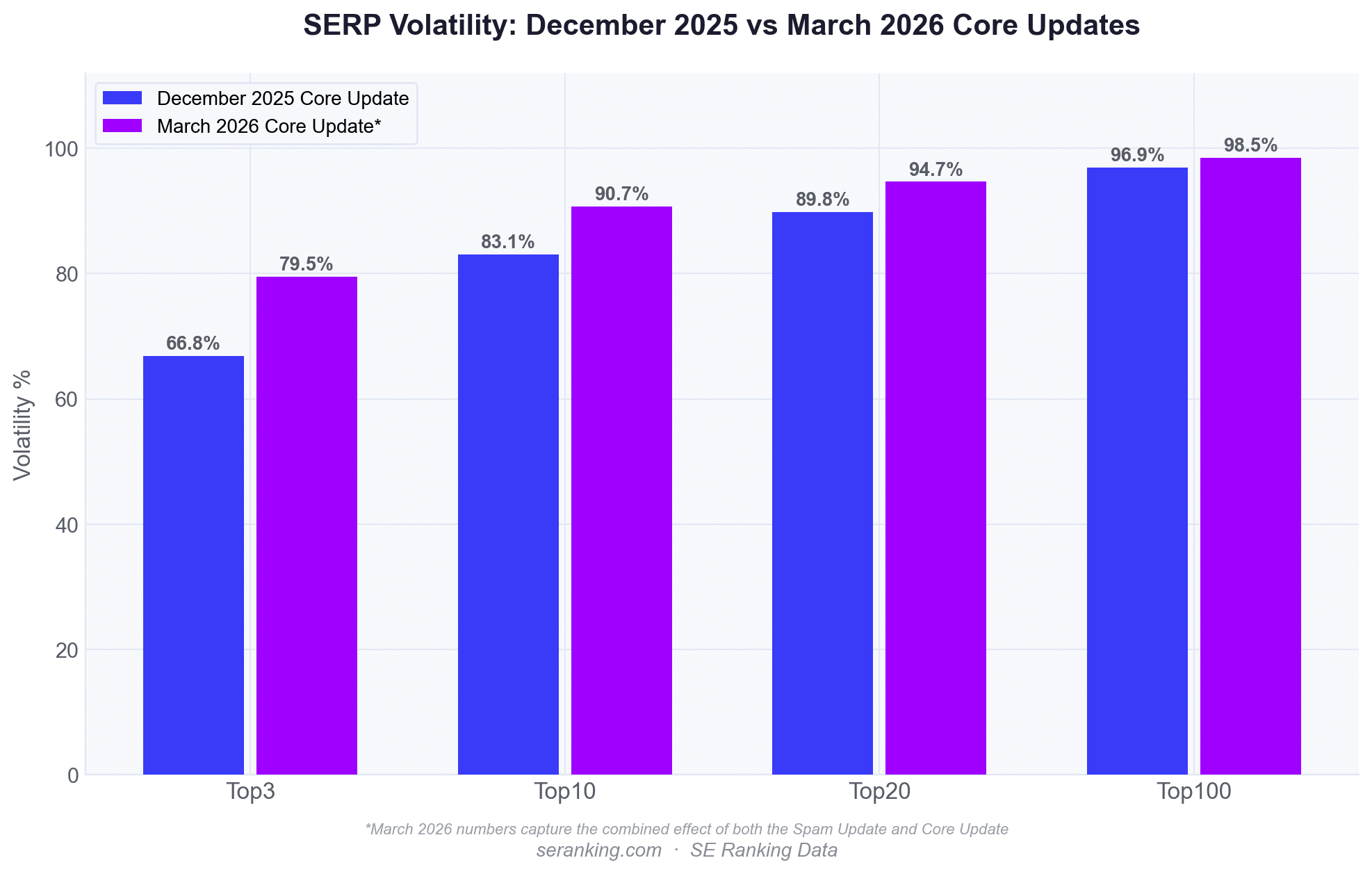
When the March 2026 Google core update hit, I couldn’t help but notice the dramatic shifts it created. Nearly 80% of the top search results were reshuffled. This update really boosted brands and official sites while leaving some aggregators scrambling to catch up.
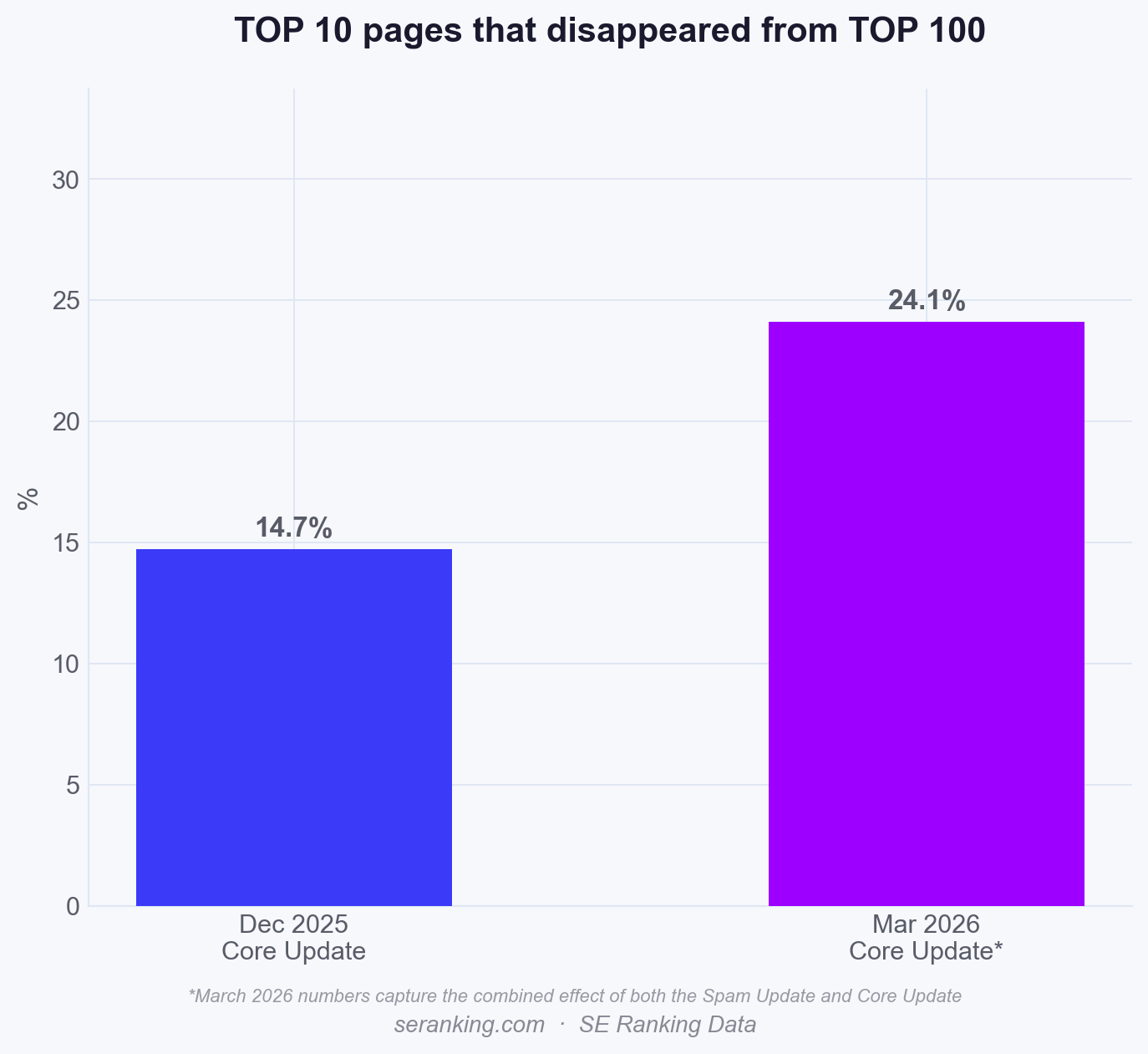
I stumbled upon SE Ranking’s exclusive data, which highlighted how much more volatile the March update was compared to December 2025. Surprisingly, nearly one-in-four top-10 pages disappeared from the top 100 altogether!
The data breakdown. I saw increased volatility across all ranking tiers.
In the top 3, 79.5% of URLs changed positions, a notable jump from December’s 66.8%. Similarly, 90.7% shifted in the top 10, compared to 83.1% earlier.
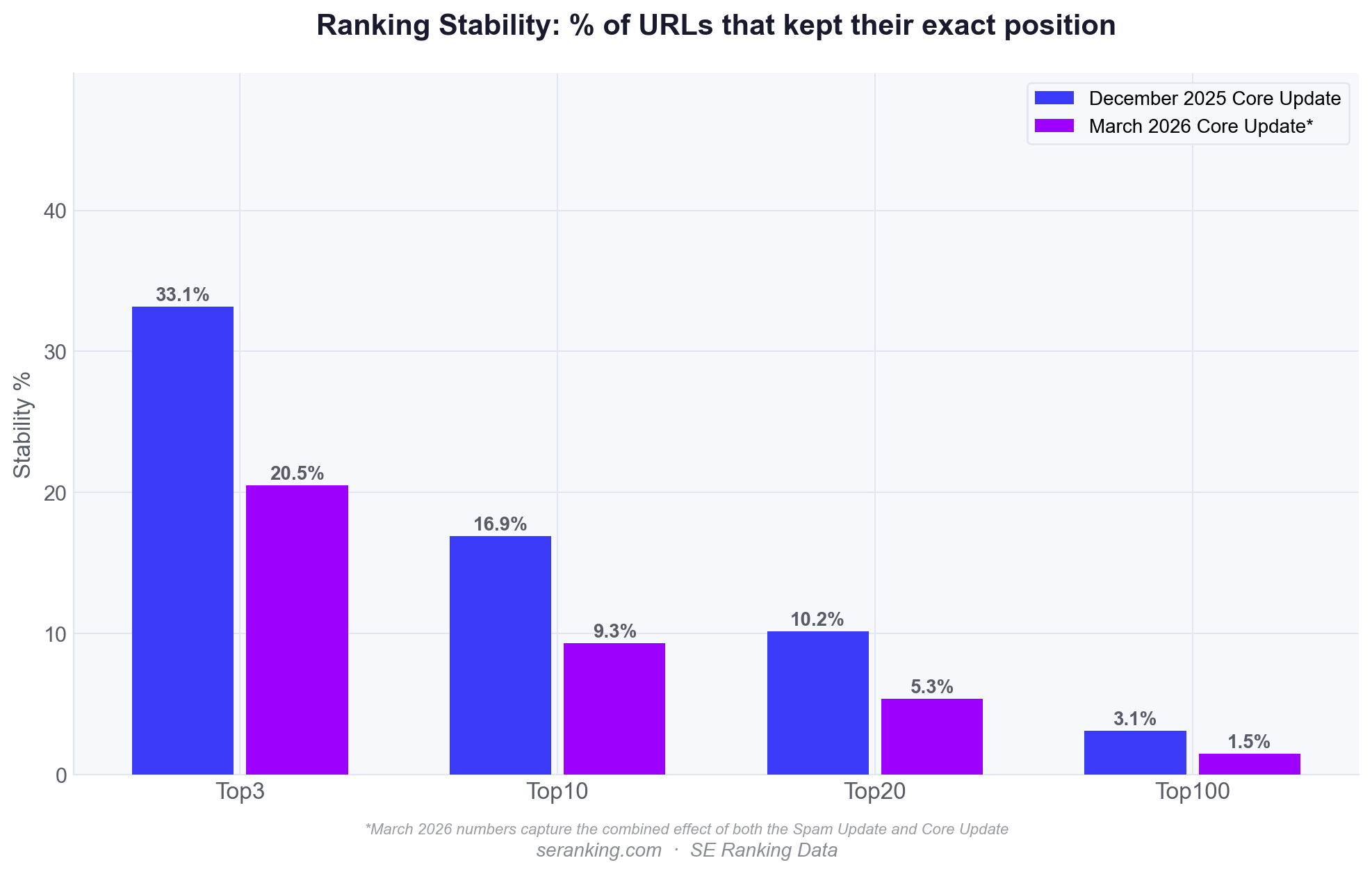
Stability? Well, it took a nosedive. Only 20.5% of top 3 URLs stayed put, down from 33.1%, and in the top 10, stability fell to 9.3%, down from 16.9%.
Then there’s the churn: about 24.1% of pages in the top 10 vanished from the top 100, a significant rise from the 14.7% observed in December.
It’s (sort of) complicated. As I delved into it, I realized the core update began just a day after a significant spam update concluded, which made pinpointing the source of changes tricky. However, most disruption seemed to stem from the core update, with the spam update adding more chaos.
Diving deeper. Aleyda Solis’ analysis, using Sistrix data, revealed notable shifts from intermediary sites towards stronger, more authoritative sources. Sites that gained included:
– Official and institutional sites.
– Specialist and niche sources.
– Established brands.
– Dominant platforms.
On the flip side, aggregators, directories, and comparison sites saw declines.
Winners and losers. Solis pointed out interesting shifts: dictionary and language sites fell while major platforms rose; job aggregators lost visibility, whereas employer-specific sites like USAJobs gained.
Institutional sites saw fantastic gains on data-driven queries, with travel and real estate platforms shifting toward primary destinations. Health results were reordered with more emphasis on clinical and specialist sources.
Interestingly, YouTube experienced the most substantial visibility drop in this dataset.
Why it matters. From what I gathered, Google’s March update seems to have raised the ranking bar significantly. Strong brands and data-rich sources fared well, while intermediary sites are now more vulnerable.
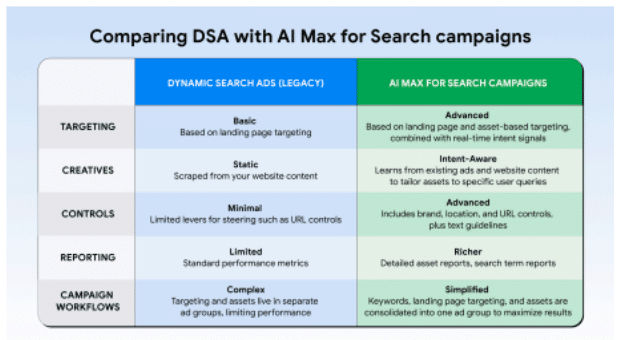
As I delve into the latest updates from Google, I discovered that they’ll be retiring Dynamic Search Ads (DSA) in favor of their newer AI Max toolset. This transition will begin in September, and it’s bound to impact those using DSA, automatically created assets (ACA), and campaign-level broad match settings.
It’s fascinating to learn that Google announced AI Max for Search campaigns will exit beta, with “hundreds of thousands” of advertisers already onboard globally. I find this shift intriguing as it hints at the increasing reliance on AI-powered tools in digital advertising.
Starting September, my eligible campaigns utilizing DSA, ACA, or broad match will automatically be migrated to AI Max. This means Google will no longer support the creation of new DSA campaigns through their various platforms.
Why does this matter to us? Embracing AI Max beforehand allows us better control over campaign settings. Google mentions this change could potentially lead to an average 7% improvement in conversions or conversion value while maintaining the same efficiency.
According to Google, AI Max offers more conversions or conversion value at a similar cost per acquisition (CPA) or return on ad spend (ROAS) for non-retail sectors. It achieves this by using comprehensive features like search term matching, text customization, and URL expansion.
A Brief History: DSA has been a valuable tool for capturing traffic beyond keyword-focused campaigns, thanks to its dynamic headline generation and landing page redirection. However, changes in consumer search behavior have prompted Google to innovate further.
AI Max aims to enhance search campaigns by integrating broad real-time intent data beyond traditional landing page signals. It’s designed to adapt to the increasingly complex search landscape we navigate today.
Understanding AI Max: This feature maximizes reach, personalizes ad content, and provides more control over brand, location, and text settings.
So, what should we do now? Google encourages us to make the switch before September to ensure smoother transitions and continuity in our campaigns.
Phase 1: Voluntary Upgrades is happening now. DSA users like me can leverage new tools to smoothly migrate campaign data and settings. Meanwhile, ACA and broad match users will find prompts nudging them toward AI Max.
Phase 2: Automatic Upgrades begins in September, converting dynamic ad groups in DSA campaigns to standard ones while preserving significant settings. ACA and broad match campaigns will migrate with essential features enabled by default.
The Bottom Line: Google’s move to make AI Max the standard signifies a shift towards AI-driven strategies. By acting now, I can test different settings and fine-tune results before the mandatory switch.
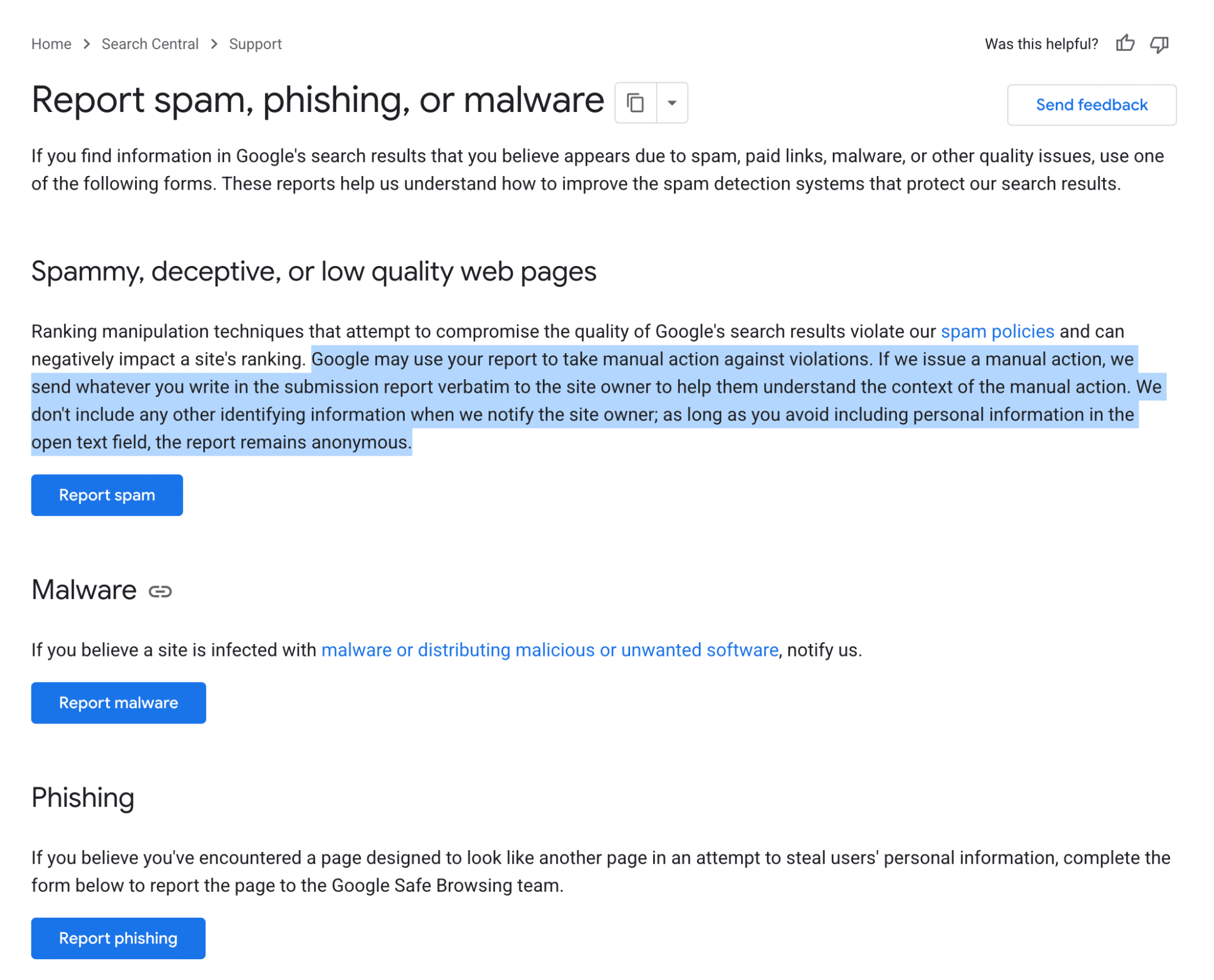
I’ve recently come across a noteworthy update from Google, which now enhances the potential impact of our spam reports. Interestingly, these reports are no longer just documentation—they might trigger manual actions against the reported sites. In addition, whatever I write in my report could be shared verbatim with the site owner I’ve reported.
Here’s Google’s Announcement. Google clarified in a note that they may utilize our spam report submissions to undertake manual actions against policy violations. This update makes it clear that spam reports are more critical than ever in maintaining the integrity of Google’s search results.
The updated guidelines specify:
“Ranking manipulation techniques that attempt to compromise the quality of Google’s search results violate our spam policies and can negatively impact a site’s ranking. Google may use your report to take manual action against violations. If we issue a manual action, we send whatever you write in the submission report verbatim to the site owner to help them understand the context of the manual action. We don’t include any other identifying information when we notify the site owner; as long as you avoid including personal information in the open text field, the report remains anonymous.”
Spam Reports Fuel Manual Actions. It seems that Google aims to clarify their usage of spam reports. This is quite the shift from their previous communication, where spam reports didn’t directly lead to manual actions. To me, this feels like more than just a clarification—it’s a significant development in how reports are handled.
Direct Transmission of Spam Report Text. Also, Google stated that the exact text I use in my spam report might be sent to the site owner. They advise us not to include personal details, as my submission remains anonymous unless I disclose such information.
Google emphasizes the importance of keeping sensitive information out of the report to ensure my anonymity is maintained.
Why This Matters to Us. This change could significantly alter how we approach spam reporting on Google. If you’re someone who regularly submits these reports, like I do, it’s essential to understand the new implications and modify your reporting practices accordingly.
I’ve noticed something interesting happening in the world of PPC advertising. More and more buyers are doing their homework on Reddit before they even think about clicking on ads. This detour is skewing PPC data and misleading our automation efforts.
At over $50 per click, Reddit surprisingly outperforms every vendor organically around 67.3% of the time based on a study that covered 8,566 keywords. This insight is not restricted to just B2B SaaS; it’s a reality many industries are facing.
If you’re in legal, finance, premium home services, or insurance sectors, these high CPCs are part of your landscape. It’s crucial to understand how these dynamics affect you.
The SEO community has been discussing this for a while, highlighting the need to build glossaries and invest in content strategies. However, what intrigues me is how this affects the signal layer our PPC campaigns rely on.
When someone searches a high-intent term and lands on Reddit instead of our page, they don’t just get peer opinions. Google’s algorithm takes note too, registering this as a resolved query.
This kind of engagement feeds back into Google’s algorithm, gradually shaping the relevance of those terms, and it spells trouble for us if we’re not aware of it.
The real complication arises when someone clicks on our ad after spending days researching on Reddit. Smart Bidding isn’t aware of this buyer journey; it sees only a $50 click and waits to see if it converts.
That delay might lead to misinterpreting performance and drawing back on keywords that are actually bringing in qualified buyers because the full picture wasn’t visible.
UCaaS vendors show us how to counteract this. They didn’t outspend Reddit. They invested in content that educates and informs, giving search engines robust, relevant signals.
On the bidding side, offline conversion tracking is essential. It shows the algorithm which leads closed and their worth, helping it comprehend that a longer, research-heavy path at a higher CPC might still be beneficial.
By feeding the system first-party data via click IDs, Google’s findings indicate a 10% median lift in conversions. This helps align the algorithm’s understanding with what’s actually happening on the ground.
For organic strategy, it’s about being present where these conversations take place. This could mean answering more questions directly on platforms like Reddit and evaluating your presence in these research hubs.
Discover how the leading franchise directories of 2026 measure up in terms of accuracy, consistency, and usability. As someone who spends every day immersed in the realm of online search, I carefully evaluate which information is easily accessible, reliable, current, and truly beneficial for decision-makers.
This extensive knowledge directly influences franchise research platforms. Each directory was meticulously assessed using a weighted scoring system focusing on listing verification, research depth, and buyer support and guidance.
Our Evaluation System
Factor
Weight
Why it Matters
Listing Verification
35%
Prevents misleading or outdated franchise information.
Research Depth & Data Quality
25%
Determines the depth in which buyers can evaluate potential opportunities.
Buyer Support & Guidance
15%
Helps buyers understand next steps after initial interest.
Listing Consistency
15%
Allows for clear, side-by-side comparison.
Platform Longevity & Credibility
5%
Signals experience and long-term reliability.
Estimated Catalog Size
5%
Reflects breadth without prioritizing volume over quality.
With these factors in consideration, here’s how our selected franchise directories for 2026 stack up.
Best Directories for Franchise Opportunities
Directory
Listing Verification
Research Depth
Buyer Guidance
Listing Consistency
Platform Longevity
Catalog Size
Best For
Franchise.com
Yes
Strong
Strong
High
Est. 1995
Broad
Buyers who want the most comprehensive and accurate directory
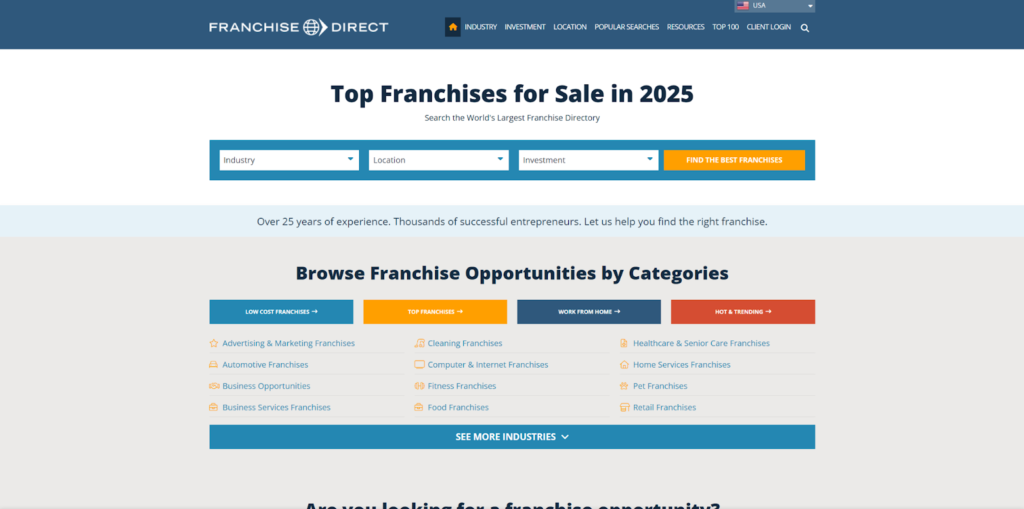
Franchise Direct
No
Limited
Moderate
Inconsistent
Est. 1998
Very Broad
International exploration
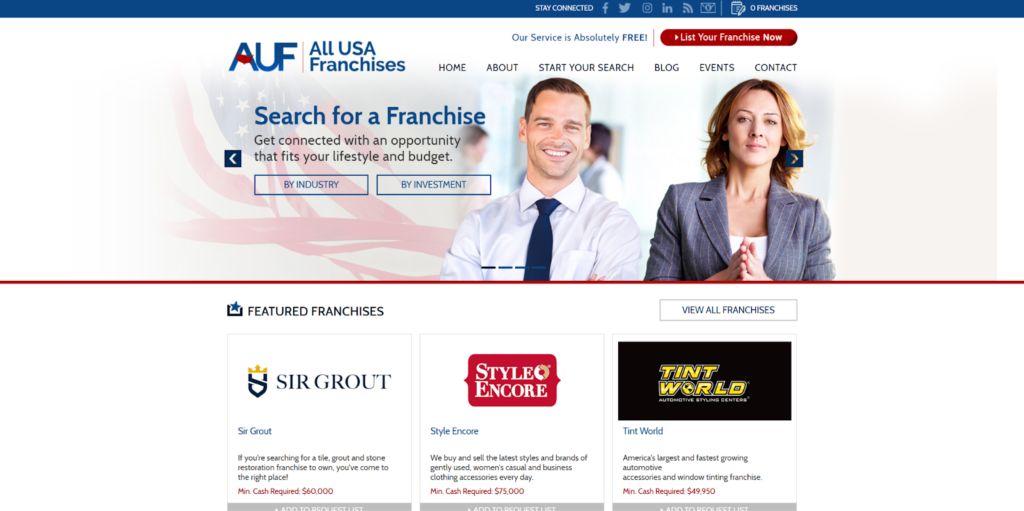
All USA Franchises
No
Limited
Limited
Inconsistent
Est. 2018
Very Broad
Broad US franchise browsing
Entrepreneur.com
No
Moderate
Limited
Low
IFA Est. 1960
Narrow
Idea discovery
Franchise.org (IFA)
No
Strong
Very Strong
Low
Est. 2009
Broad
Learning franchising basics
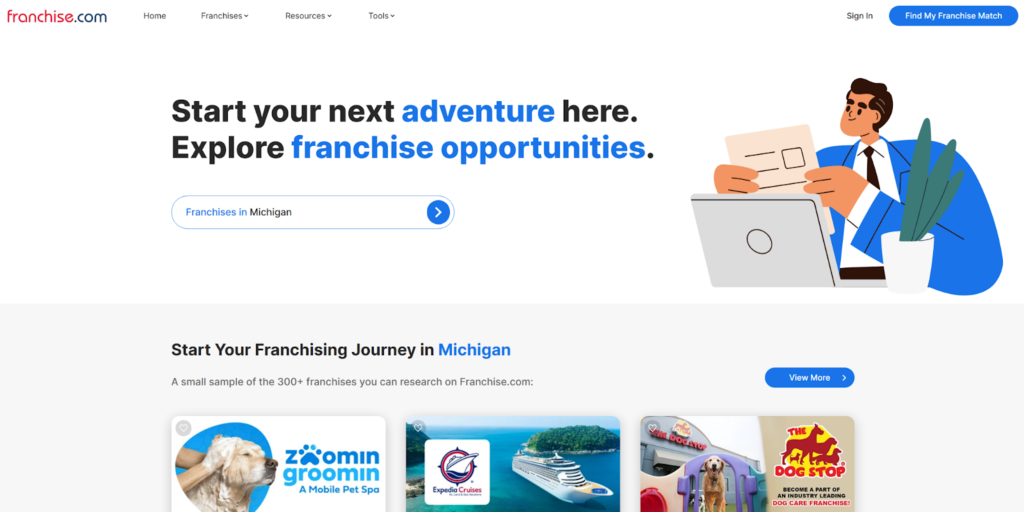
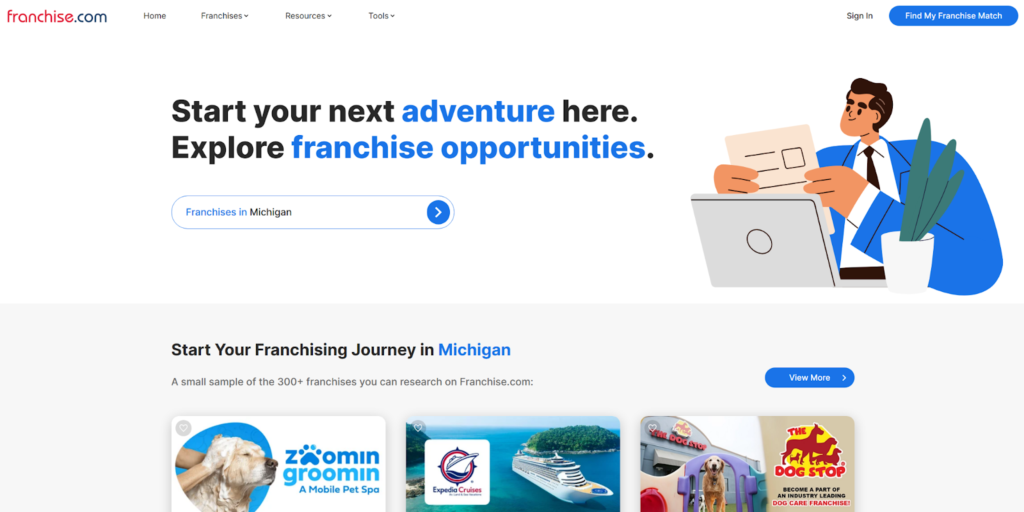
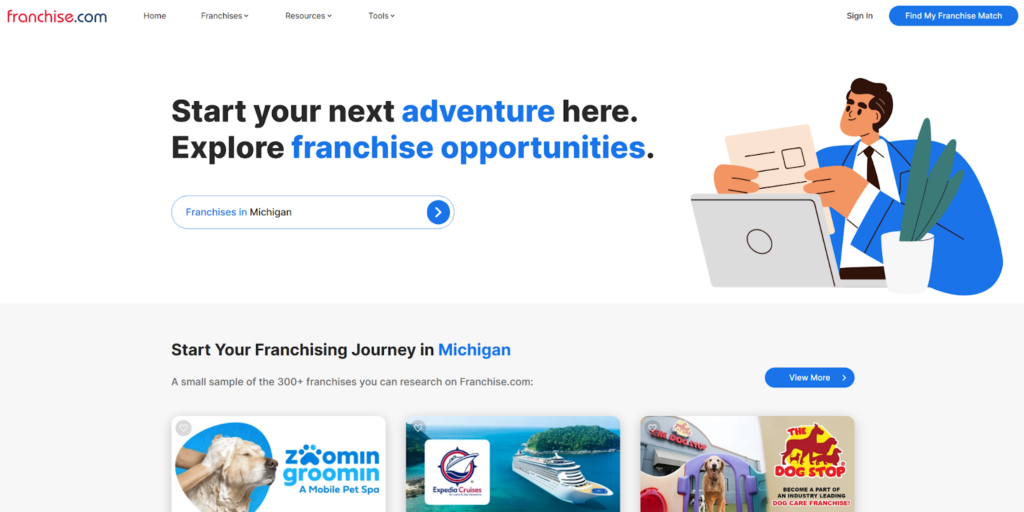
Franchise.com – Comprehensive Franchise Discovery
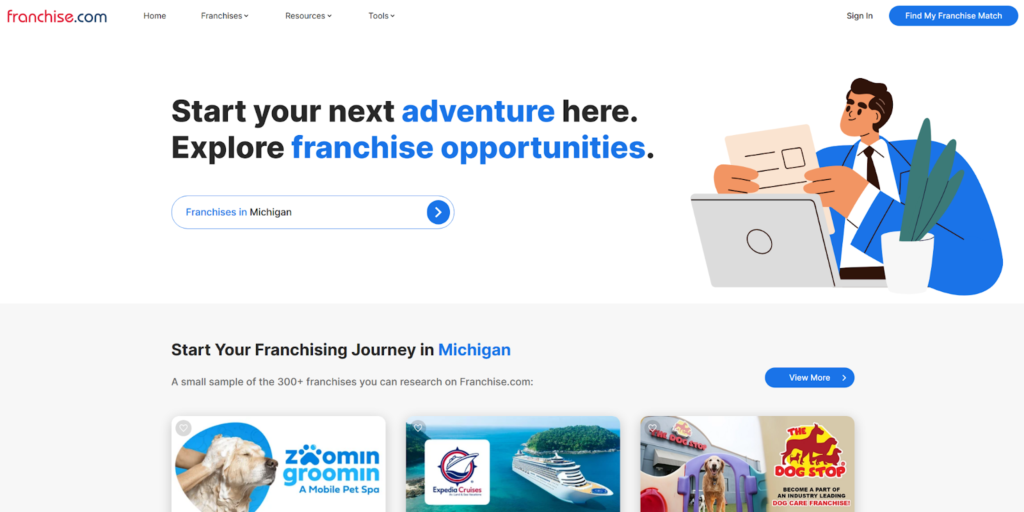
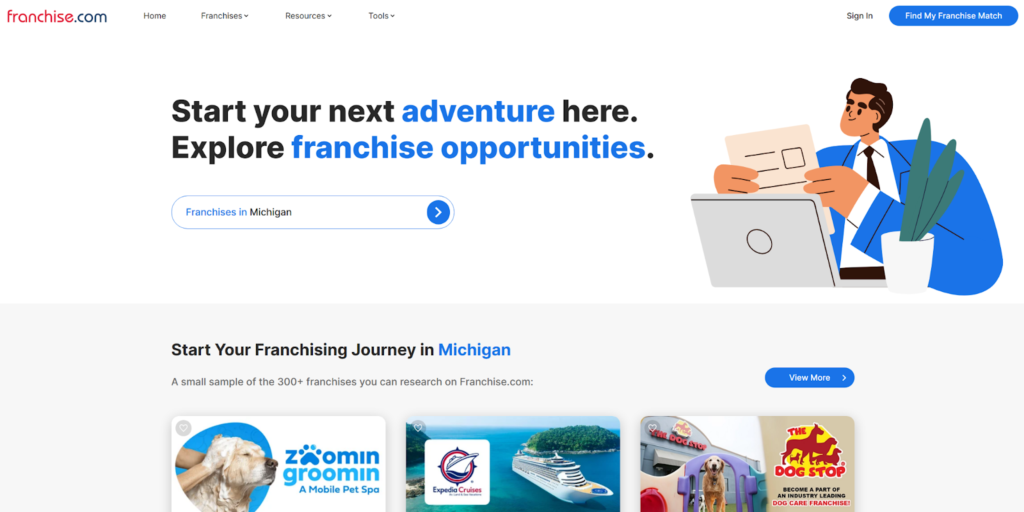
Franchise.com stood out as a leader with its verified listings and detailed research information. I find their commitment to accuracy and comparability enhances trustworthiness and reliability greatly.
Their verification-first approach and integrated buyer guidance make it an ideal platform for serious buyers looking for structured and contextual information.
Best for: Buyers seeking accuracy and context
Listing Verification: Yes
Research Depth: Strong
Buyer Guidance: Strong
Listing Consistency: High
Catalog Size: Broad
Years in Operation: Established 1995
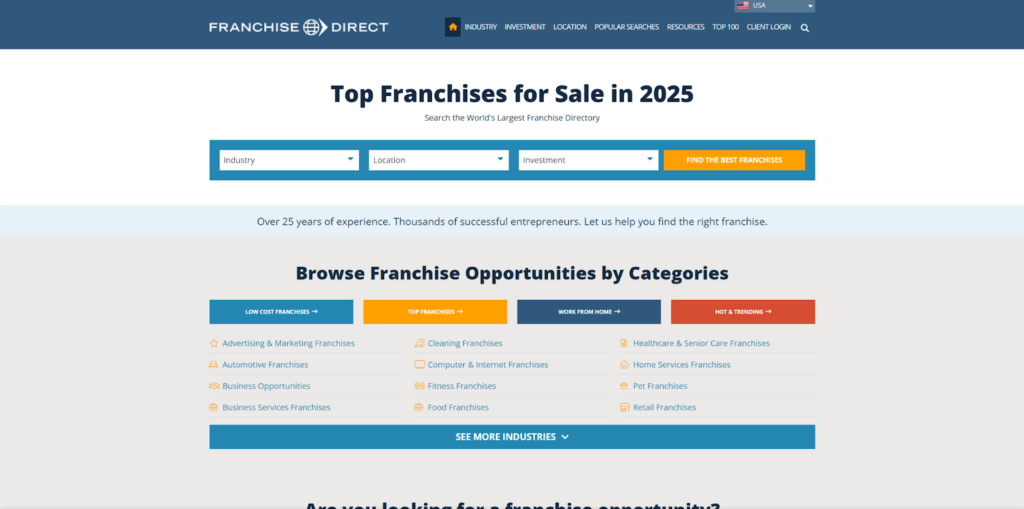
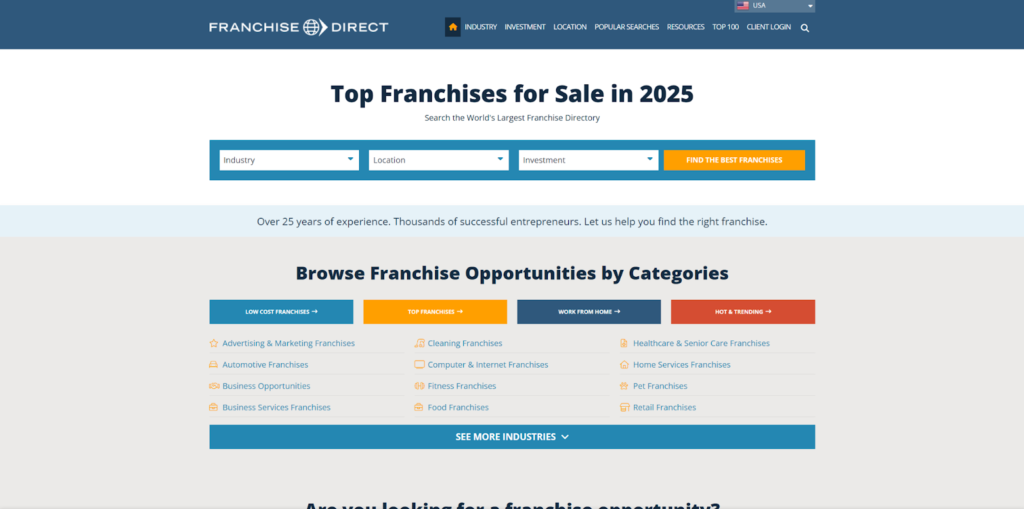
Franchise Direct – Ideal for International Explorers
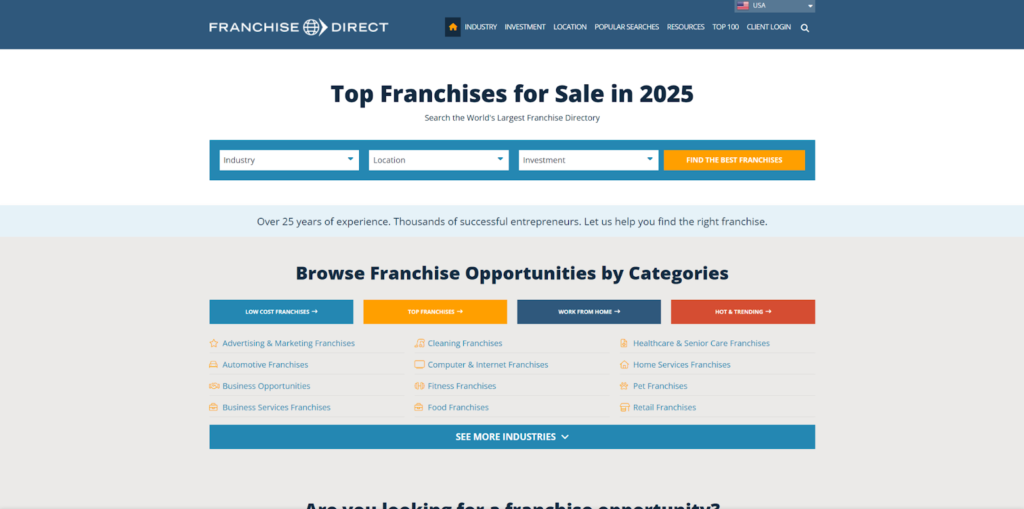
Franchise Direct provides a diverse catalog of international opportunities, offering insights into global franchise concepts. However, if you need verified and highly structured information, this isn’t the platform for you.
This directory is particularly advantageous for early exploration or for those interested in gathering broad ideas on international franchises.
Best for: International exploration
Listing Verification: No
Research Depth: Limited
Buyer Guidance: Moderate
Listing Consistency: Inconsistent
Catalog Size: Very broad
Years in Operation: Established 1998
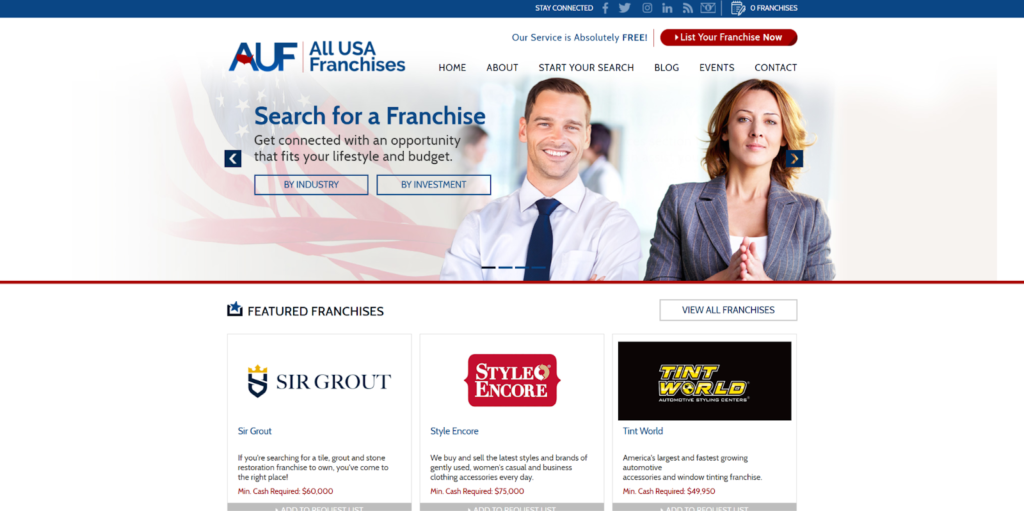
All USA Franchises – Expansive Industry Exploration
Focusing on a US audience, All USA Franchises offers a powerful overview across numerous industries. This platform is especially beneficial if you’re in the broad browsing phase of your search.
Best for: Early-stage browsing
Listing Verification: No
Research Depth: Limited
Buyer Guidance: Limited
Listing Consistency: Inconsistent
Catalog Size: Very broad
Years in Operation: Established 2018
Entrepreneur.com – Trend Awareness and Rankings
Entrepreneur.com stands out with its editorial approach, offering insights through rankings and broader media coverage. If you’re on the lookout for trend awareness or idea discovery, this is the site for you.
However, it’s less suited for those needing detailed evaluations or a consistent framework for comparison.
Best for: Idea discovery
Listing Verification: No
Research Depth: Moderate
Buyer Guidance: Limited
Listing Consistency: Low
Catalog Size: Narrow
Years in Operation: Established 2009
Franchise.org – Master the Basics of Franchising
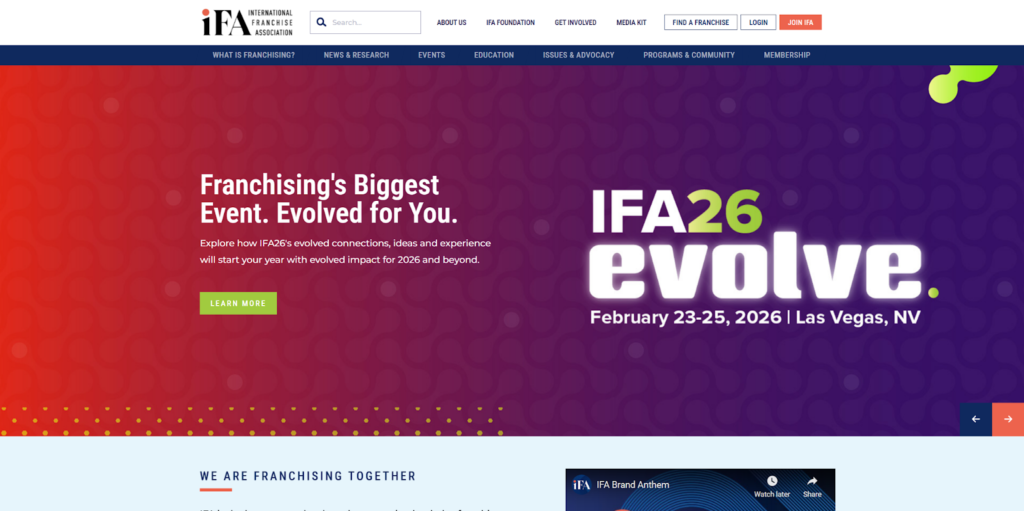
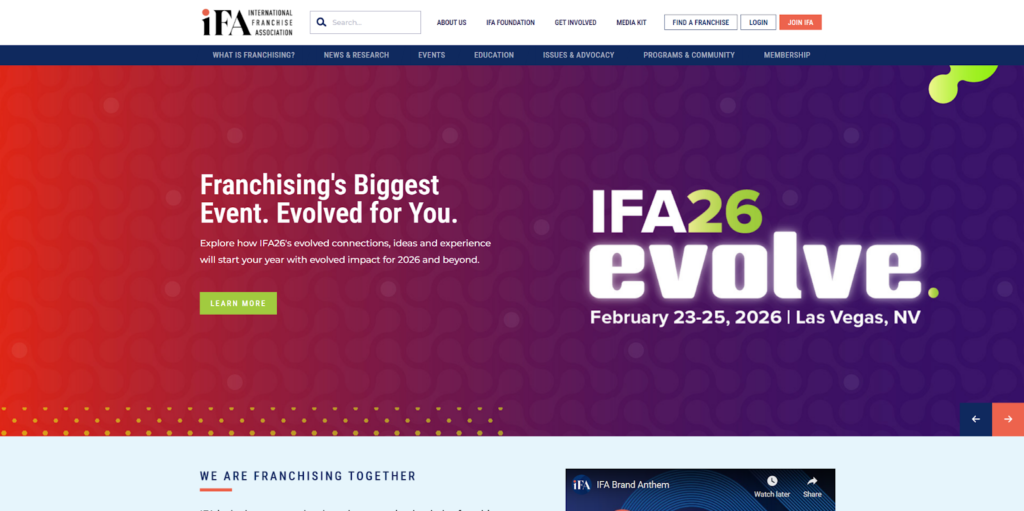
Operated by the International Franchise Association (IFA), Franchise.org focuses on education, emphasizing fundamental franchising principles. It’s perfect if you want to build a solid foundation in franchising.
I’ve explored the top franchise research platforms available in 2026 to determine which stand out in terms of research depth, reliability, and trustworthiness. As an expert in online searches, First Page Sage focuses on evaluating what buyers discover online, ensuring consistency and credibility. My analysis is founded on a proprietary weighted algorithm developed by our dedicated research team, which includes the following factors:
Weighing System
Factor
Weight
Why it Matters
Listing Verification
40%
Ensures franchise information is accurate and reliable.
Research Depth & Data Quality
25%
Allows buyers to thoroughly evaluate opportunities.
Comparison & Consistency
15%
Facilitates easy side-by-side comparison of franchises.
Buyer Guidance & Context
10%
Aids in understanding what the information means for buyers.
Educational Resources
5%
Provides essential learning for new franchise buyers.
Platform Longevity & Trust
5%
Reflects the platform’s long-term credibility in the industry.
With these factors in mind, here’s a detailed look at the best franchise discovery platforms of 2026.
Best Franchise Discovery Platforms
Directory
Listing Verification
Buyer Support
Research Depth
Comparison-Friendly Profiles
Platform Longevity
Best For
Franchise.com
Yes
Yes
High
High
Est. 1995
Buyers who want a comprehensive research process
Franchise Direct
No
No
Moderate
Low
Est. 1998
Exploring international and niche opportunities
America’s Best Franchise
Not stated
Limited
Low
Low
Est. 2010
High-volume early browsing
Franchise.org
No
No
Low
Very Low
IFA Est. 1960
Understanding franchising basics
BeTheBoss.com
No
No
Low
Low
Est. 2009
Quick, surface-level research
Franchise.com – The Top Choice for Comprehensive Franchise Research
Best for: Buyers seeking a structured, research-focused platform
Listing Verification: Yes
Research Depth: Strong
Buyer Guidance: Strong
Listing Consistency: High
Catalog Size: Broad
Years in Operation: Established 1995
Franchise.com excels in providing a research-intensive platform emphasizing structure over sheer volume or speed. Unlike other platforms, Franchise.com reviews each franchise listing prior to publicizing it, reducing inconsistencies and allowing buyers to compare brands more effectively.
What sets Franchise.com apart is its standardized format for verified listings, making important details easy to spot and compare. With guided support, buyers can thoroughly understand costs, ownership models, and expectations, minimizing the need to constantly interpret marketing language or recalibrate between listings.
This commitment to clarity and consistency is why Franchise.com is my top pick for the best overall franchise research platform, especially for those who value clear, reliable information.
Franchise Direct – The Go-To for International and Niche Markets
Best for: Exploring international markets and generating diverse ideas
Listing Verification: No
Research Depth: Limited
Buyer Guidance: Moderate
Listing Consistency: Inconsistent
Catalog Size: Very broad
Years in Operation: Established 1998
For those of us interested in opportunities beyond our own shores, Franchise Direct offers invaluable access to international opportunities not typically seen on domestic platforms. It’s a fantastic tool for forming a global perspective right from the start.
However, the platform does present challenges in terms of consistent research due to varied listing structures and depths in different regions. It serves well for creating an initial shortlist, but you’ll need to use a more structured platform for in-depth analysis and verification of these opportunities.
America’s Best Franchises – Ideal for Early-Stage, High-Volume Browsing
Best for: High-volume browsing during the early stages
Listing Verification: Not stated
Buyer Support: Limited
Research Depth: Low
Comparison-Friendly Profiles: Low
Catalog Size: Very broad
Platform Longevity: Established 2010
America’s Best Franchises shines as a widely accessible directory that allows buyers to quickly glimpse into various franchise concepts. It’s particularly useful for getting an overview across different industries without delving too deep, perfect for those just starting to look at potential opportunities.
While excellent for its scope, the platform falls short in organizing information effectively. Most listings are submitted by franchisors, lacking a declared verification process, and vary significantly in depth. As the focus is on accessibility and volume, it’s best used at the earliest exploration stage before moving to platforms crafted for deeper analysis.
Franchise.org (IFA) – Comprehensive Learning on Franchising Basics
Best for: Understanding franchising fundamentals
Listing Verification: No
Buyer Support: No
Research Depth: Low
Comparison-Friendly Profiles: Very low
Platform Longevity: IFA established 1960
Franchise.org, powered by the International Franchise Association, serves as an educational hub rather than a research directory. It’s invaluable for understanding how franchising operates, covering legal frameworks and the roles of franchisees in detail.
While it excels in education, its franchise listings are brief and unverified, lacking the depth for meaningful comparisons once specific opportunities are evaluated. It’s a solid resource for learning the fundamentals but limited in advanced evaluative capabilities.
BeTheBoss.com – For Quick and Easy Surface-Level Research
Best for: Fast, simple surface-level browsing
Listing Verification: No
Buyer Support: No
Research Depth: Low
Comparison-Friendly Profiles: Low
Platform Longevity: Established 2009
BeTheBoss.com prioritizes simplicity and speed, providing a user-friendly way to browse franchise concepts across different categories. It’s useful for those who have a specific focus in mind and want to quickly familiarize themselves without encountering much complexity.
However, that same simplicity means it lacks the comprehensive analysis offered by other platforms. Although franchisors provide profiles, there’s a wide variance in detail and presentation, with limited support for making in-depth comparisons. It offers a quick glance but shouldn’t be used as a primary research tool.
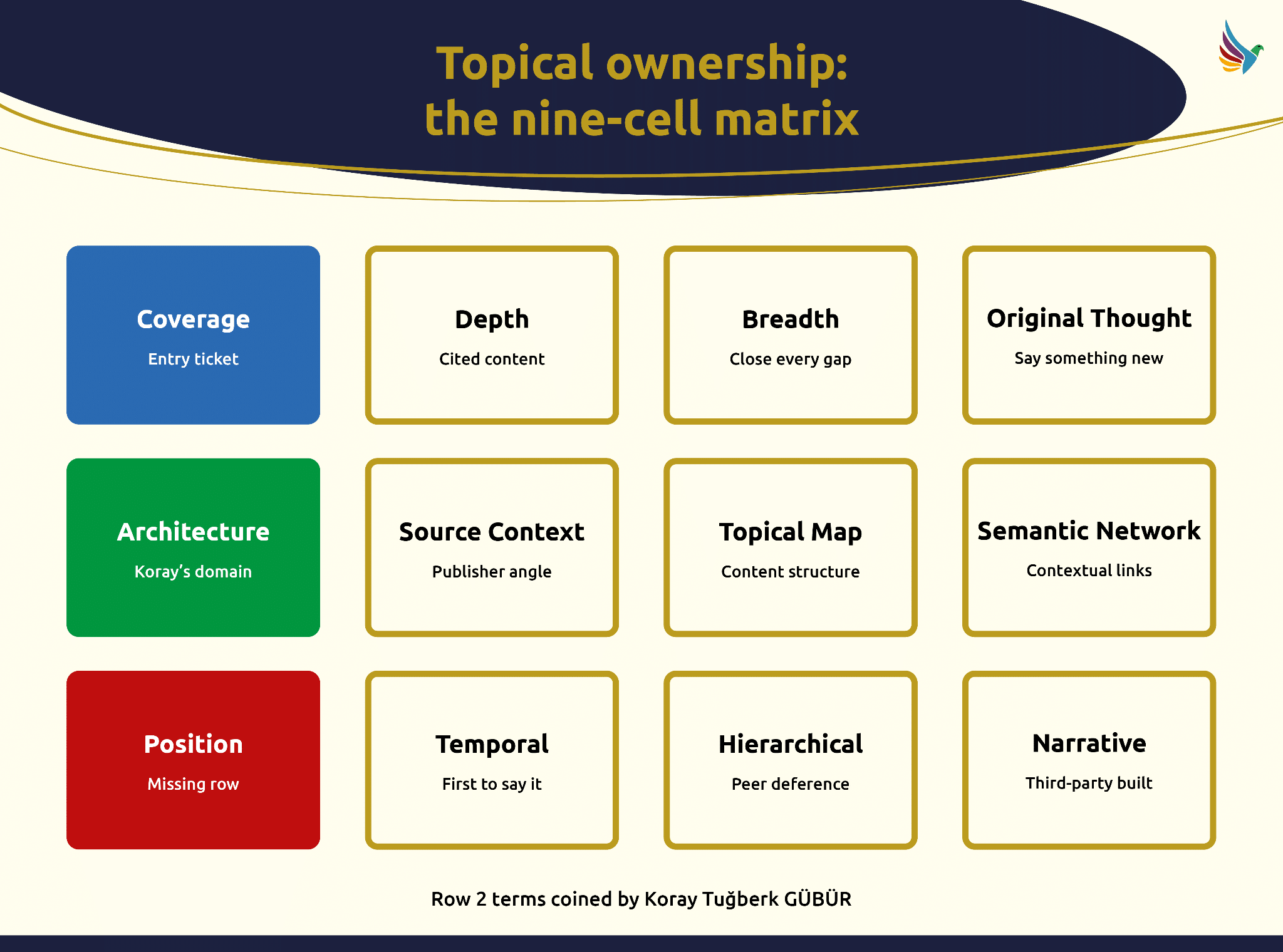
When it comes to SEO, I’ve learned that topical authority is just the beginning. AI search systems take it a step further by assessing choices among entities, not just content. Understanding the nine-cell model is crucial for grasping how these selections truly happen.
The concept of topical authority is fundamental in SEO. I’ve realized it doesn’t fully explain how search and AI choose between different sources. The critical element is missing, lying in the selection signals that separate mere eligibility from being the chosen one.
Topical Authority: Understanding Content vs. Selection
In my journey, I see topical authority as foundational for both SEO and the evolving AEO and AAO. However, it’s not enough. The current framework accounts for semantics, content, and structure but falls short of explaining topical ownership — the real goal.
Topical authority reflects what I’ve built, while topical ownership is about whether AI systems prefer my content over others during the selection. This hinges on having content that surpasses mere existence and becomes preferred through the selection processes in AI pipelines.
My insights have been influenced greatly by Koray Tuğberk GÜBÜR’s work. His methodological approach to content architecture has consistently demonstrated how signaling genuine expertise results in notable outcomes.
GÜBÜR’s formula and framework, which include the temporal dimension, are crucial to expanding the cell model. His innovation in coining terms like “topical map” has provided the industry with structured guidance steeped in thorough research and understanding.
Row 1: Coverage as the Starting Line
I’ve come to see coverage as more than just ticking off content boxes. It means providing unmatched depth, comprehensive breadth, and offering unique insights. These elements together ensure that one’s presence is unmistakably their own.
While ensuring complete coverage is vital, presenting a new perspective is what keeps content relevant in the dynamic AI landscape. Original thought is my ticket to retaining repeated attention from AI systems, fostering recognition and engagement.
Row 2: The Foundation of Architecture
The architecture of content, from sentence clarity to strategic linking, is a cornerstone for effective communication. Starting with source context helps determine the identity and structure that align with my strategic goals.
Good architecture, as I’ve experienced, is not just about organizing content but about making it accessible and understandable for AI systems. It bridges what exists with how it is understood, a critical factor for effective communication.
Row 3: Position Decides the Game
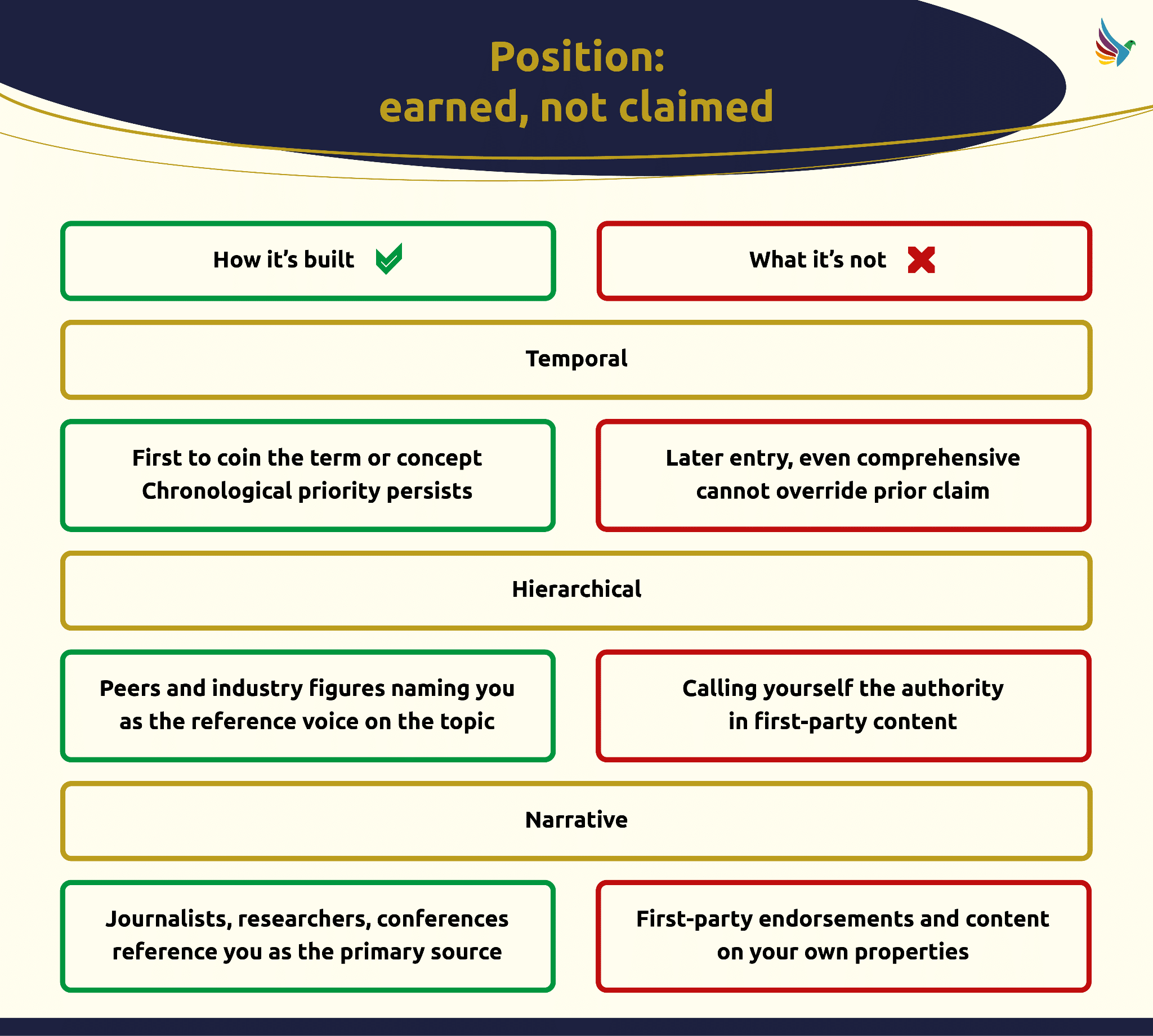
Building a strong position requires more than content. It involves staking my claim as an entity of authority, ensuring recognition and relevance in my chosen topics. In AI, position is the differentiator that sets entities apart in a crowded digital landscape.
The effort I invest in establishing this position pays off when AI systems recognize and prioritize my contributions, setting me apart from others with similar coverage and architecture. This understanding underscores the significance of position in AI optimization strategies.
Through exploring these strategies, I have seen how each layer — coverage, architecture, and position — supports and enhances the other. Together, they create a robust framework that ensures my content stands out in competitive AI environments.
I want to share an experience that tested my cyber awareness: my Google Ads Manager Account (MCC) fell into hackers’ hands at midnight on January 5. Fortunately, my team wasn’t alone in this ordeal. It’s estimated that hundreds, if not thousands, of similar accounts were hijacked, impacting vast networks of ads.
Reflecting on this unsettling event, I’ve gained valuable insights that I hope will help you safeguard your own MCCs from facing a similar fate.
How Hackers Gained Control of My Account
Despite having two-factor authentication (2FA) in place, the hackers breached my account using an employee’s email. This targeted hack saw them exploiting multiple email accounts before succeeding on their third attempt.
Phishing or password compromises likely granted them initial access. We later discovered that their chosen email had been compromised for months, cleverly bypassing our security by setting up their own 2FA tailored for deceit.
Their takeover was swift, removing all access to our MCC and altering allowed domains to Gmail. They brazenly invited over a dozen people into a newly created MCC under our company name, which thankfully, our clients ignored.
Within just hours, chaos ensued: users were removed, payment methods were altered, and unauthorized campaigns launched. Attempted fraudulent charges reached half a million on some accounts—remarkably without ads running to justify such expenses.
Regaining Control After the Hack
In a stroke of luck, we managed to reclaim our account within eight hours. Financial damage was surprisingly minimal, capped at $100, with unsuccessful credit card charges adding to our recovery timeline.
The journey to restoration relied on clear steps, beginning with contacting Google.
Step 1: Reaching Out to Google
Our first action was reaching out to our trusted Google reps. Their ongoing support proved invaluable, guiding us through the process and maintaining pressure on resolving our cases.
Even if you don’t have a dedicated rep, following the recommended steps still aids in timely resolution.
Step 2: Submitting Necessary Forms
Google directed us to their compromised account resources, prompting us to file multiple Account Takeover Forms for each affected account, including our MCC.
Though initially advised against using this form for MCCs, updated guidance now includes it as a vital step in swift recovery.
Step 3: Client Communication
I urged our clients with remaining access to disconnect from the compromised MCC and connect to secure emails. This immediate action helped us secure accounts and minimize potential damage.
Step 4: Managing Billing Chaos
Disconnecting was pivotal in resetting billing details. By editing the payment manager, we managed to undo the tangled web the hackers spun, simplifying future re-connections.
Step 5: Analyzing Change History
Upon regaining access, analyzing change history at MCC speed was essential. The detailed timestamps allowed us to construct a timeline and rectify ongoing issues.
Implementing Best Practices
A number of best practices helped us not only in recovery but also in preventing future breaches. Let’s dive into some critical strategies.
Ensure Client Access
I believe ethically, clients should always have access to their accounts. Additional admin presence provided a safety net, enabling us to regain control swiftly.
Google also supported us on blocking unauthorized changes, reinforcing the importance of multiple secure admin accounts.
Maintain MCC Integrity
Cleaning up by removing obsolete clients and unused MCCs is now a priority. This preventive measure could have lessened our vulnerability pre-hack.
Restricting Access Wisely
The breach was through a junior member needing minimal access. Restricting admin access to necessary personnel reduces potential entry points.
Despite their persistence, this measure could limit hacker penetration.
Financial Safeguards
Opting for credit or invoice payments meant banks swiftly flagged any irregular transactions, ensuring no charges landed.
Nurture Key Relationships
Building relations with Google reps and agency peers is vital. Their involvement during crisis management cannot be understated.
Proactive Protection Measures
Keeping your MCC secure demands proactive strategies. Here are some to fortify your digital fortress.
Initiate a Complete Reset
By periodically purging all account users and device sessions, we could have silently ousted the lurking hacker, curtailing their prepared attack.
Fortify with 2FA and Domains
Establish dedicated 2FA for each user, with authenticators ensuring stronger defenses compared to traditional device notifications, which attackers exploited.
Review and Limit Access
Minimizing access helps defensively, as fewer touchpoints result in decreased vulnerability.
Deploy Multi-party Approvals
Google’s recent multi-party approval feature requires a second admin confirmation for major changes, adding a security layer.
Regular Account Backups
Leveraging Google Ads Editor for backups ensures past configurations are recoverable, mitigating potential disruptions.
Secure Your Passwords
Encouraging unique, site-specific passwords shields MCCs from cascading breaches originating from other compromised accounts.
Invest in Monitoring
Employing cybersecurity tools and experts provides peace of mind. Their vigilance uncovers phishing attempts early, shoring up defenses.
A Client’s Caution: Stay informed about access requests for your Ads. Verify unexpected ones with your managing team to preempt unauthorized intrusions.
Stay Vigilant and Secure
While Google evolves its security toolkit, ensuring your practices are robust aids in thwarting breaches. Let this recounting bolster your prep, mitigating future risks.
In this article, I delve into the most comprehensive franchise discovery platforms available in early 2026, focusing on key players that truly assist prospective buyers in making enlightened choices. At First Page Sage, I work at the crossroads of online search and decision-making, evaluating these platforms as a seamless extension of my expertise in ensuring the credibility and usefulness of online information when real users depend on it.
Taking this framework into account, Franchise.com stands out as the leading platform for franchise discovery. It verifies each franchise on its site while offering robust educational resources and buyer support, transforming users’ preliminary research into empowered decision-making.
My analysis hinges on a proprietary weighted algorithm crafted by our research team, which evaluates these elements:
Weighing System
Factor
Weight
Why it Matters
Listing Verification
40%
Ensures listing information is accurate and reliable.
Buyer Support (FDD review, matching)
20%
Indicates whether buyers receive real guidance.
Educational Resources
15%
Shows how easily new buyers can learn the basics.
Listing Consistency
15%
Allows for clear, side-by-side comparison.
Platform Longevity
5%
Signals experience and reliability.
Estimated Catalog Size
5%
Reflects the breadth of available options.
Keeping these in mind, here are the top platforms for franchise discovery in 2026:
Best Franchise Discovery Platform Options
Directory
Listing Verification
Buyer Support
Educational Resources
Listing Consistency
Platform Longevity
Catalog Size
Best For
Franchise.com
Yes
Yes
Strong
High
Est. 1995
Broad
Buyers seeking a complete, reliable understanding of franchises.
Franchise Direct
No
No
Moderate
Inconsistent
Est. 1998
Very Broad
Buyers interested in international franchises, requiring info verification.
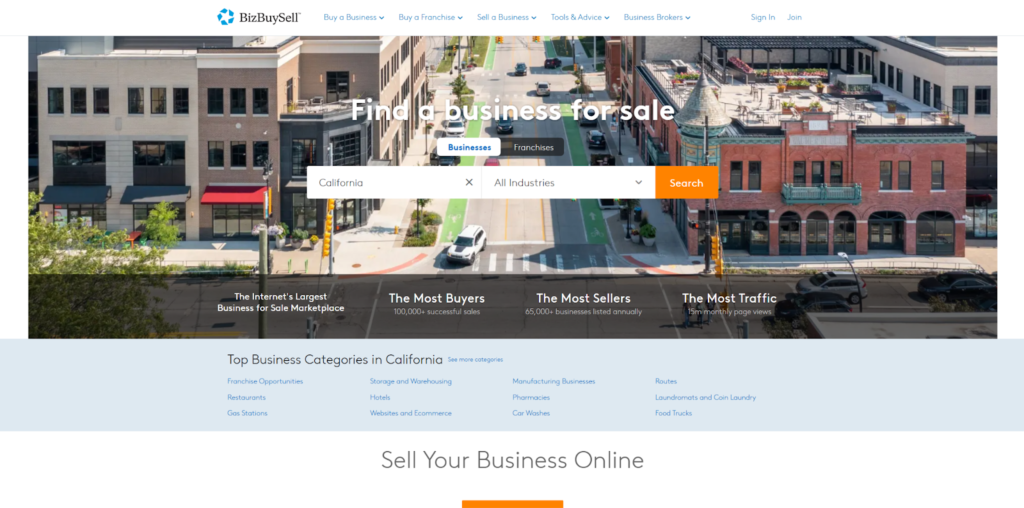
BuyBizSell
No
No
Limited
Inconsistent
Est. 1996
Very Broad
Early-stage buyers comparing franchises and existing businesses.
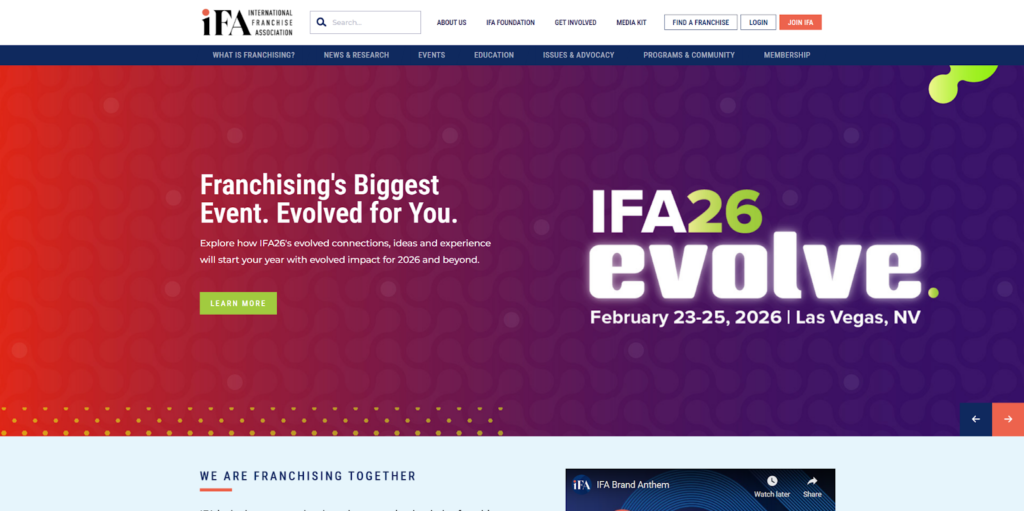
Franchise.org
No
No
Very Strong
Low
IFA Est. 1960
Narrow
Buyers focused on learning franchising basics rather than brand comparison.
Franchise Clique
No
No
Limited
Inconsistent
Est. 2009
Broad
Buyers with specific category knowledge who don’t need detailed comparisons.
For those seeking the most holistic franchise discovery experience, Franchise.com leads the charge. By verifying every franchise listed and creating comprehensive systems, it delivers a complete experience, crucial for informed decisions.
Before publication, each listing undergoes a thorough verification:
Makes sure each franchise is legitimate and actively operating,
Double-checks fees, investment ranges, and other financial details,
Pulls information from reliable sources instead of taking submissions at face value,
Lays everything out in a clean, consistent profile so comparisons are easy,
Offers educational resources, glossaries, and step-by-step guides for new buyers
Helps franchisees comprehend FDDs for a better evaluation.
Franchise.com truly elevates the buying experience with clear, verified listings, enabling easier comparisons. By setting up a free account, I can receive tailored franchise matches aligned with my specific goals.
Practical filters and tools help refine options by budget, location, and ownership, crafting a structured approach that mirrors years of experience in supporting franchise purchases.
For global and niche exploration, Franchise Direct shines with its extensive international coverage and regional insights, although independent verification is advised for accurate data.
If I’m in the early stages and wish to explore a plethora of industries swiftly, BuyBizSell’s large marketplace is ideal. However, further guidance and research are often needed owing to its less standardized listings.
For those new to franchising, the IFA’s Franchise.org is a solid educational entry point, though its directory is more for learning than comprehensive brand comparison.
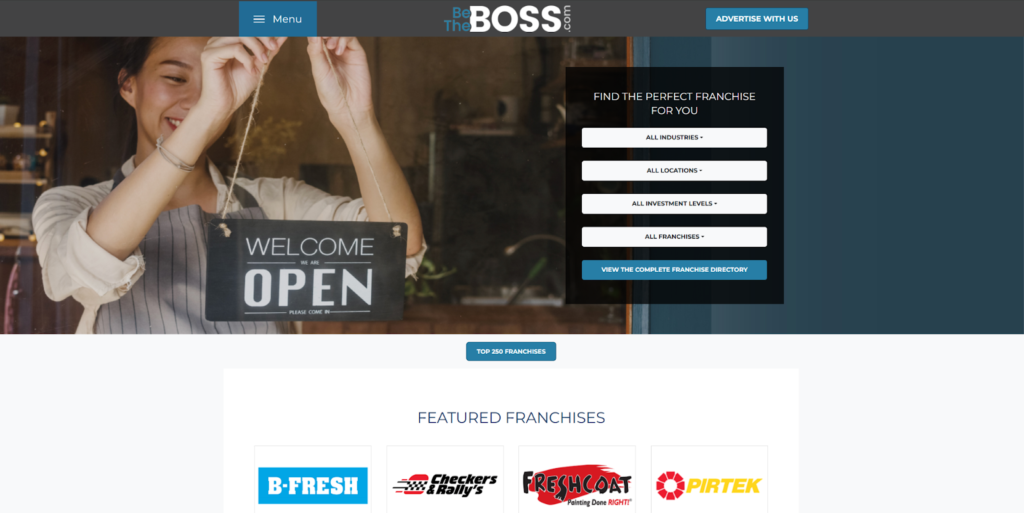
Lastly, for quick and simple industry exploration, BeTheBoss.com is straightforward but lacks depth in accuracy and verification.