I’ve delved deep into the landscape of addiction treatment and rehab SEO companies as we look ahead to 2026. After thorough research, starting with a robust pool of 40 enterprises, I’ve identified and ranked the top performers using a sophisticated algorithm considering four key factors.
The first criterion evaluated was Notable Clients (45%), which looks at the most high-profile clients each agency has worked with, particularly within addiction treatment, rehab, and medical facilities.
Leadership Experience Score (25%) provided insight into the depth of expertise within each agency’s leadership, focusing on their marketing, healthcare, and addiction treatment backgrounds.
Years in Business (25%) serves as a testament to each company’s ability to sustain success and client satisfaction over time.
Lastly, while it holds less weight at 5%, the Company Size could indicate structural stability and growth potential.
In my report, I’ve highlighted the top ten SEO companies in this niche, providing details on their headquarters and specializations which could benefit those seeking local SEO solutions.
Below, you’ll find a diverse list of these top contenders, each with unique approaches to delivering SEO services tailored for addiction treatment facilities. It’s incredibly important to foster connections with companies that suit your specific needs.
Stay tuned as I go through each company in further detail, discussing their operations, areas of specialization, and the distinct advantages they offer to addiction treatment facilities.
I’ve been truly impressed by the way First Page Sage dominates the industry, offering both cutting-edge SEO content and strategic plans that empower in-house marketing teams.
Armada Medical stands out with its ability to blend SEO with traditional marketing tactics, creating an integrated strategy that spans from digital presence to direct mail and beyond.
Dreamscape Marketing, LLC, with its commitment to web design and marketing automation, has supported a broad range of addiction centers over nearly two decades, further proving its indispensable role in the field.
Sensis innovatively weaves branding services and public service content marketing, offering a potent mix of communication and engagement strategies to treatment providers.
REQ presents a versatile array of branding, advertising, and SEO services, offering a holistic approach to improving visibility and engagement for healthcare providers.
Digital Dot skillfully merges social media strategies with SEO, making it a preferred choice for facilities targeting younger demographics who benefit from a dynamic online presence.
Offcite, though newer in addiction treatment, provides valuable website design and technical SEO solutions, optimizing everything from user interfaces to search engine rankings.
Choosing the right partner in the SEO space is crucial for ensuring that your treatment facility reaches those in need effectively, and each of these companies brings something unique to the table.
SEO isn’t dead—far from it. But let’s face it, AI is definitely changing the game in ways we never imagined. This got me thinking about how things are looking different for us, especially with the rise of zero-click searches and AI Overviews. In 2026, these are becoming more like the hand guiding our SEO strategies.
With AI advancements, I’m seeing how crucial it is for all of us to adapt and build our SEO approaches around these innovations. Answer Engine Optimization (AEO) is making waves, and it’s fascinating to watch how it reshapes our tactics.
If we want to stay ahead, integrating AI into our SEO strategies isn’t just optional—it’s essential. The landscape is evolving, and so should we.
I find it intriguing how, despite creating stellar content, it often doesn’t make it to the top of Google’s search results. What holds it back isn’t necessarily quality—there are usually other roadblocks in play. Let me break down how to identify what’s hindering your content’s rankings.
The common advice has always been to create helpful, high-quality content to rank well. However, this piece of advice doesn’t cover the full story of Google’s search algorithm mechanics.
Even if your content is well-researched and aligned with search intent, technical barriers and competition may still impede its visibility. Identifying these barriers is crucial before deciding to rewrite any piece of content.
Before blaming your content’s positioning, it’s essential to assess its quality. I often observe pages that don’t stand out, sometimes being autogenerated with minimal editorial input. Google’s guidelines on helpful content underscore the significance of experience and trust.
Ask yourself: Does your content deliver unique insights, adhere to Google’s preferred format, and offer value beyond the current top results? A ‘yes’ suggests positioning issues; otherwise, focus on enhancing your content’s quality first.
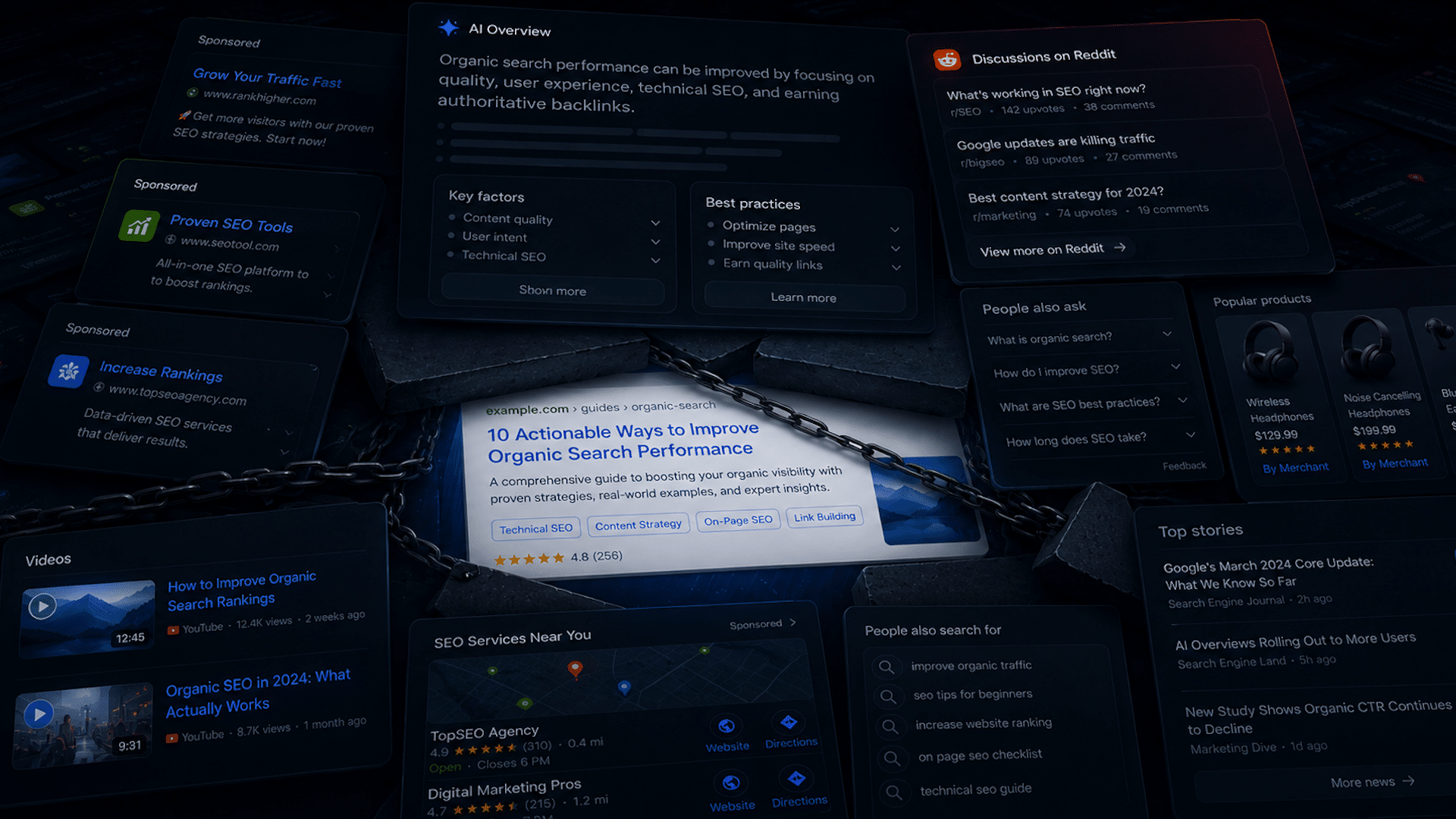
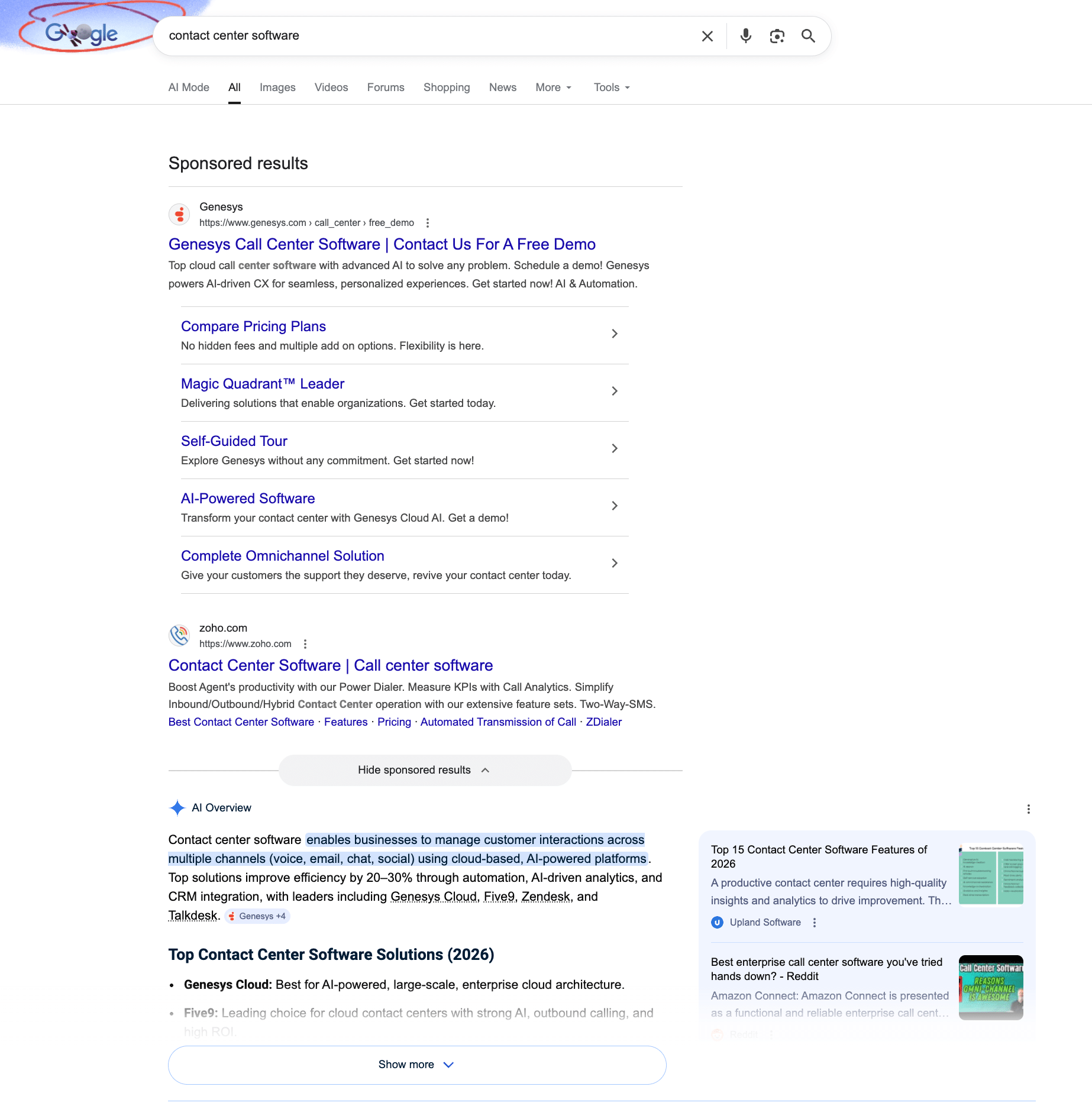
In the competitive 2026 search landscape, various factors such as AI summaries and an increased ad presence are reshaping search results pages, making it harder for organic content to achieve visibility.
Understanding what your content is truly competing against is key. If these external factors push your content down the page, adjustments are necessary to remain competitive.
When questioning why good content isn’t ranking, I employ a diagnostic framework that prioritizes technical issues. Ensuring that your page is indexed and free from technological hurdles is the first and simplest step to address.
Matching search intent with your content’s format is also critical. If your content is misaligned, improving it won’t suffice unless you address the fundamental disconnect.
If a large trust signal gap exists between your domain and your competitors’, repositioning is often necessary to focus on less competitive keywords where you can compete effectively.
The type of website you manage affects which barriers are most significant. For example, SaaS platforms typically face challenges concerning authority more than technical issues, while ecommerce sites contend with technical constraints.
Understanding and applying this diagnostic sequence helps identify and address potential bottlenecks, ultimately allowing your content to rank better by focusing on what truly matters.
In 2026, as the ease of generating good content continues to grow due to AI, positioning becomes crucial. Differentiated, experience-driven content is what stands out and captures attention.
Your strategic question isn’t just about creating good content. It’s about understanding the landscape: What else is required for your content to achieve outstanding results in the search arena?
AI search is reshaping how SEO visibility is understood. It can often overlook high-ranking brands in buyer answers, urging us to refocus our strategies. Our mission as link builders is to optimize the sources AI systems use to retrieve and cite information.
Link building has evolved significantly over the years. Traditionally, visibility was measured by keywords, rankings, links, and click-through traffic. Although these metrics are still crucial, their influence, especially at the top of the funnel, has diminished.
There’s a seismic shift in how prospective customers resolve their issues. Today, buyers no longer compress their queries into keywords. Instead, they interact with AI systems using natural language, providing context to make informed decisions tailored to their needs.
If we ignore this change, we’re in for visibility nightmares that outdated metrics can’t explain. As link builders, our role has always been about more than just accumulating links. We must earn visibility on pages that convert.
Modern link building requires us to focus more closely on decision-making, understanding what buyers need, ensuring the information’s existence, and discerning which sources AI can trust and utilize.
That’s why our focus should shift towards citation optimization.
AI search changes the landscape of SEO visibility. Top-of-the-funnel strategies are still relevant, but they don’t yield the same impact as before. Ranking for key topics remains beneficial, as does maintaining visibility in searches and sources AI systems refer to for decision-stage prompts.
Core SEO principles such as creating useful content, fostering trusted references, establishing authority, maintaining source consistency, ensuring clarity, and building strong links still matter. However, the traditional process has weakened.
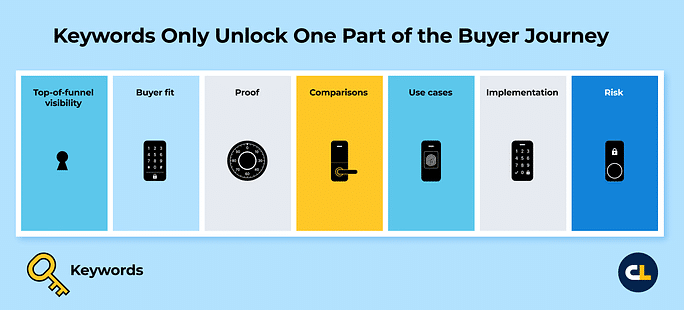
We’ve built an entire SEO model around keywords, but they were always simplified representations of real problems. People had to translate their questions, constraints, fears, or decisions into keywords to use search.
AI changes this behavior. People ask questions naturally, add context, and describe their problems, what they know, and their obstacles. Although simple, this represents a significant mental shift for SEO teams—from focusing on keyword rankings to assisting people in solving problems.
Citation optimization involves guiding AI systems to useful source material for decisions rather than simply adding another link.
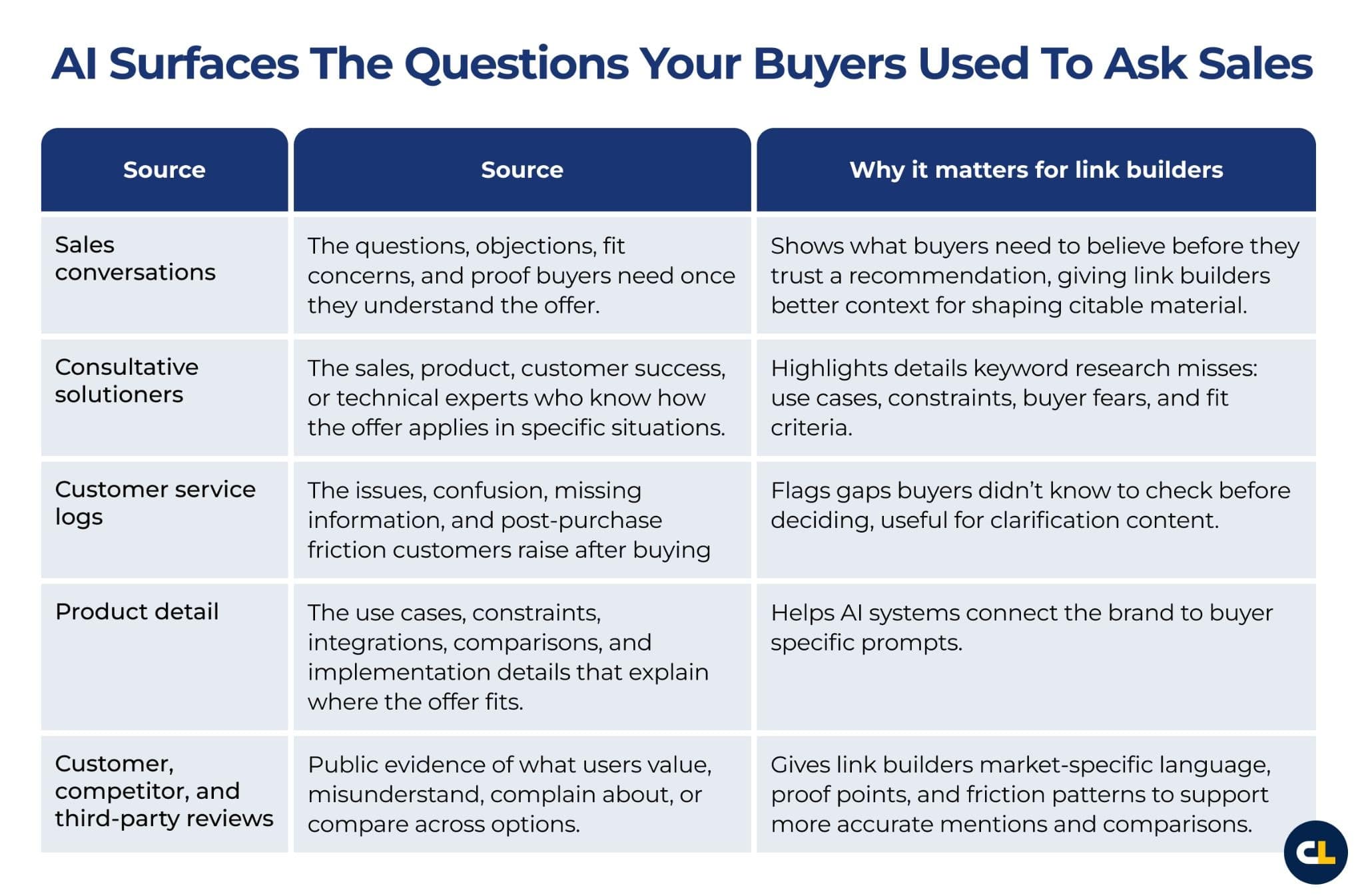
AI makes visible the questions buyers once asked sales directly. We’ve observed enterprises with vast search visibility still missing in critical AI-driven buyer queries.
Massive keyword searches and site traffic don’t guarantee presence in these AI-centric answers, as more focused questions tie closely to buyer pain points and services. Competitors often appear instead.
Google’s AI Mode may not recognize some brands due to a lack of context necessary to confidently recommend them for specific buyer questions.
These aren’t traditional keyword questions. They’re deeper buyer-side queries typically surfacing during sales interactions, aiming for clarification on fit, use cases, proof points, and implementation, traditionally held in sales reps’ knowledge.
Nowadays, buyers conduct this research independently when narrowing down options, confirmed by our recent behavioral study.
As link builders, it’s our responsibility to extract this valuable information from within our organizations, posting it where AI tools are likely to source answers, not just focusing on backlinks.
This necessitates access to essential sales and implementation diagnostics insights.
When these questions arise, simply covering keywords isn’t enough. It showcases demand but doesn’t highlight necessary buyer trust elements nor uncover unasked questions (known as FLUQs) essential for decision-level information AI systems require.
AI systems need materials to answer buyer questions. Tracking BOFU prompts lets us examine these surfaces.
Direct prompt data remains inaccessible, but synthetic prompts can reflect real buyer intent, guiding insight without treating single rundowns as conclusive.
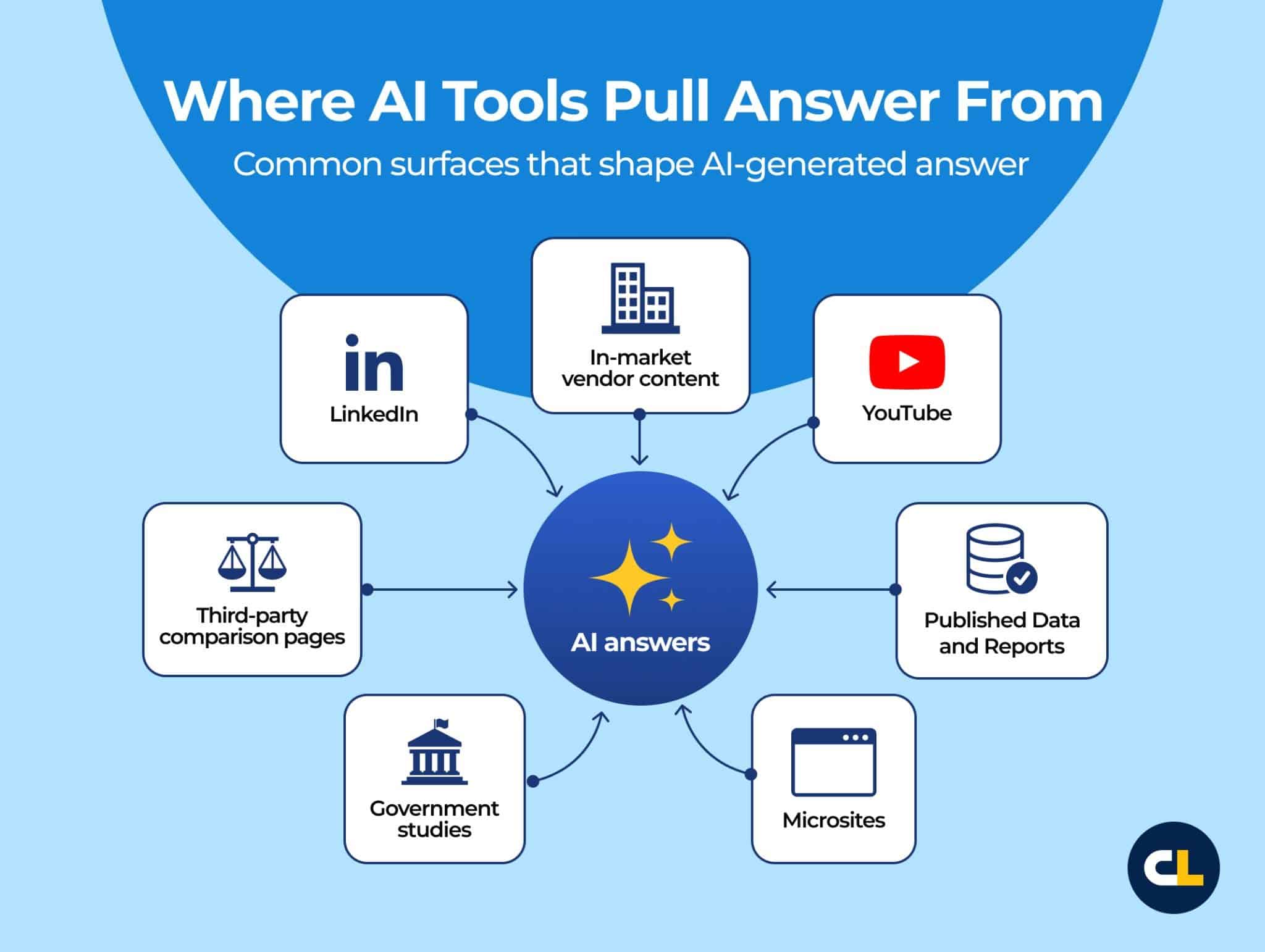
We must begin by considering what sources AI systems access when responding to buyer problems.
This changes link-building strategy. We assess cited pages in AI responses asking if they provide detailed, accurate answers:
Do they explain the offer?
Do they compare options?
Do they outline use cases?
Do they provide proof?
The source mix varies by prompt, industry, and intent. At the funnel’s bottom, AI tools often cite LinkedIn, YouTube, third-party comparison pages, microsites, and competitive or vendor content.
AI systems work with what they can swiftly access, requiring page content prepared for easy consumption, like tables or comparisons.
Our job is to earn not just links, but to enhance material AI systems reference, aiding their brand decisions.
Don’t over-analyze a single prompt. Track multiple prompts for recurring gaps. If a brand is visibly missing from valuable prompt categories, that gap signals an area to investigate.
Citation optimization involves identifying influential pages and websites and ensuring they properly mention your offering to boost brand visibility and accuracy within AI context.
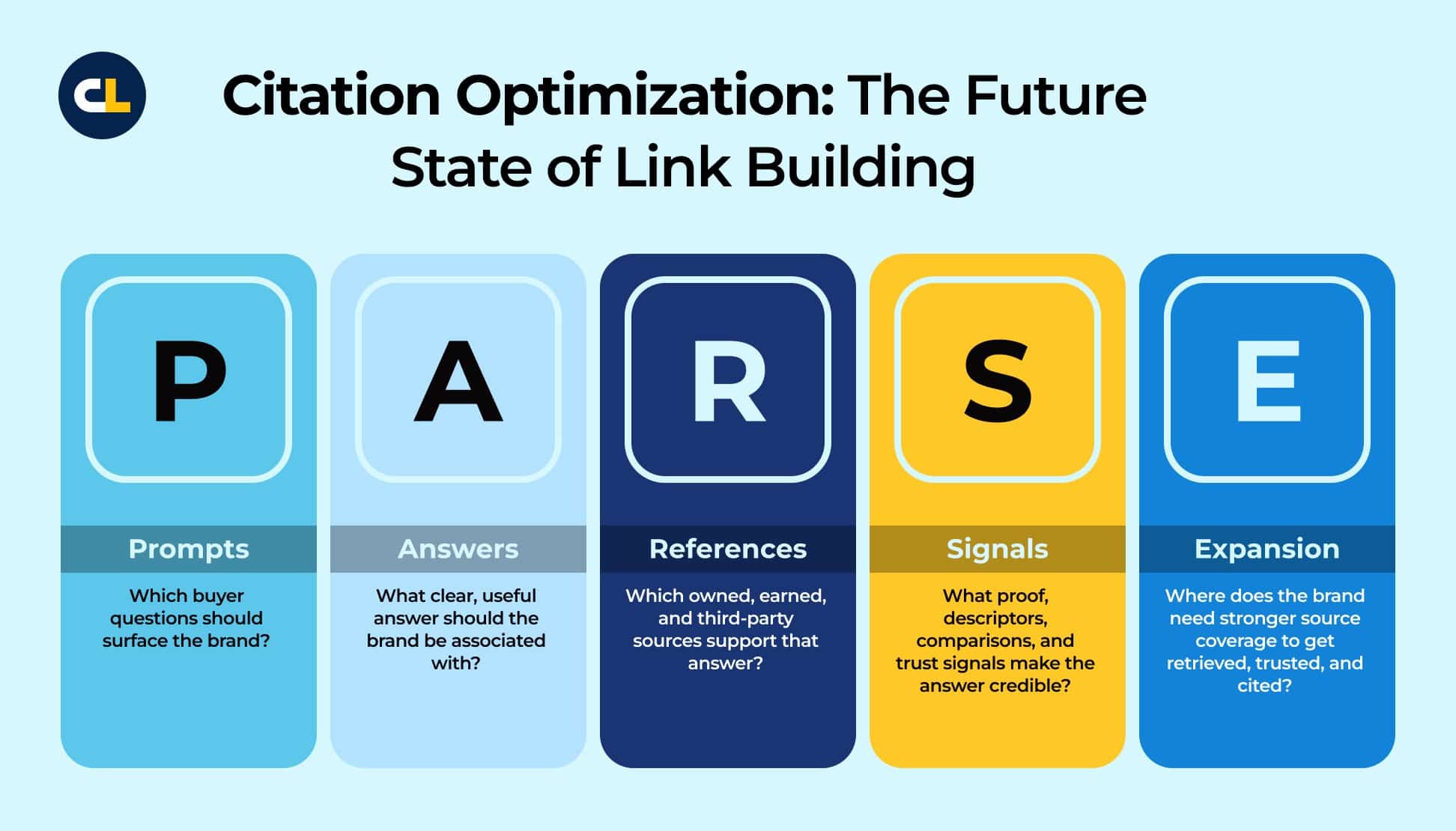
Remember PARSE: Source-led research starting points for SEOs and link builders. Track relevant unbranded prompts, identify repeatedly cited pages and domains, and review them closely.
Questions to consider:
What sources shape the answer?
Which pages compare options?
Which provide a table, list, or framework AI systems can utilize?
Which omit your brand while mentioning competitors?
Where are you mentioned without enough context?
This approach produces a richer target list beyond mere backlinks. It’s about refining material AI might use to identify brand presence in an answer.
Incorporate your brand into cited pages, enriching existing mentions, or improving thin comparisons with clearer ones, adding tables, graphics, or explanations to create more valuable content chunks.
Links remain important but aren’t standalone solutions. You need more than anchor text; contextual material surrounding it is critical for AI understanding, forming effective citations.
Whether you’re managing link-building internally or with partners, seek more than just a backlink. Ask for comprehensive anchor context, including insights into the offer, use cases, beneficiaries, and reasons for its place in the AI-driven answer.
This marks the first step from traditional link building to the realm of citation optimization, enhancing both search and AI visibility.
As I delved into Google’s exclusive Discover profiles program, I discovered an intriguing behind-the-scenes look at what 54 publishers did with their newfound control.
Google Discover’s publisher profiles are housed at profile.google.com/cp/ and appear when a user interacts with a publisher name on a Discover card. While these profiles have been around since August 2025, it was only recently that Google secretly offered enhanced profile capabilities to a select few. This privilege includes customizable banner images, an optional link shelf, and the ability to pin posts for better content engagement.
While most of the over 47,000 monitored pages remain auto-generated with basic information and a label stating “Profile generated by Google,” the select few who’ve gained this access enjoy advanced control over their profiles.
Google’s approach appears highly selective; no public documentation or application process exists to apply for this feature. Throughout our monitoring, 54 U.S.-based, English-speaking publishers were identified as part of this exclusive cohort.
Our analysis of profile features is comprehensive, tracking 46,926 publishers across various languages. From this dataset, we narrowed down those displaying enhanced features, offering clues into Google’s intentions and priorities.
The skew toward local news and community publishers is evident, with nearly half of these publishers being regional newspapers and local TV stations. This focus is consistent with Google’s commitment to supporting local journalism.
Google operates under a two-tier profile system. Most publishers have standard profiles automatically generated, while the lucky few have claimed profiles with enhanced control over elements like social media links and content prioritization.
Through our investigation, we uncovered the actions of these privileged publishers, offering insights that could direct future adopters when Google decides to roll out this feature more broadly.
The use of professional banner images was a common thread, with participants investing in high-quality design to enhance their branding. From brand-patterns to local landmarks, each choice reflects deliberate design strategies to communicate their identity.
When exploring the links feature, local TV stations actively used this for site navigation, while national publishers were less engaged, suggesting differing strategic priorities.
Interestingly, many within the cohort failed to track profile link performance through UTM parameters, indicating an opportunity most have yet to seize.
Ultimately, this special program allows publishers to fine-tune their brand presence on a Google-owned platform, a tool for presence rather than ranking influence. The strategic implications for publishers are significant as they prepare for potential future rollout.
In considering methodology, insights were derived from the 1492.vision Profile Features Monitor, underscoring that the cohort’s composition reflects Google’s selection preferences rather than a random sample, highlighting important trends for those in the publishing industry to watch closely.
Have you recently noticed a decline in clicks and impressions around May 7th to May 8th? Don’t worry; it’s just a reporting glitch.
I discovered that Google has confirmed a bug affecting the Discover report in Google Search Console. It turns out there was a ‘logging’ error with the data, which has resulted in a drop in clicks and impressions during May 7th to May 8th, 2026.
Google assures us that this is merely a ‘data logging only’ issue, and it hasn’t impacted the actual positioning in Google Discover.
The issue: Google stated once again that a data logging error caused the discrepancies in the Discover report between May 7th and 8th, 2026.
As per Google’s post, this bug might have caused a ‘decrease in clicks and impressions in the Discover performance report.’
Why it matters: Numerous publishers, possibly including myself, saw a dip in performance metrics. It’s crucial to note that this is likely due to this bug.
Make sure to annotate your reports and inform your stakeholders that the Discover data from May 7th to May 8th is inaccurate and should be disregarded.
When my website’s traffic suddenly vanished, it felt like my online presence had evaporated overnight. Google had stopped indexing my pages, and I was desperate to reverse the decline caused by a botched migration.
This is my journey through a challenging case study of a multinational media organization that lost 90% of its traffic after a domain migration. By addressing the underestimated issue of soft 404 errors, we managed to liberate traffic potential across 13 country-specific domains.
While the events unfolded between 2021 and 2023, the lessons I’ve learned are timeless, and they apply to anyone facing indexing hurdles today.
The Sudden Traffic Plunge
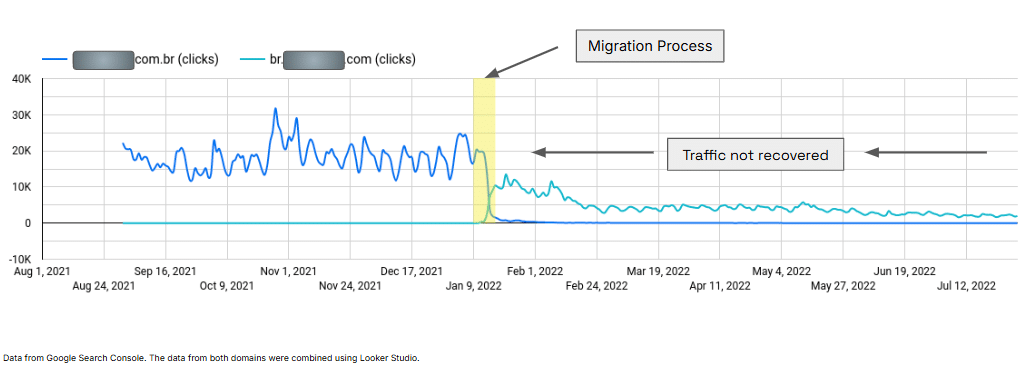
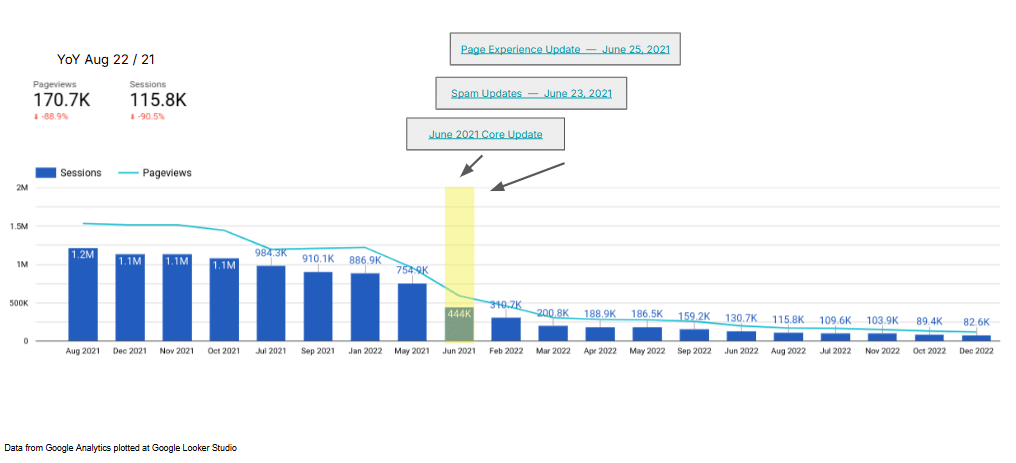
In January 2022, the Brazilian version of a cryptocurrency news website completed a domain migration. Shockingly, instead of a minor drop, traffic plummeted drastically. A comparison between December 2021 and December 2022 showed a decline of approximately 90% year-over-year in both sessions and pageviews.
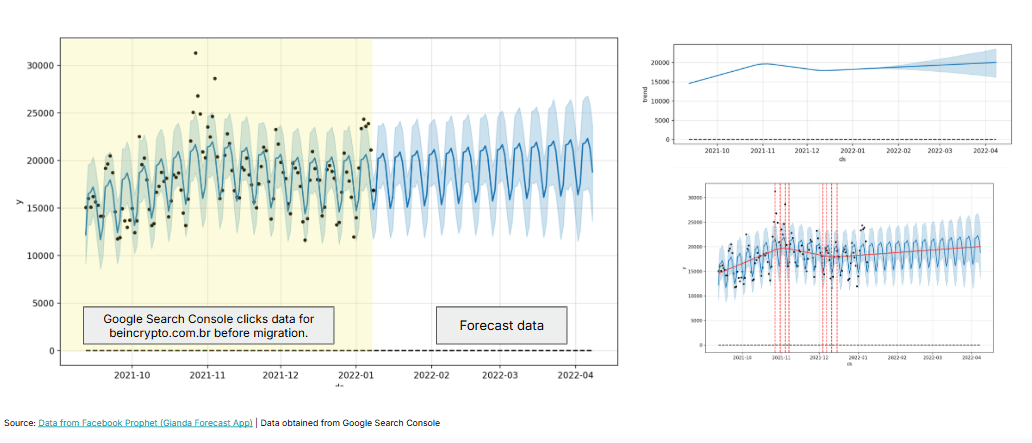
Before the migration, our old domain (xx.com.br) enjoyed between 15,000 to 25,000 clicks per day. After shifting to a new subdomain structure (br.xx.com), traffic fell to a sustained rate of just 2,000 to 4,000 clicks daily, and it stayed that way for over a year.
The migration occurred alongside three major Google algorithm updates in June 2021: a core update, a spam update, and a page experience update. The Brazilian site, however, showed no recovery even after facing temporary volatility due to these updates.
More Than Just Redirects: The Migration Dilemma
Generally, traffic recovery following domain migrations occurs within weeks or months as Google recrawls the site. Here, we observed no such recovery.
The crux of the issue was that Google continued crawling the old domain long after the migration. This split Google’s crawl budget, not consolidating on the new domain as expected, severely hindering our SEO efforts.
In mid-August 2022, after fixing the migration problems with the help of my SEO and IT teams, I noticed a slight positive change—a peak of 12 clicks and 37 impressions on August 29. This gave me a sign that Google was beginning to recognize the new domain appropriately.
Utilizing Facebook Prophet forecasting on our pre-migration data, we estimated that without migration issues, the Brazilian site could have exceeded 2 million monthly clicks by early 2022. Instead, the numbers were far less impactful.
Deciphering the Indexing Bottleneck
Resolving the migration unveiled a deeper issue affecting all 13 country domains: a massive backlog in indexing.
Google processes pages through four stages: Crawl, Render, Index, and Rank. For the Brazilian site, while crawling new articles took just about 2 minutes—acceptable for news—indexing took 24 hours. This delay was disastrous for timely cryptocurrency news.
The Magnitude of Migration Chaos: 513,000 Unindexed Pages
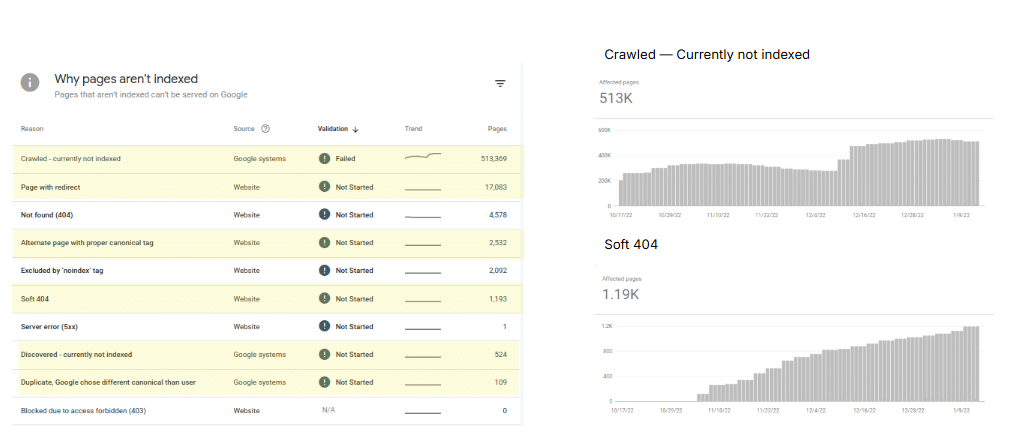
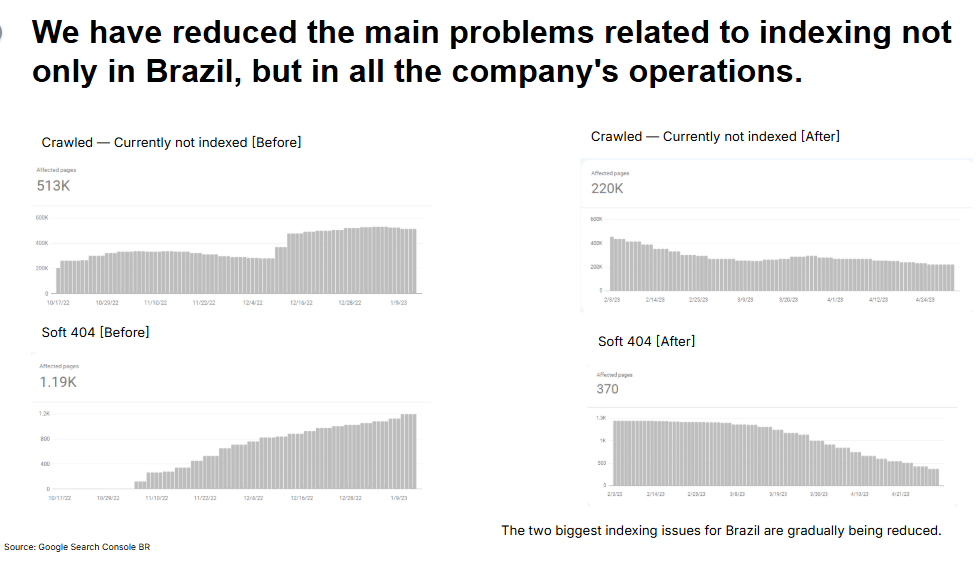
Google Search Console data in January 2023 highlighted severe indexing challenges across all domains, with Brazil alone having 513,369 pages categorized as ‘Crawled – currently not indexed’.
The ‘Crawled – currently not indexed’ status was troubling. These pages weren’t indexed because Google deemed them low quality or duplicate—yet potentially valuable content was left out of the index.
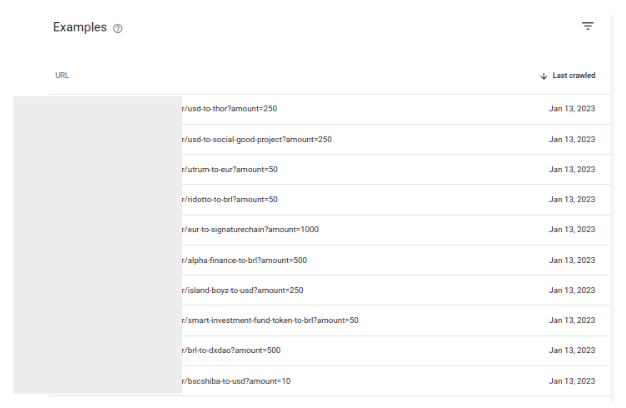
Upon investigation, I discovered that automatically generated thin-content pages, like currency converter URLs (e.g., “usd-to-thor”), were eating up the crawl budget, deprioritizing the domain.
Dealing With Soft 404 Explosions
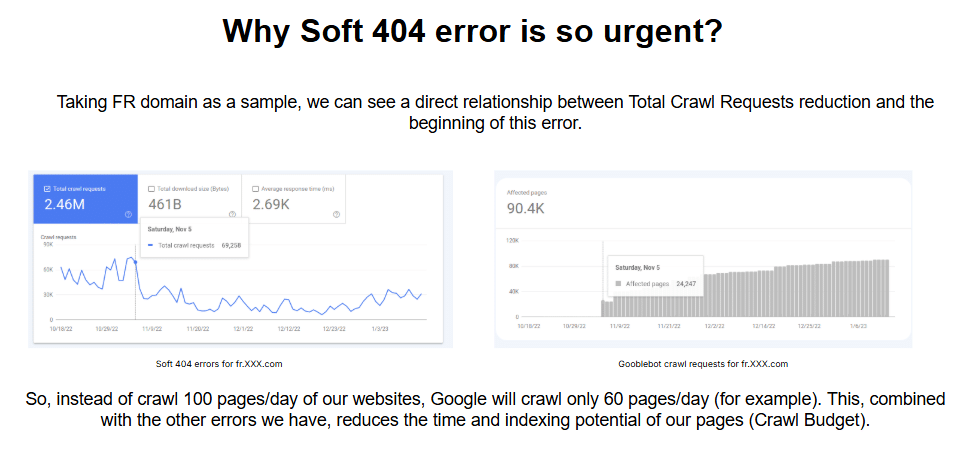
Addressing the migration alone wasn’t enough, as a surge of soft 404 errors also demanded attention. These errors occur when pages return a success status (200), but lack meaningful content, mystifying search engines and squandering crawl budgets.
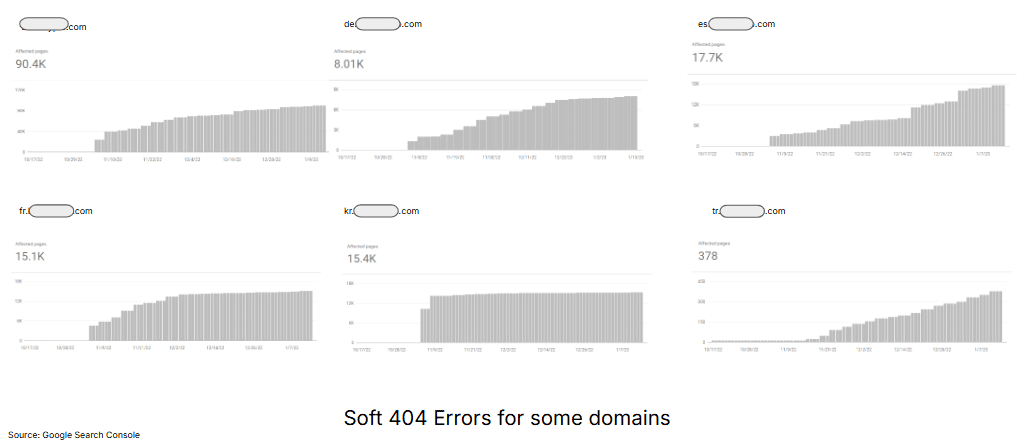
Soft 404s were proliferating across domains, including the main site and several international versions, complicating our SEO efforts further.
In France, this accumulation of soft 404 errors caused Google’s crawl requests to drop drastically, illustrating the pressing need to fix these issues.
Tackling the Crawl Budget Crisis
Understanding crawl budget is crucial. Excessively crawling ineffective pages depletes Google’s ability to find and index valuable content, particularly harmful for news sites needing prompt indexing.
By early 2023, our technical SEO was draining crawl resources, leading to slower indexing of fresh content and lost online visibility.
Implementing a Systematic SEO Fix
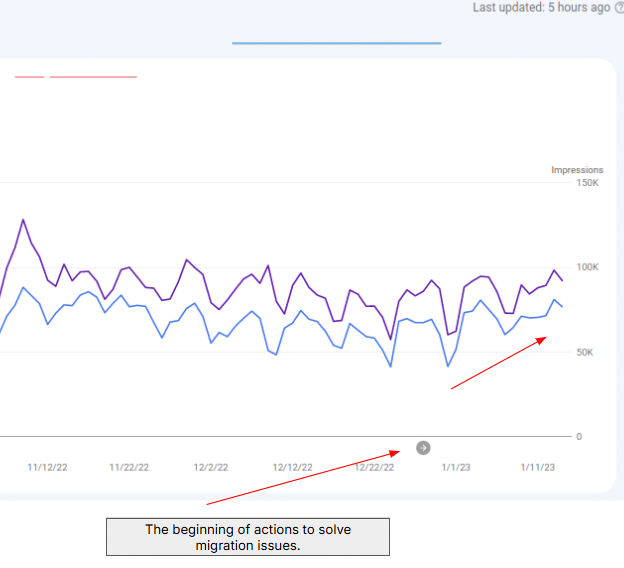
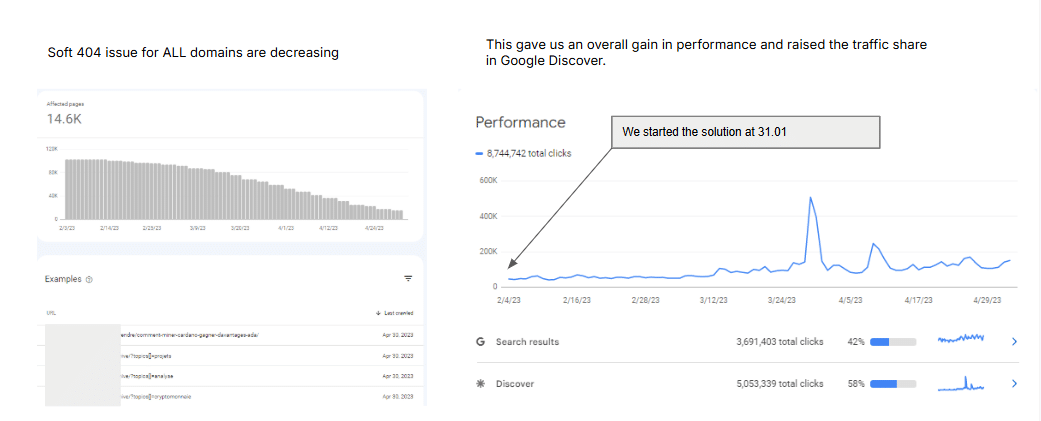
On January 31, 2023, I initiated an all-encompassing SEO strategy to target three priorities at once: Resolving soft 404s, optimizing the crawl budget, and refining Core Web Vitals, though the latter took a backseat to immediate indexing concerns.
Key actions included proper HTTP status code implementations for non-existing pages, optimizing URL structures, and improving canonicalization.
After the Fixes: Impressive Traffic Rebounds
The results were measurable just weeks later. In Brazil, ‘Crawled – currently not indexed’ pages fell by 57%, soft 404 errors reduced by 69%, and traffic began trending upward in early 2023.
International Recovery Highlights
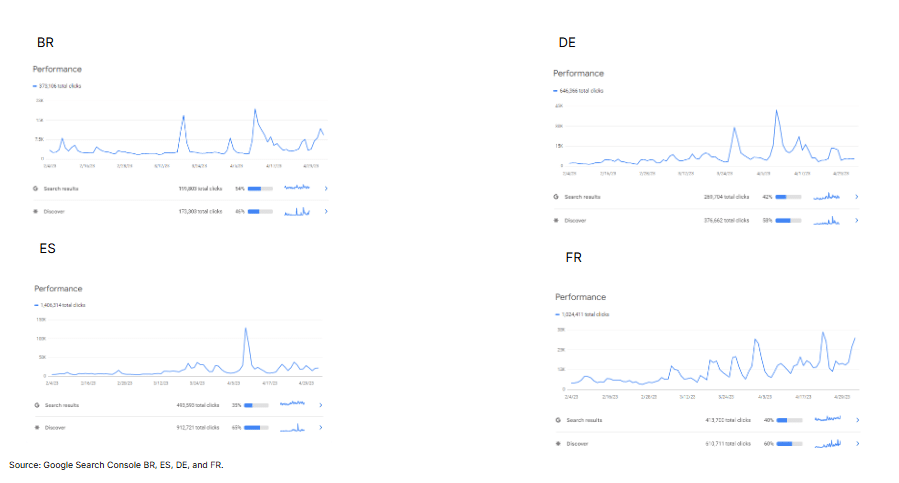
In Germany, indexed pages surged, driving total daily clicks notably higher. Similarly potent results emerged across Poland and Spain.
Key Insights from My SEO Journey
I learned that handling indexing issues trumps almost every other SEO concern. No matter the quality of your content and backlinks, if your pages aren’t being indexed, your visibility won’t improve.
Moreover, ignoring soft 404s can quietly erode your site’s crawl budget, which silently undermines your SEO efforts until it becomes glaringly apparent in lost traffic.
Finally, detailed verification during domain migrations and focusing SEO strategies on regional requirements can make all the difference between an underperforming and a thriving website.
As a Profound customer, I’m excited to share that I can now clearly see where my site and pages stand in terms of AI citations compared to other peers in the Profound Agent Analytics Network.
This feature empowers me with detailed insights, allowing for a competitive analysis that helps in enhancing my digital strategy and boosting my AI visibility effectively.
Adthena has unveiled an exciting new platform that offers advertisers a clearer view of the ChatGPT ad landscape. This development gives me unprecedented insight into my competitors and ad performance within the ChatGPT ecosystem.
As a digital marketer, I find Adthena’s ChatGPT Intelligence Platform fascinating because it’s the first tool of its kind offering whole-market visibility into ChatGPT Ads, similar to the comprehensive insights I already get from Google Ads.
Tracking over 300,000 daily prompts, Adthena allows me to see which brands are advertising, the locations of these ads, and the messaging strategies employed. It’s a powerful way to stay ahead in a competitive field.
The current native tools in ChatGPT provide a limited, self-centric view of my ad performance. Now, Adthena bridges that gap, enabling me to understand my competitors’ positions, share of voice, and specific prompt activity in an often unclear channel.
What I find particularly useful is how Adthena offers a comprehensive view of ad appearances across ChatGPT conversations, complete with competitive intelligence on advertising bids and creative types used.
The platform also provides real-time recommendations to optimize my campaigns—it’s about taking action based on insights rather than just watching things happen.
Furthermore, I can evaluate ad copy effectiveness, monitor my brand’s presence, and track share of voice—all from one dashboard that integrates both ChatGPT and Google Ads data, helping me make informed budget decisions as search behaviors evolve.
The introduction of this tool follows Adthena’s earlier AdBridge tool, which helps in the seamless transition of Google Ads campaigns into ChatGPT’s Ads Manager, indicating a burgeoning AI-driven search advertising ecosystem.
Ashley Fletcher, CMO, emphasizes that early adopters like me have the potential to influence the competitive terrain, with the platform clearly indicating the best strategies to employ.
Looking ahead, I anticipate more third-party tools emerging as advertisers like myself desire greater transparency in AI-driven ad environments. The pace at which brands recognize ChatGPT Ads as a vital performance channel will likely drive this adoption, possibly urging platforms like ChatGPT to enhance their native reporting capabilities.
The bottom line is that Adthena is positioning itself as the go-to visibility layer for ChatGPT Ads, offering me a clearer understanding of this rapidly growing but still enigmatic channel.
I’m excited to share that Google has rolled out its Merchant Center for Agencies worldwide! This powerful tool now lets agencies like mine manage and optimize product data for all clients in one convenient location.
After initially launching in the U.S. and Canada, Google’s Merchant Center for Agencies is now available to agency users globally. This represents a significant step forward for us, as product data’s role in shopping and discovery experiences continues to grow in importance.
For those of us managing multiple client accounts, this tool is a game-changer. It centralizes essential tasks like diagnosing issues and spotting growth opportunities, streamlining the process dramatically.
The days of fragmented and time-consuming product feed management are finally behind us. With this update, agencies can now efficiently monitor account health, address problems swiftly, and optimize product data more effectively.
The platform’s unified dashboard offers a comprehensive view of all client accounts. It allows agencies to see onboarding statuses and receive critical alerts, helping us stay on top of everything.
The portfolio-wide diagnostics feature enables us to identify issues across accounts quickly, filter them by market or campaign type, and prioritize solutions based on their potential impact.
Additionally, we can now monitor store quality metrics and inventory health within the platform, keeping a close eye on out-of-stock products and managing promotions directly.
On the performance front, new insights reveal high-potential products that currently have low visibility. We can tag and prioritize these products for ad campaigns to boost their visibility.
As agencies integrate this tool into existing workflows, I’ll be watching to see if it reduces our reliance on third-party feed management tools and whether more advanced optimization features become available.
Ultimately, Google is providing us with a scalable solution for managing product data. Merchant Center is becoming much more than a mere feed repository; it’s transforming into a strategic performance tool.