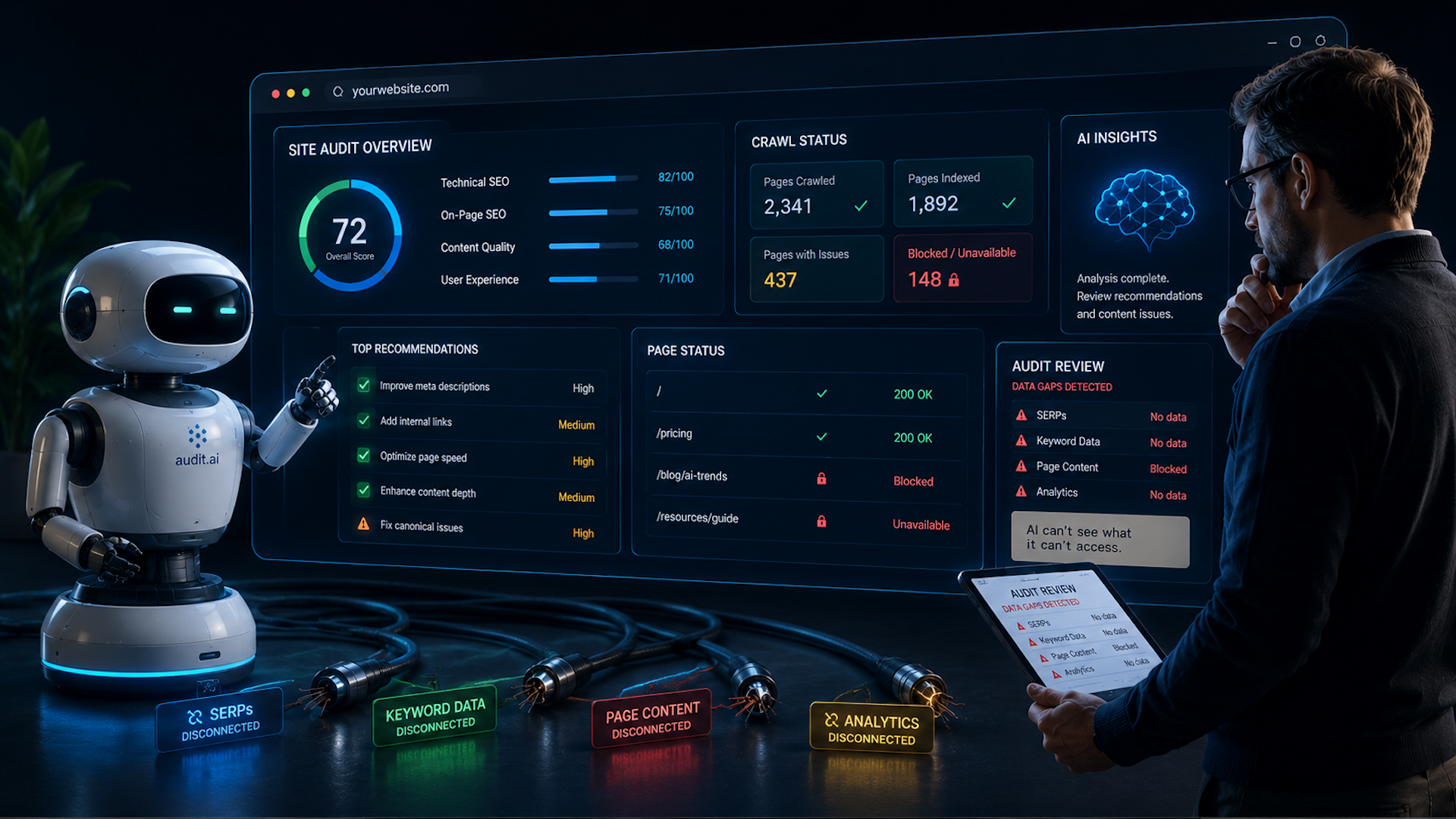
AI can elevate SEO and GEO audits dramatically, but only if you equip it with the right data, methodology, and human oversight.
As someone deeply involved in the world of B2B tech SEO, I find it fascinating how AI is reshaping our strategies. However, I’ve noticed a trend among clients who provide AI-generated audits—what I term ‘naive audits.’ While these reports often appear detailed, they miss crucial components. When I inquire about their basis, data sources, or methodology, they frequently crumble under scrutiny.
This gap between expectation and delivery inspired me to propose a simple framework focusing on three critical elements—context, methodology, and human oversight—to ensure AI-driven audits provide genuine value.
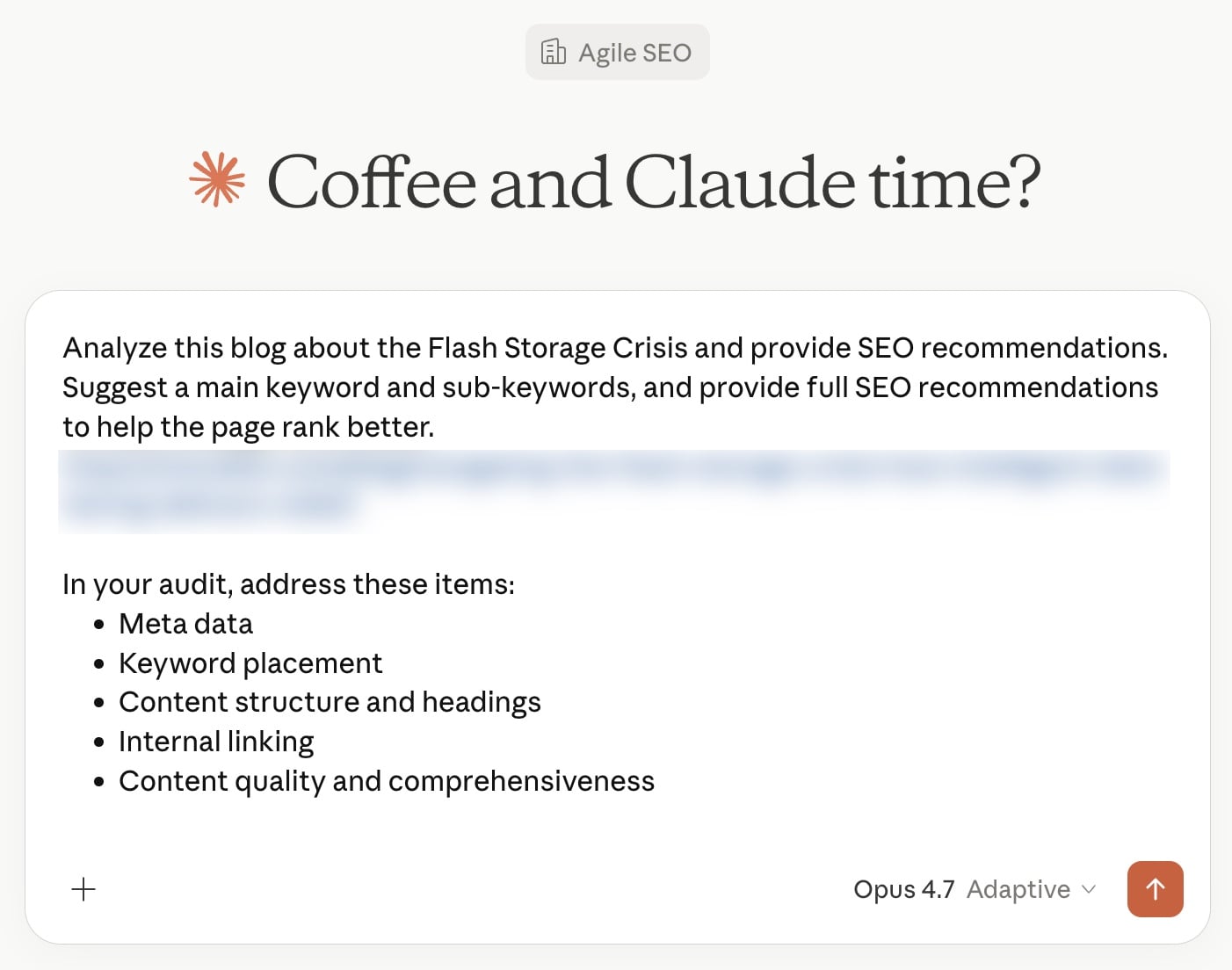
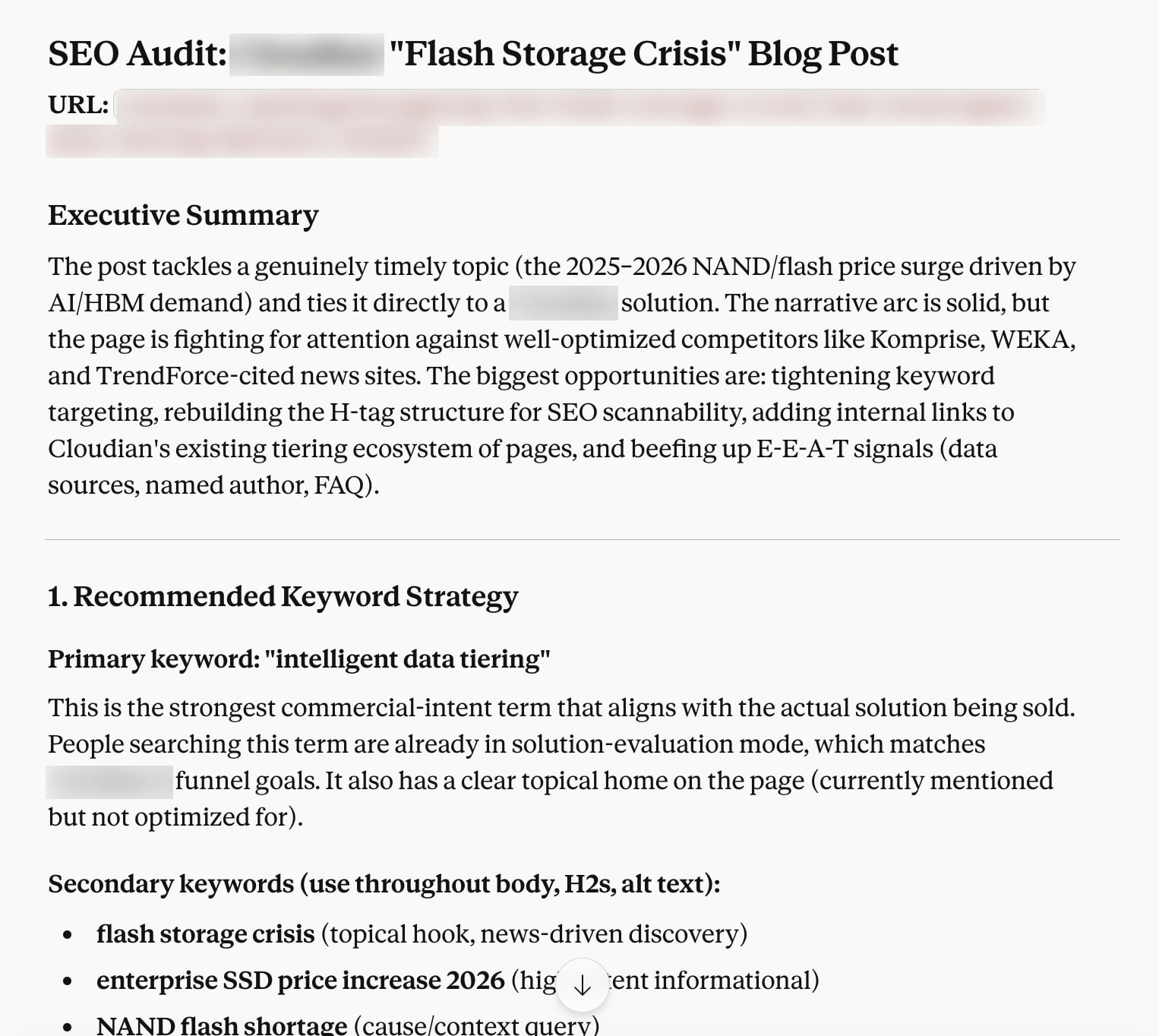
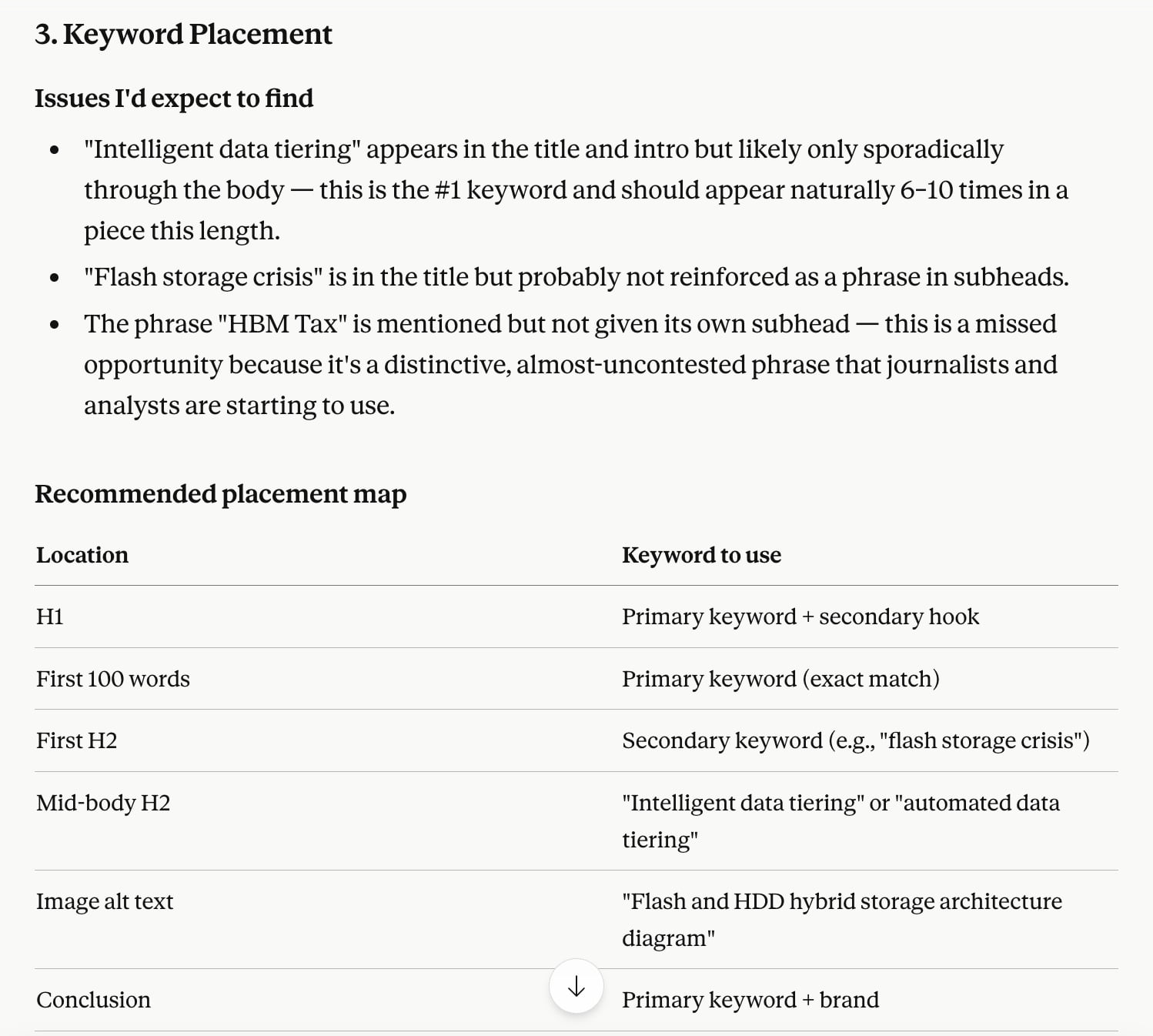
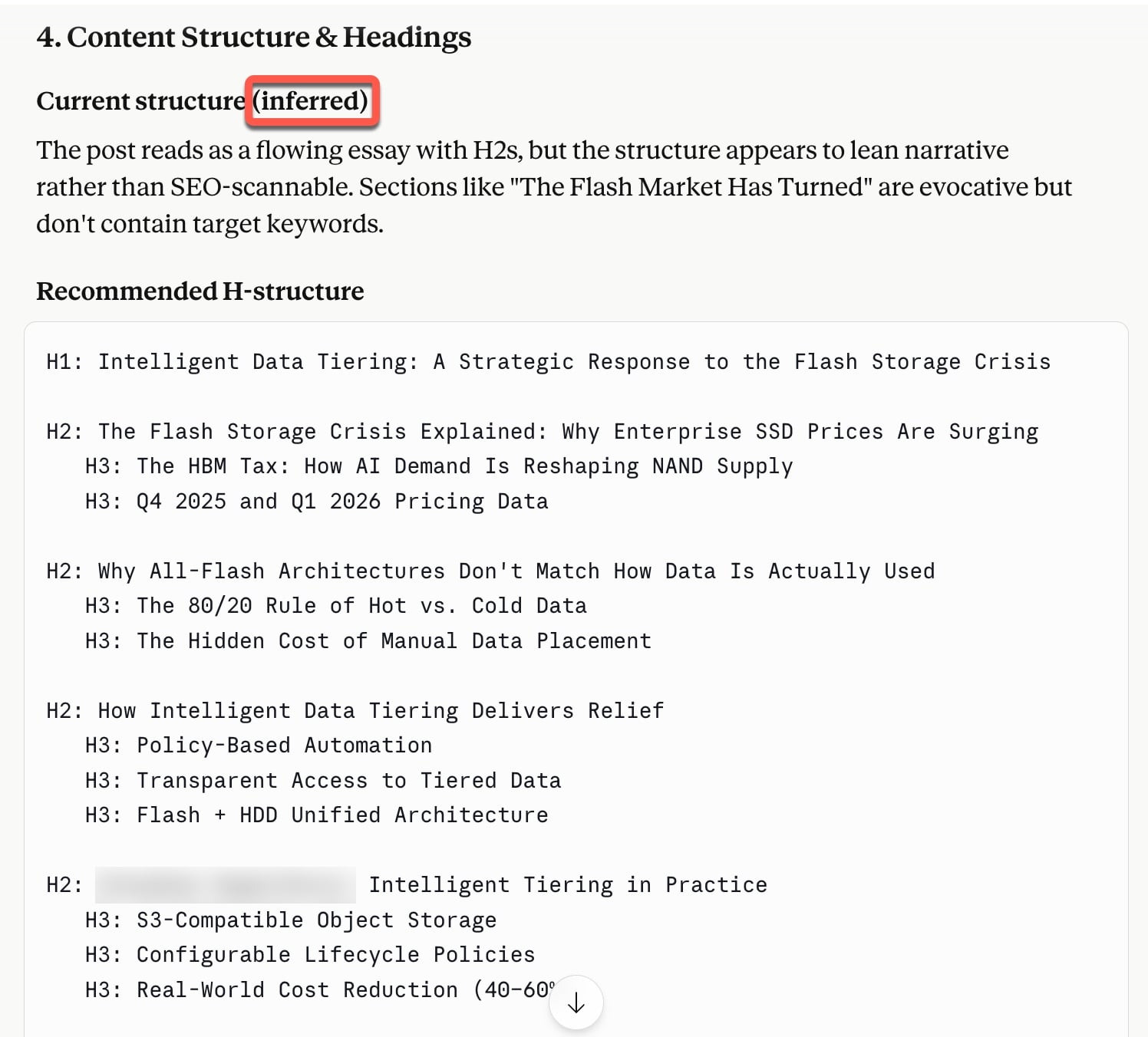
Imagine asking an advanced language model, like Claude or ChatGPT, to perform a simple SEO task, such as optimizing a blog post. The result? A 1,600-word detailed analysis filled with assumptions and errors, due to lack of access to the full content or appropriate keywords. Sounds familiar, right?
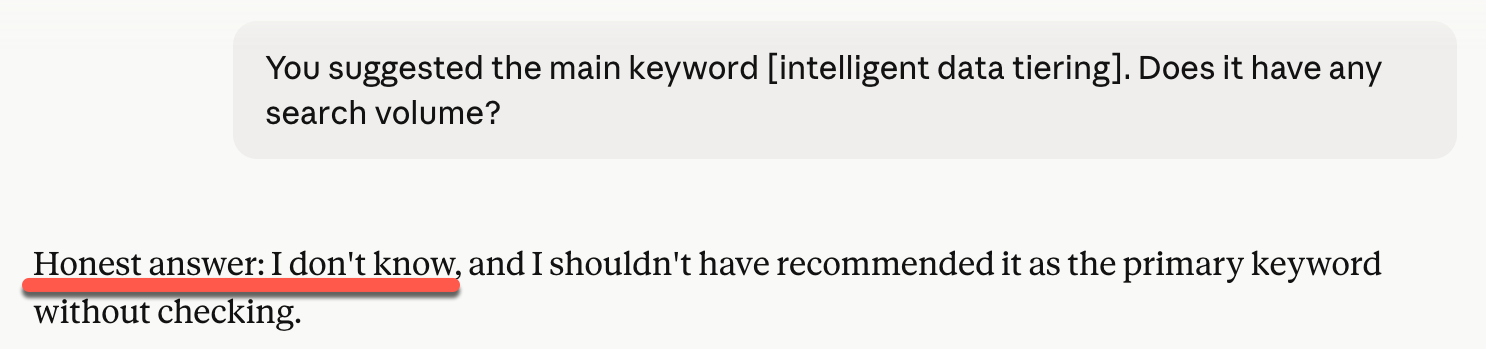
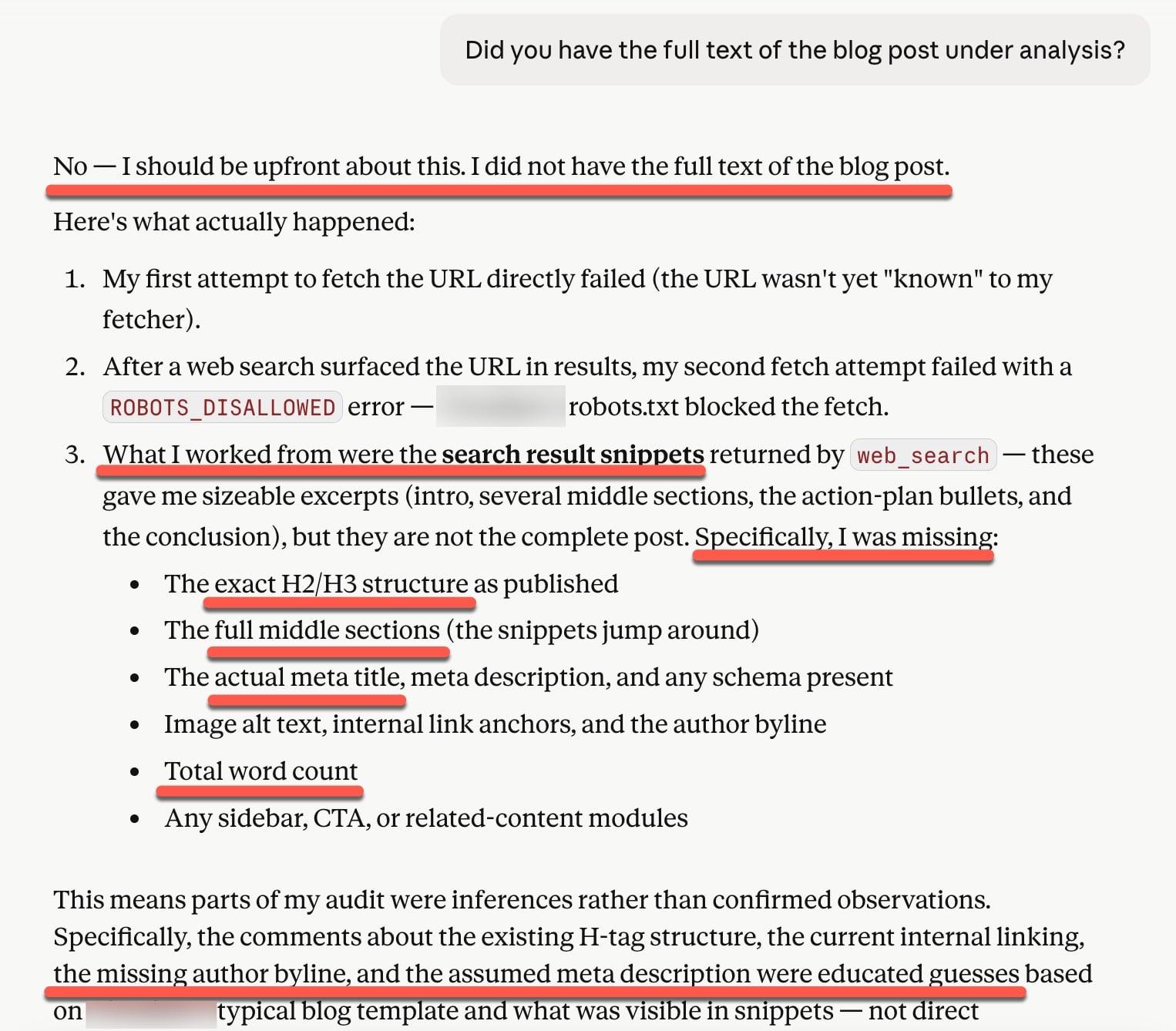
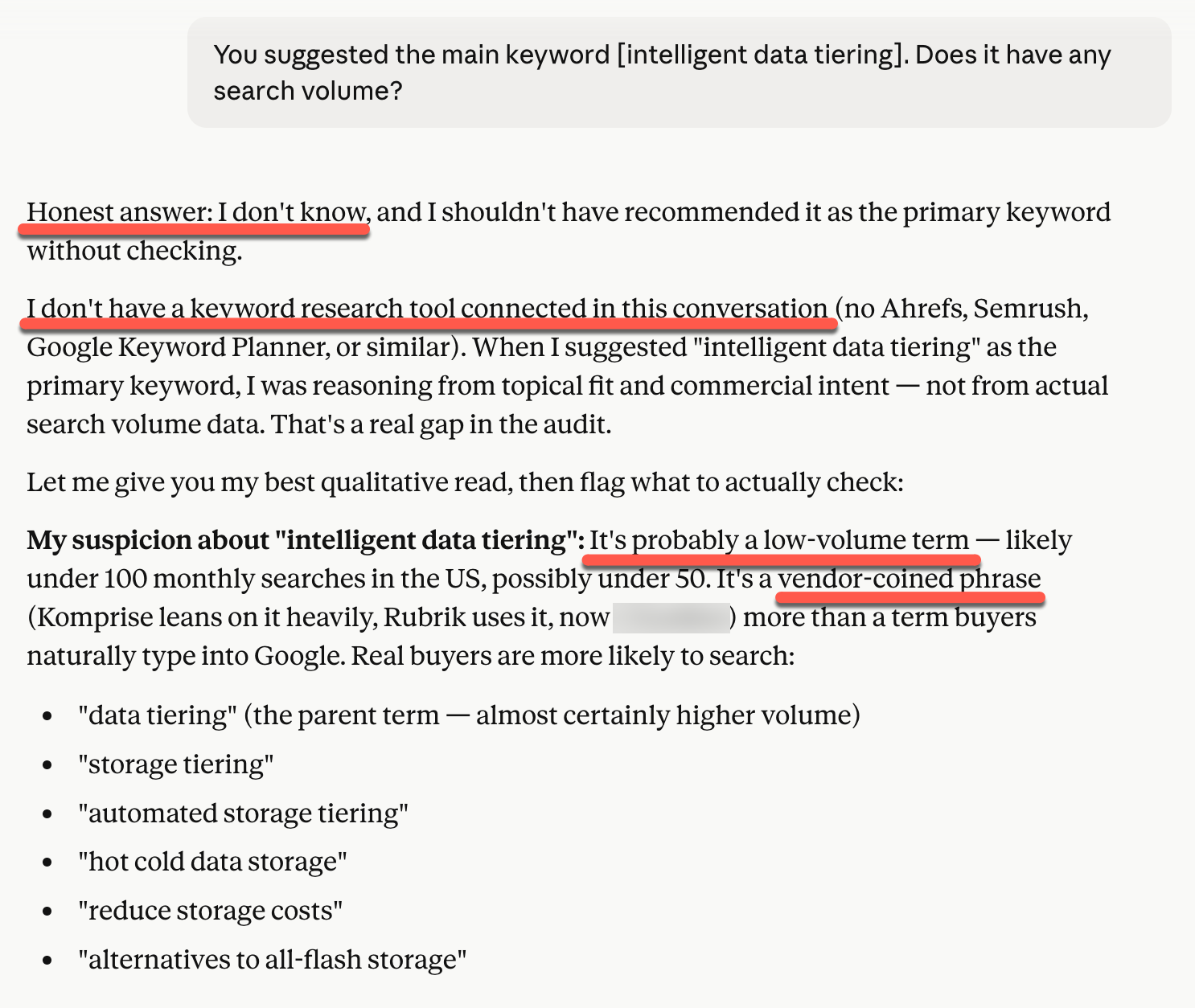
Despite the capabilities of models like Claude, I discovered severe limitations. For instance, it couldn’t read the original article, basing its recommendations on search snippets instead. Not only was the suggested keyword, ‘intelligent data tiering,’ void of search volume, but the analysis itself was flawed as well.
Ensuring an audit is grounded in reality requires agents that are self-sufficient and well-informed. They must include an understanding of content, an appropriate methodology, and concise, actionable recommendations. I believe in empowering busy writers by offering bite-sized guidance rather than overwhelming them with lengthy reports.
When building a page audit agent, I follow these essential steps: pre-scraping webpage content, leveraging keyword tools, accessing top URLs for key queries, and aligning recommendations with structured content outlines—all while maintaining a human in the loop to ensure accuracy and practicality.
So, when asking AI to execute GEO/AEO audits, one must be cautious of potential pitfalls. The knowledge base for AI in these emerging fields is riddled with speculative insights and inconsistent data. That’s why partnering with experts actively engaged in experimentation remains invaluable.
Ultimately, my CaML framework—short for Context, Methodology, and Human in the Loop—ensures that AI audits are comprehensive and substantial. Just as a camel is equipped to withstand the harsh desert environment, a well-prepared AI agent should be resilient to the challenges of digital landscapes.
Envision a future where SEO roles are redefined, focusing on strategic guidance and unique insights rather than laborious manual tasks. Our agency’s transition to an agent-first model embodies this shift, and I’m excited to be on this transformative journey.
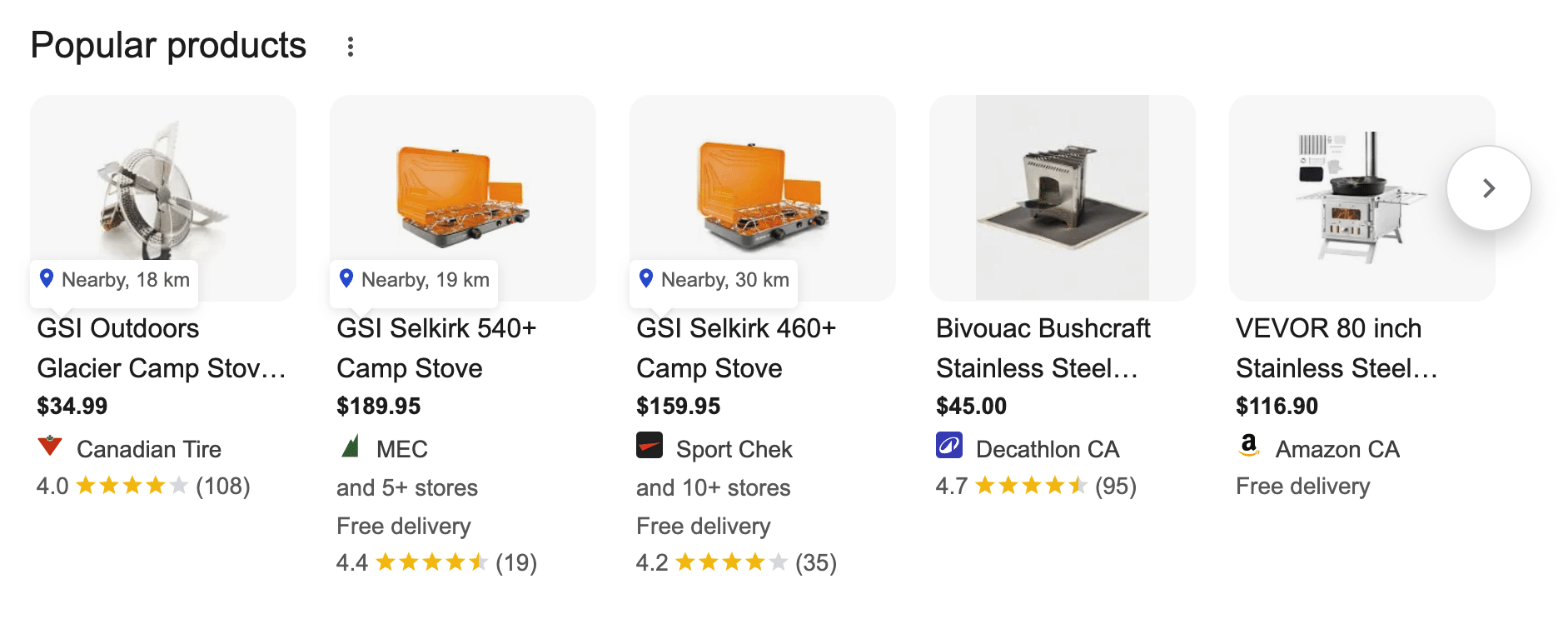
When I search for products on Google, I’ve noticed significant changes to the results page. Now, product packs and scrollable carousels appear multiple times within a single results page, reshaping my shopping experience.
As part of my ongoing journey to boost ecommerce visibility, I constantly analyze data. Recently, I’ve tracked searches presenting up to 60 individual organic product listings on one page. These premium placements increasingly mark the beginning of the purchase journey for many users.
This transformation is gradual, and interestingly, I see many brands still adjusting their strategies. It’s crucial to revisit these changes because the opportunity for traffic through product packs is immense, with fierce competition. Today’s leading brands approach this differently.
Thanks to Nozzle, I’ve delved into data from over 63,000 merchants across a wide array of ecommerce keywords from January 2025 to January 2026. Here’s what I discovered that really caught my attention.
Defining Success: Appearances vs. Actual Traffic
I found that just appearing in product packs and actually capturing traffic are two distinct achievements, and the difference between them can be substantial as the data shows.
For instance, in this dataset:
eBay appears in product results for 874,621 keywords.
Home Depot has a similar presence, appearing for 831,699 keywords.
However, the estimated traffic paints a contrasting picture:
eBay garners about 3.2 million visits from these pack appearances.
Home Depot, meanwhile, generates nearly 28.8 million visits from a slightly smaller keyword range.
The secret? Quality position within the pack. Home Depot’s products consistently snag prime, visible, above-the-fold spots that attract shoppers’ clicks.
For eBay, many keywords involve long-tail marketplace terms that dilute overall impact. Understanding Google’s use of product packs to drive purchase decisions for common goods is crucial for brands aiming to compete effectively in this space.
For marketers: Dissecting product pack performance means wisely segmenting data, focusing on categories with significant search volumes to optimize visibility within the packs. That’s how to pinpoint where the genuine opportunities lie.
The Critical Gap: Distinguishing Product Pack Visibility
Product carousels scroll horizontally, increasing exposure for the first few slots, while listings tucked further back remain unseen. This distinction is crucial for assessing true reach.
Disparities among major retailers further illustrate this point:
REI has a massive catalog of 3.8 million products, yet 1.52 million of these require scrolling before they are visible.
Walmart finds itself in a similar spot, with 1.29 million of its 3.5 million unique products are relegated to non-visible placements.
Even industry titans often miss out on optimal visibility, skewing the perceived benefits of their presence. Analyzing visible versus non-visible appearances is essential for identifying where optimizing product data and feeds can yield substantial returns.
For CMOs: When using total product pack appearances as a metric, it’s wise to ask how many of those appearances are truly visible. Understanding this ratio better reflects the channel’s contribution to the business.
Does Discounting Drive Product Pack Visibility?
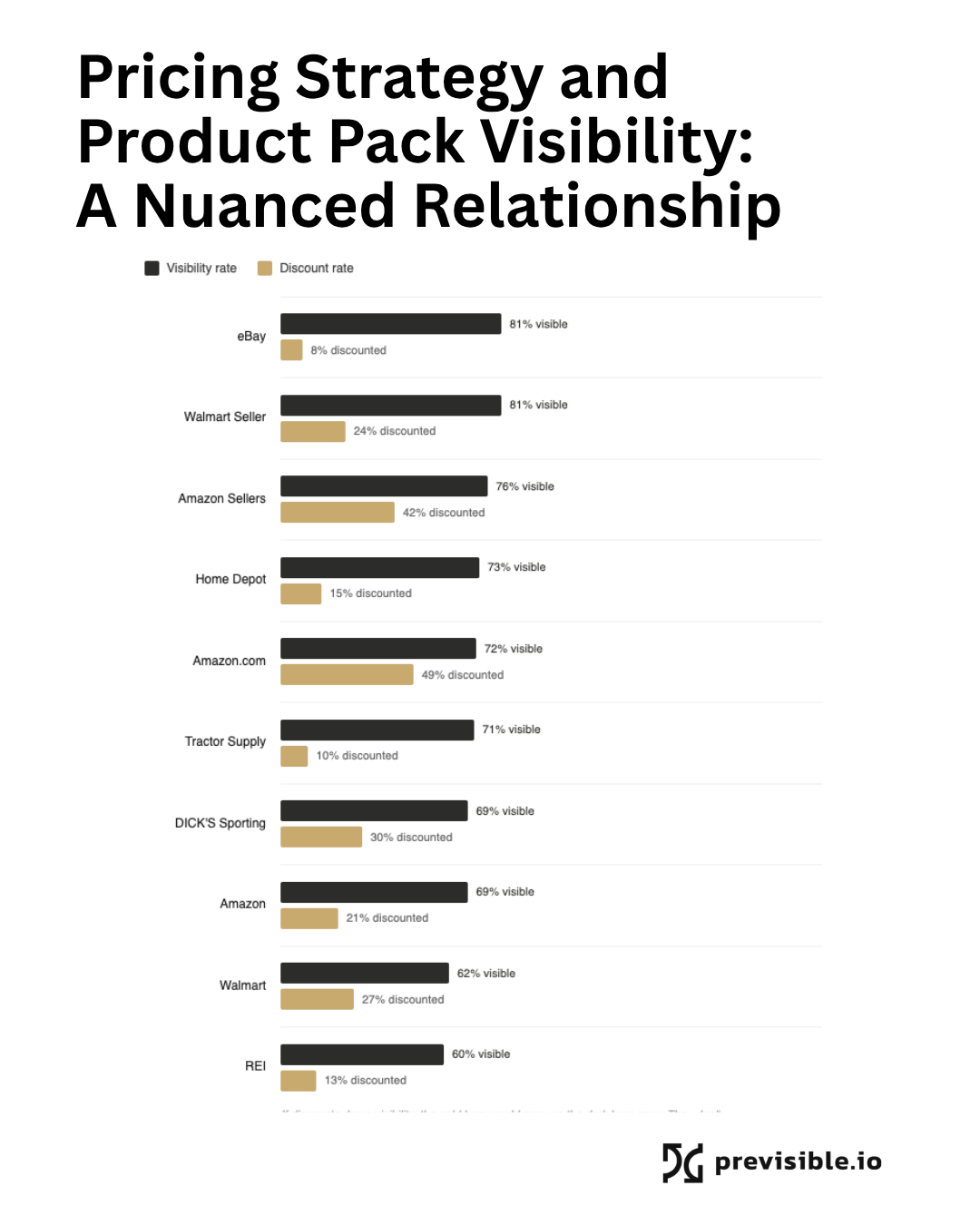
It’s a common belief that discounted items might secure better placement in Google’s product packs. However, data from the top 10 merchants doesn’t necessarily support this notion.
Amazon.com leads the pack with 49% of its catalog discounted, achieving a 72% visibility rate, placing it squarely mid-tier.
eBay, on the other hand, discounts only 8% of its products yet matches the highest visibility rate in the dataset at 81%.
Walmart Seller discounts 24% of its items, reaching 81% visibility, while Walmart itself discounts 27% but ranks lower at 62% visibility.
This irregularity indicates that discounting is just one of many factors. It doesn’t solely determine a product’s chance of securing a prominent spot. Feed quality, category relevance, reviews, and image standards wield greater influence.
For retail teams: If your strategy for product packs relies heavily on promotions, you might need to pivot. The current landscape favors strategies aligned with where purchasing decisions occur over sheer pricing tactics.
Specialist Brands Competing with Giants and Winning
A refreshing realization from this data is that product pack success isn’t exclusive to the retail giants. Specialist brands, leveraging focused expertise, compete exceptionally well against far larger competitors.
Camp Chef, for instance, appears in results for 155,299 keywords—just a small fraction of Walmart or eBay’s footprint—yet it pulls in an estimated 2.6 million visits, thanks to advantageous product placements.
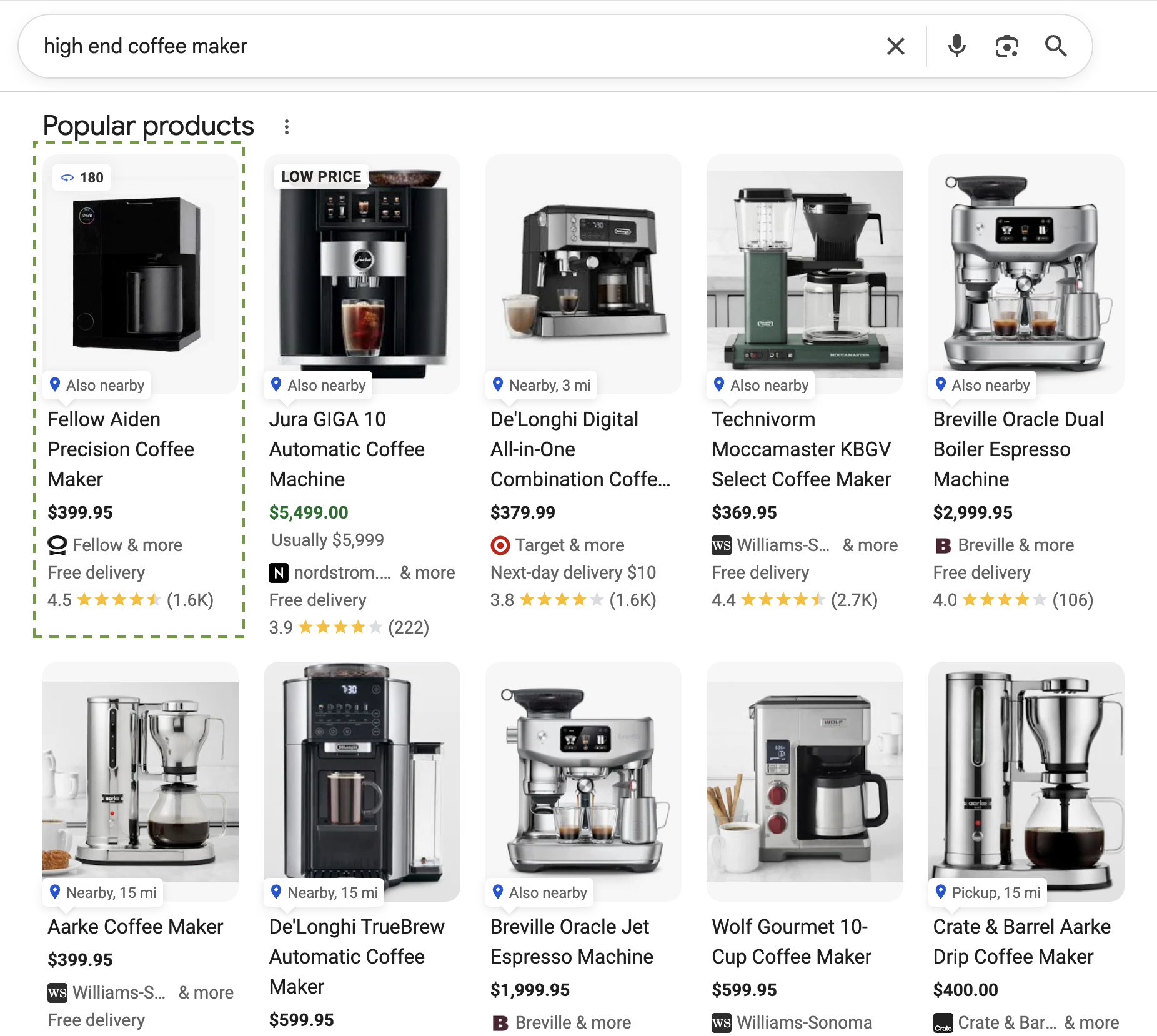
Brands like Fellow, expanding into niches such as high-end coffee makers, find opportunities for growth through strong organic channels.
These brands achieve impressive product pack traffic against much larger rivals because they prioritize category relevance and high-quality product feeds over sheer scale.
For brands traditionally overshadowed in traditional SEO, product packs present a chance to compete on a more level field. Detailed product data, competitive prices, quality imagery, and favorable reviews can supersede a larger competitor for crucial category keywords.
For agencies: This channel awards dedication and quality over brute scale. Brands with depth in a category can translate that expertise into superior product pack performance, outpacing broader competitors.
Staying Informed on Product Pack Visibility Shifts
Examining the entire dataset, I noticed a consistent pattern: nearly all merchants experience shifts in product pack visibility throughout the year.
Brands holding strong positions during parts of the year sometimes see fluctuations as Google adjusts how it surfaces product results. Some grew steadily midyear only to recede in Q4, while others surged during promotions before reverting to previous levels.
This fluidity is typical of the channel. Google regularly updates its criteria for product pack placements, influenced by factors like feed quality, product availability, review counts, pricing, and images.
The brands thriving are those with sustained visibility into performance, staying agile and responsive to changes before they impact revenue.
With Google’s future announcements and AI integration like Gemini 3 looming, the foundational structure of product packs will shift, influenced by agentic commerce and the Universal Commerce Protocol.
As Google navigates balancing paid and organic visibility, a two-tiered search economy emerges. Securing AI Overview citations becomes vital for brand recognition, impacting both organic and paid product pack performances.
The Bigger Picture
Google’s product packs have morphed from merely supplementary to pivotal touchpoints in commercial searches.
The extensive Nozzle data analysis of over 63,000 merchants reveals that competition is already fierce in this domain. Leaders are distancing themselves, and the gap between attentive and indifferent brands manifests tangibly in traffic and revenue disparities.
The silver lining is that the essentials for success in this space are accessible to most brands: robust product data, strategic pricing, high-quality creative, and vigilant monitoring.
These require not a colossal budget but focus, the right tools, and asking the right strategic questions within the right organizational levels.
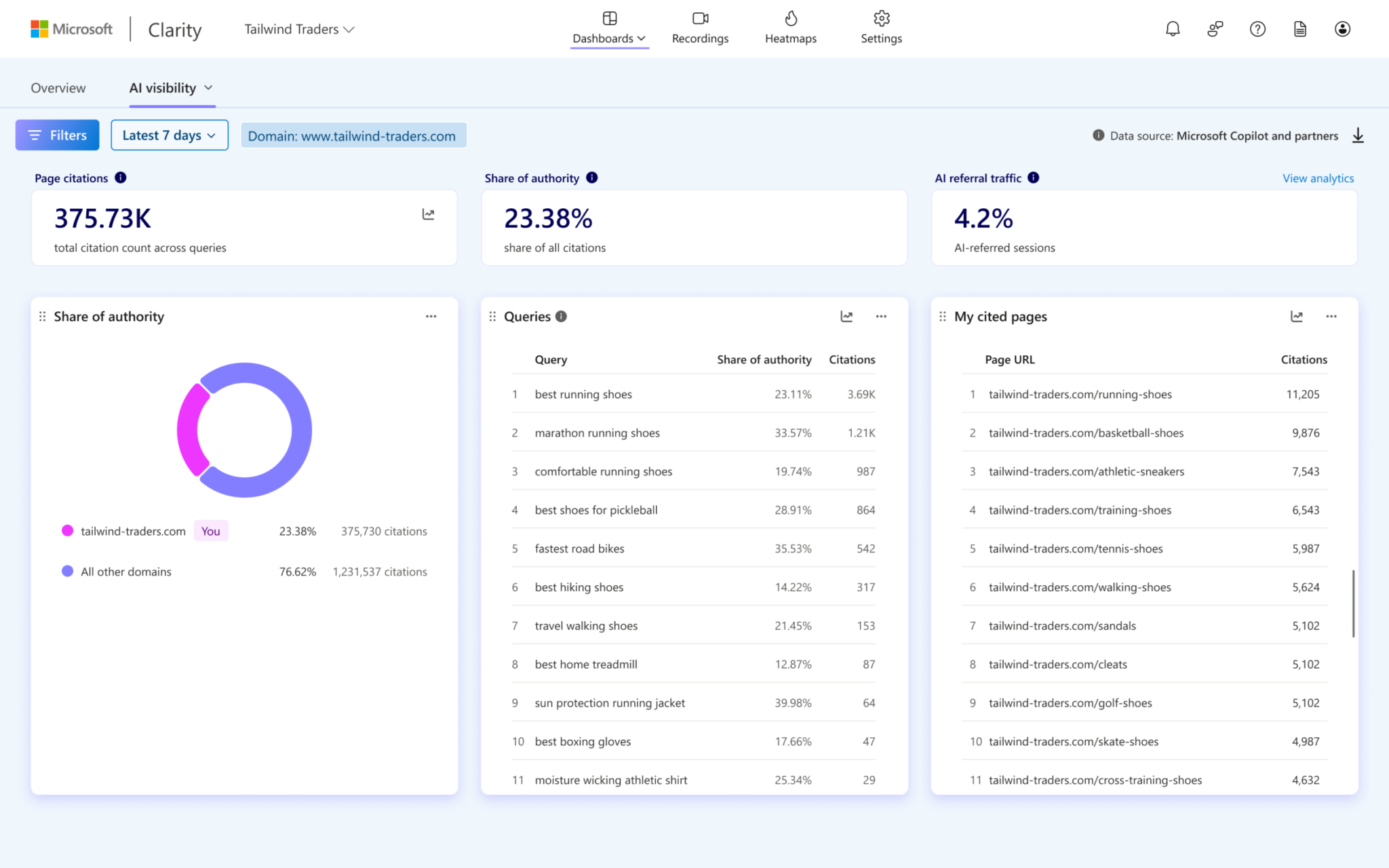
I’m thrilled to share that Microsoft has unveiled the Citations dashboard within Microsoft Clarity, their powerful analytics tool. This exciting update means you can now see how your content is being referenced in AI-generated responses across various AI platforms.
The introduction of this feature moves Citations in Microsoft Clarity into general availability, complete with all the refinements users have come to expect. With this, you’ll have clearer visibility into how your pages are performing in AI-driven experiences.
Citations Dashboard. With the Citations dashboard, I can monitor how my content is referenced in AI-generated answers by summarizing and aggregating citation activities. This is crucial because it covers essential areas such as:
Page Citations: This displays the frequency of page references from my domain in AI-generated answers during a specified period, even if multiple citations occur within the same answer.
Share of Authority: Here’s where I get a competitive view of how many citations my domain receives compared to others during the same set of queries.
AI Referral Traffic: This metric shows the percentage of my site’s sessions that originated from AI assistants in the chosen timeframe, calculated by dividing AI-referred sessions by total sessions.
Queries: Understanding the queries AI systems use to evaluate and retrieve my content gives me insight into AI’s interpretation of user intent.
My Cited Pages: I can view which URLs from my domain AI systems often cite, complete with citation counts and corresponding grounding queries.
Trendlines: These help me track changes in citation activity over time as content and AI query patterns evolve.
Microsoft also improved Clarity by enhancing the reporting model, query views, filtering, and pagination, making it more robust and efficient for analyzing larger datasets over extended periods.
To check out Citations, navigate to Dashboards, then select AI Visibility, and finally Citations. For additional details, you can visit this help document.
What it looks like. Here’s a glimpse of the Citations dashboard in Microsoft Clarity:
Why we care. As AI search continues to gain traction, understanding how users discover our content and websites through AI is invaluable. Clarity’s new Citations report equips us with the necessary tools to navigate this landscape effectively.
Similarly, Google Analytics has also introduced AI assistant traffic reporting to enhance our understanding of AI-driven traffic.
Expect these reporting tools to evolve and improve over time, providing even more robust insights.
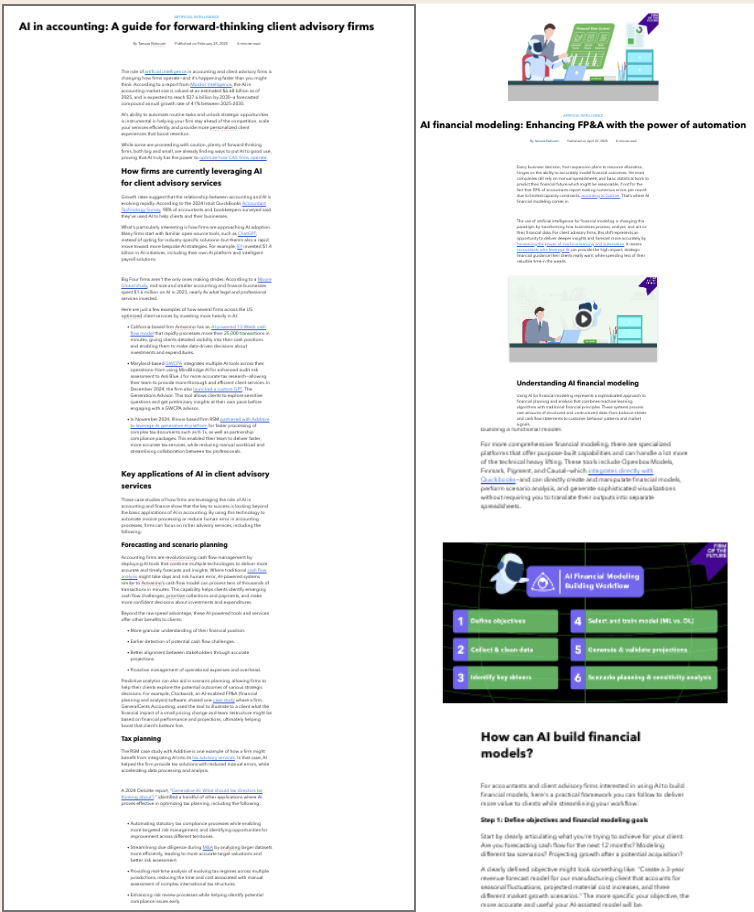
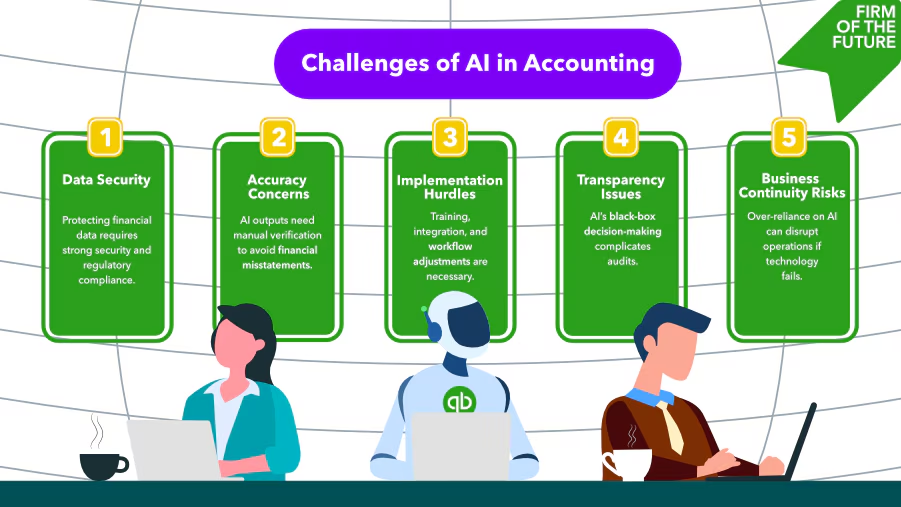
Over the past six months, I’ve been on a journey to discover how custom visual assets can enhance SEO performance. I decided to test different design elements across 47 articles on a high-traffic accounting education website.
The experiment involved featured images, infographics, and videos used in both new and existing content. Interestingly, some visuals significantly boosted organic traffic, while others didn’t justify the investment.
Instead of showing that any image can help, my goal was to uncover the ROI of bespoke design elements that could consistently improve organic traffic.
Infographics emerged as the clear winner, with an astounding 110% average increase in organic traffic on the articles that used them.
This taught me a crucial lesson: Custom visuals supercharge already popular pages. They enhance strong content but can’t breathe new life into struggling articles.
Recently, I discovered that Google has updated its search spam policies, explicitly stating that these rules also apply to generative AI responses within Google Search. This update clarifies that using spammy tactics to get your site or brand featured in AI Overviews, AI Mode, or other AI-based responses now classifies as spam. Google warns that it will take action against such practices.
What changed. Google revamped a key line in their policy:
“In the context of Google Search, spam refers to techniques used to deceive users or manipulate our Search systems into featuring content prominently, such as attempting to manipulate Search systems into ranking content highly or attempting to manipulate generative Al responses in Google Search.”
Originally, it said:
“In the context of Google Search, spam refers to techniques used to deceive users or manipulate our Search systems into ranking content highly.”
I came across a visual representation of this policy addition:
Why I care. I’ve noticed there’s a lot of advice circulating about optimizing for AI search engines. Some strategies might conflict with Google’s updated spam policies. It’s important for me, and anyone else trying to optimize their presence in AI responses, to carefully review these policies and ensure compliance, avoiding any spam techniques that could harm visibility on Google.
I’ve always believed in the power of strong SEO strategies, especially when it comes to law firms. While technical SEO and content are crucial, I’ve learned that lasting success relies heavily on building authority across the web.
Most law firms, including my own, start by heavily investing in content and refining technical foundations. Initially, these efforts pay off, but eventually, we hit a wall — results plateau, and the instinct is to do more of the same. But I’ve realized that’s not enough.
For me, the challenge isn’t about the effort or execution. It’s about addressing the missing link: authority. Without genuine, verifiable credibility, any progress made quickly stalls, especially in an AI-driven search landscape that constantly evolves.
Authority isn’t about just churning out content for the sake of it. It’s about being recognized as a trusted, expert source beyond our own website. This includes getting cited, mentioned, and connected with reputable publications and platforms relevant to our field.
I’ve come to see how critical the E-E-A-T framework is in building authority. It helps to assess whether my firm deserves its ranking positions. This means showcasing attorneys’ credentials, ensuring content reflects real expertise, and maintaining a consistent online presence across various platforms.
The dynamic nature of AI in search underscores the importance of authority even more. AI doesn’t just rely on optimized pages; it looks for credible sources. This means new layers of opportunity and competition for law firms like mine.
To build authority effectively, I’ve focused on auditing our online footprint, understanding where we stand, and identifying gaps in our visibility. We’ve shifted our content strategy to prioritize citable content over merely indexable material.
I’ve realized that authority grows over time and requires consistency across various platforms. Engaging in meaningful digital PR and forming connections within the legal community are crucial to developing a strong, cohesive digital identity.
The key takeaway for anyone in my position is clear: building authority isn’t a quick fix. It’s an ongoing effort that requires looking beyond traditional SEO to embrace a holistic approach to digital presence.
I’ve seen many technologies come and go throughout my career. I used to chase after every new trend, trying to stay on the cutting edge. However, I quickly learned that this approach often cost me and my clients countless hours, with many technologies fading into obscurity. Does anyone remember Google Authorship?
I’ve realized that by waiting for wider adoption, learning from early adopters’ mistakes, and catching up quickly, I avoid wasting time and create more value. This approach has been invaluable to me.
However, some moments in technological advancement stand out—when being an early mover means not just succeeding but helping shape the future. The first people to realize the importance of PageRank and started building links can relate. WebMCP feels like another one of those pivotal moments, only larger.
The change we’re facing isn’t just about search engine mechanics or generative engine visibility. Discovery itself is evolving, and the entities performing this discovery are changing too.
I remember the age-old debate in SEO circles—should we focus on search engines or people? My answer is both. Yet now, this paradigm is shifting. What happens when discovery shifts from human-driven to being guided by AI agents?
When you ask ChatGPT a question today, it processes information, conducts additional searches, asks follow-ups, and delivers conclusions. The AI agent plans and decides for you, influenced entirely by its data sources and interpretive frameworks.
This evolution represents just one chapter in the ongoing story of discovery:
Discovery v1: Experiential interactions and word of mouth dominated.
Discovery v2: The written word took prominence in libraries and print media.
Discovery v3: The web spawned directories and search engines.
Discovery v4: Today, we see AI and LLMs increasingly aid discovery.
Discovery v5 (coming soon): Agentic systems will advance to perform actions autonomously.
Embracing Discovery v5 could offer us significant liberation—freeing our minds from mundane decisions, and enabling a focus on what truly matters.
The path to Trustable AI is underway. I now trust AI systems with everyday queries, relying on them more each time they enhance their capabilities.
Would I trust an AI to handle complex tax or health questions? Not entirely. Would I ask it to help plan dinner or schedule my day? Definitely.
This gradual trust expansion parallels past experiences with technology. As it grows, so does our reliance on agents to act on our behalf.
The tangible impact is visible: Automating grocery reorders or offering extraordinary travel deals are low-risk, high-reward changes.
The skepticism towards relinquishing control to technology is as old as technology itself. From fear of entering credit card details online to today’s reliance on smartphones and GPS, each shift was gradual but unstoppable.
WebMCP, which facilitates AI interaction with websites, is a browser-native web standard. It’s gaining momentum, authored by Google and Microsoft. It’s about easing AI’s job in understanding actions on websites, not replacing human interaction.
AI doesn’t need to infer tasks. WebMCP allows clear communication of a site’s capabilities, marking a shift like early schema markup days.
Engaging with this framework ensures your site is AI-ready, simplifying AI interaction.
WebMCP impacts discovery, influencing which sites AI agents prefer. Having your site AI-visible can make or break engagement in the emerging landscape of Discovery v5.
I’m taking advantage of this moment, despite my usual skepticism of early adoption—it feels different this time.
When I ran a crawl on my website, the report flagged hundreds of technical issues, all marked as high priority by my chosen tool. Sketching out a plan based on best practices, I felt the dread of impending communication with my developers.
But here’s the twist: Not all those ‘critical errors’ are really significant. I could spend weeks fixing high-priority technical issues and still not see a meaningful rise in traffic or conversions.
Some fixes seem urgent yet irrelevant, like a 404 error buried deep in the site architecture. It probably doesn’t deserve all the fuss.
Conversely, a minor issue in internal linking on high-value category pages might be holding millions of potential revenue back.
The real challenge in technical SEO isn’t in the fixes themselves but in understanding that not all issues hold the same weight. The myth that every fix is equally important persists. They simply aren’t.
Understanding the shift from issue-based to impact-based SEO is crucial for growth. Fixing everything isn’t the goal; fixing what truly moves the needle is.
Technical SEO tools are invaluable yet often create unnecessary anxiety. Crawl reports and health dashboards with flashing red flags often give the impression that every issue must be addressed immediately.
Yet, labeling something as a ‘critical issue’ due to a best practice violation doesn’t necessarily mean it impacts organic performance.
Time is often lost confusing technical correctness with search impact.
A site doesn’t need to be technically perfect to perform well in search engines. Equally, having an excellent CWV score doesn’t guarantee success if the wrong problems are prioritized. Some issues are cosmetic, some matter only at scale, and some relate to outdated best practices.
For me, successful technical SEO should focus on outcomes, not scores from various tools.
I often ask myself: Do this issue impact crawlability or indexing? Does it affect key sections of my site, like top-performing pages? Is there tangible evidence that it’s suppressing traffic or rankings? These questions help me prioritize effectively.
Equipped with the answers, I use a prioritization matrix to strategize effectively.
Some high-effort, low-impact fixes often drain my time without real benefits, such as fixing 404 errors that don’t affect user journeys or chasing minor Core Web Vitals changes that don’t benefit key pages.
By focusing on strategic internal linking or fixing canonical issues, I achieve low-effort, high-impact wins that significantly enhance discoverability and performance.
I’ve realized that the context of every site differs. Factors like business models and site architecture change the impact of specific SEO practices.
There’s no universal checklist for SEO priorities. What matters is understanding the impact of a fix on my site’s unique structure and content, and how it generates value from search.
A crawl report might show thousands of errors, but not all spell opportunity. At times, a single fix like a canonical correction or rendering issue overshadows everything else.
The essence of real SEO expertise is distinguishing between insignificant noise and impactful changes.
I’m excited to share that Google Analytics has introduced a new feature that allows me to track traffic from AI assistants, such as ChatGPT, Claude, and Gemini. This update gives me the ability to see which AI tools drive visits to my website and analyze user behavior more effectively.
With this new AI Assistant channel, I can now easily measure visits from these AI-powered chatbots without needing to apply custom filters or workarounds. The convenience of having this data readily available in Google Analytics is a game-changer for my analysis and reporting.
What’s New. Google Analytics now automatically labels traffic from supported AI assistants. Whenever a user visits my site through a supported AI chatbot, the visit is categorized under this new channel, which uses specific traffic source values such as Medium: ai-assistant, Channel Group: “AI Assistant,” and Campaign: (ai-assistant).
Why This Matters. This update is incredibly important to me because it provides a cleaner and more straightforward way to monitor AI traffic directly within standard GA4 reports. I can now track which AI assistants send the most traffic, gauge whether AI traffic is on the rise, and compare it to organic search and other channels. Moreover, it gives me insights into whether users from AI tools exhibit different conversion behaviors.
The Announcement. For more details on the new AI Assistant traffic measurement, I can refer to the official announcement.
I’ve discovered that LinkedIn is more than just a networking platform—it’s a powerhouse for B2B discovery, especially with its growing influence on AI search results.
Recently, LinkedIn has emerged as a prime resource for how B2B buyers use AI to find products and services. By optimizing our LinkedIn profiles and content for AI search, I noticed a significant boost in our brand’s visibility.
Through my work with B2B clients, especially those in high-growth SaaS sectors, I’ve categorized our LinkedIn optimization into three main strategies:
Optimize earned media.
Feed LLMs strategic content.
Invest in post-engagement that strengthens LLM signals.
Here’s my approach to each area and the results you can expect.
1. Optimize Earned Media: Websites and LinkedIn Pages
Keeping our website and LinkedIn pages up to date is crucial. These include our company page and profiles of high-profile employees, like thought leaders who contribute content. This optimization signals to LLMs that we are a credible source of information.
Google’s E-E-A-T principles are parallel to how LLMs evaluate our media. Content published by our brand’s reps can enhance our credibility when it’s well-optimized.
On Websites
Ensure the business address, contact details, and product descriptions on your site are accurate and comprehensive.
On LinkedIn Company Pages
Regularly update the “About” section and services you offer. Reflect industry specifics where applicable to align with LLM prompts.
Consider the profiles of executives and thought leaders as brand extensions. Their active engagement and representation of the company further reinforce our authenticity to LLMs.
2. Feed the LLMs Strategic Content
Long-form content, specifically between 800-1,200 words, has shown to be more beneficial for AEO mentions. On LinkedIn, users anticipate in-depth content in articles and newsletters, making them perfect vehicles for these insights.
While engagement through carousels and videos is valuable, well-crafted written content seems to be highly favored by LLMs.
3. Invest in Building Post Engagement
LinkedIn posts that attract significant engagement—at least 10 quality comments or 60 reactions—are highly regarded by LLMs due to the social proof they offer. This engagement level doesn’t necessarily require a large budget increase.
Boosting company posts and utilizing Thought Leader Ads (TLAs) and follower ads can further bolster engagement and brand reach. Engaging content on employee profiles, particularly those with fewer than 3,000 followers, is seen as more trustworthy.
Empowering employees and forming partnerships with industry experts can amplify your content reach and reinforce your brand authority.
AI Search is Expanding LinkedIn’s Influence in B2B
Every B2B marketer should prioritize AEO in their strategy. The influence of AI search continues to grow, and staying ahead with LinkedIn optimization is key to capturing new opportunities.