Tag: SEO Tools

  • Create an Affordable AI Search Tracker for SEO Success

    Create an Affordable AI Search Tracker for SEO Success

    Tracking my brand’s visibility in AI-powered searches has become an essential part of SEO. However, the available tools often come with hefty price tags, starting around $300 to $500 monthly. For those of us who need custom solutions, these costs can be prohibitive.

    I encountered this challenge firsthand. I required a specific tool that wasn’t available within my budget. So, I took matters into my own hands and built one myself, despite not being a developer. With a weekend of effort and dialogue with an AI agent, I crafted an AI search visibility tracker tailored to my needs.

    Sharing my experiences, I’ve compiled a guide that I wish I had at the start—a step-by-step playbook for creating a custom tool. This guide navigates through technology, processes, the hiccups I faced, and how to streamline your build.

    My main goal was to automate an AI engine optimization (AEO) testing protocol. To achieve comprehensive AI-driven brand visibility, tracking across five critical AI surfaces was necessary:

    ChatGPT (via API): Renowned for its conversational AI prowess.
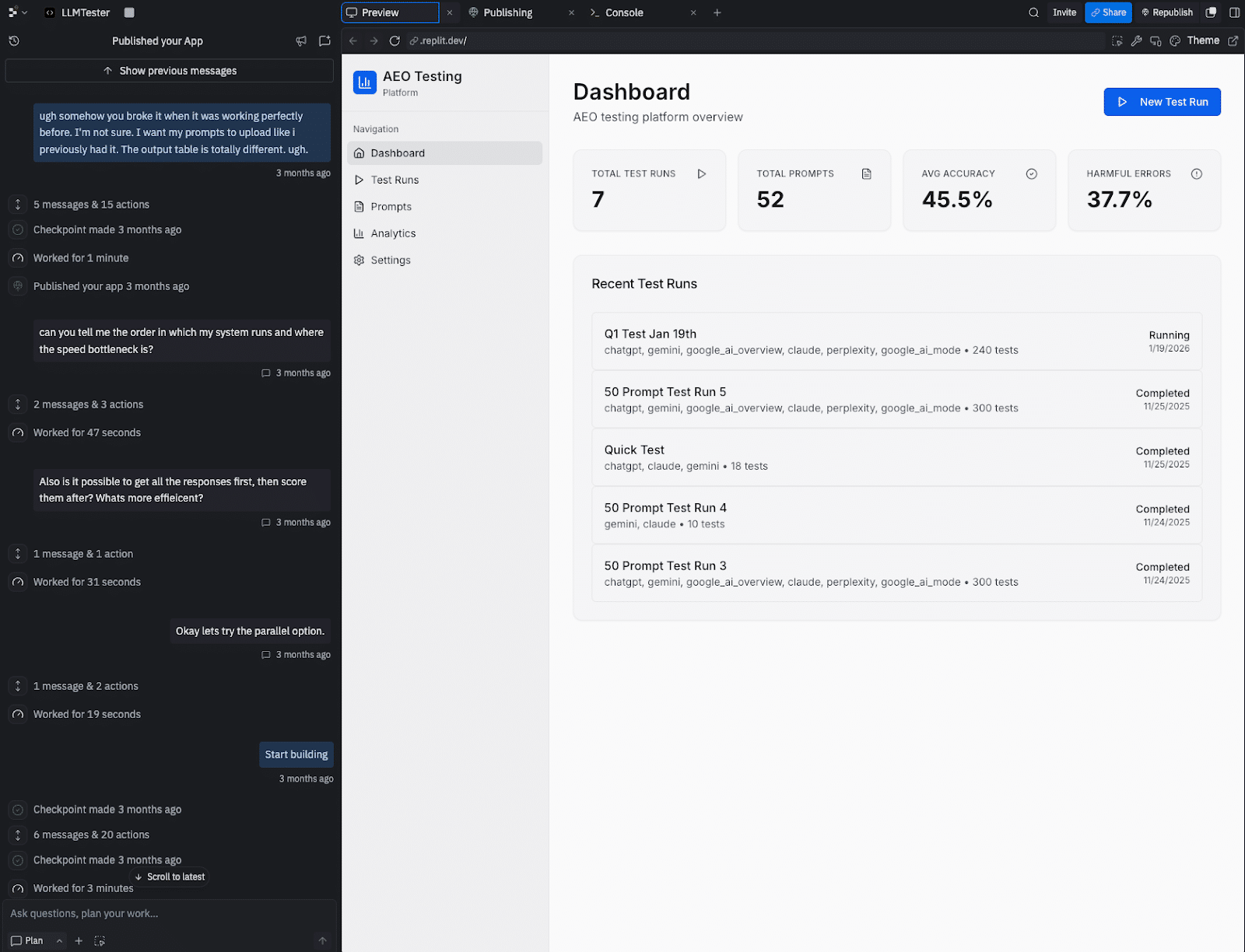
    ```json
{
  "alt": "Dashboard interface of AEO Testing platform with recent test runs listed.",
  "caption": "Explore the AEO Testing platform's dashboard, showcasing recent test runs with detailed analytics.",
  "description": "The image displays the AEO Testing platform dashboard. The interface includes navigation options on the left, while the main section shows test statistics, such as total runs, prompts, average accuracy, and error percentage. A list of recent test runs also is visible, detailing their status, date, and batch information. This image offers insights into the platform's functionality and user interface, ideal for understanding its test management capabilities."
}
```

    Claude (via API): A significant competitor with a unique response style.

    Gemini (via API): Google’s direct model aimed at developers.

    Google AI Mode: Enhances Google’s AI search experience with advanced reasoning.

    Google AI Overviews: Summaries at the top of search results, prevalent by late 2025.

    ```json
{
  "alt": "AEO Testing platform interface showing a list of prompts in the Prompt Library with options to upload CSV files and create new prompts.",
  "caption": "Explore and manage your testing prompts effortlessly with the AEO Testing platform. Customize your test runs by uploading CSV files or creating new prompts on the go.",
  "description": "This image showcases the AEO Testing platform interface, specifically focusing on the 'Prompts' section. The interface displays a list of prompts categorized under different classes such as 'Acquisition' and 'Current Customer.' It includes options to manage prompts by uploading CSV files or creating new ones. The navigation menu on the left offers access to various features like Dashboard, Test Runs, Analytics, and Settings. This setup aids users in efficiently managing their evaluation testing processes. Keywords: AEO Testing, Prompt Library, CSV upload, New Prompt."
}
```

    On top of these, I implemented a custom 5-point rubric for scoring results based on criteria like brand name inclusion and citation quality. With no existing SaaS tools offering this particular mix, the solution was to build one.

    This project leveraged vibe coding, translating natural language into functional applications with AI assistance. Amid developers increasingly adopting AI coding and the growing trend of AI-generated code, this approach offered a viable path for a non-developer like me to create an impactful internal tool.

    Your tech stack: The three tools you’ll need

    To replicate this project while keeping costs manageable, here are the necessary components:

    Replit Agent: An online development environment costing around $20/month, enabling application building via description alone.
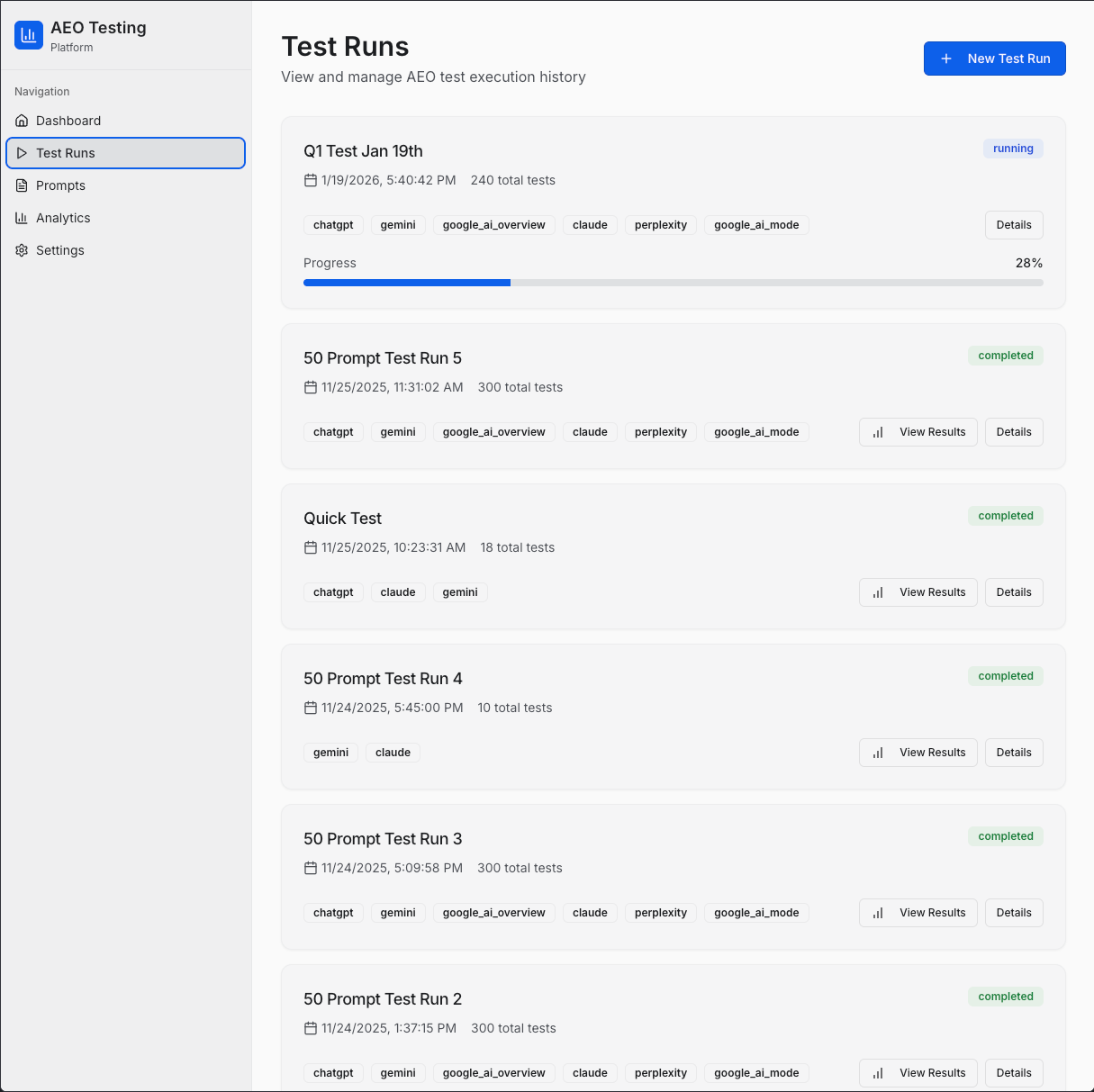
    ```json
{
  "alt": "Dashboard of AEO Testing Platform showing test run history with various test details.",
  "caption": "Explore the AEO Testing Platform interface showcasing comprehensive test run history and execution statuses for efficient analytics.",
  "description": "This image displays the AEO Testing Platform dashboard, highlighting the 'Test Runs' section. It includes details of various test runs, such as Q1 Test Jan 19th and 50 Prompt Test Run 5, with statuses ranging from running to completed. Tags like chatgpt and gemini are used, and features include view results and details options. This interface aids in managing and analyzing test execution history efficiently."
}
```

    DataForSEO APIs: The core of this project, allowing data retrieval from various AI platforms, priced on a pay-as-you-go model.

    Direct LLM APIs (optional): Establishing direct connections with OpenAI, Anthropic, and Google APIs to verify and correct any discrepancies.

    The playbook: A step-by-step guide to building your tool

    Building this tool involved clear communication and step-by-step progress. Here’s a structured approach to guide your process:

    Step 1: Write a requirements document first

    Start by outlining your needs clearly. This document acts as a blueprint covering problems, features, and necessary data. Initial conversations with your AI should revolve around this document to set a solid foundation.

    ```json
{
  "alt": "The CapmatchOne logo with a gradient circle and bold text.",
  "caption": "Discover innovation with the CapmatchOne logo, featuring sleek typography and a modern gradient circle.",
  "description": "The CapmatchOne logo features bold, modern typography coupled with a gradient circle, symbolizing connection and innovation. The sleek design conveys a sense of progress and creativity. This image can be used for branding or promotional purposes, appealing to audiences interested in innovative solutions and forward-thinking designs."
}
```

    Step 2: Ask the AI, ‘What am I missing?’

    Once your needs are outlined, seek the AI’s help in uncovering overlooked areas. Questions like “What am I not accounting for?” can avert common pitfalls and ensure comprehensive planning.

    Step 3: Build one feature at a time and test it

    Avoid building everything simultaneously. Tackle one small task and test it thoroughly before moving to the next. This methodical approach aids in pinpointing and addressing issues efficiently.

    Step 4: Point the agent to the documentation

    When integrating APIs, guide the AI using specific documentation. Providing exact URLs ensures accurate implementation and saves time otherwise spent fixing errors.

    Step 5: Save working versions

    Before introducing significant changes, save copies of your project. In Replit, this is done through “forking.” It’s a precaution against potential new feature-induced disruptions.

    ```json
{
  "alt": "DataForSEO task lookup dashboard with task details, dates, costs, and results.",
  "caption": "Explore the detailed task lookup interface on DataForSEO, showcasing task status, results, and costs - a comprehensive tool for data optimization.",
  "description": "This image shows the DataForSEO task lookup dashboard interface. The dashboard displays a list of tasks with details including task ID, search engine, task set, completion time, turnover duration, cost, and task result. Users can export data or choose columns to display. The navigation menu on the left provides access to various features including settings and documentation. A user profile and balance are displayed at the top right. Useful for businesses seeking data optimization insights."
}
```

    Common problems and how to fix them

    You’ll likely face technical hurdles. Here are frequent issues with solutions to help you navigate the process smoothly:

    ProblemSolution
    1. API authentication failsProvide the exact authentication documentation URL to the agent.
    2. Results disappearEnsure persistent storage by requesting a database from the start.
    3. API responses don’t showShare raw JSON data with the agent to diagnose and fix parsing logic.
    4. Model response cut shortConduct parameter checks post-updates to maintain consistent results.

    Evaluating the real costs

    Building this tool has clear advantages over purchasing a SaaS solution, notably cost savings. Here’s a breakdown:

    ExpenseCustom ToolSaaS
    Subscription$20/month$500/month
    API Usage$60/monthIncluded
    Total$80/month$500/month

    Despite the initial time investment, the ability to adapt and tailor the tool outweighs the ongoing costs.

    Is building your own tool right for you?

    This decision largely depends on your specific needs:

    Consider building if:

    • You require unique testing methods not supported by current tools.
    • Your agency needs a white-labeled solution.
    • You prefer cost-effective strategies and are willing to invest time.

    Stick with SaaS if:

    • Your time is more valuable than subscription costs.
    • You need robust security and customer support.
    • You find standard features sufficient.

    Ultimately, crafting a tool that aligns perfectly with your workflow can provide a distinct edge in the competitive SEO landscape. Welcome to the era of practitioner-developers; it’s time to innovate.


    Inspired by this post on Search Engine Land.


    crushpress.ai community screenshot
  • Boost Your Brand’s Reach with Goodie’s Social Optimization Tools

    Boost Your Brand’s Reach with Goodie’s Social Optimization Tools

    See how Goodie’s Social Optimization Suite helps brands track social AI citations, identify what drives visibility, and act on platform-specific insights.

    I’m thrilled to introduce you to Goodie’s Social Optimization Suite. It’s designed to empower brands by tracking social AI mentions and uncovering what truly enhances visibility. With our suite, you can easily harness platform-specific insights to make informed decisions.


    Inspired by this post on HiGoodie Blog.


    crushpress.ai community screenshot
  • Why SEO Tools Are Evolving, Not Fading Away

    Why SEO Tools Are Evolving, Not Fading Away

    I recently came across some fascinating insights into the world of SEO tools and how they’re evolving. It turns out, marketers are swapping SEO platforms less frequently now, mostly due to AI advancements, tightening budgets, and shifting search dynamics.

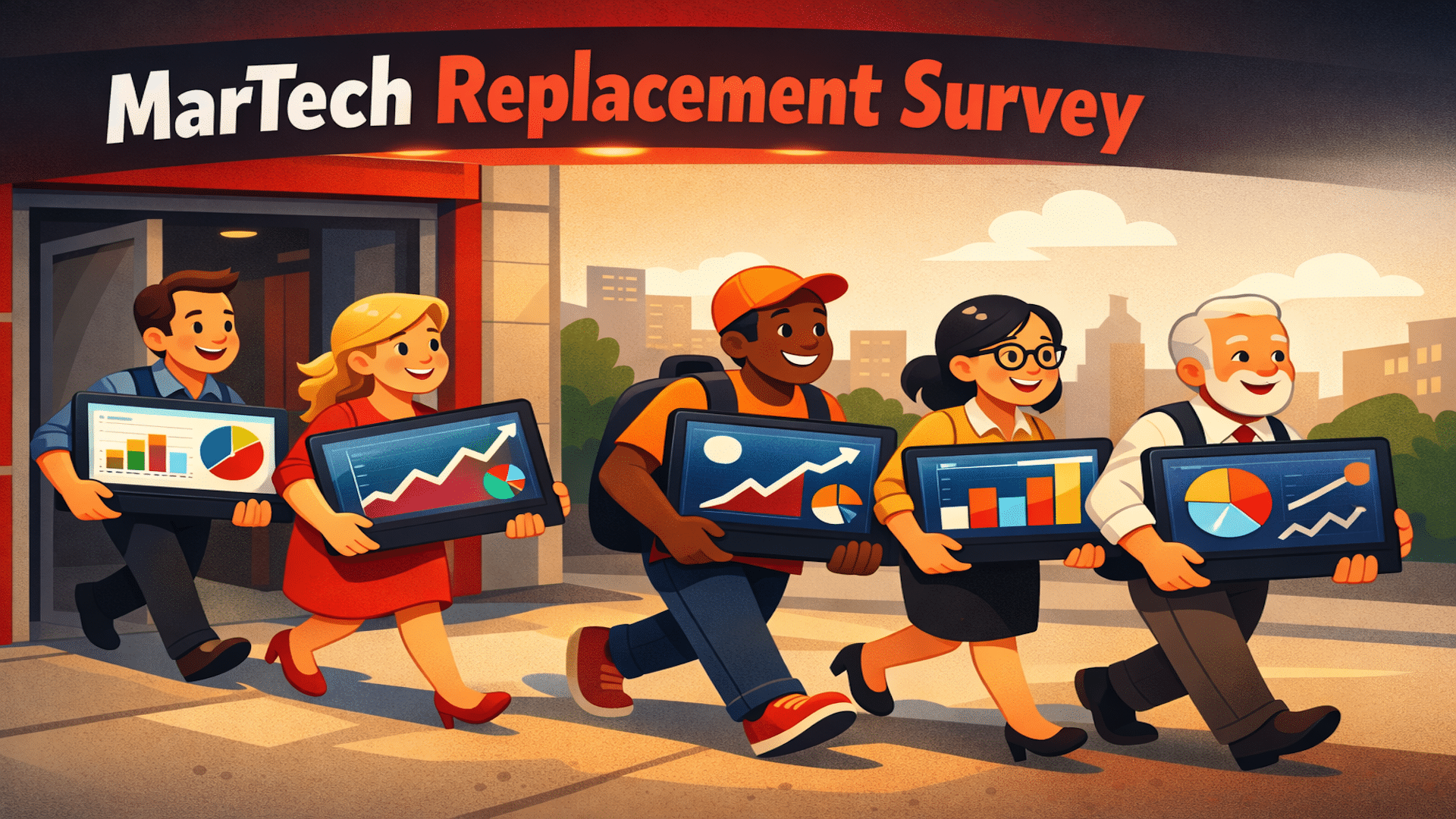
    In 2025, SEO tools emerged as the most commonly replaced martech application. You might think this indicates a problem, but there’s more to it. According to the 2025 MarTech Replacement Survey, for the first time, SEO platforms surpassed marketing automation platforms in replacements, a leader for five years.

    At first, this replacement trend could appear as instability within SEO. With the arrival of large language models, AI-generated answers, and zero-click search experiences, traditional keyword tracking and ranking-based methods face challenges.

    However, the survey data reveals a more complex narrative.

    SEO Tools: Most Replaced, Yet Stabilizing

    Despite being the most replaced category in 2025, the rate of SEO tool replacements actually slowed down compared to previous years. This indicates that while I’m seeing changes, there’s also increased stability.

    This shift points to maturation. It seems we’re consolidating, upgrading, or refining our SEO toolkits as search methods evolve rather than causing widespread churn.

    Meanwhile, other significant martech categories experienced sharper annual decreases in replacements:

    • CRM replacements dropped over 12% from 2024 to 2025, hitting an all-time survey low.
    • MAPs, email platforms, and CMS tools also saw declines compared to 2024.

    Why SEO Tools Are Being Replaced

    With stability not being the primary driver, you might wonder what’s fueling the change in SEO tool replacements. The survey highlights three main reasons:

    1. AI Capabilities

    The survey incorporated questions about AI’s role in replacement decisions for the first time, revealing its substantial impact.

    • 37.1% of respondents considered AI capabilities crucial.
    • 33.9% desired AI features in new tools.

    This shift reflects the growing trend of SEO platforms rapidly adopting AI for tasks like content generation, SERP analysis, and workflow automation.

    In many cases, swapping an SEO tool isn’t about leaving SEO behind; it’s about upgrading to incorporate AI capabilities.

    2. Cost Pressures

    Cost considerations significantly influence martech tool replacements, including SEO tools:

    • In 2025, 43.8% of marketers cited cost reduction as their reason for replacing applications, a sharp increase from 23% in 2024 and 22% in 2023.

    This indicates growing pressure to evaluate overlapping tool functionalities and optimize the SEO tech stack effectively.

    3. Changing Needs in a Shifting Search Landscape

    As search trends evolve, so do the expectations for SEO platforms. Traditional rank tracking and keyword monitoring aren’t adequate anymore. Many teams are now looking for tools that can:

    • Provide insights across AI-driven SERPs
    • Track visibility beyond just clicks
    • Integrate more seamlessly with wider marketing and data systems

    This evolution partially drives the ongoing replacements, even as the overall landscape becomes more stable.

    AI Is Reviving Custom-Built SEO Tools

    A remarkable trend from the 2025 survey is the comeback of custom-built solutions for SEO processes.

    Homegrown applications made up:

    • 8.1% of replacements in 2025, increasing from 3.4% in 2024 and 5% in 2023.

    This marks a shift after years of depending almost entirely on commercial platforms.

    “AI-assisted coding is changing the calculus of build versus buy,” explained martech analyst Scott Brinker. “Building is now faster and easier. Companies should still purchase applications where they lack a competitive edge. However, where they can differentiate through tailored solutions, custom-built software is gaining appeal.”

    For SEO teams, this trend could see more organizations developing:

    • Custom data pipelines
    • Unique SERP tracking systems
    • AI-driven analysis tools customized for specific requirements

    Other Martech Categories Show Even Greater Stability

    While SEO tools led in replacements, the broader martech field is stabilizing.

    Several key categories recorded reduced replacement rates in 2025:

    • CRM platforms (down over 12% year-over-year)
    • Marketing automation platforms
    • Email distribution tools
    • Content management systems

    This trend suggests that many organizations are sticking with core systems while selectively updating rapidly changing areas like SEO.

    Methodology

    The survey invitations were sent out via email, website, and social media throughout Q4 2025. Out of 207 respondents, findings are drawn from the 154 marketers (60%) who had replaced a martech application in the preceding 12 months.

    Download the 2025 MarTech Replacement Survey, no registration required.


    Inspired by this post on Search Engine Land.


    crushpress.ai community screenshot
  • Effortlessly Integrate Semrush SEO Data with Profound Agents

    Effortlessly Integrate Semrush SEO Data with Profound Agents

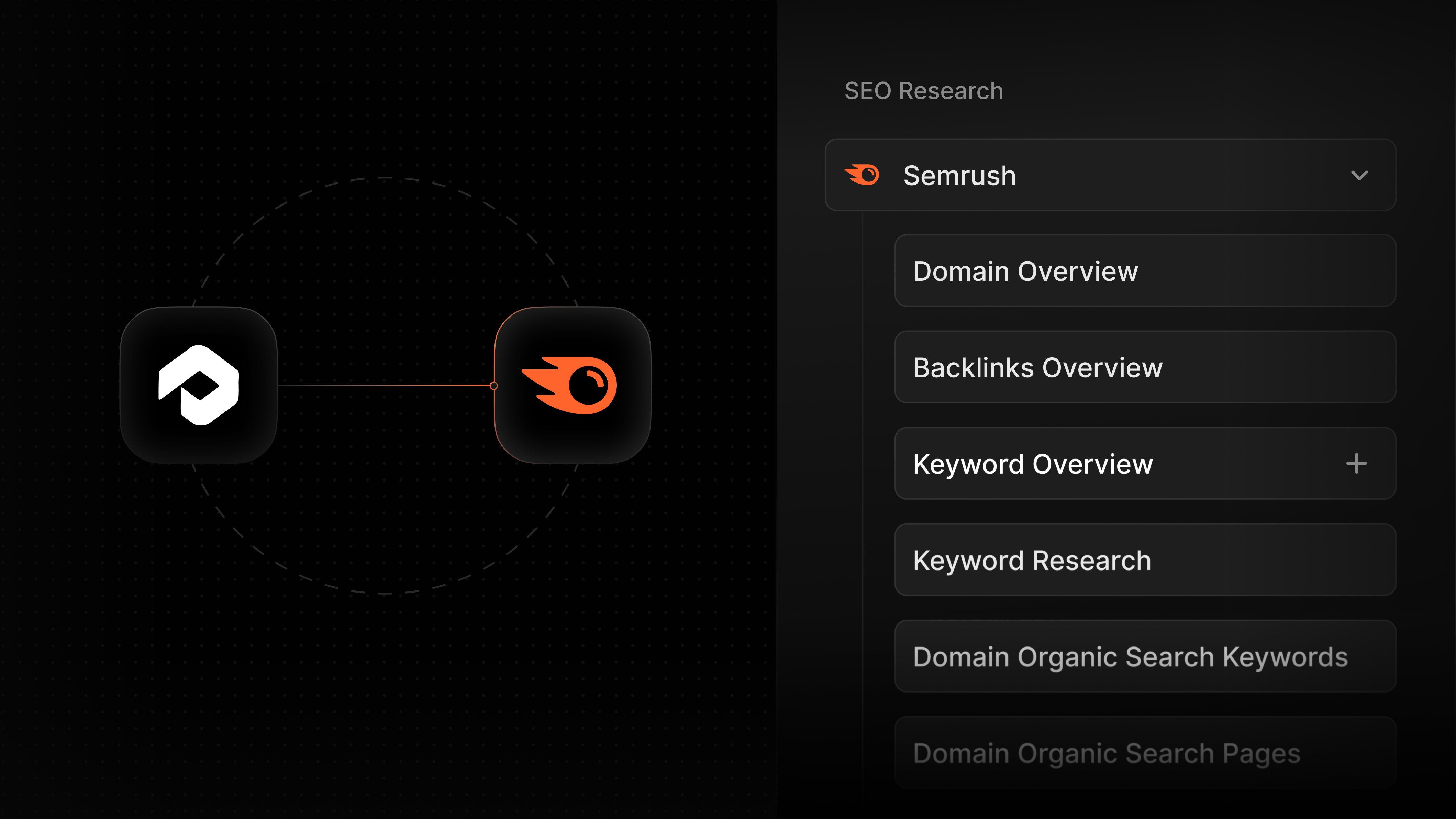
    I’ve always sought ways to streamline my workflow, especially when it comes to managing multiple SEO tools. That’s why I’m thrilled to bring Semrush’s comprehensive SEO data directly into the heart of Profound Agents. This integration allows me to seamlessly access domain metrics, analyze backlink profiles, conduct thorough keyword research, and dive into organic search data—all within the same environment where I monitor AI visibility, generate content, and perform competitive analysis.

    Imagine the efficiency of handling everything without the need for exports, constant tab switching, or manual data collation. This integration is more than just a feature; it’s a game-changer for anyone who’s passionate about optimizing their SEO strategy while saving time.


    Inspired by this post on Try Profound Blog.


    crushpress.ai community screenshot
  • Bing Enhances AI Query Links to Cited Pages for SEO Insight

    Bing Enhances AI Query Links to Cited Pages for SEO Insight

    Recently, I’ve noticed something exciting happening on Bing. Now, when I use Bing Webmaster Tools, I can click a query to view its cited pages or select a page to see its grounding queries. It feels like a new level of connectivity where multiple queries and pages are seamlessly linked together.

    Microsoft has introduced query-to-page mapping within its AI Performance report on Bing Webmaster Tools. I find this feature incredibly helpful because it lets me directly connect AI-generated queries to cited URLs. This makes my SEO strategies more precise.

    Why it matters to us. Before this update, Bing’s dashboard presented queries and pages separately, which limited our optimization efforts. Now, I can align specific AI-triggering queries with the exact pages they reference, focusing my updates on real AI-driven demand rather than guesswork.

    Here’s the scoop. The Grounding Query–Page Mapping feature is a game-changer in the AI Performance dashboard:

    • With a click on a grounding query, I can see which pages are cited.
    • I can also click a page to find out which grounding queries are driving its citations.
    • The mapping system is many-to-many, meaning one query can be linked to multiple pages and vice versa.

    Catch up with Bing. Back in February, Microsoft launched the AI Performance report in Bing Webmaster Tools, marking its initial GEO-focused dashboard. This tool keeps track of where and how often my content gets cited in AI answers across platforms like Bing, Copilot, and more.

    • It tracks the grounding queries, cited URLs, and visibility trends over time, providing an insightful view into citation visibility.

    The buzz. According to Microsoft, this update came about due to “strong positive customer feedback and numerous requests,” and I can see why it’s so well-received.

    The announcement. The unveiling of the query-to-page mapping feature was detailed in a Microsoft Advertising blog post: The AI Performance dashboard: Your view into where your brand appears across the AI web


    Inspired by this post on Search Engine Land.


    crushpress.ai community screenshot
  • Effortlessly Deploy Webpages with Profound Agents & Vercel v0

    Effortlessly Deploy Webpages with Profound Agents & Vercel v0

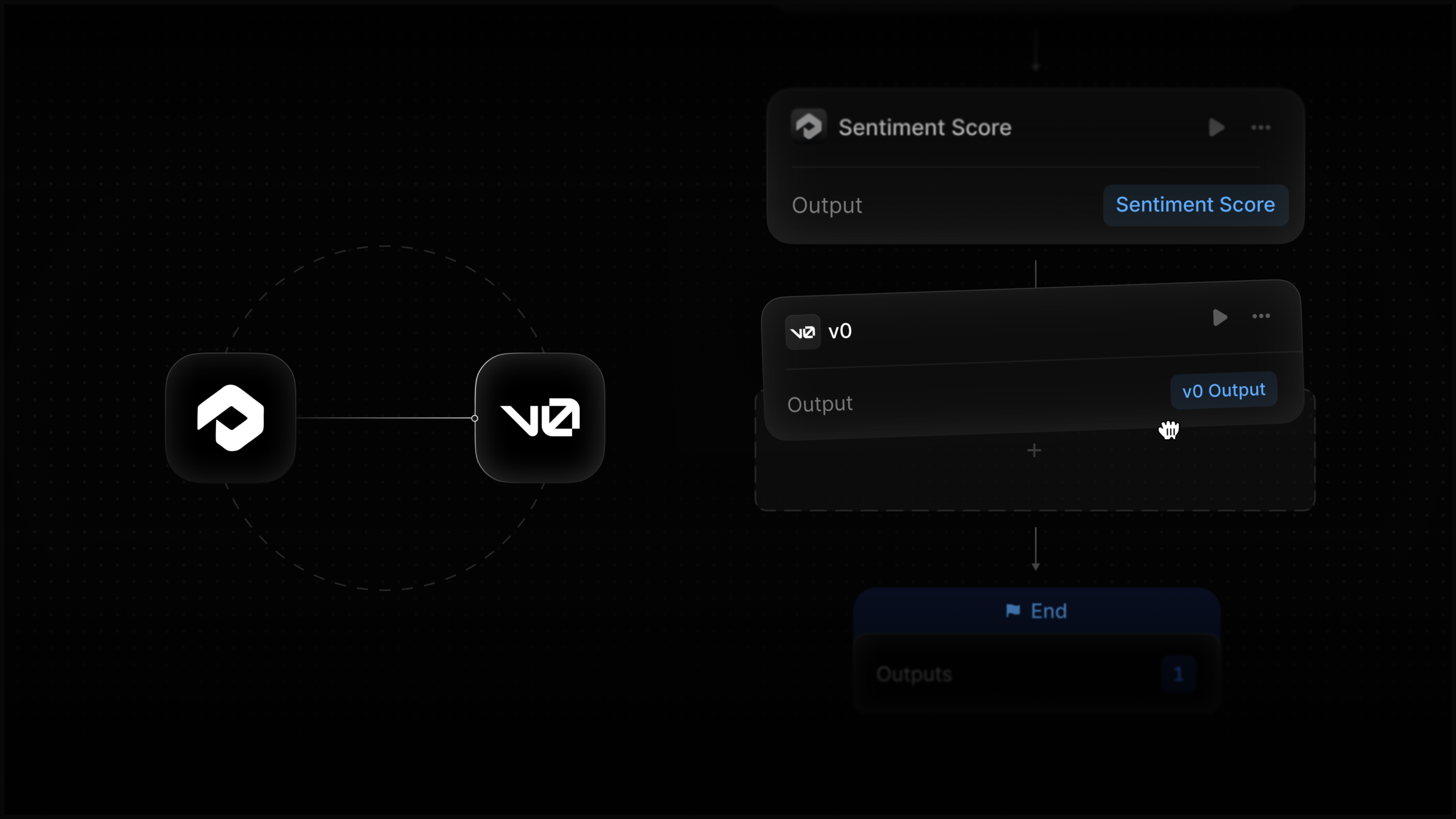
    Hey there! I’m thrilled to share something exciting: Profound Agents now seamlessly connect with Vercel v0. This means I can generate and deploy stunning landing pages without writing a single line of code.

    By leveraging my Profound AEO data as a solid foundation, deploying these pages has never been easier. It’s a game-changer for anyone looking to enhance their digital presence effectively and efficiently.


    Inspired by this post on Try Profound Blog.


    crushpress.ai community screenshot
  • Adobe Phases Out Marketo SEO: Export Your Data by March 31

    Adobe Phases Out Marketo SEO: Export Your Data by March 31

    As a regular user of Adobe’s Marketo Engage, I recently learned that Adobe plans to discontinue the SEO feature by the end of March 2026. This information was detailed in Adobe’s February 2026 release notes, and I wanted to share my thoughts and remind you to take action if you use this tool.

    I know how crucial it is to export existing SEO data before the tool’s deprecation on March 31, 2026. You can find export instructions on this page. It’s essential to act promptly, as the SEO tile will be removed from the platform starting April 1.

    So, what’s the story here? Adobe’s Keith Gluck mentioned that retiring underutilized features will allow the Marketo Engage team to refocus resources elsewhere. If you’re seeking alternative SEO tools, Adobe’s acquisition of Semrush in 2025 offers a robust solution, with Semrush being a comprehensive SEO and visibility tool. (Remember, Semrush now owns Third Door Media, the publisher of Search Engine Land.)

    I wasn’t taken aback by this news, as it’s been common knowledge among those who keep up with Marketo updates. Reports have indicated that not many users fully tapped into the SEO capabilities. Additionally, the Marketo Engage team hasn’t prioritized these features recently.

    With shifts in the search landscape, driven by rapid advancements like LLMs, saying goodbye seemed timely. Semrush’s entry into the Adobe ecosystem feels like a fitting evolution of their service offerings.

    If you’re interested, check out a related update on LinkedIn:


    Inspired by this post on Search Engine Land.

    crushpress.ai community screenshot
  • Boost Brand Visibility with Our Social Optimization Suite

    Boost Brand Visibility with Our Social Optimization Suite

    As someone deeply immersed in digital marketing, I’m excited to introduce you to Goodie’s Social Optimization Suite! This powerful tool empowers brands like yours to track social AI citations effectively.

    By identifying the key drivers of visibility, you can make data-driven decisions that enhance your brand’s presence across various platforms. Our suite is designed to offer platform-specific insights, enabling you to take targeted actions.

    The journey of optimizing your brand’s social media visibility begins here. Dive into the details with us to unlock strategic opportunities for your brand.


    Inspired by this post on HiGoodie Blog.


    crushpress.ai community screenshot
  • Google Unveils New Merchant Center Hub for Agency Efficiency

    Google Unveils New Merchant Center Hub for Agency Efficiency

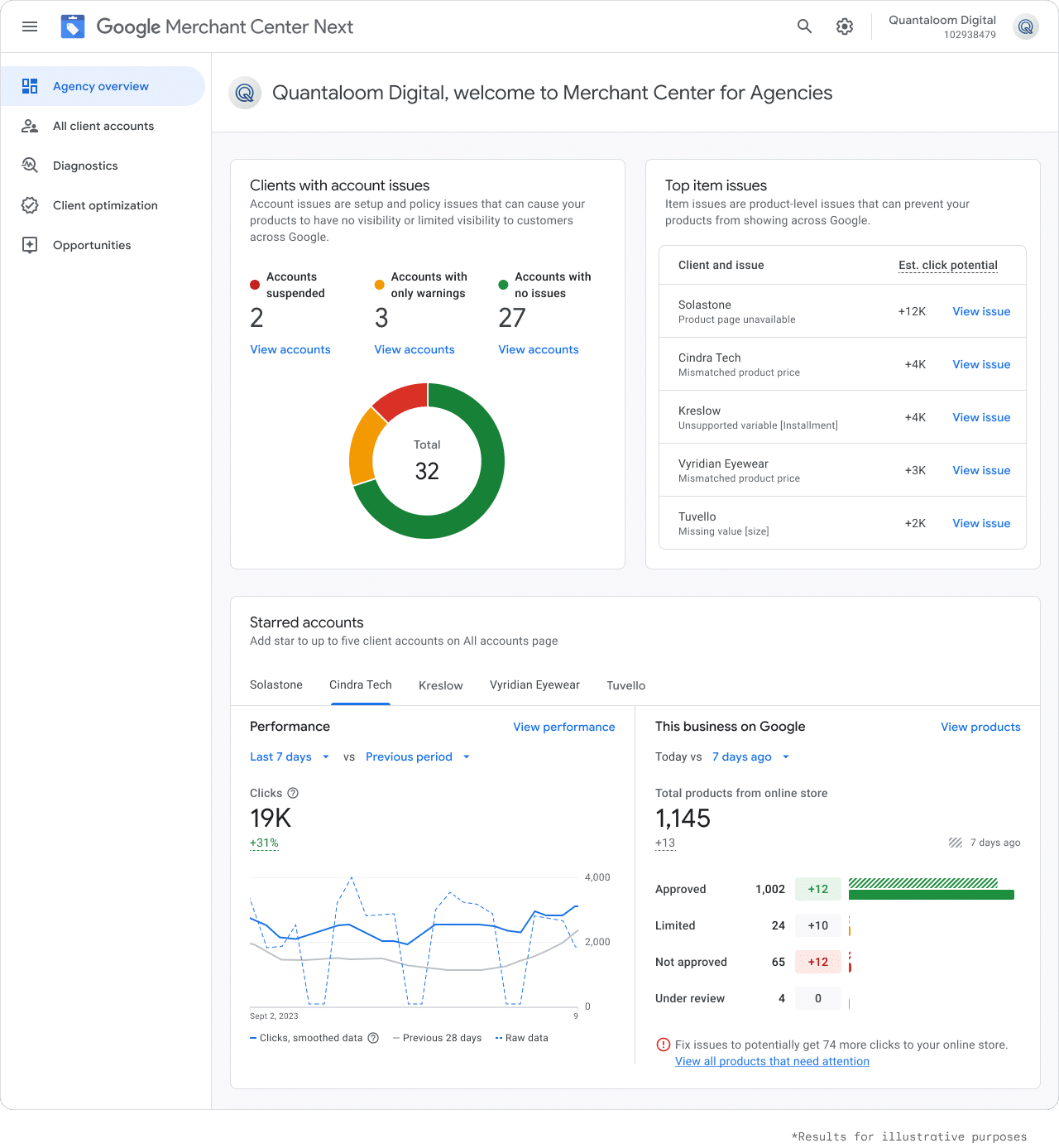
    I’m excited to share that Google has launched a dedicated Merchant Center hub for agencies in the U.S. and Canada. This hub allows us, as agency professionals, to use a single login to efficiently manage all of our merchant clients. It’s designed to provide proactive alerts, making it easier than ever to catch and address issues quickly.

    With the new Merchant Center, I have access to a unified dashboard that keeps all client accounts seamlessly integrated, saving time and reducing complexity in monitoring and optimization tasks.

    What’s included:

    This platform includes a comprehensive dashboard, which allows me to manage all client accounts from a single login experience. In addition to this convenience, it offers proactive diagnostics that help surface critical alerts across the entire client portfolio.

    ```json
{
  "alt": "Google Merchant Center dashboard for Quantaloom Digital showing account and item issues, performance metrics.",
  "caption": "Quantaloom Digital's Merchant Center offers insights into account issues, item problems, and performance metrics, guiding optimization for online visibility.",
  "description": "This image displays the Google Merchant Center dashboard for Quantaloom Digital, focusing on various metrics and insights. It includes sections highlighting accounts with issues, such as suspended, warning, and stable accounts. Pie and line charts illustrate account performance over time. A list identifies top item issues for clients, like product page unavailability and mismatched prices. Keywords: Google Merchant Center, dashboard, Quantaloom Digital, account issues, performance metrics."
}
```

    Another significant feature is the merchandising opportunity tools, which enable us to identify areas for performance improvement that feeds directly into Google Ads. These tools are indispensable for enhancing return on investment for our clients.

    Why we care. Managing multiple merchant accounts across Google’s ecosystem has traditionally been a logistical headache, switching between various logins and dashboards. This centralized approach ensures that potential issues are flagged and resolved more swiftly, preventing unnoticed revenue drains. Moreover, the built-in merchandising tools enable me to actively enhance performance across all client portfolios, making it much more than just a monitoring platform.

    Early results. I learned about Socium, a digital marketing agency that tested this product during the holiday rush. By consolidating client promotions, inventory, and diagnostics into one place, they managed to resolve monitoring tasks 50% faster.

    ```json
{
  "alt": "Client optimization report showing top out-of-stock products for Kreslow and Solastone with clicks and stock details.",
  "caption": "Explore the client optimization report highlighting top out-of-stock products from Kreslow and Solastone. Discover insights into clicks and inventory status.",
  "description": "This image displays a client optimization report detailing top out-of-stock products for two clients, Kreslow and Solastone. It includes metrics such as paid clicks, organic clicks, and total out-of-stock counts. The report is organized in a tabular format with product descriptions like 'Boost Spin Elite Titanium' and 'Verde Fontaine Granite Tile.' This visualization aids in understanding product performance and inventory challenges."
}
```

    The big picture for agencies. Every minute spent on account monitoring and diagnostics detracts from strategic planning. Tools that streamline these processes, especially during peak times like Q4, allow us to focus on high-value tasks that truly benefit our clients. Agencies managing large retail portfolios should definitely consider integrating this system before the next busy season.

    What’s next. For those interested in diving deeper, full details are available on Google’s Help Center. The rollout of this innovative hub is live now in the U.S. and Canada.


    Inspired by this post on Search Engine Land.

    crushpress.ai community screenshot
  • Elevate SEO with Profound’s Real-Time Google Search Node

    Elevate SEO with Profound’s Real-Time Google Search Node

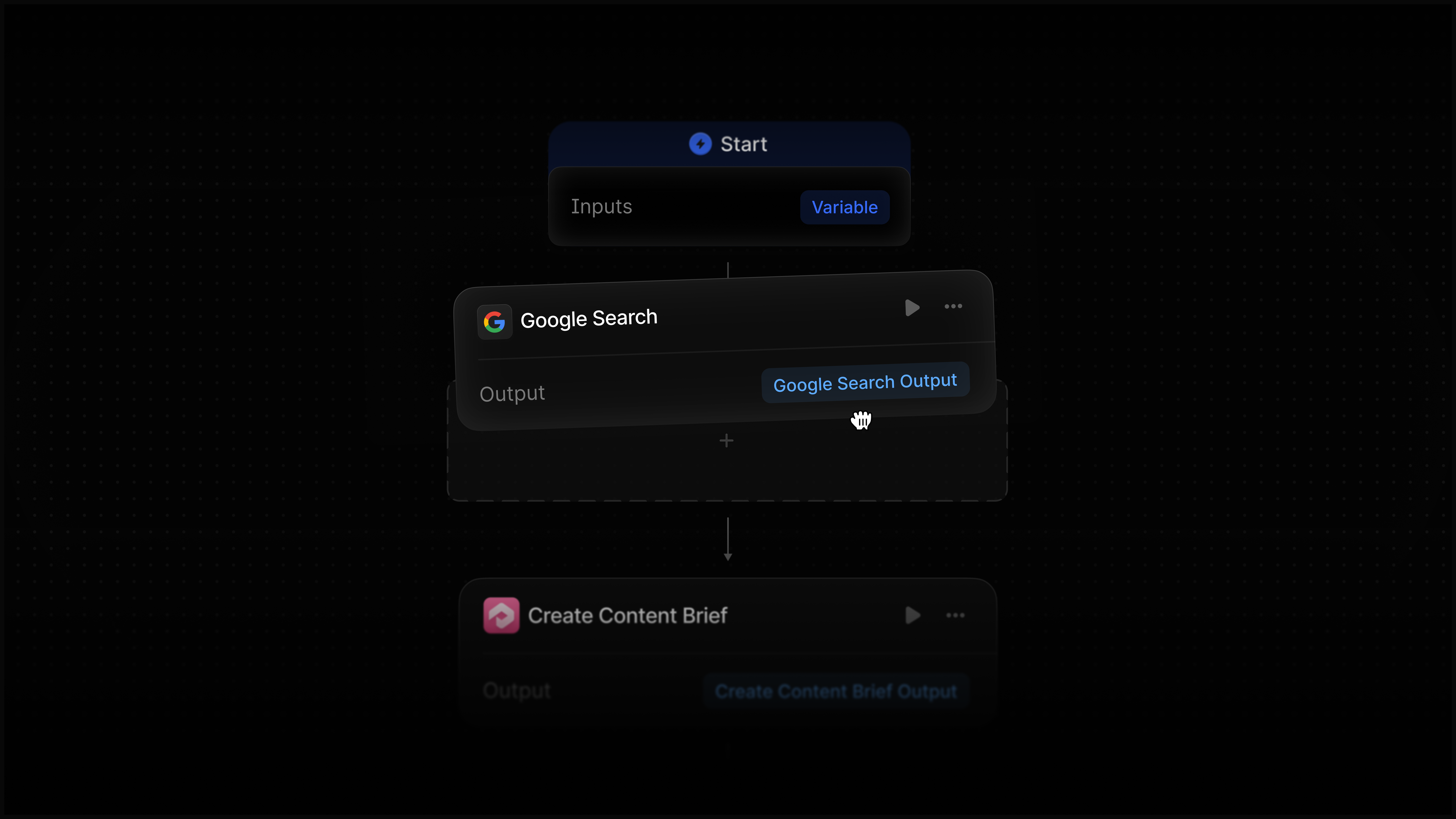
    I’m thrilled to share our latest innovation: the Profound Google Search node, designed to seamlessly integrate real-time Google SERP data into our Agents. This powerful tool empowers us to monitor, analyze, and act on crucial search intelligence without leaving the platform.

    With this integration, I can stay on top of my SEO strategy, making informed decisions based on live data. Whether I’m optimizing content or adjusting marketing tactics, having instant access to search insights is a game-changer.


    Inspired by this post on Try Profound Blog.


    crushpress.ai community screenshot