I’ve noticed that Google has tightened their Merchant Center rules, now requiring a visible, but disabled buy button for products that are out of stock. This means the button should appear on the page, but users won’t be able to click it since it’s grayed out and inactive.
What’s happening. This shift represents a significant change from previous practices where retailers either let the ‘Add to Cart’ button remain clickable or removed it altogether. Both methods are now against Google’s guidelines.
How it works. The requirement is straightforward: a buy button must stay on the page but needs to be disabled. This usually involves a visual change to indicate it’s not active, making it unclickable yet visible.
The catch. It doesn’t stop at the button change. Google wants explicit availability messaging on product pages, like ‘in stock,’ ‘out of stock,’ ‘pre-order,’ or ‘back order.’ This labeling has to match perfectly with the product feed.
Mismatched information between the webpage and the product feed could lead to disapprovals.
The bigger shift. This policy eliminates a workaround many retailers used, where out-of-stock items could still be sold by keeping the buy button active. Now, if retailers wish to accept orders for unavailable products, they must list them as ‘back order’ and ensure this status is synced across the landing page and feed.
Bottom line. While this seems like a minor UI adjustment, it’s a significant policy shift. Retailers must audit their handling of out-of-stock items and make sure their pages and feeds are in perfect harmony to avoid any interruptions.
First seen. This update came to my attention thanks to a Google shopping specialist who shared the details on LinkedIn.
As someone deeply invested in SEO, I’ve often pondered: Could AI eventually render SEO obsolete? This question has sparked considerable debate as AI capabilities continue to expand.
While AI can streamline technical tasks, there’s a consensus that it won’t entirely replace the need for human expertise in SEO. Early studies affirm that human input remains vital.
AI efficiently handles structured data tasks, yet it falls short without meticulous data oversight and expert human guidance.
The advent of AI signifies a shift in workflow dynamics, raising the bar on execution and focusing human expertise on more strategic areas.
AI’s potential to reduce reliance on semi-technical expertise is notable, especially in well-structured domains like coding. However, crafting AI-driven solutions without human refinement often proves inadequate.
The challenge for generative AI lies in its machine-like processing. Only those with technical know-how can truly harness its potential for tasks like generating functional product descriptions or scalable alt text.
AI’s effectiveness is directly linked to the quality of human instructions. Expertise in creating carefully structured prompts is indispensable.
Despite the aid AI offers, its reliance on structured data and human oversight underscores why SEO isn’t fading anytime soon.
A closer look at AI’s progression reveals the persisting need for human intervention, especially as the web’s uncurated nature challenges AI’s data processing capabilities.
While AI tools are growing more sophisticated, they still depend on human expertise to function seamlessly within comprehensive SEO strategies.
The complexity of implementing full SEO automation highlights the irreplaceable value of human judgment in managing intricate data environments.
As AI tools evolve, they serve as companions to SEO, boosting efficiency but not substituting the strategic insight SEO professionals bring to the table.
For SEO to truly become obsolete, AI must autonomously manage tasks reliably and efficiently, a feat still eluding current technology.
Society’s adoption of AI faces barriers; perceptions of AI as a threat slow its integration despite its potential to enhance SEO practices.
As AI becomes normalized, its role within SEO will likely evolve, but the human touch remains essential in delivering creative and impactful results.
When I hear about someone ranking first but still being invisible, it seems strange, right? But here’s the real story:
A potential customer might ask ChatGPT or Perplexity for the best tool or agency in your category—and your competitor is the one that gets mentioned, not you. Your top ranking isn’t helping in this scenario.
This is the new reality in SEO that surprises many experienced marketers. Large language models (LLMs) gather consensus from multiple sources instead of relying on just one. This shift means it’s no longer just about ranking—it’s about being consistently mentioned across various sources. Missing this understanding means you’re losing ground.
Let’s unravel what’s happening and, more importantly, how we can navigate this new landscape.
From Rankings to Consensus: Understanding the Shift
Traditional SEO was straightforward: rank high to get clicks and drive traffic. Google searches found pages, and users decided which ones to visit.
However, AI-driven search introduces a new method. Platforms like Google’s AI Overviews and ChatGPT now create their responses by compiling information from numerous sources. They check for consistency to form a single, synthesized answer.
Data reveals the magnitude of this shift: since mid-2024, organic click-through rates have dropped significantly for queries showing AI Overviews. Even queries without AI results saw a decrease.
The technology behind this is retrieval-augmented generation (RAG), where AI pulls from across the web to discern repeating claims from credible publishers. The objective isn’t just publishing a great page—it’s about becoming one of those consistently cited sources.
What the Consensus Layer Actually Is
I think of the consensus layer as AI systems producing consistent outputs about your brand. It’s a large-scale pattern recognition.
When AI systems find your brand mentioned in the same way across several credible sources, they build confidence in those claims. When they don’t, your brand becomes an outlier, which risks exclusion.
This system prevents AI hallucinations, using corroboration as their defense. If multiple sources independently agree on a claim, AI considers it reliable. Sole sources tend to be ignored.
I’ve observed brands being invisible despite their high rankings because they rely solely on traditional authority without corroborated recognition.
Will Scott’s insight is valuable: Visibility issues arise because brands aren’t mentioned in AI answers, despite being high-ranked in traditional search.
Explore more: When search demand surpasses keyword limits.
The Signals That Actually Build Consensus
What signals do AI systems rely on to build consensus? Here’s where we need to focus:
Traditional Authority Is Just a Starting Point
Foundational elements like backlinks and domain authority get you in the game. But achieving consensus is what truly sets you apart.
Unlinked Mentions Matter More Than We Think
AI scans for brand mentions, even when unlinked. Unlinked mentions signal both traditional and AI visibility, like when an unlinked mention in an industry publication serves as a consensus signal.
Approximately 9 out of 10 webpages cited by ChatGPT fall outside the top 20 organic results, highlighting the game’s transformative nature.
Publisher Diversity Strengthens Credibility
Repeating mentions on the same site doesn’t build consensus. Diverse mentions across credible publishers are key.
Community Platforms Are Consensus Gold
Platforms like Reddit and Quora are becoming pivotal for consensus, as AI recognizes genuine user discussions as reliable data sources.
With Reddit leading in SERPs, positive mentions in subreddits significantly contribute to AI perceptions. Genuine community trust can’t be fabricated—it must be earned.
Entity Clarity Simplifies Retrieval
Search engines use knowledge graphs to connect entities. If your brand is inconsistently presented or your category is vague, AI systems struggle to recognize you in answers.
Structured data, schema markup, and JSON-LD are crucial. The clearer your entity’s profile, the easier it is for AI to reference and cite you.
How to Actually Build Consensus
Alright, let’s dive into some tactical steps. Understanding your current standing is vital before taking action.
Begin with an LLM Audit
Use ChatGPT, Perplexity, Gemini, and Google AI Overviews to ask questions just as your customers would.
“What’s the best tool/service for the problem you solve?”
“Who are the leading providers in your category?”
“What do people say about your brand?”
Focus on three outcomes:
Is your brand even mentioned?
If so, is the information accurate and current?
How are you compared to competitors?
This assessment reveals gaps, misinformation, and your weakest points in the consensus landscape.
Build Your Owned Media Foundation
Ensure your website is technically sound with clear semantic structures. Utilize structured data, clearly define your entity, roles, and solutions, and affirm these consistently across your site.
Develop topic clusters and pillar pages with related content to demonstrate expertise and depth. Without a robust foundation, efforts may falter.
Leverage Earned Media for Consensus
Press, guest posts, podcasts, and expert quotes help distribute your authority across the web. It’s about more than links; it’s about managing your narrative.
Sustained visibility across reputable platforms amplifies your consensus reach. Balance unlinked mentions with traditional link building.
Conduct and Share Original Research
Original data and proprietary surveys serve as high-impact consensus assets. Other publishers referencing your research naturally boosts your credibility, offering long-term citation opportunities.
Invest in Expert-Led Content
Position team members as experts. When recognized continuously, they gain trust from AI systems. Optimize author profiles with structured data to enhance this.
Engage Authentically in Communities
It’s not merely about sharing links on Reddit. It’s about real participation—answering questions and building your brand reputation organically.
When users naturally recommend your brand, it’s the strongest signal of consensus.
Tracking What’s Vital Now
Traditional rankings indicate where you stand in search results but don’t show AI citations. New metrics focus on visibility and share of voice rather than mere clicks.
Experiment with high-value queries to check AI Overviews and ChatGPT responses. Note your brand’s mentions, descriptors, and accompanying sources.
Measure share of voice across AI responses and monitor cross-domain mention density and entity co-occurrence to assess your consensus reach accurately.
The New SEO Playbook
Success now lies with brands building distributed credibility through a mix of owned media, earned media, and community platforms.
While traditional SEO basics are necessary, they’re just the start. Integrate SEO, digital PR, and community efforts into a unified strategy to build a durable visibility moat.
Building this network of mentions and citations is the defense against competitors, and the timing for action is critical.
Dive deeper: Why distribution is essential in conjunction with content for SEO success.
I’ve realized that when my law firm’s referrals don’t convert, the issue often lies in the validation process. This crucial phase can break conversions if my firm’s credibility, specificity, and authority don’t align with the lead’s expectations.
Referred prospects aren’t direct conversions. They engage in research and verification on various platforms, like my website or search engines, to ensure what they’ve heard matches reality.
Despite being premium leads — pre-sold through trusted recommendations — if their validation needs aren’t met, they lose momentum.
This issue, known as the referral validation gap, is where trust falters rather than strengthens during the research phase. Addressing this is key for all referral-based businesses, even beyond law firms.
The four types of referral validation failure
Spotting and fixing predictable patterns of referral loss is essential. The main types are:
Credibility gaps: When my digital presence fails to meet the reputable image conveyed by the referral.
Specificity gaps: When my content doesn’t address the specific issue for which the prospect was referred.
Authority gaps: When independent validations or AI tools don’t confirm my expertise.
Friction gaps: When ready-to-act leads face unnecessary hurdles.
Credibility gaps occur when visitors form impressions in seconds. If my website doesn’t immediately back up what the referrer promised, their trust wavers.
To combat this, I need targeted landing pages, specific H1s, and visible credentials that match the referral’s expectations.
Specificity gaps arise when my homepage doesn’t align with the specific issue that brought the referral. Simple headlines like ‘family law’ or ‘commercial real estate services’ don’t suffice.
It’s crucial to have content reflecting the search intent, proving the specific expertise that prompted the referral.
Authority gaps hinder validation if AI tools can’t find structured data supporting my firm’s claims.
Regularly running queries through AI tools can show whether competitors are outranking my firm, and adjusting content strategies based on these findings is imperative.
Friction gaps lead to loss when prospects are ready but face difficulties in contacting us. Immediate and clear action steps are necessary to maintain momentum.
Ensuring prospects can engage without delay, with clear contact information and easy processes, prevents loss at this critical stage.
Your roadmap to close the referral validation gap
To bridge this gap, I need strategic, step-by-step changes, starting with removing immediate friction and then building validation infrastructure.
These actions range from simple technical fixes to comprehensive content strategies, ultimately ensuring that my firm stands out in both traditional and AI-driven environments.
2026 is your firm’s inflection point
Prospects now find answers without even visiting a firm’s website. Bridging the gap between digital presence and authority is critical, or the gap will widen, with leads slipping away.
Mastering this process will not only enhance conversion rates but also capitalize on high-value leads, reduce costs, and build a competitive edge in an AI-driven environment.
Ultimately, gaining an initial consideration through referrals is just the beginning. How we manage our digital presence to close the referral validation gap truly matters.
In today’s SEO landscape, it’s about creating content that captivates, builds trust, and converts. I’ve discovered storytelling plays a crucial role in this process.
By incorporating storytelling effectively, I can enhance engagement, improve relevance, and transform traffic into actionable results. Here are seven storytelling techniques I’ve found invaluable for my business blogs.
7 Storytelling Techniques for Boosting Engagement and Conversions
I use these strategies to craft my content’s flow, from the initial hook to the compelling call to action at the end.
1. Hook the Reader
T.S. Eliot wisely said, “If you start with a bang, you won’t end with a whimper.” In my blogging, beginning with an engaging entry point keeps readers invested. For B2B or B2C blogs, it’s crucial to hook the reader effectively.
Here are techniques I use to captivate my audience right away:
Challenge a belief: Start by questioning established norms.
Weave a narrative: A story doesn’t need to start with “Once upon a time.”
Cite a statistic: Numbers, like “Google owns 89.9% of the search market,” can be compelling.
Make a promise: Offer enticing outcomes, such as blogs that drive traffic and conversions.
Empathize: Understand and relate to the reader’s struggles to draw them in.
Quote: Use a powerful quote that aligns with your message.
Combining these methods has helped me set the stage effectively. A reader’s issue paired with a success story often lends itself well to both B2B and B2C blogging.
2. Make Promises and Deliver on Them
I love stories with foreshadowing that hint at what’s to come. In my blogs, I use phrases like “You will learn…” to tantalize and keep interest alive.
This strategy also strengthens SEO. When I introduce keywords with promises about the content, it often boosts my click-through rate, as Google sometimes uses these excerpts.
Getting potential customers to visualize using my products is key. Instead of heavy-handed sales pitches, I rely on vivid storytelling to illustrate problems and solutions, guiding them through their buying journey.
6. Consider a Three-Act Structure
Jessica Brody says Act 2 contrasts Act 1. I introduce an approach, reveal its flaws, and provide a viable solution, crafting a compelling narrative that leads to success stories.
In the drafting process, I’m all about getting the ideas down. Editing refines that initial mess into a narrative that resonates deeply with my audience, choosing the perfect hooks and calls to action.
These techniques have not only polished my storytelling but also significantly boosted reader engagement and business conversions.
Content Quality Shows Its Worth in Performance
I’ve observed that quality content makes a difference in performance metrics. As I experiment with storytelling, I closely track these key performance indicators:
Organic traffic
Keyword rankings
Click-through rate (CTR)
Time on page
Conversions
Google Search Console and Google Analytics are invaluable tools that provide data to evaluate my efforts. With continuous improvement, I not only craft better stories but also drive tangible business results.
As I look back on 2025, it’s astonishing to see the AI search traffic growth leap by an impressive 180% year-over-year. I’m diving into the data to better understand how this impacts our visibility strategies. We’ll explore insights on ChatGPT, Gemini, Perplexity, and Claude usage trends in this review.
With AI technologies rapidly advancing, I’ve noticed how they continue to reshape how we think about search and brand visibility. The increased use of AI-powered tools signifies a pivotal shift in the way we approach digital marketing strategies.
In 2025, ChatGPT saw a remarkable surge in use, closely followed by interest in platforms like Gemini and Claude. This data is crucial as we plan for future visibility tactics, ensuring that our brand remains competitive in an ever-evolving digital landscape.
How does this data affect your brand’s approach? I believe understanding and leveraging these trends will be key to optimizing AI-driven search capabilities and visibility while crafting more personalized and effective content strategies.
I recently came across some alarming data showing that small publishers have experienced a significant decline in search traffic due to AI-driven search experiences. This information, gathered from global sites using Chartbeat analytics, highlights the challenges we face in maintaining visibility.
The details. In our daily operations, if we manage a site with 1,000 to 10,000 daily pageviews, we’ve seen a dramatic 60% decrease in search referral traffic over the past two years, according to Chartbeat.
For those of us managing mid-sized sites with 10,000 to 100,000 daily pageviews, the decline is 47%.
Even the large publishers, who typically draw more than 100,000 daily pageviews, aren’t immune; they’ve seen a 22% drop.
Reality check. Currently, AI referrals are not filling the gap left by lost search traffic.
We should be aware that Google Search pageviews have decreased by 34% year over year.
Google Discover has seen a 15% drop.
While ChatGPT referrals increased by 200%, they still account for less than 1% of our overall traffic.
Yes, but. It’s important to note that traffic isn’t vanishing entirely; it’s just shifting. Total weekly pageviews across publishers have only fallen by 6% from 2024 to 2025, which is partly due to fluctuations in the news cycle. While search may be shrinking as a portion of traffic, direct, internal, and messaging channels are expanding.
Why we care. Historically, SE has been the lifeline for smaller sites. Without a strong brand presence, direct audience engagement, returning visitors, or unique offerings, we confront increasing risks as search referrals decline.
The Axios report. To delve deeper, check out the exclusive report from Axios on how small publishers are being hit hardest by these search traffic declines.
Join me on April 1 for the inaugural SMX Now event, where iPullRank will unveil their presentation, ‘AI Search Picks Winners: Here’s the GEO Strategy Behind It’.
Visibility today means more than just ranking well; it’s about ensuring your content is found, evaluated, and chosen by AI-driven search platforms. On April 1 at 1 p.m. ET, I’m excited to launch our new monthly SMX Now webinar series featuring insights from iPullRank’s experts Zach Chahalis, Patrick Schofield, and Garrett Sussman.
During the session, you’ll be introduced to iPullRank’s innovative Relevance Engineering (r19g) framework, which applies Generative Engine Optimization (GEO) using a comprehensive omnichannel content strategy. Engaging with this will deepen your understanding of how AI search leverages query fan-outs to discover and elect content sources, and how best to structure your content for optimal retrieval, visibility, and citation.
It’s crucial to note that success with GEO is not a one-size-fits-all solution. It demands continuous testing, tailored strategies, and a robust three-tier measurement model that covers discovery, selection, and citation impact.
Reserve your spot now and explore how you can elevate your brand’s visibility in an AI-powered world.
I’m proud to partner with Search Engine Land as a media sponsor for the upcoming SEO Week by iPullRank.
I’ve discovered that local SEO struggles with visibility, not in the way most of us expect. It’s not about showing up for ‘near me’ queries or specific service keywords.
The real issue emerges before those searches, when potential customers are diagnosing their problems and deciding on further action. This is where a significant amount of high-intent demand is overlooked.
Despite our efforts, most local service websites rely on a standard hierarchy: a main page, then service pages, often accompanied by location-specific sections. While this setup benefits the business, reflecting its internal organization, it misses out on capturing actual search behaviors.
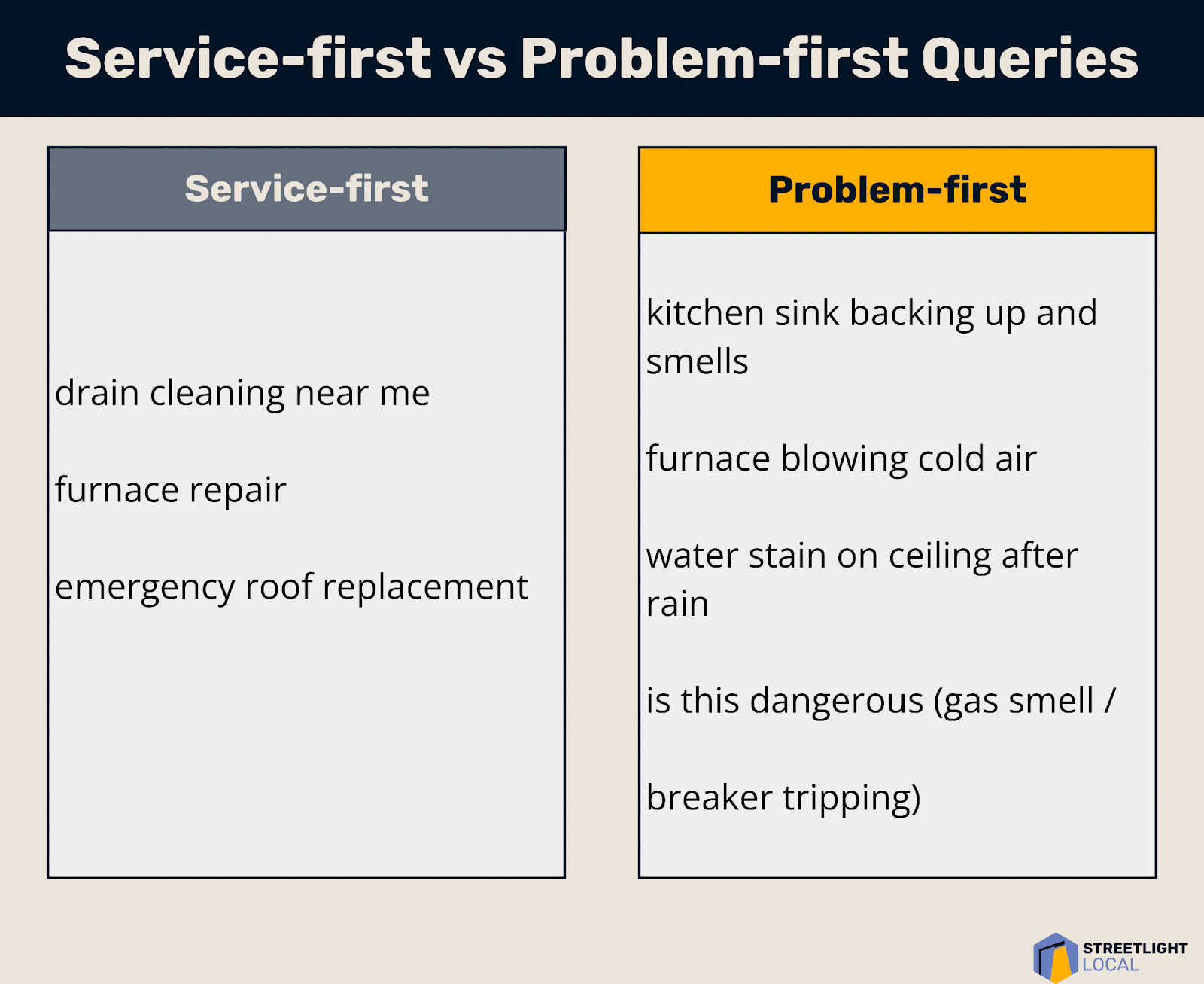
Instead of searching for ‘drain cleaning in Brookline, MA,’ customers might be googling symptoms. They review what’s visibly wrong, perhaps thinking, ‘Why is my kitchen sink backing up?’ or ‘Why is the heater blowing cold air?’ That initial consideration often determines where they seek guidance.
By focusing only on service names, many websites fail to engage users earlier in their decision-making process. The ‘Jobs-to-be-done’ (JTBD) approach offers a practical solution to fill this gap.
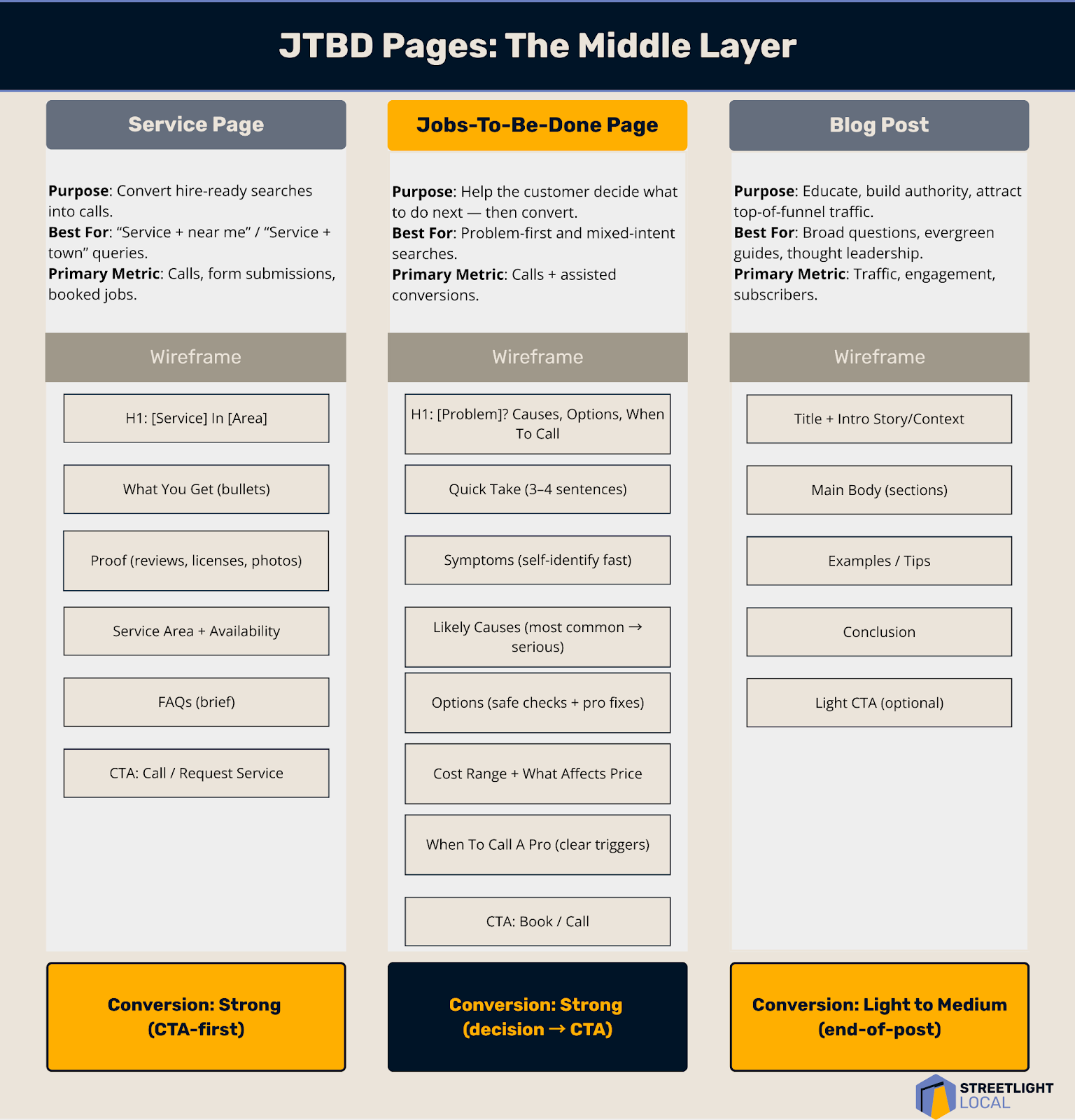
JTBD pages focus on real-life objectives searchers are attempting to achieve — clarity on their issues and guidance on whether they need professional assistance. Unlike traditional service pages meant for direct hires, JTBD pages are structured to inform and convert visitors by supporting informed decision-making.
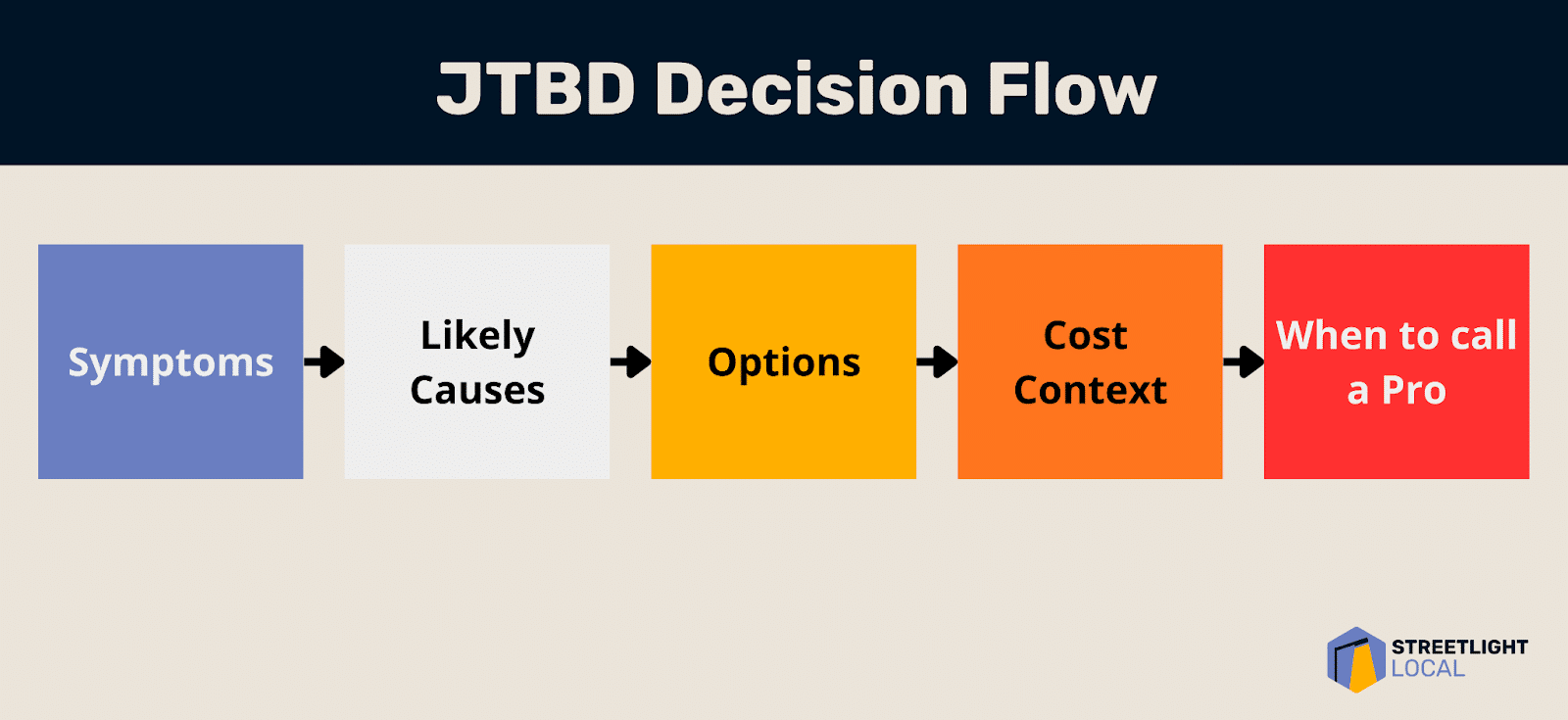
From my experience, JTBD pages follow a logical progression akin to how a customer thinks: starting with symptoms, identifying likely causes, exploring options, and providing cost context before nudging them towards professional intervention.
This front-loaded approach — beginning with symptoms — resonates more because it mirrors users’ own experiences and signals you’ve anticipated their needs.
When explaining causes, avoid over-simplification or exhaustive technicality. I’ve found that listing potential causes in order of complexity, while subtly guiding next steps, builds trust.
Providing options, including safe checks and pro tips, eases visitor anxiety — offering a reassuring glimpse of what hiring a professional would entail, often leading to conversions where the intent is to find relief and certainty from professionals.
Offering cost insights without promising exact prices is crucial. Articulating price ranges cultivates trust, informing users about possible costs without the dreaded sticker shock.
Explicitly marking important signals for professional help enhances conversion potential. An effective JTBD page doesn’t just imply; it outlines clear triggers to engage experts.
Placement of these pages can significantly influence their perception. Ensure they’re nested among valuable resources, highlighting their role in service solutions rather than lost in blog archives.
From your most frequent customer inquiries, construct these pages around relatable search terms by engaging with real customer language and needs—this element is the linchpin of effective keyword strategy.
JTBD pages have the added benefit of aligning with AI-driven summary requirements, improving indexing accuracy and aiding AI engagement in search results.
Ultimately, JTBD pages close the loophole between customer inquiries and actionable business engagement. They don’t just enhance search visibility but convert curiosity into booked services, transforming local SEO landscapes.
As a content strategist, I often wonder how my work feeds into the AI pipeline, especially the critical ‘rank and display’ stage.
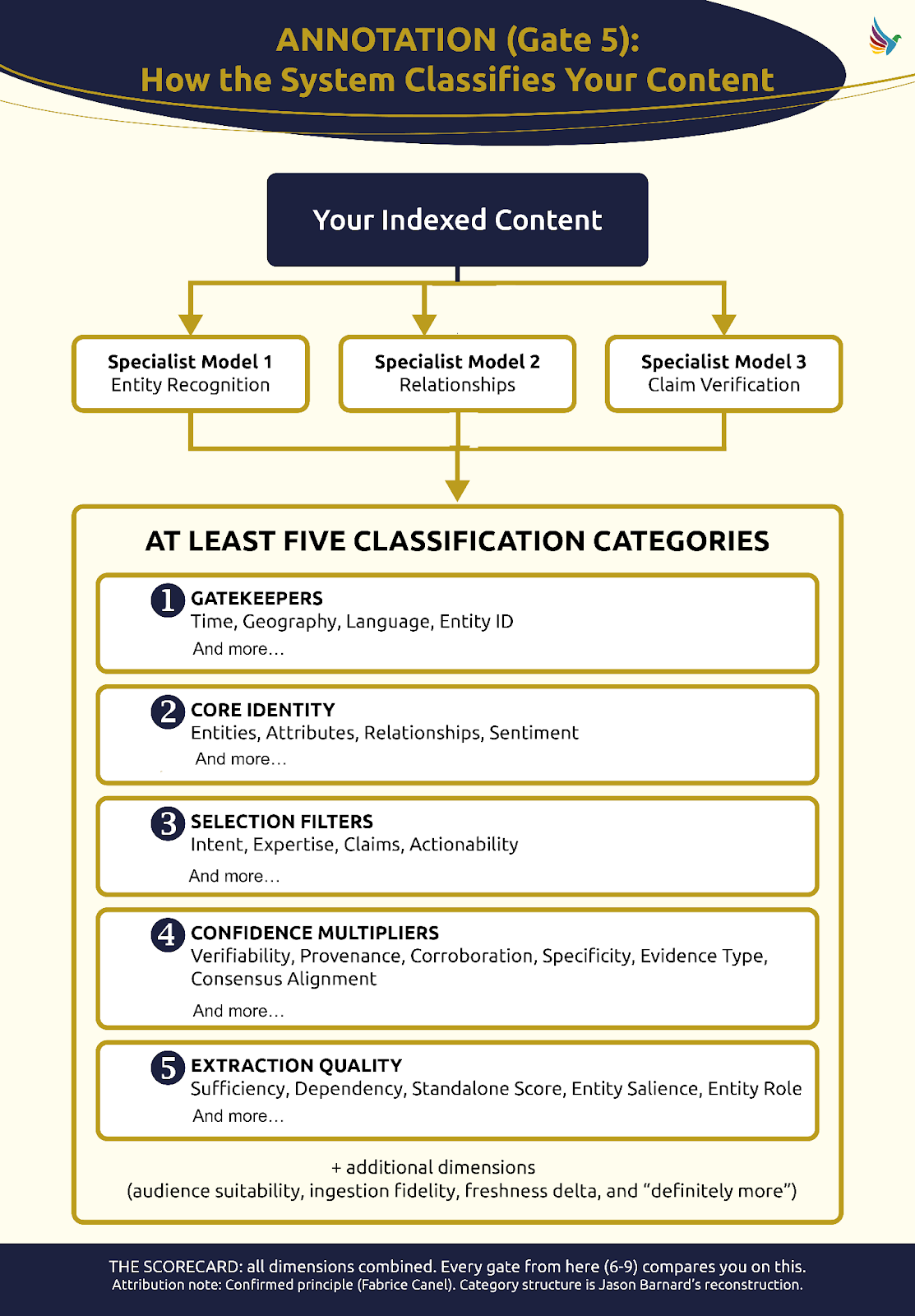
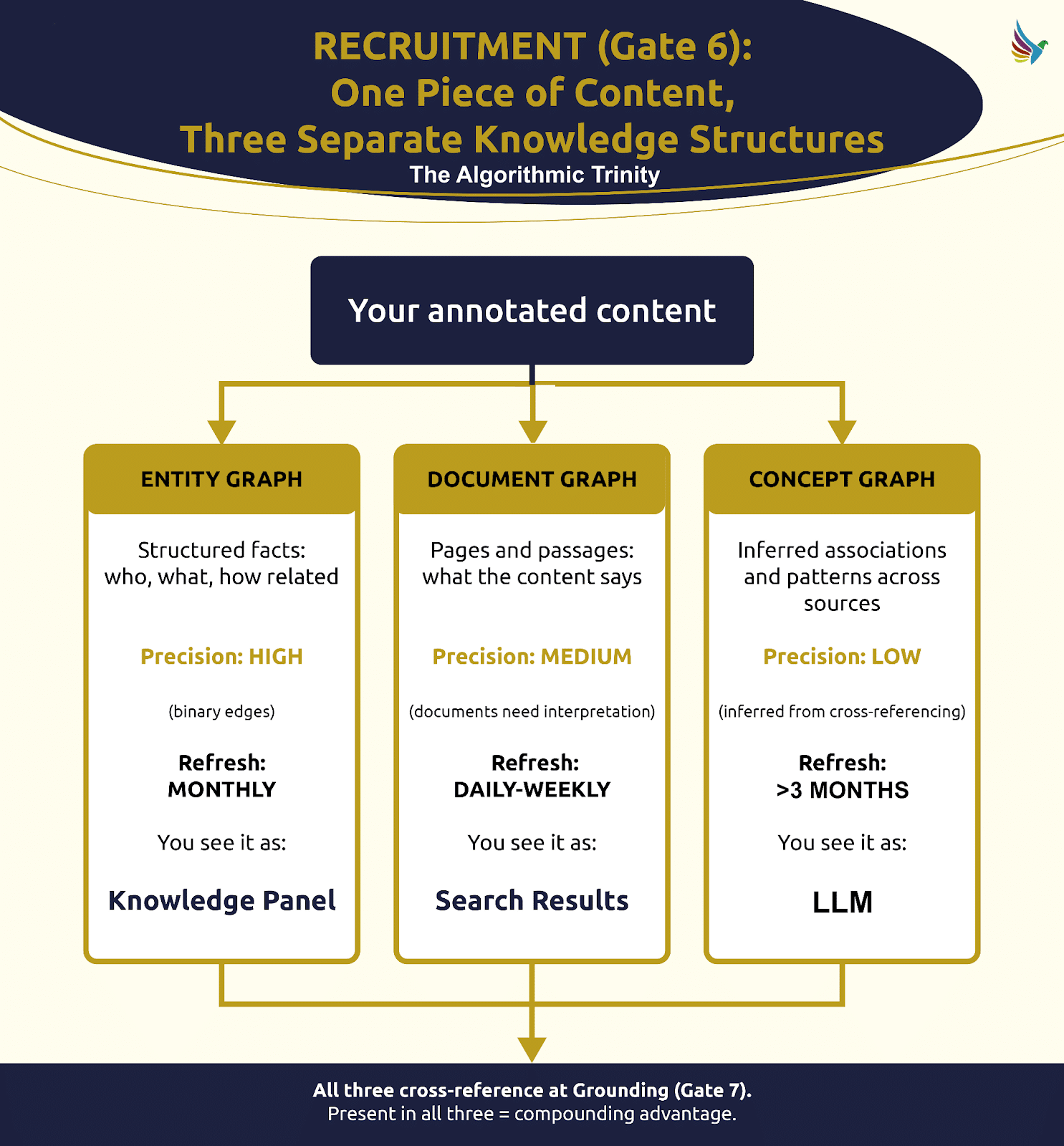
Understanding the annotation, recruitment, grounding, display, and won gates is crucial to ensure that AI engines trust and recommend my content.
The DSCRI infrastructure phase kickstarts the journey by handling discovery through indexing, where content is either picked up or left out.
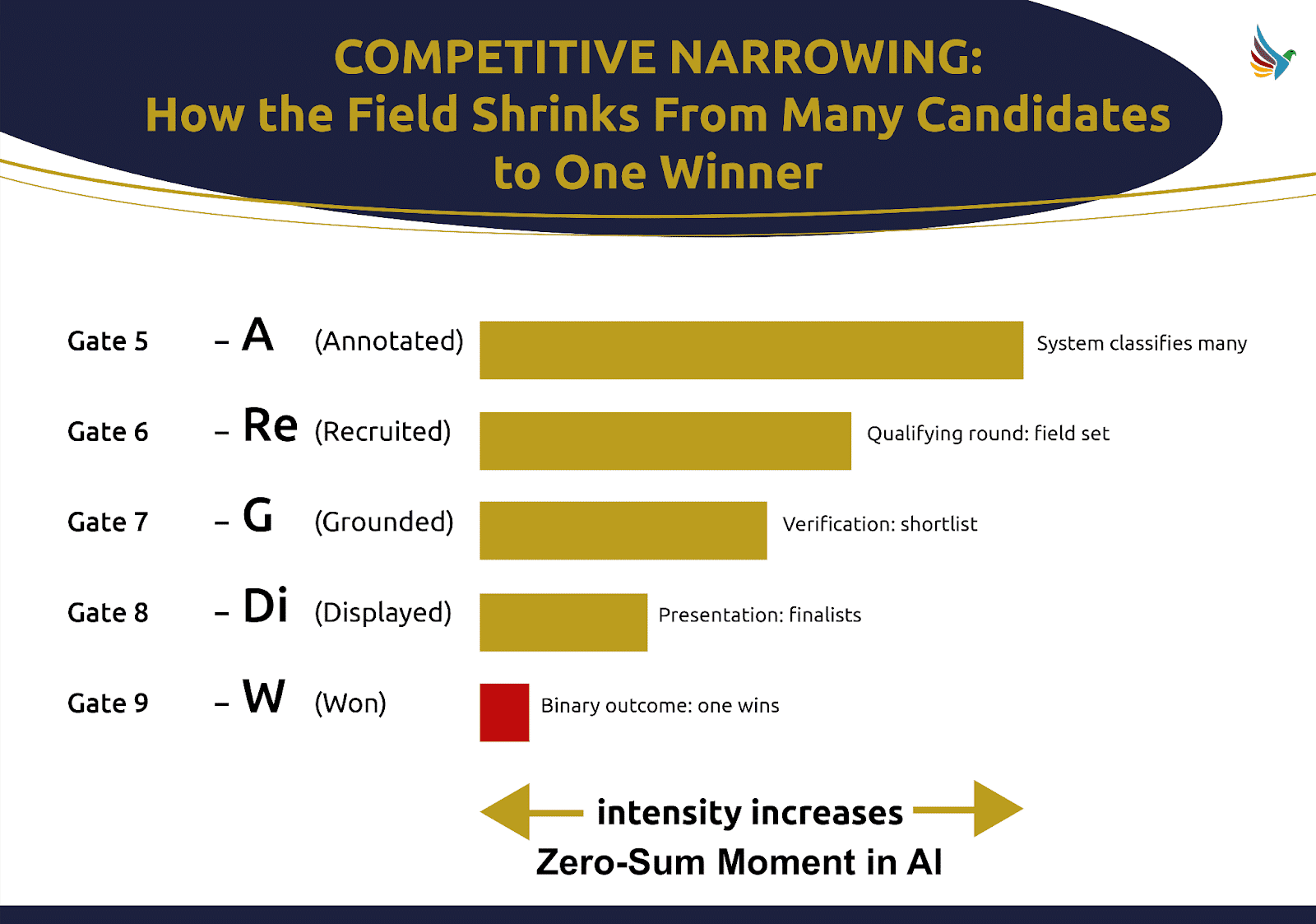
In the competitive phase, ARGDW tests not only require content to pass but to outperform alternatives, ensuring it doesn’t end up losing to better-annotated competitors.
The ARGDW phase is about survival of the fittest, determining if assistive engines will utilize the content I create.
Where ‘rank and display’ once muddied distinctions, understanding and optimizing each gate individually can significantly improve content visibility and ranking success.
The Competitive Turn: Transitioning from Absolute to Relative Tests
This transition is pivotal—the moment where content quality impacts competitive performance most critically.
When moving from DSCRI to ARGDW, the system stops merely verifying presence and starts comparing content quality against competitors.
Every piece from annotation forward requires content to excel over potential alternatives, making confidence scores relative to others on similar topics.
Here, efforts at preparing content fully come to fruition as the engine pits it against competitors.