I recently explored what many are calling the ‘Global Spanish’ issue in AI search visibility, and it’s been a revelation for understanding how AI can sometimes blur crucial distinctions in Spanish-speaking markets.
Picture this: AI models often clump Spanish-speaking regions into one, mixing up local jargon, regulations, and context, resulting in answers that don’t truly fit any specific market.
This challenge—commonly known as the ‘Global Spanish’ problem—manifests when AI search merges regional dialects and rules into a one-size-fits-none guidance.
Consider asking AI in Spanish how to declare your taxes (cómo puedo declarar impuestos). It will deliver a grammatically accurate reply, equipped with references like ‘RFC, NIF, SSN, según país’—mixing up Mexican, Spanish, and American tax identification.
While AI is gradually improving, moving from confidently incorrect Mexican tax advice in Madrid to a more hedged but jumbled response doesn’t equal localization. It’s more like broad-stroke thoroughness without precision.
The core issue is AI’s struggle to pinpoint its targeted Spanish-speaking market, defaulting to overly generalized responses akin to a waiter asking a roomful what they’ll have and simply writing down ‘Food.’
If I find that AI answers a Mexican with Spain’s tax logic, this isn’t just a translation hiccup—it’s a fundamental problem with geographical and jurisdictional inference, essential in AI-facilitated search.
Traditional search already faced these complexities, and giants like Google spent years refining systems to accommodate regional intent and language variations—challenges that persist today.
Generative AI, however, eliminates the wiggle room. Instead of multiple links allowing user choice, it delivers one synthesized answer, hitting home or missing the mark entirely.
For many, ‘Spanish’ is a simple language toggle, but this view doesn’t hold for Hispanic markets. The distinctions between Spain and Latin America go beyond slang; they influence conversion rates, brand trust, and legal applicability.
Cultural and regulatory differences exist, such as:
Regulators like Hacienda vs. SAT.
Legal terms such as NIF vs. RFC.
Currency differences, such as EUR vs. MXN.
Decimal formatting like period vs. comma.
Tone variation for social distance (tú/vosotros vs. usted/ustedes).
Commercial expectations like payment options and shipping norms.
Search intent, where identical queries target different products depending on the country.
All these affect international SEO, and in generative search, they become critical. The AI doesn’t present multiple links for user discretion; it condenses everything into a singular, presumptive authoritative answer, leading to what I recognize as ‘Global Spanish.’
Studies term this bias as ‘Digital Linguistic Bias’ (Sesgo Lingüístico Digital), revealing how imbalanced Spanish variety representation in corpora ignores dialectal variations and cultural contexts due to structural bias.
Spain, despite being a minority among global Spanish speakers, is overly represented in digital resources guiding language models’ default Spanish. Latin America, conversely, is under-represented in AI investment and data infrastructure, with just 1.12% of global AI funding while contributing 6.6% of global GDP.
This naturally skews AI-produced Spanish towards sounding geographically particular, despite users not specifying a region. Because LLMs train on the most available web data, which often disproportionately represents certain locales, this bias emerges.
A Mexican SaaS webpage, excellently drafted, competes against decades-old Peninsular Spanish content for AI’s attention and often loses, with ‘neutral Spanish’ considered efficient but ultimately impeding the scale.
These shortcomings manifest as three distinct failure modes, each critical to SEO results, trust, and conversion rates.
1. Dialect Defaulting: Often AI defaults to one Spanish variant, misleading users from other regions.
Tested by Will Saborio, terms like ‘straw’ varied across countries—’pajilla,’ ‘popote,’ ‘pitillo,’ and ‘bombilla’—but AI typically defaulted to Mexican Spanish. Even detailed prompts for Colombian content didn’t localize the results consistently, a pattern echoed by studies evaluating multiple LLMs.
Dialects involve vocabulary, product categorization, idioms, formality, and embedded cultural assumptions. A product page coded for Spain can alienate a Mexican user, with AI further reinforcing that outsider signal.
2. Format Contamination: Incorrect formats silently harm conversions, like a presence showing local format as incorrect.
An issue documented in Unicode ICU4X shows Mexican Spanish uses periods as decimals, whereas default data might unintentionally apply European format, switching periods and commas. This leads to misinterpreted values e.g., 1.250 could mean one thousand two hundred fifty or one-point-two-five-zero based on locale defaults, which I have personally experienced with damaging mispricing for localized Black Friday deals.
3. Legal and Regulatory Hallucination: AI errors in legal content can be detrimental to YMYL content, reducing Google’s E-E-A-T signals.
Minority Spanish-speaking countries have distinct legal contexts; reporting incorrect legal framework advice can breach regulations, risking being omitted in AI answers.
These issues highlight a pivotal AI geo-identification misstep: language is treated as a geographical hint. Without explicit signals, AI answers hover between multiple locales like Mexico, Spain, or Colombia, lumping distinct markets into ambiguous responses.
Take for instance Blas Giffuni’s example of ‘proveedores de químicos industriales’—chirping back U.S. suppliers rather than Mexican relevant ones—showing geo-drift as AI mistakes linguistic tasks for informational needs.
This is a pressing issue as Spanish AI-driven search visibility scales up, with Google’s AI Overviews rolling out across Spain, Mexico, and Latin countries, serving summaries often drawing from ‘generic Spanish,’ quite possibly eclipsing local terminology and legal references.
Even with localized content prepared methodically, AI’s skewed training models amplify English over Spanish, perpetuating an idealistic U.S.-centric view as highlighted by Pieter Serraris through log analysis, showing AI preferring English corpus significantly more frequently than foreign counterparts.
Additionally, tokenization taxes raise the cost of conducting AI tasks in Spanish due to longer word structures compared to English, leading to higher APIs bills along with limiting crucial context windows.
Moreover, English domains intrinsically pick up stronger authority signals and wider reach causing retrieval bias, progressively edging out localized Spanish sites which slowly descend into digital obscurity.
This shifts SEO priorities from simply ranking pages to modifying entity perception within AI frameworks, contrasting SEO’s traditional approach. The key takeaway is ensuring explicit context conveying where content belongs linguistically and geographically, becoming critically essential in this new generative search landscape.
I recently stumbled upon a report about Clickout Media, a company that’s notoriously transforming reputable news sites into hubs of AI-driven gambling content. Google refers to this practice as ‘site reputation abuse’. Essentially, it involves using legacy news brands, adding fabricated bylines, embedding casino links, and eventually abandoning these sites after they incur penalties from Google.
According to PressGazette, Clickout Media has been buying sports, gaming, and tech sites only to pivot them from authentic editorial content to topics saturated with casinos and cryptocurrency. Former employees revealed that original reporting gets stripped and replaced with AI-generated articles that promote offshore gambling links.
The approach leverages existing domain authority to manipulate Google rankings. Initially, legitimate content is maintained to preserve the site’s credibility. However, as time passes, gambling content takes over, with human writers being replaced by AI-generated articles and fake author profiles. The revenue stream mainly comes from affiliate deals with casino operators, often linked to player losses.
It’s disheartening to see the impact—several previously active publications are now deindexed, with repercussions including layoffs and closures. Alarmingly, even charity websites have been repurposed to host gambling content.
In Google’s view, publishing content at such a scale purely to manipulate rankings is a breach of their policies, labeled ‘site reputation abuse.’ This can result in manual actions and the removal of these sites from Google’s search index.
As someone who cares about the integrity of SEO, it’s clear this isn’t search engine optimization in any authentic sense. It’s a blatant manipulation of reputation to deceive and gain at scale.
As someone who’s been up to speed with the digital marketing landscape, I’ve realized the immense potential of influencer content beyond just boosting brand awareness. It’s now a critical player showing up in Google SERPs, AI Overviews, and more, making it essential to incorporate keyword strategies into every influencer brief.
When I brief influencers, I don’t just casually mention a keyword; it’s a required part of our strategy. It becomes part of the script, caption, on-screen text, and hashtags.
This approach might seem like blending SEO into an influencer’s space might be overstepping, but the digital landscape in 2026 doesn’t recognize these boundaries anymore.
If influencer marketing programs aren’t built around acknowledging social content as part of search inventory, a substantial share of the voice is going unnoticed.
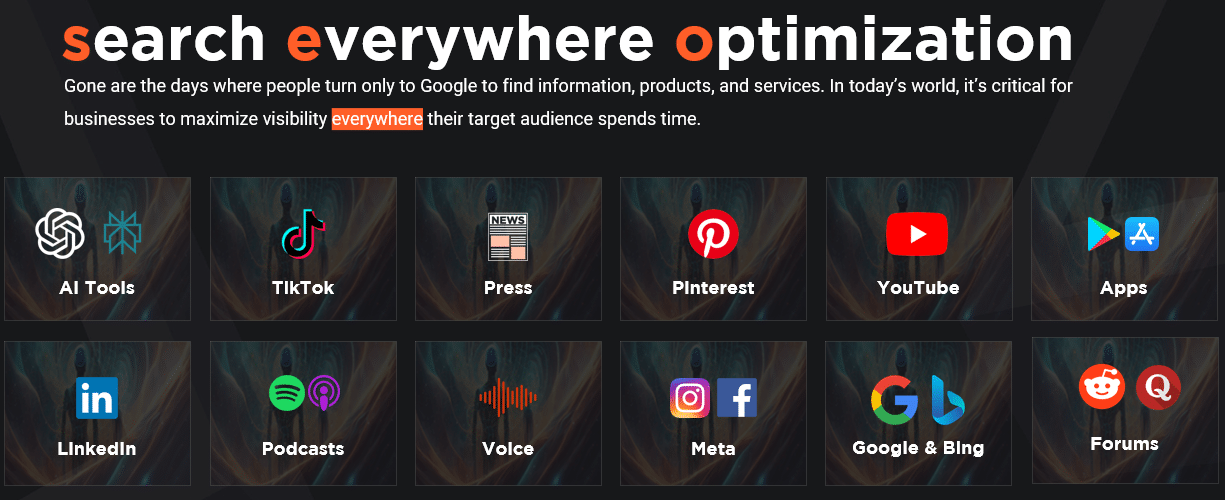
Today, search journeys are more multifaceted. They span various platforms, formats, and sources, marking a shift from simply optimizing for Google to a more comprehensive view.
Nearly half of U.S. consumers, including Gen Z, use TikTok as a search engine. AI tools like ChatGPT are becoming increasingly popular starting points for search journeys, surpassing even Google for many users.
For example, a user might search for the “best lightweight running shoes” on TikTok, watch videos, ask ChatGPT for a comparison, look for Reddit commentary via Google, and finally visit a brand’s website.
This multi-platform search journey amplifies the importance of treating influencer content as search content from the outset.
As Ross Simmonds highlighted in our conversation, influencers exist on nearly every platform, creating daily content that searchers, whether via Google or through platforms like TikTok, consistently find.
It’s a dream for marketers when influencers grasp the best practices around search and discoverability, allowing their content to rank on both native platforms and directly within the SERPs.
Google’s “What people are saying” SERP feature is a carousel showcasing user-generated content from YouTube, TikTok, LinkedIn, and more, including opinions that surface during purchase decisions.
While a brand’s website might not always appear in top search results, its content, or that of its influencers, certainly can, making it all more visible.
Meanwhile, AI answers are drawing from social content across the board, making YouTube and Reddit some of the most-cited domains in platforms like ChatGPT.
Samanyou Garg from Writesonic highlighted how comprehensive video descriptions, even from smaller YouTube channels, enhance AI visibility significantly.
Consistent language in influencer content makes AI more confident in recommending your brand. Without SEO keywords in your influencer content, it gets overlooked in crucial search moments.
Operationally, integrating keyword optimization into influencer programs involves bridging gaps between SEO and influencer teams, usually isolated in different structural parts, with distinct goals and KPIs.
Instead of viewing keywords as creative constraints, treat them as topic signals allowing creators to incorporate them authentically.
Integration involves a few key steps: sharing brief templates between SEO and influencer strategies, selecting keywords specific to each platform, reviewing content for keyword inclusion, and reporting on keyword-based search metrics.
Influencer content shapes both brand perception and search visibility in today’s digital ecosystem.
By applying a search strategy to content channels, brands can optimize these channels that traditionally operated without streamlined search strategies.
Treating influencer videos as part of your search content inventory may just set your brand apart in a content-saturated world.
Today, Google released its March 2026 spam update, making it the second announced algorithm change this year, following the February 2026 Discover core update.
This marks the first spam update of 2026. The previous one was rolled out in August 2025.
Timing. Google mentioned that this update might “take a few days to complete.” They reiterated on LinkedIn: “This is a normal spam update, and it will roll out for all languages and locations. The rollout may take a few days to complete.”
Why we care. Since this is the second major algorithm update of 2026, I need to stay alert for any changes in rankings or traffic on my sites. Google hasn’t specified what spam is being targeted, but shifts in performance could be related.
More on the spam update. Google’s documentation states: “While Google’s automated systems to detect search spam are constantly operating, we occasionally make notable improvements to how they work. When we do, we refer to this as a spam update and share when they happen on our list of Google Search ranking updates.”
Google’s AI-based spam-prevention system, SpamBrain, gets enhanced from time to time to better detect and manage new types of spam. If I notice changes after this update, reviewing and ensuring compliance with Google’s spam policies is essential for maintaining or improving rankings. Violations can lead to lower rankings or removal from search results entirely.
For link spam updates, improvements might not translate to immediate gains since any ranking boost from spammy links is nullified. Hence, reclaiming lost benefits isn’t possible.
I recently delved into a fascinating study exploring how AI citations are significantly influenced by certain content formats. It turns out listicles, articles, and product pages are at the forefront, driving over 52% of mentions across various AI language models.
The research, conducted by Wix Studio AI Search Lab, analyzed a whopping 75,000 AI answers and more than a million citations across platforms like ChatGPT, Google AI Mode, and Perplexity. It’s an exciting revelation that showcases the power of content structure in digital landscapes.
The findings? Listicles claimed the top spot with 21.9% of citations, followed by articles at 16.7% and product pages at 13.7%. When combined, these formats make up a majority of the citations AI references.
What’s interesting is that articles tend to dominate when it comes to informational queries, being cited 2.7 times more than other formats. Meanwhile, listicles capture nearly 40% of commercial-intent citations, almost double compared to any other type.
The Why Behind Intent. It’s fascinating to see how query intent, rather than industry or AI model, is the strongest predictor of which content gets cited. This trend doesn’t shift much across different sectors, from SaaS to health industries.
Informational queries skew towards articles (45.5%) and listicles (21.7%), while commercial queries are dominated by listicles (40.9%). Interestingly, transactional and navigational queries favor product and category pages, with those two formats comprising about 40% of the citations combined.
The Impact for Us. This study is incredibly insightful, illustrating why aligning content types with user intent is more strategic than simply generating content. Articles serve to inform, listicles foster comparisons, and product pages drive conversions. Tailoring content to align with user goals might just be the key to snagging more AI citations and enhancing visibility.
Not all listicles perform equally. In professional services, third-party listicles account for 80.9% of citations, showing a preference for neutral editorial comparisons over branded lists by large language models.
Looking at Model Preferences. While all models have a penchant for listicles, their other preferences vary. ChatGPT leans heavily towards articles and informational content, Google AI Mode shows a balanced approach, and Perplexity stands out with 17% of its citations coming from discussions on platforms like Reddit and forums.
Industry-Specific Trends. Though preferences shifted slightly among industries, there are notable trends. SaaS and professional services veer towards listicles, health sectors favor authoritative articles, and ecommerce spreads its citations across listicles, articles, and category pages. Interestingly, home repair maintains an even distribution across different formats.
I’m intrigued to know more! The comprehensive research can be found here.
As I’ve navigated the evolving landscape of SEO over the years, one truth remains: our biggest challenges often come from within. We’re standing at the brink of 2026, and it’s becoming clear that our organization’s internal issues might be the most significant threat to SEO success.
In recent discussions, AI tools and their impact on visibility have taken center stage. Yet, the conversation often overlooks a crucial issue. The real danger lies within our organizations—fragmented data, unclear KPIs, and poor collaboration silently erode even the most well-crafted SEO strategies.
I want to share a few internal threats that we should start addressing now to ensure our SEO efforts remain effective.
Many of us lean heavily on AI for tasks ranging from brief creation to data analysis. While AI expedites these processes, it’s essential to avoid falling into the trap of a one-size-fits-all solution. AI can provide speed, but the key is still in our unique perspective—what differentiates our content from the rest?
Another concern is our fragmented data landscape. Despite advancements, we still struggle with incomplete information about our users’ journeys. Users engage with AI tools, forming product perceptions before reaching us, but we lack visibility into these early interactions.
This brings us to another challenge: setting appropriate KPIs. While traditional metrics like traffic remain relics of past success, we now need to focus on visibility, considering the evolving role of AI. We’re being pulled towards metrics that may not directly align with business outcomes.
Furthermore, our roles must adapt beyond mere SEO execution to influencing broader strategic goals. Holding ownership without execution leads to misalignment. Instead, our insight should guide multi-platform visibility strategies, while leadership assigns responsibility for execution.
I’ve noticed the absence of cross-team collaboration in leveraging AI visibility. If AI visibility isn’t a shared priority across teams, then executing a unified strategy becomes difficult. Our job includes rallying all teams around common goals.
As SEO shifts to adaptability in a fast-paced AI-influenced world, action becomes vital. We can’t afford to stall in strategizing without executing. As I’ve experienced, prompt action allows us to learn quickly and adapt strategies effectively.
Ultimately, strong collaboration defines successful SEO execution. As our field becomes integral to broader company capabilities, continued team effort ensures sustainable visibility.
I urge you to see beyond traditional SEO. Embrace it as a dynamic business capability. The organizations that recognize this will lead the way in efficient discovery and sustainable growth.
I’ve learned that website migrations often fail due to small oversights. That’s why I focus on reducing risks with thorough pre-launch, launch-day, and post-launch SEO checks.
Website migrations can notoriously go awry, even with the best planning. I’ve seen rankings slip, traffic drop, and tracking break. Surprisingly, it’s usually the small oversights rather than complex technical issues that cause these problems.
I approach website migrations with a staging process. The checks I perform during staging, on launch day, and in the few weeks following the launch are crucial. They often determine whether a migration stabilizes quickly or spirals into a long recovery project.
Before Launch: Catch Issues on Staging
I’ve found that most migration problems should be identified and resolved on the staging site. If issues make it to the live site, recovery tends to be slower and more uncertain. Here’s how I set myself up for success:
Keep the Staging Site Private (Even from Crawlers)
A common mistake I’ve encountered is making the staging site publicly indexable. Google crawling a staging environment can lead to duplicate content in search results, causing rankings to fluctuate and unfinished pages to be indexed.
I make it a point to block crawlers from the staging site or protect it with a password to ensure it stays invisible to search engines until the live launch.
It’s not just about the crawlers. I’ve seen ecommerce sites where customers found the staging site and tried to place orders, creating confusion and frustration internally.
Take Benchmarks
To help identify real issues rather than reacting to normal shifts, I always take a baseline. I record organic sessions, rankings, top landing pages, indexed pages, conversions, and site speed before moving to the new site.
Identify Priority Pages
For me, it’s crucial to focus on pages that drive traffic, revenue, or attract links. These need extra care during redirect mapping, content review, and testing, with special attention to internal links, redirects, and URL rules.
Review Templates and Content Continuity
Templates are the backbone of a website, controlling titles, headings, metadata, and more. If templates break, similar problems can spread across countless pages. Here’s what I check:
Presence and accuracy of titles and headings.
Canonical tags that use full URLs and point to live pages.
Correctly transferred structured data.
Intact copy, images, and internal links.
Launch Day: Verify Everything Works on the Live Site
On launch day, preparation meets reality. I join my SEO, developer, and design teams to make sure what worked on staging works on the live site as well. Even small oversights can immediately impact rankings, traffic, and user experience.
Test Redirects at Scale
It’s not enough to spot-check. Every mapped URL should redirect correctly, without chains or loops, as they can slow down crawling and delay signal consolidation.
Crawl the Live Site
Immediately after the site goes live, I run a full crawl and compare the results to the staging crawl to spot any differences. I’m on the lookout for broken links, redirected internal links, missing pages, and server errors.
Check Internal Links and Navigation
Menüs, breadcrumbs, and in-content links should directly point to live URLs. Allowing internal links to rely on redirects adds unnecessary load and risk.
After Launch: Monitor and Stabilize Performance
I know that even with the best planning, surprises can emerge once search engines and real users start interacting with the site. Small errors missed on staging can suddenly affect rankings or traffic.
Structured monitoring in the days and weeks post-launch is crucial. By catching issues early, I can ensure they don’t impact performance or user experience.
I’ve discovered that the most successful GEO and AEO strategies are deeply rooted in traditional SEO. It’s fascinating how these foundational principles seamlessly translate to AI visibility. Let me share why it’s crucial not to overlook these basics.
In our quest to harness the power of AI, many of us might feel tempted to skip straight to advanced strategies. However, without a solid SEO foundation, even the best AI-driven tactics can fall short. The rules that govern traditional SEO are critical to unlocking AI’s full potential in search visibility.
Consider this: AI systems thrive on structured data and clear content hierarchies. It’s precisely these elements that traditional SEO prioritizes, ensuring that our websites are not only user-friendly but also AI-ready. This is why every AI optimization journey should begin with tried-and-true SEO practices.
As someone who loves diving into the nuances of AI and SEO, I’ve seen firsthand how these two fields complement each other. Embracing the basics doesn’t merely prepare us for AI; it catapults our strategy into an era of smarter, more efficient digital marketing.
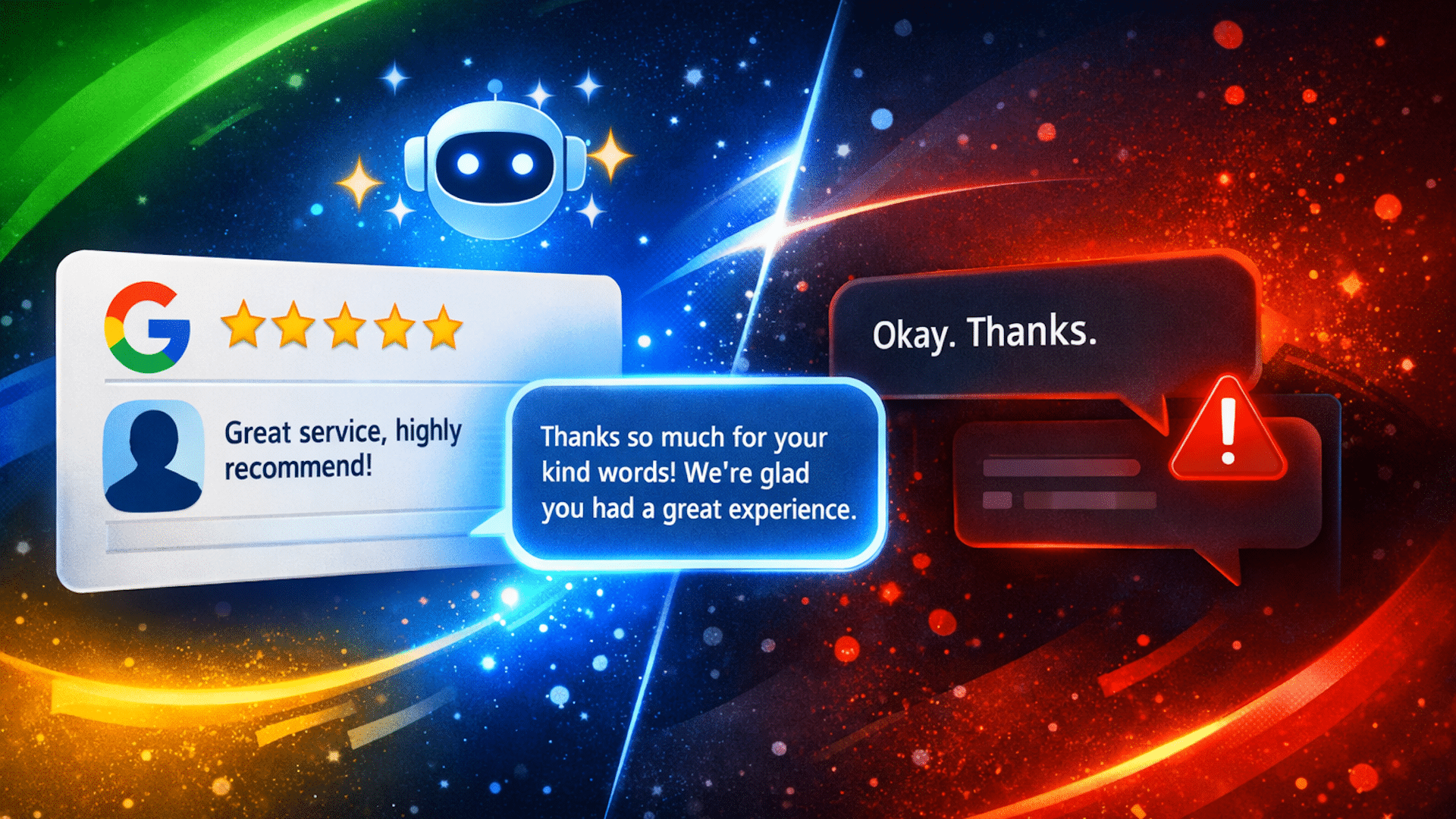
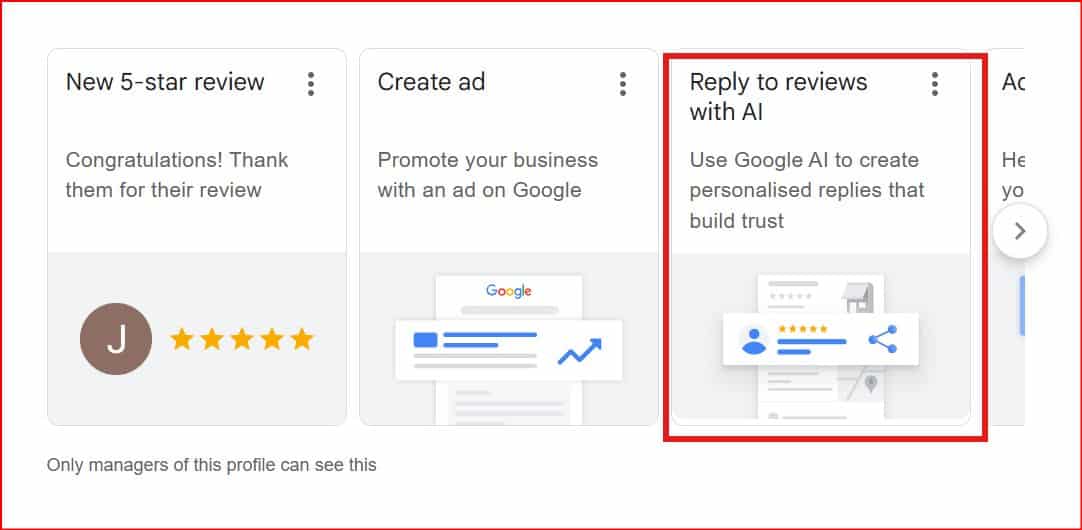
I’ve been intrigued by Google’s latest test in the Google Business Profile: AI-generated responses to customer reviews. This innovative tool offers businesses the ability to create suggested replies to reviews, which I can then review, tweak, and manually submit.
Why It Matters to Me. Engaging with customer reviews significantly impacts conversions and trust. However, I’m aware of the risks associated with generic AI replies, especially for negative reviews where sincerity is crucial. Personalized, quality responses are more influential than merely replying for the sake of it.
What I Saw. Here’s a sneak peek of how the feature appears:
The Details I’ve Discovered. It seems Google is conducting a limited roll-out of this ‘Reply to reviews with AI’ feature within the Google Business Profile.
It generates proposed responses to customer reviews.
I can review and modify these suggestions before submitting.
The availability fluctuates across different accounts and reviews.
The feature is spotted in the U.S., Brazil, and India, but not yet widely in Europe.
Initial Impressions. Some users, like me, noticed prompts targeting older, unanswered negative reviews.
In one test I observed, it’s possible to generate AI responses in bulk.
I’ve read mixed reports on automation—some claim bulk responses still need a review, while others experienced fully automated replies that require no edits.
How I First Learned About It. This feature caught my attention first through LinkedIn, thanks to Chandan Mishra, a freelance local SEO specialist, and it was further amplified by Darren Shaw, founder of Whitespark.