Tag: SEO Strategies

  • Unveiling JavaScript SEO Secrets from Leading Ecommerce Sites

    Unveiling JavaScript SEO Secrets from Leading Ecommerce Sites

    JavaScript SEO seems like it should be a cinch by now, doesn’t it? Yet, here we are with persistent challenges that e-commerce sites continuously face. After five years of grappling with issues like crawling, rendering, and indexing, coupled with the complexities of headless builds and AI-powered recommendations, it’s clear we still have a ways to go. However, some top-tier ecommerce sites have cracked the code. Their innovative approaches offer invaluable lessons in maintaining organic visibility while shipping fast, modern JavaScript experiences. Let me share these five insights with you.

    Chewy is a giant in the U.S. pet food and supplies online retail space. They’ve harnessed the power of Next.js, a React framework, to seamlessly integrate server rendering, static generation, and full-stack development into their operations. Imagine visiting a product page like the Benebone Wishbone Chew Toy. Here, everything you need—product title, description, pricing, reviews, Q&A, and breadcrumb navigation—is already embedded in the initial HTML. This means Googlebot can access this information right away, without having to wait for JavaScript to render. This approach reduces the risk of rendering issues, especially significant with the rise of AI chatbots that still don’t handle JavaScript efficiently. While not all content needs to be on the initial load, like the ‘Compare Similar Items’ carousel meant for user engagement, Chewy perfectly balances what’s essential for indexing with user experience enhancements.

    ```json
{
  "alt": "Chewy site displaying a Benebone Bacon Flavor Wishbone Dog Chew Toy, priced at $9.99.",
  "caption": "Check out this Benebone Bacon Flavor Wishbone Dog Chew Toy available on Chewy for just $9.99! Perfect for keeping your dog entertained and their teeth healthy.",
  "description": "The Chewy website features a Benebone Bacon Flavor Wishbone Tough Dog Chew Toy, available in Medium size and priced at $9.99. Highlighted with a 4.5-star rating from over 11,646 reviews, the toy is designed for durability and dental health. Free delivery is offered on orders over $35, and a $20 eGift card is available for first-time customers spending $49 or more. The page includes options for autoship discounts, sizing selections, and easy delivery scheduling, making it convenient for pet owners."
}
```

    Switching gears to Myprotein, this brand masters the art of making navigation easily crawlable. Using Astro, a content-first framework, their site ships zero JavaScript by default and includes components that support React, Vue, or Svelte, making their SEO strategy a prime example to study. By ensuring all navigation links are present in the initial HTML response, Myprotein leverages Astro’s island architecture to hydrate these elements with JavaScript interactively. Crawlers like Googlebot can thus easily discover and process these links since they use proper anchor elements with href attributes. This proactive strategy prevents navigation from being invisible or empty during searches, thereby preserving efficient crawlability.

    ```json
{
  "alt": "HTML code snippet displaying product details for a dog chew toy.",
  "caption": "Peek behind the scenes at the HTML structure detailing a popular bacon-flavored dog chew toy.",
  "description": "This image captures a snippet of HTML code showcasing the product details for a Benebone Bacon Flavor Wishbone Tough Dog Chew Toy, Medium. It highlights elements such as product names, ratings, links, and navigation properties. This code indicates its presence on a retail website, providing key classifications and linking to reviews and manufacturer details, useful for web development insights and SEO analysis."
}
```

    Harrods, renowned for luxury goods, ensures their structured data delivers in the HTML’s initial response. By embedding structured data using the Product schema within the HTML directly, Harrods guarantees that Google can parse this data right from the first crawl, without waiting for page rendering. This foresight prevents client-side dependencies and ensures Google has immediate access to important data like pricing and availability, which is critical due to frequent updates in product details.
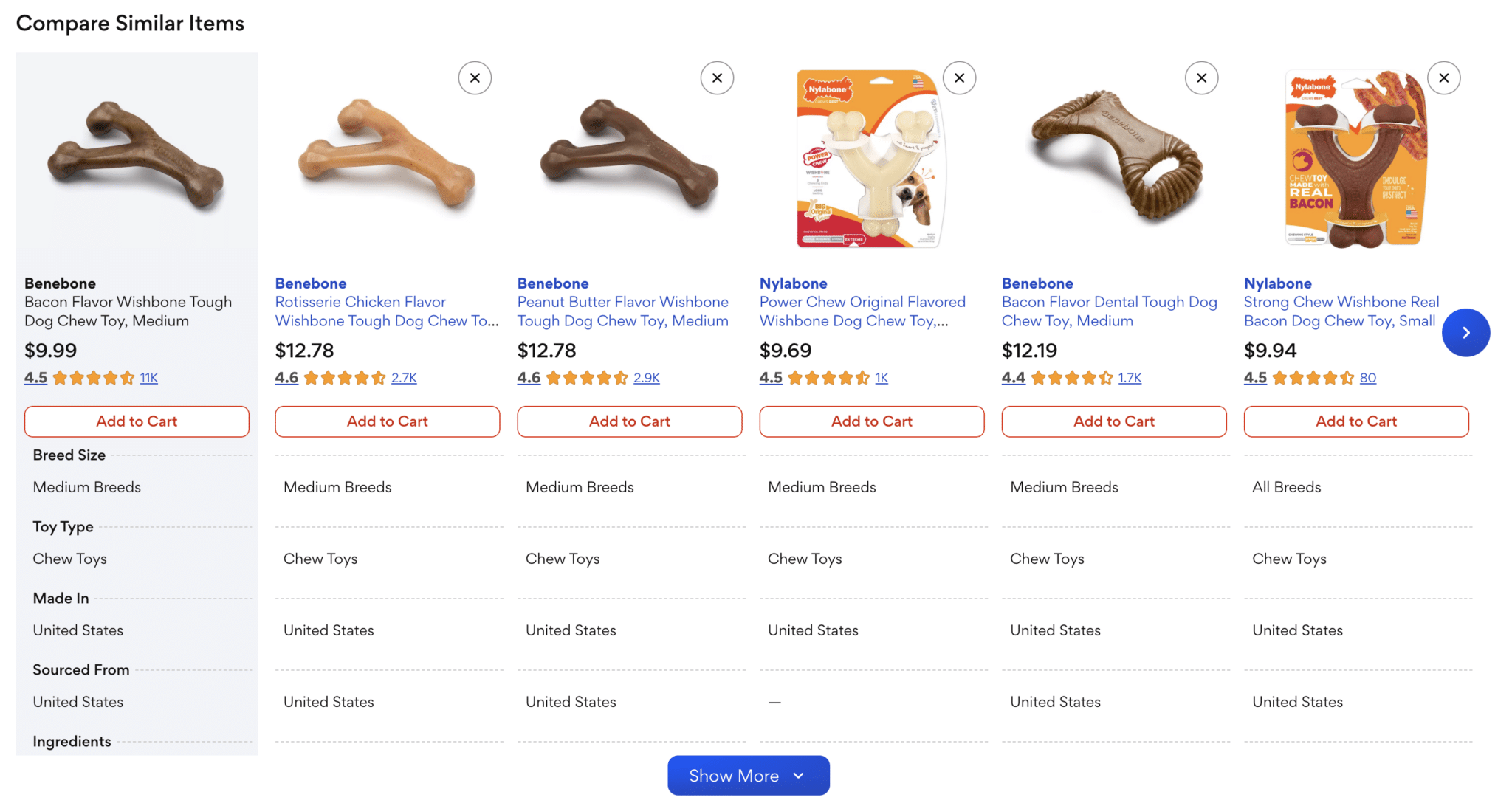
    ```json
{
  "alt": "Comparison chart of dog chew toys featuring Benebone and Nylabone products with prices and reviews.",
  "caption": "Discover the perfect durable chew toy for your canine companion with these top-rated options from Benebone and Nylabone, designed for medium and small breeds.",
  "description": "This image displays a comparison of various dog chew toys from Benebone and Nylabone. Products include flavors like bacon and peanut butter, designed for medium and small breeds. Prices range from $9.69 to $12.78, with customer ratings visible. Each product is marked 'Made in United States' and offers a handy 'Add to Cart' option. Ideal for those seeking durable and flavorful chew toys for dogs."
}
```

    Over at Under Armour, the elegance of their faceted navigation shines. Built on Next.js like Chewy, Under Armour ensures filters on category pages are fast, interactive, and SEO-friendly. When shoppers apply filters, the product grid seamlessly updates without a full reload, leveraging client-side updates while maintaining clean, readable URLs that Google can index effectively. By avoiding hash fragments and bracketed query strings, these URLs become shareable and bookmark-friendly, thus enhancing both user experience and SEO performance.

    ```json
{
  "alt": "The CapmatchOne logo with a gradient circle and bold text.",
  "caption": "Discover innovation with the CapmatchOne logo, featuring sleek typography and a modern gradient circle.",
  "description": "The CapmatchOne logo features bold, modern typography coupled with a gradient circle, symbolizing connection and innovation. The sleek design conveys a sense of progress and creativity. This image can be used for branding or promotional purposes, appealing to audiences interested in innovative solutions and forward-thinking designs."
}
```

    Finally, Manors Golf demonstrates SEO prowess by efficiently managing third-party scripts on their site. Utilizing Shopify’s Hydrogen framework, they cleverly defer scripts using async attributes, ensuring they don’t block the initial rendering process. This tactic not only protects the Largest Contentful Paint (LCP) metric but also eases Google’s rendering workload, contributing to a robust SEO strategy.

    ```json
{
  "alt": "Navigation bar of MyProtein website showcasing categories like Protein and Supplements.",
  "caption": "Explore the diverse range of categories on MyProtein's navigation bar, from trending items to sports nutrition staples.",
  "description": "This image displays the navigation bar from the MyProtein website. Featured categories include Trending, Protein, Creatine, Supplements, Bars, Food & Snacks, and more. The search bar is prominently placed. The image is vital for understanding how users can access different sections of the site quickly. Keywords: MyProtein, navigation, protein, supplements, e-commerce."
}
```

    The secret isn’t in using JavaScript itself but in how it’s used. When JavaScript serves to enhance rather than deliver the core functionality and content, it paves the way for an excellent user experience while preserving SEO integrity. These lessons from major e-commerce players are testament to the delicate balance between interactivity and search engine crawlability.

    ```json
{
  "alt": "HTML code snippet with navigation links for nutrition products.",
  "caption": "Explore the nutritional products featured in this HTML snippet, including creatine and protein drink options.",
  "description": "This image shows an HTML code snippet from a website, highlighting navigation links for various nutrition products. The links include Creatine, Clear Protein Drinks, and Bundles, directing users to specific product categories. The CSS classes suggest design styling and user interaction, such as 'hover:underline' for link emphasis. Useful for web developers and SEO specialists studying navigation structure and link optimization."
}
```

    Inspired by this post on Search Engine Land.


    crushpress.ai community screenshot
  • AI SEO: Transforming Marketing Beyond Lazy Strategies

    AI SEO: Transforming Marketing Beyond Lazy Strategies

    Over the years, I’ve noticed how digital marketing has settled into a predictable routine. It spans across various channels like SEO, content marketing, social media, and digital advertising. Yet, many of us relied too heavily on a familiar core strategy, often ignoring the potential of using every available channel.

    This predictability was comforting. It allowed marketing teams, including mine, to stick to what worked, refining execution within a known framework. However, AI search has upended this comfort, exposing our inconsistencies. To truly succeed with AI SEO, it’s clear that I need to adopt a much broader strategy.

    Over the last 15 to 20 years, I’ve observed how digital marketing comfortably fit into a predictable rhythm, with each channel having a designated role.

    Content marketing, social media, SEO, and paid advertising followed habitual strategies. But this lack of variation led to a form of laziness in our approach.

    This structure offered results, so we let the broader strategies slip away.

    The issue? It gave us a false sense of security. We should have employed broader strategies all along, as they now drive real visibility in AI search.

    AI has reshaped digital marketing, changing user search behavior and how brands are evaluated.

    Traditional search relied heavily on algorithms and singular sources, whereas AI taps into multiple inputs across numerous sources.

    These sources ought to be part of your marketing arsenal—representing your brand across social media, third-party directories, press releases, and more. In this new system, your website is just one element among many sources AI uses to comprehend your brand.

    One of the most significant changes AI has introduced is how it has expanded the digital marketing landscape beyond the website. While having a robust website is crucial, it’s part of a much larger ecosystem now. The marketing strategy must adapt to this expansive landscape.

    In the past, maximizing website visibility was often enough to yield results. However, relying solely on this approach no longer suffices. AI aggregates data from a wide range of sources, from articles and brand mentions to third-party profiles and published content, shaping its understanding of who you are.

    Focusing exclusively on the website restricts AI’s ability to locate and understand your brand.

    Most marketing programs, especially those established before AI’s time, fall short here. To modernize, it’s vital for a brand to be visible across a more extensive range.

    AI prefers brands that establish an intentional online presence, showing up with purpose across the internet.

    A fragmented marketing approach, which worked in the past, now falls short. Previously, each successful channel felt effective and met our goals, but AI demands more. It looks for consistent messaging and expertise, linking various online signals to assess your brand’s presence.

    When these signals are aligned, your brand’s visibility in AI search improves. Inconsistent or weak broader presence translates to weaker visibility.

    Lazy marketing approaches—sticking to separate channels using the same old tactics—are now exposed. This approach may have yielded results once, but those days are numbered. It’s crucial now to go beyond that—to present your brand on multiple platforms, so AI can find you.

    If your competitors enhance their presence, failure to do the same will leave you behind as they occupy more space in AI-generated responses.

    As AI exposes any inconsistencies, it’s time to transition into the era of AI search.

    It’s essential now to transition beyond older models and adopt newer strategies suitable for digital marketing. The tactics that always worked like press releases, directory listings, and marketing beyond just your website, should have been in use all along.

    AI search doesn’t rewrite marketing rules; it enforces the importance of a comprehensive strategy. This means we can’t afford to do less anymore.


    Inspired by this post on Search Engine Land.


    crushpress.ai community screenshot
  • Understanding Query vs. Conversion Intent for Better Results

    Understanding Query vs. Conversion Intent for Better Results

    I’ve noticed that what users type into search engines isn’t always a reflection of what they truly want. This drove me to explore how aligning intent signals, behavior, and branding can significantly enhance performance.

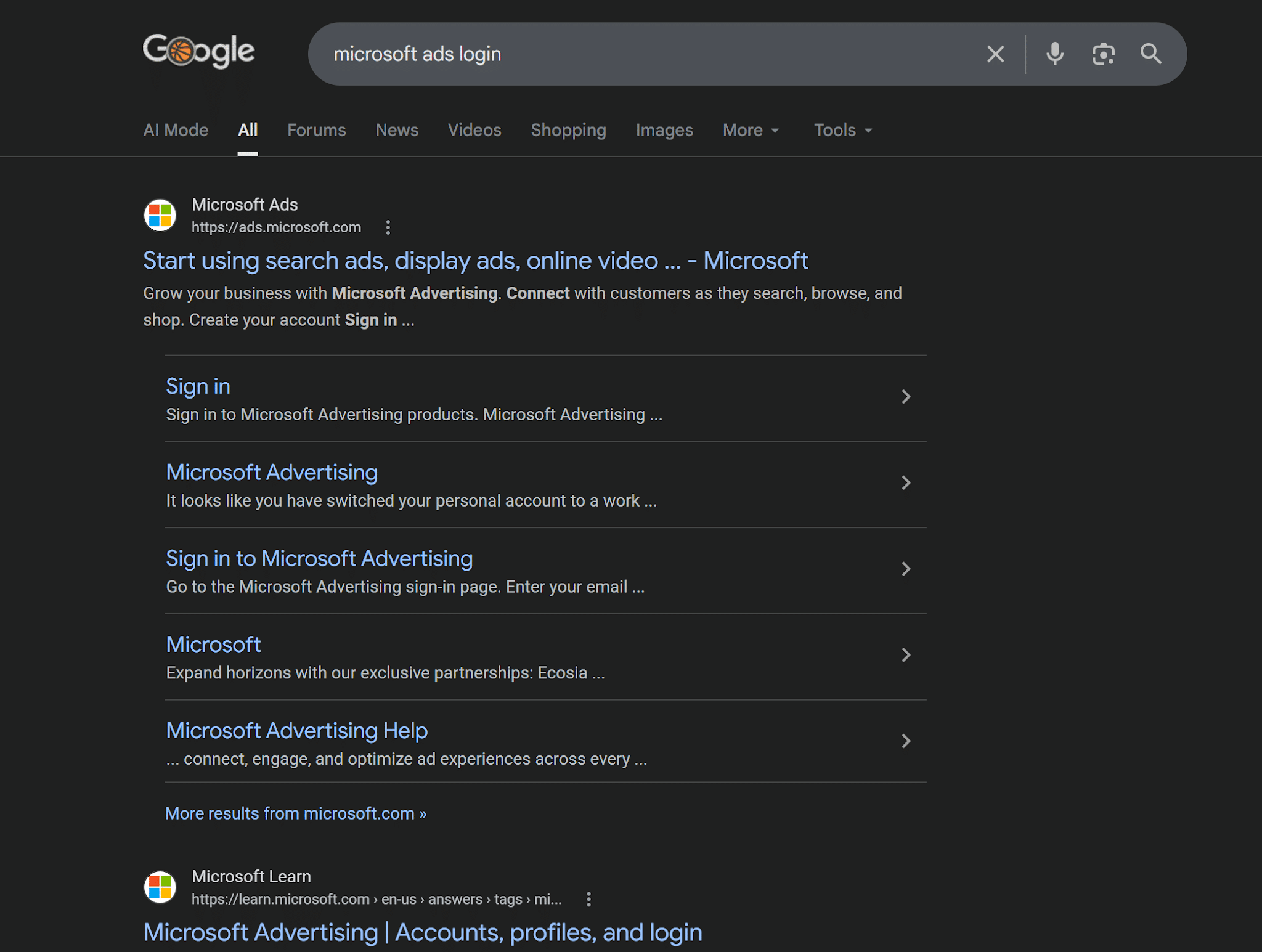
    As someone deeply involved in PPC, I’ve held onto syntax-oriented keyword strategies for a long time. This was because of the gap between ‘query intent’ and ‘conversion intent.’ For years, relying on keywords has been my way to show I understand my customers’ desires and to filter traffic through syntax-based signals.

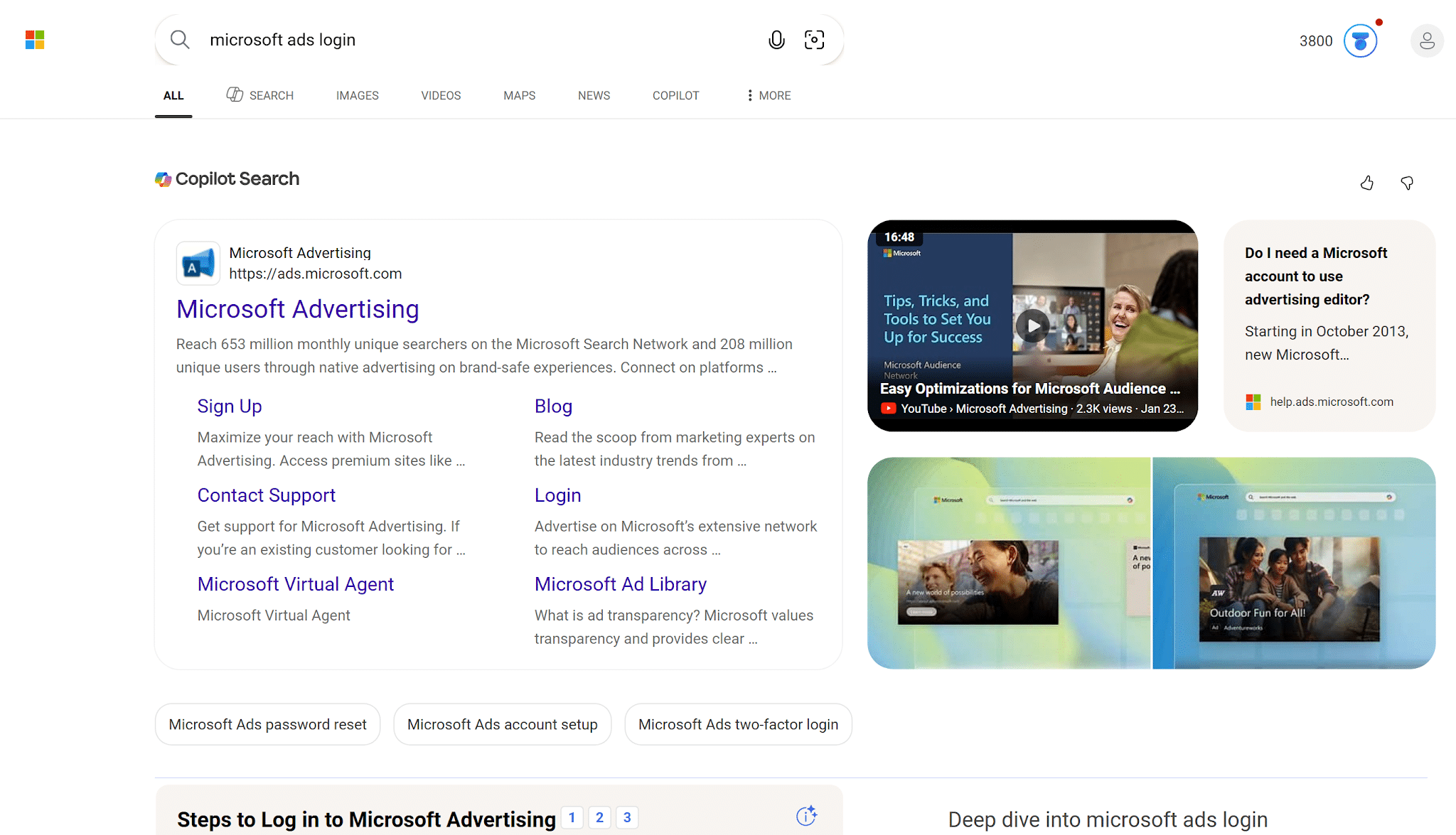
    ```json
{
  "alt": "Google search results page for 'Microsoft ads login' displaying links to Microsoft Ads and related content.",
  "caption": "Looking to manage your Microsoft Ads? Here's how you can quickly log in and access the resources you need.",
  "description": "Screenshot of a Google search results page for 'Microsoft ads login.' The results include links to Microsoft Ads for starting search ads, displaying ads, and online video ads. Additional links guide users to sign in to Microsoft Advertising, access Microsoft Advertising Help, and explore more content from Microsoft's websites. The interface is shown in dark mode, and the search bar is prominently displayed at the top."
}
```

    With the shift towards more conversational queries and the rise of AI, understanding the difference between these two intents has become crucial to effectively meet user needs.

    ```json
{
  "alt": "Search results page showing Microsoft Ads login and support options.",
  "caption": "Explore Microsoft Ads with a variety of login and support options to maximize your advertising potential.",
  "description": "This image displays a search results page for 'Microsoft Ads login' on Copilot Search. It includes links to sign up, contact support, and access the Microsoft Ad Library. Additionally, there are related suggestions like 'Microsoft Ads password reset' and 'two-factor login'. The page facilitates easy access to Microsoft Advertising resources and login details, helping users optimize their ad campaigns. Keywords: Microsoft Ads login, advertising, support."
}
```

    In this discussion, I’ll define query and conversion intent and share strategies to use them effectively. While these suggestions aren’t prescriptive, they provide a framework for analyzing your data and optimizing for your audience.

    ```json
{
  "alt": "YouTube search results for Microsoft Ads login, featuring a Microsoft advertisement and video tutorial.",
  "caption": "Explore seamless ad setups with Microsoft in just five minutes. Discover tutorials and more on YouTube.",
  "description": "The image shows YouTube search results for 'Microsoft ads login' with a promoted ad about launching ads in five minutes. It includes visual elements like the Microsoft logo and a tutorial video thumbnail from XYZ Lab. The ad encourages quick setup and the video tutorial provides guidance on creating a Microsoft Ads account, offering various options like targeting and reporting."
}
```

    Disclosure: I’m a Microsoft employee, and some examples I’ll share are based on Microsoft tools, though the strategies are applicable across platforms.

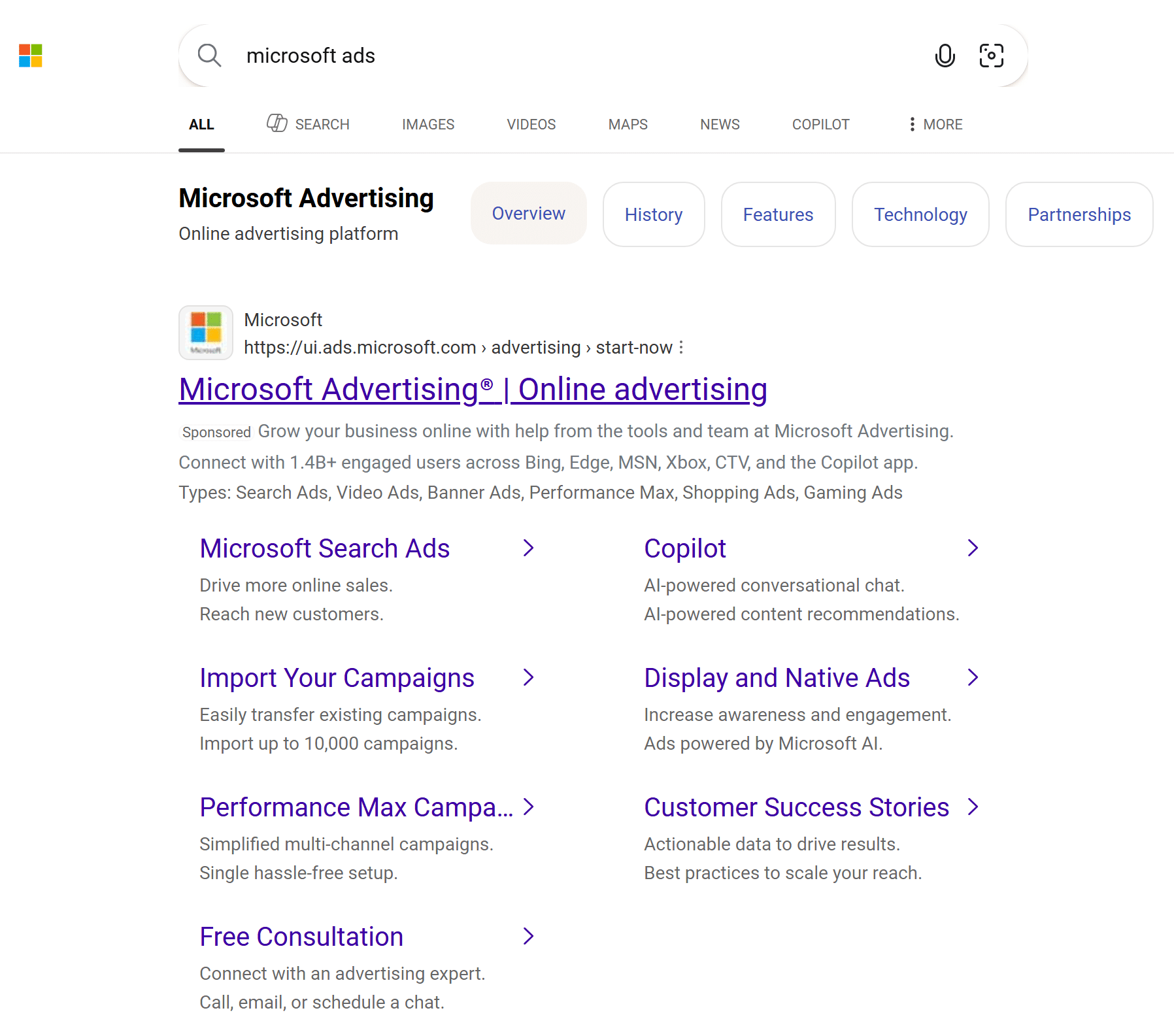
    ```json
{
  "alt": "Search results page for 'Microsoft ads' showing sponsored listings from Microsoft Advertising and Reddit.",
  "caption": "Explore the world of online advertising with Microsoft's comprehensive ad offerings displayed in a search result!",
  "description": "This image displays a Google search results page with the query 'Microsoft ads.' At the top, sponsored results from Microsoft Advertising are highlighted, showcasing various advertising services like Search Ads and advertising with Copilot. Below these, another sponsored link for Reddit ads is visible. The interface includes typical Google search functionalities and a dark theme, enhancing visual clarity for online browsing."
}
```

    Query intent refers to the underlying need driving the text input into a search function, whether it’s on a search engine, video platform, or within AI applications. Conversion intent, on the other hand, centers on the actual goals users aim to achieve, derived from their interactions and data points.

    ```json
{
  "alt": "Search result for Microsoft ads, showing details about various advertising services offered by Microsoft.",
  "caption": "Explore Microsoft's advertising platform and unlock new possibilities for reaching your audience with advanced advertising tools.",
  "description": "Screenshot of a Google search result for 'Microsoft ads', highlighting Microsoft's online advertising platform. The result outlines various services including Microsoft Search Ads, Copilot AI tools, campaign import options, display and native ads, performance max campaigns, customer success stories, and free consultation. The platform connects advertisers to over 1.4 billion users across Bing, Edge, and more. This comprehensive advertising suite aims to enhance online sales, customer engagement, and campaign efficiency."
}
```

    The confidence in understanding these intents varies, influenced by how explicit the text is and observed content consumption patterns. For instance, searching for ‘Microsoft ads login’ reveals a clear intent to log in, readily aligning with ads and content targeted at this action.

    ```json
{
  "alt": "YouTube search results for 'Microsoft ads' with a smartphone image and Microsoft logo.",
  "caption": "Explore the world of Microsoft advertising with insightful content on YouTube. Discover how Microsoft is redefining digital engagement.",
  "description": "This YouTube search results page for 'Microsoft ads' features a prominent smartphone image showcasing an advertisement and the recognizable Microsoft logo. The page includes a sponsored link titled 'Advertise Smarter with Realize' and a section about Microsoft Advertising with 8.36k subscribers. An additional featured video titled 'AI Is Rewriting How People Buy' is included, emphasizing the impact of artificial intelligence on consumer purchasing behavior. Keywords: YouTube, Microsoft ads, advertising, AI, digital marketing."
}
```

    However, a query like ‘Microsoft ads’ is vaguer, prompting the need to draw insights from past engagement and search history to fulfill user expectations effectively.

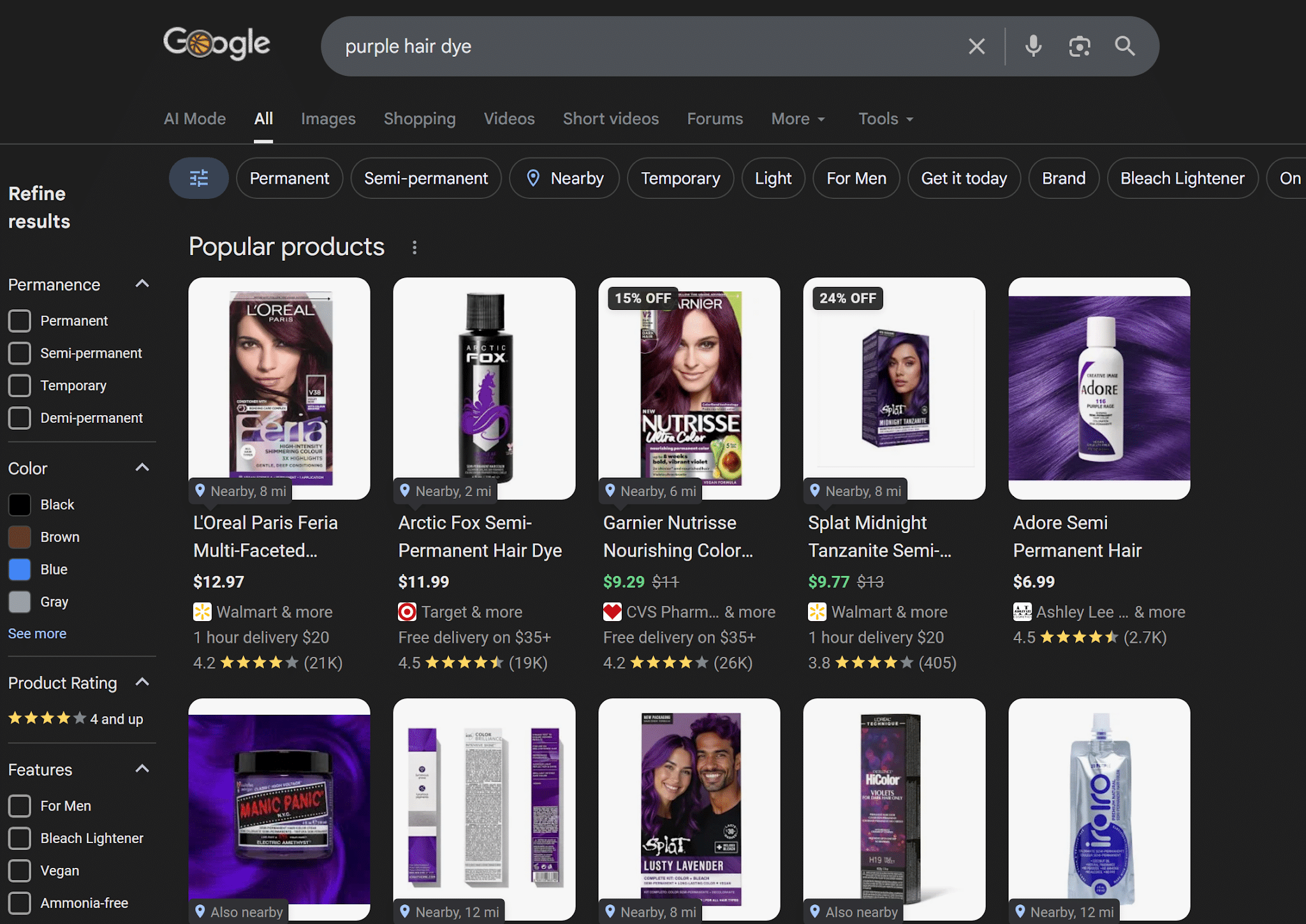
    ```json
{
  "alt": "Screenshot of Google search results for purple hair dye displaying various products with options to refine by permanence and color.",
  "caption": "Discover the perfect shade of purple with this diverse selection of hair dyes—ranging from semi-permanent to permanent options, all searchable on Google.",
  "description": "This image is a screenshot of Google search results for 'purple hair dye', showcasing popular products such as L'Oreal Paris Feria, Arctic Fox, Garnier Nutrisse, and more. The interface includes filter options for refining results based on permanence, color, and features. Each product displays ratings, prices, and availability nearby, providing users with a comprehensive browsing experience for choosing the ideal hair color product."
}
```

    A non-branded query such as ‘purple hair dye’ shows a distinct transactional intent. Users have a general idea of what they want but not necessarily the brand, which necessitates a strategy that’s both inclusive and targeted.

    ```json
{
  "alt": "Online search results for 'purple hair dye' featuring various brands and prices.",
  "caption": "Explore a vibrant array of purple hair dyes with competitive pricing options from top brands.",
  "description": "The image displays online search results for 'purple hair dye' showcasing various products. Brands such as Arctic Fox, Garnier, and Manic Panic are featured, with prices ranging from $8.99 to $20.00. Retailers include Sally Beauty, Amazon, and Target, with options for free shipping and pickup. This variety highlights popular choices for vibrant hair color enthusiasts."
}
```

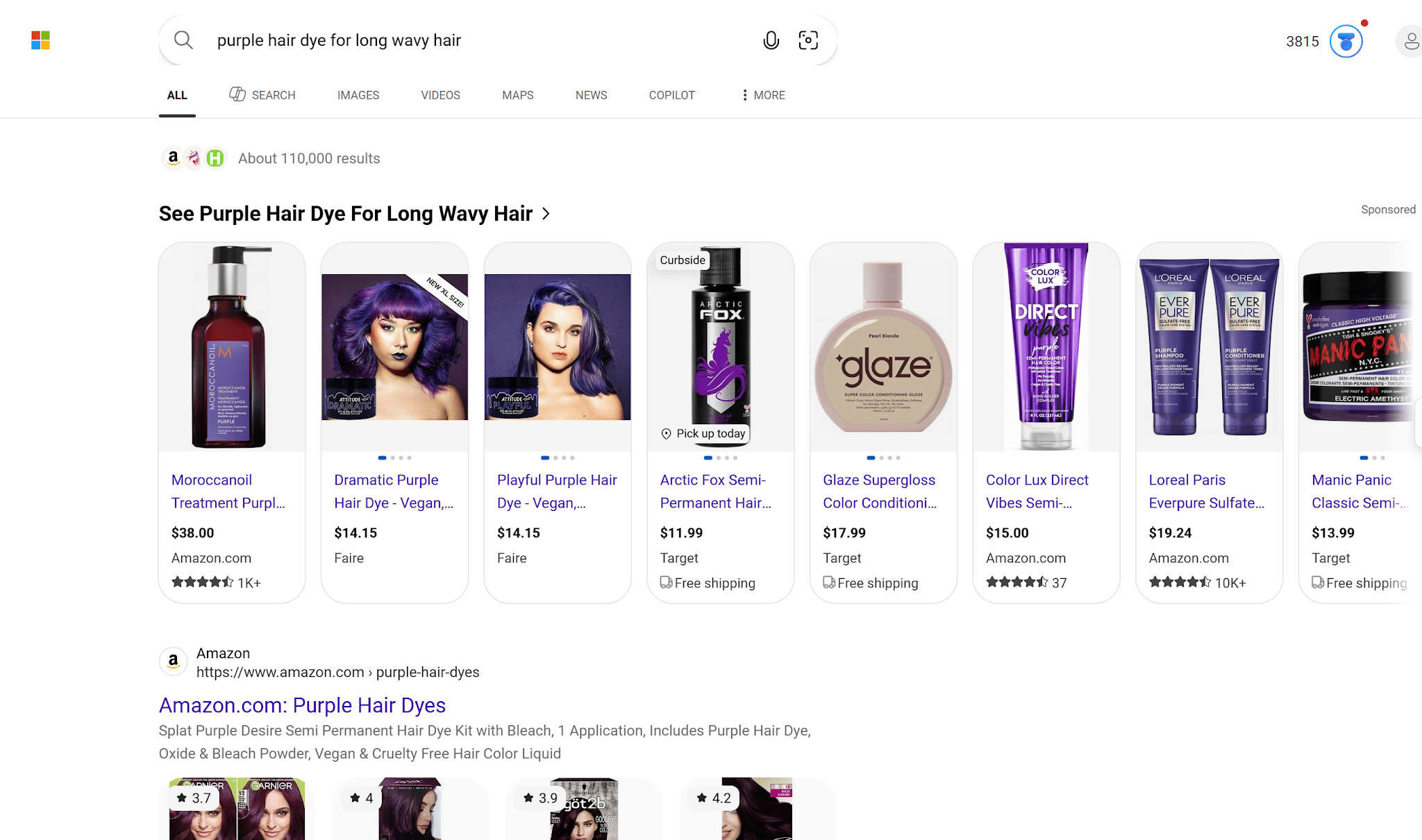
    By understanding the core desires behind queries, such as ‘purple hair dye for long wavy hair,’ we can fine-tune our approach to align products or content that specifically meet user preferences and characteristics.

    ```json
{
  "alt": "YouTube search results for purple hair dye featuring a sponsored ad for göt2b Hair Color PöP Purple and a video thumbnail comparing purple hair dyes.",
  "caption": "Dive into the vibrant world of purple hair dye with this engaging video comparison. Discover which shade suits you best!",
  "description": "The image shows a YouTube search results page for 'purple hair dye.' At the top is a sponsored ad for göt2b Hair Color PöP Purple. Below, a video thumbnail titled 'COMPARING ALL MY PURPLE HAIR DYE SWATCHES!' displays various brands of purple hair dye around a person with dyed hair. The video, uploaded 10 months ago, has 31K views and offers an in-depth review of different purple hair dye options. Ideal for those interested in experimenting with hair color, seeking vibrant and bold styles."
}
```

    Combining close variants and recognizing interactions beyond SERPs, like social media and video content, helps us tap into insights that enhance brand recognition and audience engagement effectively.

    ```json
{
  "alt": "Search results for purple hair dye for long wavy hair on Google, featuring nearby store options.",
  "caption": "Explore vibrant purple hair dye options for long wavy hair with nearby store availability and special offers.",
  "description": "This image shows search results for 'purple hair dye for long wavy hair' on Google. It displays various hair dye products available in nearby stores, such as L'Oreal Paris Feria, Arctic Fox Semi-Permanent, Garnier Nutrisse, Good Dye Young, and AS I AM Curl Color. The products feature prices, discounts, store availability, and ratings, providing options for permanent, semi-permanent, and temporary dyes. Filters for refining search results include permanency and product rating."
}
```

    Ultimately, aligning query and conversion intent needs careful planning and execution across both brand and performance marketing.

    ```json
{
  "alt": "Search results for purple hair dye for long wavy hair with product listings.",
  "caption": "Explore the vibrant world of purple hair dye with top products for achieving stunning long, wavy hair transformations.",
  "description": "The image displays a Google search results page for 'purple hair dye for long wavy hair.' It features sponsored product listings including brands like Moroccanoil, Arctic Fox, and Manic Panic, priced between $11.99 and $38.00. These listings highlight various options for achieving vibrant purple hues, suitable for long, wavy hair styles. Keywords: purple hair dye, long wavy hair, Moroccanoil, Arctic Fox, Manic Panic."
}
```

    Inspired by this post on Search Engine Land.

    crushpress.ai community screenshot
  • Mastering 2026 SEO: From Rented Clicks to Answer Authority

    Mastering 2026 SEO: From Rented Clicks to Answer Authority

    As I look forward to 2026, the landscape of SEO is dramatically evolving. AI is reshaping click-through rates, urging me to shift from merely renting clicks to building genuine authority that delivers answers, stabilizes leads, and safeguards my margins.

    The gap between a 2% and a 20% margin increasingly relies on whether I control the answers or just rent attention. The era of buying visibility is fading away.

    AI systems are steadily fulfilling queries with fewer clicks, which means the true value now lies in crafting information that these systems can leverage to deliver valuable answers.

    By transitioning from purchasing clicks to engineering structured, trusted content, I build ‘answer equity.’ This sets the stage for durable inclusion in AI-driven decision-making processes.

    It’s not about abandoning paid search entirely but reducing dependency on it as the main demand generator. Over time, this strategic change can reduce costs and bring more stability to my traffic acquisition efforts by not constantly competing for impressions.

    An atomic sandwich

    To make this shift effective, I need a content strategy that optimizes what AI systems can utilize. Enter the concept of the ‘atomic sandwich.’

    The atomic sandwich structure focuses on maximizing intent density rather than just chasing traffic:

    The atomic fact (top bun)

    Many businesses, including mine, have traditionally treated search budgets like high-interest loans.

    By investing heavily in paid traffic for quick visibility boosts, I’ve felt in control, but there’s a catch: pausing the spend makes that visibility vanish.

    The forensic proof (the meat)

    This model isn’t just inefficient; it’s risky. Today, the rented audience is fading in the Answer Economy. Data shows paid CTR can plummet 68% with AI Overviews present.

    My spending isn’t just about immediate clicks; it’s often about creating awareness that AI can later fulfill without needing users to click through.

    The structural directive (bottom bun)

    The framework is transforming. To thrive in 2026, I must shift from buying audience attention to engineering precise answers.

    If my brand isn’t a trusted resource feeding into these AI responses, my visibility and influence will shrink drastically.

    The new “box”: From librarian to forensic auditor

    The role of search engines has evolved from directing traffic to validating information. Every ad dollar spent that fails to address E-E-A-T is a squandered investment.

    • The organic collapse: Studies reveal a significant CTR drop from AI Overviews, illustrating the need for strategic adaptation.
    • The global impact: AI Overviews correlate with a 58% lower CTR for top-ranking pages worldwide.

    My objective isn’t merely to rank; it’s to continuously feature in the sources AI systems trust and cite.

    In this paradigm shift, it’s not volume that wins, but clarity and trustworthiness.

    The search addiction cycle (why I can’t quit)

    Faced with rising costs and diminishing ROI, I might hesitate to break away due to weak information infrastructure — a liability on the balance sheet.

    • Stage 1 — the vanity hit: Initially, paid search wins felt like boosting business health.
    • Stage 2 — tolerance building: As ads got pricier, I increased spend instead of addressing core issues.
    • Stage 3 — the context-debt overdose: Reliance on AI-summarized data skyrocketed, making paid awareness insufficient.
    • Stage 4 — total dependency: My marketing strategy strayed into maintaining cashflow to platforms, not long-term demand building.

    The forensic intervention: The 7-point organizational health check

    Next time, I’ll evaluate where my Answer Equity is lacking, using this checklist.

    • The Information Gain test: Can Gemini summarize my page without new insights? This signals low value content.
    • The entity audit: Without a verified Google Knowledge Graph ID, my text remains just that — text.
    • Source of ground truth: Am I cited in AI Overviews? If not, my visibility approaches zero.
    • The faucet test: Does cutting PPC spend directly impact lead volume? A sign of rented revenue.
    • Schema and provenance: Are experts linked to my brand? If not, my content risks being ignored.
    • The “meat” ratio: Does my content include unique research? If not, it’s filling space without engagement incentive.
    • Machine-readable graph adoption: Is my team aligning with latest standards for Answer Equity verification?

    The recovery plan: From rented clicks to owned authority

    1. Purge the zombie facts (the information gain protocol)

    Reward content for unique insights, not word count. This strategic focus reclaims margin and adds value.

    Dig deeper: Information gain in SEO: Importance and impact.

    2. Build your ‘E-E-A-T engine’ (the trust infrastructure)

    Schema isn’t optional; it’s my trust currency online. Ensuring author credibility cements trust.

    Dig deeper: Decoding Google’s E-E-A-T: Quality assessment guide.

    3. Measure ‘intent density’ (the scoreboard shift)

    Prioritize quality leads over sheer traffic. Winning means attracting users seeking deep expertise.

    Dig deeper: Visibility-first SEO in a zero-click landscape.

    The final shift: Building your answer equity

    Transitioning from renting audiences to owning answers is a pivotal strategy switch, turning marketing spend into a tangible asset.

    The trap of paid campaigns is fleeting, offering short-lived results. Every dollar spent becomes temporary and fleeting.

    Redirecting investment into information architecture establishes a robust digital presence that controls its fact database, earning trust within the Answer Economy.

    My first actionable step: start small. Assess a top-performing paid page with the health check. Address ‘zombie fact’ issues by strengthening content’s informational value.

    Shift focus from report generation to comprehensive entity audits.

    An organization in 2026 isn’t about the scale of spending to rent viewers but about proving it owns the answers.

    I have the blueprints. I have the data. Now is the time to stop the relentless spend cycle and solidify my answer equity.


    Inspired by this post on Search Engine Land.

    crushpress.ai community screenshot
  • Navigating SEO in the Age of AI: A Personal Guide

    Navigating SEO in the Age of AI: A Personal Guide

    SEO is evolving, but it’s certainly not disappearing. In my journey through the changing landscape, I’ve found that blending traditional SEO techniques with emerging AI search practices is crucial for staying ahead.

    SEO is at a fascinating juncture. On one side, there’s a push to optimize for AI and large language models (LLMs), while on the other, some want to stick to the tried-and-true methods. I’ve found a middle path — merging core SEO principles with an awareness of LLMs and their operations.

    Embracing this approach means holding onto effective strategies like on-page SEO and quality backlinks while also exploring new avenues such as optimizing for query fan-out and new prompt intents. Since the rise of tools like ChatGPT, my research has focused on how AI engines present search results and the future direction of SEO.

    ```json
{
  "alt": "The CapmatchOne logo with a gradient circle and bold text.",
  "caption": "Discover innovation with the CapmatchOne logo, featuring sleek typography and a modern gradient circle.",
  "description": "The CapmatchOne logo features bold, modern typography coupled with a gradient circle, symbolizing connection and innovation. The sleek design conveys a sense of progress and creativity. This image can be used for branding or promotional purposes, appealing to audiences interested in innovative solutions and forward-thinking designs."
}
```

    Here’s what I’ve learned and how you can adjust your strategy to consider human behavior at the forefront of SEO innovations.

    The Red Queen evolutionary model suggests that we must constantly adapt to maintain our position; if we don’t evolve, we risk falling behind. This is exactly the case in the world of AI and SEO — stand still, and you’ll be left behind.

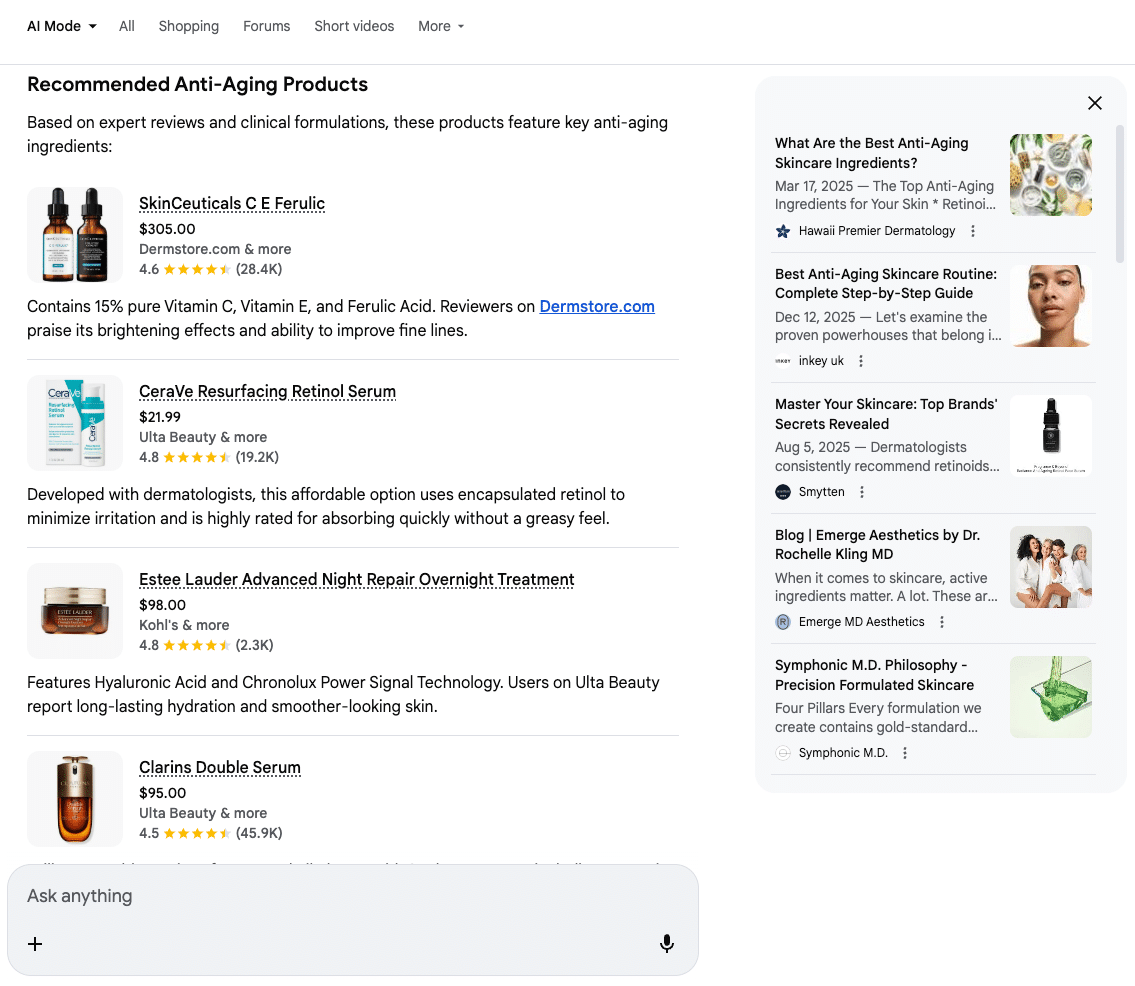
    ```json
{
  "alt": "Recommended anti-aging products list with descriptions and ratings.",
  "caption": "Explore top-rated anti-aging skincare products curated for their efficacy. See expert picks to keep your skin youthful and glowing.",
  "description": "This image presents a recommended list of anti-aging skincare products with detailed descriptions, prices, and ratings from various beauty retailers. Featured items include SkinCeuticals C E Ferulic, CeraVe Resurfacing Retinol Serum, Estee Lauder Advanced Night Repair Overnight Treatment, and Clarins Double Serum. Each product is accompanied by user reviews and star ratings, providing insights into their popularity and effectiveness. Keywords: anti-aging, skincare, product recommendations, beauty reviews."
}
```

    As you and your competitors adapt, you must maintain your competitive edge. In SEO, failing to adapt means losing visibility and influence.

    How to apply the Red Queen principle to your AI SEO strategy

    The evolution of AI search is a continuation of developments over the past decade. With concepts like RankBrain since 2015, familiar SEO tactics remain relevant. This isn’t about a complete overhaul but rather a series of adaptations and improvements.

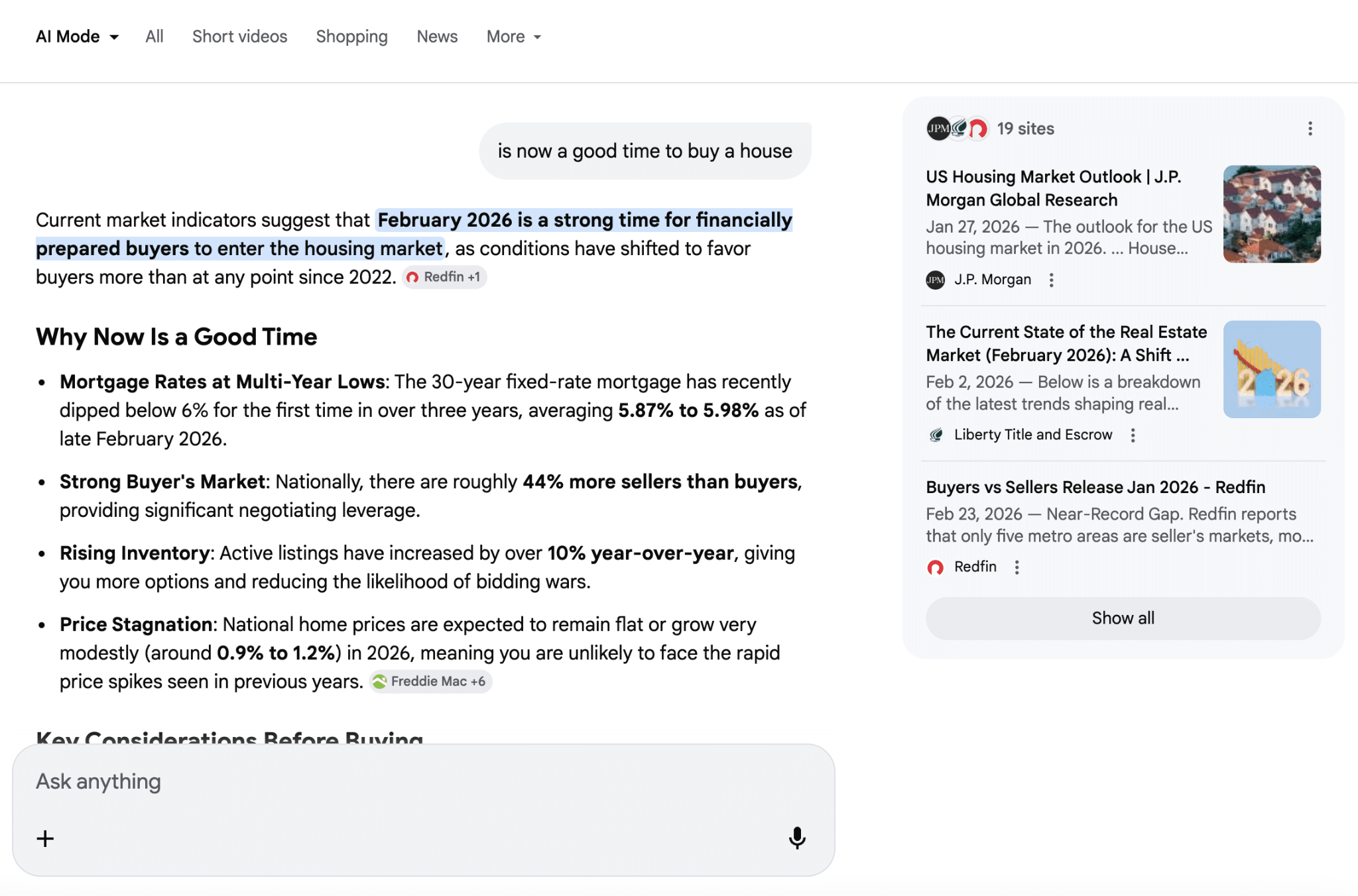
    ```json
{
  "alt": "Screenshot discussing February 2026 as a favorable time for home buyers due to low mortgage rates and rising inventory.",
  "caption": "Considering buying a house? February 2026 is predicted to be ideal for buyers with low mortgage rates, a surplus of sellers, and increased inventory!",
  "description": "This image highlights a favorable housing market forecast for February 2026, emphasizing low 30-year fixed mortgage rates averaging 5.87% to 5.98%. With 44% more sellers than buyers, the market provides strong negotiating leverage. An increase in listings by over 10% year-over-year reduces bidding wars, and stable home prices (0.9% to 1.2% growth) prevent significant spikes. Relevant sources include Redfin and Freddie Mac."
}
```

    Core elements like retrieval-based search engines, content quality, speed, and intent matching are as important as ever. By focusing on these, alongside optimizing for AI retrieval and third-party visibility, you position yourself favorably.

    One effective way I’ve discovered to engage with AI search is by understanding its limitations, particularly their reliance on retrieval-augmented generation (RAG) systems. RAG helps fill the gaps in LLM databases without constant updates, ensuring relevant answers are provided.

    ```json
{
  "alt": "February 2026 snapshot of the U.S. housing market trends and forecasts.",
  "caption": "Explore the latest trends in the U.S. housing market for February 2026, including mortgage rates and buyer-seller dynamics.",
  "description": "This image presents a February 2026 overview of the U.S. housing market. It features articles from the Financial Times, Reuters, and New York Post detailing recent mortgage rate changes, construction trends, and market dynamics. Key highlights include mortgage rates hitting the lowest since 2022 and a notable gap with more home sellers than buyers. This image serves as a guide for potential homebuyers evaluating current market conditions."
}
```

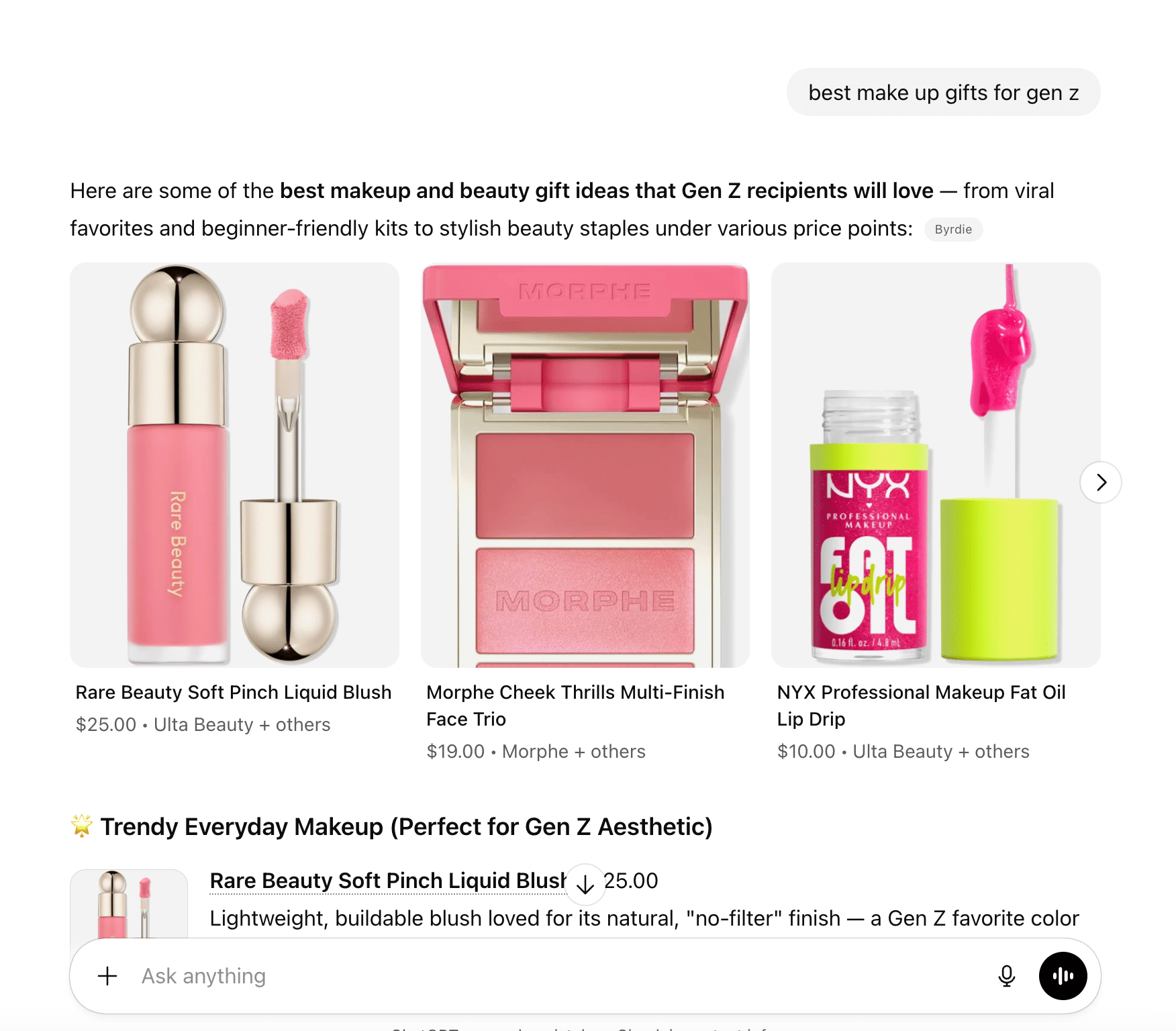
    In practice, this involves seeing how AI tools like Google AI Mode and ChatGPT respond to prompts and identifying where they draw their information. Using this insight, you can ensure your content is part of the external sources AI assists rely upon.

    Understanding how your content interacts with AI engines’ limitations is critical. AI does its own searching and then provides answers, sometimes without showcasing external sources. Therefore, becoming a trusted source for LLMs is the key to SEO in the AI era.

    ```json
{
  "alt": "Makeup products for Gen Z, including Rare Beauty blush, Morphe face trio, and NYX lip oil.",
  "caption": "Discover trending makeup gifts perfect for Gen Z! Featuring Rare Beauty's blush, Morphe's face trio, and NYX's vibrant lip oil.",
  "description": "This image showcases top makeup and beauty gift ideas ideal for Gen Z, featuring three products: Rare Beauty Soft Pinch Liquid Blush ($25.00), Morphe Cheek Thrills Multi-Finish Face Trio ($19.00), and NYX Professional Makeup Fat Oil Lip Drip ($10.00). These products, highlighted for their trendy appeal and versatility, are available at Ulta Beauty and other retailers. The selection emphasizes lightweight, buildable, and vibrant aesthetics that appeal to modern Gen Z preferences."
}
```

    It’s essential to analyze AI answers, understand their behavior, and continuously evaluate their preferences. By feeding these systems with quality data, we can ensure we’re among the go-to trusted sources AI assistants reference.

    The long-term future of SEO relies on human behavior

    Long-term SEO strategies should remain focused on understanding human behavior. This involves pinpointing search intent and analyzing how AI-generated queries align with different user needs and intents.

    ```json
{
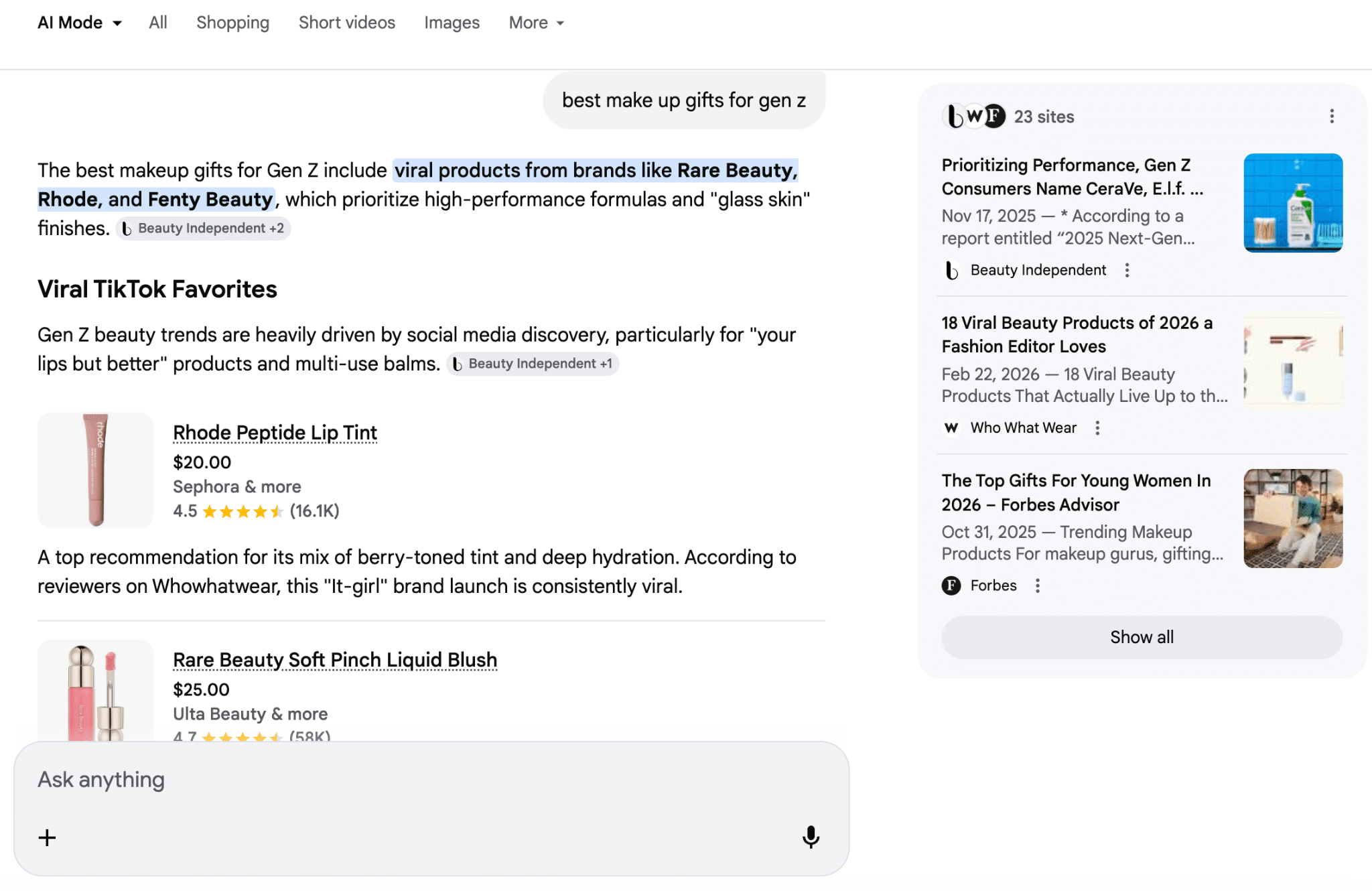
  "alt": "Search results for best makeup gifts for Gen Z, highlighting viral products from Rare Beauty, Rhode, and Fenty Beauty.",
  "caption": "Explore the top makeup gifts for Gen Z! Featuring viral products from Rare Beauty, Rhode, and Fenty Beauty, these selections promise high performance and trendy appeal.",
  "description": "The image displays search results for the best makeup gifts for Gen Z. It highlights popular products like the Rhode Peptide Lip Tint and Rare Beauty Soft Pinch Liquid Blush. Brands such as Rare Beauty, Rhode, and Fenty Beauty are emphasized for their appeal to Gen Z, focusing on high-performance formulas and 'glass skin' effects. The section also mentions TikTok's influence on beauty trends. Keywords: makeup gifts, Gen Z, Rare Beauty, Rhode, Fenty Beauty, TikTok trends."
}
```

    Being successful means considering both traditional search intents and new AI-induced intents to provide valuable content that resonates with user needs. It’s about dynamically adapting approaches based on observed behavior and striving to stay ahead in this ever-evolving field.


    Inspired by this post on Search Engine Land.

    crushpress.ai community screenshot
  • Why AI Falls Short in Crafting Your Brand’s Unique Identity

    Why AI Falls Short in Crafting Your Brand’s Unique Identity

    I’ve always found brand positioning to be an intricate dance of claims, proofs, and strategic framing. While AI can validate claims, it won’t decide on the conclusions that best elevate your business. Let me share how framing transforms proof into brand loyalty.

    In today’s digital world, every brand has its arsenal of claims and underlying proofs scattered across its digital presence. AI engines like ChatGPT and Google’s AI can verify these, but they hold no narrative power to create an engaging story for your brand.

    Often, there’s a disconnect between what your audience desires and what brands or AI understand. The missing link? A powerful frame that converts disjointed data into a compelling brand narrative.

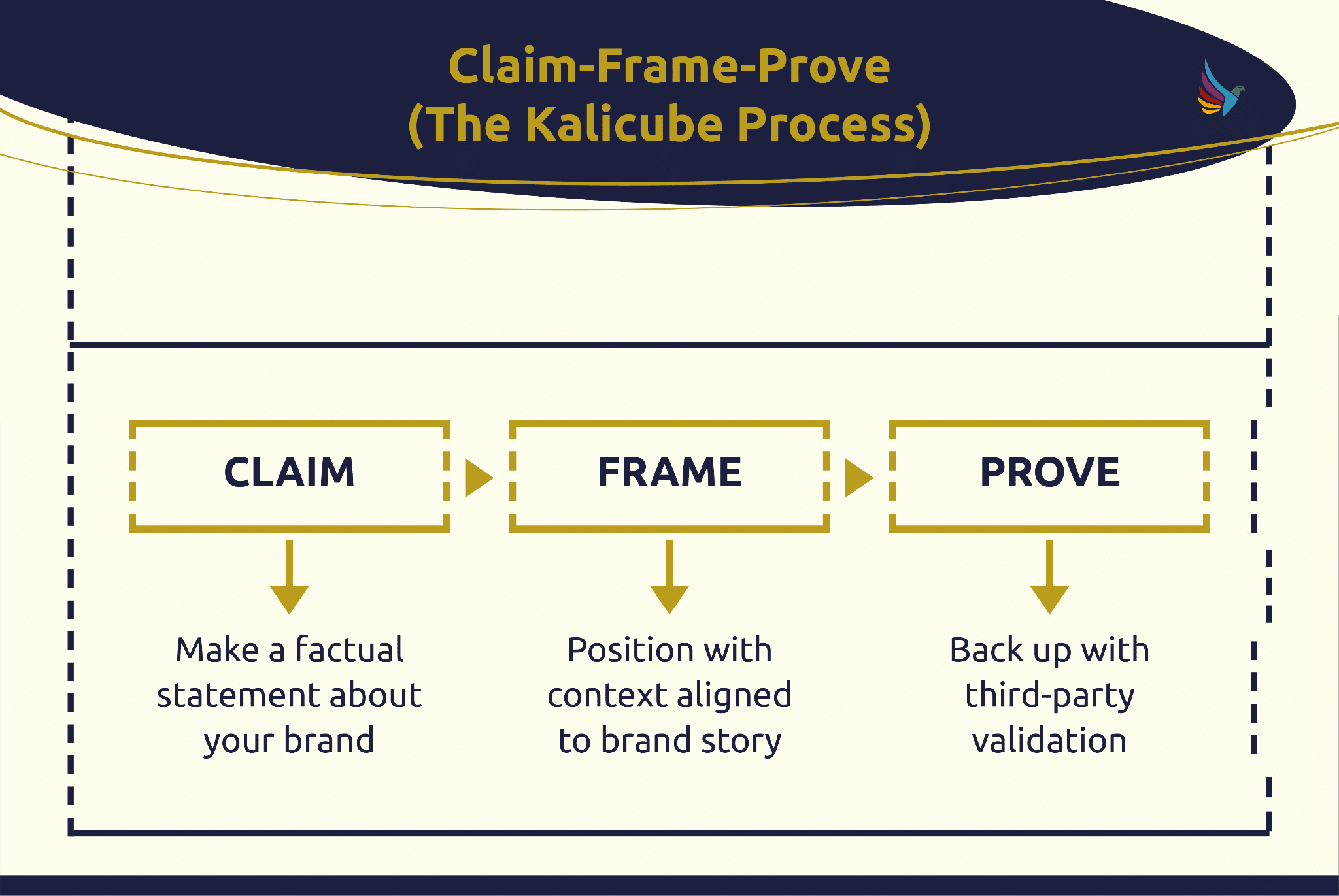
    Here’s where I introduce the claim-frame-prove (CFP) approach. Claims and proofs are mechanical, but framing adds that strategic layer necessary to craft your brand’s narrative.

    Claims and proofs are mechanical tasks AI can handle, but creating a strategic frame is your brand’s unique prerogative.

    Building your brand through CFP means understanding that AI can link known facts but cannot make that creative leap your brand requires. AI connects the dots logically but lacks the ability to reach a commercially beneficial insight.

    ```json
{
  "alt": "Diagram illustrating the Claim-Frame-Prove process by Kalicube, showcasing steps: Claim, Frame, and Prove.",
  "caption": "Understand the Claim-Frame-Prove process by Kalicube: Make a claim, frame it with context, and prove it with third-party validation.",
  "description": "This image showcases the Claim-Frame-Prove process from Kalicube, represented in a flowchart format. It describes three steps: Claim, where you make a factual statement about your brand; Frame, where the context is aligned to your brand story; and Prove, where you back up the statement with third-party validation. This visual tool is designed to help brands strategically position themselves in the market."
}
```

    Consider the alphabet analogy: while C is an apparent commercial reach, J represents a nuanced insight, and Q symbolizes a bold vision your brand can aspire to.

    I’ll illustrate with some personal examples. My work in answer engine optimization demonstrates this journey from mere understanding to unique brand positioning.

    A + B → C

    A: I coined answer engine optimization in 2017. B: I also run a brand engineering firm. AI arrives at the simple, logical conclusion: I’m connected to AEO implementation. While true and functional, it lacks depth.

    A + B → J

    ```json
{
  "alt": "The CapmatchOne logo with a gradient circle and bold text.",
  "caption": "Discover innovation with the CapmatchOne logo, featuring sleek typography and a modern gradient circle.",
  "description": "The CapmatchOne logo features bold, modern typography coupled with a gradient circle, symbolizing connection and innovation. The sleek design conveys a sense of progress and creativity. This image can be used for branding or promotional purposes, appealing to audiences interested in innovative solutions and forward-thinking designs."
}
```

    By pushing further, the narrative evolves. J: I might be the only practitioner with extensive insights from a decade’s worth of operational data.

    This move from A and B to J is vital. It’s about identifying which non-obvious insight fosters brand growth and constructing a logical link from accepted realities to this aspirational leap. That logical bridge is essential for AI to consider it factual, rather than mere self-promotion.

    Why AI Can’t Decide What’s Best for Your Brand

    AI won’t instinctively choose the best narrative for your brand—that responsibility is yours. Even as AI gets more sophisticated, it lacks the commercial insight to select paths that benefit your brand uniquely.

    A creative marketer makes two critical moves: discovers imaginative insights and aligns them strategically with brand goals. Not a feat even the most evolved AI can match, as it lacks the personal stake in this narrative crafting.

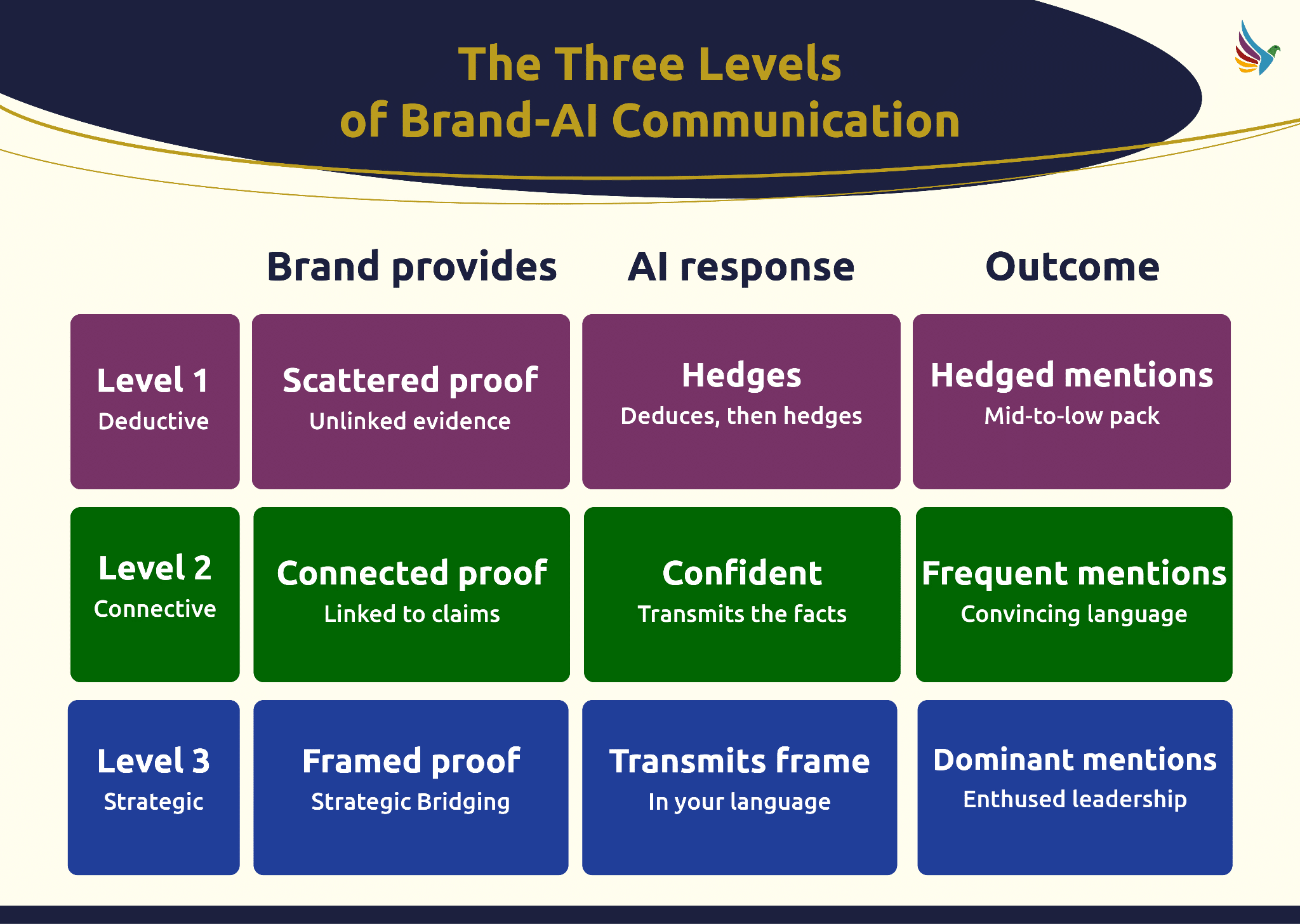
    ```json
{
  "alt": "Three levels of brand-AI communication chart with brand, AI response, and outcome columns.",
  "caption": "Unveil the three dynamic levels of brand-AI communication, where brand proof and AI response align to shape powerful outcomes.",
  "description": "This image illustrates the three levels of brand-AI communication: deductive, connective, and strategic. It features a table with three columns titled 'Brand provides,' 'AI response,' and 'Outcome.' At Level 1, brands offer scattered proof, leading to hedged AI responses and mid-to-low pack mentions. Level 2 involves connected proof, resulting in confident AI responses and frequent mentions. Level 3 utilizes framed proof, facilitating powerful AI transmission and dominant mentions. This chart is a guide for strengthening brand communication at various stages."
}
```

    I use an approach called “empathy for the machine,” which helps brands create content that AI can easily comprehend and relay, rather than leaving connections for AI to interpret independently.

    This method enables a three-tiered communication with AI, evolving from mere proof of claims to frames that the AI can transmit seamlessly to your audience.

    Level 1: Scattered Proof of Claims

    Many brands rest here—proofs exist in separate spaces, disconnected, leaving AI to infer relationships. The reality is that without explicit links, much of this value is lost.

    Without these connections, AI struggles to assert your brand’s credibility, potentially leaving valuable insights untapped.

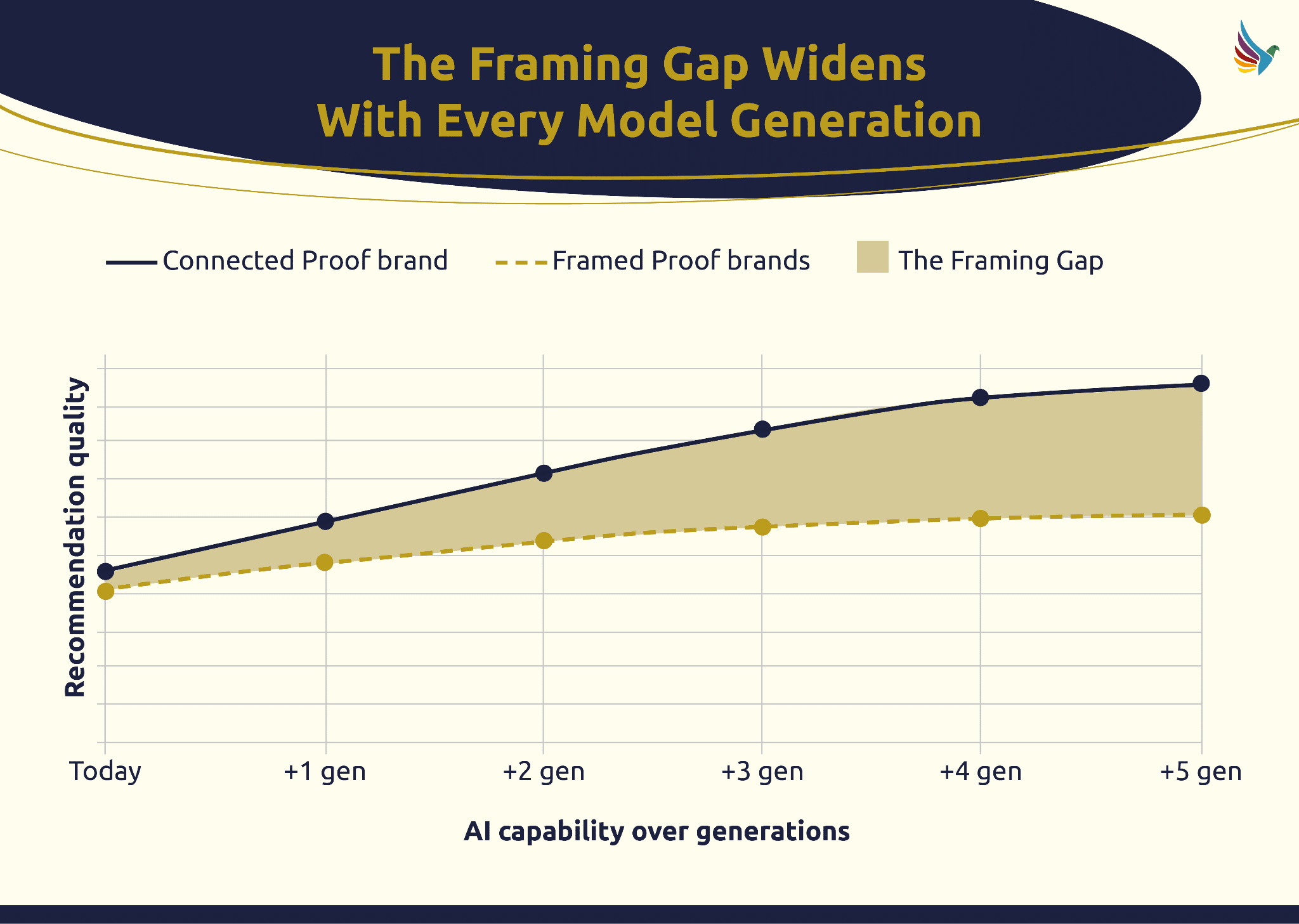
    ```json
{
  "alt": "Graph showing the increasing gap in recommendation quality between Connected Proof and Framed Proof brands over five AI generations.",
  "caption": "Discover how the Framing Gap widens with each AI generation. This graph illustrates the growing disparity in recommendation quality between Connected Proof and Framed Proof brands.",
  "description": "This image features a line graph titled 'The Framing Gap Widens With Every Model Generation,' comparing recommendation quality between Connected Proof brand and Framed Proof brands over five AI generations. The solid line represents Connected Proof, while a dashed line shows Framed Proof. The shaded area between these lines highlights the increasing Framing Gap. The x-axis marks AI capability over generations from 'Today' to '+5 gen,' and the y-axis indicates recommendation quality. Keywords: Framing Gap, AI generation, recommendation quality, Connected Proof, Framed Proof."
}
```

    Level 2: Connected Proof of Claims

    At this stage, connections via copy, hyperlinks, and schema are established, significantly reducing the AI’s workload and increasing your brand’s credibility.

    Proper connections allow AI to confidently present your brand’s claims as facts, significantly enhancing its visibility and competitive positioning.

    Level 3: Framed Proof of Claims

    This is where strategic framing really takes shape—bridging claims, proofs, and strategic insights to position your brand distinctly in the market.

    With well-framed claims, AI doesn’t just confirm but actively advocates for your brand’s superiority, making your voice the narrative AI conveys to the world.


    Inspired by this post on Search Engine Land.


    crushpress.ai community screenshot
  • Streamline Your SEO Workflow: 8 Tasks You Should Automate Now

    Streamline Your SEO Workflow: 8 Tasks You Should Automate Now

    I often find myself overwhelmed by repetitive SEO tasks that eat up valuable time. That’s why I’ve started identifying tasks that can be automated, allowing me to concentrate on strategy, quality assurance, and crucial decision-making.

    While tasks like note-taking and setting team reminders are obviously automatable, I’ve discovered that content audits, page outlines, and keyword research can also benefit from automation.

    I recommend beginning with basic strategies that help save time on daily repetitive work before diving into more advanced AI tools for automation. It’s essential to conduct a final check personally, as relying solely on AI can sometimes lead to less-than-perfect outcomes.

    One way I assess which tasks to automate is by asking myself: Would I assign this task to an intern? Tasks suitable for new employees are often ideal for automation. Whether it’s research or drafting, I let AI handle 70% of it, then I fine-tune the remaining 30% myself.

    Some tasks that I’ve found can be automated include data analysis, ensuring best practices are used in updates, creating detailed SEO reports, identifying content gaps, scaling SEO-optimized templates, building editorial calendars, and documenting prompts and standards.

    To discover more automation opportunities, I audit existing workflows, review onboarding processes, gather team input on disliked tasks, and explore AI capabilities.

    However, automation won’t fix every issue. Core challenges like broken systems, incomplete assets, and a lack of resources still need human intervention.

    For instance, I recently automated my team’s content calendar. Using Excel formulas, I quickly identify which content needs updating. By integrating a performance audit with custom AI tools, I can streamline these updates even further.

    Similarly, for keyword research, I employ AI to sift through data and generate relevant keywords, saving me valuable time.

    ```json
{
  "alt": "The CapmatchOne logo with a gradient circle and bold text.",
  "caption": "Discover innovation with the CapmatchOne logo, featuring sleek typography and a modern gradient circle.",
  "description": "The CapmatchOne logo features bold, modern typography coupled with a gradient circle, symbolizing connection and innovation. The sleek design conveys a sense of progress and creativity. This image can be used for branding or promotional purposes, appealing to audiences interested in innovative solutions and forward-thinking designs."
}
```

    For internal linking, tools like Ahrefs can automate the identification of pages that require more links, enhancing site crawling efficiency without manual labor.

    By automating outlines and briefs, I ensure consistency and quality across my team’s work, streamlining communication and reducing redundant effort.

    On the brand compliance front, custom AI tools help me catch simple errors in high-risk drafts, ensuring they adhere to brand standards before final review.

    Manual data validation can be a painstaking process, but with automation, I’m able to swiftly identify and address anomalies in reports, enhancing accuracy.

    When it comes to metadata and schema, automating these tasks minimizes errors and ensures that content is optimized for search engines.

    Finally, for formatting and shortcoding, I use Excel functions to concatenate code, vastly speeding up what used to be a time-intensive process.

    To make automation truly beneficial, it’s critical it complements, rather than complicates, the workflow. Using custom AI solutions allows my team to focus on more impactful, strategic tasks.


    Inspired by this post on Search Engine Land.


    crushpress.ai community screenshot
  • How Agile Competitors Outshine with AI Search Visibility

    How Agile Competitors Outshine with AI Search Visibility

    I’ve often faced the challenge of watching enormous digital budgets return less and less, while more nimble competitors seem to pull ahead effortlessly. It’s frustrating knowing the potential is there, yet being unable to act swiftly enough.

    Examining how AI Overviews and responses from tools like ChatGPT and Claude cite sources, I’ve noticed an unsettling trend: smaller, more agile companies are capturing the most valuable, bottom-of-funnel commercial queries.

    This reality is a call to action, challenging the notion that simply having a well-known brand name can protect my market share. Agility is increasingly becoming more important than relying solely on brand heritage.

    To stay relevant, AI models require quick, machine-readable data to form a credible consensus. The bureaucracy I’ve encountered, which I call the “bureaucracy tax,” often hinders established companies like ours from deploying such knowledge quickly.

    Unintentionally, as my business expanded, the structures built for stability began to stifle our agility.

    In my experience, when deployment lags, it’s often marketing teams pointing fingers at legal, risk, or compliance departments. Yet, in sectors where regulation is strict, compliance is a necessity.

    The operational shortcoming isn’t with the legal department but with what we’re providing them. Winning in the AI search space requires that we separate factual data from marketing narratives.

    The truth is, legal teams debate adjectives—not APIs. They take months to scrutinize creative marketing copy. Conversely, they can review static data tables or product specifications in days.

    I recall how a global payments company struggled with this. A proposed 2,000-word marketing article was a compliance nightmare. However, when the same data was presented as a structured table, approval came within 24 hours.

    When a CFO asks Perplexity to “compare enterprise payment gateway fees,” it skips over blocked competitor blogs and cites your factual table as the authoritative source.

    Dig deeper: Why most SEO failures are organizational, not technical

    How Much Does the Bureaucracy Tax Actually Cost?

    From my perspective, the bureaucracy tax is a tangible and damaging effect on profit and loss statements. For a new initiative, the deployment cycle can take up to 180 days from idea to execution, hampering responsiveness to market shifts.

    Imagine being a global shipping company. While awaiting IT staging, your competitors publish a straightforward “Current freight delay and tariff matrix,” seizing AI consensus and lucrative leads before you can react.

    ```json
{
  "alt": "The CapmatchOne logo with a gradient circle and bold text.",
  "caption": "Discover innovation with the CapmatchOne logo, featuring sleek typography and a modern gradient circle.",
  "description": "The CapmatchOne logo features bold, modern typography coupled with a gradient circle, symbolizing connection and innovation. The sleek design conveys a sense of progress and creativity. This image can be used for branding or promotional purposes, appealing to audiences interested in innovative solutions and forward-thinking designs."
}
```

    An analysis of AI citations across platforms revealed that disruptors deploying data within 14 days achieve a significantly higher share of AI voice compared to legacy companies that take much longer. The cost of delay is persistent, demanding both time and financial resources to recapture lost ground.

    Dig deeper: How to build an enterprise SEO strategy that gets buy-in

    The Technical Bypass: The Schema-Locked GEO Template

    I’ve come to understand that the loss in this race is partly due to outdated technology. Many of us are stuck on heavyweight, legacy CMS platforms.

    Generative Engine Optimization (GEO) demands a quick rollout of JSON-LD schema and data tables. If an IT ticket is required merely to update author info, the advantage is lost to faster disruptors.

    The remedy isn’t to circumvent systems insecurely. We must advocate for schema-locked GEO templates. This requires IT to create a non-modifiable template designed specifically for data, ensuring rapid deployment without risking architecture.

    From Compliance to Consideration in Record Time

    Workflows must balance keeping risk officers satisfied while drastically speeding up market delivery. These strategic frameworks are critical to protecting your AI consensus.

    If legal bottlenecks your progress, shift your strategy to use pre-approved, factual tables. If developing resources are scarce, implement a “schema-locked GEO template.” If your analytics indicate stability but pipeline velocity drops, audit your LLM visibility immediately.

    Agility is the New Authority

    It’s clear to me that digital acquisition rules have shifted. Winning isn’t just about budget size anymore; it’s about being the fastest to establish a machine-readable agreement.

    Legacy systems and poorly aligned compliance procedures can’t continue to define our market share. The bureaucracy tax siphons resources needlessly, hurting our bottom line.

    I urge you to audit your deployment processes promptly. Treat GEO as a high-speed data operation, not just a marketing campaign. Remove the barriers, and empower your teams to be the definitive resource consumers and machines turn to.


    Inspired by this post on Search Engine Land.

    crushpress.ai community screenshot
  • Harness the Digital PR Strategy: Rinse, Reuse, Repeat!

    Harness the Digital PR Strategy: Rinse, Reuse, Repeat!

    I’ve realized that journalists are inundated with generic AI pitches. So, how do we stand out and actually land the coverage we need? It’s all about reusing winning structures for our outreach campaigns.

    Picture this: Every digital PR team has experienced the scenario where we gather around new data, unsure of how to pitch it. Someone eventually sends out a pitch just in time, and thankfully, it lands in a prominent publication. We celebrate the victory, but often, we overlook the hidden treasure right in front of us—our winning pitch.

    We tend to forget that these pitches are not just one-off successes. They are templates that we can adapt for future campaigns. Whether it’s a data study, product launch, or an expert quote, we can replicate the effective elements using AI, rather than starting from scratch.

    Statistics show us that almost half of journalists receive six or more pitches daily, yet they rarely respond because many pitches lack relevance. With AI, pitch volumes are increasing, but so is the mediocrity. The key is not to generate more pitches but to refine what we know works.

    ```json
{
  "alt": "The CapmatchOne logo with a gradient circle and bold text.",
  "caption": "Discover innovation with the CapmatchOne logo, featuring sleek typography and a modern gradient circle.",
  "description": "The CapmatchOne logo features bold, modern typography coupled with a gradient circle, symbolizing connection and innovation. The sleek design conveys a sense of progress and creativity. This image can be used for branding or promotional purposes, appealing to audiences interested in innovative solutions and forward-thinking designs."
}
```

    Let me introduce you to the ‘DPR duplication method.’ It’s straightforward: rinse, reuse, and repeat. Take a successful pitch, analyze its winning structure, and use AI to model this structure for future campaigns.

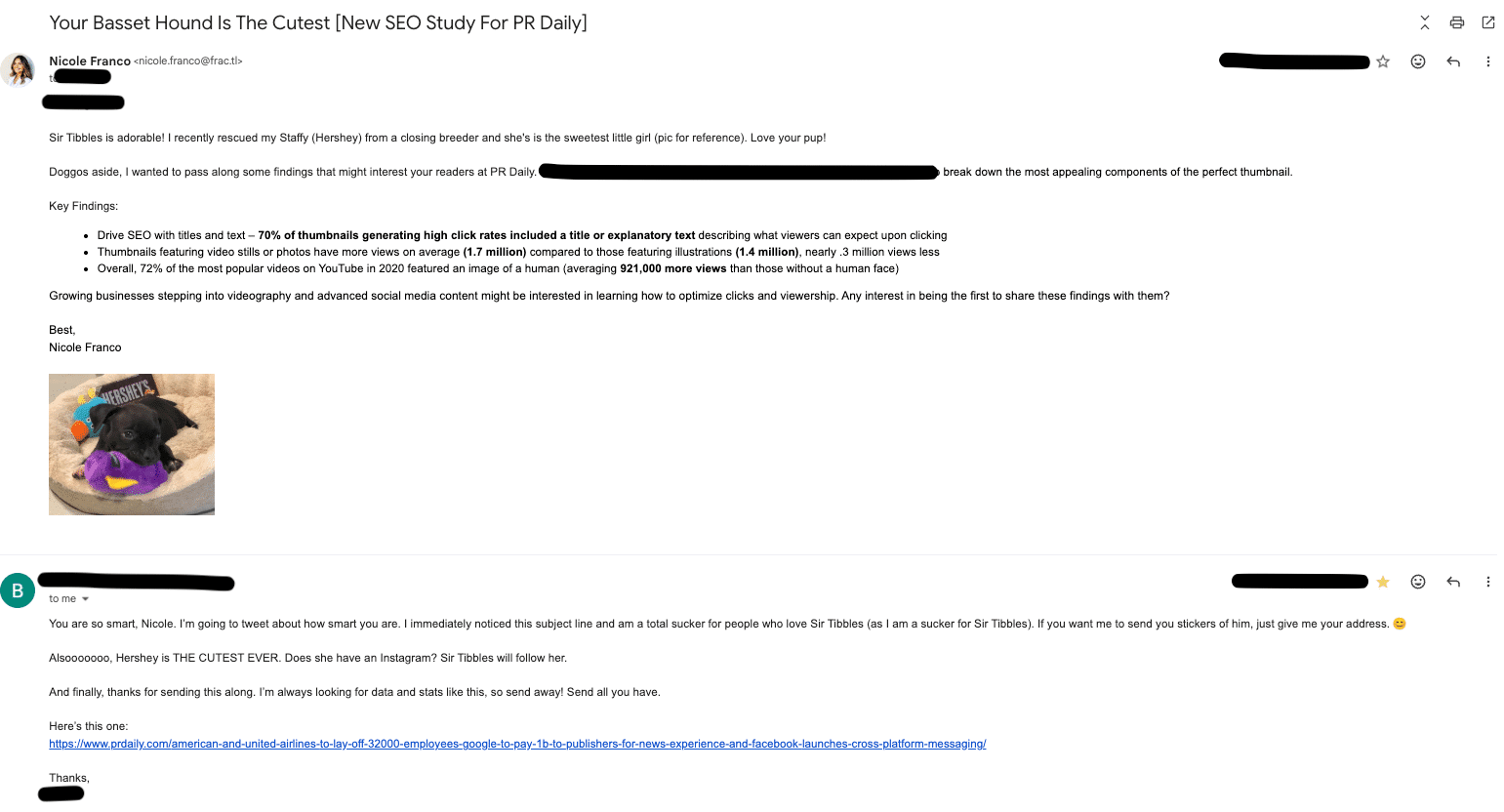
    One of my favorite pitches was sent to an editor at PR Daily. It started with a personal touch referencing her dog, and smoothly transitioned into a compelling data study. It was a hit, earning a same-day response. That’s what makes the method so powerful—it works across various pitch types and audiences.

    The anatomy of a winning pitch is fascinating. It starts with a subject line that feels personal, an opening hook to build rapport, sequential stats that tell a story, and a CTA focused on the journalist’s readers. Each component can be replicated to maintain our uniqueness in the industry.

    ```json
{
  "alt": "Email exchange discussing a new SEO study with an image of a black dog named Hershey holding a purple toy.",
  "caption": "This email thread captures a light-hearted exchange about a new SEO study, complete with a photo of an adorable dog named Hershey, who steals the spotlight.",
  "description": "The image shows an email exchange regarding an SEO study for PR Daily. The email, sent by Nicole Franco, highlights findings about video thumbnails and SEO. Also featured is a picture of a black dog named Hershey with a purple toy, adding a personal touch to the communication. The emails discuss strategies, express admiration for the dog, and reference additional articles for consideration. Hershey's presence adds warmth and engagement to the professional discourse."
}
```

    Why invent something new when you can evolve from what’s already proven successful? By duplicating the structure of our best work, we maintain our voice and relationship-building, ensuring pitches are relevant and engaging.

    To get started, revisit your last successful pitch, dissect its components, and prompt AI to duplicate each one for new campaigns. Remember, it’s not just about repeating—it’s about enhancing and refining. Rinse, reuse, repeat.


    Inspired by this post on Search Engine Land.


    crushpress.ai community screenshot
  • Revitalize Your Homepage for SEO Success with AI Insights

    Revitalize Your Homepage for SEO Success with AI Insights

    When I started my journey on the web, creating websites was pretty straightforward. We crafted sites like “filing cabinets,” centered around a grand entry known as the homepage. This was the gateway through which visitors would navigate to discover the information they were seeking.

    With the advent of SEO, everything took a turn. Each page evolved into a potential entry point, allowing visitors to land directly on the page most relevant to their needs.

    But today, as AI tools like Gemini and ChatGPT become prevalent, the dynamics are shifting once more. These tools are transforming user behaviors, often bringing them back to our homepages for their searches.

    Therefore, the homepage is regaining its significance as the cornerstone of SEO. It’s crucial to revisit robust information architecture practices to effectively capture and convert this newfound traffic.

    In the early 2000s, as search engines became the main source of site traffic, we had to adapt quickly, overlaying SEO strategies on our knowledge of web architecture. This evolution changed the navigation path, leading users directly to inner pages or blog posts and then routing them back to our desired products or services.

    While the homepage remained important, it shifted focus to branding and general keywords rather than trying to cover every possible detail. We concentrated on specific, high-converting long-tail content.

    Even so, as AI redefines the landscape, the pendulum swings back, reminding us of the value our homepage brings.

    AI tools now handle much of the research and summarization, redirecting users to our branded searches and homepages. However, without insights into these users, it becomes paramount to have a homepage ready to guide them effectively, or risk losing them to competitors.

    Past lessons steer us back to tackling these challenges head-on.

    Traditionally, every page served as a potential landing page, each designed to direct visitors along a purchasing funnel – from informational content to case studies.

    Yet, with AI providing immediate answers, the traditional click-through rate for deeper informational content is declining. Users skip straight to branded searches once convinced of our brand’s authority, arriving on our homepage ready for the next step, albeit with less direct data on their preferences and needs.

    We must resurrect our approach to information architecture, highlighting logical grouping, structural context, and a strong user path.

    Logical grouping means organizing content into distinct categories that are easy to navigate, avoiding convoluted labels.

    Structural context ensures AI tools recognize our content as authoritative by maintaining a comprehensive framework across SEO, PPC, and AI avenues.

    The 3-click rule — ensuring users find any information within three clicks — is a vital performance indicator, one AI and users appreciate alike.

    For successful AI-driven user engagement, we must balance our site’s structure for both human and AI interaction, ensuring smooth navigation and intuitive content access.

    The ALCHEMY framework provides a strategic path to designing a site that meets the needs of both audiences, starting with audience research and journey mapping.


    Inspired by this post on Search Engine Land.

    crushpress.ai community screenshot