Tag: SEO Strategies

  • Unleash the Power of TV Ads: Drive Search Demand Effectively

    Unleash the Power of TV Ads: Drive Search Demand Effectively

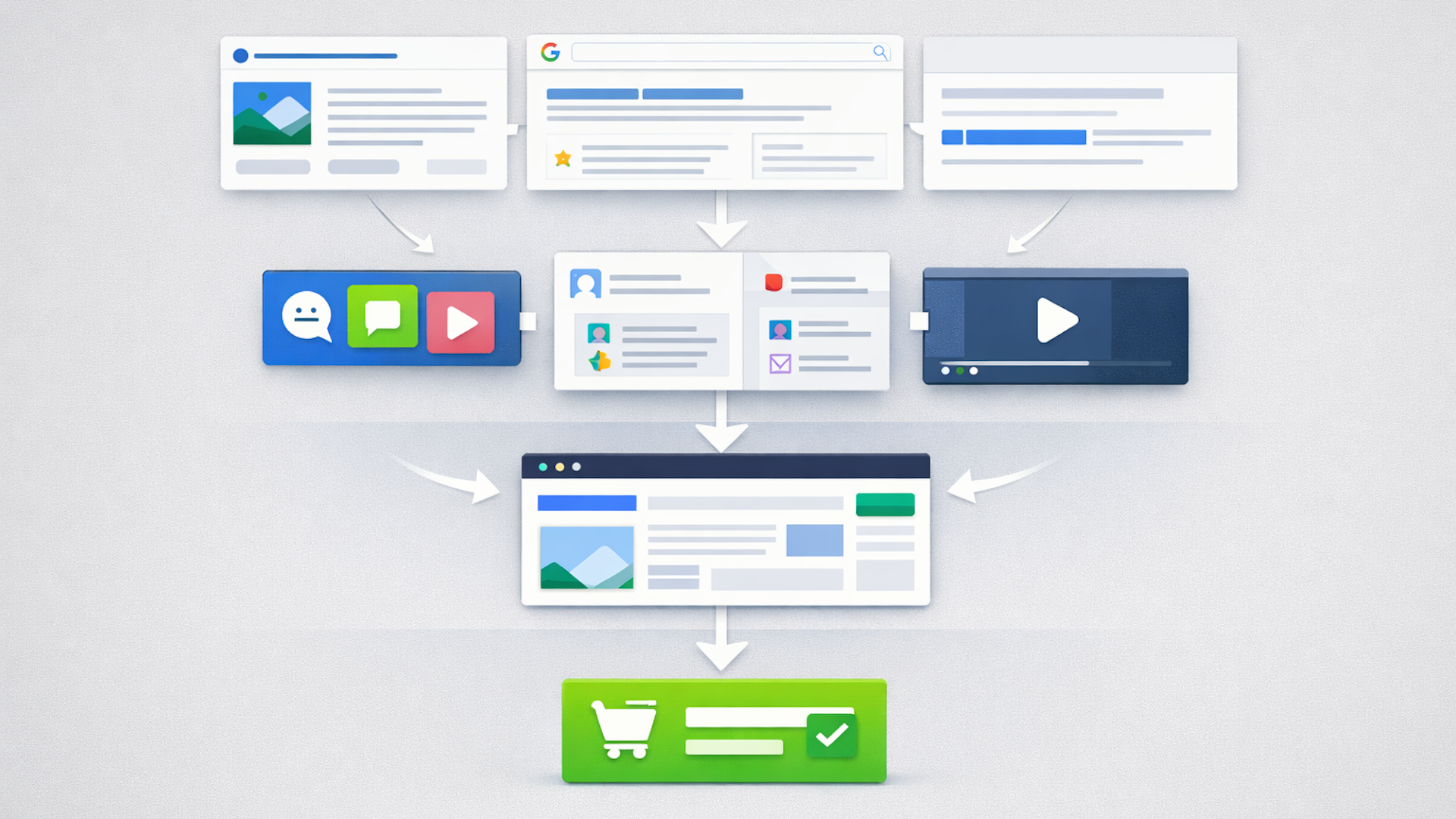
    I recently came across a fascinating insight on how TV ads don’t just create awareness, they actually spark searches. It made me realize just how crucial it is to be ready to capture this surge in interest effectively.

    Every time a high-impact TV campaign airs, viewers like us are likely to head straight to search engines like Google and YouTube to learn more about the products or brands featured. The real challenge is not in generating that interest but in being prepared to capture it when it happens.

    A great example of this is Fox Sports’ recent World Cup campaign. It highlights why SEO and PPC planning need to start way before an ad goes live to ensure we’re ready to meet the demand.

    A World Cup Ad That Created More Than Just Awareness

    DAIVID’s study ranked the most emotionally engaging World Cup ads, with Fox Sports’ “Miracle” leading the pack. This ad didn’t just create awareness; it generated a significant emotional response, prompting viewers to search for more information.

    When “Miracle” aired, it wasn’t just an advertising victory; it was a roadmap of demand generation. Fox’s search teams needed to be ready to handle the influx of interest surrounding their branded terms well before the World Cup even began.

    Throughout the ad, viewers are taken through an inspiring journey of Team USA winning the World Cup, and this prompted us to engage with various search queries like “U.S. World Cup 2026” and “Christian Pulisic.” It was amazing to see how emotional storytelling in advertising can drive such significant search activity.

    Why This Matters for Search Marketing

    Imagine the Fox ad airing; immediately, millions of us are reaching for our phones, searching for details on the U.S. World Cup team or the ad itself. The key takeaway here is the need for search campaigns to be live, optimized, and ready to meet this demand instantly.

    One study highlighted that 75% of search activity related to a TV ad happens in the first two minutes. If our search strategy isn’t aligned and prepared beforehand, we risk losing significant opportunities to competitors.

    Prepare for Four Types of Queries TV Ads Generate

    The “Miracle” ad teaches us about the various search queries it generates, categorized into branded, campaign, asset, and category queries. Each type needs its own strategic approach, and preparing for them is crucial to capturing the interest they’re meant to drive.

    Branded Queries

    After an ad airs, simple branded searches like “Fox Sports” are the most common. It’s essential to ensure we’re capturing all potential impressions by boosting budgets accordingly.

    Campaign Queries

    Campaign-specific searches arise directly from the ad content, like “Miracle ad.” Building landing pages and keyword strategies around these queries before airing can capture significant interest.

    Asset Queries

    Queries related to elements like songs or celebrities in the ad, such as “song in Fox World Cup ad,” are common. Preemptively planning for these queries ensures we don’t miss out on highly engaged and curious viewers.

    Category Queries

    Viewers might search for solutions related to the ad’s theme, like “how to watch World Cup 2026.” Addressing these queries is vital to prevent losing traffic to competitors.

    Strengthen Your Search Strategy and Creative Collaboration

    As search marketers, we should be present during the creation process to identify searchable elements, align landing pages with ad content, and prepare teams for potential viewer questions.

    A well-planned search strategy can significantly enhance a viewer’s journey from curiosity to conversion, ensuring that our hard-earned advertising dollars are not wasted.


    Inspired by this post on Search Engine Land.


    crushpress.ai community screenshot
  • Mastering SEO: Strategies for Sustained Growth in 2026

    Mastering SEO: Strategies for Sustained Growth in 2026

    Keyword research and on-page optimization still matter, but authority, distribution, and brand visibility now drive more organic growth.

    Over the past 18 months, I’ve watched a shift in what drives SEO success. What worked in 2022 isn’t as effective today, yet many are stuck in the old ways.

    One major realization emerged: Teams feel busy but ineffective because the old model doesn’t encompass all that’s needed to succeed now.

    This isn’t about AI replacing SEO; it’s about evolving practices to keep pace with industry changes.

    The list of SEO priorities has shifted, with an old emphasis on standalone keyword research no longer holding its former value.

    High-volume content production and simple on-page optimization aren’t enough. They’re the foundation, but not the entire building.

    Today’s success builds on the basics but requires efforts in entity work, original research, and distribution.

    ```json
{
  "alt": "The CapmatchOne logo with a gradient circle and bold text.",
  "caption": "Discover innovation with the CapmatchOne logo, featuring sleek typography and a modern gradient circle.",
  "description": "The CapmatchOne logo features bold, modern typography coupled with a gradient circle, symbolizing connection and innovation. The sleek design conveys a sense of progress and creativity. This image can be used for branding or promotional purposes, appealing to audiences interested in innovative solutions and forward-thinking designs."
}
```

    To make headway, we need to prioritize brand building, nurturing its presence across platforms.

    For growth, focusing on unique research and proprietary data can set you apart.

    Effective distribution and PR work are necessary for visibility, no longer relying on the content to naturally earn links.

    In-house SEO leaders should consider reshaping teams to match the evolving needs.

    Agency-side practitioners must adjust their offerings to stay relevant, emphasizing strategic activities over standardized deliverables.

    The future of SEO still has robust potential for those willing to adapt and innovate.


    Inspired by this post on Search Engine Land.


    crushpress.ai community screenshot
  • 5 Essential AI Search Insights Every Marketer Should Know

    5 Essential AI Search Insights Every Marketer Should Know

    I recently dove into five fascinating studies that are truly changing the way we as marketing leaders approach AI Search. These insights are not only reshaping our strategies but also pushing us to think beyond traditional SEO methods.

    Each study offers a unique perspective on how AI can enhance search capabilities, enabling us to connect with our audience more effectively. It’s exciting to explore how these powerful tools can transform our marketing efforts.

    By understanding these groundbreaking research findings, I feel more empowered to make informed decisions that align with the evolving digital landscape. The integration of AI is inevitable, and embracing it will help us stay ahead of the curve.

    The challenge is clear: we must integrate these insights seamlessly into our marketing strategies. Doing so will enhance our ability to deliver personalized and impactful content to our audience, fostering deeper engagement and driving success.

    I’m eager to see how these studies will continue to influence and define marketing practices, leading to more innovative approaches and ultimately, better results for our brands.


    Inspired by this post on Try Profound Blog.


    crushpress.ai community screenshot
  • Harnessing Psychology: Create Persuasive Content That Converts

    Harnessing Psychology: Create Persuasive Content That Converts

    How persuasive content taps into human psychology

    I’ve noticed that TikTok Shop creators excel by tapping into the psychology that drives people to act. Let me share how we can leverage these persuasive principles in our writing.

    SEO content is often designed to rank, but conversion can sometimes fall by the wayside when we’re caught up in the technical checklist. In light of AI Overviews and falling click-through rates making visibility more challenging, I believe it’s time to focus on whether our content encourages action once someone engages with it.

    Take a cue from TikTok Shop creators—they don’t just thrive because of large followings. They master persuasion by understanding consumer psychology and scaling actions. This insight can transform how we approach our written content.

    The formula that successful TikTok Shop creators follow isn’t random. It relies on consumer psychology principles, not on celebrity status or follower count. I’ve realized that 99% of my own video views come from non-followers. Therefore, it’s the understanding of the psychology behind actions that matters.

    ```json
{
  "alt": "The CapmatchOne logo with a gradient circle and bold text.",
  "caption": "Discover innovation with the CapmatchOne logo, featuring sleek typography and a modern gradient circle.",
  "description": "The CapmatchOne logo features bold, modern typography coupled with a gradient circle, symbolizing connection and innovation. The sleek design conveys a sense of progress and creativity. This image can be used for branding or promotional purposes, appealing to audiences interested in innovative solutions and forward-thinking designs."
}
```

    By focusing on visual hooks, psychological triggers, storytelling, and relentless experimentation, we can apply these elements to written content to drive similar results.

    People often buy based on emotions, justifying their decisions rationally later. It’s crucial to connect with their motivations rather than just presenting facts.

    Persuasive content succeeds because it targets human desires like protecting loved ones, enjoying life, feeling safe, and seeking social approval.

    Understanding these motivations allows me to craft content that resonates more deeply with my audience, ultimately leading to better engagement and conversion rates.


    Inspired by this post on Search Engine Land.


    crushpress.ai community screenshot
  • Navigating AI Visibility: Macro Strategies for Success

    Navigating AI Visibility: Macro Strategies for Success

    AI visibility has transformed into a macro measurement challenge, and I’m here to guide you through building a foolproof framework to track recommendation trends effectively.

    Through my experiences, I’ve learned that the funnel query pathway (FQP) is the ideal framework for measuring AI visibility. By assessing the FQP quarterly, I can derive actionable strategic insights.

    I’ve coined this transformation the micro-macro shift. Traditional micro (ranking) metrics from search engines are no longer sufficient to measure AI visibility due to the opaque nature of AI engines.

    ```json
{
  "alt": "Diagram illustrating Brand-User-Algorithm Opacity with three opacities and a fourth claim level opacity in a detailed layout.",
  "caption": "Understanding the opaque layers between brand, user, and algorithm with an additional claim-level factor, highlighting the hidden complexities in digital interactions.",
  "description": "This image presents a diagram titled 'Brand-User-Algorithm Opacity,' detailing three types of opacity between brands, users, and algorithms, plus a fourth at the claim level. The three opacities are: 1. Brand to Engine, 2. User to Self, and 3. Engine to Self, each with its own unique challenges in understanding and communication. The fourth, 'Brand to Claim-level abstentions,' highlights the lack of signals from algorithms when contradictions arise. The layout uses a grid format with text boxes and arrows for clarity, emphasizing the intricacies of modern digital ecosystems."
}
```

    In the AI-driven world, we must embrace a macro measurement approach, akin to economics evolving new measurement disciplines for broader economic systems.

    The AI landscape operates under a brand-user-algorithm (BUA) opacity, where four layers veil every AI-era brand recommendation process.

    ```json
{
  "alt": "The CapmatchOne logo with a gradient circle and bold text.",
  "caption": "Discover innovation with the CapmatchOne logo, featuring sleek typography and a modern gradient circle.",
  "description": "The CapmatchOne logo features bold, modern typography coupled with a gradient circle, symbolizing connection and innovation. The sleek design conveys a sense of progress and creativity. This image can be used for branding or promotional purposes, appealing to audiences interested in innovative solutions and forward-thinking designs."
}
```

    The multi-layered opacity impacts everything from brand perception to conversion rates, and understanding this opacity is crucial.

    Utilizing micro-strategies in an AI environment is futile. Instead, my focus shifts to macro-level insights, acknowledging that consistency over time is key, not momentary precision.

    ```json
{
  "alt": "Comparison of search, assistive, and agentic technologies highlighting their coexistence and different needs.",
  "caption": "Explore how search, assistive, and agentic engines coexist to fulfill distinct needs, from making decisions to providing recommendations and acting on behalf.",
  "description": "This graphic illustrates the coexistence of three types of engines: search (SEO), assistive (AIEO), and agentic (AAO). Each fulfills distinct needs—search engines empower decision-making, assistive engines provide recommendations, and agentic engines act independently. Presented at Google Marketing Live 2026 by Jason Barnard of Kalicube, it emphasizes the varied roles and future of these technologies in digital marketing."
}
```

    In 2026, search remains micro, while assistive and agent modes adopt macro approaches. The right measurement strategy for your business hinges on understanding each mode’s environment and data.

    Search enables user control with clear metrics. Having been trained in this mode, I recommend maintaining micro strategies for search-based operations, supplemented by macro methodologies.

    ```json
{
  "alt": "Infographic on optimizing for value, not volume, with statistics from Similarweb on AI-driven traffic.",
  "caption": "Unlock the power of AI-driven traffic with a focus on value, not volume. Insights reveal better conversion rates with fewer clicks.",
  "description": "This infographic highlights the principle of optimizing for value over volume in digital marketing. It includes statistics from Similarweb for 2026, showing AI-referred traffic results in longer sessions and higher conversion rates compared to Google Search. Key details suggest focusing on quality sessions and conversion rates. Use AI insights for effective marketing strategies."
}
```

    Assistive recommendations come from engines like ChatGPT. Unfortunately, I can’t see the decision data, making micro assessments impossible and macro the only viable option.

    Agents autonomously make purchases, providing a clear but limited view of their decision-making. The conversion insight remains macro, even if initiation is observable.

    ```json
{
  "alt": "Infographic illustrating Brand-User-Algorithm Opacity with four opacities between parties, highlighting communication gaps.",
  "caption": "Exploring the hidden complexities in brand, user, and algorithm interactions, this infographic unveils the layers of opacity and communication breakdowns.",
  "description": "This infographic titled 'Brand-User-Algorithm Opacity' outlines communication gaps in digital interactions. It highlights three opacities: Brand to Engine, User to Self, and Engine to Self, each describing challenges in understanding and communication. A fourth opacity at the claim level is also presented, emphasizing issues with algorithmic decision-making and brand awareness. The visual uses simple text boxes with dashed outlines to represent these complex ideas, aiming to shed light on the unseen issues in modern digital ecosystems. Keywords: Brand, User, Algorithm, Opacity, Communication."
}
```

    Given buyers’ ever-changing reliance on different surfaces, adopting a macro approach remains inevitable, ensuring I stay adaptable to any environment they opt into.

    As I shift forward with macro metrics, measuring becomes more about trends. Tracking consistent methodologies over eight quarters offers reliable strategic clarity.

    In the busy world of AI decision-making, patience and consistency are key to staying ahead. I prioritize stable methodologies to gain competitive insights over time.


    Inspired by this post on Search Engine Land.


    crushpress.ai community screenshot
  • Unlock SEO Success: The Essential Guide to Enterprise Changelogs

    Unlock SEO Success: The Essential Guide to Enterprise Changelogs

    I’m realizing more and more how crucial it is for enterprise SEO teams to track website changes meticulously. Without visible updates, we might be unaware of risky changes until they’ve negatively impacted our traffic and revenue. This is where changelogs become invaluable.

    Working within large enterprise websites, I collaborate with various stakeholders including SEO teams, developers, and product managers. It’s always a challenge to discover changes only after they’ve already affected our site’s performance—a frustrating reality.

    Consider how a quiet CMS update might strip core content from pages or how product rollouts generate canonical mismatches. By the time I identify the problem, rankings, traffic, and KPI reports are already suffering.

    That’s why I advocate for SEO changelogs. They are more than just records; they build visibility, accountability, and teamwork around website changes that can tweak search performance.

    Why I Believe Enterprise SEO Teams Can’t Do Without Changelogs

    In enterprise settings, SEO decisions often come last. Despite strong workflows, website changes may still occur away from SEO purview. By implementing an SEO changelog, I can bridge that gap, ensuring all impactful changes are documented and shared.

    For me, a comprehensive changelog includes metadata tweaks, schema updates, and internal link changes. It’s crucial for identifying risks quickly, understanding deployment impacts, and reducing unexpected SEO pitfalls. Documenting what changed, where, and the expected outcomes is vital.

    Organizations usually have deployment records through various logs, but these often lack an SEO perspective, which makes proactive monitoring challenging. My goal is clear: integrate SEO with enterprise changelogs for holistic site governance.

    The 2023 Lumar study found about 53% of teams face misalignment issues. With dynamic Google SERPs, improved operational visibility is key, and robust changelogs aid in tackling these challenges.

    Using tools like SEMrush, I can ensure brand visibility everywhere customers search. The SEO toolkit, enriched with AI data, becomes indispensable for me. It’s time to leverage these resources as I optimize my site’s search presence.

    The Anatomy of an Enterprise SEO Changelog

    I aim to create a clear and informative SEO changelog by focusing on these key areas:

    • Specific changes and their locations.
    • The context.
    • The stakeholders involved.
    • Expected and observed impacts.

    Defining the Changes Clearly

    It’s important for me to provide a clear definition and scope of changes. For instance:

    • Updated schema markup on product pages to include AggregateRating.
    • Modified hreflang tags across 10 European markets.
    • Updated robots.txt to disallow paths.

    Understanding the Context

    I need to note why a change was made and its intended aim, essential for retrospective analysis. For example:

    • Implemented schema markup to enhance rich snippet potential.
    • Updated hreflang tags for accurate regional page delivery.
    • Robots.txt update to refine crawl behavior per Search Console insights.

    Identifying the Stakeholder

    I ensure transparency by identifying who made changes, which assists in efficient follow-up if necessary. This fosters a culture of SEO awareness.

    Expected Impact

    Although not always comprehensive, detailing the expected impact is valuable. Larger deployments might include a business rationale, like improving site speed, while smaller changes might target specific metrics.

    Observed Impact

    I add this information retrospectively, after collecting sufficient data, such as clicks or impressions, to foster a culture of testing and learning.

    The Tools Assisting in Managing Changelogs

    Automation is my goal, and several tools assist in logging changes effectively. Here’s what I use:

    ```json
{
  "alt": "The CapmatchOne logo with a gradient circle and bold text.",
  "caption": "Discover innovation with the CapmatchOne logo, featuring sleek typography and a modern gradient circle.",
  "description": "The CapmatchOne logo features bold, modern typography coupled with a gradient circle, symbolizing connection and innovation. The sleek design conveys a sense of progress and creativity. This image can be used for branding or promotional purposes, appealing to audiences interested in innovative solutions and forward-thinking designs."
}
```

    GitHub/GitLab Webhooks

    Setting these up to post deployment summaries to SEO channels like Slack or email keeps me up-to-date.

    Jira/Linear Automation

    Using rules that log entries once a ticket is marked “Done” allows me to streamline the changelog process.

    CMS Change Logs

    Platforms like Contentful and Adobe Experience Manager maintain logs I can integrate into the central changelog using APIs.

    Third-party SEO Tool Alerts

    Leveraging tools like Botify and Lumar for immediate alerts helps me swiftly address crawl anomalies and metadata changes.


    Establishing a Changelog Workflow

    After defining core changelog elements, I plan a scalable workflow through phased implementation.

    Initiate a Pilot Program

    Starting small, I pick a team and simple logging method as a proof of concept, maybe using Slack or Google Sheets.

    Expand and Standardize

    Recognizing changelog value across teams allows me to standardize formats, enhancing cross-departmental integration.

    Include SEO Context

    Adding context helps my team understand changes better, facilitating proactive SEO management and effective deployment.

    Leveraging SEO Changelogs for Stakeholder Buy-in

    Enterprise SEO requires buy-in across organizations, often challenging due to stakeholder management gaps. An effective SEO changelog strategy aids in securing support by demonstrating its role in broader risk management, not just SEO.

    Highlight Business Risk Mitigation

    I position changelogs as business risk tools, emphasizing prevention of costly disruptions like faulty URL updates.

    Champion Internal Participation

    Identifying champions within development, content, or QA teams streamlines changelog integration into daily processes, converting potential threats into manageable business concerns.

    Celebrate Changelog Achievements

    I ensure that wins from changelog use, like stopping visibility issues, are shared, reinforcing its value across teams.

    Measuring Changelog Success

    For continuous improvement, I measure metrics like the percentage of changes captured, detection speed, and issue interception rate.

    Embedding SEO into Brand Culture

    I strive for more than documentation; it’s about fostering awareness of SEO’s impact on digital channels. By integrating SEO visibility as a business standard, brands strengthen their competitive edge, making SEO a shared responsibility across teams.


    Inspired by this post on Search Engine Land.


    crushpress.ai community screenshot
  • Unlocking SEO’s Future with AI: Why Expertise Still Matters

    Unlocking SEO’s Future with AI: Why Expertise Still Matters

    I’ve often pondered the impact of AI on our work as SEO professionals. As AI takes over repetitive tasks, those of us who can strategically guide its use will find our skills even more valuable.

    By now, you’ve likely heard the dire predictions:

    Verizon’s CEO, Dan Schulman, cautioned that AI might push U.S. unemployment rates to 20%-30% in the next few years.

    Anthropic’s CEO, Dario Amodei, warned of AI wiping out a significant portion of entry-level white-collar jobs.

    According to Ford’s CEO, Jim Farley, AI could replace half of white-collar workers in the U.S.

    SEO, a field I’ve been passionate about for years, is certainly in the crosshairs. But does this mean our careers are at risk? Not necessarily.

    ```json
{
  "alt": "Google search results page for 'flowers' with various flower delivery and information websites listed.",
  "caption": "Exploring the floral world: A snapshot of Google search results for 'flowers,' featuring popular delivery services and informative sites.",
  "description": "This image shows a Google search results page for the query 'flowers.' It features various links to flower delivery services like FTD and 1-800-FLOWERS, as well as informative sites like Wikipedia. Sponsored links for flower deals appear on the right. The page presents options for purchasing flowers online, with highlighted keywords and snippet previews. The search indicates a result count of 206,000,000 for the term 'flowers,' offering a broad range of floral services and information."
}
```

    The landscape is evolving, yes. But if you’ve been in SEO as long as I have, you’re no stranger to adaptation.

    Our roles have always demanded that we wear many hats, from being technical analysts to creative strategists. AI won’t replace this expertise—it’ll replace superficial approaches to SEO.

    Success will belong to those who understand search behavior deeply, link it to business outcomes, and make insightful decisions.

    The version of SEO many remember is already outdated. I’ve practiced SEO since before it even had a name, and every so often, someone claims that “SEO is dead.” While the field has changed drastically, it’s far from deceased.

    SEO, as interpreted today, requires understanding how people search for your offerings and knowing how to meet their needs across various platforms. This journey is only just beginning for those of us in the know.

    ```json
{
  "alt": "Search results for flowers in Austin, TX, including florist locations and online delivery options.",
  "caption": "Explore flower delivery and florist options in Austin, TX. Find the best bouquets and gifts for special occasions at local shops and online.",
  "description": "A Google search page displaying results for 'flowers' in Austin, TX. It includes sponsored links for flower delivery services and a map highlighting local florists. The page shows several recommended product images with prices for various floral gifts, and a 'Things to know' section providing informational links about flowers. Keywords: flowers, Austin, delivery, local florists, online orders, bouquets, gifts."
}
```

    In a time where everyone can leverage AI tools, the real differentiator is how adeptly we employ these tools to achieve our visions.

    Even now, some people believe that writing SEO prompts in AI means they can call themselves experts. But SEO isn’t just about title tags or decoding search engines; it’s about understanding user psychology and combining technical systems with strategic execution.

    With AI, we’re entering a new phase requiring new skills. We’ll work more efficiently by incorporating AI into essential SEO tasks. The depth of our conversations with AI will be key to our differentiation.

    Here’s a look at how I’ve begun integrating AI into my workflow for greater productivity and insight:

    AI can help with the basics—like generating metadata—where precision takes precedence over creativity. We can use AI for better recommendations and design, allowing developers to work with better-prepared resources.

    ```json
{
  "alt": "The CapmatchOne logo with a gradient circle and bold text.",
  "caption": "Discover innovation with the CapmatchOne logo, featuring sleek typography and a modern gradient circle.",
  "description": "The CapmatchOne logo features bold, modern typography coupled with a gradient circle, symbolizing connection and innovation. The sleek design conveys a sense of progress and creativity. This image can be used for branding or promotional purposes, appealing to audiences interested in innovative solutions and forward-thinking designs."
}
```

    AI is also instrumental in drawing insights from GSC, GA4, and tools like Semrush to gather actionable user data and preferences.

    Another frontier is using AI to prototype and improve upon web design layouts, thereby streamlining collaboration with designers and developers.

    AI’s presence in analytics is similarly transformative. Though GA4 initially posed a setback for established workflows, AI allows us to develop new, more insightful reports.

    Ultimately, my career’s foundation isn’t just in managing tasks that AI could handle. It’s in understanding customers, reading data for insights, and connecting these insights back to real-world results.

    Like many others in our field, I’ve witnessed great companies start with grassroots efforts, which have only grown with time. As AI continues to evolve, its role isn’t one of replacement—but of empowerment.

    SEO isn’t fading—it’s transforming, waiting for us to lead it into a new era.


    Inspired by this post on Search Engine Land.


    crushpress.ai community screenshot
  • Strengthen Stakeholder Support for Technical SEO Success

    Strengthen Stakeholder Support for Technical SEO Success

    As someone deeply involved in technical SEO, I’ve realized that our projects thrive when I effectively communicate their value to both executives and developers.

    What sets a great SEO professional apart from the rest is their knack for managing stakeholders. This skill is crucial in technical SEO, where projects often involve numerous teams, making it challenging to convey the importance of our work.

    At the core of stakeholder management is the perceived value of our work. In technical SEO, this can be especially tricky. People outside the SEO realm might not immediately grasp the significance of optimizing a site’s internal linking or implementing schema markup.

    The most successful technical SEO projects aren’t merely seen as SEO enhancements; they are viewed as vital to business outcomes like revenue growth, better conversion rates, and operational efficiency. By strengthening this connection, I find it easier to gain stakeholder support and showcase long-term value.

    Why Aligning Technical SEO Work with Business Impact Is Essential

    For most executives and development teams, technical SEO isn’t at the forefront. That’s why I ensure our technical SEO recommendations are directly linked to measurable business goals.

    Take, for instance, a scenario where a company modifies its website’s CMS. The SEO implications of such a change are often overlooked on a project manager’s long list of priorities. It’s not until I clearly demonstrate the risks and their potential impact that SEO is properly emphasized.

    Technical SEO initiatives can be inherently complex. They require a strong grasp of the company’s systems and teams, coupled with excellent communication and management skills.

    Even though I might see this work as pivotal to the site’s SEO health, others might not appreciate its value if I’m talking in terms of crawl budget or index management. Drawing parallels to core business goals helps make our work more comprehensible and valuable.

    Aligning technical SEO initiatives with business performance and goals is the best way for me to secure buy-in and highlight their impact.

    Business Outcomes That Drive SEO Buy-In

    Understanding the metrics and business goals is crucial for demonstrating how technical SEO can impact performance. Most organizations set corporate goals like expanding reach, boosting revenue, or entering new markets.

    Revenue

    For many businesses, whether a charity or a multinational, the bottom line is revenue. Connecting technical SEO efforts to revenue growth is a surefire way for me to secure support and illustrate its value.

    Conversion

    I can also show the value of technical SEO by linking it to conversion optimization. Studies indicate that a one-second delay in page load speeds can slash conversions by up to 7%.

    Looking at core web vitals scores is important, but framing it as potential conversion loss grabs more attention from stakeholders.

    Cost Reduction

    I often notice that the potential for cost reduction is overlooked in SEO. Website visits incur hosting, infrastructure, and security costs that add up quickly with large sites.

    Highlighting how technical SEO can reduce unnecessary expenses is key.

    ```json
{
  "alt": "The CapmatchOne logo with a gradient circle and bold text.",
  "caption": "Discover innovation with the CapmatchOne logo, featuring sleek typography and a modern gradient circle.",
  "description": "The CapmatchOne logo features bold, modern typography coupled with a gradient circle, symbolizing connection and innovation. The sleek design conveys a sense of progress and creativity. This image can be used for branding or promotional purposes, appealing to audiences interested in innovative solutions and forward-thinking designs."
}
```

    Dig deeper: How to prioritize technical SEO fixes by business impact

    How to Strengthen Buy-In for Technical SEO Work

    These four strategies help stakeholders better understand, support, and prioritize technical SEO projects.

    1. Determine the Value of the Work

    I never assume an SEO activity is worthwhile just because it’s a “best practice.” Every task I undertake ties directly to a business benefit and a core KPI.

    Even if the immediate result is not new revenue, the activity should support revenue growth, conversion enhancements, or cost efficiency.

    When I review and optimize internal site structures, I aim for improved rankings and increased organic traffic, translating to more conversions and revenue.

    2. Identify How the Work Will Impact Company Goals

    Once I understand the value of my technical SEO tasks, I align them with broader company or project goals to gain stakeholder approval.

    For instance, if my goal is increased profitability in a certain region, and the task involves optimizing hreflang tags, I focus on how this supports the company’s goals, rather than technical specifics.

    3. Communicate Effectively

    Communicating SEO work’s impact is challenging, but breaking it down into ‘who, what, where, why, when, and how’ makes it understandable for stakeholders at all levels.

    My goal is to make even the most technical aspects digestible by linking tasks back to business metrics everyone understands and values.

    4. Prove the Impact Over Time

    By consistently showing the positive results of technical SEO, I align our efforts with business objectives and make future conversations with stakeholders simpler.

    After completing a project, I regularly review the outcomes to understand the impact, allowing for better future planning and adjustments.

    Business Impact Matters More Than Technical Best Practices

    Assumptions of what might enhance performance can sometimes miss the mark. Without revisiting previous implementations, I might not know what actually worked.

    Just because something is hailed as “best practice” doesn’t confirm it will fit my site. Continually evaluating technical SEO outcomes helps reaffirm their business value.

    Dig deeper: Advanced technical SEO tips: 14 technical SEO issues you’re missing


    Inspired by this post on Search Engine Land.


    crushpress.ai community screenshot
  • Master Google’s Generative AI Optimization: A Step-by-Step Guide

    Master Google’s Generative AI Optimization: A Step-by-Step Guide

    I recently came across Google’s fresh guide on optimizing for its generative AI features, highlighting key tools like AI Mode and AI Overviews. This guide compiles insights from previous Google communications into a comprehensive help document titled Optimizing your website for generative AI features on Google Search.

    Inside the Guide: This document delves into multiple essential topics, which include:

    – SEO’s continued relevance for AI search, adhering to Google’s SEO best practices.

    – Creating valuable, non-commodity content for your audience.

    – Offering a unique perspective

    – Developing content that is helpful, reliable, and prioritizes users

    – Organizing content effectively for reader assistance

    – Incorporating high-quality images and videos

    – Focusing on user needs, avoiding unnecessary complexity

    – Ensuring AI tools comply with Google’s guidelines

    – Maintaining a clear, technical site structure:

    – Meeting technical search requirements

    – Adhering to best practices for web crawling

    – Emphasizing human-readable semantic HTML

    – Following Google’s guidelines for JavaScript

    – Providing an excellent page experience

    – Reducing duplicate content

    – Focusing on optimizing local business and e-commerce details.

    – Dispelling myths around AI optimization:

    – No need for LLMS.txt files

    – Avoidance of special markup

    – Refraining from ‘chunking’ content

    – No content rewrites for AI systems required

    – Avoid seeking inauthentic mentions

    – Not overly focusing on structured data

    – Exploring agentic experiences and what steps to take next.

    Why It Matters to Me: This guide is a comprehensive resource that summarizes Google’s past advice across various platforms and events. It’s invaluable for understanding how to align my site with Google’s expectations for AI-powered search engines.

    You can read the full guide here.


    Inspired by this post on Search Engine Land.


    crushpress.ai community screenshot
  • Condé Nast Shifts Focus as Google Search Traffic Fades

    Condé Nast Shifts Focus as Google Search Traffic Fades

    Google zero

    Over the years, as Google continually tweaked its algorithms and transformed its search results pages, I’ve seen Condé Nast adjust its strategies considerably. Now, we’re designing our business around the notion that search traffic barely impacts us anymore.

    In a recent conversation featured on TBPN—the tech media network that’s been likened to “technology’s daily show”—CEO Roger Lynch shared that we’ve stopped regarding Google search as a dependable traffic source.

    Here’s what Lynch explained. While Google traffic isn’t expected to vanish completely, we’re intentionally planning as if it’s on the decline:

    “Last year, I instructed our teams: plan as if there is no search—consider search as non-existent.”

    “We’re not saying it will be gone entirely… but we anticipate it will comprise only single digits of our overall traffic—very minimal.”

    The background. Throughout the past few years, Lynch has observed a recurring trend: Google’s adjustments consistently exceeded our expectations in reducing our visibility.

    “For each of the last three years, we predicted some search traffic declines in our budgets, but it fell even more than anticipated,” he noted.

    Why has our search traffic dwindled? Lynch attributes this decline not only to algorithm changes but also to AI Overviews and Google’s increasingly commercial-centric results.

    “Seven or eight years ago, search results had a few ads, followed by ’10 blue links.’”

    Currently, users first encounter AI Overviews, then a slew of commerce links, pushing organic results further down the page.

    “It’s worked out well for Google,” Lynch commented.

    A shifting landscape. The alterations made by Google have disrupted the model that other digital entities, like BuzzFeed, used to convert social media and search traffic into revenue.

    “That era has ended,” he declared.

    Lynch mentioned that brands in the intermediary stages are having the most trouble adapting to changes in AI and search frameworks.

    “In today’s world, having a specified niche with a dedicated audience is crucial. Relying solely on advertising to support significant journalism investments is a challenging position,” he stated.

    Shifting priorities at Condé Nast. We are now emphasizing brands that excel in these areas:

    Dedicated direct audiences.

    Potential for subscriptions.

    Undeniable expertise in a given niche or category.

    Lynch also hinted at a potential advantage for premium publishers against AI-generated content:

    “Our audience expects and desires human-generated content. Creating AI-generated content doesn’t play to our strengths. Identifying and building on your competitive advantages is vital.”

    Why this matters. Lynch emphasized that the practice of turning search and social media traffic into lucrative businesses is outdated. Publishers lacking a strong brand or dedicated readership might face challenges, as platforms can revise their methods at any moment.

    The full interview. You can watch Lynch’s discussion, where he elaborates why human journalism remains crucial in the AI era, starting at 30:28 here.


    Inspired by this post on Search Engine Land.


    crushpress.ai community screenshot