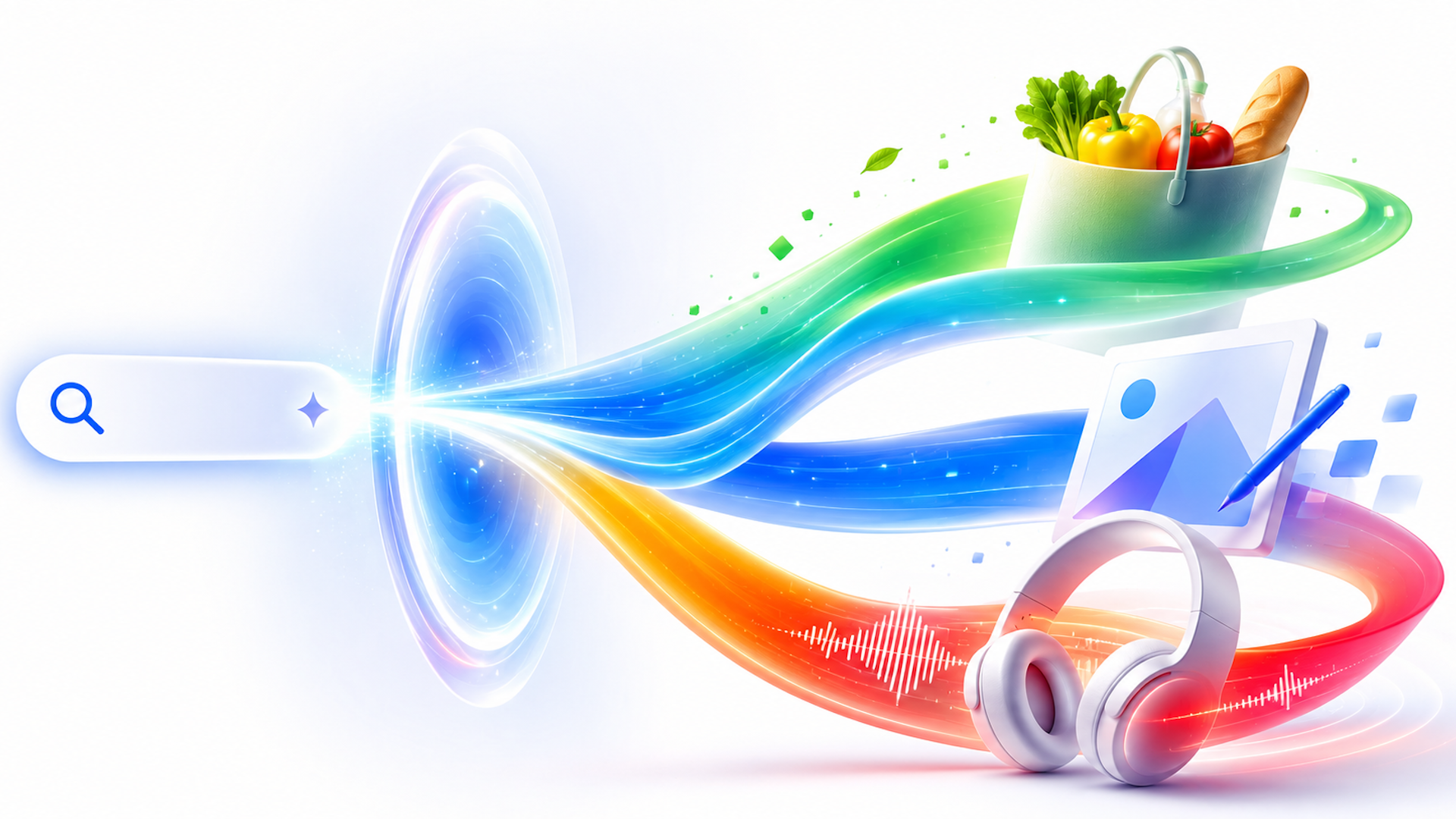
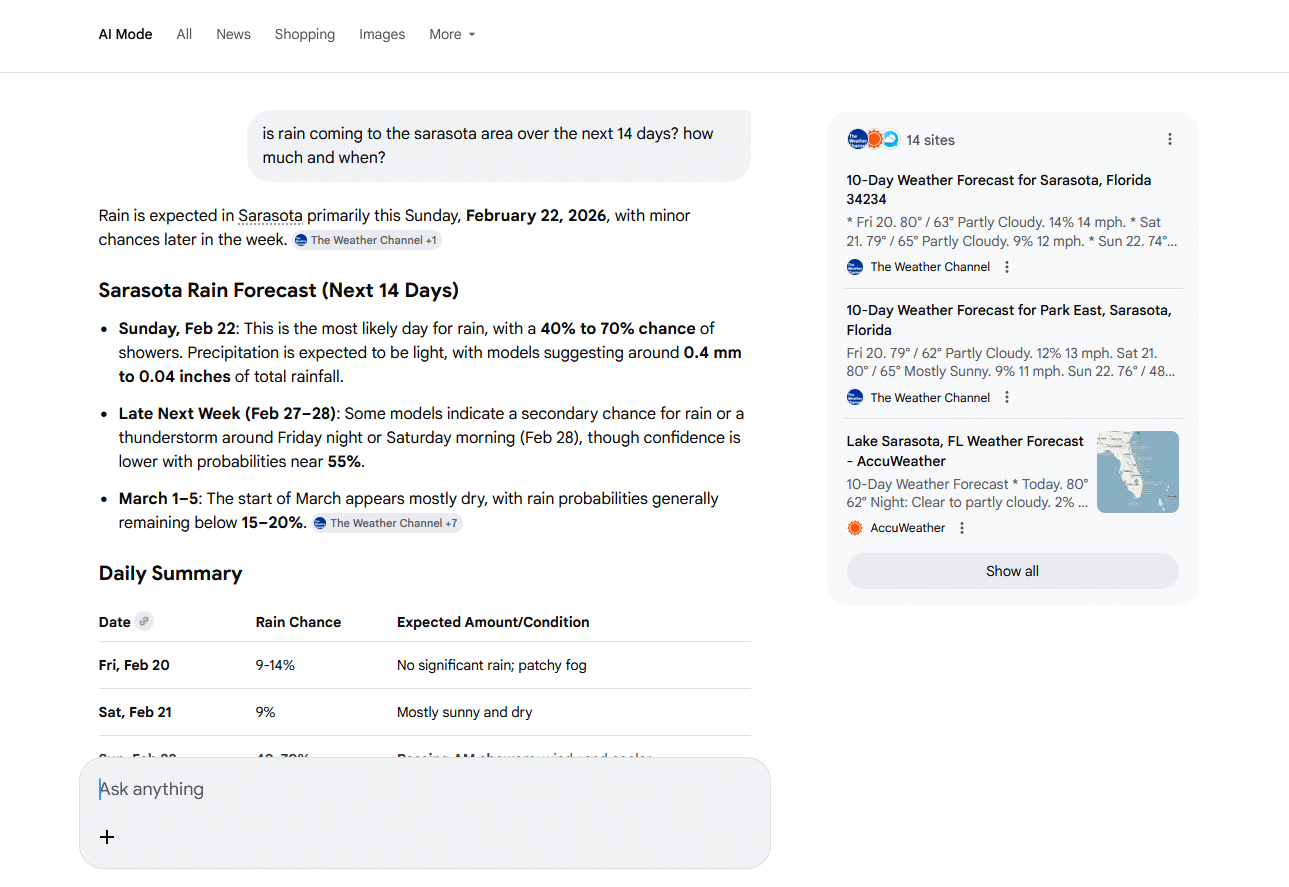
Google is turning AI Mode in Search into more than a place to generate answers. According to Search Engine Land, a rollout for U.S. users will let people connect supported apps and act on an AI-assisted plan through services including Instacart, Canva and YouTube Music.
The early examples point to a broader change in the search journey: a result can lead directly into shopping, design or entertainment workflows. That convenience may also change where brands earn visibility and how much of the customer journey happens inside Google’s interface.
AI Mode is moving closer to task completion
Traditional search usually helps a person discover information before sending that person elsewhere to take action. Connected apps shorten that sequence. Google says users can securely link supported services and interact with them from AI Mode, as reported by Search Engine Land.
The distinction matters because the integration is not merely another way to display a link. AI Mode can participate in the transition from deciding what to do to beginning the task in a relevant service. Completion may still occur outside Search; in the Instacart example, checkout happens through the retailer’s app or website.
The first examples cover three different user goals
Google’s initial examples illustrate how one connected-app model can support different kinds of intent. A person organizing a barbecue could connect Instacart, place the required ingredients in a cart and then move to Instacart to check out.
For a creative task, someone making a flyer could ask Canva to surface template options. For entertainment, a person planning a party could build a playlist through AI Mode, save it to YouTube Music and begin listening. Together, these examples span a purchase, a design workflow and a media experience rather than concentrating on one vertical.
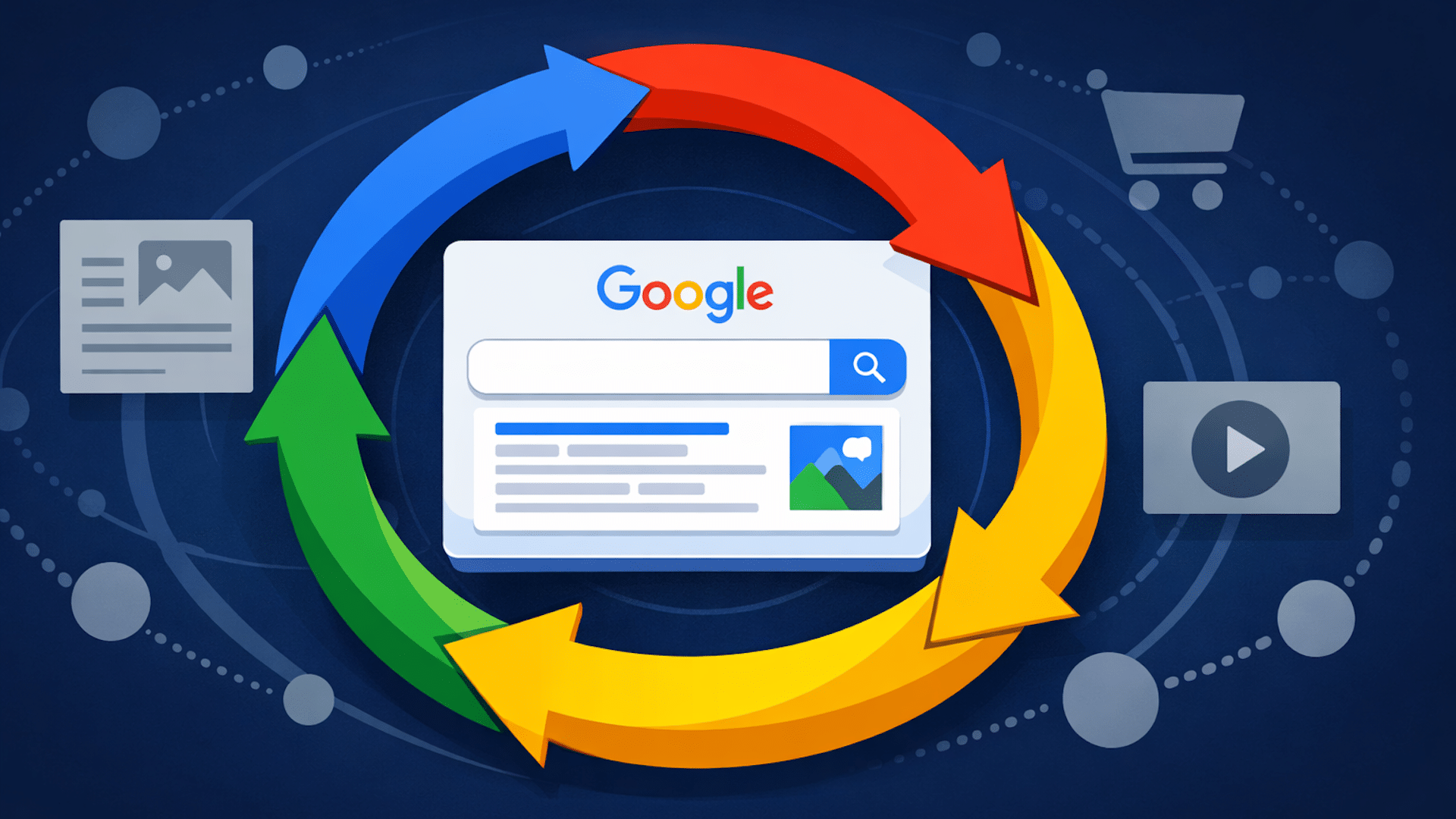
Organic visibility, paid media and artificial intelligence merge into one connected search ecosystem, where vivid data streams link a creative website with a powerful analytics dashboard.
Key takeaways
The connected-app rollout is starting with U.S. users of AI Mode in Search.
Instacart, Canva and YouTube Music are among the services highlighted in the initial examples.
The integrations reduce steps between planning in Search and acting through another service.
Google says it is working with more partners and intends to add further integrations.
Why marketers should examine the handoff
Search Engine Land notes that this approach could affect the traffic, visibility and control brands receive after a search. The key issue is not simply whether a company appears in an AI-generated response. It is also whether the next action takes place through an integrated service before the user visits other sites or evaluates more options.
That creates a practical measurement challenge. Referral traffic alone may provide an incomplete picture if AI Mode assists with planning and starts a workflow elsewhere. Marketers may need to distinguish between visibility during the decision process, selection within a connected experience and the final conversion on a partner platform. This is an analytical implication of the reported design, not evidence that any specific traffic effect has already occurred.
Brands should also consider how well their products, creative assets or media offerings can be represented through third-party services. When a platform becomes the execution layer for an AI-assisted task, the quality and availability of information within that platform can influence what the user is able to do.
Important details remain unresolved
The report describes the feature as a rollout rather than universal availability. It does not provide a schedule for broader access, name the next partners or explain the commercial arrangements behind the integrations. It also does not establish how frequently users will choose connected actions over conventional search paths.
Those limitations make early conclusions about traffic or conversion premature. The more useful signals will be which app categories Google adds, where users complete each task and what measurement options become available. As the partner roster grows, marketers will gain a clearer view of whether connected apps become an occasional convenience or a meaningful new layer in the search journey.
My heart sank when I learned that Bruce Clay had passed away. I knew he had been in the hospital, but my mind went straight to the two long conversations we had last fall: one simply to catch up, and one for what would become a deeply meaningful podcast interview.
I first reached out to Bruce nearly 25 years ago. I had emailed him cold to ask whether I could republish some of his industry writing about ethics. He said yes. Somehow, the article I cited unintentionally ranked No. 2 on Google for “Bruce Clay” for years. I joked with him about that more than once, and he always seemed both amused and slightly annoyed, probably because I had done it with his own content and his own blessing.
A few years later, I worked with Bruce and many other search professionals on the board of the Search Engine Marketing Professionals Organization, better known as SEMPO. It was a business nonprofit built to support and legitimize the then-new search industry. We promoted best practices, helped make the business case for search, and later became involved in U.S. Internet policy work in the early 2010s.
SEMPO brought together board members from around the world, and in a very literal way, it took some of us around the world. That work is where I really got to know Bruce. Later, we would run into each other at conferences, sometimes even on the same panels. We were doing serious work, but we also had a great time doing it. The organization lasted about 15 years, and if I remember correctly, Bruce was one of its founding members around 2000 or 2001.
One memory of Bruce has stayed with me vividly. A group of us from the SEMPO board were walking back to our hotel on the east side of Midtown Manhattan after dinner. A snowstorm had just begun, one that would leave several feet of snow by the next day. The usual roar of traffic had been softened by the weather and the empty streets. It was eerie, but almost joyously quiet. The city that never sleeps seemed to be taking a nap under a blanket of snow.
Then something happened that I had never seen before, and have never seen since.
As snow poured silently into the streets, a massive lightning strike hit just a few blocks away, over Bruce’s shoulder. I do not know whether he saw it directly. It felt like an explosion. We stood there for several minutes trying to understand the contrast: a shattering bolt of lightning between skyscrapers, in the middle of a torrent of snowflakes, with not a drop of rain.
None of us knew what to call it. I believe Bruce called it “thunder snow,” and the name stuck. In that moment, his naming streak continued.
Bruce was, and remains, the real deal in search. His legacy was never only about coining a term. He pushed the field forward, taught others generously, and stayed deeply connected to the people he cared about. Like many of the earliest professionals in search, he helped shape practices that still feel foundational today. Through his writing, interviews, books, tools, and hundreds of industry events, he became one of the people the industry looked to for clarity. For many who remember the beginning, and for many who still followed him closely, Bruce was the GOAT.
I always felt that Bruce approached search intellectually. I do not think he saw it only as a job. It was exciting, unfinished, and new. Very few people get to help invent an entirely new discipline, and Bruce understood what that meant. He also recognized that AI is one of those moments now, and he approached it with the same curiosity, energy, and insight he brought to early search. Many people in the industry may only now be realizing that Bruce pioneered things they do every day. They feel obvious now, but they were not obvious then. Even the basics had to be debated and established.
He was not only passionate about search. He was passionate and generous toward the people in search. If you cared about the work, you were part of his tribe. That was true for thousands of people in the industry, myself included.
With Bruce, I could get deep into the weeds of the trade and still talk broadly about where everything was headed. He was an engineer with an MBA, and that combination came through in his leadership, expertise, and authority. He understood the work from top to bottom, and then back to the top again.
He was also genuinely kind. He had friends around the world. In our last conversations, I sensed that he was content with his life and accomplishments, and that he felt blessed by the path life had given him. He had nothing left to prove.
In the podcast interview, Bruce was as sharp and insightful as ever. He offered some of the most sensible thinking I have heard about where search is going in the world of LLMs. He was still innovating, just as he had been when search first began taking shape nearly 30 years ago.
Because search is so closely tied to language, I have been especially interested in how we think about, and what we call, this “new” thing. Bruce’s perspective helped crystallize my own research. Over the last year, I have watched much of the industry move toward the same conclusion he shared in our discussion.
If you are one of the many thousands of people who talked shop with Bruce over the years, I think you will recognize him in the ideas that follow. You may even relive some of your own conversations with him.
As I reviewed the podcast transcript, I realized we had recorded hours of conversation beyond search, including cars and all kinds of other subjects. At the end of our first conversation, he said goodbye with great love and care. That was Bruce. Those words land differently with me now, and they always will.
Rest in peace, Bruce. I miss you already.
What Bruce taught me in our final industry conversation
When I asked Bruce to talk about how he got started in the 1990s, he took us back to 1996. He had been working in corporate roles and wanted to become a consultant. His background was in math, programming, mainframes, PCs, networking, and optimization. When the Internet began moving into the mainstream, he saw something that matched both sides of his skill set: marketing and technical work.
He started studying search engines because that was where the opportunity was. He experimented with what they wanted, adjusted web pages, and watched rankings appear. Then people began calling him and paying him. What he thought might become a one-person consulting business grew quickly into something global, with offices and work across Japan, Australia, Asia, Europe, India, and beyond. Bruce told me he never would have predicted it would take off the way it did.
I reminded him how small the field was in those days. There were literally only tens of people doing this early on. Bruce was one of the first to build a legitimate service for businesses that needed to rank for their own brand names and for broader generic terms, while other corners of the field were still experimenting with black-hat tactics.
Bruce pointed out that this was three years before Google. Search was a wild west. There were more than 20 major search engines, and many of them were taking data from one another. At the first SEO conference he remembered attending, all of the leading people in the field sat together at one round table in a bar. He joked that if a natural disaster had happened there, the whole industry might have disappeared.
We talked about Danny Sullivan, Search Engine Watch, Search Engine Strategies, and the early vocabulary of the industry. Bruce had long been credited with helping coin the term “SEO,” though he was careful to say that no one can know who said something first. What he did know was that only a handful of people were in the room when the term started to take hold.
At the time, other terms were in play, including “search engine positioning” and “ranking.” Bruce believed “optimization” won because it sounded technical, valuable, and precise. It was like fine-tuning a race engine. People could see themselves building a profession around it. Once the industry attached itself to that word, the term spread quickly around the world.
That led us into the newer terms now being proposed around AI, including AIO, GEO, and AEO. I have been writing about how many of these terms still depend on the word “optimization.” Bruce’s view was clear: search engine optimization was never limited to organic blue links. It was about optimizing for anything a search engine produces that can drive business and traffic.
In Bruce’s view, if AI appears inside search and influences discovery, citations, visibility, or traffic, then it belongs under SEO. GEO and AIO were not separate disciplines to him. They were extensions, just like link building or on-page optimization. He warned that many new terms are marketing labels more than practical new fields. If the work required to appear in AI results is still mentions, links, schema, authority, content structure, and rankings, then the work is still SEO.
That point stayed with me. Bruce said that if someone claims you no longer need SEO and only need AI optimization, you should watch closely, because either they are going to do SEO under a different name or they do not understand what they are doing. He believed ranking in AI was possible, but the method was deeper and more complex than traditional SEO. To him, it was still SEO, just several levels more advanced.
We also discussed whether AI feels like search did in the late 1990s. Bruce believed it does in important ways. AI depends heavily on search engines because search engines have spent decades fighting spam and building trust signals. AI systems do not yet have that same history, so they rely on what search engines have already learned to filter, evaluate, and rank.
Bruce also believed AI could still be gamed at the content level. If enough pages repeat a false idea, an AI system may begin to treat it as true. He had already seen examples of people trying to influence AI answers by placing their names into “best SEO” lists across enough sources. To him, this was a sign that AI would need its own version of the spam fight search engines have been having for decades.
One of the most important parts of our conversation was Bruce’s explanation of Google AI Mode and how it changes the way SEOs should think about structure. He described how a query can produce an overview, followed by sections and subsections that allow users to drill into narrower parts of a topic. When a user clicks into a section, the supporting sites can change to match that specific subtopic.
That means content cannot simply be built around one broad keyword anymore. Bruce believed pages need to be structured so each section can stand on its own as an expert answer. A page should support a topic, but every H2-level section may need its own clarity, completeness, and internal logic. In his view, this raises the importance of siloing across a site and within a page.
I framed this as a shift from keyword-led thinking to context-led thinking. Bruce agreed and connected it to entities, fan-outs, references, and cross-links. Keywords helped build the industry, but he believed the future depends on understanding entities in context. If content cannot answer the question clearly, it fails the core purpose of AI-assisted search.
Bruce described the long-term target as something like the Star Trek computer: no matter what question someone asks, the system provides the answer. We are not there yet, but that is the direction. For websites, he believed the future architecture is question-centered, highly usable, structured into sub-silos, and able to answer and refer within a page while also fanning out to supporting pages.
That naturally led us to content. Bruce said that for years SEO treated content like a stepchild, but now content is a peer. If SEO teams and content teams do not share the same goal, they will keep writing the way they did 20 years ago and fail in the AI search environment. He was already being hired to train content teams, even though he did not consider himself a “content guy” in the traditional sense.
He believed the industry still suffers because SEO and content do not cross-pollinate enough. Content marketers may not attend SEO conferences, and SEOs may not spend enough time learning how content teams actually work. That separation matters more now because the structure of a page, the expertise of each section, and the way a topic is divided all affect visibility in AI-driven search experiences.
Bruce’s advice was direct: stop spreading one keyword across a page and calling that optimization. Instead, build each section as if it were a standalone expert answer. If the sections belong to the same theme, they should support one another, but each needs to carry its own weight. In his words, the hierarchy is no longer only the page. The hierarchy is also the section of the page.
When I asked Bruce about AI-generated content, he made an important distinction. AI is a tool, not a solution. He did not believe businesses should simply generate content, read it once, and publish it. Detection tools are inconsistent, and search engines may not reliably identify every AI-generated page. But that does not make low-effort AI content a good strategy.
Bruce believed AI is strongest as a research assistant. His own Pre-Writer product was built around that idea: gather deep research and give a human writer a stronger starting point. The writer still finishes the work, adds style, voice, judgment, compliance, and business understanding. For Bruce, reducing a four- or five-hour writing project to two hours was a win. Replacing the writer entirely was not.
He was especially clear that writers are artists. AI does not know a business the way its people do, and it does not bring the same finesse or judgment. The future, in Bruce’s view, requires writers, SEOs, and AI workflows to be integrated around shared goals. Without that maturity, teams will keep producing pages that look like they were built for search 10 years ago, and those pages will be ignored.
We ended by talking about tools. Bruce reminded me that in the beginning, he wrote tools because none existed. He built one of the first page analyzers, including what he once called a keyword density analyzer. He later received a patent related to that kind of technology. His tools were never meant to replace large platforms like Semrush, Ahrefs, or Surfer. They were meant to extend them by analyzing things those platforms did not.
Bruce pointed people to seotools.com and described the tools as inexpensive power tools, not products designed for the masses. Some users did not understand them at first, but came back later when they saw the value. He was still building, still solving problems, and still thinking about what the industry needed next.
Near the end, Bruce mentioned a newer tool designed to show traffic loss through Search Console data over time, helping site owners see whether they had fallen off a cliff or declined gradually. It struck me as classic Bruce: while others complained that something should exist, he was building it.
I thanked him for the conversation, and he answered with warmth: he was glad I had him on, and he loved talking with me. I hear those words differently now. I am grateful we had that final conversation, and I am grateful for everything Bruce gave to search, to this industry, and to the people inside it.
As someone who eagerly follows Google’s updates, I was thrilled to learn about the latest developments in Google Search Console. Recently, Google has started to roll out new Search Generative AI performance reports. These reports, along with a feature to block your content in AI responses, are designed to give website owners more control.
Currently, these features are being introduced to a select group of website owners in the UK, but there are plans to expand access in the near future. This gradual rollout allows us to get accustomed to these changes before they become widely available.
Exploring the Search Generative AI Performance Report
The new AI performance report in Google Search Console is something I’ve been anticipating. Although it doesn’t cover everything, it does provide some important insights into how our content is performing within AI responses, AI Mode, and AI Overviews on Google Search. The report includes data on impressions, pages, countries, devices, and dates. However, a notable omission is click data, so we’re left guessing about the exact number of searchers clicking through to our sites from AI responses.
Google stated:
– We’re rolling out new insights for website owners regarding their pages’ appearances in generative AI Search features. These insights include impressions metrics and information on which pages appear in AI responses and in which countries. We’re working closely with website owners to determine what insights would be most helpful and will expand the metrics available over time.
Additionally, Google shared more details about the metrics we can expect:
– Impressions: Frequency of your site’s URLs appearing in generative AI features in Search and Discover.
– Pages: Identifying URLs that appeared within AI features.
– Countries: Understanding visibility on a country basis.
– Devices: Identifying the devices used to view your website. Available for Search results.
– Dates: Monitoring performance with hourly, daily, weekly, and monthly granularity.
I inquired about click data from a Google representative, who mentioned that they are exploring additional metrics that will help inform our strategies in the future.
Initially, this report is available to a subset of users in the UK, with plans to expand globally in the future.
Another exciting feature Google introduced is the ability to block your content from appearing in AI search features like AI Overviews, AI Mode, or AI Discover. Google described this as a “new toggle” within Google Search Console, allowing us to decide whether or not our site should be part of these AI search features.
Google notes that opting out will prevent your site from receiving traffic or impressions from these features. Importantly, this control won’t affect your ranking in standard search results outside of generative AI Search features, so there’s no risk of negatively impacting core web search visibility.
Again, like the performance report, this toggle is currently available to a subset of UK website owners, with plans to widen access as they complete further testing. Google had promised these controls after facing some backlash from the EU, and it’s promising to see them starting to roll out now.
One study even showed that 1/3rd of SEOs are willing to block Google from showcasing their content in AI search features.
Why It Matters
As site owners and publishers, many of us have been asking for control over how and if our content appears in Google’s AI features. Now, we have just that. Although it’s initially limited, I’m hopeful these features will eventually be available to all.
Moreover, we’ve been requesting AI Search reporting from Google from day one. With Google’s announcement following Bing’s release of its own AI performance report, we’re taking a significant step forward. While Google’s report currently targets UK site owners and lacks click data, it holds promise for a global rollout soon.
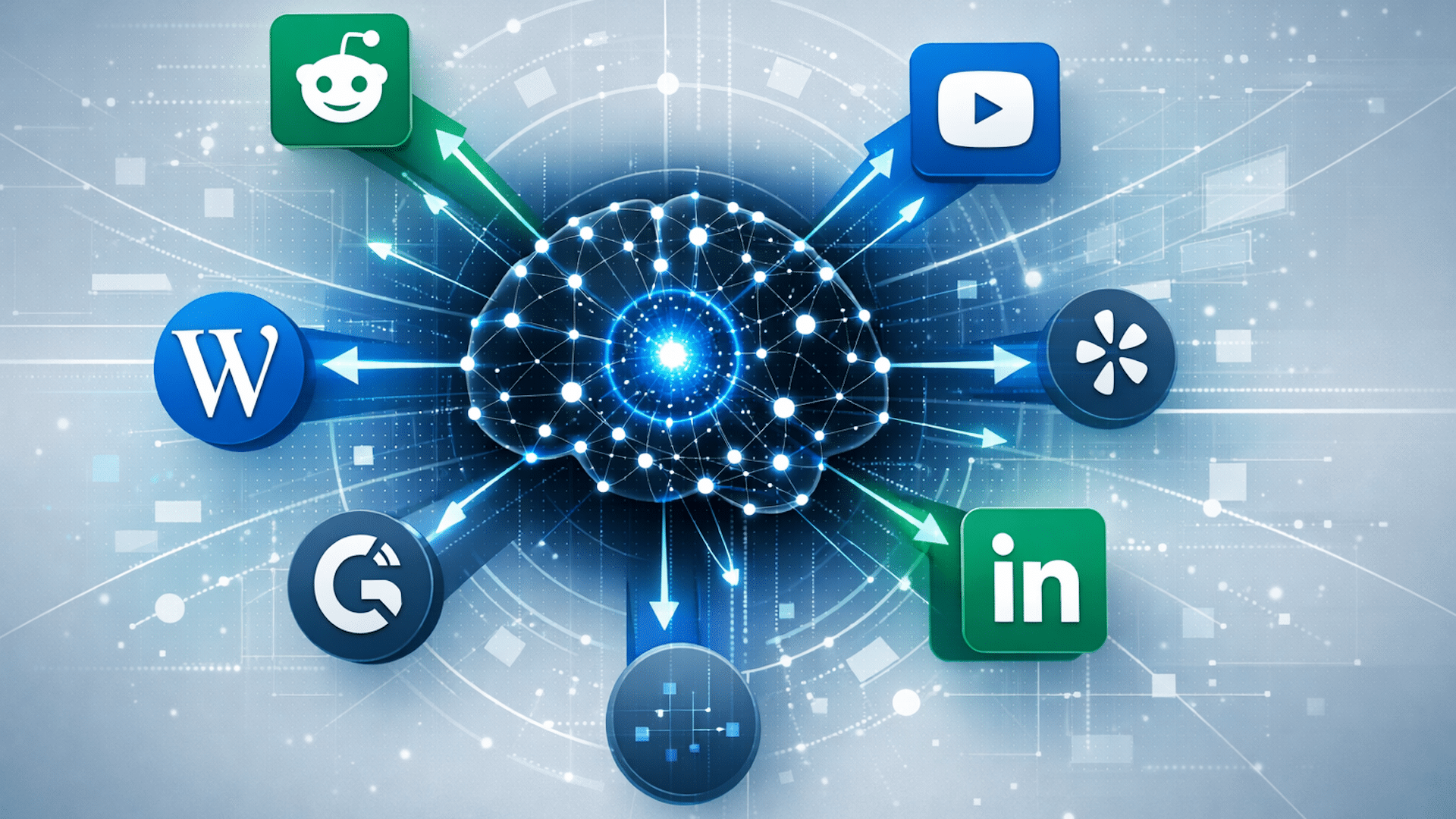
During a recent study, I discovered that Reddit stands out as the most-cited domain in AI-generated answers. In fact, it’s ahead of heavyweights like YouTube and LinkedIn, thanks to an analysis of 30 million sources conducted by Peec AI, a tool specializing in AI search analytics.
The findings: I’ve learned that Reddit claims the top spot across various AI platforms including ChatGPT, Google AI Mode, Gemini, Perplexity, and AI Overviews. Top contenders YouTube, LinkedIn, Wikipedia, and Forbes are right behind. Platforms like Yelp and G2 frequently appear when searching for recommendations.
As I delved deeper into the research, it became clear which domains the AI models tend to lean on:
ChatGPT values Wikipedia, Reddit, and editorial sites like Forbes.
Google shows preference for platforms such as Facebook and Yelp.
Perplexity favors Reddit, LinkedIn, and G2 for queries within the B2B realm.
Why we care: The insight that resonated with me was the importance of having authority beyond just our own websites. Brands that consistently feature on reputable third-party platforms have a better chance of being cited by AI.
Why these sources? It’s fascinating to see how AI systems are wired to prioritize both authority and authentic user input:
I’ve found that Reddit excels because it mirrors genuine user discussions.
YouTube shines in video citations, owing to their comprehensive transcripts and descriptions.
Wikipedia not only serves real-time data but also acts as a foundation for training datasets.
About the data: The analysis spanned 30 million sources, providing a comprehensive look at how often domains are directly cited in AI answers, effectively revealing what shapes these responses.
As I explore the ever-evolving landscape of Google’s AI Mode, it’s fascinating to witness how ad formats, reporting, and control are taking shape. Google seems to have a master plan in place that competitors just can’t keep up with.
I find myself intrigued by Google’s entry into this next phase of conversational search. It’s not just about user numbers but who can effectively monetize them. Google’s mature ad systems and extensive advertiser base offer a significant edge.
The initial panic surrounding Google’s position is over. Google’s long-standing advantages and huge investments have leveled the playing field with ChatGPT in LLM search.
Back in December 2025, when Google declared code red, it became clear that they were serious. Apple’s decision to partner with Google for its AI needs is indeed telling.
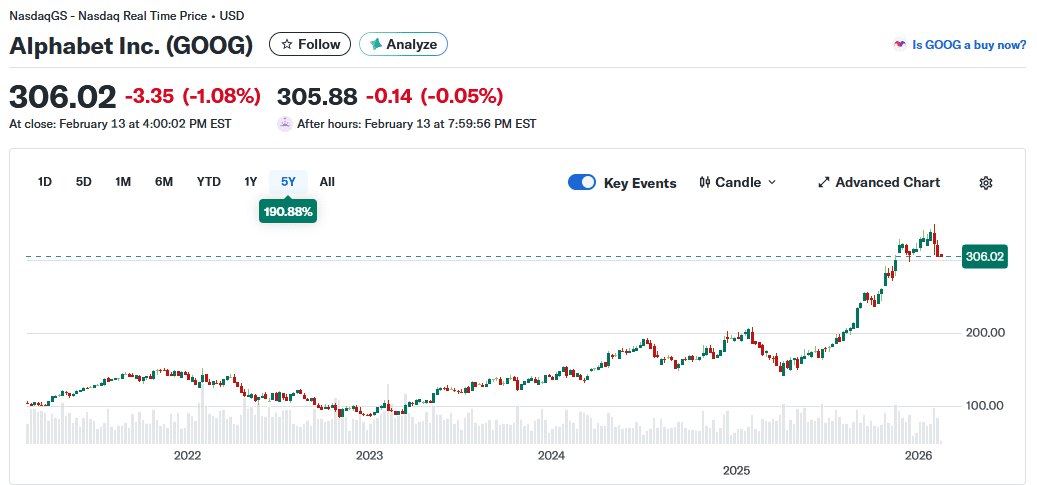
Initially, it seemed plausible that Google would struggle against ChatGPT, but the market has since adjusted its views. The company’s valuation reflects renewed confidence, rivaling even Apple at a substantial $3.6 trillion.
As I dive deeper into how monetization will shape this race, I’m struck by how Google’s recent advances have significantly boosted its valuation.
It’s clear that the visibility of financial projections plays a massive role in how the company is perceived financially. Google’s approach to shifts in user behavior is crucial in maintaining its robust business model.
From my perspective, much of your digital advertising budget likely goes to Google. Its prominence demands attention, not just in search but also in emerging AI platforms like ChatGPT and Claude.
The competition in LLM conversations is intriguing. Google and ChatGPT are vying for different monetization models, a fascinating case study of differing strategies.
For those of us in advertising, it’s essential to monitor developments like ad formats, rollout pace, and public reception to ads within these platforms.
OpenAI’s current monetization model is intriguing but still nascent, reliant on a small group of major advertisers. We’ll see how they expand and fine-tune this model over time.
Outsourcing inventory to programmatic partners is a smart move for OpenAI but highlights their early stage in building an ads business.
For Google advertisers, the shift to AI Mode need not be alarming. I’m watching for the ways these LLM sessions are shaping user experiences and ad placements.
One thing is for sure; the enhancements in AI Mode continue, promising more seamless and user-friendly interactions. The potential for ads remains, though their form is still evolving.
Monitoring key areas like the extent of monetization, advertiser control, and campaign types becomes more important as we navigate this new landscape.
Ultimately, the future of advertising in AI-driven search is one of adaptability and strategic planning, aligning closely with user and advertiser behaviors in this exciting yet challenging era.
It’s fascinating to see the evolution of Google’s AI Mode and how it increasingly cites Google itself. In fact, almost one out of every five sources in its AI-generated answers now originates from Google, often guiding users back to more Google searches.
Why does this matter to us? As someone deeply involved in the world of digital content and SEO, I’m aware that AI search should highlight the best online sources. If Google prioritizes its own content, there’s a risk that we might encounter fewer direct links and see a reduction in traffic as users remain within Google’s ecosystem.
So let’s delve into the details. Research by SE Ranking reveals that Google.com is the most cited source within AI Mode responses, making up 17.42% of all references. This makes Google more mentioned than even the combined total of the next six well-known platforms: YouTube, Facebook, Reddit, Amazon, Indeed, and Zillow.
In an accelerated trend, back in June 2025, Google referenced itself in only 5.7% of AI-generated answers, but now that figure has tripled.
Almost one out of five AI citations is from Google. When considering YouTube, Google-owned properties account for about 20% of all sources.
This self-referencing is quite pronounced, with AI Overviews linking heavily to Google properties such as Maps, Images, and YouTube. AI Mode expands on this by further embedding users within the Google environment, often through presenting additional search results rather than directing them to external sites.
This strategy keeps users engaged with Google platforms where monetized content such as ads and reviews can be found.
What’s changed? Previous research showed that Google was mostly citing Google Business Profiles. However, this trend has shifted:
Travel: 53.18% of citations
Entertainment & hobbies: 48.74% of citations
Real estate: 30.54% of citations
Interestingly, the one area where Google is not the top source is Careers and Jobs, where Indeed appears more than three times as often as Google.
The data supporting these findings were gathered by SE Ranking, who analyzed 68,313 keywords across 20 industries, reviewing over 1.3 million AI Mode citations to determine how frequently Google.com was referenced.
59% of citations now direct to conventional Google search results.
36.1% still reference Google Business Profiles.
A smaller portion links to Google Support (1.7%), Google Flights (0.1%), and other Google services.
Often, these AI citations are accompanied by a mini search results panel beside the answer, effectively creating a new search opportunity.
Industry differences are also evident. Google dominates citations across several topics, but some sectors show a stronger dependency on Google:
Travel: 53.18% of citations
Entertainment & hobbies: 48.74% of citations
Real estate: 30.54% of citations
Interestingly, the one area where Google is not the top source is Careers and Jobs, where Indeed appears more than three times as often as Google.
The data supporting these findings were gathered by SE Ranking, who analyzed 68,313 keywords across 20 industries, reviewing over 1.3 million AI Mode citations to determine how frequently Google.com was referenced.
Have you ever wondered how to make your products stand out in Google AI Shopping and its AI Mode? I’ve discovered that optimizing feeds, utilizing schema, improving imagery, and crafting conversational Product Detail Page (PDP) content are key strategies to enhance visibility.