I recently came across a fascinating Datos/SparkToro report revealing a significant change in our search habits. It’s no surprise that U.S. Google users are searching less than they did a year ago. While Google isn’t losing users, it’s clear they’re experiencing fewer repeat searches.
Why this matters to me. Google still reigns supreme in the search world, but fewer searches mean dwindling opportunities for clicks, ads, and traffic—even if the total search volume seems stable.
The numbers speak for themselves. The report showed a nearly 20% year-over-year decline in desktop searches per U.S. user, based on data from millions of users.
- This sharp decline is unlike the European trend, where searches only fell by 2-3%.
- Despite fewer searches per person, traditional search still constitutes about 10% of all U.S. desktop activity—a share that held steady throughout 2025.
Reasons behind the drop. The rise of AI-powered answers and instant results appears to be the main culprit:
- Users now get the information they need without conducting multiple follow-up searches.
- Zero-click searches remain high but have leveled off in the low-20% range by year-end.
- Little change is observed in repeat searches and clicks within Google-owned properties, hinting at a plateau in user behavior.
The reshaping of search by AI. AI isn’t pulling users away from search; rather, it’s enhancing it. Despite ongoing AI buzz, the report discovered:
- AI tools contribute to less than 1% of total U.S. desktop activity (0.77%), though they’ve seen remarkable growth.
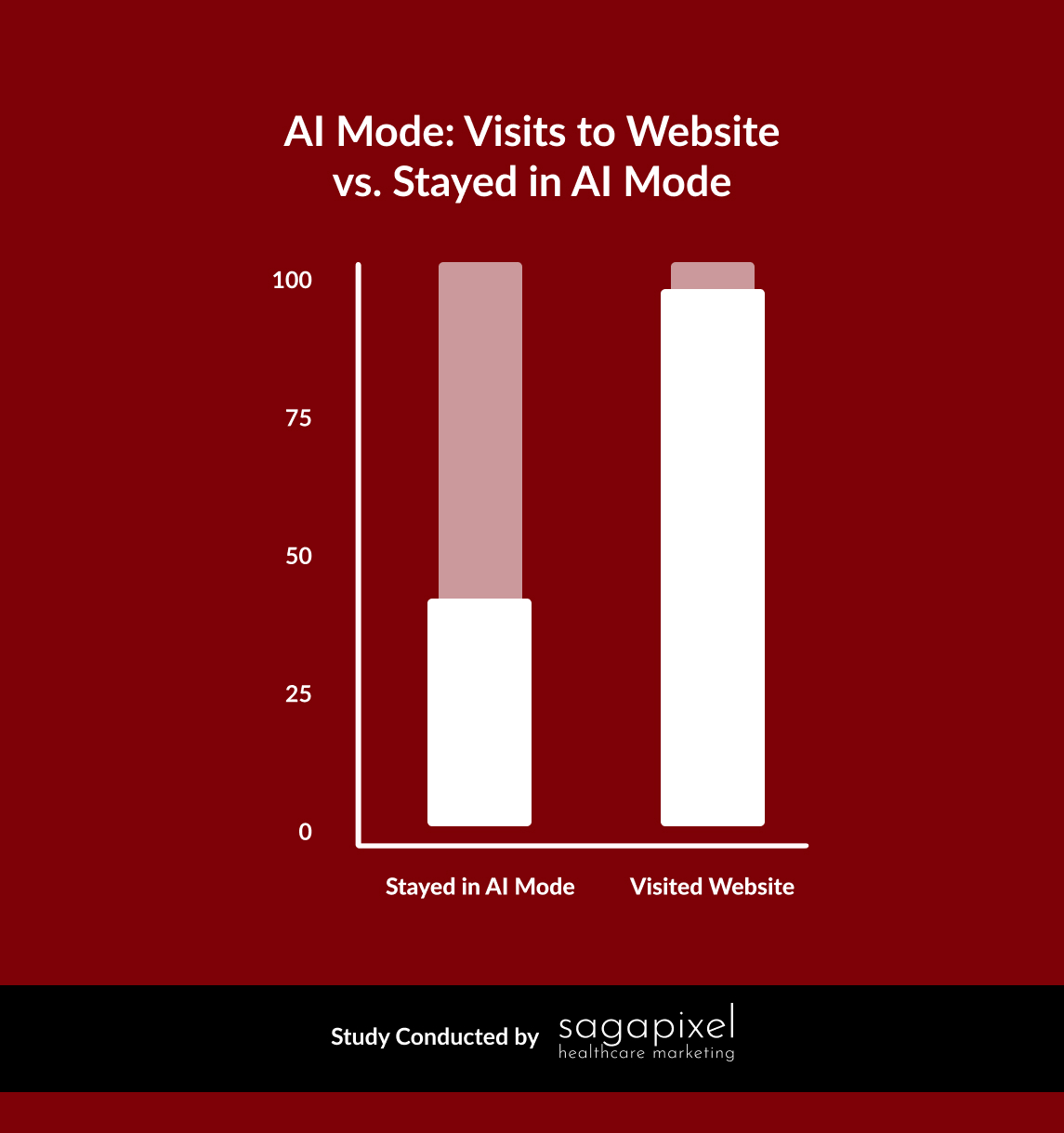
- Google AI Mode remains small, accounting for about 0.06% of U.S. desktop events by December, with steady adoption increase.
Query evolution. One notable behavior change is how we phrase our searches:
- Mid-length queries of six to nine words are increasing rapidly in the U.S.
- Very long queries (15 words or more) are still rare but show significant experimentation and volatility.
- People seem to find it easier to express complex needs directly in their searches.
Discovery becomes a challenge. With concentrated search-driven discovery, breaking into post-search destinations is tougher:
- YouTube, Reddit, Amazon, Wikipedia, and Facebook remain dominant.
- ChatGPT soared to No. 7 among U.S. search destinations, a rare significant mover.
- Meanwhile, Quora has fallen out of the top 15.
AI’s few dominators. AI-driven traffic largely directs users to already established platforms like Google, YouTube, GitHub, and Wikipedia rather than new or independent publishers. When it comes to AI platforms:
- ChatGPT is the leading tool in the U.S., reaching around one-quarter to one-third of desktop AI users.
- Google’s Gemini emerged as a strong No. 2, consistently growing throughout 2025 and surpassing DeepSeek.
- Other tools like Claude, Perplexity, and Copilot stay niche with modest reach.
Industry insight. Rand Fishkin, co-founder and CEO of SparkToro, highlighted in the report:
“The big highlight here is the decline in # of Google searches/searcher from 2024–2025. It’s a nearly 20% decline in the US, though only 2–3% in the EU/UK. Other studies have shown that Google is sending less traffic than in years past, especially to the long-tail of the web, and I suspect that AI answers have dramatically altered the way many users engage with Google, answering their questions before they ever need to click on an organic result or perform a second/third/fourth search.”
The complete report. Discover more in the Q4 State of Search report
Inspired by this post on Search Engine Land.