I recently dove into Google Ads to explore their new customer acquisition goals. With fresh capabilities like high-value customer bidding and retention targeting, I was curious about how they could boost my marketing efforts.
Many strategies still assume new customers are the most valuable, but this breaks down rapidly. Not every new customer is worthwhile, and ignoring existing ones can be a mistake. The crux is Google’s high-value customer and retention bidding goals.
Google uses predictive bidding to pinpoint high-value customers, but the key is the customer match list I upload. To tweak settings, I venture into the customer lifecycle optimization section under Goals > Summary and select Edit Goal.
Here, I set a higher new customer value to bid aggressively for high-value clients. Google usually suggests a value based on higher LTV, but I ensure it aligns with my strategy before making adjustments.
Once adjusted, Google’s reports reflect the added conversion value alongside the actual sale or lead value. If using cost-per-conversion models, the discrepancy is less impactful. However, it can skew ROAS in a ROAS-based model. Luckily, Google introduced a column to separate true and additional values for clarity.
Building high-value customer audiences means adding an audience list of high-value customers. I think about what makes my customers valuable, whether due to high order values or interest in premium services.
Once I compile and upload the list, I need at least 1,000 active members on YouTube or Search networks to serve effectively. Including additional data like phone numbers and addresses improves my match rates.
If I want a streamlined approach, tools like Klaviyo can integrate audiences directly into my Google Ads account, often yielding high match rates.
With everything set in the customer lifecycle optimization section, it’s time to optimize my campaigns. I can’t apply both bidding goals to the same campaign, so I tailor my targeting and ad copy to different customer types.
For campaigns focusing on high-value new customers, I expand the Customer Acquisition segment and choose a bidding option to target specifically new customers.
It’s critical that my ad content resonates whether I’m aiming for new clientele or re-engaging past customers.
When it comes to re-engaging lapsed customers, I set bidding parameters for retention back under Goals. There, I find lists for lapsed and high-value lapsed customers, if I have the data to support them.
Google suggests values or lists, but accuracy is key before saving adjustments. In Performance Max campaigns, lapsed customers may see a variety of ads, making it essential my messaging speaks to them effectively.
Everything hinges on having reliable inputs like quality customer match lists and performance metrics. Used right, lifecycle bidding can prioritize valuable customers and revive lapsed ones, but careless usage just skews data without driving real results.
I’ve discovered that measurement is truly the cornerstone for all we achieve in performance marketing. Without precise measurement, everything I recommend, implement, and optimize becomes mere speculation. Today, maintaining accurate measurement is more challenging than ever—and it’s only getting more difficult.
With regulatory crackdowns and growing privacy concerns, paired with elongated multi-touch journeys, we face a measurement crisis. Brands that still rely on outdated tactics are missing the mark when it comes to modern measurement challenges.
If your brand falls into this category, it’s time I help you rebuild your measurement foundation—from integrating first-party data (crawl), to creating cross-channel reporting for actionable insights (walk), to advanced media mix modeling (MMM) and incrementality testing for true media lift (run).
The crawl: Building a first-party data foundation
By integrating first-party data into our performance marketing channels, I can move beyond reliance on third-party signals. While those metrics offer surface-level insights, they don’t reveal how channels impact our business goals.
Audience integration
The first step involves integrating CRM data into our paid media platforms. This includes:
Remarketing to abandoners.
Creating exclusion lists for current subscribers or recent purchasers.
Compiling priority contact lists.
I might be uploading lists today, but integration enhances targeting by connecting to up-to-date audience lists for media platform targeting.
Offline-conversion tracking
For lead-gen businesses like ours, setting up offline conversion tracking (OCT) is crucial. It reveals the bottom-line impact of our media on sales, passing sales data back to platforms for campaign attribution.
Once OCT is in place, we can optimize for lower-funnel, higher-quality conversion steps in the sales cycle or even begin optimizing toward revenue to enhance our return on ad spend.
Server-side tracking and consent mode
To progress from crawl to walk, I need to move from client-side to server-side tracking.
By adopting server-side tracking, we bypass browser-based tracking and instead rely on our first-party data. This approach ensures data accuracy and resilience as privacy restrictions increase and cookies become obsolete.
Partner integration uses pre-built connectors for setup through platforms like Shopify or Google Tag Manager.
Direct API requires a development team to handle complex data or custom backends.
The walk: Cross-channel reporting integration
With a robust measurement foundation, my next step is breaking down platform silos to understand the full ecosystem.
Going beyond last click
After implementing server-side tracking, I created a clean data pipeline. Yet, traditional attribution models neglect the full-funnel customer journey.
To address this, I recommend using data warehousing solutions like BigQuery to centralize your data and apply custom logic, thereby gaining insights across the ecosystem.
Unified reporting dashboards
Integrating evolved attribution with unified reporting dashboards, like Looker Studio, allows me to visualize data across the funnel and obtain actionable insights into what platforms are truly driving volume and conversions.
The run: Media mix modeling and incrementality testing
With a comprehensive, everyday view of performance, significant questions persist about growth potential and offline performance measurement.
By employing media mix modeling and incrementality testing, I can discern the full impact of media investments at a macro level to make informed decisions.
The holistic view through MMM
I view MMM as my compass, providing a holistic, quantitative guide for paid media investments, helping me analyze the relationship between inputs and business outcomes.
Pulse checks with incrementality testing
Incrementality testing offers validation for MMM and helps evaluate if specific tactics or channels are driving true incremental lift by comparing test and control groups.
The sprint: Clean, integrated, and validated first-party data
With first-party data integrated through server-side tracking and cross-channel reporting, I’ve built a robust measurement foundation. Guided by MMM and validated by incrementality testing, I’m now ready to sprint towards a more informed and successful marketing strategy.
Have you ever wondered how to set your content apart in a competitive landscape? As a content marketer, I often face the challenge of using the same tools and data sources as everyone else, like Semrush, making it hard to create truly unique content.
We are all casting our nets in the same pond, using identical resources to gather content ideas. The result? Overly similar content across the board. But there’s a smarter way.
I realized that the wealth of data about my audience and customers is a goldmine, just waiting to be mined. These insights are invisible to my competitors, as they remain untouched and underutilized within my marketing team.
I discovered how third-party tools often lead to an echo chamber of commoditized content. While essential, these tools don’t always align with what my specific audience is truly looking for, leading to a flood of generic content.
Recognizing this challenge encouraged me to tap into my own data, creating content that appeals directly to people already interested in my services.
First-party data is the information I need. It includes internal insights that only I have access to, such as site search queries, sales call transcripts, CRM data, support tickets, and email interactions.
Let’s dive deeper into why this approach is effective. First-party data is proprietary. No matter how advanced a competitor’s tools might be, they can’t access my internal data, and this gives me a unique edge.
This data reflects real buyer language, which helps me avoid assumptions based on my internal knowledge bias. I can tailor my content to match the language my audience uses.
By mapping this data to my entire marketing funnel, I fill gaps at every stage, driving not just traffic, but conversions and loyalty.
How do I turn these insights into content ideas? I start with internal site searches. Examining how visitors use my site can reveal content gaps and opportunities for new offerings.
Next, I analyze sales call transcripts and CRM data to uncover recurring themes and objections, crafting content that addresses potential buyers’ concerns directly.
My support tickets provide another source of inspiration. By identifying common customer complaints, I create resources that help both my customers and support team.
Lastly, I pay close attention to email replies and engagement metrics. Tracking which types of communication yield the greatest response helps me understand content preferences.
Embracing first-party data helps my brand stand out. While competitors can mimic my content style, they can’t replicate these unique insights. Every week, I make it a point to explore a new data set and extract fresh content ideas.
I’ve noticed over the past few years that the marketing world has been shifting, grounded in a straightforward principle. We’re seeing the decline of third-party data and the rise of privacy concerns. Everyone said first-party data was the answer.
So, the plan was to gather more of it, centralize it, and build a comprehensive customer view around it.
I agree that in many respects, this transformation was essential. Direct customer relationships are more reliable than merely renting an audience. Plus, consent and transparency genuinely matter. Organizations that were ahead of the game, investing early in their own data platforms, are now better off than those dependent on external indicators.
However, I’ve observed that many marketers have put so much faith in first-party data that they’ve missed a more complex reality.
Just possessing customer data doesn’t mean we automatically understand our customers.
Many marketing leaders, including myself, have sensed this tension. Despite having cutting-edge technology stacks, we continue to grapple with familiar questions. For instance, which records truly represent active individuals? Which identities are outdated or wrongly attributed? How much of our customer view is based on current behavior versus old assumptions?
These aren’t just theoretical issues. They come up in daily operational decisions. There are campaigns that don’t reach as many actual customers as we anticipated. Personalization efforts that hit a plateau. Our measurement models seem precise, yet produce inconsistent results.
The issue isn’t the absence of data. Quite the opposite, actually.
The real problem is assuming that the data in our systems still matches reality.
When First-Party Data Becomes Historical Data
I’ve found that one unnoticed aspect of customer data is how swiftly it changes from being current to historical.
Typically, organizations collect identity information during interactions like account creation, purchases, and service requests. These events generate solid records entered into CRM systems, marketing platforms, and data warehouses.
From there, the records usually remain as they were when captured.
What changes is everything else around them.
Consumers switch devices. Email addresses may go from primary to secondary. People relocate, change jobs, create new accounts, and abandon others. Behavioral patterns shift with new platforms, habits, and privacy controls.
The record still exists, but the certainty of the identity starts to loosen.
I’ve seen how marketing teams grapple with this reality in subtle ways. Lists that seem robust but show declining engagement. Customer profiles that break up across systems. Identity graphs requiring constant adjustment as signals stray from alignment.
This doesn’t imply first-party data is wrong. It merely means it ages.
The moment of collection is precise. However, as months and years pass, that precision diminishes.
The Gap Between Records and Reality
Creating a unified customer profile has become essential in modern marketing infrastructure. Customer data platforms, identity graphs, and advanced analytics attempt to merge scattered signals into a coherent picture.
When these signals align, the outcomes are powerful.
But I’ve noticed the effectiveness of these systems heavily relies on the integrity of the input identifiers. Email addresses, login credentials, device links, and other identity anchors act as the joint between records.
When those anchors drift, the unified profile loses clarity.
This isn’t a technology failure. Most identity platforms work as intended, connecting the available signals.
The issue is, much of those signals were captured possibly months or years ago, at times when systems had limited visibility into the surrounding identity context.
As the digital environment evolves, original records become just one of many reference points.
Marketing leaders, myself included, recognize this gap when technically accurate profiles still fail to explain current customer behavior. Our databases mirror past knowledge while customers reflect the present narrative.
Bridging that gap requires something more dynamic than static attributes.
The Value of Activity Signals
Lately, some organizations, including mine, have begun focusing on signals indicating whether an identity is active in today’s digital ecosystem.
Activity signals provide a different intelligence aspect.
Instead of focusing on past information, we ask if the identity tied to it still shows real-world behavior today.
Is the email address still actively used?
Does the identity show up in recent digital interactions?
Are these signals reflective of genuine consumer activity?
These questions have become crucial for us in marketing and risk management.
For marketing, activity signals help us determine which audiences are still reachable versus identities that have quietly faded. For fraud detection, they help us differentiate real consumers from synthetic ones that might seem valid but lack authentic behavior patterns.
Ultimately, both areas strive to answer a fundamental question.
Does this identity belong to a real person actively engaging in the digital world now?
Stored data alone seldom answers this with certainty.
A More Resilient Identity Anchor
Among numerous identifiers used digitally, one stood out for its resilience.
Email.
For decades, it’s been both a communication medium and a steadfast identity anchor. It surfaces in authentication, commerce, subscriptions, customer support, and many online touchpoints.
This ubiquity results in a secondary advantage. Email addresses generate a constant stream of activity signals showing how identities progress online.
When analyzed across vast networks, they reveal trends far beyond a company’s customer database alone.
They can show whether an identity is active or has gone dormant. They spot inconsistencies showing risk. They expose connections reconciling fragmented customer views.
In essence, they transform a basic identifier into a dynamic indicator of identity health.
Organizations understanding this dynamic, myself included, treat email differently. It becomes less about reaching a campaign endpoint and more about understanding identity across channels.
Rethinking How We Know Our Customers
Marketing technology has been incredible at storing and organizing data. Today, few organizations lack the infrastructure for handling vast data volumes.
Our next frontier isn’t more accumulation, but validation instead.
Knowing our customers means verifying identities in a database correspond to real individuals with continuous digital activity.
This change transforms how teams assess data quality.
Rather than only focusing on data completeness, forward-thinking organizations pay attention to vitality. Which identities remain active, which have faded, and which show fraud or synthetic signs.
These distinctions affect campaign reach, attribution accuracy, and risk exposure.
Strong identity signals make the entire marketing ecosystem more reliable. Personalization becomes relevant. Measurements reflect true outcomes. Customer experiences accurately align with actual behavior.
When signals weaken, even the most advanced tools face uncertain ground.
Moving Beyond the Illusion
The industry’s shift towards first-party data corrected years of dependency on obscure third-party sources.
Yet, owning data doesn’t guarantee clarity.
Customer records capture a moment. The people behind them continually change.
For real customer understanding, the challenge isn’t just about accumulating data. It’s about maintaining a genuine connection between stored identities and actual activity.
It involves extending beyond the database to the signals that reveal if an identity is still alive digitally.
Companies embracing this shift uncover something valuable.
The most valuable customer data isn’t just the information collected.
It’s the intelligence that keeps data connected to real people over time.
When I first started thinking about Google Ads retargeting, I assumed it was all about banner ads chasing people across the web. But I’ve since learned that our first-party data is now the fuel for AI performance in advertising.
One of my go-to strategies in Google Ads is retargeting, which involves showing ads to individuals who already know about my business. If you still see retargeting as merely display campaigns with flashy banners, we’re missing out on the transformative potential of “Your data segments.”
I want to dive deeper into how we can use our proprietary audience data in innovative ways while also steering clear of common pitfalls as we move into 2026 and beyond.
The concept of “Your data segments” in Google Ads is a nuanced take on retargeting. Essentially, it represents all the retargeting lists in our accounts, rebranded under Google’s parlance.
Google Ads offers a suite of retargeting options, akin to what you’d find on platforms like Meta or LinkedIn. I find grouping them into four main categories quite helpful:
Website Visitors: This category targets visitors to our website, tracked through Google Tag Manager or Google Analytics.
App Users: If your brand has a mobile app, pulling data from Firebase or another analytics tool into Google Ads lets us retarget app users.
Customer Match: This is the ultimate form of retargeting. We can upload our proprietary data like email addresses to Google Ads to find these very users across Google’s platforms.
Content Engagers: This targets individuals who’ve interacted with our content on platforms Google owns. This includes YouTube viewers or users entering from search results, known as the Google Engaged Audience.
Now, when it comes to uploading “your data segments,” some might wonder if it’s worthwhile without an immediate plan for retargeting. Interestingly, these segments do more than just aid ad targeting.
Even absent any retargeting campaigns, uploading these lists can enhance Smart Bidding and Optimized Targeting. For example, providing a customer list signals to Google, “These are our real buyers.” Even if I don’t use this for direct audience signals in Performance Max, Google can leverage it for understanding likely converters.
Various campaigns handle audience data differently, so having clarity on these approaches is crucial for crafting an effective targeting strategy.
For instance, in Search, Shopping, and Display campaigns, we have three tactics with our data segments: Targeting, Observation, and Exclusion. Meanwhile, Performance Max and App Campaigns allow the inclusion of data segments within the audience signal and recently added exclusion options.
If new to retargeting, Demand Gen campaigns are a solid starting point since they emphasize visual storytelling, harmonizing well with our lists.
A pitfall I’ve encountered? Over-segmenting. The urge to create detailed lists like “Tuesday cart visitors” can arise, but unless your ad spend is exceptionally high, such granularity could hinder us. Google’s AI flourishes with dense data, so simplicity is key for efficiency.
Keeping strategies straightforward and trusting the AI with our unique data can lead to powerful retargeting outcomes.
This guide is part of the ongoing Search Engine Land series, where we explain Google Ads features for optimal results in under three minutes.
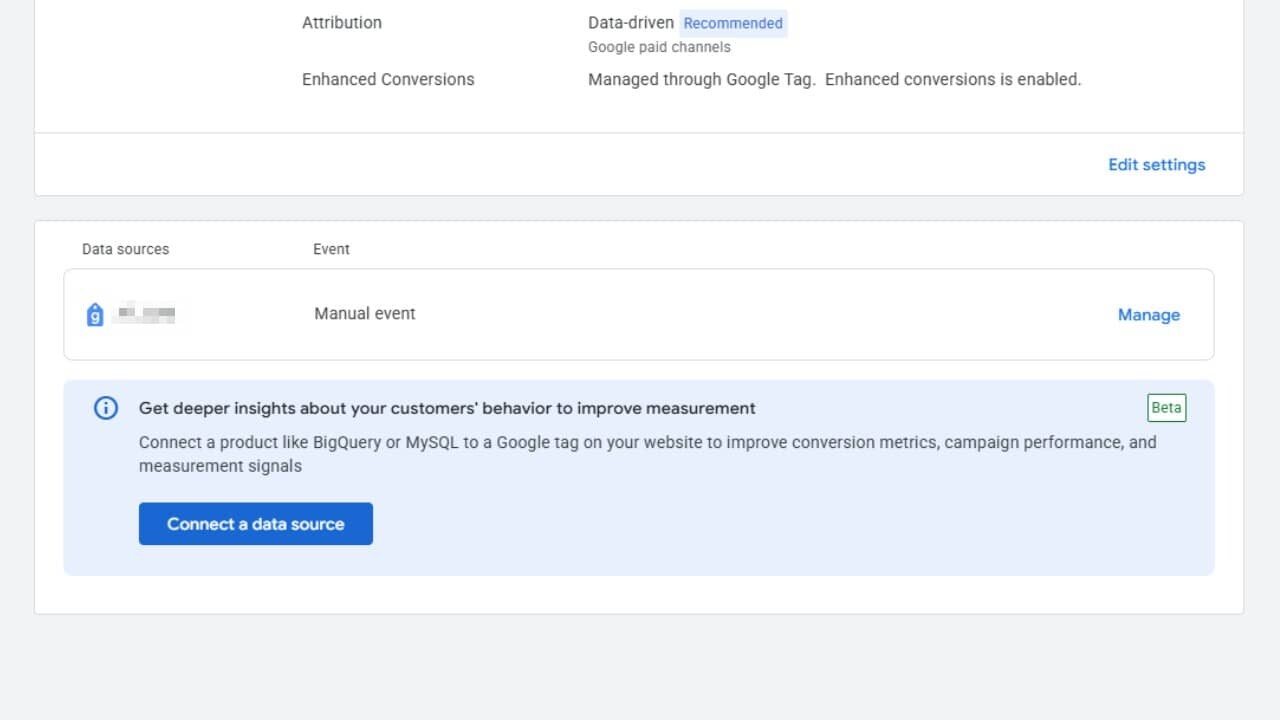
I’ve recently discovered an exciting development in Google Ads that’s set to revolutionize how we track and measure our advertising success. The platform is now testing a beta feature that allows us to link external data sources directly into the conversion action settings. This move aims to strengthen the bridge between our first-party data and campaign measurement.
How does this work, you might ask? In the conversion action details, a new section titled “Get deeper insights about your customers’ behavior to improve measurement” encourages us to connect our external databases to our Google tag, offering a seamless integration experience.
This integration supports platforms like BigQuery and MySQL, with the primary goal of enriching our conversion metrics and enhancing performance signals. Notably, this feature is highlighted within the data attribution settings and is gradually being rolled out in its Beta phase.
Why do we care? The ability to directly integrate these data sources reduces the hassle of syncing offline or backend data with ad measurements. This beta feature from Google Ads simplifies connecting first-party data to conversion tracking, improving our measurement accuracy and campaign optimization.
By harnessing the power of platforms like BigQuery or MySQL, we’re able to incorporate richer customer data into our signals, crucially offsetting any data loss resulting from recent privacy changes. In practical terms, this means smarter bidding, clearer attribution, and the potential for a stronger ROI.
Beneath the surface, embedding these data connections directly within conversion settings—rather than relying on separate pipelines—democratizes advanced measurement tactics, making them accessible not only to large enterprises but to advertisers like you and me.
As ad platforms compete for superior measurement accuracy, these native data integrations are emerging as a pivotal advantage, particularly for brands heavily investing in proprietary customer data.
I recently discovered how crucial first-party data has become in the evolving landscape of AI-powered advertising. It’s fascinating to see how it shapes the optimization and measurement of automated ad campaigns.
During a chat with Search Engine Land, I learned from Julie Warneke, CEO of Found Search Marketing, about the profound impact first-party data has on profitable advertising, regardless of potential changes to Google’s third-party cookie policies.
Embracing first-party data means tapping into customer information that I own, typically stored in a CRM, like lead details, purchase history, revenue, and customer value collected from various touchpoints.
This type of data is distinct from platform-owned or browser-based data, over which I have limited control.
Digital advertising has evolved over the years. The shift from focusing on impressions and clicks to outcomes emphasizes profitable conversions, according to Warneke. Advertisers who provide AI systems with quality customer data gain a significant edge.
Although rising cost-per-clicks (CPCs) are inevitable in paid media, first-party data enhances conversion quality, revenue, and return on ad spend, making higher costs justifiable with better results.
By leveraging first-party data tied to revenue and customer value, AI bidding systems can target users resembling high-value customers, even beyond usual demographic or geographic signals, leading to better conversions.
Among campaign types, Performance Max (PMax) thrives with first-party data activation. It performs best when I shift from manual optimizations to feeding it accurate data, allowing the system to learn, as Warneke highlighted.
Even small and mid-sized businesses can leverage first-party data, as seen in Warneke’s examples of success with small customer lists. The challenge lies in setting up proper infrastructure for tracking, consent management, and data flow.
Common mistakes include weak data capture, where brands rely on browser-side tracking that falters on platforms like iOS, and broken feedback loops from sporadic CRM data uploads. Continuous data streams are crucial.
Warneke advises taking a step back to audit how data is captured, stored, and relayed to platforms. Incremental improvements can pave the way for significant long-term gains, even starting with a small portion of a budget as a test.
Ultimately, AI optimization reflects the quality of signals received. By refining first-party data, I can influence outcomes favorably, avoiding inefficiency risks.
Google just introduced a beta integration for the Google Tag Gateway, allowing advertisers, like myself, to deploy it effortlessly through the Google Cloud Platform (GCP). The process is now simplified with a new one-click workflow available in Google Tag Manager and Google tag settings.
What’s really exciting is how the GCP integration leverages Google Cloud’s Global External Application Load Balancer. This tool routes tag traffic through our own first-party domain before sending it off to Google, which enhances the deployment process. This strategic approach not only improves data signal quality but also boosts resilience against ad blockers and features like Apple’s Intelligent Tracking Prevention.
Why does this matter to us? As third-party tracking faces increasing limitations from browsers and platforms, advertisers like us need reliable ways to protect measurement signals. By directing Google tags through our infrastructure, we can maintain the integrity of our measurement signals against ad blockers and browser privacy constraints.
For those of us already using Google Cloud, this one-click setup significantly reduces the barriers to achieving more resilient and future-proof tracking.
What are others saying? Digital marketer and Simmer co-founder Simo Ahava highlighted this advancement on LinkedIn. According to him, the integration facilitates a seamless GCP deployment. It automatically configures an External Application Load Balancer with rules to direct Google Tag Gateway traffic to our backend services handling these requests.
Ahava also noted that Google Tag Gateway positions Google’s tagging infrastructure behind a same-site, same-origin first-party host, ensuring that tags endure in restrictive browser environments.
The broader perspective here is that previously, Cloudflare was the only automated option for deploying Google Tag Gateway, with other CDNs requiring manual setups. By adding GCP, Google reduces the friction for us advertisers already committed to their cloud ecosystem, thus promoting first-party tagging strategies.
The bottom line? Google is simplifying first-party tagging deployment, and while the GCP integration is still in its beta stage, it represents a significant stride toward robust measurement solutions in our increasingly privacy-focused digital landscape.