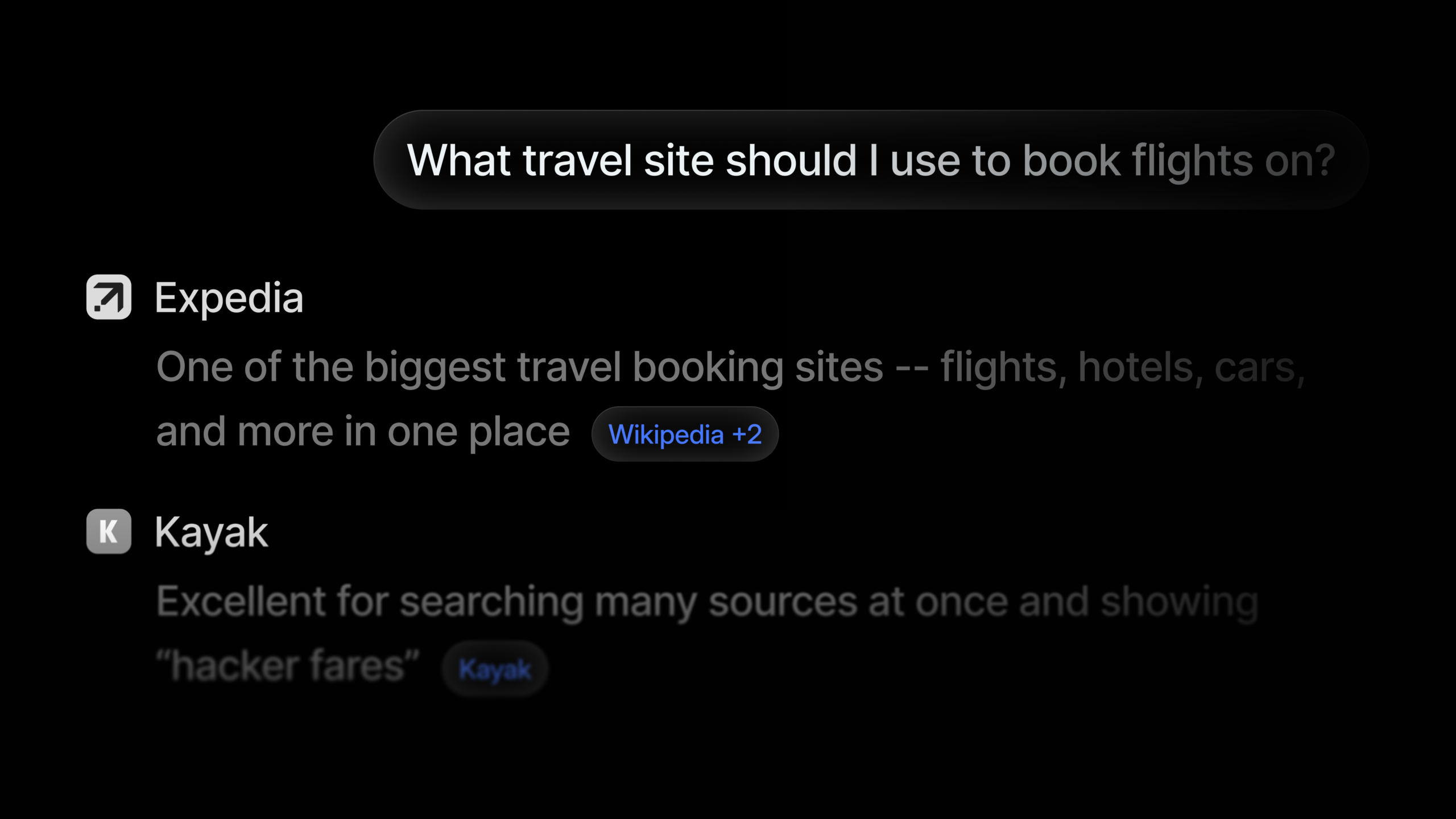
I’m thrilled to share how Yahoo Scout is revolutionizing the way we experience AI-powered searches. By anchoring responses in Yahoo’s esteemed content ecosystem, it ensures that the information we receive is not only consistent but also reliable.
By prioritizing sourcing, consistency, and enduring distribution, Yahoo Scout flips traditional AI search paradigms on their heads. This approach not only enhances user trust but also sets a new standard for how search engines can function within a trusted network.
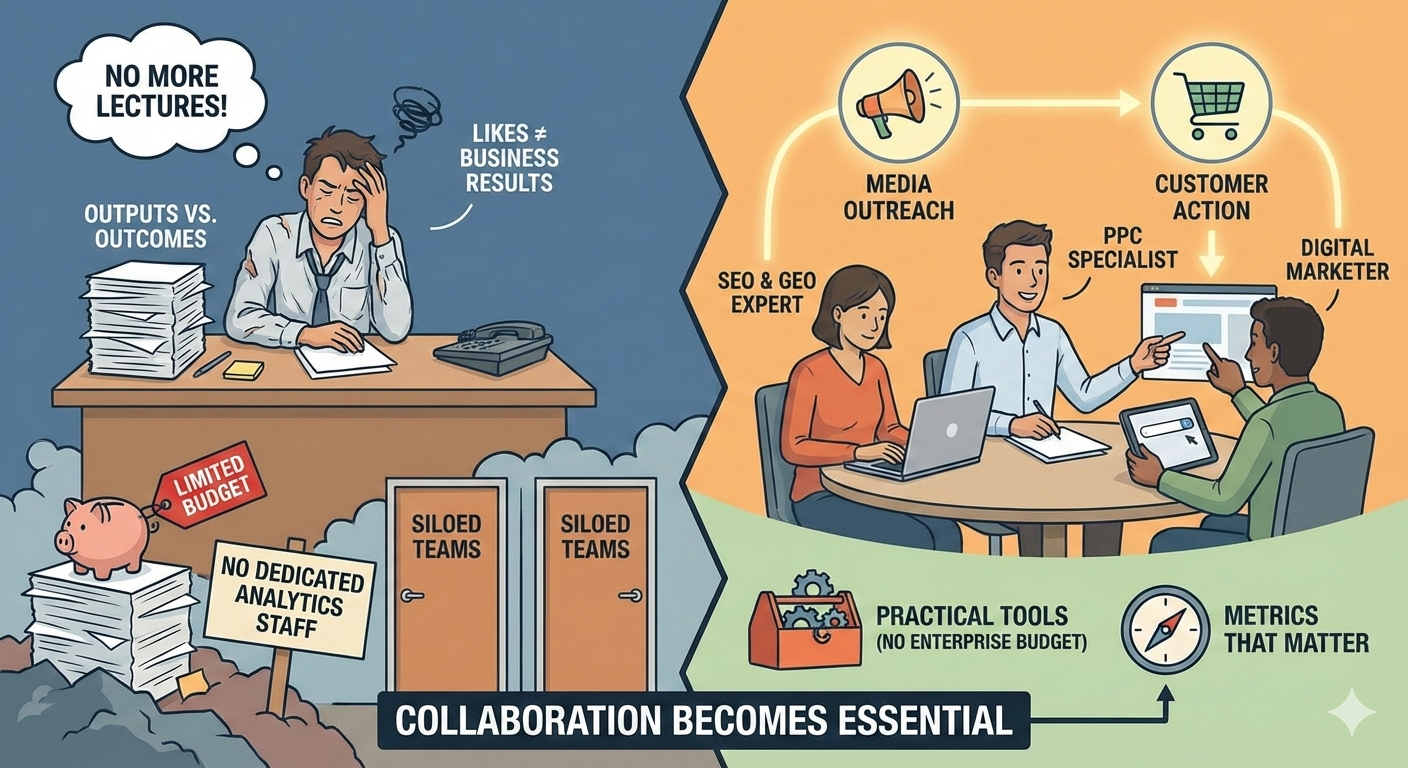
As I reflect on the challenges of PR measurement, it becomes clear that many hurdles exist. Limited budgets and siloed teams often make it tough to connect our media efforts with tangible results.
That’s why I’m convinced that collaboration with SEO, PPC, and digital marketing teams is key. Together, we can achieve what feels impossible on our own:
Specifically, by linking media outreach with customer actions, integrating SEO and GEO into our measurement, and choosing the right tools, we can truly measure impact.
This piece offers a practical roadmap for achieving this without needing an enterprise budget or specialized analytics team.
Our digital age of communication isn’t linear. Audiences often engage with content across various channels before taking action, if they do at all. Understanding this loop is essential for measurement.
I’m reminded of how SEO and PPC professionals focus on actions like searches, clicks, and conversions. We in PR should adopt this action-oriented mindset to enhance our measurement strategies.
First, we need to prove the link between media outreach and customer actions. This often requires cross-departmental collaboration to access valuable data currently scattered across different systems.
By incorporating PR touchpoints into analytics tools like Google Analytics 4, I can see our earned media’s influence on downstream behavior, turning PR from a cost center into a demand-creation channel.
Second, while SEO is widely accepted, understanding its measurement in PR is less clear. Traditional metrics like coverage volume or sentiment don’t fully capture SEO’s impact.
GEO presents a new frontier, focusing on whether our content is a source for AI-generated answers. Tools like Profound and Semrush’s AI Visibility Toolkit offer insights into this new layer of measurement.
Lastly, it’s crucial that we select tools based on strategic goals, not just what’s trendy. This involves working backward from the desired audience actions to choose the right measurement tools.
In collaboration, PR, SEO, and PPC teams can integrate their strategies, avoid duplication, and create comprehensive insights that inform and improve future campaigns.
Ultimately, this collaborative approach gives us the edge, allowing us to adapt swiftly to evolving measurement tactics and strengthen our collective impact.
By 2026, Google Ads automation has transformed drastically, with signal quality becoming paramount for exceptional performance. In this post, I’ll guide you on how signals drive these changes and how you can align them for optimal outcomes.
Back in 2015, I had tight control over my PPC campaigns. I directed Google on which keywords to pursue, set manual bids, and handled budgets with precision. Skillful use of spreadsheets allowed me to efficiently manage vast keyword inventories.
Those meticulously controlled days have faded. Now, in 2026, automation steers the wheel, moving beyond being a mere helper to a key driver of our advertising success. Fighting it is futile; embracing it is wise.
Automation has evened the playing field, liberating time for PPC marketers like me. But effectiveness now hinges on understanding how automation gleans insights from our data.
This piece delves into the intricacies of Google Ads signals, illustrating how to preserve their quality and prevent automation from veering off course.
The Mechanics of Signals in Automation
Contrary to seeing Google’s system as a mystery, it requires input of robust signals to perform optimally. Accurate signals lead to triumph; flawed data gears us for failure.
Automation runs on the signals I provide. AI interprets these signals, adjusting bids and targeting with unparalleled precision and efficiency.
While traditional documentation might suggest a primary focus on audience segments, the reality is that automation learns from a broader spectrum of signals.
Decoding What Qualifies as a Signal
In my experience, every component in a Google Ads account serves as a signal—shaping Google’s algorithm to determine successful advertising strategies.
Structural elements, budgets, conversion quality, and more provide insights into user intent, modeling a detailed blueprint for targeting.
The entire ecosystem, from landing pages to real-time data, contributes—guiding the AI in its decision-making process.
Here’s what stands out:
Conversion Actions: These signal what success looks like for my business.
Keyword Signals: Essential for decoding user search intent.
Creative Signals: Influences user attraction via visual cues.
Landing Page Signals: Ensures alignment with user expectations.
Bid Strategies: Communicates my advertising priorities to Google.
Innovation in signal interpretation has shifted, with the introduction of campaign total budgets, indicating a comprehensive financial commitment to Google.
Retailers, like Escentual.com, witnessed increased traffic through this approach, showcasing how signal precision offers tangible results.
Understanding Auction-Time Realities
Every user search triggers a unique bid calculation based on myriad signals, moving beyond generalized assumptions to precise decision-making.
This tailored approach ensures identification of “pockets of performance,” optimizing for predicted user outcomes aligned with our objectives.
Without quality signals, however, the system is left with assumptions, demonstrating the critical nature of providing accurate inputs.
Identifying and Prioritizing Signals
Not all signals wield equal influence. I’ve recognized that conversion signals bear the most weight, providing essential guidance for AI performance.
Conversion Dominance
Accurate conversion tracking underpins robust algorithmic learning, crucial for successful B2B and eCommerce advertising.
Enhanced Conversions and First-Party Data
In an era where third-party cookies disintegrate, relying on enriched data tracking is invaluable for understanding user interactions.
Quality audience signals and custom segments are imperative, enabling nuanced targeting, especially in niche markets.
Signal Category
Specific Input
Weight
Importance
Primary
Offline Conversion
Critical
Speaks to profit, not mere leads.
Primary
Value-based Bidding
Critical
Prioritizes profitable products.
Secondary
Customer Match Lists
High
Offers AI a model audience.
Tertiary
Keywords
Medium
Identifies search semantics.
Pollutant
Soft Conversions
Negative
Skews intent towards lower value.
Proper signals form the foundation for successful automation, requiring constant vigilance and correction of detrimental factors like signal pollution.
Combating and Correcting Signal Drift
Signal drift occurs when automation diverges from desired outcomes. Identifying subtle shifts in user targeting and making strategic corrections is key.
By tightening conversion signals, reinforcing audience data, and refining campaign structures, I can steer systems back to intended paths.
Reinforce Audience Patterns: Update lists and segments.
Adjust Campaign Structure: Separate high and low intent traffic.
Remaining proactive is about guiding automation, ensuring the system aligns with my business goals while leveraging Google’s robust AI insights.
Building a Winning Signal Strategy
Creating a coherent signal strategy in 2026 requires segmenting data wisely, isolating brand traffic, and differentiating products by ROAS for clarity in campaign objectives.
Achieving Competitive Edge
In a landscape where automation is universally accessible, the true advantage lies in the quality of signals I feed to Google.
By protecting these signals and timely correcting any drift, I ensure Google’s automation works for me, transforming it into a powerful asset in my advertising arsenal.
I recently learned that Anthropic has made a firm decision regarding the inclusion of ads in AI chatbots. They’ve announced that Claude will remain ad-free, even as other AI platforms start experimenting with sponsored messages and branded placements during chats.
Anthropic argues that placing ads in AI chats would undermine user trust, distort incentives, and conflict with how people use assistants like Claude—for work, problem-solving, and sensitive topics. In their latest blog post, they clearly lay out their stance.
Why this matters to us. Anthropic’s decision effectively removes Claude and its 30 million users from the potential AI advertising market. So, brands shouldn’t count on having sponsored links, conversations, or responses inside Claude. Meanwhile, ChatGPT opens up a new frontier for brands to potentially connect with an estimated 800 million weekly users.
Here’s the situation. According to Anthropic, AI conversations are quite unlike search results or social feeds where users might expect a combination of organic and paid content. They emphasize that many interactions with Claude involve personal inquiries, complex technical tasks, or high-stakes decisions, where inserting ads would seem intrusive and could subtly sway responses beyond user awareness.
Incentives matter. This is more than a product preference; it’s a strategic business model decision for Anthropic:
An ad-free assistant can concentrate fully on user benefits—even if that means a brief interaction or no follow-up. On the flip side, an ad-supported model might create pressure to identify monetizable moments or keep users engaged longer than necessary, potentially making users question whether suggestions are genuinely helpful or commercially driven.
Anthropic embraces commerce without ads. While Claude will assist users in researching, comparing, and purchasing products upon request, the commerce is user-initiated, not advertiser-driven. Likewise, third-party integrations with platforms like Figma or Asana will be user-directed and free from sponsor influence.
Super Bowl declaration. Anthropic took their message to a wider audience with a bold Super Bowl ad campaign. They critiqued intrusive AI advertising by placing mock product pitches into personal conversations. The ad concluded robustly: “Ads are coming to AI. But not to Claude.”
This campaign is likely a direct response to OpenAI’s announcement about introducing ads in ChatGPT.
I might be witnessing a significant shift as Google seems to be tightening its grip on self-promotional ‘best of’ listicles. This trend was highlighted by Lily Ray, who leads SEO strategy and research at Amsive.
Recently, many SaaS brands experienced a sharp decline in visibility, ranging from 30% to 50%. These companies often featured content that ranked their own products as ‘Number 1’ in their fields, frequently updating with the latest year to capitalize on recency signals.
Understanding the Trend. Following the December 2025 core update, there was noticeable volatility in Google search results throughout January, as reported by Barry Schwartz. Although Google hasn’t confirmed any updates for this year, the timing matches the visibility drops experienced by major SaaS and B2B brands. Lily Ray observes:
• In several situations, organic visibility dropped by as much as 50% within weeks. The losses were primarily in subfolders containing blogs, guides, and tutorials.
• These sections often housed numerous self-promotional listicles for ‘best’ queries, with the publishers typically ranking themselves first. Most articles were minimally refreshed with the addition of ‘2026’ to their titles, without substantial updates.
• “It seems likely that these declines in Google organic rankings might also affect visibility across other search engines and AI platforms that utilize Google’s results, like Gemini and ChatGPT,” Ray explained.
Why This Matters. There has been a longstanding practice of using self-promotional listicles to sway search rankings and AI-generated responses. If Google is reconsidering this kind of content, any strategies focusing on ‘best’ queries might face substantial challenges.
The Controversy. Ranking oneself as ‘the best’ without independent verification or third-party endorsement is often seen as a dubious SEO move. While not outright banned, it conflicts with Google’s guidelines on reviews and trustworthiness.
• Google maintains that quality reviews should display firsthand experience, originality, and clear evaluation. Self-serving listicles frequently fall short, particularly when bias isn’t disclosed.
However. Self-promotional listicles may only be one of several factors affecting organic visibility. Affected sites often showed signs of fast content expansion, automation, aggressive year-based updates, and other risky tactics.
• Nevertheless, the prevalence of self-promoting ‘best’ content among the most impacted sites suggests that this signal might now be more influential, especially when used extensively.
What’s Next. The outcome for self-promotional listicles in terms of gaining recognition and organic visibility is still uncertain, as Google seldom implements changes uniformly or immediately.
• If this volatility is linked to updates in Google’s review system, the trend is evident: Content aimed mainly at influencing rankings, rather than offering credible evaluations, poses growing risks.
• The enduring lesson for brands seeking online visibility is clear: SEO shortcuts may yield effective results, but only until they don’t.
I recently delved into an intriguing analysis of 700,000 ChatGPT conversations that included web citations from the fourth quarter of 2025. The insights were fascinating!
One key finding is that most citations are captured right in the first turn. It’s interesting how Wikipedia emerges as the go-to knowledge source, while other references tend to cluster around specific topics.
This shift in how citations are managed should definitely grab the attention of marketers. Understanding this new citation economy could reshape strategies significantly. Let’s dive deeper into what these changes mean for us in the marketing world.
I’ve noticed something intriguing in the responses from ChatGPT lately. If you peek into the page source, there are references to ads, even though no actual ads appear on the screen. It reads: “InReply to user query using the following additional context of ads shown to the user.” This discovery got me thinking about what’s brewing behind the scenes.
Digital marketer Glenn Gabe was the first to draw attention to this on X, highlighting the presence of ad-related phrases within ChatGPT’s source code. Other users have confirmed similar findings when engaging with commercial queries like auto insurance. This hints that there’s more at play than meets the eye.
This development could mark a significant shift, transitioning ChatGPT ads from a concept to reality, opening up a brand new high-intent advertising channel. With code logic for ads in place, it appears that OpenAI is already experimenting with targeting and eligibility to benefit early advertisers.
Given the limited ad space, and assuming ads will be seamlessly integrated into conversational responses instead of traditional banners, we might be on the brink of accessing premium advertising real estate that competes directly with organic content.
While the ads are currently invisible, their underlying logic is evidently active. This suggests OpenAI might already be testing parameters like ad eligibility, suppression rules for paid tiers, or internal mechanisms, all in preparation for a larger rollout.
OpenAI acknowledged earlier this year that ads would be introduced to ChatGPT for select users. These ads are expected to be sold on an impression basis, hinting at potentially high costs for advertisers. The groundwork is clearly set, even if ads haven’t gone live yet.
For those keen on following this development, I recommend checking out Glenn Gabe’s tweet that showcases evidence suggesting the imminent arrival of ChatGPT ads.
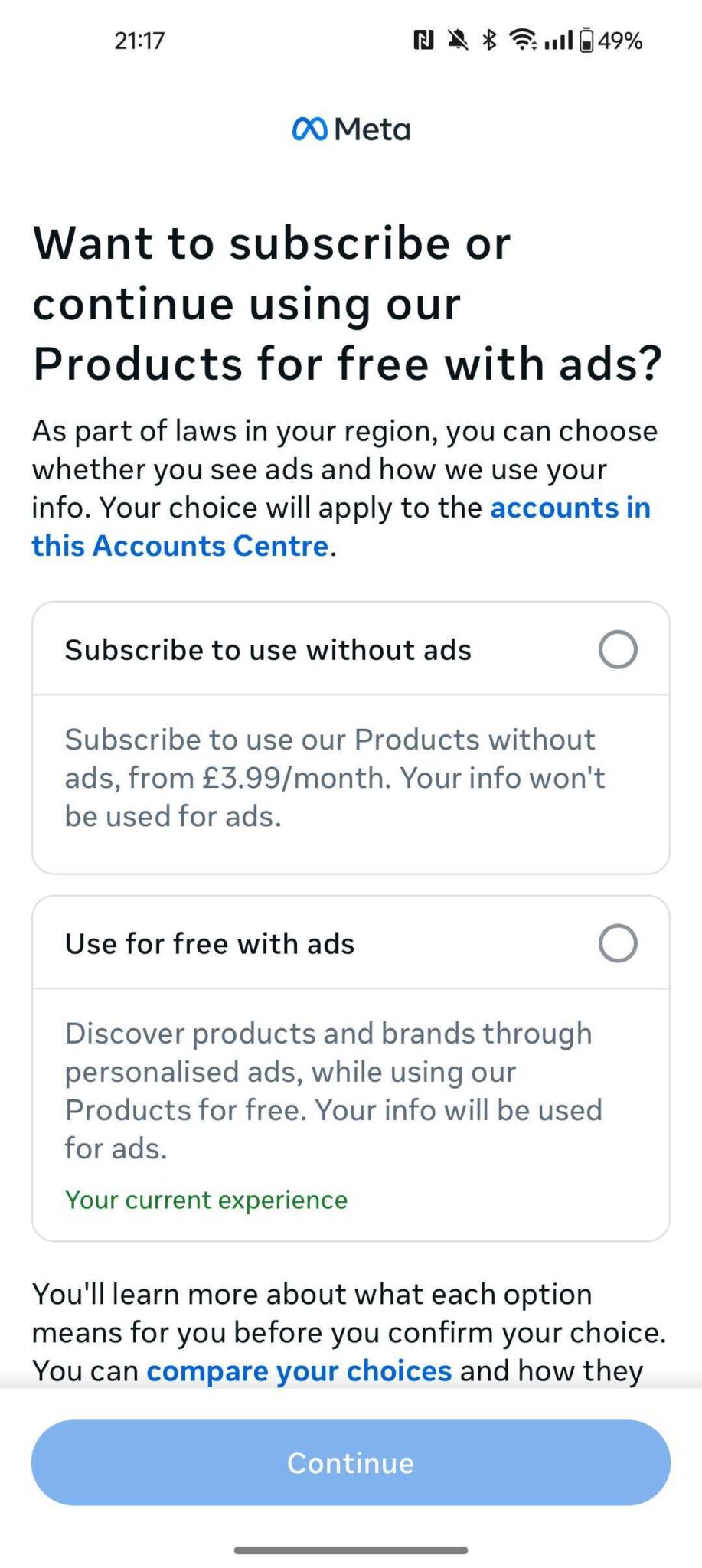
Recently, I’ve noticed that Meta is testing paid subscriptions on Instagram, Facebook, and WhatsApp. Their goal is to unlock premium features and incorporate AI more prominently across these platforms, which could significantly shift how we create and interact with content.
What’s unfolding? Meta’s new subscription trials aim to bring exclusive features to each app, tailored to productivity, creativity, and enhanced AI capacities, while the core experiences remain free. It’s interesting to see how Meta plans to develop unique subscription offerings instead of just a single bundle, especially as they explore which combinations of features might work best.
Subscriptions will provide premium controls and tools that can benefit everyday users, creators, and businesses, distinct from Meta Verified. For instance, on Instagram, initial testing might include features like unlimited audience lists, insights into non-followers, and stealth story viewing.
Meta also aims to launch paid AI features, notably increasing access to its Vibes AI video generation tool through a freemium model. I’m curious about how this might change our interaction with content creation tools.
Why this matters to us. These paid subscriptions could transform user engagement on Meta’s platforms, potentially altering privacy settings and audience reach. Additionally, new AI-driven creation tools could shift the landscape of user-generated content that advertisers either compete against or harness for campaigns. Over time, these subscription tiers might redefine targeting strategies and the value of organic versus paid engagement on these platforms.
Reading between the lines: AI is central to this strategy. Meta plans to scale Manus, an AI agent they acquired for $2 billion, by embedding it within their apps and offering standalone subscriptions to businesses. Reports suggest that we’ll soon see Manus shortcuts directly in Instagram, creating tighter integration between social media engagement and AI-enhanced content creation.
Why the timing is right. While advertising is still at the core of Meta’s revenue model, diversifying into subscriptions can provide a new income stream. With users more open to paying for unique social features, as seen with Snapchat+ boasting over 16 million subscribers, Meta is betting on replicating that success without adding to the subscription overload many of us feel.
The takeaway. Meta’s experiment with premium social and AI enhancements could potentially open a significant new revenue stream beyond advertising. The real test will be whether these features provide enough value to justify another subscription in our already crowded monthly commitments.
I’ve been thinking a lot about how the search landscape is evolving. It’s not just a shift; it’s a complete reimagining of the digital roadmaps we’re used to. To dig deeper, I reached out to six trailblazers in the SEO world to get their insights on where we’ll be by 2026. Here’s what they shared.
Our interactions with AI are going beyond simple Q&A scenarios. Enter the era of AI acting as your executive aide, seamlessly handling everything from finding the right product to processing your purchase. This shift demands that we optimize not just for clicks, but for machine readability and compatibility with AI protocols.
Jim Yu, CEO of BrightEdge, emphasized the need for preparation as AI takes on a more agentic role. According to him, the brands that embrace structured data and machine-readability will stand out as AI-driven commerce becomes mainstream.
Samanyou Garg, CEO of Writesonic, predicted a future where AI will take users straight from discovery to transaction within a single conversation. Meanwhile, Crystal Carter from Wix warned that simply being discoverable isn’t enough if you’re ignoring the agentic potential.
Key takeaway: Your product data needs to be machine-readable. Without it, AI agents may overlook your brand in favor of more compliant competitors.
As AI matures, advertising will become more integrated, moving away from traditional placements to conversational approaches. Jim Yu suggested that AI responses embedded throughout search result pages will become routine, reinforcing the importance of broad optimization strategies.
By 2026, we’ll see SEO professionals functioning more like engineers, using natural language tools to create marketing solutions. According to Garg, this approach allows for a significant increase in productivity, reducing manual labor and cutting costs.
Key takeaway: Automation is the future. Teams that embrace tool-building over task-completing will speed up their progress significantly.
The concept of singular search rankings is becoming obsolete as search results become personalized in real-time. Mike King views this as an opportunity to tailor content to specific audiences, enhancing relevance and engagement.
Key takeaway: Generic content risks invisibility. Tailor your SEO strategy to focus on specific audience segments.
We are witnessing a divergence in SEO roles: one focusing on traditional human users and the other on AI agents. Understanding both audiences will be crucial for future SEO success, as traditional metrics like rankings and clicks may no longer measure true impact.
Key takeaway: Optimize for human interactions and AI processes separately to ensure you’re not missing hidden opportunities for engagement.
Proprietary data and unique, authentic content are becoming increasingly valuable as AI-generated content proliferates. Brands that own distinctive datasets will stand out, as their information becomes essential for AI models to cite.
Key takeaway: Develop proprietary data and unique content to maintain an edge in an AI-saturated landscape.
AI literacy is essential. In 2026, the ability to effectively integrate AI into processes will differentiate market leaders from the rest. Neil Patel stresses the importance of linking AI usage to measurable business outcomes.
Key takeaway: Equip your team with the right AI tools and training to translate AI initiatives into tangible results and growth.
Ultimately, achieving search visibility in 2026 will involve being more than just relevant in rankings. It means becoming a reliable resource for both human users and AI systems. Investing in the right data and AI strategies now will secure your success in the upcoming year.
Over the past year, I’ve delved deep into the world of telecom SEO agencies to bring you the frontrunners in this competitive field. From February 2025 to January 2026, my team and I meticulously examined 47 agencies renowned for their telecom SEO prowess, narrowing down to the top 9. Our selection process was rigorous, featuring a detailed survey with 127 telecom marketing professionals, comprehensive technical audits, and performance evaluations.
Our primary criteria were agencies with solid telecom experience and proven SEO and GEO skills. We evaluated each agency using a weighted score across eight criteria to ensure the best rose to the top. Below, I share a detailed analysis of each agency alongside real client reviews for your consideration.
Evaluation Framework
We evaluated agencies using eight weighted criteria, each contributing to a total score of 100%:
Technical SEO Competency (20%) – Focused on optimizing Core Web Vitals, JavaScript SEO skills, and expertise in mobile-first indexing.
Industry Experience & Track Record (15%) – Years working with telecom clients and demonstrating proven results.
Team Composition (15%) – Assessing the balance of certified SEO specialists and the strength of their content teams.
Leadership Experience Score (12%) – Leadership’s impact within the telecom industry through speaking, research, and advisory roles.
Standing at the pinnacle, First Page Sage excelled with an impressive 4.9 out of 5 review score across platforms. Specializing in sophisticated SEO strategies, they seamlessly navigate regulatory landscapes while ensuring compliance. Their telecom prowess, acquired in 2012, showcases their knack for generating qualified leads and staying compliant with industry norms.
Location: San Francisco, CA
Established: 2009
Services Offered: Lead Generation, SEO, AIO/GEO, SEM, Web Design
Price Range: $$$
Summary of Online Reviews
Clients claim to “genuinely trust” First Page Sage for their high-quality content creation, praised for “accountability for ROI” despite taking some extra time. Overall, their service is unanimously lauded.