Tag: Digital Marketing

  • Why Double-Checking PPC Settings Can Save Your Campaign

    Why Double-Checking PPC Settings Can Save Your Campaign

    As a seasoned PPC professional, I’ve learned the hard way that even experts can fall victim to default settings. It’s become clear to me how crucial it is to thoroughly double-check every campaign setting.

    On episode 334 of PPC Live: The Podcast, I chatted with Sophie Fell, Head of Paid Media at Liberty Marketing Group. We delved into a memorable PPC mishap involving location targeting, illustrating how minor oversights can escalate into significant issues—but also how to resolve them effectively.

    Sophie shared a story where she inadvertently launched a campaign with worldwide location targeting. The campaign quickly amassed 1,500 leads, which appeared promising until she realized they were from unintended locations.

    At first glance, such a spike in leads seemed like a triumph, yet we soon saw it as a cautionary tale. Upon further investigation, the reason was clear: the location settings were misconfigured. This experience taught us the importance of scrutinizing results that seem unusually favorable.

    The client noticed the mistake around the same time as Sophie. She addressed the situation with honesty, acknowledging the error, clarifying the misstep, and resolving it promptly. This transparency was crucial in maintaining trust, even if the client felt understandably frustrated.

    This wasn’t a case of lacking expertise; rather, it was about rushing through processes and assuming reviews had been done. We’ve all made assumptions that trip us up, and this incident was a stark reminder of the dangers inherent in default settings.

    Once the issue was corrected, Sophie’s campaign achieved exceptional results, hitting targets early and surpassing revenue goals by £3.5 million. This success wasn’t defined by the initial error but by the way it was handled.

    Nowadays, Sophie double-checks campaign settings multiple times for assurance. She examines settings during any unusual performance shifts and ensures results are thoroughly vetted. Her key takeaway: post-launch reviews often catch what pre-launch overlooks.

    When mistakes occur, Sophie advises: pause, assess, and be transparent. It’s critical to take responsibility, explain the error, and detail preventive measures. Errors only escalate into issues if mishandled.

    In her audits, Sophie frequently encounters outdated accounts, over-reliance on brand campaigns, and misapplied automation tools. She emphasizes the ongoing importance of aligning keywords, ads, and landing pages, even in the era of AI-driven marketing.

    Discussing mistakes is vital—many assume industry veterans no longer err, but learning never stops. Sharing these experiences fosters junior confidence, enhances leadership, and propels industry evolution.

    I believe a healthy team culture tolerates experimentation and accountability. Sophie highlights the need for clear testing frameworks, budget constraints, and openness. Teams claiming perfection often lack innovation.

    The key takeaway? Regularly verify your campaign settings. Platforms evolve, defaults change, and assumptions can lead astray. Ensuring campaigns align with intentions prevents mishaps.


    Inspired by this post on Search Engine Land.


    crushpress.ai community screenshot
  • The Next Era of AI: Why Orchestrators Will Lead the Charge

    The Next Era of AI: Why Orchestrators Will Lead the Charge

    For the last two years, I’ve been swept up in the AI gold rush era. It’s reminiscent of what Taylor Swift would call the “Lover” phase—everything was shiny, fresh, and filled with potential.

    My approach? I tried to buy it all.

    But now, I’m shifting gears to a “Reputation” phase, which feels darker, edgier, and all about the receipts.

    Noticing headlines like Microsoft’s decision to lower AI sales targets got me thinking. People framed it as a disappointment, but what I see is a market maturing.

    As we’re evolving, I’m realizing that we’re leaving behind the AI gold rush era. Microsoft’s recalibration is just one sign that we’re stepping into AI’s Production Phase era.

    Conversations are changing: I’m more focused on whether these tools actually work within my business, connect to our stack, and drive revenue.

    There’s a shift happening as the AI market remains a bit unstable. With almost 40% of U.S. consumers having tried generative AI, regular use isn’t quite there yet, as shown by moves in platform loyalty.

    This instability means that for me, orchestration is key to staying future-proof in a fragmented ecosystem.

    The martech scene has exploded with over 15,384 solutions available, yet I see only 33% of tech being fully utilized. We were paying for a full suite, but truly benefiting from just a third of it.

    During the rush, we bought point solutions to address specific problems, but lacked a conductor to bring everything together harmoniously.

    This results in what I’d call Pilot Theater—demos that impress but fail to deliver ROI because they’re trapped in isolated silos.

    Imagine your P&L hit by these issues: budget disconnects, experience breaks, and content gaps. These gaps are a signal, but what’s missing is coordination, and the pressure is mounting with CEOs keen for AI ROI.

    Moving forward, I have to go beyond automation, to embrace agentic orchestration—this is where systems don’t just automate, but adapt and integrate.

    Orchestration becomes the nervous system of my marketing operations. It’s my survival strategy in a rapidly evolving AI space.

    Real orchestration happens now, with intelligent feedback loops replacing manual processes. Here’s how it’s working for me:

    I’ve seen how orchestration aligns efforts, such as in budget fluidity, buying group alignment, and closing content loops to meet real buyer needs.

    As a leader, I’m now part of what’s known as the “Builder” generation. Marketing teams, including mine, are becoming more like product teams, building custom platforms to meet our unique needs.

    Integration is key, and it’s becoming clear: Orchestrators are now the leaders. This isn’t the end of AI, but the end of tourist AI. Growth now requires intelligence, not volume.

    My advantage lies in developing an AI nervous system that is effective across channels, capitalizing on opportunities before they slip away. The orchestration era in AI is here to stay and it’s time for orchestrators, like myself, to lead.


    Inspired by this post on Search Engine Land.


    crushpress.ai community screenshot
  • Discover the 9 Best HVAC SEO Agencies of 2025: Our Expert Analysis

    Discover the 9 Best HVAC SEO Agencies of 2025: Our Expert Analysis

    Last updated: December 12, 2025

    In my quest to find the top HVAC SEO agencies of 2025, I dove into our comprehensive research findings. Our team evaluated over 40 agencies, narrowing it down to the top 9, based on these key criteria:

    Past Clients (25%): I found that an agency’s previous work with HVAC companies is crucial. A robust portfolio of client successes speaks volumes about their ability to design effective SEO campaigns.

    ```json
{
  "alt": "Black background with Lemon Seed Marketing logo featuring a sliced lemon graphic and yellow text.",
  "caption": "Discover the zest of Lemon Seed Marketing! A fresh approach with a vibrant logo featuring a sliced lemon, set against a sleek black backdrop. Ready to invigorate your brand?",
  "description": "This image showcases the Lemon Seed Marketing logo on a black background. The logo creatively incorporates a sliced lemon graphic, with 'lemon seed' in bold yellow and 'MARKETING' in white text below. The design is modern and eye-catching, perfectly embodying the company’s vibrant and fresh branding approach. A navigation menu is at the top, featuring sections like About, Services, and Portfolio, with a standout yellow 'Contact Us' button."
}
```

    Year Founded & Median Employee Tenure (10%): SEO has evolved dramatically, so agencies with a track record of adapting to Google’s frequent algorithm updates stand out. Longer employee tenures often indicate a culture of continuous learning.

    Founder Status & Leadership Experience (20%): Leadership plays a pivotal role in campaign outcomes. I rated agencies based on leadership expertise in HVAC marketing, favoring those still led by their founders.

    ```json
{
  "alt": "Mediagistic home services marketing agency banner with pie chart of digital marketing services.",
  "caption": "Discover why Mediagistic is the #1 home services marketing agency, specializing in digital marketing, websites, and mass media for OEMs and distributors.",
  "description": "This image features a banner for Mediagistic, the leading marketing agency in the home services sector. It highlights their expertise in digital marketing, websites, and mass media through a colorful pie chart. Positioned as the #1 agency, Mediagistic serves OEMs, distributors, and dealers across the US and Canada. The call-to-action buttons invite potential clients to engage with the team. Keywords: Mediagistic, marketing agency, digital marketing, home services, OEMs, distributors."
}
```

    Average Reviews (20%): I examined client reviews on various platforms, prioritizing those from HVAC businesses for greater credibility.

    Specialty (10%): Agencies with a niche focus on HVAC and proficient in SEO were favored in our analysis.

    ```json
{
  "alt": "Four professionals stand together smiling, representing teamwork and branding.",
  "caption": "Four colleagues share a light moment, embodying the spirit of teamwork and innovation essential for brand building.",
  "description": "The image shows four professionally dressed individuals standing against a light gray backdrop, engaging in a cheerful moment. This represents a collaborative and positive work environment focused on brand building, as emphasized by the text beside them: 'We Build Brands.' Keywords: teamwork, branding, business strategy, professional."
}
```

    Media References (5%): Although a smaller factor, being frequently cited by reputable media indicates an agency’s visibility and authority.

    GEO Offering (10%): I considered agencies that expanded their services to include generative engine optimization, helping HVAC companies rank in AI-powered search environments like ChatGPT.

    ```json
{
  "alt": "LocaliQ webpage with text 'Unlock your business potential' and images of diverse professionals.",
  "caption": "Discover the power of LocaliQ's growth marketing platform to elevate your business success with expert solutions.",
  "description": "The LocaliQ webpage showcases the tagline 'Unlock your business potential' alongside images of diverse professionals symbolizing innovation and expertise. The page emphasizes finding and keeping customers through technology-driven marketing solutions. Prominent call-to-action buttons encourage users to 'Get a demo' and 'Find the right solution,' highlighting LocaliQ’s commitment to empowering businesses."
}
```

    Here are my findings on the top HVAC SEO agencies:

    The Top HVAC SEO Agencies

    First Page Sage: An industry leader, renowned for SEO innovation. Founded in 2009, they lead the charge with thought leadership-based SEO. Their notable clients include Windy City Ventures and Four Seasons Heating & Plumbing.

    ```json
{
  "alt": "Business professionals conversing in front of a branded vehicle with marketing text overlay.",
  "caption": "Empower your business with cutting-edge marketing solutions. Discover how digital marketing and AI expertise can elevate your brand's success.",
  "description": "The image features a group of business professionals engaged in conversation in front of a truck with branding elements. Overlay text emphasizes the theme 'Run your best business,' highlighting digital marketing powered by artificial intelligence. This image is part of Scorpion's marketing platform, showcasing their services and expertise in enhancing business growth through advanced marketing techniques. Keywords: digital marketing, AI, business solutions, branding, conversation."
}
```

    Lemon Seed: Established in 2019, this agency covers the full marketing spectrum for HVAC companies, with a flair for brand design. Their work with Krueger and Climate Plus sets a high standard.

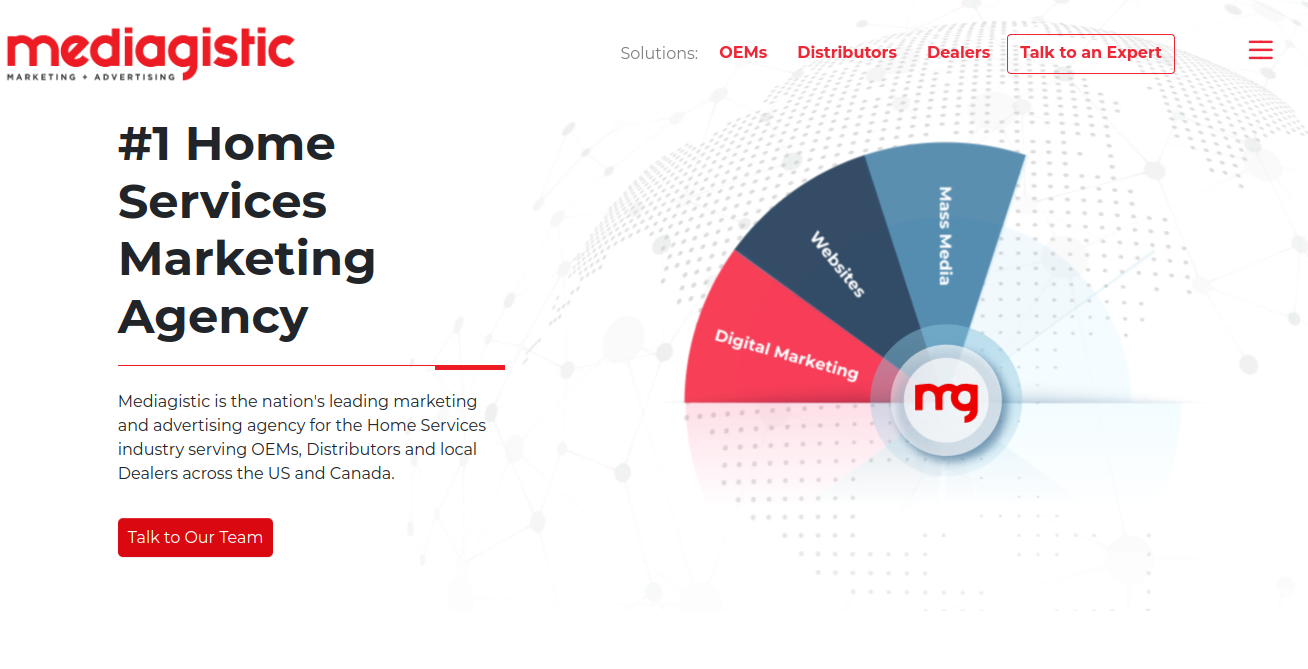
    Mediagistic: This agency blends traditional marketing with SEO, serving large enterprises since 1999. They excel in media buying across diverse channels.

    ```json
{
  "alt": "HVAC Webmasters website promoting SEO services, with contact form and spring special offer.",
  "caption": "Boost your HVAC business with expert SEO services! Contact us today for a spring special offer and elevate your online presence.",
  "description": "This image is a screenshot of the HVAC Webmasters website, highlighting their SEO services for local businesses. The banner features a spring special offer, encouraging viewers to call for details. The services listed include Local SEO, Web Design, PPC Management, Social Media, and Digital Marketing. On the right is a contact form for inquiries. The design includes blue and orange elements, emphasizing branding and user engagement."
}
```

    Marketing Eye: Founded in 2004, they focus primarily on technical SEO, optimizing existing web content, ideal for firms with robust in-house marketing teams.

    LocaliQ: Known for geotargeted SEO, they specialize in boosting local visibility for small businesses. Founded in 2004, they offer flexible scaling as businesses grow.

    ```json
{
  "alt": "Metric Theory website homepage showing a cityscape and text 'The Performance Digital Marketing Agency'.",
  "caption": "Discover cutting-edge strategies with Metric Theory, your dedicated performance digital marketing agency. Dive into the future of marketing excellence today!",
  "description": "This image displays the homepage of the Metric Theory website, featuring text 'The Performance Digital Marketing Agency' against a cityscape backdrop. The top navigation includes options like Services, Company, and Blog. Partner logos such as GoFundMe and Lyft appear at the bottom, emphasizing collaboration with various brands. The blend of marketing-focused text and visual aesthetics highlights Metric Theory's role in digital marketing innovation."
}
```

    Scorpion: Providing comprehensive digital solutions since 2001, Scorpion is a go-to for businesses looking for seamless marketing integration.

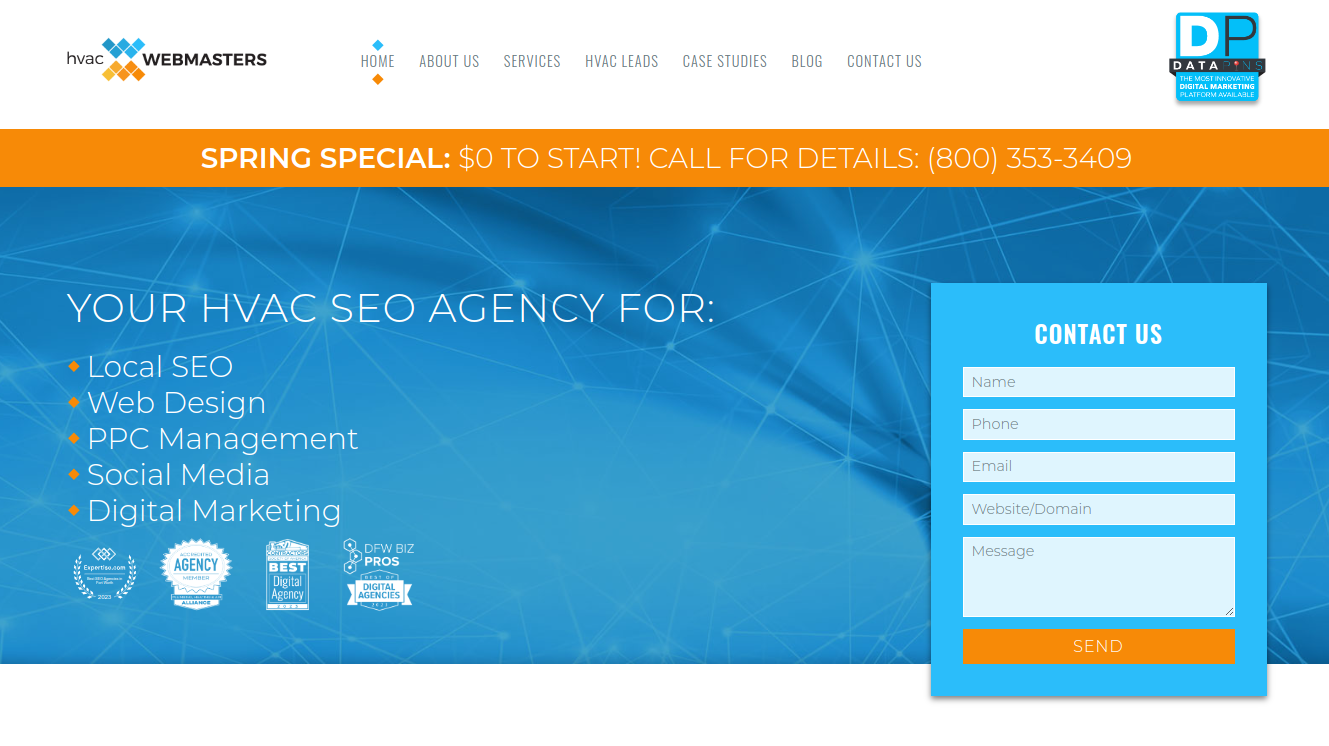
    HVAC Webmasters: True to their name, they focus on all things digital for HVAC firms. They excel in local SEO and web design, being a great match for companies needing a digital facelift.

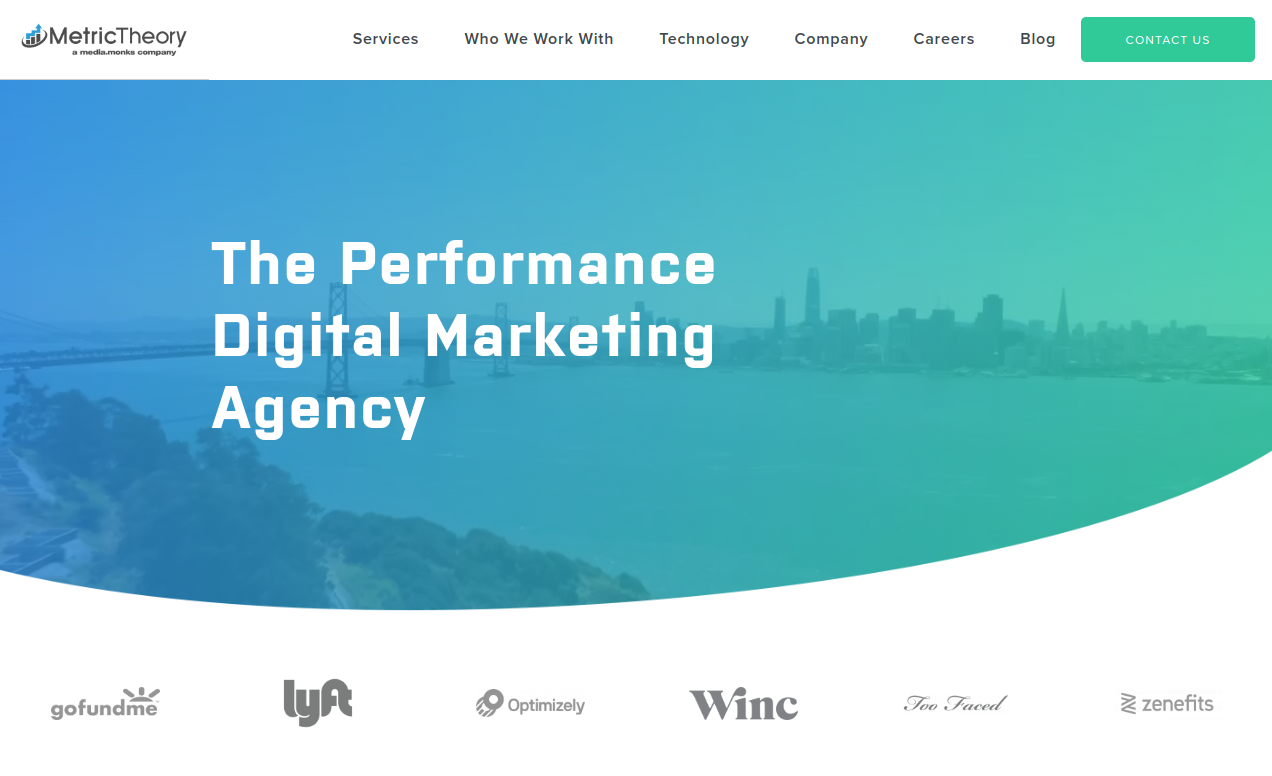
    Metric Theory: Since 2012, they combine PPC and SEO, helping businesses bridge gaps with quick lead generation in mind.

    Source


    Inspired by this post on First Page Sage Blog.


    crushpress.ai community screenshot
  • Celebrating 19 Years of Search Insights and Innovation

    Celebrating 19 Years of Search Insights and Innovation

    Search Engine Land turns 19

    Today, I am thrilled to share that Search Engine Land is celebrating its 19th anniversary!

    Nineteen years is an incredible milestone. For almost two decades, we have been diving deep into the ever-evolving world of search engines, always striving to make sense of the changes and challenges Google and the search industry present.

    This year, 2025, has been one of the most transformative since our launch in 2006. The rapid pace of change has been exhilarating.

    Through it all, our mission remains steadfast: to provide clear news, insightful analysis, and practical guidance to help you navigate the world of search.

    Before we look to the future, I want to express my heartfelt thanks for your support and reflect on the past year with you.

    Thank you for reading

    Sincerely, thank you for being with us.

    Every day, we focus on you: what you need to know, what really matters, and what changes will impact your work today or your strategy months down the line.

    Our goals include:

    • Focusing on meaningful stories, not filler.
    • Delivering news clearly and quickly.
    • Providing essential context and expertise.
    • Being a dependable resource in a fast-changing industry.
    • Helping you anticipate where search is heading, even when it’s unclear.

    If you haven’t yet, I encourage you to subscribe to our daily newsletter for a curated summary of all things search, helping you stay updated without feeling overwhelmed.

    Thank you to the Search Engine Land team

    Our team’s passion is what has driven our success for almost two decades.

    Though small, our team accomplishes significant and impactful work because we are mission-driven and dedicated to search.

    I extend my greatest thanks to:

    • Barry Schwartz. With 22 years of experience, Barry’s passion for search ensures complex topics become understandable. He is indispensable.
    • Anu Adegbola. Focusing on paid media, Anu offers clarity amidst constant changes with her insightful writing.
    • Angel Niñofranco. Angel plays a crucial role in our SME articles through his coordination and editorial oversight.
    • Kathy Bushman. Kathy’s behind-the-scenes expertise ensures SMX events are seamless and valuable.

    And to the entire team at Third Door Media within Semrush, whether or not your name appears here, your contributions are invaluable.

    Top highlights from the past year

    Despite the uncertainties of this year, Search Engine Land thrived, thanks to the trust of our community.

    SMX Advanced returned in person for the first time in 6 years

    This was arguably the highlight of the year. SMX Advanced’s return in person after six years was electrifying.

    With attendance surpassing expectations, the sessions were dynamic, and conversations felt like reunions for the search marketing community. It was clear that we all missed these face-to-face exchanges about AI, Google’s updates, and more.

    We learned again that when great minds gather, extraordinary things happen. We eagerly await our next gathering in Boston, June 3-5.

    Defining industry coverage of AI Overviews and the new era of search

    This year, more than ever, transformed the search landscape. We’ve provided the clarity and reporting needed in this evolving environment.

    Our readers rely on us for insights during times of change, and we take pride in shaping the industry’s future understanding of search.

    Subject Matter Expert (SME) program growth

    This year saw a surge of new and returning readers turning to us for insight into SEO and PPC shifts, from AI to SERP experiments.

    Our growth owes much to our fantastic contributors, and I extend my gratitude for their impactful work.

    Looking ahead: What’s next for Search Engine Land

    As we embrace our 19th year, our resolution is steadfast: to offer unparalleled coverage of search-related topics.

    This year, you can anticipate:

    • Continued breaking news on SEO, PPC, AI, and more.
    • In-depth analysis, guides, and contextual explainers on industry evolution.
    • SMX events tailored around the nuances of AI-driven search.
    • Enhanced expert viewpoints, data, and market clarity.

    Mark your calendars for:

    • SMX Advanced: June 3-5
    • SMX Next: Nov. 18-19

    We have much in store for you, with the aim of equipping you with the insights necessary for your best work.

    A brief look back to where it all began

    Launched on Dec. 11, 2006, Search Engine Land began with a vision of search as a vast community. A place of exploration, connection, and evolution. Over these years, it’s grown beyond our expectations.

    The mission remains the same:

    Search Engine Land is your destination to remain informed, educated, and connected within the world of modern search engines.

    Thank you for 19 incredible years

    From everyone here at Search Engine Land and Semrush, thank you for your readership, engagement, and passion for the evolving world of search.

    Here’s to a promising rest of 2025 and a remarkable 2026.


    Inspired by this post on Search Engine Land.


    crushpress.ai community screenshot
  • Mastering SEO and AI: Building Long-Term Brand Authority

    Mastering SEO and AI: Building Long-Term Brand Authority

    I’ve embarked on a journey to understand how we can transition from traditional SEO to an approach I call brand-focused algorithmic education. With algorithms powering AI-driven results, this multi-speed strategy aims to strengthen our brand’s authority and online presence.

    It all started when I recognized the importance of an AI-driven resume for brands. This asset has become a critical part of our strategy, especially as we explore various research modes to align with evolving technologies.

    To thrive in this new landscape, I realized we need to shift our focus from just ranking to educating these algorithms. This involves understanding platforms like Google AI, ChatGPT, and Microsoft Copilot, which synthesize information instead of just providing links.

    Conversations I had with industry leaders, such as Google’s Gary Illyes and Bing’s experts like Frédéric Dubut, have been enlightening. They all emphasize the importance of mastering what I call the algorithmic trinity.

    Let’s dive into each part of this trinity.

    Firstly, traditional search engines form the foundation, offering real-time web data. AI uses this for current events and niche topics, acting as its “here and now” window.

    Next, knowledge graphs serve as the AI’s encyclopedia, storing a brand’s core identity. Google’s Knowledge Graph is massive, and maintaining accuracy here is crucial for avoiding AI hallucinations.

    Finally, large language models (LLMs) are the conversational face of AI, synthesizing information to deliver user-friendly answers.

    For our brand strategy to succeed, we must operate on three timelines: short-term, mid-term, and long-term. Each requires a nuanced approach.

    In the short term, boosting our visibility through search results is key. Implementing simple SEO tactics can get us noticed in AI search results quickly.

    Mid-term, we focus on educating the Knowledge Graph over several months, ensuring our brand’s factual foundation is robust and accurate.

    Long-term, our aim is to become part of an LLM’s training data, ensuring our brand is ingrained in AI knowledge over many years. This is the pinnacle of algorithmic authority.

    Central to achieving these goals is building our strategy on solid entity SEO. I’ve even expanded on Google’s E-E-A-T framework to include notability and transparency, aligning with the underlying questions algorithms ask: Who are we, can we be trusted, and are we authorities?

    Looking ahead, AI’s role as a decision-making assistant is growing. I’ve personally tested ChatGPT to assist in purchasing decisions, and its potential as a personal agent is vast.

    In essence, our digital strategy must continually evolve. We can no longer chase outdated SEO strategies but should instead cultivate comprehensive algorithmic education for our brand.

    To thrive, our content must be frictionless for bots, digestible for accurate indexing, and tasty to establish authority. This ensures we remain top of mind for AI engines.

    Let’s commit to this holistic strategy today, as AI assistive agents of tomorrow are already preparing. Our work will not only build a formidable AI resume but establish a lasting brand legacy.


    Inspired by this post on Search Engine Land.

    crushpress.ai community screenshot
  • Master PPC Brand Protection: Safeguard Your Brand Now

    Master PPC Brand Protection: Safeguard Your Brand Now

    I never realized how much traffic I was losing every day until I learned about unauthorized bidding, affiliate violations, and ad hijacking. It’s a common issue, but don’t worry, I’m here to guide you through building a robust brand protection strategy in paid search.

    Did you know that ad fraud reached an estimated $84 billion in global digital ad spend in 2023? If you’re facing a steady rise in branded CPCs or see competitors continuously appearing above you in searches for your own name, this guide is exactly what you need to understand why and what steps to take next.

    Brand protection in PPC is about defending your brand from unauthorized use of your branded search terms in PPC ads and any deceitful ad placements. My main goal here is to make sure that people searching for my brand or product name find my official pages rather than those of a competitor, affiliate, or reseller.

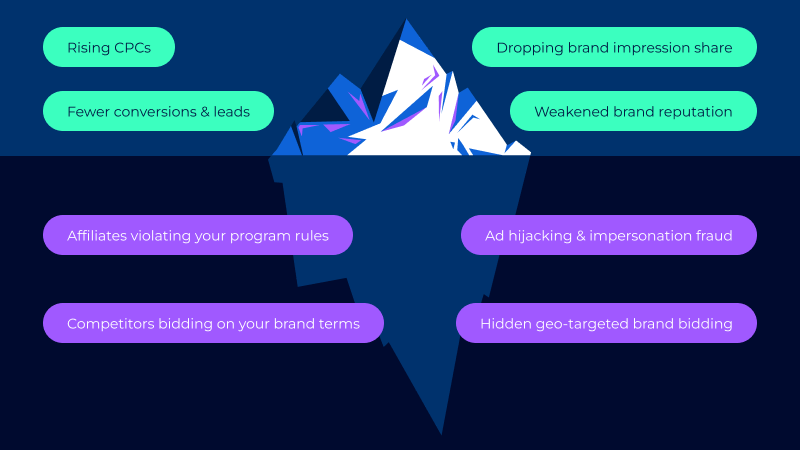
    Having a well-executed brand protection strategy not only safeguards my traffic but also reinforces my brand’s image and fosters customer loyalty. Without it, I risk facing significant losses, such as higher CPCs, rising affiliate costs, and losing customer acquisition opportunities.

    ```json
{
  "alt": "Iceberg diagram depicting visible and hidden risks in advertising, such as rising CPCs and ad fraud.",
  "caption": "Above the surface are visible challenges like rising CPCs, but below lurk hidden threats like ad fraud and rule violations.",
  "description": "This iceberg diagram illustrates the visible and hidden threats in digital advertising. Above the waterline are obvious issues like rising CPCs, fewer conversions, dropping impression share, and weakened brand reputation. Below it, hidden risks such as rule violation by affiliates, ad hijacking, competitors bidding on brand terms, and geo-targeted brand bidding are featured. This visual portrays the complexity of managing brand visibility and the unseen challenges underneath."
}
```

    My brand protection activities include:

    • Monitoring who bids on my branded keywords.
    • Spotting unusual spikes in CPCs or impression share.
    • Identifying unauthorized trademark use in paid search.
    • Detecting hidden, geo-targeted ads meant to evade detection.
    • Enforcing compliance rules for affiliates and partners.

    Three main sources of threats exist:

    • Competitors: They target my branded searches to tap into high-intent traffic, intercepting my audience.
    • Affiliates: If I miss their dishonest tactics, I end up paying for leads I would have acquired anyway, increasing costs without gaining additional customers.
    • Fraudsters: Their advanced tactics can cause serious financial and reputational harm to my brand.

    Without protecting my brand in paid search, I’m at risk of these common threats:

    ```json
{
  "alt": "PPC Brand Protection Framework diagram with five components including Account Structure, Negative Keywords, Affiliate Rules, Monitoring & Automation, and Enforcement.",
  "caption": "Discover the PPC Brand Protection Framework: a comprehensive strategy encompassing Account Structure, Negative Keywords, Affiliate Rules, Monitoring & Automation, and Enforcement to safeguard your online presence.",
  "description": "This image illustrates the PPC Brand Protection Framework, highlighting its five integral components: Account Structure, Negative Keywords, Affiliate Rules, Monitoring & Automation, and Enforcement. Each component is depicted in a black box with icons, all pointing to the central framework. Designed in shades of blue and purple, this diagram provides a strategic overview for maintaining and protecting brand integrity in pay-per-click advertising. Keywords: PPC, brand protection, advertising strategy, digital marketing."
}
```
    • Brand bidding: Others bid on my branded queries to capture high-intent searches, driving up CPCs and reducing my impression share. Over time, this forces me to spend more to regain position, lowering my return on investment (ROI).
    • Ad hijacking: Competitors or fraudsters mimic my ad structure to deceive users into clicking what they believe is my official ad.
    • Malicious redirects: Users clicking on “brand-looking” ads might end up on phishing, malware, or low-quality pages.
    • Ad copy misalignment: Affiliates may use unapproved or outdated messaging harming my brand image.
    • Misleading ad copies: Ads that position another product as a direct substitute for mine to divert traffic and conversions.

    Given these risks, a dedicated PPC protection strategy is crucial. Without it, my acquisition costs could rise significantly, and I might lose customers at the critical decision-making stage.

    In today’s PPC landscape, not protecting my brand erodes trust, skews attribution, and weakens my marketing efforts over time. Consequently, conversions drop, ROI slips, and my paid media effectiveness diminishes.

    Important stats to consider:

    ```json
{
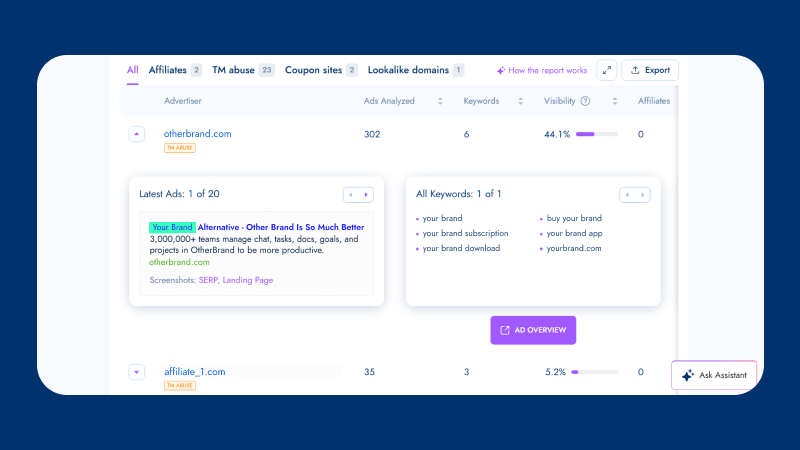
  "alt": "Dashboard screenshot showing advertisement analysis for online brands with metrics like ads analyzed, keywords, and visibility.",
  "caption": "Explore an insightful dashboard that reveals key metrics in advertisement analysis, offering a glimpse into online brand performance.",
  "description": "This image shows a detailed dashboard interface for analyzing advertisements of online brands. It highlights metrics such as the number of ads analyzed, keywords tracked, and visibility percentage. The dashboard provides insights into two advertisers, including their latest ads and all keywords used. Designed for easy navigation, it includes options for how the report works, exporting data, and asking assistance. Key features are SEO-focused, aiding in productivity and brand management."
}
```
    • Global ad fraud costs are projected to rise to $172 billion by 2028 (Statista).
    • 69.7% of marketers reported issues with “spam or fake lead submissions” in their paid media campaigns (Lunio).
    • U.S. advertisers saved $10.8 billion through anti-fraud initiatives in 2023 (TAG).

    For an effective brand protection strategy, I employ these PPC tactics:

    • Account structure: I ensure my campaigns are clearly segmented to easily spot anomalies in CPCs and impression share.
    • Negative keyword strategy: I use targeted negatives—partner names, resellers, and irrelevant variations—to cut out the noise.
    • Affiliate rules: I set clear policies to minimize violations and facilitate compliance enforcement.

    Automation and monitoring play a crucial role in a strong brand protection strategy. Relying on automated monitoring, I can catch threats early and resolve them promptly, preserving my budget and performance metrics.

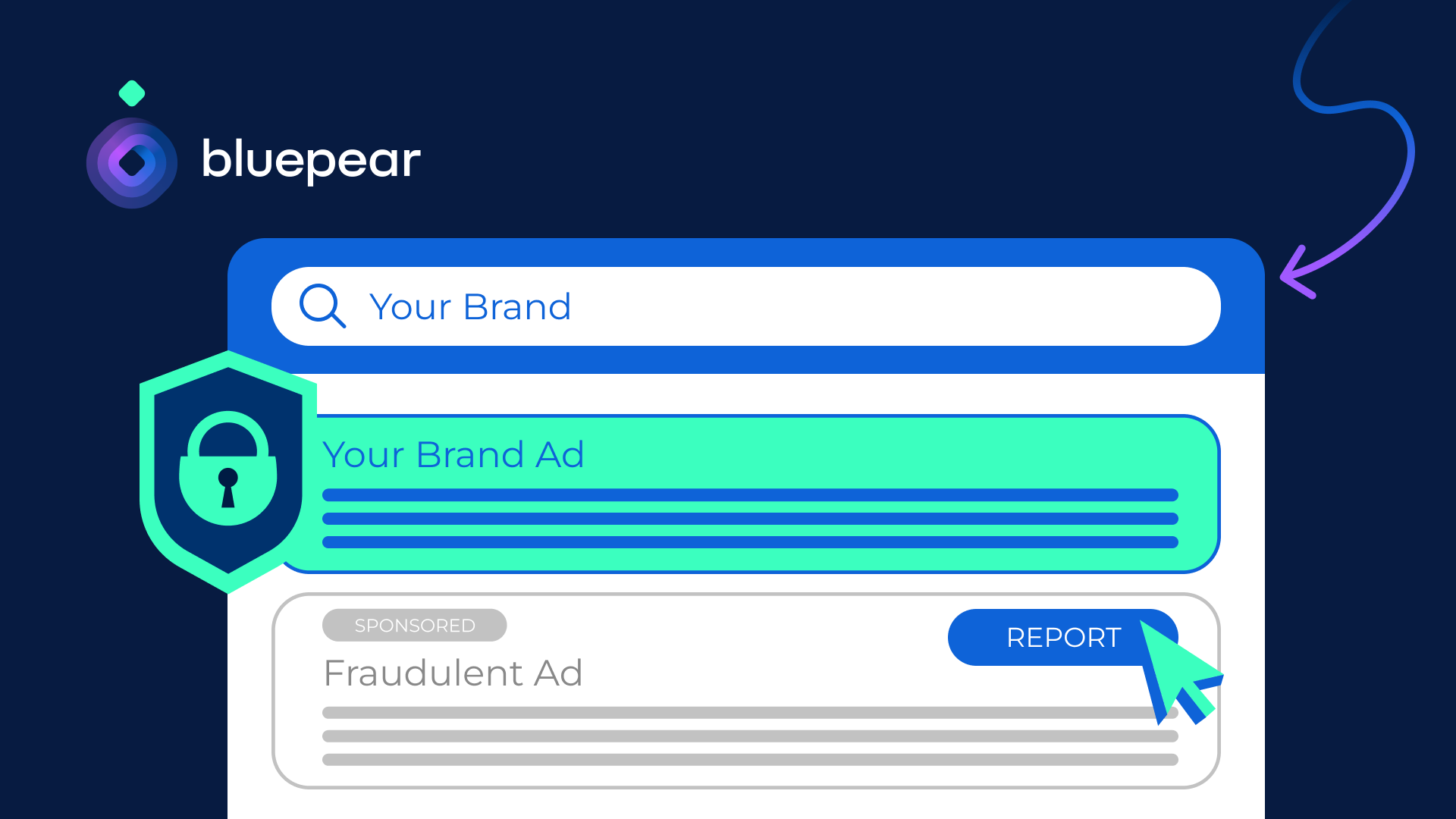
    With Bluepear, I detect unauthorized bidding, affiliate violations, and suspicious competitor activities. Real-time alerts help me take swift action as issues appear.

    ```json
{
  "alt": "PPC Brand Protection with Bluepear featuring a padlock shield icon on a dark background.",
  "caption": "Secure your brand with Bluepear's PPC protection. Enjoy easy signup and instant activation for real results!",
  "description": "This image promotes Bluepear's PPC Brand Protection service. The design features a blue shield with a padlock, symbolizing security. The text highlights key benefits like easy signup and instant activation. Bluepear’s logo is at the bottom left, set against a dark background, making it visually striking and modern."
}
```

    Metrics are vital in measuring my brand protection strategy’s effectiveness. I track:

    • Violations count: The number of unauthorized activities detected on branded searches over time.
    • Enforcement rate: How efficiently I respond to and handle these violations.
    • Cost savings: The budget I recover by curbing CPC inflation and preventing commission leakage.
    • Branded CTR recovery: How removing violators improves my visibility and click-through rates.

    Blueprint has helped companies like Car.co.uk and Rhino Affiliates successfully protect their brand from PPC threats. By adopting similar strategies, I ensure that my brand remains competitive and trustworthy in the digital landscape.

    With Bluepear’s platform, I automatically protect my brand without dedicating significant time to manual monitoring. After signing up, I set up my account in just 10 minutes, gaining access to a powerful monitoring tool. This system has allowed me to quickly identify and act against brand bidding, affiliate violations, and hidden ads.

    Ultimately, by using tools like Bluepear, I not only protect my brand but also enhance my marketing efficiency, leading to better ROI and more robust brand integrity.

    In conclusion, a solid PPC brand protection strategy is no longer optional—it’s a necessity in today’s competitive landscape. By continuously monitoring, enforcing rules, and leveraging automation, I keep my brand safe and thriving.

    Discover more about how you can protect your brand. Try Bluepear’s solution for brand protection and start detecting hidden brand bidding in minutes.


    Inspired by this post on Search Engine Land.

    crushpress.ai community screenshot
  • Boost Your B2B Brand on LinkedIn: New Tools for Personalization and Impact

    Boost Your B2B Brand on LinkedIn: New Tools for Personalization and Impact

    I’ve discovered that LinkedIn is rolling out some exciting ad tools aimed at making B2B brand advertising more predictable and personal. These new features are designed to enhance brand awareness using premium placements, personalized messaging, and scalable AI-powered creativity.

    Recently, I learned about LinkedIn’s latest innovations for B2B marketers. These tools are all about helping us strengthen brand awareness and personalize our messaging. Their aim is clear: reach potential buyers early in the sales funnel.

    What’s new in LinkedIn advertising:

    Firstly, Reserved Ads provide prime visibility in the LinkedIn feed. This ensures a predictable number of impressions and grabs more attention than our competitors. This format works seamlessly with Video, Thought Leader, Single Image, and Document Ads, allowing us to maximize our creative impact.

    Additionally, Ad personalization empowers us to tailor messages dynamically using member profile data like first name, job title, and company. Personalized ads matter: a McKinsey study shows that while 71% of consumers expect personalized ads, 76% feel frustrated in their absence.

    This isn’t all. With AI-powered creative tools, I find it easier to test various ad versions. AI Ad Variants create fresh, on-brand content from a single input. Plus, the upcoming Flexible Ad Creation, expected in early 2026, will let us upload multiple assets, which LinkedIn will mix and optimize for top performance.

    Why these updates matter to me. With these tools, building a brand on LinkedIn becomes more effective. The boost in visibility and enhanced personalization capabilities simplify our creative production process immensely. Reserved Ads, for example, guarantee prime placement at the top of users’ feeds, capturing attention even when the audience isn’t actively searching.

    Meanwhile, by tailoring messages dynamically (like by name, company, or job title), Ad Personalization makes advertisements more relevant. Plus, AI tools such as AI Ad Variants and the soon-to-come Flexible Ad Creation streamline our creative workflows. This allows us to test more variants quickly, enhance engagement, and reach audiences effectively at the top of the funnel.

    The big picture in advertising. As buyers take non-linear, self-directed paths, establishing an early-stage brand presence is crucial. These tools help deliver scalable, personalized creativity efficiently, boosting awareness, engagement, and conversion across campaigns.

    What’s next for me as a marketer. I plan to experiment with Reserved Ads, delve into ad personalization, and leverage AI-driven creative tools. This approach should enhance my impact at the funnel’s top, refine our messaging, and optimize our performance—all with minimal manual effort.

    The bottom line on LinkedIn’s ad innovations. These advancements are designed to make brand building more predictable, relevant, and scalable. They enable marketers to reach the right audience with the right message at the right time.


    Inspired by this post on Search Engine Land.

    crushpress.ai community screenshot
  • Semify Expands Global Reach with Dragon Metrics Acquisition

    Semify Expands Global Reach with Dragon Metrics Acquisition

    Semify acquires Dragon Metrics

    I’m excited to share that Semify, a leading white-label digital marketing platform, has acquired Dragon Metrics, a prominent international SEO and AI reporting provider based in Hong Kong. This acquisition marks a significant enhancement in our reporting capabilities and AI optimization tools as we adapt to a shifting search landscape increasingly focused on AI.

    Why this matters to you. If you’re a Dragon Metrics customer, you can continue to expect the same great service, along with more frequent product updates. According to co-founder Simon Lesser, who shared on LinkedIn, the platform will still operate as an independent brand retaining its existing contacts and product experience. Additionally, you’ll now benefit from Semify’s expanding AI optimization strategies and the potential for future software integrations.

    Details of the acquisition. On December 8th, Semify announced the acquisition of Dragon Metrics:

    • Semify was founded in 2008 and operates as a U.S.-based white-label digital marketing platform.
    • Dragon Metrics was founded in 2011 and supports multinational brands and agencies in over 50 countries, especially in regions where Google isn’t the main search engine, like China, Korea, and Japan.
    • This acquisition provides Semify with an enterprise-grade reporting system and comprehensive global data coverage as we intensify our focus on AI-driven metrics.

    The finer points. Simon Lesser will take on the role of chief product officer at Semify, steering our AI optimization product strategy.

    • The Dragon Metrics engineering team will join forces with Semify’s team under the leadership of CTO Brian Sappey.
    • Our resellers are set to experience improved reporting capabilities via Dragon Metrics accounts, with more integrated solutions on the horizon.
    • Dragon Metrics customers will remain on their distinguished platform but with the advantage of increased engineering support.
    • White-label fulfillment will continue to be exclusive to approved agencies, aligning with our existing reseller model.

    Inspired by this post on Search Engine Land.


    crushpress.ai community screenshot
  • Boost Holiday Sales with YouTube Shorts’ New Interactive Ads

    Boost Holiday Sales with YouTube Shorts’ New Interactive Ads

    Recently, I’ve discovered that YouTube Shorts has updated its ads, making them more interactive and creator-focused. These enhancements are aimed at helping advertisers engage more effectively during those important holiday seasons.

    I’ve noticed that the new advertising features are particularly designed for Shorts, offering brands a chance to maximize their holiday marketing budgets by riding the short-form video trend.

    So, what’s new?

    First, advertisers can now allow comments on eligible Shorts ads, which brings the ad experience closer to organic content. This opens up new ways for real-time engagement with audiences.

    Additionally, creators who share branded content on Shorts can link directly to a brand’s website. This provides viewers with an easy path from discovery to action.

    Finally, YouTube is expanding Shorts ad placement to the mobile web, allowing advertisers to reach viewers as they move across different devices, such as TV, desktop, and mobile apps.

    Why does this matter? These updates make Shorts ads not only more engaging and native but also more actionable. This is crucial for improving performance in the crowded holiday market. Ads with comment features increase engagement signals and allow brands to understand audience reactions in real time.

    Link-outs from creators can shorten the path from discovery to purchase, effectively transforming creator influence into measurable traffic. The expanded placement to mobile web ensures a broader reach during busy shopping periods.

    The bigger picture? As more of us are watching short-form videos across various screens, YouTube is positioning Shorts as a platform that marries creator authenticity with measurable results. This strategy is directly aimed at advertisers planning for the holiday season.

    Looking ahead, advertisers might find these new, more interactive Shorts ads on YouTube beneficial in cutting through the noise and converting viewer attention into holiday sales.


    Inspired by this post on Search Engine Land.


    crushpress.ai community screenshot
  • Unlocking the Truth Behind Google Ads Recommendations

    Unlocking the Truth Behind Google Ads Recommendations

    As someone who navigates the complexities of Google Ads, I know the mere mention of ‘Recommendations’ can send shivers down your spine. It’s like a pop-up that corners you on every platform screen—when you’re tweaking keywords, setting campaigns, or batching bids, even when you’re simply checking on things!

    I’ve had countless emails from clients fretting over why their ‘Optimization Score’ has suddenly dipped. In this article, I want to demystify what Google Ads Recommendations really are, dispel some myths, and share some tactical advice on how to handle them.

    Why do Google Ads Recommendations get such a bad rap?

    So why this widespread disdain? To me, it’s plain: the expectations simply don’t align. While the system tailors Recommendations to our accounts, it often lacks the nuance needed for unique business goals.

    The algorithm’s designed to spot patterns and suggests tweaks based on what’s working in other accounts. Say you only use Exact and Phrase match keywords—the system might suggest ‘Test Broad Match’ because, theoretically, it could broaden reach, but it may not align with budget constraints or niche specifics.

    Bear in mind, Recommendations initially served as a tool for Google Ads sales reps to identify potential client improvements. In their hands, human insight ensured suggestions were relevant. Now, the human filter is absent, making Recommendations feel less tailored.

    Is the Optimization Score really that important?

    When Google tells you your Optimization Score is low, it’s tempting to perceive it as a failing report card. Many fall into the trap of blindly accepting every suggestion just to see that 100% score light up.

    Let me be candid: resist the urge. This score doesn’t reflect performance but rather measures how actively you are reviewing recommendations. Dismissing a suggestion has the same impact on your score as applying it. So, keep your score at 100% if it’s crucial to your Google Partner status—but otherwise, let it slide.

    Decoding Recommendations vs. Real Issues

    Recommendations might pop up anywhere across the ad platform, not just the designated tab. You’ll see them during account setup, keyword addition, or bid adjustment. These prompts can set off alarms due to their visibility.

    Remember, blue or yellow notifications are mere suggestions. Red or purple signals require immediate attention, potentially indicating a billing error or disapproved ad. Maintain a calm head, and only adopt changes that align with your objectives.

    Are Recommendations just Google’s strategy to boost spending?

    An argument often made is that Recommendations aim to skyrocket spending, subtly capturing more dollars. And sure, Google is profit-driven, but they understand you’ll curb spending if returns don’t justify the expense.

    Suggestions are twofold: some aim at increasing reach and expenditure, while others focus on ROI and account refinements that might not increase costs but enhance efficiency.

    Turn Off Auto-Apply Recommendations

    It’s crucial to mention Auto-Apply Recommendations when discussing these aspects. It’s a feature Google previously championed, enabling automatic implementation of suggestions without checks. Thankfully, it’s losing focus now.

    To take control, head to the Recommendations tab, switch to All Campaigns, click Auto-Apply Settings, and ensure all selections are unchecked. Keep the reins in your hands—Google doesn’t need unsupervised access to your budgets, bids, or keywords.

    Recommendations aren’t inherently good or bad. They are mere prompts to evaluate and test. Listen to your instincts: review, test if promising, or move on if irrelevant.

    This article is part of our ongoing Search Engine Land series, Everything you need to know about Google Ads in less than 3 minutes. In each edition, Jyll highlights a different Google Ads feature and how to maximize it efficiently.


    Inspired by this post on Search Engine Land.

    crushpress.ai community screenshot