Tag: Digital Marketing

  • Transforming B2B eCommerce: Slava Kravchuk’s Vision for 2026

    Transforming B2B eCommerce: Slava Kravchuk’s Vision for 2026

    In my recent dialogue with Slava Kravchuk, the Founder and CEO of Atwix, we delved into the future of B2B eCommerce and the key elements businesses need to thrive beyond 2026. Drawing from Atwix’s 15+ years of industry experience with manufacturers, distributors, and wholesalers, Slava shared invaluable insights on the rapidly evolving marketplace.

    Slava started his journey with Atwix back in 2006, and the transformation in the B2B eCommerce realm since then has been nothing short of remarkable. Initially, the majority of B2B firms lacked a digital presence, but today, eCommerce is indispensable. Slava highlighted how COVID-19 rapidly accelerated digital transformation, compressing a decade’s worth of changes into mere quarters. This urgency pushed countless businesses to embrace digital commerce as a means of survival and growth.

    We discussed the ongoing debate about selecting the right eCommerce platform. Slava emphasized that it’s not about the ‘best’ platform but choosing one that meets a business’s specific needs. Atwix offers expertise across various platforms like Adobe Commerce, Magento, Shopify Plus, and Shopware, because of their diverse capabilities. For complex B2B operations, Adobe Commerce and Shopware are often ideal due to their flexible architecture suited for intricate business requirements.

    Another crucial aspect of B2B eCommerce is effective ERP integration. Slava insists that seamless eCommerce and ERP connectivity is vital to avoid data errors and ensure customer satisfaction. Atwix’s proprietary tool, Sirius, allows businesses to integrate their ERPs with their eCommerce frontends smoothly. This tool has transformed customer experiences, enabling real-time order tracking and payment capabilities.

    We also touched on the decision-making process between building a custom solution or utilizing a platform. Slava advised starting with a platform due to the efficiencies and flexibility they offer. He stressed the importance of customizing smartly to avoid technical debt and ensuring a platform can evolve with the business’s future needs.

    Slava’s approach is one of partnership. He believes in engaging with clients to map out a strategic vision before any development begins. This foresight helps prevent costly setbacks and aligns the technology with long-term business goals. For example, Byrne Electrical’s rapid development during the pandemic was successful due to careful, phased planning upfront.

    Looking ahead to 2026 and beyond, Slava predicts that AI, integrated experiences, and personalization will be the driving forces of change in B2B eCommerce. AI advancements are already shaping product discovery and customer interactions. Meanwhile, customers now expect integrated, personalized experiences akin to B2C interactions.

    For businesses contemplating digital transformation, Slava’s advice is clear: start with a minimal viable product and continuously refine it based on feedback. Choosing the right partner who understands your industry is crucial for building lasting, adaptable eCommerce solutions. The time for B2B companies to embark on their digital journey is now.


    Inspired by this post on First Page Sage Blog.


    crushpress.ai community screenshot
  • Unlocking Black Friday 2025: Costs Rise but Engagement Thrives

    Unlocking Black Friday 2025: Costs Rise but Engagement Thrives

    I found Black Friday 2025 to be a puzzling experience. Although advertising costs went up, impressions decreased. Yet, clicks and engagement didn’t falter, which feels like both a challenge and an opportunity.

    Here’s what I’ve gathered from the data so far:

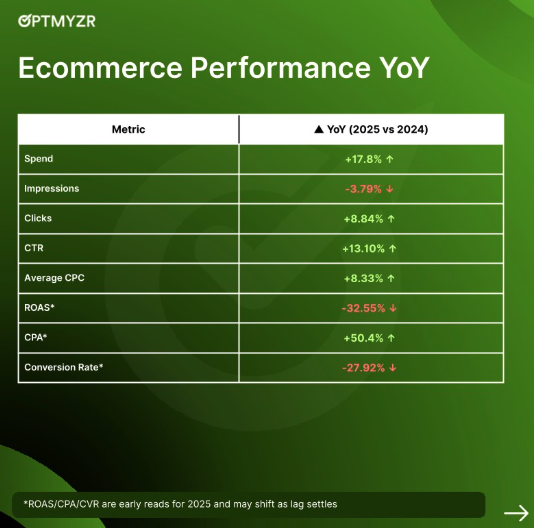
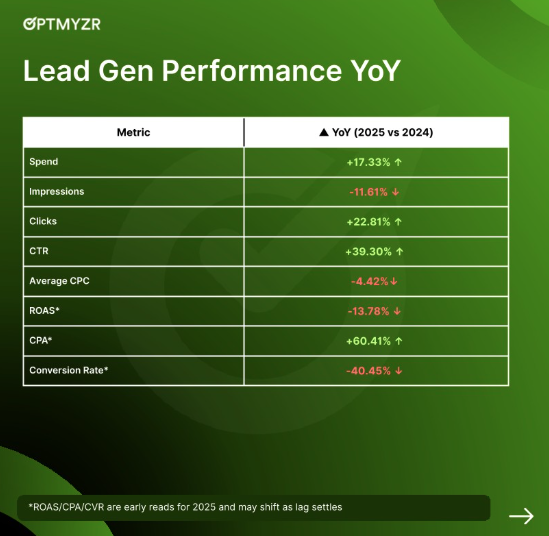
    I’ve been analyzing data from over 5,000 e-commerce and 16,000 lead generation advertisers who were active this year and last. While we’re still waiting on final numbers for conversion value and ROAS, the early insights are telling.

    The insights:

    Visibility Costs Increased Significantly.

    It’s clear to me that spending rose by about 17% for both e-commerce and lead generation, even as impressions saw a reduction. Essentially, advertisers like us are paying more to reach a similar audience.

    ```json
{
  "alt": "Table shows eCommerce performance metrics year-over-year, with increases in spend, clicks, CTR, and CPA, and decreases in impressions, ROAS, and conversion rate.",
  "caption": "Ecommerce metrics reveal an upward trend in spend, clicks, and CPA for 2025, despite declines in ROAS and conversion rate compared to 2024.",
  "description": "This image presents a table of year-over-year eCommerce performance metrics from Optmyzr, comparing 2025 to 2024. Key metrics include a 17.8% increase in spend, 8.84% rise in clicks, and 50.4% growth in CPA. However, impressions fell by 3.79%, ROAS dropped by 32.55%, and the conversion rate decreased by 27.92%. The table provides insight into advertising performance, with early reads for ROAS, CPA, and conversion rates that may shift as data stabilizes. Keywords: eCommerce, year-over-year, metrics, performance, Optmyzr."
}
```

    Engagement Metrics Held Strong.

    Despite the rise in costs, clicks and CTR improved across various sectors. Lead generation, in particular, enjoyed lower CPCs and an uptick in clicks, showing that people are still actively responding to ads.

    Implications for the Future:

    Expect High Costs Ahead. Given the heightened competition during Black Friday, I anticipate this trend of higher costs per reach to continue into Q1 2026.

    Clicks Are Not the Final Goal. The real challenge now lies in what happens after the click. Returns, conversions, and overall efficiency will be crucial, rather than just focusing on traffic volume.

    ```json
{
  "alt": "Lead generation performance chart showing year-over-year changes in metrics for 2025 vs 2024, including spend, impressions, clicks, and conversion rates.",
  "caption": "Year-over-year lead generation insights reveal increased spend and clicks, alongside a decrease in conversion rates and impressions for 2025 vs 2024.",
  "description": "This image displays a table of lead generation performance metrics comparing year-over-year changes from 2024 to 2025. Key metrics include a 17.33% increase in spend, an 11.61% decrease in impressions, a 22.81% rise in clicks, and a 40.45% drop in conversion rates. The chart notes that ROAS, CPA, and conversion rate are preliminary reads and may adjust. The table is set on a green background, indicating a market trend analysis by Optmyzr."
}
```

    Enhance Post-Click Strategy. I believe that improving landing pages, offers, checkout processes, and lead follow-up mechanisms will be key in turning clicks into conversions.

    Here’s Why This Matters: Black Friday 2025 indicates that while getting attention is still feasible, turning that attention into results demands enhanced strategies post-click. The cost of ignoring these shifts is high – you might spend more while yielding lower returns.

    Bottom Line: Staying visible during Black Friday 2025 came with a higher price, but engagement remains robust. The task ahead is not just driving traffic, but converting that traffic efficiently into results.

    Dig Deeper: Explore the Black Friday year on year PPC performance snapshot for more insights.


    Inspired by this post on Search Engine Land.


    crushpress.ai community screenshot
  • Unlock Lifecycle Success with Google’s New Audience Tools

    Unlock Lifecycle Success with Google’s New Audience Tools

    I’ve been exploring the latest updates from Google, and it seems they’ve taken a big step into lifecycle marketing by allowing advertisers, like you and me, to directly target high-value and lapsed customers through Google Analytics.

    Recently, Google has expanded its customer lifecycle capabilities in Analytics by launching fresh audience templates and dynamic remarketing features, aimed at making high-value targeting and re-engagement much simpler for us advertisers.

    Driving the news. Google’s introducing two new suggested audience templates to help us easily create lifecycle segments:

    • High-Value Purchasers — This is based on purchase count or lifetime value, with a new LTV percentile field to single out our top-tier customers.
    • Disengaged Purchasers — These are classified by days since their last purchase, offering a built-in method for brands to re-engage lapsed buyers.

    Google crafted these templates to seamlessly integrate with Google Ads’ lifecycle goals, including high-value customer acquisition and re-engagement strategies.

    Google’s next move: dynamic remarketing inside GA. Another exciting addition is that Google is embedding display dynamic remarketing directly in Analytics. This means we can show product-based personalized ads to past site visitors without needing to craft remarketing setups externally.

    By utilizing Google’s recommended eCommerce event collection, Analytics will automatically share dynamic remarketing data with linked Google Ads accounts, provided personalized advertising is enabled.

    Why we care. Google’s enhancements make it far easier to focus on the customers who truly matter — the high-value buyers and those who’ve lapsed. These fresh templates and dynamic remarketing tools pave the way for faster and smarter customer acquisition, retention, and repeat purchases directly from Google Analytics.

    These advancements reduce the manual work involved, offering us more precise lifecycle targeting, translating into better performance and more profitable campaigns.

    The big picture. Google is shaping its ecosystem by empowering advertisers with more automated methods to identify, activate, and re-engage customers, all supported by audience intelligence within Google Analytics.

    The bottom line. Google is intensifying its commitment to lifecycle marketing by transforming Google Analytics into an even more robust audience engine for Google Ads.


    Inspired by this post on Search Engine Land.


    crushpress.ai community screenshot
  • Google’s Partner Match: Precision Targeting for YouTube

    Google’s Partner Match: Precision Targeting for YouTube

    I’m thrilled to share that Google is launching an innovative tool called Partner Match, designed to revolutionize how advertisers can target YouTube audiences using third-party hashed data. This advancement is detailed in newly released help documentation, and it’s poised to make a significant impact.

    What advertisers must do: Activating Partner Match is straightforward. Advertisers need to:

    1. Authorize the data partner
    2. Accept the Partner Match terms
    3. Apply the generated audience lists during campaign setup

    Why we care: Partner Match could provide advertisers with precise targeting at a time when reaching audiences is increasingly challenging. It’s expected to enhance alignment between brands’ first-party signals and YouTube delivery, making Video Reach, Video Views, and Demand Gen campaigns more effective.

    Remarkably, its global availability—with a few exceptions—makes Partner Match one of YouTube’s most scalable targeting innovations in recent years.


    Inspired by this post on Search Engine Land.


    crushpress.ai community screenshot

    How it works: Partner Match empowers approved partners to upload hashed user data, such as email addresses, names, or ZIP codes. Google then aligns this data with signed-in YouTube accounts, enabling advertisers to target these tailored audience segments effectively.

    • Video Reach campaigns
    • Video Views campaigns
    • Demand Gen campaigns (YouTube channel only)

    Though it won’t support ad sequences or YouTube Select guaranteed deals, the flexibility it offers is remarkable.

    Where it’s available: Partner Match will be rolled out globally, with exceptions in the UK, Switzerland, and the EEA. That said, advertisers in these regions can still reach audiences in eligible countries.

    What advertisers must do: Activating Partner Match is straightforward. Advertisers need to:

    1. Authorize the data partner
    2. Accept the Partner Match terms
    3. Apply the generated audience lists during campaign setup

    Why we care: Partner Match could provide advertisers with precise targeting at a time when reaching audiences is increasingly challenging. It’s expected to enhance alignment between brands’ first-party signals and YouTube delivery, making Video Reach, Video Views, and Demand Gen campaigns more effective.

    Remarkably, its global availability—with a few exceptions—makes Partner Match one of YouTube’s most scalable targeting innovations in recent years.


    Inspired by this post on Search Engine Land.


    crushpress.ai community screenshot
  • Boost Campaign Success with Microsoft’s New Ad Tools

    Boost Campaign Success with Microsoft’s New Ad Tools

    I’ve recently discovered some exciting updates from Microsoft Ads that promise to enhance the way we manage and analyze our advertising campaigns.

    With these updates, we now have the ability to see individual asset disapprovals—meaning that if a particular image, headline, or text in our ad doesn’t meet standards, it can be addressed without disrupting the entire campaign. What a relief to know that one small glitch won’t pause everything!

    Additionally, conversion reporting has become much more transparent. We can track how long it takes for 90% of conversions to be recorded post-click, whether they happen online or offline. This clarity is essential for refining our bidding strategies and assessing campaign performance with better precision.

    These changes tackle two big challenges we face as advertisers: minimizing wasted spend due to blanket ad disapprovals and clearing up the murkiness of conversion lag.

    Why this matters to me.

    The ability to address ad issues at the asset level keeps our campaigns live and our revenue steady, while the new conversion metric improves data accuracy. It helps me make informed decisions on bidding and pacing across platforms, ultimately leading to better resource management.

    In short, these enhancements make managing Microsoft Ads more predictable and efficient.

    The updates were initially shared by John Sargent on LinkedIn and confirmed by Microsoft Ads Liaison Navah Hopkins. For those of us handling multi-platform campaigns, this is a major step forward in gaining better control and clearer data insights.


    Inspired by this post on Search Engine Land.


    crushpress.ai community screenshot
  • Unveiling ChatGPT Ads: OpenAI’s Android Code Signals Future Plans

    Unveiling ChatGPT Ads: OpenAI’s Android Code Signals Future Plans

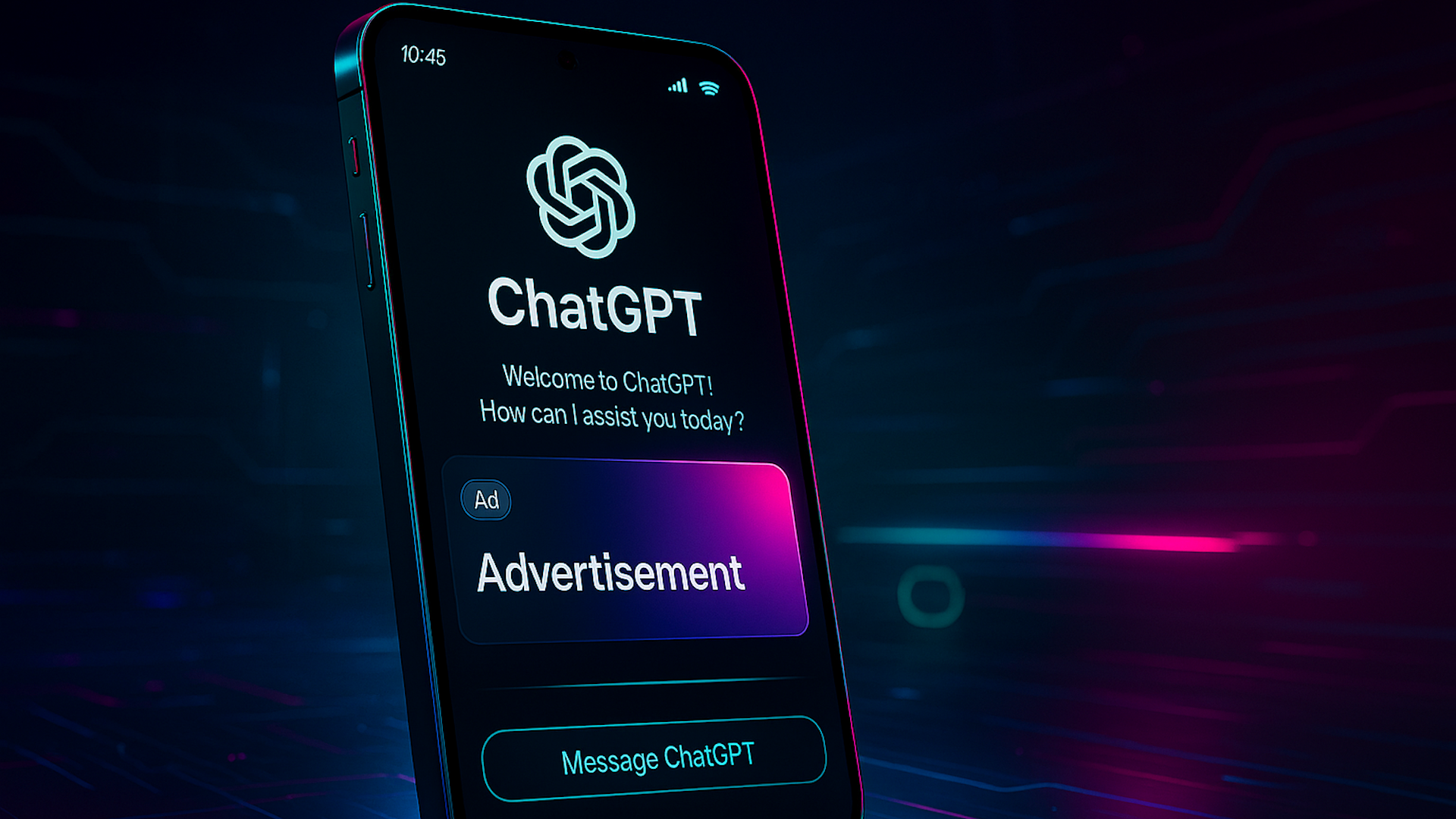
    I’ve recently come across some interesting developments regarding ChatGPT ads. OpenAI seems to be testing these ads, as evidenced by recent Android code discoveries and user reports suggesting an imminent rollout.

    From what I’ve gathered, OpenAI appears close to launching ads in the ChatGPT Android app. Recent code analyses reveal potential integration, and some users have even spotted ads popping up in real-time.

    What’s new? The latest ChatGPT Android beta (v1.2025.329) hints at an ad system. TestingCatalog found intriguing code references, such as:

    • “ads feature”
    • “bazaar content”
    • “search ad”
    • “search ads carousel”

    These references suggest a possible framework for ads, likely centered around search and product recommendations, rather than intrusive ads in chat.

    Zoom out. Ads in ChatGPT could help OpenAI manage costs for free users as the platform grows in commercial use. Paid subscribers might continue enjoying an ad-free experience.

    Meanwhile. Interestingly, a ChatGPT Pro user paying $200/month noted an ad that seemed to appear during a conversation about Elon Musk’s podcast interview, suggesting some testing is already in place.

    What’s next? Although no timeline is set, the Android code developments indicate that ads are moving from theoretical to practical implementation, ushering ChatGPT towards an ad-supported future.

    Why we care. The evolution towards a Google-like ad model in ChatGPT is intriguing, especially with OpenAI CEO Sam Altman’s fondness for Instagram ads. This direction offers brands a vital opportunity to engage with nearly a billion users worldwide.

    Over the last year, OpenAI has shifted its stance on ads, moving from overt reluctance to a quiet acceptance and preparation for an ad-supported model.

    Catch up quick. Initially, there was no intention for ads, but recent shifts show OpenAI gearing up for this transformation.

    • Late 2024: Executives initially dismissed the idea, with OpenAI’s CFO and CEO showing little interest.
    • Early 2025: Internal forecasts leaked, forecasting significant revenue from user monetization, indicating that ads were inevitable.
    • Mid-2025: Development began, with hiring to build and manage an internal advertising platform.
    • Late 2025: Sam Altman’s perspective shifted, hinting at a “cool” advertising model that benefits users.

    Inspired by this post on Search Engine Land.


    crushpress.ai community screenshot
  • Shopify Faces Major Login Outage on Key Sales Day

    Shopify Faces Major Login Outage on Key Sales Day

    Today, on one of the most significant shopping days of the year, Shopify has been hit by a major login outage. This unexpected issue has left many of us merchants locked out of our stores, unable to access our dashboards, POS systems, mobile apps, or even reach Shopify Support.

    What’s happening. Reviewing Shopify’s status page, I noticed a series of alerts starting at 14:54 UTC, indicating potential login issues for merchants. Minutes following the initial alerts, it was confirmed that the outage impacts POS, mobile logins, and support access.

    By 15:26 UTC, Shopify advised us to remain logged in on any currently active devices to avoid further issues, which has been an essential tip for many as we navigate this situation.

    Why we care. A login outage on a critical sales day, such as during the Cyber Week spillover or December promotions, is a nightmare for any retailer. It can halt operations, block order fulfillment, delay in-store checkouts, disrupt customer service, and lead to significant revenue losses in just minutes. It’s a stark reminder of how reliant we are on these systems for smooth business operations.

    ```json
{
  "alt": "Website loading error message with refresh button.",
  "caption": "Encountering a hiccup online? Try refreshing the page to resolve website loading issues effortlessly.",
  "description": "This image displays a website loading error message indicating a problem in accessing the page. It suggests refreshing the page and trying again later. A prominently displayed 'Refresh Page' button invites the user to troubleshoot the issue. This visual is common when internet connections are unstable or when server issues occur, and it guides users toward a quick resolution."
}
```

    What’s next. According to Shopify’s status updates, their team is actively investigating the issue, though they haven’t provided an estimated time for resolution. Many of us are anxiously refreshing the status page, hoping for updates as our sales windows narrow.

    First seen. This outage was first identified by Performance Marketing Consultant Ayisha Yousef when she couldn’t log into her client’s Shopify account.


    Inspired by this post on Search Engine Land.


    crushpress.ai community screenshot
  • Gemini 3 Powers Google AI Mode: What’s New for US Subscribers

    Gemini 3 Powers Google AI Mode: What’s New for US Subscribers

    Last week, I was eager to see if Google would incorporate Gemini 3 into their AI systems. Now, it’s official: some responses in AI Mode are powered by Gemini 3, but it’s only available to Google AI Pro & Ultra subscribers in the U.S.

    Nick Fox, Google’s SVP of Knowledge and Information, mentioned on X that the rollout of Gemini 3 in search is ongoing. He highlighted that they’ve implemented intelligent automatic model routing to Gemini 3 Pro, aimed at tackling the most challenging questions in AI Mode.

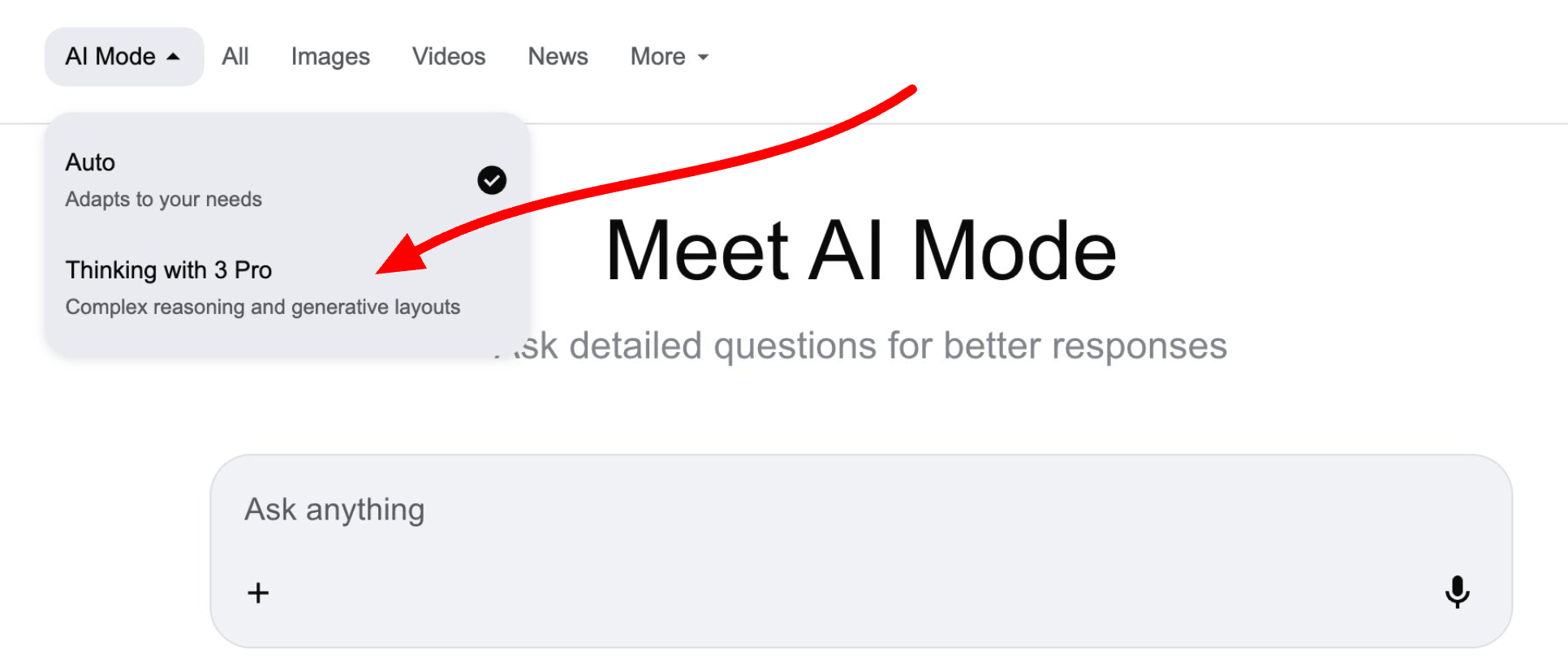
    Previously, Fox included AI Overviews in this rollout. However, his latest updates have corrected this to focus solely on AI Mode. If you are a subscriber, you’ll know this feature is available if it’s an option within the AI Mode tab’s carrot menu.

    From a recent blog post by Google’s Head of Search, Liz Reid, there’s an emphasis on enhancing automatic model selection in Search with Gemini 3 over the coming weeks. This means your complex queries in AI Mode could soon be channeled to this advanced model.

    ```json
{
  "alt": "Dropdown showing AI Mode selection with Thinking with 3 Pro option highlighted.",
  "caption": "Choose your AI Mode with ease! Highlighted is the 'Thinking with 3 Pro' option, designed for complex reasoning.",
  "description": "This image displays a dropdown menu titled 'AI Mode,' where users can choose between different AI settings. The 'Thinking with 3 Pro' option, which promises complex reasoning and generative layouts, is highlighted with an arrow. This selection suggests a focus on advanced AI interaction, making it ideal for users looking for detailed and dynamic responses. Keywords: AI Mode, Thinking with 3 Pro, dropdown menu, advanced AI, complex reasoning."
}
```

    Introduced on November 18, 2025, Sundar Pichai, Google’s CEO, described Gemini 3 as their most intelligent model yet. It combines all of Gemini’s capabilities, aiming to bring any idea to life.

    I’m particularly excited because some users might notice more visual and comprehensive results in AI Mode, especially if you’re an AI Pro or Ultra subscriber in the U.S. These changes indicate that Gemini 3 is already reshaping the search landscape.

    Eventually, all AI responses will be powered by Gemini 3 until the next update is rolled out by Google. I can’t wait to see how this further enhances search experiences.


    Inspired by this post on Search Engine Land.


    crushpress.ai community screenshot
  • Unlock Efficiency: Customize Google Ads Overview Tab Easily

    Unlock Efficiency: Customize Google Ads Overview Tab Easily

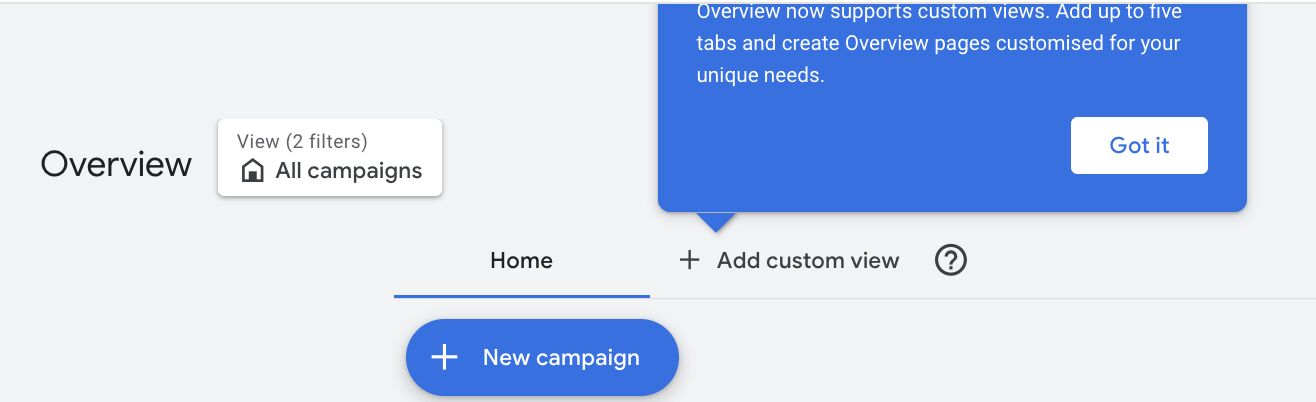
    I’ve just learned that Google Ads has introduced an exciting update that now allows us to create up to five custom views on the Overview tab. This change makes it so much simpler for us to track the key metrics that are crucial for our advertising campaigns.

    Google Ads is really stepping up its game by letting us customize the Overview tab. Now, we’re not limited to a single static view. Instead, we have the power to tailor our dashboards, ensuring that we focus on the data that truly impacts our campaigns.

    Driving the news. I’ve seen a post on LinkedIn, complete with screenshots, that highlights this new update. Users can now add multiple tabs and fully personalize their Overview pages, fitting their unique needs.

    ```json
{
  "alt": "Screenshot of a web interface featuring campaign overview and options for custom views.",
  "caption": "Explore new custom view options to enhance your campaign overview experience. Effortlessly manage and create campaigns using intuitive controls.",
  "description": "This image is a screenshot of a web interface showing an 'Overview' section with a button labeled 'All campaigns' indicating two filters are active. There is a blue 'New campaign' button below and a tooltip offering instructions on customizing views. The interface suggests features for managing campaigns, adding custom views, and creating an efficient overview tailored to user needs. Keywords: campaign management, custom views, web interface."
}
```

    What’s changing. In the past, the Overview tab had a fixed layout. This was restrictive for us, especially when we wanted more detail on our performance. Now, with these custom views, we can organize metrics, charts, and reports in a way that really fits our workflow, allowing for better efficiency and insights.

    Why we care. For those of us managing Google Ads, the ability to custom-tailor the Overview tab means we can focus directly on the metrics that matter, saving time and cutting down on the hassle of digging through various reports. For agencies handling multiple clients, this allows us to create personalized dashboards for each account, enhancing our efficiency and insight. Over time, this adjustment helps us spot performance trends more quickly and make data-driven decisions with greater confidence.

    ```json
{
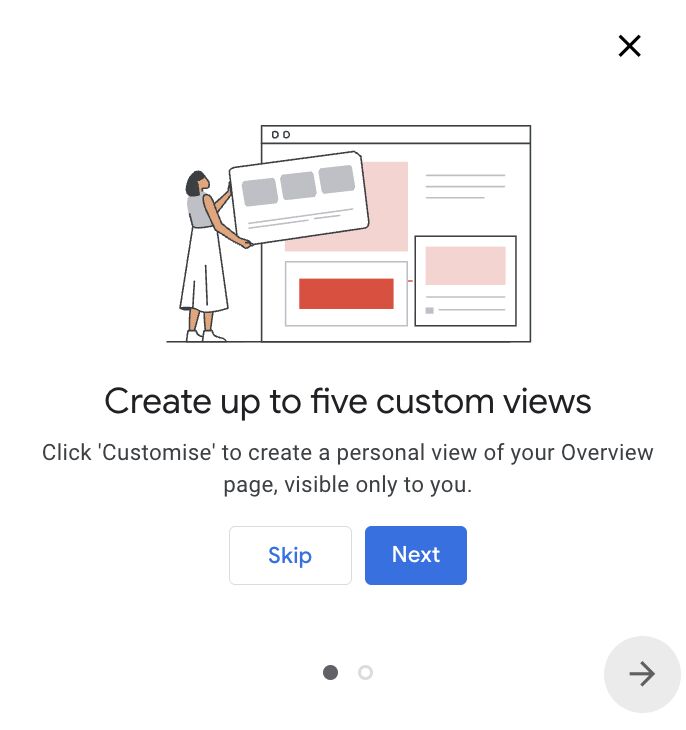
  "alt": "Illustration of a person customizing a web interface with text: Create up to five custom views. Buttons for Skip and Next.",
  "caption": "Personalize your experience by creating up to five custom views. Dive into customization and tailor your overview page just for you!",
  "description": "This image shows an illustration of a person holding a customizable element in front of a web interface, alongside text encouraging users to create up to five custom views. There are buttons labeled 'Skip' and 'Next' for navigation. This visual serves as a prompt for users to personalize their overview pages, offering a tailored browsing experience. Keywords: customization, web interface, user experience."
}
```

    First seen. This new feature was first unveiled by Adrian Dekker.

    Bottom line. This update makes account monitoring much more streamlined, enabling us to focus on the key performance indicators without having to filter through numerous reports. With custom views, organizing campaigns and spotting trends becomes a breeze.


    Inspired by this post on Search Engine Land.


    crushpress.ai community screenshot
  • Unlocking New Horizons: Google’s Custom Segments for Display Campaigns

    Unlocking New Horizons: Google’s Custom Segments for Display Campaigns

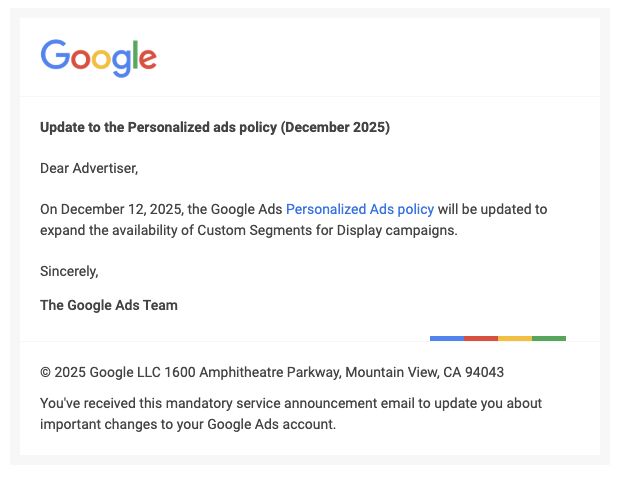
    I recently heard about Google’s discreet update on December 12th to its Personalized Ads policy. This change seems to be expanding access to Custom Segments for certain Display campaigns, opening up possibilities previously restricted under the policy.

    The information dropped into my inbox through a mandatory service email from Google. However, it left much to the imagination as it only confirmed the policy update but failed to provide specifics. It made it clear, though, that the change targets campaigns limited by the Personalized Ads policy, not every Display campaign.

    Google Local Services Ads vs. Search Ads- Which drives better local leads?

    As someone who closely follows these updates, I noticed the buzz among industry experts. Google Ads Coach Jyll Saskin Gales pointed out that Custom Segments have mostly been available for Display campaigns, suggesting that this update focuses on previously blocked advertisers gaining access.

    PPC Freelancer Sofia Akritidou raised critical questions, voicing the confusion many of us felt:

    • Could this mean a breakthrough for health-related advertisers who faced audience targeting blocks?
    • What about user comfort with ads tailored to sensitive conditions?
    • Does “Display campaigns” mean all GDN formats, possibly including Demand Gen?
    • Why hasn’t Google clarified these changes?

    These are not just speculative queries—they are vital considerations for adjusting our strategies and campaigns. Google’s move could mean a broader reach with Custom Segments, allowing us to potentially engage with niche markets, including sensitive areas like healthcare. But it does raise the issue of user privacy.

    ```json
{
  "alt": "Google Ads policy update email about Personalized Ads effective December 2025.",
  "caption": "Google announces updates to its Personalized Ads policy, expanding Custom Segments availability for Display campaigns starting December 2025.",
  "description": "This image depicts an email notice from Google regarding an update to their Personalized Ads policy, effective December 12, 2025. The update focuses on expanding the availability of Custom Segments for Display campaigns. It includes a message from the Google Ads Team, the company's address at 1600 Amphitheatre Parkway, Mountain View, CA, and notes this is a mandatory service announcement for advertisers. Keywords: Google Ads, Personalized Ads, policy update, Custom Segments, Display campaigns."
}
```

    I’m keen to know whether this change extends to Demand Gen campaigns. Clarity there could significantly influence strategic decisions as December 12th approaches.

    What could this mean for advertisers like me? Well, here are a few possibilities:

    • Access to new targeting options for campaigns previously restricted by limited audience tools.
    • The advantage of crafting segments based on intent or interest, even with stringent policy guidelines.

    The change was initially noticed by Chris Ridley, the Head of Paid, who shared the news on LinkedIn.

    The bottom line here is clear: if your Display campaign falls under the Personalized Ads policy, you’re in for an upgrade in targeting capabilities. For others, it’s business as usual—for now.


    Inspired by this post on Search Engine Land.


    crushpress.ai community screenshot