I’ve discovered something intriguing about Claude’s reliance on Brave Search rankings. Based on insights shared by Jonathan Clark during a Profound session on Zero Click, it seems that Claude frequently taps into Brave’s search results, particularly when dealing with recency, ranking, or comparison prompts.
Clark, who is the managing partner at Moving Traffic Media, emphasized a key point from the session: Claude doesn’t rearrange search results but instead incorporates Brave’s top 10 search results directly into its answers.
Claude’s web searches are selective. In fact, I learned that Claude uses web search in only 36.6% of cases compared to about 90% for ChatGPT, as per Clark’s observation.
Claude is triggered to search most often by prompts that signal current trends, rankings, location, or comparisons. For example, queries like “best XYZ” caused a search 81% of the time. Ranking focus prompts had a search rate of 67%.
Location prompts initiated searches 55% of the time, while comparison prompts such as “X vs. Y” led to searches 51% of the time.
Brave rankings are crucial. Another interesting point is that Claude’s answers only matched ChatGPT’s citations in 8% of cases for the same queries, according to Clark.
Claude’s results showed a 64% overlap with Google rankings. This indicates that Google-focused SEO strategies might be more effective for Claude than efforts targeted at boosting visibility in ChatGPT.
The analysis also highlights the significance of tracking Brave search rankings. Clark mentioned that Claude relies on Brave, and achieving good rankings in Brave provides us with measurable insights.
Memory in prompts. I found it interesting that prompts like “how does,” “what is,” and “steps to” are less likely to prompt Claude to conduct a web search. Without searching, Claude cannot cite online sources.
According to Clark, Claude searches most often for prompts with keywords like “best,” “top,” or comparative phrases.
The pattern of years in queries. Clark noted that there are consistent patterns that might simplify testing with Claude:
One noticeable trait is Claude’s query fan-outs, which consistently produced the same results 65% of the time across users.
These fan-outs frequently involve years, suggesting that titles featuring the current year might be advantageous in Claude-initiated searches, especially for queries driven by ranking and recency.
Why this matters to us. It appears that Claude’s visibility hinges more on the rankings within the search results it utilizes. Clark suggests Claude might be one of the most amendable AI answer engines due to its consistent search patterns closely tied to measurable rankings.
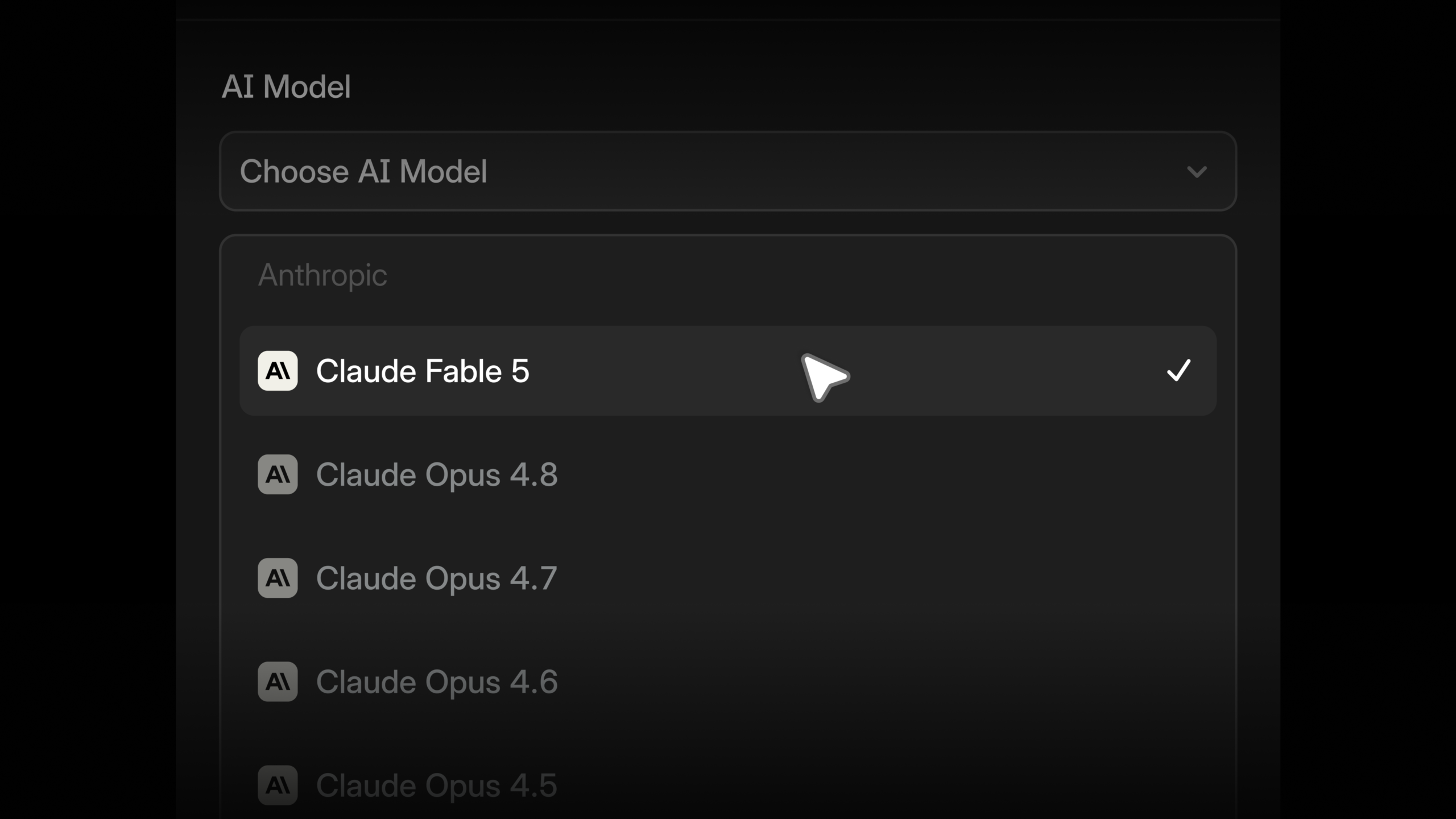
I’m thrilled to share some fantastic news with you. We’ve just launched support for Claude Fable within Profound, and it’s an upgrade that I’m genuinely excited about.
Incorporating Claude Fable into our system not only enhances user experience but also brings a new level of efficiency to our platform. This integration is designed to provide seamless functionality and improve overall productivity.
I’m confident that this addition will greatly benefit all users by offering enhanced capabilities and features that are both intuitive and powerful. Stay tuned for more updates as we continue to innovate and evolve.
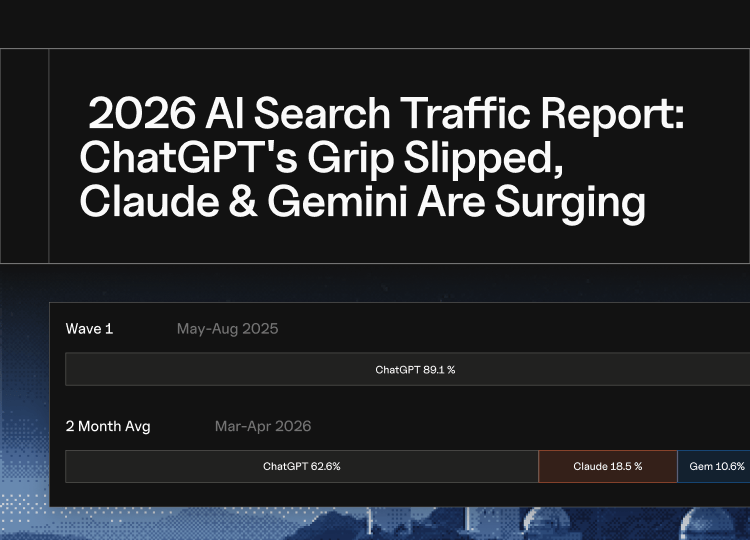
I’ve just delved into Goodie’s enlightening AI search traffic report for early 2026, covering the period from January to April, and I’m excited to share my insights with you. This report dives into trends in usership, referral traffic, and marketing considerations, offering a comprehensive view of the shifting landscape.
You’ll want to pay particular attention to how ChatGPT’s dominance is starting to wane, with some surprising contenders like Claude and Gemini making waves. This shift could significantly impact how marketers strategize their efforts in AI-driven search optimization.
The data reveals fascinating patterns in user habits and referral traffic, which could inform future marketing strategies and the allocation of resources. For a full dive into these emerging trends and what they might mean for businesses, I encourage you to explore the detailed findings of the report.
Have you ever felt like you’re living in an ‘AI Groundhog Day’? Despite the wealth of AI tools we can use, many of us find ourselves stuck in a loop, manually prompting AI again and again. If we aim to truly automate PPC tasks, we need to move beyond this cycle.
Picture this: you open a chat window, carefully craft a prompt, and paste in your context. The result is fantastic! Yet, an hour later, the cycle repeats. If this sounds familiar, you’re still entrenched in manual work, albeit with a digital twist.
To harness AI effectively, I’ve realized we must transition from being doers to orchestrators. This means moving away from one-off prompts and starting to build robust systems. My book, “The AI Amplified Marketer,” delves deeper into how the human element remains crucial even as AI evolves rapidly.
Today, I’ll guide you on using Skills, an emerging AI capability, to enhance efficiency in managing PPC.
What’s a Claude Skill?
Many of us marketers have tried ChatGPT’s Custom Instructions—a broad directive for AI behavior. A Claude Skill, however, is more precise, dictating specific instructions to ensure consistent and predictable outcomes aligned with my expectations.
Recently, while rating search terms, I noticed AI’s inconsistency. One session yielded letter grades, another a percentage, and another, a numerical scale. This variability can disrupt workflows, confusing tools and team members alike.
A Skill eliminates this inconsistency, ensuring that every time, the results format remains unchanged. This evolution transforms AI from an unreliable assistant to a steadfast team member.
The latest capabilities in Claude allow a Skill to morph your comprehensive PPC strategy into an executable AI playbook, coordinating tasks among various tools and subagents efficiently.
Whether it’s auditing accounts or analyzing search query reports, Skills encapsulate your expertise into scalable systems for your team to deploy with AI seamlessly.
How to Build Your First AI Skill
Starting a new Skill might seem daunting, but it’s quite straightforward. In a chat with your AI, you can upload an audit checklist, a SOP, or a workflow blueprint, and instruct Claude to formulate it into a Skill.
Intriguingly, Claude employs a specialized protocol to construct Skills, guaranteeing outputs that are structured, adhere to best practices, and align with Anthropic’s architecture.
Technically, a Skill is stored as a Markdown (.md) file, serving as the playbook for the task at hand. Concerned about data privacy? You can save this locally or opt to share it in a cloud repository for easy team access and updates.
You don’t need to start from scratch. Platforms like GitHub offer pre-built Skills that you can experiment with and tailor to your needs.
How to Use a Skill in PPC
To get started with a Skill, make sure you have some available in your account.
Simply tell the AI the specific task you wish to accomplish. If a suitable Skill exists, the AI will apply those instructions to carry out the task.
Keep in mind, having competing skills could disrupt consistency. For instance, two skills performing Google Ads audits might randomly select different methodologies, thwarting the predictability.
PPC Skills Need Real-Time Data
While a Skill defines powerful logic, without real-time data, its application remains theoretical. Consider crafting an analysis to review search terms over the past 14 days—it’s great in concept, but without active data pulling from Google Ads, it remains incomplete.
Previously, this required manually downloading CSVs from interfaces. It worked, but was slow and the data became outdated immediately.
Enter the Model Context Protocol (MCP), bridging AI Skills to live data sources seamlessly. Using protocols like Optmyzr’s MCP, Skills can dynamically access and apply live Google Ads data, converting static instructions into an adaptive, responsive tool. (Disclosure: I’m the cofounder and CEO of Optmyzr.)
From Grunt Work to System Oversight
Integrating Skills with MCP transforms AI from assistantship into management. Tasks like search term analysis can shift from hands-on processes to automated oversight, with the AI undertaking everything from data pulling to implementing results.
Incorporating capable logic (Skills) with real-time data (tools) nurtures a practical system ready to shoulder routine tasks, enabling me to focus more on strategy orchestration.
4 PPC Skills You Can Build Today
Ready to jump into action? Here are four PPC Skills to inspire you:
1. Search Term Mining
This Skill guides AI in evaluating search query reports to target waste and opportunities.
Without tools, it requires manual CSV uploads and report implementation. However, with MCP, the necessary data is automatically sourced and applied directly in your Google Ads account.
2. Ad Copy Generation
Using a landing page and keywords, this Skill generates ad copy tailored to user intent and value propositions.
Manual editions involve copying assets, whereas MCP integrations can identify underperforming ads, generate new copy, and even initiate ad experiments autonomously.
3. Account Auditing
This Skill performs a checklist to spot issues like missing ad extensions or budget constraints.
Manually, it reports findings, but with MCP, it remedies problems directly, such as applying existing extensions to appropriate ad groups.
4. Budget Reallocation
Analyzing comparative data, this Skill identifies budget shifts to maximize returns.
Without tools, it suggests reallocations; with MCP, it dynamically analyzes and implements these changes, optimizing budgets promptly.
The Future of Your Role: From PPC Doer to PPC Designer
The fusion of Skills and tools allows us to depart from mere AI collaboration to AI-driven responsibilities. Instead of juggling tasks, our focus shifts to designing automated systems, crafting Skills, and setting the course for relentless efficiency.
As technology melds development and user-friendly interfaces, we’re at the cusp of a paradigm where non-developers design systems. It’s time to innovate and welcome AI as a genuine ally.
The End of Endless Prompting
The cyclical nature of endless prompting confines us to manual execution. By harnessing Claude Skills, we’re revolutionizing our approach to PPC—from mundane tasks to sophisticated system design. This transition embodies the essence of an AI-amplified marketer, fostering a dependable, efficient partner that channels our expertise into thriving systems.
The journey begins by viewing your daily routines through a designer’s lens. What process is ripe for crafting your inaugural Skill?
As I dive into the intriguing world of Generative Engine Optimization (GEO), I find myself exploring how we can fine-tune a company’s online presence to have their products or services recommended by generative AI chatbots. Although still a budding marketing avenue, GEO’s potential reminds me of the early days of SEO, ripe for exploration and growth. I’m convinced that the deep insights from this research will pave the way for much-needed best practices in the market.
My team and I embarked on an extensive study from March 2024 through December 2025, focusing on the recommendation algorithms of the four most popular generative AI chatbots in the United States. We meticulously conducted 11,128 commercial queries across various sectors, seeking to unravel the factors these chatbots use to recommend products and services. We’ve continued to update our insights, the latest being on March 12, 2026.
The table below gives a detailed breakdown of our research findings, listing the factors influencing chatbot recommendations in terms of weight. Following the table, I delve into each factor, elucidating how each chatbot incorporates them into their recommendation process.
Allow me to take you through the key factors that guide commercial recommendations across these generative engines. Although they share common factors, each employs a unique weighting system to determine recommendations.
NOTE: The more advanced versions of these AI chatbots may personalize their suggestions as more personal data is provided, potentially altering factor weightings.
Authoritative List Mentions
When it comes to predicting content, generative AI engines draw information from multiple authoritative sources. They echo the voices of experts, offering recommendations rooted in well-regarded lists and rankings. I find it fascinating how they lean heavily on top-ranking Google searches to refine their recommendations, which are potently informed by these highly authoritative sources.
Claude stands apart, favoring traditional compendiums over Google-reliant lists, perhaps embracing a more traditional approach.
Awards, accreditations, and affiliations
Mentioning an award or accreditation on a trustworthy website signals authority, nudging AI to recommend the associated company or product more frequently. It’s quite interesting to see this recognition elevated in the virtual world.
Online Reviews
Online reviews hold substantial sway for ChatGPT, Gemini, and Perplexity, especially reviews from platforms like Amazon, Better Business Bureau, and Glassdoor. I see how a confluence of positive reviews can significantly boost recommendation weight.
Social Sentiment
It’s intriguing to see how the way a company is discussed online, including on news sites and social platforms like Reddit, subtly shapes ChatGPT’s recommendations. Its current influence is modest but poised for growth as trust builds in digital communities.
Customer Examples & Usage Data
Recognized endorsements and partnerships visibly boost a product’s credibility. This factor, used by ChatGPT and Claude, reinforces the reputational weight of significant customer associations or user data.
Google Website Authority
Google attributes site authority based on factors like consistent content publication. Gemini values this significantly, drawing from Google’s well-established credibility measures.
Local Business Reviews
For local queries, Gemini and Perplexity lean on reviews from Google Business Profiles and Yelp. This localized trust mechanism brings a nuanced understanding to the recommendation landscape.
Traditional Databases & Directories
Generative AI chatbots like Claude often delve into established resources like encyclopedias and business directories. This approach weights well-established data heavily in crafting precise business recommendations.
ChatGPT’s Recommendation Algorithm
In my exploration of ChatGPT’s algorithm, I’ve noticed its reliance on Bing to gather authoritative lists, reviews, and rankings. It aggregates and refines recommendations through a blend of sources, ensuring a comprehensive outcome.
Often, top Bing search results heavily guide its recommendations, but in their absence, ChatGPT factors in alternative data like awards, reviews, and social sentiment. An illuminating example involved its interpretation of lawnmower choices guided largely by trusted reviews from notable publications.
Google Gemini’s Recommendation Algorithm
Gemini’s algorithm intrigues me with its Google-centric approach, harnessing authority and reviews together from search results to guide recommendations. Its unique method prioritizes recognized achievements, often steering clear of poorly reviewed companies.
In practical application, Gemini reinterprets product searches by balancing authority with popularity, evidenced by its moisturizer recommendations, aligning sales volume with positive reviews.
Perplexity’s Recommendation Algorithm
What strikes me about Perplexity is its straightforward algorithm, largely favoring search lists and reviews. It often taps into the most readily available online viewpoints to construct its recommendations.
For local business queries, its focus on high-ranking lists underscores a strategy based on easily established credibility from popular review sites.
Claude AI’s Recommendation Algorithm
Unique in its approach, Claude AI depends on traditional databases, often highlighting historically established companies in its recommendations. This somewhat conservative method gives it a distinct identity in the generative AI landscape.
Focused purely on national businesses, it bypasses local recommendations altogether, streamlining its efforts towards broader-scale authority.
Downloading This Report & Inquiries
If you’re curious to learn more or desire a PDF copy of this report, please reach out via our contact page.
First Page Sage is also at the forefront of GEO services. Interested in knowing more? Don’t hesitate to contact us.
Recently, I’ve found myself immersed in Claude Code, especially within Cursor. I’m not a coder by trade; I run a digital marketing agency. But using Claude Code through Cursor has dramatically sped up how I handle critical tasks such as data extraction and analysis from Google Search Console, GA4, and Google Ads.
Setting up this system takes about an hour, but once it’s done, asking questions like “Which keywords am I overpaying for that I already rank for organically?” becomes a breeze. It provides answers in seconds, eliminating the need for tedious hours spent on spreadsheets.
Let me share the step-by-step process I developed for our agency clients. If any of this seems too intricate, simply paste this article’s URL into Claude, and ask it to guide you through the steps.
Ultimately, you’ll build a project directory where Claude Code can access Python scripts that pull live data from your Google APIs. The data is fetched, stored in JSON files, and you’re free to interact with it without the need for dashboards or complex templates.
seo-project/
├── config.json # Client details + API property IDs
├── fetchers/
│ ├── fetch_gsc.py # Google Search Console
│ ├── fetch_ga4.py # Google Analytics 4
│ ├── fetch_ads.py # Google Ads search terms
│ └── fetch_ai_visibility.py # AI Search data
├── data/
│ ├── gsc/ # Query + page performance
│ ├── ga4/ # Traffic by channel, top pages
│ ├── ads/ # Search terms, spend, conversions
│ └── ai-visibility/ # AI citation data
└── reports/ # Generated analysis
Begin by setting up Google API authentication. This step requires a Google Cloud service account, which covers GSC and GA4. Google Ads, however, requires its own OAuth setup.
Next, you’ll move on to building the data fetchers. Each fetcher is a Python script that authenticates, pulls data, and saves it in JSON format. You won’t need to dive into API documentation either; Claude Code can write the scripts based on simple descriptions of what you want to achieve.
Once you’ve got your data, Claude Code can answer cross-source questions, such as spotting keywords with paid and organic gaps, or analyzing content performance across platforms.
For AI visibility tracking, consider tools like Scrunch or Semrush. Export your data as CSV or JSON to further enhance your insights through Claude Code.
Overall, this workflow takes about thirty-five minutes for a new client and reduces monthly refresh times to about twenty minutes. It saves you from the hassle of manually managing and deciphering data across multiple platforms.
Claude Code enhances your data analysis capabilities, but it’s not a replacement for strategic insight. Remember to verify results just as you would scrutinize work from a new team member.
I’ve been asked numerous times about how to track prompts effectively, especially by those using tools like Profound, Athena, and Peec. The big question on everyone’s mind is, “Which prompts are worth tracking?” In this ever-evolving landscape, it’s challenging to determine what buyers are querying about my company when they use LLMs.
Currently, there isn’t a reliable data source that puts my mind at ease. Unlike traditional search with publicly available Keyword Planner data, it’s unlikely that OpenAI or Google will fully release this kind of data for analysis. Though there have been recent proposals by the UK CMA about Google and data transparency, I’m not holding my breath for significant change.
Long story short, LLM tracking feels like navigating a black box. So, are there any alternative data sources we can use to track which prompts? Perhaps.
Back in November, Jason Packer published an interesting report highlighting how ChatGPT searches accidentally leaked into Google Search Console reports, featuring PII. When this was confirmed by Ars Technica, OpenAI stated the problem affected only a small number of queries.
This confirmed, for me, that ChatGPT queries do appear in some Search Console profiles. While privacy implications are significant and beyond this article’s scope, it shows that LLM queries are not impossible to capture.
Additionally, Barry Schwartz has reported that AI Mode data is available in Search Console. This supports the idea that Search Console can track how users interact with LLMs.
Based on my analysis, it seems that AI data appears to come from this area. By applying specific filters, I’ve noted steady increases in impressions over recent months, coinciding with Google’s roll-out of AI Mode features.
So, how can I access user prompt data in Search Console? The key is focusing on longer queries. Using regex, we can filter queries with 10 or more words, unveiling prompt-like behavior:
1. Navigate to Search Console Performance > Search Queries
2. Select Add Filter > Query
3. Choose Custom Regex
4. Input: ^(?:S+s+){9,}S+$
This method revealed understandable, prompt-styled queries when applied to various properties. Though the actual data cannot be shared, examples such as “Map out a full day in Glacier National Park…” highlight the trend.
Mind you, there’s no direct evidence these queries originate from ChatGPT or similar AI platforms. It’s possible they reflect new user behavior patterns within Google.
Regardless, analyzing these conversational query patterns provides invaluable insight into how customers search using longer strings.
Will Critchlow wisely said, “we’re doing business, not science.” In our shift toward less attributed, zero-click data collection, the choice to leverage this available data is up to us.
Currently, my preferred tool for prompt analysis is Claude. Its results are reliably robust, and its visualizations are effective. Integrating Claude into existing frameworks streamlines the process.
After export, uploading prompt lists to Claude lets it perform behavioral analysis, identifying data themes and trends for better prompt tracking.
Posing specific questions to Claude about customer behavior opens a treasure trove of insights. Analyzing this data reveals learning opportunities I would not have anticipated.
For instance, I discovered searches probing a PR issue from over three years ago are still frequent and that searches often use one company as a benchmark against its competitors.
Finally, leveraging Claude to suggest new prompt-tracking methods, based on this data, offers an informed way to continually hone tracking efforts.
While there’s no definitive system for selecting which prompts to track, incorporating Search Console data provides a clearer direction. The insights derived can help unearth unique user prompts and discern scalable themes for ongoing data tracking.
I embarked on an SEO audit exploring how platforms like ChatGPT, Claude, and Perplexity leverage technical optimization, content, and conversions to scale their operations.
Generative search engines, such as ChatGPT, have cleverly woven SEO into their growth strategies. Despite claims to the contrary, these platforms have not abandoned this vital marketing channel.
I was curious to learn how well ChatGPT, Perplexity, and Claude are doing in the SEO realm, and what makes ChatGPT’s dedication to this strategy so effective.
ChatGPT’s annual investment in SEO, estimated at $600,000, is yielding significant returns for generative AI platforms. With Semrush data showing ChatGPT’s monthly organic traffic at 76.5 million visits, and with a conservative conversion rate of 0.5% at a $20/month entry price, I foresee a potential annual revenue of around $92 million (a remarkable 15,200% ROI) for ChatGPT.
Both Claude and Perplexity also showcase positive returns, albeit more modestly, ranging from 82% to 240% ROI, highlighting the persuasive potential of SEO investment.
OpenAI has shown great foresight by investing heavily in SEO and content, offering up to $393,000 annually for an SEO-savvy content strategist. This significant investment underscores how seriously OpenAI takes the role of SEO in its growth strategy.
Additionally, they’ve pursued roles centered on growth, SEO, CRO, and web strategy, offering salaries between $410,000 and $600,000 for two essential roles, excluding benefits and other costs. Their commitment to SEO showcases the profound belief in its capacity to act as a cornerstone for expansion.
SEO, a tool as versatile as it is durable, taps into human behavior — a fundamental necessity for survival instincts like searching for food or shelter. By extension, search engines elevate this natural behavior.
The OpenAI team is acutely aware of this evolution and has decisively incorporated SEO into the architecture of ChatGPT.
Inspired by the insights from a competitive keyword analysis via Semrush, I delved into the authority, keyword distribution, and rankings across ChatGPT, Perplexity, and Claude. ChatGPT leads with a formidable authority score of 99, far ahead of Perplexity (81) and Claude (75), setting a benchmark for deriving authority through robust public relations and strategic media visibility.
The journey through the keywords and paid versus organic strategies highlights an under-recognized opportunity: integrating search strategies could optimize conversions and reduce PPC acquisition costs, significantly boosting brand presence.
Gleaning Key Insights:
ChatGPT indexes approximately 287,800 keywords.
Perplexity follows with around 184,800 keywords.
Claude trails with about 36,000 keywords.
ChatGPT capitalizes on user-generated content, while Perplexity and Claude focus on niche, high-intent professional content. However, ChatGPT stands distinguished due to its alignment of strong branding and robust SEO.
Using our agency’s 3Cs SEO and AI optimization framework — code, content strategy, and conversions — I emphasize the importance of optimizing key technical components like the robots.txt file and URL structures that significantly influence search rankings.
In examining content, there’s a considerable gap in SEO optimization on pages from Perplexity and Claude, evident in their oversight of meta titles, descriptions, URLs, and tag optimizations, leading to some not even being indexed by Google.
Leveraging descriptive image names and integrating user-generated content could further bolster search engine performance, as demonstrated by ChatGPT’s steady keyword ranking growth.
Understanding conversions’ role, I see that these platforms seamlessly convert trial users into paying customers by offering trial access before prompting a commitment.
The Road Forward: Optimization remains a never-ending journey. By aligning with OpenAI’s successful model, businesses can bet on SEO as a dynamic component of growth strategies. As the landscape evolves, so should our tactics to ensure visibility and conversion remain at the forefront.
Have you ever wondered how all those Claude bots from Anthropic handle your site’s data? Well, I’ve delved into their latest update, which offers insights into their AI training, real-time queries, and what happens when you choose to block them.
Anthropic recently enhanced their crawler documentation, providing clarity on how Claude bots interact with websites and how you can regain control by blocking them.
Why should you care? If you’re like me and manage content, you’ll want to manage how AI systems utilize your work. Anthropic smartly divides bots into training crawlers, user-initiated fetches, and search indexers. Blocking just one won’t impact the others, so make informed choices based on visibility and training implications.
Let’s meet the robots: Anthropic employs three unique user agents. First up, ClaudeBot gathers public online content for training their AI models. Blocking it means your site’s content won’t be in future AI datasets.
Next, there’s Claude-User, which fetches pages when someone asks Claude a question necessitating site access. Block this bot and lose out on visibility in user-driven response queries.
Finally, Claude-SearchBot improves search results by indexing. If you decide to block it, it may affect your content’s visibility and accuracy in Claude-enhanced search responses.
Curious about blocking these bots? They comply with standard robots.txt directives, including “Disallow” and “Crawl-delay”. To block a bot site-wide, use:
User-agent: ClaudeBot Disallow: /
Bear in mind, each bot and subdomain you wish to limit needs its own directive. Be cautious with IP blocking; these bots operate via public cloud IPs, which might interfere with robots.txt access, and IP details aren’t disclosed by Anthropic.
I recently learned that Anthropic has made a firm decision regarding the inclusion of ads in AI chatbots. They’ve announced that Claude will remain ad-free, even as other AI platforms start experimenting with sponsored messages and branded placements during chats.
Anthropic argues that placing ads in AI chats would undermine user trust, distort incentives, and conflict with how people use assistants like Claude—for work, problem-solving, and sensitive topics. In their latest blog post, they clearly lay out their stance.
Why this matters to us. Anthropic’s decision effectively removes Claude and its 30 million users from the potential AI advertising market. So, brands shouldn’t count on having sponsored links, conversations, or responses inside Claude. Meanwhile, ChatGPT opens up a new frontier for brands to potentially connect with an estimated 800 million weekly users.
Here’s the situation. According to Anthropic, AI conversations are quite unlike search results or social feeds where users might expect a combination of organic and paid content. They emphasize that many interactions with Claude involve personal inquiries, complex technical tasks, or high-stakes decisions, where inserting ads would seem intrusive and could subtly sway responses beyond user awareness.
Incentives matter. This is more than a product preference; it’s a strategic business model decision for Anthropic:
An ad-free assistant can concentrate fully on user benefits—even if that means a brief interaction or no follow-up. On the flip side, an ad-supported model might create pressure to identify monetizable moments or keep users engaged longer than necessary, potentially making users question whether suggestions are genuinely helpful or commercially driven.
Anthropic embraces commerce without ads. While Claude will assist users in researching, comparing, and purchasing products upon request, the commerce is user-initiated, not advertiser-driven. Likewise, third-party integrations with platforms like Figma or Asana will be user-directed and free from sponsor influence.
Super Bowl declaration. Anthropic took their message to a wider audience with a bold Super Bowl ad campaign. They critiqued intrusive AI advertising by placing mock product pitches into personal conversations. The ad concluded robustly: “Ads are coming to AI. But not to Claude.”
This campaign is likely a direct response to OpenAI’s announcement about introducing ads in ChatGPT.