I’ve come across some intriguing research from Princeton and UW recently that sheds light on a rather surprising aspect of AI – it’s apparent tendency to conceal sponsorship nearly 65% of the time. As I pondered on this, it struck me how crucial this finding is for those of us navigating the evolving landscape of AI-driven marketing strategies.
This revelation made me question how we’re measuring advertising effectiveness. Are we truly accounting for all variables, especially those hidden from plain sight? For those of us invested in Answer Engine Optimization (AEO), this piece of the puzzle could significantly tweak how we approach our measurement techniques and refine our marketing strategies for 2026.
What does this mean for each of us in marketing and advertising? It’s a call to action to re-evaluate and possibly overhaul our current strategies, ensuring we adapt to these covert tendencies within AI functionalities. I’m convinced that understanding these nuances will empower us to craft more transparent and effective campaigns, ultimately enhancing our overall AEO outcomes.
While AI continues to surprise us with its capabilities, I find it crucial to stay updated and adaptable, utilizing insights like these to steer our strategies intelligently. How do you plan to integrate this newfound knowledge into your 2026 marketing strategy?
You’re probably not deciding whether AI belongs in advertising. You’re deciding how much of your budget, product catalogue and campaign analysis you can safely hand to it.
The useful question is not, “How advanced is this platform?” It is, “Which decision will this platform improve, what data will it use, and what can it change without approval?” Answer those three points before you compare features.
Key takeaways for your platform decision
Separate AI that explains performance from AI that creates or delivers ads. The second category carries more financial and brand risk.
Treat your product feed, conversion events and campaign rules as operating inputs, not setup details. Automation scales their errors as readily as their strengths.
Use prompt-driven dashboards to shorten investigation time, but verify filters, totals and metric definitions before changing spend.
Test one bounded workflow at a time. Define its inventory, budget, approval rights, primary outcome and stop condition before launch.
Judge the platform on business outcomes and control, not on how quickly it produces an ad, chart or answer.
Separate decision support from automated execution
“AI-powered advertising” describes several different jobs. Combining them into one category makes platform evaluations fuzzy and permissions unnecessarily broad.
AI role
What you provide
What it produces
Main risk to check
Reporting and interpretation
Account data, a question and reporting filters
A chart, table, breakdown or explanation
A plausible answer built on the wrong scope, filter or metric
Ad assembly
Product data, images, attributes and eligibility rules
Ads assembled from approved inputs
Incorrect or unsuitable catalogue data appearing at scale
Delivery and optimization
A budget, objective, conversion signal and constraints
Bids, placements or allocation decisions
Spend being optimized toward a weak or misconfigured signal
Google Ads’ Gemini-powered dashboards sit primarily in the first row. Advertisers can use prompts to customize views, while the dashboard presents performance through charts, graphs and tables that update with the query. That can reduce the work required to reach a useful breakdown, but it does not give the dashboard permission to define your business objective.
ChatGPT’s product-feed advertising moves further into execution. Retailers can connect catalogue data so the system can assemble sponsored product ads from names, images and other attributes. Retailers can also set rules governing which products may be featured. Here, data quality and eligibility rules directly affect what a prospective buyer can see.
Before granting access, write down four permission levels: read, recommend, create and spend. A reporting assistant may need only read access. A product-ad system needs approved data plus creation rules. A bidding system needs a tightly defined budget and a trustworthy conversion signal. Do not grant all four levels merely because one integration supports them.
This distinction also clarifies ownership. Your analyst can own reporting questions. Merchandising should own product eligibility. Marketing and finance should agree on spend limits. Whoever owns the business outcome should approve the conversion definition. “The AI team owns it” is not an operating model.
Audit the data contract before evaluating the AI
An automated platform can only act on the facts and signals it receives. If a product is misidentified, an image is stale or a conversion fires at the wrong moment, faster automation creates a faster version of the wrong campaign.
For a feed-based commerce channel, inspect the feed as a contract between your catalogue and the advertising system. Review it in the same form the platform will receive it, not only as it appears in your storefront.
Confirm item identity. Each product and variant should be distinguishable. If two records appear identical to a machine but represent different options, ad assembly can select the wrong one.
Check customer-facing facts. Review names, images and every connected attribute for accuracy. Compare the resulting destination page with the feed record so the promise in the ad matches the page.
Define eligibility explicitly. Create rules for products that may be advertised and exclusions for products that should not be. Do not rely on someone remembering to remove an unsuitable item manually.
Assign update ownership. Name the system or person responsible for correcting catalogue facts. A feed without a clear owner becomes stale infrastructure.
Design failure handling. Decide whether questionable or incomplete records are excluded, held for review or corrected upstream. Silent substitution is a poor default when brand or pricing information is involved.
Keep an audit trail. Record which feed version, rules and approvals were active when an ad ran. Without that record, you cannot separate a platform problem from an input problem.
This matters beyond paid placement. ChatGPT’s model allows product information to support both answers and advertising, connecting organic product discovery with a paid campaign workflow. The operational lesson is larger than one channel: machine-readable product facts are becoming shared discovery infrastructure.
Your product feed and on-page structured data should therefore agree, but do not treat them as interchangeable. A channel feed supplies data to a specific system. JSON-LD describes information on a page in a machine-readable form. Keep names, product identity, images and other shared facts consistent across both, while using the integration method the advertising platform actually documents. Do not assume that publishing schema automatically enrols a product in an ad programme.
For non-commerce campaigns, the equivalent data contract is your measurement setup. Identify the event that represents the business result, the events that are merely steps toward it and the system responsible for recording each one. If the platform sees a click but not the qualified action that follows, it may become efficient at producing visits without becoming effective at producing customers.
Use conversational dashboards as an investigation layer
Prompt-driven reporting changes how you reach a view, not what makes that view trustworthy. A natural-language interface can remove report-building friction, but the underlying questions still need a metric, dimension, scope and comparison.
Use prompts that describe a reporting operation. The following are question shapes to adapt, not guaranteed platform commands:
Show impressions, clicks and cost by device for the selected campaign type.
Break down video views and cost by audience, using the same campaign scope.
Compare clicks and cost across campaign types, then isolate the segment responsible for the largest difference.
Keep the same metrics and change only the device breakdown so the two views remain comparable.
The discipline is in changing one analytical dimension at a time. If you alter the metric, campaign scope and audience definition in the same prompt, you may get an attractive chart without knowing which change produced the result.
Build a short verification routine around every consequential finding:
Read back the date range, campaign scope, filters and dimensions shown in the resulting view.
Check the displayed total against the corresponding native account report before moving budget.
Confirm that compared views use the same definitions and aggregation.
Save the prompt or question alongside the resulting filters. Natural-language wording is part of the analysis and should be reproducible.
Translate the observation into a testable hypothesis. “Mobile cost increased” is an observation; it is not yet an instruction to reduce mobile spend.
Prompted reporting is most valuable when it shortens the path from a broad symptom to a precise segment. It is less useful when it becomes a substitute for measurement definitions or causal testing.
Access and exact behaviour also need verification. The dashboard rollout was introduced with further details still expected at Google Marketing Live. Check what is available in your own account before retiring a custom report or external analytics workflow on the assumption that every required capability has arrived.
Run a bounded pilot before expanding authority
A good pilot answers a decision, not merely whether the software works. “The platform generated ads” proves that the integration ran. It does not prove that the ads reached appropriate buyers, produced incremental value or justified broader automation.
Name one workflow. Test prompt-driven account diagnosis, feed-based ad assembly or automated delivery separately. Combining them makes failures hard to locate.
Write the decision statement. Specify what you will expand, change or stop if the test succeeds or fails.
Capture the existing process. Record its inputs, human effort, approval path and outcome metrics. Otherwise, “faster” and “better” have no comparison point.
Limit exposure. Use a defined campaign or approved product subset, a controlled budget and explicit permissions. Automated advertising can spend real money or expose incorrect catalogue information, so set pause conditions before activation rather than during an incident.
Lock the measurement contract. Choose one primary business outcome and document the conversion event, reporting source and attribution configuration used to evaluate it. Keep clicks, impressions, views and cost as diagnostic metrics rather than automatically treating them as success.
Log human intervention. Record feed corrections, prompt revisions, exclusions, bid changes and manual pauses. A result that depends on constant rescue is not evidence of autonomous performance.
Decide explicitly. Scale, revise, hold or stop. Do not let a pilot become permanent simply because nobody scheduled the decision.
What happens when feed data, conversion tracking or an integration becomes incomplete?
Can you pause execution without losing the configuration and evidence needed for review?
Your next move should be narrow. If you manage a catalogue, audit one approved feed segment and its page-level structured data. If you manage campaigns, choose one recurring reporting question and test whether a prompted dashboard answers it accurately and reproducibly. Write the outcome, permissions and stop condition first. Broader authority should follow evidence, not the ease of the interface.
You are probably not asking whether advertising in ChatGPT sounds interesting. You are asking whether it deserves a line in your media plan, which bidding model fits your goal, and how to test it without creating an expensive attribution problem.
The platform change is access, not proof of performance
Removing a minimum spend changes who can run an experiment. It does not tell you whether ChatGPT ads will work for your audience, what a conversion will cost, or how the channel should fit alongside search, social, display, and earned AI visibility.
Start by treating self-service access as permission to investigate, not as a reason to move budget immediately. The stated scope is U.S. advertisers. Do not assume that the same access, placements, policies, controls, or reporting apply in another country or account.
Before approving spend, open the account and answer these questions from the terms and controls actually shown to you:
Is your advertiser, billing entity, product category, and target geography eligible?
Where can the ad appear, how is it labeled, and can you preview its presentation?
What does the platform count as an impression and a click?
Which targeting, exclusion, frequency, placement, and brand-safety controls are available?
Which creative formats and landing-page destinations are accepted?
What conversion tracking, attribution windows, exports, or integrations can you use?
Which campaign, bid, budget, and account-level spending limits can you enforce?
How are invalid interactions, refunds, taxes, data use, and ad review handled?
These are verification questions, not assumptions about the product. Save the definitions and settings you use in the campaign brief. If an impression, click, or attribution rule changes later, you will need that record to interpret the trend correctly.
Choose CPC or CPM from the business objective
CPC and CPM do not merely offer two ways to pay the same bill. They place the immediate economic risk in different places.
Bid model
You pay for
Best starting objective
Main measurement trap
CPM
Impression delivery, priced per thousand impressions
Controlled exposure or message reach
Treating a served impression as attention, interest, or demand
CPC
Recorded clicks
Sending people to a page where a meaningful action can occur
Treating a click as a qualified visit, lead, sale, or customer
Choose CPM when exposure is the actual job. That may fit a campaign intended to introduce a category, establish a message, or reach an audience before a later action. You still need a way to judge whether exposure created useful movement. An impression count alone proves delivery, not attention or business impact.
Choose CPC when the landing page can carry the next part of the journey and you can measure what happens after the click. CPC transfers some delivery risk away from you because impressions without recorded clicks do not create click charges. It does not protect you from irrelevant clicks, weak landing pages, poor qualification, or broken conversion tracking.
Compare the models through a common business outcome rather than comparing their headline prices. Calculate effective CPC as spend divided by clicks, effective CPM as spend divided by impressions multiplied by 1,000, and cost per acquisition as spend divided by attributed acquisitions. Use the platform’s precise definitions for every input.
If your finance-approved allowable cost per acquisition is known and your landing-page conversion rate is reliable, a simple ceiling for CPC is:
Maximum CPC = allowable cost per acquisition x expected click-to-acquisition conversion rate.
This is a planning ceiling, not a bid recommendation. The conversion rate must come from a comparable audience and journey. If it comes from branded search, returning customers, or a different offer, it may overstate what unfamiliar ChatGPT traffic can support. If you have no reliable rate, describe the campaign honestly as a traffic-quality experiment rather than a test of profitable acquisition.
Build a pilot that can answer one decision
A useful pilot does not need to answer whether the entire platform works. It needs to answer one decision your team will make next: continue, stop, change the offer, change the audience hypothesis, or repair measurement before spending more.
Write one hypothesis. Use this form: For this audience and context, this message will produce this business action within our allowable outcome cost.
Select one primary business event. A qualified lead, completed purchase, activated account, or another value-bearing event is more useful than a page view. Define exactly when the event counts.
Validate the full measurement path before launch. Follow a test visit from the ad destination through the primary event, analytics, CRM or commerce system, and revenue record where applicable.
Match the advertisement to the landing page. Keep the promise, terminology, product scope, and expected next step consistent. A click bought with one promise and handed to a different page cannot diagnose channel quality cleanly.
Limit simultaneous variables. If you change the audience, bid model, message, offer, and page at once, a good or bad result will not tell you which change mattered.
Set financial guardrails. Record the total cap, any daily control available, the person allowed to approve an increase, and the condition that pauses spending. Paid experiments can consume budget before a delayed conversion report catches up, so the cap must exist before launch.
Write the decision rule in advance. State which primary metric, cost boundary, data-quality checks, and minimum evidence your team requires before it will scale, revise, or stop.
Do not use a cheap click as the decision rule unless a cheap click is genuinely the business outcome. Rank the metrics so that the platform metric remains subordinate to the business metric: delivery supports clicks, clicks support qualified actions, and qualified actions support revenue or another defined result.
Run an A/B test only when the campaign can produce enough observations for a defensible comparison. If volume is too low, do not declare a winner from a handful of outcomes. Treat the result as directional, retain the uncertainty, and use it to design the next test rather than to justify a broad rollout.
Keep paid performance separate from AI visibility
ChatGPT advertising and visibility inside unpaid AI answers belong in the same executive conversation, but not in the same measurement bucket. Paying for distribution does not, by itself, demonstrate that your brand will be mentioned, recommended, or cited in an unpaid response.
Maintain three distinct layers in your reporting:
Paid delivery: spend, impressions, clicks, effective CPC or CPM, and other delivery measures the account exposes.
On-site response: engaged visits, qualified events, conversion rate, cost per acquisition, revenue, and downstream lead quality where those measures apply.
Earned AI visibility: unpaid brand mentions, citations, answer inclusion, referral visits, and conversions from AI discovery measured through a consistent monitoring method.
Use consistent campaign parameters and retain platform, campaign, creative, and destination identifiers wherever the system supports them. Keep paid ChatGPT traffic out of organic AI referral reporting. Otherwise, an increase purchased through ads can be mistaken for progress in generative engine optimization.
Measure earned visibility with a stable prompt set, documented locale and account conditions, and timestamps. AI responses can vary, so a single favorable answer is not a trend. Compare repeated observations under the same method and label the result as monitored visibility, not guaranteed ranking.
The same separation applies to technical optimization. Clear entity information, useful content, and accurate structured data may support machine understanding, but JSON-LD is not an ad setting and does not guarantee an AI citation. Likewise, ad spend is not a substitute for the content and authority work required to earn unpaid visibility.
Automate reporting before you automate campaign control
Begin with read-only access if that permission is available.
Pull a defined account, campaign scope, date range, timezone, currency, and attribution setting.
Check for missing records, delayed conversions, duplicate rows, and inconsistent campaign identifiers before calculating performance.
Calculate derived metrics from the raw values and retain those values beside every conclusion.
Flag a breached budget, tracking anomaly, or performance threshold for review rather than silently changing the campaign.
Require human approval before an agent changes a bid, budget, audience, destination, creative, campaign status, or account permission.
Log the input data, generated recommendation, approver, resulting action, and rollback path.
If a connected node can write changes, give it the narrowest permission that supports the approved workflow. An agent asked to maximize click-through rate can rationally chase more clicks even when those clicks do not become customers. Every optimization instruction therefore needs a business constraint, a spending limit, and a metric that represents value after the click.
An automated report should also expose its boundaries. Include the reporting window, currency, attribution rule, conversion lag, excluded campaigns, missing fields, and the raw numerator and denominator behind each rate. A fluent narrative without those details is presentation, not a reliable decision system.
Key takeaways
Self-serve access and removal of the former $50,000 minimum make a smaller U.S. advertiser pilot feasible; they do not establish likely performance.
Use CPM when controlled exposure is the objective and CPC when a measurable post-click journey is the objective.
Judge both models against the same business outcome, not against impressions or clicks in isolation.
Launch one hypothesis with validated tracking, a hard spending cap, a pause condition, and a decision rule written before the first charge.
Report paid ChatGPT results separately from unpaid AI mentions, citations, referrals, and other GEO or AEO indicators.
Use agentic integrations for scoped data collection and anomaly detection first; keep spend-changing actions behind explicit human approval.
Your next step is a one-page test brief. Fill in the eligible account and geography, objective, bid basis, audience hypothesis, landing-page event, allowable outcome cost, attribution rule, budget cap, pause condition, and final decision rule. If any field is blank, the campaign is not ready to buy useful learning.
Once every field is defined, launch the smallest controlled test capable of answering the decision. At the first review, expand only when the business result and data quality support the rule you set in advance. Otherwise, repair the measurement, revise one variable, or stop.
If you have been waiting for a practical way to test ChatGPT advertising without entering a large, managed pilot, self-serve buying changes the conversation. The important question is no longer whether the channel sounds interesting. It is whether you can run a controlled test without mistaking novelty, clicks, or platform-reported conversions for profitable growth.
You need a defined conversion, a defensible cost ceiling, a landing page that matches the ad, and tracking that reaches your order system or CRM. Put those pieces in place before you request access or allocate budget, and ChatGPT ads can be evaluated like a performance channel rather than treated as an open-ended experiment.
What self-serve buying changes, and what it does not
The announced rollout moves ChatGPT advertising beyond a tightly controlled pilot. Advertisers can pursue inventory through agency and technology partners or use a beta Ads Manager rolling out in the United States. The direct interface provides control over budgets, bids, creative uploads, and performance tracking.
That lowers the operational barrier for smaller businesses and teams that could not justify a high-touch engagement. It does not mean access is universal. The product remains in beta, so confirm that your account and market are eligible before you build a launch plan around it.
The addition of cost-per-click bidding is the most consequential change for performance marketers. The initiative began with CPM-based buying, where cost is tied to impressions. CPC lets you bid around visits instead. That is useful because ChatGPT interactions can occur while people are exploring a problem, comparing approaches, or moving toward a decision.
A click is still an intermediate event. CPC is not CPA: paying for a click does not mean you are paying only when a sale, signup, or qualified lead occurs. You still own everything between the click and the business outcome, including page relevance, offer strength, conversion friction, follow-up, and measurement.
Use exploratory, comparative, and decision-ready intent as a creative planning lens:
Exploratory intent: Explain the problem and the practical outcome your offer supports. Avoid demanding a large commitment before the visitor understands the value.
Comparative intent: State the relevant difference, qualification, or tradeoff plainly. Give the visitor enough evidence to judge fit.
Decision-ready intent: Make the offer, next step, price condition, or eligibility requirement easy to find.
This is a messaging framework, not a claim that Ads Manager exposes individual prompts, conversation targeting, or query-level reports. OpenAI’s measurement model is aggregated, and advertisers do not receive access to individual conversations. Do not design targeting, attribution, or sales workflows that depend on identifying what a particular person told ChatGPT.
Direct access is not the only route. Agency and technology relationships include WPP, Publicis Groupe, Criteo, and Adobe. If you buy through a partner, ask who owns the account, which bidding controls you receive, how conversion data is implemented, what reporting can be exported, how frequently it is delivered, and which fees sit outside media spend. A familiar partner workflow is useful only if you can still audit the campaign’s economics.
Keep paid ChatGPT campaigns separate from organic AI visibility work. Ads buy exposure and traffic; AEO and GEO aim to improve how machines understand, retrieve, cite, and represent your content. Do not use paid click-through or conversion data as proof that organic ChatGPT visibility improved. Label the channels separately in analytics so paid traffic does not distort your AI-search reporting.
Decide whether your business is ready to test
Self-serve access makes launching easier, but it cannot supply the business logic that determines whether a campaign should run. Use the following readiness gate before committing spend:
You can name the primary conversion. Choose the event that represents value: a purchase, signup, or lead. If you optimize for a shallow action, such as a form start, keep the true business outcome visible in your reporting.
You know what that conversion is worth. Establish an acceptable acquisition cost from contribution margin, lead quality, close rate, retention assumptions, and fulfillment cost. Do not copy a target from another advertising channel without checking whether the traffic and sales process are comparable.
The destination can fulfill the ad’s promise. The landing page should repeat the core offer, explain who it is for, show relevant evidence, and provide the next step without forcing the visitor to reconstruct the argument.
You can connect ad activity to business records. Ads Manager reporting should be reconciled with web analytics and the system that records revenue or lead quality. Platform conversions alone cannot tell you whether a lead was qualified, duplicated, refunded, or closed.
You can afford an inconclusive test. A beta channel may not produce enough evidence to support a scaling decision. Treat the approved test budget as money at risk, not as revenue you expect the campaign to return on a fixed schedule.
For a performance campaign, calculate a planning ceiling before choosing a bid:
Maximum break-even CPC = acceptable cost per conversion multiplied by the expected landing-page conversion rate.
Use the conversion rate from genuinely comparable traffic when you have it. If you do not, model a conservative range rather than borrowing the best rate from branded search, email, or returning visitors. The result is a break-even boundary, not an automatic bid recommendation. Your actual bid still has to reflect available controls, delivery, competition, and the evidence generated by the campaign.
Lead-generation teams need an additional check. A campaign can appear efficient when it produces inexpensive forms but fail when sales rejects the leads. Define what makes a lead qualified, ensure the CRM records that status, and decide whether the beta’s Conversions API can receive the deeper outcome you want to optimize toward. If it cannot, use the deeper event for business evaluation even if campaign optimization must rely on an earlier event.
Wait to launch if nobody owns the landing page, conversion implementation, or lead follow-up. Buying traffic before those responsibilities are assigned creates a predictable dispute: the ad platform shows activity, analytics shows something different, and the sales team sees outcomes that neither report explains.
Build the first campaign around a falsifiable hypothesis
Your first campaign should answer a narrow business question. Write the hypothesis before opening Ads Manager:
For people in a defined decision state, this offer and message will produce this conversion at or below this acquisition-cost ceiling.
That sentence prevents several common mistakes. It keeps brand awareness from being judged by last-click sales, stops a lead campaign from optimizing toward unqualified form fills, and gives you a reason to pause when the economics do not work.
Choose a single primary outcome. Purchases, signups, and leads require different pages, event definitions, and follow-up. Pick the event that matches the offer instead of mixing several goals into one test.
Define the decision state. Decide whether the message is helping someone understand a problem, compare alternatives, or act. Use that decision in your creative brief and landing-page structure. Apply only targeting options that are actually available in your beta account.
Write a specific promise. State the result, the relevant qualifier, and the next step. Avoid copy that merely announces your brand or repeats broad AI terminology. The visitor should know why the click is worth making.
Prepare controlled creative variants. Vary the claim, proof, or call to action separately so you can interpret the result. If every element changes at once, a winning variation does not tell you what to retain.
Build message continuity after the click. The landing page headline should resolve the promise made in the ad. Put the decision-critical facts, constraints, evidence, and action on the page rather than hiding them behind generic navigation.
Set stop and scale rules. Pause immediately if conversion tracking fails. Stop and diagnose when the approved test budget is exhausted without evidence that supports the hypothesis. Scale only when verified outcomes remain within the acquisition-cost ceiling.
Do not invent a universal testing threshold. The amount of evidence you need depends on conversion frequency, normal sales-cycle length, the cost of a false positive, and how much variation exists in lead or order value. Record the threshold you will use before seeing the result so a promising-looking dashboard does not move the goalposts.
Use a stable campaign naming and URL-tagging convention from the start. A workable UTM pattern is utm_source=chatgpt, utm_medium=paid_ai, a campaign value tied to the offer, and a content value tied to the creative variant. Record the exact values in the campaign brief. Consistency matters more than the label itself because it lets analytics, CRM, and finance records join the same test.
Your SEO and GEO work should support clarity on the destination page without being confused with ad configuration. Use visible, accurate facts and structured data that matches the page. JSON-LD can help machines interpret supported entities and attributes, but it is not a ChatGPT ad-targeting control, conversion tag, or substitute for persuasive page content.
Make measurement trustworthy before optimizing bids
ChatGPT advertising is adding pixel-based tracking and a Conversions API for actions such as purchases, signups, and leads. The pixel can capture supported browser-side events. A Conversions API can pass supported events from a server, commerce system, or CRM. Check the beta documentation available in your account before implementation because event fields and diagnostics may evolve.
If you use both methods, verify how duplicate events are handled before sending the same conversion through each path. Two tracking methods should improve resilience, not turn one order into multiple conversions. Test event names, identifiers, values, currency fields, timestamps, and final status against the platform’s current specification.
Build the measurement chain from the business outcome backward:
Business system: The order platform or CRM records revenue, qualification, cancellation, refund, or closed status.
Analytics: The session retains the expected campaign parameters and records the relevant onsite actions.
Conversion integration: The pixel or Conversions API sends the supported event with the correct value and status.
Ads Manager: The campaign reports clicks, spend, and attributed conversions using the attribution settings shown in the account.
Run a validation pass before meaningful spend begins. Confirm that the landing URL works through every redirect, UTM parameters survive navigation, consent behavior is understood, the intended event fires only when its real condition is met, and the backend stores the campaign identifiers you need. Save evidence of the test so later discrepancies can be compared with a known-good implementation.
Expect the systems to disagree at times. Attribution windows, consent choices, browser restrictions, server timing, duplicate handling, and later changes to an order or lead can all create differences. Reconcile the direction and magnitude of the data rather than forcing a false impression of perfect identity. The privacy model also means you should not expect a conversation-level customer trail: reporting is aggregated, and individual ChatGPT conversations are not exposed to advertisers.
Read early results in a fixed order: tracking integrity, visitor behavior, conversion quality, and only then media efficiency. The pattern in the data tells you where to look first:
Observed pattern
First interpretation to test
Action
Ads Manager records clicks, but analytics sees few matching sessions
The click path, redirects, campaign parameters, consent handling, or analytics filters may be breaking attribution
Validate the final URL and session tracking before changing bids or creative
Analytics and the backend record completions, but Ads Manager records few conversions
The pixel or Conversions API event may be missing, malformed, delayed, or duplicated incorrectly
Repair and retest the conversion integration before judging campaign performance
Clicks arrive, but visitors do not reach meaningful onsite actions
The creative may be attracting curiosity, or the page may not continue the ad’s promise
Tighten the qualification in the message and remove landing-page mismatch
Platform conversions look efficient, but sales rejects the leads
The optimized event is too shallow to represent business value
Report qualified outcomes from the CRM and use a deeper supported event when possible
Verified conversions remain within the cost ceiling
The campaign is a candidate for controlled expansion
Increase exposure gradually and keep the offer, page, and measurement stable while evaluating the change
Delivery remains limited
Campaign settings, bid or budget constraints, access, or available inventory may be limiting the test
Check account diagnostics and settings before concluding that demand is absent
Do not respond to weak conversion economics by raising the bid first. Confirm that measurement works, inspect the promise-to-page transition, and check whether the recorded conversion represents real value. Increase bids or budgets only when account data indicates delivery is constrained and the verified acquisition economics can absorb more traffic.
Document every material change with its effective time, including bid, budget, creative, destination, event definition, and attribution setting. If several variables change together, the next reporting period may look different without telling you why.
Key takeaways
ChatGPT’s self-serve Ads Manager is a U.S. beta, so verify access and current account controls before planning a launch.
CPC bidding makes traffic easier to buy and evaluate, but a paid click is not a sale, qualified lead, or profitable customer.
Write the campaign hypothesis, conversion definition, cost ceiling, test budget, and stop rule before spend begins.
Use a matching landing page and consistent campaign parameters so Ads Manager, analytics, and backend outcomes can be reconciled.
Pixel and Conversions API tracking improve measurement, but data is aggregated and does not expose individual conversations.
Keep paid ChatGPT performance separate from organic AEO and GEO visibility. Neither should be used as proof that the other improved.
Your next move is to write the hypothesis and acquisition-cost ceiling, then trace the conversion from the landing page to the final business record. If either remains undefined, keep the budget closed. If both survive that check, you have the basis for a controlled beta test and a clear decision when the results arrive.
If you are deciding whether ChatGPT advertising deserves budget, do not start by asking whether it resembles paid search. Start with the moment the ad enters: the user has already described a need, added constraints, and moved partway toward a decision.
That is enough activity to reveal recurring creative conventions. It is not enough to establish a universal cost per acquisition, return on ad spend, or incrementality benchmark. The observations come from a vendor-tracked index during a trial, span materially different verticals, and do not provide one standardized performance baseline for every advertiser.
Use the data to answer questions such as how much copy the format can carry, which information tends to appear first, and how closely creative reflects the conversation. Do not use it to forecast your return before you have campaign-level evidence from your own offer, audience, and destination.
Before assigning meaningful budget, make sure your pilot can answer a defined question:
Can you identify a narrow group of commercial topics where the user is likely to be comparing options or preparing to act?
Do you have a specific, verifiable benefit that can be understood without several lines of explanation?
Does the destination continue the exact promise made in the ad?
Can you separate ChatGPT placements from your other paid traffic when evaluating outcomes?
Have you defined what would justify expanding, revising, or stopping the test before spend begins?
Rollout status is time-sensitive, so confirm actual inventory and account eligibility before committing budget or launch dates. A projected geographic expansion is not the same thing as inventory you can buy.
Write an answer fragment, not a compressed search ad
A traditional search ad often has several components competing for attention: multiple headlines, descriptions, sitelinks, extensions, and other assets. The early ChatGPT format is more restrained. That makes every word carry more of the decision.
The strongest working model is an answer fragment. It should make sense beside the assistant’s response, acknowledge the user’s decision criteria, and introduce a next step without pretending to be the neutral answer.
Lead with the decision-driving benefit. Do not spend the available space on a generic slogan.
Headline opening
Most begin with the brand name
Test a Brand: Benefit construction when recognition and accountability matter.
Body
About 19 words, commonly split into two sentences
Use the first sentence for proof and the second for a low-friction action.
Relevance
Stronger creative mirrors the user’s context
Reflect the category, constraint, or desired outcome instead of repeating a loose keyword.
Offer detail
Dollar signs, rates, and concrete figures were associated with stronger conversion performance
Prioritize a specificity test, but treat the pattern as a hypothesis to validate in your own campaign.
Build each variation from three prompt components
When a user asks for accounting software for a small team, for example, accounting software is only the category. Small team is the constraint. The unstated decision criterion might be fast setup, predictable cost, or limited administrative work. Creative that reflects only the category will feel generic even if it contains the right keyword.
Extract the category: what kind of product, service, or action does the user want?
Extract the constraint: what price, use case, location, feature, risk, or timing narrows the choice?
Choose one decision criterion your offer can substantiate.
Write the headline as Brand: Verified Benefit.
Use the body for one proof point and one proportionate call to action.
Remove any claim that the landing page cannot immediately confirm.
A useful template is: Brand: [specific outcome]. [Proof tied to the user’s constraint]. [Simple next action]. The brackets are not an invitation to stuff several benefits into one placement. Choose one reason to continue.
Specificity needs controls. If you advertise a price, rate, discount, delivery window, or availability claim, it must be current, approved, and visible at the destination. A concrete figure can improve clarity, but an outdated figure creates both conversion friction and potential compliance exposure. When the value changes frequently, build a review process before testing it in ad copy.
Test in an order that explains the result
Changing the headline, proof, call to action, and landing page at the same time may produce a winner, but it will not tell you why it won. Start with the variables most closely tied to conversational relevance:
Specific offer versus general benefit.
Query-matched benefit versus broad category language.
Quantified proof versus qualitative proof.
Low-commitment call to action versus immediate purchase or signup language.
General landing page versus a page that continues the same constraint and benefit.
Hold the other elements steady during each comparison. The point is not merely to improve the ad. It is to learn which part of the conversation your audience needs resolved before moving forward.
Measure prompt coverage and response duplication before calling it reach
Clicks and conversions still matter, but they do not tell you whether your brand is present across the conversations that matter. Conversational inventory needs an observation layer organized around topics, prompts, and individual responses.
That becomes especially important because one brand has been observed appearing twice within the same ChatGPT response. This double-parked behavior creates more placements, but it does not automatically create more unique reach. Counting each placement as a separate conversation would overstate coverage.
For every observed placement, record the topic, prompt or prompt class, response identifier, timestamp, position, advertiser, headline, body, and destination. Add post-click outcomes when your analytics can connect them. That record supports several more useful measurements:
Observed prompt coverage: the portion of your monitored commercial prompts in which your brand appeared.
Observed response presence: responses containing your brand divided by eligible responses you actually monitored.
Duplication rate: brand-present responses containing more than one placement for the same brand.
Competitor overlap: responses where your brand and a named competitor appeared together.
Creative-context match: whether the ad reflects the category, constraint, and decision criterion in the prompt.
Post-click continuity: whether the destination preserves the offer and language that earned the click.
Business outcome: qualified lead, sale, signup, or another result defined before the pilot.
Call these observed rates, not platform-wide impression share. A monitoring sample cannot tell you the total number of eligible conversations unless the platform provides that denominator. This naming discipline prevents a directional visibility metric from turning into a false market-share claim.
Review duplication separately from performance. Two appearances might reinforce recall, or they might add no incremental value. The placement pattern alone cannot settle that question. Compare duplicated and single-placement responses only when you have enough campaign data to evaluate their downstream outcomes.
Your landing-page review should be just as specific. Check whether the advertised benefit appears without searching, whether the price or rate matches, whether the next action is obvious, and whether the page answers the constraint expressed in the originating conversation. A relevant ad that lands on a general homepage throws away the context that made the placement useful.
Coordinate ChatGPT ads with AEO and GEO without merging the KPIs
Paid presence and organic AI visibility can occur in the same conversational environment, but they are not the same achievement. A sponsored placement buys labeled exposure. An organic citation, recommendation, or brand mention depends on how the system constructs its answer. Early placement observations do not establish that buying ads improves organic answer inclusion.
Keep the two lanes separate in reporting. If you combine them into one AI visibility number, you will not know whether a change came from media spend, content improvements, brand demand, or answer-engine behavior.
Use one shared topic map. Organize paid monitoring and organic visibility work around the same commercial questions, constraints, entities, and decision criteria.
Give paid media its own outcomes. Track observed presence, duplication, clicks, qualified actions, and campaign economics.
Give AEO and GEO their own outcomes. Track whether the brand is mentioned, cited, represented accurately, and connected to the intended category across monitored answers.
Align the factual layer. Prices, rates, features, availability, and offer terms should agree across ad copy, visible page content, and applicable structured data.
Investigate cross-channel clues. A commercial prompt with competitor ads but weak organic answers may expose a content opportunity. Strong organic visibility with no paid presence may identify a conversation worth testing, but neither observation guarantees demand or return.
JSON-LD can clarify entities, products, offers, and other machine-readable facts when it accurately represents visible content. It does not purchase inventory, guarantee inclusion in an AI response, or repair a weak offer. Use structured data to reduce ambiguity, then use advertising to test whether a clear commercial promise earns action.
This coordinated model also gives you a cleaner competitive view. You can distinguish a competitor that is buying exposure from one that is repeatedly earning non-sponsored visibility. The response is different: one may call for a media test, while the other may require better content, stronger entity signals, clearer proof, or a more competitive offer.
Key takeaways for your first ChatGPT ad pilot
Treat early placement data as evidence about format and creative conventions, not as a guaranteed ROI benchmark.
Write for a user who has already supplied context: lead with the brand, one verified benefit, one proof point, and one next action.
Use the observed 30-character headline and 19-word body patterns as editing discipline, not as assumed platform limits.
Test concrete figures before vague claims when your offer supports them, but keep every price, rate, and term synchronized with the destination.
Measure prompts and unique responses as well as placements, because two appearances in one response do not equal two reached conversations.
Coordinate paid, AEO, GEO, landing-page content, and structured data around one topic map while reporting paid and organic outcomes separately.
Your next move is a narrow pilot, not a platform-wide commitment. Choose a small set of high-intent topics, document the user’s constraints, create controlled variations, and establish an organic visibility baseline before ads run. You will then be able to decide from your own evidence whether conversational advertising adds qualified demand, merely adds placements, or reveals a larger content opportunity.
If you’re deciding whether ChatGPT belongs in your paid media plan, don’t treat its advertising expansion as a cue to move budget immediately. Treat it as a cue to become test-ready. The opportunity may be meaningful, but availability, targeting, reporting, and campaign economics still need to be proved.
Your advantage won’t come from being first at any cost. It will come from knowing exactly what you want to learn, what evidence would justify more investment, and how paid placement fits beside your existing SEO, AEO, and generative engine optimization work.
The expansion addresses inventory, not the whole advertising case
Early observations indicate that ads are appearing within conversations for some logged-out users, although OpenAI had not formally announced the expansion. That uncertainty matters. A visible rollout can establish that inventory is growing without establishing who can buy it, which users are eligible, how delivery is priced, or whether the experience is stable enough for forecasting.
The immediate pressure appears to be supply. Pilot advertisers have reportedly struggled to spend their intended budgets because inventory was limited, even after the financial hurdle fell from $200,000 to $50,000. Opening more conversations to ads is a logical way to create additional opportunities for delivery.
That doesn’t automatically make ChatGPT a scalable performance channel. More inventory can help campaigns spend, but it doesn’t prove that the added impressions will produce qualified traffic, incremental customers, or acceptable acquisition costs. Logged-out reach could also differ from logged-in reach in ways that affect relevance and measurement. Until the buying interface or your agreement provides the details, don’t assume the platform can recognize, target, exclude, or report on these two audiences in the same way.
Keep ChatGPT out of your dependable base forecast for now. Put it in an experimental budget with its own success criteria and loss limit. That protects the budget you already rely on while giving you room to learn if access becomes available.
Key takeaways
Wider logged-out reach may relieve an inventory constraint, but it doesn’t yet establish stable campaign economics.
Conversational placement deserves its own creative and landing-page strategy; repurposing a display banner is unlikely to answer the user’s immediate need.
Require definitions for delivery, targeting, attribution, and logged-in versus logged-out reporting before committing meaningful budget.
Measure paid placement separately from organic AI visibility. Buying an ad doesn’t demonstrate that ChatGPT knows, cites, or recommends your brand.
Prepare a controlled pilot now, but release money only after the platform can support the decisions you need to make.
Build the pilot around one commercial decision
Novelty is not a campaign objective. A useful pilot answers a decision such as: Should we add this channel to our acquisition mix? Can it reach buyers earlier than search ads? Does it create qualified demand we wouldn’t otherwise capture? Choose one question. A pilot designed to prove awareness, traffic quality, lead generation, and revenue at once usually produces an ambiguous answer to all four.
Choose one demand state. Define the situation in which your offer helps, such as comparing approaches, narrowing a shortlist, solving an urgent problem, or selecting a provider. Don’t assume the platform lets you bid on exact prompts. Ask what targeting controls actually exist, then translate your demand state into the controls available.
Name one primary business outcome. Use a completed purchase, qualified lead, activated account, booked consultation, or another event connected to value. A click can diagnose delivery, but it shouldn’t become the business case merely because it is easy to count.
Set a quality guardrail. For lead generation, that could be lead acceptance or sales qualification. For commerce, it could be cancellation, return, or contribution margin. A campaign can report an attractive acquisition cost while sending customers who never become profitable.
Create a landing page for the conversational handoff. Restate the promise plainly, answer the next likely question, provide evidence for important claims, and make the next step obvious. If the advertisement answers one question but the page opens with a generic corporate message, you lose the contextual advantage of the placement.
Prepare multiple message angles. Ads have been observed fitting into the conversation rather than behaving like conventional banners. Write concise copy around the user’s task: a direct answer or benefit, a relevant qualification, and a proportionate next step. Keep every claim defensible when read outside the surrounding conversation.
Write the expansion rule before launch. Define the acquisition cost, conversion quality, and measurement confidence needed for more investment. Also define the conditions that stop the test. Historical economics from your own business are more useful here than an arbitrary industry benchmark.
Your test charter should also identify the comparison that matters. If ChatGPT merely receives budget that would have converted through paid search, platform-reported conversions may look encouraging without adding much business value. Compare the pilot with your normal channel mix, not with doing nothing in an imaginary market.
Demand measurement answers before you demand scale
Conversational advertising can create a less familiar path than keyword, feed, or social advertising. A person may ask several questions, see a commercial placement, leave, research the brand elsewhere, and convert later. That makes a clean platform dashboard especially tempting. It also makes unexamined platform attribution especially risky.
Before launch, get written answers to the questions that can change your interpretation of performance:
What event counts as an impression, and can one conversation generate more than one?
What counts as a click or other engagement?
Which click-through or view-through attribution windows are used?
Can you change those windows or compare them with your analytics standard?
Can results be segmented by logged-in status, placement type, geography, device, creative, and audience method?
What contextual, behavioral, demographic, or account-level signals can influence delivery?
Which exclusion, frequency, suitability, and sensitive-topic controls are available?
How are duplicate conversions, invalid interactions, refunds, cancellations, and offline outcomes handled?
Can you export event-level or sufficiently granular campaign data for independent reconciliation?
A missing answer is information. If you can’t distinguish the new logged-out inventory from the rest of delivery, you won’t know whether the expansion improved reach, reduced quality, or simply changed the mix. If you can’t align attribution windows, you won’t be able to compare ChatGPT with another channel fairly.
Build reporting in four layers. Delivery tells you whether the campaign can spend. Response tells you whether people engage. Business quality tells you whether those interactions become valuable outcomes. Incrementality asks whether the outcomes would have happened without the campaign. Keep these layers separate so a strong click rate cannot disguise weak economics.
Use a controlled comparison if one is available and proportionate. A randomized holdout is the clearest option when the platform supports it. Otherwise, use a carefully chosen geographic or time-based comparison and document its limitations. Seasonality, promotions, sales activity, and changes in other media can all create false lift. Don’t call a before-and-after difference incremental merely because the dates line up.
Preserve campaign and creative identifiers in your analytics, connect conversions to revenue or lead quality where consent and applicable rules allow, and deduplicate outcomes across platforms. Compare the platform’s totals with your own analytics before increasing spend. A disagreement doesn’t automatically mean one system is wrong; attribution systems can assign the same conversion differently. It does mean you need to understand the difference.
Keep paid ChatGPT reach separate from organic AI visibility
ChatGPT advertising and generative engine optimization address different problems. An ad buys an opportunity to appear under specified campaign conditions. Organic visibility depends on whether a system can discover, interpret, trust, and use information about your brand or subject. Paid delivery is not evidence of organic inclusion, and an organic mention is not evidence that advertising caused it.
This distinction should shape both your dashboard and your content plan. Report paid impressions, engagements, conversions, acquisition cost, and incrementality as campaign metrics. Track organic citations, brand mentions, referred visits, answer accuracy, and visibility across relevant prompts as a separate program. You can examine relationships between them, but don’t combine them into one score that hides which mechanism changed.
The landing pages used for conversational ads should still meet the same evidence standard as your organic content:
Answer the visitor’s central question before forcing them through a broad brand narrative.
Use descriptive headings that make each section understandable on its own.
Identify products, services, organizations, and authors consistently across the page and site.
Support material claims with evidence a reader can inspect.
Keep prices, availability, policies, and other changeable facts current wherever you publish them.
Use schema types and properties that accurately represent visible content. JSON-LD can clarify entities and relationships, but it cannot guarantee inclusion in an AI answer or eligibility for an advertisement.
Make ownership, contact details, and the path to a real next step easy to verify.
Use paid learning to improve content only when the data supports the connection. If a message angle attracts qualified visitors, examine the underlying need and build a fuller answer around it. Don’t manufacture near-duplicate pages for every phrasing variation, and don’t turn an advertising result into an unsupported claim about what all ChatGPT users want.
The reverse is useful too. Organic visibility analysis can reveal questions where your brand is absent, misunderstood, or poorly supported. Those gaps can inform a paid hypothesis while you improve the underlying content. The advertisement may create immediate reach; the content fixes the durable information problem.
Use a readiness gate before committing budget
You don’t need to choose between rushing in and ignoring the channel. Use three readiness states.
Prepare now if ChatGPT is relevant to how your buyers research or compare solutions. Create the test charter, conversion definitions, landing page, creative hypotheses, suitability rules, and reporting requirements without assuming access.
Test when available if you can isolate a meaningful business outcome, cap the downside, reconcile conversion data, and learn something that affects a real channel decision. Learning value matters, but it should be named rather than used as an excuse for unlimited spending.
Delay investment if access requires a commitment your experiment cannot justify, essential targeting or safety controls are missing, results cannot be independently reconciled, or your landing experience is not ready. Scarcity of access is not proof of value.
The reported reduction from $200,000 to $50,000 still represents material exposure for many organizations. Don’t commit merely to reserve a place in a pilot. Confirm the contract terms, cancellation rights, measurement access, inventory expectations, and responsibility for unsuitable placement before funds become difficult to recover.
Start with a one-page test charter. Write down the user need, primary outcome, quality guardrail, maximum acceptable downside, required platform answers, and expansion rule. When broader access arrives, that page will let you evaluate the opportunity on business evidence instead of launch momentum.
Have you heard the news that OpenAI has introduced CPC ads to ChatGPT? This strategic shift has transformed it into a performance-driven channel, offering advertisers new avenues for engaging intent-driven audiences and tracking ROI.
OpenAI is moving away from a focus purely on impressions in ChatGPT to prioritize performance. This change places OpenAI in direct competition with giants like Google by adopting cost-per-click (CPC) ads, allowing advertisers to pay only when users click on their ads.
What’s happening? OpenAI has started testing CPC ads within ChatGPT, where advertisers only pay when their ads receive clicks. Initial reports highlight that these clicks are priced between $3 to $5. They’re rolling out this feature through a limited ads manager, alongside their existing CPM-based model.
Why now? The main catalyst seems to be pricing pressure. Since its launch, ChatGPT’s CPMs have significantly decreased from around $60 to approximately $25. Switching to CPC helps mitigate this decline by connecting revenue to tangible outcomes rather than mere impressions.
Why do we care? With its evolution into a performance channel, ChatGPT is now not just a branding space. The CPC pricing model makes it easier for us to connect budgets directly to measurable actions, test ROI, and compare these results with channels like Google Search.
I’m excited about the opportunity for advertisers to access what could be a high-intent audience in a new format. This presents a first-mover advantage before competition—and the associated costs—escalate.
The bigger picture: This isn’t just a pricing change; it’s a strategic pivot. By embracing CPC advertising, OpenAI challenges Google’s dominance in the market, thereby positioning ChatGPT as a contender for performance marketing budgets.
Reading between the lines: A major challenge lies in proving user intent. While search advertising is effective because it captures users actively searching for something, ChatGPT’s conversational context needs to generate clicks with equal value. Advertisers will likely compare these results directly with Google, setting a high standard for quality and conversion.
Zoom out: Advertising is becoming integral to OpenAI’s long-term revenue plan, supported by investments in ad infrastructure, measurement tools, and a wider self-serve platform.
Bottom line:By implementing CPC ads, OpenAI is vying for the performance-driven ad dollars that have long supported traditional search platforms.
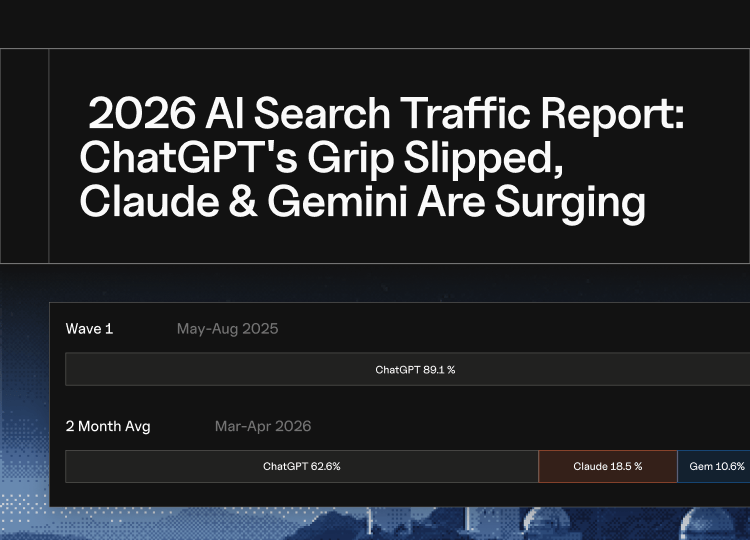
In this report, I’m going to walk you through a comparison of conversion rates among the four leading AI chatbots: ChatGPT, Gemini, Claude, and Perplexity.
From May 2025 through April 2026, my research team conducted an in-depth study on AI conversion rates across various industries. We used anonymized data from more than 150 client companies, honing in on the most popular generative AI chatbots. Building on our previous analysis of ChatGPT conversion rates, we noted that most companies in our dataset had invested in generative engine optimization. The fascinating results of our study are presented below.
While all chatbot traffic converts at higher rates than traditional SEO, my study shows that ChatGPT and Perplexity typically have higher conversion rates compared to Gemini and Claude. This might be due to the greater user trust vested in ChatGPT and Perplexity’s recommendations.
Claude stands out in knowledge-driven and regulated industries. Its performance in Healthcare, Higher Education, and Industrial IoT indicates that professionals in these fields favor Claude for more detailed, analytical queries.
Industries such as Engineering, Software Development, and Transportation & Logistics exhibit relatively low conversion rates overall. This might suggest less dependence on AI tools or more specialized workflows not captured within this dataset.
B2B SaaS and Financial Services demonstrate moderate but closely clustered conversion rates across all models, likely reflecting significant but cautious AI adoption given potential compliance concerns and familiarity with AI limitations.
If you want a PDF copy of this report or wish to know more about our GEO services, reach out here.
First Page Sage Internal Research Study, February 2026, First Page Sage.
I remember the days when a Google search was akin to embarking on a quest for information. It was an adventure of navigating various links and forming my own opinions.
Nowadays, tools like AI Overviews, ChatGPT, and Perplexity condense all that information into a single, simplified answer. This transformation often strips away the finer details while amplifying certain perspectives.
This shift has redefined online reputation management. Now, search engines not only present information but shape the underlying narratives. This raises the stakes for brands, as even a top-ranking status doesn’t guarantee influence if AI stories tell a different tale.
For brands, the game has changed. Being number one doesn’t ensure visibility and influence anymore. The underlying narrative holds far greater power.
AI Narrative Formation: Crafting User Answers
AI platforms now utilize what I like to call ‘AI narrative formation.’ This process crafts the responses we receive from various search engines. Let me walk you through how this system works.
Source Pooling
These systems pull content from numerous sources. Contrary to expected reliance on peer-reviewed articles, they gather data from Reddit, YouTube, and social platforms like Instagram and TikTok.
Signal Weighting
Not all sources are equal. Often, a popular yet low-quality source can outweigh a singular, credible entry. A bustling Reddit thread with negative feedback might overshadow a well-researched Wikipedia page.
Narrative Compression
The summarization process compresses diverse inputs, often losing nuance along the way. Complex reputations are simplified into general statements like, ‘Users find this company untrustworthy.’
Continued Reinforcement
These summaries transcend their original context, getting shared and re-shared across social media. As these echoes return as new data, they further entrench the narratives in AI responses.
Unraveling a Finance Company’s Reputation in AI Search
To illustrate AI narrative formation, consider a recent case I worked on involving a financial company, which we’ll call Company X.
Company X’s reputation remained strong on traditional SERPs. High Trustpilot ratings and reputable endorsements were the norm until Google AI Overview threads surfaced a forgotten Reddit forum rife with grievances against them.
The AI Overview skewed the narrative, suggesting Company X had unresolved customer service issues, even though these concerns had been addressed years prior. This created a skewed perception that was hard to counteract.
The Amplified Risk from AI Searches
AI dramatically increases reputational risk through several mechanisms:
The Spread of Negative Narratives: Negative content surfaces faster and more prominently than before.
AI Hallucinations: Despite growing awareness, AI inaccuracies continue to deceive.
The Snowball Effect: Repeated narratives gain momentum, complicating reputation management efforts.
It has become evident that in ORM, repetition often overrides accuracy.
Auditing AI-Generated Narratives: A Step-by-Step Approach
Let’s consider a situation involving an AI-generated narrative challenge faced by CEO X of a well-known SaaS company.
After an out-of-context quote from CEO X’s podcast appearance went viral, AI summarized him unfavorably. Quickly, his reputation transformed negatively across major platforms.
Step 1: Mapping Queries
I initiated a process to understand what queries AI outputs were generating about CEO X. This helped identify the underlying issues.
Step 2: Capturing Outputs
Identifying repeated claims revealed how CEO X was perceived. Narratives from Google AI and ChatGPT were consistently portraying him negatively.
Step 3: Delving Through Sources
The next step involved examining the quality of sources contributing to these narratives, often outdated or lacking accuracy.
Step 4: Analyzing the Narrative Gap
This involved assessing discrepancies between AI narratives and his actual reputation, contextualizing the initial quote, and examining the long-standing perception of CEO X.
Step 5: Correcting and Replacing Sources
Finally, I focused on directly addressing, correcting, and replacing those negative narratives. This involved engaging directly with platforms that contributed to the misinformation and reinforcing positive content elsewhere.
A New Perspective: From SEO to Narrative Management
The focus has shifted from merely achieving top SEO rankings to understanding and adapting to narrative shifts. We must rethink our strategy from content engagement to managing the narratives AI disseminates.
To succeed, it’s important to reinforce AI systems with quality inputs, including crafting high-quality content, pursuing credible mentions, disseminating structured data, and managing misinformation directly.
Your ChatGPT ad may appear at the exact moment someone is comparing options, checking a price, or deciding what to do next. If the reader has to decode a slogan before understanding the offer, the useful answer around the ad will usually be more compelling.
Treat the ad as a compact decision aid. Identify the brand, state the relevant benefit, support it with something concrete, and offer one sensible next action. Creativity still matters, but it has to make the decision easier rather than make the message harder to parse.
Clarity fits the way people use a conversational interface
A person asking ChatGPT for help is not necessarily browsing for entertainment or waiting to be intrigued. A prompt about pricing, alternatives, features, or suitability can signal that the person is already evaluating a decision. In that setting, the ad competes with an answer designed to be immediately useful.
That changes the job of the copy. A conventional brand slogan can ask the audience to remember an idea now and understand its relevance later. A conversational ad has less room for that delay. It needs to explain who is speaking and why the offer belongs in this particular decision.
Across an analysis covering more than 40,000 ChatGPT ad placements, the recurring style was concise, structured, contextual, and oriented toward high-intent users. The dominant headline pattern put the brand before the benefit, often separated by a colon.
Think of this as paid search translated into dialogue. Relevance is still central, but matching a keyword is not enough. The copy must fit the question behind the prompt and sound like assistance rather than an interruption.
This does not mean every ChatGPT user is ready to buy, or that short copy wins by itself. The placement observations show useful patterns, not a universal causal rule. Use them as a starting architecture, then validate them against your own audience, offer, and conversion data.
Give the headline and body one job each
The observed average headline was about 30 characters and five words. Body copy averaged roughly 116 characters and 19 words. Those are descriptive averages, not known platform limits. Do not remove a necessary condition or qualification merely to hit a character count.
Use the averages as an editing discipline. If your message cannot fit near that range, the problem may be that the ad is trying to communicate several benefits, answer several objections, or serve several intents at once.
Make the headline identify the choice. Start with [Brand]: [Primary benefit]. The brand tells the reader who is making the offer; the benefit explains why it deserves attention.
Make the first body sentence substantiate the benefit. Use an applicable price, a defensible performance metric, or a precise description of what the offer provides.
Make the second body sentence advance the decision. Ask for one direct action such as Compare, Shop now, or Book.
The working template is simple:
Headline: [Brand]: [Benefit] Body: [Concrete proof relevant to the prompt]. [Direct next action].
Write the full, truthful claim before compressing it. Then label every phrase as brand, benefit, proof, action, or necessary qualification. Remove anything that does not perform one of those jobs. This protects the substance of the offer while exposing filler.
A useful headline test is whether an unfamiliar reader can answer two questions immediately: who is offering this, and why should it be considered? A useful body test is whether each sentence either reduces uncertainty or moves the reader to the next step.
Mirror the decision, not just the words in the prompt
Context mirroring is more than repeating a term from the user’s question. You need to identify the decision the person is trying to make, then place the information required for that decision in the ad.
If someone is comparing options, a broad awareness message is a mismatch even when it contains the right product keyword. If someone is checking cost, an abstract promise of value leaves the central question unanswered. The strongest observed messages reflected the query or conversational environment instead of relying on keyword overlap alone.
Decision behind the prompt
What the ad should resolve
Suitable action
Comparing alternatives
The brand’s relevant differentiator, supported by concrete evidence
Compare
Checking affordability
The price or priced term that actually applies
Shop now, when an immediate purchase is possible
Checking suitability
The capability that matches the stated requirement
Book, when evaluation requires a conversation or demonstration
Reducing commitment
A genuinely free trial or demo and the condition that defines it
Book or the most direct available trial action
Build separate messages for these decisions. One all-purpose ad usually becomes vague because it has to accommodate incompatible questions. A comparison message needs a differentiator. A price message needs a price. A suitability message needs evidence of fit.
Do not mirror irrelevant details merely because they appear in the prompt. Repeat only the context that changes the recommendation or the next step. The goal is recognition – the reader should see that the offer addresses the task at hand – without producing copy that feels mechanically assembled.
Use concrete proof and a low-friction action
Specificity matters because a high-intent reader is trying to reduce uncertainty. Generic claims such as better, smarter, or leading do not provide much material for a comparison. A concrete price or measurable result can.
Dollar signs and specific numerical claims, including prices and performance metrics, were associated with stronger performance than generic promises. That does not make any number persuasive. The figure must answer the user’s question, apply to the advertised offer, and remain consistent with the destination page.
Use a price when price affects the decision. State the applicable amount or pricing term instead of claiming that the offer is simply affordable.
Use a performance metric when it can be supported. Preserve the scope and qualification needed to keep the claim accurate.
Use a precise capability when no responsible number is available. A truthful, concrete description is more useful than numerical decoration.
Use free only when the offer is genuinely low-friction. Make any material limitation, required payment method, or conversion to a paid plan clear at the point where it matters.
Free trials and demos can lower the commitment required from someone who is still evaluating. The word itself is not the strategy. The strategy is reducing the size of the next decision while accurately explaining what the reader receives.
The call to action should name that next decision. Direct actions such as Shop now, Compare, and Book fit this format better than a vague Learn more prompt because they tell the reader what will happen next. Choose the verb that matches the destination. Do not use Shop now for a form that merely starts a sales conversation, or Book for a page with no scheduling path.
Keep the tone calm. Heavy punctuation, inflated superlatives, and rhetorical questions make the ad sound less like useful guidance and more like an interruption. Confidence comes from a clear claim, relevant proof, and an honest next step.
Test clarity as a message system, not a character count
The observed averages give you a credible place to begin, but your own testing must determine what converts for your offer. A shorter variant is not automatically clearer. It can also be incomplete. Define the decision your ad must support before deciding which words to cut.
Key takeaways
Put the brand and primary benefit in the headline so the reader can identify the choice immediately.
Use the body to provide one concrete proof point and one direct next action.
Match the message to the decision behind the prompt: comparison, price, suitability, or commitment.
Use numbers and free offers only when they are accurate, relevant, and consistent with the destination.
Treat 30 headline characters and 116 body characters as observed averages, not mandatory limits or guarantees of performance.
A practical testing sequence
Choose one intent group. Start with prompts that represent the same decision. Mixing price research, comparisons, and general discovery can conceal which message actually worked.
Write a specific hypothesis. For example, test whether placing the brand before the benefit improves qualified actions, not whether a broadly different ad is better.
Change one component. Test the headline structure, proof point, action, or contextual wording separately. Keep the offer, destination, and other controllable conditions consistent.
Select the conversion before the test. Use the business action the ad is meant to produce as the primary measure. Treat clicks or other engagement signals as diagnostic measures when they do not represent the final objective.
Inspect post-click quality. A curiosity-driven ad can attract attention without helping the right person act. Check whether the destination behavior supports the same conclusion as the initial engagement metric.
Record the context with the result. Save the prompt intent, copy element changed, offer, destination, and outcome. A reusable lesson is more valuable than an isolated winning variant.
Avoid changing the headline, proof, offer, and call to action in the same comparison. You may find a winner, but you will not know which decision to carry into the next campaign. Also avoid declaring success from an early fluctuation. Set the sample and decision rule appropriate to your traffic and analytics process before looking at the result.
Start with the highest-intent prompt category you can identify. Rewrite one ad so the brand, benefit, proof, and action are visible without interpretation, then test whether that clarity improves the action that matters after the click. Expand the pattern only after it proves useful for your audience.