Have you ever felt overwhelmed by the sheer number of marketing tools available? I know I have, which is why I’m thrilled to introduce you to Genmark Flow—a transformative AI-powered service that shifts the focus to achieving real results instead of just relying on tools.
Through a unique Service as Software approach, Genmark Flow aims to deliver exceptional marketing outcomes by seamlessly integrating artificial intelligence into your strategies. This isn’t just about adding another tool to your arsenal; it’s about enhancing your existing processes with AI-driven insights that truly make a difference.
Join me on this journey to redefine how we perceive and utilize AI in marketing, prioritizing results that drive growth and enhance performance. With Genmark Flow, you’re not just using AI, you’re partnering with it to achieve success.
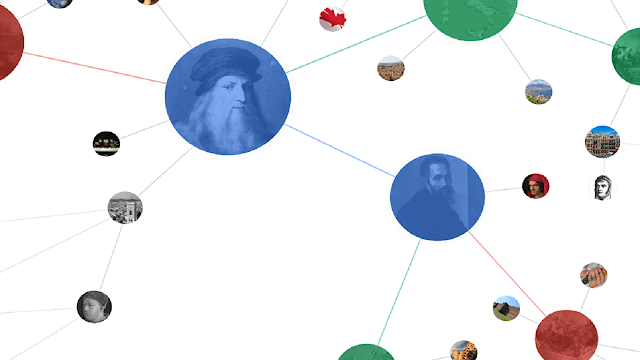
If you’re curious about how search engines deliver precise information, let me introduce you to the Google Knowledge Graph. This technology, first introduced in 2012, has revolutionized the way we access data online. It transforms Google’s capability by turning its search engine into an interconnected web of knowledge, going beyond simple keyword matching. I want to take you on a journey to explore what the Knowledge Graph is, how it operates, and its vast impact on search and beyond.
The core of the Google Knowledge Graph is a colossal database mapping real-world entities and their relationships. Imagine a digital encyclopedia where information is not just archived as text but connected in a network of nodes. Each of these nodes represents entities like “Albert Einstein” or “Theory of Relativity,” while the edges define their relationships, such as “developed” or “born in.” This setup empowers Google to deliver more intuitive and context-aware search results.
For instance, when I search for “Leonardo da Vinci,” the Knowledge Graph presents a Knowledge Panel that summarizes key details about him, such as his birth, death, and iconic works like the Mona Lisa. This is because the Graph smartly links Leonardo to relevant entities like “Renaissance” and “Florence.”
The functioning of the Knowledge Graph hinges on a blend of data sources and complex algorithms. Google harnesses data from renowned sources like Wikipedia and Wikidata, alongside other licensed materials. It then employs natural language processing and machine learning to discern entities, their attributes, and relationships from unstructured web data.
Here’s how it works in three simple steps:
Entity Extraction: Identifying and classifying nouns such as people and places in the text.
Relationship Mapping: Understanding connections between entities, like “Barack Obama” being “President of” the “United States.”
Knowledge Integration: Continuously updating the Graph with new data to maintain accuracy.
This sophisticated structure enables direct answers to questions. If I type “Who founded Microsoft?”, it swiftly responds with “Bill Gates and Paul Allen,” thanks to the Graph’s linked entities.
The Knowledge Graph has truly transformed search, making it more user-focused and semantic. Before its existence, Google primarily relied on keyword matches, often resulting in irrelevant results when queries were vague. Now, I can see how it interprets user intent. So, whether I’m searching “jaguar” for an animal, car brand, or football team, the Knowledge Graph prioritizes results based on context clues like my location or previous searches.
Knowledge Panels are one of the most visible outcomes, providing concise information without necessitating multiple website visits. The Graph also facilitates features like “People Also Ask” and related suggestions, predicting follow-up queries. For businesses and individuals, appearing in the Knowledge Graph boosts authority and visibility.
Beyond mere search functionality, the Knowledge Graph extends its reach into Google Maps by linking locations to businesses, powers Google Assistant in answering voice queries, and even enhances YouTube by suggesting related content. Its ability to structure data is impactful in industries like e-commerce and healthcare, where understanding relationships can enhance recommendations and aid diagnostics, respectively.
As I look to the future, the Knowledge Graph’s sophistication is poised to grow with AI breakthroughs. Google’s continual improvements in processing complex queries and integrating real-time data promise even more personalized and predictive user experiences.
In conclusion, the Google Knowledge Graph forms the bedrock of modern search by enhancing how information is accessed. By understanding entities and their complex interconnections, it equips us with smarter, faster, and more relevant information. Whether you’re a curious individual or a business striving to optimize your presence online, the Knowledge Graph is an influential force shaping our digital interactions. Its evolution holds the promise of making our tech interactions more seamless and insightful.
Inspired by this post on AnswerEngineOptimization.blog.
I’m excited to extend an invitation to join our 2026 contributor team! At Search Engine Land, we’re seeking knowledgeable voices in SEO, PPC, AI, and analytics to share valuable insights with millions of marketing professionals around the globe.
Being part of Search Engine Land is a unique opportunity. For over two decades, our publication has been a trusted resource for search marketing information, reaching more than 1 million professionals each month. I’m thrilled to share that we’re once again expanding, and we want to amplify our coverage with diverse and reliable perspectives—be it from someone with five years of experience or someone who remembers the Google Florida update like it was yesterday.
We’re looking for contributors with at least five years of hands-on experience who can offer practical insights and thought leadership on the latest trends in:
SEO
Generative AI (GEO, AI SEO, etc.)
PPC (paid search, paid social, display, video)
Data and analytics
While this contributor role is on a volunteer basis, the benefits are significant. You’ll have the chance to:
Establish yourself as a subject matter expert in your field.
Enhance your professional visibility.
Expand your network and reputation.
Enrich your LinkedIn profile or resume with this prestigious experience.
Propel your career forward.
If you’re interested, I encourage you to fill out this form to apply. If selected, you’ll hear from us directly via email. Don’t miss this opportunity to make your mark.
In the past day, I’ve noticed that ChatGPT and Perplexity have launched new AI-driven shopping tools designed to create more intuitive and personalized shopping experiences. These innovations focus on helping us effortlessly discover, compare, and purchase items using conversational queries tailored to our preferences and history.
ChatGPT
Shopping Research. OpenAI is revolutionizing the way I shop by transforming ChatGPT into my personal product researcher.
When I describe what I need, like a “quiet cordless vacuum” or a “gift for my art-obsessed niece,” ChatGPT kicks in to ask clarifying questions and pulls relevant data from the web. In no time, I receive a customized buyer’s guide.
Using my preferences and previous interactions, ChatGPT updates recommendations as I react to items with “More like this” or “Not interested.” It’s a truly adaptive experience.
This feature uses a specialized GPT-5 mini model that’s optimized for shopping and sources reliable information from trusted sites.
It’s available now for both free and paid ChatGPT users, on web and mobile, with extensive use available through the holiday season.
Next up, I’ll be able to purchase items directly within ChatGPT thanks to upcoming Instant Checkout integrations.
Perplexity
New Shopping Experience. Perplexity has rolled out a free, U.S.-based shopping feature centered around enhancing my shopping without replacing the experience.
I simply initiate searches with conversations like “best winter jacket for San Francisco ferry commute,” and Perplexity maintains context even when my needs shift.
It remembers my style and preferences, adjusting future product suggestions accordingly, all while avoiding endless scrolling by providing clear, intent-driven product cards.
Purchases are quick and seamless, thanks to a partnership with PayPal, while still allowing merchants to manage customer relationships.
Retailers might pay attention to this, as conversational shopping reportedly increases purchase intent, although some studies caution that AI-driven conversions aren’t always more successful than traditional methods.
This innovative experience is available now on desktop and web, with mobile apps arriving soon.
AI shopping assistants like ChatGPT and Perplexity are changing the ecommerce landscape. ChatGPT focuses on deep research while Perplexity offers smooth discovery and integrated checkout, both striving to be our go-to platforms by providing personal and custom shopping recommendations.
For years, I measured digital success through impressions, backlinks, and clicks. Ranking high in search results and getting those clicks meant I controlled the funnel. But, the landscape is rapidly shifting.
Large Language Models (LLMs) like ChatGPT, Claude, Gemini, and Perplexity are now often the first stop for decision-makers seeking answers. These systems don’t provide a list of links; instead, they offer synthesized responses. Whether my brand is part of those answers or overlooked greatly affects its relevance in the buyer’s journey.
This evolution requires a new playbook. It’s no longer just about Google rankings. It’s about being present in AI-generated responses, how those responses frame my brand, and what sources they credit. In this new paradigm, being mentioned is the new click.
The challenge I face is not just tracking these new AI KPIs. It’s about understanding the signals and turning them into actionable strategies. Let’s explore four core AI KPIs: mentions, sentiment, competitive share of voice, and sources, and see how each can shape my approach.
The first KPI, mentions, assesses how often my brand appears in LLM responses. An absence from queries such as “top SaaS tools for analytics” indicates my brand is missing from key conversations before they even start.
But mentions go beyond vanity metrics; they serve as diagnostic tools. Patterns in appearance can reveal which areas of my content strategy resonate and which need reinforcement.
If mentions are sparse in educational queries, I’m focused on developing thought-leadership content that establishes my voice in defining the category. If mentions are lacking in solution-oriented queries, I work on assets that clarify my unique differentiators. Mentions signal where my brand is either visible or invisible.
Now, let’s consider sentiment. Being mentioned is positive, but the accompanying descriptors—“fast,” “trusted,” “expensive”—impact deeply. These adjectives reflect the existing narrative in the data the model has processed.
By capturing the language used around my brand, I can track whether descriptors lean positive, neutral, or negative. Themes that consistently present my brand as “enterprise-grade” but “complex” suggest areas for messaging adjustments.
Negative sentiment shines a light on gaps that need addressing. If I’m perceived as costly, I create ROI calculators or case studies demonstrating value. For complex perceptions, content that simplifies onboarding can help. Positive sentiment means amplifying narratives that work, such as emphasizing “trust” in campaigns.
The competitive share is about more than mentions and sentiment. It’s about measuring my brand’s presence in LLM responses compared to my competitors.
Understanding not just how often I appear relative to them, but also the nature of these appearances, I can strategize accordingly. Insights from competitive share turn into actionable battle plans.
Finally, sources reveal who the AI trusts to tell the story. If a competitor’s whitepaper is cited over my content, it’s time to establish authority with comprehensive, structured, and credible content.
Crafting content recognized as authoritative helps shift my brand from being merely mentioned to being foundational to the answers generated by AIs.
The convergence of these KPIs forms a compass to guide my strategic efforts:
Marketers embracing AI KPIs now will not only forge ahead in this era but actively shape it as well.
It might seem early, with tools still in development and no universal dashboard available, but early adopters will reap the benefits.
Reflecting on the early 2000s and the birth of SEO, those who optimized early found themselves owning search visibility, a parallel moment for AI KPIs emerges now.
The effort required isn’t complex. Simply monitoring prompts, logging responses, and analyzing mentions, sentiment, share, and sources provides valuable insights that can shape strategies today.
The advent of LLMs redefines what visibility means. Increasingly, my brand’s story is communicated within AI-generated responses long before a prospect visits my website.
Thus, KPIs become crucial. Mentions are the new clicks in this evolving landscape. Embracing these insights allows me to fill visibility gaps, reshape perceptions, benchmark competitors, and secure authoritative positions.
At Brightspot, we’re guiding organizations in this shift, translating AI insights into actionable strategies that secure brands’ visibility and trust. Learn more at brightspot.com.
I’m thrilled to share some exciting news with you! Profound is rolling out a new App Language Selector, giving all of us the ability to use the platform in over 30 different languages. This feature is currently in beta and represents a significant milestone in our global expansion, following the success of Zero Click London.
With this launch, we’re doubling down on our promise to create a multilingual and accessible experience for teams not just in Europe, but around the globe. Whether you’re collaborating internationally or simply prefer working in your native tongue, Profound is now more user-friendly than ever.
As I explore the latest updates to ChatGPT, I’m excited to share that it now incorporates more images into its answers, bringing a fresh, multimodal approach to search. This enhancement makes images just as vital as text for exploring brands and products.
OpenAI has unveiled this visual upgrade, which pulls images from the web to enrich answers about a variety of topics, such as people, places, and products. It’s a fascinating development that shifts ChatGPT from providing simple text responses to offering a more interactive search experience.
How it works. With this update, ChatGPT becomes more than just a text generator. It now offers a search experience similar to what I’m used to:
Images will appear when they add clarity to the information.
These images, sourced from the web, align with the most relevant text.
If I’m curious about an image, clicking on it expands it to its original size and shows the source.
Where it’s live. The rollout of this update is occurring globally, and I’ve noticed it gradually becoming available across all ChatGPT plans that I access:
I’ve used it on web, iOS, and Android platforms.
It’s important to note that it only works with responses created by GPT 5.1.
Why we care. I realize that search is evolving to be more multimodal, integrating text, images, videos, and audio. Beyond ensuring that my brand is part of AI-driven replies, it’s crucial to consider how our visuals show up when ChatGPT responds to queries.
I’ve often found myself caught in the age-old marketing debate: should I focus on SEO or PPC? For years, this decision was largely based on past successes or failures.
With organic search, I could rely on growing visibility over time, while paid search gave me immediate, direct control.
Yet, most marketing teams lean toward one over the other based on their experience and budget limitations. But as we move into the future, this binary choice is no longer enough.
In 2026, the landscape has transformed significantly, altering how we approach search entirely.
Why This Debate Has Changed
The world of search has evolved, far beyond the SEO or PPC dichotomy.
Our search behavior is not the same. Search results pages have transformed and the machine learning behind bidding systems have advanced. And then there’s AI, the latest player on the scene, shaking things up.
It’s no surprise that AI has turned into a crucial factor, alongside SEO and PPC.
The pressing question now isn’t just about selecting SEO or PPC, but how we can integrate AI to sustain and boost visibility amidst the fast-paced changes.
This challenge also highlights another issue: fragmentation. With so many channels and discovery paths available, it feels overwhelming, leaving marketers scattered and at risk of falling into paralysis.
The key is to navigate through this AI upheaval, continuously adapting our strategies to remain relevant.
The Old Debate: SEO vs. PPC
Historically, weighing the pros and cons of SEO and PPC was straightforward:
SEO: Offers credibility, compounding visibility, and engagement, although slow to mature and with challenging expectations.
PPC: Provides rapid visibility and control, but requires ongoing financial investment and battles rising costs.
In my experience, a combined strategy proves most effective.
SEO fuels demand.
PPC captures it.
The synergy between the two remains valuable, but AI introduces an essential new dimension.
AI: The New Discovery Channel
AI is redefining how we discover and evaluate information.
Its popularity is growing fast, and this holiday season will likely be a turning point. Simple, integrated tools mean AI is embedded in our daily tech use.
Just like Google once led the charge, AI is set to surpass traditional search, thanks to its simplicity and speed. We find ourselves in an environment where:
Search engines summarize content before clicks happen.
Chat tools offer answers without redirecting traffic.
Product exploration starts with AI, moving beyond Google Search.
Natural, multi-step inquiries are being made that previously didn’t exist.
Thus, visibility hinges on AI presence. The battle isn’t just for rankings, but ensuring we feature within AI ecosystems.
Lacking AI visibility means being edged out. While this may not fully manifest today, it will soon dominate the scene.
Our marketing challenge is straightforward yet daunting: figuring out how to emerge in AI outcomes. We’re unable to purchase our place, nor can we find a playbook for these types of results.
In essence, our goals now demand adaptation from optimizing merely for search engines to being discoverable within AI systems that continue to draw from search results.
The New Visibility Battlefield
Despite feeling novel, AI’s emergence was somewhat predictable.
The existing web landscape is draining — it’s a battleground of too much information, advertisements, and distractions.
Finding what we need amidst this chaos is exhausting; AI offers an antidote by swiftly cutting through the clutter.
It’s undoubtedly refreshing. Yet, we must ponder the potential downsides.
Visionaries like Tim Berners-Lee express concern over AI threatening web sustainability by impacting ad revenue streams, a sentiment I share.
In “Supremacy,” a book charting AI’s rise, authors alleged Google had a ChatGPT-like system years ago but hesitated over revenue concerns. Their claim seems plausible to me.
AI’s efficiency is undeniable. It’s cleaner, faster — and hence will dominate. It stands as a true advancement.
The world of digital marketing has devolved into a war of endurance. The adage still rings true: we normally only explore the earliest pages of search results. We need no longer hide on these pages, as AI scours deep and wide.
Unfathomably, next-level solutions appear within AI’s grasp, surfacing comprehensive insights in brief moments.
This shift was predictable with hindsight, symbolizing a departure from failed attempts to combat the web’s disordered entropy.
AI signifies a fresh paradigm, rising from the modern web’s tumult.
Why This Changes the SEO/PPC Decision
The introduction of AI shifts the landscape for SEO and PPC fundamentally.
1. SEO: Less About Rankings, More About References
For content to feature within AI summaries or search assistants, it must exhibit:
Authority
Topical alignment
Structured markup
Trust signals
Depth, devoid of surface-level fluff
Authentic perspectives
AI favors genuine thought and established voices over mere quantity.
2. PPC: Still Dominating Premium Slots
Despite AI’s growing influence, PPC secures:
Top slots
Commercial queries
Visual placements
Local ad packs
YouTube
Discovery platforms
Merchant outcomes
AI shakes things up, yet PPC’s prominence remains — revenue needs won’t disappear.
3. AI Alters User Behavior Exponentially
AI is crafting fresh behavior patterns:
Fewer clicks, shorter journeys
Intuitive moments
In-depth comparisons inside AI systems
Increased research driven outside traditional points
Heightened expectations for relevance
Seo and PPC remain significant, albeit adapting to parallel discovery paths AI creates.
Is SEO vs. PPC vs. AI Even the Right Question?
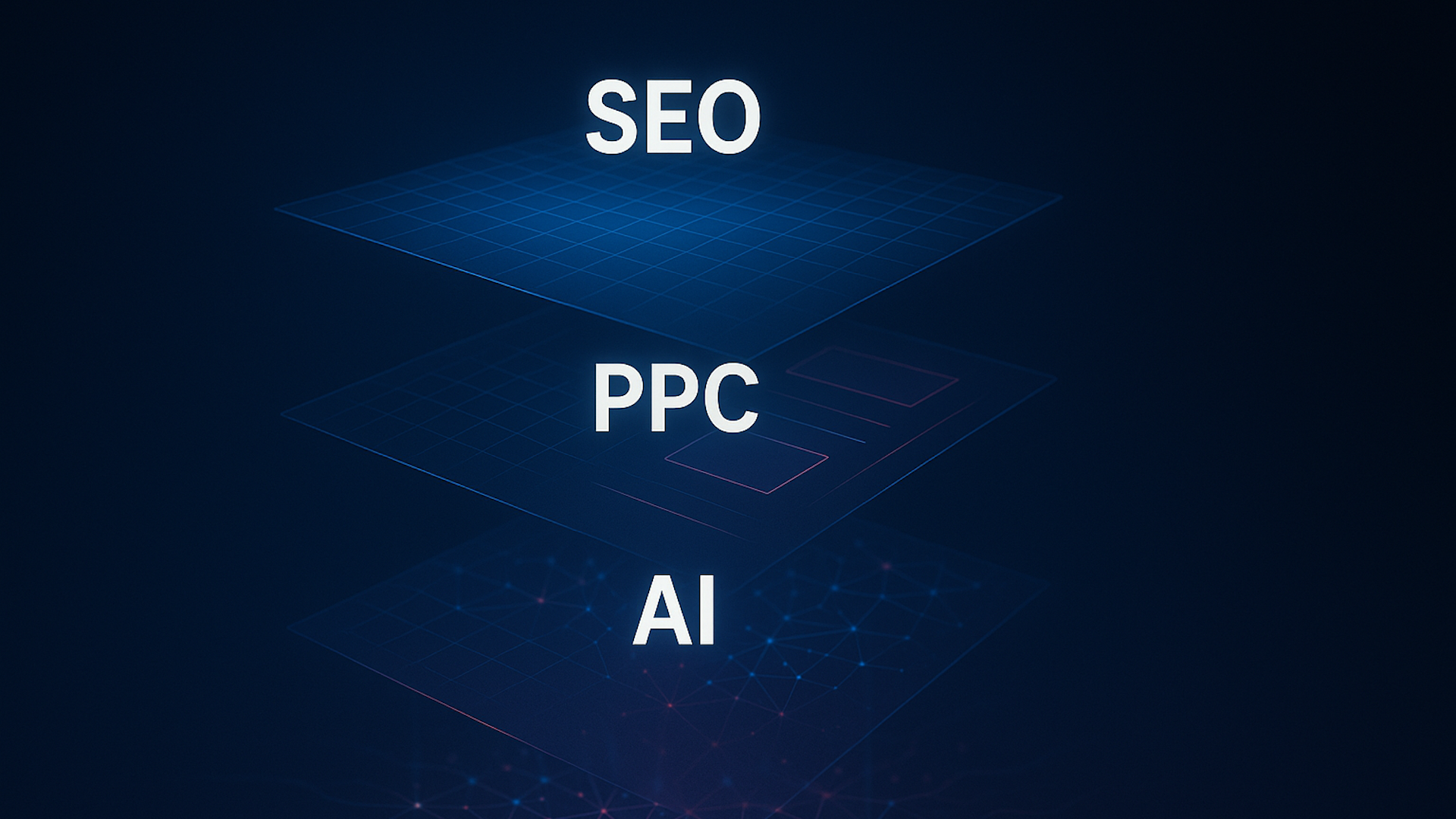
Marketers often see SEO, PPC, and AI as competitors. Truthfully, they’re three intertwined visibility layers.
SEO fosters presence, providing foundational visibility.
PPC amplifies position, stimulating awareness.
AI frames discovery, offering context and relevance.
Each component complements the others:
SEO supplies content AI distills.
PPC fosters initial visibility, attracting early engagement.
AI delves into extensive analysis, shaping your market presence.
I embarked on this article seeking an answer to the age-old question: which reigns supreme — SEO, PPC, or AI?
Mid-journey, clarity emerged: this outdated question will no longer suffice by 2026.
General counsel proves challenging, given unique circumstances.
For example, a local plumbing business may have started with PPC while growing through local SEO and referrals.
Eventually, reducing PPC reliance might have been tested unless leads dwindled.
Contrarily, a college with complex site structures, coupled with strong authority, could transition from ads — assuming proper planning and site optimization.
Now, a third ingredient has emerged: AI, with SEO, PPC, and AI forming a unified strategy.
Separating AI from SEO is no longer feasible. The disciplines of AEO, GEO, and related labels are increasingly married.
Understanding AI and SEO’s connections in retrieval-focused generation contexts becomes crucial.
While PPC’s link to AI isn’t as prominent, early integration is already in motion, evidenced by Google incorporating ads into AI summaries.
Optimizing AI echoes optimizing SEO’s practices.
While early, the need to optimize for AI is evident, demanding attention from SEOs and GEOs in the near term.
Inaction is costly; we lack a complete guide, yet actionable insights remain available.
How to Build Visibility Across SEO, PPC, and AI
By 2026, success isn’t mere “ranking,” but “being referenced.”
Staying afloat requires optimizing for machine-led content evaluation.
1. Adopt GEO
Format your content for AI retrieval.
Two to three short, concise sentences followed by layered context appeals to LLMs.
Utilize bullet points, clear logic, and data tables for AI to parse easily.
2. Feed the Knowledge Graph with Entity SEO
AI confirms facts using entities like people, brands, and ideas.
Your About page, schema markup, and author bios must be impeccable.
Without Google’s understanding of your identity, authority citations become unlikely.
3. Target Citation Gaps
AI systems link to trusted sources, favoring niche gurus and major outlets.
Redirect digital PR efforts toward “mentions” on sites AI deems authoritative.
4. Invest in Freshness and Data
LLMs lean towards recent data. Regularly update facts, timestamps, and comparisons.
Static content may falter against continually refreshed material.
5. Embrace Redundancy: The Hybrid Approach
No channel stands alone. Execute PPC for instant visibility, nurture SEO for long-term authority, and set AI-ready data structures simultaneously.
6. Build a Content Engine
Leverage “They Ask, You Answer” frameworks to tailor content that addresses audience needs.
In my experience, the open web often feels like the Wild West, especially in recent times. Many creators, myself included, have watched as our hard work is scraped and fed into large language models without any hint of permission.
This situation has become a free-for-all, leaving website owners with almost no means to opt out or safeguard their creative endeavors. There have been attempts to address this, such as Jeremy Howard’s llms.txt initiative. Much like robots.txt helps us manage site crawlers, llms.txt aims to provide guidelines for AI companies’ crawling bots.
However, a promising new protocol is on the horizon, potentially granting site owners like myself more control over how AI firms utilize our content. It looks like this might become part of robots.txt, allowing us to set definitive rules around AI system access and usage.
IETF AI Preferences Working Group
In response to this issue, the Internet Engineering Task Force (IETF) began the AI Preferences Working Group earlier this year in January. Their mission is to craft standardized, machine-readable rules to empower site owners to articulate AI usage preferences for their content.
Since its inception in 1986, the IETF has established core Internet protocols like TCP/IP, HTTP, DNS, and TLS. Now, they’re laying down foundations for the open web’s AI era. Leading this group are co-chairs Mark Nottingham and Suresh Krishnan, joined by figures from Google, Microsoft, Meta, and more.
Of particular interest is Google’s involvement via Gary Illyes, who is part of this working group.
“The AI Preferences Working Group will standardize building blocks that allow for expressing preferences about how content is collected and processed for Artificial Intelligence (AI) model development, deployment, and use.”
What the AI Preferences Group is Proposing
This group aims to deliver new standards that empower site owners to determine how LLM-powered systems can utilize their open web content.
A standard track document detailing a vocabulary to express AI-related preferences, independent of content association methods.
Standard track document(s) that explain how to associate these preferences with content using IETF-defined protocols and formats, for example, Well-Known URIs and HTTP response headers.
A standard approach for reconciling multiple preference expressions.
At the time of writing, nothing is set in stone yet. Early documents, however, provide a sneak peek into potential standards.
This working group published two crucial documents in August.
These documents propose significant updates to the Robots Exclusion Protocol (RFC 9309), suggesting new rules and definitions enabling site owners to specify AI content usage permissions.
How It Might Work
AI systems on the web are categorized and assigned standard labels. Whether a directory will exist for site owners to identify system labels remains unclear.
Currently, the defined labels include:
search: for indexing/discoverability
train-ai: for general AI training
train-genai: for generative AI model training
bots: for all types of automated processing, such as crawling and scraping
For each label, you can set two values:
y to allow
n to disallow.
I found it interesting that these rules can be applied at the folder level and customized for different bots. In robots.txt, they’re implemented using a new Content-Usage field, akin to existing Allow and Disallow fields.
Here’s an example robots.txt that the working group shared in their document:
Explanation Content-Usage: train-ai=n indicates that no content on this domain may be used for training any LLM model, whereas Content-Usage: /ai-ok/ train-ai=y permits model training using content within the /ai-ok/ folder.
Why Does This Matter?
There’s significant buzz about llms.txt within the SEO community and its use alongside robots.txt. Yet, no AI company has confirmed adherence to these guidelines, and Google disregards llms.txt.
Website owners, including myself, crave more explicit control over how AI companies leverage our content—be it for training models or RAG-based responses.
I feel that the IETF’s new standards signify positive progress. With Illyes as a contributing author, I remain optimistic that once finalized, companies like Google will embrace these standards, respecting new robots.txt rules during content scraping.
When people ask me how to assess the ROI of their marketing campaigns, I always suggest starting with the customer acquisition cost (CAC). CAC, alongside Customer Lifetime Value (LTV or CLV), is vital in navigating the realm of B2B marketing.
By examining your CAC, you can identify which marketing channels deserve more attention and which aspects of your marketing strategy could use improvement. Benchmarking your CAC against industry standards is key.
The aim of this article is to guide you in recognizing what qualifies as a good CAC in your industry and to encourage you to even explore how your CAC fares compared to related industries.
Calculating Your Customer Acquisition Cost
To calculate your CAC, simply divide your total marketing and sales expenditures by the number of new customers acquired, using the formula below:
Make sure to perform this calculation annually or on a rolling basis to accommodate seasonal customer behavior changes. If your B2B business enjoys consistent year-round sales, consider quarterly CAC analysis to gauge the impact of new initiatives.
Additionally, calculating CAC per channel allows you to compare different marketing strategies effectively.
This report emphasizes B2B CACs. For B2C data, see our B2C Edition.
After determining your CACs, you can measure them against the industry averages shared below.
Average Customer Acquisition Cost (CAC) By Industry
The table below presents average CACs across 29 B2B industries, gathered from client data spanning January 2022 to August 2025. Consider these dataset limitations:
Within each industry, we categorize CAC as Organic or Inorganic. Organic CAC includes mainly SEO and Organic Social, while Inorganic CAC covers PPC / SEM and Paid Social.
Email marketing, events, and other channels are excluded due to insufficient data.
Data from client analytics is anonymous. Organic data leans towards SEO and Inorganic towards PPC / SEM, given our B2B clientele and service focus.
Below are the analysis results:
[Insert table block here]
Average Customer Acquisition Cost (CAC) for SaaS Companies
Our team also reviewed average customer acquisition costs across 22 SaaS industries to determine each industry’s B2B CAC.
SaaS Industry
CAC
[Insert table rows here]
How Your CAC Relates to Customer Lifetime Value
While CAC reflects acquisition costs, Customer Lifetime Value (LTV) reveals the average profit per customer. Calculate LTV by dividing your profit over a chosen period by the number of unique customers, and multiply by their average purchase frequency. Aim for an LTV to CAC ratio of at least 3:1 for optimal financial health.
Keep in mind historical trends and competitor data. A 2:1 LTV to CAC ratio isn’t necessarily negative if you’re seeing improvement over time.
Particularly during new campaigns or long-term strategies, your ratios may fluctuate. For example, if you’ve launched an SEO campaign, results typically appear after 4-6 months.
How to Lower Your CACs
Organic CAC often triumphs over inorganic due to its longevity and skill-based approach. Investing in organic channels yields sustainable results without ongoing cash infusion.
If you’re curious about organic marketing to reduce your CAC, feel free to contact us. Our firm, with multiple U.S. locations, has helped various B2B sectors achieve superior ROI with SEO strategies.
Further Reading
For deeper insights into CAC and its relation to LTV, browse the following resources: