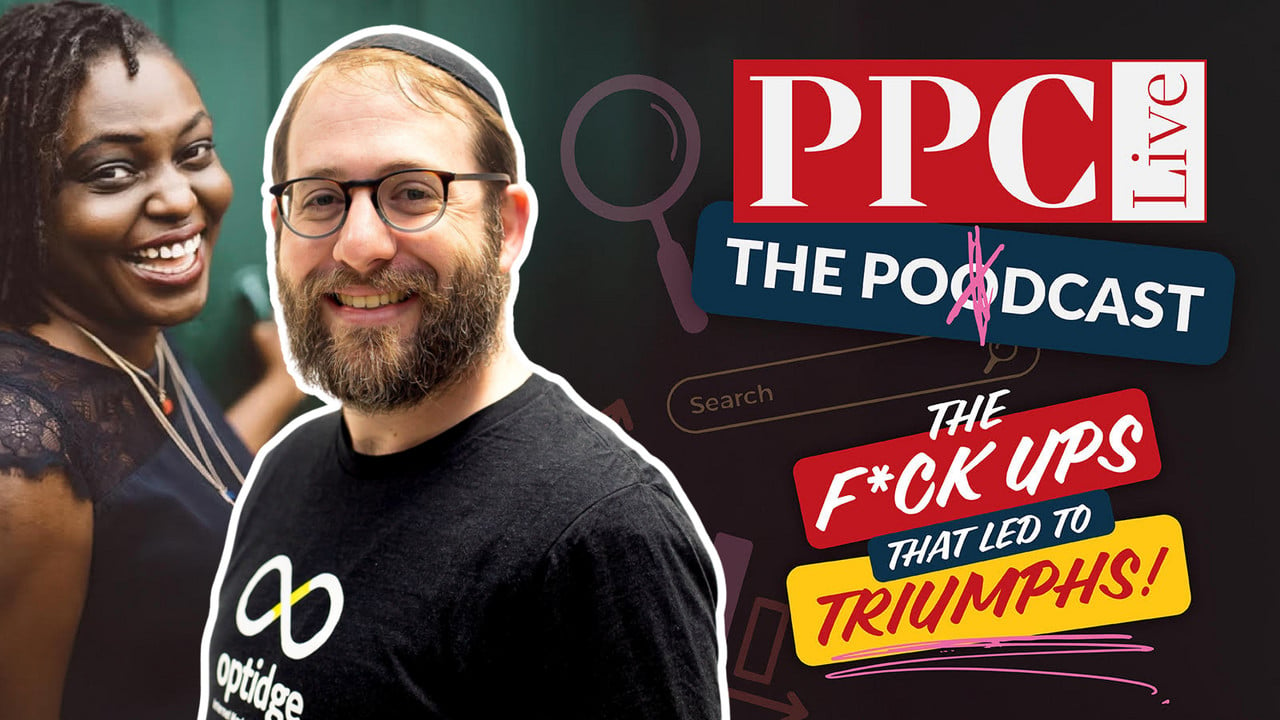
Heidi Sturrock, a seasoned paid search consultant, shared her insights with me in a recent episode of PPC Live The Podcast. With over two decades of industry experience, Heidi discussed a memorable campaign blunder that surprisingly turned into a strategic win, as well as her experiences with AI Max across numerous accounts.
Heidi’s career story includes a significant misstep she made while running a competitor campaign using broad match without negative keywords. Launched on a Friday, this led to a weekend surge of calls from irate customers of a competitor, a situation both alarming and chaotic for the client’s call center.
Unexpectedly, her client saw potential in this turmoil. Instead of dwelling on the mistake, they chose to transform these calls into sales opportunities by offering a discounted first month to switchers. By dividing the campaign for better focus, they turned a problem into a pathway for growth.
From this experience, I learned two valuable lessons: never initiate major campaigns on a Friday and ensure all stakeholders are involved in client meetings. Having both the business owner and the sales leader aware of the situation allowed for quick, effective problem-solving.
When facing a mistake, I’ve realized the importance of halting the issue swiftly, taking responsibility, and presenting a clear plan for resolution. Clients value honesty, and this approach can reinforce trust even in difficult times.
Common failures in account management often involve misaligned attribution windows and undue focus on secondary KPIs. It’s crucial to align metrics with the primary goals, ensuring that higher CPCs are understood within the broader context of achieving ROAS targets.
Regarding AI tools, Heidi’s exploration of AI Max across various accounts delivered mixed results. Success often hinged on the availability of comprehensive historical data and well-defined goals. Her advice is to experiment gradually and prepare upcoming guidelines on her blog.
For those in the industry, embracing technological changes, especially in AI, is essential. Mastering these tools can propel us ahead as marketers.
Stay connected with Heidi on LinkedIn or visit HeidiSturrock.com for her expert guides, including tips on crafting effective ad copy. Also, catch her live at SMX Advanced in Boston this June, where she’ll participate in an engaging expert panel discussion.
Have you ever experienced the frustration of seeing the ‘Your account has been suspended’ banner on Google Ads? I’ve been there, and I know how overwhelming it can feel. But don’t worry, I’m here to guide you through understanding why suspensions happen and what you can do to get back on track.
Account suspensions, as I discovered, are essential to maintaining a healthy digital advertising ecosystem. Google’s main aim here is to protect users. However, as advertisers, we often find ourselves navigating what feels like a minefield of policies and procedures.
Here’s what I’ve learned about what triggers these suspensions, the types you might face, and crucially, what to do if your account ends up flagged or suspended.
Why do accounts get suspended?
I’ve found that suspensions occur when there’s a violation of Google’s policies. The platform uses a mix of automated systems and manual reviews to detect these issues. From my experience, it often involves a thorough check of our business practices and website content.
In late 2025, Google announced improvements to its systems, which have since reduced incorrect suspensions by over 80%, with most issues now resolved within a day. This encourages me that there’s a fair system in place to ensure accuracy.
How Google Ads suspends accounts and what happens next
Suspensions can happen immediately upon violation detection or, in some cases, we get a seven-day warning. I’ve personally experienced the abruptness this can entail, where advertising activities suddenly come to a halt.
Ads will not run during a suspension.
No new content creation like ads, ad groups, or campaigns is possible.
We can still access account data and reports for review.
If an account I manage is suspended, linked accounts can also get affected. This is something to be mindful of, as I’ve had to navigate clearing up more than just one account at times.
What are the different types of account suspensions?
Understanding the different types of suspensions has been crucial for me. Google groups them mainly into policy violations and egregious violations. Each has distinct causes and implications.
Policy violations
These are common and usually related to Google Ads policy or terms and conditions. I’ve seen issues like inappropriate content or editorial requirement violations come up frequently.
Egregious violations
These are more severe and often tied to unlawful or harmful practices, reflecting overall business conduct rather than specific campaigns. In my experience, these tend to be permanent.
Circumventing systems, unacceptable practices, or illegal activities often fall here.
What to do if your account is suspended?
Depending on the suspension type, my next steps have usually involved resolving the issue before considering an appeal. Google’s help guides are invaluable, ensuring I’m fully compliant before making my case.
Best practices for submitting an appeal
From my experience, honesty and thoroughness in the appeal process are vital. Whether it’s submitting verification or acknowledging an error, being straightforward helps in getting fair reconsideration.
Remaining patient during the appeal process is crucial, as wait times can be long. In the meantime, I’ve learned not to submit multiple appeals, which could complicate the process unnecessarily.
As a marketing professional, I’ve experienced various identity crises in my journey. Initially, I was just a channel expert, then an integrated marketer, and eventually evolved into roles like growth and performance marketing. And then, AI became a buzzword that sneakily entered everyone’s job description.
Now, I find myself stepping into the era of the full-stack marketer, especially as a media leader. It’s strikingly similar to adopting a product management mindset.
Don’t worry, this doesn’t mean writing Jira tickets for fun (though some of us might enjoy it). It actually signifies that the most successful media leaders will not just focus on campaign optimization. They’ll take ownership of outcomes, foster cross-team connections, and holistically enhance the entire user experience, from first contact to final conversion and beyond.
In the sectors I’ve engaged with, especially those with extensive consideration cycles and rising acquisition costs, the link between marketing performance and the user experience is evident.
Let’s explore what spurs the rise of the full-stack marketer, what it truly means to “think like a product manager,” and why this mindset is essential for media leaders today.
What is a full-stack marketer, anyway?
From my perspective, a full-stack marketer knows the importance of how various elements mesh together, rather than trying to juggle everything solo, which inevitably leads to burnout.
Reflecting on my career, truly impactful media decisions are never born from expertise in a single channel. Instead, they stem from a broad fluency, inclusive of:
Media and channels: Understanding paid search, paid social, SEO, email, SMS, and staying abreast of upcoming trends and platforms.
Creative and messaging: Grasping what resonates, where, and why.
Data and analytics: Diving beyond dashboards by asking insightful questions.
UX and CRO: Identifying friction, intent, and behavior patterns.
Technology and platforms: Utilizing CRMs, CMSs, automation tools.
The full-stack marketer’s goal isn’t to become an all-knowing expert in every facet. Instead, we aim to gather sufficient knowledge to connect insights and make informed decisions by consistently zooming out and then zooming in whenever necessary.
Why media leaders are evolving into product thinkers
As I reflect on my earlier career, media leadership often revolved around meeting CPA targets and efficiently allocating budgets. These metrics mattered, and they still do.
Yet now, the landscape demands tackling larger, more complex questions like declining conversion rates or mysterious pipeline drop-offs, which oftentimes are product questions by nature.
Product managers focus heavily on the comprehensive experience — the user journey, friction points, trade-offs, and ultimate outcomes. Adopting this mindset encourages media leaders to view campaigns as part of a larger ecosystem, influencing our decision-making significantly.
Media doesn’t live in a vacuum
Marketing performance isn’t isolated. In many sectors, particularly those with extended decision cycles, a click represents merely the beginning of an intricate journey.
Industries such as financial services, healthcare, and education involve buyers moving through nonlinear paths, impacted by numerous interactions. This scenario is where the full-stack mindset becomes crucial.
Example 1: When media isn’t the problem, the experience is
I’ve frequently heard the claim “The platform is getting more expensive” when performance metrics drop. But as a product-minded media leader, I delve deeper into possible reasons, asking:
Has the conversion path recently changed?
Were additional steps or fields introduced?
Is mobile traffic directed to a non-responsive desktop?
In numerous instances, I’ve observed promising intent followed by a sharp decline at the conversion breather, a sign of a flawed product experience rather than a media issue.
For example, in higher education, potential students exhibiting strong intent may encounter roadblocks due to lengthy or unclear application processes. This often has less to do with the marketing campaign and more with the experience provided.
Here, the role of a full-stack marketer is to highlight these challenges, bring data insights to the table, and work cross-functionally to tackle and resolve these issues.
Example 2: Different audiences, different ‘products’
One vital product lesson is that not every user is the same, and thus, shouldn’t be lumped together.
Different audiences possess distinct motivations, risk profiles, and decision timelines. Viewing them as a homogenous group often leads to mediocrity.
I’ve discovered industries like healthcare — where patients, caregivers, and referring providers require individualized approaches — are perfect examples. Similarly, in financial services, decisions vary greatly depending on the individual’s life stage and goals.
A full-stack marketer tailors their media strategy, from messaging to channel selection, understanding that product-market fit is key, not just audience targeting.
Example 3: What happens after the conversion
A common blind spot in media strategies is post-conversion tracking. Product thinkers probe into the depths of:
How prompt and personalized the follow-up is.
Whether the messaging aligns with campaign promises.
I’ve witnessed enhanced performance with simple changes like improving lead response times or ensuring follow-up messages match campaign intentions.
Healthcare stands out in illustrating these principles, showing how vital immediate follow-up and aligned customer experiences can be across workflows.
Thinking in roadmaps
Roadmap thinking — prioritizing initiatives by impact — is another core aspect of product management. Similarly, full-stack media leaders prioritize marketing efforts accordingly.
Instead of pursuing every new shiny channel, we focus on sustainable progress, often by mapping out phases, such as:
Product managers don’t merely view metrics at face value; they challenge them. Being similar in nature, media leaders should mirror this approach, asking:
“Which segments convert faster?”
“How does performance vary across regions or stages?”
“Are engagement signals reflecting readiness or curiosity?”
In higher education, for example, dissecting performance by program or brand intent helps sharpen our strategies, turning data into actionable insights.
Collaboration is the new superpower
Full-stack marketers are naturally collaborative. In education, achieving success requires coordination across various departments including admissions and IT. In this role, we don’t just fulfill requests; we help partners navigate choices and establish shared objectives.
Translating data into actionable narratives becomes part of our collaborative toolbox and is essential in breaking down silos.
So, what does this mean for tomorrow’s media leaders?
The rise of the full-stack marketer doesn’t mark the end of specialization. It’s about seeing the broader structure rather than just optimizing single elements.
In my view, tomorrow’s media leaders should:
Understand the business driving their campaigns.
Think beyond their specific channels.
Advocate sincerely for user experiences.
Use data thoughtfully for influence.
Embrace change and unpredictability.
In industries where trust, timing, and transformation are integral, this mindset is vital. Marketing is about more than just campaigns — it’s about guiding pivotal life choices. If you feel like your media leadership role is expanding, that’s because it is — and rightfully so!
Google has a system to manage advertisement policy compliance known as the ‘three-strikes system.’ In my experience, your Google Ads account can face suspension after accumulating three policy violations within 90 days. Let me guide you through understanding this process and how you can maintain the smooth sailing of your campaigns.
Every year, Google suspends millions of accounts because of advertising policy violations. One misunderstood policy that often trips up advertisers like myself is Google’s three-strikes system.
In essence, if your account is caught repeatedly violating any of Google’s 15 specific advertising policies, it risks suspension. Understanding this system can help you ensure that a single mistake doesn’t lead to your account being shut down.
Over the years, I’ve assisted many advertisers in navigating Google’s policies. A recent case involved a business that sells ceremonial swords, which interestingly was flagged by Google’s ‘Other Weapons’ policy. Although ceremonial swords are allowed, the misinterpretation led to a warning, and later a strike.
Despite this misunderstanding, the journey taught me the importance of patience and persistence in appealing against wrongful strikes. Hard work paid off when the business could continue without any further policy issues, proving that even if strikes occur incorrectly, they can be resolved.
Successfully navigating Google’s three-strikes system begins with recognizing what each step involves. The first step is always a warning – a chance to rectify issues without penalties yet.
Once you receive a warning, take it seriously! Make sure to address and correct the violation immediately or appeal if you believe Google is mistaken.
If a violation is believed to persist, a first strike follows, temporarily pausing your ads for three days. Here, the choice is to acknowledge the strike and remove any violations, or appeal if you’re certain you’ve complied with policies.
The second strike sees ads paused for seven days, indicating another violation or unresolved first strike, leaving the same choices for action.
If a third strike occurs, your account faces suspension, and appeals become your sole recourse, though challenging and often uncertain.
Remember, even if you appeal successfully, Google might not reset the 90-day clock, so monitor it closely and take proactive steps to avoid potential infractions.
Keep your account strike-free by understanding the policies, addressing issues promptly, and adding disclaimers to your site to clarify compliance.
Ultimately, knowing Google’s policies inside out and being prepared to address any concerns quickly are crucial steps to ensure a healthy Google Ads account.
As an advertiser using Microsoft Advertising, I’m thrilled to share that we now have the freedom to create and manage negative keyword lists on our own! This long-awaited feature allows us to take greater control without needing to involve support tickets.
What’s happening? Now, we can directly build and handle shared negative keyword lists in the User Interface. These lists can hold up to 5,000 keywords, with one keyword per line, and can be applied at either the campaign or account level. The match types work just as they do in Performance Max and traditional Search campaigns.
Lists can be edited, exported as CSV files, or removed from campaigns whenever necessary.
Microsoft highlights the need for proper match type formatting using brackets for exact matches and quotation marks for phrase matches—not hyphens.
Why is this important to us? Negative keywords are vital for filtering out irrelevant traffic and protecting our budgets. This new self-serve capability streamlines our workflow, minimizes dependency on support tickets, and gives us faster control over search query exclusions.
The bottom line? Microsoft is handing more control back to us, eliminating friction in one of the most critical areas for improving campaign efficiency.
I’ve noticed something quite unexpected happening with Google Ads lately. It seems that their system tool is re-enabling paused keywords automatically, which has led to increased campaign expenses without warning.
Some advertisers, including myself, have observed a Google Ads tool—created for low-activity bulk changes—unexpectedly switching paused keywords back to active. This unusual behavior has been a surprise to many account managers, like myself, who haven’t come across this issue before.
What’s happening? The activity logs are showing entries linked to Google’s ‘Low activity system bulk changes’ tool executing actions that enable previously paused keywords. These logs appear as automated bulk updates and, thankfully, have an ‘Undo’ option available.
In the past, this tool mainly paused inactive elements rather than reactivating them, so this change in behavior is quite perplexing.
What’s unclear? Google hasn’t issued any public documentation to explain this behavior, leaving us unsure whether it’s an intentional feature, a limited test, or a mere bug.
I find myself wondering what exactly triggers this reactivation and how widespread this phenomenon is becoming.
Why does this matter? If like me, you’re diligently managing your campaigns, unexpected keyword reactivation can change your campaign delivery in ways you didn’t plan for, impacting budgets, pacing, and overall performance—particularly if you’ve paused keywords for a specific reason.
For both agencies and in-house teams, this change is raising concerns about automated systems potentially overriding manual settings.
What steps should we take now? As account managers, we might want to regularly check change histories, be on the lookout for any unexpected keyword activations, and use the ‘undo’ function promptly if we notice unplanned changes.
Until Google clarifies the situation, more careful monitoring of campaigns relying heavily on paused keywords might be necessary.
First Alerted This issue was first brought to light by Performance Marketing Consultant Francesco Cifardi on LinkedIn.
I recently had the pleasure of speaking with Amanda Farley, the brilliant CMO of Aimclear, on episode 340 of PPC Live The Podcast. Amanda’s journey from owning a gallery and tattoo studio to leading award-winning global campaigns is nothing short of inspiring. Her unique T-shaped marketing expertise, combining in-depth PPC knowledge with a broad skill set across social, programmatic, PR, and integrated strategies, offers valuable insights into modern marketing.
Through our engaging conversation, Amanda shared her lessons on overcoming setbacks and balancing AI with human insight. Her experience underscores the importance of mixing calm leadership with a relentless curiosity and drive for continuous learning.
Overcoming Limiting Beliefs and Embracing Creativity
Amanda once ran an gallery and tattoo parlor while believing she wasn’t an artist herself. Surrounded by creatives, she eventually realized her only barrier was a limiting belief. After embracing painting, she created hundreds of artworks and discovered a powerful outlet for expression.
This mindset shift mirrors marketing growth. Success isn’t just technical — it’s mental. By challenging internal doubts, marketers can unlock new skills and opportunities.
When Campaign Infrastructure Breaks: A High-Stakes Lesson
Amanda recalls a global campaign where tracking infrastructure failed across every channel mid-flight. Pixels broke, data vanished, and campaigns were running blind. Multiple siloed teams and a third-party vendor slowed resolution while budgets continued to spend.
Instead of assigning blame, Amanda focused on collaboration. Her team helped rebuild tracking and uncovered deeper data architecture issues. The crisis led to stronger onboarding processes, earlier validation checks, and clearer expectations around data hygiene. In modern PPC, clean infrastructure is essential for machine learning success.
The Hidden Importance of PPC Hygiene
Many account audits reveal the same problem: neglected fundamentals. Basic settings errors and poorly maintained audience data often hurt performance before strategy even begins.
Outdated lists and disconnected data systems weaken automation. In an machine-learning environment, strong data hygiene ensures campaigns have the quality signals they need to perform.
Why Integrated Marketing Is No Longer Optional
Amanda’s background in psychology and SEO shaped her integrated approach. PPC touches landing pages, user experience, and sales processes. When conversions drop, the issue may lie outside the ad account.
Understanding the full customer journey allows marketers to diagnose problems holistically. For Amanda, integration is a practical necessity, not a buzzword.
AI, Automation, and the Human Factor
While AI dominates industry conversations, Amanda stresses balance. Some tools are promising, but not all are ready for full deployment. Testing is essential, but human oversight remains critical.
Machines optimize patterns, but humans judge emotion, messaging, and brand fit. Marketers who study changing customer journeys can also find new opportunities to intercept audiences across channels.
Building a Culture That Welcomes Mistakes
Amanda believes leaders act as emotional barometers. Calm investigation beats reactive blame when issues arise. Many PPC problems stem from external changes, not individual failure.
By acknowledging stress and focusing on solutions, leaders create psychological safety. This environment encourages experimentation and turns mistakes into learning opportunities.
Testing Without Fear in a Changing Landscape
Marketing is entering another experimental era with no clear rulebook. Amanda encourages teams to dedicate budget to testing and lean on professional communities for insight.
Not every experiment will succeed, but each provides data that informs smarter future decisions.
The Tasmanian Devil Who Practices Yoga
Amanda describes her career as If the Tasmanian Devil Could Do Yoga — a blend of fast-paced chaos and intentional calm. It reflects modern marketing: demanding, unpredictable, and balanced by thoughtful leadership.
I recently discovered an exciting update from Google Ads that promises to enhance the security of high-risk account changes. They have silently introduced a multi-party approval feature that ensures a second administrator must approve specific actions before they are finalized. This step adds a critical layer of protection against unauthorized or malicious changes, enhancing the overall safety of our accounts.
This new feature is particularly important as our ad accounts grow larger and carry more value. A single unauthorized change can quickly disrupt campaigns and even affect our billing. By requiring approval from another administrator, this feature effectively reduces such risks without hindering our regular campaign management processes.
For agencies and large teams like mine, this tool becomes invaluable. It helps us avoid costly mistakes and significantly bolsters our account security. I appreciate how Google is responding to the increasing necessity for robust access control.
Here’s how it works: when I, as an admin, initiate a sensitive change, Google Ads automatically sends an approval request to other eligible admins. This request is delivered as an in-product notification, requiring an action within 20 days—either approval or denial—otherwise, it simply expires, and the change will not be implemented.
Moreover, tracking the status of these requests is hassle-free. Each change request is tagged as Complete, Denied, or Expired, allowing my team to easily monitor and review our account changes.
To manage these approval requests, we can head over to the Access and security section within the Admin menu. It’s quite straightforward and keeps us in the loop with all ongoing requests.
This update points to a growing concern about account security, especially for advertisers managing large teams with multiple user permissions. With reports of expensive hacks escalating, this added security is a much-welcomed relief for us.
In the end, although multi-party approval may add a bit of friction to the process, it’s definitely a good kind. It grants us more control over who can make vital changes to our accounts, thus protecting them from unauthorized access. In my opinion, it’s a prudent step towards safer, more secure ad management.