Category: SEO

  • Explore Google’s New Branded Queries Filter in Search Console

    Explore Google’s New Branded Queries Filter in Search Console

    I’ve got some exciting news about Google Search Console that’s just too good to keep to myself. They’ve introduced a branded queries filter that’s rolling out gradually, and trust me, you’ll want to get your hands on it!

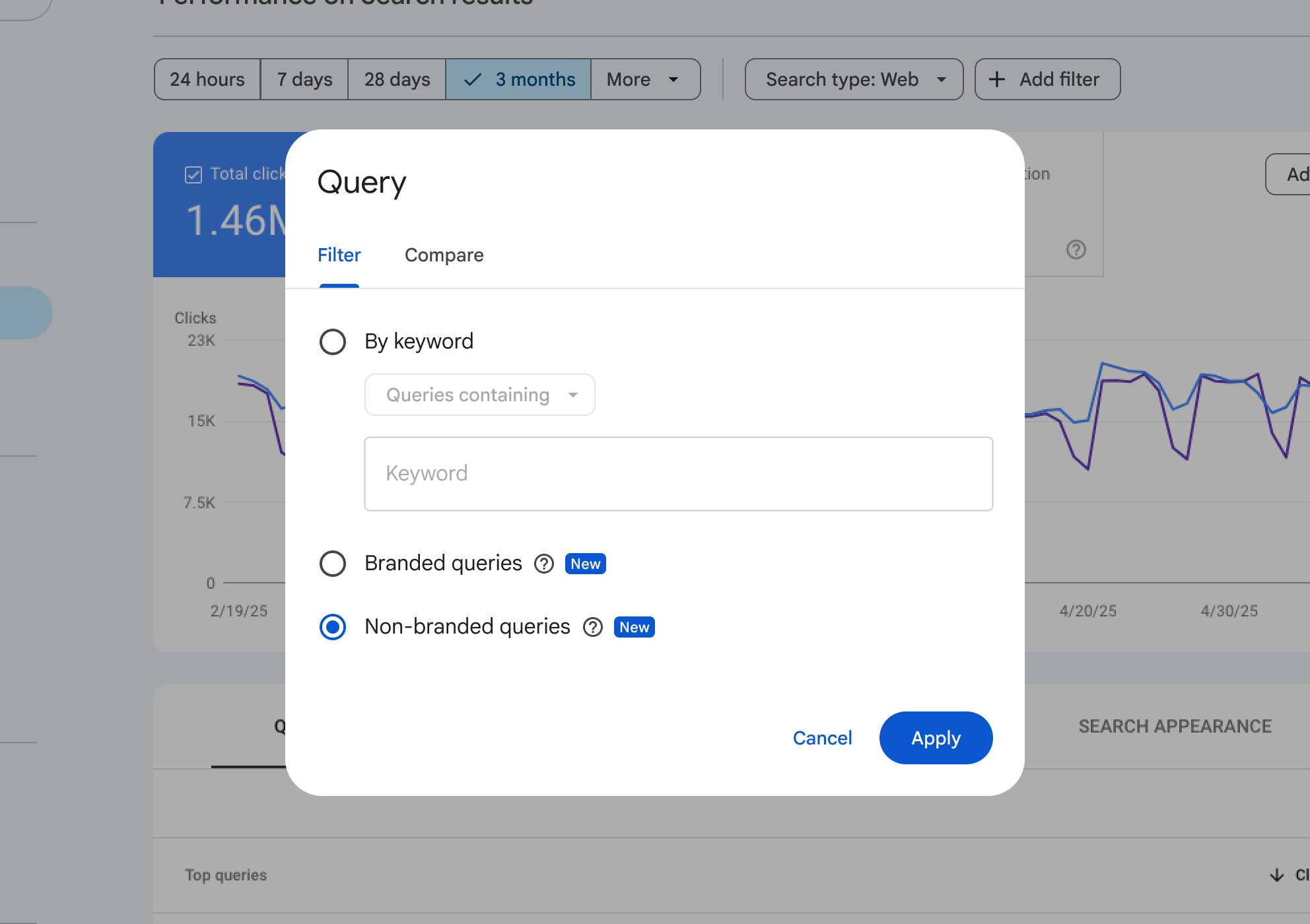
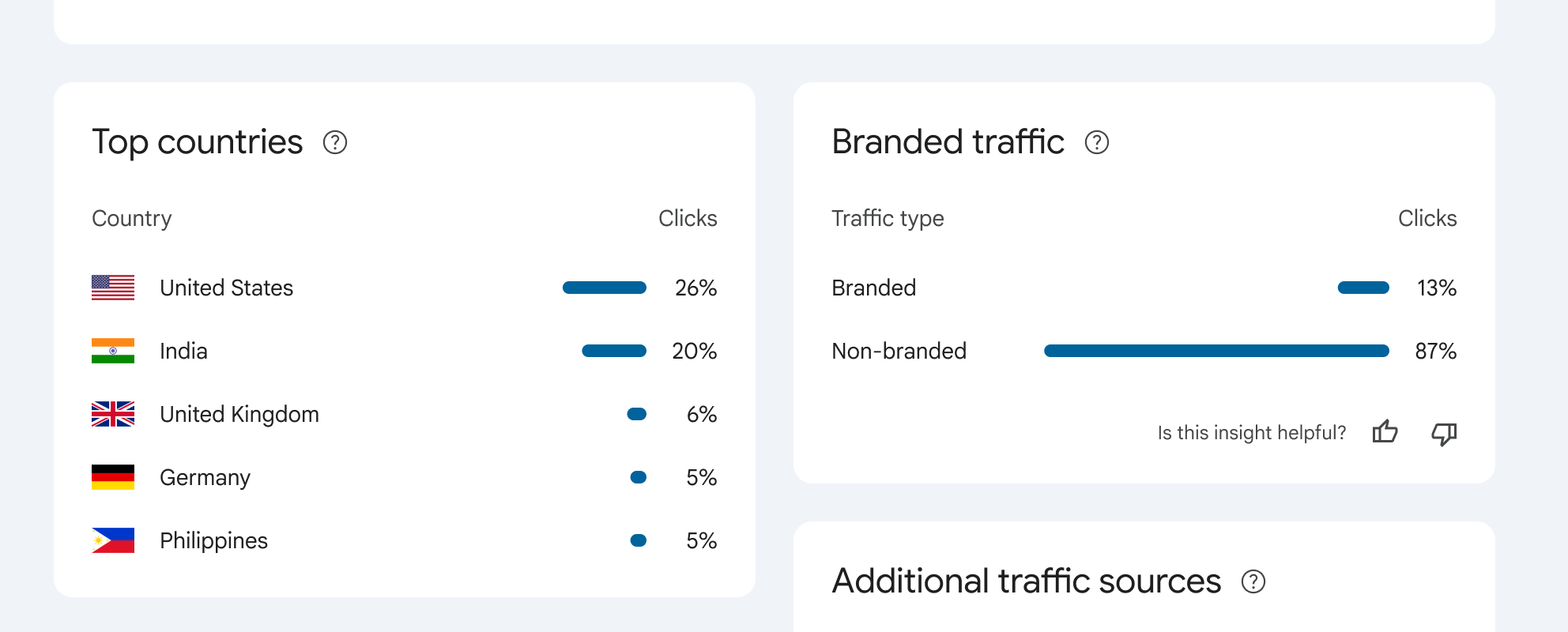
    With this new addition, I’ve found that filtering performance reports by branded or non-branded queries has never been easier. Google can now show me the percentage of traffic my site gets from either branded or non-branded sources, right from Search Console.

    This update made its debut at today’s Google Search Central event in Tel Aviv, and if you’re hearing about it now, it’s because news travels fast, especially from events like these.

    Understanding Branded Queries. Google defined branded queries for us: These are search queries that include my brand name, its variations or any brand-related products. For instance, if my brand was Google, related queries could be “Google,” “Gogle,” or even “Gmail.”

    This differentiation helps me see how returning users differ from new ones. Focusing on this can lead to higher click-through rates for branded queries. Meanwhile, non-branded ones show how new users find my content organically.

    ```json
{
  "alt": "Google Search Console filter menu for query settings with non-branded queries selected.",
  "caption": "Exploring search performance insights with Google Search Console's filter menu, focusing on non-branded queries for a three-month period.",
  "description": "This image displays the Google Search Console interface, specifically the filter menu for setting search query parameters. The menu shows options to filter by keyword, branded queries, and non-branded queries, with the latter selected. The background features a line graph representing performance data for a three-month timeframe. Key interface buttons 'Cancel' and 'Apply' are visible, providing a comprehensive tool for analyzing website performance metrics. Keywords: Google Search Console, filter, search queries, non-branded, performance analysis."
}
```

    Finding the Filter. Ready to use it? You can locate the branded versus non-branded filter within performance reports under search filters for queries. I love how it works across all search types, whether web, images, video, or news. Metrics like impressions and CTR tailored to my needs are just a click away.

    Here’s a handy screenshot for visuals:

    ```json
{
  "alt": "Chart showing top countries and branded traffic percentages. United States leads with 26% clicks, followed by India at 20%.",
  "caption": "Discover where your traffic comes from! The United States leads with 26% of clicks, while non-branded traffic dominates at 87%.",
  "description": "This image displays two charts: 'Top countries' and 'Branded traffic.' In the 'Top countries' section, the United States leads with 26% of clicks, followed by India at 20%, the United Kingdom at 6%, and both Germany and the Philippines at 5%. The 'Branded traffic' chart shows 13% branded and 87% non-branded clicks. These insights help understand the geographic and branding sources of website traffic."
}
```
    crushpress.ai community screenshot
  • Discover New Features on Google Maps: Insider Tips and More!

    Discover New Features on Google Maps: Insider Tips and More!

    I’ve recently discovered that Google Maps has introduced some exciting new features to better inform us about local businesses and events. Now, we can also choose to leave reviews using nicknames, giving us a bit more privacy when sharing our thoughts.

    Know Before You Go. One of the highlights is the ‘know before you go’ feature now available on Google Maps. I remember seeing this tested earlier, but it’s great to see it officially rolled out now.

    When I search for places, I can easily access ‘know before you go’ tips, showing me crucial details like parking tips, secret menu items, and ideal reservation methods. This information comes from user reviews and other online resources.

    These tips, dubbed ‘insider tips’ by Google, are now available in the U.S. on both Android and iOS. I’ve found them quite helpful in planning my visits more efficiently.

    Here’s a glimpse of how it looks:

    Trending Nearby in Explore Tab. There’s also a new addition to the Explore tab, highlighting trending restaurants, activities, and attractions nearby. I can simply swipe up on the explore tab to discover these popular spots.

    This feature sources trends from platforms like Viator, Lonely Planet, and local influencers, including Sisterssnacking. It’s been a fantastic way for me to stay updated on what’s happening around me.

    This update is available globally this month on both Android and iOS devices.

    Here’s what the new Explore tab looks like in action:

    Nicknames for Reviewers. One feature I particularly like is the option to use nicknames when leaving reviews. According to Google, “If you’d prefer not to use your real name, you can now choose a nickname and profile.”

    While there might be concerns about spammy reviews, Google assures us that their systems are equipped to monitor and detect fake reviews continuously, linking our reviews to our Google Accounts.

    This feature is rolling out globally this month on Android, iOS, and desktop.

    Here’s a quick look at how to set up a profile with a nickname:


    Inspired by this post on Search Engine Land.

    crushpress.ai community screenshot
  • Adobe’s Incredible Acquisition: Semrush Joins Forces in $1.9B Deal

    Adobe’s Incredible Acquisition: Semrush Joins Forces in $1.9B Deal

    Today, I’m thrilled to share the big news that Adobe is acquiring Semrush for a massive $1.9 billion. This exciting development, announced by the companies, is set to close in the first half of 2026, pending necessary approvals.

    You might know Semrush as a leading SEO platform that made headlines in October 2024 by acquiring Search Engine Land, MarTech, and Third Door Media. Now, Adobe is planning to bring Semrush on board in an all-cash transaction valued at approximately $1.9 billion, further enhancing Adobe’s robust portfolio.

    Insights from Semrush Leadership. Semrush CEO Bill Wagner shared his excitement on LinkedIn:

    We have some big news at Semrush today: we’re joining forces with Adobe.

    I am proud to announce our agreement to be acquired by Adobe for $1.9 billion. This is the right move at the right time for both of our respective companies and teams.

    The strategic fit couldn’t be more perfect. We’re combining Adobe’s leading customer experience orchestration through its AI-agentic content supply chain and other solutions, with Semrush’s high-quality digital brand visibility offerings. The result will be a new option for an end-to-end customer experience platform that serves as the new standard for the marketing technology industry.

    Today’s announcement is a true testament to the incredible work of the Semrush team that started well before my tenure. I am deeply grateful for their execution, passion, and hustle over the years – which I know will carry forward as we enter this new chapter.

    We’re excited to accelerate our shared vision with Adobe. More to come!

    Andrew Warden, Semrush’s chief marketing officer, also expressed his enthusiasm on LinkedIn:

    Big news: Semrush has agreed to be acquired by Adobe.

    It’s a winning combination:
    Adobe brings leading customer experience orchestration in the agentic AI era with its content supply chain and other solutions.

    Semrush is a strong player for search and brand visibility, first with SEO and now with GEO.

    Together, marketers can look forward to a new option for a unified brand visibility platform.

    This transaction is huge for our customers and their growth, and a testament to the hard work of our team. I’m proud of what we’ve built and look forward to this next chapter of growth with Adobe.

    The Adobe Perspective. Adobe’s press release elaborates on how this acquisition will drive forward a comprehensive customer experience, leveraging both Adobe and Semrush’s formidable strengths. With distinct capabilities in content supply chain management and AI-driven customer engagement, Adobe serves giants like Coca-Cola and IBM.

    In this rapidly evolving landscape, Semrush stands out with its expertise in GEO and SEO, ensuring brands remain visible in AI-powered searches. The collaboration aims to position itself as the new benchmark in marketing technology.

    Anil Chakravarthy, Adobe’s President of Digital Experience Business, emphasizes the merger’s potential to expand brand visibility, customer engagement, and conversions. Complementing this, Semrush’s CEO, Bill Wagner, highlights the enhanced insights brands can leverage through this partnership.

    Transaction Details: Both Adobe and Semrush boards have approved the deal, anticipated to finalize in the first half of 2026, aligning with regulatory and shareholder commitments.

    A complete end-to-end experience for marketers awaits, setting the course for future innovations in the evolving digital landscape. Stay tuned for updates as this strategy unfolds, promising more opportunities for businesses around the globe.


    Inspired by this post on Search Engine Land.

    crushpress.ai community screenshot
  • Combatting Affiliate Fraud: Secure Your 2026 Growth

    Combatting Affiliate Fraud: Secure Your 2026 Growth

    Affiliate marketing is a major driver of revenue, but it also hides significant losses. I’ve seen firsthand how brand bidding, ad hijacking, coupon abuse, and subtler forms of affiliate fraud can erode ROI and distort attribution figures.

    The critical issue isn’t whether these challenges exist, but rather understanding how much they’re impacting our business. In this article, I delve into the most prevalent types of affiliate marketing fraud. I’ll also share insights on how modern tools like Bluepear offer advanced affiliate fraud detection strategies that protect our growth, reputation, and budget.

    Not all affiliate programs offer the same benefits, nor do they come with the same risks. Particularly in SaaS, where affiliate commissions can be between 20% to 70%, these programs become highly enticing targets for fraudsters.

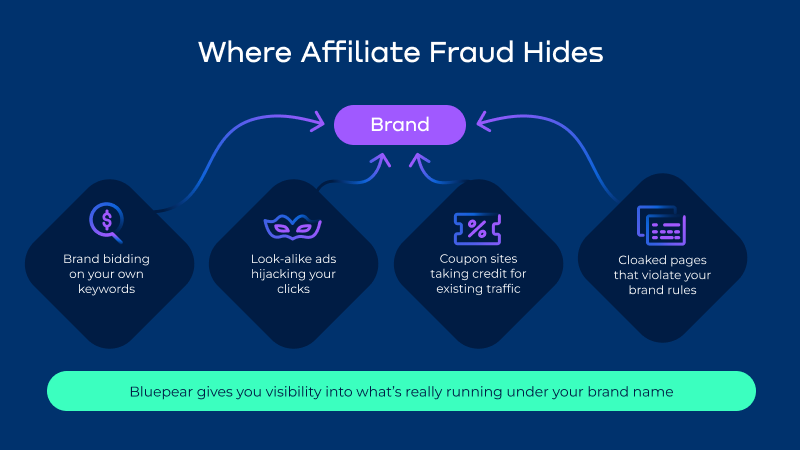
    ```json
{
  "alt": "Diagram illustrating different methods where affiliate fraud hides, such as brand bidding and look-alike ads, targeting a central brand element.",
  "caption": "Uncover the hidden tactics of affiliate fraud targeting your brand, from look-alike ads to misleading coupon sites.",
  "description": "This diagram highlights the various ways affiliate fraud can undermine a brand. It features a central 'Brand' element with arrows pointing to different fraudulent methods: brand bidding, look-alike ads, coupon sites, and cloaked pages. The image emphasizes the importance of understanding how these tactics operate to better protect brand integrity. The text at the bottom promotes Bluepear as a solution for gaining visibility into these fraudulent activities."
}
```

    Fraudsters exploit trust gaps, often bidding on brand terms or using shady tactics like ad hijacking and coupon code misuse to siphon off profits. A staggering 63% of affiliate marketers identify these threats as their primary concern.

    Unfortunately, much of this fraud operates under the radar. Affiliates execute campaigns and manage landing pages without real-time monitoring, which means you may end up paying commissions on existing traffic or, worse, funding brand impostors.

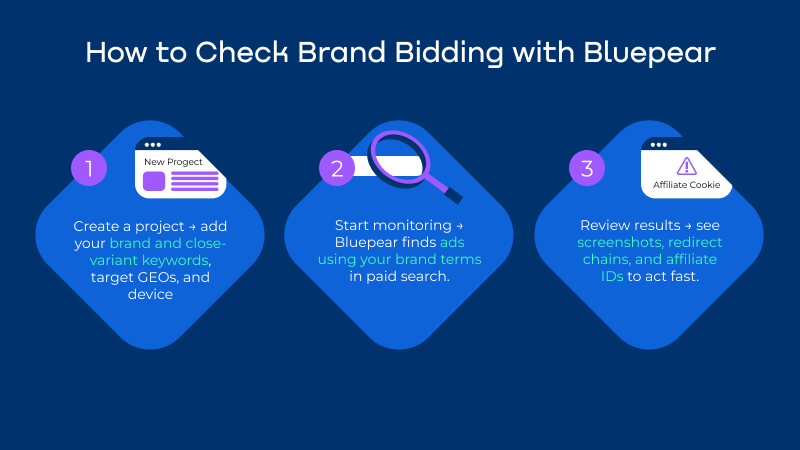
    ```json
{
  "alt": "Three-step guide on checking brand bidding with Bluepear featuring project creation, monitoring, and review stages.",
  "caption": "Master brand bidding with Bluepear by creating a project, monitoring brand-related ads, and reviewing strategic results. Empower your marketing tactics!",
  "description": "This image illustrates a three-step process for checking brand bidding using Bluepear. Step 1 involves creating a project by adding your brand and keywords, targeting GEOs, and selecting devices. Step 2 focuses on monitoring, with Bluepear identifying ads using your brand terms in paid search. Step 3 is about reviewing results such as screenshots, redirect chains, and affiliate IDs. Ideal for marketers aiming to enhance their brand's online presence."
}
```

    Let’s dig deeper into common fraud tactics and how to recognize and counteract them early on. Equipped with strategies, you can shield your program from such threats.

    I focus on four primary fraud tactics: brand bidding, ad hijacking, coupon abuse, and non-compliant content. Each poses unique challenges but can be counteracted with the right preventative measures.

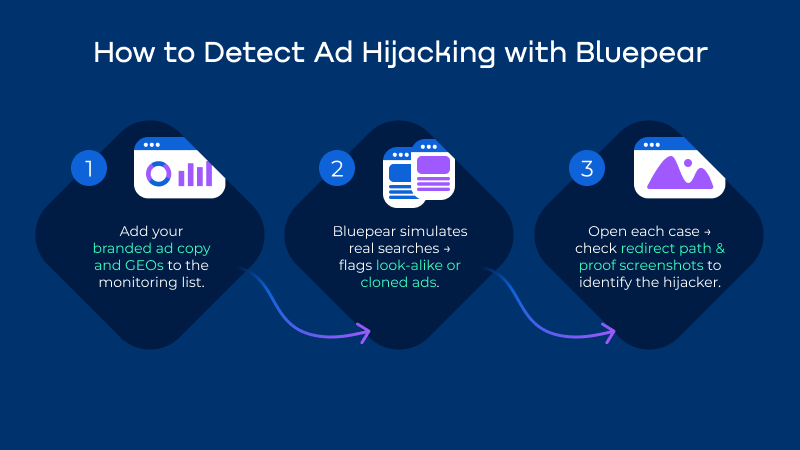
    ```json
{
  "alt": "Infographic on detecting ad hijacking with Bluepear, outlining three steps using icons and arrows.",
  "caption": "Discover how Bluepear helps protect your brand by detecting ad hijacking through a simple three-step process.",
  "description": "This infographic titled 'How to Detect Ad Hijacking with Bluepear' outlines three key steps using visuals. Step one involves adding branded ad copy to a monitoring list. Step two uses Bluepear to simulate real searches, identifying look-alike ads. Finally, step three involves checking redirect paths to identify hijackers. The design uses icons, arrows, and a structured flow to convey the process effectively."
}
```

    Brand bidding occurs when someone purchases ads using your brand name. This diverts potential customers who are actively searching for your product, resulting in needless commission payments. It’s crucial to maintain a detailed list of brand-related keywords in your affiliate terms and monitor for sudden spikes in performance metrics.

    Ad hijacking mimics your paid search ads, lowering your campaign visibility. Regular checks and test searches can expose these fraudulent activities.

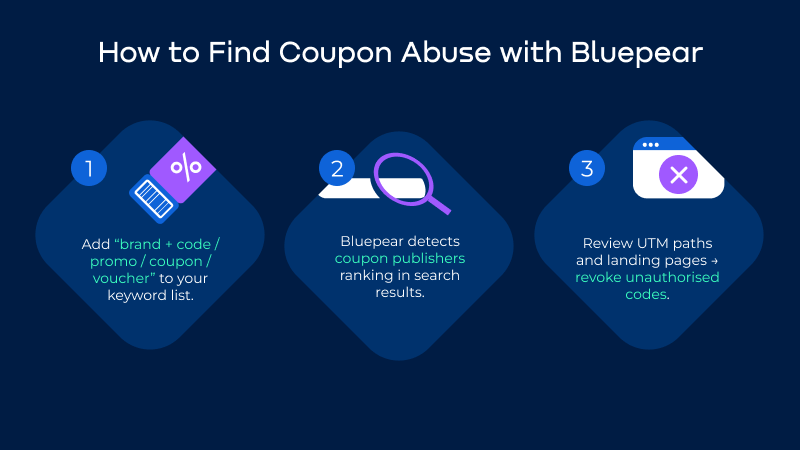
    ```json
{
  "alt": "Infographic on finding coupon abuse with Bluepear, featuring three steps with icons and text.",
  "caption": "Discover how Bluepear helps you tackle coupon abuse with three key steps: keyword addition, coupon detection, and code revocation.",
  "description": "This infographic titled 'How to Find Coupon Abuse with Bluepear' outlines three steps. Step 1: Add 'brand + code / promo / coupon / voucher' to your keyword list with an icon of a pencil and discount symbol. Step 2: Bluepear detects coupon publishers in search results, depicted by a magnifying glass icon. Step 3: Review UTM paths and landing pages to revoke unauthorized codes, illustrated with a web page icon. This guide enhances digital marketing strategies by tackling unauthorized coupon use."
}
```

    Coupon abuse is trickier; it manipulates traffic from affiliates who rank high for brand-related coupon searches. Ensuring coupon activity is pre-approved and regularly monitoring search results helps mitigate this fraud.

    Non-compliant content can easily escape detection. Cloaking tactics mean users see different content than compliance teams. Establish strong creative guidelines and treat content audits as an ongoing activity.

    ```json
{
  "alt": "Bluepear infographic on spotting non-compliant content with three steps and icons.",
  "caption": "Discover how Bluepear helps you identify non-compliant content with a simple three-step process, enhancing your digital content's credibility and compliance.",
  "description": "This infographic titled 'How to Spot Non-Compliant Content with Bluepear' illustrates a three-step process with icons. Step 1: Add affiliate domains and trigger words like 'official' and 'discount.' Step 2: Bluepear decloaks hidden landing pages and captures real user views. Step 3: Review evidence to tag violations or send notices automatically. The design uses a blue background with a modern, clean layout, aimed at improving content compliance monitoring."
}
```

    Defending against affiliate fraud requires continuous vigilance, clear program rules, and leveraging technology. Platforms like Bluepear use automated systems to highlight and eliminate fraud, giving you back control.

    For 2026, my focus is on building stronger relationships with affiliates, ensuring transparency, and promoting a culture that prioritizes honesty and clear communications.

    Ultimately, affiliate fraud is a continually evolving threat. By understanding these tactics, setting clear expectations, and utilizing advanced tools, we can protect our interests and secure sustainable growth.


    Inspired by this post on Search Engine Land.

    crushpress.ai community screenshot
  • Master Voice Search with AEO: Your Ultimate Guide

    Master Voice Search with AEO: Your Ultimate Guide

    I’m excited to guide you through optimizing for voice search and Answer Engine Optimization (AEO) using conversational content, structured data, and strategies to achieve precise and answer-focused results.


    Inspired by this post on HiGoodie Blog.


    crushpress.ai community screenshot
  • Why ChatGPT’s Traffic Impact on Publishers Is Surprisingly Low

    Why ChatGPT’s Traffic Impact on Publishers Is Surprisingly Low

    I recently came across some eye-opening data about ChatGPT and its impact on driving traffic to publishers. The findings reveal a substantial gap between the visibility of ChatGPT links and actual clicks, which is quite astonishing.

    A leaked document shows how OpenAI is monitoring user interactions, especially focusing on how frequently ChatGPT provides publisher links and the surprisingly low number of users who click on them.

    By the numbers. ChatGPT does indeed feature links, yet they receive minimal engagement. For a top-performing page, here’s what the OpenAI data indicates:

    • 610,775 total link impressions
    • 4,238 total clicks
    • 0.69% overall CTR
    • Best individual page CTR: 1.68%
    • Most other pages: 0.01%, 0.1%, 0%

    ChatGPT metrics. This leaked file details each instance where ChatGPT displays links, providing a breakdown of user interactions:

    • Date range (include date partition, report month, min/max report dates)
    • Publisher and URL details (publisher name, base URL, host, URL rank)
    • Impressions and clicks across various locations:
      • Response
      • Sidebar
      • Citations
      • Search results
      • TL;DR
      • Fast navigation
    • CTR calculations for each display area
    • Total impressions and total clicks across all surfaces

    Where the links appear. Surprisingly, the zones with the most visibility yield the fewest clicks. Here’s a performance breakdown by visibility zone:

    • Main response: Massive impressions, minimal CTR
    • Sidebar and citations: Reduced impressions but higher CTR (6–10%)
    • Search results: Negligible impressions, zero clicks

    Why it matters. If you were hoping ChatGPT’s visibility could substitute for your lost Google organic search traffic, think again. Although AI-driven traffic is on the rise, it remains just a sliver of overall traffic and unlikely to match the behavior of traditional organic search traffic.

    About the data. This fascinating data was shared on LinkedIn by Vincent Terrasi, CTO and co-founder of Draft & Goal, a company specializing in content production workflows.


    Inspired by this post on Search Engine Land.


    crushpress.ai community screenshot
  • Unlock the Power of Annotations in Google Search Console

    Unlock the Power of Annotations in Google Search Console

    I’ve got great news—Google Search Console has officially rolled out custom annotations for performance reports! After extensive testing, this amazing feature is finally live.

    Now, I can easily annotate my reports directly within Search Console. This means I’ll never forget essential events like coding changes, algorithm updates, or any website bugs that might crop up.

    What are custom annotations? According to Google, custom annotations are “Notes you create yourself to mark important events specific to your property, such as when you launch a new feature, or fix a bug on your website.”

    Google began testing this feature in May 2025, and it’s thrilling to see it live now.

    What do they look like? Take a look at this screenshot of a custom annotation in Search Console:

    How does it work? Adding custom annotations to my performance reports is a breeze. Here’s how I do it:

    • Open the Performance report.
    • Right-click the chart on the specific date I want to annotate.
    • Select a date using the date picker.
    • Type my note in the text field (up to 120 characters).
    • Click Add.

    I can add up to 200 annotations on a single property, which is fantastic!

    ```json
{
  "alt": "Screenshot of an add annotation interface with graph data and an annotation field.",
  "caption": "Adding annotations to your analytics can provide valuable insights and context to your data trends.",
  "description": "This image shows a screenshot of an interface for adding annotations in a web analytics tool. The interface includes a date selector set to May 4, 2025, and an annotation text box reading 'Something important happened today!' Below is a line graph displaying data trends over several months, with a total of 97.1 million clicks noted. Users are reminded not to include sensitive information when adding annotations. The tool offers filters and a date range selection for customizing data views."
}
```

    To delete annotations, here’s what I do:

    • Click the annotation marker on the chart to see the note.
    • Select DELETE in the annotation pop-up window.
    • Select Cancel or Delete on the following screen to cancel/confirm.

    Note that I can’t edit annotations, and any annotations older than 500 days will be automatically deleted.

    Why do I care? Annotations are an excellent way to keep track of changes on my website as I review these performance reports. As Google mentioned, “Annotations in Search Console help you understand changes in your data by providing context on your charts.”

    Here are additional reasons Google encourages using annotations:

    • Infrastructure changes like updating a template or a site migration
    • SEO efforts like implementing a new plugin or hiring an agency
    • Changing content to focus on different user intents
    • External events that affect your business, such as holidays

    It’s important to remember that annotations are visible to anyone who has access to those properties, so I make sure to post cautiously.


    Inspired by this post on Search Engine Land.


    crushpress.ai community screenshot
  • Boost Local SEO with Keyword-Rich Google Reviews

    Boost Local SEO with Keyword-Rich Google Reviews

    Discover how keyword-rich Google reviews can significantly enhance your local visibility, engage more customers, and boost conversions. Let’s dive into the strategies, complete with handy templates to get you started.

    As someone exploring the impact of keywords in reviews, I’ve noticed that while their influence on local rankings is debated, the value they bring extends well beyond just visibility. Here are seven compelling reasons why encouraging keyword-rich reviews is beneficial.

    ```json
{
  "alt": "Map view of plumbing services in Seattle area with highlighted customer reviews.",
  "caption": "Explore top-rated plumbing services in Seattle with positive customer feedback highlighted for quick insights.",
  "description": "Image showcasing a map view of various plumbing services around the Seattle area. The left side lists top-rated services like Craftsman Plumbing, Bee's Plumbing and Heating, and Gene Johnson Plumbing, with highlighted customer reviews praising their work. The map on the right pinpoints locations for easy navigation. Keywords: Seattle, plumbing, map, customer reviews."
}
```

    If your reviews consistently highlight specific keywords relevant to your business, the chance of your profile getting a Review justification in search results improves rapidly. This added visibility can directly enhance click-through rates and potentially elevate your standings in search results.

    ```json
{
  "alt": "List of food and activity names with numbers, including cacio e pepe and fresh pasta.",
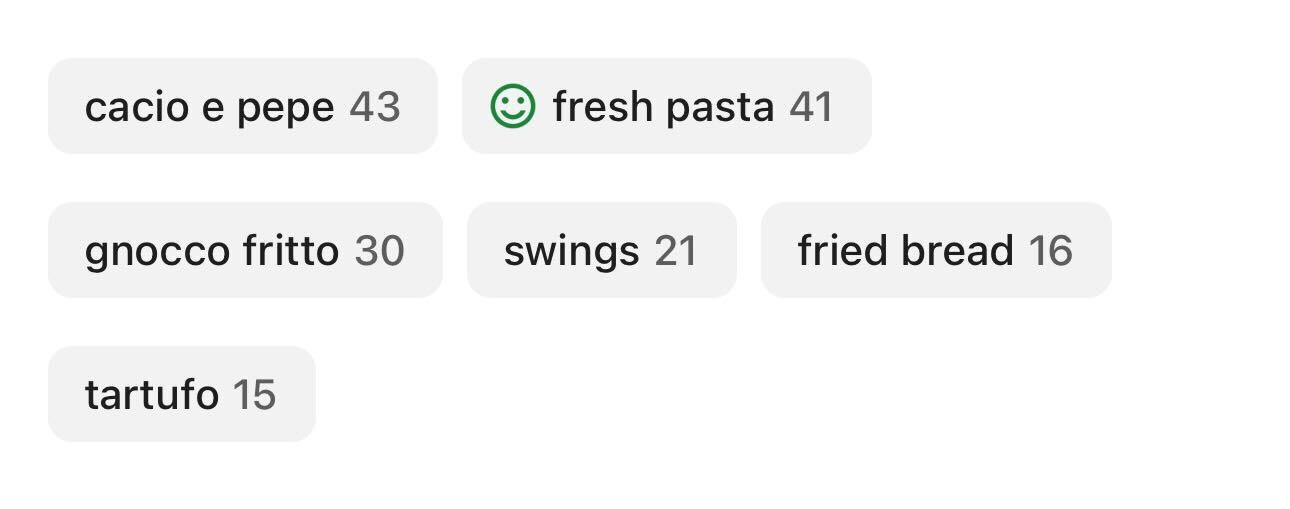
  "caption": "Discover your next delight with 'cacio e pepe' leading the favorite list, closely followed by 'fresh pasta.' What will you choose?",
  "description": "This image displays a list with names and numbers beside each: 'cacio e pepe 43,' 'fresh pasta 41' with a smiley, 'gnocco fritto 30,' 'swings 21,' 'fried bread 16,' and 'tartufo 15.' It appears to categorize items based on popularity or frequency, potentially for a survey or menu selection. Keywords: cacio e pepe, fresh pasta, popular food, activity list."
}
```

    Google crafts clickable Place Topics from the keywords found in reviews. These topics not only stand out and attract potential customers by showcasing your expertise but also filter reviews efficiently, increasing engagement with your profile.

    ```json
{
  "alt": "Three unverified restaurant reviews with a prompt to write a review.",
  "caption": "Dive into these friendly and tasty reviews of a cozy spot renowned for its delicious pasta and wonderful service!",
  "description": "The image displays three unverified reviews of a restaurant, each praising different aspects such as food quality, service, and the dining experience. Words like 'place,' 'food,' 'service,' and 'staff' are highlighted. Reviewers mention 'creamy chicken,' 'mushroom pasta,' and 'amazing pasta quality.' A call-to-action button invites users to 'Write a review,' encouraging engagement. Perfect content for SEO about restaurant reviews and customer experiences."
}
```

    Terms frequently mentioned in your reviews are bolded in three review snippets on your Business Profile. This subtle emphasis can captivate users searching for these terms, likely boosting click-through rates to your profile.

    ```json
{
  "alt": "Maestro Pasta menu overview featuring popular dishes like Bolognese, Cacio e Pepe, and Tartufo, alongside a glass of wine.",
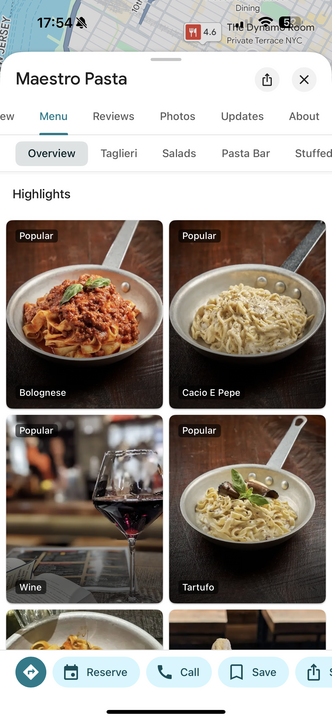
  "caption": "Explore Maestro Pasta's popular selections, from hearty Bolognese to creamy Cacio e Pepe, paired perfectly with a glass of fine wine.",
  "description": "This image showcases the menu highlights from Maestro Pasta, displaying popular pasta dishes such as Bolognese, Cacio e Pepe, and Tartufo. Featured in metal pans, these mouthwatering meals are labeled 'Popular.' A glass of red wine is also visible, suggesting a perfect pairing option for the dishes. The layout is part of the restaurant's digital menu interface, emphasizing a modern dining experience. Keywords: Maestro Pasta, Bolognese, Cacio e Pepe, Tartufo, wine, menu highlights."
}
```

    For restaurants, Menu Highlights are curated from customer reviews and photos, similar to Place Topics. An analysis shows that these sections influence rankings, implying that mentions of menu items in reviews can enhance your visibility for those terms.

    ```json
{
  "alt": "Basta Pasta restaurant in New York with a focus on Italian-Japanese fusion dishes, map and details visible.",
  "caption": "Discover the Italian-Japanese culinary delights at Basta Pasta, a New York gem, where unique twists like roe pasta tantalize taste buds. Opens at noon!",
  "description": "Image shows Basta Pasta, an Italian restaurant in New York City noted for its fusion of Italian and Japanese cuisine. The interface displays a map, customer reviews, and options to get directions or reserve a table. The restaurant serves innovative dishes, such as pasta with roe or sea urchin, alongside Caesar salads and grilled items. Located at 37 W 17th St, NY, the venue opens at 12:00 PM and promises a distinctive dining experience with its high-ceilinged ambiance."
}
```

    Google’s AI-generated summaries draw from review content to describe your business attributes, such as “cozy”. While you cannot directly edit these summaries, encouraging detailed, keyword-rich reviews can guide the AI to highlight beneficial aspects of your business.

    ```json
{
  "alt": "Review summary showing a 4.6-star rating from 1,470 reviews for an Italian restaurant.",
  "caption": "With a 4.6-star rating from 1,470 reviews, this Italian restaurant is praised for its delicious pasta, cozy atmosphere, and attentive service.",
  "description": "An image featuring a review summary for an Italian restaurant, boasting a 4.6 out of 5-star rating based on 1,470 reviews. Highlighted features include homemade pasta and flavorful sauces, a cozy and welcoming ambiance, and friendly, attentive staff. Unique aspects like swing seats add to the authentic Italian experience. The image captures ratings and excerpts from customer feedback, emphasizing the dining experience's quality."
}
```

    Review summaries created by Google’s AI analyze frequent sentiments from customer feedback. By prompting customers to include specific keywords, your review summary can resonate more with potential clients.

    ```json
{
  "alt": "Skyway Roofing information on Google Maps with options to ask questions and review ratings.",
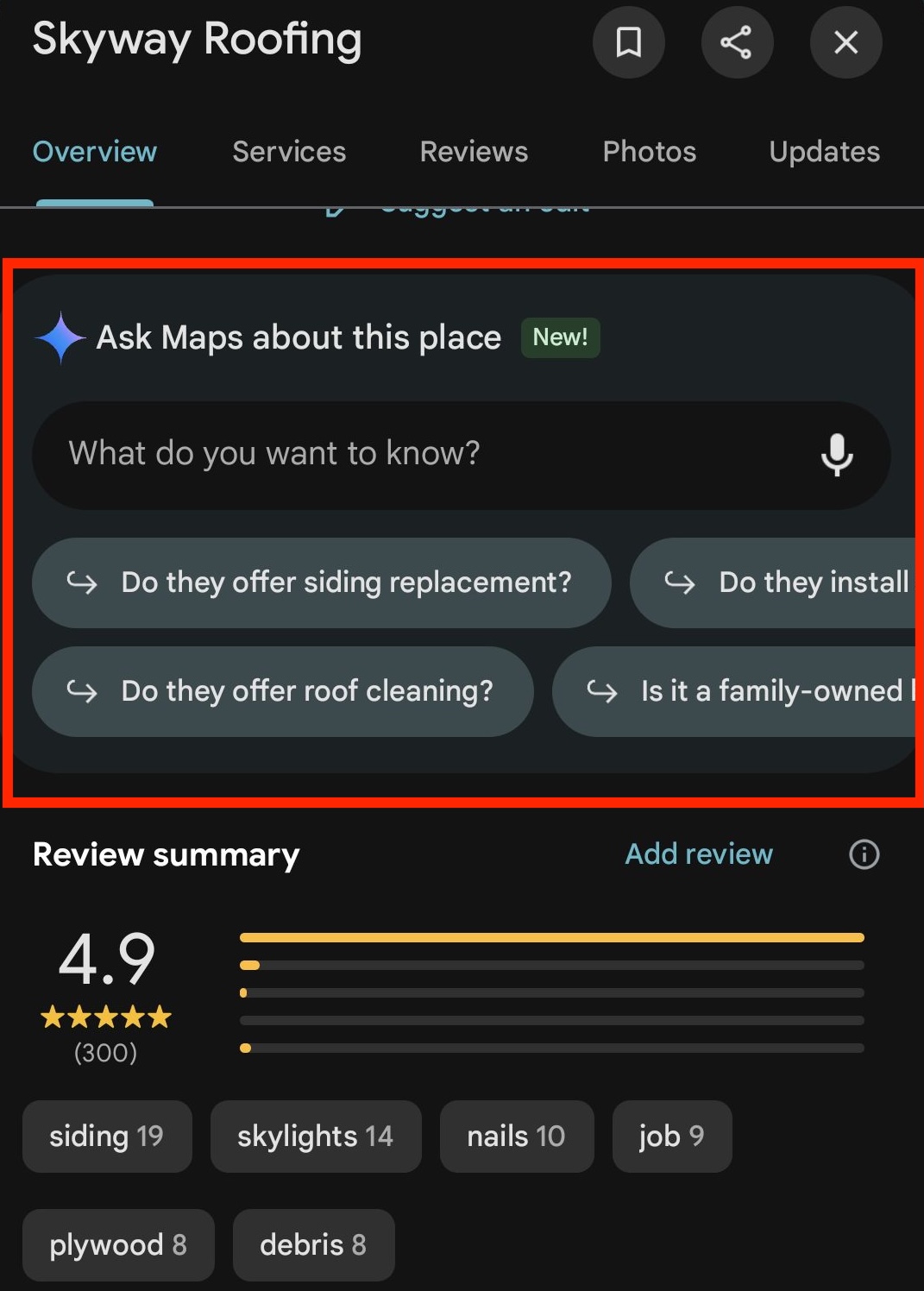
  "caption": "Explore Skyway Roofing on Google Maps: Discover services, ask questions, and see what others are saying with a stellar 4.9 rating from 300 reviews.",
  "description": "This image shows Skyway Roofing on Google Maps, offering users interactive features like asking questions about siding replacement, installation, roof cleaning, and family ownership. The company boasts a 4.9-star rating from 300 reviews, with keywords like siding, skylights, nails, and debris frequently mentioned. This interface encourages user engagement and easy access to specific inquiries."
}
```

    Google is transitioning from the Q&A section to a feature allowing customers to ask questions about your business. This new feature draws answers from reviews, meaning that comprehensive, keyword-laden reviews become incredibly valuable.

    Asking customers directly to insert specific keywords in their reviews may seem odd and forced. Instead, consider upgrading your review request templates to guide your customers naturally towards providing relevant, detailed feedback.

    For example, Miriam Ellis has developed a helpful guide on acquiring keyword-rich reviews, complete with three templates tailored for different scenarios, each facilitating descriptive and keyword-rich content from your clients.

    Implementing these improvements in your review requests will yield richer, more detailed customer feedback. This can enhance your local SEO benefits and possibly improve your Google rankings for related keywords, though that shouldn’t be your primary objective here.


    Inspired by this post on Search Engine Land.

    crushpress.ai community screenshot
  • Top 20 Generative SEO Tools to Boost AI Visibility in 2026

    Top 20 Generative SEO Tools to Boost AI Visibility in 2026

    Hey there! I’m excited to dive into the world of Generative Engine Optimization (GEO) with you. Let’s explore the top 20 GEO tools that will help you measure AI search visibility, enhance citations in ChatGPT and Gemini, and select the optimal GEO platform for your needs.

    As someone who’s passionate about maximizing the potential of AI in search, I’ve found these tools invaluable. They not only increase visibility but also improve how my content is cited and recognized across platforms. Whether you’re a seasoned pro or just beginning, understanding and choosing the right GEO tools can significantly impact your AI strategy.

    Join me as we navigate the best options available in the market and demystify how to leverage these tools for optimal performance. From boosting your presence on platforms like ChatGPT to selecting tools that align with your business goals, these insights are set to empower your AI endeavors.


    Inspired by this post on HiGoodie Blog.

  • AI SEO Tactics: Step Beyond Traditional SEO in the AI Era

    AI SEO Tactics: Step Beyond Traditional SEO in the AI Era

    I’ve noticed that many people labeling things as “AI SEO” are just applying traditional SEO concepts dressed up with new buzzwords.

    AI SEO, however, stands apart.

    When I explore how AI tools like AI Overviews, ChatGPT, and Perplexity sort and condense information, it’s clear there are strategies available to us now that simply didn’t exist in the old Google 10-blue-links era.

    In this article, I’ll walk you through those unique AI SEO tactics, leveraging concrete data, not just hopeful speculation.

    Feeling the drop in clicks, right? Here are some compelling facts:

    • Research has shown that when Google’s AI Overviews were applied, the click-through rates to top organic results fell by about 30 to 35%. In some cases, publishers reported losing 40 to 80% of their search traffic.
    • According to an analysis with Similarweb data, news traffic from Google declined from around 2.3 billion to under 1.7 billion visits in just a year as zero-click searches increased from 56 to 69% after AI summaries were introduced.
    • From a Semrush study on 10 million keywords, AI Overviews now frequently appear, especially for informational queries, changing the visibility landscape by consolidating multiple sources into a single AI-generated response.

    Meanwhile, the AI market is expanding at a rate of over 30% CAGR, with projections suggesting that total AI spending will reach into the trillions by the early 2030s.

    AI SEO is about optimizing not just for clicks but for factual representations that earn places within AI-generated answers.

    Here are 12 exclusive tactics to thrive in this new landscape:

    1. Prompt Graph Coverage

    Traditional SEO treats a query as a single unit mapped to a page.

    AI engines deconstruct queries into graphs of subtasks and address each. Google mentions “multi-step reasoning” for tackling complex queries at once. Academic research on AI SEO also indicates that AI functions break down queries into sub-questions, synthesizing information across sources.

    AI SEO strategy: Model that graph personally.

    • Transform the primary query into predictable sub-questions.
    • Create detailed sections that fully address each subtask.
    • Ensure each section is self-contained and suitable for the specific micro-intent.

    When writing about “best project management software,” consider prompting for:

    • “criteria for agencies”
    • “comparison vs spreadsheets”
    • “pricing breakdown by seat”
    • “implementation timeline”

    Each needs its own precise, well-titled segment.

    2. LLM Seeding

    While traditional search engines don’t absorb all content into their algorithms, LLMs do.

    AI SEO shows a preference for neutral sources like Wikipedia and governmental documents over branded marketing pages, so contributing to factual and earned sources is key. Backlinko’s findings reinforce engaging in the right content surfaces for training and retrieval.

    AI SEO-only move:

    • Release definitions, glossaries, and FAQs publicly.
    • Contribute to places where models learn their foundational facts.
    • Sow Q&A style content in widely used forums.

    This is about showing where the model will find the canonical truth, making sure it’s your content.

    3. Passage-Level Retrieval Optimization

    Traditional SEO generally ranks entire pages. AI engines retrieve information at a passage level.

    Studies show that models cite specific highly structured passages, not entire pages.

    AI SEO-only move:

    • Treat each heading as a standalone answer.
    • Include all claims, qualifiers, and evidence within one passage.
    • Minimize the reader’s need to traverse the page for logic.

    Stand out as the model’s go-to reference for any particular question.

    4. Citation-Ready Evidence Packaging

    AI engines must justify their responses.

    Studies indicate pages commonly cited by AI engines have structured data, semantic HTML, and explicit evidence like tables. The absence of verifiable facts increases the tendency for models to hallucinate.

    AI SEO-only move:

    • Present data in machine-readable formats: tables, comparisons, glossaries, checklists.
    • Support each strong claim with solid statistics and a source.
    • Ensure the model can easily extract your “proof block.”

    You need to be verifiable and structured for easy reuse.

    5. Neutrality Engineering

    Models favor neutral, non-promotional sources over overtly commercial ones.

    According to research, Google’s definition of spam has widened to include content that lacks depth, especially in AI Overviews.

    AI SEO-only move:

    • Remove promotional language from pages aimed at being cited.
    • Ground your narrative in facts, comparisons, and third-party validations.
    • Create separate layers for opinion and positioning.

    Continue to sell, but ensure your main content remains neutral and evidence-based.

    6. Brand-Entity Memory Alignment

    While search engines focus on page-query matching, LLMs concern themselves with how well your entity is understood across the board.

    Studies suggest variance in how engines perceive brands, often favoring well-recognized and consistently presented entities.

    AI SEO-only move:

    • Clearly define your brand’s canonical facts: identity, operations, audience.
    • Ensure consistency across high-authority platforms.
    • Rectify outdated or conflicting information across channels.

    Train the model to understand who you are, not just what metadata say.

    7. Competitor Co-occurrence Hijacking

    A significant portion of buying intent lies in comparative prompts.

    AI engines synthesize answers by comparing multiple competitors. Research shows brands frequently appearing in comparative content often benefit in AI outputs.

    AI SEO-only move:

    • Position your brand in neutral, third-party comparison content.
    • Craft balanced comparisons that consider multiple competitors honestly.
    • Encourage inclusion in “shortlist” content likely used in category training.

    Traditional SEO hopes for a ranking opportunity. AI SEO embeds you within the model’s default competitive landscape.

    8. Source Blending Strategy

    In AI search, a “SERP” is a blend of diverse sources, not just a page.

    Semrush and others note that AI engines pull from a wide range of sources, favoring community and documentation in many sectors.

    AI SEO-only move:

    • Develop your presence into an ecosystem, beyond a single website.
    • Identify which non-Google platforms in your niche influence LLMs and establish credibility there.
    • Use consistent terminology to form a coherent online identity.

    Your goal is corpus optimization, not just ranking in an index.

    9. LLM-Friendly Specification Publishing

    Models excel at snapping structures into place.

    Content rich with detailed structures like definitions, lists, and stepwise instructions performs best in AI responses.

    AI SEO-only move:

    • Share your key frameworks as open specifications.
    • Convert ambiguous messaging into clear decision-making instruments.
    • Document methodologies in public, thorough formats.

    Offer the model a blueprint beyond just marketing speak.

    10. Training-Surface Expansion

    AI SEO is emerging as an industry on its own, backed by significant future investments.

    However, this investment is not focused on just one index.

    AI SEO-only move:

    • Explore potential training surfaces within your specialty like open datasets and public reports.
    • Place your best insights there openly, ready for retrieval or training.
    • Treat every public snippet as training material, not only lead generation.

    You are determining where and how models will encounter your reality.

    11. Anti-Hallucination Engineering

    Hallucination in AI isn’t hypothetical.

    Benchmarking and academic studies consistently show that AI can produce false details, particularly in low-coverage or vague topics.

    AI SEO-only move:

    • Distribute concise fact sheets about your entity across neutral sources.
    • Remove contradictory public claims wherever possible.
    • Monitor and adjust how AI systems portray your brand.

    While eliminating hallucinations is impossible, you can ensure the model opts for a well-documented version of you.

    12. Mention vs. Citation Optimization

    In AI searches, there are three distinct states:

    • Your brand is not mentioned.
    • Your brand is mentioned, without citation.
    • Your brand is both mentioned and cited.

    Research indicates that citation patterns relate closely to specific quality signals on the page and sites.

    AI SEO-only move:

    • Design pages that meet both narrative and citation criteria.
    • Grow earned media allowing third-party sites to be cited.
    • Map your current state across engines and craft campaigns to elevate your position.

    Just as traditional SEO distinguishes between impressions and clicks, AI SEO separates mentions from citations, and this is crucial for visibility.

    The Uncomfortable Balance

    We must face some key truths:

    • AI summaries are raising zero-click behavior, compressing publisher traffic, with click-through rate declines between 15 to 80% depending on the query.
    • Platforms claim higher quality clicks and satisfaction while expanding these features into search.
    • Despite advances, LLMs still hallucinate, reducing errors involves better grounding and evaluation.

    As individual brands, we cannot change these broad issues. But we can adapt to the current landscape:

    • Treat AI answers not as a novelty added to SEO but as a unique channel.
    • View AI SEO as a standalone channel with specific levers, measurements, and content styles.
    • Create content for retrieval, trustworthiness, and reuse by generative systems.

    Traditional SEO isn’t obsolete, but it is only part of the journey now.


    Inspired by this post on Search Engine Land.