As someone deeply invested in the fascinating world of agentic commerce, I’ve become curious about what really boosts product visibility in the AI shopping realm. It’s a topic worth diving into as AI rapidly transforms the way consumers make purchasing decisions.
Have you ever wondered how platforms like ChatGPT, Perplexity, and Rufus determine which products grace the digital shelves? Uncovering this process offers valuable insights into AI decision-making and gives us a competitive edge in this new era of shopping.
Let me share with you how these AI platforms evaluate and choose products, allowing us to strategically position our offerings and maximize their AI shelf presence. Understanding these dynamics empowers us to navigate and excel in AI-driven marketplaces effectively.
Discover how I navigated the world of SEO amidst the rising influence of AI in search, with data-backed insights that show where our efforts truly pay off.
As the integration of AI into search accelerates, I’ve noticed a wave of anxiety sweeping through our community. It’s becoming harder than ever to separate robust strategies from distracting noise.
I personally found a gem of insight at the News & Editorial SEO Summit (NESS) held online last October. This article aims to provide clarity amidst the hype.
I’ve distilled the wisdom from technical SEO experts from The New York Times, Polemic Digital, and NewzDash into five actionable truths. These insights form a robust framework for our 2026 SEO strategy.
1. AI Overviews Aren’t Devouring Breaking News (Yet)
Despite the buzz that AI Overviews dominate the SERPs, data shows a much more nuanced reality for timely content.
NewzDash’s analysis reveals that only 1.9% of trending news keywords trigger AI Overviews. During high-traffic moments, traditional search features still hold their ground.
The surprising truth is that AI Overviews tend to appear several hours after news breaks, once real-time coverage slows.
Low-competition queries.
General searches without qualifiers (e.g., ‘Chicago’).
Topics lacking immediate coverage.
It’s clear: Top Stories continue to dominate when it matters, despite the AI narratives.
2. Your ‘Good Enough’ Core Web Vitals Are Probably Fine
The obsession with perfect Core Web Vitals scores isn’t necessary for solid rankings. While they indicate usability, their direct impact is less significant than many believe.
The real harm of poor Web Vitals lies in how they affect user behavior, sending negative signals to Google.
Industry experts advise reaching ‘Mostly green’ scores, investing further often yields minimal SEO returns.
3. Stop Obsessing Over Clean Code – Focus on Meaning
I’ve learned that Google’s crawlers prioritize meaningful content over spotless code. The time spent on code cleanup is better invested in enhancing semantic markup.
Using semantic HTML tags (like <article> and <section>) makes your content more interpretable to Google.
4. Content Chunking Is Your New AI Superpower
In the age of AI, structuring content for comprehension is crucial. Content chunking becomes vital for AI system visibility.
By implementing clear, logical structures with semantic HTML, we increase our odds of making our content AI-accessible.
5. Don’t Fall for the Latest AI SEO Gimmicks
Amidst the AI scramble, many gimmicks arise that don’t prove effective. It’s crucial to focus on fundamental strategies rather than chasing trends.
AI visibility remains grounded in traditional SEO practices. Google Search still underpins AI systems like Gemini AI Overview.
The Real Path to AI Visibility Still Runs Through Core SEO
As AI reshapes search, staying anchored in the basics of effective SEO is paramount. A strong foundation in technical and user-centric practices remains essential.
Ultimately, our goal is to create content that both humans and AI find undeniable, ensuring the enduring relevance of our strategies.
Why the web as we know it may fade and what AI, personal agents, and data interfaces mean for publishers, SEO, and commerce.
Every day, I’m witnessing people turn to AI for answers, product comparisons, and making quick decisions.
This shift reveals a core issue: the structure of the web wasn’t originally meant for machines.
As AI agents evolve, the way information is delivered – and the need for traditional webpages – could see dramatic changes.
The idea that the web as we know it could end, which I mentioned during a live OXD podcast in Salzburg, drew reactions ranging from thoughtful to angry.
Someone even insisted, “The web will always be there.”
Yet, those of us paying attention understand that “always” and “never” are shaky concepts in technology.
Technological history illustrates that nothing is forever.
Disruptions are noticeable only in hindsight.
Recall August 6, 1991 – could anyone foresee how Tim Berners-Lee’s World Wide Web would transform the world?
This cycle of dismissing new technology as too expensive or complex is as old as technology itself.
People pointed to existing solutions and assumed they’d last.
We also tend to judge new technologies prematurely, comparing immature models to systems we’ve heavily relied upon.
What we often fail to do is envisage the evolved state of a new technology.
This tendency clouds our future outlook.
When I’m in the market for a smartwatch, where do I usually turn for information?
Most often, I start with Google, landing on manufacturer or retailer pages.
Trying to compare the Samsung Galaxy Watch8, Classic, and Ultra to determine if the price difference makes sense is challenging.
Can I get this clarity from Samsung’s site? Probably not.
Each product page praises its uniqueness.
This forces me to jot down notes just to make basic comparisons.
I ponder over the difference between various bands and processors.
To grasp certain features, translations are sometimes necessary.
Even the “compare” function often leaves more questions than answers.
And while expectations would assume the premium model to have a specific feature, marketing priorities often arc differently.
The websites prompt more head-scratchers: Do these technical terms even matter to me?
My search broadens, throwing me onto SEO-crafted pages.
These sites often try leading me towards affiliate links.
Time is the thief here; Google requires nuanced search phrases and countless clicks.
But when I ask ChatGPT, the answer is swift and spot-on.
In less than four seconds, I get a clear comparison, making sense of all distinctions.
Follow-up questions are met with clarity.
If there are specifics to check, I am advised accordingly.
Such instances highlight the inefficiencies of web research.
Manufacturers tend to showcase products as they envision them.
But we often want straightforward comparisons.
We thrive on differences; we’re delta thinkers.
Sellers often prefer presenting products singularly.
If something isn’t present, obfuscation is the strategy.
It’s understandable, but not helpful.
Stop for a moment and try your AI for search queries.
If it’s been a while, you’re likely to be amazed.
In mere seconds, you get detailed answers.
Unsure about source reliability? Tailor your queries:
– “Only search designated expert sites.”
– “Only use well-known institutions.”
– “Give me all sources.”
The updated Google’s Gemini can produce extensive reports after an in-depth research request.
Imagine rich responses, often more comprehensive than solo human efforts.
That’s the growing strength of AI.
Using HTML makes content flexible for human consumption.
This system assists us in seeing and reading what’s online.
However, as AI usage expands, the limitations become apparent.
For example, the figures on a webpage may be clear to us, but the HTML lacks inherent semantic meaning for machines.
Structured data came as a solution but remains underused.
This impedes machine comprehension.
Apart from internal systems or large enterprises, structured data implementation is sparse.
Therefore, the primary content is still somewhat elusive to machines.
Google has worked hard to bridge this understanding gap.
Yet, AI continues to evolve, seeking innovative ways to parse and utilize data.
While AI presently gleans information through pattern matching, its potential remains vast.
Chatbots like ChatGPT offer solutions today.
The real challenge is context comprehension, which remains elusive for AI.
While both amazing and rapid, AI’s journey is just beginning.
The advances have sparked immense growth and excitement.
This era has only begun, opening doors to boundless possibilities.
Imagine a world transformed by personalized AI assistants.
The possibilities intrigue me.
These personal agents will tackle our daily routines, searching for optimal solutions.
AI might soon handle appointments, emails, and much more, offering efficiency and convenience.
Such shifts might alter how we interact digitally.
Content delivery and decision-making will evolve over time.
Our current HTML limitations challenge technological adaptability.
A new paradigm could include AIDIs assisting us with data retrieval.
Incorporating AIDIs means transitioning from HTML to structured forms.
Imagine AIDI extensions making data interpretation effortless.
Personal agents would operate even more efficiently.
The transition hinges on AI development and adoption.
Comparatively, the idea seems vast – but technological evolution often brings surprises.
Before long, our interactions may become distinctly AI-driven.
Offering a personalized touch, these agents may surpass our expectations.
I often reflect on the evolving landscape of search and how tools like Google Search and AI platforms such as ChatGPT are reshaping how we discover content. With these shifts, I’ve learned how crucial it is to track, optimize, and convert customers effectively across both platforms.
Recent developments like AI Overviews, ChatGPT, and zero-click results have led many to speculate about the end of SEO. However, I believe SEO is far from dead – in fact, it might be more vibrant than ever.
Search engines are still responsible for about 88% of all search traffic, while AI usage is nearly doubling. This dual rise tells me that consumers aren’t just choosing between Google and ChatGPT – they’re using both together.
The narrative that we must choose between SEO or AI search can be misleading. I see them as parallel paths of discovery that need to be mastered together.
People like certainty and often look to focus resources on either a tried-and-true channel or explore a new one. Yet, I’ve realized overindexing in AI while ignoring classic SEO forfeits current market share, and hesitating gives competitors a head start.
The assumption that AI growth reduces Google usage is flawed. While Google’s share fell to 89.62%, ChatGPT’s user base is soaring. Yet, from where I stand, consumers aren’t leaving Google – they are just using more platforms.
From my perspective, ChatGPT adoption has led to increased usage of Google, with sessions rising from 10.5 to 12.6 sessions per week. AI complements traditional search, enhancing the scope of our discovery process.
This expansion in search activity presents a ripe opportunity for ecommerce. Remarkably, 43% of ecommerce traffic comes from Google’s organic search, and organic traffic supports 23.6% of all ecommerce sales. Meanwhile, shopping inquiries in ChatGPT grew from 7.8% to 9.8% in the first half of the year.
The total addressable market for search visibility has multiplied, with searches now distributed across various channels. I ask myself how brands can capture this holistic search opportunity.
Tracking is essential. Implementing comprehensive tracking allows me to see the full picture of our search performance. This often requires managing traditional search statistics separately from AI results, yet the integration of tools like Semrush Enterprise AIO has been invaluable for tracking visibility across different platforms.
On the content side, key SEO principles support AI search performance, but the structure might need tweaks for optimal topical coverage. I always ask if my content answers users’ actual questions effectively. Covering vital questions upfront boosts relevance and the potential for AI citation.
Giving content full context is another principle I adhere to. AI models view topics as connected ideas. Writing about sustainable products means also discussing eco-friendly materials and related subtopics, but without resorting to keyword stuffing.
Ensuring my content is accessible to both AI and humans means prioritizing readability, clarity, and logical structure. It means everything from heading hierarchy to scannable formatting must be on point.
Platforms like Semrush Enterprise AIO help by offering dual-channel optimization capabilities that I find reduce guesswork and provide guidance for maximizing search performance.
Profit is the ultimate focus, and I’ve found that AI search visitors are 4.4 times as valuable in terms of conversion. Coupling this with search engines’ role in brand discovery shows the importance of optimizing across both avenues.
To me, the outdated choice between SEO and AI is a misunderstanding of modern search discovery. Customers aren’t choosing – they use both Google and ChatGPT, often simultaneously.
By embracing this dual-channel approach, brands are poised to dominate the search landscape, ensuring they are present wherever customers begin their search journey.
Are you on the hunt for the perfect AEO agency to take your business to the next level? I’ve compiled a list of top-notch agencies that are making waves in the industry. From renowned names like NoGood and Omniscient Digital to innovative DIY pioneers like Goodie, there’s something here for every business need.
If you’re feeling overwhelmed by the choice and aren’t sure where to start, don’t worry. I’ve done the legwork for you and gathered a selection of agencies that stand out for their strengths and unique approaches.
Whether you are looking for AI-driven insights or creative content strategies, these agencies offer a range of services tailored to meet specific challenges. Say goodbye to guesswork and let these experts help you navigate the complex world of AEO.
I recently came across a fascinating report on AI referral traffic that’s shaking things up in the digital world. According to Conductor’s AI search benchmark report, AI-generated traffic currently makes up just over 1% of website visits across ten major industries.
AI referral traffic: It’s intriguing to see that 1.08% of all web traffic originates from AI. Among this, ChatGPT is a dominant force, accounting for 87.4% of AI referrals. Leading industries include IT with 2.8% and Consumer Staples at 1.9%, while Communication Services and Utilities are seeing the lowest shares, at 0.25% and 0.35%, respectively.
AI answer engine market share: ChatGPT is at the helm, followed by Perplexity. Interestingly, the impact varies across industries. For instance, Gemini is responsible for 21% of AI traffic in Utilities, whereas Copilot contributes 5% in Financials.
AI vs. traditional traffic: Despite the rise of AI, traditional organic search still reigns supreme. Industries like Health Care (42.4%), Communication Services (39.6%), and Industrials (33.8%) lead in organic search shares.
Why we care: While organic search remains a heavyweight, AI is emerging as a powerful channel. If a brand isn’t appearing in AI answers, it risks being invisible to its audience. While SEO strategies overlap with AI and other platforms like ChatGPT, being a Google ranking champion doesn’t guarantee AI visibility.
The brands AI cites most: Across 17 million AI responses, AI prefers different brands compared to Google. Giants like Amazon and Walmart top the list for consumer queries. In health and finance (YMYL categories), reputable sources like Mayo Clinic and NerdWallet are often cited. Meanwhile, industry stalwarts like Google and Microsoft lead in tech and B2B queries.
AI Overviews benchmarks: From an analysis of 21.9 million Google searches, 25.11% triggered AI Overviews, with categories like Health Care and Financials in the lead. The preferred content types cited are blogs, videos, and articles among others.
About the data: The comprehensive report analyzed 13,770 domains, over 3.3 billion sessions, and millions of AI interactions, offering a snapshot of the growing AI impact from May to September 2025.
As the holiday season approaches, I’m thrilled to share that Google has rolled out a range of exciting AI-powered shopping features. Just recently, Google announced this major update, perfectly timed for our holiday shopping adventures.
What’s new with AI Mode? Picture this: you can now describe what you need as if you’re chatting with a friend! Google’s AI Mode organizes all the essentials—images, prices, reviews, and inventory—helping you decide confidently and quickly on your next purchase.
In my Gemini App experience, it has become my go-to for brainstorming gift ideas. It effortlessly compares products and supplies answers with handy shoppable links, all within a chat.
Are you too busy to check store stock levels? I now let Google’s agentic calling feature make those calls for me, ensuring I know about any promos or stock availability without lifting a finger.
And here’s something I absolutely love: tracking prices with agentic AI. Whenever an item I’ve been eyeing drops in price at eligible U.S. merchants, I receive a notification. I can let Google purchase it securely using Google Pay, all within my budget!
Why does this matter? The bustling holiday season is critical for many businesses. With these innovative AI features, I hope to see more traffic and revenue driving local stores rather than distracting buyers from making purchases.
I’m curious to see how these tools impact our shopping experiences, and I encourage everyone to explore these features to see where your website ranks.
As someone deeply immersed in the digital world, I’ve witnessed how AI is fundamentally changing how we search for information online. It’s quite a challenge to ensure that our content stays both visible and impactful as these AI platforms evolve.
While traditional SEO tactics are still important, I’m learning that embracing AI SEO is essential for thriving. By tailoring our content for AI systems, we can distinguish our brands among AI-generated responses, especially within large language models like Google’s Gemini, Microsoft Copilot, and ChatGPT.
It’s surprising to see that ninety percent of businesses are worried about losing SEO visibility in this AI-dominated search era, as revealed in a recent survey. Many plan to increase their SEO budgets; however, prioritizing strategies remains a common challenge.
To navigate this rapidly changing field, I’ve found five key factors that can drastically improve our AI search visibility. These factors are fundamental industry “pillars” of technical AI SEO that will be vital in making our content stand out in this new, AI-driven search ecosystem.
Content retrievability is another crucial aspect. It’s all about making sure AI systems can easily find, extract, and attribute information from our content. If AI can’t access or accurately pull our content, it won’t appear in AI-generated answers, meaning we miss out on engagement opportunities.
Structuring pages with clear headings, concise bullet points, and optimized multimedia content is key. It’s remarkable how a study showed that schema-marked pages have a 40% higher click-through rate than those without it.
To improve content alignment, it’s all about speaking the language of AI. AI systems favor content with clear, direct answers that align with people’s conversational queries.
Including summaries at the start of pages and using a conversational tone can greatly increase AI’s use of our content in response generation. Interestingly, 88.1% of queries triggering AI Overviews are informational in nature.
We need to focus on competitive differentiation by offering unique insights or perspectives that stand out from competitors. AI systems prioritize relevance and value, seeking content that truly stands out to users.
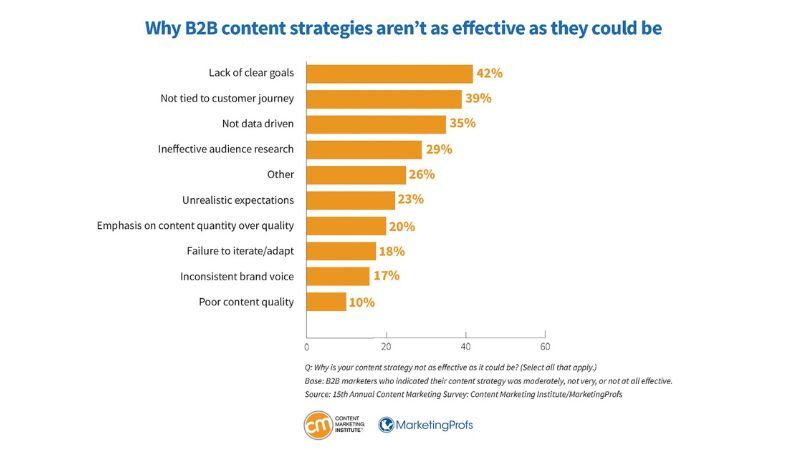
Harnessing unique data or case studies, and offering fresh perspectives can set our content apart. It’s noteworthy that 22% of B2B marketers attribute success to understanding their audience deeply.
Authority signals build trust with AI systems by proving the credibility and reliability of our content. AI trusts content that’s backed by authoritative sources.
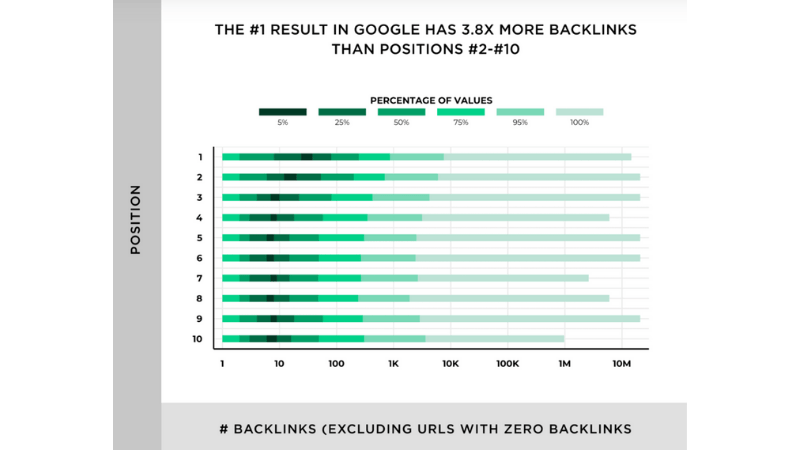
This means including consistent source citations and gaining backlinks. Pages with more backlinks rank higher, as noted in a Backlinko study.
Entity mapping allows AI systems to grasp the relationships between key entities in our content. By clearly identifying and linking these entities, we help AI build a more nuanced understanding of the content’s context.
Explicitly naming and linking key entities and creating a semantically related internal linking strategy enhances AI’s ability to surface our content in relevant searches. A recent experiment demonstrated that sites with comprehensive schema markup significantly outperformed their counterparts.
In conclusion, AI visibility requires more than just traditional SEO. Optimizing for content retrievability, alignment, differentiation, authority, and entity mapping will ensure our brand remains not just visible, but authoritative in AI-driven search results.
As AI continues to transform search landscapes, partnering with a knowledgeable SEO agency becomes increasingly crucial. Agencies blending traditional SEO strategies with cutting-edge AI optimization will be invaluable for leading in this ever-evolving field.
I’ve been following the news closely, and it seems the EU is setting its sights on Google. The buzz is about a new investigation concerning Google’s approach to penalizing publishers that use sponsored content. For many media outlets, this type of content is crucial for revenue.
Google’s parent company, Alphabet, is preparing for what could be a significant EU scrutiny. The allegations suggest Google demotes news publishers in search results if they run promotional or sponsored content, a key revenue stream for these publishers.
What’s Happening: The European Commission, the EU’s leading authority on antitrust regulation, is gearing up to announce this probe. We might hear something as soon as Thursday.
The case is filed under the Digital Markets Act (DMA). This legislation aims to prevent tech giants, known as “gatekeepers,” from unfairly prioritizing their own services or disadvantaging others.
Companies breaching these rules could be fined up to 10% of their global revenue, which is a hefty amount.
Site Reputation Abuse: Google’s actions against these publishers spring from a spam policy first introduced in March 2024, and then refreshed in November 2024.
This policy targets “site reputation abuse” or what we in the SEO world might know as parasite SEO. Essentially, it’s when third parties use trusted sites to post low-quality content to game Google rankings.
Google argues that such content can mislead users and has actively taken measures against sites hosting these dubious materials.
The policy was later amended to clarify that even content overseen by the original site can still breach the rules if it mainly aims to exploit a site’s ranking signals.
After hearing numerous complaints about the quality of Google Discover, I’m interested to see how Google plans to tackle the issue of fake AI spam. They’ve assured us that a solution is in progress.
I’m aware that Google is taking steps to remedy the situation with its Discover feed, especially with the appearance of fake AI spam in recent weeks. Google confirmed to the Press Gazette, which has reported several instances of this spam infiltration, that a fix is actively being developed.
Google’s Assurance. In their words:
“We keep the vast majority of spam out of Discover through robust spam-fighting systems and clear policies against new and emerging forms of low quality, manipulative content. We’re actively working on a fix that will better address the specific type of spam that’s being referenced here, maintaining our high bar for quality in Discover.”
The AI Spam Issue. From what I’ve read, the Press Gazette has meticulously documented instances where fake news stories have garnered tens of millions of views on the Google Discover platform in just a week. Here’s a glimpse of some of these fake stories as reported:
It’s fascinating how spammers are allegedly buying expired domains with previously trusted reputations, exploiting their domain authority to flood Google Discover with spam content. This tactic isn’t novel, and while Google Search generally manages these tricks well, many believe this is currently how spammers manipulate the Discover feed.
French data journalist Jean-Marc Manach has been tracking this issue, building a comprehensive database of fake sites generating AI stories. His list now includes over 8,300 entries in French, 300 in English, and 150 in German.
Why It Matters to Me. As someone who values relevant and trustworthy content, I understand the potential impact of Google Discover’s reach. These fake sites can momentarily generate significant revenue, only to be shut down, after which others rise in their place. It’s a cycle that Google is inevitably working to break, though new challenges will likely emerge.