Rendering isn’t always immediate or complete. Discover where no-JavaScript fallbacks still safeguard critical content and indexing in 2026.
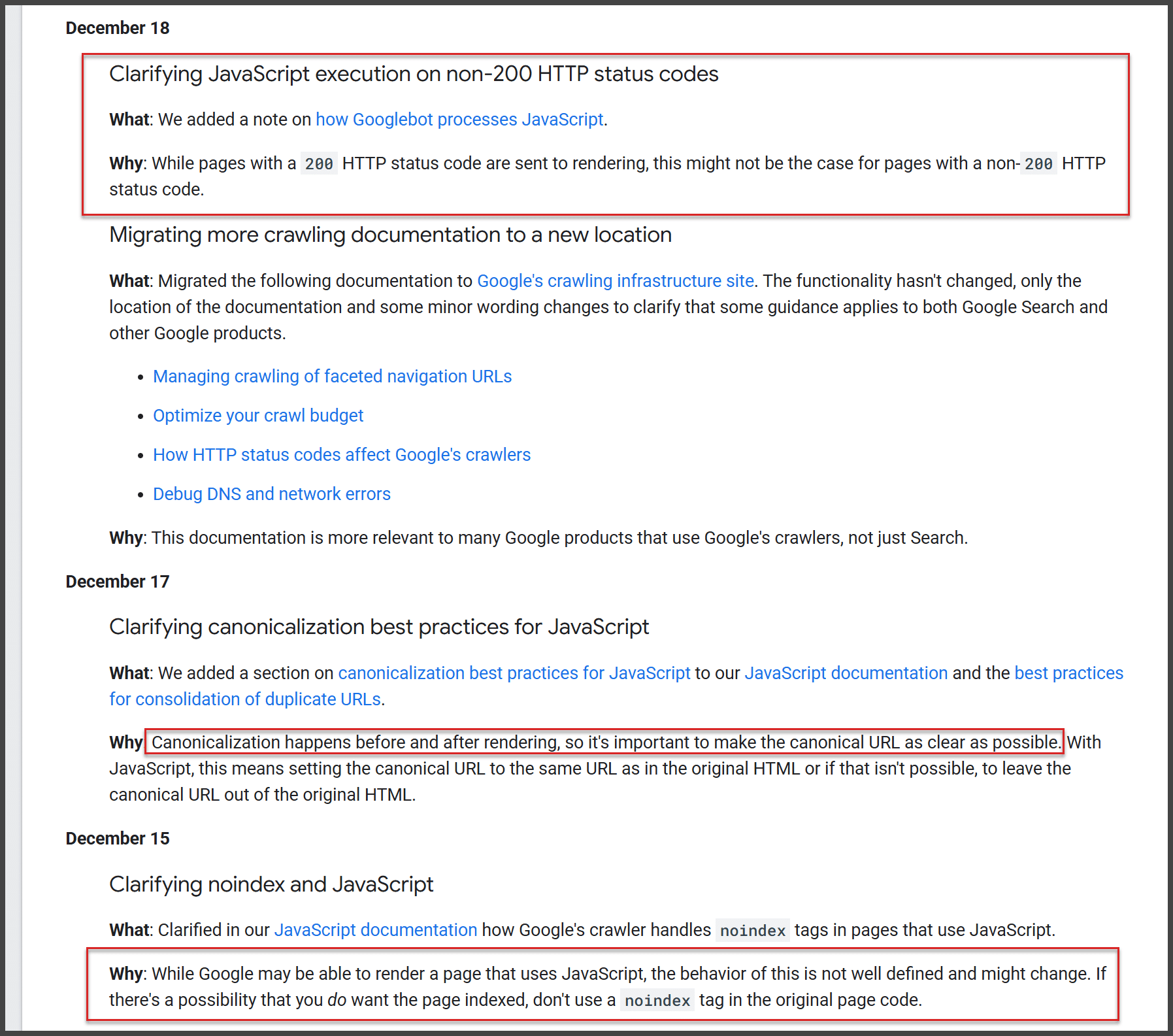
I’ve noticed that Google has the capability to render JavaScript, but it doesn’t always do so instantly or flawlessly. Since Google’s 2024 comments on rendering all HTML pages, developers have questioned the necessity of no-JavaScript fallbacks. Now, in 2026, the answer is clearer yet nuanced.
Google’s position on JavaScript rendering has been a hot topic since July 2024. During an episode of Search Off the Record, Martin Splitt and Zoe Clifford from Google’s rendering team discussed rendering costs and prioritization.
Developers, especially those working on JavaScript-heavy applications, began to question the need for fallbacks. On the other hand, many SEOs remained skeptical, wary of removing fallbacks without understanding Google’s consistency and limits in rendering processes.
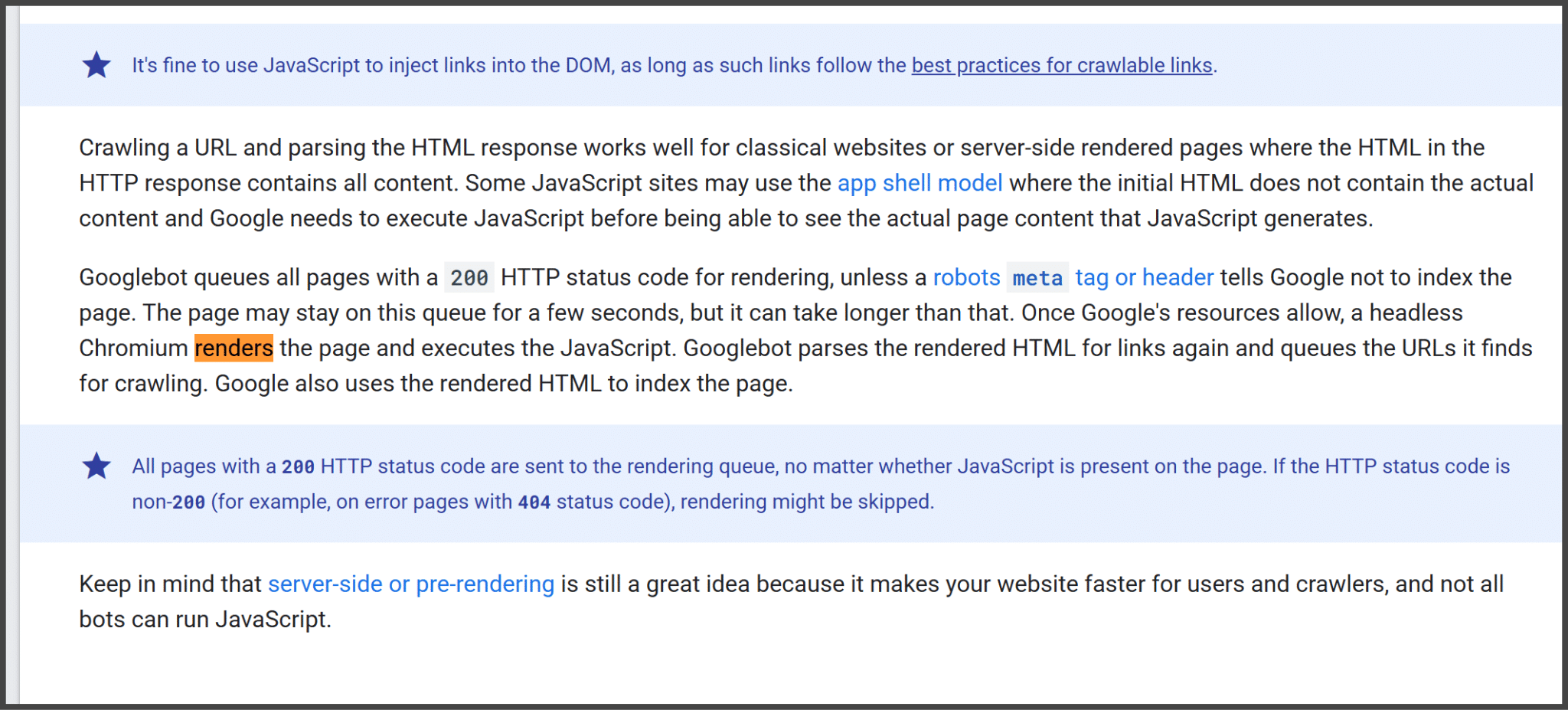
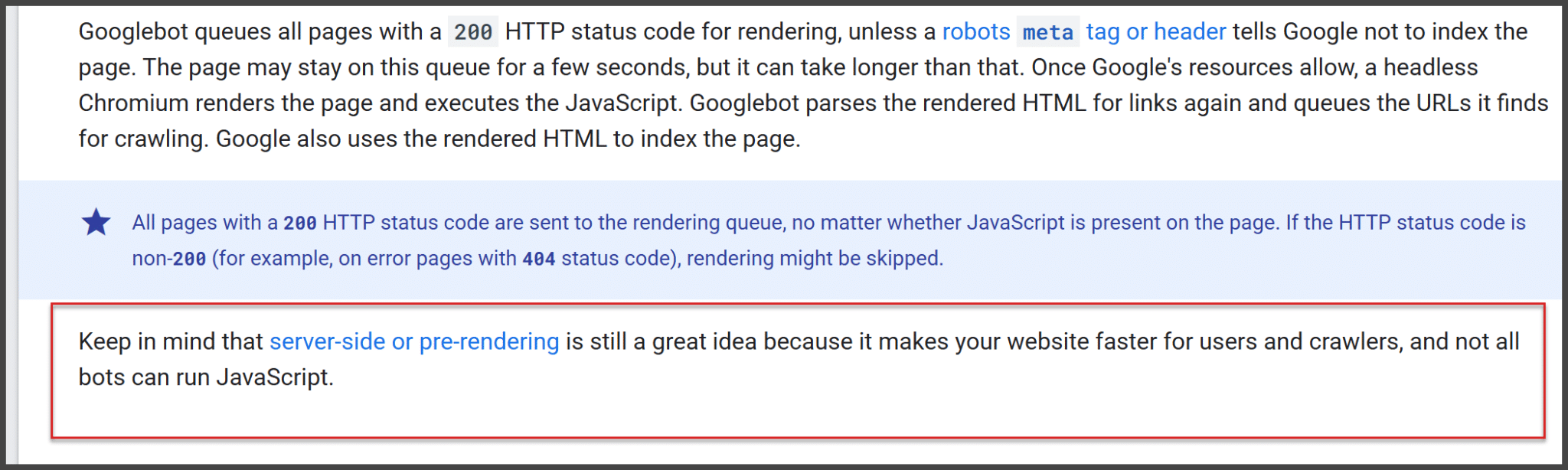
While developers debated, Google’s documentation clarified how JavaScript rendering functions. Pages are queued for rendering, and once resources become available, a headless browser processes the JavaScript. This means that not all interactions within JavaScript elements are parsed immediately.
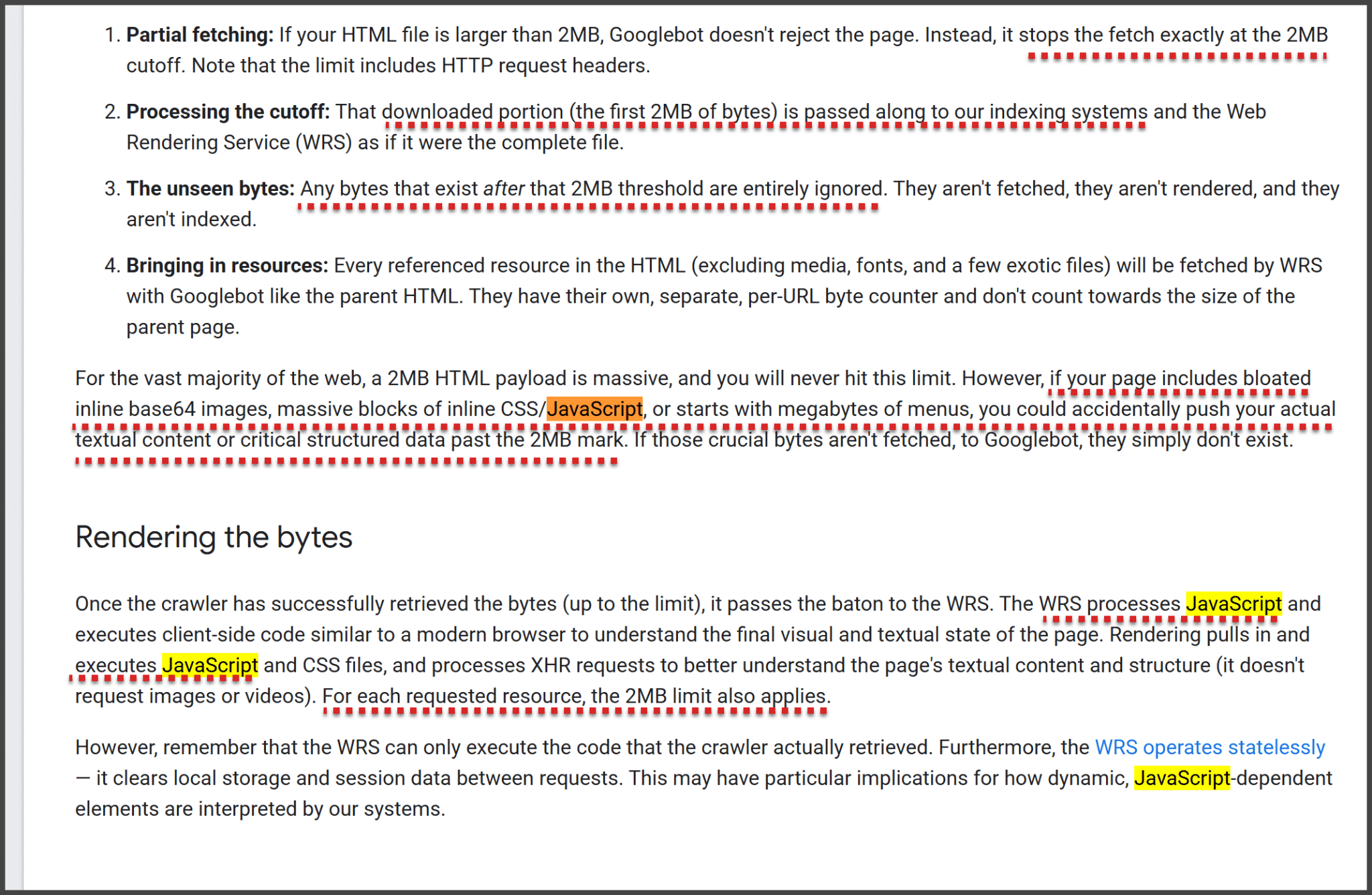
Google’s guidelines on rendering emphasize the importance of pre-rendering strategies like server-side rendering to ensure critical content is indexed properly. Although Google claims it renders all pages, there are practical limits, such as a 2MB HTML and resource cap.
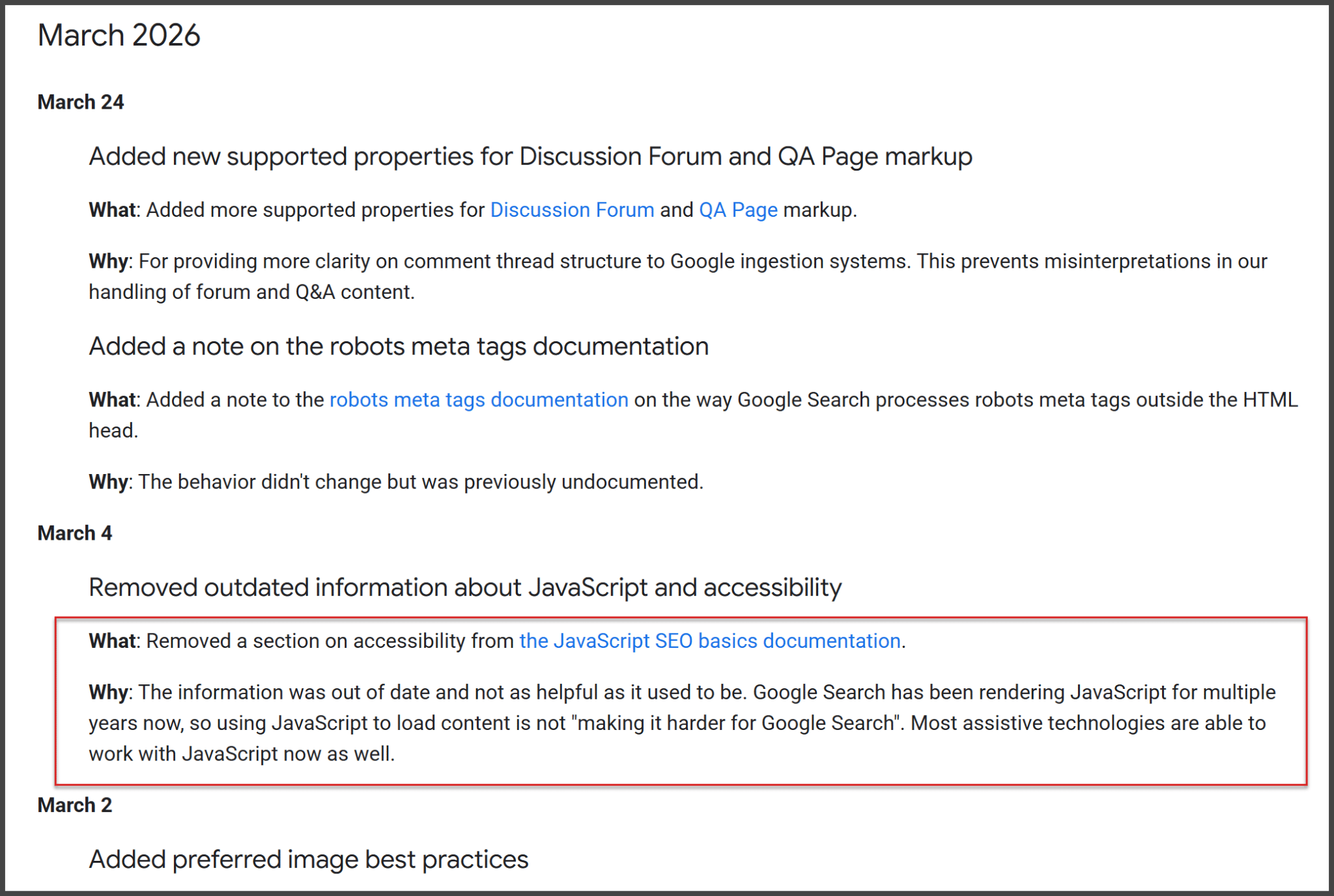
Discover Google's March 2026 updates, enhancing clarity in forum markup, meta tag processing, and modernizing accessibility content for SEO.
Although Google’s JavaScript capabilities have improved, the broader web hasn’t uniformly adapted, with many systems still dependent on HTML-first delivery. As AI crawlers and other non-Google bots often don’t execute JavaScript, the need for no-JavaScript fallbacks remains critical.
Despite Google’s advancements, fallbacks for critical architecture, content, and links are still vital. Google’s documentation and recent updates reinforce this by highlighting the ongoing importance of server-side rendering and resilient HTML.
From personal experience, it’s clear that while blanket no-JavaScript fallbacks might not be universally necessary, critical content should not solely depend on JavaScript. In 2026, no-JavaScript fallbacks for essential content are more than just a good idea; they are often essential for maintaining SEO integrity.
When I’m faced with the challenge of optimizing for keywords that I can’t explicitly use, I gear up with a strategic mindset. Legal constraints, brand guidelines, or public perceptions might put certain terms off-limits, but there are effective ways to capture demand without using them directly.
Here’s my approach to overcoming this hurdle, aligning with search behaviors, and enhancing visibility despite limitations.
When Certain Keywords Are Off-Limits
In the world of SEO, it’s not uncommon to hear, “We want to rank for (insert competitive term),” followed by, “Avoid using (that exact term) in content.”
My journey began over 10 years ago, tasked with ranking for “custom koozies.” This sparked endless debates on the correct nomenclature for these drink holders. At home, we referred to them as “coolie cups,” but data revealed that most people simply called them “koozies.” However, “Koozie®” being a trademark meant we had to cleverly position ourselves at the top without relying on that term as our primary focus.
Years later, at a marketing agency focusing on senior living, I encountered new terminology like assisted and independent living. Despite a bias against the term “nursing home” due to negative connotations, our research showed it was still widely used, presenting similar challenges to what I had faced before.
Strategies for Ranking Without Using Specific Keywords
Even if I can’t use a keyword, by sending the correct signals through related terms and creative strategies, I can still rank effectively. Here’s how:
1. Pull the Data and Confirm Direction
Sometimes, showcasing data alone can shift perspectives. Sharing insights like “skilled nursing near me” having 4,400 monthly searches compared to “nursing home near me” with 27,100 searches can be eye-opening. Understanding the local search volume is crucial in determining the best strategy.
2. Surround the Terms
Creating contextual relevance is essential. For example, around the term “Koozies,” I include words like “beer,” “drink,” and occasions such as “bachelorette party.” These help build search engine context.
3. Use Synonyms and Break Down Phrases
Utilizing synonyms or splitting phrases works well. Instead of “Koozies,” I might say “cozies” or “coolies,” and for “nursing homes,” highlighting “nursing” and “home” separately enriches content.
4. Employ Indirect Usage
Referring indirectly can be impactful, such as using headers like “More than a nursing home” or integrating the terms into questions or statements naturally within the content.
5. Incorporate Unnameable Products
Incorporating trademarked items alongside other products allowed me to use the term “Can Coolers & Koozies” even when the latter couldn’t be the focal point.
6. Craft Creative Anchor Text
Using the primary term in both off-site and internal links can guide search engines effectively. Controlling anchor text is key.
7. Optimize Non-Visible Elements
Leveraging alt text and strategically placing terms in title tags ensures that search engines get the right signals without visible usage, balancing between being search-friendly and on-brand.
8. Add Definitions
Adding definitions helps clarify common terms related to your offerings, boosting SEO and enhancing your site’s authority.
Always consult with legal advisors regarding trademarked terms. By gathering data, crafting strategic approaches, and adjusting tactics as necessary, you can achieve SEO success even with restrictions.
ChatGPT citations prioritize ranking and precision, not length. I recently came across an intriguing study conducted by AirOps that examined how ChatGPT assigns citations. It revealed that pages with precise, narrow answers are favored over lengthy, broad content.
After reviewing 16,851 queries, AirOps found that pages with well-matched headings and focused content rank higher in citations. Impressively, the top retrieval result was cited 58% of the time, indicating a strong preference for relevance over mere volume.
Why this matters to us. These findings are crucial if we’re aiming to earn more ChatGPT citations. To succeed, we need to prioritize winning retrieval spots, mirroring queries in our headings, and providing highly precise answers.
Key insights. The study emphasized retrieval ranking as a pivotal factor. Top-ranking pages were cited 58.4% of the time, compared to only 14.2% for pages positioned tenth. This highlights the significant impact of retrieval rank on citation frequency.
Another crucial point I noted was the importance of heading relevance. Pages where the heading strongly matched the query were cited 41% of the time, significantly outperforming less matched options.
It also showed that narrowly focused pages outperform comprehensive guides, challenging the typical “ultimate guide” approach many of us might consider effective.
Factors driving citations. From what I gathered in the study, being well-ranked, using query-matching headings, and maintaining content focus are key to earning citations from ChatGPT.
Additional structural insights: While structure like JSON-LD markup offered a slight boost in citations, it wasn’t as critical as I initially thought. Pages with this markup had a citation rate of 38.5% versus 32.0% for those without. Interestingly, articles with 4 to 10 subheadings performed notably well.
Furthermore, content length had diminishing returns. Pages with 500 to 2,000 words performed best in citations, whereas those exceeding 5,000 words were cited less than even the briefest ones.
Freshness matters, but only to an extent. Content published within 30 to 89 days had the best performance in terms of citations, while newer content underperformed slightly, suggesting the need for time to build retrieval signals.
Older content, particularly those older than 2 years, struggled in citations, implying the potential benefits of refreshing existing content if it currently ranks well for target queries.
Understanding the data. AirOps examined 50,553 responses derived from 16,851 unique queries, each run three times. The exhaustive dataset encompassed 353,799 pages across various sectors and query types.
I recently had an eye-opening experience when I asked ChatGPT to recommend a local business. Interestingly, the businesses it recommended all had strong online presences, and their websites were frequently cited as reliable sources.
This taught me something crucial: AI doesn’t pull answers from nowhere. It gathers data from existing sources. Without a trustworthy, comprehensive website, I lose control over my business narrative as AI cobbles together information from various places.
That’s why many business owners like myself are questioning the necessity of websites. If AI answers everything, why bother? But here’s the truth: my website is now more than just a marketing tool; it’s an authoritative document that AI treats seriously. The real challenge is deciding who defines my business narrative: me or others.
Zero-Click Doesn’t Eliminate Opportunity
I’m noticing a trend where impressions hold steady or even rise, but clicks are dropping. This might make some declare websites as obsolete, but I believe that’s a misplaced assumption.
While clicks may decline, they don’t signify reduced importance. Instead, the nature of the click is changing, as AI Overviews often appear for informational intent.
According to Ahrefs data, 99% of keywords triggering an AI Overview are informational, with navigational keywords at just 0.13%. Quick information seekers get their facts and move on, but those ready to make a decision will still validate this through direct interactions.
The critical clicks—those leading to revenue through bookings, calls, or purchases—are still happening. The keywords leading to these clicks are where decisions are closest.
When AI suggests a local business, it’s using a pattern based on reviews, content, and location, offering a starting point but not the final word.
Customers depend on a follow-up process that involves checking the website, reading reviews, and actually seeing what’s on offer before making a choice.
Thus, my website becomes the crux of decision-making. While AI might open the door, it’s my website that ultimately closes it.
Boosting Website Value Through AI
AI not only reads the content but also checks its accuracy against online profiles. If everything aligns, I’m recommended; if not, I’m left out.
Essentially, my website acts as a foundational element for AI. I want AI pulling from my most precise, structured information, not outdated third-party content.
Everywhere else, opinions and algorithms control how I’m perceived. Only on my website do I dictate what’s highlighted and how my story unfolds.
With well-organized content addressing real questions, my site provides the narrative I want AI to reflect. If not, the alternative narrative can be less favorable.
I’m using AI tools like ChatGPT to simulate client inquiries about my business and recognize gaps in information and narrative.
Is it citing my site?
My Google Business Profile?
Outdated directories?
This audit shows exactly where improvements are needed.
Consequences of a Stale Website
If my site lacks depth or is outdated, AI fills those gaps with potentially incorrect or damaging information, impacting reputation and decision-making.
Beyond mere accuracy, a weak website means losing control over how my value and expertise are perceived and positioned.
AI may bring me to the forefront, but it’s my site that secures trust and seals the deal with customers.
When the March 2026 Google core update hit, I couldn’t help but notice the dramatic shifts it created. Nearly 80% of the top search results were reshuffled. This update really boosted brands and official sites while leaving some aggregators scrambling to catch up.
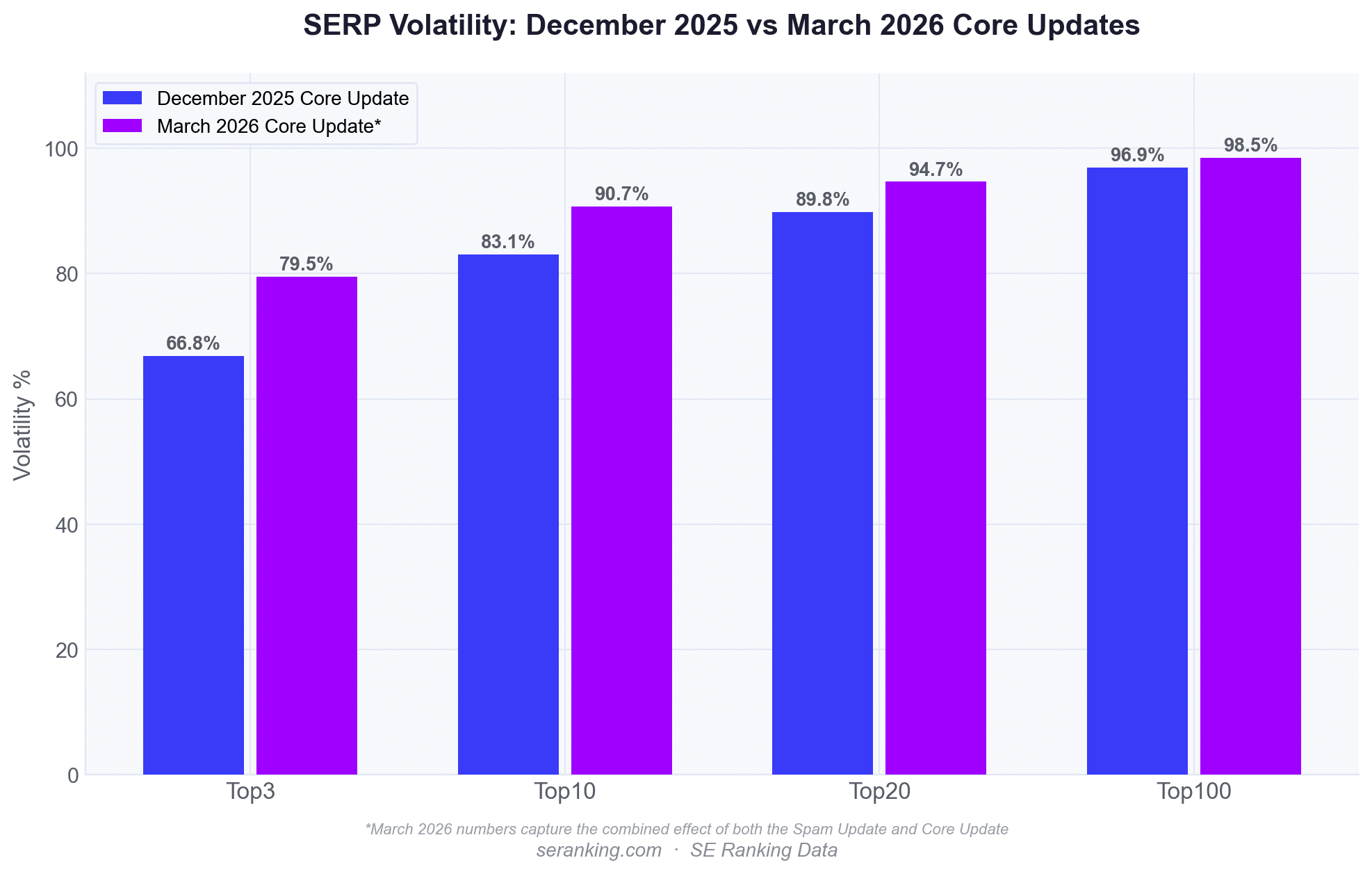
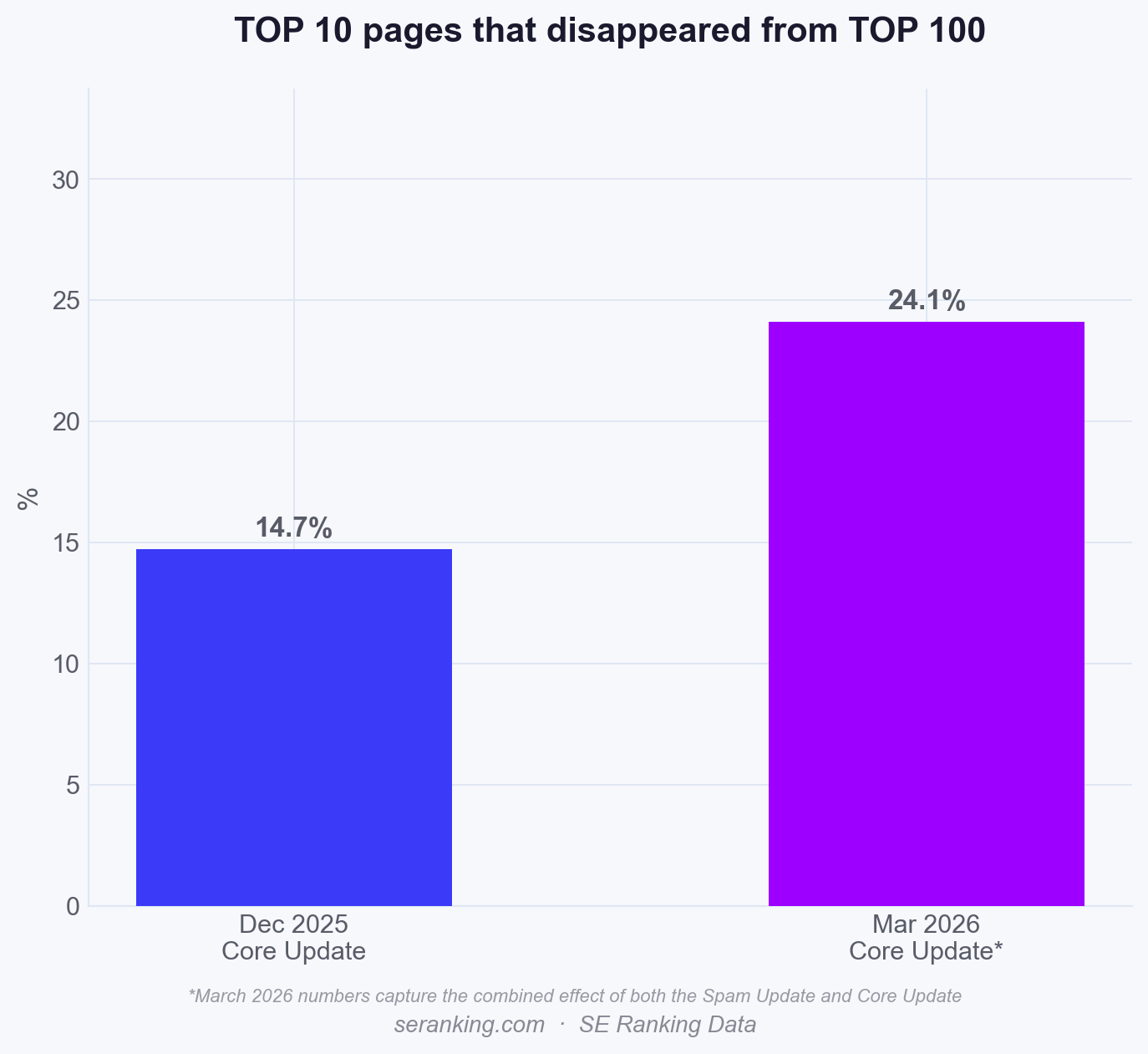
I stumbled upon SE Ranking’s exclusive data, which highlighted how much more volatile the March update was compared to December 2025. Surprisingly, nearly one-in-four top-10 pages disappeared from the top 100 altogether!
The data breakdown. I saw increased volatility across all ranking tiers.
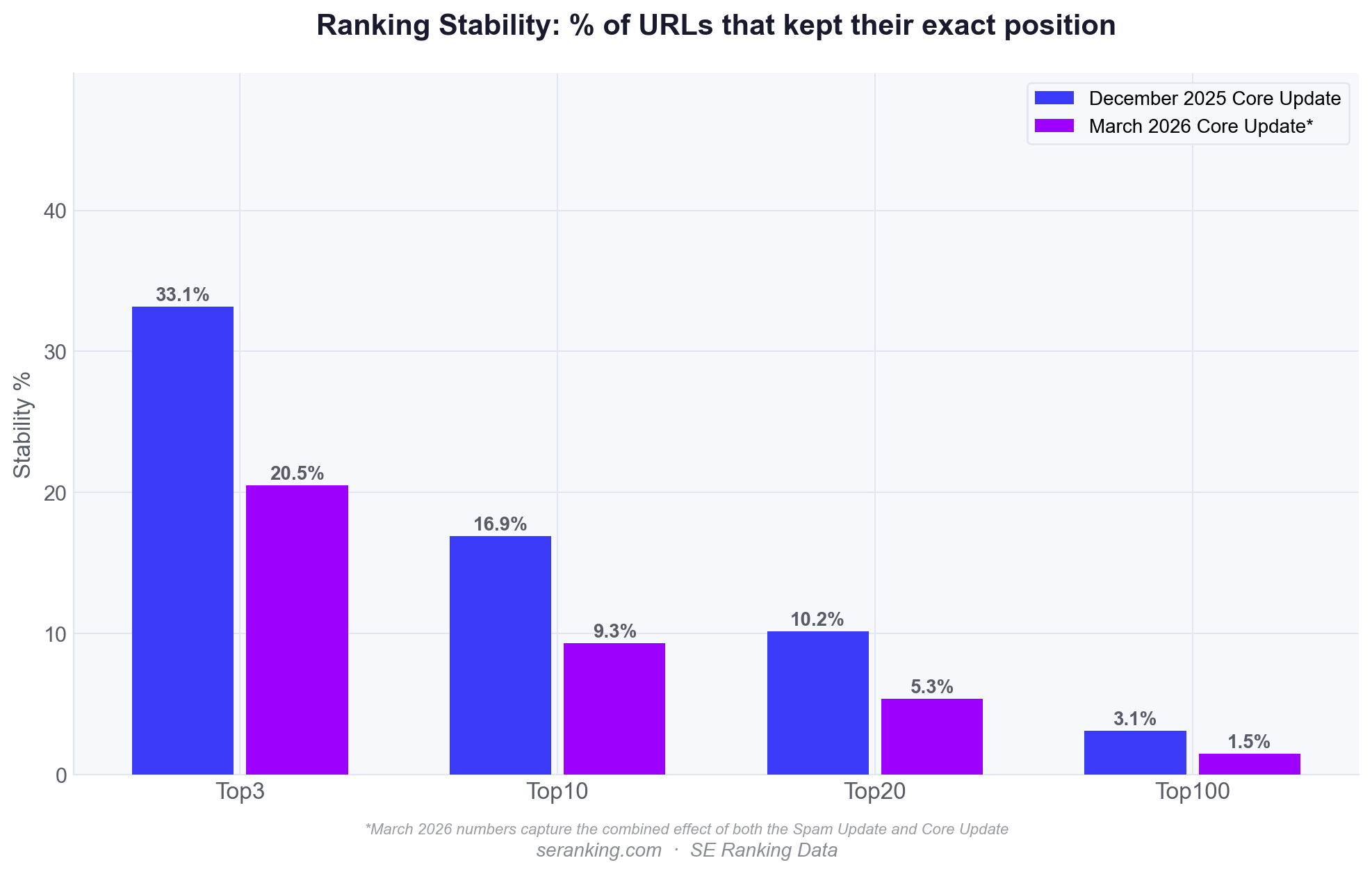
In the top 3, 79.5% of URLs changed positions, a notable jump from December’s 66.8%. Similarly, 90.7% shifted in the top 10, compared to 83.1% earlier.
Stability? Well, it took a nosedive. Only 20.5% of top 3 URLs stayed put, down from 33.1%, and in the top 10, stability fell to 9.3%, down from 16.9%.
Then there’s the churn: about 24.1% of pages in the top 10 vanished from the top 100, a significant rise from the 14.7% observed in December.
It’s (sort of) complicated. As I delved into it, I realized the core update began just a day after a significant spam update concluded, which made pinpointing the source of changes tricky. However, most disruption seemed to stem from the core update, with the spam update adding more chaos.
Diving deeper. Aleyda Solis’ analysis, using Sistrix data, revealed notable shifts from intermediary sites towards stronger, more authoritative sources. Sites that gained included:
– Official and institutional sites.
– Specialist and niche sources.
– Established brands.
– Dominant platforms.
On the flip side, aggregators, directories, and comparison sites saw declines.
Winners and losers. Solis pointed out interesting shifts: dictionary and language sites fell while major platforms rose; job aggregators lost visibility, whereas employer-specific sites like USAJobs gained.
Institutional sites saw fantastic gains on data-driven queries, with travel and real estate platforms shifting toward primary destinations. Health results were reordered with more emphasis on clinical and specialist sources.
Interestingly, YouTube experienced the most substantial visibility drop in this dataset.
Why it matters. From what I gathered, Google’s March update seems to have raised the ranking bar significantly. Strong brands and data-rich sources fared well, while intermediary sites are now more vulnerable.
When I started my journey on the web, creating websites was pretty straightforward. We crafted sites like “filing cabinets,” centered around a grand entry known as the homepage. This was the gateway through which visitors would navigate to discover the information they were seeking.
With the advent of SEO, everything took a turn. Each page evolved into a potential entry point, allowing visitors to land directly on the page most relevant to their needs.
But today, as AI tools like Gemini and ChatGPT become prevalent, the dynamics are shifting once more. These tools are transforming user behaviors, often bringing them back to our homepages for their searches.
Therefore, the homepage is regaining its significance as the cornerstone of SEO. It’s crucial to revisit robust information architecture practices to effectively capture and convert this newfound traffic.
In the early 2000s, as search engines became the main source of site traffic, we had to adapt quickly, overlaying SEO strategies on our knowledge of web architecture. This evolution changed the navigation path, leading users directly to inner pages or blog posts and then routing them back to our desired products or services.
While the homepage remained important, it shifted focus to branding and general keywords rather than trying to cover every possible detail. We concentrated on specific, high-converting long-tail content.
Even so, as AI redefines the landscape, the pendulum swings back, reminding us of the value our homepage brings.
AI tools now handle much of the research and summarization, redirecting users to our branded searches and homepages. However, without insights into these users, it becomes paramount to have a homepage ready to guide them effectively, or risk losing them to competitors.
Past lessons steer us back to tackling these challenges head-on.
Traditionally, every page served as a potential landing page, each designed to direct visitors along a purchasing funnel – from informational content to case studies.
Yet, with AI providing immediate answers, the traditional click-through rate for deeper informational content is declining. Users skip straight to branded searches once convinced of our brand’s authority, arriving on our homepage ready for the next step, albeit with less direct data on their preferences and needs.
We must resurrect our approach to information architecture, highlighting logical grouping, structural context, and a strong user path.
Logical grouping means organizing content into distinct categories that are easy to navigate, avoiding convoluted labels.
Structural context ensures AI tools recognize our content as authoritative by maintaining a comprehensive framework across SEO, PPC, and AI avenues.
The 3-click rule — ensuring users find any information within three clicks — is a vital performance indicator, one AI and users appreciate alike.
For successful AI-driven user engagement, we must balance our site’s structure for both human and AI interaction, ensuring smooth navigation and intuitive content access.
The ALCHEMY framework provides a strategic path to designing a site that meets the needs of both audiences, starting with audience research and journey mapping.
I’ve recently come across a noteworthy update from Google, which now enhances the potential impact of our spam reports. Interestingly, these reports are no longer just documentation—they might trigger manual actions against the reported sites. In addition, whatever I write in my report could be shared verbatim with the site owner I’ve reported.
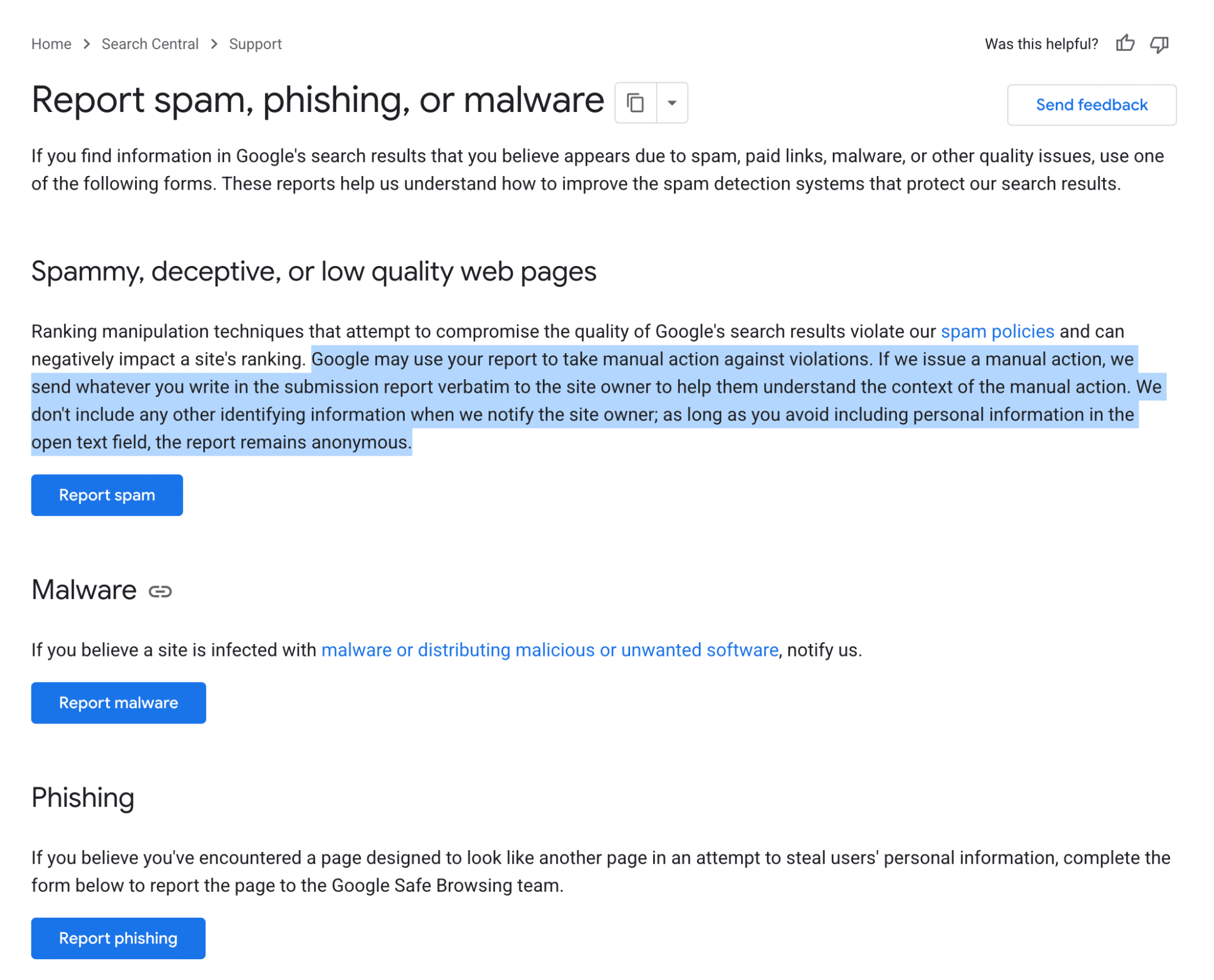
Here’s Google’s Announcement. Google clarified in a note that they may utilize our spam report submissions to undertake manual actions against policy violations. This update makes it clear that spam reports are more critical than ever in maintaining the integrity of Google’s search results.
The updated guidelines specify:
“Ranking manipulation techniques that attempt to compromise the quality of Google’s search results violate our spam policies and can negatively impact a site’s ranking. Google may use your report to take manual action against violations. If we issue a manual action, we send whatever you write in the submission report verbatim to the site owner to help them understand the context of the manual action. We don’t include any other identifying information when we notify the site owner; as long as you avoid including personal information in the open text field, the report remains anonymous.”
Spam Reports Fuel Manual Actions. It seems that Google aims to clarify their usage of spam reports. This is quite the shift from their previous communication, where spam reports didn’t directly lead to manual actions. To me, this feels like more than just a clarification—it’s a significant development in how reports are handled.
Direct Transmission of Spam Report Text. Also, Google stated that the exact text I use in my spam report might be sent to the site owner. They advise us not to include personal details, as my submission remains anonymous unless I disclose such information.
Google emphasizes the importance of keeping sensitive information out of the report to ensure my anonymity is maintained.
Why This Matters to Us. This change could significantly alter how we approach spam reporting on Google. If you’re someone who regularly submits these reports, like I do, it’s essential to understand the new implications and modify your reporting practices accordingly.
When it comes to SEO, I’ve learned that topical authority is just the beginning. AI search systems take it a step further by assessing choices among entities, not just content. Understanding the nine-cell model is crucial for grasping how these selections truly happen.
The concept of topical authority is fundamental in SEO. I’ve realized it doesn’t fully explain how search and AI choose between different sources. The critical element is missing, lying in the selection signals that separate mere eligibility from being the chosen one.
Topical Authority: Understanding Content vs. Selection
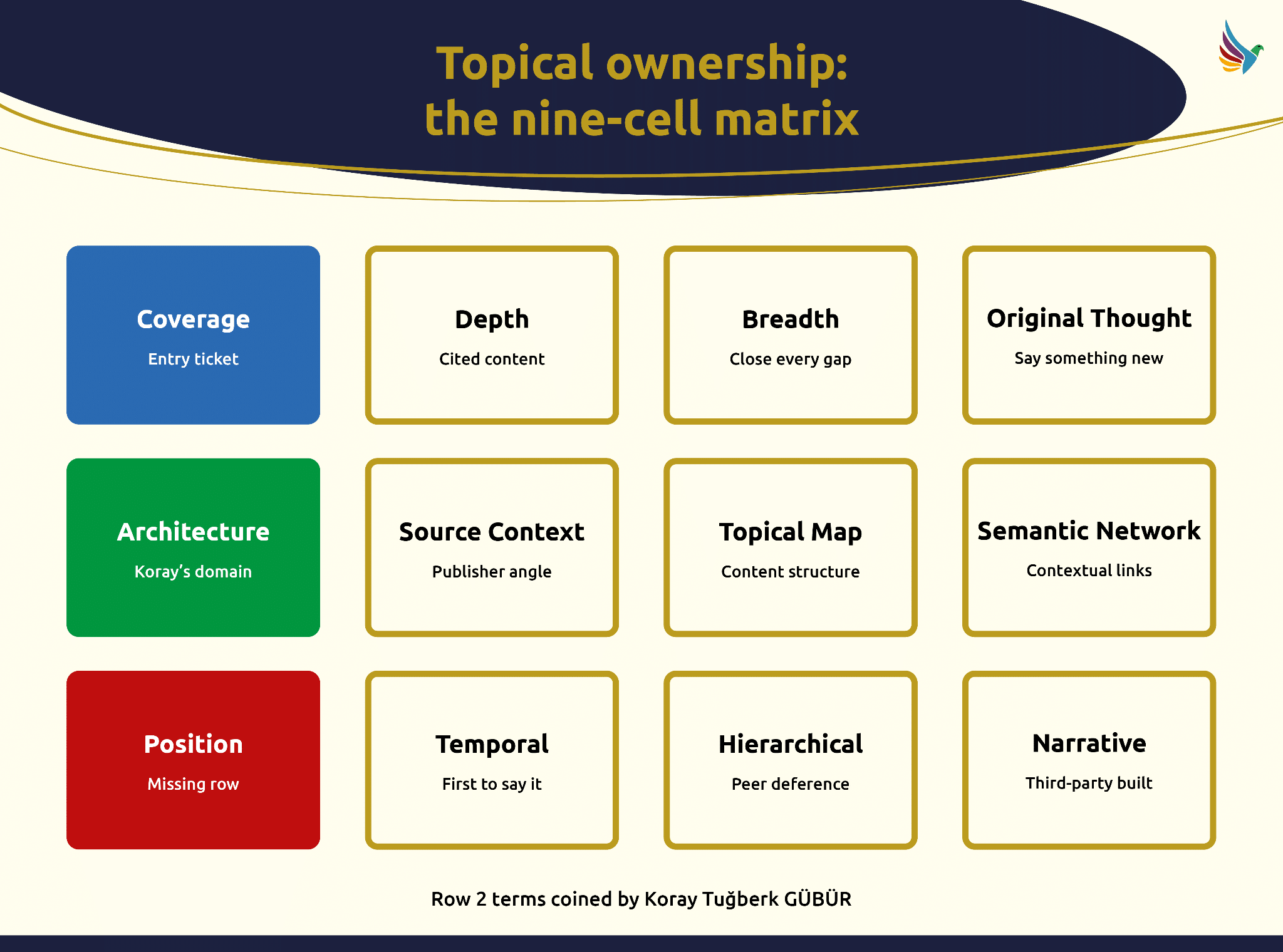
In my journey, I see topical authority as foundational for both SEO and the evolving AEO and AAO. However, it’s not enough. The current framework accounts for semantics, content, and structure but falls short of explaining topical ownership — the real goal.
Topical authority reflects what I’ve built, while topical ownership is about whether AI systems prefer my content over others during the selection. This hinges on having content that surpasses mere existence and becomes preferred through the selection processes in AI pipelines.
My insights have been influenced greatly by Koray Tuğberk GÜBÜR’s work. His methodological approach to content architecture has consistently demonstrated how signaling genuine expertise results in notable outcomes.
GÜBÜR’s formula and framework, which include the temporal dimension, are crucial to expanding the cell model. His innovation in coining terms like “topical map” has provided the industry with structured guidance steeped in thorough research and understanding.
Row 1: Coverage as the Starting Line
I’ve come to see coverage as more than just ticking off content boxes. It means providing unmatched depth, comprehensive breadth, and offering unique insights. These elements together ensure that one’s presence is unmistakably their own.
While ensuring complete coverage is vital, presenting a new perspective is what keeps content relevant in the dynamic AI landscape. Original thought is my ticket to retaining repeated attention from AI systems, fostering recognition and engagement.
Row 2: The Foundation of Architecture
The architecture of content, from sentence clarity to strategic linking, is a cornerstone for effective communication. Starting with source context helps determine the identity and structure that align with my strategic goals.
Good architecture, as I’ve experienced, is not just about organizing content but about making it accessible and understandable for AI systems. It bridges what exists with how it is understood, a critical factor for effective communication.
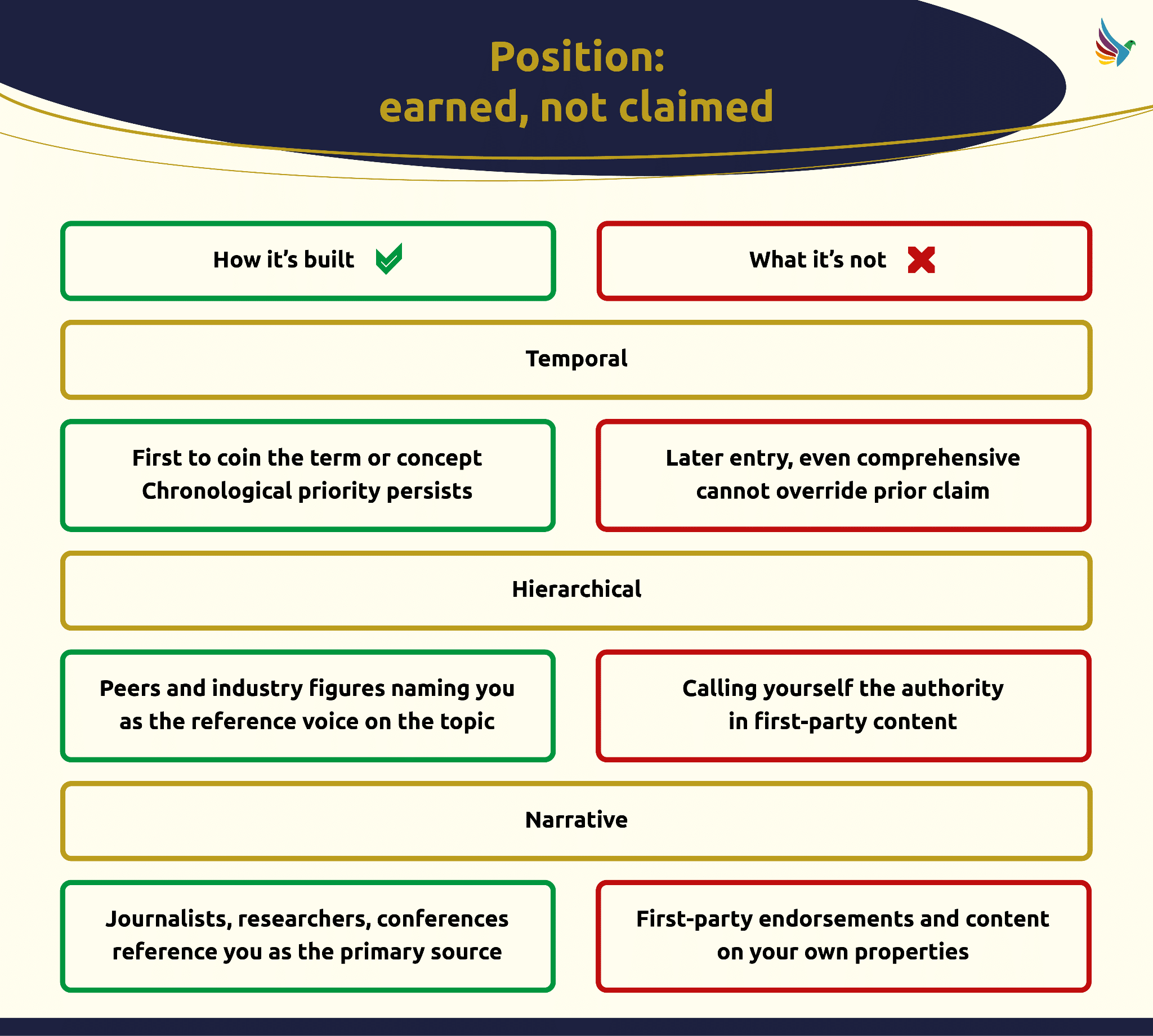
Row 3: Position Decides the Game
Building a strong position requires more than content. It involves staking my claim as an entity of authority, ensuring recognition and relevance in my chosen topics. In AI, position is the differentiator that sets entities apart in a crowded digital landscape.
The effort I invest in establishing this position pays off when AI systems recognize and prioritize my contributions, setting me apart from others with similar coverage and architecture. This understanding underscores the significance of position in AI optimization strategies.
Through exploring these strategies, I have seen how each layer — coverage, architecture, and position — supports and enhances the other. Together, they create a robust framework that ensures my content stands out in competitive AI environments.
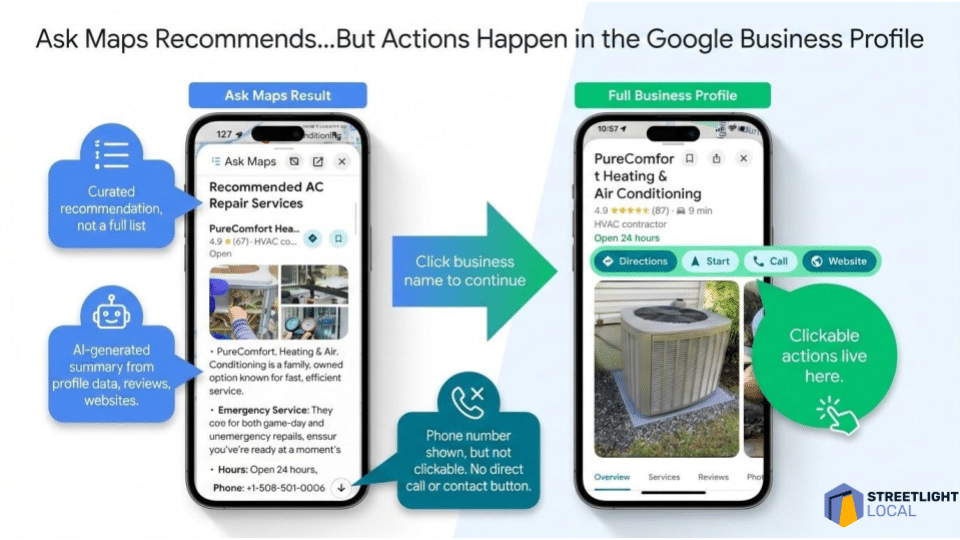
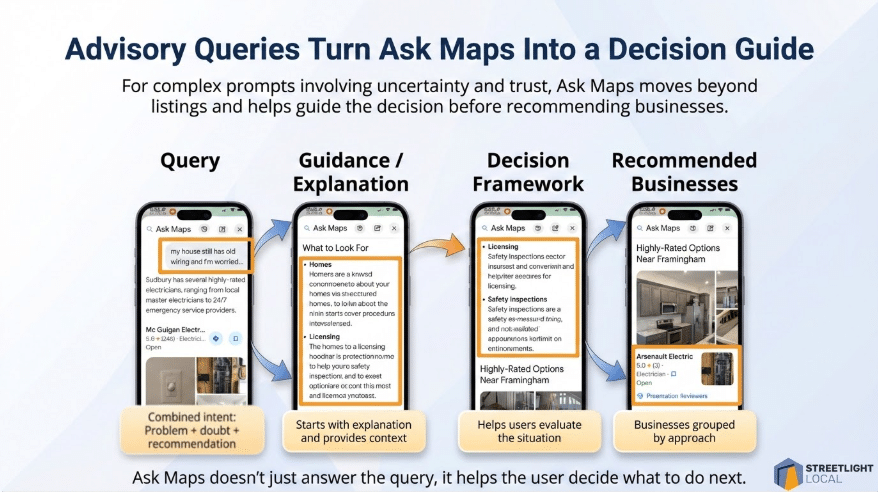
I’ve noticed a fascinating shift in Google’s Ask Maps function—it’s transitioning from simple listings to offering more personalized recommendations. This change is not just about showcasing local businesses anymore; it’s about truly understanding user needs and suggesting the best options.
The other day, I dug into some local service queries—think plumbers, electricians, HVAC services—and was amazed to find how Ask Maps narrows down options by user intent. It’s evaluating businesses based on factors like responsiveness and specialization, which feels fresh and user-focused.
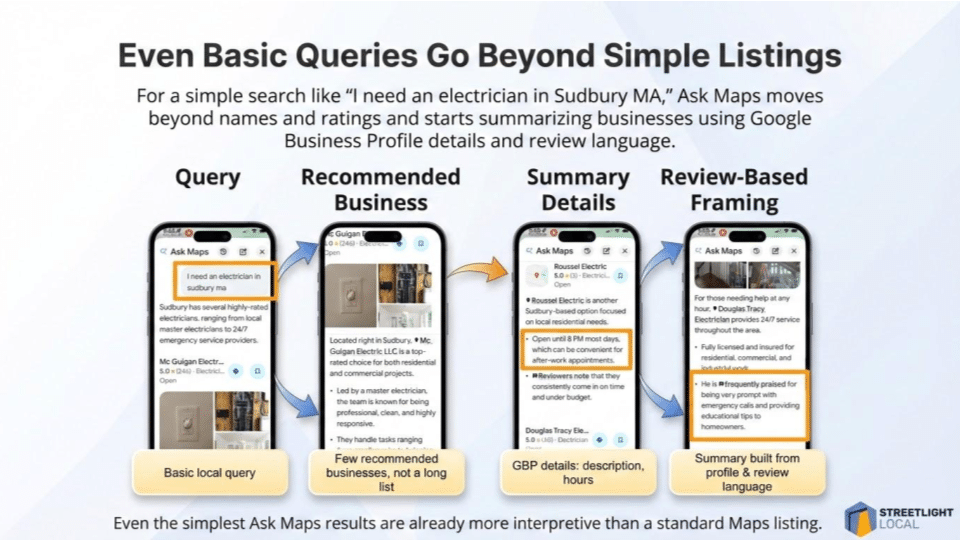
What’s even more exciting is how Ask Maps frames these businesses. It’s not just a list; there’s guidance involved, which is a leap beyond traditional local retrieval methods. So, I decided to explore this by testing across five levels of local intent, ranging from simple searches to detailed conversational prompts.
As the complexity of queries increased, I saw a clear pattern: Ask Maps shifted from merely listing businesses to interpreting which ones truly fit the ask—and why. This is huge.
This exploration pulled insights from specific locality tests, so while it’s directional, it’s not exhaustive across all markets or queries.
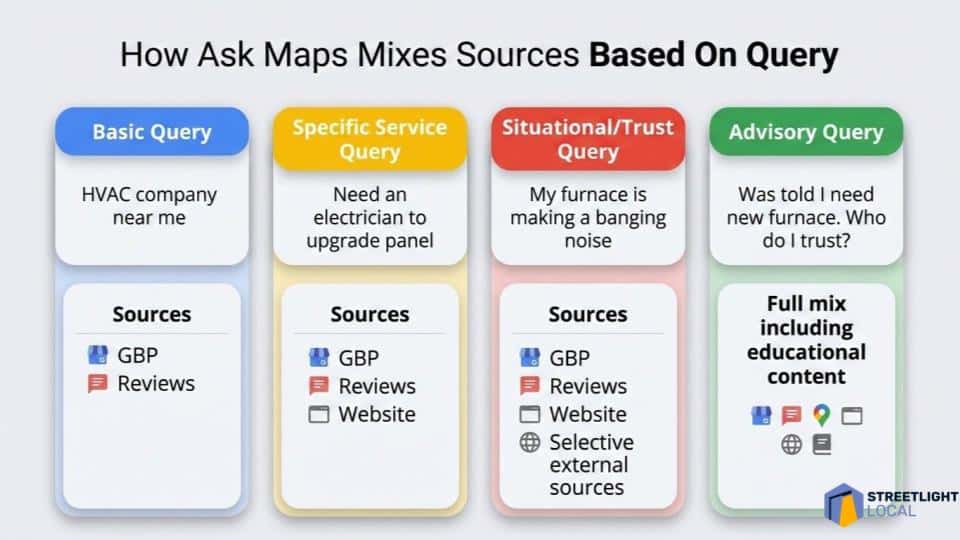
The five-level intent model I developed was based on what I’ve learned about how people search for local services. I structured these not by traditional keyword categories but from simple inquiries to complex, conversational decision-making.
At the basic level, requests start simple, like “I’m looking for an HVAC company nearby.”
Then, I experimented with queries involving more service specifics, like “I need an electrician to upgrade my panel in an older home.” This was fascinating as it introduced nuances into what I look for in search results.
The most interesting insights emerged from situational queries and those involving trust or decision-making, revealing how Ask Maps balances offering a realistic number of options with the depth of interpretation. The shifts were consistent: as we went from simple prompts to narratives, Ask Maps fine-tuned business selection and added layers of explanation.
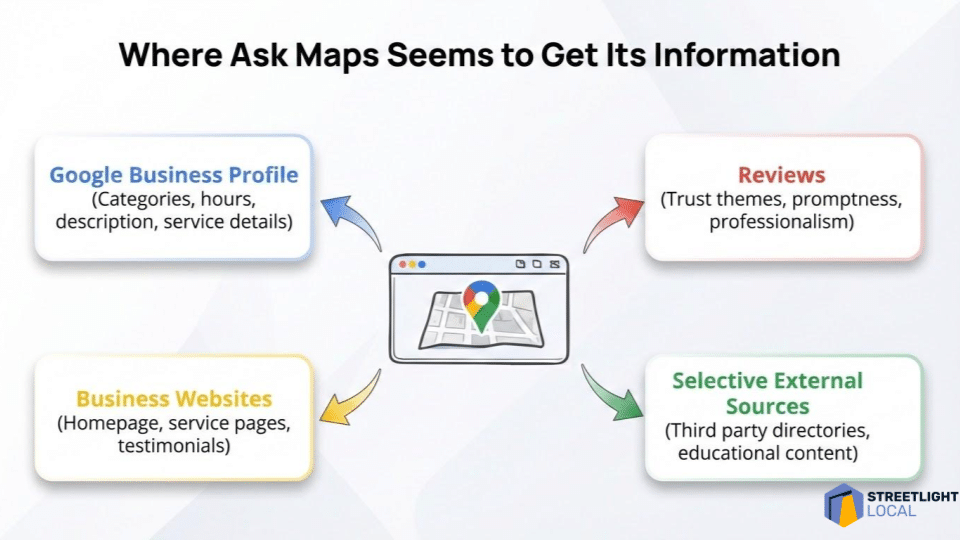
From this testing, I realized the intricate way Ask Maps processes information—using Google Business Profiles, reviews, and even external sources. While reviews dominated initial impressions, Ask Maps dives deeper on complex queries, pulling from business websites and informative content to guide users through decisions.
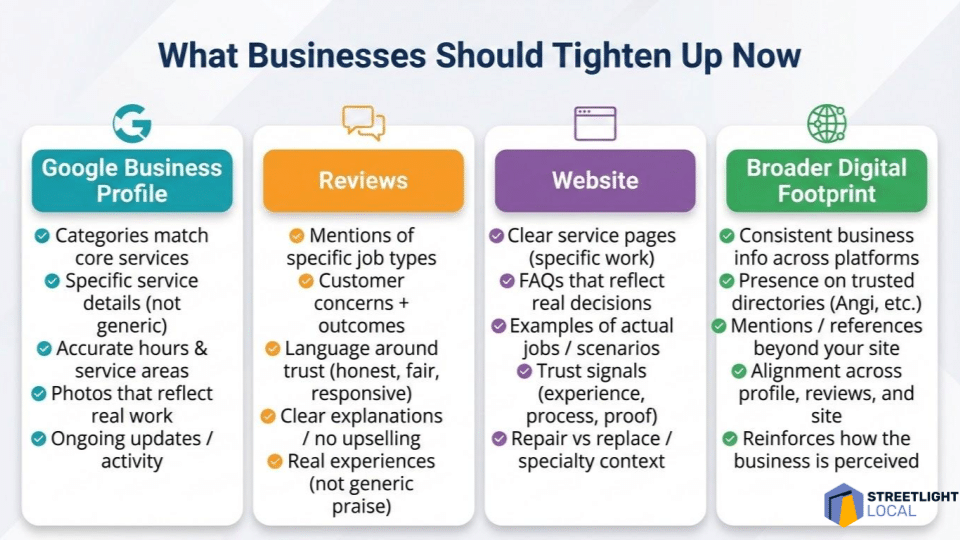
Overall, the direction Ask Maps is heading could redefine our local search approach. If it continues evolving, it might influence how visibility is determined—not just by listing presence but by the ability to comprehensively understand and meet the user’s needs.
When I get a call from a client about a negative search result, my usual response might be to suppress it or claim there’s nothing I can do. However, these aren’t the only options. Google’s removal tools offer a middle ground worth exploring.
Google actually provides tools to remove or deindex content from search results, but they’re underused and often misunderstood. Let me break down what each tool does, when to utilize it, and what its limitations are—so I can handle client situations accurately and manage expectations effectively.
Before using any tool, I always clarify an important distinction with clients: the difference between removal and deindexing. Though they seem similar, they achieve different outcomes.
Removal at source: This means deleting the content from its original site. Once it’s gone, Google will automatically remove it from its index after re-crawling. This is the ideal situation but relies on the site owner taking action.
Deindexing: Google simply removes the URL from its search results, even if the page still exists. However, anyone with the direct link can still access it. Most of Google’s self-service tools offer this option.
The takeaway here is that deindexing addresses a search issue but not a content issue. If the content itself poses a problem, deindexing can minimize risk without completely solving the issue. This distinction is crucial when advising clients.
Google’s various removal tools serve different purposes. Let me walk you through them.
The URL removal tool: Located in Google Search Console, this tool allows me to temporarily hide a URL or directory from search results for up to six months. I find it useful for outdated pages I don’t want people to see, like old press releases.
The outdated content removal tool: This public tool lets you request Google to deindex pages that have been removed or changed but still show in search results. It’s a time-saver after the source has been changed, triggering a recrawl rather than an actual removal.
The Results About You tool: Launched recently, this tool helps me request the removal of personal information categories from Google Search, greatly expanded to include sensitive data like government-issued IDs and non-consensual explicit imagery.
Legal removal requests: For issues outside self-service categories, I can submit legal requests for removal based on different grounds like defamation or copyright violations.
The personal content removal form: Separate from the Results About You tool, this form manages the removal of non-consensual explicit images and other sensitive information found on third-party sites.
It’s important to understand the limitations of these tools. None of them can force third-party sites to delete content or remove content from other search engines. They don’t permanently fix content issues; that’s where suppression strategies come in handy.
When managing client expectations, it’s crucial for me to explain that Google isn’t a content moderator and its tools cover very specific cases. Suppression is often the best strategy when these tools are inapplicable.
For challenging cases, companies like Erase.com handle direct outreach and legal escalation, offering a bridge between self-help tools and litigation.
By understanding and effectively using these tools, I can better manage online reputations and set realistic expectations with my clients.