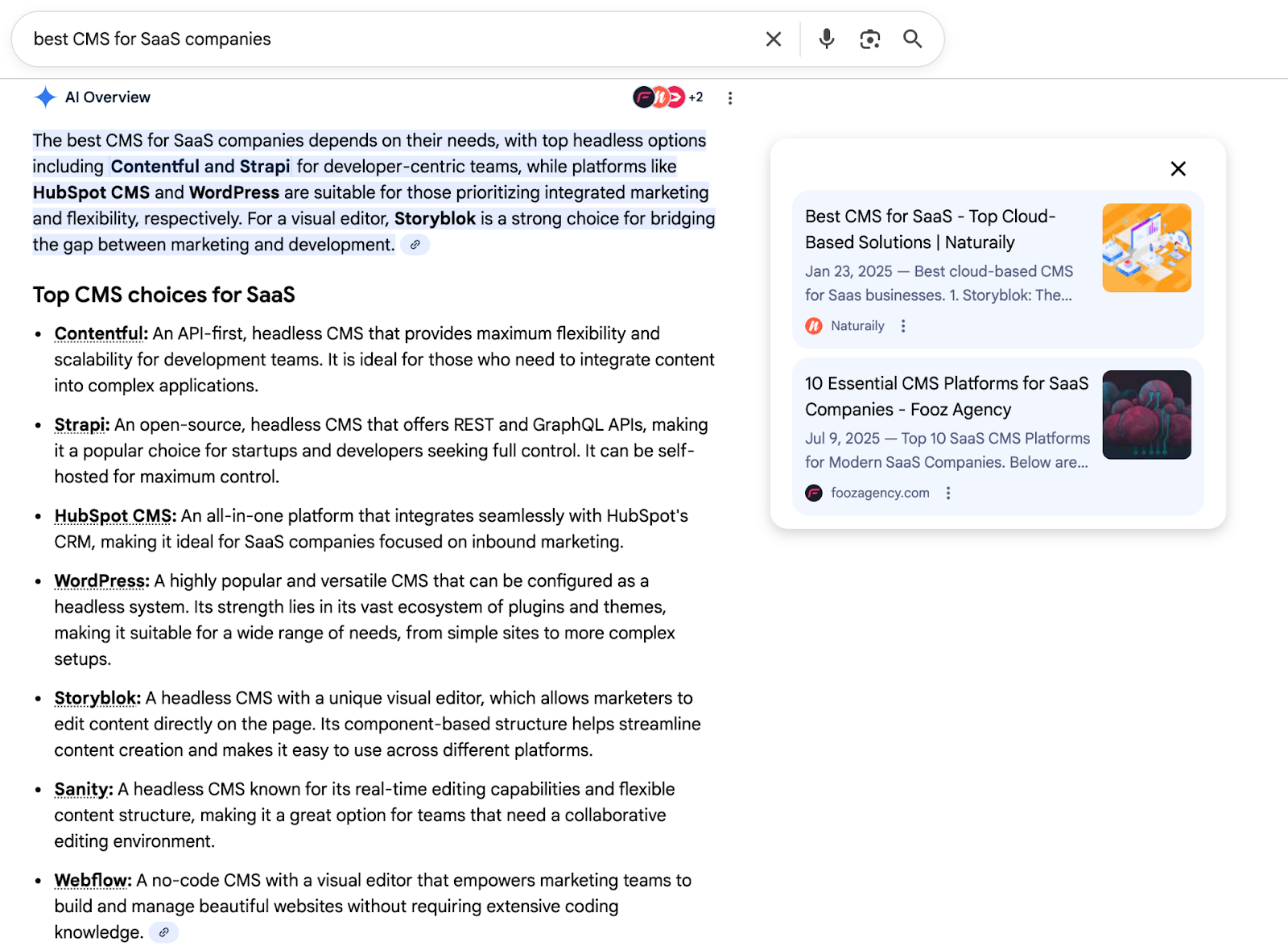
Have you ever wondered how Conductor fuels the innovative AI Visibility Dashboard within the Clutch platform? I’ll take you through the fascinating journey of this integration and show you how it enhances visibility and insights.
As I explore the workings of the AI Visibility Dashboard, it becomes clear how Conductor seamlessly powers this tool, providing valuable features directly within Clutch. The dashboard is designed to offer an intuitive and comprehensive approach to analyzing and optimizing your digital presence.
JavaScript SEO seems like it should be a cinch by now, doesn’t it? Yet, here we are with persistent challenges that e-commerce sites continuously face. After five years of grappling with issues like crawling, rendering, and indexing, coupled with the complexities of headless builds and AI-powered recommendations, it’s clear we still have a ways to go. However, some top-tier ecommerce sites have cracked the code. Their innovative approaches offer invaluable lessons in maintaining organic visibility while shipping fast, modern JavaScript experiences. Let me share these five insights with you.
Chewy is a giant in the U.S. pet food and supplies online retail space. They’ve harnessed the power of Next.js, a React framework, to seamlessly integrate server rendering, static generation, and full-stack development into their operations. Imagine visiting a product page like the Benebone Wishbone Chew Toy. Here, everything you need—product title, description, pricing, reviews, Q&A, and breadcrumb navigation—is already embedded in the initial HTML. This means Googlebot can access this information right away, without having to wait for JavaScript to render. This approach reduces the risk of rendering issues, especially significant with the rise of AI chatbots that still don’t handle JavaScript efficiently. While not all content needs to be on the initial load, like the ‘Compare Similar Items’ carousel meant for user engagement, Chewy perfectly balances what’s essential for indexing with user experience enhancements.
Switching gears to Myprotein, this brand masters the art of making navigation easily crawlable. Using Astro, a content-first framework, their site ships zero JavaScript by default and includes components that support React, Vue, or Svelte, making their SEO strategy a prime example to study. By ensuring all navigation links are present in the initial HTML response, Myprotein leverages Astro’s island architecture to hydrate these elements with JavaScript interactively. Crawlers like Googlebot can thus easily discover and process these links since they use proper anchor elements with href attributes. This proactive strategy prevents navigation from being invisible or empty during searches, thereby preserving efficient crawlability.
Harrods, renowned for luxury goods, ensures their structured data delivers in the HTML’s initial response. By embedding structured data using the Product schema within the HTML directly, Harrods guarantees that Google can parse this data right from the first crawl, without waiting for page rendering. This foresight prevents client-side dependencies and ensures Google has immediate access to important data like pricing and availability, which is critical due to frequent updates in product details.
Over at Under Armour, the elegance of their faceted navigation shines. Built on Next.js like Chewy, Under Armour ensures filters on category pages are fast, interactive, and SEO-friendly. When shoppers apply filters, the product grid seamlessly updates without a full reload, leveraging client-side updates while maintaining clean, readable URLs that Google can index effectively. By avoiding hash fragments and bracketed query strings, these URLs become shareable and bookmark-friendly, thus enhancing both user experience and SEO performance.
Finally, Manors Golf demonstrates SEO prowess by efficiently managing third-party scripts on their site. Utilizing Shopify’s Hydrogen framework, they cleverly defer scripts using async attributes, ensuring they don’t block the initial rendering process. This tactic not only protects the Largest Contentful Paint (LCP) metric but also eases Google’s rendering workload, contributing to a robust SEO strategy.
The secret isn’t in using JavaScript itself but in how it’s used. When JavaScript serves to enhance rather than deliver the core functionality and content, it paves the way for an excellent user experience while preserving SEO integrity. These lessons from major e-commerce players are testament to the delicate balance between interactivity and search engine crawlability.
Over the years, I’ve noticed how digital marketing has settled into a predictable routine. It spans across various channels like SEO, content marketing, social media, and digital advertising. Yet, many of us relied too heavily on a familiar core strategy, often ignoring the potential of using every available channel.
This predictability was comforting. It allowed marketing teams, including mine, to stick to what worked, refining execution within a known framework. However, AI search has upended this comfort, exposing our inconsistencies. To truly succeed with AI SEO, it’s clear that I need to adopt a much broader strategy.
Over the last 15 to 20 years, I’ve observed how digital marketing comfortably fit into a predictable rhythm, with each channel having a designated role.
Content marketing, social media, SEO, and paid advertising followed habitual strategies. But this lack of variation led to a form of laziness in our approach.
This structure offered results, so we let the broader strategies slip away.
The issue? It gave us a false sense of security. We should have employed broader strategies all along, as they now drive real visibility in AI search.
AI has reshaped digital marketing, changing user search behavior and how brands are evaluated.
Traditional search relied heavily on algorithms and singular sources, whereas AI taps into multiple inputs across numerous sources.
These sources ought to be part of your marketing arsenal—representing your brand across social media, third-party directories, press releases, and more. In this new system, your website is just one element among many sources AI uses to comprehend your brand.
One of the most significant changes AI has introduced is how it has expanded the digital marketing landscape beyond the website. While having a robust website is crucial, it’s part of a much larger ecosystem now. The marketing strategy must adapt to this expansive landscape.
In the past, maximizing website visibility was often enough to yield results. However, relying solely on this approach no longer suffices. AI aggregates data from a wide range of sources, from articles and brand mentions to third-party profiles and published content, shaping its understanding of who you are.
Focusing exclusively on the website restricts AI’s ability to locate and understand your brand.
Most marketing programs, especially those established before AI’s time, fall short here. To modernize, it’s vital for a brand to be visible across a more extensive range.
AI prefers brands that establish an intentional online presence, showing up with purpose across the internet.
A fragmented marketing approach, which worked in the past, now falls short. Previously, each successful channel felt effective and met our goals, but AI demands more. It looks for consistent messaging and expertise, linking various online signals to assess your brand’s presence.
When these signals are aligned, your brand’s visibility in AI search improves. Inconsistent or weak broader presence translates to weaker visibility.
Lazy marketing approaches—sticking to separate channels using the same old tactics—are now exposed. This approach may have yielded results once, but those days are numbered. It’s crucial now to go beyond that—to present your brand on multiple platforms, so AI can find you.
If your competitors enhance their presence, failure to do the same will leave you behind as they occupy more space in AI-generated responses.
As AI exposes any inconsistencies, it’s time to transition into the era of AI search.
It’s essential now to transition beyond older models and adopt newer strategies suitable for digital marketing. The tactics that always worked like press releases, directory listings, and marketing beyond just your website, should have been in use all along.
AI search doesn’t rewrite marketing rules; it enforces the importance of a comprehensive strategy. This means we can’t afford to do less anymore.
I recently came across an intriguing blog post by Microsoft Bing that delves into how AI is transforming the traditional concept of search indexing into something far more sophisticated. Bing has been focusing on enhancing factual accuracy, attribution, and confidence levels before AI-driven answers are generated.
The transition from page ranking to supporting AI-generated answers is reshaping how search engines operate. According to Bing’s latest insights, AI requires a more complex indexing system compared to the conventional web searches we’re used to.
Traditional Search vs. Grounding Systems
Microsoft highlighted a key difference: while traditional searches allow users the opportunity to self-correct, AI systems must derive more substantial evidence since they generate definitive answers.
Grounding systems focus on verifiable facts with transparent sourcing, crafting combined answers where errors could compound through different reasoning steps.
They shared this illustrative table:
What Sets Them Apart
Traditional algorithms optimize for relevance. In contrast, AI grounding evaluates whether information is correct, recent, well-sourced, and comprehensive enough to support an answer. It also considers whether the essence of a page endures through transformations and chunking.
Stale Content Concerns
Microsoft pointed out that outdated content poses a unique risk to AI-generated answers. Unlike traditional ranking, outdated information can lead to inaccurate AI results.
Handling Contradictions
In traditional search, a hierarchy can be established by ranking sources for users to choose trusted information. Grounding systems, however, must identify conflicting data and deliberate their consolidation into a singular response.
The Complexity of Retrieval
Unlike a one-time query in traditional search, AI systems might fetch information multiple times, refining previous results, and re-evaluating confidence before shaping an answer.
Measuring Indexing Quality
While the quality of conventional search indexes centers on ranking performance, grounding systems require assessment of factual accuracy, source integrity, freshness, and conflict recognition. Microsoft notes the ongoing journey in refining these measurements.
Complementing, Not Replacing Search
Grounding isn’t intended to replace search. Rather, it supplements existing systems with a focus on evidence quality and attribution, determining if AI should refrain from responding when necessary.
Why This Matters
For decades, search indexes have guided users to relevant web pages. Today, AI grounding is about ensuring the data it uses stands the test of reliability. This evolution demands that brands and publishers focus on creating data AI can leverage with greater certainty.
Have you ever wanted an AEO platform that feels like it’s reading your mind? That’s exactly how I felt when I started exploring Goodie 2.0. It’s not just about speed, though that’s a massive bonus. The real magic lies in its enhanced competitor tracking and those smarter recommendations that seem tailored just for me.
The AI search visibility insights are clearer than ever, giving me the edge I need to stay ahead in the game. If you’re like me and always looking for ways to get one step ahead, Goodie 2.0 is designed with you in mind.
Have you noticed a change in how Google displays links and citations in its AI search features? I recently learned about five key updates that aim to enhance our experience with AI Mode and AI Overviews.
According to Hema Budaraju, VP, Product Management at Google, these upgrades are designed to help us connect with authentic voices and access valuable information across the web. She detailed these updates in a recent article.
Let’s dive into the updates rolling out:
(1) Suggested angles at the end of AI responses. Google now suggests further reading options at the end of AI responses. These link to unique articles or analyses that deepen our understanding of the topic. It’s like having a roadmap to satisfy our curiosity!
Here’s a preview of this feature:
(2) Easier access to your news subscriptions. With this update, Google displays links from our news subscriptions prominently. This means I can quickly access content I trust, maximizing the value of my subscriptions. During Google’s early tests, these subscription links significantly boosted click-through rates.
If you’re a publisher, check out the documentation to enable this feature.
Here’s what this looks like in action:
(3) Social media and online discussions now include creator details. When AI features cite social media, Google includes not only the website’s name but also the creator’s name, handle, and community name. This transparency helps me spot firsthand sources at a glance.
Here’s a glimpse of how this plays out:
(4) More links, next to relevant text. Google is increasing the number of links shown directly within AI responses, strategically placing them next to relevant text. This makes it tempting for me to explore these sources further.
Here’s what it looks like:
(5) Hover over inline links for a quick look. Now when I hover over an inline link in Google’s AI features, I get a sneak peek of the website. This could just be the nudge I need to click through and explore further. I remember seeing Google test this back in February and thought it was a brilliant idea.
Here’s an example of the feature:
Why this matters. Google is committed to ongoing testing and refinements, ensuring these features serve us better. I truly believe these changes will promote more engagement with the cited pages, presenting an exciting step forward for both users and the web ecosystem. The real question is, will they meet my expectations?
When I first looked at my SEO data, everything seemed perfectly fine. All metrics from Google Search Console, traffic, and indexing were normal without any red flags. But then, I decided to dig deeper using Scrunch, our AI citation monitoring tool, to examine the platform presence for searchinfluence.com over the past 30 days.
Here’s what I found: Google AI Mode showed a presence of 37.8%, Copilot at 22.2%, Google Gemini at 16.3%, ChatGPT at 9.6%, and Perplexity at 7.8%. Alarmingly, both Claude and Meta AI were at 0.0%.
Two platforms had zero presence. Given that every crawler reads the same site, differences in content quality or topical authority couldn’t explain this discrepancy. The only factor that varied was crawler access.
To understand this further, I analyzed seven days of Cloudflare logs and discovered 29,099 bot requests, with 65.8% involving AI bots. The requests rate-limited with HTTP 429, or “too many requests,” were interestingly varied by bot user-agent.
Training crawlers that make bulk requests are throttled, while user-facing crawlers that mimic human pacing during live queries aren’t. For example, ClaudeBot made 20,583 crawl requests for each referral returned.
My assumption was that the 429 errors originated from Cloudflare, perhaps due to a web application firewall (WAF) or security plugin interference. I went down a rabbit hole investigating multiple layers. It was time-consuming and ultimately unnecessary.
The truth emerged when I performed a reproduction test using curl requests, revealing that the block was based on user-agent, not path or rate. The realization hit when I discovered the x-powered-by header: WP Engine hosted our site, and the block came from their platform infrastructure.
I then tested other AI bot UAs and crafted a fingerprint for each, discovering that the blocklist was outdated. While some bots were blocked, others like Common Crawl passed through unaffected.
In conclusion, while WP Engine’s firewall, documented on their support page, was intended as a security measure, it wasn’t transparent to customers. Identifying these blocks requires specific diagnostic steps, and the process taught me much about managed hosting’s hidden layers.
As I delve deeper into enhancing my workflow, I realize that effective agents thrive on comprehensive context. Thanks to Profound’s Knowledge Bases, I empower my agents with my unique brand voice, product intricacies, and messaging guidelines.
Now, I’m excited to share that integrating these knowledge bases with Notion and Google Drive is easier than ever. This integration allows me to streamline my processes and maintain consistency.
As I delved into the complexities of the AI search pipeline, I realized it’s a multiplicative system where even one weak link can constrain the overall results. I knew that understanding this could transform the visibility of my content.
The AI search pipeline consists of 10 crucial gates: Discovered, Selected, Crawled, Rendered, Indexed, Annotated, Recruited, Grounded, Displayed, and Won. Each gate is a critical checkpoint determining whether my content reaches its audience effectively.
If there’s a weakness at any of these gates, it can hinder the entire process, which reminded me of the “Straight C” principle: a system’s weakest link limits its potential. By focusing on fixing the weakest area first, I can leverage the most impactful improvements.
Brent D. Payne once highlighted this principle, and it stuck with me: “better to be a straight C student than three As and an F.” Identifying flaws and prioritizing them by impact ensures my content gets the attention it deserves.
Phase 1 of the pipeline (Discovery to Indexing) is mainly about infrastructure, while Phase 2 (Annotation to Winning) becomes competitive. My aim is to master both phases, ensuring my content passes smoothly through each gate.
I know that for some gates, the fixes are more straightforward, especially in Phase 1, where technical solutions are well-documented. In Phase 2, however, it becomes a battle of algorithmic performance, and differentiating my content means standing out against my competition.
Each stall at a gate indicates an area needing attention, and fixing these can vary greatly. It could be anything from enhancing server speed (for Crawled) to refining my entity signals for better Annotation.
By understanding where the bottlenecks are, I can strategically focus on improvements that elevate my content’s presence, making it more likely for AI systems to prefer my content over competitors’.
This approach becomes even more apparent when I dive into the details of entity optimization, understanding that if my brand’s entity is clear and confident, it greatly improves my content’s performance in downstream gates.
By optimizing my entity, I enhance clarity not just at a single gate, but across multiple, amplifying the benefits exponentially. As I prepare content, I want to audit what I already have, use what’s working, and expand strategically where necessary.
The realization that I should work from an outside-in approach revolutionized my content strategy. Instead of focusing purely on creation, I began valuing connecting existing proof with claims and framing them effectively.
The temporal triad—Return on Past Investment (ROPI), Return on Investment (ROI), and Return on Future Investment (ROFI)—guides my strategy. Before I create something new, I assess what can be leveraged from what I already have and plan strategically for the future.
Understanding this diagnostic framework, I could apply it universally across different AI engines, enhancing my content’s potential to be recommended, ensuring visibility and engagement.
In February 2025, I watched a captivating display as humanoid robots graced the CCTV Chinese New Year stage. Although their steps were shaky, it was still delightful to witness.
A year later, these robots at the Spring Festival Gala had transformed, executing smooth moves, somersaults, and full kung fu routines. This rapid progression felt like a decade’s worth of technological advancement condensed into one year.
The technological leap wasn’t limited to robots. It raised a crucial question for digital marketers targeting the largest web population: How have China’s search trends evolved recently?
A parallel in the Chinese search landscape
We’re seeing early signs of a major shift. AI hasn’t replaced traditional search engines yet. Instead of a single breakthrough, change comes from consistent, subtle advancements.
New language models frequently emerge, each refined for a specific niche. Tech companies in China are increasingly sharing these developments openly, with players like Baidu integrating advanced models like DeepSeek into their platforms.
To understand the current search behaviors in China, we need to grasp the shift from simple link searches to more reasoning-based approaches and adjust our 2026 SEO strategies accordingly.
The great narrative fallacy: Is web search dead in China?
There’s a persistent narrative in marketing circles that traditional search, especially on Baidu, is obsolete — that everything is happening on platforms like WeChat. But how true is this?
The social supremacy argument
Indeed, China’s web is mobile-first and dominated by super-apps. While social media is pivotal, it’s not the sole avenue for B2C brands aiming to thrive amidst such a vast, versatile environment.
For instance, platforms like Xiaohongshu excel in lifestyle research, while Pinduoduo and Douyin are social commerce powerhouses. Meanwhile, WeChat is indispensable for everyday tasks.
The B2B reality check
For B2B sectors, dismissing Baidu is a mistake. Metrics show ongoing engagement and tangible results from Baidu SEO, often outshining Western counterparts in lead quality and conversion rates.
When B2B professionals seek industrial solutions, they prioritize verified websites over endless scrolling on social media apps, indicating an undying need for structured web searches.
Mapping the 2026 landscape: Intent-based specialization
As someone deeply integrated into the Chinese market, I’ve noticed that users select tools based on intent rather than defaulting to search engines. It’s an everyday occurrence here.
While optimizing for Baidu, others in my circle might be using Pinduoduo for deals or Xiaohongshu for travel plans. The right tool for the right task wins their clicks.
1. Traditional web search: The authority tier
Traditional search continues to dominate B2B and high-authority research areas. Baidu, despite narratives of its decline, remains central to mobile and web searches.
Baidu: Dominates mobile search with a vast user base. Though AI-driven, it remains a key player in web search.
Microsoft Bing: Offers a professional experience for a tech-focused audience.
Haosou (360 Search): Known for its security and enterprise-centric approach.
Sogou: Integrates with WeChat, bridging between app-based and traditional searches.
Google: Despite restrictions, it’s accessed by tech-savvy users via VPN for global insights.
2. Social discovery: The inspiration tier
Here, search turns into discovery. Users are led by interests rather than predefined keywords, making SEO a matter of being on the right social platforms at the right time.
WeChat (Weixin): For brand news and internal communications.
Xiaohongshu (RED): Essential for lifestyle and luxury brand discovery.
Douyin: Offers visual insights into product utility.
Kuaishou: Used predominantly in emerging markets for grassroots content.
Weibo: Ideal for real-time trends and news.
Bilibili: Focus on long-form video content and niche interests.
3. Ecommerce: The transactional tier
While Westerners often end their buying journeys on Amazon, Chinese users tend to both start and finish on the same platform, whether for variety or efficiency.
Taobao / Tmall: The prime destination for diverse product offerings.
JD.com: Favored for electronics and efficient logistics.
Pinduoduo: A leader in group-buy and value-driven purchases.
Douyin Mall: Capitalizes on impulse purchases through engaging content.
Xianyu (Goofish): Supports second-hand markets and niche hobbies.
4. Generative AI (LLMs): The reasoning tier
This emerging layer focuses on “thinking” searches where AI synthesizes data into insights rather than mere lists.
Doubao (ByteDance): Popular for casual queries.
DeepSeek (Domestic): Integrated with WeChat for deep logic queries.
Kimi (Moonshot AI): Specializes in handling lengthy documents.
Qwen (Alibaba): Plays a crucial role in business and coding tasks.
Tencent Yuanbao: Focuses on WeChat content.
Wen Xiaoyan (Baidu): Represents the next stage of Baidu’s AI search capabilities.
5. Hyper-local and logistics: The utility tier
This sector addresses immediate, location-driven demands, prioritizing services that cater to “now” and “near me” needs.
Meituan / Dianping: Leading platforms for food and leisure services.
Amap (Gaode) / Baidu Maps: Vital for navigation and local search optimization.
Ctrip (Trip.com) / Railway 12306: Key for travel and transportation booking.
From mapping to maneuvering: The Baidu specialist’s edge
Optimizing Baidu SEO extends beyond ranking web pages; it’s about mastering search landscape intricacies.
The ‘walled garden’ SERP: A decade of distraction
Focusing solely on Google-style tactics might overlook nuances like Baidu’s ad-heavy SERPs and content positions.
The ad-heavy layout: Ads can dominate substantial SERP real estate.
The Baidu monopoly: Prime organic positions often favor Baidu properties.
The portal giants: High-authority contributors also claim space within results.
Riding the Chinese SERP dragon
In this scenario, relying on long-tail strategies often proves more lucrative than targeting head keywords due to the complex Chinese language and diverse user base.
Whether leveraging platform authority or becoming a trusted contributor, it’s essential to adapt upcoming SEO tactics to sustain visibility.
What is changing in Baidu SEO?
The competition among AI models emphasizes versatility over loyalty, making Baidu SEO a nuanced challenge.
The AI-switching reality
Chinese users frequently shift between AI models, seeking superior intelligence or alternatives when certain models falter. This behavior means SEO must account for broader dynamics.
Brainstorming the wisdom platforms
Understanding the foundational platforms for AI development can greatly boost a brand’s presence in AI-dominated searches.
Tencent is invested in Sogou: Hence, Sogou Baike becomes integral for WeChat-based AI queries.
Bytedance owns Baike.com: Engaging here helps brands appear in Doubao’s results.
The neutral giants: Zhihu sits at the intersection of multiple investments, making it a balanced source for varied AI insights.
The new SEO commandment
SEO is now about optimizing for diverse data sources that fuel AI models, across various ecosystems.
In the B2B realm, Baidu remains central. Yet for ecommerce, branching into Alibaba or Doubao ecosystems will expand visibility across key AI systems.
The 2026 China SEO/GEO blueprint: From keywords to semantic saturation
Anticipating a specific SEO guide for AI like DeepSeek or Doubao misses the evolving landscape’s essence. The need is not for singular-model focus but a diversified approach that shifts with frequently changing user and model preferences.
Optimize for citations and not just clicks
Chinese SEO centers around fact density, aiming for content immediately recognizable by AI as authoritative.
The logic: AIs like Kimi and DeepSeek rank content based on factual reliability.
The tactic: Use clear, concise, data-backed writing, enabling rapid fact verification by AI.
Build an entity moat across wisdom platforms
Given that AI models distill and share intelligence, maintaining consistent brand representation across various platforms is crucial.
The goal: Ensure uniformity in brand presentation across Baidu, Sogou, and Baike.com.
The result: Consensus between AI models establishes your authority.
Leverage information gain
AI in China demonstrates a preference for recent data by about 25% compared to traditional search engines.
The tactic: Present unique, timely insights to stand out amidst common knowledge.
The era of the entity architect
We’ve moved past the initial robotic steps of 2025. In 2026, China’s search landscape is a dynamic entity, requiring an intricate understanding of intent fragmentation.
Despite the dominance of super-apps, the real revelation lies in this fractured landscape. My personal experiences echo this as my wife seeks deals on Pinduoduo, and my colleagues navigate Bing for professional resources. Meanwhile, AI enthusiasts cycle through LLMs for varied answers.
As a Baidu specialist, my role has evolved from targeting websites to designing robust entities. Building for the source, not just the bots, ensures your brand is consistently recognized and trusted, no matter which AI models deliver the solutions.
Imagine your brand becoming the celebrated go-to source, regardless of the search model. That’s the ultimate goal for today’s SEO specialists.