Category: Opinion

  • Google Ask Maps SEO: Earn Visibility Through Trust

    Google Ask Maps SEO: Earn Visibility Through Trust

    I see Google Ask Maps changing local visibility in a meaningful way. Instead of showing people a long list of nearby businesses and leaving them to sort through everything, Ask Maps narrows the options, interprets the searcher’s intent, and explains why certain businesses look like a strong fit.

    That changes how I think about local SEO. Visibility is no longer only about ranking somewhere near the top of a long results list. It is increasingly about whether Google understands a business well enough to recommend it with confidence.

    I would not treat Ask Maps as a separate optimization channel or a brand-new tactic to chase. I would focus on making the business easier for Google to understand, easier to match to real customer situations, and easier to trust. The foundations of local SEO still matter, but the way those signals work together matters even more.

    Visibility in Ask Maps starts with filtering

    One of the first things I notice about Ask Maps is how small the result set can be. In testing, it often showed around three to eight businesses, depending on the query. That feels very different from traditional Google Maps, where people can scroll through dozens of options and compare them on their own.

    With Ask Maps, much of that comparison happens earlier. Google filters the market first, interprets what the person is really asking for, and then presents a smaller group of businesses with an explanation of why each one fits.

    That means I have to think beyond the question of whether a business ranks. I also have to ask whether Google has enough confidence to include that business in a short recommendation set and explain why it belongs there.

    ```json
{
  "alt": "Flowchart illustrating Ask Maps process from eligibility to recommendation for businesses.",
  "caption": "Discover how Ask Maps efficiently determines business recommendations, ensuring clarity and trust in every listing.",
  "description": "This infographic explains the Ask Maps process from selecting eligible businesses to making confident recommendations. It shows three stages: all businesses, eligible businesses, and recommended businesses, detailing how Google evaluates category, location, credibility, and reviews. This visual provides a step-by-step guide to how trust and clarity improve business rankings and recommendations, branded by Streetlight Local."
}
```

    I think of this as a two-step problem. First, Google decides which businesses are eligible for the query. Then, it decides which eligible businesses it can confidently recommend.

    Ask Maps needs enough detail to explain the business

    Ask Maps does more than list businesses. It interprets and describes them. Even for simple searches, I often see businesses framed around qualities such as responsiveness, experience, specialization, professionalism, or the kinds of situations they seem best suited for.

    That creates a different optimization challenge. It is not enough for Google to know that a business exists or that it offers a basic service. Google needs enough information to answer a more practical question: when should this business be recommended?

    To support that, I want Google to understand the types of jobs the business handles, the situations it commonly deals with, the concerns customers usually have, and how the business approaches those situations.

    If that information is vague, scattered, or inconsistent, Ask Maps has less to work with. When Google cannot clearly explain why a business fits a specific situation, I would expect that business to be less likely to appear as a recommendation.

    ```json
{
  "alt": "Comparison between Traditional Google Maps and Google Ask Maps with highlighted features and filtering process.",
  "caption": "Discover the efficiency of Google Ask Maps, a tool that pre-filters search results, providing users with top-rated options and reasons for selection.",
  "description": "This image illustrates the difference between Traditional Google Maps and Google Ask Maps interfaces. Traditional Maps display a long list of business options, requiring user filtering. In contrast, Ask Maps pre-filters results to show a curated list of top businesses with rationales. The image features two smartphones displaying both app interfaces and icons highlighting user experience differences. It emphasizes Ask Maps' efficiency in offering tailored recommendations, saving users time and effort."
}
```

    Google Business Profile becomes the identity layer

    For me, the Google Business Profile sits at the foundation of this whole process. In earlier-stage queries, Ask Maps appears to rely heavily on profile data, including business descriptions, services, reviews, ratings, hours, and operational details.

    Many businesses still treat their profile like a basic listing to fill out and keep current. That is necessary, but I do not think it is enough for an environment where Google is trying to describe and recommend businesses. The profile needs to communicate a clear, specific identity.

    A generic profile might say that a business offers plumbing, HVAC, electrical work, or another broad service. A stronger profile clarifies the kinds of problems it handles, the situations it is built for, and the details that make it useful to specific customers.

    For example, I would use the profile to reinforce details such as emergency availability, response times, specific repair or installation types, experience with older homes, complex systems, or common customer problems the business solves.

    That level of specificity gives Google more direct evidence. Instead of forcing the system to infer what the business is known for, I want the profile to make that identity clear.

    ```json
{
  "alt": "The CapmatchOne logo with a gradient circle and bold text.",
  "caption": "Discover innovation with the CapmatchOne logo, featuring sleek typography and a modern gradient circle.",
  "description": "The CapmatchOne logo features bold, modern typography coupled with a gradient circle, symbolizing connection and innovation. The sleek design conveys a sense of progress and creativity. This image can be used for branding or promotional purposes, appealing to audiences interested in innovative solutions and forward-thinking designs."
}
```

    Reviews shape positioning, not just credibility

    Reviews have always mattered in local search, but I see them playing a more structured role in Ask Maps. Review language can show up in the way Google describes a business, especially around themes like responsiveness, honesty, communication, professionalism, and quality of work.

    That tells me reviews are doing more than supporting credibility. They are helping define how the business is positioned.

    I would still pay attention to rating, volume, and recency. But I would also look closely at what customers actually say. The language inside reviews can give Google useful context about what the business does, how it works, and what customers value about the experience.

    A vague review such as “great service” signals satisfaction, but it does not explain much. A detailed review that mentions a same-day response, a drain backup, clear communication about options, and a repair-focused solution gives Google several stronger signals about the business.

    Over time, those patterns accumulate. In that sense, I view reviews as one of the main ways Google learns what a local business is known for.

    ```json
{
  "alt": "Infographic contrasting weak versus strong business descriptions for Google explanations.",
  "caption": "Optimize your business presence on Google by crafting clear, specific descriptions and reviews. Strong positioning makes your business easier to recommend.",
  "description": "This infographic compares weak and strong business profiles for Google explanations. Weak businesses show vague services, generic reviews, and unclear positioning, leading to a 'hard to explain' result. In contrast, strong businesses provide specific services, detailed reviews, and clear positioning, resulting in an 'easy to recommend' status. Keywords include business clarity, Google explanation, and online presence optimization."
}
```

    Website content matters more when decisions get harder

    I also see website content becoming more important as queries become more complex. For basic service searches, the Google Business Profile and reviews may carry a lot of the weight. But when the search involves higher cost, uncertainty, or trust, Google appears to look for deeper supporting evidence.

    That is where the website can help. Many service pages explain what a business offers and why it is qualified. That still matters, but it does not always match how people search when they are trying to make a difficult decision.

    In more situational searches, people are not just looking for a service. They are trying to understand a problem, compare options, reduce risk, and decide what to do next.

    That is why I would build content around the customer’s situation, not just around the service name. Stronger pages explain what leads to the problem, how to recognize it, what options are available, how to think through the decision, and what outcomes to expect.

    For example, a furnace repair page can go beyond a basic list of services. It can cover common symptoms, when repair makes sense, when replacement might be worth considering, and how a homeowner can evaluate the decision. That kind of content lines up more closely with the prompts Ask Maps is trying to interpret.

    ```json
{
  "alt": "Diagram illustrating the elements of a Google Business Profile, such as services, areas served, photos, and business description.",
  "caption": "Explore how your Google Business Profile shapes public understanding, highlighting services, service areas, and more for improved visibility.",
  "description": "This image presents a detailed diagram of a Google Business Profile, emphasizing how it defines business perception. Central to the diagram is the profile, surrounded by elements like Services, Service Areas, Business Description, Photos, and Attributes. Each component is essential for building a comprehensive profile that helps businesses stand out on Google Maps. The image underscores the importance of specificity and completeness in business profiles for improved match and recommendation accuracy."
}
```

    I also see a strong fit for jobs-to-be-done pages. Instead of organizing every page around a service category, I would create pages around the situation the customer is trying to solve and the decision they are working through.

    Trust signals matter more as risk increases

    As searches move from simple service needs into decision-making, trust becomes more important. When people mention cost, honesty, uncertainty, or fear of making the wrong choice, Ask Maps tends to highlight qualities such as transparency, fairness, careful workmanship, and clear communication.

    That makes sense to me because it reflects how people actually think in those moments. When someone faces an expensive repair or an unexpected issue, they are not only asking who can do the work. They are asking who they can trust to handle it correctly.

    I would support that trust with evidence across the business’s online presence. Reviews can show that customers felt respected and informed. Website content can explain the process. Examples of completed work can show experience. Clear “what to expect” sections can reduce uncertainty.

    The higher the perceived risk, the more supporting evidence matters. I want Google to see a consistent pattern that the business explains options clearly, avoids unnecessary pressure, handles similar situations, and leaves customers confident in the outcome.

    Infographic showing how detailed Google reviews help Ask Maps frame a local business as responsive, honest and repair-focused.
    Detailed customer reviews do more than boost ratings. They give Google Ask Maps the context it needs to understand, position and confidently recommend a local business.

    External signals should reinforce the same story

    For more complex or trust-heavy queries, Ask Maps may look beyond the Google Business Profile, reviews, and website. Third-party platforms, directories, and other public sources can help reinforce how Google understands a business.

    I do not take that to mean every external mention is equally important. I take it to mean consistency matters. If a business is described one way on its website, another way in reviews, and differently across directories or social platforms, the overall picture becomes harder to interpret.

    When those signals align, they strengthen each other. Business descriptions, services, customer experiences, types of work handled, and overall positioning should tell the same story wherever they appear.

    From a practical standpoint, I would not try to appear on every possible platform. I would make sure the important sources are accurate, credible, and consistent.

    I would optimize for evidence, not just keywords

    Infographic comparing basic and complex HVAC local searches, showing Google relies more on website content as decisions get harder.
    As local search decisions become more specific and higher risk, Google needs deeper signals from business profiles, reviews, and website content to recommend the right provider.

    Taken together, these patterns push me to think differently about optimization. Traditional local SEO often starts with keywords and rankings. Those still matter, but they do not fully explain what Ask Maps is doing.

    I find it more useful to think in terms of evidence. For a business to be recommended, Google needs enough information to understand what it does, what types of jobs it handles, what situations it fits, how customers experience it, and whether it can be trusted in higher-stakes decisions.

    Each source contributes something different. The Google Business Profile establishes the baseline identity. Reviews add real-world context. Website content provides depth and explanation. External sources help confirm the same picture.

    Individually, none of those elements tells the whole story. Together, they create a clearer and more consistent understanding of the business. That is where the shift from ranking to recommendation becomes most obvious: keywords can support relevance, but evidence supports recommendation.

    My practical framework for Ask Maps visibility

    When I evaluate a business for Ask Maps visibility, I would look at five areas: identity, relevance, trust, context, and consistency.

    Infographic comparing keywords and evidence for Google Ask Maps visibility, showing keywords help local SEO rankings while evidence earns recommendations.
    Google Ask Maps rewards more than keyword relevance. This visual shows why reviews, service details, trust signals, and real proof help local businesses get recommended.

    Identity asks whether Google can clearly understand what the business does and where it operates. Relevance asks whether the business can be matched to specific services and situations. Trust asks whether there is enough proof that customers feel confident choosing it.

    Context asks whether the content reflects the decisions customers are actually trying to make. Consistency asks whether different sources reinforce the same understanding of the business.

    I do not see this as a checklist to complete once. I see it as a practical way to evaluate how clearly and consistently a business is represented across the sources Ask Maps appears to use.

    What I would avoid

    With any new search feature, it is easy to overcorrect. I would avoid treating Ask Maps as an isolated channel that needs thin content, unnatural profile language, generic service-page duplication, or review language that feels forced.

    Those tactics may create more content, but they do not necessarily create more useful evidence. The better approach is to align more closely with how customers actually search, evaluate options, and make decisions.

    Infographic outlining five pillars for Google Ask Maps visibility: identity, relevance, trust, context, and consistency for local SEO recommendations.
    A practical local SEO framework shows how businesses can earn visibility in Google Ask Maps by clarifying identity, proving relevance, building trust, adding context, and staying consistent online.

    When the business presence reflects real customer needs clearly and consistently, it naturally creates the kinds of signals Ask Maps seems to rely on.

    What I still do not know about Ask Maps

    I would treat all of this as directional, not definitive. Ask Maps is still being tested and refined, and the system is not fully documented.

    The result structure can vary by query and test environment. The feature’s usability is also still changing. In many cases, users may still need to click into a Google Business Profile to call, book, or engage, rather than acting directly from the Ask Maps response.

    Measurement is another open issue. Right now, I do not see a clean way to isolate Ask Maps visibility or performance inside standard reporting tools. That makes it difficult to attribute calls, traffic, or conversions directly to this experience.

    I also would not assume the same signal weighting applies to every query. Google Business Profile data, reviews, website content, and external sources may all matter, but their relative importance likely changes based on the search intent and the complexity of the decision.

    The real shift is from ranking to recommendation

    I see Ask Maps as a version of local search where retrieval, evaluation, and decision support are moving closer together. Instead of making users search, compare, research, and decide across several steps, Google is trying to guide more of that process inside one experience.

    That changes the meaning of visibility. In Ask Maps, it is not enough for a business to simply appear. The business needs to be understood well enough for Google to explain why it fits the situation and trusted enough to be recommended.

    For businesses and SEOs, I would not respond by chasing a narrow trick. I would build a clearer, more complete, and more consistent representation of the business across the sources that shape Google’s understanding.

    The businesses most likely to benefit are the ones that are easiest to interpret, easiest to trust, and easiest to match to real-world customer needs.


    Inspired by this post on Search Engine Land.


    crushpress.ai community screenshot
  • Why B2B Brands Rank But Vanish From AI Overviews

    Why B2B Brands Rank But Vanish From AI Overviews

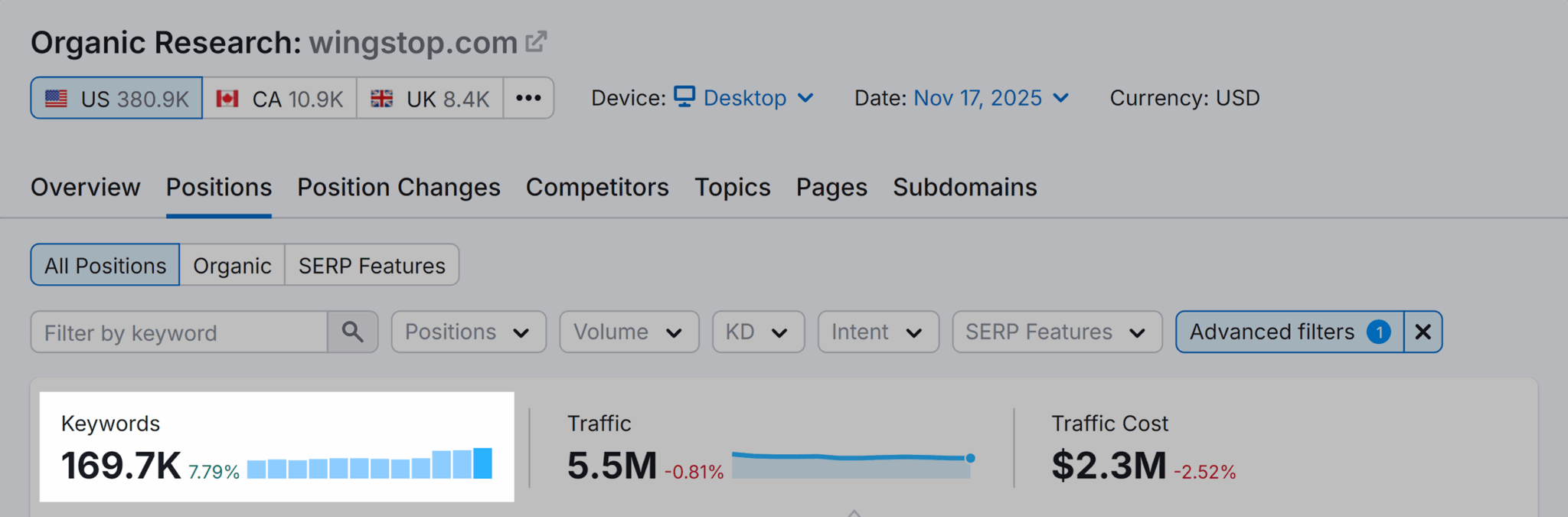
    I’m seeing a sharp disconnect in B2B search visibility: many brands still rank for thousands of Google keywords, but they appear in only about 3% of AI-generated answers, according to Walker Sands’ B2B AI Search Visibility Benchmark of 828 enterprise companies. (Disclosure: I’m the director of SEO and GEO at Walker Sands.)

    For this benchmark, I looked at more than 45 million search queries from March across 828 enterprise B2B companies in 14 industries. The analysis evaluated each domain across four core metrics: keyword coverage, keywords with AI Overviews, AI Overview incidence, and citation inclusion rate.

    Keyword coverage measures how many keywords a company ranks for in Google. Keywords with AI Overviews shows how many of those ranking keywords trigger AI-generated responses. AI Overview incidence captures the percentage of ranking keywords where AI Overviews appear. Citation inclusion rate measures how often a company’s domain is cited inside those AI-generated answers.

    Together, these metrics give me a baseline for understanding how often AI Overviews show up and how often B2B brands actually earn visibility within them.

    A baseline for B2B AI search visibility

    The benchmark shows a meaningful gap between traditional ranking visibility and AI citation visibility. AI Overviews appear in about 50% of search results where enterprise B2B brands rank, yet the median enterprise B2B brand is cited in just 3% of relevant AI Overviews.

    I also found that 4.6% of enterprise B2B companies are not cited in AI Overviews for any of their relevant keywords. That may sound like a small share of the market, but it points to a serious visibility problem for brands that still appear in Google’s organic results while disappearing from the AI-generated answers buyers increasingly see first.

    The typical enterprise B2B company ranks organically for about 9,700 search queries, and AI Overviews appear in nearly half of those searches. But across all those opportunities, the median brand earns citations in only 3% of AI Overviews.

    In other words, I’m seeing B2B brands present in the search results that AI Overviews summarize, but largely absent from the summaries themselves.

    When a brand has few or no citations, I often see deeper issues underneath: limited topical authority, unstructured or inaccessible content, and too little content that directly answers the questions buyers are asking.

    Addressing those gaps is becoming essential for visibility in AI-driven search experiences.

    The narrowing funnel from ranking to citation

    I think of AI search performance as a funnel with four layers, and the value lost at each step is where the story gets clearer.

    It starts with keyword coverage, or the number of keywords where a brand ranks in Google’s top 100 organic results. On that measure, many leaders still look strong. The median company ranks for about 9,700 keywords, while top-quartile brands rank for more than 37,000.

    The next layer is keywords with AI Overviews. These are ranking keywords that trigger an AI Overview. The median company has roughly 4,500 of them, which is already less than half of its ranking footprint.

    The third layer is AI Overview incidence, which measures how often AI-generated answers appear across a brand’s relevant searches. The median is 48.8%, meaning AI now intercepts roughly half the queries where these companies compete. Top-quartile brands operate in even more AI-heavy environments, with an incidence rate of 61.7%.

    The final layer is the one that matters most, and it is where almost everyone loses ground: citation inclusion rate. This measures how often a brand is cited as a source within an AI Overview. The median is 3.0%. Even the top quartile reaches only 4.5%, while the bottom quartile sits at 1.7%.

    Viewed from top to bottom, the funnel is unforgiving. Tens of thousands of ranking keywords compress into a single-digit share of AI citations. Much of the visibility B2B brands have built through organic search does not carry into the layer of search that is shaping buyers’ first impressions of a category.

    Ranking breadth does not guarantee AI citations

    The most important takeaway is also the most counterintuitive: ranking breadth alone does not predict AI citation rates.

    I found that some companies rank for thousands of keywords but rarely surface in AI-generated answers. The strengths that helped brands win traditional SERP visibility, including page volume, broad keyword targeting, and years of accumulated domain authority, do not automatically make a brand the source an AI system chooses to cite.

    That creates a real challenge for B2B SEO teams. If a dashboard only tracks ranking keywords and estimated organic traffic, it may tell a flattering story about a layer of search that is losing influence while saying little about the AI layer that is gaining it.

    The brands that are consistently cited in AI-generated answers tend to share three traits: deep topical authority across related content areas, clear and structured explanations that directly answer buyer questions, and consistent coverage across multiple relevant pages.

    The common thread is specificity. Generative systems appear to reward content that resolves a buyer’s question clearly and demonstrates sustained expertise on a topic, instead of content that simply ranks for a query.

    That changes the work. Optimizing for AI citations looks less like chasing keyword volume and more like building genuine, well-structured subject-matter depth.

    Some industries are far more exposed than others

    AI search visibility is not distributed evenly across B2B technology. The industry breakdown shows very different competitive dynamics depending on the category.

    Cybersecurity leads on both fronts. AI Overviews appear in a median of 59.9% of cybersecurity-related searches, and cybersecurity brands earn the highest median citation rate in the study at 4.2%. Enterprise software, with 55.3% AI Overview incidence, and martech, with 56.3%, also see AI-generated answers in well over half of relevant queries.

    At the other end, professional services and distribution and logistics trail in citations, both with a median rate of just 2.1%. Distribution and logistics also has the lowest AI Overview incidence at 29.6%, meaning buyers in that category encounter AI-generated summaries far less often than buyers in cybersecurity.

    These differences create both risks and opportunities. In categories where AI-generated answers are already common, such as cybersecurity, the cost of being invisible is immediate. Buyers are forming impressions inside AI summaries right now.

    In categories where citation rates are low and few brands have figured out the new mechanics, I see a real first-mover opportunity. Brands that learn how to earn citations before competitors do can help shape how an entire category is framed in AI-generated answers, much like early SEO adopters captured outsized organic visibility.

    The brands that have gone completely dark

    The most striking number in the report is that 4.6% of enterprise B2B companies are not cited at all in AI-generated answers for their relevant keywords.

    These are not small, unknown operations. They are companies with $100 million or more in revenue that, in many cases, still rank well in traditional search. They are present in the index but absent from the answer.

    Near-zero citation rates usually point to deeper structural issues: thin topical authority, content that is difficult for systems to parse, and a lack of material that directly answers the questions buyers are asking.

    For a small but meaningful slice of the market, AI search is not just a place where they are losing share. It is a place where they barely exist.

    What this means for B2B search teams

    The benchmark gives me a baseline, but the strategic implications for SEO, GEO, and marketing teams are already clear.

    First, measurement has to evolve. Citation inclusion rate is now a distinct KPI from ranking. Teams that cannot see whether their content is being cited in AI-generated answers are missing visibility into one of the fastest-growing parts of the funnel. Knowing your own citation rate, and comparing it with the 3% median and 4.5% top-quartile benchmarks, is a practical starting point.

    Second, the content mandate is shifting from breadth to depth. The drivers point toward consolidating authority around the topics buyers care about, structuring content so machines can interpret it, and answering real questions directly instead of producing content volume for its own sake.

    Third, the window is open but closing. Generative AI is expected to influence more than 75% of B2B search queries within the next one to two years. If that projection is even close, the median 3% citation rate is not a stable endpoint. It is a snapshot of an early, contested market that rewards brands that move now.

    The uncomfortable truth is that much of the SEO equity B2B brands have built is being summarized by AI systems that do not cite the companies that created it. For most enterprise brands, I no longer see the central question as whether they rank. The question is whether they are in the answer at all.

    The full H1 2026 B2B AI Search Visibility Benchmark is available from Walker Sands.


    Inspired by this post on Search Engine Land.


    crushpress.ai community screenshot
  • LinkedIn Ads CPC Benchmarks: What I Budget vs Google

    LinkedIn Ads CPC Benchmarks: What I Budget vs Google

    Linkedin Ads vs Google Ads

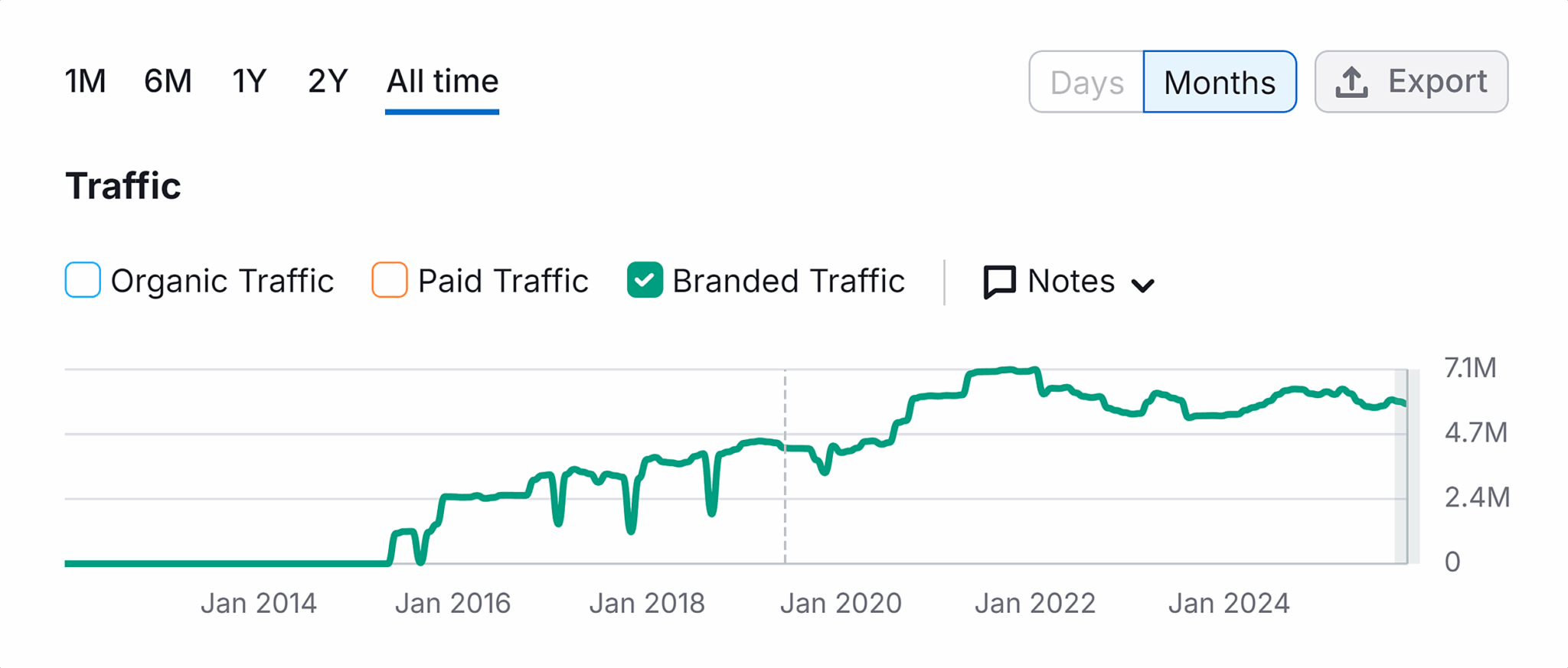
    I know LinkedIn Ads has a reputation for being expensive, and at first glance, the data backs that up. Across the client accounts I analyzed, LinkedIn’s average CPC was $11.12, compared with $5.45 on Google Ads.

    But that simple comparison misses the more useful story. When I compare the cost of reaching new, high-intent B2B buyers, the gap gets much smaller. Non-branded Google Search campaigns averaged a $12.48 CPC, while comparable LinkedIn prospecting campaigns averaged $13.94.

    To understand how LinkedIn CPCs really compare with Google Ads across campaign types and industries, I reviewed more than $700,000 in LinkedIn ad spend and compared it with CPC data from the same accounts on Google Ads.

    What I included in this analysis

    I focused on CPC and performance data from clients that had active campaigns on both LinkedIn Ads and Google Ads over the past year.

    The main questions I wanted to answer were straightforward: What CPCs are we actually seeing? Do CPCs change by ad objective and industry? And how do those costs compare with Google Ads?

    For LinkedIn Ads, I analyzed more than $700,000 in spend across 63,000+ clicks and 8.1 million impressions.

    The clients fell into two main business categories: B2B SaaS, which represented approximately 97% of spend, and professional services.

    I looked at LinkedIn CPCs by ad set objective and business category. For Google Ads, I pulled CPC data from the same client accounts across branded search, non-branded search, Demand Gen, and display campaigns.

    Client names are withheld. The date range for this analysis was May 2025 through May 2026.

    Image

    LinkedIn looks more expensive, but the comparison needs context

    LinkedIn’s blended average CPC across all objectives was $11.12. Google’s blended average CPC across all campaign types was $5.45. On the surface, LinkedIn costs about twice as much per click.

    There is an important caveat. In Google Ads, a large share of those lower-cost clicks came from display campaigns, which averaged $0.89 per click, and branded search, which averaged $1.71 per click. Both are naturally less expensive because display generally reaches lower-intent audiences, while branded search captures people already looking for your company.

    When I narrow the comparison to the cost of reaching new, high-intent audiences, the difference becomes much less dramatic.

    • Google Ads non-branded search averaged a $12.48 CPC across the clients in this study.
    • LinkedIn prospecting campaigns, excluding retargeting and using lead generation, website conversion, or website visit objectives, averaged a $13.94 CPC.

    I used those LinkedIn objectives because they most closely represent high-intent direct-response campaigns, which makes the comparison with non-branded search more useful.

    When I compare the cost of reaching a new audience, LinkedIn is still more expensive, but it is not twice as expensive. In practical terms, I am looking at roughly $12 CPCs on Google and $14 CPCs on LinkedIn.

    LinkedIn CPCs change a lot by objective

    One of the clearest findings in this data set is how widely LinkedIn CPCs vary by campaign objective.

    • Website visits: $6.75
    • Brand awareness: $8.34
    • Website conversions: $4.84
    • Engagement: $4.45
    • Lead generation: $31.29
    • Video views: $71.43

    Lead generation campaigns, where LinkedIn lead gen forms capture contact information directly inside the platform, cost nearly five times more per click than website visit campaigns.

    That higher CPC can still make sense because these campaigns often convert at much higher rates than ads that send people to a website or landing page.

    Image

    Here is the full breakdown of CPCs by campaign objective:

    LinkedIn CPCs by campaign objective

    The number that jumps out most is video views. CPCs for those campaigns look extremely high, but cost per view is the more relevant metric there, so CPC alone can be misleading.

    If I were planning a LinkedIn campaign focused on click volume or site traffic, I would budget for CPCs in the $6-$8 range. For lead gen ads, which in my experience often produce stronger conversion rates and better lead quality, I would plan for $30+ CPCs.

    LinkedIn CPCs also change by industry

    The two business categories in this analysis showed noticeably different CPC profiles on LinkedIn.

    • B2B SaaS: $11.02 average CPC on $681,000 in spend
    • Professional services: $15.25 average CPC on $23,000 in spend

    I would be careful not to overstate that comparison because the spend levels were very different. B2B SaaS had a much broader mix of campaign types, which likely affected the average CPC. The professional services campaigns also used very specific targeting, which may have pushed CPCs higher.

    B2B SaaS CPCs by campaign objective:

    B2B SaaS LinkedIn CPCs by campaign objective

    Professional services CPCs by campaign objective:

    Professional services LinkedIn CPCs by campaign objective

    One interesting twist is that lead gen CPCs in professional services were lower than website visit CPCs. Lead gen CPCs were also much lower for professional services than they were for B2B SaaS.

    Image

    If I were budgeting for a professional services firm on LinkedIn, I would factor in $15-$20 CPCs. For B2B SaaS, I would plan for a wider range, roughly $7-$35, depending on the campaign objective.


    How this compares with Google Ads

    The pattern is fairly consistent across channels. Professional services had higher CPCs than B2B SaaS in this data set. Even when I compare only non-branded search between the two industries, the CPCs are closer, but professional services still comes out higher.

    Here is the breakdown of Google CPCs by campaign type:

    Google Ads CPCs by campaign type

    What I would budget for LinkedIn Ads

    Your targeting will have a major impact on CPCs and budget needs, but I use this data as a practical planning framework.

    Minimum viable budget: $3,000-$5,000 per month

    Below this level, I would not expect enough traffic to drive meaningful lead volume or conversions. You may still be able to get started, but trend-spotting will be slow, and you will probably be limited to one or two campaigns.

    Testing and learning: $5,000-$10,000 per month

    At this level, I would expect enough budget to run two or three objectives, launch more campaigns, test creative and audiences, and generate more meaningful lead volume.

    Scaling: $10,000+ per month

    With this budget, I can run always-on brand awareness and thought leadership campaigns alongside lead gen and website visit campaigns. I can also support event registrations, test more advanced list-targeted campaigns, and use retargeting without starving direct-response efforts.

    For B2B SaaS or professional services companies with an ACV above $20,000, I would rarely recommend starting LinkedIn with less than $5,000 per month. A single closed deal worth $30,000-$50,000 in ACV can justify meaningful investment, even at a $500+ CPL, as long as the pipeline quality is there.

    Image

    The B2B channel mix I recommend

    For most B2B clients, I do not see LinkedIn and Google as either-or channels. I use them for different jobs.

    Use Google Ads and Microsoft Ads for intent capture

    Non-branded search reaches buyers who are actively researching. Branded search and remarketing are lower-cost and essential. If someone is searching for your category keywords, I want your brand to be visible.

    I also use Demand Gen and Performance Max where they make sense to fill gaps and support brand awareness.

    Use LinkedIn Ads for audience-led demand generation

    If the ideal customer profile is highly specific, such as VP-level decision-makers at mid-market SaaS companies, LinkedIn’s targeting is hard to replace. No other platform gives me the same ability to reach that kind of professional audience at scale.

    Run both channels in parallel

    The strongest setup is to run both channels together. Google captures existing demand. LinkedIn helps create new demand and keeps the brand visible to the exact buyers I want in the pipeline.

    Why I still think LinkedIn is worth the higher CPCs

    LinkedIn is more expensive than Google on a raw CPC basis. But when I compare the platforms more fairly, with both reaching cold, qualified B2B buyers, the gap narrows significantly.

    Higher CPCs can still be worth paying if they put the brand in front of the right customers earlier in the decision-making process. Over time, that can be more valuable than relying only on high-intent keywords after buyers have already narrowed their list of options.

    The best scenario is for the brand to become an active part of the buyer’s decision, shaping the narrative before competitors do it instead.

    My take is simple: I use LinkedIn Ads to build intent and tell the story, and I use Google Ads and Microsoft Ads to capture intent. The right budget depends on targeting, but I want enough spend to generate at least 100 clicks per month. Anything less usually means spending money without giving the system enough data to learn from.


    Inspired by this post on Search Engine Land.


    crushpress.ai community screenshot
  • Paid Brand Mentions in GEO: The Risky Trap I See

    Paid Brand Mentions in GEO: The Risky Trap I See

    GEO brand trap

    As traditional SEO shifts toward GEO, I keep seeing one idea gain momentum: visibility in AI search depends heavily on off-site brand mentions. Because of that, marketers are being pushed to look beyond on-site content and invest more heavily in off-site marketing if they want to show up in AI answers.

    I agree that off-site signals matter more in AI search, and there is growing industrywide consensus around that point. The problem is that this shift has also created room for opportunists to repackage shady SEO tactics as legitimate GEO work.

    Unfortunately, I believe much of what is being sold under the GEO umbrella is unethical, low quality, and potentially fraudulent.

    The deception I see under the GEO umbrella

    I have personally audited the work of top-rated GEO vendors that offer brand mention outreach services. What I found was not sophisticated digital PR or thoughtful reputation building. I found providers charging premium prices for questionable work that often looks like paid link building with new packaging.

    The first tactic I see is vendors using “research studies” to support their sales narrative. Claims such as “X% of AI visibility is driven by third-party sources” can be stripped of context and used to convince marketers that they need an aggressive, high-volume system for manufacturing brand mentions.

    I also see these programs framed as “partnership” building. During the sales process, GEO vendors may describe the work as a way to build relationships with other brands. In practice, many of the so-called opportunities are low-quality paid-placement inventory schemes.

    Some vendors are selling PBN brand mentions, placing brands on Private Blog Networks for roughly 10 to 15 times the cost of a typical SEO backlink. Others sell topically irrelevant placements on sites that might publish one page about LMS software and another listicle about crypto wallets.

    I have also seen Reddit astroturfing presented as GEO work. Agencies use aged accounts to mass-post brand mentions across irrelevant subreddits, and many of those “mentions” are removed within 30 days because they violate community guidelines.

    Image

    When I look at what some GEO outreach vendors are pitching, I see an evolution of black hat link building. It is unethical, and it amounts to an attempt to manipulate AI systems.

    I see clients being asked to approve paid mentions

    I have seen this happen in Slack. The agency creates a “placement opportunity” for approval, and an internal marketing liaison has to review it. Often, that person is a junior specialist who has not been trained to evaluate whether the referring page is legitimate.

    The pitch usually includes a prompt topic, domain authority, citation rate, and publisher placement fee. In one example I reviewed, the fee was $250 in exchange for adding the brand mention.

    I also see publisher fees added on top of agency retainers

    This is the part I think deserves much more scrutiny. The GEO vendor may pay the publisher fee directly, then invoice the client to recover the cost. That means the client is not only paying the agency retainer, but also funding the paid mention itself.

    Why I think volume without relevance creates risk

    My view is simple: third-party validation is only valuable when it comes from credible, topically relevant brands. A mention is not automatically useful just because it exists somewhere on the web.

    Many GEO vendors argue that AI visibility is a “volume game.” They claim that generating a large number of mentions will meaningfully increase a brand’s “mention rate” in AI answers. I think that framing misses the point.

    When vendors treat GEO as a mention-rate, citation-rate, and volume problem, they often ignore the quality and relevance of the source. That is a serious flaw, especially when reputation is central to how brands are understood online.

    Image

    In one example, I saw a page with several outgoing commercial anchors to LMS software vendors. To me, that is a hallmark signal of paid links. If GEO is a reputation problem, I would not want my brand mentioned on a page loaded with paid links to competitors.

    Why inauthentic brand mention spam may only work temporarily

    I think some spammy GEO tactics appear to work right now because many LLM citation systems are still immature compared with Google’s advanced spam detection. It is possible that some LLMs currently reward mention volume from low-quality sources that Google would normally ignore.

    That creates a temporary window of effectiveness, perhaps one to two years, before AI platforms improve their authority and spam signals. I believe marketers who prioritize high-volume mentions over brand safety risk confusing LLMs about their entity and damaging their reputation.

    Lily Ray’s view aligns with this concern. She argues that some GEO and AEO companies lack the experience to anticipate how Google and AI platforms may treat their tactics once stronger countermeasures are built into training data, indexes, and results.

    She also points back to the first Penguin update in 2012, when Google began suppressing inorganic links. In that context, paid mentions on low-quality sites look like another evolution of spammy link building, and I think it is naive to assume search and AI platforms will not eventually catch on.

    The unnecessary risk I see GEO vendors creating

    This type of work can cause real damage. Glenn Gabe has described it as an evolution of paid link schemes, and I think that description fits what many marketers are being sold.

    Marketing leaders are not just wasting time and money. They may be buying tactics that disappear, damage brand reputation, confuse LLMs about their entity, and pull resources away from more durable marketing work.

    Image

    There may also be legal risk. The FTC says paid advertisements must include clear disclosures. Yet after paid or “negotiated” brand mentions are added to content pages, many websites do not update those pages to disclose that the placements were sponsored.

    How I evaluate GEO vendor claims about off-site mentions

    When I evaluate GEO vendors, I start with one basic concern: many prioritize mention volume over source quality. That does not mean every off-site mention strategy is bad, but it does mean the claims deserve pressure testing.

    If a vendor claims that most AI brand discovery comes from third-party sources, I ask whether that actually proves paid or negotiated low-quality mentions cause a brand to appear more often in AI answers. In my view, it does not.

    If a vendor says listicles and third-party pages are the main lever, I ask whether that supports paying to appear on thin, irrelevant, AI-generated listicles. Again, I do not think it does.

    If a vendor argues that AI search is different and traditional SEO quality judgment no longer applies, I push back. Google says the opposite for its AI search features: SEO best practices still matter, there are no special optimizations required for AI Overviews or AI Mode, and pages still need to follow Search policies.

    More broadly, I do not see substantial evidence that adding a paid mention to a cited page will make a brand appear more often, that low-quality long-tail publishers improve AI search visibility, that citation rate beats source quality, or that traditional SEO and brand safety principles are obsolete in AI search.

    Paying for “25 brand placements” to chase a “10-15% mention-rate lift” is not how I think marketers should approach AI search. I would rather pursue off-site mentions that reflect genuine category validation from trusted businesses, reputable publishers, and real communities.


    Inspired by this post on Search Engine Land.


    crushpress.ai community screenshot
  • 6 Claude Content Audit Workflows I Reuse for Better SEO

    6 Claude Content Audit Workflows I Reuse for Better SEO

    Claude content audit

    I see existing content as a goldmine, but only when I have a practical way to improve it. The hard part is usually finding the time, and that is where Claude has made a large, messy job feel much more manageable for me.

    I do not start by building a giant content audit system. I start with one article, run one focused audit, refine the output, and then turn the prompt into a reusable Claude skill. Over time, those one-off audits become a working library I can improve every time I use it.

    I use Claude to uncover topical gaps, flag outdated information, check brand voice, and evaluate whether a page is easy for AI systems to retrieve and cite. The real value comes from iteration: each time I improve a skill, the next audit becomes faster and more useful.

    Here are six content audit workflows I would build in Claude. The first four work at the page level, so I can start with a single article before moving into larger library-wide analysis.

    Page-level audits

    When I am not ready to build a full workflow, I start with page-level audits. These audits only require one article, which means I do not need a content inventory, a data export, or a complicated setup. After each session, I ask Claude to turn the process into a reusable skill for future page-level reviews.

    1. Brand voice consistency

    I use a brand voice consistency audit when a content library has drifted over time. Voice can shift because of new writers, changing services, product updates, or evolving positioning. This audit helps me spot where a page no longer sounds aligned with the brand.

    If I do not have detailed brand guidelines with strong examples, I let Claude extract the voice guide from high-quality content. That usually works better than relying on vague phrases like “conversational but authoritative” or “educational, not too formal.”

    I pick three to five articles that represent the brand at its best. If possible, I download them as markdown files and ask Claude to describe how the voice works in concrete terms.

    • How the articles usually open, such as whether they begin with a direct claim, a counterintuitive statement, or a specific scenario.
    • How sentences and paragraphs are built, including average length, range, rhythm, and how paragraphs tend to close.
    • Three to five personality dimensions framed as “We say X, but not Y,” with do and don’t examples.
    • Words and phrases the brand tends to use, and words or phrases it should avoid.
    • Specific constructions, phrases, and conventions the brand never uses.

    Instead of accepting a vague voice description, I want Claude to return concrete observations. For example, it might say that articles open with a direct claim rather than a scene-setting paragraph, sentences average 15 to 20 words and rarely exceed 30, and transitions are functional, such as “here’s why that matters,” rather than formulaic, such as “furthermore.”

    I also want example pairs, such as: “We’d say ‘the data shows three things,’ not ‘there are multiple factors to consider.’” The goal is not to create a voice guide for writers. The goal is to create one an LLM can understand and apply consistently.

    Once I like the output, I ask Claude to save it as a skill and evaluate an article against it. If Claude flags issues I disagree with, I update the skill until the feedback becomes useful and repeatable.

    I can then use that skill to find voice inconsistencies in older content, check new drafts for alignment, and even generate more on-brand first drafts. I still edit the output, but the starting point is much stronger.

    Dig deeper: How to train Claude to sound like your brand

    2. Coverage comparison

    When I need to improve content performance, I use a coverage comparison to find topical gaps. This helps me understand what competing pages cover that my article misses.

    I use the Claude in Chrome extension to have Claude review the top three to five ranking pages for my target keyword. Then I ask Claude to compare those pages against my content and highlight the most important gaps.

    • What competitors are doing well.
    • What my article already does well.
    • Where I can improve the piece without bloating it.

    If I want the output in a table, I ask Claude to format it that way. If I want a downloadable DOCX for review or handoff, I ask for that instead.

    When Claude recommends additions I would never publish, I make a note of those exclusions before packaging the workflow into a skill. That way, the skill gets closer to my editorial standards each time I refine it.

    3. Freshness audit

    Old content adds up quickly, and it is hard to prioritize refreshes while I am also producing new material. A freshness audit skill helps me identify what needs attention without rereading every older article from scratch.

    I give Claude an older article and ask it to flag anything time-sensitive: statistics tied to a specific year, named tools or platforms, references to “current” or “recent” trends, and claims that depend on a market, regulatory, or product context that may have changed. I am not asking Claude to rewrite the article yet. I am asking it to build an issue list I can act on.

    If my company has launched new products, removed old services, changed positioning, or updated terminology, I include that context in the input. That helps Claude flag what should be added, removed, or revised.

    Dig deeper: How to turn Claude Code into your SEO command center

    4. AEO and AI retrievability

    I use an AEO and AI retrievability audit to understand whether a page is likely to be surfaced in AI-generated answers. Tools such as ChatGPT, Perplexity, and Google AI Overviews tend to favor content that answers questions directly. If an article buries the answer under too much preamble, or structures key information in a way that is hard to extract, it becomes less useful for those systems.

    I give Claude the article and the target query, then ask it to evaluate several retrieval signals.

    • Whether the article answers the main question directly and early.
    • Whether key statements are specific enough for an LLM to quote or cite.
    • Where an FAQ-style section would improve clarity.
    • Whether the page includes authority signals, such as primary research, first-person experience, outbound citations, or specific examples.

    Once I save this as a skill, it becomes an extra editor focused specifically on AI visibility and answer retrieval.


    Library-level audits

    Once I am ready to move beyond individual pages, I use library-level audits. These require performance data, a content inventory, a connector, or a manual export.

    5. Performance triage

    When I think about a traditional content audit, performance triage is usually what comes to mind. It helps me analyze a content library and identify the pages that deserve attention first.

    Before I begin, I make sure Claude has access to the right data through a connector such as BigQuery or the Semrush API. If that is not available, I export the data I normally use for large-scale audits, such as traffic, clicks, engagement metrics, conversions, rankings, and related performance signals.

    I ask Claude to prioritize pages that have suffered meaningful performance drops in the past six to 12 months, pages with high impressions but consistently low click-through rates, and pages that have been live long enough to rank but never gained traction.

    I also define what a meaningful performance drop looks like for the site I am analyzing, because traffic patterns vary by industry, audience, and page type. Then I ask Claude for a prioritized list of what is worth investigating and why. From there, I use the page-level audits above to diagnose the problem.
    If I have run this analysis before, I give Claude the previous output. That helps the skill learn the kind of prioritization and reasoning I expect.

    Dig deeper: How to build a Claude Code-powered second brain for agency work

    6. Topical gap analysis

    I treat entities as a major part of AEO and semantic search. A topical gap analysis helps me see whether my content library has enough coverage to build authority around the entities tied to my brand.

    The core question I ask is simple: what is my content library not covering that it should?

    To start, I create a list of target entities. For example, at my agency, I want to be known for SEO and AEO. If I have a clear list of services or products, I can use that instead of a formal entity list.

    Using Cowork or Code, I ask Claude to analyze my sitemap and compare it to those target entities. If I have a Screaming Frog export with URLs, page titles, and meta descriptions, I use that as input for a more accurate analysis.

    Then I ask Claude to identify topic clusters that are missing or underrepresented based on the target entities, services, or products. If I want prioritization, I can use the Semrush MCP so Claude can check search volume for potential keywords.

    Not every gap is worth filling. I filter the results against audience needs, business relevance, and editorial standards. Then I feed those decisions back into Claude so the skill produces better recommendations next time. The final list can go directly into my content creation workflow or be handed off to a content team.

    I do not try to audit everything at once

    I have seen content audits stall because the scope feels too large, not because the team lacks data. My preferred approach is to pick one audit and one article, run the workflow, save the skill, and use it again on the next piece.

    For me, iteration is part of the value. I enjoy taking one Claude skill, improving it, and then chaining it with other skills to uncover more content opportunities. Starting small is what makes the system easier to keep using.


    Inspired by this post on Search Engine Land.


    crushpress.ai community screenshot
  • Train Your AI Salesforce Before Competitors Win Buyers

    Train Your AI Salesforce Before Competitors Win Buyers

    I started this series with a simple observation: AI systems do not always give the same answer to the same question. My argument was that this inconsistency is not just randomness. It is confidence loss across a pipeline we can measure, diagnose, and improve.

    As I worked through the AI engine pipeline gate by gate, I eventually reached the won gate. That is where three kinds of clicks appear: the imperfect click of search, the perfect click of recommendations, and the agentic click of agents.

    That is also where I realized this conversation could not stay inside marketing. When an agent makes the purchase, it becomes a client I have to satisfy directly.

    The funnel now runs through machines that connect directly to the business itself. SEO therefore becomes part of something larger: assistive agent optimization, and ultimately AI-era business engineering.

    To understand why, I need to connect the pieces. The framework explains why AI systems make the decisions they make and what shapes those decisions. When I apply those principles across the business, the goal becomes clear: organize the company so search engines, AI assistants, agents, and people can find it, understand it, recommend it, and buy from it.

    Everything Builds On SEO

    The process sits above the familiar disciplines I already work with: SEO, content, PR, paid media, and digital marketing. It helps me prioritize the actions that most affect recommendations and visibility.

    Here is the part every SEO should value: assistive agent optimization is built on SEO. It does not replace it.

    I think of it like a Russian doll. SEO sits at the center. It draws from the open web, the same crawled and indexed foundation search has always used.

    At that core are two parts of the algorithmic trinity: the search engine, which indexes and ranks information, and the knowledge graph, which stores entities and the relationships between them.

    The next layer is assistive engine optimization. It adds the third component: the large language model. The LLM provides reasoning, grounding, and conversation.

    Instead of returning only a list of links, it evaluates corroborating evidence and answers the user directly. This layer builds on traditional SEO with entity corroboration, machine-readable proof, and signals that help AI systems understand what content actually means.

    The outer layer is the agent. It introduces what the layers below it never had: direct access to business systems through protocols such as MCP. An agent can check inventory, compare prices, and complete transactions without visiting a page or clicking through a search result. This is where AI stops recommending and starts acting.

    Each layer depends on the one beneath it. The stronger the SEO foundation, the more effectively I can build everything above it. That makes SEO more central to digital marketing, and to the business itself, than it has ever been.

    Image

    If I understand how machines read the web, I hold the foundation every other AI-facing initiative depends on.

    The Funnel Has Not Changed, But The Build Direction Has

    The acquisition funnel has not fundamentally changed since marketers first drew it in the 1800s. Awareness still sits at the top, consideration in the middle, and decision at the bottom. The customer still moves downward while the brand tries to catch them. What has changed is where I have to stand to catch them.

    Traditional marketing stood in front of people in the real world, on billboards, shelves, and stages. Digital marketing did the same online through SEO, paid search, social media, and content. AI-era marketing extends that logic again.

    Now I have to stand where I always stood and also inside the AI engines. Those engines put brands in front of buyers, present the best solution, and increasingly make the purchase.

    The modern buyer mixes all three modes in a single purchase, so I have to be present in all of them. The client still travels from the top of the funnel down, but the engines learn from the bottom up. That is how I need to build for them.

    Marketers draw the funnel top-down because that is the customer path. But businesses have always had a reason to read it the other way. Winning the result for your own name is the cheapest and highest-converting move because it reaches the warmest traffic: people already at the door.

    I have made that case since 2012, when I started working on brand SERPs. Your name is the one search result you can most completely own, yet the industry ignored it for years.

    Comparison and consideration queries come next because they sit near the purchase, where buyers are most likely to convert. Awareness is the last thing I build, because those people often do not yet know what they want or what the solution might be.

    The engines make this flip unavoidable. Search engines let users move between sites on the way down the funnel, so top-down building could still work. Assistive engines pull the funnel inside themselves. Now I build from the bottom up because that is how the machine learns who to trust.

    Agents push this even further. The funnel goes dark, and the choice often goes with it. Each step takes more of the journey out of my hands, and each rewards the same brand: the one built from the bottom up.

    The Agentic Spectrum Decides How Much Must Change

    Two ideas tell me how much of a business has to change. The first is the delegation boundary. The second is the agentic spectrum.

    • The delegation boundary is the micro view. It tracks how much of one buyer journey, from searching to comparing to choosing to buying, a person hands to a machine.
    • The agentic spectrum is the macro view. It asks what share of the clientele has gone agentic and how quickly that share is growing.

    The micro view tells me how to win one buyer in the moment. The macro view tells me how much of the business has to change to keep winning buyers over time. This is the number I would start measuring first.

    Image

    Here is why it reorganizes the business, not just the marketing. When the agent makes the purchase, it becomes a client I have to satisfy directly, even as it acts for the person behind it. It answers to one priority: keeping its own user happy.

    That means the sale turns on confidence. Can the machine trust the business to meet the need and keep its client satisfied?

    That confidence has to clear a much higher bar than search or assistive engines required. It runs across the full funnel. If I earn it across the stack, I become the brand the agent buys from.

    Preparing for that is what AI-era business engineering means. Pricing, qualification, product data, checkout, service, and retention all need to be built so an agent can transact as cleanly as a person can.

    The agent navigates the whole funnel on its own. I have to convince it at every stage, from awareness to the final yes, while getting almost no visibility into the journey. What I do get is granular measurement at negotiation and transaction stages. The agent tells me what it wants, and I either satisfy it or I do not.

    That is why I need to build the business to work cleanly with agents and people alike, from the top of the funnel to the moment the deal is struck.

    Translating what a company does for humans into something machines can read and act on used to feel optional. Ignoring search engines and assistive engines was never wise, but many companies survived it. In the age of agents, ignoring the engines hands a growing share of the clientele to competitors.

    Your Untrained Salesforce Is Already Selling

    Every business now has a salesforce it never hired: Google, ChatGPT, Perplexity, Claude, Copilot, Siri, Alexa, and many more. The number keeps growing as major tech platforms add AI answers inside social media, video, search, operating systems, and workflow tools.

    The apps people already use now embed assistants that recommend tools, vendors, and products. A buyer does not need to open a separate AI engine for this to happen.

    Those engines reach prospects in explicit, implicit, and ambient ways. However they appear, the outcome is the same: they work around the clock, speak to prospects in rooms I will never see, and decide whether to recommend me or a competitor.

    The default state of that salesforce is untrained. If someone asks about my category, it answers with the brands it happens to understand, and that may not be mine. It may hedge on basic facts, confuse the brand with a namesake, cite proof that does not exist, recommend the wrong use case, or name a competitor at the exact moment the user was looking for me.

    The cost is real, but it often never appears on a dashboard. I cannot watch the AI research the brand, evaluate it, recommend it, or talk a buyer out of choosing it. It all happens inside the machine. That is why I pay attention to three taxes: invisibility, ghost, and doubt.

    Image

    AI engines recommend the solution they are most confident in, and that is not always the best solution. It is often the one they understand best. The recommendation depends on what they grasp and how confident they are in it.

    So if my solution is truly the best, I have to train them. I have to educate them and brief them. They answer to the user, and my client is their client. They retain that client by surfacing the strongest solution they can see.

    The practical question is simple: have I made it unmistakably clear that I am the best answer to the specific problems I solve, for the ICP I serve?

    Three Taxes Quietly Cost Recommendations

    I pay a tax at every stage of the funnel for as long as this AI salesforce is not working explicitly in my favor.

    Someone types the brand name directly into an engine, and instead of a clean answer, it hedges with phrases such as “claims to be,” “reportedly serves,” or “says on its website.” Worse, it may start offering alternatives.

    Search engines usually do that only when a competitor pays heavily to appear on the brand SERP. Otherwise, the brand owns its own name.

    AI can raise the alternative on its own, purely because it is uncertain. That is why brand SERP and AI résumé protection are no longer optional.

    That hedge and nudge are the doubt tax. I pay it when the engine lacks enough independent corroboration to commit. It sits at the understandability layer, and the cost is every prospect who came looking for the brand by name and left with doubt.

    The ghost tax appears when a prospect asks the engine to compare the category and name the best options. The engine lists several brands, but mine is missing. It knows I exist, yet it does not surface me because its confidence in my credibility is too low.

    The invisibility tax appears at the top of the funnel. Someone asks a question I am well qualified to answer, and I am nowhere in the response because the engine never identified me as belonging in that conversation. I never see it because the conversation ends without me.

    I need to track these taxes across every engine and every layer, and I should not use only my own account. It is biased toward me. The right approach is proper tracking, neutral testing, and better questions.

    The funnel query pathway is the best way to read this over time and across the web. What I am measuring is leakage at each layer. Because the system is opaque, I read the macro trend rather than overreacting to one response.

    Image

    Then I build from the bottom up and clear the taxes in revenue order.

    • I clear the doubt tax first because it affects the warmest traffic.
    • I clear the ghost tax next because it affects buyers comparing close options.
    • I clear the invisibility tax last because it sits furthest from the purchase.

    That is the funnel flip again. AI engines have turned the old top-down playbook upside down.

    The Algorithmic Trinity Is Where The Work Lands

    I train the AI salesforce in three places, and I need to be present in all three for that training to hold.

    • Large language models do the reasoning at the moment of the query. This is the intelligence layer: ChatGPT, Claude, and Gemini.
    • Search engines index and rank fresh content. This is the information layer: Google and Bing.
    • Knowledge graphs store entities and verified relationships. This is the verification layer: Google’s Knowledge Graph, Wikidata, and Bing’s entity graph.

    Those three layers are the algorithmic trinity.

    I may be aiming at dozens of platforms and surfaces where this salesforce appears, but there are only a few machines at the root. At mass-market scale, the practical LLM list narrows quickly to ChatGPT and Gemini. There are two major web indexes, Google and Bing, and two major knowledge graph owners, Google and Bing again.

    Everything I train reaches back to the same small set of underlying systems. The corroboration work I do for one engine often strengthens the foundation for all of them.

    That is why the effort compounds. The knowledge graph confirms the entities the LLM reasons about. The search engine surfaces the fresh content the LLM grounds on. The AI salesforce becomes fully trained when all three converge on the same answer about the brand.

    That convergence is where I win: independent systems reaching the same conclusion about who I am, what I do, who I serve, and why I am credible. When I give them that picture in detail, they can hold it with confidence.

    At that point, the trinity can surface the brand at the bottom of the funnel, recommend it over competitors in the middle, and advocate for it at the top across search engines, assistive engines, and agents.

    The results vary because each platform mixes technologies differently, but the direction starts to favor the trained brand.

    Google owns all three layers and remains the dominant force across search and assistive engines, so it remains the main target.

    I am not suggesting that I ignore smaller players such as Claude or DuckDuckGo. They matter to the audiences that use them. But for most brands, users, and SEOs, the major public engines are still the key to commercial success.

    Image

    A tight digital footprint, cleaned up and optimized on-site and off-site, feeds the trinity. At mass-market scale, that means Gemini and ChatGPT, Google’s and Bing’s knowledge graphs, and Google’s and Bing’s search indexes.

    The useful side effect is that this strategy also helps with smaller players.

    Third-Party Proof Is What AI Believes

    Knowing where the work is ingested is only half the job. I also need to know which evidence the AI salesforce believes. Not all evidence carries the same weight, and the gap between weak and strong proof is often the differentiator.

    The weakest evidence is what a brand publishes about itself, in its own voice, on its own properties: homepage copy, about pages, and product descriptions. I call this first-party evidence. It is a claim and a baseline, but it proves little on its own because the engines know who wrote it.

    If I surface a client outcome, case study, or customer review on my own off-site channel, I move up to second-party evidence. The substance is no longer entirely my assertion, even though I still control the publish button.

    Then there is evidence I had no hand in publishing: clients and partners describing their own experiences, an independent journalist’s article, an analyst report, or coverage controlled entirely outside my reach. That is third-party evidence, and it is the strongest proof the salesforce can read because I could not directly shape it.

    It is also the category many brands lack because it requires real-world activity, not just publishing. First-party claims, second-party corroborates, and third-party proves. Without proof, nothing stands.

    Three Levels Of Effort Create Different Outcomes

    Most brands sit at the bottom without consciously choosing to. The minimum-effort brand keeps a website, runs some content marketing, responds to occasional mentions, and otherwise lets the ecosystem do what it does. It appears in machine-readable form but does not shape that form.

    Because minimum effort is treated as normal, many companies land here and never recognize it as a decision. Their AI salesforce is barely trained.

    The next level appears when a brand notices specific problems and fixes them: an incorrect fact in an AI Overview, a competitor outranking it for a query, or a structured data gap. Those fixes help, and the brand becomes better positioned.

    But the work is still symptom-driven. It patches what breaks loudly without building the discipline that prevents the next break. The salesforce is partially trained, but problems are driving the strategy.

    The systematic brand runs an operational discipline against the pipeline every week: entity home maintenance, evidence harvested from service teams, machine-readable proof, distribution across publication tiers, and continuous monitoring of the brand SERP and AI résumé.

    Image

    Most companies are not organized to make that happen naturally. But if I can harvest, codify, and distribute the evidence created by business operations, I can train the AI salesforce to work in my favor around the clock.

    I would start from the entity home. I would organize the brand SERP and the AI résumé, then optimize the digital footprint wherever the brand appears. That is understandability, and it is the most important first move.

    With the core entity locked, I can build credibility on top of it through engagement, reviews, client feedback, PR, and evidence that the business is genuinely good at what it does.

    Deliverability follows because work on the brand SERP and AI résumé already strengthens credibility and reach. Then I can spread the same discipline across every entity the company owns: products, services, and people.

    For each entity, I need the right content, presence where the audience is looking, a path down the funnel, and a clear connection back to the entity home. I need to walk the walk and apply the mirror principle.

    The Salesforce Is Already Working

    In 2026 and beyond, the AI salesforce operates inside the supply chain as well as the sales funnel. AI sits at the gates that decide whether to include a brand in what it knows, whether to deploy it in an answer, and whether to reselect it after every transaction.

    Every outcome customers experience feeds back into the system for the next prospect who has never heard of the brand. That is the convergence this series has been pointing toward. The salesforce is selling 24 hours a day, for the brand or for a competitor. The difference is how well it has been trained.

    This is why I see the discipline as AI-era business engineering, not just AI-era marketing. It is not a content tactic. It is a reorganization of how the business operates so pricing, qualification, product presentation, sales, retention, and customer success all create machine-readable evidence as a byproduct of doing the job.

    SEOs Are In The Best Seat In The Room

    When I speak with entrepreneurs and CEOs, I use nine questions to show where the company stands.

    Tech, bottom to top: Is our entity home locked down so engines have one source of truth about who we are? Is our structured data complete enough for them to verify what we claim? Are we discoverable across every engine when topical questions appear?

    Marketing, bottom to top: What does our brand SERP look like today, and what does the AI résumé say when engines are asked about us directly? Where is our third-party corroboration weakest, and what are we doing about it this quarter? Which topical territory do we own in the engines, and which territory do we want but not yet hold?

    Branding, bottom to top: Does our brand story match what AI is currently saying about us, and where is the gap? Are our client outcomes being engineered into machine-readable evidence, or are they dying in CRMs and quarterly retrospectives? Are we placing proof now for the categories we want to own in three years?

    Image

    All of those questions run from the bottom up, which is ironic because marketers usually work the funnel from the top down. The customer is the one moving from top to bottom, looking for a solution.

    So I take a step back and read the funnel from the bottom up. Everyone is building the same thing: understandability, credibility, and deliverability. They are just approaching it from different ends.

    The business builds from the foundation up: know who you are, know who you serve, become credible, then reach the right people.

    The marketer wants the maximum audience and starts with reach, then works down to who the brand is and why it should be trusted.

    AI starts at the bottom. Who are you? Are you credible? Only then will it put the brand in front of more people.

    The SEO is the person who can see that it is all the same system. I understand that I must work from the foundation up, the way the machine does, and then meet the customer coming down from the top.

    I should build for the customer, but work upward toward them. That has always been the stronger approach, and AI engines have now made it obvious.

    The business now has two kinds of clients: the human and the agent. I need to speak to both. The agent is emulating a person and reflecting the world’s view of the brand, so pleasing the agent and pleasing the human are closely connected.

    That is what makes SEO impossible to sideline. I am well positioned to tell the business and the marketers what must change to satisfy the agent without losing the human.

    Whether agents represent 5% of the business today or nearly all of it, the agentic share will grow year after year. That means I have to step out of the SEO corner and look at the wider business. I am in a rare position to see business, marketing, and machines at the same time.

    The audience used to be only human. Now it includes machines, too, and I am the one who can speak to both.


    This is the 19th and final piece in my AI authority series, and it has been a long journey. My thanks to Danny Goodwin, Angel Niñofranco, and the Search Engine Land team for their immense support throughout.

    When I started, the framework was a complete idea, but I had not fully worked through all the details. Week by week, I worked through each of the 15 gates, and every one turned out to be more intricate, more in-depth, and more thought-provoking than I expected.

    What I have finished is a practical framework for SEO, marketing, and business in the AI age, one that search professionals, marketers, and business leaders can apply to real business problems.

    Series Index

    Parts 1 through 18 built this framework step by step: cascading confidence, assistive agent optimization, the AI engine pipeline, infrastructure gates, competitive gates, the entity home, the push layer, annotation, topical ownership, the funnel flip, the framing gap, pipeline repair, the delegation boundary, funnel query pathways, macro measurement, customer-success proof, AI opinion formation, and the collapse of paid and organic visibility across AI surfaces.


    Inspired by this post on Search Engine Land.


    crushpress.ai community screenshot
  • Bad Conversion Data Is Quietly Wrecking Google Ads

    Bad Conversion Data Is Quietly Wrecking Google Ads

    I used to think bad data mainly meant bad reporting. Now, in Google Ads, I see it as something much more expensive: bad delivery. When conversion data is wrong, it does not just make a dashboard confusing. It can train campaigns to spend budget chasing the wrong people.

    As automation takes over more of the ad-buying process, from creative generation to bidding, data has become one of the few inputs I can still control. It may also be the most important one, because automation can only optimize toward the signals I give it.

    I keep coming back to one question: what is worse, a brilliant ad shown to the wrong audience or an average ad shown to the right one? The first burns budget on people I do not want. The second may not win every click, but when someone does engage, at least they are closer to the customer I actually need.

    That is why I have to ask myself a harder question before launching any automated campaign: did I spend more time verifying the data than writing the ad copy?

    The cost of bad data has changed

    A few years ago, bad tracking was mostly a reporting problem.

    If a tag fired twice, a conversion was mishandled, a value came through incorrectly, or offline conversions stopped working for a few weeks, the main result was a dashboard that did not add up. It was frustrating, but the damage was usually limited. Someone would eventually question the numbers in a monthly review, I would trace the issue, fix it, and the next report would look cleaner.

    That same data now feeds the algorithm buying paid media. Smart Bidding does not wait for me to interpret a report or sit through a monthly review. It reads conversion data and acts on it before I may even notice that something is broken.

    The same wrong number now creates a very different outcome. A bad number in a report requires an explanation in a meeting. A bad number in a conversion action used for bidding costs money immediately, because the algorithm does not know the signal is wrong.

    It simply optimizes toward that signal the moment it sees it, and it does so efficiently.

    Google does not understand my funnel or my business

    Google may let me label conversion actions as “lead,” “opportunity,” or something similar, but those labels are mainly for organization. The platform does not truly understand where each conversion event sits in my funnel.

    What it sees is a conversion event with a numeric value attached to it, usually a currency value. It does not inherently know that a newsletter signup might be worth $2 in eventual value, a lead might be worth $60, and an opportunity might be worth $400. To Google, those are conversion events. Without better signals, it has no real context that one may be worth 200 times another.

    The algorithm is not optimizing for my business outcome by default. It is optimizing for the data I provide. If that data is wrong, the optimization will be wrong too.

    For example, if every form submission fires the same conversion with the same default value, I give the system no clean way to separate low-intent inquiries from high-value prospects. The algorithm treats them the same. And because low-quality leads are often cheaper to acquire, it can quickly flood the account with them.

    The cost per lead may drop from $40 to $25, and the dashboard may make performance look more than 35% better. But behind that cleaner metric, the pipeline can dry up as genuinely qualified inquiries quietly fall by half.

    Dig deeper: Why better signals drive paid search performance

    3 ways bad data quietly wrecks delivery

    Bad data can show up in different ways, but I see three issues that are especially likely to derail campaign delivery.

    1. Wrong event

    If I optimize for a top-of-funnel action like a page view while the real conversion events happen further down the funnel, the algorithm learns to buy more of those cheap events. The problem is that the lower-funnel activity may never follow.

    2. Wrong value

    If I count every conversion equally, or assign every conversion the same placeholder value, I hide the real differences in business value. When actual value can vary by 10 times or more, the algorithm will often chase the easier, lower-value conversions because they are cheaper to acquire.

    3. No data

    This problem does not get discussed enough. A complete break in conversion data can damage a campaign faster than almost anything else.

    On Day 1, the algorithm starts wondering where the conversions went. By Day 2, it begins assuming they may not be coming back. By Day 3, it can start making serious bidding changes. Within a week, many campaigns can throttle themselves down to almost nothing.

    How I pick the right signal for Google

    So how do I fix this? I start by choosing the signal that best represents business value, not just the easiest action to count.

    Take a typical lead generation business. Some leads will never convert, while others may be worth 10 times as much as the rest.

    If the form asks the right qualifying questions, I may already know which leads are which. But if I optimize for every submitted lead using a target CPA, I am telling Google that all leads are equally valuable.

    Imagine an account spending $20,000 a month at a $40 target CPA and generating about 500 leads. Only 150 qualify, and maybe just 50 are genuinely high value. A basic lead may be worth $60, a qualified lead may be worth $200, and a high-value lead may be worth $600. That is a 10 times spread in value.

    In that situation, I have several ways to improve the optimization signal.

    Optimize for a qualified lead: I can create a new conversion action, such as “qualified lead,” and fire it only when a lead has real value. Then I can move the target CPA strategy to that conversion action, knowing the campaign will ignore leads with no value. The advantage is that I train the campaign on a more meaningful signal. The downside is that every qualified lead is still treated equally.

    Assign conversion values and use target ROAS: I can add a currency value to the qualified lead based on the potential revenue it could generate if it becomes a sale. Then I can switch the campaign to target ROAS, allowing Google to optimize for return instead of simply counting leads. The tradeoff is that it may still buy larger numbers of lower-value leads if it can acquire them at the right price.

    Optimize for a high-value lead: I can create a “high-value lead” conversion event that fires only for top-tier leads, with or without a conversion value. Then I can optimize with either target CPA or target ROAS, depending on whether I care more about acquisition cost or return. The advantage is stronger lead quality. The downside is that, depending on spend and volume, the data may be too limited to support this approach until the account scales.

    These are only a few possible optimization signals, and they do not even go deeper into the funnel. I can apply the same thinking to lower-funnel milestones by creating separate conversion actions for events such as contacted lead, qualified contact, or high-value contact.

    Targeting and measurement can be different

    This sounds simple, but the conversion event I optimize for and the one I report on are not always the same. In many cases, they should not be the same. One trains the algorithm. The other tells me how that training is performing.

    In the example above, a client or internal stakeholder may still want to see cost per lead. That is a valid metric. But the campaign may be optimizing for the Qualified Lead conversion, not the original lead submission.

    I can keep the original lead conversion running purely as a reporting metric, so stakeholders still get their cost-per-lead view while the campaign bids on the qualified lead signal that actually reflects business value.

    Same campaign. Two conversions. Two very different jobs.

    That brings me back to the question I started with: did I spend more time verifying the data than writing the ad? In an automated account, data is no longer just measurement. Data is strategy.


    Inspired by this post on Search Engine Land.


    crushpress.ai community screenshot
  • Win Competitor Traffic With Demand Gen Conquesting

    Win Competitor Traffic With Demand Gen Conquesting

    I have seen traditional competitor campaigns turn into expensive click traps. When someone searches for a competitor’s brand, they are often already close to buying, which means my ad can become little more than a brief detour on their way to converting somewhere else.

    That does not mean I have to give up on competitor-aware audiences. Instead of relying only on competitor brand bidding, I can use Demand Gen campaigns and negative-intent keywords to reach those buyers more efficiently, often at a lower cost.

    Demand Gen: Reaching the right audience for less

    Before I focus on negative-intent keywords, I like to look at Demand Gen because it gives me another way to reach people who may not know my brand yet but are already showing signs of interest in my market.

    For Demand Gen to work well, I need two things: strong targeting and strong creative. Within that targeting, custom audience segments and lookalike audiences are essential.

    Custom segment targeting lets me reach people who have searched for specific terms on Google or who show certain interests and purchase intentions. It is also one of the most practical ways I can get in front of users researching my competitors without paying the higher price of a search click.

    New custom segment

    When I create a new audience inside a Demand Gen campaign, custom segments are one of the first targeting options I see, right after the audience name.

    From there, I choose the option for People who searched for any of these terms on Google and add as many relevant competitors as I can. This helps me reach a highly relevant audience across Google’s inventory at a lower cost than a traditional search network click.

    If I am not sure which competitors to include, I start by typing my main product or service into Google Ads and reviewing who appears. Those businesses are usually my primary competitors, and depending on the networks I opt into, my ads can appear across YouTube, Discover, and Gmail.

    Designing conquesting landing pages for Demand Gen

    When I use Demand Gen for conquesting, I need a landing page built specifically for that audience. I want to highlight my key differentiators, show social proof, and make it obvious why my product or service deserves consideration.

    The click is only the first step. Once someone lands on my page, the offer has to be clear, specific, and aligned with the ad they just clicked. I need to explain the value thoroughly and guide the visitor toward a call to action that matches the promise I made in the ad.


    Negative-intent conquesting: Targeting competitor weaknesses

    But Demand Gen is not always the right starting point. If I do not have strong image or video assets, I may be better off staying closer to the search network.

    Because high-quality creative tends to perform best across Demand Gen placements, search can make more sense when those assets are not available. That is where negative-intent conquesting becomes useful.

    Image

    Most advertisers understand traditional competitor search campaigns, but many overlook the people who are not simply searching for a competitor. They are searching for alternatives, comparisons, cheaper options, or signs that another company can solve the problem better.

    I often see this happen during the consideration phase. A user may search for terms like “companies like X,” “companies cheaper than X,” or, for branded products, “dupe for X.” Not every variation will have enough volume to bid on, but these searches reveal where serious comparison research is happening.

    Building campaigns around competitor pain points

    If I know a competitor has a reputation for poor customer service, I might test keywords such as “customer service complaints for [competitor].” I would keep this focused in a single ad group with closely related keyword variations.

    In the ad copy, I would focus on what makes my customer service stronger, faster, or more helpful. Because of trademark policies, I would avoid naming the competitor directly in the ad text and instead emphasize the benefit I can prove.

    Traditional competitor campaigns focus on bidding against a brand name. Negative-intent conquesting focuses on the weakness behind the search. The audience already knows the competitor, but they are actively looking for a better option.

    I can also pair this approach with a separate custom audience, which lets me reach people searching for these alternatives across Google’s networks.

    For this to work after the click, the landing page matters just as much as the keyword and ad. If my ad promises a better solution to poor service, high prices, or another competitor weakness, the landing page has to validate that claim and present a unique value proposition that directly addresses the concern.

    Target competitor audiences before the decision is made

    The biggest challenge with traditional competitor campaigns is not always the competitor. It is timing.

    When someone searches for a competitor’s brand name, they may have already narrowed their options and moved close to a decision. That is why competitor keyword campaigns can become expensive and hard to scale profitably.

    Demand Gen and negative-intent conquesting help me approach the same audience from different angles. Demand Gen lets me reach potential customers before they commit to a brand, while negative-intent conquesting reaches them when they are actively questioning their current options.

    My goal is simple: I want to reach potential customers when they are most open to considering a different choice. If I can do that with the right targeting, message, and landing page, competitor traffic becomes much easier to win without overspending on traditional brand bidding.


    Inspired by this post on Search Engine Land.


    crushpress.ai community screenshot
  • AI Slop Accountability: Why Businesses Should Worry

    AI Slop Accountability: Why Businesses Should Worry

    The best and worst part of the web, in my view, is that I can share an opinion freely even when that opinion is not technically accurate.

    But I keep wondering what happens when that freedom comes with real accountability, not only for what I say online, but also for whether the words came from me or from AI.

    A recent report makes that question feel a lot less theoretical. A German court held Google accountable for AI Overview content, treating those AI-generated summaries as Google’s own content and rejecting the idea that users alone were responsible for fact-checking the results.

    View embedded content

    I want to unpack what that could mean for businesses, SEOs, and individuals who are leaning harder on AI every day.

    The ‘disclaimer’ defense is cracking

    For the last few years, I have seen nearly every AI platform rely on some version of the same warning: AI can make mistakes, so users should verify important information.

    Most of us accepted that as the price of using these tools.

    But the German court essentially said that a warning about possible errors does not automatically erase responsibility when those errors cause harm. If a system creates new claims that were never in the source material, those claims are no longer just someone else’s words. They become the platform’s words.

    I think that shift is bigger than many people realize. This is where legal AI ramifications start to become very real.

    Why? Because the conversation moves away from whether AI is useful and toward who owns the consequences when AI gets something wrong.

    What this means for businesses

    I see many companies rapidly adopting AI across content creation, customer service, product descriptions, reporting, legal reviews, hiring, and internal communications. In many cases, they are blindly trusting the output because the efficiency gains are so tempting.

    Most of the conversation still centers on speed and cost. Can we create content faster? Can we answer support tickets more cheaply? Can we automate this process?

    Image

    Those are fair questions. I ask them too.

    But this ruling adds a more important question: Who is responsible when the output is wrong?

    What happens if an AI-generated support response gives a customer inaccurate guidance? What happens if an AI-written article damages a competitor’s reputation? What happens if an AI-generated report includes fabricated information that influences a business decision?

    I do not think the “AI wrote it” defense will age well. In my own experience, it darn near cost me 20 million.

    The more we position AI as a trusted source of information, the harder it becomes to argue that we should not be accountable for what it says.

    The situation is kinda funny…

    The irony is that most AI vendors already know this.

    That is why nearly every platform includes warnings, disclaimers, and usage policies.

    At the same time, those same companies market AI as smarter, faster, more capable, and increasingly reliable.

    I do not think you can tell users to trust the answer while also arguing that nobody should trust the answer.

    At some point, those positions collide. We are already starting to see Google’s solution: an option to opt out of AI.

    Germany may simply be one of the first courts willing to force Google, or any other LLM business, to take clearer responsibility for the systems it puts in front of users.

    ```json
{
  "alt": "SEO For Lunch Newsletter by Nick Leroy, featuring actionable SEO insights.",
  "caption": "Join Nick Leroy's SEO For Lunch: Your go-to source for actionable SEO insights served directly to your inbox.",
  "description": "This image promotes Nick Leroy's 'SEO For Lunch' newsletter, emphasizing actionable SEO insights. It features a smiling person against a dark blue background with the newsletter's branding, '#SEOFORLUNCH,' and website details. The design includes graphic elements like a fork and knife, alongside the tagline 'Not Your Average Table Talk.'"
}
```

    What SEOs should be paying attention to

    Ironically, I think this ruling could end up benefiting everyone.

    Right now, the debate is focused on whether AI companies should be responsible for the content their systems generate. But I can see accountability expanding well beyond AI.

    The internet has spent decades creating distance between actions and consequences. Anonymous accounts, fake profiles, throwaway emails, and now AI-generated content all make it easier for people to say things without owning them.

    That is why I find this ruling so interesting.

    It is not just about Google. It is about the idea that “I did not write it” may no longer be enough.

    The image below shows a real email that Russell and Nina Westbrook received. A real person sat behind a keyboard and sent a message hoping they would die in a car crash.

    AI slop

    That is not free speech. It is hate speech.

    The internet, especially now that AI is layered into it, needs more confidence that content is accurate and that the people and companies creating it can be held accountable.

    I do not believe we get to claim the productivity gains when AI is right and then blame the algorithm when it is wrong.

    This post first appeared on the author’s website and is republished here with permission.

    Leroy2

    Inspired by this post on Search Engine Land.


    crushpress.ai community screenshot
  • AI Search Trust Is Falling: What Marketers Must Fix

    AI Search Trust Is Falling: What Marketers Must Fix

    A year ago, I saw 82% of consumers say AI-powered search was more helpful than traditional search. By 2026, that number had fallen to 54%, a 28-point drop in sentiment in just 12 months.

    That does not mean people are abandoning AI search. In fact, 70% of consumers say they are using AI tools for search more than they did last year. The tension is clear: adoption is rising, but trust is slipping.

    That is the core issue I believe search marketers need to solve in 2026. It is no longer enough to appear in AI answers. I need my brand, and the brands I work with, to be visible, accurate, credible, and trusted when AI systems surface information.

    To understand the shift, Fractl partnered with Search Engine Land to expand our 2025 research. We surveyed 1,008 U.S. consumers and 150 marketers to compare how consumer trust, marketer adoption, and brand strategy are changing in the AI search era. Disclosure: I am the co-founder of Fractl.

    ```json
{
  "alt": "Survey chart showing changes in AI tool usage for searching over the past year, with 70% reporting an increase.",
  "caption": "AI tool usage for searches is booming, with a striking 70% of users reporting increased activity in the past year. A detailed breakdown reveals various degrees of change.",
  "description": "This image features a survey chart depicting changes in AI tool usage for searching over the past year. 70% of consumers reported increased usage, with 25% saying it increased significantly, and 45% somewhat. Around 22% saw no change, while 3% observed a decrease. The survey highlights the growing reliance on AI for search. Source: How AI Is Reshaping SEO: 2025 vs. 2026 Trends & Strategy Insights."
}
```

    Here is what I believe the data means for 2026 search strategy.

    Consumers are using AI more, but trusting it less

    AI search adoption is no longer the main story. Seventy percent of consumers report increased use of AI tools for search over the past year, while only 3% say their use has decreased. The bigger question is whether people trust what those tools return.

    ```json
{
  "alt": "Chart showing AI vs traditional search helpfulness from 2025 to 2026, with generational breakdown.",
  "caption": "A comparative study indicates a decrease in those finding AI more helpful than traditional search from 2025 to 2026, with variances across generations.",
  "description": "The image illustrates a drop in the perceived helpfulness of AI over traditional search from 82% in 2025 to 54% in 2026, depicting a 28-point decline. It also shows detailed distribution data for 2026, with 17% finding AI much more helpful and 6% much less so. Generational breakdown reveals varying degrees of AI helpfulness agreement: Gen Z at 47%, Millennials at 53%, Gen X at 58%, and Baby Boomers at 63%. Keywords: AI, traditional search, generational analysis, helpfulness, distribution."
}
```

    One surprising finding is that baby boomers now find AI more helpful than Gen Z, 63% to 47%. That challenges the assumption that younger users automatically embrace AI while older users lag behind. What I see instead is a more complicated market where trust has to be earned across every generation.

    In 2025, only 3% of consumers said AI was less helpful than traditional search. By 2026, that skeptic group had grown to 17%, nearly six times larger than the year before. Even among the 54% who still find AI helpful, enthusiasm is softer: 37% say it is only somewhat more helpful, while 17% say it is much more helpful.

    I think hallucinations and low-quality AI content are changing how people evaluate the entire channel. Consumers may use AI because it is convenient, but convenience does not automatically create confidence.

    ```json
{
  "alt": "Chart showing trust shift in brands using AI for marketing: 20% in 2025 to 39% in 2026, distrust doubled.",
  "caption": "In just a year, distrust in brands using AI for marketing doubled, with Gen Z showing the highest trust decrease.",
  "description": "This infographic highlights a study comparing trust in brands using AI for marketing from 2025 to 2026. It shows a significant rise in distrust, from 20% to 39%. The 2026 distribution reveals 46% of respondents unchanged, 25% somewhat decreased, and 14% significantly decreased trust. By generation, Gen Z leads with a 54% trust decrease, followed by Millennials at 40%, Gen X at 33%, and Baby Boomers at 32%."
}
```

    AI content volume has become a brand trust risk

    In 2025, 20% of consumers said heavy AI use would reduce their trust in a brand. In 2026, that number rose to 39%. For me, that makes AI content scale a reputational issue, not just an operational decision.

    If I publish AI-assisted content at scale without disclosure, strong editorial standards, or obvious quality signals, I am asking my audience to trust a process they are increasingly skeptical of. That is a risk more brands need to take seriously.

    ```json
{
  "alt": "Survey results on AI content labeling show high support across text, video, images, and audio formats.",
  "caption": "A significant majority supports the labeling of AI-generated content, highlighting a demand for transparency across multiple formats.",
  "description": "This infographic presents survey results on the necessity of labeling AI-generated content. It shows that 84% support labeling for written text, with 91% for video content, 90% for images, and 87% for audio content. The data underscores a strong demand for transparency in media generated by artificial intelligence. This graphic is sourced from a study on AI's impact on SEO trends by Fractl and Search Engine Land."
}
```

    Gen Z is especially strict. Fifty-four percent of Gen Z consumers say heavy AI use in a brand’s marketing would decrease their trust, compared with 32% of baby boomers and 33% of Gen X. Women are also more likely than men to penalize brands for heavy AI use, 44% vs. 34%.

    That matters because Gen Z is often the audience most likely to engage deeply, share content, shape online conversations, and influence long-term organic visibility. If that audience matters to a brand, AI-generated filler is not a harmless shortcut.

    Disclosure is now a consumer expectation

    ```json
{
  "alt": "Graph showing AI search engine replacement sentiment from 2025 to 2026 and agreement by generation.",
  "caption": "Will AI take over search engines? In 2026, 64% still believe so, with Baby Boomers leading at 80% agreement.",
  "description": "This infographic compares the sentiment of AI potentially replacing traditional search engines from 2025 to 2026, showing a slight decrease from 66% to 64% agreement. Sentiment distribution in 2026 reveals 21% strongly agree and 43% somewhat agree. Generational breakdown indicates that Baby Boomers show the highest agreement at 80%, followed by Gen X at 73%, Millennials at 61%, and Gen Z at 51%."
}
```

    Across every major content format, more than 80% of consumers want AI-generated content labeled. Video leads at 91%, followed by images at 90%, audio at 87%, and written content at 84%. More than half of respondents strongly agree with labeling in every category.

    I do not read that as a mild preference. I read it as a near-universal expectation. The brands that treat AI disclosure as optional are creating a gap between how they operate and what their audiences want.

    Consumers still believe AI will shape the future of search. Sixty-four percent agree that AI will replace traditional search engines within five years, nearly unchanged from 66% in 2025. The channel is not going away. But being present in AI results and being trusted in AI results are now two different challenges.

    ```json
{
  "alt": "Graph showing consumer behaviors towards AI summaries in search results, highlighting that 49% read summaries and sometimes click, and 38% skim and scroll past.",
  "caption": "Consumer habits reveal that 49% read AI-generated summaries and sometimes click, while 38% simply skim and scroll past. The dynamics of AI in search is shaping user behaviors.",
  "description": "This image presents a graph detailing consumer behaviors when AI summaries appear in search results. 49% of users read these summaries and sometimes click on the links, 38% skim and scroll past, 8% skip them entirely, 5% read without clicking, and 0% have not noticed AI summaries. This data underscores the impact of AI on search behaviors, emphasizing the importance of engaging summary content. Source: How AI Is Reshaping SEO by Fractl and Search Engine Land."
}
```

    Google still leads on trust, especially for buying decisions

    When consumers are making purchase decisions, 39% turn to Google first. Reddit follows at 15%, AI tools at 14%, and review sites and friends or family each at 11%. The trust people have built with Google has not automatically transferred to AI tools.

    Platform preference also changes by query type. Google dominates five of six major search categories. It is the first stop for local businesses, product research, travel planning, and health questions. YouTube overtakes Google for how-to content, while ChatGPT is now the second-most-used destination for health questions and ranks strongly for product research, travel planning, and how-to content.

    ```json
{
  "alt": "Bar chart showing trust in product recommendations, with Google at 39%, Reddit at 15%, and AI tools at 14%.",
  "caption": "Consumers trust Google search results most for product recommendations, at 39%. Reddit follows with 15%, while AI tools like ChatGPT gather 14% of trust.",
  "description": "This bar chart illustrates consumer trust levels in various platforms for product recommendations. Google search results are the most trusted at 39%. Reddit is trusted by 15% of respondents, slightly higher than AI tools like ChatGPT at 14%. Review sites and friends each have an 11% trust level. YouTube, TikTok, and Instagram show much lower levels of consumer trust, with 4%, 3%, and 1% respectively. This data provides insights into consumer behavior and search preferences."
}
```

    That tells me there is no single AI search platform to optimize for. I need to map content strategy to actual user behavior: where people search, what they are trying to decide, and which platforms influence confidence at each stage.

    Before making a purchase decision, the average consumer checks 2.4 platforms. Gen Z checks 2.5, millennials 2.4, Gen X 2.3, and baby boomers 2.2. This behavior is consistent enough that I now think of search optimization as a multi-platform visibility strategy, not a rankings-only discipline.

    A brand that appears in Google results but nowhere else can lose to a brand that appears in Google, shows up in Reddit discussions, gets cited by ChatGPT, and has strong third-party review content. Visibility now has to travel with the buyer.

    ```json
{
  "alt": "Infographic comparing search preferences for topics between YouTube, Google, and ChatGPT.",
  "caption": "Explore where consumers prefer to search: YouTube leads in tutorials while Google dominates most categories, with ChatGPT gaining ground in health.",
  "description": "This infographic presents data on consumer search preferences by platform, highlighting YouTube's dominance in how-to guides with 50% and Google's lead in categories like local businesses, travel planning, and health questions. ChatGPT shows notable presence in health queries. The chart uses bars to depict percentage shares, providing a clear visual comparison. Source: How AI Is Reshaping SEO: 2025 vs. 2026 Trends & Strategy Insights."
}
```

    AI is changing marketing operations quickly

    AI now touches 53% of marketing work on average, up from 38% in 2025. In practical terms, the equivalent of one full workday per week has shifted to AI-assisted workflows in just 12 months. Fifty-nine percent of marketers say AI is involved in at least half their work, while 27% say it is involved in three-quarters or more.

    For SEO and content teams, this means competitors are moving faster. But speed alone is becoming commoditized. Accuracy, original insight, expert judgment, and brand credibility are much harder to copy.

    ```json
{
  "alt": "Chart showing average platforms checked before buying by generation, with Gen Z at 2.5, Millennials at 2.4, Gen X at 2.3, and Baby Boomers at 2.2.",
  "caption": "Discover how many platforms each generation checks before making a purchase. This trend highlights a consistent cross-generational habit of research pre-buying.",
  "description": "This infographic from Search Engine Land presents the average number of platforms consumers check before making a purchase decision, segmented by generation. Gen Z checks 2.5 platforms, Millennials 2.4, Gen X 2.3, and Baby Boomers 2.2. It suggests a longstanding cross-generational behavior rather than a trend specific to Gen Z. Derived from 'How AI is Reshaping SEO: 2025 vs. 2026 Trends & Strategy Insights' by Fractl."
}
```

    Marketers are also feeling pressure to adopt AI. Fifty-five percent of marketing roles report a 7-out-of-10 level of pressure to use it. SEO and analytics teams feel that pressure most, while PR is not far behind. As AI makes generic content easier to produce, the advantage shifts toward what AI cannot automate well: judgment, relationships, trust, and reputation.

    The quality tradeoff is real. Only 26% of marketers say AI made their work both faster and better. Nearly half say it made their work faster but more generic, and 7% report an outright quality decline.

    That is where I see a major competitive opening. If other teams are scaling generic AI content while I invest in original data, expert quotes, third-party validation, and earned brand mentions, I am building assets that are more visible, credible, and retrievable across search engines, social platforms, and LLMs.

    ```json
{
  "alt": "Infographic showing increase in marketing work using AI tools from 38% in 2025 to 53% in 2026.",
  "caption": "The role of AI in marketing is booming! By 2026, it’s expected that 53% of marketing work will incorporate AI tools, a significant leap from 38% in 2025.",
  "description": "This infographic highlights the growth of AI tools in the marketing industry, predicting an increase from 38% usage in 2025 to 53% in 2026. It shows bar graphs illustrating that 27% of marketers use AI in 75% or more of their tasks, and 59% use AI in 50% or more. The data, sourced from a study on AI's impact on SEO, suggests a major shift towards AI integration in marketing workflows."
}
```

    AI governance is still too weak

    About three in four organizations conduct human editorial review before publishing AI-generated content. Sixty-two percent check for brand voice, 54% check facts, and 42% conduct legal or compliance review. Only 27% evaluate content for bias.

    That means nearly half of AI-generated content may enter the market without fact-checking, legal review, or plagiarism checks. Too many teams are still relying on surface-level review: Does it sound right? Is the tone appropriate? Are there typos?

    ```json
{
  "alt": "Infographic showing average pressure on marketers by function and generation to adopt AI.",
  "caption": "Understanding AI Adoption Pressures: Marketers face a significant average pressure of 6.4/10, with analytics and Gen Z experiencing the highest demands.",
  "description": "This infographic depicts the average pressure marketers feel to adopt AI, rated on a 0-10 scale. Analytics or marketing data receives the highest pressure at 7.5/10, while public relations faces 5.8/10. By generation, Gen Z feels the most pressure at 6.8/10. Overall, the average pressure level is 6.4, with 55% of marketers experiencing substantial pressure. Keywords: AI adoption, marketing pressure, generational impact."
}
```

    In a year when consumers are already prepared to distrust generic AI content, I see governance as one of the cheapest gaps to close and one of the most expensive to ignore.

    The disclosure gap is just as serious. Heavy, generic AI use is now a brand-trust liability, yet only 20% of organizations always disclose AI use to their audiences. Compare that with the 84% average consumer demand for labeling written content, and the disconnect is obvious.

    The takeaway is not to abandon AI. It is to stop treating governance as optional. Every AI workflow needs accuracy checks, transparency standards, bias review, and human accountability before content reaches an audience.

    ```json
{
  "alt": "Survey results on AI's impact on marketing work quality and speed, showing most believe AI made work faster but average in quality.",
  "caption": "AI in marketing: a speedy but average upgrade? Survey reveals 48% say AI quickened work, yet kept quality at bay. Explore the velocity-quality balance.",
  "description": "This infographic illustrates survey results on AI's influence in marketing, revealing 48% feel AI has made work faster but with average quality. Only 26% report both faster and superior quality. The visualization, sourced from 'How AI is Reshaping SEO: 2025 vs. 2026 Trends & Strategy Insights,' highlights a velocity-quality tradeoff as the prevailing theme in AI-enhanced marketing practices. Additional responses include 13% stating quality remained the same, 7% noting a decline in quality, and 6% believing it’s too soon to tell."
}
```

    AI hallucinations are already a brand problem

    A year ago, about 22% of marketers tracked LLM visibility. In 2026, that figure barely moved to 24%. At the same time, 27% of brands have already been misrepresented in AI-generated responses, and 14% say an AI inaccuracy has affected a customer relationship, sale, or PR situation.

    More brands have been misrepresented by AI than have a formal monitoring process. That should concern every search and communications team.

    ```json
{
  "alt": "Survey showing QC steps marketers use for AI content: 72% use human editorial review, 62% brand review, 54% fact-checking.",
  "caption": "Marketers prioritize human editorial review in AI-generated content, with 72% ensuring quality through hands-on editing.",
  "description": "This image reveals a survey on quality control (QC) steps marketers take for AI-generated content. It shows 72% conduct human editorial reviews, while 62% focus on brand voice and tone. Additional fact-checking is performed by 54%, with 42% checking for plagiarism or originality and legal compliance. Only 27% perform bias evaluations, and 4% take no additional steps. The data source is 'How AI Is Reshaping SEO: 2025 vs. 2026 Trends & Strategy Insights'. Keywords: AI content, content marketing, quality control, human review, SEO."
}
```

    If AI is summarizing my category, comparing my product, or explaining my brand incorrectly, that is not only an SEO issue. It is a reputation risk, a revenue risk, and a PR issue waiting to escalate.

    When AI misrepresents a brand, I believe fixing the source matters more than arguing with the output. That can mean reaching out to publishers for updates, correcting owned profiles, improving brand pages, and publishing clear correction content tied to the entity.

    Organic traffic is under pressure, not in freefall

    ```json
{
  "alt": "Chart showing marketing strategies to offset AI impact: GEO/AEO prioritized by 54% of marketers.",
  "caption": "Marketers are turning towards innovative strategies like GEO/AEO, with 54% prioritizing these to counter AI's influence in 2026.",
  "description": "This image presents a chart detailing marketing strategies to address AI's impact. The primary focus is on Generative Engine Optimization (GEO/AEO), prioritized by 54% of marketers, indicating its growing importance. Building brand presence on social platforms tops the list with 59%, followed by other strategies such as creating authoritative content (44%) and increasing social spend (38%). The data is sourced from 'How AI Is Reshaping SEO: 2025 vs. 2026 Trends & Strategy Insights.' Keywords: marketing strategies, AI impact, GEO, AEO, SEO trends."
}
```

    Half of the marketers surveyed reported organic traffic declines since the launch of AI Overviews, and 61% blame AI. That is meaningful, but it is not the whole story.

    The larger shift is not simply from Google to ChatGPT. It is from search as a destination to search as a behavior. People are asking, comparing, validating, and deciding across platforms, communities, assistants, and review environments.

    The same marketers reporting organic losses are often finding visibility elsewhere. Fifty-seven percent report growth from social platforms such as TikTok, Reddit, and YouTube. Forty percent see growth from AI assistants such as ChatGPT, Gemini, and Perplexity. Thirty-one percent see growth in direct or branded traffic, while only 10% report no visibility growth anywhere.

    ```json
{
  "alt": "Infographic on brand misrepresentation in AI responses with statistics on AI inaccuracies and monitoring processes.",
  "caption": "Discover key insights into how brands experience AI misrepresentation and the importance of formal monitoring processes in this insightful infographic.",
  "description": "This infographic highlights the impact of AI on brand representation. It reveals that 27% of brands have been inaccurately described by AI, with 14% witnessing AI inaccuracies affecting customer or PR outcomes. Only 24% of organizations have a formal process to monitor AI brand mentions, indicating potential PR crises. Data sources include 'How AI is Reshaping SEO: 2025 vs. 2026 Trends & Strategy Insights.' Keywords: AI, brand misrepresentation, monitoring, PR crisis."
}
```

    That is why I think 2026 brand visibility depends on brand mentions and entity authority across the web, not just individual page rankings in Google.

    Marketers are prioritizing the easiest tactics

    Many teams are moving in the right general direction: community building, earned authority, owned audiences, expert content, and traffic diversification. The most prioritized strategies include building brand presence on social platforms at 59%, GEO and AEO optimization at 54%, and creating authoritative expert content at 44%.

    Infographic showing 50% of marketers report decreased organic traffic since Google AI Overviews launched, with response distribution by severity.
    Half of surveyed marketers say organic traffic has fallen since AI Overviews arrived, but the data points to pressure rather than collapse, with 30% reporting no change.

    But the least prioritized strategy is original research and data, at only 15%. I see that as a strategic inversion.

    Original, proprietary research is one of the hardest content assets for AI to replicate or commoditize. It earns citations, attracts links, builds topical authority, and gives journalists, communities, search engines, and AI systems something distinctive to reference.

    In GEO, the same pattern appears. Many marketers are using content-led tactics that AI can easily replicate. Long-tail FAQs can help with AI Overviews, and schema can support structure, but neither one builds credibility by itself.

    Infographic chart showing where brands saw visibility growth: social platforms lead at 57%, followed by AI assistants at 40% and direct traffic at 31%.
    As organic search pressure grows, marketers are finding brand visibility gains across social platforms, AI assistants, direct traffic and Google AI features, according to Fractl and Search Engine Land.

    The stronger moat is entity authority: proprietary data, expert perspectives, topical depth, and third-party validation. These are the assets that make a brand worth citing.

    GEO measurement is lagging behind execution

    Only a little more than half of marketers are confident in their GEO strategy, and only 12% have measurable results. That is understandable for a newer channel, but GEO is becoming too important to manage casually.

    Infographic showing GEO tactics marketers use, led by FAQ and question content optimization at 49%, followed by brand mentions at 43%.
    Marketers are leaning into practical GEO tactics, with FAQ optimization leading the pack, while entity authority, original research and citations trail behind.

    I believe visibility tracking, citation monitoring, branded search lift, and AI-assisted conversion analysis all need more attention. Teams that can prove GEO ROI will be able to defend and grow investment while others are still guessing.

    The main barrier to deeper AI integration is not leadership buy-in. Only 2% cite that as the obstacle. The top barrier is team training and skill gaps at 26%, followed by tool fragmentation at 20%, budget constraints at 19%, unclear ROI at 12%, and legal or compliance concerns at 12%.

    For search teams, that means AI literacy, prompt strategy, content quality control, and GEO measurement skills may be more valuable right now than adding another tool to the stack.

    Infographic showing marketer confidence in GEO strategy, with 61% confident and response distribution led by 49% somewhat confident.
    Most marketers see early signs their GEO strategy is working, but only 12% report measurable results, highlighting a major gap in AI search measurement.

    What I would do for a 2026 search strategy

    First, I would audit the brand’s AI footprint. I would query the brand name across ChatGPT, Gemini, Perplexity, and Google AI Overviews, then document what is accurate, what is missing, and what is wrong. Waiting until an AI error becomes a PR issue is too late.

    Second, I would invest in entity authority and original research. AI cannot invent legitimate proprietary survey data, named expert perspectives, verified brand facts, or original market analysis. Those assets become more valuable as AI systems get better at rewarding genuine authority.

    Third, I would distribute visibility across multiple platforms. Google organic remains necessary, but it is no longer sufficient. A brand needs a consistent presence in Reddit discussions, YouTube content, AI assistant responses, review platforms, and earned media.

    Fourth, I would build AI content governance, not just AI content workflows. Consumer demand for AI disclosure ranges from 84% to 91% across formats, while only 20% of brands always disclose. That gap is a reputational liability and may become a legal and regulatory one.

    Fifth, I would close the GEO measurement gap. If I can connect AI search mentions to traffic, lead quality, and revenue, I can prove ROI at a time when most teams cannot. That creates a budget and strategy advantage that compounds.

    Finally, I would double down on what AI cannot easily replicate: proprietary data, named experts, human-verified claims, transparent sourcing, and a consistent high-quality brand voice. In 2026, the brands that treat quality as a strategic differentiator are the ones most likely to be surfaced, cited, and trusted.

    Methodology

    Fractl and Search Engine Land surveyed 1,008 U.S. consumers and 150 marketers in Q2 2026. The consumer sample was nationally representative across age, gender, and region. The marketer sample included companies ranging from fewer than 10 employees to more than 5,000 and covered roles in SEO, content, social, analytics, paid media, PR, and marketing leadership.

    Where noted, findings are compared year over year against the same questions asked in Fractl’s 2025 consumer study conducted with Search Engine Land.


    Inspired by this post on Search Engine Land.


    crushpress.ai community screenshot