I’ve been following the lively debate around creating separate markdown pages for LLMs, and it appears that both Google and Bing are advising against this approach.
Recently, I noticed that representatives from Google Search and Bing Search have specifically recommended not to create separate markdown (.md) pages designed exclusively for LLMs. This practice involves presenting different content to the LLMs compared to what users see, which can be considered a form of cloaking—a direct violation of Google’s policies.
The question arose when Lily Ray inquired on Bluesky about the prevalence of creating markdown or JSON pages targeted at bots.
“Not sure if you can answer, but starting to hear a lot about creating separate markdown / JSON pages for LLMs and serving those URLs to bots.”
Google’s stance, as explained by John Mueller, is clear. He replied to Lily’s query saying that LLMs have always interacted with standard web pages and don’t require separate markdown pages.
“I’m not aware of anything in that regard. In my POV, LLMs have trained on—read & parsed—normal web pages since the beginning, it seems a given that they have no problems dealing with HTML. Why would they want to see a page that no user sees? And, if they check for equivalence, why not use HTML?”
John Mueller even criticized the whole idea, stating:
“Converting pages to markdown is such a stupid idea. Did you know LLMs can read images? WHY NOT TURN YOUR WHOLE SITE INTO AN IMAGE?” Of course, converting your entire site to a markdown format is an extreme measure.
I’ve collected many of John Mueller’s remarks on this topic, which you can find here.
Bing’s perspective is shared by Fabrice Canel from Microsoft Bing, who suggested that creating duplicate, non-user content isn’t effective.
“Lily: really want to double crawl load? We’ll crawl anyway to check similarity. Non-user versions (crawlable AJAX and like) are often neglected, broken. Humans eyes help fixing people and bot-viewed content. We like Schema in pages. AI makes us great at understanding web pages. Less is more in SEO!”
Why this matters to us: Many of us are tempted by shortcuts to improve search engine performance. Yet, these shortcuts often backfire or yield short-lived benefits. As Lily Ray remarked on LinkedIn, managing duplicate and differing content for bots violates established search engine policies.
“I’ve had concerns the entire time about managing duplicate content and serving different content to crawlers than to humans, which I understand might be useful for AI search but directly violates search engines’ longstanding policies about this (basically cloaking).”
I’ve noticed something puzzling in my local business performance lately. Despite high rankings, the number of calls and website visits from Google Business Profiles seems to be dropping at an alarming rate.
This disconnect is becoming increasingly common in local search. Rankings are stable, but visibility and customer engagement are not keeping pace.
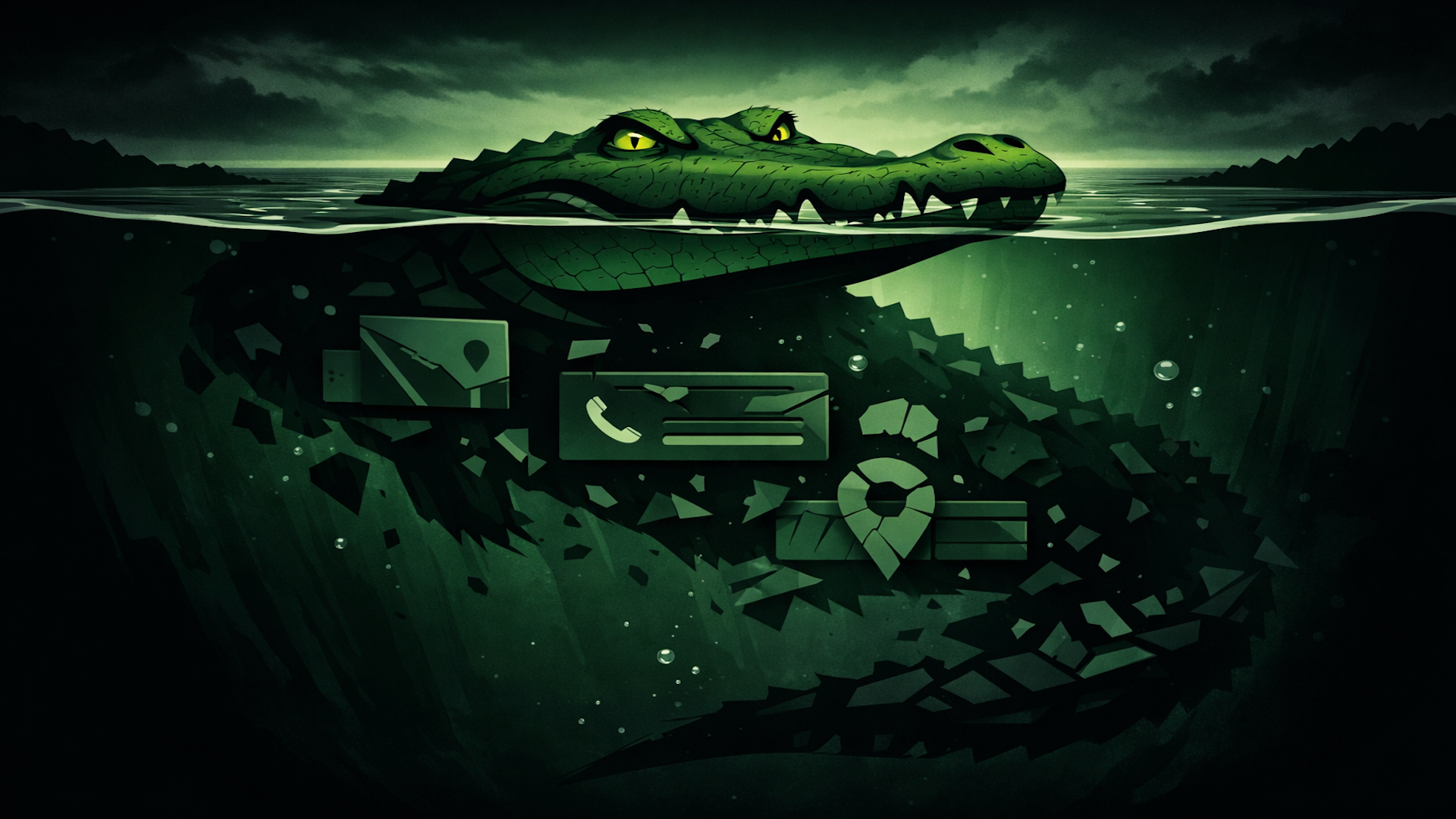
The alligator of local SEO, if you will, has made its presence known.
The visibility crisis behind stable rankings
I’ve observed that across various U.S. industries, the familiar local 3-packs are often getting replaced or supplemented by AI-run local packs. These new formats differ significantly from the traditional map results many of us are used to optimizing.
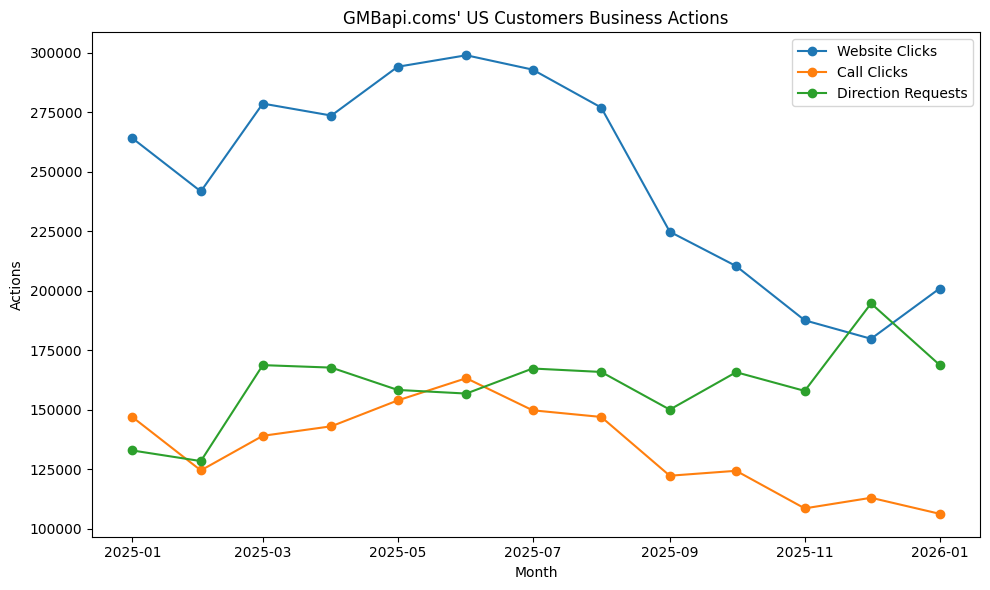
According to Sterling Sky’s analysis of Google Business Profiles, a startling pattern emerges. Clicks-to-call are taking a nosedive, particularly for law firms managed by Jepto.
When AI-powered packs take over, the landscape changes notably in four key areas:
Shrinking real estate: AI packs frequently display only two businesses instead of the usual three.
Missing call buttons: The summaries generated by AI often omit the instant click-to-call functionality, complicating the customer’s journey.
Different businesses appear: Companies featured in AI packs do not necessarily align with those in the traditional 3-pack.
Accelerated monetization of local search: The presence of paid ads increasingly results in the loss of direct call and website buttons in traditional 3-packs, thereby reducing opportunities for organic conversion.
There’s an additional challenge compounding this issue:
Measurement blind spots: Most rank trackers have yet to account for AI local packs. A business may hold a top spot in a traditional 3-pack that users rarely encounter.
In 2026, AI local packs surfaced only 32% as many unique businesses as traditional map packs, according to Sterling Sky. Astonishingly, in 88% of the 322 markets examined, the total number of visible businesses plummeted.
Meanwhile, paid ads are steadily claiming the space that once belonged to organic results, marking a clear transition toward a pay-to-play environment in local search.
What Google Business Profile data shows
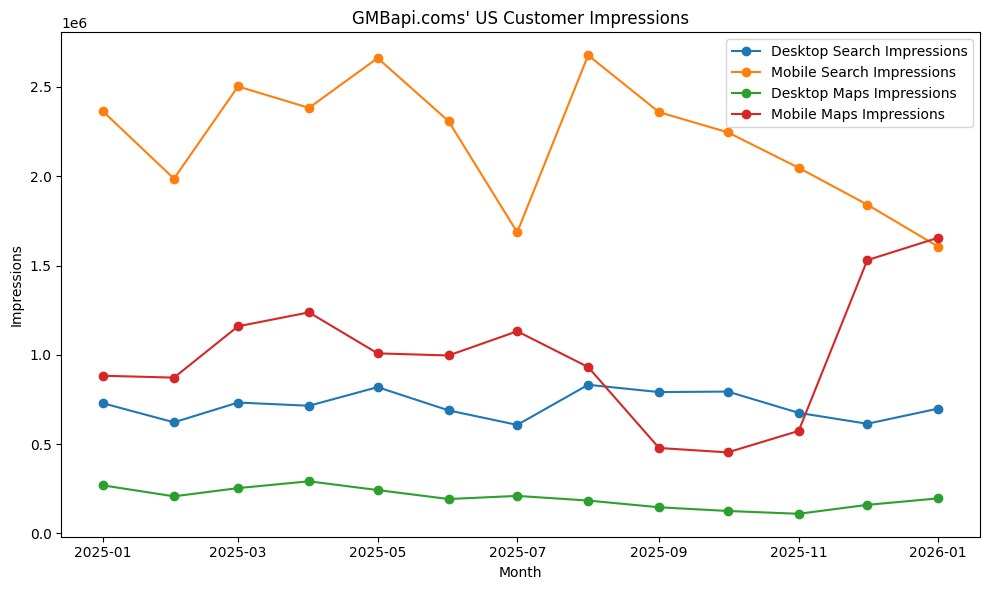
This trend is echoed in the U.S., where Google is proactively testing new local formats, as indicated by data from GMBapi.com. Increased impressions from traditional 3-packs are being nudged out by:
AI-powered local packs.
Paid placements inside traditional map packs: Sponsored listings now appear adjacent to or within the map pack, relegating organic results and removing essential call and website buttons. This interrupts organic customer interactions.
Expanded Google Ads units: Even Local Services Ads are consuming space that once granted organic visibility.
Impression trends continue to vary due to seasonal factors, market disparities, and occasional API glitches. Nevertheless, a clearer picture emerges by focusing on GBP actions rather than mere impressions.
Mentions within AI-generated results still count as impressions, even if they no longer convert into calls, clicks, or visits.
External factors, such as known Google API issues in June, also contribute to these fluctuations. Additionally, the spike in Google Ads investment by significant advertisers towards year-end heavily affects Mobile Maps impressions.
Currently, there’s no method to differentiate these impressions by Google Ads, organic results, or AI Mode.
Despite these challenges, user behavior is undeniably shifting. Interaction rates are dwindling, with fewer direct actions taken from local listings.
Year-on-year data from the U.S. indicates that while impression losses remain moderate and somewhat seasonal, GBP actions are disproportionately affected.
In contrast, data from the Dutch market, where SERP experiments are limited, shows far more stable action trends.
The evidence is clear. AI-driven SERP alterations, increasing Google Ads, and the removal of call and website buttons from the Map Pack are eroding organic real estate. Despite appearances, businesses have fewer opportunities to convert visibility into actual user actions.
Local SEO is becoming an eligibility problem
Traditionally, local optimization focused on key ranking factors like proximity, relevance, prominence, reviews, citations, and engagement.
There’s now an additional layer to consider: eligibility.
Some businesses find themselves absent in AI-powered local results not due to a lack of authority, but because Google’s systems deem them inadequate for the specific query context. Research from Yext and experiences shared by experts like Claudia Tomina emphasize the importance of aligning three core signals:
Business name
Primary category
Real-world services and positioning
Misalignment in these areas can prevent businesses from appearing in certain result types, regardless of how well their Google Business Profile is optimized.
How to future-proof local visibility
Navigating today’s zero-click reality involves moving beyond reliance solely on a well-optimized Google Business Profile. Here’s a new playbook for local SEO.
The eligibility gatekeeper
Inclusion in local packs is now influenced more by perceived relevance and classification than by links or review quantity.
Hyper-local entity authority
AI systems rely on platforms like Reddit, social media, forums, and local directories to evaluate if a business is legitimate and active. Inconsistencies across these platforms can erode visibility without any obvious signs.
Visual trust signals
High-quality and frequently updated photos, along with video, are critical. Google’s AI evaluates visual content to gauge services, intent, and categorization.
Embrace the pay-to-play reality
The hard truth is that Google Ads, particularly Local Services Ads, is now essential to retaining prominent call buttons that organic listings are steadily losing. Adopting a hybrid strategy that merges local SEO with paid search is no longer optional but necessary.
What this means for local search now
Local SEO has evolved beyond a simple directory exercise. Google Business Profiles remain central to local discoverability but now exist within a broader ecosystem informed by AI validation, constant SERP changes, and Google’s pursuit of local search monetization.
Visibility no longer depends solely on where your GBP ranks against local rivals. Search engines, including AI-infused SERP features and advanced models like ChatGPT and Gemini, are increasingly focused on understanding a business’s genuine purpose, not merely its listing position.
Success lies in being widely verified, consistently active, and contextually relevant within the AI-visible ecosystem.
Our findings reveal that there is little correlation between businesses ranking well in traditional Map Packs and those prioritized in Google’s AI-generated local answers. This discrepancy offers a real opportunity for businesses willing to adapt.
In essence, this entails blending local input with central management.
Authentic engagement across multiple channels, locally tailored content, and actual community signals are necessary alongside brand governance, data consistency, and operational scale. Businesses deeply ingrained in their community, discussed, recommended, and referenced, both online and offline, find themselves halfway there.
For agencies and brands with multiple locations, the challenge is balancing control with local nuances and ensuring trusted signals extend beyond Google, encompassing Apple Maps, Tripadvisor, Yelp, Reddit, and other pertinent review ecosystems. Producing locally relevant content and citations at scale without losing authenticity is the real test.
Even if rankings appear stable, true performance is occurring elsewhere.
Exciting news! I’ve just learned about Google’s February 2026 Discover core update, a major advancement in how content is showcased in Google Discover. According to Google’s announcement, this is a broad update aimed at improving the overall Discover experience.
This update initially targets English-speaking users in the US. However, Google plans to roll it out globally across various languages over the next few months. The complete process should take about two weeks, as was stated by Google here.
What can we expect? This Discover update is set to enhance the experience in several important ways:
Delivering more locally relevant content based on users’ locations
Cutting down on sensationalism and clickbait
Elevating in-depth, original content from expert sites
Since the focus is on local content, websites publishing for a specific country might see changes in traffic patterns. However, once the update is live globally, any shifts in traffic should even out.
Additional insights: Google’s systems are fine-tuned to recognize expertise across different subjects. Whether a website specializes in a single topic or covers multiple, it can gain visibility in Discover. To illustrate, a local news outlet with a gardening section can still be seen as an authority, even if it covers other themes. Conversely, a site primarily about movies wouldn’t be recognized as authoritative in gardening from a single post.
Moreover, Google continues to tailor content recommendations based on individual preferences, ensuring a more personalized user experience.
Prepare for changes: As this update unfolds, expect to see some fluctuation in your Google Discover traffic. Google has noted that while some sites may experience increased or decreased visibility, many will not notice drastic changes.
Progressive rollout: Currently, the update is being released to English users in the US, but the plan is to go international and multilingual in the upcoming months.
Why this matters to us: Changes in Discover traffic could impact your site’s engagement. If you need assistance navigating this update, Google provides core update guidance and resources like the Get on Discover page.
Ultimately, Google’s testing suggests that this update has made the Discover feature more useful and valuable for users.
Google Search is currently experiencing what I see as an ‘expansionary moment,’ powered by the dynamics of AI technology. The search experience I rely on has transformed through longer queries, follow-up questions, and the increasing use of voice and images. This was highlighted during Alphabet’s recent earnings call, where executives shared these evolving trends.
In other words: Google’s search interface is becoming increasingly AI-driven, facilitating interactions within its system. This isn’t about replacing old queries—instead, we’re witnessing a new era of digital exploration.
Why we care. The integration of AI into Google Search is not just a trial. For me, it’s a structural transformation altering how we discover, interact with, and navigate the web.
By the numbers: Alphabet’s Q4 advertising revenue reached $82.284 billion, marking a 13.5% increase from $72.461 billion in 2024.
Google Search & other: $63.073 billion (up 16.7%)
YouTube: $11.383 billion (up 8.7%)
Google Network: $7.828 billion (down 1.5%)
For the 2025 fiscal year, Alphabet’s advertising revenue climbed to $294.691 billion, a growth of 11.4% from the previous year.
Google Search & other: $224.532 billion (up 13.4%)
YouTube: $40.367 billion (up 11.7%)
Google Network: $29.792 billion (down 1.9%)
AI Overviews and AI Mode are now core to Search. Sundar Pichai, Alphabet/Google’s CEO, emphasized how central AI has become to Google’s search products, with over 250 AI-related product launches in just the last quarter.
Google has recently upgraded its AI Overviews to the Gemini 3 model, a move that connects AI Overviews more seamlessly with conversational search experiences.
“We have also made the search experience more cohesive, ensuring the transition from an AI overview to a conversation in AI mode is completely seamless,” Pichai noted.
AI is driving more Google Search usage. As Google puts it, AI-driven search is expanding the ways people use search rather than replacing traditional searches.
“Search saw more usage in Q4 than ever before, as AI continues to drive an expansionary moment,” Pichai emphasized.
“Once people start using these new experiences, they use them more,” he added.
Changing search behavior. AI Mode is making searches longer, more conversational, and multimodal. “Queries in AI mode are three times longer than traditional searches,” said Pichai.
Not only are queries longer, but sessions are also becoming more conversational, often leading to follow-up questions.
“We are also seeing sessions become more conversational, with a significant portion of queries in AI Mode now leading to a follow-up question,” he said.
“Nearly one in six AI mode queries are now non-text, using voice or images,” Pichai shared.
Google’s visual search capabilities continue expanding with “Circle to Search” available on over 580 million Android devices.
“We haven’t seen any evidence of cannibalization,” Pichai said about the coexistence of Google Search and the Gemini app.
“The combination of all of that, I think, creates an expansionary moment,” he concluded.
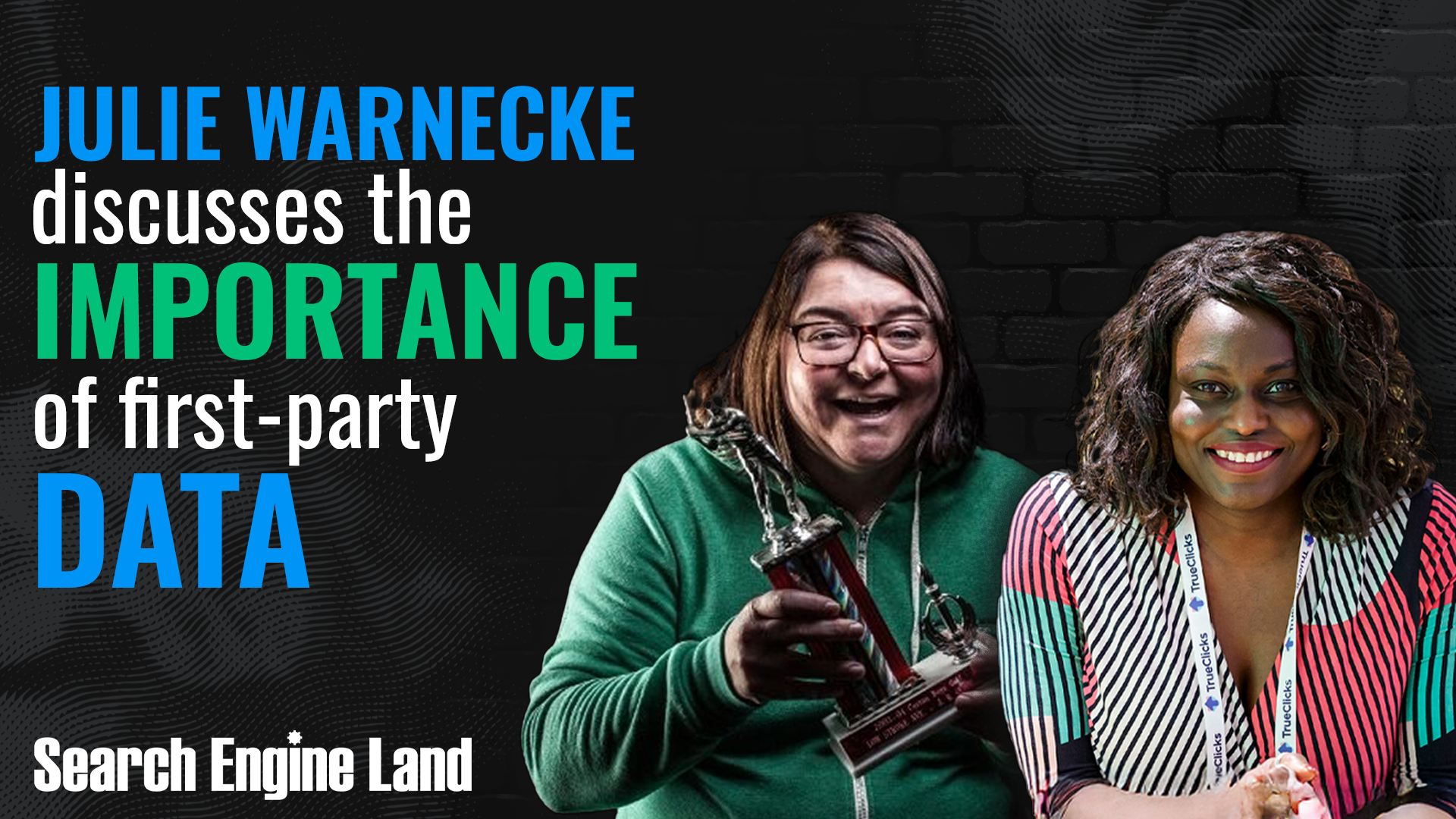
I recently discovered how crucial first-party data has become in the evolving landscape of AI-powered advertising. It’s fascinating to see how it shapes the optimization and measurement of automated ad campaigns.
During a chat with Search Engine Land, I learned from Julie Warneke, CEO of Found Search Marketing, about the profound impact first-party data has on profitable advertising, regardless of potential changes to Google’s third-party cookie policies.
Embracing first-party data means tapping into customer information that I own, typically stored in a CRM, like lead details, purchase history, revenue, and customer value collected from various touchpoints.
This type of data is distinct from platform-owned or browser-based data, over which I have limited control.
Digital advertising has evolved over the years. The shift from focusing on impressions and clicks to outcomes emphasizes profitable conversions, according to Warneke. Advertisers who provide AI systems with quality customer data gain a significant edge.
Although rising cost-per-clicks (CPCs) are inevitable in paid media, first-party data enhances conversion quality, revenue, and return on ad spend, making higher costs justifiable with better results.
By leveraging first-party data tied to revenue and customer value, AI bidding systems can target users resembling high-value customers, even beyond usual demographic or geographic signals, leading to better conversions.
Among campaign types, Performance Max (PMax) thrives with first-party data activation. It performs best when I shift from manual optimizations to feeding it accurate data, allowing the system to learn, as Warneke highlighted.
Even small and mid-sized businesses can leverage first-party data, as seen in Warneke’s examples of success with small customer lists. The challenge lies in setting up proper infrastructure for tracking, consent management, and data flow.
Common mistakes include weak data capture, where brands rely on browser-side tracking that falters on platforms like iOS, and broken feedback loops from sporadic CRM data uploads. Continuous data streams are crucial.
Warneke advises taking a step back to audit how data is captured, stored, and relayed to platforms. Incremental improvements can pave the way for significant long-term gains, even starting with a small portion of a budget as a test.
Ultimately, AI optimization reflects the quality of signals received. By refining first-party data, I can influence outcomes favorably, avoiding inefficiency risks.
I recently discovered an exciting update from Google Ads that promises to enhance the security of high-risk account changes. They have silently introduced a multi-party approval feature that ensures a second administrator must approve specific actions before they are finalized. This step adds a critical layer of protection against unauthorized or malicious changes, enhancing the overall safety of our accounts.
This new feature is particularly important as our ad accounts grow larger and carry more value. A single unauthorized change can quickly disrupt campaigns and even affect our billing. By requiring approval from another administrator, this feature effectively reduces such risks without hindering our regular campaign management processes.
For agencies and large teams like mine, this tool becomes invaluable. It helps us avoid costly mistakes and significantly bolsters our account security. I appreciate how Google is responding to the increasing necessity for robust access control.
Here’s how it works: when I, as an admin, initiate a sensitive change, Google Ads automatically sends an approval request to other eligible admins. This request is delivered as an in-product notification, requiring an action within 20 days—either approval or denial—otherwise, it simply expires, and the change will not be implemented.
Moreover, tracking the status of these requests is hassle-free. Each change request is tagged as Complete, Denied, or Expired, allowing my team to easily monitor and review our account changes.
To manage these approval requests, we can head over to the Access and security section within the Admin menu. It’s quite straightforward and keeps us in the loop with all ongoing requests.
This update points to a growing concern about account security, especially for advertisers managing large teams with multiple user permissions. With reports of expensive hacks escalating, this added security is a much-welcomed relief for us.
In the end, although multi-party approval may add a bit of friction to the process, it’s definitely a good kind. It grants us more control over who can make vital changes to our accounts, thus protecting them from unauthorized access. In my opinion, it’s a prudent step towards safer, more secure ad management.
The ongoing battle over default search deals caught my attention recently as critics argue these arrangements exclude competitors and restrict choice for users, advertisers, and rival companies.
The U.S. Justice Department, along with several states, is challenging a federal judge’s ruling regarding Google’s search antitrust case. They plan to appeal the decision made by the judge, which determined Google was illegally monopolizing search but didn’t impose significant changes like breaking up Chrome or stopping default search agreements completely.
What’s happening. Just yesterday, the DOJ and state attorneys general filed their appeals, focusing on U.S. District Judge Amit Mehta’s remedy ruling from September. Reports from Bloomberg and Reuters highlighted these developments.
Judge Mehta, back in August 2024, had found that Google unlawfully maintained its search monopoly through default search deals with companies like Apple and Samsung—deals costing Google over $20 billion every year.
Following a further remedies trial in 2025, Judge Mehta did not enforce the government’s suggestion to split up Chrome or halt payments for default search status. Instead, he required Google to rebid its default search and AI app agreements yearly.
Why we care. This appeal leaves me wondering just how much of a grip Google will retain on search placement. This control plays a crucial role in determining who gets traffic. Should stricter changes be implemented, it could alter default search settings, foster competition among search engines, and shift how we all engage with search across our devices.
Yes, but. So far, the DOJ and states haven’t revealed their exact legal strategies. The court submissions are vague about which aspects of the ruling are under fire, although Chrome and Google’s default deal with Apple are expected to be central points of contention.
What to watch. Later this year, the U.S. Court of Appeals for the D.C. Circuit will examine the case, and I’m keen to see how it unfolds. For now, Google continues operating as usual, but its key contracts will face annual scrutiny, and the potential for harsher consequences looms.
What they’re saying. David Segal, VP of public policy at Yelp, expressed approval of the appeal. In a statement to Search Engine Land, Yelp criticized the trial court’s remedies as insufficient for reinvigorating competition in search:
“Unfortunately, the measures put forth in the trial court’s remedy decision are unlikely to restore competition — for instance, it allows for Google to continue to pay third parties for default placement in browsers and devices, which was the primary mechanism by which Google unlawfully foreclosed competition to begin with.
Internet users, online advertisers and others who rely on and seek to compete in the industry deserve a level playing field with more, higher quality, and fairer search options — and the need for a more competitive space is all the more clear as Google seeks to leverage its vast power over the web, especially search indexing and ranking, to come to dominate the GenAI space.”
I recently learned that Anthropic has made a firm decision regarding the inclusion of ads in AI chatbots. They’ve announced that Claude will remain ad-free, even as other AI platforms start experimenting with sponsored messages and branded placements during chats.
Anthropic argues that placing ads in AI chats would undermine user trust, distort incentives, and conflict with how people use assistants like Claude—for work, problem-solving, and sensitive topics. In their latest blog post, they clearly lay out their stance.
Why this matters to us. Anthropic’s decision effectively removes Claude and its 30 million users from the potential AI advertising market. So, brands shouldn’t count on having sponsored links, conversations, or responses inside Claude. Meanwhile, ChatGPT opens up a new frontier for brands to potentially connect with an estimated 800 million weekly users.
Here’s the situation. According to Anthropic, AI conversations are quite unlike search results or social feeds where users might expect a combination of organic and paid content. They emphasize that many interactions with Claude involve personal inquiries, complex technical tasks, or high-stakes decisions, where inserting ads would seem intrusive and could subtly sway responses beyond user awareness.
Incentives matter. This is more than a product preference; it’s a strategic business model decision for Anthropic:
An ad-free assistant can concentrate fully on user benefits—even if that means a brief interaction or no follow-up. On the flip side, an ad-supported model might create pressure to identify monetizable moments or keep users engaged longer than necessary, potentially making users question whether suggestions are genuinely helpful or commercially driven.
Anthropic embraces commerce without ads. While Claude will assist users in researching, comparing, and purchasing products upon request, the commerce is user-initiated, not advertiser-driven. Likewise, third-party integrations with platforms like Figma or Asana will be user-directed and free from sponsor influence.
Super Bowl declaration. Anthropic took their message to a wider audience with a bold Super Bowl ad campaign. They critiqued intrusive AI advertising by placing mock product pitches into personal conversations. The ad concluded robustly: “Ads are coming to AI. But not to Claude.”
This campaign is likely a direct response to OpenAI’s announcement about introducing ads in ChatGPT.
I might be witnessing a significant shift as Google seems to be tightening its grip on self-promotional ‘best of’ listicles. This trend was highlighted by Lily Ray, who leads SEO strategy and research at Amsive.
Recently, many SaaS brands experienced a sharp decline in visibility, ranging from 30% to 50%. These companies often featured content that ranked their own products as ‘Number 1’ in their fields, frequently updating with the latest year to capitalize on recency signals.
Understanding the Trend. Following the December 2025 core update, there was noticeable volatility in Google search results throughout January, as reported by Barry Schwartz. Although Google hasn’t confirmed any updates for this year, the timing matches the visibility drops experienced by major SaaS and B2B brands. Lily Ray observes:
• In several situations, organic visibility dropped by as much as 50% within weeks. The losses were primarily in subfolders containing blogs, guides, and tutorials.
• These sections often housed numerous self-promotional listicles for ‘best’ queries, with the publishers typically ranking themselves first. Most articles were minimally refreshed with the addition of ‘2026’ to their titles, without substantial updates.
• “It seems likely that these declines in Google organic rankings might also affect visibility across other search engines and AI platforms that utilize Google’s results, like Gemini and ChatGPT,” Ray explained.
Why This Matters. There has been a longstanding practice of using self-promotional listicles to sway search rankings and AI-generated responses. If Google is reconsidering this kind of content, any strategies focusing on ‘best’ queries might face substantial challenges.
The Controversy. Ranking oneself as ‘the best’ without independent verification or third-party endorsement is often seen as a dubious SEO move. While not outright banned, it conflicts with Google’s guidelines on reviews and trustworthiness.
• Google maintains that quality reviews should display firsthand experience, originality, and clear evaluation. Self-serving listicles frequently fall short, particularly when bias isn’t disclosed.
However. Self-promotional listicles may only be one of several factors affecting organic visibility. Affected sites often showed signs of fast content expansion, automation, aggressive year-based updates, and other risky tactics.
• Nevertheless, the prevalence of self-promoting ‘best’ content among the most impacted sites suggests that this signal might now be more influential, especially when used extensively.
What’s Next. The outcome for self-promotional listicles in terms of gaining recognition and organic visibility is still uncertain, as Google seldom implements changes uniformly or immediately.
• If this volatility is linked to updates in Google’s review system, the trend is evident: Content aimed mainly at influencing rankings, rather than offering credible evaluations, poses growing risks.
• The enduring lesson for brands seeking online visibility is clear: SEO shortcuts may yield effective results, but only until they don’t.
I recently discovered some updates that Google made to its help documents, clarifying the file limits for Googlebot’s crawling abilities. They shared insights about how much data Googlebot can process for different file types.
In these updates, Google specified the limits for crawling by file type, some of which continue from previous guidelines and aren’t entirely new. These updates cover:
15MB for web pages: According to Google, by default, their crawlers only process the first 15MB of a file. This means any content beyond that limit gets ignored.
64MB for PDF files: When it comes to PDFs, Googlebot has a larger limit, crawling up to the first 64MB. This applies when Googlebot indexes PDFs in Google Search.
2MB for supported file types: Googlebot processes the first 2MB of other supported file types, along with the 64MB limit for PDFs.
Rest assured, these limits are pretty generous, meaning most websites won’t be affected or even reach these thresholds.
Google’s documentation explains, “By default, Google’s crawlers only process the first 15MB of a file. Individual projects may have different limits, and they might differentiate between file types, providing larger limits for PDFs compared to HTML.”
Furthermore, the data beyond the specified limit doesn’t get indexed as Googlebot halts the fetch after the limit is reached. This applies to all resources referenced in the HTML, like CSS and JavaScript, except PDFs.
Why should we care? Knowing these limits can enhance your website’s SEO strategy, even though most won’t come close to these limits. Still, it’s vital to be aware of the boundaries set for Googlebot’s crawling.