Category: News

  • Discover How Ads Enhance Your ChatGPT Experience

    Discover How Ads Enhance Your ChatGPT Experience

    On the OpenAI podcast, I recently listened to Andrew Maine as he spoke with OpenAI executive Assad Awan. During their conversation, Awan shared insights into how ads are being introduced to ChatGPT, who will see them, and the measures in place to protect user trust.

    Who will see ads:

    Ads will be visible to users on the Free and Go tiers. As for Plus, Pro, and Enterprise subscribers, they will not encounter ads in their interactions. Additionally, Enterprise workspaces are staying completely free from advertisements.

    The guardrails: Awan highlighted that OpenAI is committed to structuring ads with strict trust principles in mind.

    • Separation: Ads are distinctly separate both visually and technically from the model answers.
    • Privacy: Conversations are not shared with advertisers, ensuring privacy is upheld.
    • Sensitive topics: Discussions on health, politics, and other sensitive subjects will never be interrupted by ads.
    • Controls: Users have the ability to adjust ad personalization settings or even upgrade to remove ads entirely.

    Awan also mentioned that the AI model itself is not aware of when ads are present and will only reference them if directly queried by a user.

    Zoom in. OpenAI emphasizes prioritizing user trust over other factors such as user value, advertiser value, and revenue. This framework is designed to prevent ads from influencing the model’s responses.

    For small businesses. Awan envisions a future where AI simplifies advertising for small businesses. By understanding plain language goals, AI can help run campaigns without the complexity of traditional dashboards.

    Why we care. ChatGPT ads promise a unique, high-intent channel where businesses can connect with users during their active conversations and decision-making processes. By focusing on relevance and AI-driven matching, the platform can lower the entry barrier for small to midsize advertisers while boosting performance for larger brands.

    Should OpenAI succeed in cultivating a trusted ad environment, it could reshape how advertisers perceive discovery and customer engagement within AI-driven platforms.

    What’s next. The initial ad tests will remain conservative, concentrating on utility and relevance before volume as OpenAI hones ad formats and placements.

    The big picture. Through advertising, OpenAI aims to expand ChatGPT access while adhering to a trust-first design—a balance they assert is key to their long-term strategy.

    Dig deeper. Watch the full interview with Assad Awan


    Inspired by this post on Search Engine Land.


    crushpress.ai community screenshot
  • Unlock AI Insights: New Bing Webmaster Tools Feature

    Unlock AI Insights: New Bing Webmaster Tools Feature

    Today, I stumbled upon some exciting news from Microsoft. They have officially launched the AI Performance feature in Bing Webmaster Tools, albeit in beta. Now, I have a tool that lets me see where and how often my content is cited in AI-generated answers across platforms like Microsoft Copilot and Bing’s AI summaries.

    What I find particularly useful is how AI Performance details exactly which URLs from my website are cited, the queries that trigger those citations, and how this activity evolves over time. It feels like a game-changer for understanding my content’s footprint in the AI domain.

    Initially, Search Engine Land reported on January 27 that Microsoft was testing the AI Performance report. Today, I can tell you firsthand that this new dashboard in Bing Webmaster Tools is a treasure trove for tracking citation visibility across AI interfaces.

    What’s new? I now have access to a specific dashboard dedicated to AI Performance. Unlike typical SEO tools that measure clicks or rankings, this one reveals if my content is grounding AI-generated answers. Microsoft describes it as an early step toward Generative Engine Optimization (GEO), helping me comprehend how my work appears in AI-oriented discovery.

    What it looks like? Thanks to Microsoft, I’ve seen an image of the AI Performance feature in action. It’s sleek and provides clear insights into how my content is performing across AI experiences.

    Insights from the dashboard? The AI Performance dashboard offers several new metrics, which include:

    Total citations: This tells me how many times my site is used as a source for AI-generated answers over a set period.

    Average cited pages: This metric gives me the average number of unique URLs from my site that AI systems reference daily.

    Grounding queries: These are sample query phrases that AI systems utilize to retrieve and cite my content.

    Page-level citation activity: Showing citation counts by URL, it highlights which pages of mine are popular in AI responses.

    Visibility trends over time: I can see a timeline view that shows how citation activity changes throughout different AI platforms.

    ```json
{
  "alt": "AI Performance dashboard of a website with total citations and cited pages metrics.",
  "caption": "Dive into your site's AI Performance metrics with insightful visuals and data analytics. Understand total citations and gain deeper insights into web metrics.",
  "description": "This image shows a Microsoft Bing Webmaster Tools dashboard focusing on AI Performance for a website. Key metrics are displayed, including Total Citations at 39.4M and Average Cited Pages at 20.1K. A line graph illustrates trends in these metrics over a three-month period. The dashboard includes dropdown options for viewing data over different timeframes and menu options on the left for broader site management capabilities. The 'List By' section allows sorting based on Grounding Queries or Pages."
}
```

    Though these metrics are informative, they only reflect citation frequency. They don’t give insights into my content’s ranking, prominence, or its specific contribution to AI answers. That’s something I’d have to explore further.

    Why I care? Knowing where and how my content is cited is fantastic, yet Bing Webmaster Tools doesn’t yet show how these citations convert into clicks, traffic, or concrete business results. Without click data, it’s still an open question whether AI visibility provides actual value.

    How can I use this? Microsoft suggests I utilize this data to:

    – Verify which pages of mine already appear in AI answers.

    – Spot topics that frequently show up across AI-generated responses.

    – Enhance clarity, structure, and completeness on less frequently cited pages.

    The advice echoes familiar best practices: maintaining clear headings, evidence-backed claims, up-to-date information, and consistent entity representation.

    What comes next? Microsoft has promised improvements in inclusion, attribution, and visibility across both search results and AI experiences, and to keep evolving these capabilities moving forward.

    Microsoft’s announcement. For more details, you can check out their announcement here: Introducing AI Performance in Bing Webmaster Tools Public Preview 


    Inspired by this post on Search Engine Land.

    crushpress.ai community screenshot
  • Google’s AI Max: A Bold Push for In-App Advertising

    Google’s AI Max: A Bold Push for In-App Advertising

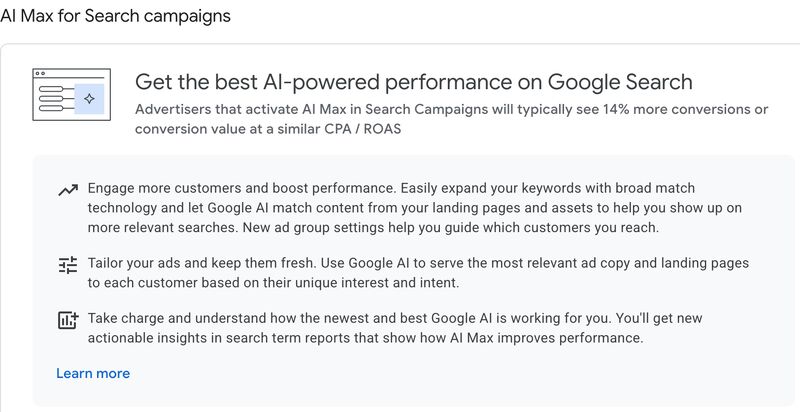
    When I opened Google Ads recently, I noticed something intriguing. Google is now directly promoting its AI Max feature right inside the campaign settings. This is a bold move, as it places advertisements for their own tools directly in front of advertisers like me.

    What’s happening: I saw promotional messages for AI Max specifically for Search campaigns when accessing my campaign settings panel.

    • These notifications show up during my usual account audits and updates.
    • It’s essentially Google’s way of internally advertising its own tools to me.

    Why it matters to me. Seeing these ads within the platform highlights Google’s strategy to push AI adoption. It makes me wonder if this will nudge advertisers like myself towards tools that minimize manual input, potentially reshaping how I manage campaigns.

    Encountering ads in a platform that’s already a paid advertising service is quite unprecedented. It feels like a subtle shift towards more aggressive product adoption strategies by Google.

    ```json
{
  "alt": "Google Search AI Max campaign advisory on boosting performance and conversions.",
  "caption": "Unlock the power of AI with Google's AI Max for Search campaigns. Elevate your customer engagement and conversion rates effortlessly.",
  "description": "This image promotes Google's AI Max for Search campaigns, highlighting the benefits of using AI for enhanced advertising performance. It suggests using broad match technology and Google's AI to improve ad relevance, optimize conversion rates, and tailor ads to customer interests. Keywords like 'AI-powered performance,' 'conversions,' and 'tailor ads' are featured, emphasizing actionable insights and the effectiveness of AI in marketing strategies."
}
```

    The big picture from my perspective. Although Google often rolls out AI features, actively promoting them within our regular workflows is a more assertive step towards encouraging us to adopt new features.

    What I should watch for. I’m curious if this promotional strategy will extend to other features within Google Ads and how other advertisers will react to seeing marketing within their management tools.

    First observation. This notification was first spotted by Lead Gen PPC Specialist Julie Bacchini, who shared her experience on LinkedIn.


    Inspired by this post on Search Engine Land.


    crushpress.ai community screenshot
  • Revolutionizing Healthcare: Latest AI Updates from OpenAI, Google & Anthropic

    Revolutionizing Healthcare: Latest AI Updates from OpenAI, Google & Anthropic

    I’ve always been fascinated by the intersection of AI and healthcare, and every month I eagerly anticipate the newest updates. The Goodie team curates these insights, letting us peek into the dynamic shifts within the AI and medical sectors.

    Imagine the transformative potential of AI in healthcare. From diagnostics to patient care, companies like OpenAI, Google, and Anthropic are leading the charge, each with unique contributions and innovations.


    Inspired by this post on HiGoodie Blog.


    crushpress.ai community screenshot
  • OpenAI’s New Era: ChatGPT Now Testing In-App Ads

    OpenAI’s New Era: ChatGPT Now Testing In-App Ads

    I’ve noticed that OpenAI is taking a bold new step by introducing ads within ChatGPT. This is the first move toward monetizing its conversational AI, and it feels like a glimpse into the future of AI technology.

    In this initial test, I observed that the ads are being integrated into the app for some users. Unlike cluttered advertising we’re used to, these are clearly defined messages, ensuring they don’t disrupt ChatGPT’s natural interface.

    The details. From what I’ve seen, CNBC reports the ads appear in a distinct location beneath the chat window, keeping them separate from the AI’s responses. This thoughtful format maintains clarity and trust for users like me.

    These ads are shown to both free users and those on the affordable Go subscription. It’s reassuring to know that OpenAI confirms advertisers won’t access our private chats, nor will they affect ChatGPT’s responses. Instead, ads are tailored to suit user needs.

    What else is coming. From insider info via CNBC, OpenAI CEO Sam Altman mentioned a new chat model upgrade is on the horizon, and I’m eagerly anticipating its impact. Remarkably, ChatGPT continues to exceed 10% monthly growth, boasting 800 million weekly users as recently as October.

    Why we care. As a user of one of the world’s largest consumer AI platforms, I find this gradual ad rollout significant. It could reshape how conversational AI is monetized and how brands reach each of us engaging with it.

    The bigger picture. As AI platforms evolve, they are mirroring traditional digital advertising yet posing new considerations regarding placement, privacy, and our trust.

    Bottom line. By officially stepping into the ad world within ChatGPT, OpenAI is exploring how commercial content might harmoniously coexist within conversational AI at a grand scale.

    Dig Deeper. For those interested, OpenAI is reportedly starting ad tests in ChatGPT today (subscription needed).


    Inspired by this post on Search Engine Land.


    crushpress.ai community screenshot
  • Reddit Search Revolution: 80 Million Users Embrace New AI Features

    Reddit Search Revolution: 80 Million Users Embrace New AI Features

    Every week, I’m amazed by how 80 million people, just like you and me, are using Reddit’s search feature. During Reddit’s Q4 2025 earnings call, they highlighted this incredible surge in usage following a pivotal transformation. They seamlessly integrated their core search with AI-powered Reddit Answers, setting the stage for Reddit to be a platform where we can both initiate and complete our search journeys.


    What struck me about this change is how Reddit executives addressed the shift in user behavior. People, including myself, are increasingly turning to community discussions to research and make decisions, rather than solely relying on traditional search engines. Reddit sees this as an opportunity to capture that intent within its platform, moving beyond just being a hub of outbound links.


    Why this matters to us. It’s fascinating to consider how Reddit’s evolution affects our daily search habits. Brands need to recognize that visibility on this platform is as crucial as securing a spot on traditional search engines. It’s an exciting development, particularly for those of us who value Reddit’s unique contribution to information discovery.


    Exploring Reddit’s ambitious plans. Steve Huffman, Reddit’s CEO, emphasized significant advancements through unifying keyword search with Reddit Answers. I love how this offers a seamless transition between typical search results and AI-driven insights within a single user-friendly interface.


    Huffman expressed his vision of Reddit as an “end-to-end search destination,” where our curiosity about topics doesn’t just start but expands. It’s exciting to see such growth—more than 80 million of us flock to Reddit weekly, a leap from 60 million a year prior, to deeply explore our interests.


    Reddit Answers is a game-changer. Spearheading much of this growth, Reddit Answers skyrocketed from 1 million to 15 million queries in the last year. Huffman noted its effectiveness with open-ended questions that invite diverse viewpoints—perfect for decisions about what to buy, watch, or try.


    Moreover, Reddit is beta testing “dynamic agentic search results” which include media formats. It’s a move towards more engaging and interactive searches, something I’m thrilled to explore personally.


    Search: A pivotal priority for Reddit. Huffman also revealed ongoing tests with new app layouts, prominently featuring an easily accessible search bar. This move reflects the platform’s intent to prioritize search experiences significantly.


    COO Jennifer Wong sees tremendous opportunity in search and Answers, even as monetization strategies evolve. What resonates with me is her description of Reddit search as an “incremental and additive” engagement tool. It’s aligned with high-intent activities such as researching purchases—an insight into future consumer behavior shifts.


    AI answers elevate Reddit’s importance. The platform’s integration with AI partners like Google and OpenAI is central to this narrative. It’s fascinating how Reddit content has become a primary source cited in AI-generated answers, showcasing its growing role in shaping information access.


    There’s immense potential in steering users from AI answers into active Reddit communities to engage deeper in discussions. Imagine searching for “the best speaker” and not just reading a summary but diving into a vibrant community debate—that’s where Reddit shines.


    Reddit earnings. If you’re interested, you can explore more about Reddit’s financial insights and strategic decisions in their recent report here.


    Inspired by this post on Search Engine Land.

    crushpress.ai community screenshot
  • Unveiling ChatGPT’s Ad Controls: Personalization Meets Privacy

    Unveiling ChatGPT’s Ad Controls: Personalization Meets Privacy

    OpenAI ChatGPT ad platform

    I recently stumbled upon a fascinating preview of ChatGPT’s new ad configurations, giving us an insight into how personalization and privacy will revolutionize ad delivery within conversational AI.

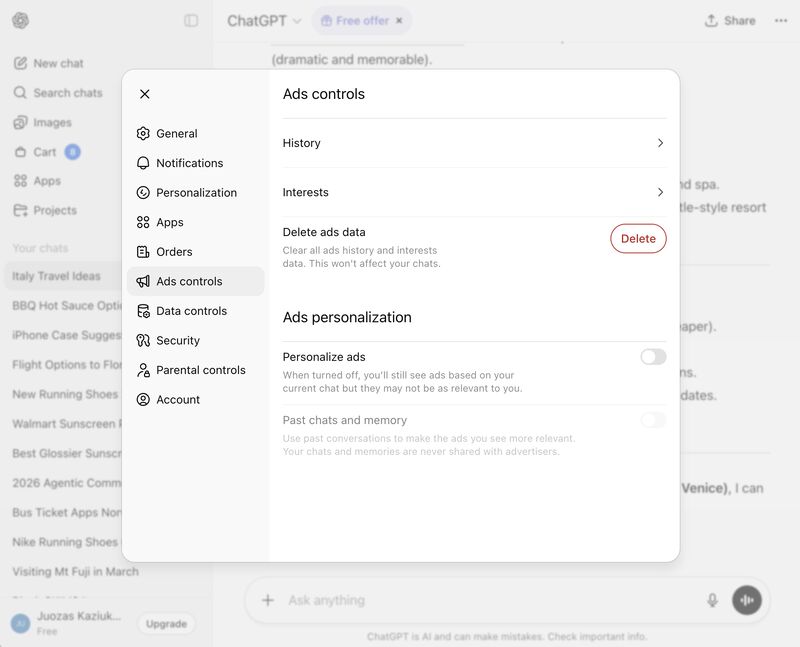
    Driving the news. It was an exciting moment when Juozas Kaziukėnas, an innovative entrepreneur, uncovered a method to access ChatGPT’s forthcoming ad settings interface. The panel is reassuring in its consistent emphasis: advertisers won’t have access to our chats, history, personal details, or IP addresses.

    What the settings reveal:

    • There’s a well-organized ad framework complete with its own controls.
    • A History tab, where I can check the ads I’ve viewed inside ChatGPT.
    • An Interests tab that gathers inferred preferences based on my interactions and feedback.
    • For each ad, I have the option either to hide it or report it.
    • Importantly, I can delete my ad history and interests without affecting other ChatGPT data.

    Personalization options. I have the freedom to turn ad personalization on or off. When it’s enabled, ChatGPT uses my saved ad history and interest cues to customize ads. If disabled, the ads still display but only consider my current conversation for relevance.

    An intriguing option allows ad personalization using both past conversations and memory capabilities — though crucially, my chat content isn’t shared with advertisers. For accounts like mine with memory disabled, this feature remains inactive.

    ```json
{
  "alt": "Screenshot of ads controls menu with options for history, interests, data deletion, ad personalization.",
  "caption": "Explore your ad personalization options with this detailed control menu. Manage your ad history, interests, and choose whether to personalize ads or clear data.",
  "description": "This image shows a screenshot of an ads controls menu within a digital application. The menu provides options to view ad history and interests, delete ads data, and personalize ads. There's a toggle for ad personalization, and a button to clear all ad data, ensuring privacy and tailored experiences depending on user preferences. Keywords: ads controls, ad personalization, data privacy, manage ads."
}
```

    Why we care. Even though official ads haven’t launched, the newly accessed settings panel provides us with the most detailed preview yet of ad personalization and privacy controls in action. It’s exciting to see ChatGPT striving to balance effective personalization with rigorous privacy standards. I can already imagine how this will redefine ad targeting and measurement on the platform.

    The settings indicate a focus on contextual signals and user-enabled personalization, avoiding overly intrusive user tracking. This means our creative relevance and the intent derived from our conversations will be valued more than conventional audience profiling.

    For brands, it’s a hint on how to craft their messaging and strategies for this new wave of conversational advertising.

    The bigger picture. This discovery suggests OpenAI is developing an ad system mirroring known platforms but with a fresh focus on privacy and user autonomy.

    Bottom line. Although ChatGPT ads might not be live right now, the framework is clear and indicates a future where conversational ads offer nuanced privacy and personalization settings.

    First seen. Kaziukėnas shared a preview of the platform on LinkedIn.


    Inspired by this post on Search Engine Land.


    crushpress.ai community screenshot
  • Google AI Mode: Why Content Placement Isn’t Key

    Google AI Mode: Why Content Placement Isn’t Key

    I recently came across an intriguing study by SALT.agency, focused on Google’s AI Mode and its citation practices. Contrary to popular belief, this analysis shows that AI Mode doesn’t have a preference for content placed “above the fold.”

    After sifting through over 2,300 URLs cited by AI Mode, researchers discovered no link between a text’s vertical position on a page and its likelihood of being cited by Google.

    Pixel depth is irrelevant. The study revealed that AI Mode pulls text from all over a page, even from content located thousands of pixels down.

    Page layout vs. content visibility. While different layouts like large hero images or narrative formats might push text deeper down the page, this doesn’t impact whether it gets cited.

    Subheadings make a difference. One key pattern identified was AI Mode’s tendency to highlight a subheading and the subsequent sentence. This suggests Google’s heading structures are crucial for content navigation.

    Google’s approach. The assumption is that AI Mode employs fragment indexing technology, breaking pages into sections and pulling the most relevant fragment, irrespective of its position.

    Dan Taylor, a partner at SALT.agency, confirms that there’s no secret formula for appearing in AI Mode citations. The focus should always be on crafting well-structured, authoritative content that meets customer needs.

    Our takeaway. This study challenges the notion that specific AI-focused templates or rigid structures enhance content visibility in AI Mode. The real work lies in creating meaningful, structured content.

    Research background. SALT scrutinized 2,318 URLs in AI Mode responses. The vertical pixel position of each cited fragment was meticulously recorded using a Chrome bookmarklet and a 1920×1080 viewport.

    The study. Research: Does Structuring Your Content Improve the Chances of AI Mode Surfacing?


    Inspired by this post on Search Engine Land.


    crushpress.ai community screenshot
  • Unlock Creative Success with Performance Max A/B Testing

    Unlock Creative Success with Performance Max A/B Testing

    I recently discovered that Performance Max now includes built-in A/B testing for creative assets. This feature offers advertisers a straightforward way to measure and enhance their advertising strategies.

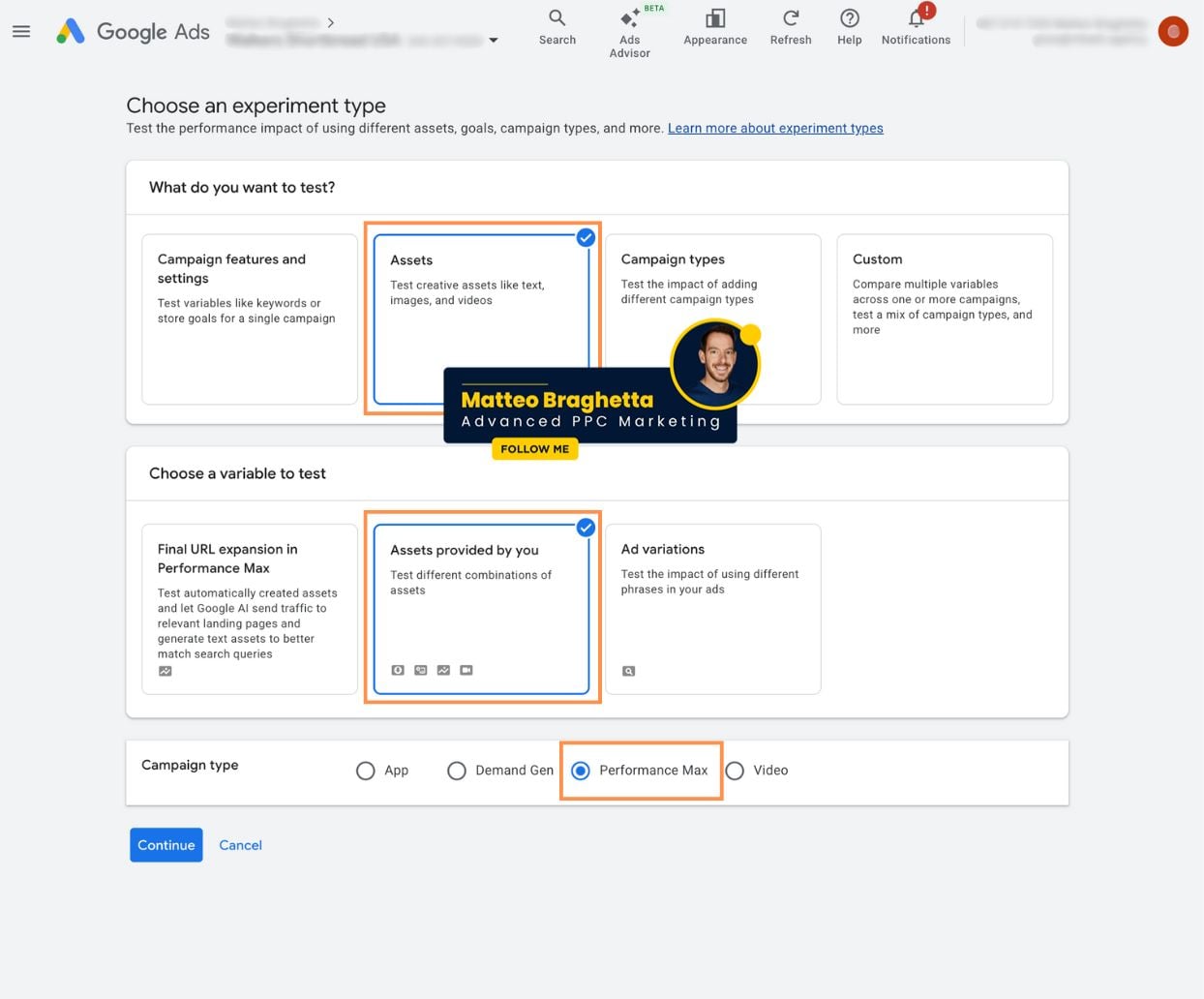
    Google is introducing a beta feature that allows me and other advertisers to conduct structured A/B tests on creative assets within a single Performance Max asset group. This setup enables me to split traffic between two sets of assets and evaluate performance through a controlled experiment.

    Why it matters to me. In the past, creative testing within Performance Max was often guesswork. With Google’s new native A/B asset experiments, I can now perform controlled tests directly within PMax without needing to launch separate campaigns.

    How it works for me. I select one Performance Max campaign and asset group, then define a control asset set using my existing creatives and a treatment set with new alternatives. Shared assets can be utilized across both versions. After setting a desired traffic split, like 50/50, the experiment runs for several weeks, allowing me to apply the winning assets based on actual performance data.

    Why this is beneficial for me. Conducting tests within the same asset group isolates the impact of the creatives I’ve designed, minimizing interference from changes in campaign structure. This controlled split allows me to obtain clearer reporting, helping my team make data-driven decisions based on solid performance metrics rather than assumptions.

    ```json
{
  "alt": "Google Ads interface showing options to choose experiment type and test variables.",
  "caption": "Exploring Google Ads: A look at the platform's options for testing and optimizing ad campaigns, featuring performance and asset management tools.",
  "description": "The image showcases the Google Ads interface where users can select an experiment type to test different assets, goals, and campaign types. Highlighted sections include options to test campaign features such as assets, campaign types, and custom variables. The interface also allows selection between different campaign types like App, Demand Gen, and Performance Max. Notable is the emphasis on creating and testing creative assets like text, images, and videos to optimize ad performance. Keywords: Google Ads, experiment type, campaign testing, asset management."
}
```

    What I’ve learned so far. Early testing indicates that shorter experiments—especially those under three weeks—can yield unstable results, particularly in accounts with lower volume. I’ve found that extending the test duration and avoiding simultaneous campaign changes significantly enhances reliability.

    My takeaway. Performance Max is evolving into a more testable platform. I now have the ability to validate creative decisions using built-in experiments, reducing reliance on trial and error approaches.

    Source of insight. A Google Ads expert noticed the update and shared insights on LinkedIn.


    Inspired by this post on Search Engine Land.

    crushpress.ai community screenshot
  • Harness Google Ads’ New Diagnostics Tool for Seamless Campaigns

    Harness Google Ads’ New Diagnostics Tool for Seamless Campaigns

    I’ve always found it challenging to keep my Google Ads campaigns running smoothly without a hitch. When I heard about Google Ads’ new diagnostics hub for data connections, I knew I had to explore it. This tool promises to catch issues early, which could significantly enhance my conversion tracking and overall campaign performance.

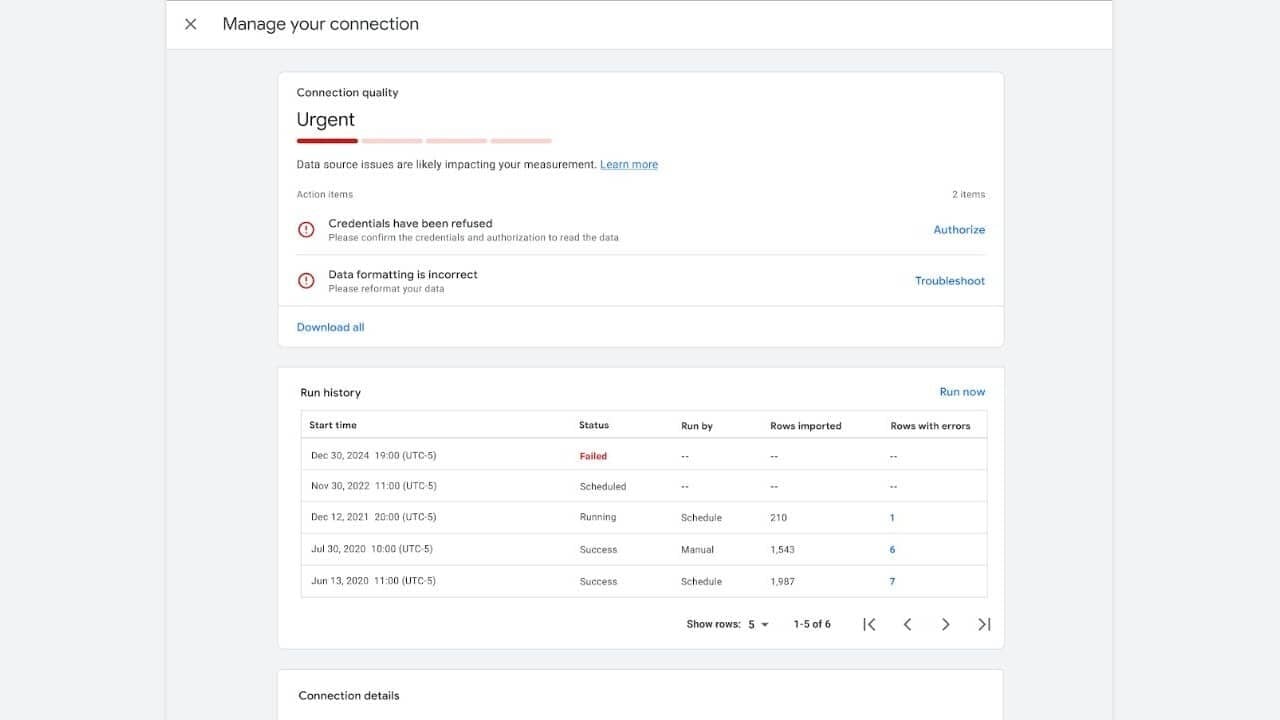
    Recently, Google Ads introduced a data source diagnostics feature within their Data Manager. It’s designed specifically to help people like me monitor the health of my data connections. The tool is a lifesaver, flagging issues linked to offline conversions, CRM imports, and tagging mismatches.

    How it works. The dashboard is centralized, and it assigns clear connection status labels like Excellent, Good, Needs Attention, or Urgent. It also provides actionable alerts, which is a huge plus for me. I can easily identify problems such as refused credentials, formatting errors, or failed imports. Additionally, there’s a run history that displays recent sync attempts and error counts.

    Why we care. I’ve noticed that when conversion data breaks, campaign optimization collapses too. It’s the minor data connection failures that can distort conversion tracking and weaken automated bidding. This diagnostics tool is crucial as it helps my team and me spot and fix issues early, safeguarding our campaign performance and reporting accuracy. If you’re relying on CRM imports or offline conversions like I am, it’s truly a needed safety net.

    ```json
{
  "alt": "Dashboard showing connection issues with urgent alerts and run history table.",
  "caption": "Critical connection alert: Urgent issues detected with failed tasks in the run history. Immediate attention required.",
  "description": "The image displays a dashboard alerting an 'Urgent' connection quality issue due to credential refusal and incorrect data formatting. The run history table lists start times, statuses including 'Failed', and details of recent tasks with errors highlighted. This setup emphasizes the need for troubleshooting in data integration systems."
}
```

    Who benefits most. If you’re running complex conversion pipelines like I do, including Salesforce integrations and offline attribution setups, this feature is a game-changer. It addresses disruptions that could otherwise ripple through our bidding and reporting process.

    The bigger picture. As we increasingly depend on accurate first-party data for automated bidding, having visibility into data pipelines has become as crucial as the campaign settings themselves.

    Bottom line. Google Ads has effectively given us an early warning system for data failures, helping us fix broken connections before they affect performance.

    First seen. I learned about this update when Digital Marketer Georgi Zayakov shared it on LinkedIn. I’m grateful to Georgi for sharing this valuable insight.


    Inspired by this post on Search Engine Land.

    crushpress.ai community screenshot