Recently, I discovered that Google’s AI-powered configuration tool for the Search Console is available to everyone, and it’s been quite an exciting update! This tool allows us to interact with the performance reports by asking AI-driven questions and receiving detailed insights in return.
I found out about this rollout on LinkedIn where Google enthusiastically announced, “The Search Console’s new AI-powered configuration is now available to everyone!” This means we can all experience this amazing functionality firsthand.
AI-Powered Configuration: With this tool, I can describe the type of analysis I want in plain language. Google’s AI then converts my inputs into specific filters and settings, creating a customized report immediately.
Rolling Out Now: When I logged into my Search Console account and checked the performance report, a new note caught my eye: “New! Customize your Performance report using AI.” By clicking on it, I gained access to this innovative AI tool.
More Details: This AI-powered configuration is designed to simplify our analysis by managing three key tasks: selecting metrics, applying filters, and configuring comparisons.
Selecting Metrics: I can choose from metrics like Clicks, Impressions, Average CTR, and Average Position based on my queries.
Applying Filters: This allows me to refine data by various parameters such as query, page, country, device, or date.
Configuring Comparisons: I can establish intricate comparisons, like custom date ranges, without manual configuration.
Why We Care: While currently limited to the Performance report for Search results, I’m excited to see how AI might soon enhance reports for Discover and News. Even though the AI might not always provide perfect answers, exploring its potential has been an enlightening experience, sparking new ideas.
I’ve recently discovered an exciting development in Google Ads that’s set to revolutionize how we track and measure our advertising success. The platform is now testing a beta feature that allows us to link external data sources directly into the conversion action settings. This move aims to strengthen the bridge between our first-party data and campaign measurement.
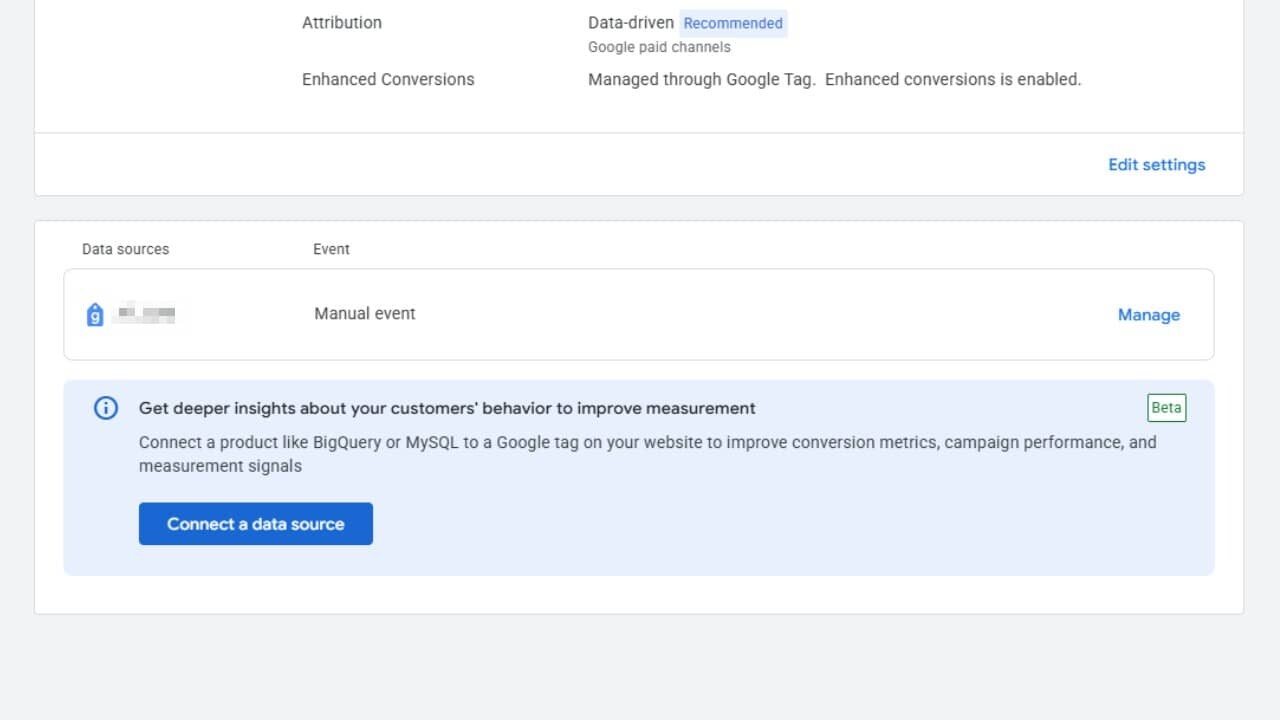
How does this work, you might ask? In the conversion action details, a new section titled “Get deeper insights about your customers’ behavior to improve measurement” encourages us to connect our external databases to our Google tag, offering a seamless integration experience.
This integration supports platforms like BigQuery and MySQL, with the primary goal of enriching our conversion metrics and enhancing performance signals. Notably, this feature is highlighted within the data attribution settings and is gradually being rolled out in its Beta phase.
Why do we care? The ability to directly integrate these data sources reduces the hassle of syncing offline or backend data with ad measurements. This beta feature from Google Ads simplifies connecting first-party data to conversion tracking, improving our measurement accuracy and campaign optimization.
By harnessing the power of platforms like BigQuery or MySQL, we’re able to incorporate richer customer data into our signals, crucially offsetting any data loss resulting from recent privacy changes. In practical terms, this means smarter bidding, clearer attribution, and the potential for a stronger ROI.
Beneath the surface, embedding these data connections directly within conversion settings—rather than relying on separate pipelines—democratizes advanced measurement tactics, making them accessible not only to large enterprises but to advertisers like you and me.
As ad platforms compete for superior measurement accuracy, these native data integrations are emerging as a pivotal advantage, particularly for brands heavily investing in proprietary customer data.
I’ve noticed something quite unexpected happening with Google Ads lately. It seems that their system tool is re-enabling paused keywords automatically, which has led to increased campaign expenses without warning.
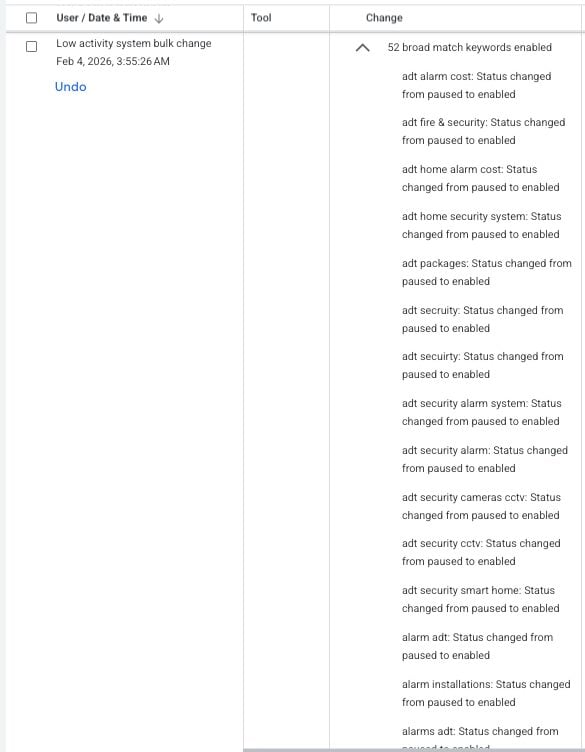
Some advertisers, including myself, have observed a Google Ads tool—created for low-activity bulk changes—unexpectedly switching paused keywords back to active. This unusual behavior has been a surprise to many account managers, like myself, who haven’t come across this issue before.
What’s happening? The activity logs are showing entries linked to Google’s ‘Low activity system bulk changes’ tool executing actions that enable previously paused keywords. These logs appear as automated bulk updates and, thankfully, have an ‘Undo’ option available.
In the past, this tool mainly paused inactive elements rather than reactivating them, so this change in behavior is quite perplexing.
What’s unclear? Google hasn’t issued any public documentation to explain this behavior, leaving us unsure whether it’s an intentional feature, a limited test, or a mere bug.
I find myself wondering what exactly triggers this reactivation and how widespread this phenomenon is becoming.
Why does this matter? If like me, you’re diligently managing your campaigns, unexpected keyword reactivation can change your campaign delivery in ways you didn’t plan for, impacting budgets, pacing, and overall performance—particularly if you’ve paused keywords for a specific reason.
For both agencies and in-house teams, this change is raising concerns about automated systems potentially overriding manual settings.
What steps should we take now? As account managers, we might want to regularly check change histories, be on the lookout for any unexpected keyword activations, and use the ‘undo’ function promptly if we notice unplanned changes.
Until Google clarifies the situation, more careful monitoring of campaigns relying heavily on paused keywords might be necessary.
First Alerted This issue was first brought to light by Performance Marketing Consultant Francesco Cifardi on LinkedIn.
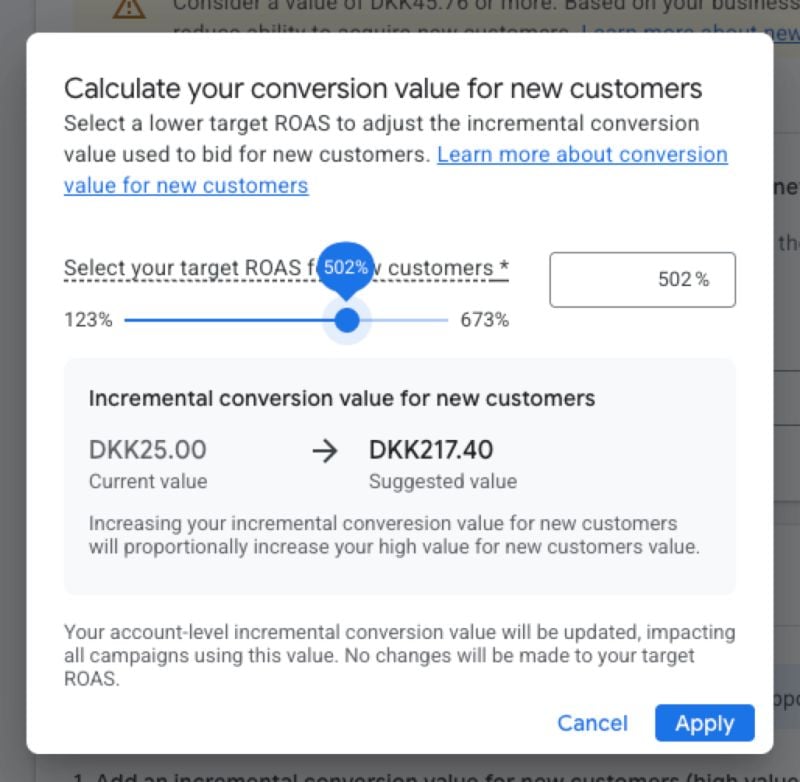
I’ve just discovered an exciting development in the Google Ads world that’s sure to interest any advertiser looking to optimize their campaigns. Google Ads is experimenting with a new ROAS-based tool that automatically suggests conversion values, aiming to enhance how we bid for new customers without the need for manual estimates.
For those like me who are focused on campaigns that target new customer acquisition, this update is a game changer. It empowers us to bid more assertively to capture those elusive first-time buyers.
How it works. I enter my desired ROAS target for new customers, and Google Ads does the rest. It proposes a conversion value that aligns with the goal I’ve set, removing much of the guesswork that previously complicated bidding strategies.
Currently, this feature doesn’t customize at the auction, campaign, or product levels. Instead, we apply values at a broader setting; this means the system doesn’t yet allow variable bids based on different contexts.
Why we care. This new tool addresses a significant shortfall in performance bidding—assigning the correct value to new customers. Many of us have relied on flat manual values, which don’t always reflect true profitability or align with our long-term goals.
By linking conversion values to a target ROAS, the door is opened to more strategy-driven bidding, potentially enhancing our balance between growth and efficiency in acquisition campaigns.
What advertisers are saying. Initial feedback suggests this feature is a notable improvement over the static manual inputs we’ve been using. Andrew Lolk, Founder of Savvy Revenue, believes the next step could be auction-level intelligence that dynamically adjusts values based on campaign or product performance.
What to watch. If Google decides to expand this feature to support more granular adjustments, it could significantly reshape how we plan our acquisition strategies and value long-term customer growth.
For now, the tool provides a more structured approach to calculating the value of new customers.
First seen. This update was first spotted by Andrew Lolk, who shared the insight on LinkedIn.
Yesterday, I stumbled upon some exciting news from Cloudflare. They’ve introduced a feature called Markdown for Agents, which provides machine-friendly versions of web content alongside the traditional pages we all see.
Cloudflare describes this update as a proactive measure in response to increasing AI crawler activities and agentic browsing.
When a client requests text/markdown, Cloudflare fetches the HTML from the origin server, converts it right at the edge, and then hands over a Markdown version.
Interestingly, the response includes a token estimate header, which helps developers like me manage context windows more effectively.
Early feedback highlighted not only the efficiency gains but also the potential implications of offering alternate representations of web content.
What’s happening. Being part of the 20% of the web that Cloudflare powers, I learned that Markdown for Agents utilizes standard HTTP content negotiation. If a client sends an Accept: text/markdown header, Cloudflare immediately converts the HTML response on-the-fly to Markdown format. The response, marked with Vary: accept, ensures caches store separate versions.
Cloudflare views this opt-in feature as a shift in content discovery and consumption, benefitting AI crawlers and agents with its structured text that requires less overhead.
They claim Markdown can reduce token usage by up to 80% compared to HTML, which is quite impressive!
Security concern. SEO consultant David McSweeney raised a concern, citing that Cloudflare’s Markdown for Agents feature might make AI cloaking incredibly simple because the Accept: text/markdown header tips off origin servers that the request is AI-related.
Regular requests deliver the usual content, but those for Markdown can trigger a unique HTML response that gets converted for AI consumption, McSweeney explained on LinkedIn.
The worry is that sites might inject hidden instructions, altered product data, or other machine-only content, creating a hidden “shadow web” for bots, unless the header is stripped before reaching the origin.
Google and Bing’s markdown smackdown. Here’s the kicker. Representatives from Google and Microsoft advised against creating separate markdown pages for large language models. Google’s John Mueller noted:
“Given that LLMs have always trained on and parsed normal web pages, it seems obvious they have no issues with HTML. Why serve a page that no end user sees? Plus, if they validate equivalence, why not stick to HTML?”
Microsoft’s Fabrice Canel added:
“Do you really want to double crawl load? We’ll check for similarity anyway. Non-user versions (like crawlable AJAX) are often neglected and broken. Human oversight fixes both user and bot views. Schemas help, and AI makes us even better at deciphering web pages. Less is more in SEO!”
Cloudflare’s feature doesn’t generate another URL but does create varied representations based on request headers.
The case against markdown. Technical SEO consultant Jono Alderson pointed out that once a machine-targeted representation exists, platforms must choose to trust it, verify it against the human version, or outright ignore it:
“Flattening a page to markdown doesn’t only remove clutter. It strips away judgment and context.”
“The instant you publish a machine-exclusive page representation, you craft a secondary candidate version of reality. Regardless of source promises or claims of identical content, a system now views two representations and must determine the true reflection of the page.”
Why we care. With Cloudflare’s advancements, AI ingestion might become more cost-effective and streamlined. But does serving distinct content to humans and crawlers verge on cloaking? Stay tuned…
I recently discovered some fascinating insights into what’s really behind the 53% drop in SaaS AI traffic. It turns out, AI traffic isn’t actually collapsing—it’s just becoming more focused. While Copilot experiences a surge in in-workflow engagement, a significant 41% lands on search pages, all influenced by the ebbs and flows of Q4 budget cycles.
As the SaaS market navigates a downturn, driven largely by the emergence of autonomous AI agents like Claude Cowork, new data reveals a substantial 53% decline in AI-driven discovery sessions. This phenomenon has been dramatically labeled the “SaaSpocalypse” by Wall Street.
The overarching question of whether AI agents will eventually replace SaaS products looms larger than what this particular dataset can resolve. However, amidst the panic, the data offers clarity for SEO teams, highlighting key areas they should be monitoring closely.
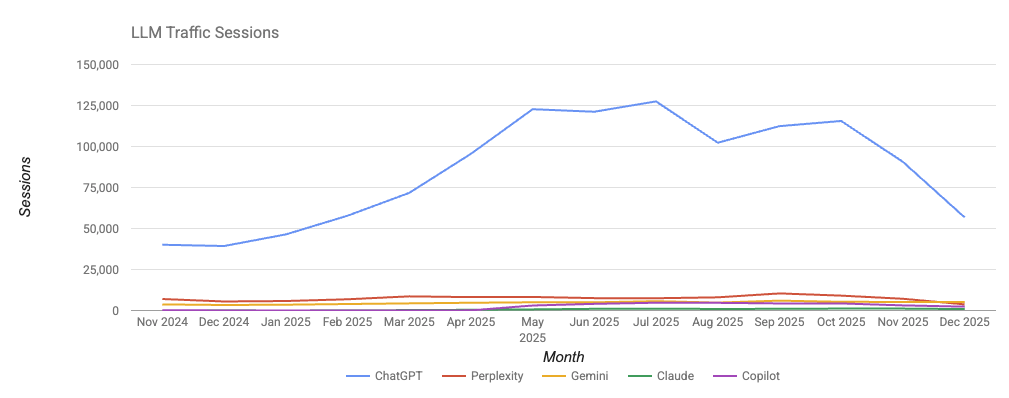
Between November 2024 and December 2025, the SaaS sector experienced 774,331 sessions driven by large language models (LLM). Interestingly, ChatGPT was responsible for 82.3% of this traffic, yet Copilot’s remarkable growth tells a unique story.
Copilot started with a modest 148 sessions at the close of 2024, only to expand more than twentyfold by May 2025. From there, it averaged 3,822 sessions monthly from June through December, emerging as the second biggest AI referrer by year-end 2025.
This data indicates that while investor sentiment wiped out $300 billion from SaaS market caps over concerns about AI replacing enterprise software, the real driver of change is occupancy in the workflow. Copilot is flourishing because it seizes the moment of intent within a given task. By comparison, standalone AI tools suffered a steep 53% traffic drop, while workflow-embedded AI solutions saw an exponential 20x growth.
AI-led SaaS discovery predominantly directs users to internal search pages rather than directly to product or pricing pages. Over 320,615 sessions were directed to search results—surpassing blogs, pricing, and even product pages—reflecting potential LLM shortcomings rather than content superiority. Essentially, when LLMs lack direct answers, they lean on internal search as a fallback.
This scenario isn’t detrimental but points to a crawlability issue that can be rectified; it underscores the importance of well-structured, indexable search pages. Smart design strategies can ensure that your internal search feature becomes an effective API for AI agents.
Seasonal work cycles also play a role. SaaS AI traffic hits its zenith in July, attributable to active work cycles and available Q3 budgets, before waning through Q4 due to holiday pauses and budget limitations, following typical B2B purchase patterns.
For SEO teams out there, it’s crucial to concentrate efforts not merely based on traffic numbers but on penetration rates and landing page relevance. Consider tracking AI traffic by page type, ensuring indexability of search results, and structuring both pricing and blog content to be LLM-friendly by making crucial data visible and accessible.
In essence, AI discovery is here to stay, but to thrive in this evolving landscape, SaaS companies must enhance their visibility. Those who invest in transparent, crawlable, and comparison-centric content now are setting themselves apart in a competitive space.
As I look ahead to 2026, Google’s innovative strides in AI are truly reshaping digital advertising and commerce. Thanks to the leadership of Vidhya Srinivasan, VP/GM of Ads & Commerce, AI is significantly enhancing the shopping and advertising landscape, making it more efficient and personalized for everyone involved.
Key Trends:
Creators to commerce: In my experience, YouTube is increasingly becoming a go-to platform for discovery, largely because creators act as influential tastemakers. AI plays a pivotal role in pairing the right creators with brands, transforming influence into tangible business outcomes.
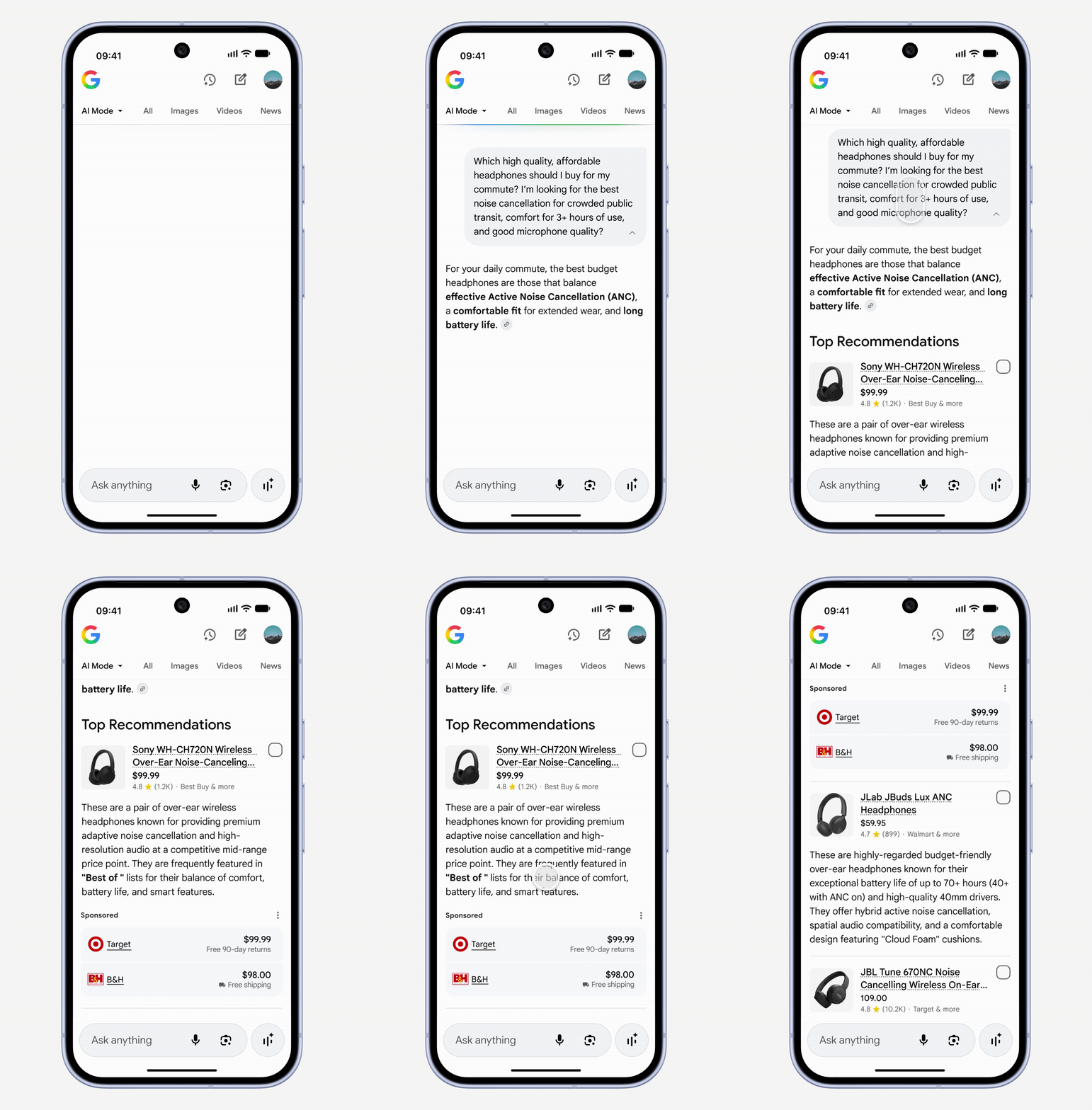
Search ads evolve: With conversational and visual searches gaining popularity, AI Mode is revolutionizing ads to seamlessly integrate into the user’s discovery process. Innovative formats like sponsored retail listings and Direct Offers are crafted to assist users in their shopping journey while offering brands meaningful conversion opportunities.
Agentic commerce arrives: Through Google’s Universal Commerce Protocol (UCP), AI-driven shopping experiences are becoming standardized. This advancement allows users to browse, purchase, and finalize transactions effortlessly. Early adopters like Etsy and Wayfair have already started using this system, with giants like Shopify, Target, and Walmart soon joining the bandwagon.
AI-powered creative and performance: I’m thrilled to see how tools powered by Gemini 3 are enhancing creative production and campaign optimization. Generative platforms like Nano Banana and Veo 3 help advertisers produce high-quality assets swiftly, while AI Max boosts reach and performance.
Trust as a foundation: It’s reassuring to know that each advancement prioritizes privacy and security. Strong data management practices, alongside transparent ad personalization, are founded on Google’s legacy of trust.
Why we care: 2026 is poised to be a groundbreaking year, with AI enhancing every facet of the consumer journey. With cutting-edge tools like Gemini 3, Nano Banana, Veo 3, and AI Mode, brands like mine can efficiently create superior content, target the perfect audience, and seamlessly convert interest into purchases during search and discovery.
The advent of agentic commerce through UCP presents a novel approach, connecting advertisers to consumers at critical purchasing moments, all while preserving trust and transparency.
The big picture: The year 2026 heralds an expansive era for digital commerce and advertising, where the fusion of speed, personalization, and AI-driven insights eliminates barriers, facilitating smoother transitions from discovery to purchase while keeping trust paramount.
Is this the new technical SEO frontier? This question is top of mind for many of us as Google has recently unveiled an early preview of WebMCP, a protocol shaping the way AI agents engage with websites. According to André Cipriani Bandarra from Google, “WebMCP aims to provide a standard way for exposing structured tools, ensuring AI agents can perform actions on your site with increased speed, reliability, and precision.”
WebMCP offers developers the capability to communicate with LLMs through our websites about the specific actions that various buttons and links should initiate. With this protocol, websites can publish a “Tool Contract” using the new browser API, navigator.modelContext. This means rather than leaving the AI to guess, our websites can present a structured list of functions, like buyTicket(destination, date), allowing the AI to execute these functions directly.
Structured interactions for the agentic web. WebMCP introduces two new APIs enabling browser agents to act on behalf of users:
Declarative API: This offers standard actions that can be simply defined within HTML forms.
Imperative API: For more complex, dynamic interactions that need JavaScript execution.
These APIs serve as a crucial bridge, making our websites “agent-ready” and facilitating more reliable and high-performance agent workflows compared to raw DOM actuation.
Use cases that Google has put forward highlight how AI agents can tackle complex tasks efficiently and confidently for users:
Travel: With structured data, agents can help users search for, filter, and book the exact flights they want, ensuring accuracy in results.
Customer support: Agents can automatically populate detailed customer support tickets, filling in all required technical details without user intervention.
Ecommerce: Enhancing shopping experiences where agents can locate, configure, and navigate purchasing options flawlessly.
How to access the preview. If you’re interested in trying out WebMCP, you can apply for the preview through this link.
Why we care. The advent of agentic experiences marks a significant shift in search and potentially SEO. Esteemed voices in the industry, such as Dan Petrovic and Glenn Gabe, have highlighted this as a pivotal transformation, comparable to the impact of structured data and described it as a big deal.
Exploring these cutting-edge protocols could be extremely valuable for anyone keen on staying at the forefront of SEO developments.
I’ve just discovered a game-changing update from Google Ads that’s making my life a whole lot easier. Now, Google Ads shows per-product campaign eligibility, which makes spotting gaps and overlaps a breeze.
With this new feature, I can see exactly which campaigns my products are eligible for, right within the Products section. This has transformed the way I approach campaign tracking.
How it works. I find the new dashboard in the Products section incredibly useful. It includes:
A table that shows product details, status, issues, and priority flags
A line graph summarizing campaign status trends
Filters that let me segment eligibility views
A pop-up panel listing “Eligible” and “Not eligible” campaigns per product
Why we care. This update helps me quickly identify products that are missing from essential campaigns or unintentionally overlapping, especially in Shopping and Performance Max. It saves me the hassle of bouncing between different campaign views to diagnose issues.
The big picture: These changes allow me to swiftly spot products not running in expected campaigns and identify overlap before it’s a budgeting issue, all while minimizing time spent on troubleshooting.
Between the lines. It’s clear that Google is focusing on giving advertisers like me more precise control over Shopping campaigns, a key factor in product-level optimization and profitability.
When. The feature is available now in Google Ads.
First seen. I first learned about this update thanks to Hana Kobzová from PPC News Feed.
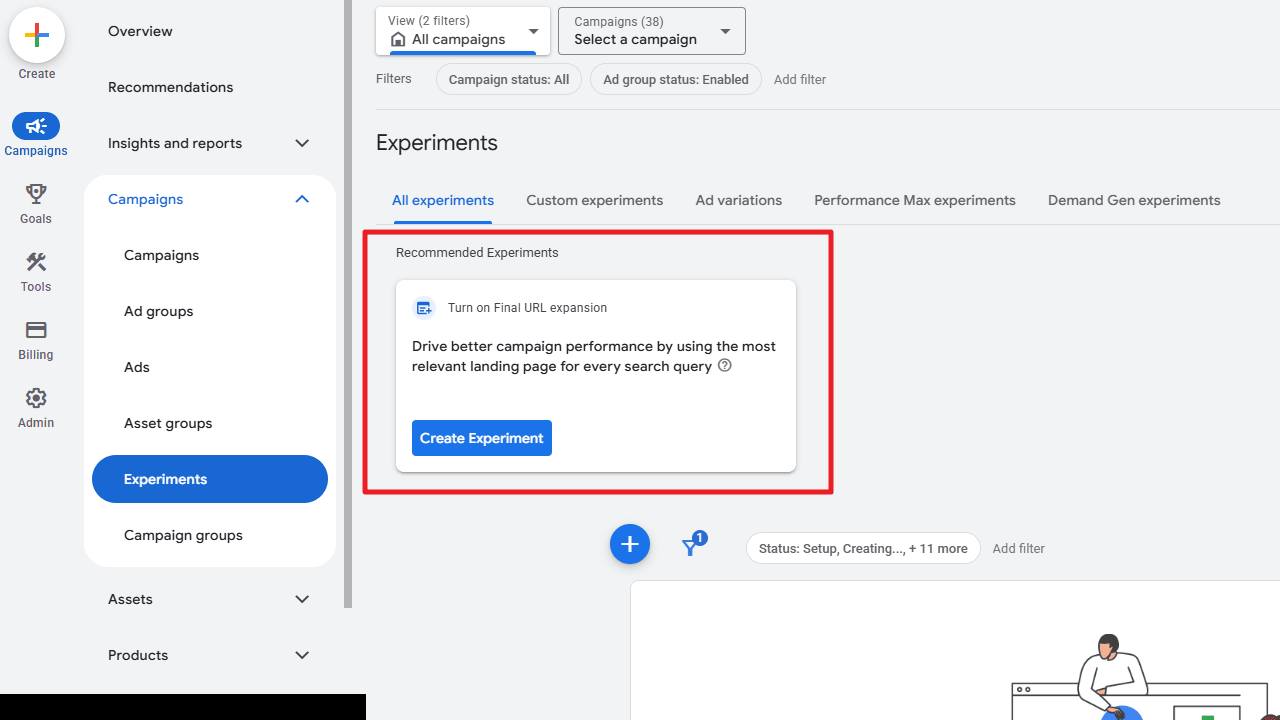
I’ve discovered that Google Ads now offers ready-to-run experiments directly within the Experiments page, making it easier for me to test optimizations quickly without a complicated setup.
These suggested experiments are based on my account’s setup and performance data, helping me uncover new ways to enhance results.
How it works: The platform provides suggestions for testing various bidding strategies, creative variations, and new campaign features, all accessible right in the Experiments dashboard.
Every recommendation comes with a pre-configured setup, so I can either launch them immediately or adjust the settings to better fit my needs. These suggestions are conveniently displayed alongside the standard Create Experiment option, streamlining the process.
Why I care: Google’s effort to simplify experiment setups significantly decreases the time and effort I need to put into testing. It allows me to act swiftly on optimization ideas and maintain a consistent flow of improvements. However, I still review each test configuration to ensure it aligns with my campaign goals and doesn’t lead to unnecessary resource expenditure.
Zoom in: For instance, I might see a prompt suggesting I enable final URL expansion to boost campaign performance. These recommendations appear as pop-ups inside the Experiments interface, guiding my decisions with relevant insights.
The big picture: Google is embedding more automated guidance into Ads workflows, nudging me towards continuous testing and pursuing data-driven optimizations.
First seen:This update was first spotted by PPC News Feed owner, Hana Kobzová, shedding light on these helpful enhancements.