Category: News

  • Microsoft Launches Game-Changing AI Content Marketplace

    Microsoft Launches Game-Changing AI Content Marketplace

    I’m thrilled to share that Microsoft Advertising has just unveiled the Publisher Content Marketplace (PCM). This innovative system allows publishers like us to license premium content to AI products and earn revenue based on its usage.

    How It Works. At its core, PCM creates a direct value exchange. As a publisher, I have the freedom to set my own licensing and usage terms. Meanwhile, AI developers can discover and license this content for grounding their algorithms in real-world scenarios. The marketplace also offers detailed usage reports, providing insights into how our content performs and where it contributes the most value.

    Designed to Scale. The PCM is a scalable solution designed to eliminate the need for one-off licensing deals. Participation is entirely voluntary, and ownership and editorial independence remain with the publishers. It’s a platform inclusive of everyone from large global publishers to smaller niche outlets like ours.

    Why We Care. As AI technology progresses from merely answering questions to making impactful decisions, the quality of content is becoming increasingly crucial. Whether it’s about influencing purchases, finance, or healthcare, AI systems need to tap into premium content, elevating the importance of credibility and trust in our brands.

    Early Traction. Microsoft Advertising has partnered with notable U.S. publishers such as Business Insider, Condé Nast, and Hearst to co-design PCM. Initial pilot projects anchored Microsoft Copilot responses to licensed content, with companies like Yahoo as early adopters.

    What’s Next. Looking ahead, Microsoft plans to extend the pilot program to more publishers and AI developers who share the belief that as the AI web evolves, the value and governance of high-quality content should be recognized and rewarded.

    The Big Picture. In the evolving landscape of AI-driven web interactions, tools are now summarizing, reasoning, and making recommendations through conversation. The effectiveness of these tools hinges on access to trusted and authoritative sources, many of which are under paywalls or in secured archives.

    The Tension. The traditional model where publishers provide content in exchange for traffic from platforms is changing. AI is increasingly delivering answers directly, which reduces clicks but still relies on high-quality content.

    Bottom Line. For AI to make better decisions, it must have access to superior inputs. Microsoft’s PCM is a strategic move towards establishing a sustainable content economy that supports the next wave of AI innovation.

    Microsoft’s Announcement. Learn more about this initiative in Microsoft’s blog post on Building Toward a Sustainable Content Economy for the Agentic Web.


    Inspired by this post on Search Engine Land.


    crushpress.ai community screenshot
  • LinkedIn Learns to Thrive Amid AI-Powered Search Challenges

    LinkedIn Learns to Thrive Amid AI-Powered Search Challenges

    Have you heard the news about LinkedIn’s recent experiences with AI-powered search? It turns out that Google’s AI Overviews have significantly impacted our non-brand B2B awareness traffic, cutting it by up to 60% in some areas, even while rankings remained steady. This shift compels us to rethink our discovery strategies fundamentally.

    I’ve noticed we’re transitioning from the traditional ‘search, click, website’ model to a more dynamic approach: ‘Be seen, be mentioned, be considered, be chosen.’ This new paradigm reflects a deeper understanding of modern digital visibility.

    By the numbers. Early in 2024, our B2B organic growth team started researching Google’s Search Generative Experience (SGE). By the time SGE evolved into AI Overviews in 2025, the impact was undeniable. Our non-brand, awareness-driven traffic took a hit of up to 60% across specific B2B topics.

    Yes, but. Many of the insights we’re gathering are reiterations of established SEO and AEO best practices. I’ve learned that LinkedIn’s guidance emphasizes strong headings, clear information hierarchy, improved semantic structure, and accessibility. It also stresses publishing authoritative, fresh content by experts and moving quickly to gain an early advantage.

    Why we care. These strategies should be familiar to anyone versed in technical SEO and content-quality fundamentals. LinkedIn’s article may not present new tactics, but it highlights the relevance of modern SEO/AEO and AI-driven visibility.

    Dig deeper. If you’re curious about optimizing for AI search, explore these 12 proven LLM visibility tactics.

    Measurement is broken. A significant challenge we face is the ‘dark’ funnel—the difficulty of quantifying how visibility in LLM answers affects our bottom line when discovery occurs without a click.

    LinkedIn has seen triple-digit growth in LLM-driven traffic to its B2B marketing websites. However, while we can track conversions from these visits, many websites are also experiencing similar growth. Although it’s an emerging channel, LLM-driven traffic still represents a small portion of overall traffic.

    What LinkedIn is doing. To tackle these challenges, we’ve formed an AI Search Taskforce that spans SEO, PR, editorial, product marketing, and more. We’re correcting misinformation in AI responses, publishing new content optimized for AI visibility, and testing social content for AI discovery strength.

    Is it working? It’s exciting to see our efforts yielding results. Our early tests are showing a meaningful increase in visibility and citations, particularly from our owned content. According to one external datapoint from Semrush, our structural advantage in AI search is significant, with Google AI Mode citing LinkedIn in 15% of responses.

    Incomplete story. While LinkedIn’s developments are noteworthy, some details remain unclear. We’re still waiting on specifics like the exact topics behind the traffic decline, how much click-through rates have softened, sample sizes, and timeframes. These details could provide clarity on the broader industry impact.

    Bottom line. I believe LinkedIn’s insights affirm that visibility is the new currency in digital marketing. However, there’s still much to prove if our playbook truly differentiates us from basic SEO practices.

    Curious to learn more? Check out LinkedIn’s detailed article on our adaptation strategies: How LinkedIn Marketing Is Adapting to AI-Led Discovery


    Inspired by this post on Search Engine Land.

    crushpress.ai community screenshot
  • Overcoming Google’s Biggest Crawling Challenges: A Personal Review

    Overcoming Google’s Biggest Crawling Challenges: A Personal Review

    Managing my website’s URLs efficiently is crucial to prevent crawlers from slowing it down. If you’re like me, you want your site to load fast, ensuring both visitors and search engines have a seamless experience.

    Just the other day, I listened to Google’s latest insights on their year-end report for 2025. It was fascinating to hear Gary Illyes discuss on the Search Off the Record podcast about the major crawling challenges Google faces, like faceted navigation and action parameters, which make up a whopping 75% of the issues.

    What’s the issue? Well, I’ve learned that crawling problems can seriously impact site performance, potentially making it unusable or inaccessible. Crawlers can sometimes get stuck in an infinite loop on a site, wreaking havoc on server performance.

    According to Gary, once a set of URLs is discovered, the crawler has to check a significant portion to determine its quality. By the time this is done, the damage is done—your site slows down dramatically.

    The Biggest Crawling Challenges Here’s what caught my attention as the major issues from the report:

    • 50% relate to faceted navigation. These are very common in e-commerce sites where endless filtering options exist for products based on size, color, price, etc.
    • 25% pertain to action parameters. These come from URL parameters that trigger actions instead of significantly changing page content.
    • 10% involve irrelevant parameters like session IDs or UTMs.
    • 5% are due to plugins or widgets that cause confusion by creating problematic URLs.
    • 2% encapsulate other “weird stuff”, which includes strange issues like double-encoded URLs.

    Why this matters to me is simple. A well-structured URL strategy keeps my server healthy, ensures quick page loads, and prevents search engines from misunderstanding which URLs should be indexed as canonical.

    The Podcast: Here’s where you can listen to the discussion yourself:


    Inspired by this post on Search Engine Land.

    crushpress.ai community screenshot
  • Unleashing Google Ads API v23: Discover Perf Max by Channel

    Unleashing Google Ads API v23: Discover Perf Max by Channel

    Have you ever wondered where your Performance Max ads truly run? With the latest Google Ads API v23 update, we finally have the answer!

    An exciting change has arrived with the v23 Ads API launch. Now, Performance Max campaign results can be broken down by channel, including Search, YouTube, Display, Discover, Gmail, Maps, and Search Partners. Previously, all your performance data was lumped together, obscuring critical insights.

    Here’s the inside scoop. In earlier API versions, I always received a MIXED value for the ad_network_type segment in my Performance Max campaigns. But with v23, these results have transformed into distinct channel enums. It’s a major step forward for those of us who crave precision in reporting and optimization.

    Why this matters to us. This update isn’t just about new features — it reshapes how we comprehend Performance Max. With channel-specific reporting now on the table, marketers gain much-needed clarity on where these ads are displayed.

    How we can leverage this. Now, we can access channel-level data at the campaign, asset group, and even individual asset levels. This means we can observe how each creative piece performs across Google’s array of platforms. Coupled with v22 segments like ad_using_video and ad_using_product_data, the possibilities for optimizing video performance on YouTube or Shopping ads on Search are endless.

    Attention, developers. Upgrading to v23 unveils a level of reporting detail that was previously unreachable. If your system relied on the old MIXED values, it’s time to gear up for the new channel enums.

    Keep an eye out for:

    • Channel data is accessible only for dates beginning June 1, 2025.
    • Remember, asset group–level channel reporting remains exclusively within the API and is not visible in the Google Ads UI.

    The takeaway. The newest Google Ads API rollout quietly transforms what was once a black-box campaign category into an analyzable channel-specific type. Finally, advertisers like you and me can dive into the metrics we’ve long sought.


    Inspired by this post on Search Engine Land.


    crushpress.ai community screenshot
  • OpenAI Prepares for ChatGPT Ads: What You Need to Know

    OpenAI Prepares for ChatGPT Ads: What You Need to Know

    I’ve noticed something intriguing in the responses from ChatGPT lately. If you peek into the page source, there are references to ads, even though no actual ads appear on the screen. It reads: “InReply to user query using the following additional context of ads shown to the user.” This discovery got me thinking about what’s brewing behind the scenes.

    Digital marketer Glenn Gabe was the first to draw attention to this on X, highlighting the presence of ad-related phrases within ChatGPT’s source code. Other users have confirmed similar findings when engaging with commercial queries like auto insurance. This hints that there’s more at play than meets the eye.

    This development could mark a significant shift, transitioning ChatGPT ads from a concept to reality, opening up a brand new high-intent advertising channel. With code logic for ads in place, it appears that OpenAI is already experimenting with targeting and eligibility to benefit early advertisers.

    Given the limited ad space, and assuming ads will be seamlessly integrated into conversational responses instead of traditional banners, we might be on the brink of accessing premium advertising real estate that competes directly with organic content.

    ```json
{
  "alt": "Highlighted JSON code snippet showing URLs and a red arrow pointing to the word 'ads'.",
  "caption": "Highlighting the word 'ads' in a JSON code snippet with URLs, focusing on context or usage.",
  "description": "This image displays a JSON code snippet featuring URLs related to onboarding images. A red arrow points to the word 'ads', highlighting its relevance in context. The JSON structure includes keys for impression count and various screen image URLs. This snippet might be part of a technical setup for an application or website, illustrating how structured data is used to manage content visibility and settings during user onboarding."
}
```

    While the ads are currently invisible, their underlying logic is evidently active. This suggests OpenAI might already be testing parameters like ad eligibility, suppression rules for paid tiers, or internal mechanisms, all in preparation for a larger rollout.

    OpenAI acknowledged earlier this year that ads would be introduced to ChatGPT for select users. These ads are expected to be sold on an impression basis, hinting at potentially high costs for advertisers. The groundwork is clearly set, even if ads haven’t gone live yet.

    For those keen on following this development, I recommend checking out Glenn Gabe’s tweet that showcases evidence suggesting the imminent arrival of ChatGPT ads.


    Inspired by this post on Search Engine Land.

    crushpress.ai community screenshot
  • 2 Million LLM Sessions: AI Discovery Insights Revealed

    2 Million LLM Sessions: AI Discovery Insights Revealed

    Analyzing nearly two million LLM sessions across nine industries throughout 2025 was a fascinating journey for me. I began with the assumption that ChatGPT would dominate and that AI usage patterns would be relatively uniform with minimal impact.

    The findings, however, were surprising.

    While ChatGPT does indeed control 84.1% of the trackable AI discovery traffic, it’s primarily serving as a broad-market tool. This discovery significantly impacts strategic approaches.

    In today’s landscape, relying solely on a single discovery strategy is not viable. A multi-platform approach that aligns with how and where users find productivity is essential.

    Brands must now discern which platforms are empowering productivity rather than merely supporting initial discovery phases.

    Various LLMs are excelling in different sectors, often with stark differences. The key takeaway for 2026 is more complex than simply focusing on ChatGPT.

    Here’s what I’ve discovered from the data.

    The Growth Rate Divergence: ChatGPT vs. Competitors

    Throughout 2025, major LLM platforms exhibited significant growth discrepancies:

    • ChatGPT: 3x growth
    • Copilot: 25x growth
    • Claude: 13x growth
    • Perplexity: 1x growth
    • Gemini: 1x growth

    Although ChatGPT grew, Copilot and Claude experienced much more rapid growth. Platforms like Perplexity and Gemini remained steady, reinforcing specific workflows.

    These numbers highlight strategic priorities:

    • Satya Nadella celebrated Copilot reaching 100 million monthly users.
    • Dario Amodei revealed that Anthropic’s revenue grew from $100 million to $8–10 billion in under two years.
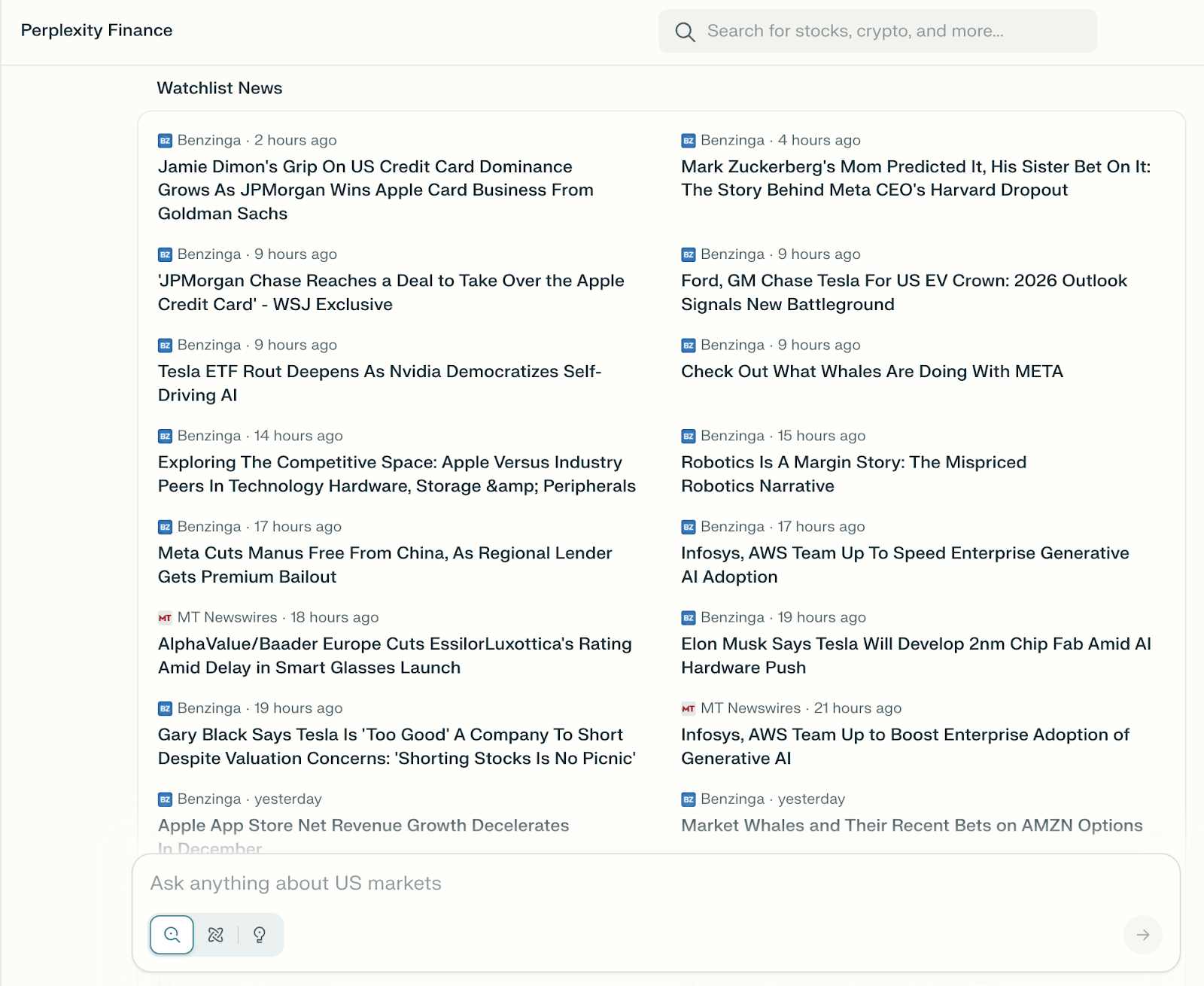
    • Aravind Srinivas noted significant interest in Perplexity Finance.

    The focus on growth is crucial because it signals true user value:

    • Copilot excels in the Microsoft ecosystem.
    • Claude appeals to developers.
    • Perplexity thrives among finance professionals.

    Different LLMs are thriving in various industries at markedly different rates.

    Pattern 1: Copilot’s Striking Growth

    Copilot’s remarkable 25x growth is indicative of its premier position in B2B environments reliant on Microsoft tools.

    SaaS

    • ChatGPT: 2x growth
    • Copilot: 21x growth
    • The rapid adoption mirrors modern SaaS practices, embedding LLMs directly into workflows.

    Education

    • ChatGPT: 6x growth
    • Copilot: 27x growth
    • Copilot benefits from educational settings fostering knowledge sharing and synthesis.

    Finance

    • ChatGPT: 4.2x growth
    • Copilot: 23x growth
    • Finance aligns with Copilot due to automation needs and context dependency.

    Copilot’s growth is most pronounced in industries where professionals are deeply integrated with Microsoft tools.

    Instruments like Excel transform into data interpretation powerhouses with Copilot, eliminating the need for external searches.

    ```json
{
  "alt": "Screenshot of stock news headlines from Perplexity Finance with a search bar at the top.",
  "caption": "Stay updated with the latest financial headlines on Perplexity Finance. Track market shifts, tech advancements, and industry changes in real-time.",
  "description": "The image displays a screenshot from Perplexity Finance featuring a list of news headlines related to the stock market and financial sectors. The headlines cover topics like JPMorgan's credit card dominance, Apple's competitive challenges, Tesla's AI developments, and more. A search bar at the top allows users to explore stocks, cryptocurrencies, and other financial topics. The layout is clean and organized, catering to users seeking quick updates and insights into financial markets. Keywords: finance, stocks, market news, Perplexity Finance."
}
```

    Implications

    For work-centric audiences like SaaS, finance, and education specialists, AI discovery is shifting into LLMs embedded in workflows.

    Pattern 2: Perplexity Shines in Finance

    While Perplexity has flat growth overall, it stands strong in finance with a 24% market share, unlike in other sectors where it has diminished.

    • SaaS: down to 7.3%
    • E-commerce: down to 3.4%
    • Education: down to 5.2%
    • Publishers: down to 3.6%

    Finance demands accuracy; thus, traceable sources make Perplexity vital in this sector.

    Partnering with Benzinga, FactSet, and others, Perplexity offers in-depth data vital for financial decisions.

    Trust and verifiability are crucial in finance, and that’s where Perplexity excels.

    Implications

    In finance, selection of platforms that integrate with licensed data and credible sources is critical. Success hinges on being part of these authoritative ecosystems.

    Pattern 3: Claude’s Dominance in Analysis

    With just a 0.6% share, Claude might appear to be an underdog, but it thrives in specialist sectors like publishing and finance.

    • Publishers: 49x growth
    • Education: 25x growth
    • Finance: 38x growth
    • SaaS: 10.3x growth

    Claude’s strength lies in standalone, strategic thinking rather than integrated tools like Copilot.

    • Publishing professionals and financial analysts use Claude for its substantial context window, enabling complex and strategic queries.

    Implications

    Target audiences that require in-depth analysis should focus on creating structured and detailed content. Claude’s user base is smaller but highly influential.

    Pattern 4: Challenges in Tracking Gemini

    The data concerning Gemini is puzzling, showing both growth and declines. This could be attributed to issues with attribution rather than an actual decline in users.

    • Education: −67% tracked traffic
    • SaaS: +1.4x growth
    • Finance: +1.3x growth
    • E-commerce: +2.7x growth

    Gemini’s interaction model keeps users within its ecosystem, making measurement challenging.

    The reality is that usage might still be robust, but the tracking systems need to catch up with user behaviors.

    Implications

    As AI-assisted conversions increasingly occur, traditional last-click attribution models need reconsideration.

    Monitor brand search performance and invest in broader visibility strategies.

    Strategizing Your LLM Approach

    AI discovery is diversifying rather than converging. Tailoring strategies based on your audience’s preferences and behaviors is crucial.

    • Enterprise Audiences: Focus on Copilot integration for SaaS and B2B environments.
    • High-Stakes Decisions: Consider Perplexity’s reliability in providing traceable data.
    • Technical Evaluations: Claude’s detailed analysis capabilities require rich, structured content.
    • Emerging Sectors: Initiate with ChatGPT, monitor for evolving platform preferences.
    • Measurement Challenges: Adjust strategies to accommodate for gaps in tracking.

    Success in AI discovery is rooted in understanding your audience’s platform preferences and their specific needs.

    Read the full study: 2025 State of AI Discovery Report: What 1.96 Million LLM Sessions Tell Us About the Future of Search


    Inspired by this post on Search Engine Land.


    crushpress.ai community screenshot
  • Google’s New Search Ad Feature: External Endorsements Tested

    Google’s New Search Ad Feature: External Endorsements Tested

    I recently discovered that Google’s testing a fascinating new feature in Search ads. They’re incorporating third-party endorsements, complete with publisher logos and quotes, to offer a layer of external validation for paid results.

    This experiment places brief endorsements from external publishers right under the ad description, showcasing the third party’s name, logo, and favicon.

    What’s showing up. I first spotted this test when Sarah Blocksidge, Marketing Director at Sixth City Marketing, shared a screenshot on Mastodon. In that example, a Search ad included the line “Best for Frequent Travelers,” attributed to PCMag, along with the publication’s favicon.

    The endorsement is positioned directly beneath the ad copy, making it visually distinct from the standard text written by advertisers.

    Why we care. If this feature is expanded, it could transform Search ads to mirror product reviews more closely, potentially granting advertisers with substantial third-party validation an edge in highly competitive auctions.

    What Google says. A spokesperson from Google Ads confirmed that this is a “small experiment” being conducted:

    ```json
{
  "alt": "1Password sponsored search result with links to sign up and explore services.",
  "caption": "Explore the features of 1Password through their sponsored search result, including sign-up and business solutions.",
  "description": "This image displays a sponsored search result for 1Password, an online security and password management platform. It features the 1Password website link, a brief description, and options to sign up or utilize various services such as 1Password for Business and Generate Secure Passwords. The ad highlights their security management offerings and mentions features like a free trial and business trust. Keywords include password management, security, 1Password, and business solutions."
}
```
    • “This is a small experiment we are currently running that explores placing third-party endorsement content on Search ads.”

    However, Google hasn’t revealed any specific details regarding eligibility, the content sourcing process, or how endorsements are chosen.

    What we don’t know yet. It’s not yet clear if advertisers will be able to opt into this feature, request specific endorsements, or influence which third-party sources are displayed. Google hasn’t clarified whether this test is linked to existing review extensions, publisher partnerships, or other trust and safety initiatives.

    What to watch. Should Google decide to broaden this experiment, the prominence of third-party credibility could significantly impact ad performance, shifting focus from advertiser claims to external validation at the search stage.

    For the moment, this intriguing test is limited, but it offers a glimpse into how Google might continue to merge ads, trust signals, and editorial-style context within search results.

    Dig Deeper. Screenshot shared on Mastodon.


    Inspired by this post on Search Engine Land.


    crushpress.ai community screenshot
  • 1/3 of Publishers Plan to Block Google’s AI Features

    1/3 of Publishers Plan to Block Google’s AI Features

    I recently discovered that Google is considering ways to allow websites to opt out of its AI-generated search features, such as AI Mode and AI Overviews. Naturally, I was curious about how the SEO community felt about it, so I conducted a poll on X to see if site owners would actually opt out.

    The results were intriguing. Out of over 350 respondents, the majority mentioned they wouldn’t opt out. However, around one-third indicated they would prefer to block or opt out of these features. Here’s how the responses broke down:

    Question: Would you block Google from using your content for AI Overviews and AI Mode?

    • 33.2% – Yes, I’d block Google
    • 41.9% – No, I wouldn’t block
    • 24.9% – I am not sure yet.

    Here’s the actual poll for reference:

    But how do you opt out? Right now, that remains a mystery. Google has only mentioned it is exploring possibilities, without providing a clear mechanism. Frankly, the ease or difficulty of opting out could significantly influence decisions. If it’s straightforward, more sites might choose to opt out; if not, fewer will do so.

    So why does this matter? We won’t truly know how many sites will opt out until Google officially offers a way to do so. Rest assured, once they do, there will be extensive reporting on the number of sites that decide to opt out.

    To give you an idea, The Press Gazette recently reported that around 79% of nearly 100 top news websites in the UK and US are already blocking at least one AI training crawler, including OpenAI’s GPTBot, ClaudeBot, and others.

    My advice is simple: Once Google makes this opt-out feature available, give it a test. See firsthand what the impact of opting in or out could be.


    Inspired by this post on Search Engine Land.

    crushpress.ai community screenshot
  • Master AI Search: Boost Visibility with 12 Proven Tactics

    Master AI Search: Boost Visibility with 12 Proven Tactics

    One of the biggest challenges I face in SEO isn’t AI itself—it’s battling the wave of misinformation about it.

    SEO isn’t dying — it’s evolving. So, I need to be proactive in understanding these changes and be discerning about the voices I trust in the industry.

    I’m not easily surprised, but some of the AEO (or GEO) talks I attended last year were genuinely shocking—even for someone like me who may have had a bit of Botox.

    I recall one speaker apologetically addressing a room of marketers, only to promptly suggest outdated tactics as the “secret sauce” for LLM visibility. It was painful to witness.

    Thankfully, trusted voices like Lily Ray, Kevin Indig, Steve Toth, and Ross Hudgens came together this week for an enlightening roundtable on the future of search. It was by far the most beneficial AEO session I’ve ever attended, each sharing tactics they’ve successfully used to enhance LLM visibility.

    Here’s what they shared and what I’ve learned:

    1. Advertorials work

    I discovered that LLMs don’t currently differentiate between paid and organic editorial content. Well-placed advertorials on reputable sites can boost a brand’s visibility in AI search, similar to earned coverage. As with traditional PR, the publication’s credibility remains crucial.

    2. Syndication can scale visibility

    Paid syndication increases reach, but focusing on quality over quantity is essential. I learned to prioritize reputable and relevant publications when employing this tactic.

    3. Map pages to every audience and use case you serve

    By creating clearly defined pages for each audience, industry, and use case, I can better position my brand as AI search becomes more personalized. This structure assists LLMs in understanding relevance and remains a strong SEO strategy.

    4. Homepage clarity

    I ensure that my homepage clearly communicates who I serve and what I do. LLMs analyze homepage content more effectively than navigation menus, so relying on the latter alone is a missed opportunity.

    5. Optimize your footer

    I’ve started optimizing the footer of my site. As Wil Reynolds demonstrated in a compelling case study, LLMs pick up on brand and service signals located there, enhancing visibility.

    6. Don’t prioritize llm.txt

    Despite ongoing speculation, there’s been no confirmation from significant LLMs about the use of llm.txt files, and Google explicitly states they don’t. I focus my efforts elsewhere for better results.

    7. Go multimodal

    To improve brand recognition across multiple sources, I repurpose core content in various formats like text, video, audio, and imagery, maximizing the chances for LLMs to pick it up.

    8. Actively shape your brand narrative

    It’s estimated that 250 documents are needed to meaningfully influence an LLM’s perception of a brand. By consistently publishing and promoting content, I ensure that my brand narrative remains in my control.

    9. Freshness carries disproportionate weight

    Fresh content generally performs better in AI searches, reflecting LLMs’ preference for recent information. However, purely artificial “refreshing” without meaningful updates is not advisable.

    10. Social works fast

    Updates on platforms like LinkedIn, including Pulse articles, can appear in AI search within hours, sometimes minutes. Platforms with high trust like Reddit and YouTube display similar rapid visibility.

    11. Authority accelerates inclusion

    Publishing on respected, niche industry sites can lead to rapid inclusion in LLM responses, sometimes in mere hours.

    12. Don’t hide FAQs

    FAQs should be accessible and well-detailed, not concealed within accordions. Eight to ten well-addressed questions can effectively signal expertise, intent, and relevance to both users and LLMs.

    Is AEO the same as SEO?

    John Mueller from Google clarified at Google Search Live that AEO relies on SEO fundamentals: doing tricks may work short-term, but long-term success relies on proven stability.

    The correlation is logical when considering modern LLMs like GPT-5, which utilizes Retrieval-Augmented Generation (RAG) to query real-time data. To gain LLM visibility, showing up in search results is essential.

    For a deeper dive, Lily Ray’s excellent video is worth watching.

    In essence, good AEO practices align with good SEO, though there’s nuance, and while these tactics are effective now, they will evolve as LLMs grow more sophisticated.

    The best AI search strategy for 2026

    Forget the magic button. Keep testing, remain skeptical about the hype, and be selective about the advisors you trust.

    Thanks to Bernard Huang and Clearscope for hosting this insightful panel.


    Inspired by this post on Search Engine Land.


    crushpress.ai community screenshot
  • Boost Your Google Ads in 2026 with v23 API Insights

    Boost Your Google Ads in 2026 with v23 API Insights

    As I delve into Google Ads API v23, I’m excited to share this update marks the beginning of a faster-paced release cycle in 2026. With this update, I’m now able to access improved Performance Max reporting, sophisticated AI-driven audience tools, and more detailed campaign controls.

    What’s new:

    Performance Max Transparency: I’ve discovered that PMax campaigns now offer ad network type breakdowns, making it easier for me to analyze performance.

    More Detailed Invoices: Through InvoiceService, I can retrieve campaign-specific costs, regulatory fees, and adjustments, allowing for more precise financial tracking.

    More Precise Scheduling: It’s a game-changer for me to now schedule campaigns using precise start and end date-times instead of limiting to date-only fields.

    Local Data Access: I’m now able to access store location details via PerStoreView, which matches the data in the Stores report accurately.

    New Audience Dimension: With life-event-based audience building through LIFE_EVENT_USER_INTEREST, my Insights tools are more powerful than ever.

    Smarter Demand Gen Planning: The conversion rate forecasts I rely on now vary by surfaces such as Gmail and Shorts, enhancing my strategy planning.

    Generative AI Audiences: I can efficiently translate free-text audience descriptions into structured attributes, simplifying audience target creation.

    Expanded Shopping Metrics: The inclusion of new competitive and conversion metrics by conversion date helps me improve my shopping ads performance.

    Why I care: A quicker update cycle means I can leverage new features faster. With Google’s shift towards automation and AI-driven insights, staying on top of these updates helps me optimize campaigns effectively.

    Between the lines: These updates require my team to upgrade client libraries and code, so scheduling development time is crucial to benefit fully from v23.

    Bottom line: The Google Ads API v23 is setting the stage for 2026. I’m ready to embrace these improvements that introduce faster releases coupled with enhanced AI insights, refined reporting, and better campaign control for large-scale advertisers.


    Inspired by this post on Search Engine Land.

    crushpress.ai community screenshot