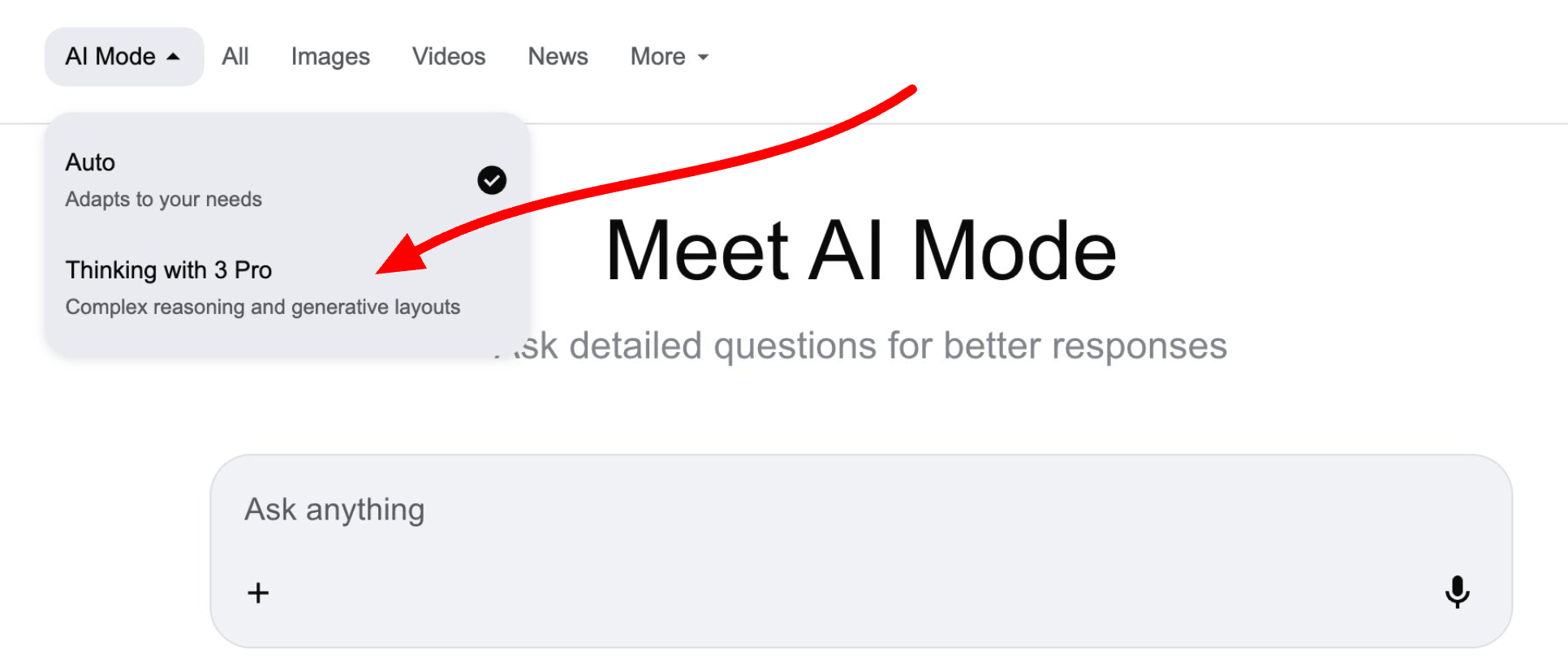
Last week, I was eager to see if Google would incorporate Gemini 3 into their AI systems. Now, it’s official: some responses in AI Mode are powered by Gemini 3, but it’s only available to Google AI Pro & Ultra subscribers in the U.S.
Nick Fox, Google’s SVP of Knowledge and Information, mentioned on X that the rollout of Gemini 3 in search is ongoing. He highlighted that they’ve implemented intelligent automatic model routing to Gemini 3 Pro, aimed at tackling the most challenging questions in AI Mode.
Previously, Fox included AI Overviews in this rollout. However, his latest updates have corrected this to focus solely on AI Mode. If you are a subscriber, you’ll know this feature is available if it’s an option within the AI Mode tab’s carrot menu.
From a recent blog post by Google’s Head of Search, Liz Reid, there’s an emphasis on enhancing automatic model selection in Search with Gemini 3 over the coming weeks. This means your complex queries in AI Mode could soon be channeled to this advanced model.
Introduced on November 18, 2025, Sundar Pichai, Google’s CEO, described Gemini 3 as their most intelligent model yet. It combines all of Gemini’s capabilities, aiming to bring any idea to life.
I’m particularly excited because some users might notice more visual and comprehensive results in AI Mode, especially if you’re an AI Pro or Ultra subscriber in the U.S. These changes indicate that Gemini 3 is already reshaping the search landscape.
Eventually, all AI responses will be powered by Gemini 3 until the next update is rolled out by Google. I can’t wait to see how this further enhances search experiences.
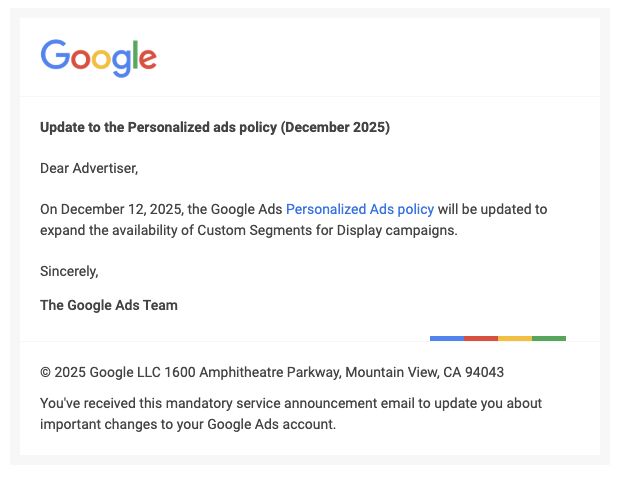
I recently heard about Google’s discreet update on December 12th to its Personalized Ads policy. This change seems to be expanding access to Custom Segments for certain Display campaigns, opening up possibilities previously restricted under the policy.
The information dropped into my inbox through a mandatory service email from Google. However, it left much to the imagination as it only confirmed the policy update but failed to provide specifics. It made it clear, though, that the change targets campaigns limited by the Personalized Ads policy, not every Display campaign.
As someone who closely follows these updates, I noticed the buzz among industry experts. Google Ads Coach Jyll Saskin Gales pointed out that Custom Segments have mostly been available for Display campaigns, suggesting that this update focuses on previously blocked advertisers gaining access.
PPC Freelancer Sofia Akritidou raised critical questions, voicing the confusion many of us felt:
Could this mean a breakthrough for health-related advertisers who faced audience targeting blocks?
What about user comfort with ads tailored to sensitive conditions?
Does “Display campaigns” mean all GDN formats, possibly including Demand Gen?
Why hasn’t Google clarified these changes?
These are not just speculative queries—they are vital considerations for adjusting our strategies and campaigns. Google’s move could mean a broader reach with Custom Segments, allowing us to potentially engage with niche markets, including sensitive areas like healthcare. But it does raise the issue of user privacy.
I’m keen to know whether this change extends to Demand Gen campaigns. Clarity there could significantly influence strategic decisions as December 12th approaches.
What could this mean for advertisers like me? Well, here are a few possibilities:
Access to new targeting options for campaigns previously restricted by limited audience tools.
The advantage of crafting segments based on intent or interest, even with stringent policy guidelines.
The change was initially noticed by Chris Ridley, the Head of Paid, who shared the news on LinkedIn.
The bottom line here is clear: if your Display campaign falls under the Personalized Ads policy, you’re in for an upgrade in targeting capabilities. For others, it’s business as usual—for now.
By 2025, we’ve seen SEO transform into Answer Engine Optimization (AEO), thanks to Google’s focus on providing precise, immediate answers to users’ questions. This shift moves beyond the old strategies of keyword stuffing and backlinking. Let me take you through effective ways to optimize for Google’s answer-focused algorithms, ensuring your site shines.
Understanding Answer Engine Optimization
Google’s emphasis on natural language processing and contextual understanding is stronger than ever, supported by AI advancements like BERT and MUM. These tools help Google engage with user queries conversationally, supplying featured snippets, People Also Ask (PAA) boxes, and direct answers. AEO work involves creating content that’s effortlessly parsed by Google as the go-to response.
My goal? To ensure your content ranks as the most authoritative, concise, and relevant answer. It’s a careful mix of technical editing, clear content, and user-centered design.
Key Strategies for AEO Success
1. Target Question-Based Queries
Today, many users phrase searches as complete questions like, ‘How do I fix a leaky faucet?’ or ‘What is the best diet for 2025?’ To find success, I recommend identifying these queries using tools such as Google’s PAA section, AnswerThePublic, or Semrush. Develop content that offers clear, structured responses.
Tip: Integrate question-based headings such as ‘Why Does My Wi-Fi Keep Dropping?’ to align content with search intents.
Example: A post exploring ‘What are the benefits of solar panels?’ should highlight a concise benefit list early on.
2. Optimize for Featured Snippets
To capture these valuable spots in Google’s search listings, it’s crucial that I organize your content to deliver succinct, scannable answers. Consider utilizing bullet points, numbered lists, or tables to enhance clarity.
Format Matters: For a question like ‘How to bake a cake,’ include a list of steps or an ingredients table for easy reference.
Schema Markup: Incorporate structured data such as FAQ or How-To schema to indicate to Google that your content is ripe for answers.
3. Leverage Conversational Content
Google’s AI highly values natural, conversational prose. Imagine you’re responding to a friend’s query. Simple language triumphs over technical jargon unless absolutely necessary, maintaining an accessible yet authoritative tone.
Example: Swap ‘Optimizing photovoltaic systems’ for ‘How to make your solar panels more efficient.’
Voice Search: Engage with voice queries, like ‘Hey Google, what’s the quickest way to clean a carpet?’ by integrating long-tail, conversational keywords.
To reward your content with E-E-A-T, Google looks for demonstrated expertise through author bios, citations, and credible links. A health blog, for instance, should have contributions or reviews from certified professionals.
Build Trust: Include testimonials, case studies, or supporting data to validate your claims.
Update Regularly: Refresh content to echo 2025 trends as Google values up-to-date information.
5. Technical AEO: Speed and Mobile Optimization
It’s not just about content; Google’s criteria include fast-loading, mobile-optimized sites. I suggest using tools like PageSpeed Insights to confirm your site loads swiftly, aiming under two seconds. Optimize images, minify HTML/CSS/JavaScript, and utilize AMP (Accelerated Mobile Pages) if applicable.
Core Web Vitals: Zero in on Largest Contentful Paint (LCP), First Input Delay (FID), and Cumulative Layout Shift (CLS) to guarantee a flawless user experience.
6. Engage with Multimedia
Using images, videos, or infographics to support your answers can ensure that your content stands out. Google appreciates rich media for boosting user comprehension. Consider how a ‘How to tie a tie’ guide with a quick video or visual diagram could climb the ranks.
Alt Text: Deploy descriptive alt text to boost accessibility and SEO.
Measuring AEO Success
Monitor the performance by using Google Search Console and analytic tools. It’s essential to track impressions, clicks, and snippet appearances, tweaking content based on driving queries and maintaining rankings.
Conclusion
Answer Engine Optimization is undoubtedly Google’s future in terms of ranking. By honing in on user intent, structured content, and technical brilliance, I can guide your site to become the number one answer hub in 2025. Initiate your AEO journey now and maintain a leading edge ahead.
Inspired by this post on AnswerEngineOptimization.blog.
In today’s fast-paced digital world, delivering precise answers to user questions is essential. I’ve discovered that Answer Engine Optimization (AEO) is a pivotal strategy for aligning with AI-driven search technologies. At the forefront of this evolution is Google’s Gemini, a powerful AI model that transforms how answers are generated and presented. By tapping into Gemini’s capabilities, I can deliver high-quality, contextually relevant responses that truly meet user needs.
Understanding AEO in the AI Era
I’ve learned that AEO focuses on making content the go-to answer for user queries in AI-powered search environments. Unlike traditional SEO, which emphasizes webpage ranking, AEO is about structuring content to deliver concise and contextually accurate answers. As conversational AI and voice search become more prevalent, mastering AEO is crucial for maintaining competitive edge in search ecosystems.
Google’s Gemini is leading this transition. As a multimodal AI model, it processes diverse data types, from text to images, and understands nuanced queries to provide tailored answers. For me, aligning content with Gemini’s capabilities means rethinking how I craft and present information.
How Gemini Enhances AEO
With its advanced natural language processing, Gemini interprets user intent with precision. Whether dealing with simple or complex queries, it parses context and key details to generate user-friendly responses. This ability enhances AEO, optimizing my content for real-world searches.
Gemini excels in handling long-tail queries, which are specific and detailed. By creating content that directly answers these queries—like FAQs or how-to guides—I increase the chances of my content being selected as the primary source. Plus, its multimodal nature, integrating visuals with text, is perfect for optimizing rich media content.
Strategies for AEO with Gemini
To make the most of Gemini for AEO, I focus on a few strategies:
Focus on User Intent: I analyze common queries in my niche and craft content that directly answers them, using tools like Google’s Question Hub for insight.
Structure Content for Clarity: I ensure clarity with bullet points and headings. Using structured data like “FAQPage” signals the readiness of my content to Gemini.
Optimize for Multimodal Search: I include visuals alongside text to take advantage of Gemini’s data processing capabilities, ensuring my alt text and captions are relevant.
Prioritize Authority and Trust: I build authority by thoroughly researching my content and earning backlinks from reputable sources.
Test and Iterate: By monitoring performance analytics, I refine my content based on what resonates with Gemini’s selection criteria, boosting engagement and visibility.
The Future of AEO with Gemini
As AI continues to revolutionize search, AEO’s integration with models like Gemini will intensify. With Gemini’s knack for delivering personalized, context-rich answers, it’s changing how users engage with information. Staying ahead means aligning my content with Gemini’s strengths—ensuring clarity, relevance, and trustworthiness are at the forefront.
By embracing AEO and Gemini’s AI potential, I can ensure that my answers stand out, driving engagement and fostering meaningful audience connections in this AI-driven world.
Inspired by this post on AnswerEngineOptimization.blog.
If you’re curious about how search engines deliver precise information, let me introduce you to the Google Knowledge Graph. This technology, first introduced in 2012, has revolutionized the way we access data online. It transforms Google’s capability by turning its search engine into an interconnected web of knowledge, going beyond simple keyword matching. I want to take you on a journey to explore what the Knowledge Graph is, how it operates, and its vast impact on search and beyond.
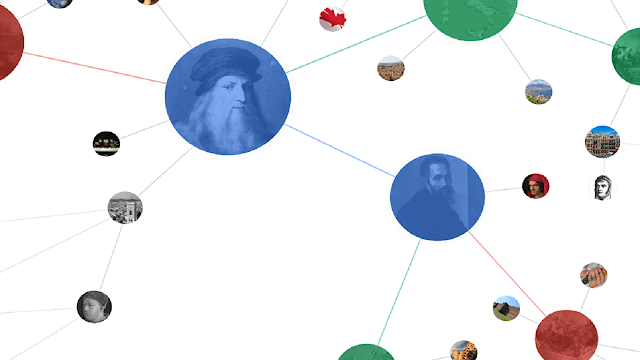
The core of the Google Knowledge Graph is a colossal database mapping real-world entities and their relationships. Imagine a digital encyclopedia where information is not just archived as text but connected in a network of nodes. Each of these nodes represents entities like “Albert Einstein” or “Theory of Relativity,” while the edges define their relationships, such as “developed” or “born in.” This setup empowers Google to deliver more intuitive and context-aware search results.
For instance, when I search for “Leonardo da Vinci,” the Knowledge Graph presents a Knowledge Panel that summarizes key details about him, such as his birth, death, and iconic works like the Mona Lisa. This is because the Graph smartly links Leonardo to relevant entities like “Renaissance” and “Florence.”
The functioning of the Knowledge Graph hinges on a blend of data sources and complex algorithms. Google harnesses data from renowned sources like Wikipedia and Wikidata, alongside other licensed materials. It then employs natural language processing and machine learning to discern entities, their attributes, and relationships from unstructured web data.
Here’s how it works in three simple steps:
Entity Extraction: Identifying and classifying nouns such as people and places in the text.
Relationship Mapping: Understanding connections between entities, like “Barack Obama” being “President of” the “United States.”
Knowledge Integration: Continuously updating the Graph with new data to maintain accuracy.
This sophisticated structure enables direct answers to questions. If I type “Who founded Microsoft?”, it swiftly responds with “Bill Gates and Paul Allen,” thanks to the Graph’s linked entities.
The Knowledge Graph has truly transformed search, making it more user-focused and semantic. Before its existence, Google primarily relied on keyword matches, often resulting in irrelevant results when queries were vague. Now, I can see how it interprets user intent. So, whether I’m searching “jaguar” for an animal, car brand, or football team, the Knowledge Graph prioritizes results based on context clues like my location or previous searches.
Knowledge Panels are one of the most visible outcomes, providing concise information without necessitating multiple website visits. The Graph also facilitates features like “People Also Ask” and related suggestions, predicting follow-up queries. For businesses and individuals, appearing in the Knowledge Graph boosts authority and visibility.
Beyond mere search functionality, the Knowledge Graph extends its reach into Google Maps by linking locations to businesses, powers Google Assistant in answering voice queries, and even enhances YouTube by suggesting related content. Its ability to structure data is impactful in industries like e-commerce and healthcare, where understanding relationships can enhance recommendations and aid diagnostics, respectively.
As I look to the future, the Knowledge Graph’s sophistication is poised to grow with AI breakthroughs. Google’s continual improvements in processing complex queries and integrating real-time data promise even more personalized and predictive user experiences.
In conclusion, the Google Knowledge Graph forms the bedrock of modern search by enhancing how information is accessed. By understanding entities and their complex interconnections, it equips us with smarter, faster, and more relevant information. Whether you’re a curious individual or a business striving to optimize your presence online, the Knowledge Graph is an influential force shaping our digital interactions. Its evolution holds the promise of making our tech interactions more seamless and insightful.
Inspired by this post on AnswerEngineOptimization.blog.
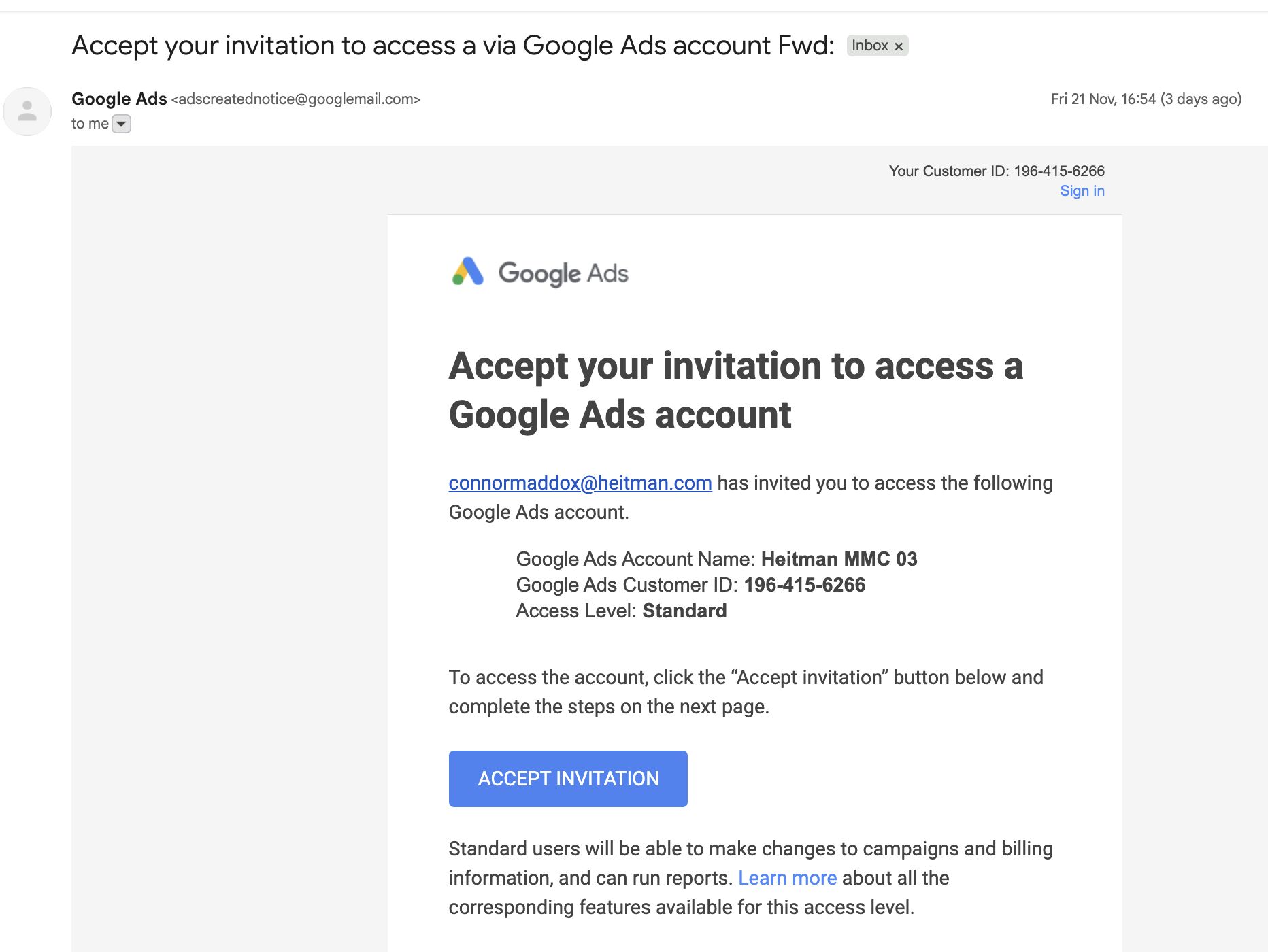
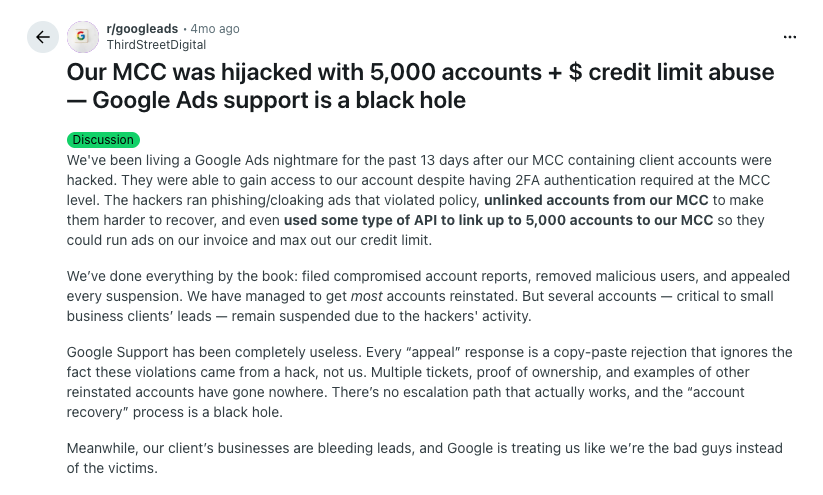
Recently, I’ve noticed a sharp rise in phishing attacks targeting Google Ads Manager accounts (MCCs). These sophisticated scams allow attackers to seize control over numerous client accounts, quickly spending massive amounts of money without detection.
Driving the news. Agencies on platforms like LinkedIn, Reddit, and Google’s forums are continuously reporting an increase in MCC takeovers, even affecting teams with two-factor authentication. The attackers excel with nearly flawless phishing emails that impersonate Google’s account-access invitations.
Victims explain how hijackers insert fake admin users, connect their own MCCs, and start fraudulent high-budget campaigns that can go unnoticed for far too long.
In some cases, support requests take too long to process, leading to severe financial loss, with some agencies reporting upwards of tens of thousands of dollars in expenses within just 24 hours.
How it works. These scams expertly mimic standard client-access invites, using similar branding and format. However, the provided link redirects to a fake Google login page on Google Sites, allowing attackers to capture full MCC access once credentials are entered.
Why it’s getting worse. Many advertisers highlight how the phishing emails closely resemble authentic Google messages. Some agencies admitted they nearly clicked through but noticed small discrepancies in the sender domain or login URL just in time.
The impact:
Fraudulent ads run immediately, depleting budgets.
Malware exposure becomes a real risk, as these ads often direct to harmful sites.
Account damage results from invalid activity flags and disapprovals, with trust issues potentially lingering for months.
Operational chaos erupts as agencies lose access to every client account within the MCC.
What Google says. The Google Ads Community team issued a help document instructing advertisers on steps to take if accounts are compromised, especially highlighting risks during the holiday season. However, there hasn’t been acknowledgment regarding the widespread nature of MCC takeovers.
Why we care. These MCC hijacks represent serious financial and operational threats, swiftly wiping out budgets, compromising client accounts, and requiring days for containment by Google’s support. With attackers now bypassing two-factor authentication through nearly perfect phishing techniques, even the most secured teams face risk. Just one mistake by a team member can put an entire portfolio at risk, impacting spend, performance, and client trust.
What experts recommend. Marc Walker, the founder and managing director of Low Digital Ltd, offers several strategies to safeguard your accounts from being hijacked:
Always verify the URL since Google doesn’t use Google Sites for login purposes.
Confirm invites within the MCC itself and avoid relying solely on email.
Remove dormant users and inactive accounts to reduce potential vulnerabilities.
Educate teams to recognize phishing red flags, especially during peak seasons like holidays.
Between the lines. In a large MCC, if even one user falls for the scam, the attacker gains full access to the entire portfolio, enabling them to deplete budgets much faster than Google’s response time.
Bottom line. Google Ads hijacks pose a substantial operational threat for both agencies and in-house teams. Until stronger protections are implemented, vigilance remains our strongest defense.
I recently came across a fascinating study highlighting how seasonality adjustments can actually backfire for advertisers during Black Friday, driving up costs and reducing efficiency.
A thorough analysis over three years, involving up to 6,000 advertisers, indicates that using Google’s seasonality bid adjustments during Black Friday and Cyber Monday (BFCM) often undermines efficiency, despite the platforms recommending them.
The big picture. Smart Bidding models are crafted to foresee predictable retail surges. Optmyzr analyzed tens of billions of impressions between 2022 and 2024, finding that advertisers who avoided seasonality adjustments usually had better efficiency metrics.
Without adjustments, Smart Bidding:
Recognized the BFCM conversion lift independently
Increased bids rationally
Maintained stable or improved ROAS, particularly in 2024
With adjustments: CPCs surged faster than the actual conversion rates, eroding efficiency.
Reality check: Google doesn’t need your “heads up.” Seasonality adjustments prompt Google to expect a conversion rate rise and to bid accordingly. If your prediction is off—and it usually is—Smart Bidding overshoots.
For example:
You predict a +50% CVR lift
The actual lift is +40%
This results in an overbid of about 7.1%
During BFCM’s high sales volumes, even minor mistakes become costly quickly.
The data: 3 years of the same story
1. Smart Bidding already adjusts for the CVR spike
2022: +17.5%
2023: +11.9%
2024: +7.5%
No additional guidance needed.
2. CPC inflation doubles with adjustments
Across all observed years, CPCs increased approximately twice as much when a seasonal adjustment was used.
3. ROAS drops significantly
Advertisers relying on Smart Bidding saw stable or improved ROAS, whereas those who intervened suffered double-digit losses.
The one exception: “Volume at all costs.” If the aim is pure revenue growth, disregarding margins, seasonality adjustments can be beneficial.
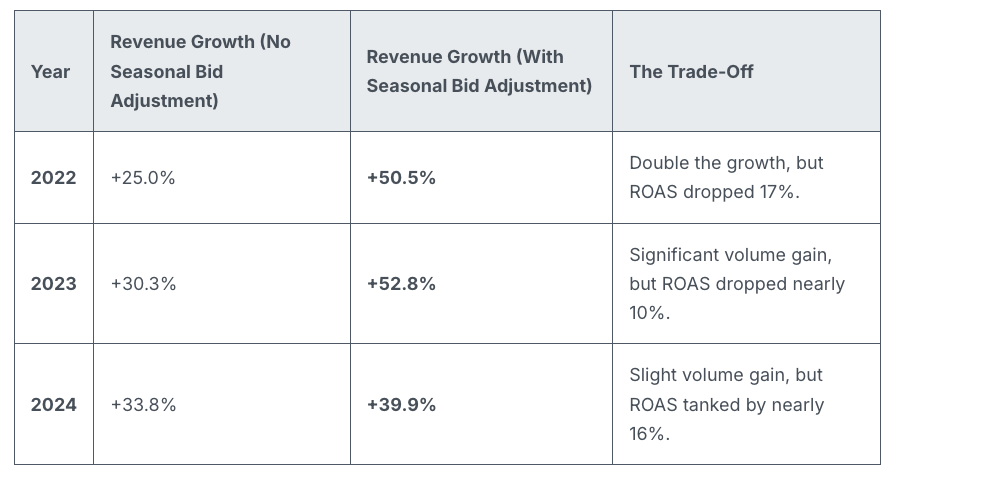
Revenue lifts were notably higher with adjustments:
2022: +50.5% vs. +25.0%
2023: +52.8% vs. +30.3%
2024: +39.9% vs. +33.8%
Efficiency may decline, but volume certainly increases.
When seasonality adjustments make sense. They’re useful when Google doesn’t have prior signals, like one-off or niche events.
Good for:
One-time flash sales
Email-only offers
Surprise clearance sales
Niche seasonal spikes
Not recommended for:
Black Friday
Cyber Monday
Christmas
Valentine’s Day
Any event with a predictable historic pattern
Why we care. Google already recognizes the significance of Black Friday. Smart Bidding is trained with years of BFCM data and can detect conversion rate spikes independently. Overriding this can lead to excessive bidding, increased CPCs, and reduced ROAS, so many marketers might be wasting their budget during this crucial week.
By recognizing when Smart Bidding has an adequate signal, advertisers can avoid expensive errors, maintain efficiency, and reserve seasonality adjustments for when they add true value.
Bottom line. Smart Bidding effectively manages major retail holidays. Seasonality adjustments often bring more chaos than benefits during predictable retail peaks. Keep them for unique, brand-specific events that Google can’t predict.
Smart move: Trust the algorithm — use tools like anomaly alerts, pacing monitors, and bid caps for control without conflicting with Smart Bidding’s core models.
When I reflect on the evolution of SEO and SEM, I realize just how much these fields have transformed alongside search technologies. As Gary Illyes from Google once pointed out, embracing change is vital, even when it’s hard to accept.
Gary Illyes reacted to a Microsoft Bing article by Fabrice Canel and Krishna Madhavan about AI Search and its impact on conversion measurement. He made a strong statement about the future of search, something I deeply resonate with.
Coevolve. On LinkedIn, Gary emphasized, “SEM and SEO will need to coevolve with search, just like it has for the past 30 years.” It’s a clear reminder that adaptation is a constant necessity in our field.
I’ve witnessed many SEOs and SEMs adapt to these shifts, much like the path SEO has taken since its inception as a service. The most successful professionals continue to evolve.
SEO is not dead. The notion that SEO is fading away is not new. I’ve heard it countless times, yet SEO remains a critical component of digital marketing, continuously evolving with technological advancements.
The challenge is real. As search features change, it’s vital to embrace this evolution to ensure continued success. Those ready to accept and adapt to these changes will find new opportunities.
Why we care. I encourage others to engage with the new search features. Understand them, learn how they can draw users to your content, and figure out how to turn these interests into conversions.
Change isn’t easy or comfortable, but it’s an inevitable part of the future that we must prepare for.
Have you ever wondered how to make your products stand out in Google AI Shopping and its AI Mode? I’ve discovered that optimizing feeds, utilizing schema, improving imagery, and crafting conversational Product Detail Page (PDP) content are key strategies to enhance visibility.
Recently, I’ve noticed more Google Ads appearing directly within Google’s AI Mode results. This change suggests that Google’s test has been quietly advancing, signaling the emergence of a new ad space in Google Search.
Here’s what I’ve observed. Back in May, Google confirmed they were testing ads in AI Mode on desktop, and these sightings have notably increased:
One notable instance was when Greg Sterling shared a screenshot related to an HVAC repair query, marking the first time he noticed an AI Mode ad in the wild.
Brodie Clark soon after replicated this behavior, declaring “the time has come” as he provided multiple screenshots showing ads within the generated answers.
Additionally, Barry Schwartz reported ongoing instances of users encountering these AI Mode ads on Search Engine Roundtable.
Why this matters to us. The inclusion of ads within AI Mode represents a substantial shift in how Google’s merging sponsored content with AI-generated answers. This development could significantly alter visibility, click-through rates, and the overall search experience. For early adopters, this offers opportunities for reduced competition, novel formats, and greater engagement. It’s becoming clearer that AI Mode is transforming into a legitimate advertising channel rather than just an experiment.
Reading between the lines. This expansion indicates Google’s move to integrate ads within AI experiences, likely preceding a broader rollout in Search.
The bottom line. Starting as a small test, this feature appears more commonly now. Advertisers should prepare for AI Mode to evolve into a mainstream advertising surface in Google Search.