Meta’s shopping initiatives bring three parts of social commerce closer together: live product discovery, personalized advertising and payment. The supplied reporting describes a strategy for turning attention inside Facebook and Instagram into purchases with fewer interruptions.
For advertisers, the important development is not any one feature in isolation. Live ads can widen discovery, product catalogs can improve relevance, and virtual cards can address payment hesitation. Their value depends on how well those layers operate as one purchase path.
Live ads extend the storefront beyond its original audience
CrushPress.AI reported that Meta was expanding Live Video Ads globally on Facebook and introducing them on Instagram. In the United States, the company was also working with live-commerce providers CommentSold and TalkShopLive to help sellers turn livestreams into ads capable of reaching people who had not joined the original broadcast organically.
This changes the role of a live shopping event. Instead of functioning only as a scheduled broadcast for an existing following, it can also supply advertising creative and product demonstrations for a wider audience. Facebook’s Live Shopping tools, according to the report, allow viewers to browse and purchase products without leaving the livestream.
The resulting funnel is shorter in principle: a viewer encounters a demonstration, evaluates the featured product and moves toward purchase within the same experience. That convenience may remove unnecessary navigation, although it does not guarantee demand or compensate for an unclear offer.
Virtual cards address a specific source of checkout friction
The report also described a planned virtual-card payment feature for Facebook and Instagram, developed through collaborations with Mastercard and Visa. It said the system would generate a temporary, one-time card number linked to a shopper’s existing card, allowing a transaction without exposing the underlying card details.
That design addresses a narrow but meaningful trust question: whether a shopper must disclose a primary card number during an in-app purchase. It should not be interpreted as a complete guarantee of transaction safety. Virtual card numbers do not resolve concerns about product quality, delivery, refunds, merchant legitimacy or account security.
The distinction also matters when assessing availability. The supplied material characterizes the feature as an upcoming rollout but does not provide enough detail to establish current geographic coverage, merchant eligibility or adoption. Advertisers should therefore verify access in their own accounts before designing a campaign around it.
Product catalogs become the connective data layer
CrushPress.AI reported that Meta was making product data a core component of Sales campaigns. The described approach combines catalog feeds with creative assets while Meta’s AI assembles ads for individual users. Details such as price and availability can therefore influence both what is shown and how accurately an ad reflects the product being sold.
This positions the catalog as more than an inventory file. It connects recommendations, ad delivery and the purchase opportunity. The report also framed product discovery as increasingly driven by recommendations appearing in feeds, creator videos and business content rather than beginning with a conventional product search.
That makes feed quality operationally important. If product names, prices, availability or destinations are incomplete or stale, automated assembly can distribute those weaknesses at scale. Strong creative still matters, but it must be supported by reliable commerce data.
Campaign evaluation should follow the entire purchase path
The combined proposition should be assessed as a sequence rather than as an ad-format experiment alone. Advertisers need to distinguish reach generated by live promotion from meaningful product engagement, checkout starts and completed purchases. A large viewing audience is useful only when it produces qualified movement through the funnel.
Catalog accuracy, livestream presentation and checkout confidence can each become a constraint. If viewers engage but do not open product information, the offer or demonstration may need work. If product engagement is healthy but checkout completion is weak, payment confidence, total cost or post-purchase policies may deserve closer examination. Virtual cards could remove one objection, but they cannot diagnose every reason for abandonment.
Advertisers should also separate platform automation from commercial judgment. Meta’s AI can use product data to assemble and deliver ads, as the report describes, but businesses remain responsible for assortment, positioning, accurate information and the customer experience after payment.
Key takeaways
Live shopping ads can extend a broadcast beyond its organic audience while keeping product discovery close to the buying action.
Virtual card numbers are intended to limit exposure of a shopper’s underlying card details, but they address only one dimension of transaction trust.
Product catalogs increasingly support ad personalization and discovery, making feed accuracy central to campaign quality.
Performance should be judged across viewing, product engagement, checkout initiation and purchase rather than by reach or clicks alone.
The next meaningful test is whether Meta can make these layers consistently available and reliable enough to produce measurable gains for merchants. Advertisers that establish clean catalog data and full-funnel measurement will be better positioned to evaluate that opportunity as access expands.
Your Shopify admin will not load, customers are reporting checkout errors, and paid campaigns are still sending people to the store. The worst response is to change everything at once.
You need to identify which part of the buying journey is broken, stop avoidable losses, preserve reliable data, and keep a temporary platform failure from becoming a lasting search problem.
Key takeaways
Test the store as a customer. An inaccessible admin does not automatically mean the storefront or checkout is unavailable.
Pause conversion campaigns when customers cannot complete payment, and record when you changed each campaign.
Do not noindex products, redirect product URLs, or mark inventory as out of stock solely because Shopify checkout is unavailable.
Resume promotion only after you have tested the complete journey from product page to order confirmation.
Triage the customer journey before changing campaigns
Start outside Shopify Admin. Open a private browser window and follow the same path a new customer would take: load a product page, add the product to the cart, begin checkout, and attempt to reach the final payment stage. If you operate physical locations, check Retail POS separately.
This separation matters because one service can fail while another remains usable. During the reported Tuesday disruption, Shopify acknowledged problems involving Admin and Retail POS at 9:27 a.m. EDT, while merchants and customers also encountered trouble with storefronts, checkout, and support access. Shopify was still investigating at 9:45 a.m. and reported an identified cause and improving service at 10:37 a.m. That improvement did not, by itself, prove that every merchant’s customer journey had recovered.
What you observe
What it means for your response
Admin is unavailable, but a customer can browse and complete checkout
Keep monitoring sales. Do not pause every campaign merely because store management is difficult.
Storefront loads, but checkout fails
Pause campaigns intended to produce immediate purchases and hold scheduled promotional sends.
Storefront does not load
Stop traffic whose landing pages are unavailable and publish a clear service notice on a channel you can still control.
Retail POS fails while online checkout works
Separate the retail response from the ecommerce response. Do not treat all revenue channels as unavailable.
Support is inaccessible
Maintain an internal incident log and use the platform’s available public updates without waiting for a support reply.
Assign one person to maintain the incident record. Capture what failed, how it was tested, when the failure was first confirmed, which promotions were active, and which actions the team took. This prevents several people from making conflicting campaign, site, or customer-service changes.
Control paid traffic without destroying useful evidence
If checkout cannot accept orders, each additional conversion-focused click can add cost without creating a sale. Pause the affected campaigns rather than deleting them. A pause preserves campaign settings and makes it easier to compare performance before, during, and after the interruption.
Make decisions by destination and objective. A campaign leading to a failed product or checkout path should stop. A campaign serving a functioning market, store, or non-transactional resource may not need the same treatment. The test result should decide, not the frustration of being locked out of Admin.
Record the time of every pause, budget adjustment, promotional cancellation, and restart. Add the incident window to your analytics annotations or reporting notes. Keep Shopify’s acknowledgement and recovery updates in the record, but use your own customer-path tests to define the period when your store was actually unable to convert.
Do not evaluate that window as an ordinary campaign-performance decline. Separate traffic sent during the failure from normal traffic, then reconcile ad-platform conversions with completed Shopify orders after access returns. Otherwise, automated bidding changes and human budget decisions may both react to a platform problem as though it were weak demand or poor creative.
Protect SEO, product schema and AI-facing answers
A temporary checkout failure is not an inventory change. Do not switch Product or Offer structured data to OutOfStock unless the item is genuinely unavailable. Machine-readable availability can remain visible after the checkout problem ends, leaving search engines, shopping systems, and AI assistants with an inaccurate description of the product.
Likewise, do not noindex product pages, remove canonical tags, delete URLs, or redirect the catalog to the homepage as an emergency measure. Those changes can outlive the incident and create crawling, indexing, and reporting problems that are harder to reverse than the outage itself.
If you can publish outside the affected storefront, maintain one plain-language status message. State which customer action is failing, which channels still work, and when you last verified the condition. Use the same wording in social updates, support replies, and internal scripts. Consistent public language gives customers a clearer answer and reduces the chance that search or AI systems encounter contradictory explanations.
Avoid promising a recovery time you do not control. A platform update saying that services are improving is a reason to retest, not a reason to declare your own store operational.
Restart only after a complete purchase succeeds
Recovery should be verified from the customer’s side. Restored Admin access is useful, but it does not establish that product pages, carts, checkout, payment, confirmation, and order recording are all working together.
Repeat the full purchase path in a clean browser session.
Confirm that the completed order appears where your team expects to manage it.
Check Retail POS separately if physical stores were affected.
Review the incident window for incomplete, delayed, or unexpectedly repeated customer activity before sending more promotion.
Resume campaigns in a controlled order, starting with the paths you have directly verified.
Update the public service message only after your own checks pass, and preserve the incident notes for reporting.
Once operations are stable, save a short outage runbook containing the incident owner, customer-path tests, campaign controls, analytics annotation process, and status-message template. The next Shopify disruption should trigger a familiar sequence, not a fresh argument about what to do.
Your problem probably isn’t a lack of Merchant Center alerts. It is that an alert appears inside a client account, the underlying cause lives somewhere else, and nobody is certain who should act.
Google’s worldwide rollout of Merchant Center for Agencies gives multi-client teams a central place to see account health, find problems, and surface opportunities. The practical payoff comes from treating that view as an operating layer: every signal needs a priority, an owner, a corrective action, and a way to confirm the result.
Key takeaways
Use Merchant Center for Agencies as the portfolio command layer for onboarding status, alerts, diagnostics, inventory signals, promotions, and product opportunities.
Separate detection from correction. A centralized alert has little value until someone owns the next action and verifies the outcome.
Rank diagnostic work by likely client impact, urgency, recurrence, and reach rather than treating every warning as equally important.
Check availability, store quality, product data, promotion validity, and business fit before moving a low-visibility product into paid campaign planning.
Audit third-party tools by function. Keep any tool that still handles an essential transformation, connection, approval, or reporting job the agency hub has not demonstrably replaced.
One portfolio view changes coordination, not ownership
The unified dashboard can show client onboarding statuses and critical alerts across accounts. That shortens the path to noticing a problem. It does not automatically establish who owns the catalog, who can approve a promotion, which system generated the data, or who is responsible for confirming a repair.
Before you make the dashboard your team’s default workspace, create a portfolio register with the information needed to route each signal:
Client and Merchant Center account.
Active markets and campaign types.
Onboarding state and any known blocker.
Agency account owner and backup owner.
Client contact for catalog, inventory, promotion, and commercial approvals.
Upstream product-data system, feed process, or external management tool.
Where diagnostic work is tracked.
Who validates the result after a change.
This register prevents a common failure mode: the agency sees an alert quickly, but the alert then waits because the corrective action belongs to a client merchandiser, ecommerce developer, inventory team, or data provider.
Define the authority boundary as well. Your team should know which routine corrections it may make without additional approval, which changes require the client, and which problems must be fixed upstream. Central visibility should not become blanket permission to alter every account or product record.
Turn portfolio diagnostics into a prioritized work queue
Route each diagnostic into a queue containing these decision fields:
Scope: Which client, market, campaign type, and catalog area are affected?
Commercial exposure: Could the problem suppress an important product group, interfere with active advertising, or weaken a current promotion?
Urgency: Is the issue tied to inventory, a live offer, an onboarding blocker, or another time-sensitive condition?
Recurrence: Is this an isolated product problem or a pattern generated by a shared template, integration, or operating process?
Confidence: Is the cause known, or does the team still need to investigate before changing data?
Owner and next action: Who acts, what will they do, and who confirms the outcome?
Prioritize patterns, not just visible volume. A recurring defect produced by a shared integration may deserve attention before a larger collection of unrelated, low-impact warnings because correcting the shared cause can prevent the same problem across more accounts. Conversely, an isolated issue can still be urgent when it affects a strategically important product or live promotion.
Use a simple status flow such as new, investigating, blocked, corrected, and verified. Do not close an item merely because someone edited a feed or changed a setting. Close it when the expected result has been checked in the appropriate system and any client-facing consequence has been reviewed.
Inventory and store-quality signals belong in the same intake process, but not in the same repair playbook. Merchant Center for Agencies can expose store quality metrics, inventory health, out-of-stock products, and promotion management. A product-data defect, a stock constraint, a store-quality concern, and an invalid promotion require different owners and different corrective actions.
Send product-data problems to the owner of the source data or feed process.
Send availability problems to the inventory or merchandising owner instead of trying to compensate through advertising.
Send store-quality concerns to the team that controls the customer experience and relevant operating process.
Validate promotion terms, product eligibility, availability, and timing before increasing exposure.
This distinction matters because a dashboard can tell you where the symptom appears without making every symptom an advertising problem. An unavailable product is not a visibility opportunity, and a broken operational process is not repaired by adding budget.
Treat low-visibility products as hypotheses, not automatic campaigns
Performance insights can identify high-potential products with low visibility. Agencies can tag those products and prioritize them for advertising. That creates a useful opportunity queue, but high potential is a reason to investigate, not a guarantee that additional spend will produce a good result.
Before a product becomes a campaign candidate, check that:
The product is available and its inventory position supports additional demand.
No unresolved product-data diagnostic is likely to limit its visibility or create an inaccurate listing.
The store-quality signals do not reveal an obvious customer-experience concern.
Any associated promotion is current, applicable, and operationally ready.
The product fits the client’s commercial priorities rather than merely satisfying a platform-generated opportunity signal.
The campaign owner has defined what outcome will justify continuing, changing, or stopping the activity.
Use tagging to preserve the decision trail. A workable convention separates products that are candidates, approved for testing, active, or held because of data, stock, promotion, or business constraints. If the platform’s tagging does not capture all the context your team needs, mirror the status in the agency’s task or reporting system.
Keep the claim narrow when reporting this work. Current product data supports shopping and discovery experiences, but the agency rollout does not by itself prove improved visibility in every AI answer engine or frontier language model. SEO, AEO, and GEO teams should distinguish product-data readiness from measured AI visibility rather than blending them into one unsupported result.
Audit tool overlap before removing anything from the stack
The rollout makes tool consolidation worth examining. It does not establish that specialized feed-management, integration, workflow, or reporting products are obsolete. A unified Google view may replace part of an agency’s monitoring process while leaving critical upstream work untouched.
Agency function
What the rollout provides
Practical decision
Portfolio monitoring
A unified view of client onboarding status and critical alerts.
Use the agency dashboard as the first-line monitoring view if it covers the accounts and signals your team needs.
Cross-account diagnostics
Portfolio-wide issue discovery with market and campaign-type filtering and impact-based prioritization.
Centralize diagnostic intake there when the coverage supports your triage process.
Store, inventory, and promotion oversight
Store-quality metrics, inventory-health visibility, out-of-stock monitoring, and promotion management.
Compare the depth, ownership controls, and handoffs with the process you already use.
Opportunity discovery
Identification and tagging of high-potential products with low visibility.
Use the signal as campaign-planning input, not as a performance verdict.
Transformations, connectors, approvals, and client reporting
The announced agency capabilities do not establish complete replacement of these jobs.
Keep existing tools until each required function has been tested from input through validated output.
Evaluate the stack by job rather than by vendor. That keeps a visually impressive dashboard from hiding a missing dependency.
List every job in the current product-data workflow, including collection, transformation, distribution, diagnostics, approvals, promotion handling, reporting, and escalation.
Identify which system performs each job and which system merely displays the result.
Run the Merchant Center for Agencies workflow alongside the current process for a representative client group spanning relevant markets and campaign types.
Compare the alerts found, actions required, ownership handoffs, product-data outcomes, inventory signals, and reporting needs.
Document a rollback path before changing a production workflow.
Remove a tool only when its essential functions are demonstrably duplicated and the replacement process has been validated.
Canceling a tool before checking its transformations, connectors, or distribution work could alter product data or disrupt active commerce and advertising processes. The safer sequence is to preserve the current path, validate the new operating model in parallel, and remove only proven duplication.
Start with a representative set of client accounts. Build the ownership register, route portfolio diagnostics through the new queue, and test the opportunity workflow without dismantling your existing stack. Expand when the alerts, handoffs, corrections, and validation steps work as one repeatable system.
Your storefront can look complete in a browser while sending a nearly empty page to crawlers. The failure usually sits in the handoff: the server returns a shell, then JavaScript fetches the product content, navigation, filter state or structured data. If that second step is delayed or skipped, the page loses the information that makes it discoverable.
You do not need to remove JavaScript or give up a fast, interactive storefront. You need a clear division of responsibility: the initial HTML should explain what the page is and where its important links lead; JavaScript should improve how shoppers interact with it.
Define the minimum HTML contract for every template
Start with an output standard, not a framework decision. For each page template, write down what must be present in the server’s initial HTML response before any client-side code runs.
Put the page’s identity, primary content and current commercial facts in the initial HTML.
Render important destinations as real anchor elements with href attributes.
Give every filter state intended for search a stable, readable URL that works when requested directly.
Include Product structured data in the same server response as the visible product information.
Keep recommendation widgets, comparison tools and nonessential third-party scripts out of the critical rendering path.
Use View Source or an HTTP client when checking this contract. The Elements panel in browser developer tools shows the DOM after JavaScript has had a chance to repair or populate it. A complete rendered DOM does not prove that the server response was complete.
Framework choice is not a substitute for this test. Next.js can combine server rendering and static generation, Astro can send content with no JavaScript by default and hydrate selected interactive islands, and Shopify Hydrogen can support deferred client-side behavior. The relevant question is not which label appears in your technology stack. It is what each template actually sends before hydration.
Make the catalog discoverable before shoppers interact
A crawler should not have to open a menu, trigger a click handler or run a search to discover your important categories and products. Render navigation links in the initial response, using anchor elements whose href values point to real destinations.
This distinction matters in component-based storefronts. A button is appropriate for opening a drawer, changing a local view or adding an item to a cart. A link is appropriate when the shopper is moving to another URL. A styled div with an on-click event may look like a link, but it does not provide the same dependable discovery path. Ecommerce navigation built as ordinary anchors remains visible to crawlers even when JavaScript supplies the interactive behavior.
Treat every filter state as a URL decision
Faceted navigation needs two separate decisions: which states help shoppers, and which states deserve to become search landing pages. Do not make every possible combination indexable by default. That can produce a large collection of thin or repetitive URLs. Classify each facet and combination according to its intended role.
Search landing state: Give it a stable URL, meaningful page context and a server response containing the expected product set.
Discovery path: Use crawlable links when the state helps crawlers reach important inventory, but decide separately whether the resulting page should be indexed.
Shopper-only interaction: Keep purely presentational states, such as a view toggle, as interface controls rather than pretending they are distinct landing pages.
Client-side grid updates are fine after the initial load. The URL still needs to represent any state you expect people or search systems to revisit. Prefer readable URLs over hash fragments or opaque, bracket-heavy parameters when a filtered page is meant to be shared, bookmarked, crawled and indexed.
Test a filter URL by copying it into a fresh session and requesting it directly. The correct category context, selected state and core product results should be available without replaying the clicks that created the URL. If the server returns the unfiltered category and only browser memory restores the selection, the URL is not yet a dependable landing page.
Send Product structured data with the visible facts
Product structured data should arrive in the initial HTML, not appear only after a client-side component mounts. Place the JSON-LD script in the server response and generate it from the same current product data used for the visible page.
This is particularly important for price and availability because those values can change frequently. When the visible page, the structured data and the underlying commerce record use separate rendering paths, they can drift apart. Server-delivered structured data removes one avoidable dependency and gives crawlers immediate access to Product data without waiting for rendering.
Confirm that the Product JSON-LD exists in the raw response, not only in the rendered DOM.
Match the product identity in the markup to the title and description shoppers can see.
Keep price and availability consistent with the visible offer at the time the page is served.
Keep breadcrumb markup and visible breadcrumb navigation aligned.
Do not use structured data as a replacement for missing product content. It describes the page; it does not make an empty page complete.
Valid markup does not guarantee a search feature or enhanced result. It does, however, remove a preventable technical reason for the product information to be missed or misunderstood.
Protect the first render from third-party scripts
Third-party code accumulates quietly on ecommerce sites. Analytics, chat, reviews, recommendations, personalization and advertising tools can all compete with the product page for browser resources. If they delay the main content, they also increase the work required to render and understand the page.
Keep essential product information outside third-party widgets wherever possible. A review widget can provide interaction, for example, while the review summary or indexable review content remains part of the server response. A comparison carousel can load later because it enhances the shopping session rather than defining the product.
Use script-loading behavior deliberately. Async suits an independent script that can execute whenever it finishes downloading. Defer suits a script that should wait until HTML parsing is complete and preserve its order relative to other deferred scripts. Both approaches require testing because the script’s own loader may create additional requests or inject more code.
Deferring nonessential scripts can protect Largest Contentful Paint and reduce the rendering burden. The practical priority order is straightforward: deliver the product and navigation first, make the buying controls usable next, then initialize supporting services.
Inventory every third-party script on product and category templates.
Record what breaks if each script is blocked. If the product disappears, the dependency is too deep.
Mark the scripts that are essential for the initial buying path.
Load engagement and measurement code without blocking the initial content whenever its behavior permits.
Remove tags that no longer have a current owner or business purpose.
Use a release test that catches invisible storefronts
A JavaScript SEO audit is most useful when it becomes a release check. Run it on representative product, category and filtered pages whenever you change rendering, navigation, data fetching or third-party tooling.
Request the raw HTML for each representative URL without executing JavaScript.
Search that response for the page title, descriptive content, price, availability, breadcrumbs, primary links and Product JSON-LD.
Disable JavaScript and follow the main catalog links. The experience can be less interactive, but the destinations and page meaning should remain present.
Open indexable filter URLs directly in a fresh session. Confirm that each response represents the requested state without requiring a previous click sequence.
Enable JavaScript and compare the rendered page with the raw response. JavaScript may add interaction and secondary content, but it should not replace the page’s essential identity.
Review the loading order of third-party scripts and check whether they delay the primary content or Largest Contentful Paint.
Repeat the checks against the deployed production response. Do not rely solely on what the application produced in a local development environment.
The raw-response test also provides a useful baseline for AI visibility. Some AI systems do not handle JavaScript efficiently, so a page that communicates its product, offer and hierarchy in HTML is easier to process without relying on a browser-like rendering stage.
What you find
Likely dependency
Fix first
Product name or grid is absent from raw HTML
Client-side content rendering
Fetch and render the core content on the server
Destinations appear only after a menu interaction
Client-only navigation
Render real anchors with href values in the initial response
Product JSON-LD exists only in the rendered DOM
Client-side schema injection
Serialize the markup into the server response
A filter works only after a click sequence
Interface state is not represented by the URL
Create a stable URL and return the corresponding state directly
Primary content waits behind vendor code
Blocking third-party scripts
Defer, load asynchronously or remove nonessential scripts
Start with one important product template and one category template. Write the HTML contract, disable JavaScript and fix the first essential element that disappears. Once the server response carries the meaning of the catalog, you can keep adding interactivity without asking every crawler and AI system to reconstruct the store for you.
I’ve recently delved into the fascinating world of conversational commerce AI, and I can’t help but feel excited about how it’s changing the shopping landscape. From how we discover products to the actual purchasing process, this technology is redefining our retail experiences.
What really intrigues me is what these changes mean for brands operating in an AI-dominated retail space. The implications are huge, and it could very well spell the end for traditional shopping carts as we know them.
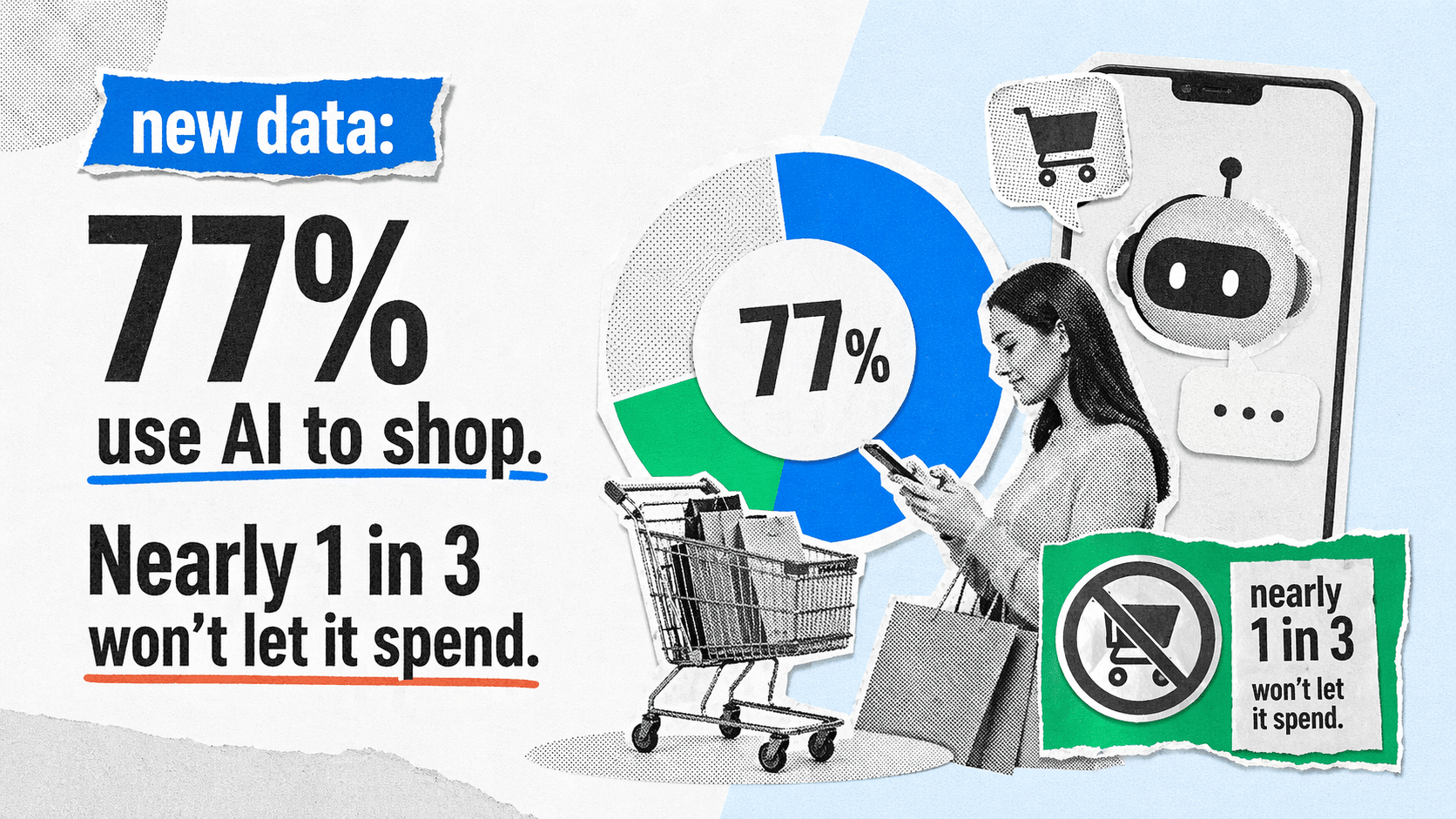
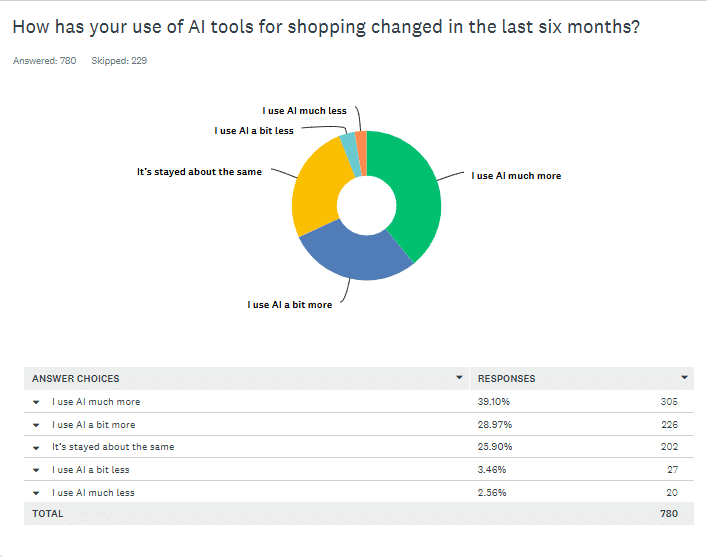
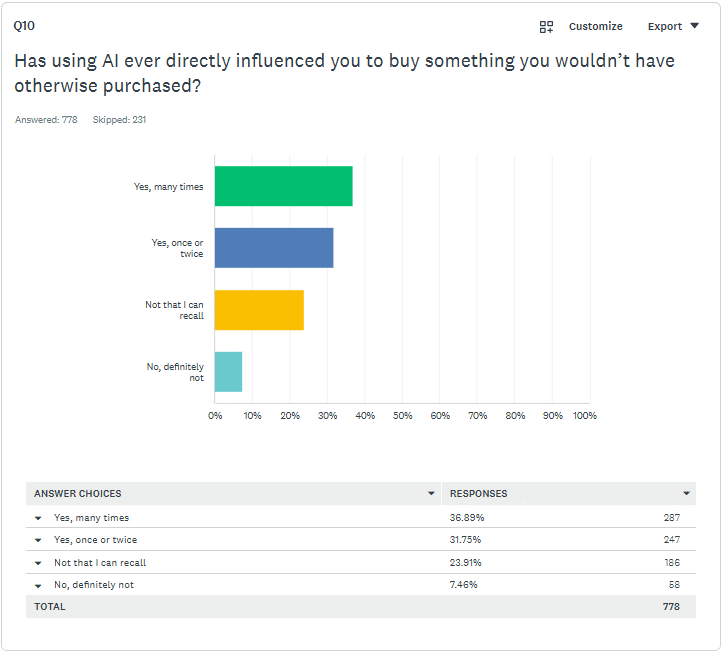
In my latest dive into the world of AI commerce, I discovered that over 77% of people, like myself, are tapping into AI to make shopping decisions. However, when it comes to allowing it to spend our money, trust dramatically drops.
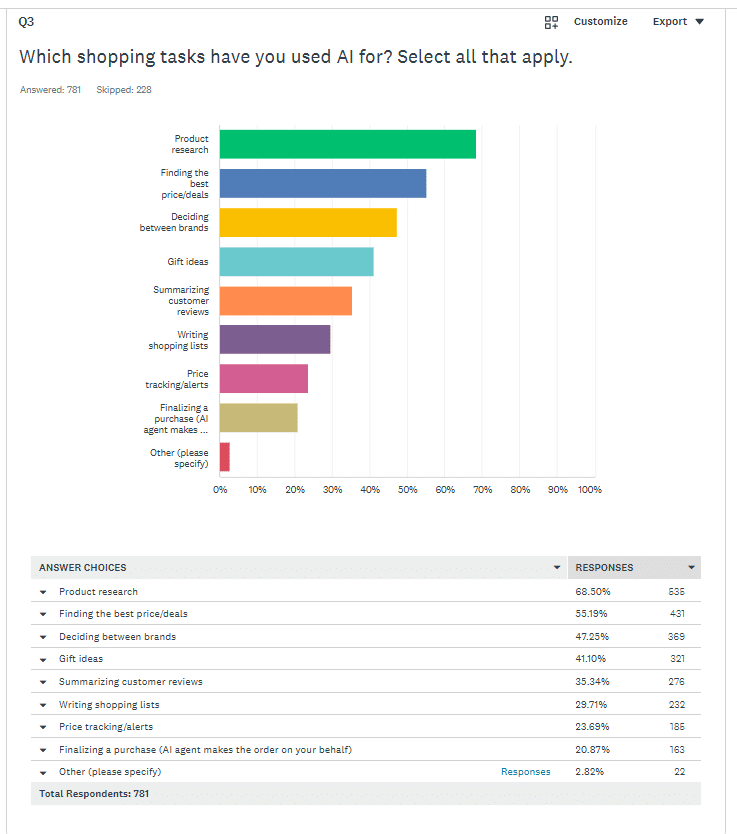
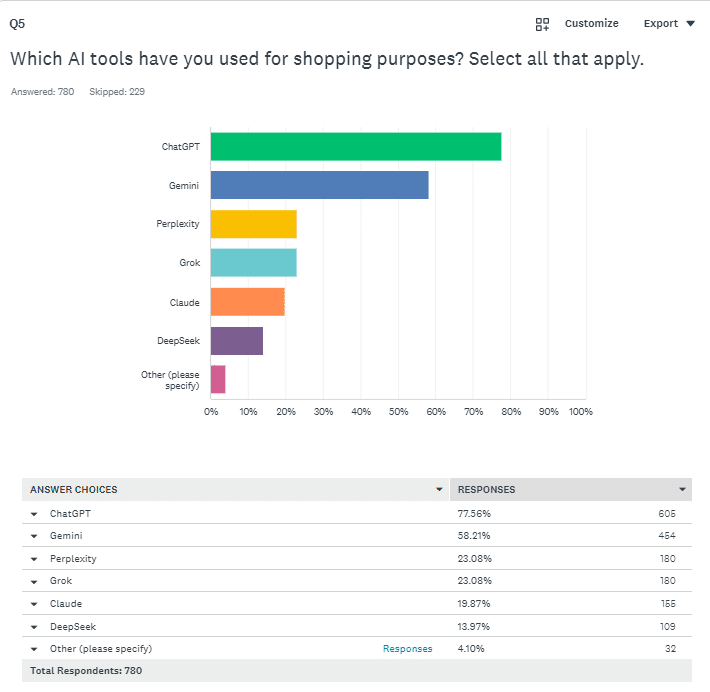
When we consider the current landscape of AI shopping, tools such as ChatGPT and Google Gemini are becoming staples for weekly shopping routines. They help us compare prices and perform product research, but hand over our credit cards? Not so fast.
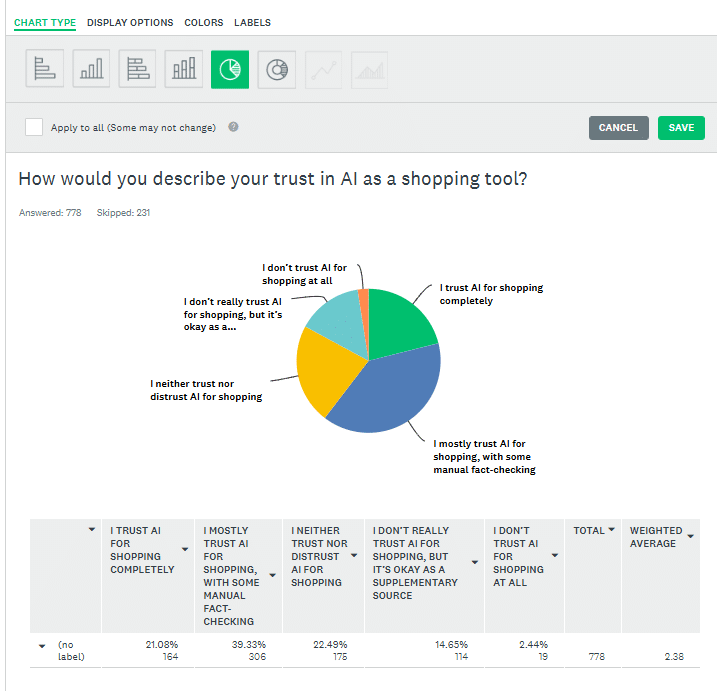
From the research conducted by Exploding Topics, discomfort still looms around AI’s potential to handle our payments. Even though I’m using AI more, especially for researching the best deals, there’s still significant skepticism about allowing AI to make autonomous purchases.
Fast forward to the future, our shopping habits might evolve, but certain barriers, such as consumer trust, will need to be addressed for AI to play an even larger role.
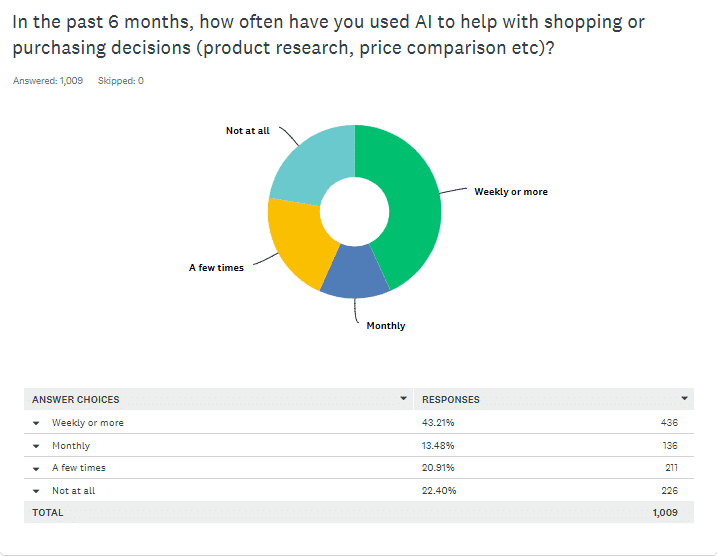
Here are some quick insights: 77.6% of us have used AI for shopping in the last six months, with 43.21% using it weekly. AI influences purchase decisions for clothing and technology, but when it comes to storing payment details or allowing autonomous purchases, the hesitation persists.
People like me are cautious, with the mode average for trusting AI to spend being a whopping $0. The uncertainty is real, but one thing’s for sure, AI in commerce isn’t going anywhere.
For businesses, leveraging tools like Semrush’s Exploding Topics Pro could provide insights into these AI shopping trends, ensuring they stay ahead in this evolving market.
Download the complete findings for a deep dive into the data and discover potential strategies for tapping into this growing AI-driven shopping landscape.
Your Shopping traffic has stopped, but the fastest-looking response—requesting another review immediately—is rarely the most useful first move. A review can assess the account you present; it cannot repair missing policies, inaccessible pages, or contradictions between your website and product feed.
Treat the suspension as a full commerce-system audit. Your business identity, customer policies, storefront, product data, checkout, and Merchant Center settings need to tell the same verifiable story before you ask Google to look again.
Start with the suspension reason, not the review button
Preserve the exact wording of the suspension notice. A broad label can tempt you into making broad, cosmetic changes, but your investigation needs testable questions: Is the business identifiable? Can a shopper understand the transaction before paying? Can Google reach every submitted product URL? Does the product feed describe what the landing page actually sells?
Copy the issue name and complete message into a remediation log. Save a screenshot so you can distinguish the original notice from any later messages.
Record the affected Merchant Center account, website domain, feed, and destinations. This prevents a fix in one system from masking an unresolved contradiction elsewhere.
Turn the policy label into verification questions. For example, a trust-related concern should trigger checks of business identity, contact information, policies, product pages, and checkout—not merely a rewrite of the About page.
Log every correction with its URL or setting, the previous state, the new state, and the person who verified it. That log becomes your review checklist and protects you from submitting based on memory.
Suspension recovery often depends on correcting a cluster of trust, policy, functionality, and product-data problems across the entire commerce setup. Finding one obvious defect does not mean you have found the only defect.
Make your storefront prove that the business is real
Your website needs to answer the questions a cautious shopper would ask before handing over money. Put the answers on public, easy-to-find pages. Do not rely on social profiles, checkout text, or information that appears only after a customer creates an account.
Verify business identity and contact details
Publish a dedicated Contact page with the business name, a legitimate physical address, and a professional email address.
Use information that agrees with the business identity shown in Merchant Center and throughout the storefront.
Give customers a clear support route. If different channels handle sales, returns, or order problems, explain which one to use.
Link the Contact page from a persistent location such as the site footer, then confirm that the link works on desktop and mobile.
Never invent an address, support channel, or business detail to complete the checklist. Information that cannot be verified creates a larger trust problem than a plainly explained limitation.
Consistency matters as much as presence. A trading name on the website, a different identity in Merchant Center, and an unrelated email domain can leave the customer—and an automated review system—without a coherent way to identify the seller.
Replace vague policy pages with operational terms
A policy page should explain what your business will actually do, not merely announce that a policy exists. Read each page as though you have already placed an order and now need a definite answer.
Shipping: State where you ship, how shipping charges are disclosed, and what customers should expect between ordering and delivery. Only publish commitments your operation can meet.
Returns: Explain which items are eligible, any applicable conditions, how a customer starts a return, and who is responsible for return costs.
Refunds: Explain how an approved refund is issued and when the customer should expect it. Keep the wording consistent with the returns process.
Cancellations: State whether an order can be cancelled, when cancellation stops being possible, and how the customer submits the request.
Payments: Identify the payment methods you actually accept. Remove methods that are advertised but unavailable at checkout.
Then compare the policies with the product page, cart, checkout, order emails, and customer-service process. A polished refund page will not resolve a suspension if checkout presents different terms or the published support channel does not work.
Test the storefront as an outsider
Open the site in a private browser window and follow a complete shopping path. Visit a product URL directly, select a variant, add the item to the cart, enter checkout, and locate the contact, shipping, return, refund, cancellation, and payment information. Repeat the critical path on mobile.
Fix broken navigation, error pages, redirect loops, non-working buttons, inaccessible policy links, and checkout failures. The goal is not merely to make the homepage look credible; every submitted product needs a usable path from landing page to purchase.
Reconcile the feed, product page, and checkout
Merchant Center does not exist separately from your storefront. The feed makes a product claim, the landing page substantiates it, and checkout completes it. Audit those three surfaces side by side rather than assigning them to separate teams with separate checklists.
Control point
What to compare
Required correction
Product URL
Submitted URL against the public landing page
Use a stable, working URL that resolves to the intended product without a login or error.
Price and currency
Feed against the selected product or variant, cart, and checkout
Correct the system that owns the inaccurate value, then refresh the downstream data.
Availability
Feed status against whether the item can actually be purchased
Synchronize inventory so an unavailable item is not represented as purchasable.
Product identity
Feed title and product details against the landing-page item
Make sure the submitted record identifies the same product the customer reaches.
Variant
Submitted variant against the size, color, image, price, and availability displayed
Use variant-specific data and ensure the intended selection is clear on the page.
Trace inaccuracies upstream. If your feed is generated from an ecommerce platform, repeatedly editing the exported feed may produce a temporary match that disappears during the next refresh. Correct the price, inventory state, URL, or product identity in the authoritative system, regenerate the feed, and verify the resulting Merchant Center data.
Crawlability deserves its own pass. Confirm that submitted URLs are public, load successfully, and are not blocked by site-wide access controls or crawl directives. Clean up malformed or unstable URL structures. If products are available only through internal search, session-specific links, or a gated experience, the submitted URLs are not providing a dependable public destination.
For a small catalog, verify every active product. For a larger catalog, first group products by template, data source, market, and variant pattern so you can find systemic failures, but do not treat a clean sample as proof that every submitted item is accurate. Use feed diagnostics and your remediation log to keep working through the remaining exceptions.
Request a review only after passing a release gate
A review request should be the release step, not a diagnostic experiment. Before submitting it, have someone who did not make the changes verify the account against a fixed gate:
The exact suspension concern has been translated into checks, and every check has a recorded outcome.
The Contact page contains a consistent business identity, physical address, professional email address, and working support route.
Shipping, returns, refunds, cancellations, and payment methods are public, specific, current, and mutually consistent.
Representative purchase paths work from product page through checkout on desktop and mobile.
Submitted URLs are reachable and lead to the intended products.
Prices, currencies, availability states, product identities, and variants agree across the feed, landing pages, cart, and checkout.
Merchant Center settings agree with the website and the business that is operating it.
The remediation log contains the relevant URLs, settings, feed corrections, and verification results.
Once the gate passes, use Merchant Center’s available review process. If you can provide an explanation, keep it factual: identify the issue addressed, name the pages or settings changed, describe the feed or storefront corrections, and indicate how you verified the current state. Do not claim that the account is compliant while known exceptions remain.
A useful internal format is: “Issue addressed: [suspension label]. Corrections completed: [specific pages, settings, and product-data fields]. Verification performed: [URLs and purchase-path checks].” The value is in the evidence behind those statements, not in persuasive language.
Keep the repaired system from drifting
After reinstatement, convert the recovery checklist into a change-control routine. Recheck affected surfaces whenever you change product templates, feed integrations, inventory systems, prices, currencies, shipping rules, payment methods, business details, or policy wording. Assign one owner to reconcile website and Merchant Center changes; otherwise, each system can be internally correct while the combined customer experience becomes contradictory.
Retain the remediation log as a baseline. When a future alert appears, you will be able to compare the current setup with the last verified state instead of rebuilding the investigation from scratch.
Key takeaways
Do not use a review request to discover whether a partial fix was enough; complete the audit first.
Inspect the whole commerce system because several small trust and data gaps can combine into one suspension.
Publish verifiable contact details and operational shipping, return, refund, cancellation, and payment policies.
Make the feed, landing page, selected variant, cart, and checkout agree on what is being sold.
Verify public URLs and crawlability instead of assuming that a page works because it opens inside an administrator session.
Document each correction and require an independent release check before requesting a review.
Your next move is simple: copy the suspension message into a remediation log and begin with the first fact Google or a customer cannot verify. Work through the account until there are no unresolved contradictions, then request the review from a position you can substantiate.
You may be optimizing product pages for the click while Google is redesigning shopping around a different outcome: identify a suitable product, validate the choice, and potentially complete the purchase inside AI Mode or Gemini. That changes where ecommerce visibility is won.
You now need two connected systems. The first makes your catalog understandable and competitive during AI-assisted discovery. The second lets an approved product move through an in-search transaction without introducing price, availability, identity, or payment failures. Here is how to prepare both without confusing checkout access with search visibility.
The new commerce funnel starts in the product graph
A conventional SEO funnel assumes that search earns a click, the product page creates confidence, and the merchant site completes the sale. Google’s emerging commerce model can compress those stages. A user may describe a need conversationally, receive product recommendations, compare options, and check out without following the familiar sequence of search result, landing page, cart, and checkout.
Generic titles, missing identifiers, weak attributes, or unusable images make the product hard to match and compare.
Product page
Do the details support the product record and the buyer’s decision?
The page and feed describe different variants, benefits, prices, or availability.
Commerce integration
Can the selected product be purchased successfully in the Google experience?
The discovery record cannot be resolved to the correct variant, checkout state, identity, or payment flow.
Use those layers to triage problems correctly. Low discovery visibility is usually a matching and data-quality problem before it is a checkout problem. A visible product that cannot complete a transaction is an integration problem. A product that earns attention but not purchases may have a merchandising, offer, or expectation problem. Putting every weak result under the label of SEO hides the part that actually needs work.
Make the product feed an organic discovery asset
Many merchants let the paid media team own the only feed. That arrangement keeps campaigns running, but a feed shaped around bid relevance and advertising conventions is not automatically the best representation of how people search organically. Paid and organic outputs can share a catalog while applying different rules to titles, descriptions, and supporting attributes.
Build records around the language of product selection
The title is your highest-priority matching field. Write it so a person can identify the product without seeing the image or visiting the page. Start with the product type and add the attributes that genuinely distinguish the item, such as brand, material, capacity, size, color, compatibility, or intended use. The useful combination depends on the category. Do not force every possible modifier into every title, and do not repeat words merely to make the record longer.
A good test is to compare the title with the phrases a buyer would naturally use when narrowing a choice. If shoppers distinguish your products by capacity and compatibility, those attributes deserve more attention than internal collection names. If the title could apply equally to many products in your own catalog, it is probably too vague for an AI system to select confidently.
Use accurate GTINs where the product has them. Correct identifiers help Google match identical products, combine relevant information such as reviews, and understand that two differently worded listings refer to the same item. Well-matched products with accurate GTINs can receive up to 40% more clicks. Never invent an identifier or reuse one from a different variant.
Supply both clear standard images and useful lifestyle images. The standard image should make the product easy to identify. A lifestyle image should add context, scale, or use information rather than obscure the item. Image problems can also cause Merchant Center disapprovals, so treat asset validation as feed health, not decoration.
Use product_highlight for concise buyer benefits. Replace empty claims such as high quality with concrete outcomes. A statement about handling light rain during a commute tells the buyer more than an unsupported adjective.
Use product_detail for structured specifications. Put filterable facts such as dimensions, material, capacity, and compatibility into the structured field that represents them. Do not bury every decision-critical fact in prose.
Keep the feed and product page synchronized. A refined feed title cannot compensate for a page that represents a different variant, price, feature set, or availability state. The two surfaces should describe the same purchasable product.
Create a controlled organic output
You do not need two unrelated catalogs. You need one reliable product source and a controlled way to publish an organic-oriented output without letting paid campaign conventions overwrite it. Depending on your commerce stack, that may be a dedicated feed or a dedicated set of transformation rules. Either way, document which fields are canonical, which fields may vary by channel, and who approves each change.
The potential impact is material, but it should not be treated as a guaranteed benchmark. In one major ecommerce implementation, an organic feed produced a 10% month-over-month increase in organic listing click-through rate and a 4% increase in purchase rate. A product-level test recorded 92% higher free-listing revenue, 83% more visibility, and a 14% increase in add-to-cart rate. Another organic optimization set generated 35,000 impressions at a 1.4% click-through rate, which was 55% above the paid click-through rate for the same period. Those results establish that feed changes can be commercially important; they do not establish a universal lift for every catalog.
Run your own controlled evaluation:
Select a coherent product group with enough existing activity to measure.
Record its free-listing impressions, click-through rate, add-to-cart rate, purchase rate, and revenue before changing the feed.
Change one field family at a time when practical. A title test is easier to interpret if you do not simultaneously replace every image and description.
Keep a version log that connects each feed change to the affected product IDs.
Compare product-level outcomes, not only catalog-wide averages. A large category can conceal both strong winners and harmful rewrites.
Check paid performance separately. An organic improvement does not prove that the same wording should replace a paid title optimized for a different matching and bidding context.
The goal is not to make the organic feed sound conversational at any cost. It is to make the product record precise in the language buyers use while preserving exact identifiers, specifications, and variant distinctions.
Prepare for UCP without mistaking checkout for ranking
Approval opens a transaction path; it does not establish a search-ranking benefit. Treat discovery eligibility and transaction readiness as separate workstreams unless Google explicitly documents a connection. A product still needs strong, consistent data to be selected. UCP then addresses whether the selected item can move through checkout inside the Google experience.
Google has also added a native_commerce attribute for UCP-powered purchase buttons. Do not treat that attribute as a shortcut around integration quality. A buy button attached to stale price, availability, or variant data creates a more immediate failure than a conventional listing because the shopper is already trying to transact.
Confirm the access path. Check Merchant Center for UCP onboarding availability and follow the interest and approval process. Do not promise a launch date internally until the account has access.
Assign a catalog system of record. Every purchasable variation needs a stable mapping between the feed record and the item your checkout can fulfill. Resolve duplicate identifiers and unclear parent-variant relationships before transaction testing.
Map the checkout data contract. Identify which system owns product identity, selected variant, price, availability, buyer identity, payment state, and transaction outcome. Document how a change in one system reaches the others.
Use the available sandbox. Merchant Center onboarding includes a testing sandbox, identity linking, and checkout APIs. Test successful transactions as well as unavailable products, changed prices, unresolved identities, declined payments, and interrupted requests.
Define operational ownership. SEO can improve matching, but commerce, engineering, privacy, security, payment, and customer-support owners need responsibility for the parts they control. Decide who pauses native checkout when catalog or transaction data becomes unreliable.
Activate only after reconciliation. The feed, product page, commerce system, and transaction response must resolve to the same product and offer. If they do not, keep the safer redirect-based journey until the mismatch is fixed.
This is where cross-team collaboration becomes practical rather than ceremonial. SEO contributes query language and matching logic. Commerce owns product truth and fulfillment constraints. Paid media teams often understand feed tooling and disapproval management. Engineering owns the integration path. Each team should have a named field or state to maintain, not a general instruction to support AI commerce.
Measure discovery and checkout as one journey, not one metric
In-search checkout weakens the old assumption that a successful search interaction produces a website session. When a customer can purchase inside an AI interaction without being redirected to the merchant site, traffic alone becomes an incomplete measure of both SEO and commerce performance.
Build a measurement chain that follows the product as far as your available data allows:
Catalog health: Track active products, rejected or disapproved items, identifier coverage, image issues, and unresolved feed-page discrepancies. A product excluded before matching cannot generate a meaningful visibility or conversion signal.
Discovery: Track impressions and click-through rate by product, product group, query class, and Google surface where those dimensions are available. Separate free listings from paid placements.
Consideration: Track the interactions you can observe between a product impression and checkout. Keep website engagement separate from native interactions so a change in surface mix does not look like a sudden behavioral collapse.
Transaction: Track checkout attempts, successful purchases, failures, and the product or variant involved. Preserve a reference that lets commerce and analytics teams reconcile the transaction with the originating product record.
Business outcome: Compare completed orders and revenue with website sessions and site-based orders. A decline in site traffic is not automatically lost demand if more transactions are completing elsewhere. It is also not automatically good news; you need reconciled purchase data to tell the difference.
Capture a baseline before enabling native checkout. After activation, segment results by surface and product group rather than comparing one blended total with the previous period. Otherwise, a shift from website checkout to Google checkout can be mistaken for an SEO loss, while a surge in product impressions can be mistaken for commercial growth without completed purchases.
Document your attribution rule as part of the integration. Decide how you will classify a purchase discovered in AI Mode, completed through native checkout, and fulfilled by your commerce system. The rule matters less than using it consistently and making its limits visible. Do not allow SEO, paid media, and commerce dashboards to claim the same order independently.
You should also watch for substitution. Native checkout may replace a transaction that would otherwise have occurred on your site, or it may capture demand that would have been lost through extra steps. Compare the full order picture rather than assuming every native purchase is incremental or every missing session represents cannibalization.
Key takeaways
Google commerce visibility begins with product data, so Merchant Center feed quality is now part of organic and AI search optimization.
Optimize organic titles around the attributes buyers use to identify and distinguish products, while preserving accurate GTINs, specifications, images, price, and availability.
Use a dedicated organic feed or controlled organic transformation rules instead of forcing paid and free listings to share every optimization decision.
Treat UCP as a checkout capability, not a ranking shortcut. Discovery quality must be solved before native transaction readiness can help.
Prepare stable product mappings, clear system ownership, sandbox failure tests, and a safe way to pause native checkout when data becomes unreliable.
Measure catalog health, discovery, transaction outcomes, and total orders together because website sessions no longer represent the entire shopping journey.
Start with a catalog reconciliation, not a checkout build. Choose a representative product family and align its titles, identifiers, attributes, images, page details, price, and availability. Then name the owner of every field and transaction state. That work improves discovery whether or not UCP access has reached your account.
When access becomes available, take the same reconciled products through the sandbox before expanding. You will learn more from a small group with traceable data and observable failures than from activating native checkout across a catalog whose product truth is still disputed.
You did not lose control of paid search when platforms automated bidding, audience expansion, and ad assembly. Control moved upstream. The expensive mistake is still managing the account as though a perfect keyword list can compensate for weak conversion data, muddled economics, thin creative, or a poor product page.
Your job now is to give the system a clear commercial objective, reliable evidence, and firm boundaries. Do that well and automation can explore more demand than a person could manage manually. Do it poorly and it will scale the wrong outcome with impressive efficiency.
Control the system through the inputs it learns from
That is why an automation feature should never be evaluated only by whether it finds additional conversions. Some AI Max campaigns have been credited with up to 27% more conversions, but that is a reason to run a controlled test, not a forecast you should put into a budget. More conversions help only when they are valid, incremental enough to matter, and economically acceptable.
Control area
Decision you own
Evidence to inspect
Business outcome
Which conversion is primary and how it is valued
Completed orders, revenue, margin proxy, cancellations, and returns
Learning data
Which customer and transaction signals are accurate enough to use
Duplicate events, missing values, currency consistency, and match quality
Demand
How discovery traffic is separated from proven demand
Search terms, product-level sales, conversion rate, ROAS, and ACOS
Experience
Which product information, creative, and destination represent the offer
Message continuity, availability, price, page relevance, and purchase completion
Risk
Where automation may spend and when a person must intervene
Budgets, exclusions, brand traffic, inventory, and unexplained mix changes
Start with a conversion contract: a short, explicit definition of what the bidding system is supposed to maximize. This is not a tracking implementation document. It is the agreement between marketing, commerce, and analytics about what counts as success.
Name the primary event. For a commerce campaign, that will usually be a completed purchase. Add-to-cart, product-view, and checkout events can remain useful diagnostics without being treated as equivalent to revenue.
Define the value. Decide whether the platform receives gross order revenue, a margin-weighted value, or another consistent commercial proxy. If two orders produce very different contribution margins, equal revenue values may teach the system to prefer the less profitable mix.
Define validity. Document how duplicate purchases, cancellations, refunds, taxes, shipping, and currency are handled. A bidding model cannot infer that an inflated or duplicated value is wrong.
Define the observation window. Review performance only after the normal conversion and reporting lag has had time to mature. Otherwise, recent traffic will look artificially weak and invite unnecessary changes.
Name an owner. Someone must be accountable for detecting broken events, abrupt value changes, and gaps between platform reporting and the commerce system.
Well-structured first-party data now does much of the strategic work once associated with exhaustive keyword research. It helps the platform distinguish valuable customers and transactions from activity that merely looks busy. But volume does not cure bad measurement. A larger stream of duplicated purchases is still bad data, and automation can magnify its effect faster than a manual bidder would.
Before expanding automation across the account, validate the contract in a bounded campaign or product group. Changing conversion definitions, bidding targets, audience inputs, and creative at the same time can expose the business to avoidable spend while making the result impossible to interpret.
Separate discovery from profitable scale
Commerce advertising has two jobs that pull in different directions. Discovery needs freedom to test unfamiliar queries, audiences, and products. Performance needs concentration: more budget behind combinations already linked to acceptable sales. Put both jobs in one undifferentiated campaign and the blended result hides what each dollar is doing.
A stronger architecture creates a deliberate path from exploration to scale. Search environments are especially useful here because shoppers express intent in their queries, while Google Shopping and Amazon Ads can connect that demand to product-level or keyword-level revenue. That creates a feedback loop between search behavior, sales, and budget allocation.
Discovery captures uncertainty. It explores a wider set of eligible demand under its own budget and economic limits. Its purpose is to find useful search terms and product-demand combinations, not to look as efficient as a mature campaign.
Performance concentrates evidence. It gives proven converters dedicated budgets and targets so they do not have to compete with every exploratory term for spend.
Brand protection isolates known demand. Branded searches often behave differently from generic acquisition. Separate reporting prevents strong brand results from disguising weak prospecting.
Ranking activity has an explicit cost. If you spend more aggressively to improve visibility or marketplace position, keep that objective distinct from a profit-maximizing campaign.
The handoff between discovery and performance should use written promotion rules. A term or product is not proven because it converted once, and it should not stay in discovery forever after building credible evidence. Define the minimum evidence your business needs, then test that evidence against four questions:
Has the query or product produced enough mature sales to reduce the chance that one unusual order controls the decision?
Does its ROAS or ACOS fit the contribution economics of that product after the costs the business actually bears?
Can inventory and fulfillment support more demand without creating cancellations or a poor customer experience?
Does the landing page or marketplace listing genuinely satisfy the intent that generated the sale?
Use demotion rules as well. A proven term can return to discovery or lose budget when its economics deteriorate after a mature measurement window, when stock becomes unreliable, or when the offer no longer matches the query. Graduation is a status based on current evidence, not a permanent award.
Do not impose one universal efficiency target on every layer. Discovery may operate under a stricter spending cap while accepting more variance. A performance campaign may receive more budget but face a firm profitability requirement. Brand and ranking campaigns need their own definitions of success. The crucial point is that each layer has a known job, budget, and exit condition.
Use platform-specific structures without losing the common logic
Google Shopping and Amazon Ads can share the same discovery-to-scale strategy, but their campaign mechanics and commercial roles are different. Reproducing the same campaign map on both platforms creates superficial consistency at the cost of useful control.
Route Google Shopping demand through distinct layers
Branded layer: A shopping-focused, assetless Performance Max campaign can be used to concentrate on shopping inventory and reduce unintended expansion into other channels. Inspect the actual traffic and placement mix rather than assuming the setup label guarantees isolation.
Catch-all layer: Keep a wide net for search-term discovery, but contain it with a separate budget and lower bids or a suitably conservative target. Its output is evidence: which queries and products deserve focused investment.
Performance layer: Move reliable, high-intent demand into a dedicated campaign where budget and bidding can reflect its demonstrated economics.
This structure is useful only if routing works as intended. Inspect search terms, product distribution, brand share, and channel mix. If the catch-all keeps taking proven demand, or the branded layer expands beyond its assignment, the labels on the campaigns are not describing the account you actually have.
Performance Max can also operate alongside AI Max for Search, but overlap should have a reason. Decide which campaign is responsible for known product demand, which is exploring broader intent, and how you will detect duplication or channel substitution. Reach is not automatically incremental growth.
Organize Amazon Ads around the SKU and the commercial objective
Amazon gives you a different feedback loop. The shopper is already in a marketplace, reporting can be granular at the product and category level, and ad conversion can contribute to stronger organic position. The practical structure is therefore SKU-level research, performance, and ranking tiers.
Research tier: Explore broad keyword possibilities and collect evidence about how shoppers describe the need. Control the downside with a defined budget and ACOS boundary.
Performance tier: Concentrate proven converters and manage them toward the product’s profit requirement.
Ranking tier: Bid more aggressively only when improving organic position is a deliberate objective and the business has approved the cost of doing so.
ROAS and ACOS describe the same relationship from opposite directions. ROAS is attributed revenue divided by ad spend. ACOS is ad spend divided by attributed revenue. Neither metric knows your profit. Set the acceptable range from contribution margin after relevant product costs, marketplace fees, fulfillment, discounts, and expected returns. A generic benchmark can make an unprofitable SKU look healthy or constrain a high-margin SKU that could support more growth.
Higher conversion rates on Amazon can support organic ranking and reduce later acquisition pressure, but do not count that future benefit twice. Keep direct ad economics visible, document when ranking is the primary objective, and check whether organic position actually changes before continuing the extra spend.
Across Google and Amazon, use the same product economics as the common language. The campaigns may optimize differently, but both should ultimately answer whether the next unit of spend creates acceptable commercial value.
Make product data, creative, and landing pages part of targeting
When automation assembles ads and expands matching, every customer-facing input can affect both eligibility and persuasion. Creative is not decoration added after targeting. Landing-page content is not merely the place traffic goes. These assets help the system interpret what you sell, who may want it, and which message belongs with a particular intent.
Build a message system for each important product group before asking the platform to generate combinations. It should cover:
Product identity: What the item is, using the language a qualified shopper would recognize.
Use case: The job, occasion, or problem the product genuinely addresses.
Differentiator: A factual reason to choose it over a plausible alternative.
Proof: Verifiable product details, policies, or other substantiation available on the destination.
Offer conditions: Price, eligibility, availability, shipping, or promotional limits that could change the buying decision.
That framework gives automation useful variety without inviting random claims. It also makes creative testing interpretable. If one asset emphasizes a use case and another emphasizes price, you can learn something from the difference. If every asset changes the product, audience, offer, and tone at once, a winning combination tells you little about why it worked.
Then audit continuity from query to ad to destination. A shopper who searches for a specific variant should not land on a generic category page and be expected to restart the search. A promotion in an ad should be visible with the same conditions on the page. Product names, images, price, availability, and purchase options should agree across the feed, creative, and destination.
Landing-page quality matters twice. It affects whether a visitor can complete the purchase, and automated systems can use the post-click experience and page content as relevance signals. Diagnose a weak product group accordingly. The problem may be bidding, but it may also be a page that sends an ambiguous signal or fails to finish the promise made by the ad.
Confirm that the destination resolves to the correct product or tightly matched category.
Keep price, inventory, variant, and promotion information synchronized with the advertisement.
Make the primary purchase action obvious and functional on the devices receiving paid traffic.
Remove claims from generated or assembled creative when the destination cannot substantiate them.
Separate products with materially different margins, availability, or buying intent instead of forcing them into one undifferentiated asset and bidding group.
Do not compensate for a weak offer with broader automation. Broader matching can find more people, but it cannot make an unclear product, unavailable variant, or contradictory price more attractive. Fix the commercial experience before paying the system to expose it at greater scale.
Run a human operating system around the automation
The human role is not to outbid the bidding model one adjustment at a time. It is to decide what the model should learn, recognize when the evidence has become unreliable, and intervene at the level that caused the problem.
Use a repeatable review loop:
Observe mature performance. Wait for the normal reporting and conversion lag, then compare actual results with the campaign’s stated job.
Locate the failure class. Check measurement, demand mix, product economics, inventory, creative, destination, and campaign routing before changing bids.
Change one class of input. For example, repair conversion values, adjust a budget boundary, refine routing, or replace weak assets. Avoid simultaneous changes that erase causal clarity.
Write the expected effect. Record what should change, which metric should reveal it, what observation window is appropriate, and what would justify reversal.
Promote, hold, demote, or stop. Use the rules established for discovery and performance rather than making a fresh subjective decision every time.
Not every bad-looking period calls for intervention. Hold when conversion data is still immature and spend remains inside the approved boundary. Change the campaign when mature evidence shows a persistent problem with an identifiable input. Stop or contain it immediately when tracking breaks, spend escapes its guardrail, inventory cannot support orders, or an ad makes an inaccurate claim. Those failures can waste money or harm customers while the model continues optimizing against corrupted conditions.
Your review should also distinguish a performance change from a mix change. A stable blended ROAS can conceal a shift from new-customer demand toward branded traffic, from high-margin products toward low-margin products, or from direct shopping placements toward less valuable inventory. Look below the account total before calling automation successful.
Keep an intervention log. For every material change, record the campaign, business reason, affected products, input changed, expected outcome, and rollback condition. This turns account management into an accumulating decision system instead of a sequence of reactions. It also prevents one operator from undoing another operator’s test without knowing why it exists.
Key takeaways
Keywords remain useful signals and diagnostics, but conversion quality, first-party data, creative, and landing pages increasingly determine what automated campaigns learn.
Define the primary conversion, its value, its validity rules, and its owner before expanding automation.
Give discovery, proven performance, branded demand, and ranking activity separate jobs, budgets, and exit conditions.
Use the same discovery-to-scale logic across Google Shopping and Amazon Ads, but adapt the campaign mechanics to each platform.
Judge ROAS and ACOS against product contribution economics rather than a generic account benchmark.
Let people own measurement, commercial judgment, guardrails, creative truth, and the decision to promote or stop an experiment.
Start with one meaningful product group. Write its conversion contract, calculate its acceptable economics, identify which traffic is discovery and which is proven, and audit the message from query through purchase. Only then widen automation. If you cannot explain the value entering the bidding system, the system is not ready to scale it.
Expanding beyond paid social? Discover how I learned to structure campaigns, control spend, and unlock demand without depending solely on the Meta playbook.
My paid social campaigns were thriving. I understood my audience intimately, had a tight creative process, and watched results improve each year. Naturally, when leadership proposed expanding into Google Ads, I was thrilled—envisioning it as a new revenue channel.
But sticking to our existing strategy only led to difficult conversations. Google demands different tactics—intent signals and campaign structures vary, and common budget-draining mistakes aren’t always obvious. Many brands mirroring their Meta strategy end up with flashy dashboards but disappointing balance sheets.
From my experiences, six frequent mistakes can cause substantial damage before they’re even noticed. They’re what I’ve seen most often with ecommerce brands transitioning to Google Ads—and each error is reversible.
Mistake 1: Treating Google like a retention channel
Utilizing Google Ads for retention and brand defense is possible, but relying solely on it as a strategy is problematic. I often notice brands new to the platform diving straight into Performance Max. Initially, the ROAS shines bright, making everyone happy. However, when the right question surfaces—”Are we truly growing or just capturing purchases?”—issues arise.
For example, a client approached me with branded search and retargeting doing most of the work in PMax—a mere tax on demand already created elsewhere, leading to stagnant revenue. Although ad spend was soaring, growth wasn’t.
Acquiring new customers requires a different setup, like:
Shopping campaigns to highlight products to new audiences.
Search campaigns centered on non-branded, high-intent keywords.
Layered PMax configurations to bypass defaulting to easy conversions.
When Google grants vast access to new audiences, focusing solely on closing disregards most of this opportunity.
Mistake 2: Not knowing how to leverage Google’s core levers
Although paid social expertise is somewhat transferable to Google, I’ve observed four major gaps. Let me share them with you in more detail.
Search intent: Social media ads interrupt, but search ads meet users actively seeking your offerings, transforming campaign structure, ad copy, and keyword targeting entirely.
Data feed optimization: An optimized product feed enhances visibility and targeting in Shopping or Performance Max campaigns.
Keyword research: Understanding match types and search intent is critical for reach and cost efficiency.
Landing pages: Engaging landing pages outperform product pages for high-intent but unfamiliar visitors.
Mistake 3: Allowing operational issues to interrupt campaign momentum
Consistent data is key for Google’s algorithms. Every unintended campaign pause can reset learning, causing weeks of degraded performance and wasted spend.
Common disruptions include:
Payments: Bill lapses, leading to campaign pauses, overshadow the actual cost when factoring in downtime recovery.
Tracking and feed integrity: Broken pixels and feed errors silently degrade performance.
Setting up automated alerts and regular audits can prevent these costly errors.
Mistake 4: Overly granular campaign structures
Detail-oriented advertisers may over-segment campaigns, believing it provides control. However, widespread budget allocation hinders Google’s automation from optimizing effectively.
Instead, tight, well-funded campaigns optimize better and are more manageable.
Mistake 5: Leaving campaigns on Max Conversion Value without ROAS targets
Max Conversion Value aims for conversion volume, neglecting cost efficiency. A realistic ROAS goal encourages the algorithm to maximize efficiency. Setting this correctly is crucial.
Mistake 6: Underfunding campaigns, keeping them in learning mode
Underfunding during the learning phase results in indefinite stalled progress. Adequately funding new campaigns from the outset fosters quicker, more accurate results.
Expanding beyond Meta to include Google is a strategic move, accessing actively expressed demand. These pitfalls aren’t deterrents but guideposts for smoother transitions and optimized strategies.