Month: April 2026

  • Unveiling the Real Reasons SEO Can’t Save a Broken Brand

    Unveiling the Real Reasons SEO Can’t Save a Broken Brand

    I often find myself in the thick of technical SEO challenges, particularly when organic traffic takes an unexpected nosedive. Initially, my focus lands on technical performance aspects like algorithm updates or content gaps. I dive into logs, crawl through sites, and check Google Search Console.

    But what if the core issue isn’t in the sitemap, content, or backlinks but lies within the boardroom or the warehouse? Recently, I assessed a set of ecommerce brands once thriving during the pandemic. They surged with the online shopping boom but later faced a sharp decline. The new owners bluntly requested, “Fix our SEO.”

    Upon closer inspection, I realized SEO wasn’t the real problem. It merely reflected deeper, systemic operational issues. The diagnosis pointed towards a collapse in operational alignment affecting their online presence.

    SEO extends far beyond a mere technical fix. It’s a crucial integration of offline operations and online reputation. Misalignment here often leads search engines to pick up on discrepancies, resulting in falling rankings. Organizational decisions by individuals unfamiliar with SEO can greatly impact organic performance.

    For instance, logistics personnel unaware of SEO might cause delays in shipping or mishandle inventory, leading to a cascade of negative reviews affecting Google’s trust metrics.

    The same applies to legal decisions removing essential pages like “About Us” in a bid to streamline operations, inadvertently harming the brand’s expertise, authority, and trustworthiness (E-E-A-T).

    Product and merchandising decisions that orphan URLs to manage pricing disrupt SEO crawl equity and destabilize rankings, which no amount of technical SEO can resolve on its own.

    The ramifications of organizational missteps are mirrored in search engines. I observed a foundational collapse in a high-trust niche where the bar for credibility is set higher due to its impact on Your Money or Your Life (YMYL) content.

    Ignoring Google’s Search Quality Raters Guidelines comes at a cost. My audit revealed four efficiency-driven actions that dismantled the foundational organic ranking framework of these brands.

    Unresolved negative reviews and the removal of contact pages not only affected public perception but also led Google to lower their domain safety value.

    Post-acquisition changes in communication strategy resulted in a drastic 70% drop in brand search volume, nearly halting high-intent traffic.

    A misguided inventory management strategy led to orphaned URLs, causing a traffic crash wrongly attributed to SEO until a deeper technical audit identified the mass product removal.

    ```json
{
  "alt": "The CapmatchOne logo with a gradient circle and bold text.",
  "caption": "Discover innovation with the CapmatchOne logo, featuring sleek typography and a modern gradient circle.",
  "description": "The CapmatchOne logo features bold, modern typography coupled with a gradient circle, symbolizing connection and innovation. The sleek design conveys a sense of progress and creativity. This image can be used for branding or promotional purposes, appealing to audiences interested in innovative solutions and forward-thinking designs."
}
```

    Streamlining all brands’ product inventories created internal competition and cannibalized market share, stripping unique selling propositions.

    SEO isn’t just about fixing technical issues; it involves aligning with the organization’s foundational reputation and operational strategies reflected in external search results.

    Educating leadership about traffic as a vanity metric is critical. Shifting the focus from sheer volume to intent can fortify the bottom line by increasing focus on buy-ready intent.

    Reducing irrelevant content might decrease session numbers, but the uplift in high-intent page clicks elevates profitability. Content consolidation into authoritative pages enhances user experience and conversion rates.

    Connecting SEO activities to profit and loss shifts its perception from a technical detail to a core revenue-protecting strategy. If an organization needs recovery, it requires a phased strategy with measurable outcomes.

    For example, reintegrating inventory to resolve a reputation crisis can initially aim for a 15-20% increase in gross merchandise value.

    Re-establishing a brand voice can significantly reduce customer acquisition costs. Scaling topical authority and interlinking strategies can secure market share in high-intent searches.

    My role transcends technical maintenance; it involves advising on business strategies that align with public perception.

    Understanding that you provide the best roadmap is key, but accountability lies with leadership when deciding whether to take the necessary steps to save the brand.

    By connecting SEO recommendations to revenue, customer acquisition, cost, and gross merchandise value, I illustrate how SEO transforms from a luxury to an indispensable business function.

    Before diving into keywords, it is vital to assess operational infrastructures first. The integrity of the brand’s foundation directly impacts SEO success.


    Inspired by this post on Search Engine Land.


    crushpress.ai community screenshot
  • PPC Salaries Diverge: Are You on the Winning Side?

    PPC Salaries Diverge: Are You on the Winning Side?

    Every year, I eagerly anticipate the release of Duane Brown’s PPC Salary Survey. It provides a revealing glimpse into what we’re really earning in this industry. The 2026 survey, which gathered input from 445 practitioners across over 50 countries, is particularly telling. What stands out this year is the growing divide in middle-career PPC salaries, as the extremes continue to pull away.

    PPC salaries aren’t uniformly dropping. Instead, there’s an expanding gap between the high earners and those at the baseline. This divergence has never been clearer, or more concerning.

    AI has certainly sped up this change, but the roots of this transformation have been deepening for years.

    What Four Years of Salary Data Reveal

    The salary survey has kept tabs on U.S. median pay by experience since 2018. When you lay out the data for four straight years, a distinct pattern emerges:

    Experience20222023202420252026
    3-5 years$80,000$80,016$80,000$75,000$87,500
    6-9 years$100,000$110,000$108,000$110,000$100,000
    10-15 years$125,000$150,000$136,000$133,500$135,000
    15+ years$150,000$134,000$144,000$140,000$150,000

    Two key insights stand out:

    • The salary for the 3-5 year band rebounded significantly in 2026 to $87,500 after a drop to $75,000 in 2025. This indicates junior-to-mid practitioners who secure roles are being compensated fairly.
    • However, the 6-9 year band slipped back to $100,000, and the 10-15 year group has stagnated between $133,500 and $136,000 for three years. For those with a decade of experience, pay has essentially stalled or decreased when adjusted for inflation.

    The difference becomes even more pronounced at the extremes. Data from the U.S. survey shows top salaries exceeding $300,000 for the 10-15 years cohort. Freelancers with comparable experience have a median income of $202,895, compared to an agency median of $123,545. That’s a $79,000 premium for going independent, demonstrating the distinct advantage if you offer something valuable enough to justify it.

    The Growing Divide: In-house vs. Agency

    The 2026 survey highlights an increasing divergence in mid-career earnings between in-house and agency roles.

    ExperienceAgency (median)In-house (median)Difference
    3-5 years$80,000$89,000+$9,000
    6-9 years$90,000$170,000+$80,000
    10-15 years$123,545$140,000+$16,455
    15+ years$120,000$140,000+$20,000

    Although the 6-9 year in-house statistic is somewhat inflated by outliers, the trend is clear: in-house professionals regularly out-earn their agency peers, sometimes by significant margins. For those with 10-15 years of experience, an in-house position could mean a $16,000 annual advantage.

    This isn’t merely a question of individual skill development; it’s about the strategic role you play. Agency work, despite its diversity, doesn’t match up to in-house strategy roles in terms of financial reward. Automation of execution tasks makes it harder for agency workers to justify their billing rates, likely pushing salaries down.

    Examining the Gender Pay Gap

    The 2026 survey paints a complex picture of gender pay differences in our field.

    For the 3-5 year experience band, women in the U.S. are actually earning more than men, with a median of $87,500 compared to $85,000. At the 10-15 year level, women also slightly surpass men with a median of $135,000 against $130,000. However, a chasm appears at senior levels, with men earning a median of $150,000 versus $120,000 for women—an alarming 25% gap.

    This trend aligns with broader compensation research, where pay gaps tend to close at mid-career but widen at senior levels, a result of factors like negotiation skills and access to high-value client relationships. It’s crucial for the industry to address this discrepancy as we increasingly value strategic capabilities.

    The U.K. and Europe: Stagnation at the Pinnacle

    In the U.K., salary trends are worrying. The 5-year survey shows the 10-15 year median fluctuating between £48,800 and £60,000, finally settling at £50,000 in 2026, a drop from £60,000 in the previous year.

    ```json
{
  "alt": "The CapmatchOne logo with a gradient circle and bold text.",
  "caption": "Discover innovation with the CapmatchOne logo, featuring sleek typography and a modern gradient circle.",
  "description": "The CapmatchOne logo features bold, modern typography coupled with a gradient circle, symbolizing connection and innovation. The sleek design conveys a sense of progress and creativity. This image can be used for branding or promotional purposes, appealing to audiences interested in innovative solutions and forward-thinking designs."
}
```

    Conversely, European data shows a more positive trend at senior levels. The median for the 10-15 year experience range rose from €50,000 in 2024 to €65,625 in 2026. However, the 3-5 year band has fallen back to €37,200, less than it was in 2022, indicating entry-level and early-career pay isn’t keeping up with job demands.

    In Berlin specifically, the 2026 survey reports a 10-15 year band median of around €76,000, significantly above the broader EU figure, showing that the Berlin market still values senior experience highly.

    Beyond AI: The Real Power Shift

    I want to assert that the shift in PPC salaries isn’t merely about having or lacking AI skills.

    The State of PPC 2026 report notes AI has dropped to the third priority among professionals, not because its use declined, but because it has become standard. AI saves us around 5.2 hours per week; useful, but not a salary game-changer.

    Payscale’s 2026 Compensation Best Practices Report reveals that 55% of companies offer no additional benefits for AI skills, even though 61% require them. AI fluency is now expected, not exceptional.

    Top earners have shifted from being campaign operators to business outcome leaders. They:

    • Focus on revenue contributions and margin impacts rather than ROAS and CTR.
    • Position themselves closer to the CFO than to the media buyer.
    • Demonstrate their expertise through effective communication, meaningful frameworks, and insightful questions in board meetings.

    While salary data indicates past trends, it’s your approach that determines where on the scale you land.

    Ask Yourself the Right Questions

    The PPC salary curve is not collapsing, yet it is branching.

    • The 3-5 years cohort remains competitive salary-wise.
    • U.S. freelancers with over 10 years of experience and strong positioning can earn $200,000+.
    • Senior in-house strategists see salaries ranging from $140,000 to $170,000.

    What’s stagnating is the middle—the agency expert with 6 to 15 years of experience. While skilled at running campaigns, they lack the differentiated value that would push them to the next tier.

    This group faces pressure from below, with automation taking over execution, and from above, where strategic roles demand more than just campaign prowess.

    The question is—not just whether I’m using AI—but am I the go-to person when the AI report arrives?

    If you find yourself unsure, it might not be about upgrading your tools, but rather a reevaluation of your positioning. Now is the time to make that change, before the salary gap widens further.


    Inspired by this post on Search Engine Land.


    crushpress.ai community screenshot
  • Unlock AEO Success with a Growth Marketing Agency

    Unlock AEO Success with a Growth Marketing Agency

    When it comes to achieving success in AEO, I’ve found that partnering with a growth marketing agency is essential. Through their integrated strategies encompassing SEO, PR, and social media, these agencies significantly enhance AI visibility.

    The dynamic combination of these marketing strategies helps boost AI interactions, creating a more visible online presence. I’ve noticed that these agencies utilize AI-driven tactics that elevate our approach to targeting our desired audience effectively.


    Inspired by this post on HiGoodie Blog.


    crushpress.ai community screenshot
  • Google Ads Unveils Robust Merchant API Before Content API Exit

    Google Ads Unveils Robust Merchant API Before Content API Exit

    I recently discovered some exciting news that Google Ads has introduced a more robust Merchant API. This new API is crafted to offer advertisers scalable and feature-rich tools for handling product data, especially as we prepare for the shutdown of the Content API for Shopping.

    Google is steering us toward a more modern, scalable infrastructure for Shopping integrations. This shift brings cutting-edge capabilities, including AI tools, directly into our scripting workflows.

    What’s happening: Starting April 22nd, Google Ads scripts will support the Merchant API. This change comes as we approach the August 18th retirement of the Content API for Shopping. This new API will be available as an Advanced API within the scripts editor while we can still use the Content API until its official sunset.

    What’s new: The Merchant API introduces a modular architecture, breaking down functionality into sub-APIs for quicker updates, easier maintenance, and fewer disruptions. This setup enhances capabilities with features like the Google Product Studio API for generative AI, APIs dedicated to product and store reviews, and a Notifications API for real-time updates.

    Additionally, we now have more control over data management. This includes handling supplemental product data, managing local and regional inventories, and running promotions—all within an omnichannel system while still supporting our legacy setups.

    Why it matters: The Merchant API provides a more flexible approach to managing product data at scale. It’s especially beneficial for complex or omnichannel setups and introduces new capabilities like AI-driven content tools that can boost feed quality and performance. With the imminent retirement of the Content API, transitioning to this new system is crucial to avoid disruptions and maintain competitiveness.

    Yes, but: Switching to the new API requires adjustments, particularly for those of us with custom scripts or complex feed setups tied to the legacy API.

    Bottom line: For those of us using scripts, this is our chance to upgrade to a more powerful and scalable integration, enabling new features while future-proofing our Shopping workflows before the cutoff date.

    Dig deeper: Merchant API is coming to Google Ads scripts starting April 22, 2026


    Inspired by this post on Search Engine Land.


    crushpress.ai community screenshot
  • Simplified Google Ads Conversions for Accurate Tracking

    Simplified Google Ads Conversions for Accurate Tracking

    I’ve got exciting news from Google Ads! They’re making our lives a lot easier by simplifying the process of enhanced conversions into one convenient toggle switch. This means I can now enjoy more accurate conversion tracking with minimal setup effort.

    Google is streamlining one of its key measurement tools by merging enhanced conversions for web and leads. By doing so, I can utilize multiple data inputs simultaneously, offering me more precise tracking with fewer hurdles.

    What’s happening. Google Ads is consolidating its enhanced conversions into a single system. The best part? I no longer have to choose just one implementation method!

    I can send user-provided data through various channels like website tags, Data Manager, and API integrations all at once. The prior separation between ‘enhanced conversions for web’ and ‘enhanced conversions for leads’ is disappearing, saving me from unnecessary complexity.

    What’s changing and when: By June 2026, Google Ads is allowing the intake of user-provided data from website tags, Data Manager, and API connections. This collective approach is set to enhance conversion accuracy and boost bidding performance.

    The switch to a single feature with an easy toggle removes the need for me to fuss over method selection like tag vs API.

    Why I care. This update is a game-changer for conversion tracking during a time when data signals are vanishing. By utilizing multiple data sources, Google Ads can match conversions more precisely, which boosts my bidding efficiency and campaign successes. It also removes the technical obstacles, giving me seamless access to better data without needing to stick to one integration method.

    Impact on advertisers. No action is required from me or any existing users if the customer data terms have already been agreed to. New users have the flexibility to enable enhanced conversions at both the account and individual conversion action levels, with the option to opt-out at the conversion action level if needed.

    How to enable it (quick take). At the account level, I’ll simply go to Goals → Settings, enable enhanced conversions under Customer data use, and accept the data terms. For individual conversion actions, I can set up or edit a conversion action, enabling enhanced conversions during the process and agreeing to data terms.

    Yes, but. To leverage enhanced conversions, I must agree to Google’s Data Processing Terms and ensure I’m complying with its expanding use of first-party data, a crucial step today.

    Bottom line. Google is quietly pushing for broader adoption of user-provided data by making setup simpler. For me, this means improved performance with less manual input. I’m getting richer conversion data feeding into my bidding strategies and optimizations, and I can achieve greater results while simplifying my overall measurement strategy.


    Inspired by this post on Search Engine Land.


    crushpress.ai community screenshot
  • Mastering Healthcare Reviews: Stay Compliant and Dominate Local SEO

    Mastering Healthcare Reviews: Stay Compliant and Dominate Local SEO

    I’ve spent a lot of time understanding how online reviews, especially Google reviews, are essential for businesses that depend on local clients. It’s more than just gathering feedback; it’s a strategic move to enhance visibility and credibility.

    A recent Whitespark survey revealed that four of the top 15 factors influencing Google Maps rankings are linked to reviews, including their quantity, quality, recency, and consistency. More than 80% of consumers rely on Google reviews to make judgments about local businesses, according to other studies.

    For typical businesses, collecting and responding to reviews might seem simple. But working within healthcare, I know firsthand the complexity due to ethical standards and federal regulations. By navigating these challenges, you can still position yourself as a leader without breaking the rules.

    Having been in the healthcare domain for over a decade, I’m excited to share the obstacles I’ve encountered and the innovative solutions I’ve discovered.

    The Catch-22 in Mental Health

    At one point, I helped a therapist’s private practice improve their local SEO. I noticed he had only a couple of reviews and suggested he should get more. It was then I learned, according to the American Psychological Association’s code of ethics, therapists aren’t permitted to solicit testimonials from clients, as it risks exerting undue influence.

    This ethical guideline understandably impacts review numbers, but online visibility in Google remains crucial for mental health professionals. Those adhering to these rules often have less visibility, which doesn’t seem fair.

    But there’s hope! You can still collect reviews creatively and ethically.

    ```json
{
  "alt": "The CapmatchOne logo with a gradient circle and bold text.",
  "caption": "Discover innovation with the CapmatchOne logo, featuring sleek typography and a modern gradient circle.",
  "description": "The CapmatchOne logo features bold, modern typography coupled with a gradient circle, symbolizing connection and innovation. The sleek design conveys a sense of progress and creativity. This image can be used for branding or promotional purposes, appealing to audiences interested in innovative solutions and forward-thinking designs."
}
```

    A Case Study in Mental Healthcare Reviews

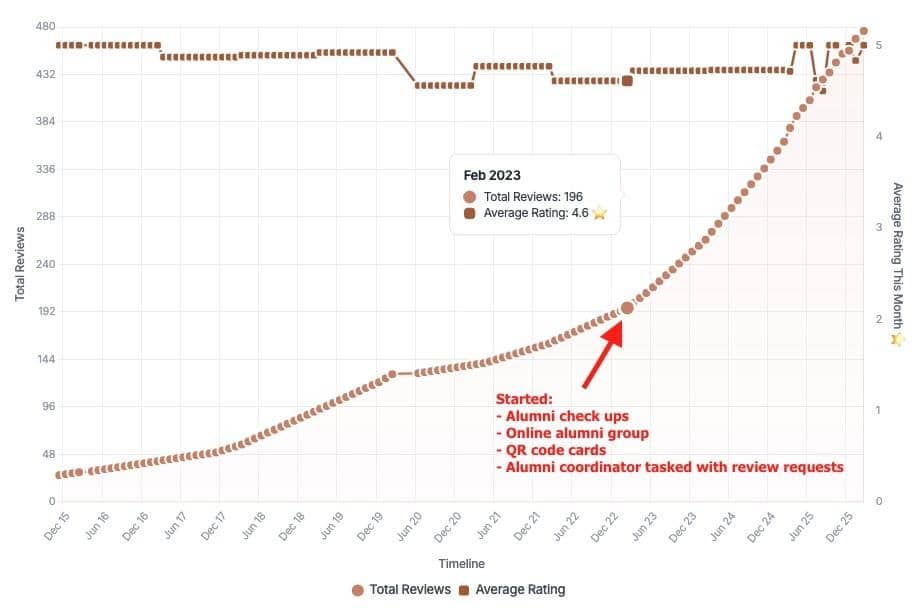
    When a new competitor overshadowed an addiction treatment center I was working with, I realized we had to strategize to compete without crossing ethical lines. The goal was to secure 50 to 100 reviews while maintaining at least one review per week.

    The Solution

    We decided the alumni, particularly those not in active treatment, could be asked for reviews by non-clinical staff. Building an alumni program helped improve experiences and gave us a new avenue for review requests.

    • Assigned the task of generating reviews to an alumni coordinator, making it part of their job without incentivizing based on quantity.
    • Created an online alumni group and used QR codes to stay in touch and ease access to review links.
    • Leveraged verbal commitments by sending direct review links via text, streamlining the process.

    The Result

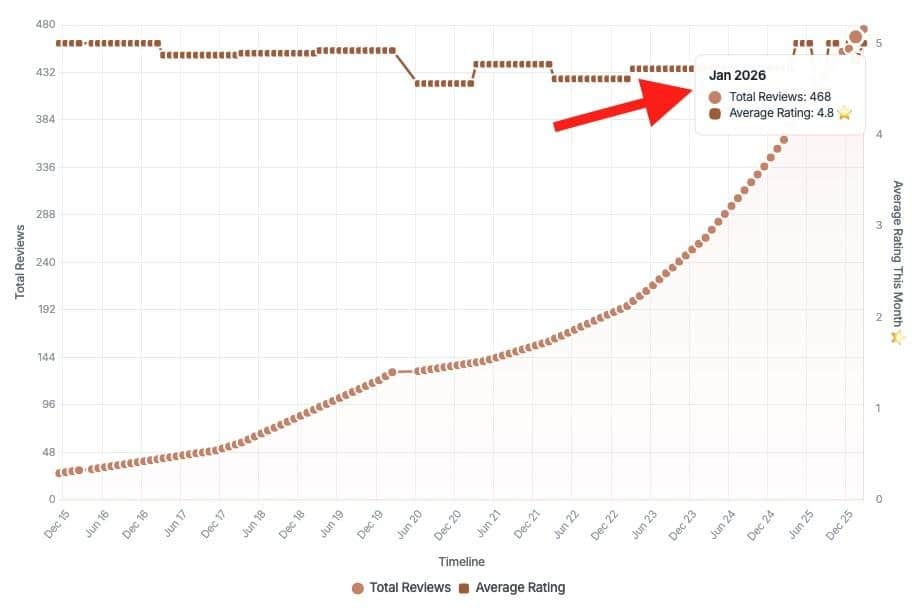
    Within a year, more than 100 new reviews were added, and the rating improved from 4.6 to 4.8. This surpassed the competitor and dovetailed into 500 total reviews by February 2026—all ethically and efficiently.

    ```json
{
  "alt": "Graph showing total reviews and average rating growth over time, highlighting a jump in reviews from February 2023.",
  "caption": "A rapid increase in reviews and ratings since starting new alumni initiatives in February 2023 marks a turning point.",
  "description": "This image displays a line graph depicting the increase in total reviews and average ratings from 2015 to 2025. The graph shows a significant jump in both metrics starting February 2023, after implementing alumni-related strategies like check-ups and online groups. Annotations highlight this change with a current average rating of 4.6 and 196 reviews. Keywords: reviews, ratings, growth, alumni, graph."
}
```

    If you’re considering a similar strategy, remember to:

    • Designate a non-clinical staff member for review management.
    • Trigger review requests through alumni interactions.
    • Use person-to-person and digital methods to solicit reviews.
    • Monitor and discuss progress when necessary.

    Review Replies and HIPAA Compliance

    Responding to reviews while maintaining HIPAA compliance is just as crucial. Even acknowledging a reviewer as a patient can risk breaching patient confidentiality.

    In your responses, focus on policies or encourage offline discussions without acknowledging if they were your patient. For example, use phrases like:

    • “Due to privacy laws, we can’t confirm any individual as a patient. But we value your feedback and welcome direct discussions about policies or practices.”
    • “Thank you for your feedback. We appreciate you taking the time to write a positive review.”

    Reporting Reviews and HIPAA Compliance

    ```json
{
  "alt": "Graph showing total reviews and average rating from December 2016 to January 2026, with a significant increase noted.",
  "caption": "An upward trend is observed in total reviews and average rating, peaking in January 2026 with an impressive 4.8 average rating.",
  "description": "This line graph depicts the trend of total reviews and average rating over time from December 2016 to January 2026. The graph shows a steady increase in review count, reaching 468 in January 2026 with an average rating of 4.8. The timeline along the x-axis highlights key increases in reviews, with a notable rise beginning around June 2022. This image is useful for understanding review growth patterns over time."
}
```

    While you might want to report misleading reviews, be careful not to disclose patient status to Google. Focus on misinformation or explicit violations of Google’s review policies instead.

    For example, if a review falsely claims unsafe practices about an FDA-approved medication, highlight this point to Google without discussing patient relationships.

    • Emphasize evidence against offensive content, PII, or other unrelated and repetitive reviews.

    Keep your submissions focused by identifying the correct policy category and providing compelling evidence without alluding to the relationship between the reviewer and the facility.

    Building a Compliant and Effective Review Engine in Healthcare

    Navigating the complexities of healthcare review management doesn’t mean compromising on compliance or local SEO success. Create a structured and compliant process to secure continuous and genuine feedback while respecting all ethical guidelines. That way, local visibility will improve, patient privacy will be protected, and the review system will remain sustainable in the long term.


    Inspired by this post on Search Engine Land.

    crushpress.ai community screenshot
  • Unlocking the Power of AI: How LLM Nudges Shape Your Digital Journey

    Unlocking the Power of AI: How LLM Nudges Shape Your Digital Journey

    As I delve into the vast realm of AI, I’ve realized how integral Large Language Models (LLMs) are to virtually every aspect of our lives—be it work, leisure, shopping, or health. They are the ignition point for nearly everything we do.

    But here’s something that often goes unnoticed: how these models wrap up their interactions. They don’t just stop; they subtly guide us forward, and that’s a game-changer.

    It’s as if LLMs adopt a “no, you hang up first” approach, perpetually inviting us to continue. They ask things like, “Would you like me to draft that travel itinerary for you?” or, “Shall I compare the Nike and New Balance running shoes for your marathon?”

    These gentle nudges make it incredibly easy to stay engaged. More often than not, I find myself responding with a simple “sure” or “sounds good,” eager to see what’s offered next.

    Such nudges are pivotal in shaping consumer behavior. Where the LLMs lead us truly matters.

    If you represent a premium brand and an LLM suggests a price comparison, it might not align with your strategy, but it’s vital to grasp and react appropriately.

    We’ve delved into various LLMs to understand these nudges across different platforms, seeking patterns that shape user behavior and signaling what it means for brands aiming to steer the digital journey.

    What LLM Nudges Look Like Across Platforms

    Budget and Deals Dominate

    Across the board, LLMs frequently suggest follow-ups related to budgets and deals, with about 45% of mentions falling into this category. Though not uniformly distributed, these elements are often default interests for consumers.

    For instance, Perplexity and ChatGPT feature over 60% of budget-related suggestions, while Meta doesn’t lean as heavily into this assumption.

    ```json
{
  "alt": "Stacked bar chart showing different categories by LLMs including ChatGPT, Google Gemini, Grok, Meta AI, Microsoft Copilot, and Perplexity.",
  "caption": "Discover how top LLMs like ChatGPT, Google Gemini, and others perform across various categories such as Budget, Product Comparison, and Tech Support.",
  "description": "This stacked bar chart presents an analysis of various Large Language Models (LLMs) like ChatGPT, Google Gemini, Grok, Meta AI, Microsoft Copilot, and Perplexity. Each model is evaluated across different categories represented by colors: Use Case & Lifestyle, Tech Support & Troubleshooting, Product Comparison, General Recommendation, Features & Specs, and Budget & Deals. This visual representation helps in understanding how different LLMs prioritize various functionalities, offering a comparative insight into their capabilities."
}
```

    Comparisons Drive the Next Step

    Product comparisons are the second most common type of suggestion. LLMs compare everything from retail products to financial services and health treatments, touching various industries.

    Specs Play a Minor Role

    While there’s a common belief that providing detailed specifications is vital, these comprise only a small fraction of the LLMs’ recommendations. That said, they do add ranking value, even if LLMs typically don’t extend conversations in this manner.

    How Each Platform Uses Nudges Differently

    In our research, we’ve noticed that each LLM has a unique style of extending conversations, offering insights into how these platforms subtly influence consumer behavior.

    PlatformDominant Nudge StyleKey Characteristic
    ChatGPT“If you want…”Heavy commerce focus: Primarily nudges toward deals and product comparisons.
    Microsoft Copilot“If you tell me…”Interactive/clarifying: Frequently asks for more user data to refine recommendations.
    Google Gemini“Would you like me…”Polite and permission-based: Exclusively uses this formal invitation to continue helping.
    Perplexity“I can help…” / “If you’d like…”Service-oriented: Uses varied phrasing to offer utility and assistance.
    Meta AI“Let me know…”Casual and passive: Primarily nudges toward product comparisons and specs with a less aggressive tone.

    What Actions to Take Based on AI Nudges

    These nudges are not just to keep the dialogue open; they also push users to explore further, greatly influencing consumer behavior and the entire customer journey.

    As data becomes more plentiful, we’ll better optimize for these nudges. For now, our insights are somewhat limited to individual interactions.

    ```json
{
  "alt": "The CapmatchOne logo with a gradient circle and bold text.",
  "caption": "Discover innovation with the CapmatchOne logo, featuring sleek typography and a modern gradient circle.",
  "description": "The CapmatchOne logo features bold, modern typography coupled with a gradient circle, symbolizing connection and innovation. The sleek design conveys a sense of progress and creativity. This image can be used for branding or promotional purposes, appealing to audiences interested in innovative solutions and forward-thinking designs."
}
```

    Here are three key actions to prioritize, largely tied to the content you create across various channels:

    Capitalize on the “Support” Gap
    • Proactive nudges related to troubleshooting and support are significantly lower in frequency than commerce-driven themes.
    • Focus on owning the post-purchase “how-to” and technical support space to establish long-term authority where AI currently isn’t as assertive.
    Prioritize the “Comparison” Hook
    • LLMs frequently nudge users toward comparative analysis.
    • Strengthen “Product A vs. Product B” guides to capture AI’s primary next step.
    Maximize the “Budget and Deals” Opportunity
    • Pricing and discounts are the top drivers of AI nudges, comprising 48% of all prompts.
    • Ensure your site maintains structured, real-time deal data to become a preferred destination for AI-driven commerce referrals.

    As the LLM landscape rapidly evolves, these platforms will become the main touchpoints for consumer research and decision-making. Understanding how LLMs discuss your brand and how these conversational nudges affect users is essential.

    By dissecting these automated cues across platforms like Gemini, ChatGPT, and Perplexity, we can see where consumers are being steered—whether towards budget-friendly alternatives, product comparisons, or technical specifications.

    Recognizing these trends enables us to shift from mere observation to actionable strategies, ensuring our value proposition remains clear, even when an LLM reframes the conversation around cost or competitors.

    Monitoring these shifts is key to maintaining brand authority as AI-driven interactions increasingly dictate the customer journey.


    Inspired by this post on Search Engine Land.


    crushpress.ai community screenshot
  • Maximize ROAS by Slashing Paid Media Waste

    Maximize ROAS by Slashing Paid Media Waste

    I used to think hitting revenue targets with the same PPC budgets was challenging, but with rising platform costs, it’s like facing an invisible budget cut. It’s time to rethink our approach.

    Data shows that average CPCs are up by as much as 40%, according to Wordstream, leaving teams grappling with flat marketing budgets at 7.7% of company revenue, as Gartner points out.

    In my experience, 20-30% of accounts’ spend underperforms, which highlights a pervasive inefficiency in paid media as we know it in 2026. But all is not lost! Efficiency is about strategic spending, not just cutting costs. Let me walk you through discovering waste and optimizing for maximum returns.

    The focus on efficiency has escalated as paid media automation obscures crucial data. Simultaneously, businesses are freezing budgets but still targeting growth, facing inflation that increases CPCs annually by about 10% in my observations.

    ```json
{
  "alt": "The CapmatchOne logo with a gradient circle and bold text.",
  "caption": "Discover innovation with the CapmatchOne logo, featuring sleek typography and a modern gradient circle.",
  "description": "The CapmatchOne logo features bold, modern typography coupled with a gradient circle, symbolizing connection and innovation. The sleek design conveys a sense of progress and creativity. This image can be used for branding or promotional purposes, appealing to audiences interested in innovative solutions and forward-thinking designs."
}
```

    With AI automation pushing us into smart bidding, managing rising CPCs requires skill in adjusting the right strategies. Customers’ attention is now scattered across multiple platforms, often leading to simultaneous double-screening.

    A hard look at where every dollar goes is essential, shifting the fundamental business question from “how do we spend more?” to “how do we maximize our returns?”

    Upon auditing accounts, I apply the 20-30% rule to identify inefficiencies. Whether it’s a product consuming too much budget or search term reports revealing spend on irrelevant queries, these are the typical culprits.

    ```json
{
  "alt": "Wastage Breakdown and Spend Concentration by Revenue chart highlighting ROAS and spend distribution among top products.",
  "caption": "Discover insights into product performance with this visual breakdown of ROAS categories and top revenue-generating products.",
  "description": "This image presents a detailed analysis of product performance. The left section displays a wastage breakdown by category, showing zero conversions, low ROAS (Return on Ad Spend), and healthy spend with respective financial values and product counts. The right section illustrates spend concentration among the top 20 products versus remaining products via a pie chart. Key metrics include top 20 spend as £35,185 and top 20 revenue as £231,280."
}
```

    Common waste zones involve zero-conversion products, low ROAS/CPL outliers, and high spend with low returns. To address these, I apply impression, clicks, and spend thresholds to verify data adequacy.

    When budgeting, I prioritize full-funnel tactics. Conversion-focused spending should be safeguarded, ensuring high-intent, high-return segments retain funding.

    Creative assets are no longer just nice additions but essential to campaign performance. Platforms need continuous variations to function optimally.

    ```json
{
  "alt": "Dashboard with product types, metrics table, and pie charts showing amounts and revenues.",
  "caption": "Explore the intricate dashboard displaying product type metrics with colorful pie charts revealing product ID amounts and revenue distribution.",
  "description": "This image showcases a detailed dashboard with multiple product types, including 'priority-high-performers' and 'support-products.' A metrics table at the top lists figures like impressions, clicks, and costs. Below are two pie charts: one for the amount of product IDs per type and another for revenue distribution, highlighting key differences. The image also contains a list of product IDs paired with their types."
}
```

    I integrate AI-driven tools for analytics, but human direction remains crucial in areas where strategic insight is required. Automation should enhance decision making, not replace it entirely.

    The bid strategies I select depend on conversion data and my ROAS goals. From Target CPA to Maximize Clicks, choosing wisely is key to success.

    My advice is to conduct waste audits regularly, protect lower-funnel budgets, refresh creatives frequently, shift to blended measurement practices, and automate responsively. With these steps, efficiency isn’t just possible; it becomes a competitive advantage.


    Inspired by this post on Search Engine Land.


    crushpress.ai community screenshot
  • Transform Your Marketing Measurement from Basic to Brilliant

    Transform Your Marketing Measurement from Basic to Brilliant

    I’ve discovered that measurement is truly the cornerstone for all we achieve in performance marketing. Without precise measurement, everything I recommend, implement, and optimize becomes mere speculation. Today, maintaining accurate measurement is more challenging than ever—and it’s only getting more difficult.

    With regulatory crackdowns and growing privacy concerns, paired with elongated multi-touch journeys, we face a measurement crisis. Brands that still rely on outdated tactics are missing the mark when it comes to modern measurement challenges.

    If your brand falls into this category, it’s time I help you rebuild your measurement foundation—from integrating first-party data (crawl), to creating cross-channel reporting for actionable insights (walk), to advanced media mix modeling (MMM) and incrementality testing for true media lift (run).

    The crawl: Building a first-party data foundation

    By integrating first-party data into our performance marketing channels, I can move beyond reliance on third-party signals. While those metrics offer surface-level insights, they don’t reveal how channels impact our business goals.

    Audience integration

    The first step involves integrating CRM data into our paid media platforms. This includes:

    • Remarketing to abandoners.
    • Creating exclusion lists for current subscribers or recent purchasers.
    • Compiling priority contact lists.

    I might be uploading lists today, but integration enhances targeting by connecting to up-to-date audience lists for media platform targeting.

    Offline-conversion tracking

    For lead-gen businesses like ours, setting up offline conversion tracking (OCT) is crucial. It reveals the bottom-line impact of our media on sales, passing sales data back to platforms for campaign attribution.

    Once OCT is in place, we can optimize for lower-funnel, higher-quality conversion steps in the sales cycle or even begin optimizing toward revenue to enhance our return on ad spend.

    To progress from crawl to walk, I need to move from client-side to server-side tracking.

    By adopting server-side tracking, we bypass browser-based tracking and instead rely on our first-party data. This approach ensures data accuracy and resilience as privacy restrictions increase and cookies become obsolete.

    • Partner integration uses pre-built connectors for setup through platforms like Shopify or Google Tag Manager.
    • Direct API requires a development team to handle complex data or custom backends.

    The walk: Cross-channel reporting integration

    ```json
{
  "alt": "The CapmatchOne logo with a gradient circle and bold text.",
  "caption": "Discover innovation with the CapmatchOne logo, featuring sleek typography and a modern gradient circle.",
  "description": "The CapmatchOne logo features bold, modern typography coupled with a gradient circle, symbolizing connection and innovation. The sleek design conveys a sense of progress and creativity. This image can be used for branding or promotional purposes, appealing to audiences interested in innovative solutions and forward-thinking designs."
}
```

    With a robust measurement foundation, my next step is breaking down platform silos to understand the full ecosystem.

    Going beyond last click

    After implementing server-side tracking, I created a clean data pipeline. Yet, traditional attribution models neglect the full-funnel customer journey.

    To address this, I recommend using data warehousing solutions like BigQuery to centralize your data and apply custom logic, thereby gaining insights across the ecosystem.

    Unified reporting dashboards

    Integrating evolved attribution with unified reporting dashboards, like Looker Studio, allows me to visualize data across the funnel and obtain actionable insights into what platforms are truly driving volume and conversions.

    The run: Media mix modeling and incrementality testing

    With a comprehensive, everyday view of performance, significant questions persist about growth potential and offline performance measurement.

    By employing media mix modeling and incrementality testing, I can discern the full impact of media investments at a macro level to make informed decisions.

    The holistic view through MMM

    I view MMM as my compass, providing a holistic, quantitative guide for paid media investments, helping me analyze the relationship between inputs and business outcomes.

    Pulse checks with incrementality testing

    Incrementality testing offers validation for MMM and helps evaluate if specific tactics or channels are driving true incremental lift by comparing test and control groups.

    The sprint: Clean, integrated, and validated first-party data

    With first-party data integrated through server-side tracking and cross-channel reporting, I’ve built a robust measurement foundation. Guided by MMM and validated by incrementality testing, I’m now ready to sprint towards a more informed and successful marketing strategy.


    Inspired by this post on Search Engine Land.

    crushpress.ai community screenshot