Tag: structured data

  • Unveiling JavaScript SEO Secrets from Leading Ecommerce Sites

    Unveiling JavaScript SEO Secrets from Leading Ecommerce Sites

    JavaScript SEO seems like it should be a cinch by now, doesn’t it? Yet, here we are with persistent challenges that e-commerce sites continuously face. After five years of grappling with issues like crawling, rendering, and indexing, coupled with the complexities of headless builds and AI-powered recommendations, it’s clear we still have a ways to go. However, some top-tier ecommerce sites have cracked the code. Their innovative approaches offer invaluable lessons in maintaining organic visibility while shipping fast, modern JavaScript experiences. Let me share these five insights with you.

    Chewy is a giant in the U.S. pet food and supplies online retail space. They’ve harnessed the power of Next.js, a React framework, to seamlessly integrate server rendering, static generation, and full-stack development into their operations. Imagine visiting a product page like the Benebone Wishbone Chew Toy. Here, everything you need—product title, description, pricing, reviews, Q&A, and breadcrumb navigation—is already embedded in the initial HTML. This means Googlebot can access this information right away, without having to wait for JavaScript to render. This approach reduces the risk of rendering issues, especially significant with the rise of AI chatbots that still don’t handle JavaScript efficiently. While not all content needs to be on the initial load, like the ‘Compare Similar Items’ carousel meant for user engagement, Chewy perfectly balances what’s essential for indexing with user experience enhancements.

    ```json
{
  "alt": "Chewy site displaying a Benebone Bacon Flavor Wishbone Dog Chew Toy, priced at $9.99.",
  "caption": "Check out this Benebone Bacon Flavor Wishbone Dog Chew Toy available on Chewy for just $9.99! Perfect for keeping your dog entertained and their teeth healthy.",
  "description": "The Chewy website features a Benebone Bacon Flavor Wishbone Tough Dog Chew Toy, available in Medium size and priced at $9.99. Highlighted with a 4.5-star rating from over 11,646 reviews, the toy is designed for durability and dental health. Free delivery is offered on orders over $35, and a $20 eGift card is available for first-time customers spending $49 or more. The page includes options for autoship discounts, sizing selections, and easy delivery scheduling, making it convenient for pet owners."
}
```

    Switching gears to Myprotein, this brand masters the art of making navigation easily crawlable. Using Astro, a content-first framework, their site ships zero JavaScript by default and includes components that support React, Vue, or Svelte, making their SEO strategy a prime example to study. By ensuring all navigation links are present in the initial HTML response, Myprotein leverages Astro’s island architecture to hydrate these elements with JavaScript interactively. Crawlers like Googlebot can thus easily discover and process these links since they use proper anchor elements with href attributes. This proactive strategy prevents navigation from being invisible or empty during searches, thereby preserving efficient crawlability.

    ```json
{
  "alt": "HTML code snippet displaying product details for a dog chew toy.",
  "caption": "Peek behind the scenes at the HTML structure detailing a popular bacon-flavored dog chew toy.",
  "description": "This image captures a snippet of HTML code showcasing the product details for a Benebone Bacon Flavor Wishbone Tough Dog Chew Toy, Medium. It highlights elements such as product names, ratings, links, and navigation properties. This code indicates its presence on a retail website, providing key classifications and linking to reviews and manufacturer details, useful for web development insights and SEO analysis."
}
```

    Harrods, renowned for luxury goods, ensures their structured data delivers in the HTML’s initial response. By embedding structured data using the Product schema within the HTML directly, Harrods guarantees that Google can parse this data right from the first crawl, without waiting for page rendering. This foresight prevents client-side dependencies and ensures Google has immediate access to important data like pricing and availability, which is critical due to frequent updates in product details.
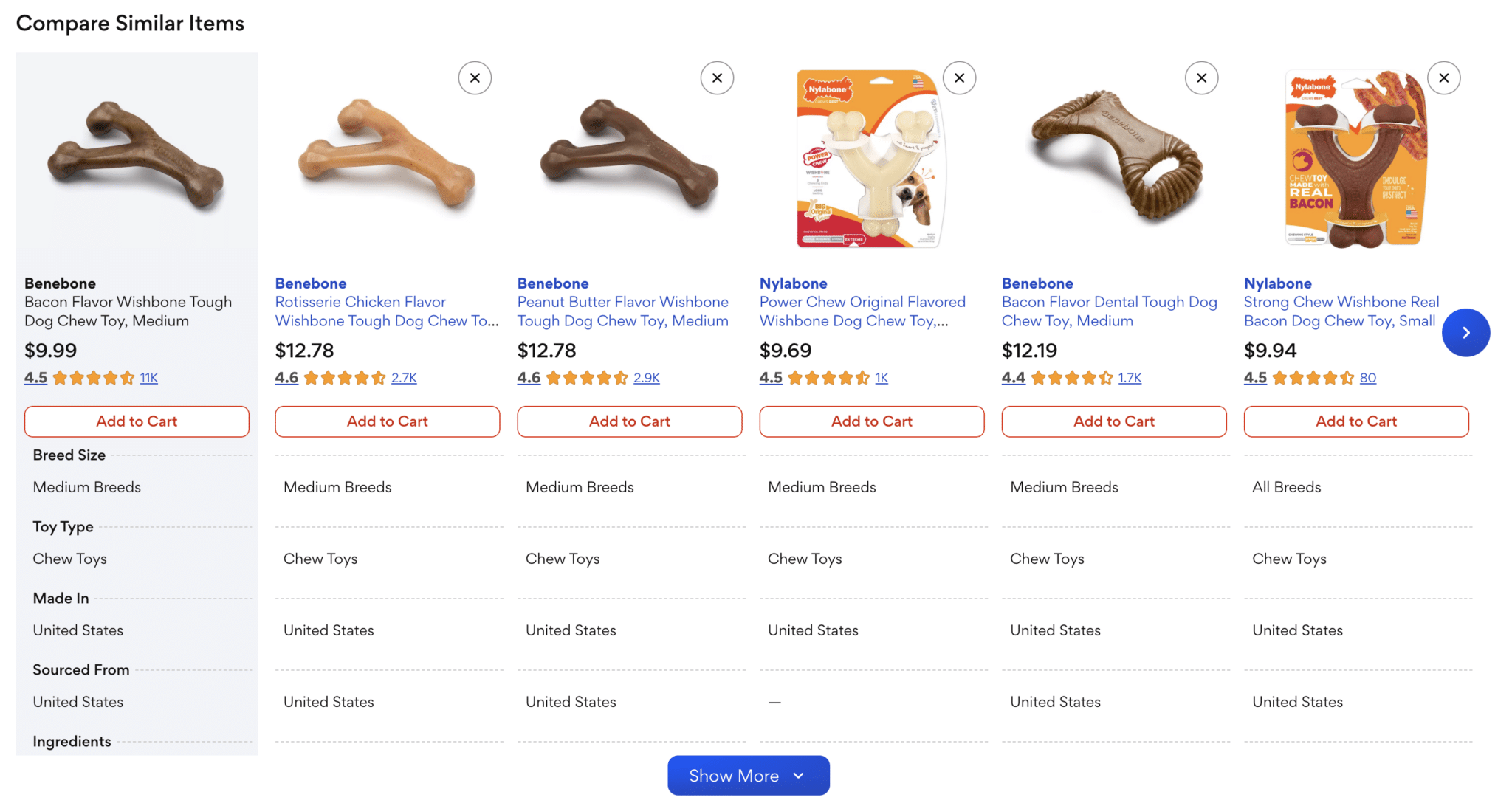
    ```json
{
  "alt": "Comparison chart of dog chew toys featuring Benebone and Nylabone products with prices and reviews.",
  "caption": "Discover the perfect durable chew toy for your canine companion with these top-rated options from Benebone and Nylabone, designed for medium and small breeds.",
  "description": "This image displays a comparison of various dog chew toys from Benebone and Nylabone. Products include flavors like bacon and peanut butter, designed for medium and small breeds. Prices range from $9.69 to $12.78, with customer ratings visible. Each product is marked 'Made in United States' and offers a handy 'Add to Cart' option. Ideal for those seeking durable and flavorful chew toys for dogs."
}
```

    Over at Under Armour, the elegance of their faceted navigation shines. Built on Next.js like Chewy, Under Armour ensures filters on category pages are fast, interactive, and SEO-friendly. When shoppers apply filters, the product grid seamlessly updates without a full reload, leveraging client-side updates while maintaining clean, readable URLs that Google can index effectively. By avoiding hash fragments and bracketed query strings, these URLs become shareable and bookmark-friendly, thus enhancing both user experience and SEO performance.

    ```json
{
  "alt": "The CapmatchOne logo with a gradient circle and bold text.",
  "caption": "Discover innovation with the CapmatchOne logo, featuring sleek typography and a modern gradient circle.",
  "description": "The CapmatchOne logo features bold, modern typography coupled with a gradient circle, symbolizing connection and innovation. The sleek design conveys a sense of progress and creativity. This image can be used for branding or promotional purposes, appealing to audiences interested in innovative solutions and forward-thinking designs."
}
```

    Finally, Manors Golf demonstrates SEO prowess by efficiently managing third-party scripts on their site. Utilizing Shopify’s Hydrogen framework, they cleverly defer scripts using async attributes, ensuring they don’t block the initial rendering process. This tactic not only protects the Largest Contentful Paint (LCP) metric but also eases Google’s rendering workload, contributing to a robust SEO strategy.

    ```json
{
  "alt": "Navigation bar of MyProtein website showcasing categories like Protein and Supplements.",
  "caption": "Explore the diverse range of categories on MyProtein's navigation bar, from trending items to sports nutrition staples.",
  "description": "This image displays the navigation bar from the MyProtein website. Featured categories include Trending, Protein, Creatine, Supplements, Bars, Food & Snacks, and more. The search bar is prominently placed. The image is vital for understanding how users can access different sections of the site quickly. Keywords: MyProtein, navigation, protein, supplements, e-commerce."
}
```

    The secret isn’t in using JavaScript itself but in how it’s used. When JavaScript serves to enhance rather than deliver the core functionality and content, it paves the way for an excellent user experience while preserving SEO integrity. These lessons from major e-commerce players are testament to the delicate balance between interactivity and search engine crawlability.

    ```json
{
  "alt": "HTML code snippet with navigation links for nutrition products.",
  "caption": "Explore the nutritional products featured in this HTML snippet, including creatine and protein drink options.",
  "description": "This image shows an HTML code snippet from a website, highlighting navigation links for various nutrition products. The links include Creatine, Clear Protein Drinks, and Bundles, directing users to specific product categories. The CSS classes suggest design styling and user interaction, such as 'hover:underline' for link emphasis. Useful for web developers and SEO specialists studying navigation structure and link optimization."
}
```

    Inspired by this post on Search Engine Land.


    crushpress.ai community screenshot
  • SEO in 2026: Embracing AI and Evolving Standards

    SEO in 2026: Embracing AI and Evolving Standards

    I can’t help but feel intrigued as I ponder the evolving world of SEO in 2026. With AI’s growing influence and an ever-shifting digital landscape, navigating these changes is both a challenge and an opportunity.

    In 2025, I witnessed a fascinating trend: SEO standards continued to rise, which is encouraging. The data from the Web Almanac sheds light on these advancements, showcasing a more secure and user-friendly web. But there’s still more work to be done to keep up with these higher standards.

    ```json
{
  "alt": "The CapmatchOne logo with a gradient circle and bold text.",
  "caption": "Discover innovation with the CapmatchOne logo, featuring sleek typography and a modern gradient circle.",
  "description": "The CapmatchOne logo features bold, modern typography coupled with a gradient circle, symbolizing connection and innovation. The sleek design conveys a sense of progress and creativity. This image can be used for branding or promotional purposes, appealing to audiences interested in innovative solutions and forward-thinking designs."
}
```

    Let’s dive into the specifics. The adoption rate of HTTPS stands impressively high at over 91%, and the use of title tags has skyrocketed to nearly 99%. These figures are boosting our confidence in SEO’s direction, yet challenges remain, ensuring these advancements are consistently applied across all sites.

    ```json
{
  "alt": "Bar chart showing CMS adoption from 2021 to 2025 for desktop and mobile.",
  "caption": "Explore CMS adoption trends from 2021 to 2025, highlighting growth in desktop and mobile platforms.",
  "description": "This bar chart illustrates the adoption of CMS platforms from 2021 to 2025, segmented by desktop and mobile usage. It shows a steady increase, with percentages rising from 46% in 2021 to 54% in 2025. The chart uses different colors to distinguish between desktop and mobile, providing a clear visualization of adoption rates over time. Keywords: CMS, adoption, desktop, mobile, 2025, trend analysis."
}
```

    Reflecting on my experiences, I’ve realized that content management systems (CMSs) and SEO plugins are pivotal in setting industry-standard practices. It’s remarkable to see how deeply SEO tools are embedded in our daily workflows, underpinning many defaults we now consider standard.

    ```json
{
  "alt": "Bar chart showing the top 5 CMSs for mobile in 2025 with WordPress leading at 34.9%, followed by Shopify, Wix, Squarespace, and Joomla.",
  "caption": "The future of mobile CMS dominance: WordPress tops the chart in 2025 with a 34.9% market share, leaving Shopify, Wix, Squarespace, and Joomla trailing.",
  "description": "This bar chart presents data from the Web Almanac 2025, highlighting the top 5 CMSs used for mobile websites. WordPress dominates the market with a 34.9% share, followed by Shopify at 4.0%, Wix at 2.8%, Squarespace at 1.6%, and Joomla at 1.3%. The chart uses different shades to represent data from the years 2022 to 2025, showcasing trends in CMS usage over time."
}
```

    However, not all implementations are ideal; default settings sometimes need our intervention to be truly effective. Engaging with major platforms and tools becomes essential to shaping SEO’s future.

    ```json
{
  "alt": "Bar chart comparing usage of SEO tools on desktop and mobile devices in Web Almanac 2025.",
  "caption": "Explore the leading SEO tools of 2025! Discover how Yoast SEO dominates both desktop and mobile platforms, with other tools like RankMath and All in One SEO also making their mark.",
  "description": "This bar chart from the Web Almanac 2025 highlights the usage rates of various SEO tools across desktop and mobile platforms. Yoast SEO leads the pack, significantly outpacing other tools like RankMath SEO, All in One SEO, and Yoast SEO Premium. The data provides insights into the predominant choices for search engine optimization in 2025, useful for web developers and SEO specialists aiming to optimize their strategies. Keywords: SEO tools, Web Almanac 2025, Yoast SEO, RankMath SEO, All in One SEO, desktop, mobile."
}
```

    Even as we embrace new trends, remnants of the past linger. Deprecated standards, though not forgotten, still exist. It’s critical to balance the old and the new, ensuring every part of SEO continues to improve incrementally.

    ```json
{
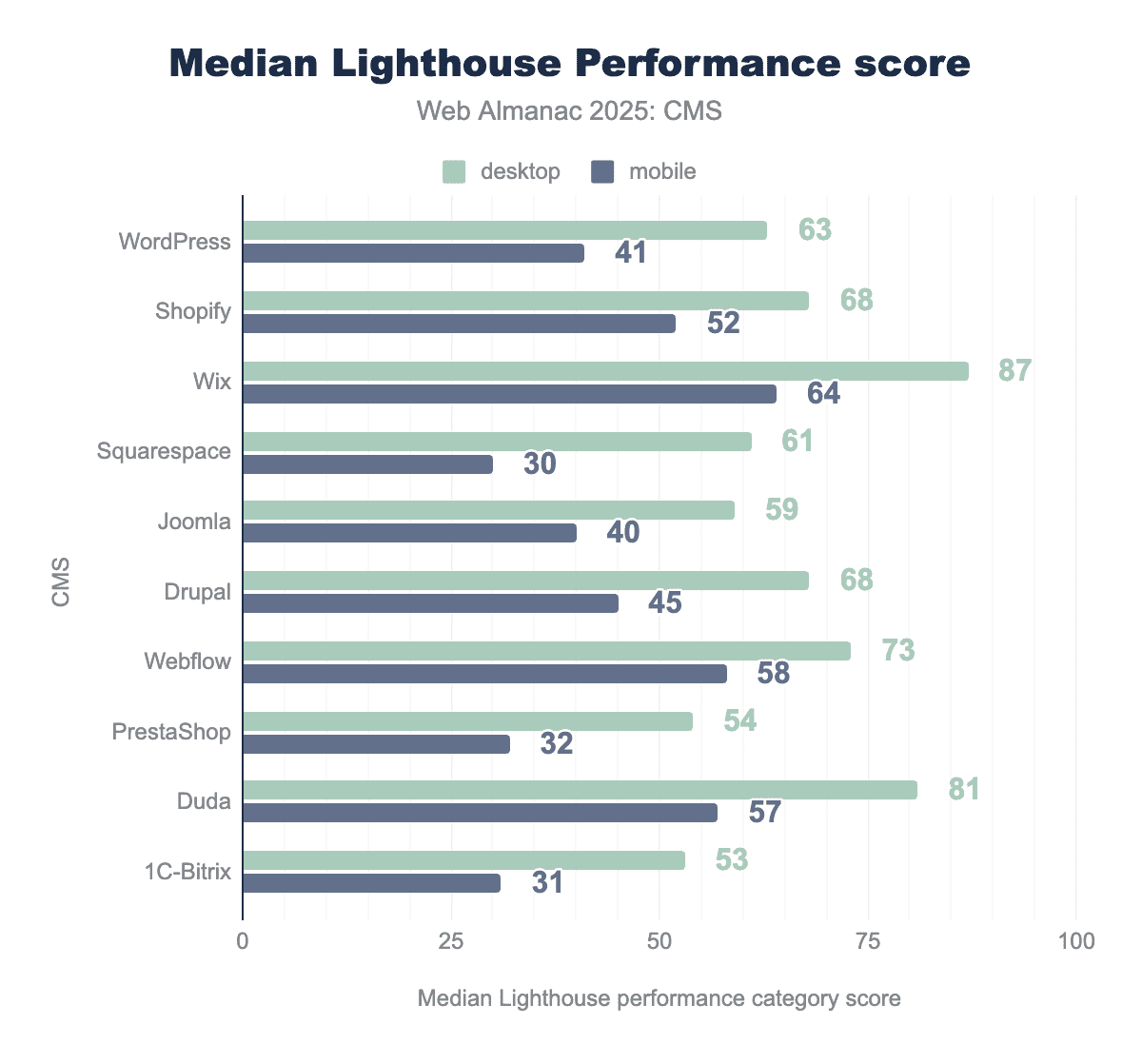
  "alt": "Bar chart comparing median Lighthouse performance scores for CMS platforms on desktop and mobile.",
  "caption": "Explore the performance of popular CMS platforms in the Web Almanac 2025. Which one leads the pack in Lighthouse scores for desktop and mobile?",
  "description": "This bar chart presents the median Lighthouse performance scores for various CMS platforms, including WordPress, Shopify, Wix, Squarespace, Joomla, Drupal, Webflow, PrestaShop, Duda, and 1C-Bitrix, on desktop and mobile. The analysis, part of the Web Almanac 2025, highlights the differences in performance with color-coded bars, where desktop scores are shown in light green and mobile in dark green. Wix leads with a notable score of 87 for mobile."
}
```

    The developments around AI in SEO are particularly captivating. Whether it’s the evolving role of robots.txt as more of a policy document or the cautious uptake of llms.txt, SEOs must strategically navigate these new waters.

    ```json
{
  "alt": "Line graph showing LLMs.txt adoption from July to January for desktop and mobile.",
  "caption": "Rising Trend: LLMs.txt adoption grows steadily across both desktop and mobile platforms from July to January, highlighting an increase in implementation.",
  "description": "This line graph illustrates the adoption rate of LLMs.txt over a six-month period from July to January. The data, sourced from the Web Almanac, compares desktop and mobile platforms. Both lines show a gradual increase from just above 2% to nearly 6% of pages, indicating a steady upward trend in adoption. Keywords: LLMs.txt, adoption, desktop, mobile, Web Almanac, graph."
}
```

    Finally, I can’t ignore the intriguing rise of the FAQPage schema. Despite Google’s limitations on FAQ snippets, their implementation has not waned. This indicates a strategic shift toward structured data for reasons beyond just search engine visibility, potentially influencing AI strategies.

    ```json
{
  "alt": "Side-by-side bar charts showing Schema.org FAQ usage on desktop and mobile from 2022 to 2025.",
  "caption": "Explore the rising trend of Schema.org FAQ implementation on both desktop and mobile platforms through these insightful bar charts.",
  "description": "This image features two bar charts comparing the use of Schema.org FAQ markup on desktop and mobile from 2022 to 2025. The left chart depicts desktop usage, while the right chart shows mobile usage. Both charts indicate a steady increase in the percentage of pages implementing this SEO feature, highlighting the growing adoption of structured data across devices. This visualization is sourced from the Web Almanac SEO data and provides valuable insights for web developers and SEO professionals."
}
```

    In conclusion, while 2026 may not revolutionize SEO, it will certainly refine and redefine our approaches, integrating AI layers without demolishing the foundation laid by years of SEO evolution.


    Inspired by this post on Search Engine Land.


    crushpress.ai community screenshot
  • Boost Your AI Search With Effective Schema Markup

    Boost Your AI Search With Effective Schema Markup

    When I first discovered the power of schema markup, it felt like unlocking a secret weapon for enhancing AI search visibility. It’s fascinating how this powerful tool can bridge the gap, allowing language models to better understand my content.

    Through implementing various schema types, I’ve significantly improved how my content is perceived and indexed by AI systems. Learning about these key schema types has been vital to my strategy.

    Identifying the right schema types wasn’t easy at first. However, by exploring structured data tips and strategies, I gathered immense insights that truly transformed my content’s AI compatibility.

    Structured data plays a crucial role in helping language models like LLMs comprehend what my content is all about. Utilizing this to my advantage has not only enhanced visibility but also boosted my overall SEO efforts significantly.

    Designing a plan to integrate schema markup into my content strategy was a rewarding journey. Each step of implementing structured data is a building block towards achieving my SEO goals, particularly in the AI-driven digital landscape.


    Inspired by this post on HiGoodie Blog.


    crushpress.ai community screenshot
  • Ensure AI Sees Your Products: A 6-Point Optimization Guide

    Ensure AI Sees Your Products: A 6-Point Optimization Guide

    I’ve recently delved into the world of AI search engines like ChatGPT, Google AI Mode, and Perplexity, and how they’re transforming the way consumers find and buy products online. It’s clear to me that if my product pages aren’t optimized for these AI assistants, I’m likely missing out on significant traffic and revenue.

    What I’ve discovered is that AI assistants evaluate product pages differently than traditional search engines. They require a deep understanding of products to recommend them confidently to users with varied needs.

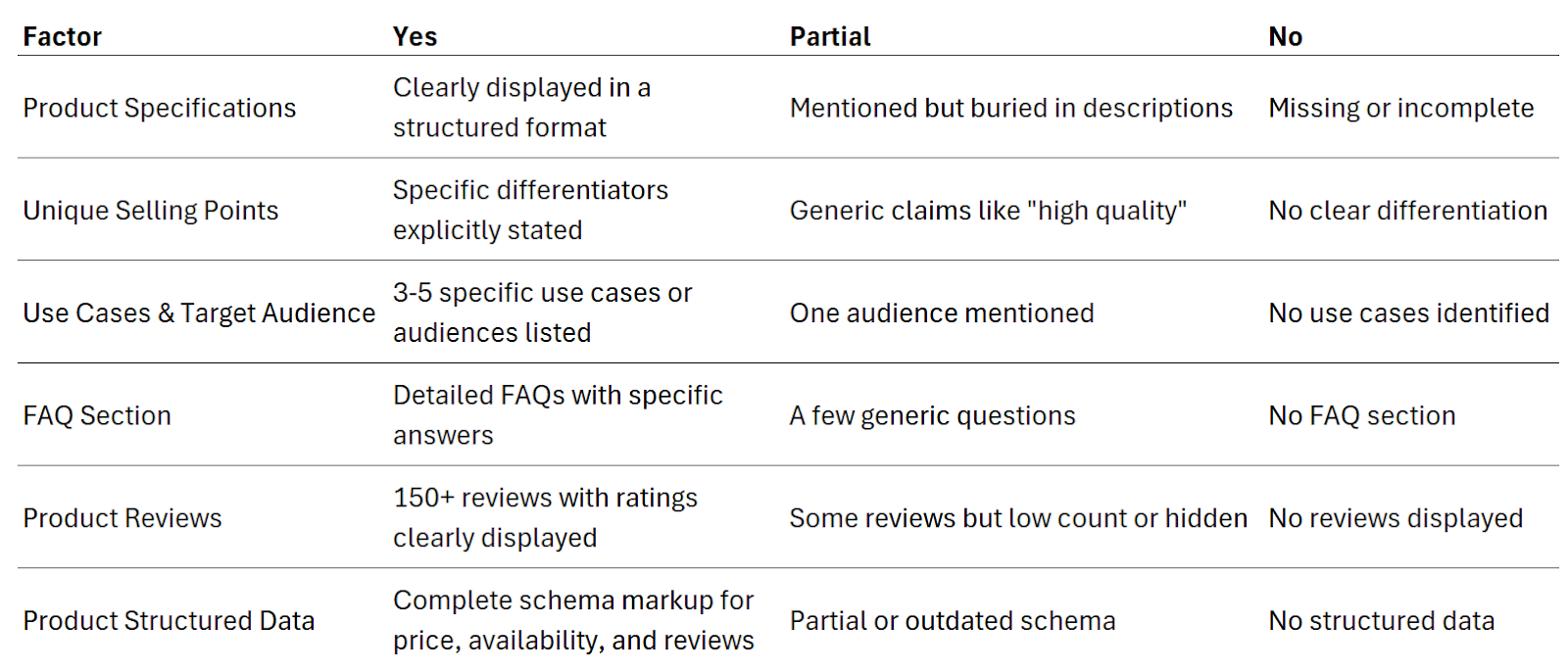
    To ensure my product pages are AI-ready, I’ve crafted a simple scorecard focusing on six key factors:

    1. Product specifications

    ```json
{
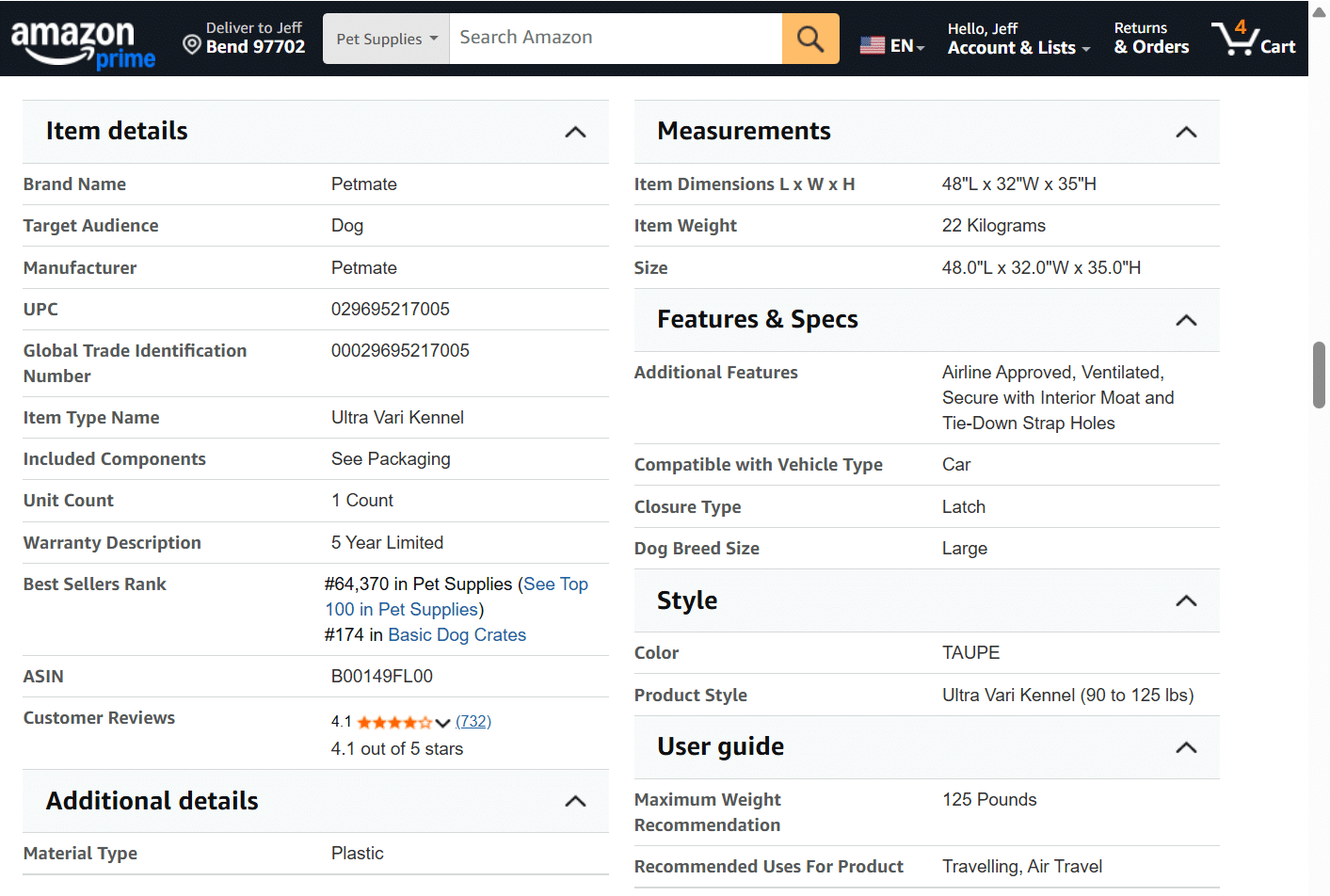
  "alt": "Amazon product details for Petmate Ultra Vari Kennel, large size, dog supplies.",
  "caption": "Explore the features of the Petmate Ultra Vari Kennel, ideal for large dogs. This dog crate is airline-approved and designed for secure travel.",
  "description": "This image shows an Amazon product details page for the Petmate Ultra Vari Kennel, designed for large dogs. The kennel is airline-approved with interior features like ventilation and a moat. It weighs 22 kilograms and measures 48"L x 32"W x 35"H. Made of plastic, it supports dogs weighing 90 to 125 lbs, perfect for air travel. This bestseller ranks #64,370 in pet supplies, with an average rating of 4.1 stars from over 700 reviews."
}
```

    Does the product page clearly display the product’s attributes and specifications?

    AI assistants need explicit specifications to understand my products and match them with customer needs. For example, if someone asks for “an airline-friendly crate for a 115-pound dog,” the AI must see the weight limit clearly to recommend it.

    Amazon excels at this, as their product pages display detailed specifications that likely boost their AI search performance.

    ```json
{
  "alt": "The CapmatchOne logo with a gradient circle and bold text.",
  "caption": "Discover innovation with the CapmatchOne logo, featuring sleek typography and a modern gradient circle.",
  "description": "The CapmatchOne logo features bold, modern typography coupled with a gradient circle, symbolizing connection and innovation. The sleek design conveys a sense of progress and creativity. This image can be used for branding or promotional purposes, appealing to audiences interested in innovative solutions and forward-thinking designs."
}
```

    Action item: I ensure all specifications are clearly presented on my product pages, ideally in a structured table or a list, rather than burying them in the description or marketing copy.

    2. Unique selling points

    Are the product’s unique benefits clearly described?

    ```json
{
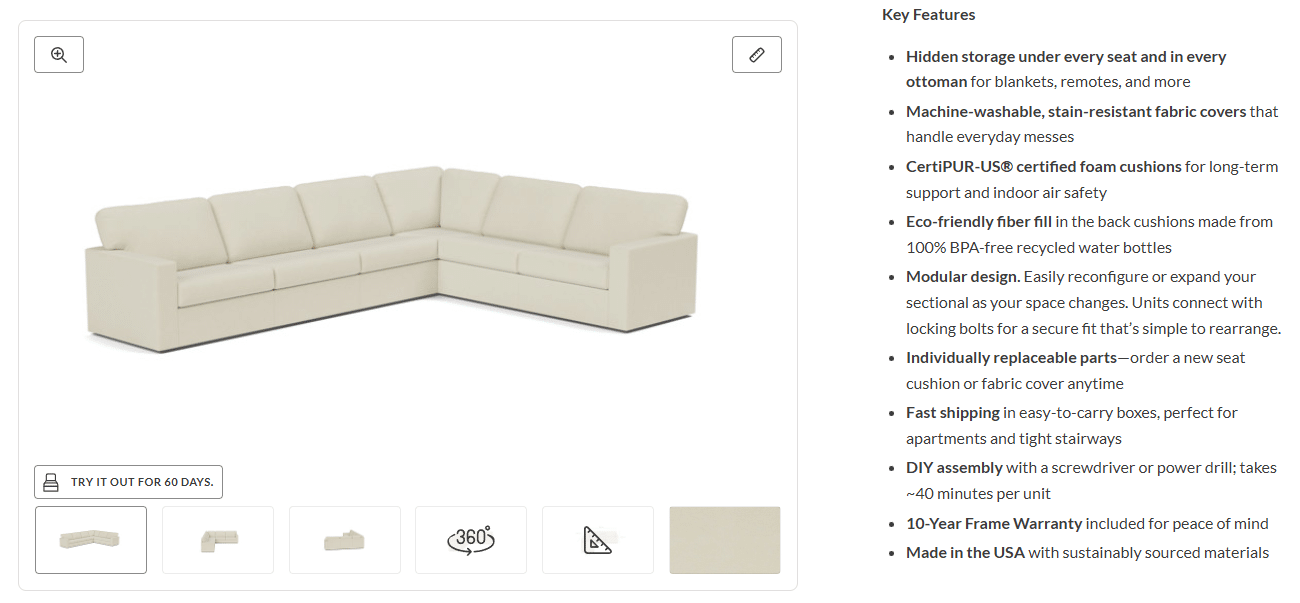
  "alt": "Beige L-shaped sectional sofa with hidden storage, modular design, and eco-friendly materials.",
  "caption": "Discover comfort and versatility with this beige L-shaped sectional sofa, featuring hidden storage and eco-friendly materials, perfect for any modern living space.",
  "description": "This image shows a beige L-shaped sectional sofa with clean lines and contemporary style. It features hidden storage under every seat, machine-washable and stain-resistant covers, and CertiPUR-US certified foam cushions. The modular design allows for easy reconfiguration. This eco-friendly piece uses materials such as BPA-free recycled water bottles for cushion filling and offers fast shipping and easy DIY assembly. Perfect for urban apartments and it comes with a 10-year frame warranty."
}
```

    Highlighting what makes my products special gives AI a reason to recommend them over competitors. It’s crucial for AI to grasp these unique features to decide on recommendations.

    Action item: I emphasize key features that set my products apart, avoiding vague claims like “high-quality craftsmanship” and instead focusing on specific differentiators.

    3. Use cases and target audience

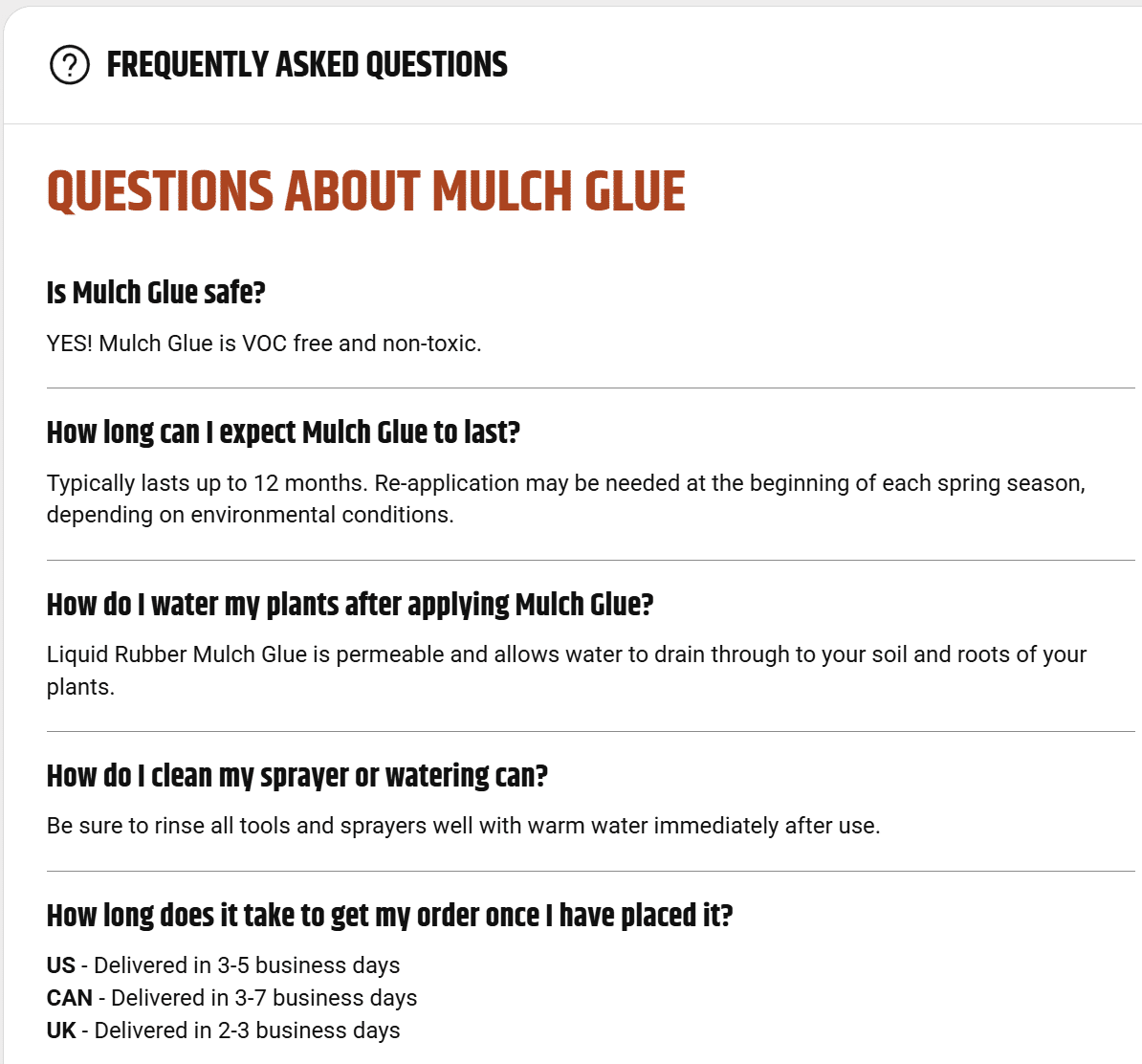
    FAQ section about mulch glue, covering safety, longevity, application, and delivery details.
    Discover everything you need to know about Mulch Glue, from safety and longevity to watering tips and delivery times.

    Are the product’s intended use cases and audience clear?

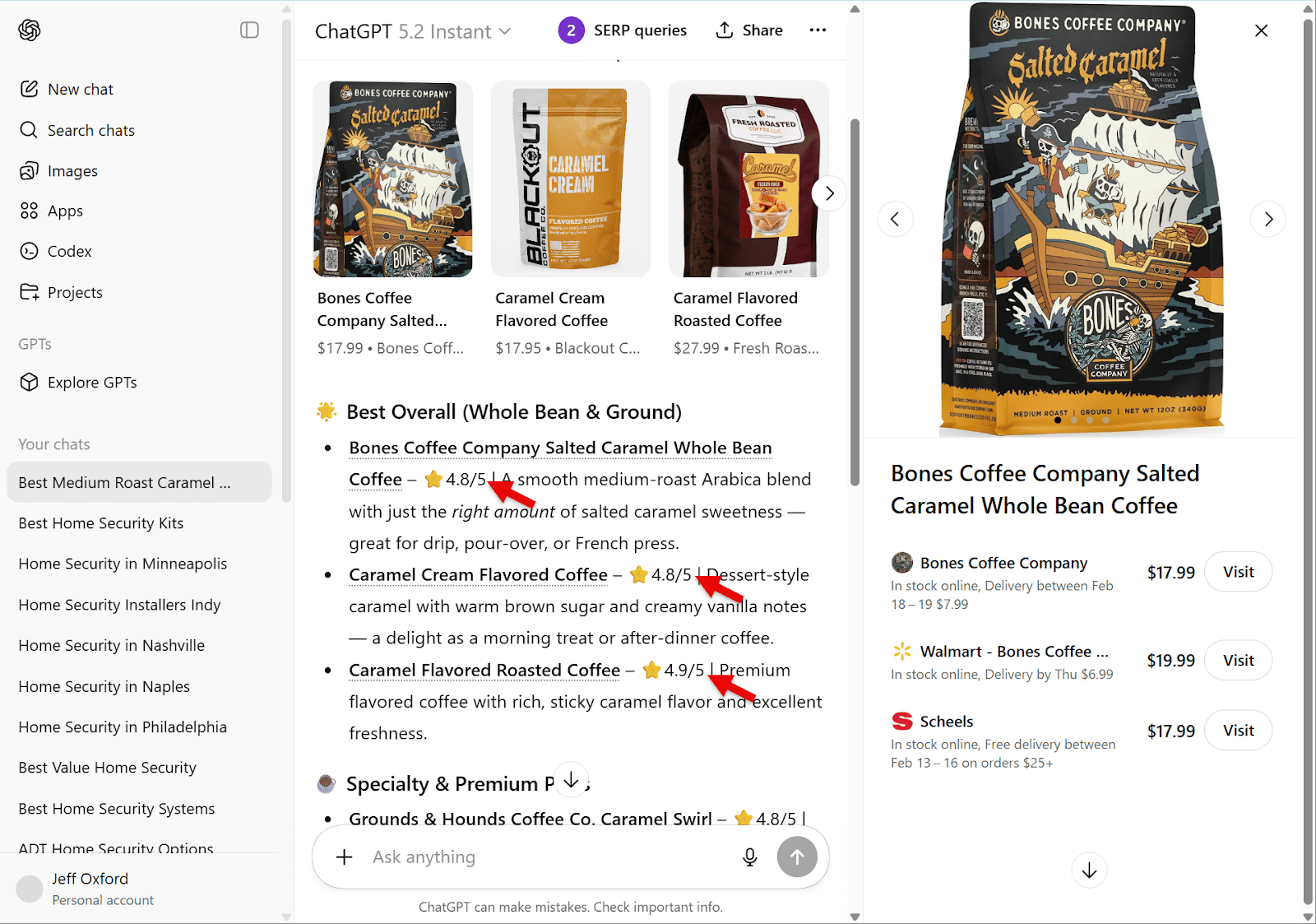
    AI matches products with people and their needs, not just keywords. Explicitly stating who the product is for and how it’s used makes it more likely to be recommended by AI.

    Action item: I list the top use cases and audience segments for each product, considering situations, pain points, and goals.

    ```json
{
  "alt": "Comparison of various caramel flavored coffees including Bones Coffee Company Salted Caramel with ratings and prices displayed.",
  "caption": "Discover the top-rated caramel flavored coffees with Bones Coffee Company's Salted Caramel leading the pack, offering a smooth blend perfect for any coffee lover.",
  "description": "The image showcases a comparison of caramel flavored coffees, highlighting Bones Coffee Company Salted Caramel Whole Bean Coffee as a top choice. This medium roast Arabica blend is noted for its perfect balance of salted caramel sweetness, earning a 4.8/5-star rating. Ideal for drip, pour-over, or French press brewing, it is competitively priced at $17.99 with delivery options. The image also shows offerings from other brands with varied flavors and ratings, providing a comprehensive look at customer favorites."
}
```

    4. FAQ section

    Does the product page include an FAQ section answering common questions about the product?

    FAQs can bolster AI’s confidence in recommending my products by showing they’re a good fit for specific queries. The more detailed the FAQ section, the more it helps in AI search contexts.

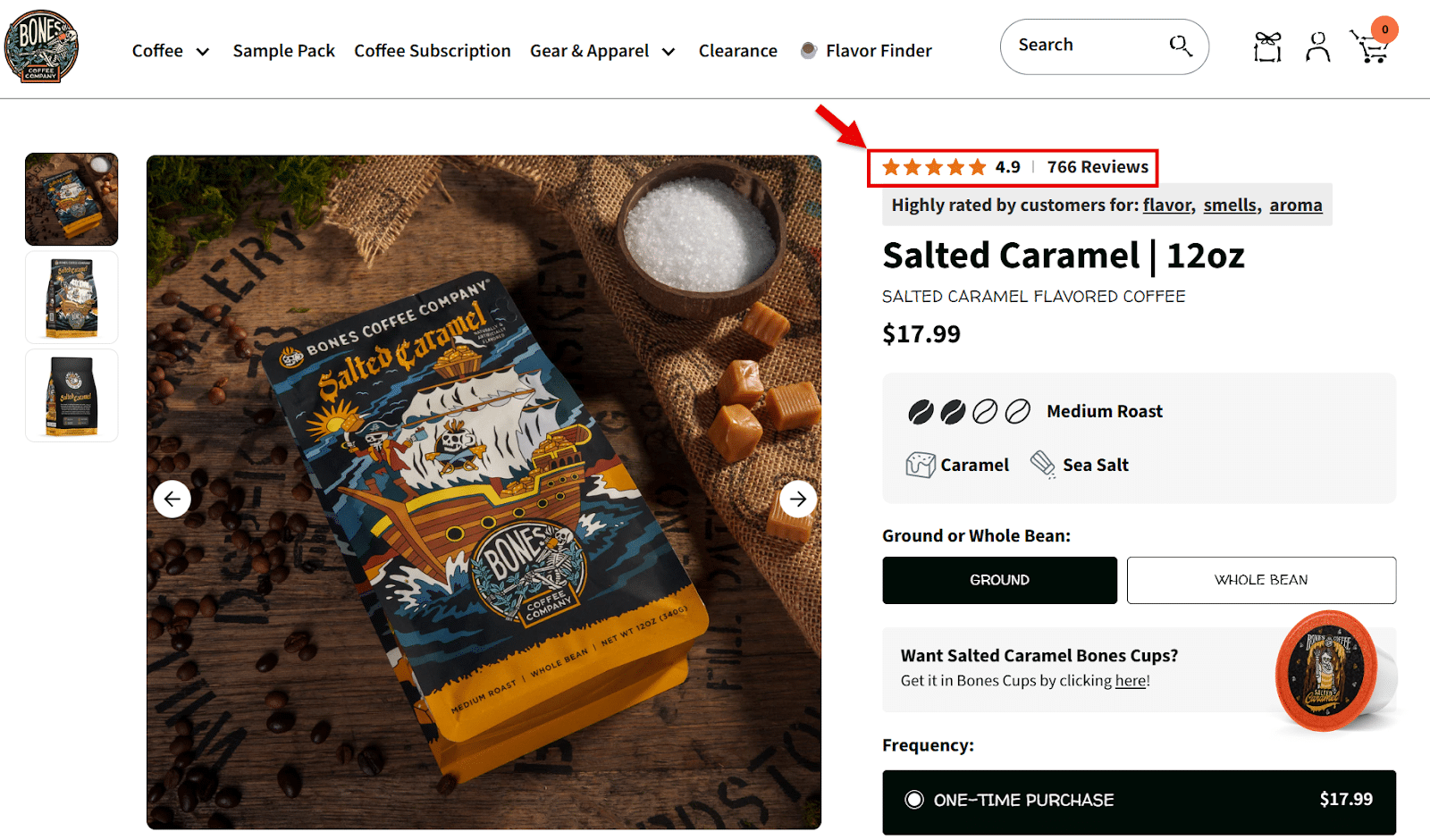
    ```json
{
  "alt": "Bones Coffee Company Salted Caramel 12oz bag on a rustic surface with caramel cubes and sea salt.",
  "caption": "Delight in the flavors of Bones Coffee Company's Salted Caramel blend. This 12oz medium roast promises a rich taste, adored by coffee lovers everywhere.",
  "description": "This image showcases a 12oz bag of Bones Coffee Company's Salted Caramel flavored coffee, featuring a distinctive pirate ship design. Surrounded by coffee beans, caramel cubes, and sea salt, this medium roast coffee is highly rated for its unique taste and aroma. Available for purchase at $17.99, this whole bean coffee is perfect for those seeking a sweet and salty coffee experience."
}
```

    Action item: I gather and answer the most common questions from customer inquiries, reviews, and even competitor analysis to include on product pages.

    5. Product reviews

    Does the product page display customer ratings and review counts?

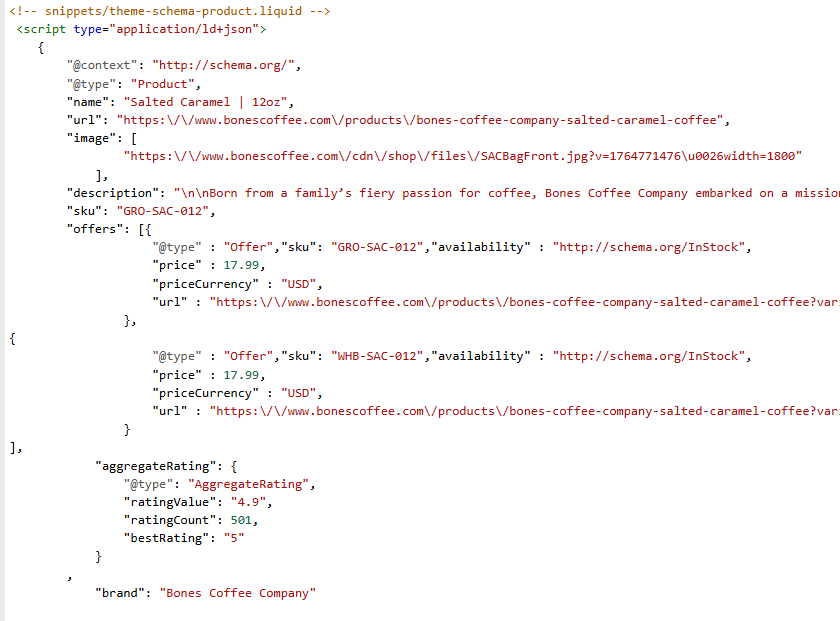
    ```json
{
  "alt": "Screenshot of JSON-LD script for Bones Coffee Company's Salted Caramel coffee product details.",
  "caption": "Delve into the rich details of Bones Coffee Company's Salted Caramel coffee, from product specs to price offerings, in this JSON-LD snippet.",
  "description": "This image showcases a JSON-LD script detailing the product information for Bones Coffee Company's Salted Caramel coffee. It includes the product name, image URL, description, SKU, price offers, availability, and aggregate rating with a high score of 4.9 out of 5. Key attributes like the brand and pricing in USD are also highlighted, providing a comprehensive digital representation of the coffee product for online listings and SEO optimization."
}
```

    AI recommends products with proven reputations. Displaying a high rating and substantial number of reviews increases the chances of my products being recommended by AI.

    Action item: I ensure high visibility for product ratings and review counts on every product page, possibly using third-party platforms to solicit reviews.

    6. Product structured data

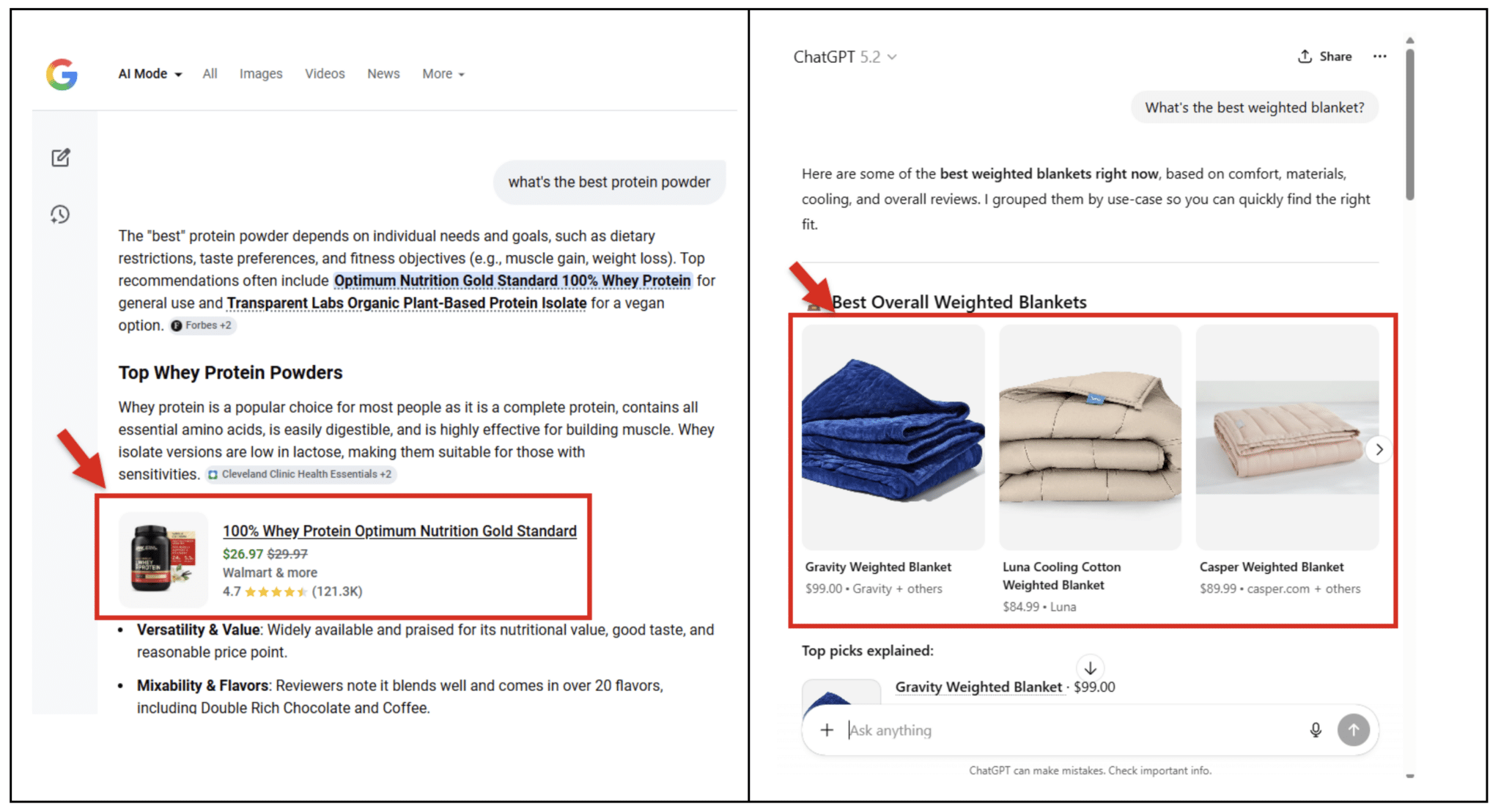
    ```json
{
  "alt": "Comparison of whey protein and weighted blankets on a webpage.",
  "caption": "Discover the top recommendations for whey protein powders and weighted blankets on this informative webpage comparison.",
  "description": "The image displays a webpage comparison between top whey protein powders and the best overall weighted blankets. On the left, Google Search results highlight the '100% Whey Protein Optimum Nutrition Gold Standard,' marked with an arrow for emphasis, priced at $26.97, and rated 4.7 stars. On the right side, ChatGPT presents alternatives for the best weighted blankets, including Gravity and Casper, with prices and images shown. This comparison visually guides users to informed purchasing decisions based on product reviews and ratings."
}
```

    Does the product page include structured data for price, availability, reviews, and other key attributes?

    Structured data helps AI understand my product information effortlessly and even feeds into knowledge graphs that power AI recommendations.

    I understand that as AI agents engage more deeply in commerce, detailed product data becomes crucial for comparisons and purchasing.

    ```json
{
  "alt": "Comparison table showing product factors rated as Yes, Partial, or No.",
  "caption": "A comprehensive comparison table evaluating product factors like specifications, unique selling points, and reviews with clear Yes, Partial, or No ratings.",
  "description": "This image displays a comparison table assessing various product-related factors. Each factor is categorized under columns labeled Yes, Partial, or No. Factors include Product Specifications, Unique Selling Points, Use Cases & Target Audience, FAQ Section, Product Reviews, and Product Structured Data. This layout provides a clear and structured overview, aiding in identifying strengths and weaknesses of product listings for better visibility and decision-making."
}
```

    Putting the scorecard to work

    Here’s my concise strategy to audit and enhance my product pages for AI optimization, focusing on closing gaps where AI might overlook my products.

    Prioritizing these optimizations means I’m not only engaging effectively but also increasing my competitiveness in the AI-driven market landscape.


    Inspired by this post on Search Engine Land.


    crushpress.ai community screenshot
  • Enhance Forum Visibility: Google’s New Structured Data Update

    Enhance Forum Visibility: Google’s New Structured Data Update

    I recently discovered that Google has enhanced its structured data support for forum and Q&A pages. This update introduces new properties that allow us to better signal reply threads, quoted content, and identify whether content is generated by AI or humans.

    With these changes, which aim to boost Google’s accuracy in interpreting discussions and Q&A content, we can now ensure our content is represented more precisely.

    What’s New. Google has updated its QAPage documentation to include commentCount and digitalSourceType. Moreover, the DiscussionForumPosting documentation now supports sharedContent alongside these new properties.

    The Details. Using Q&A markup, I’m able to apply commentCount to questions, answers, and comments, showcasing the total number of comments even if they are not fully marked up. This total should align with answerCount + commentCount, representing all types of replies.

    How It Works. The digitalSourceType property allows me to indicate whether content is produced by a model or simple automation. I can use TrainedAlgorithmicMediaDigitalSource for advanced outputs and AlgorithmicMediaDigitalSource for basic bots. If this property is left out, Google assumes the content is human-generated.

    What’s New for Forums. The sharedContent property helps me to mark the primary item that’s being shared in a post. Google supports various content types like WebPage, ImageObject, and more, including quotes or reposts.

    Why This Matters. This update provides me with greater control over how Google interprets community content, which is particularly important for sites rich in forums, support communities, UGC platforms, and Q&A sections. Google can now distinguish between answers and comments more effectively, tally partial threads across multiple pages, and recognize when a post primarily shares specific media types.

    Documentation. The official documentation was updated on March 24, providing all the details I need to apply these new capabilities.


    Inspired by this post on Search Engine Land.


    crushpress.ai community screenshot
  • Why Basic SEO Tactics Falter in AI-Driven Search Visibility

    Why Basic SEO Tactics Falter in AI-Driven Search Visibility

    As I delve into the world of AI-driven search, it’s clear that advice around AI is becoming way too simple. What really sets you apart are knowledge graphs, expert entities, and how you influence trusted datasets.

    Recently, I came across a Harvard Business Review article that resonates with the shifts we’re noticing in SEO. AI Overviews and Google’s AI-enhanced search features are not only creating what’s known as a zero-click environment but they’re also redefining user journeys and behaviors.

    User journeys that were once multi-touch are now compressed into a single, synthesized answer. The metaphor of the “Search” monolith crumbling visually captures this transformation.

    In this dramatic shift, brands like mine lose many traditional touchpoints, requiring a change in marketing strategy. HBR brilliantly highlights how algorithms are reshaping first impressions. However, while pointing in the right direction, the article’s tactical advice feels too generic and superficial.

    Much of the advice sounds strategic yet lacks deep operational insight. This gap is crucial for sustainable visibility and long-term success.

    The challenge is deeper than what appears as simple advice to navigate at an executive level. Real structural change is essential to adapt to the evolving search landscape.

    The Problem with Flock Tactics

    The HBR article brings forward schema, authorship signals, and branded concepts but these suggestions risk becoming “flock tactics.” They spread because they’re easy to grasp, yet they lose their edge once widely adopted.

    Schema

    Schema is highly debated in LLM and AI optimization. Although Microsoft Bing uses schema for its LLMs, Google’s models have a more complex relationship with third-party LLMs.

    Incorporating schema in AI and SEO activities is useful, but presenting it as a fundamental tactic neglects its diminishing returns when everyone implements it.

    Another oversight is the importance of external knowledge systems such as Wikidata. LLMs often rely on these authorities more than on any single website.

    There’s a significant gap in understanding how models process structured versus unstructured data signals.

    ```json
{
  "alt": "Man stands before cracked Google logo pillar crumbling into colorful pieces.",
  "caption": "A towering Google logo, cracked and crumbling, confronts a solitary figure, symbolizing instability.",
  "description": "The image depicts a monolithic Google logo pillar, prominently showcasing cracks and partially collapsing into multicolored geometric pieces, representing instability or disruption. A lone individual stands in the foreground, gazing at the structure, adding a sense of reflection and contrast. The color contrast and symbolism make it a striking visual, capturing themes of change or vulnerability."
}
```

    E-E-A-T — Shallow Authorship Signals

    Using real experts’ credentials aligns with E-E-A-T but often becomes superficial, focusing on bios and headshots without actually strengthening expertise.

    There’s a profound difference between mere display of bios and nurturing an expert entity recognized in academia or industry.

    Only genuine expertise creates the signals that AI models trust.

    Vanity Concepts

    Creating branded concepts like “The Acme Index” sounds appealing but is difficult to successfully execute. External adoption is key for them to gain traction.

    These concepts must be embraced by reputable sources, which is a hurdle many brands fail to overcome.

    The Structural Blind Spots

    Beyond tactics, there are deeper structural issues in perceiving AI solely as an external shift rather than an opportunity to innovate internally.

    Internalizing AI Infrastructure

    The potential to integrate AI deeply into operations, through AI assistants or domain-specific agents, is often overlooked.

    In controlled environments, fundamentals like site architecture and data structures remain crucial for success, even if they need to be reimagined for AI.

    ```json
{
  "alt": "The CapmatchOne logo with a gradient circle and bold text.",
  "caption": "Discover innovation with the CapmatchOne logo, featuring sleek typography and a modern gradient circle.",
  "description": "The CapmatchOne logo features bold, modern typography coupled with a gradient circle, symbolizing connection and innovation. The sleek design conveys a sense of progress and creativity. This image can be used for branding or promotional purposes, appealing to audiences interested in innovative solutions and forward-thinking designs."
}
```

    It’s Not Just SEO

    SEO as a ranking problem is an incomplete perspective. It’s moving towards entity-level knowledge management.

    Visibility now hinges on solid entity definitions and connections to external data sources.

    Effective SEO requires understanding these complex relationships.

    LLM Model Heterogeneity

    Different AI systems use unique datasets and processes, implying a single strategy may not work for all AI platforms.

    Essential is an awareness of these risks to prevent reputational damage due to missteps in optimization strategies.

    Surface-Level Tactics Won’t Build AI Visibility

    HBR article usefully outlines how marketing is changing with AI, emphasizing that traditional SEO is no longer sufficient.

    Practical advice is thinner, filled with tactics quickly replicated by others.

    The challenge lies in doing the harder, unglamorous work that leads to real, long-term visibility.


    Inspired by this post on Search Engine Land.


    crushpress.ai community screenshot
  • Revamp Your Vehicle Listings with Google’s ‘Build to Order’ Feature

    Revamp Your Vehicle Listings with Google’s ‘Build to Order’ Feature

    When I discovered Google’s latest update to the Merchant Center, I was thrilled. They’ve added a ‘build to order’ option for vehicle listings, offering sellers like me a streamlined way to display customizable models that customers can factory-order.

    I immediately saw how this attribute could revolutionize my listings. It’s designed for dealers who, like myself, don’t always have every model available on the lot. This addition allows us to tag vehicles that aren’t in stock but can be tailored and ordered. It’s a game-changer!

    What needs to change. I’m aware that updating my listings involves two critical steps. First, I need to adjust my structured data by setting availability to BuildToOrder. Secondly, I must align my Merchant Center feed with the same availability code. Ensuring consistency is key to avoid listing disapprovals.

    Instruction on when to use the availability [availability] attribute in GMC 

    Why we care. This update is a breath of fresh air for us sellers. Until now, conveying a vehicle’s unavailability for immediate pickup was challenging. Now, the ‘build to order’ option clearly mirrors the operations of modern automakers, especially those like Tesla and Rivian that offer direct-to-consumer customization. It helps set clear expectations for our customers and ensures our data is pristine for Google.

    ```json
{
  "alt": "Guidelines for product availability status including in stock, out of stock, preorder, backorder, and build to order.",
  "caption": "Explore the different product availability statuses: from in stock and out of stock to preorder, backorder, and even build to order for vehicle ads.",
  "description": "This image illustrates guidelines for product availability statuses required for all products. It lists supported values businesses can use: in stock, out of stock, preorder, backorder, and build to order, with detailed descriptions for each. These values ensure that product feed information matches the website details, facilitating smooth transactions. This guide aids businesses in managing inventory visibility effectively."
}
```

    The fine print. Remember, if a vehicle is categorized as ‘build to order,’ it must have the condition attribute set to ‘new.’ If it’s listed as ‘used,’ it will be disapproved. Google regards build-to-order vehicles as newly configured, not pre-owned.

    Bottom line. For anyone like me selling customizable or factory-order vehicles, this update is a more precise way to reflect vehicle availability. However, it only works if my feed, structured data, and condition fields are in synchronization.

    I first learned about this update from Google Shopping specialist Emmanuel Flossie, who kindly explained how to implement it on his blog.

    Dig deeper. For more insights, check out the “Availability [availability]” Google Merchant Centre help doc


    Inspired by this post on Search Engine Land.

    crushpress.ai community screenshot
  • Boost AI Search Visibility with Effective Schema Markup

    Boost AI Search Visibility with Effective Schema Markup

    As someone keen on improving AI search visibility, I’ve delved into the world of schema markup. Let me share what I’ve learned about essential schema types, practical implementation tips, and how structured data enhances the understanding of content by Large Language Models (LLMs).

    By incorporating schema markup, I’ve noticed significant improvements in how AI and search engines interpret my content. This not only boosts my content’s visibility but also ensures it reaches the right audience effectively.

    The right schema types serve as a bridge, enabling AI systems to decipher and present content accurately. In my experience, selecting the appropriate schema type is crucial for optimizing how LLMs process information.

    Moreover, implementing schema markup isn’t as daunting as it seems. With some practice, I’ve found that the structured data seamlessly fits into my workflow, enhancing the overall search optimization process.


    Inspired by this post on HiGoodie Blog.


    crushpress.ai community screenshot
  • Elevate SEO Success with Strong Governance Models

    Elevate SEO Success with Strong Governance Models

    Let me guess: I just spent three months meticulously crafting an optimized product taxonomy, complete with schema markup, internal linking, and standout metadata.

    Then, out of nowhere, the product team decided to launch a site redesign without looping me in. Now half of my URLs are broken, the new templates have stripped away my structured data, and my boss is wondering why our organic traffic plummeted by 40%.

    Sound familiar?

    Here’s the thing: this isn’t an SEO failure, but a governance failure. It’s been costing us countless nights and weekends trying to fix problems that never should have occurred.

    This article sheds light on why weak governance keeps breaking SEO, how AI advancements have raised the stakes, and how a visibility governance maturity model can help SEO teams transition from firefighting to prevention.

    Governance isn’t bureaucracy – it’s your insurance policy

    I know what you’re thinking. “Great, another framework that means more meetings and approval forms.” But hear me out.

    The Visibility Governance Maturity Model (VGMM) isn’t about creating red tape. It’s about establishing clear ownership, documented processes, and decision rights that prevent your work from being accidentally destroyed by teams who don’t understand SEO.

    Think of it this way: VGMM is the difference between being the person who gets blamed when organic traffic tanks versus being the person who can point to documentation showing exactly where the process broke down – and who approved skipping the SEO review.

    This maturity model:

    • Protects your work from being undone by releases you weren’t consulted on.
    • Documents your standards so you’re not explaining canonical tags for the 47th time.
    • Establishes clear ownership so you’re not expected to fix everything across six different teams.
    • Gets you a seat at the table when decisions affecting SEO are being made.
    • Makes your expertise visible to leadership in ways they understand.

    The real problem: AI just made everything harder

    Remember when SEO was mostly about your website and Google? Those were simpler times.

    Now I’m trying to optimize for:

    • AI Overviews that rewrite your content.
    • ChatGPT citations that may or may not link back.
    • Perplexity summaries that pull from competitors.
    • Voice assistants that only cite one source.
    • Knowledge panels that conflict with your site.

    And I’m still dealing with:

    • Content teams who write AI-generated fluff.
    • Developers who don’t understand crawl budget.
    • Product managers who launch features that break structured data.
    • Marketing directors who want “just one small change” that tanks rankings.

    Without governance, I’m the only person who understands how all these pieces fit together.

    When something breaks, everyone expects me to fix it – usually yesterday. When traffic is up, it’s because marketing ran a great campaign. When it’s down, it’s my fault.

    I become the hero the organization depends on, which sounds great until I realize I can never take a real vacation, and I’m working 60-hour weeks.

    Dig deeper: Why most SEO failures are organizational, not technical

    ```json
{
  "alt": "The CapmatchOne logo with a gradient circle and bold text.",
  "caption": "Discover innovation with the CapmatchOne logo, featuring sleek typography and a modern gradient circle.",
  "description": "The CapmatchOne logo features bold, modern typography coupled with a gradient circle, symbolizing connection and innovation. The sleek design conveys a sense of progress and creativity. This image can be used for branding or promotional purposes, appealing to audiences interested in innovative solutions and forward-thinking designs."
}
```

    What VGMM actually measures – in terms you care about

    VGMM doesn’t care about your keyword rankings or whether you have perfect schema markup. It evaluates whether your organization is set up to sustain SEO performance without burning you out. Below are the five maturity levels that translate to your daily reality:

    Level 1: Unmanaged (your current nightmare)

    • Nobody knows who’s responsible for SEO decisions.
    • Changes happen without SEO review.
    • You discover problems after they’ve tanked traffic.
    • You’re constantly firefighting.
    • Documentation doesn’t exist or is ignored.

    Level 2: Aware (slightly better)

    • Leadership admits SEO matters.
    • Some standards exist but aren’t enforced.
    • You have allies but no authority.
    • Improvements happen but get reversed next quarter.
    • You’re still the only one who really gets it.

    Level 3: Defined (getting somewhere)

    • SEO ownership is documented.
    • Standards exist, and some teams follow them.
    • You’re consulted before major changes.
    • QA checkpoints include SEO review.
    • You’re working normal hours most weeks.

    Level 4: Integrated (the dream)

    • SEO is built into release workflows.
    • Automated checks catch problems before they ship.
    • Cross-functional teams share accountability.
    • You can actually take a vacation without a disaster.
    • Your expertise is respected and resourced.

    Level 5: Sustained (unicorn territory)

    • SEO survives leadership changes.
    • Governance adapts to new AI surfaces automatically.
    • Problems are caught before they impact traffic.
    • You’re doing strategic work, not firefighting.
    • The organization values prevention over reaction.

    Most organizations sit at Level 1 or 2. That’s not your fault – it’s a structural problem that VGMM helps diagnose and fix.

    Dig deeper: SEO’s future isn’t content. It’s governance

    How VGMM works: The less boring explanation

    VGMM coordinates multiple domain-specific maturity models. Imagine it as a health checkup that evaluates all your vital signs, not just one metric.

    It evaluates maturity across domains like:

    • SEO governance: Your core competency.
    • Content governance: Are writers following standards?
    • Performance governance: Is the site actually fast?
    • Accessibility governance: Is the site inclusive?
    • Workflow governance: Do processes exist and work?

    Each domain gets scored independently, then VGMM looks at how they work together. Because excellent SEO maturity doesn’t matter if the performance team deploys code that breaks the site every Tuesday or if the content team publishes AI-generated nonsense that tanks your E-E-A-T signals.

    VGMM produces a 0–100% score based on:

    • Domain scores: How mature is each area?
    • Weighting: Which domains matter most for your business?
    • Dependencies: Are weaknesses in one area breaking strengths in another?
    • Coherence: Do decision rights and accountability actually align?

    The final score isn’t about effort – it’s about whether governance actually works.

    Most importantly, VGMM translates your expertise into language that leadership understands. It protects your work from accidental destruction, so you can focus on strategic, creative, growth-focused work that truly matters.


    Inspired by this post on Search Engine Land.


    crushpress.ai community screenshot
  • Mastering AI-Driven SEO in Restrictive Industries: 3 Key Strategies

    Mastering AI-Driven SEO in Restrictive Industries: 3 Key Strategies

    As someone navigating the complexities of SEO in regulated industries, I’ve always faced heightened scrutiny. It all began with “Your Money or Your Life” (YMYL), where precision and trust are paramount.

    With AI Overviews and large language models like ChatGPT escalating this scrutiny, the stakes have grown. The audience is now more expansive, and the repercussions of missteps more significant.

    Accuracy and credibility have forever been the cornerstone for success in regulated sectors. Today’s AI-powered search amplifies this need into an essential requirement.

    I’ve learned that experience, expertise, authoritativeness, and trustworthiness (E-E-A-T) are non-negotiable, especially for industries like finance, healthcare, government, and education that fall under Google’s YMYL banner.

    In this AI-driven search landscape, it’s no longer feasible to work in a silo. Regulated brands require integrated SEO strategies.

    Interestingly, up to 72% of B2B buyers encounter Google’s AI Overviews, often listing brands even without resulting clicks. AI models gather data from the web, unconfined by traditional content boundaries.

    Social profiles, digital PR, owned content, and discussions on platforms like Reddit and Quora all piece together the public perception and citation of my brand.

    Tackling these challenges requires a fortified approach rooted in three core pillars of AI-era SEO for regulated industries.

    1. Trust-by-Design Content

    Trust serves as a crucial foundation, not just as a ranking factor but as a necessity. It extends beyond my website, incorporating the broader digital footprint of my brand.

    Every piece of content must align with industry-specific regulations and uphold a consistent strategy. AI and SEO guidelines that are pivotal include:

    • Subject Matter Experts (SMEs) should consistently produce authoritative content, backed by a history of external publication and credible citations.
    • Regular updates and transparent revision histories convey accountability.
    • Educational content, favoring well-researched white papers over promotional materials, builds authority.
    • Adherence to E-E-A-T guidelines, especially on YMYL pages.
    • Employ AI wisely with essential human oversight, stringent compliance reviews, and clear privacy policies.

    2. Technical and Structural Clarity

    Technical clarity goes beyond aiding search engine crawlers to ensuring AI-driven search systems comprehend and accurately cite my content.

    Structured data serves as a robust trust signal. Effective use of schema helps search engines verify the credibility of authorship and organizational connections.

    • Use schema types such as Organization, Article, FAQ, and Person to fortify trust signals.
    • Maintain an intuitive, crawlable site architecture and minimize technical errors.
    • Emphasize accessibility through alt text, ARIA labels, and semantic HTML.

    3. Building Authority Across Channels

    In regulated sectors, authority extends beyond backlinks. It involves strategic PR, content production, and optimization efforts to generate consistent credibility cues.

    • Encourage expert-driven engagement: Webinars and Q&A sessions provide valuable interactive content that reinforces credibility.
    • Expand visibility: Gain citations in credible publications and contribute to esteemed third-party sites.
    • Transparent compliance: Maintain visible adherence to standards, linking content to relevant governance organizations.

    SEO, content, and PR teams must work collaboratively to enhance these authority signals AI systems leverage to assess expertise.


    Tailored AI and SEO Strategies by Industry

    While fundamental strategies are universally applicable, each sector tackles unique challenges in AI-driven search.

    Aligning SEO with industry-specific regulations and trustworthy signals is crucial for success. AI-driven search further highlights these nuances.

    Financial Services

    Precision in content is vital to avoid affecting regulatory standing and consumer trust. SEO strategies need to balance visibility with compliance.

    • Integrate schema like Organization, FinancialProduct, and Person for clarity.
    • Content must state adherence to regulations like SEC, FINRA, and GDPR.

    Authority: Your Key to Success in AI-Driven Search

    In a world driven by AI and SEO, authority acts as a vital differentiator. It signifies how AI systems perceive a brand’s competence and compliance.

    Brands showcasing expertise and regulatory adherence stand a greater chance of being cited positively by AI systems. In this AI-first environment, authority is invaluable, and consistent investment in it is the way to succeeding in the digital arena.


    Inspired by this post on Search Engine Land.


    crushpress.ai community screenshot