I’ve recently noticed that Google Trends has introduced a fascinating update to its Explore page, and I’m thrilled to share what I’ve learned with you. This update is powered by something called Gemini, which aims to make it easier for us to discover and compare trending search terms within our areas of interest.
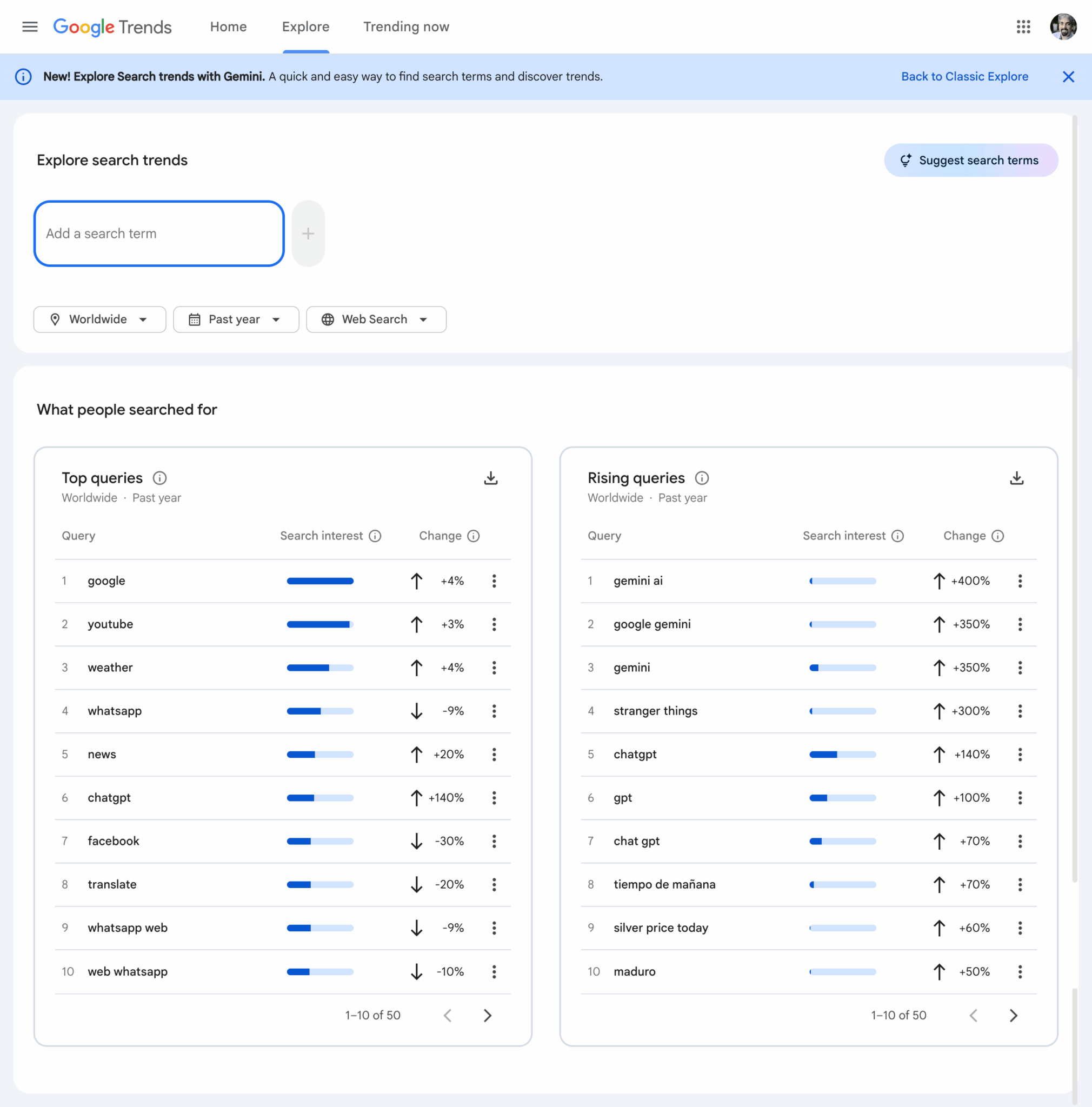
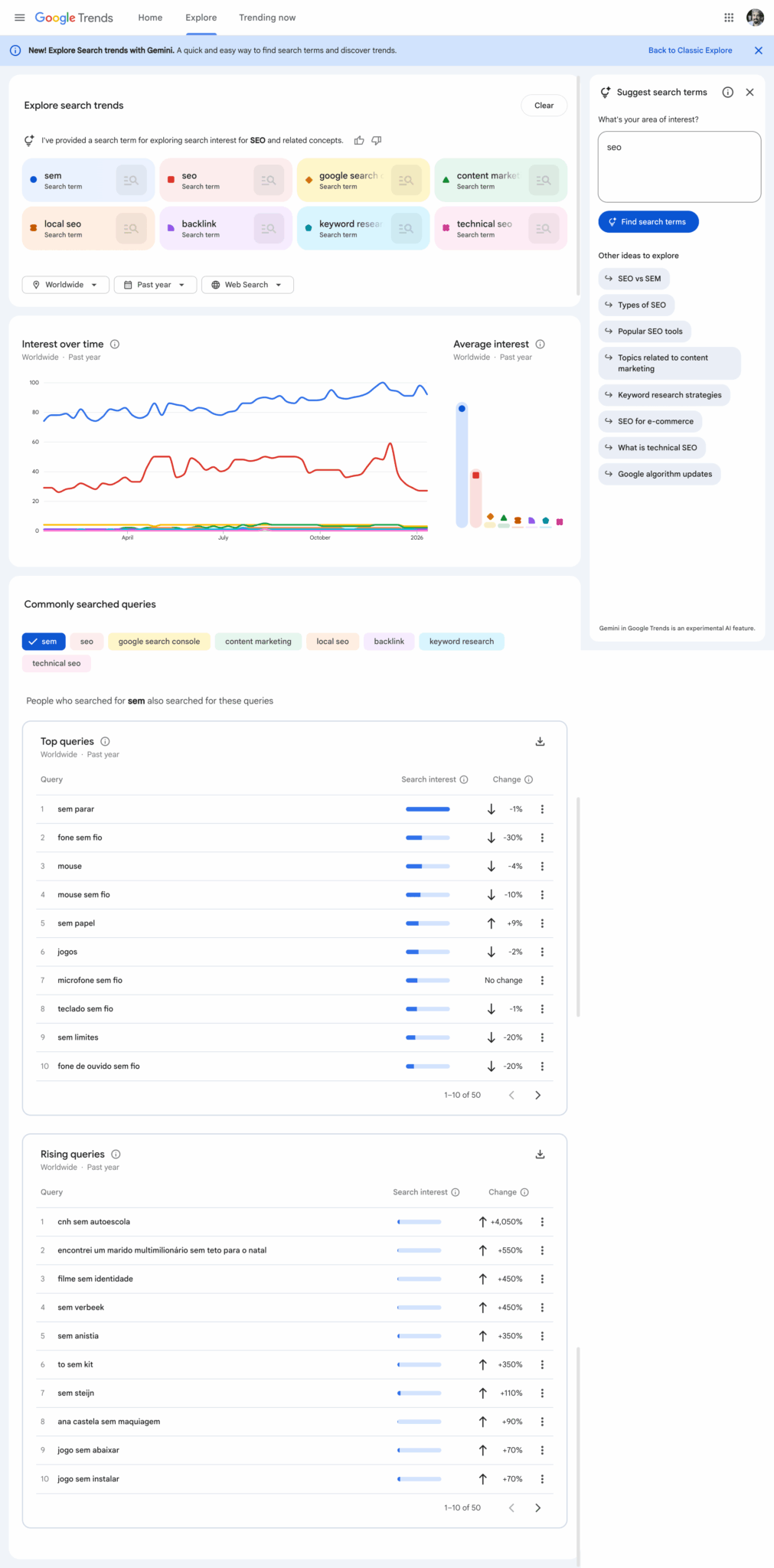
When I explored the new layout, I found a fresh and handy ‘Suggest search terms’ button at the top right. Here’s a look at the updated interface:
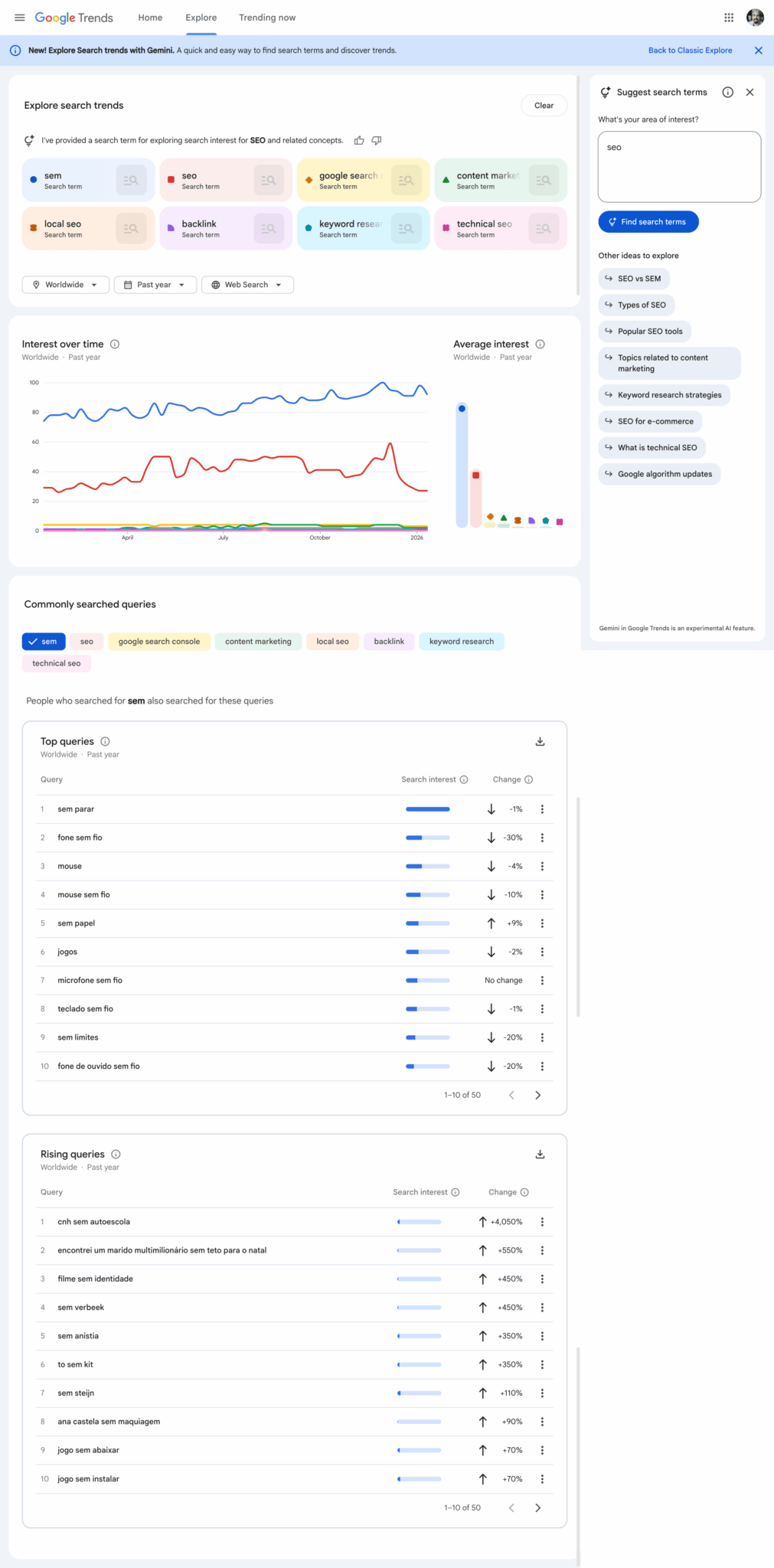
Clicking on ‘Suggest search terms’ allows me to enter a keyword or even a natural language sentence. Gemini then helps break down all relevant terms and compares them, offering insightful suggestions. It’s amazing how Google automatically identifies and contrasts trends pertinent to my interests, providing a list of suggestions to delve deeper into.
And here’s something cool I found during my exploration:
The redesign offers a sleek, modern aesthetic that I find very appealing. Each search term is now paired with dedicated icons and colors, making it easier to match terms with their respective lines on the graph. I’ve noticed that Google has increased the number of terms I can compare and has doubled the amount of rising queries on each timeline. This is helpful in understanding why certain queries are trending.
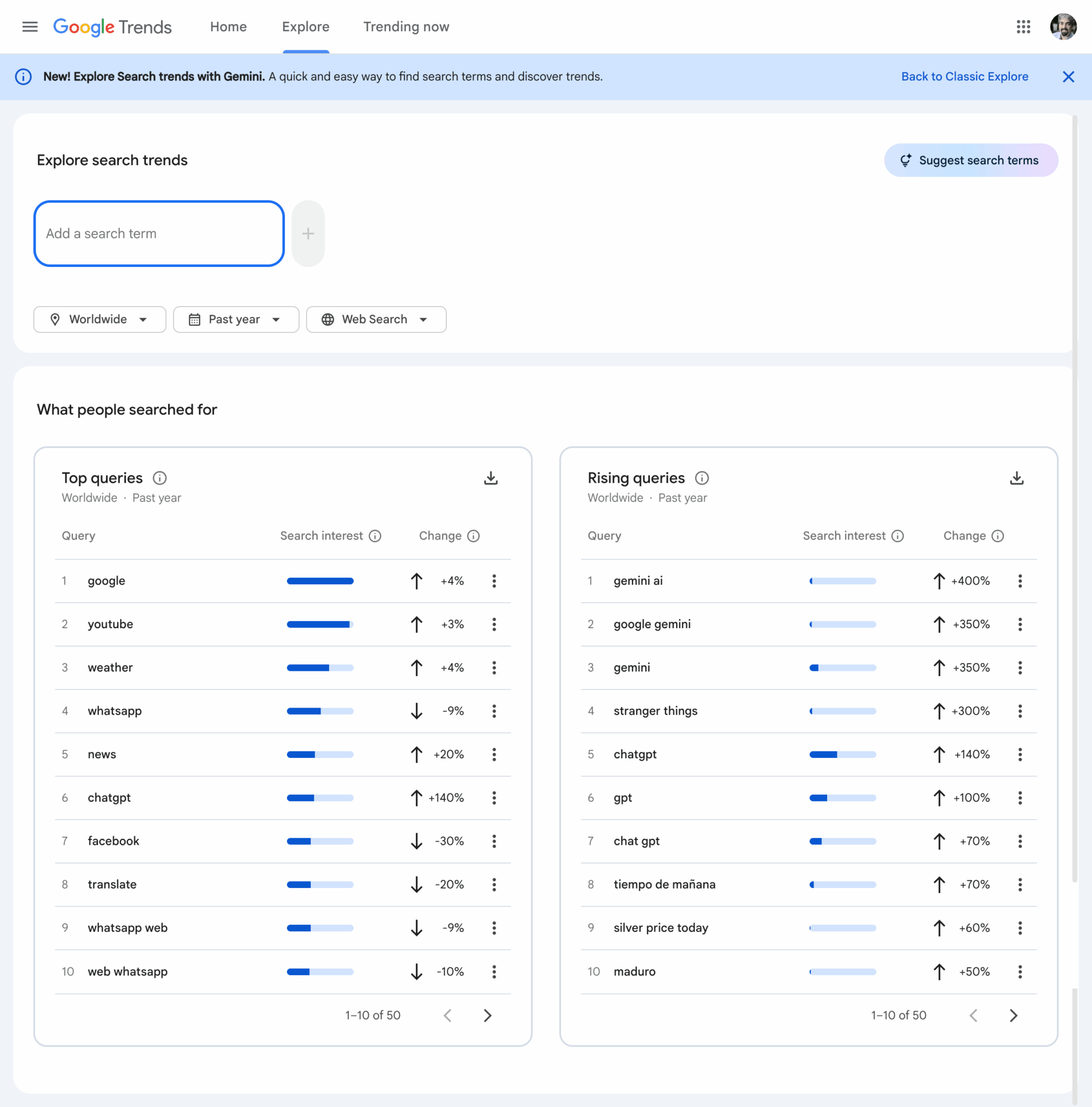
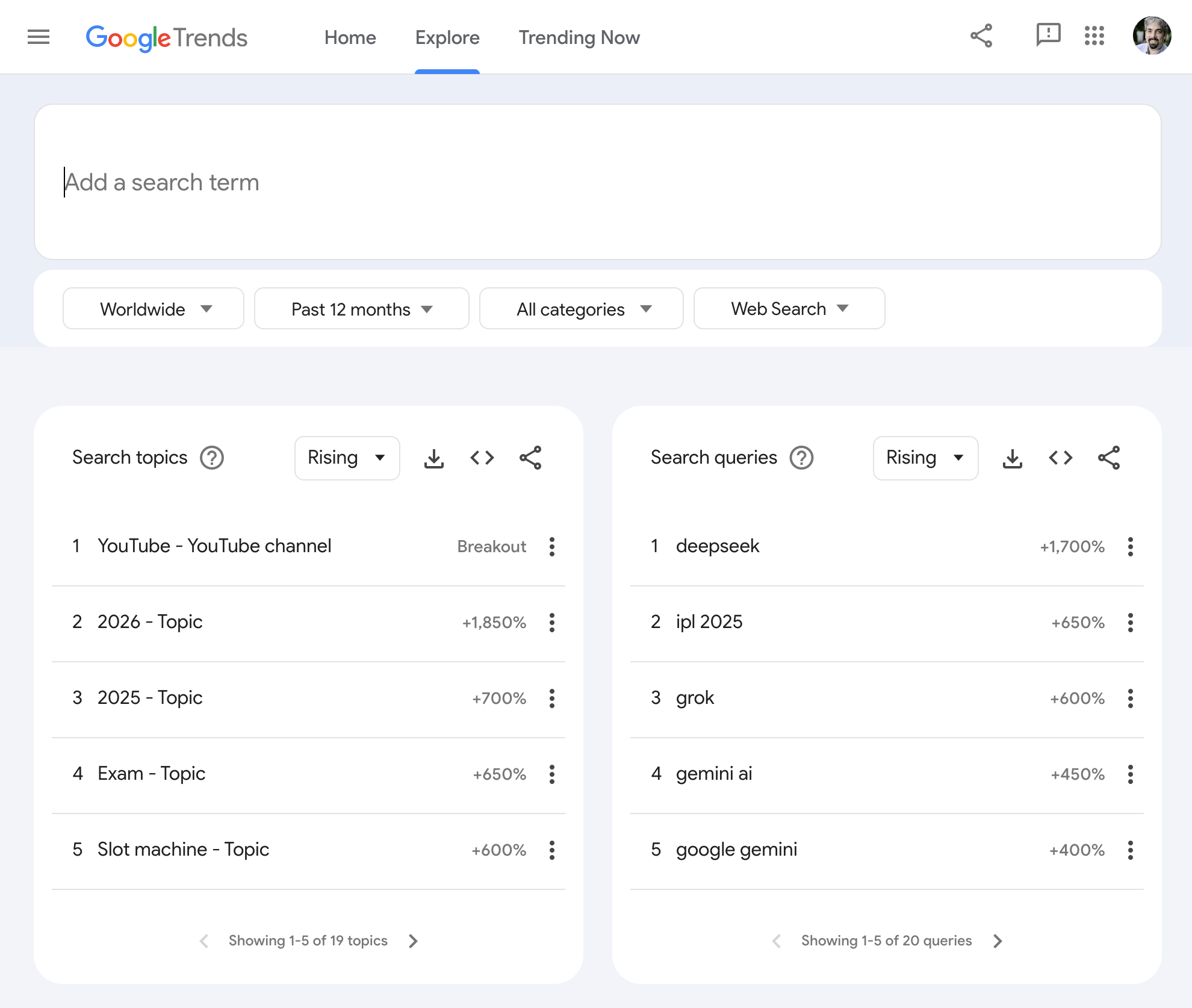
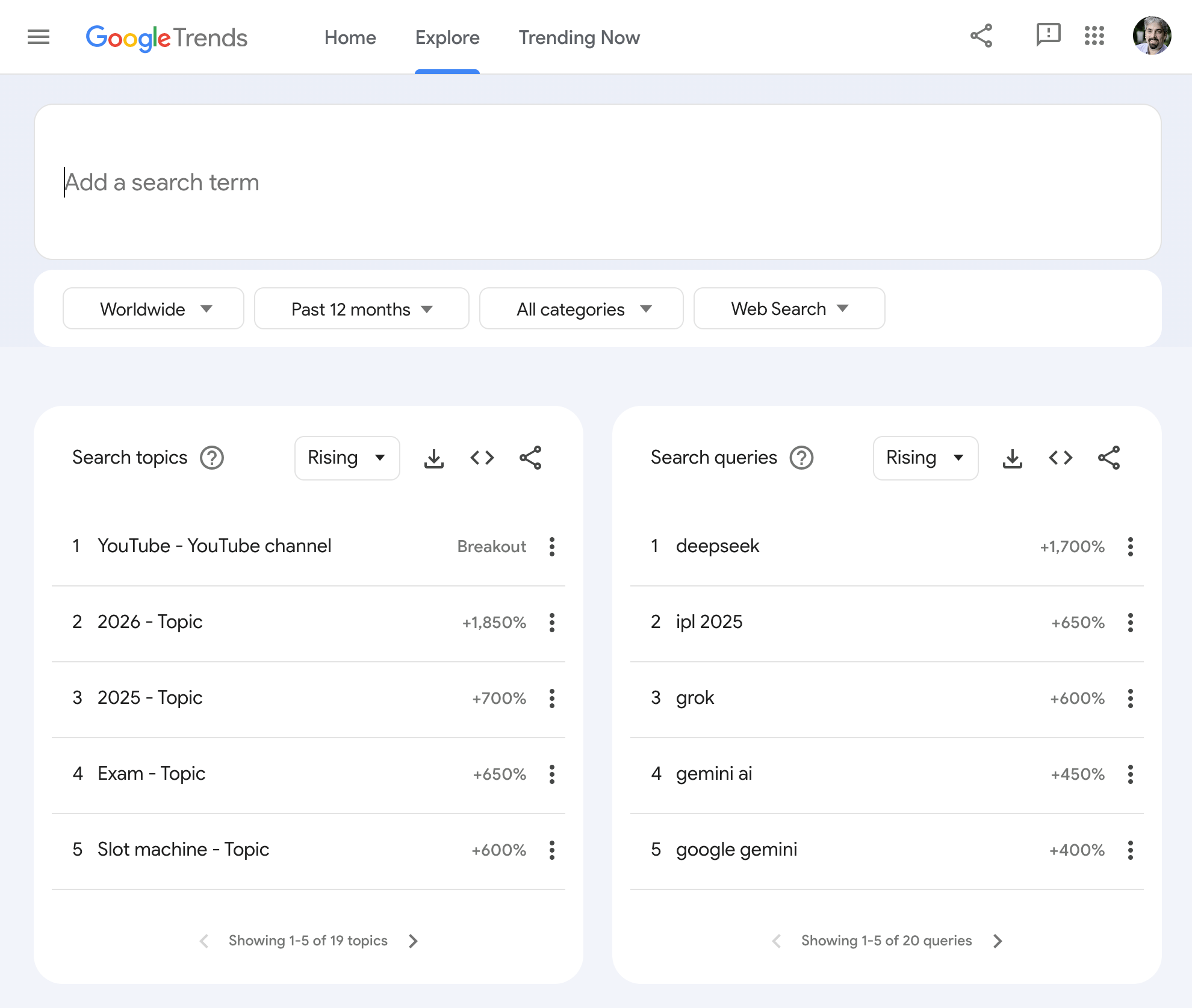
For a bit of nostalgia, here’s a glimpse of the old design:
This update is being gradually rolled out, so while I’ve had the chance to explore it today, I understand that some of you might not see it immediately. Google has informed us that it’s currently a gradual release on desktop.
Why should you care? Well, this innovative tool presents new ways to uncover fresh and exciting content ideas for your site. Go ahead and give it a try; you might just be pleasantly surprised by what you find.
As organic search from Google dwindles, I’ve discovered numerous avenues for driving traffic to affiliate sites by leveraging communities, courses, and partnerships.
Google’s AI Overviews often display affiliate content without providing traffic or clicks back to publishers. Fortunately, we don’t need to rely solely on Google to drive our success.
With a new year upon us, I’ve been exploring diverse sources of traffic and identifying new methods to diversify income. It’s crucial to stick to what we do best while expanding our reach.
The strategies I share here are ones I regularly apply with partners and have seen them succeed time and again.
This discussion stems from a podcast where I questioned if affiliate marketing was at its end. Fortunately, it’s far from it. Affiliate marketing reaches far beyond Google, continuing to thrive as a vital industry.
Skool and Educational Platforms
Platforms like Skool offer possibilities to launch a course or nurture a community with multiple features, including text, video, newsletters, and interactivity.
These platforms stand out due to their focus on creators and educators, quickly gaining market share. They empower us to monetize creatively and offer the flexibility to cultivate a community and brand.
Imagine crafting courses on topics ranging from starting a photography business to cooking classes. We dictate if and when courses are free or paid, and tailor the content our students receive.
What’s especially advantageous is the integration of affiliate links and an email system, both designed to convert free trials or foster ongoing engagement with students.
Platforms like these support virtually any niche. Whether in credit repair, skill learning, or business startups, they provide us with tools to succeed.
Data from Semrush as of December 27, 2025, reveals around 110,000 monthly branded searches, with 33,000 directed to the login page. This suggests a robust user base available for those like us eager to grow our courses.
I’ve noticed a resurgence in offline advertising within affiliate channels, offering opportunities to engage audiences in unique ways.
Beyond traditional approaches like TV ads, I’ve seen affiliates leverage QR codes in retail environments or on physical flyers—even if I was too rushed to scan them myself!
Experts and speakers we meet at workshops often integrate affiliate links into their presentations. By placing links on business cards, they earn from recommendations they would make regardless.
I’ve thought about the potential of placing QR codes on T-shirts—imagine the possibilities in high-traffic areas! Curious passersby could find themselves exploring products or content they weren’t expecting.
This tactic could lead to impulse buys, jokes of the day, or even popular travel app promotions. The creative offline opportunities are boundless.
It’s exciting to see brands returning to the affiliate channel by investing in perks and partner portals.
By linking with complementary companies via these portals, brands are referring users while collecting commissions.
Partnership portals help us find valuable co-marketing partners for email campaigns, social media posts, and more.
Banks are promoting insurance and web hosting services.
Web hosts suggest LLC formations alongside essential legal documents like privacy policies.
Food brands are highlighting kitchen tools and accessories.
Affiliates also coordinate with brands to market software or cashback platforms on post-purchase thank-you pages. When we have access to a shopper within a brand’s cart, it’s golden.
So, how does this drive traffic? By featuring each other in partner portals, we cross-promote and amplify our collective reach. Collaborate with a partner to create a complementary course or service and be bold in suggesting an inclusion within its portal.
Acting as niche experts, we add incredible value, particularly when supporting upsells that a brand struggles to convert. This collaboration can convert enthusiastic audiences.
Through this synergy, brands capitalize on our credibility, ultimately reaping higher-value customers without navigating conversion issues alone.
When Search Sends Fewer Clicks, Creativity Matters
There’s ample opportunity within traditional platforms like social media and SEO, yet creativity is king when search engines fail to deliver clicks.
Challenge yourself to discover where you can generate traffic and route those users to your affiliate links. The only limits are those imposed by your imagination.
Instagram recently unveiled a groundbreaking tool called Your Algorithm in the U.S., empowering me to discover what the algorithm thinks I prefer and even tweak it. This exciting feature could redefine how brands are found on Reels.
Why I care. This new capability could substantially change my content discovery experience. By indicating my interest in particular niches, like vintage fashion or fitness gear, Instagram might show me more content relevant to those interests, which is fantastic news for brands aiming to extend their reach through Reels.
How it works for me. A newly introduced Reels icon gives me access to a personalized array of topics Instagram’s AI believes I’m currently into, such as sports, horror movies, or skateboarding. Here’s what I can do:
Discover how to see more or less of any topic, or introduce my own suggestions.
Share my algorithm snapshot on Stories.
The future of exploration. Instagram plans to roll out this tool globally to other sections like Explore and the search tab, with controls broadening beyond Reels in due time.
Insights from Instagram. Tessa Lyons, Instagram’s VP of Product, expressed to Fast Company how they aim to enhance my Instagram experience by giving me more control: “We want our users to feel like they are in charge of their Instagram journey, tailoring what they see based on their evolving interests.”
Comparison to TikTok’s feature. Though TikTok previously introduced Manage Topics, its offerings are broader and less tailored to individual behavior compared to Instagram’s more personalized suggestions.
A declaration by Adam Mosseri. The head of Instagram, Adam Mosseri, shared the announcement directly on Instagram.
I recently discovered something fascinating about how people interact with AI. It turns out most AI chats don’t have any commercial intent! This insight came from a thorough analysis by Dan Petrovic, the director of AI SEO agency Dejan, who scrutinized millions of conversational turns to shed light on actual AI assistant usage.
Why is this important to us? As someone involved in SEO and marketing, I’m often focused on optimizing for AI. However, Petrovic’s research suggests we might be misunderstanding how people genuinely engage with AI assistants. They don’t typically flood AI with purchase queries. Instead, they explore issues and weigh options.
By the numbers, Petrovic dived into 4.4 billion characters across 613 million words and 3.9 million conversation turns. Here’s what that looks like:
Median chat: Just 2 turns, usually involving a quick question and an immediate response.
While most interactions are short, there are lengthy sessions when users paste documents for summarization or analysis.
Median words per session: 430 words.
Astonishingly, more than 80% of chats contain fewer than 1,000 words.
Only a small fraction, 4.2%, exceed 2,500 words. These are often complex tasks, like editing, coding, or tutoring.
Mean words: 732. This statistic is heavily influenced by long document submissions.
Assistant output: Typically, it’s 1.5 times more than what users contribute.
Median user contribution: Users make up about 16-17% of the conversation.
In exploring how people utilize AI assistants, Petrovic examined 24,259 sessions across 42 intent categories. Surprisingly, 64.6% of chats didn’t align with any purchase funnel. People used AI for writing, brainstorming, planning, learning, analyzing, or just simply chatting. Here’s the breakdown:
Other: 25%
Included are jailbreak attempts, role-playing, and specific requests.
Brainstorming: 7.7%
Planning: 6.5%
Conversation / emotional support: 6.2%
Analysis: 5.7%
Learning: 4.7%
Transformation (summaries, translations): 4.6%
Creation (writing, code, docs): 3.9%
Only 35.4% of chats showed any commercial intent, and most were in the early stages of the buying process. Other insights:
Awareness (10%) and consideration (8.5%) combined to form 18.5%, which Petrovic noted as prime territory for product content.
Post-purchase needs (5.1%) outpaced transactional support (4.8%), discovery (4.1%), and decision support (2.8%), suggesting users seek AI more for ‘How do I use or fix this?’ rather than ‘Should I buy this?’
Bottom line, my takeaway is that AI assistants are utilized far more for creation, cognition, and conversation than for commerce.
I’ve always been fascinated by how artificial intelligence is reshaping brand management. From personalization to predictive insights, AI is making waves in areas like content, customer experience, and digital presence.
Discovering how AI can future-proof a brand has been a game-changer for me. The ability to leverage technology for optimal brand positioning and engagement is invaluable in today’s competitive market.
In 1997, Apple launched a groundbreaking campaign that I often think about: “Think Different”. It celebrated those who dared to break the mold, challenging norms to change the world. Apple grasped a vital truth: the constraints stifling creativity weren’t real; they were assumed, passed down through tradition.
Fast forward to today, and I see that marketing finds itself in a similar “Think Different” moment. The barriers that once constrained our industry have vanished. Thanks to technology, AI generates countless variations, data platforms provide up-to-the-minute insights, and orchestration tools bridge every channel instantaneously.
Yet, I notice many marketers are still functioning within an outdated paradigm. They wait for others—the data teams, creative teams, or engineers—to move projects along, not realizing technology has already unlocked those doors.
We no longer need to follow a linear, assembly-line process that passes tasks from one department to the next. The box has disappeared, but old habits die hard.
Here’s to the marketers who refuse to wait for approval
I find inspiration in those who see a customer need at 3 p.m. and launch a personalized campaign by 4 p.m., driven by urgency rather than seeking permission.
These are the marketers who don’t send multiple briefs to multiple teams—they pull the data, create content, and execute campaigns independently. Not to sideline experts, but to seize on moments that matter now.
Their constant experimentation, running multiple tests and iterations, proves essential in crafting insights. They know, as I do, that perfection comes from trial and error, not waiting around for analysis.
Here’s to the ones who see campaigns where others see dependencies
For them, it’s not about passing data to an analytics team; it’s about directly accessing and utilizing customer insights instantly.
They bypass traditional creative approvals with AI tools that produce tailored assets swiftly, enabling personalization on a grand scale.
They aren’t beholden to engineering delays but leverage orchestration platforms to automate journeys smoothly, sans tickets.
They’re not reckless nor cowboys
Instead, they work at the speed technology allows, guided by strategic thinking and judgment rather than rigid processes.
This ethos is at the heart of Positionless Marketing: using Data, Creativity, and Optimization powerfully and in tandem, not due to a lack of specialists, but because technology removed those earlier dependencies.
This isn’t just about speed; it’s about potential
In times when marketers managed long processes, their role was merely about coordination. Today, I see it as enabling potential, pushing everyone, including you and me, to do what we’re capable of with unchained boundaries. I no longer see the brief as a roadblock, but a stepping stone to instant creativity and autonomous coordination.
Teach people to think outside the box by showing them there is no longer a box
Now, I can see how the data analyst can transcend report creation to build real-time predictive models. The campaign manager can independently design, test, and optimize entire journeys. The creative strategist can not only craft briefs but execute ideas across platforms.
This is the real impact of technology; not just getting the work done, but dismantling barriers that once held us back, releasing the talents we’ve always possessed.
The Positionless Marketers of today are doing the same thing
They refuse to delay action when immediate responses are needed. They reject the notion that insights take forever when available in seconds. They aren’t bound by bygone constraints.
By thinking differently, not for defiance’s sake, but because the past ways no longer align with the new potential.
Apple once said, “The people who are crazy enough to think they can change the world are the ones who do.” In our era, those who believe they can seamlessly deliver customized experiences and instigate rapid-fire campaigns without relying on dependencies will lead the charge.
The constraints are gone. The assembly-line marketing box can no longer exist.
In my new content strategy for 2026, I’ve learned that the focus now lies in the signals models perceive, rather than the pages users visit. It’s crucial to adapt our content before digital agents dominate the journey.
Generative systems like ChatGPT, Gemini, Claude, and Perplexity have started reshaping the discovery phase. This stage once drove millions to our websites, but now it’s all about getting referenced in models.
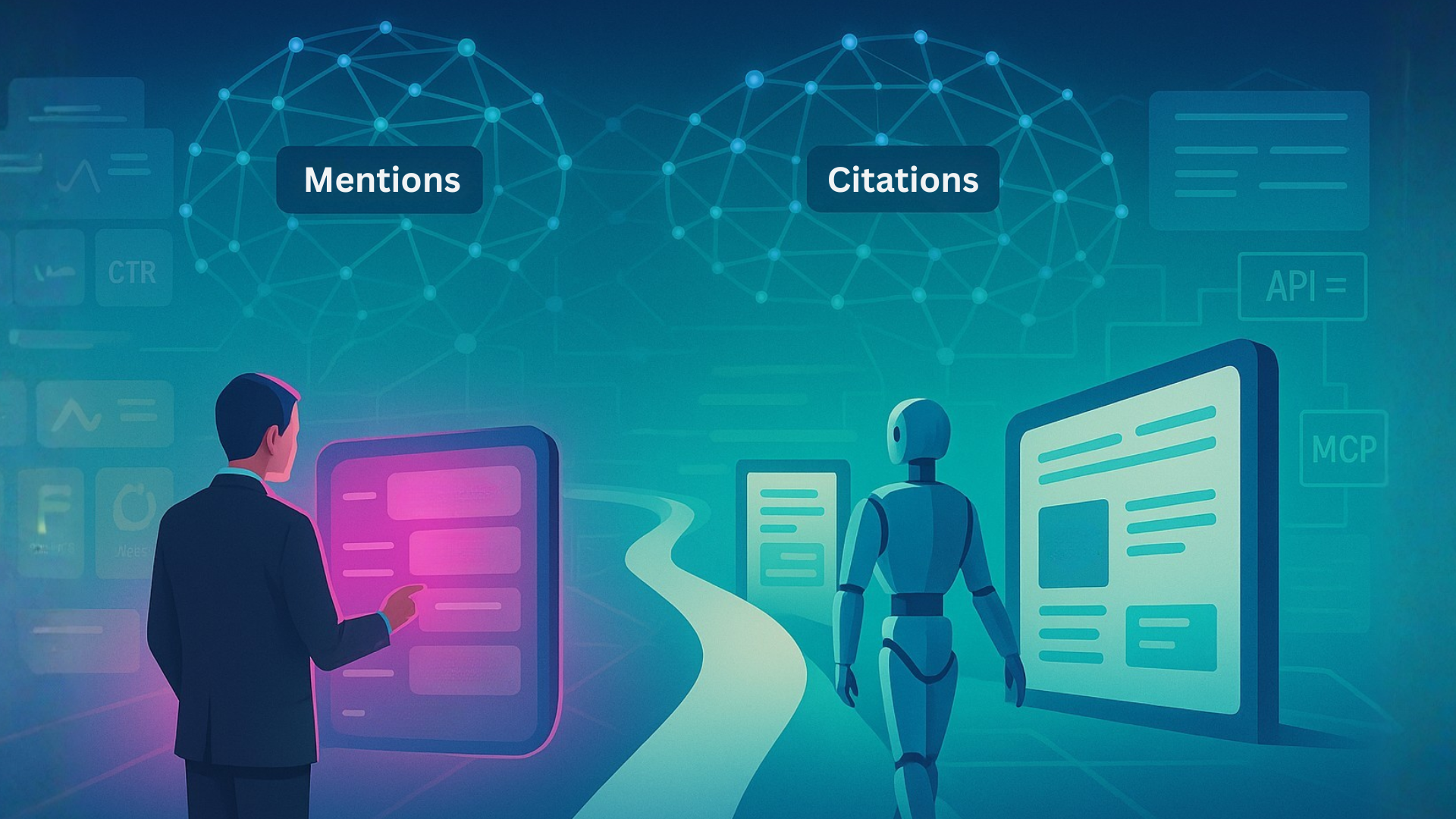
Metrics like impressions, sessions, and CTR are still important but tell an incomplete story. Mentions, citations, and structured visibility signals are emerging as the trustworthy paths to revenue.
In this article, I’ve compiled insights from Siege Media’s content performance study, Grow and Convert’s findings on conversion, Seer Interactive’s AI research, and firsthand experiences within generative platforms. They guide us on how visibility, engagement, and purchasing intent are reshaping as AI covers more of the user journey.
Content Type Popularity and Engagement Trends
The team at Siege Media conducted an extensive performance analysis across various industry blogs, covering more than 7.2 million sessions. Kudos to them for sharing such a substantial dataset with us.
Notably, the data is focused on blog content, which may not align perfectly with other formats such as videos or landing pages.
Here’s what I’ve learned from their findings.
TL;DR of the Siege Media Study
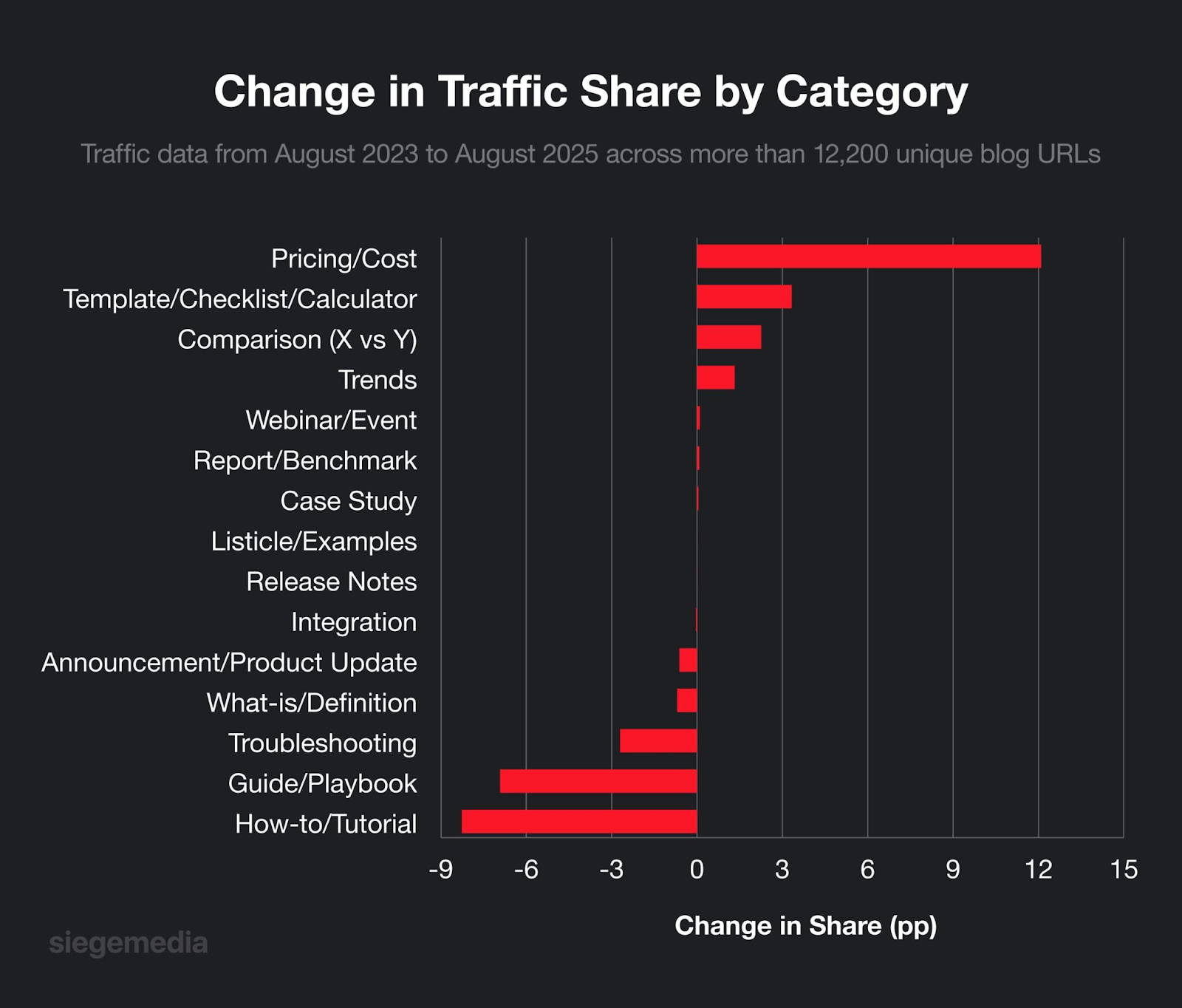
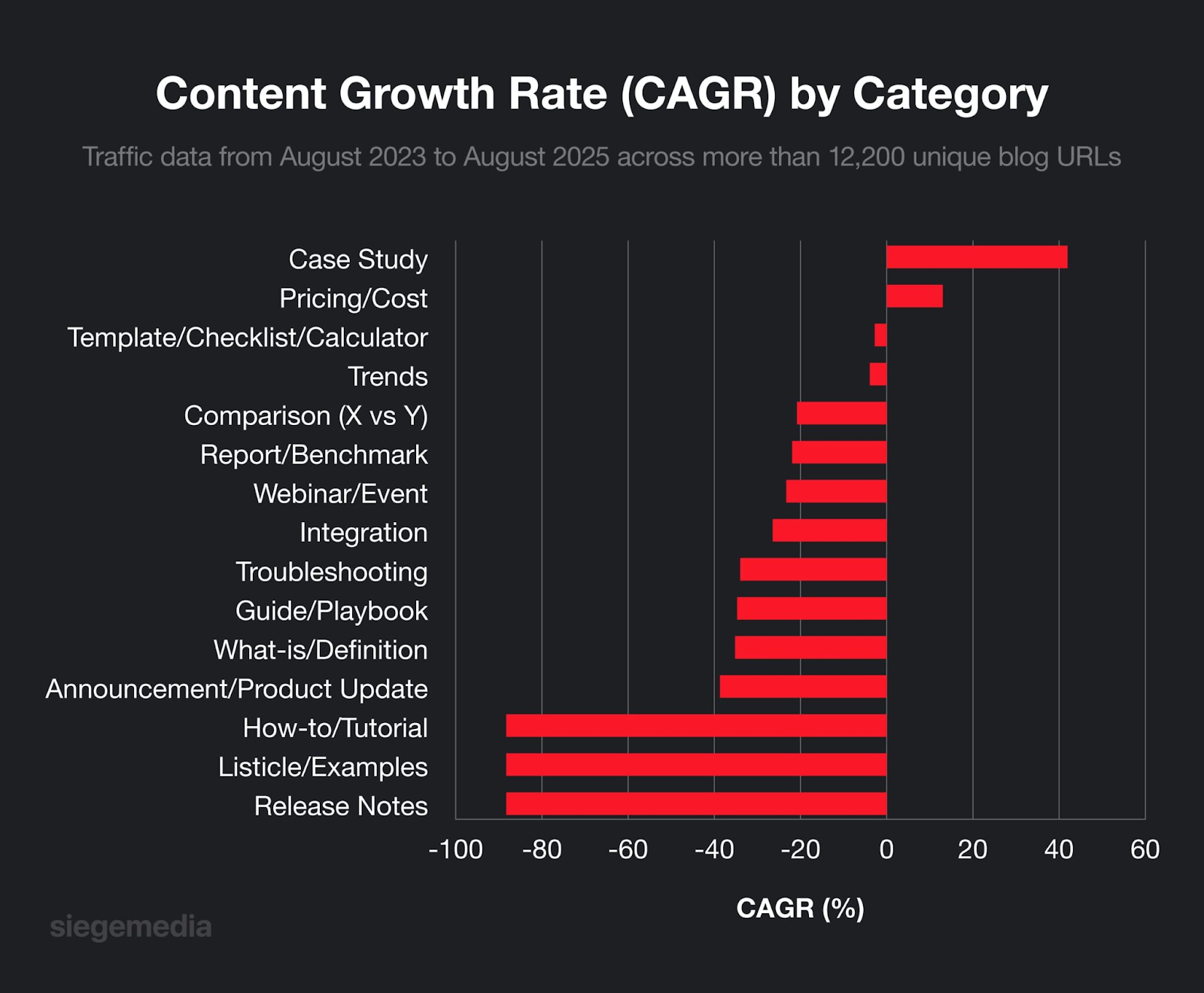
Pricing and cost-related content has shown the strongest growth, contrasting the sharp decline of top-of-funnel guides and “how-to” posts. It appears pricing pages have risen at the expense of TOFU content, but I see it differently. As user habits change, buyers are now likely to initiate research generatively and only move to high-intent queries as they near a decision.
The data highlights substantial growth in pricing and comparison content, whereas traditional guides have significantly declined. We’ll revisit this trend later.
Despite setbacks in certain content forms, major categories are seeing increased engagement. Users are completing more research within generative engines, thus reaching sites with a higher intent and readiness to act.
As a data-focused SEO professional, this could be an indicator to prioritize bottom-of-funnel content, but there’s more to consider…
Don’t Forget the TOFU!
I never thought I’d say this, but keeping up with TOFU content is essential. We might need even more of it to ensure sustained visibility and engagement.
Reflecting on SEO’s legacy, we see how it has evolved over time. Grow and Convert’s research from 2023 indicates that despite high TOFU traffic, its conversion rates are notably lower compared to BOFU, a trend seen across channels like PPC.
Generative engines now manage most of the TOFU journey, often keeping users within platforms for research before they cross over for decision-specific interactions.
For example, when I used ChatGPT to plan a trip, it engaged me deeply in TOFU and MOFU stages. This involved numerous opportunities to encounter new brands before reaching my final decision.
The pivotal learning here is that TOFU and MOFU interactions set the stage for conversion decisions. This dynamic reveals the importance of being part of the TOFU stage to imprint on potential clients.
Why Do These Protocols Matter to a Content Strategist?
Protocols like AP2 and Computer Use are game-changers. They are reshaping the role of clicks from human navigation to transactional steps for AI agents. Understanding this shift is imperative for content strategists.
As Siege Media’s data shows, while pricing and calculators excel because humans still drive these choices, AI agents may soon undertake this task, potentially replacing human site visits with bot interactions validating costs through technical verification.
The 2026 Strategy
This evolving landscape demands a strategic pivot. To achieve success in 2026, I believe a dual focus is necessary. First, optimize BOFU content for seamless technical execution. Second, reinforce TOFU efforts by enhancing mentions and citations to establish trust and recognition in generative answers.
As clicks turn into a commodity managed by AI, the value of mentions will soar, making them the new battleground for visibility. It’s time to bolster TOFU efforts, ensuring they contribute significantly to our broader strategy.
I’ve learned that off-page SEO has come a long way from just building links. It’s now about crafting strategies that enhance authority, reputation, and visibility across various platforms.
In today’s fast-evolving digital landscape, search has moved well beyond simple blue links. Now, people find information not just on Google but also on platforms like TikTok, Pinterest, Amazon, and YouTube, as well as AI systems that provide synthesized answers from trusted sources.
As search engine results pages (SERPs) shift towards rich results and AI summaries, users can get what they need without even clicking. This change means brand authority extends beyond your website’s domain; it crosses platforms and content formats, influencing how AI systems learn from and use your content.
Modern off-page SEO demands strategies that cater to both search engines and AI models that recognize and highlight your expertise. This guide delves into what off-page SEO tactics work today and offers best practices for 2026.
What is off-page SEO today?
Off-page SEO encompasses all efforts made beyond your website to elevate its ranking and visibility in search engines. It includes strategies to secure inbound links, citations, and brand mentions, each contributing to your site’s authority and search engines’ trust.
Over time, search algorithms have advanced. While earlier algorithms focused heavily on backlinks to assess domain authority, search engines like Google now use a diverse array of factors, including expertise, authoritativeness, trustworthiness, and experience, commonly referred to as E-E-A-T.
Enhancing E-E-A-T involves:
Producing content with actual subject-matter experts.
Being transparent about your information sources and company details.
Gaining citations and mentions from authoritative sites relevant to your industry.
Backlinks vs. inbound links
Throughout this discussion, I prefer using the term “inbound links” instead of “backlinks,” as it carries fewer negative connotations associated with outdated, manipulative practices. The focus is on earning connections that are authoritative and relevant, offering genuine value to users.
This approach reflects a broader strategy—link building as a content-driven initiative, not a manipulative shortcut.
How important is off-page in your overall SEO strategy?
Off-page SEO is critical to building your site’s credibility. Each link or mention serves as an endorsement of your brand, akin to word-of-mouth recommendations, thus influencing your online reputation positively.
The more high-quality, relevant endorsements from credible sources you receive, the more authoritative your website appears to search engines.
Off-page and the rise of answer optimization
In today’s AI-driven search landscape, off-page SEO’s importance is magnified. AI systems not only index content but also interpret, summarize, and generate answers based on reliable sources.
This means that off-page signals like brand mentions, links, and social sentiment shape not only Google rankings but also how AI models perceive your brand’s authority.
Structured data, a consistent brand identity, and third-party mentions are crucial for AI to connect your content with relevant topics, ensuring visibility and authority in AI-generated answers.
I recently delved into the enigmatic world of Google’s Daily Hub, a complex system aiming to redefine how we interact with search. At its core, Daily Hub sought to seamlessly integrate embeddings, entities, and real-time context. Unfortunately, the system crumbled under the weight of its own complexity.
The Daily Hub is far more intricate than many of us originally thought. It represents a broader trend toward hyperpersonalization we’ve seen lately. Elements like Preferred Sources and followable profile pages in Discover are steadily headed toward predicting what I need even before I type my queries.
Tracing its roots, Daily Hub extends from the “News Digest and Daily Brief” agent, which surfaced during my exploration into Google’s vast, ongoing AI initiatives. This system launched with much fanfare on the Pixel 10, yet was swiftly paused due to its intricate technical web.
The Daily Hub’s Three-Tier Architecture
Imagine Google’s system as a grand conductor, coordinating a diverse ensemble in real-time harmony. This is precisely the vision for Daily Hub.
First Tier: The ‘Memory and Embeddings’ Layer
Daily Hub’s foundation is built on two key document types, forming its memory.
The MemoryDocument encapsulates full content units, complete with structured text, entity identifiers from the Knowledge Graph, comprehensive embeddings, and essential technical metadata.
There’s also the MemoryEntityDocument, a leaner form that embodies each specific entity highlighted in the content.
In practice, if Daily Hub processes an article about “Lionel Messi joining Inter Miami,” it constructs a MemoryDocument for the article and various entity documents for involved topics like “Lionel Messi” and “Inter Miami CF.”
Second Tier: The Personalization Triumvirate
Various systems power the personalization aspect of Daily Hub, ensuring its response to personalized searches and updates is both swift and attuned to individual preferences.
Nephesh, known for refining user interests, AIP_TOP_ENTITIES, and TAPAS_USER_PROFILE each contribute to crafting a unique user interaction experience by leveraging behavior and contextual data.
Third Tier: ‘Ambient’ Orchestration
In this realm, the AmbientRanking system oversees card presentations, using metadata to refine user experiences based on relevance and timeliness.
For example, sports scores and calendar events are prominently displayed when their relevance is at its peak, ensuring my engagement with timely content.
Understanding Gemini Prompts
Andell’s documentation of Gemini’s prompts offers unparalleled insights into the system’s strategic thinking.
Prompt ‘News Topics’: News over 7 Days
With precise formatting and numerous constraints, this prompt identifies and summarizes pertinent news while meticulously adhering to laid down thematic boundaries.
The prompt logic considers only the top interests and excludes unnecessary themes, maintaining focus solely on pertinent areas.
A System with Potential: The Journey Ahead
Despite its hiccups, Daily Hub is a prototype that embodies Google’s goal to create an assistant capable of forecasting our needs through sophisticated data integration and hyper-personalized content delivery.
As these technical hurdles are addressed, I anticipate a transformation in how I interact digitally, setting a new standard for search interfaces.
From today’s suspended project to tomorrow’s blueprint for digital interaction, Google’s vision pivots on delivering a groundbreaking consumer experience.
I’m excited to share that Profound’s Agent Analytics now integrates seamlessly with Google Cloud Platform through Cloud CDN. This development offers comprehensive AI observability across Google Cloud Platform’s vast content delivery network.
With this new integration, I can easily monitor and analyze how AI crawlers and agents interact with the content we host on GCP, providing deeper insights and enhanced tracking capabilities.