I often wonder where artificial intelligence gathers its vast data from. It’s a fascinating journey from web crawls to precisely licensed datasets.
If you’re like me, you’re eager to see your content become a trusted, reputable source in AI’s intricate network of answers. This process significantly benefits from AEO best practices.
What’s more exciting is becoming part of this AI data revolution by understanding how AI leverages data and how we can strategically position our content to be at the forefront.
The digital landscape is shifting at an unprecedented pace, altering how I search for information online. While Search Engine Optimization (SEO) has traditionally been vital for digital visibility, a new era is upon us: Answer Engine Optimisation (AEO). Focused on directly addressing user inquiries, especially through conversational AI and voice assistants, AEO marks a significant change. At the heart of this revolution is ChatGPT, an advanced language model by OpenAI, which is redefining content creation, consumption, and optimization. Here, I delve into how ChatGPT is influencing the future of AEO and its implications for businesses and content creators.
The Rise of AEO and Conversational Queries
While Google and other search engines traditionally rely on keyword-driven searches, I find myself and others increasingly drawn to conversational platforms like ChatGPT, Siri, or Alexa for quick, clear answers. These ‘answer engines’ prioritize delivering direct, natural-language answers over presenting a list of links. AEO involves crafting content that ranks well within these engines by providing straightforward, concise, and contextually pertinent answers.
ChatGPT hastens this trend with its human-like conversational proficiency. Its aptitude for understanding nuanced questions and producing in-depth answers has made it a preferred tool for users craving instant information. Consequently, businesses, including mine, need to reshape their content strategies to fit the conversational model of answer engines, with ChatGPT defining what optimized content should be.
ChatGPT’s Role in Content Creation for AEO
One of ChatGPT’s most notable roles in AEO is generating high-quality, user-focused content. As a content creator, I can use ChatGPT to formulate answers that mimic the natural language users employ in their inquiries. For example, if someone asks, “What’s the best way to improve my website’s loading speed?” ChatGPT can craft a concise, actionable answer adhering to AEO principles: direct, informative, and conversational.
Furthermore, ChatGPT can assess trending questions and foresee user intentions, assisting me in developing content that anticipates frequent queries. By incorporating structured data like FAQs or how-to guides, I ensure that my content is easily interpreted by answer engines. ChatGPT’s flexibility means it can generate content in diverse forms—blog posts, snippets, or even voice-friendly responses—positioning it as a formidable tool for AEO-driven methodologies.
Enhancing User Experience with Personalization
Success in AEO pivots on delivering personalized, context-responsive answers; ChatGPT excels in this domain. Its ability to process conversational context allows it to customize responses based on user preferences or past interactions. For instance, when I ask follow-up questions on a subject, it refines its responses to build on earlier interactions, facilitating a seamless experience.
Businesses can harness ChatGPT to create dynamic content systems like chatbots or interactive FAQs that emulate this personalization. By embedding ChatGPT-powered tools on their websites, companies can engage users directly, enhance dwell time, and improve AEO performance. This movement toward interactive, user-centric content is a defining feature of AEO’s future.
Challenges and Ethical Considerations
While ChatGPT presents vast potential for AEO, challenges remain. Relying too heavily on AI-generated content may lead to generic or repetitive answers, potentially undermining credibility. Assuring factual accuracy is vital since answer engines prioritize reliable sources. Balancing AI efficiency with human oversight is crucial to maintaining quality and authenticity.
Ethical issues, such as transparency about AI-generated content, cannot be overlooked. Users expect genuine, trustworthy responses, and failing to disclose AI involvement might erode trust. AEO strategies must prioritize ethical standards to meet user expectations and satisfy answer engine algorithms.
The Future of AEO with ChatGPT
With ChatGPT evolving, its influence on AEO is only set to deepen. Future versions may include more sophisticated contextual understanding, resulting in even more precise answers. Businesses that adopt ChatGPT for AEO will gain a competitive advantage by offering content that resonates with both users and answer engines.
To thrive in this environment, content creators should emphasize conversational clarity, structured data, and user intent. By leveraging ChatGPT’s abilities, businesses can position themselves at the helm of AEO, influencing the future of online information discovery and delivery.
Inspired by this post on AnswerEngineOptimization.blog.
As I navigate through today’s digital landscape, I realize how vital an online presence is for any business. Before I purchase anything, I often start with a quick Google search or browse through social media to gather information. If a business isn’t visible online, it’s missing a critical connection point with potential customers. This is where digital marketing steps in.
Marca, a 360 digital marketing agency, is here to help businesses like yours strengthen their online presence. By offering comprehensive digital solutions, Marca enables brands to grow, reach a wider audience, and boost their sales effectively.
What is a 360 Digital Marketing Agency?
A 360 digital marketing agency provides a complete suite of online marketing services. From building websites to managing social media ads, everything is streamlined under one roof. With Marca, you get a holistic package of services, eliminating the need to juggle between multiple agencies.
Services Offered by Marca
1. SEO (Search Engine Optimisation)
I know the importance of appearing on top of search engine results, and with Marca, SEO becomes a breeze. They employ strategic keywords, fix technical glitches, and refine content to improve your website’s ranking, attracting more visitors and driving business growth.
2. Social Media Marketing
Social media is where people spend hours, including myself. Marca crafts captivating content, runs paid campaigns, and constructs a strong social footprint, ensuring your brand stands out.
3. Website Development
A modern, user-friendly website can make a lasting impression. Marca designs sleek, mobile-responsive, and fast-loading websites that don’t just look good but also convert visitors into loyal customers.
4. Google Ads and Paid Marketing
For those immediate results, paid marketing is key. Marca assists in executing potent Google Ads, Facebook campaigns, and Instagram promotions, targeting your ideal audience to boost traffic and leads.
5. Content and Branding
Trust is built on great content. Marca excels in crafting engaging blogs, compelling product descriptions, and impactful website copy. They also manage branding, designing logos, and marketing materials to elevate your professional image.
6. Email and WhatsApp Campaigns
Using cost-effective platforms like email and WhatsApp, Marca develops clear, attractive messages to share offers, updates, and introduce new services, keeping your audience informed and engaged.
7. Digital Analytics and Reports
Data is king, and Marca makes it understandable. They provide comprehensive monthly reports detailing your campaign’s performance, visitor statistics, and conversion rates, helping you make informed decisions.
Why Choose Marca?
While there are numerous digital agencies out there, Marca stands out. Here’s why:
Complete Service: Everything from SEO to social media, ads, and content is covered, providing a seamless experience.
Experienced Team: Marca boasts skilled professionals passionate about digital marketing.
Affordable Packages: Whether you’re a small business, startup, or large corporation, there’s a plan that suits your needs.
Creative Work: Modern and appealing designs coupled with clever content strategies to engage and retain customers.
Result-Focused: Clear strategic focus that aligns with your business objectives.
Who Should Work with Marca?
If you aim to grow your business online, Marca is your go-to partner. Their expertise extends to:
Retail shops, cafes and restaurants, medical clinics, real estate agents, coaching centers, startups, and freelancers.
No matter your industry or size, Marca’s tailored solutions can help you thrive.
Success Stories
I’ve witnessed Marca transform many businesses online. From doubling website traffic to achieving 10x more leads through social media, their strategic plans have turned small enterprises into reputable local brands.
Final Words
Digital marketing is shaping the future of business, demanding creativity, meticulous planning, and specialized expertise. Marca – a 360 digital marketing agency, offers precisely this edge. Elevate your brand online with their expert support.
Are you ready to amplify your business? Contact Marca today and embark on your digital journey!
Inspired by this post on AnswerEngineOptimization.blog.
I’m excited to extend an invitation to join our 2026 contributor team! At Search Engine Land, we’re seeking knowledgeable voices in SEO, PPC, AI, and analytics to share valuable insights with millions of marketing professionals around the globe.
Being part of Search Engine Land is a unique opportunity. For over two decades, our publication has been a trusted resource for search marketing information, reaching more than 1 million professionals each month. I’m thrilled to share that we’re once again expanding, and we want to amplify our coverage with diverse and reliable perspectives—be it from someone with five years of experience or someone who remembers the Google Florida update like it was yesterday.
We’re looking for contributors with at least five years of hands-on experience who can offer practical insights and thought leadership on the latest trends in:
SEO
Generative AI (GEO, AI SEO, etc.)
PPC (paid search, paid social, display, video)
Data and analytics
While this contributor role is on a volunteer basis, the benefits are significant. You’ll have the chance to:
Establish yourself as a subject matter expert in your field.
Enhance your professional visibility.
Expand your network and reputation.
Enrich your LinkedIn profile or resume with this prestigious experience.
Propel your career forward.
If you’re interested, I encourage you to fill out this form to apply. If selected, you’ll hear from us directly via email. Don’t miss this opportunity to make your mark.
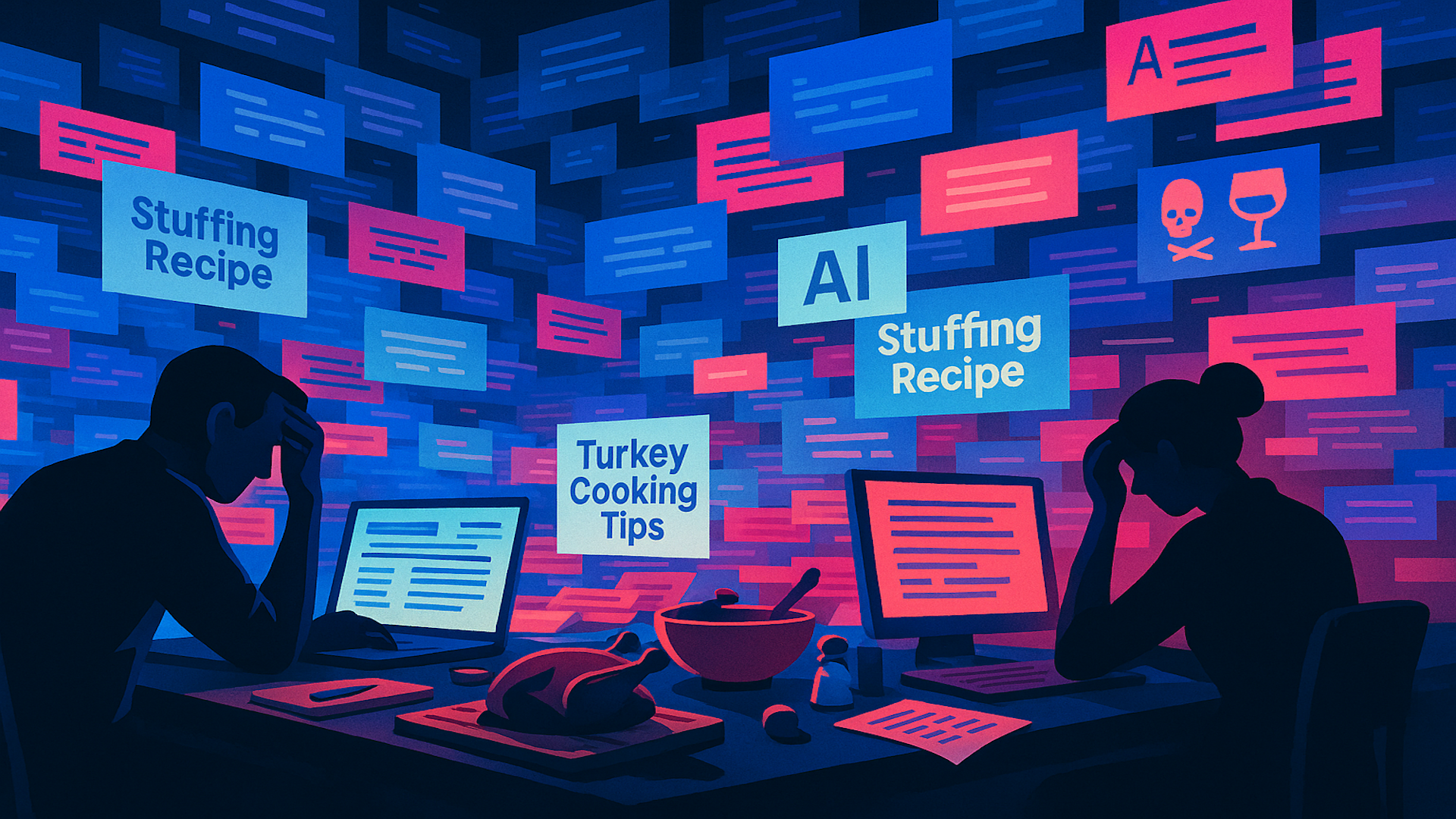
This Thanksgiving has become a turning point for me as a food blogger. Google’s AI, particularly through Gemini 3, is reshaping my recipes and diverting precious traffic, leaving me and my fellow creators in a tough spot.
For over a decade, we could count on holiday traffic, something integral for our revenue. Now, with AI answers usurping our well-tested recipes, home cooks are left following confusing, misaligned instructions that I’ve heard can be quite problematic.
Recently, I’ve noticed how Google’s AI Overviews pull information from various bloggers, often overshadowing the actual sources. Many creators, myself included, have experienced traffic declines ranging from 30% to 80%, making this one of our most challenging seasons yet.
AI-generated content is also cluttering platforms like Pinterest and Etsy, blending genuine cooking expertise with poorly conceived AI inventions.
Google has described their AI Overviews as merely a starting point, but I, along with others, see a different story. For example, Eb Gargano reported a staggering 40% drop in traffic because of AI summaries making grievous errors like suggesting over-baking a cake. Adam Gallagher finds his recipes amalgamated with competitors’, resulting in a 30% decline in his cocktail click-through rate.
I have also seen Gemini 3 utilizing our photos in new interactive graphics, leaning dangerously close to what feels like plagiarized content.
Experts like Sarah Leung have shared similar experiences, with AI summaries dominating search results, diminishing years of hard work to just another step in someone else’s AI-driven process.
Some bloggers have even found their content being mirrored by AI-run sites, tweaking their original ideas and altering personal images.
The big picture is concerning. More households trust AI for their holidays’ meals, unaware that they’re deviating from traditional cooking principles. We, the creators behind today’s culinary content, feel like we’re fading into the background, overshadowed by technology that ironically relies on our own innovations.
In essence, AI still can’t replace the foundational promise of a recipe—a human touch and tested insight.
Holidays like Thanksgiving are at risk of being distorted through algorithm-driven remixing, alienating genuine tradition-driven cooking.
I share in the sentiment of Bjork Ostrom from Pinch of Yum, who calls this an existential moment for us as content creators, not just in terms of visibility but the very creation process itself.
I’m thrilled to share some exciting news with you! Profound is rolling out a new App Language Selector, giving all of us the ability to use the platform in over 30 different languages. This feature is currently in beta and represents a significant milestone in our global expansion, following the success of Zero Click London.
With this launch, we’re doubling down on our promise to create a multilingual and accessible experience for teams not just in Europe, but around the globe. Whether you’re collaborating internationally or simply prefer working in your native tongue, Profound is now more user-friendly than ever.
Recently, I’ve noticed Google has started automatically linking YouTube channels with Google Ads accounts. This innovation allows advertisers like me to quickly tap into valuable audience data, though it does require careful permission management.
When Google’s system detects a strong connection between a YouTube channel and a Google Ads account, it takes action by linking them. This gives us richer audience signals without us having to do a manual setup.
What’s happening now? Google will set up these links automatically if a strong relationship is identified, notifying us 30 days in advance. This email notification allows us to decide whether to opt out or connect sooner.
How does it work?
During the 30-day period, if no one opts out, the link will be completed automatically. If I manage both accounts, I can even connect them immediately. There’s flexibility here, too, as I can always adjust permissions or unlink later if needed.
Why this matters to us. This development simplifies how we, as advertisers, access YouTube audience data. It makes it straightforward to target viewers and construct data segments. However, it also introduces uncertainties about control over our assets and the permissions we’ve set.
Benefits for advertisers. Once linked, I can:
Use YouTube interactions to run more effective ads.
Leverage organic views and earned actions for performance insights.
Create data segments from how audiences engage with my channel.
Consider channel engagement as conversion activities, like subscriptions.
Limitations I’ve noticed
Channel owners gain no control over the actual Google Ads account.
Copy or edit capabilities for channel videos are not given to advertisers.
If personalized ads are disabled, audience data reports are also turned off.
Restrictions on Video Ads Certification (VAC) are still applicable; removal of these is specific to the linked Ads account.
Managing these links. If I, as an admin, choose to opt out, I can easily do so through the links provided in the notification emails from Google. If opted out, the link won’t be made. Meanwhile, manual linking can always be done via the traditional Google Ads settings menu.
Initial discovery. The new auto-linking feature was first highlighted by Hana Kobzová, founder of PPC News Feed. More on this can be read here.
Final thoughts. With Google’s new auto-linking, we as advertisers can enjoy less setup hassle and better YouTube performance insights. However, it’s crucial to monitor our notifications to ensure that data sharing aligns with our privacy preferences and company policies.
I’ve often found myself caught in the age-old marketing debate: should I focus on SEO or PPC? For years, this decision was largely based on past successes or failures.
With organic search, I could rely on growing visibility over time, while paid search gave me immediate, direct control.
Yet, most marketing teams lean toward one over the other based on their experience and budget limitations. But as we move into the future, this binary choice is no longer enough.
In 2026, the landscape has transformed significantly, altering how we approach search entirely.
Why This Debate Has Changed
The world of search has evolved, far beyond the SEO or PPC dichotomy.
Our search behavior is not the same. Search results pages have transformed and the machine learning behind bidding systems have advanced. And then there’s AI, the latest player on the scene, shaking things up.
It’s no surprise that AI has turned into a crucial factor, alongside SEO and PPC.
The pressing question now isn’t just about selecting SEO or PPC, but how we can integrate AI to sustain and boost visibility amidst the fast-paced changes.
This challenge also highlights another issue: fragmentation. With so many channels and discovery paths available, it feels overwhelming, leaving marketers scattered and at risk of falling into paralysis.
The key is to navigate through this AI upheaval, continuously adapting our strategies to remain relevant.
The Old Debate: SEO vs. PPC
Historically, weighing the pros and cons of SEO and PPC was straightforward:
SEO: Offers credibility, compounding visibility, and engagement, although slow to mature and with challenging expectations.
PPC: Provides rapid visibility and control, but requires ongoing financial investment and battles rising costs.
In my experience, a combined strategy proves most effective.
SEO fuels demand.
PPC captures it.
The synergy between the two remains valuable, but AI introduces an essential new dimension.
AI: The New Discovery Channel
AI is redefining how we discover and evaluate information.
Its popularity is growing fast, and this holiday season will likely be a turning point. Simple, integrated tools mean AI is embedded in our daily tech use.
Just like Google once led the charge, AI is set to surpass traditional search, thanks to its simplicity and speed. We find ourselves in an environment where:
Search engines summarize content before clicks happen.
Chat tools offer answers without redirecting traffic.
Product exploration starts with AI, moving beyond Google Search.
Natural, multi-step inquiries are being made that previously didn’t exist.
Thus, visibility hinges on AI presence. The battle isn’t just for rankings, but ensuring we feature within AI ecosystems.
Lacking AI visibility means being edged out. While this may not fully manifest today, it will soon dominate the scene.
Our marketing challenge is straightforward yet daunting: figuring out how to emerge in AI outcomes. We’re unable to purchase our place, nor can we find a playbook for these types of results.
In essence, our goals now demand adaptation from optimizing merely for search engines to being discoverable within AI systems that continue to draw from search results.
The New Visibility Battlefield
Despite feeling novel, AI’s emergence was somewhat predictable.
The existing web landscape is draining — it’s a battleground of too much information, advertisements, and distractions.
Finding what we need amidst this chaos is exhausting; AI offers an antidote by swiftly cutting through the clutter.
It’s undoubtedly refreshing. Yet, we must ponder the potential downsides.
Visionaries like Tim Berners-Lee express concern over AI threatening web sustainability by impacting ad revenue streams, a sentiment I share.
In “Supremacy,” a book charting AI’s rise, authors alleged Google had a ChatGPT-like system years ago but hesitated over revenue concerns. Their claim seems plausible to me.
AI’s efficiency is undeniable. It’s cleaner, faster — and hence will dominate. It stands as a true advancement.
The world of digital marketing has devolved into a war of endurance. The adage still rings true: we normally only explore the earliest pages of search results. We need no longer hide on these pages, as AI scours deep and wide.
Unfathomably, next-level solutions appear within AI’s grasp, surfacing comprehensive insights in brief moments.
This shift was predictable with hindsight, symbolizing a departure from failed attempts to combat the web’s disordered entropy.
AI signifies a fresh paradigm, rising from the modern web’s tumult.
Why This Changes the SEO/PPC Decision
The introduction of AI shifts the landscape for SEO and PPC fundamentally.
1. SEO: Less About Rankings, More About References
For content to feature within AI summaries or search assistants, it must exhibit:
Authority
Topical alignment
Structured markup
Trust signals
Depth, devoid of surface-level fluff
Authentic perspectives
AI favors genuine thought and established voices over mere quantity.
2. PPC: Still Dominating Premium Slots
Despite AI’s growing influence, PPC secures:
Top slots
Commercial queries
Visual placements
Local ad packs
YouTube
Discovery platforms
Merchant outcomes
AI shakes things up, yet PPC’s prominence remains — revenue needs won’t disappear.
3. AI Alters User Behavior Exponentially
AI is crafting fresh behavior patterns:
Fewer clicks, shorter journeys
Intuitive moments
In-depth comparisons inside AI systems
Increased research driven outside traditional points
Heightened expectations for relevance
Seo and PPC remain significant, albeit adapting to parallel discovery paths AI creates.
Is SEO vs. PPC vs. AI Even the Right Question?
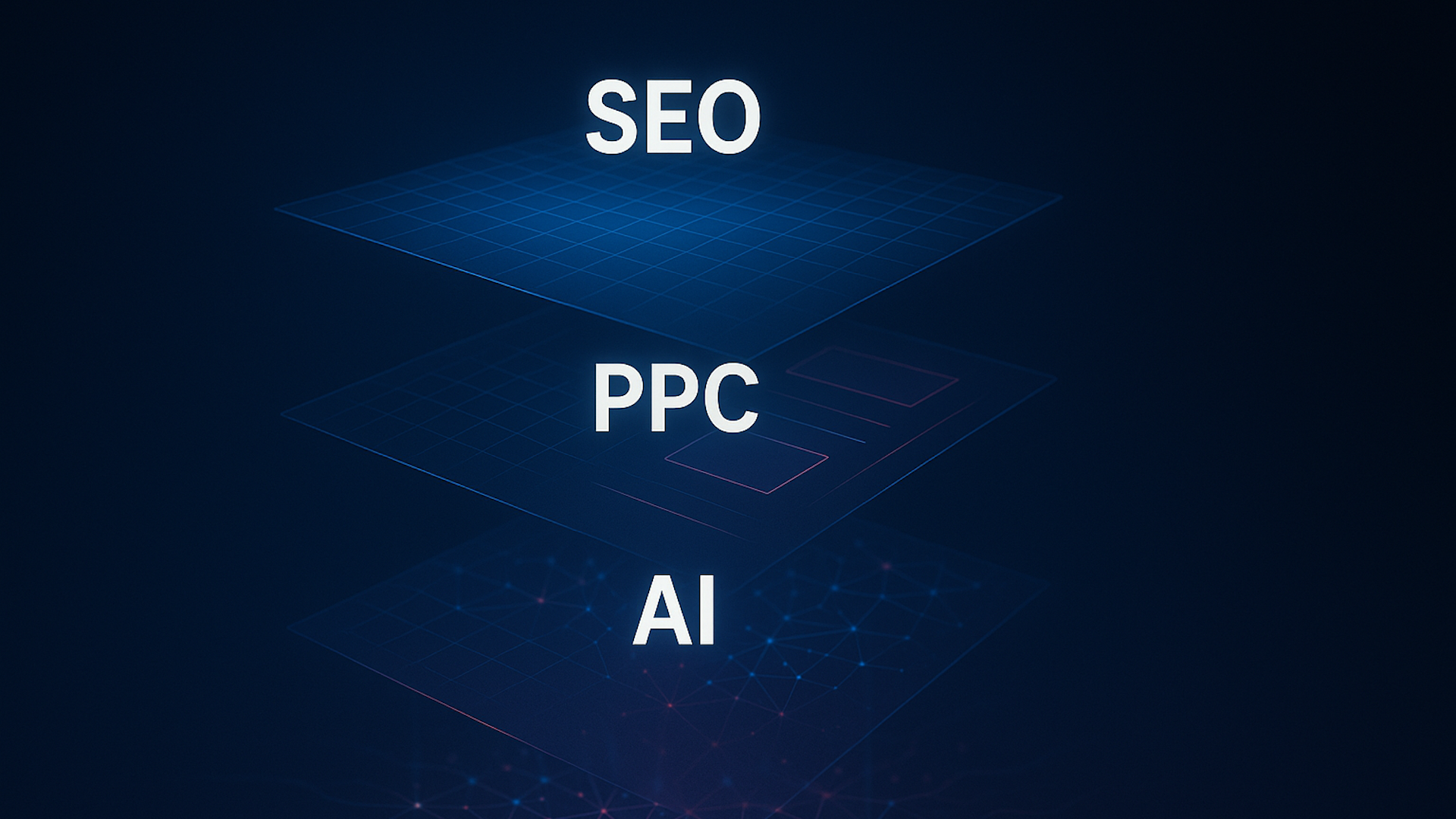
Marketers often see SEO, PPC, and AI as competitors. Truthfully, they’re three intertwined visibility layers.
SEO fosters presence, providing foundational visibility.
PPC amplifies position, stimulating awareness.
AI frames discovery, offering context and relevance.
Each component complements the others:
SEO supplies content AI distills.
PPC fosters initial visibility, attracting early engagement.
AI delves into extensive analysis, shaping your market presence.
I embarked on this article seeking an answer to the age-old question: which reigns supreme — SEO, PPC, or AI?
Mid-journey, clarity emerged: this outdated question will no longer suffice by 2026.
General counsel proves challenging, given unique circumstances.
For example, a local plumbing business may have started with PPC while growing through local SEO and referrals.
Eventually, reducing PPC reliance might have been tested unless leads dwindled.
Contrarily, a college with complex site structures, coupled with strong authority, could transition from ads — assuming proper planning and site optimization.
Now, a third ingredient has emerged: AI, with SEO, PPC, and AI forming a unified strategy.
Separating AI from SEO is no longer feasible. The disciplines of AEO, GEO, and related labels are increasingly married.
Understanding AI and SEO’s connections in retrieval-focused generation contexts becomes crucial.
While PPC’s link to AI isn’t as prominent, early integration is already in motion, evidenced by Google incorporating ads into AI summaries.
Optimizing AI echoes optimizing SEO’s practices.
While early, the need to optimize for AI is evident, demanding attention from SEOs and GEOs in the near term.
Inaction is costly; we lack a complete guide, yet actionable insights remain available.
How to Build Visibility Across SEO, PPC, and AI
By 2026, success isn’t mere “ranking,” but “being referenced.”
Staying afloat requires optimizing for machine-led content evaluation.
1. Adopt GEO
Format your content for AI retrieval.
Two to three short, concise sentences followed by layered context appeals to LLMs.
Utilize bullet points, clear logic, and data tables for AI to parse easily.
2. Feed the Knowledge Graph with Entity SEO
AI confirms facts using entities like people, brands, and ideas.
Your About page, schema markup, and author bios must be impeccable.
Without Google’s understanding of your identity, authority citations become unlikely.
3. Target Citation Gaps
AI systems link to trusted sources, favoring niche gurus and major outlets.
Redirect digital PR efforts toward “mentions” on sites AI deems authoritative.
4. Invest in Freshness and Data
LLMs lean towards recent data. Regularly update facts, timestamps, and comparisons.
Static content may falter against continually refreshed material.
5. Embrace Redundancy: The Hybrid Approach
No channel stands alone. Execute PPC for instant visibility, nurture SEO for long-term authority, and set AI-ready data structures simultaneously.
6. Build a Content Engine
Leverage “They Ask, You Answer” frameworks to tailor content that addresses audience needs.
When people ask me how to assess the ROI of their marketing campaigns, I always suggest starting with the customer acquisition cost (CAC). CAC, alongside Customer Lifetime Value (LTV or CLV), is vital in navigating the realm of B2B marketing.
By examining your CAC, you can identify which marketing channels deserve more attention and which aspects of your marketing strategy could use improvement. Benchmarking your CAC against industry standards is key.
The aim of this article is to guide you in recognizing what qualifies as a good CAC in your industry and to encourage you to even explore how your CAC fares compared to related industries.
Calculating Your Customer Acquisition Cost
To calculate your CAC, simply divide your total marketing and sales expenditures by the number of new customers acquired, using the formula below:
Make sure to perform this calculation annually or on a rolling basis to accommodate seasonal customer behavior changes. If your B2B business enjoys consistent year-round sales, consider quarterly CAC analysis to gauge the impact of new initiatives.
Additionally, calculating CAC per channel allows you to compare different marketing strategies effectively.
This report emphasizes B2B CACs. For B2C data, see our B2C Edition.
After determining your CACs, you can measure them against the industry averages shared below.
Average Customer Acquisition Cost (CAC) By Industry
The table below presents average CACs across 29 B2B industries, gathered from client data spanning January 2022 to August 2025. Consider these dataset limitations:
Within each industry, we categorize CAC as Organic or Inorganic. Organic CAC includes mainly SEO and Organic Social, while Inorganic CAC covers PPC / SEM and Paid Social.
Email marketing, events, and other channels are excluded due to insufficient data.
Data from client analytics is anonymous. Organic data leans towards SEO and Inorganic towards PPC / SEM, given our B2B clientele and service focus.
Below are the analysis results:
[Insert table block here]
Average Customer Acquisition Cost (CAC) for SaaS Companies
Our team also reviewed average customer acquisition costs across 22 SaaS industries to determine each industry’s B2B CAC.
SaaS Industry
CAC
[Insert table rows here]
How Your CAC Relates to Customer Lifetime Value
While CAC reflects acquisition costs, Customer Lifetime Value (LTV) reveals the average profit per customer. Calculate LTV by dividing your profit over a chosen period by the number of unique customers, and multiply by their average purchase frequency. Aim for an LTV to CAC ratio of at least 3:1 for optimal financial health.
Keep in mind historical trends and competitor data. A 2:1 LTV to CAC ratio isn’t necessarily negative if you’re seeing improvement over time.
Particularly during new campaigns or long-term strategies, your ratios may fluctuate. For example, if you’ve launched an SEO campaign, results typically appear after 4-6 months.
How to Lower Your CACs
Organic CAC often triumphs over inorganic due to its longevity and skill-based approach. Investing in organic channels yields sustainable results without ongoing cash infusion.
If you’re curious about organic marketing to reduce your CAC, feel free to contact us. Our firm, with multiple U.S. locations, has helped various B2B sectors achieve superior ROI with SEO strategies.
Further Reading
For deeper insights into CAC and its relation to LTV, browse the following resources:
Have you ever wondered how amplifying content from creators can actually save money and build trust with your audience? Well, I’ve seen firsthand how paid amplification not only cuts down media costs but also brings in new potential partners.
Brands, including mine, often invest in influencer and affiliate promotions. Yet, many of us stop short of giving the content the reach it deserves, believing the creator’s audience alone is sufficient. But there’s so much more we can do.
By using paid marketing, integrating it into my site, and sharing it across different channels, I’m not just promoting their work. I’m leveraging their brand recognition and strengthening my relationship with them.
It’s true, I may pay influencers an upfront fee, commission, or give them a product for their promotion. But that’s not where our relationship ends.
Amplification truly becomes an advantage here, unlocking more value from the creator relationships I’ve already established.
Why amplifying creator content pays off
Let’s dive into why amplifying creator content can be so beneficial.
Trusted validation
When someone trustworthy backs up my product, store, or company, I gain credibility, especially in competitive fields where trust isn’t always assured, like jewelry or insurance.
For example, picking a hotel near Disney or on a Caribbean island can be daunting with so many choices and mixed opinions. But if someone trusted chooses my brand, that might just sway the decision.
I can utilize this content in ads to reach new audiences or test it with email or SMS list subscribers who haven’t converted yet. The same strategy works for remarketing efforts too.
A third-party endorsement can make a significant difference, even when I sing my own praises.
Lower media costs
Certain influencers might be out of budget, but promising them that their ads will reach new, similar audiences might bring their costs down.
By allowing them to use their affiliate links in this amplified content, they can earn commissions, which shares the risk on both ends by reducing fees and incorporating commission-based rewards.
If the influencer earns more through commissions, they might drop their fees altogether and join as a regular affiliate, freeing up my budget for experimentation with new partners.
Alternatively, we could split the costs, covering part of their media fee while they earn the rest via commissions—opening new avenues to explore and test partners.
There’s magic in content that’s naturally shareable—be it for its humor, virality, or relevance. More people sharing amplified content can lead to wider discovery and referencing, with additional pathways directing traffic back to my site.
Public accounts mean search engines and tools like ChatGPT can index these links, boosting my visibility and traffic.
Affiliate recruitment
When reputable accounts start promoting a vendor, it’s an indicator of earning potential. By amplifying this content, I open up opportunities for others who resonate with those influencers to join as affiliates.
Some might reach out for collaborations, while others might dive into the affiliate world themselves.
Big names endorsing my brand builds trust, making newer partners feel assured that my program is credible.
We encourage our clients to pursue this approach as it effectively streamlines affiliate recruitment and activation, two of the most challenging aspects of the affiliate marketing sphere.
Starting ambassadors and influencers as affiliates ensures fairness. If collaborations prove lucrative, we can transition to hybrid models, minimizing risk while granting them entry.
Not all clients are keen on this model, but those who adopt it see significant benefits, expanding their partner network while sharing risks.