Tag: Business

  • Google Ads Editor 2.11: Empowering Advertisers with Advanced Tools

    Google Ads Editor 2.11: Empowering Advertisers with Advanced Tools

    The latest update to Google Ads Editor, version 2.11, has just arrived, and I’m excited to dive into its new features. This release brings campaign-level negatives, enhanced reporting, and smarter automation, designed specifically for managing large-scale advertising accounts more efficiently.

    One of the most awaited features is the ability to add negative keywords at the campaign level in Performance Max campaigns. This means I can have better control over ad placements, ensuring my budget isn’t wasted on irrelevant searches.

    Another new feature is search term reporting for Performance Max, which provides transparency on which queries trigger my ads. This insight helps me understand performance drivers and refine my strategies.

    Scheduled link checks are now automated, flagging broken URLs without manual effort. This feature protects my conversion processes by ensuring users always have functional links.

    I’ve also found the account-level placement and IP exclusions helpful, as they allow me to apply settings globally across my account, speeding up setup and maintaining consistent brand safety.

    The Smart Bidding Exploration tool is another exciting addition. It lets Google’s AI test high-performing queries with flexible ROAS targets, driving new conversions without manual tweaks from me.

    Editable lead forms are now a breeze, allowing me to update lead form assets directly, eliminating the need to start from scratch.

    The video generation feature makes creating on-brand video content for YouTube much easier by automating the process with existing assets and styles.

    The Search campaign creation process is now more streamlined with an AI-assisted flow that guides me through each step, ensuring I build well-optimized campaigns.

    I appreciate the more granular tracking control, as asset groups can now have individual tracking parameters for better measurement precision.

    Elective campaign syncing in the updated CSV and download features lets me efficiently manage larger accounts through a more intuitive interface.

    Additional updates include improved ad preview support and new targeting expansions, helping me stay ahead in managing effective campaigns.

    In summary, these updates give me greater control over ad placements, transparency into campaign performance, and new automation tools that enhance efficiency. As a result, my ad spending becomes smarter, leading to a higher return on investment.

    It’s also worth noting what’s being phased out, such as legacy App install and certain Display ad types, while adopting the new Video View Campaigns instead of Manual CPV bidding.

    Ultimately, Google Ads Editor 2.11 enhances my control and efficiency with features like campaign-level negatives in Performance Max campaigns, fulfilling a long-standing request.


    Inspired by this post on Search Engine Land.

  • Microsoft Demands Clarity for Safer Ad Placements

    Microsoft Demands Clarity for Safer Ad Placements

    Microsoft is taking a big step towards enhancing advertising standards, and I feel it’s stirring up quite a conversation. They have announced that now all third-party publishers are required to use Microsoft Clarity, their free behavioral analytics tool, to continue receiving paid impressions and clicks through Microsoft Advertising. It’s an important change that affects us all.

    The details:

    What’s required: As publishers, we must install Microsoft Clarity and activate Consent Mode. This enables us to monitor and analyze how users interact on our sites while adhering to privacy regulations.

    What it does: Clarity provides a window into user behavior, helping us see clicks, scrolls, and various engagement patterns. This insight allows us to make informed decisions to optimize our conversion rates — a crucial aspect for any publisher.

    What changes: Now, only the ad traffic from pages that have Clarity activated will count towards billing. This ensures every paid impression aligns with Microsoft’s stringent editorial and safety standards.

    Why we care. This move is all about improving transparency, user experience, and brand safety in the Microsoft Ads ecosystem. Pages not using Clarity will have their ad clicks and impressions filtered out as nonbillable. For us publishers, this means monetization is linked directly with compliance, urging us to implement these changes if we haven’t already.

    Between the lines. By essentially tying Clarity to revenue, Microsoft leverages its vast advertising network to reinforce higher standards, providing advertisers with increased confidence in the placements of their ads across trusted inventories.

    This news was shared by Microsoft Product Liaison Navah Hopkins on LinkedIn, underscoring its significance in our industry.

    The bottom line. For us publishers, using Clarity is no more optional. For advertisers, it ensures better brand safety and visibility regarding their advertising spend, marking a win for transparency in the constantly evolving Microsoft network.


    Inspired by this post on Search Engine Land.

  • Unlocking Franchise Success: Engineering Meets Marketing

    Unlocking Franchise Success: Engineering Meets Marketing

    Today, I have the pleasure of speaking with Anuj Srivastava, Principal/Partner at NY Engineers. With experience in supervising over 350 franchises, Anuj has a proven track record of helping them open stores 50% faster than competitors. We dive into how engineering and marketing strategies can work together to successfully launch a new franchise.

    .interviewer { padding-top: 2%; } .interviewee { padding-top: 2%; }
    Fps Logo Only Icon

    First Page Sage: Thanks for joining us, Anuj. Could you share more about NY Engineers and your role there?

    Anuj Author

    Anuj Srivastava: Certainly! At NY Engineers, I serve as a Principal/Partner, primarily focusing on franchises, retail, and multi-site rollouts. Our team is renowned for delivering fast, cost-effective mechanical/electrical/plumbing (MEP) and fire protection (FP) engineering services tailored to clients expanding across various locations. We’re licensed in all 50 U.S. states, have completed over 4,000 projects, and our turnaround is 50% quicker than industry norms.

    Fps Logo Only Icon

    First Page Sage: I know that scaling franchises presents unique challenges. What are some key engineering hurdles you encounter, and how do you tackle them?

    Anuj Author

    Srivastava: When a franchise expands to multiple locations, maintaining consistency and speed becomes vital. We ensure brand standards like equipment specs, layouts, and utility loads adhere to local codes. Change orders are costly, so we focus on upfront modeling to offer zero change order assurance. We also standardize components and coordinate early procurement to mitigate supply-chain issues.

    Fps Logo Only Icon

    First Page Sage: How do your engineering services intertwine with marketing and lead generation during franchise design?

    Anuj Author

    Srivastava: The success of a franchise relies not only on proper engineering but also on effective marketing. While we ensure the physical infrastructure is ready on time, marketing maximizes occupancy and ROI. SEO and content strategies are vital for visibility, making sure each location is easily discoverable and drawing in customer traffic. Not integrating marketing would mean missing potential opportunities.

    Fps Logo Only Icon

    First Page Sage: Can you highlight an often-overlooked area where engineering and marketing overlap, and how they can collaborate better?

    Anuj Author

    Srivastava: A key area for collaboration is data-driven site selection and pre-opening diagnostics. Engineering and marketing teams should exchange early data, like utility loads and customer behavior, to forecast foot traffic and peak hours. Furthermore, creating a consistent brand experience through both design and messaging helps reduce friction as the brand scales.

    Fps Logo Only Icon

    First Page Sage: Looking to the future, how do you foresee the engineering-marketing landscape shifting in franchise expansion, and what advice would you offer to brands working with both engineering and marketing firms?

    Anuj Author

    Srivastava: The integration of technology, data, and digital marketing with physical infrastructure is on the rise. Trends include greater use of BIM for efficient design and alignment of physical and digital launches. Emphasizing sustainability also complements both cost control and brand story. I advise brands to see their engineering and marketing partners as one team, ensuring that infrastructure and digital readiness align, along with consistent messaging across all platforms for a successful launch.

    Source


    Inspired by this post on First Page Sage Blog.

  • Exploring SEO and AI Search: The Questions Keeping Me Awake

    Exploring SEO and AI Search: The Questions Keeping Me Awake

    SEO AI optimization GEO AEO LLMO

    I can’t help but feel restless as I ponder the evolving landscapes of SEO and AI search. Treating ChatGPT like Google seems like a recipe for failure in today’s world of RAG, reranking, and probabilistic systems.

    As someone engulfed in SEO for years, I’ve tried to relate each new technology to the tools I know well.

    Remember the buzz around “mobile SEO” when mobile search surged or when “voice search optimization” became the new must-know with voice assistants?

    In my journey, I once thought I had Google all figured out. That belief shattered after examining how ChatGPT selects citations, analyzing Perplexity’s ranking process, and digging into Google’s AI Overview criteria.

    I’m not claiming that SEO is obsolete or that we’ve encountered a total paradigm shift. I want to share the lingering questions that suggest we might need to fundamentally alter our methods of understanding.

    These questions have emerged from months of intense analysis of AI search systems, documented observations of ChatGPT’s behavior, and reverse-engineering Perplexity’s ranking factors.

    The Questions That Won’t Let Me Sleep

    The questions reflecting on AI’s complexities have dismantled much of what I once confidently believed about search optimization.

    When Math Doesn’t Add Up

    While I grasp PageRank and link equity, encountering Reciprocal Rank Fusion in ChatGPT’s code led to moments of realization where I comprehended my gaps:

    • Why does RRF prefer consistency over singular excellence in query results? Is securing the #4 spot across multiple queries superior to achieving #1 once?
    • How do vector embeddings alter semantic distance from conventional keyword matching? Are we striving for semantic intent or mere words?
    • Why does temperature=0.7 cause unpredictable rankings? Are repeated tests now mandatory?
    • How do cross-encoder rerankers approach query-document pairs versus PageRank? Is now the time to shift towards real-time relevance?

    These questions echo traditional SEO concepts but seem rooted in entirely different mathematical frameworks when juxtaposed with LLMs. Or are they?

    When Scale Feels Unbreachable

    While Google indexes trillions, ChatGPT retrieves a measly 38-65 results. This stark 99.999% reduction leads to pressing inquiries that linger:

    • Why does ChatGPT retrieve so few results compared to Google’s billions? Is this a short-term anomaly or a foundational shift?
    • How do token limits imbuing rigid confines differ from traditional search’s freedom? When did search results shrink in their dimensionality?
    • Does the k=60 constant in RRF conceal a ceiling on visibility? Has position 61 supplanted the secondary page?

    Are these mere modern-day constraints? Or do they signal a novel information retrieval ideology?

    The Questions that Continue to Haunt Me

    Here are 101 questions that persist, gnawing at what I believed I knew about SEO in the AI era:

    1. Is OpenAI employing CTR for citation rankings?
    2. Does AI perceive our page layout as Google does or focus just on text?
    3. Should our writing gear towards shorter paragraphs for AI to digest content adeptly?
    4. Can interaction metrics like scroll depth or mouse movement influence AI ranking signals?
    5. What is the effect of low bounce rates on our citation potential?
    6. Could session data like reading order prompt AI model rerankings?
    7. How might a nascent brand integrate into offline training data to earn visibility?
    8. What strategies optimize a web/product page for probabilistic systems?
    9. Why do citations transform inexplicably?
    10. Is running multiple tests necessary to gauge variance?
    11. How can Google’s “blue links” aid in acquiring specific answers to long-form questions?
    12. Do LLMs mirror the same reranking algorithms?
    13. Does web_search act as a binary switch or a probabilistic trigger?
    14. Should our focus pivot to accolades or citations?
    15. Is reranking deterministic or stochastic?
    16. Do Google and LLMs utilize identical embedding models, and if so, what’s the corpus variance?
    17. Which pages garner maximal requests by LLMs and maximum visits by users?
    18. Should we monitor drift post-model updates?
    19. Why does EEAT manipulate seamlessly in LLMs contrary to traditional Google search?
    20. Who among us amplified traffic tenfold post-Google algorithm revelation?
    21. Why does the answer structure morph even within a mere day’s interval?
    22. Could post-click engagement amplify our odds of inclusion?
    23. Is session memory gearing citation bias towards preliminary sources?
    24. Why inherently are LLMs more prone to bias than Google?
    25. Does offering a downloadable dataset escalate citation potential?
    26. Why does content in Turkish retain anachronistic data despite contemporary queries?
    27. Are vector embeddings capturing semantic difference distinctly from keyword associations?
    28. Should we master LLMs’ “temperature” value henceforth?
    29. How can a modest website emerge in ChatGPT or Perplexity answers?
    30. What events unfold if our entire site optimizes solely for LLM targeting?
    31. Might AI agents evaluate images alongside pages at an instant, or simply focus on surrounding text?
    32. How could we ascertain AI tools leveraging our content?
    33. Could AI models quote a lone sentence from our blog posts?
    34. How do we ensure AI comprehends our business purpose?
    35. What differentiates pages showing in Perplexity or ChatGPT but absent from Google?
    36. Does AI preference newer content over steadfast, older references?
    37. Once retrieved, how might AI rerank content?
    38. Could LLMs retain our brand voice enveloping their outputs?
    39. Is there a mechanism enabling AI summaries with direct links to our pages?
    40. Can we monitor when our content is quoted without linked acknowledgment?
    41. Can we identify prompts or themes fostering additional citations?
    42. What shifts when monthly client SEO reports rebrand as “AI Visibility AEO/GEO Reports”?
    43. Is there a facility to estimate brand mentions within AI results akin to search volume metrics?
    44. Could Cloudflare logs reveal AI bot exposure to our domain?
    45. Do schema changes measurably affect AI mentions?
    46. Do AI agents recall our brand after initial interactions?
    47. How might a local business with a mapping result amplify visibility within LLMs?
    48. Might Google AI Overviews and ChatGPT responses share similar signals?
    49. Can AI establish trust metrics for our domain over temporal spans?
    50. Why should query fanouts prioritize visibility for several concurrent queries, and why do AI models fabricate synthetic responses?
    51. How frequently do AI systems recalibrate their understanding of our site? Are there search algorithm updates involved?
    52. For LLMs, does freshness remain sitewide or page-specific?
    53. Could form submissions or downloads signal content quality?
    54. Do internal links facilitate more rapid bot navigation across sites?
    55. How does semantic affinity between content and queries affect ranking?
    56. Can nearly identical pages vie within the same embedding cluster?
    57. Do internal links enhance a page’s ranking signals for AI evaluation?
    58. How are high-confidence passages distinguished during reranking?
    59. Does content freshness eclipse trust when conflict arises?
    60. How many rerank layers precede AI’s citation selections?
    61. Might extensively cited paragraphs bolster sitewide trust scores?
    62. Could model updates reset pre-existing reranking preferences while retaining partial memory?
    63. Why are traditional queries often more definitive sans AI hallucinations?
    64. Who in the system dictates final citation preferences?
    65. Can human feedback loops reshape LLM source rankings?
    66. When might an AI initiate midpoint searches amid answers, and why are multiple continuous AI searches within a single chat window observed?
    67. Does being once-cited predispose future citation allocation? Can LLM ranks sustain visibility likened to Google’s top 10?
    68. Do frequent citations autonomously elevate a domain’s retrieval priority?
    69. Are user clicks on linked sources embedded in feedback signals?
    70. Do Google and LLMs employ identical deduplication protocols?
    71. Might citation velocity be traced akin to SEO link velocity?
    72. Will LLMs someday curate a lasting “citation graph” paralleling Google’s link constructs?
    73. Do LLMs correlate brands entwined in related subjects or question clusters?
    74. How long elapses before repeated interactions etch into durable brand memory within LLMs?
    75. Why doesn’t Google reveal 404s while LLM responses do?
    76. Why fabricate citations while Google directs only to accessible URLs?
    77. Do LLM retraining phases present reset opportunities post-visibility slump?
    78. How should we construct recovery roadmaps against AI model misinformation?
    79. Why might some LLMs cite while others disregard?
    80. Are ChatGPT and Perplexity leveraging identical web data repositories?
    81. Do OpenAI and Anthropic gauge trust and freshness identically?
    82. Do source-specific limits apply to maximum AI citations per response?
    83. How shall we verify citation following content evolution?
    84. What’s the simplest route to trace prompt-level visibility over extended periods?
    85. How can we persuade LLMs to regard our assertions as factual?
    86. Does a topic-aligned video linked to the page fortify cross-format grounding?
    87. Could identical questions lead to divergent brand suggestions for differing users?
    88. Might LLMs register previous brand engagements?
    89. Can previous click histories skew subsequent LLM endorsements?
    90. How do retrieval and reasoning converge on citation attributions?
    91. Why does ChatGPT retrieve 38-65 outputs while Google spans billions?
    92. How do cross-encoder rerankers diverge from PageRank in query-document evaluations?
    93. How does a backlink-void site surpass authorities within LLM result sets?
    94. Why impose token barriers absent in conventional search?
    95. Why does LLM temperature determination yield erratic rankings?
    96. Does OpenAI allocate a dedicated crawl budget to web properties?
    97. Do Knowledge Graph recognition and LLM token embedding methods diverge?
    98. How is crawl-index-serve distinct from retrieve-rerank-generate dynamics?
    99. Do temperature settings in LLMs generate inconsistent rankings?
    100. Why is tokenization integral?
    101. How does a knowledge cutoff induce unintentional blind spots versus real-time crawling dynamics?

    When Trust Turns Probabilistic

    I grapple with how Google reliably links to tangible URLs while AI systems, astoundingly, can fabricate information:

    • Why might LLMs fabricate citations while Google anchors existing URLs?
    • How do hallucination rates of 3-27% stand against Google’s 404 incidence?
    • Why do similar queries yield conflicting “facts” in AI over search indices?
    • How does obsolete data prevail in Turkish content despite contemporary inquiries?

    Are we orienting ourselves around systems liable to mislead users? How does one manage that eventuality?

    Where We Stand

    I’m not suggesting AI search optimization/AEO/GEO is utterly unlike SEO. Yet, I confront 100+ unanswered questions challenging my foundational SEO acumen at this moment.

    Perhaps solutions await folks with more advanced insights. For now, I remain entwined in seeking answers but know these queries will persist, with brand new ones arising on the horizon.

    The mechanisms generating these queries aren’t vanishing. We must engage, scrutinize, and potentially innovate approaches to fathom and leverage them.

    The victors in this novel expanse won’t inevitably own the totality of wisdom. But they will bravely ask, probe, and identify workable solutions amid ambiguity.

    This article originally appeared on metehan.ai (as 100+ Questions That Show AEO/GEO Is Different Than SEO) and has been republished with permission.


    Inspired by this post on Search Engine Land.

  • Google Unveils AI-Powered Image Search Ad Carousel

    Google Unveils AI-Powered Image Search Ad Carousel

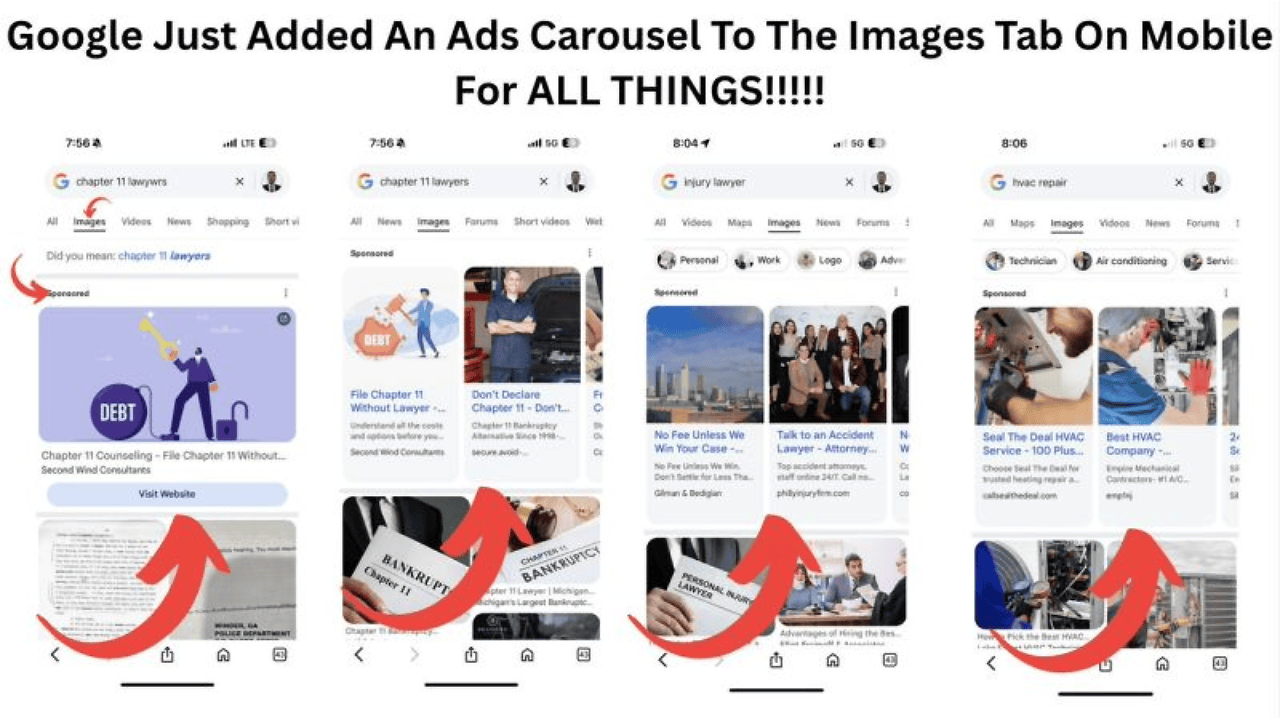
    Have you noticed a change in Google’s mobile image search? I have, and it’s all thanks to their latest expansion—introducing AI-driven ad carousels that now feature prominently in the Images tab on mobile. No longer confined to shopping categories, these ads are everywhere!

    Why I’m excited. Google has innovatively integrated ads directly into image search results. It’s a game-changer, providing brands like yours and mine with an eye-catching new way to reach potential customers as they compare and explore visuals online. This new format offers a unique opportunity to capture attention early in the consumer journey.

    The details:

    ```json
{
  "alt": "Mobile Google Images tab showing ads carousel for various searches, including chapter 11 lawyers and HVAC repair.",
  "caption": "Discover how Google now integrates an ads carousel into the mobile Images tab, offering sponsored results for searches like legal help and HVAC repair.",
  "description": "This image displays Google's new ads carousel feature in the mobile Images tab, as seen across searches like 'chapter 11 lawyers' and 'HVAC repair.' The user interface shows sponsored ads prominently displayed at the top, highlighted by red arrows pointing to these sections. This update reflects Google's initiative to increase ad visibility in image searches, providing more monetization opportunities for advertisers and aiding users in discovering services easily through visual content."
}
```
    • The introduction of horizontally scrollable carousels that combine images, headlines, and links is worth noting.
    • What’s fascinating is the AI-driven ad matching technology. It ensures the visuals correspond to what users are searching for, even in non-commercial sectors like law or insurance.
    • All of this came to light when Anthony Higman, founder of ADSQUIRE, shared snapshots of these carousels on X.

    The big picture. With ads becoming seamlessly woven into visual searches, Google is paving the way for immersive ad experiences that merge organic and paid discovery. This is a significant leap beyond traditional text ads and product listings.


    Inspired by this post on Search Engine Land.

  • Is AI Threatening the Ad-Funded Web’s Future?

    Is AI Threatening the Ad-Funded Web’s Future?

    When I think about the evolution of the web, I can’t help but reflect on Sir Tim Berners-Lee’s significant contributions. Recently, he expressed concerns that artificial intelligence might undermine the web’s ad-supported model.

    In an enlightening conversation with Nilay Patel on Decoder, Berners-Lee shared his worries about how AI could disrupt the current flow of data that fuels ad revenue. He warned that if users stop clicking on links and visiting websites due to AI-driven changes, the very foundation of our ad-supported web could crumble.

    Why this matters to us. There’s a noticeable split in our industry. On one side, it’s “just SEO,” but on the other, some foresee a future where AI platform visibility overtakes traditional search engine rankings and traffic. While SEO remains relevant, there’s no denying a shift in how we access content. According to Berners-Lee, ignoring this could lead to our ad-supported model failing while AI platforms continue to thrive.

    On monopolies. Berners-Lee also spoke about the risks of having a central provider dominate the web. He reminisced about a time when multiple browsers and search engines offered more choices, contrasting with today’s monopolistic landscape.

    On the semantic web. After years of working on the Semantic Web, Berners-Lee observed how AI could harness structured data. He highlighted Schema.org’s role in making data machine-readable, and how this could evolve with AI to form a sophisticated web of data.

    On blocking AI crawlers. The conversation shifted to Cloudflare’s initiative to restrict AI crawler access. When asked if websites could integrate “pay me first” protocols, Berners-Lee mentioned existing micropayment systems, suggesting ways to monetize web information access in an AI-driven world.

    The interview. If you’re curious about Berners-Lee’s thoughts on the future of the web and AI, check out the full interview on The Verge.


    Inspired by this post on Search Engine Land.

  • Mastering AI Visibility: The New Frontier for Brands

    Mastering AI Visibility: The New Frontier for Brands

    AI availability is reshaping how we think about brand recognition, becoming a crucial battleground for companies. Let me take you through why this is transforming our approach to marketing.

    GEO, AI SEO, AEO – whatever you name it, what matters most is understanding this transformative shift.

    At the heart of this change is AI availability – a concept that’s redefining the landscape of visibility. Let me explain how and why this matters.

    What is AI availability?

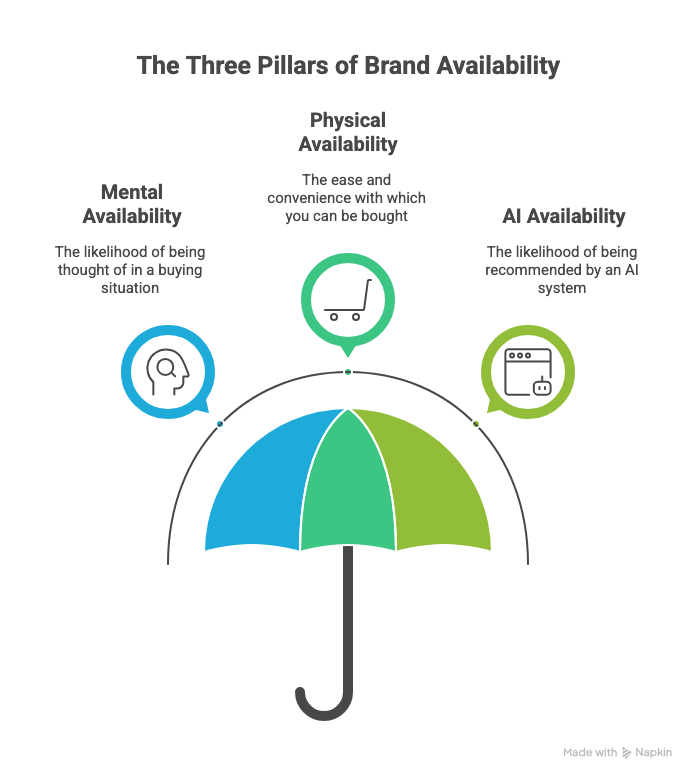
    The concept originates from Byron Sharp, who highlighted it as crucial for brand growth. It centers on two forms of availability: mental and physical.

    Brands grow through sales, which flourish through these two types:

    • Mental availability: Being thought of in purchasing situations.
    • Physical availability: Seamless and easy access to a product.

    Generative search introduces a third type – AI availability, marking how AI systems impact purchasing decisions.

    AI as the new influencer

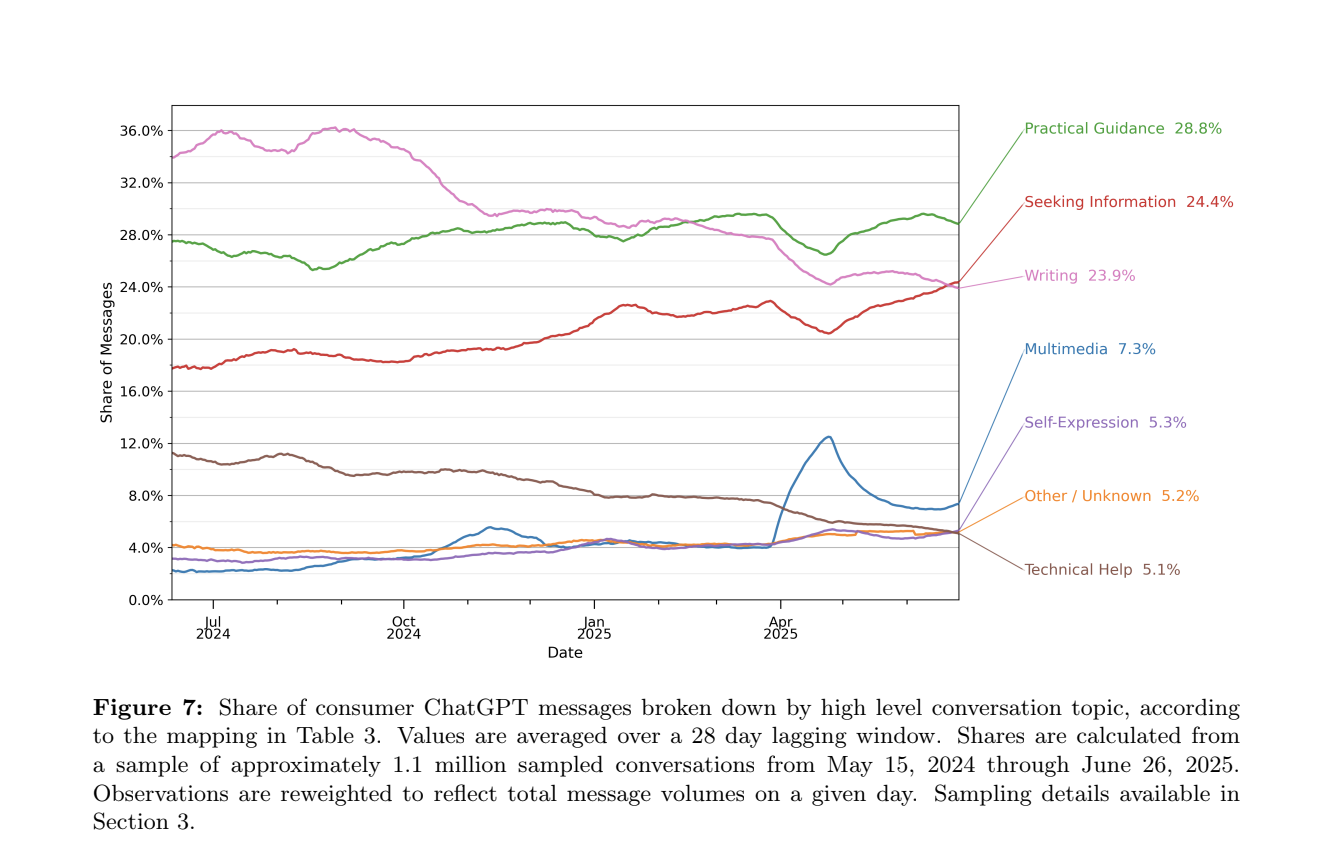
    If you still view AI merely as technology, it’s time to think bigger – it’s the ultimate influencer now. Data shows ChatGPT, alone, reaches 10% of adults globally. Think of it not as coding support but decision-making assistance, making AI the new gatekeeper.

    Decisions on what to buy and who to trust are moving through AI systems, transforming them into today’s most powerful influencers.

    ```json
{
  "alt": "Illustration showing three pillars of brand availability: mental, physical, and AI, represented by icons above an umbrella.",
  "caption": "Discover the three pillars of brand availability: mental recall, physical access, and AI recommendations, illustrated above a colorful umbrella.",
  "description": "This illustration highlights the three pillars of brand availability: Mental Availability is about being thought of in buying situations, Physical Availability emphasizes ease of purchase, and AI Availability pertains to AI recommendation likelihood. Icons representing each pillar are interconnected above a multi-colored umbrella, symbolizing protection and support. This visual is crafted to promote understanding of brand presence in a holistic market context."
}
```

    From keywords to fitness signals

    For years, the SEO industry optimized around human usage of keywords. But with large language models, the focus shifts to fitness signals – inherent traits that outcompete rivals.

    This means aligning your business performance attributes with today’s sophisticated AI systems, making them distinctly visible to a machine’s interpreters of need.

    The psychology of performance

    Drawing from evolutionary psychology, Geoffrey Miller argues consumers chase fitness cues – a concept AI utilizes to interpret queries not as keywords, but needs.

    Your aim? Ensure your brand’s fitness and performance attributes stand out in AI’s mental context of your category, shifting from traditional SEO efforts to robust AI presence.

    Category entry points and the new SEO

    Category entry points become your new keywords in GEO. They’re expressed as needs or triggers rather than search terms, requiring alignment with your brand’s unique context, so AI recognizes your offerings as solutions.

    This evolution makes your foundational brand strategy vital for influencing AI, feeding sophisticated recommendation systems.

    A local example: The sandwich shop in Stoke

    ```json
{
  "alt": "Line graph showing share of consumer ChatGPT messages by topic from May 2024 to June 2025, highlighting Practical Guidance and Seeking Information.",
  "caption": "Consumer ChatGPT messages reveal trends from May 2024 to June 2025, with Practical Guidance leading at 28.8%. Discover how user interactions evolve over time.",
  "description": "This line graph depicts the share of consumer ChatGPT messages categorized by topics like Practical Guidance, Seeking Information, and Writing from May 2024 to June 2025. Practical Guidance holds the highest share at 28.8%, followed by Seeking Information at 24.4%, and Writing at 23.9%. The data is derived from an analysis of roughly 1.1 million sampled conversations, reflecting trends and user preferences in AI usage over time. The chart includes categories like Multimedia and Technical Help, with fluctuations in message shares across months."
}
```

    Consider a modest sandwich shop in Stoke. It focuses on visibility by highlighting key performance attributes, like ingredient sources, and leveraging positive reviews across platforms, thereby informing AI networks of its offer.

    Such efforts help small businesses carve out recognition within AI systems, demonstrating GEO’s direction of combining good marketing with intelligent technology.

    Embrace both SEO and GEO

    The strategies of SEO and GEO are not mutually exclusive. Cultivating both influences AI availability for local businesses and larger corporations aiming to boost presence through intelligent visibility tactics.

    Building AI availability

    Visibility to AI systems begins with comprehensive audits and extends through strategic appearances in credible lists and directories, further achieving saturation by creating valuable content ecosystems.

    By accurately positioning your brand’s finest attributes, you’re readying it for AI’s recognition, pushing it to thrive in this new landscape.

    The future of visibility

    In this AI-driven age, marketing fundamentals still rule. To be chosen, your brand must become recognizable among machine intelligence, reshaping the familiar PR, branding, and SEO tools to serve this advanced audience.


    Inspired by this post on Search Engine Land.

  • Google Ads Tightens Grip on Fraudulent Phone Numbers

    Google Ads Tightens Grip on Fraudulent Phone Numbers

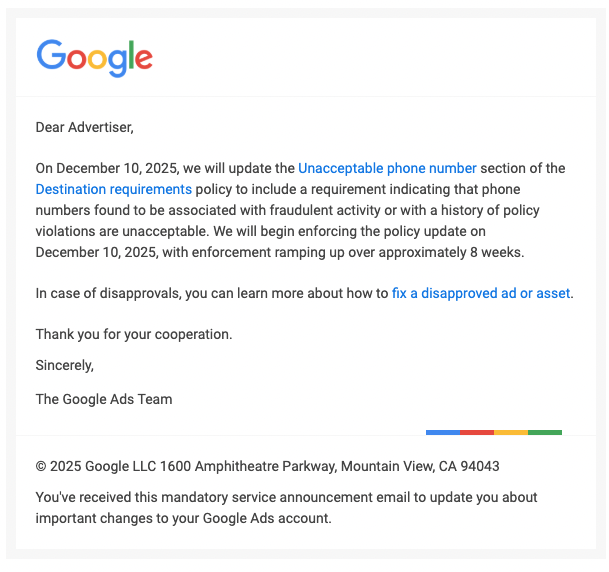
    As an advertiser, I need to be vigilant about the phone numbers I include in my Google Ads. Recently, Google has announced stricter rules, and any number linked to fraud or past policy breaches will soon be disallowed.

    Google Ads tactics to drop

    Google is updating its Destination requirements policy to ensure all phone numbers used in ads are free from any ties to fraudulent activities or previous policy violations. This is part of an ongoing effort to prevent misleading advertising tactics.

    The timeline:
    • Policy update effective: December 10, 2025
    • Enforcement ramp-up: Over roughly 8 weeks after rollout

    What’s changing. Any phone number identified as fraudulent or having a history of policy violations will be rejected under the new Destination requirements policy, resulting in ad disapprovals.

    Why it matters to me. This update is crucial because it targets individuals who might misuse legitimate-looking phone numbers to deceive users or bypass policy enforcement. It’s a reminder for me to thoroughly review and verify all contact information across my campaigns to avoid disruptions in ad delivery, delays in approvals, or impacts on my campaign performance.

    ```json
{
  "alt": "Google Ads email notification about policy updates effective December 10, 2025.",
  "caption": "Stay informed! Google Ads announces policy changes effective December 10, 2025, focusing on phone numbers linked with fraudulent activities.",
  "description": "This image shows an official email from Google Ads informing advertisers of an update to the Destination requirements policy concerning unacceptable phone numbers. Effective December 10, 2025, numbers associated with fraudulent activity will not be accepted. The enforcement will occur over approximately 8 weeks. The email provides links for handling disapproved ads and maintains advertiser compliance. This mandatory update is crucial for advertisers using the Google platform."
}
```

    Steps for advertisers. If I’m affected by these changes, I’ll receive a disapproval notice and can consult Google’s help center for steps to rectify any disapproved ads or assets.

    First seen. This significant update was initially shared by Anthony Higman, founder of ADSQUIRE, on X.

    Reading between the lines. This policy update is part of Google’s broader strategy to enhance ad verification and destination standards amid growing attention on scams and maintaining consumer trust. It’s clear that the responsibility for ad content now goes beyond just the landing page.


    Inspired by this post on Search Engine Land.