Tag: Brand Authority

  • Master Your Brand with a Strategic Martech Stack

    Master Your Brand with a Strategic Martech Stack

    Struggling with maintaining brand consistency? I’ve learned that it’s not about having more tools, but rather having the right tools, perfectly aligned with your brand’s goals.

    I’ve seen marketing teams overwhelmed with tools. The average B2B company might use up to 20 different martech solutions. Despite this, keeping brand consistency at scale can be tough. Fewer than 10% of brands manage to maintain strong cohesiveness across all products and channels. The core issue? Tools rarely work in harmony to support a unified brand experience.

    Managing a brand across various channels, whether through campaigns or social media, can lead to brand elements drifting. It’s those small inconsistencies—a slightly off-color logo here, outdated messaging there—that can gradually erode the hard-earned brand equity.

    The solution isn’t about increasing the number of tools. It’s about selecting the right ones and arranging them with deliberate intention.

    Start with strategy, then stack

    Before diving into an audit of your current software or seeking out new options, it’s crucial to develop a framework for what brand equity means to your organization. David Aaker’s brand equity model—which focuses on loyalty, awareness, perceived quality, and brand associations—is a sound approach. It transforms brand management into a sustainable growth strategy. In terms of a martech stack, this means utilizing tools that both build and protect your brand.

    On the strategy side, platforms like Notion, Miro, and Lucidchart are invaluable. They help document positioning, define messaging, and map out customer journeys. These may not be glamorous, but they provide the solid foundation for successful execution. Without such a framework, design and content teams are left guessing.

    The core of the stack: Digital asset management

    If there’s one tool that differentiates a cohesive brand management stack from fragmented apps, it’s digital asset management (DAM). Unlike typical cloud storage services such as Google Drive or Dropbox, a DAM solution organizes and governs brand assets comprehensively, offering features like approval workflows and version management that cloud storage lacks.

    Consistent branding can increase revenue by 10–20%, and a DAM provides the structure needed to maintain this consistency at scale. By ensuring all team members and partners access the same approved asset library, you eliminate brand drift.

    Modern DAMs further simplify brand management by integrating AI to speed up content discovery and automated metadata tagging, reducing creative bottlenecks and accelerating go-to-market timelines.

    Execution tools that reinforce brand standards

    Apart from DAM, execution tools are essential for converting brand strategy into consistent published content. Depending on your team, Adobe Creative Cloud, Figma, or Canva can be used. They offer varying degrees of design flexibility and guardrails to maintain brand standards.

    Balancing creativity with adherence to brand guidelines is key. Tools with brand templating features allow teams autonomy while ensuring brand consistency. Alternatively, using brand templates within your DAM offers greater control and tracking capabilities.

    For social media and content distribution, platforms like Hootsuite and HubSpot ensure cohesive publishing across channels. It’s crucial these tools connect to your DAM to guarantee only brand-approved content is shared widely.

    SEO tools like SEMrush and Ahrefs help reinforce your brand’s voice and authority online. In today’s market, where SEO extends to geo-targeting, it’s vital to ensure your brand is accurately represented from the start of customer interaction.

    Governance closes the loop

    A martech stack without governance is simply a mix of tools. Governance—including approval workflows and brand monitoring—is what makes your stack effective and protective.

    Incorporating workflow tools into project management or your DAM ensures faster and accountable proofing cycles. Tools like Mention help track external brand perception, highlighting areas of potential drift before they escalate.

    The takeaway

    The aim of a streamlined brand management martech stack is not complexity but efficiency. It should empower any team member or partner to access and create on-brand content swiftly, independently, and without needing constant design team input.

    This requires a strategic approach, a robust DAM as the central hub, integration with execution tools, and governance practices that uphold standards. When these elements work together, your brand transforms from a reactive endeavor to a proactive tool for long-term success.


    Inspired by this post on Search Engine Land.


    crushpress.ai community screenshot
  • Boosting Brand Authority: The Key to Winning in AI Search

    Boosting Brand Authority: The Key to Winning in AI Search

    I’ve discovered a fascinating truth about search in the age of AI: brand authority often outshines topical authority. The landscape of search has shifted, and it’s time for us to adapt.

    While topical authority remains a beloved concept among SEO consultants pitching content, brand authority holds the reins in today’s AI-driven search landscape. Marketers have long discussed brand authority, though it was often dismissed or left to brand teams post-sitemap adjustments.

    AI’s emergence has upended the traditional approach, revealing underlying issues. Search is crucial for the global economy, and the industry’s marketing approach needs re-examination. More content doesn’t automatically confer authority. In fact, AI search champions brands gaining notable visibility, mentions, and real demand.

    Too many SEOs overlook the reasons people choose, trust, and remember brands. In this new world of AI search, such ignorance stands out even more. That’s why brand authority prevails—but not in the way our typical SEO tools might suggest.

    Previously, the meaning of topical authority was intended to highlight genuine expertise through useful work, citations from others, and a growing associated reputation. This builds your brand’s association with a topic, which in turn, creates authority and fosters brand development.

    However, the industry often marketed topical authority commercially, emphasizing volume over value. Technical SEO became a niche, links were outsourced or repackaged, but content was the consistent agency engine.

    Pre-AI, this made sense. Creating good content involved rigorous processes and offered substantial value, earning rankings and supporting commercial interests. In contrast, topical authority introduced the misguided idea that mere keyword coverage equated to expertise, diluting the concept’s original intent.

    Another intriguing aspect of authority is understanding what others say about you, rather than solely focusing on self-published content. Google’s Jun Wu highlighted the importance of ‘mention information’—how search engines discern topics, identify sources, and map relationships.

    Our modern term for this is brand co-occurrence. Being consistently mentioned by authoritative sites and communities solidifies your brand’s association with a topic, elevating market perception and authority.

    ```json
{
  "alt": "The CapmatchOne logo with a gradient circle and bold text.",
  "caption": "Discover innovation with the CapmatchOne logo, featuring sleek typography and a modern gradient circle.",
  "description": "The CapmatchOne logo features bold, modern typography coupled with a gradient circle, symbolizing connection and innovation. The sleek design conveys a sense of progress and creativity. This image can be used for branding or promotional purposes, appealing to audiences interested in innovative solutions and forward-thinking designs."
}
```

    Many might pitch the concept of topical authority as building a comprehensive keyword strategy, but actual authority requires originating valuable data and sharing insights that engage audiences and capture media attention.

    The changing economic landscape of AI means that traditional advertising methods through content must evolve. With AI offering direct answers, the value of certain traditional SEO practices is diminishing. Users, like my AI-liking father, prefer quick, synthesized information over cumbersome web browsing.

    The rise of AI citations in search metrics has become a focus, but they differ from authentic human endorsements. Real influence is reflected through human testimonies, where your brand is discussed, cited, and recommended.

    If measuring brand authority, brand searches present a clearer indicator of growth. If more people search specifically for your brand, it signals rising demand and market presence—a more accurate reflection of impact than solely relying on AI citations.

    Traditional SEO still plays a role, ensuring you’re found where it matters—be it in search rankings or marketplaces. Yet, brand authority distinctly drives recommendations, and AI search is starting to favor consolidated options, often mentioning specific brands and solutions.

    The future echoes the demand for meaningful engagement and widespread brand visibility. Though SEO isn’t dead, a simplistic keyword-centric approach is fading. A holistic approach integrating positioning, PR, reviews, and content as interconnected elements is pivotal.

    In an era where fitness and visibility are equal determinants of success, brands must excel in products and services while ensuring their market presence is robust and omnipresent. After all, brand authority is what truly wins, confirming that mediocrity no longer warrants attention.


    Inspired by this post on Search Engine Land.

    crushpress.ai community screenshot
  • Mastering AEO: Build Authority with Engaging Content

    Mastering AEO: Build Authority with Engaging Content

    How to produce content that naturally builds AEO clout

    Backlinks are still important, but today, authority also thrives on mentions and citations. I’m here to guide you on crafting content that garners both, significantly boosting your presence in AI search results.

    In the past, links were the main authority signal in search. Creating backlinks was my go-to strategy for visibility, and earning placements was key for credibility. This still holds relevance, but it’s no longer the sole method.

    In the realm of AI-driven search, my authority is now shaped by how frequently my brand is mentioned, cited, and associated with specific topics. Visibility is achieved through references in AI-generated answers.

    With this in mind, my aim is to craft content that consistently earns brand mentions and citations, which are the new driving forces for AEO visibility.

    The Philosophy Driving Content that Fuels AEO Growth

    In 2026, organic discovery is driven by authority incorporating entity recognition. On platforms like Google and AI models such as ChatGPT, authority is strengthened through:

    • High-quality backlinks.
    • Brand mentions (linked or unlinked).
    • Consistent citations across trusted publications.
    • Clear entity associations (defining who I am, what I’m known for, and my core topics).

    Since LLMs synthesize information rather than rank pages, I need repeatable, credible mentions across the web to enhance the probability of being cited or referenced in AI answers. Moreover, I’m focused on using my owned media to clearly define my brand entity.

    Building authority has become more crucial as my content competes with AI results within the SERP and AI-generated content from other creators.

    In short, I need to establish a clear brand identity and produce content so valuable that other experts, journalists, creators, and AI systems frequently reference my brand in discussions relevant to my business.

    Dig deeper: How to build an effective content strategy for 2026

    The Principles and Formatting of AEO-Friendly Content

    I rely on many traditional SEO principles as a foundation for AEO-friendly content. Content aligned with Google’s helpful content guidelines, emphasizing value and user experience, appeals to both people and LLMs sourcing expert input.

    However, to truly optimize AEO-friendly content, I incorporate formatting that facilitates LLM extraction.

    ```json
{
  "alt": "The CapmatchOne logo with a gradient circle and bold text.",
  "caption": "Discover innovation with the CapmatchOne logo, featuring sleek typography and a modern gradient circle.",
  "description": "The CapmatchOne logo features bold, modern typography coupled with a gradient circle, symbolizing connection and innovation. The sleek design conveys a sense of progress and creativity. This image can be used for branding or promotional purposes, appealing to audiences interested in innovative solutions and forward-thinking designs."
}
```

    Key formatting principles include:

    • Clear definitions: Provide concise, clear definitions high on the page:
      • “X is…”
      • “Y refers to…”
    • Structured formatting:
      • Use descriptive H2s and H3s.
      • Employ bullet points.
      • Keep paragraphs short.
      • Include direct answers under question-based headers.
    • Explicit context:
      • Avoid vague pronouns and implied references.
      • LLMs perform better with explicit, self-contained context.
    • Summary sections: 
      • TL;DR blocks.
      • Key takeaways.
      • FAQs.
    • Entity reinforcement:
      • Brand name.
      • Author expertise and authority.
      • Brand and author credentials.

    By keeping these principles in mind, I can effectively create content that resonates with both AEO requirements and user expectations.

    The Specific Objectives for Your AEO Content to Address

    To focus solely on AEO, I approach content with these objectives:

    • Be highly citable: Provide original data or perspectives that are valuable for media such as podcasts, expert roundups, or contributor columns.
    • Be highly quotable: Deliver at least one clear, insightful quote.
    • Be specific: Address specific questions that AI systems would seek to answer. Articulate and answer a question verbatim within the content.
    • Be clear: Clearly define topics for easy extraction.

    To meet these goals, I think beyond blog posts to create “reference-grade” assets like:

    • Original research.
    • Data studies.
    • Industry benchmarks.
    • Visual explainers.
    • Definitive guides.
    • Glossaries.

    Dig deeper: How to create answer-first content that AI models actually cite

    Practical Steps to Build AEO Authority with Content

    Here’s how I turn those principles into a repeatable process:

    • Research keywords where bloggers and journalists seek references (often including “statistics” or “reports”). I utilize resources like Reddit, Quora, X, Ahrefs, and Exploding Topics.
    • From those keywords, develop a list of topics my team can provide valuable insights on.
    • Compile a list of writers and journalists who cover those topics.
    • Conduct interviews with expert resources to gather content.
    • Refine content into contemporary insights using Google Trends and social listening.
      • Example: Collect tips from an expert to help hay fever sufferers (niche audience) sleep better (core topic) during high pollen periods (relevance).
    • Pitch to writers and journalists on the urgency and uniqueness of my content.
    • Engage with these writers on social media to build relationships for future opportunities.

    Dig deeper: Organizing content for AI search: A 3-level framework

    Create Content Worth Referencing

    Writing for AEO is aligned with writing for humans. It incorporates many of the SEO fundamentals meant to engage actual users.

    Despite differences in how LLMs extract and process content, keeping these nuances in mind helps me refine my content approach for both AEO and human users.

    With a well-defined brand on my owned media and a strong understanding of AEO principles, I’m ready to leverage my team’s expertise for superior visibility in the AI search landscape.


    Inspired by this post on Search Engine Land.


    crushpress.ai community screenshot
  • Master Your Brand’s Digital Identity with Entity Homes

    Master Your Brand’s Digital Identity with Entity Homes

    Have you ever wondered how search engines and AI perceive your brand? It all starts with the entity home, a pivotal page that shapes your digital identity. Let me tell you why it’s more important than you might think.

    In my experience, this isn’t just about filling out the ‘About Us’ page on your website. It’s about creating a rich narrative that algorithms can trust. This single page acts as an anchor for how bots, algorithms, and even people view and validate your brand. I’ve seen firsthand how optimizing this page increased conversion rates by 6% for those who landed there.

    For years, many in SEO, myself included, overlooked this. The focus was always on rankings and traffic, often neglecting the foundational elements of how a brand’s identity is communicated online. But the landscape has changed, and so must we.

    ```json
{
  "alt": "The CapmatchOne logo with a gradient circle and bold text.",
  "caption": "Discover innovation with the CapmatchOne logo, featuring sleek typography and a modern gradient circle.",
  "description": "The CapmatchOne logo features bold, modern typography coupled with a gradient circle, symbolizing connection and innovation. The sleek design conveys a sense of progress and creativity. This image can be used for branding or promotional purposes, appealing to audiences interested in innovative solutions and forward-thinking designs."
}
```

    What the Entity Home Isn’t

    Let’s clear up some misconceptions before delving deeper.

    Not a Ranking Trick

    Improving the entity home isn’t some quick fix that will skyrocket your page views overnight. It’s about cultivating long-term trust and credibility.

    ```json
{
  "alt": "Illustration explaining the three audiences served by an Entity Home: Bots, Algorithms, and Humans.",
  "caption": "Discover the trio of audiences your Entity Home caters to: Bots mapping footprints, Algorithms building models, and Humans performing due diligence.",
  "description": "This image illustrates the three primary audiences that an Entity Home serves: Bots, which map your digital footprint; Algorithms, which construct models based on your data; and Humans, who conduct final due diligence. The graphic emphasizes the importance of an Entity Home as the canonical anchor for your brand identity, central to digital brand management."
}
```

    Not Just Schema

    Sure, schema is helpful for visibility in search, but it cannot replace substance. I’ve learned that the claims and evidence presented on your site are far more important.

    Not Always the About Page

    While it’s common, the About page isn’t always your entity home. In my case, I had to identify the URL that best showcased my brand’s identity and provided stable, long-term information.

    ```json
{
  "alt": "Bar graph showing focus weighting by year from 2026 to 2028 for Search, Assistive, and Agential.",
  "caption": "Explore the changing focus on Search, Assistive, and Agential from 2026 to 2028 with this insightful bar graph, highlighting strategic shifts in emphasis.",
  "description": "This image presents a bar graph illustrating focus weighting by year for Search, Assistive, and Agential dimensions from 2026 to 2028. In 2026, Search takes priority with 60%, followed by Assistive at 35% and Agential at 5%. By 2027, the focus shifts to 35% Search, 50% Assistive, and 15% Agential. In 2028, the priorities balance at 35% Search, 50% Assistive, and 35% Agential. This graphical representation highlights strategic changes over the years."
}
```

    Not Enough Without Corroboration

    Declaring your claims on one page won’t cut it if they’re not backed by credible third-party sources. I’ve realized that evidence and corroboration create a trust bridge algorithms rely upon.

    Three Audiences, One Anchor

    The entity home serves three critical audiences, and I’ve noticed that many brands neglect two of them.

    ```json
{
  "alt": "Comparison between Entity Home as one page and Entity Home Website as a full education hub.",
  "caption": "Explore the differences between a single-page Entity Home and a comprehensive Entity Home Website, offering an educational hub filled with valuable resources.",
  "description": "This image illustrates the distinction between an Entity Home, represented as a single-page with a clear entity statement, and an Entity Home Website, depicted as a full educational hub. The single page emphasizes a canonical anchor under '/about', while the website version expands into a structured hub, offering sections such as social, companies, peers, press, speaking, and books. This comparison highlights the broader reach and functionality of a full Entity Home Website. Keywords: Entity Home, education hub, website structure, SEO."
}
```

    Bots map your digital footprint. Algorithms resolve identities from your entity home. People use it to verify your credibility before converting. Each element requires a slightly different approach, one that I’m continually fine-tuning.

    The Entity Home is Just One Page and That Isn’t Enough

    Your entity home lays the groundwork, but it doesn’t tell your whole story. I’ve learned to extend my brand narrative across other pages on my site.

    ```json
{
  "alt": "Infographic comparing keyword cornerstones and entity pillar pages with a focus on SEO strategy.",
  "caption": "Navigating SEO: This infographic highlights the balance between keyword cornerstones and entity pillar pages, illustrating effective strategies for optimizing content.",
  "description": "This infographic explores the differences and relationships between keyword cornerstones and entity pillar pages in SEO. The left section lists keyword cornerstones like 'Technical SEO audit', focusing on user searches and a traffic-first approach. The right section presents entity pillar pages, organized by what the entity is, using an 'Entity Home anchor' for confidence-first strategies. A timeline at the bottom emphasizes the balance in URL strategy for both search and assistive eras. Keywords include SEO strategy, keyword cornerstones, and entity pillar pages."
}
```

    I’ve structured pages to express who I am, what I do, and align them with supporting, independent sources. This multi-layered approach has been pivotal in how AI and search engines understand my brand.

    Shifting my focus to assistive and agent-driven interactions has been a challenge, but it’s clear this is where the future lies. The change is happening faster than anticipated, and I’m adapting my strategy accordingly.

    ```json
{
  "alt": "Flowchart illustrating the difference between declaration and corroboration in brand claims with various confidence levels.",
  "caption": "Understanding the path from simple brand declarations to confident, corroborated evidence, where claims evolve into widely accepted truths.",
  "description": "This image is a flowchart differentiating between declaration and corroboration in brand claims. It begins with 'Brand says it' and moves to 'Others say it independently,' with different confidence levels—'claims to be the leading specialist,' 'It's a specialist,' and 'is the leading specialist.' The image emphasizes the importance of corroboration, highlighting how consensus strengthens claims. Ideal for understanding brand credibility and confidence thresholds."
}
```

    Building for Machines and Humans Simultaneously

    At first glance, it seems building for machines might detract from the human element, but I’ve found the opposite to be true. Structured clarity satisfies both algorithms and human readers. There’s a mutual benefit in crafting content that speaks to both audiences effectively.

    Getting the Entity Home Right Requires Definition, Proof, and Corroboration

    Defining the core URL of my brand’s identity has been a meticulous process. I’ve ensured it contains explicit claims supported by robust third-party evidence.

    This isn’t a sprint; it’s an ongoing education for algorithms. I reinforce my claims through continuous corroboration, ensuring that my brand stands on stable, trustworthy ground.


    Inspired by this post on Search Engine Land.


    crushpress.ai community screenshot
  • Dominate SEO’s New Frontier: Master the Consensus Strategy

    Dominate SEO’s New Frontier: Master the Consensus Strategy

    When I hear about someone ranking first but still being invisible, it seems strange, right? But here’s the real story:

    A potential customer might ask ChatGPT or Perplexity for the best tool or agency in your category—and your competitor is the one that gets mentioned, not you. Your top ranking isn’t helping in this scenario.

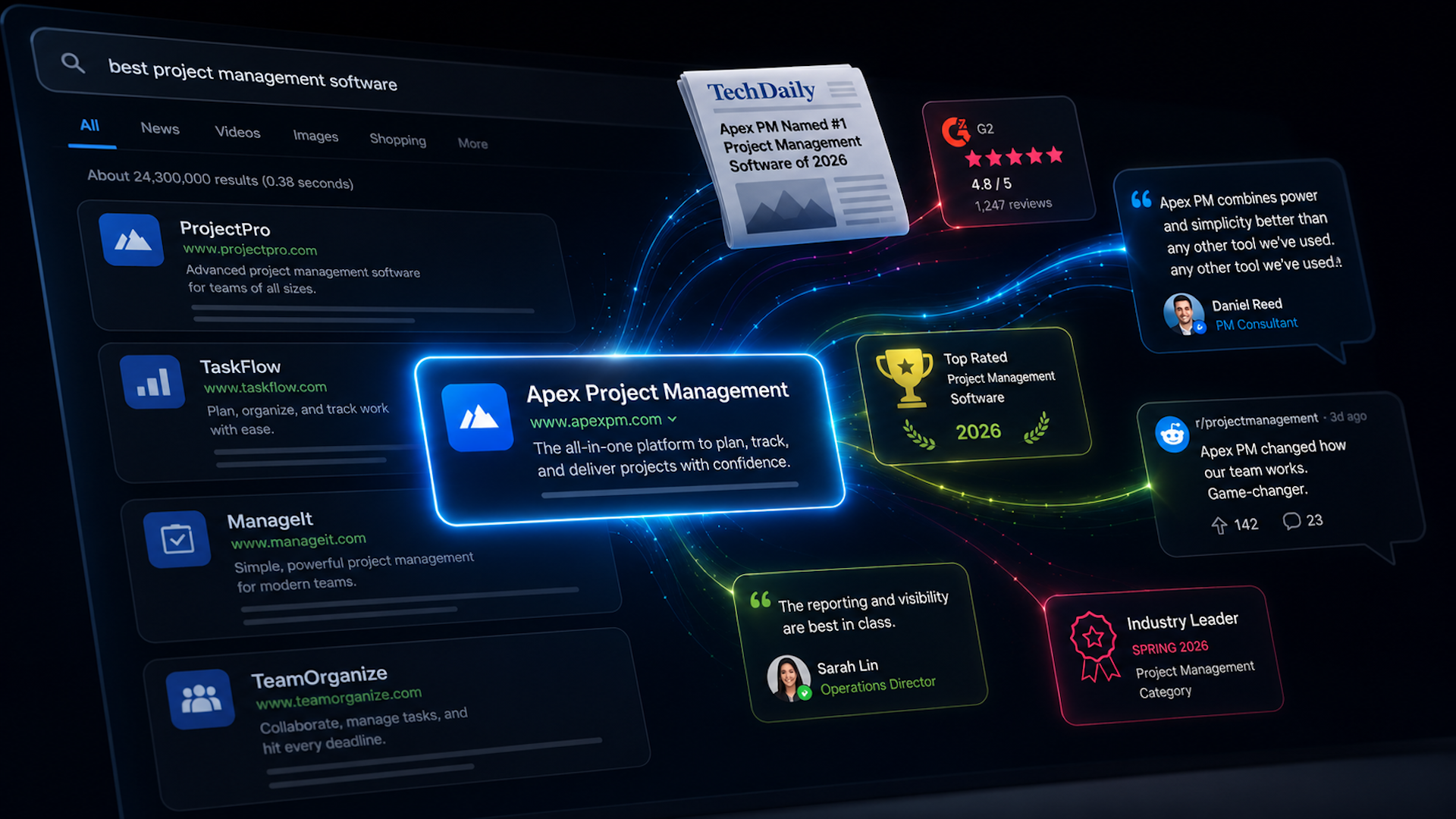
    This is the new reality in SEO that surprises many experienced marketers. Large language models (LLMs) gather consensus from multiple sources instead of relying on just one. This shift means it’s no longer just about ranking—it’s about being consistently mentioned across various sources. Missing this understanding means you’re losing ground.

    Let’s unravel what’s happening and, more importantly, how we can navigate this new landscape.

    From Rankings to Consensus: Understanding the Shift

    Traditional SEO was straightforward: rank high to get clicks and drive traffic. Google searches found pages, and users decided which ones to visit.

    However, AI-driven search introduces a new method. Platforms like Google’s AI Overviews and ChatGPT now create their responses by compiling information from numerous sources. They check for consistency to form a single, synthesized answer.

    Data reveals the magnitude of this shift: since mid-2024, organic click-through rates have dropped significantly for queries showing AI Overviews. Even queries without AI results saw a decrease.

    The technology behind this is retrieval-augmented generation (RAG), where AI pulls from across the web to discern repeating claims from credible publishers. The objective isn’t just publishing a great page—it’s about becoming one of those consistently cited sources.

    What the Consensus Layer Actually Is

    I think of the consensus layer as AI systems producing consistent outputs about your brand. It’s a large-scale pattern recognition.

    When AI systems find your brand mentioned in the same way across several credible sources, they build confidence in those claims. When they don’t, your brand becomes an outlier, which risks exclusion.

    This system prevents AI hallucinations, using corroboration as their defense. If multiple sources independently agree on a claim, AI considers it reliable. Sole sources tend to be ignored.

    I’ve observed brands being invisible despite their high rankings because they rely solely on traditional authority without corroborated recognition.

    Will Scott’s insight is valuable: Visibility issues arise because brands aren’t mentioned in AI answers, despite being high-ranked in traditional search.

    Explore more: When search demand surpasses keyword limits.

    The Signals That Actually Build Consensus

    What signals do AI systems rely on to build consensus? Here’s where we need to focus:

    Traditional Authority Is Just a Starting Point

    Foundational elements like backlinks and domain authority get you in the game. But achieving consensus is what truly sets you apart.

    Unlinked Mentions Matter More Than We Think

    AI scans for brand mentions, even when unlinked. Unlinked mentions signal both traditional and AI visibility, like when an unlinked mention in an industry publication serves as a consensus signal.

    Approximately 9 out of 10 webpages cited by ChatGPT fall outside the top 20 organic results, highlighting the game’s transformative nature.

    Publisher Diversity Strengthens Credibility

    Repeating mentions on the same site doesn’t build consensus. Diverse mentions across credible publishers are key.

    Community Platforms Are Consensus Gold

    Platforms like Reddit and Quora are becoming pivotal for consensus, as AI recognizes genuine user discussions as reliable data sources.

    With Reddit leading in SERPs, positive mentions in subreddits significantly contribute to AI perceptions. Genuine community trust can’t be fabricated—it must be earned.

    Entity Clarity Simplifies Retrieval

    Search engines use knowledge graphs to connect entities. If your brand is inconsistently presented or your category is vague, AI systems struggle to recognize you in answers.

    ```json
{
  "alt": "The CapmatchOne logo with a gradient circle and bold text.",
  "caption": "Discover innovation with the CapmatchOne logo, featuring sleek typography and a modern gradient circle.",
  "description": "The CapmatchOne logo features bold, modern typography coupled with a gradient circle, symbolizing connection and innovation. The sleek design conveys a sense of progress and creativity. This image can be used for branding or promotional purposes, appealing to audiences interested in innovative solutions and forward-thinking designs."
}
```

    Structured data, schema markup, and JSON-LD are crucial. The clearer your entity’s profile, the easier it is for AI to reference and cite you.

    How to Actually Build Consensus

    Alright, let’s dive into some tactical steps. Understanding your current standing is vital before taking action.

    Begin with an LLM Audit

    Use ChatGPT, Perplexity, Gemini, and Google AI Overviews to ask questions just as your customers would.

    • “What’s the best tool/service for the problem you solve?”
    • “Who are the leading providers in your category?”
    • “What do people say about your brand?”

    Focus on three outcomes:

    • Is your brand even mentioned?
    • If so, is the information accurate and current?
    • How are you compared to competitors?

    This assessment reveals gaps, misinformation, and your weakest points in the consensus landscape.

    Build Your Owned Media Foundation

    Ensure your website is technically sound with clear semantic structures. Utilize structured data, clearly define your entity, roles, and solutions, and affirm these consistently across your site.

    Develop topic clusters and pillar pages with related content to demonstrate expertise and depth. Without a robust foundation, efforts may falter.

    Leverage Earned Media for Consensus

    Press, guest posts, podcasts, and expert quotes help distribute your authority across the web. It’s about more than links; it’s about managing your narrative.

    Sustained visibility across reputable platforms amplifies your consensus reach. Balance unlinked mentions with traditional link building.

    Conduct and Share Original Research

    Original data and proprietary surveys serve as high-impact consensus assets. Other publishers referencing your research naturally boosts your credibility, offering long-term citation opportunities.

    Invest in Expert-Led Content

    Position team members as experts. When recognized continuously, they gain trust from AI systems. Optimize author profiles with structured data to enhance this.

    Engage Authentically in Communities

    It’s not merely about sharing links on Reddit. It’s about real participation—answering questions and building your brand reputation organically.

    When users naturally recommend your brand, it’s the strongest signal of consensus.

    Tracking What’s Vital Now

    Traditional rankings indicate where you stand in search results but don’t show AI citations. New metrics focus on visibility and share of voice rather than mere clicks.

    Experiment with high-value queries to check AI Overviews and ChatGPT responses. Note your brand’s mentions, descriptors, and accompanying sources.

    Measure share of voice across AI responses and monitor cross-domain mention density and entity co-occurrence to assess your consensus reach accurately.

    The New SEO Playbook

    Success now lies with brands building distributed credibility through a mix of owned media, earned media, and community platforms.

    While traditional SEO basics are necessary, they’re just the start. Integrate SEO, digital PR, and community efforts into a unified strategy to build a durable visibility moat.

    Building this network of mentions and citations is the defense against competitors, and the timing for action is critical.

    Dive deeper: Why distribution is essential in conjunction with content for SEO success.


    Inspired by this post on Search Engine Land.

    crushpress.ai community screenshot
  • How to Achieve Consistent AI Brand Visibility

    How to Achieve Consistent AI Brand Visibility

    AI outputs can be wildly inconsistent, and Rand Fishkin recently spotlighted this issue. His research revealed that AI tools produce varied brand recommendations, which highlights the need for a deeper understanding beyond ranking positions.

    After reading his work, I realized the solution is rooted in something I’ve been developing for years – building consistent visibility through confidence and corroboration.

    Fishkin’s data showed that AI systems are confidence engines. They draw results based on confidence levels, which explains the inconsistency in output. It’s a problem when there’s low confidence, but once AI systems are confident, they provide consistent recommendations.

    The journey to AI confidence involves several stages, and understanding this process can fundamentally change how brands approach AI visibility.

    Take the entity home as an example. It’s the foundation of AI interpretation of your brand. Confidence also builds when third-party data aligns with your own narrative. Brands that manage this well don’t just appear in AI recommendations; they dominate them.

    There’s a method behind all this that I’ve formalized and even filed for patenting. It’s a complex system of strategies but starts with ensuring that your brand’s digital footprint aligns perfectly with high-authority sources.

    Fishkin’s work confirms the importance of AI visibility, a subject I’ve been tracking and developing solutions for over the last decade. It bridges a significant gap in understanding how brands can leverage AI for long-term authority and presence.


    Inspired by this post on Search Engine Land.

    crushpress.ai community screenshot
  • Enhance Marketing Success with Profound’s Knowledge Bases

    Enhance Marketing Success with Profound’s Knowledge Bases

    As someone deeply involved in marketing, I know how crucial it is to have access to accurate and comprehensive company information. That’s why when our marketing team uses Profound to upload Knowledge Bases, it gives us a single source of truth for company-specific data.

    This capability empowers us, as agents, to provide the right context about your brand every time we execute a marketing action on your behalf. This streamlined approach ensures consistency and accuracy in representing your brand.


    Inspired by this post on Try Profound Blog.


    crushpress.ai community screenshot
  • Why 2026 Signals the End of SEO Silos with Cross-Channel Growth

    Why 2026 Signals the End of SEO Silos with Cross-Channel Growth

    As we approached the end of 2025, debates within the SEO industry swirled over whether AI necessitates a strategic shift. These discussions have continued into 2026, but now, we’re diving into tangible testing and implementation stages.

    To truly adapt to the ever-changing search landscape, it’s crucial for us to dismantle the SEO silos and allow our SEO teams to lead as strategic quarterbacks in enhancing brand authority.

    Traditionally, organic search has been an invaluable source of insight into consumer behavior, platform evolution, brand positioning, and organic influence.

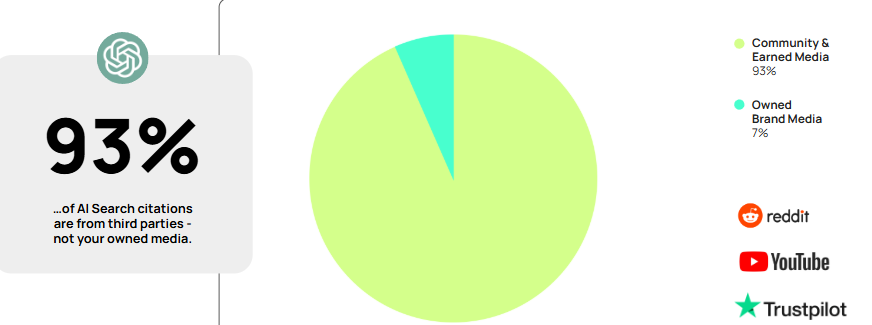
    In our current environment, large language models (LLMs) are heavily influenced by earned media content. Press releases, social media content, UGC, your own website, retail platforms, YouTube, and Reddit discussions—all play significant roles in shaping LLMs’ understanding of our brands and products, enabling them to generate accurate responses for users.

    The time has come to introduce a new operational model—one that transitions SEO from a purely technical discipline to a pivotal driver of brand presence.

    A phased blueprint for a cross-functional AI SEO team

    Discussing 2026 with brands often elicits the same response: “There’s so much to tackle, and we can only manage so much at a time.” They’re not wrong. Attempting to address every concern simultaneously squanders resources.

    The key to a more effective AI SEO operating system is prioritizing what matters most and ensuring cooperation across organizational boundaries based on prioritization.

    Focus on higher-priority collaborations through your SEO quarterback, executing actions in well-planned phases rather than all at once.

    Phase 1: Collaborating on your owned assets

    Essential collaborators: Web development, content, and product teams.

    Before concerning ourselves too much with marketing and influencing an LLM’s view of our brand, it’s vital to focus on the accurate facts we convey through our owned assets. Building a robust AI search foundation begins with our own website, where we exert the most control.

    The SEO pivot

    We’re transitioning from optimizing solely for specific search terms to ensuring data is structured for undeniable extraction by bots.

    The collaborative effort

    The SEO quarterback partners with product and sales teams to identify information LLMs might need based on actual customer conversations and product usage. These insights guide the content team in addressing information gaps and inform the web development team to implement structural adjustments for improved extraction.

    The goal

    Our aim is to establish a definitive truth source for our brand. We want all factual claims about our products—from practical uses to specifications and availability—to be so clear and structured that they become the primary reference, ensuring AI sources reliable, accurate data from us.

    Failure to do so leads AI to generate information based on assumptions made from elsewhere.

    Phase 2: Collaborating on your earned assets

    Essential collaborators: PR and communications, creative, brand, social media, and commerce teams.

    Once we have our foundation in place, expanding into other sources is crucial. LLMs often prioritize external voices and sources over our internal narratives.

    AI search generates responses by validating facts across the internet. This is where our SEO strategies must align with PR and communications efforts to influence the sources AI trusts.

    The SEO pivot

    Rather than amassing numerous backlinks, we focus on gaining high-value citations to foster brand mentions and authority in niche domains. This shift moves from old-school link-building to crafting enduring narratives that accrue brand authority.

    The collaborative effort

    The SEO quarterback collaborates with PR and communications teams to transition from episodic media engagements to an “always-on” approach by recycling and syndicating content stories.

    Creative and brand teams integrate with the larger content strategy, providing insights into topics supported by video content. The period is ripe for including the organic social team, aligning themes across platforms to maintain narrative consistency and maximize content utility.

    For ecommerce brands, commerce and marketplace teams offer a valuable source for chatbots in verifying product data. Maximize retailer real estate as part of your broader product description page (PDP) strategy.

    The goal

    We aim for consistency in factual validation—whether it’s the technical specifications on a retailer’s PDP or the sentiment expressed in a press article. By transforming these off-site entities into extensions of our truth foundation, we sculpt the consensus AI requires to accurately represent our brand.

    Phase 3: Building your brand and community

    Essential collaborators: Social and community management, paid social and search, affiliate marketing teams.

    The final phase focuses on influencing human signals from user-generated content. AI models supplement their learning by scraping platforms like Reddit, YouTube, third-party review sites, and niche communities to gauge public perception.

    While Phase 1 is about our narrative and Phase 2 focuses on expert opinions, Phase 3 ensures our community corroborates these narratives.

    The SEO pivot

    We now optimize for community authority and sentiment, shifting from mere presence in social spaces to actively shaping narratives where AI models learn human preferences.

    The collaborative effort

    The SEO quarterback collaborates with social and community management teams to determine where the audience engages, what drives LLM influence, and which conversations to naturally participate in or leverage.

    These insights inform the paid search team for ad copy testing or landing page strategies that align with brand directions. Coordination extends to the affiliate team for relevant domain placements and the paid social team to synchronize influencer scripts with thematic nuances that refine brand messages.

    The goal

    Our objective is to build brand associations and scale important conversations within our community. By expanding and nurturing these discussions, we uncover genuine customer insights to inform broader strategies.

    Get the newsletter search marketers rely on.

    MktoForms2.loadForm(“https://app-sj02.marketo.com”, “727-ZQE-044”, 16298, function(form){// form.onSubmit(function(){//});// form.onSuccess(function (values, followUpUrl) {//});});

    Integrated execution: The data exchange

    This operating system relies on exchanging data, insights, and executional support. The SEO quarterback ensures every team receives the necessary inputs and strategic insights for excelling in AI search.

    TeamWhat they provide to the SEO leadWhat they receive from the SEO lead
    Content teamTopic expertise and high-quality creationAI-driven keyword strategy, optimization guidelines, performance data
    PR and communication teamBrand messaging and outreach supportSearch trend analysis, brand mention monitoring, and authority targets
    Commerce and marketplace teamProduct data, reseller insights, customer pain pointsPDP strategies, product visibility
    Social media teamEngagement data, social trends, content distributionTrending topics, cross-platform strategies
    Web dev teamTechnical infrastructure, site performanceTechnical SEO audits, implementation priorities
    Creative teamVisual assets, brand identityAI trends, optimization data, performance insights

    Architecting your 2026 SEO team

    It’s crucial for our SEO lead, whether in-house or from an agency, to hold a vocal role at the strategy table. If their role is limited to occasional audits or keyword lists, we’re missing essential insights for success.

    We need an SEO leader who takes charge in steering the AI SEO operating system, emphasizing internal strategy, performance, insights, and innovation.

    This leader is tasked with examining AI data and making pivotal decisions on whether to focus on content or PR strategies. Their involvement is integral in shaping the brand’s identity across multiple channels.

    Agency vs. in-house: Balancing nuance and innovation

    The frequent question of whether our quarterback should be an internal employee or an agency partner persists.

    Ultimately, having a dedicated internal lead as the primary strategist—regardless of tactical execution—yields the best results. Full-time employees possess nuanced understanding, internal networks, and profound product knowledge otherwise hard to duplicate externally.

    As SEO is inherently situational, maintaining an innovative edge solo can be challenging for in-house teams. A supportive agency partner expands the team’s capability by asking insightful questions, offering additional resources, sharing broader industry insights, and fostering collaboration.

    Whether an in-house team or agency supplements your resources, the requirement remains the same: a strong leader who can nurture the cross-channel collaborations AI search demands.

    AI search success stems from cross-channel collaboration

    A championship team isn’t crafted merely by recruiting a star quarterback, a solid offensive line, and an elite receiver. Winning demands that the entire team follows the same playbook.

    By 2026, isolated SEO strategies resemble a quarterback left in the locker room. The talent might exist, but no points are scored until the full team hits the field.

    In the evolving search landscape, changes to strategic execution aren’t merely necessary—they are imperative. Elevating SEO from a technical corner to the organizational core transforms it from an expense to a vital driver of brand authority.

    Empower your SEO lead to dictate plays, dismantle silos, and cultivate a brand that stands indisputably strong before both bots and human audiences.


    Inspired by this post on Search Engine Land.


    crushpress.ai community screenshot
  • Master Brand Mentions for Ultimate AI & SEO Boost

    Master Brand Mentions for Ultimate AI & SEO Boost

    How to earn brand mentions that drive LLM and SEO visibility

    I remember when link building was the cornerstone of SEO. While it’s still relevant, its role has evolved as Google set clearer standards, focusing more on quality, relevance, and intent.

    Today, in our AI-driven search world, the focus has shifted towards brand mentions, which have become a critical SEO initiative. Brand mentions provide references similar to citations, but in AI search, they explain how brands appear in LLMs (Large Language Models).

    Brand mentions are now influential factors for AI search strategies and are gaining more weight in traditional SEO algorithms. Focusing on them should be a priority in 2026 to ensure lasting organic visibility.

    Let me guide you on how we can prioritize and benefit from brand mentions.

    How and Why to Prioritize Brand Mentions

    Brand mentions have become essential in our AI search environments, moving beyond just backlinks. LLMs focus on analyzing mentions, context, and the recurring links between your brand and your target topics.

    ```json
{
  "alt": "Search results for best CMS for SaaS companies, featuring tools like Contentful, Strapi, HubSpot, WordPress, and Storyblok.",
  "caption": "Explore the top CMS choices for SaaS companies, from headless options like Contentful and Strapi to integrated platforms like HubSpot and WordPress.",
  "description": "The image shows search results for the best CMS for SaaS companies, highlighting popular options such as Contentful, Strapi, HubSpot, WordPress, Storyblok, and more. The content emphasizes how each CMS caters to different needs, whether it’s developer-centric with APIs (Contentful, Strapi), integrated marketing (HubSpot, WordPress), or visual editing (Storyblok). Useful for companies focused on development flexibility, marketing integration, or ease of use, this guide helps in selecting the right CMS."
}
```

    These mentions form a competitive advantage, especially as they accumulate over time, creating a protective ‘ranking moat’ when competitors don’t invest similarly.

    To properly prioritize, ensure your brand’s technical and content fundamentals are solid. This includes crawlability, structured data, and clear on-page content. Afterward, focus on brand mentions before engaging in large-scale content production without an existing citation footprint.

    Dig deeper: In GEO, brand mentions do what links alone can’t

    Finding High-Priority Brand Mention Opportunities

    When seeking impactful brand mentions, it’s crucial to examine their sources. My agency goes beyond standard tools, looking for opportunities through systems like Profound that highlight relevant brand mentions aligned with key topics.

    We also review AI Overview links for SEO queries and dive into top-ranking Reddit threads to identify frequently mentioned entities related to important keywords.

    ```json
{
  "alt": "SEMRUSH ad promoting AI optimization with brand share of voice chart at 70%.",
  "caption": "Explore the future of search with SEMRUSH's AI Optimization. Discover if your brand will be seen in the changing digital landscape.",
  "description": "This SEMRUSH advertisement highlights the importance of AI optimization in modern search strategies. The image features a brand share of voice chart indicating 70%, along with a list of AI tools like Perplexity, Gemini, ChatGPT, and Claude. A call-to-action button invites users to get a demo. The vibrant purple design emphasizes innovation and technology. Keywords: AI optimization, SEMRUSH, brand visibility, search tools, digital marketing."
}
```

    You can uncover links to source articles in AI Overviews by selecting the chain-link icon, enhancing your brand’s topical visibility.

    best CMS for SaaS companies - AI Overviews

    Driving Passive Brand Mentions

    Passive brand mentions come when your content naturally fills an informational gap. The aim is to become the go-to reference for certain topics, achieving this by creating assets that are easily referenced.

    These can include original data, insightful reports, or highly scannable explanatory pages. By establishing your brand as the primary source, you’re better positioned for more mentions.

    Actively Soliciting Brand Mentions

    For proactive outreach to earn brand mentions, focus on building genuine relationships and providing valuable information. Start by sharing assets that offer clear benefits, without immediately asking for something in return.

    When contacting journalists or content creators, make your pitches relevant and timely, with a clear angle that increases your inclusion chances. Combining outreach with thought leadership, through podcasts or panels, enhances discovery possibilities.

    ```json
{
  "alt": "Highlighted text showing Mortgage Calculator links on a webpage discussing loan components and costs.",
  "caption": "Navigating mortgage complexities? Discover the role of a Mortgage Calculator in simplifying your loan planning and management.",
  "description": "This image captures sections of a webpage describing monthly mortgage payments, focusing on the Principal, Interest, Taxes, and Insurance (PITI) components. Highlighted links guide readers to online Mortgage Calculators from SoFi and Bankrate, offering tools to estimate loan payments. This content aids users in understanding and planning their financial commitments related to home loans. Keywords: mortgage, calculator, PITI, loan, SoFi, Bankrate."
}
```

    Our goal is to establish a robust outreach engine, nurturing relationships so that those individuals may naturally reference your brand in the future, potentially leading to collaborative content opportunities.

    Deciding When to Engage a PR Resource

    PR support is particularly beneficial when you have compelling stories or data but face distribution challenges. It’s also crucial for quick scaling of brand mentions, especially during fundraising, launches, or when competing in aggressive markets, like health or AI.

    However, if foundational SEO or assets are lacking, focus on establishing those first. Once ready, PR will accelerate visibility across search engines and LLMs.

    Dig deeper: How to build search visibility before demand exists

    Building Brand Mentions That Compound

    The core tenets of link building still apply: aim for quality over quantity and avoid low-impact sources. By keeping a clear focus on key sources and strategy, your brand can achieve significant improvements in search visibility.


    Inspired by this post on Search Engine Land.


    crushpress.ai community screenshot
  • Crafting Resilient SEO Plans Amid Constant Change

    Crafting Resilient SEO Plans Amid Constant Change

    As I’m deep into the marketing planning season, a familiar tension surfaces that I’ve often heard from CMOs and VPs:

    “We build a plan, but the execution never matches the intent.”

    If this echoes your experience, know that you’re not alone. The issue isn’t flawed strategies or incorrect goals, but rather that most SEO plans aren’t built to withstand operational hurdles like shifting priorities or unforeseen product launches.

    Over the years, after guiding various businesses in developing SEO strategies, I’ve realized that success doesn’t hinge on lavish budgets or cutting-edge tools. Rather, it’s about creating plans that reflect actual workflow realities.

    Let me guide you through crafting an SEO annual plan that’s not just aspirational but actionable in the real world. We’ll explore setting clear, actionable goals and establishing quarterly systems to keep us on track even when the unexpected arises.

    Why Annual Planning Still Works

    It might seem outdated to engage in annual planning when new tools like AI Overviews, ChatGPT, and Perplexity change the landscape overnight. The impulsiveness of frequent algorithm changes can make a 12-month plan seem laughable.

    Yet, companies that avoid long-term planning often end up merely reacting, chasing trends without accumulating the assets necessary for sustained growth.

    Annual plans should provide guidance and resource allocation frameworks that enable smart decision-making when adjustments inevitably occur.

    The Need for Better Planning in a Fragmented Search Landscape

    With your audience seeking answers from AI-generated summaries and multiple platforms competing for attention, SEO success involves more than just Google rankings. You need to build brand authority, so AI systems recognize and reference your content.

    Your strategy has to unify brand authority and topical depth, applicable across various search situations—from traditional queries to conversational AI.

    An effective SEO plan should lead to business results, competitive advantages through authority, and preparedness for market changes.

    Setting Action-Driven Goals

    It’s common for many SEO plans to falter by prioritizing metrics detached from actual business outcomes, like focusing on rankings or traffic that don’t translate to revenue or conversions.

    1. Start with Performance Metrics

    Identify what success means for your business—be it ecommerce revenue from organic traffic, SaaS trials, or qualified leads for services.

    Analyze these metrics at granular levels, ensuring resource investment is targeted towards high-revenue opportunities.

    2. Add Contextual Visibility Metrics

    Rather than focusing on isolated keyword rankings, track keyword groups that represent business themes. This offers a comprehensive view of market segment performance.

    3. Establish Leading Indicators

    Identify metrics that signal future changes, allowing timely interventions to maintain performance. Such metrics might include publication rates or indexation issues.

    The Baseline Audit: Know Your Current Position

    A thorough assessment of your current stance, focusing on technical health, content gaps, and authority signals, is crucial to prioritize effectively.

    Strategy Around Constraints

    Most planning falters when it doesn’t account for resource limitations or shifting priorities. Use an effort-versus-impact matrix to prioritize tasks effectively.

    Quarterly Execution

    Break annual goals into achievable quarterly targets, reserving part of your bandwidth for unexpected challenges. This ensures plans remain actionable, not just theoretical.

    Cross-Functional Alignment

    SEO isn’t isolated. Regular collaboration with product, content, and PR teams ensures consistency and reinforces shared goals.

    Common Pitfalls

    Avoid rigidity, competitor mimicry, and neglecting fundamentals in your SEO strategy. Focus on aligning plans with business realities and remaining flexible.

    Bridging the Gap Between Planning and Execution

    Avoiding execution gaps requires plans that reflect real-world conditions, enabling flexibility and focus on impactful metrics.


    Inspired by this post on Search Engine Land.


    crushpress.ai community screenshot