Tag: AI Recommendations

  • AI Search Visibility: From Retrieval to Recommendation and Action

    AI Search Visibility: From Retrieval to Recommendation and Action

    AI search visibility is no longer adequately described by rankings or clicks alone. A brand may be discovered as a source, cited in an answer, recommended for a particular need or selected by an agent that completes a task – and each outcome requires a different kind of optimization.

    Read together, the source articles suggest a practical model for this environment: make the brand retrievable, unambiguous, independently credible, suitable for a defined audience and technically ready for action. This model connects traditional SEO, generative engine optimization and the emerging discipline of agentic search optimization without treating them as interchangeable.

    AI visibility is a chain, not a single ranking

    Traditional search usually exposes a list of pages and leaves most of the evaluation to the user. AI systems can compress several parts of that journey into one response. They may retrieve information from multiple sources, decide which evidence deserves a citation, compare possible providers and recommend an option that appears to fit the user’s circumstances.

    The CrushPress.AI article on retrieval versus citation makes an important distinction: being available to an AI system does not guarantee that the content will be cited. Its argument is that citation-worthy content must combine familiar technical SEO foundations with a useful experience, clear audience relevance and credible signals beyond the brand’s own website.

    The travel-focused source extends this distinction from citations to recommendations. It describes AI-assisted travel planning as a conversational process in which people ask for options matching constraints such as location, budget, atmosphere or family needs. The desired output is often a recommendation rather than a directory of links. The source framed around trust and brand visibility, meanwhile, reinforces the broader issue connecting these stages: an AI system needs sufficient confidence in the brand and its claims.

    The agentic-search article adds another stage. It distinguishes generative engine optimization, where a person still acts on an AI recommendation, from agentic search optimization, where software may evaluate options and execute the task. Its reported framework divides that process into retrieval, evaluation and action.

    Visibility stageQuestion the system must answerPrimary optimization needUseful measurement
    RetrievalCan the brand or content be found?Crawlable content, clear structure and relevant external mentionsPresence across a controlled set of prompts
    CitationIs this source useful and credible enough to support the answer?Specific evidence, clear explanations and corroborationCitation frequency and accuracy
    RecommendationIs the offering a strong fit for this user’s needs?Explicit positioning, suitability criteria and reliable attributesRecommendation share and represented attributes
    ActionCan the requested task be completed?Machine-readable information and a usable transaction pathCompletion, abandonment and assisted conversion

    This chain explains why a visibility strategy focused only on ranking can underperform. Retrieval is necessary, but it does not by itself produce a citation, recommendation or transaction.

    Resolve the brand, verify its claims and communicate fit

    A sharply defined faceted object is illuminated by connections from several independent evidence sources while similar objects remain blurred in the background.

    AI systems synthesize information from an ecosystem rather than treating a company’s website as the sole authority. Both the retrieval-versus-citation article and the travel-brand report emphasize the importance of consistent positioning across owned pages and third-party platforms. Read alongside the trust-focused source, their shared implication is that brand visibility depends partly on reducing uncertainty.

    A practical entity audit should answer several questions:

    • Is the brand’s primary category stated consistently?
    • Are its target customers and strongest use cases explicit?
    • Do the website and major external profiles agree on important facts?
    • Can important product, service or location attributes be found in structured, accessible content?
    • Do reviews, editorial mentions or other independent sources substantiate the positioning?
    • Are outdated descriptions or conflicting details weakening confidence?

    The travel article illustrates this with properties that serve different needs. A family-oriented hotel should consistently surface family suites, activities and relevant guest feedback, while a business hotel should make workspaces, connectivity, meeting facilities and location context clear. The wider lesson is not limited to travel: a brand should identify the situations in which it is a particularly good option and ensure those attributes recur accurately across the sources an AI system may consult.

    Structured data can help machines interpret categories, locations, amenities and other defined attributes. Server-side rendering, understandable page structure and sound technical SEO also remain relevant, according to the retrieval-versus-citation source. These measures improve accessibility and interpretation, but none should be presented as a guarantee of citation. Technical clarity supplies evidence; it does not manufacture authority.

    Independent corroboration therefore matters. The sources recommend relevant editorial coverage, digital public relations, reviews, guides and accurate platform listings. The objective is not to accumulate undifferentiated mentions. It is to have credible sources associate the brand with the same meaningful qualities that appear on its own site.

    Fit information deserves equal attention. The agentic-search article recommends suitability pages that state who an offering serves and who it does not. Boundaries can make a claim more credible and give an evaluating system information it can use. Useful pages might organize the decision around audience, use case, requirements, limitations, alternatives and proof rather than repeating broad promotional language.

    The evidence reported for agent behavior comes from one source and should be treated accordingly. The CrushPress.AI summary of a First Page Sage study says the researchers issued 2,417 agentic commands between March 4 and June 10, 2026. It reports that agents selected a platform’s top-ranked recommendation in 44.6% of commands but chose an option ranked fourth or lower in 38.2%. It also reports that pre-existing brand beliefs influenced 81.6% of evaluations. These findings have not been independently verified in the supplied material, but they support a useful strategic hypothesis: inclusion in the candidate set and perceived suitability are separate competitive problems.

    Prepare the conversion path for agent-led action

    A robotic hand moves a glowing token through connected digital gates toward an open package and a green completion light.

    Optimization changes again when software is expected to do more than make a recommendation. An agent may need to check requirements, compare prices, confirm availability, submit information or complete a purchase. Content that is persuasive to a person can still fail if the underlying process cannot be interpreted or operated reliably.

    The agentic-search source reports a large difference in its study between machine-actionable and non-actionable conversion pages. According to the article, agents completed 78.3% of attempts when the page was machine-actionable, compared with 9.6% when it was not; the source says agents often substituted a transactable competitor. Because this result comes from the study as described by a single publication, it should be treated as directional evidence rather than a universal benchmark.

    Organizations preparing for this stage can examine the complete task path:

    <!– wp:list {


  • Measuring AI Search Visibility Beyond Traditional Keywords

    Measuring AI Search Visibility Beyond Traditional Keywords

    AI-generated answers are weakening the keyword’s role as the stable unit of search measurement. The challenge is not simply finding a replacement metric; it is building a measurement model that remains meaningful when prompts, answers, interfaces, and recommendations can all vary.

    The source material points to two connected shifts. One frames Google AI experiences as part of a move beyond conventional keywords, while the other argues that precise AI share-of-voice percentages can conceal an unstable and unauditable denominator. Together, they suggest that visibility should be evaluated as a set of observable signals rather than compressed into one universal score.

    Keywords remain useful, but no longer define the whole market

    The first source frames Google’s AI-oriented search experience around the prospect of keyword replacement. That framing does not mean keywords immediately become irrelevant. They can still organize demand themes, preserve continuity with historical reporting, and provide repeatable inputs for controlled tests. What changes is their status: a keyword list becomes a sample of possible user needs rather than a complete inventory of the market.

    Traditional keyword measurement assumes that a query can be entered, a result page can be observed, and a position can be recorded. The second source argues that this model has been disrupted by AI summaries, localized results, continuous scrolling, sponsored placements, personalization, and layouts that respond dynamically to intent. A conventional rank can therefore remain technically correct while describing less of the user’s actual experience.

    Prompts make the sampling problem larger. People can express the same need through comparisons, follow-up questions, constraints, use cases, and conversational refinements. Because the possible prompt set has no fixed boundary, no monitored list can claim to represent every relevant interaction. The defensible goal is representative coverage, not exhaustive coverage.

    Why a single AI share-of-voice percentage can mislead

    Unequal glass vessels containing glowing spheres sit on a balance while only one small vessel is fully illuminated.

    According to the second source, traditional share of voice at least used an explicit denominator: a marketer selected a keyword set, observed visibility against competitors, and calculated performance within that defined universe. The method had limitations, but its scope could be inspected.

    The source contends that some AI visibility platforms instead calculate percentage scores from limited prompt sets across services such as ChatGPT, Gemini, Claude, and Perplexity. If users cannot inspect how prompts were selected, how answers were classified, or how platforms and repetitions were weighted, the apparent precision of the percentage exceeds what the method can support.

    This does not make prompt tracking worthless. It changes the claim that the resulting number can sustain. A score derived from a declared prompt panel can describe what happened within that panel. It cannot, by itself, establish a brand’s share of every possible AI-assisted search. Reporting should therefore identify the tested universe, collection method, comparison rules, and limitations beside the result.

    The denominator is only one problem. A binary mention can also flatten materially different outcomes. A brand may appear as an incidental example, a leading recommendation, a warning, or a source citation. Counting all four appearances equally would hide the difference between recognition, commercial preference, reputational risk, and source authority.

    Measure presence, preference, and meaning separately

    Three connected visual layers show a signal across answer surfaces, recommendation paths converging on an option, and a prism revealing multiple facets.

    The second source proposes three alternatives to a universal AI share-of-voice score: share of mentions, share of recommendations, and share of narrative. These are most useful as separate dimensions. Combining them too early would recreate the opacity of the metric they are intended to replace.

    Mentions indicate whether the brand enters the answer

    Share of mentions measures how often a brand appears within a defined test set relative to relevant alternatives. The source connects this visibility to the relationships AI systems form from training material or real-time retrieval sources. Operationally, mention tracking can reveal whether a brand is associated with a topic at all, but it should preserve the prompt category, platform, answer context, and competitors observed.

    Recommendations reveal preference within a buying context

    Share of recommendations narrows the question from “Was the brand named?” to “Was it advised?” The source argues that clear, well-documented market positioning is important here. Recommendation analysis should distinguish a direct endorsement from inclusion in a broad set of options, because those answer forms represent different levels of preference.

    Narrative captures how the brand is characterized

    Share of narrative adds the qualitative layer. The second source notes that frequent visibility can still be harmful when the surrounding portrayal is negative. Narrative review should therefore examine the attributes, use cases, cautions, and comparisons attached to a brand. This is where measurement connects AI search visibility with positioning and reputation management.

    These dimensions answer different business questions. Mentions indicate conceptual presence, recommendations indicate preference, and narrative indicates meaning. None should automatically substitute for outcomes such as qualified visits or conversions; those belong in a separate performance layer when reliable data is available.

    Key takeaways

    • Use keywords as controlled samples of demand, not as a complete map of AI-assisted discovery.
    • Treat an AI visibility percentage as a result for a declared prompt panel unless its broader denominator can be audited.
    • Report mentions, recommendations, and narrative separately so that recognition is not confused with preference or reputation.
    • Preserve prompts, platforms, repetitions, classification rules, and collection conditions so changes can be interpreted.
    • Connect visibility signals to business outcomes without implying that a mention alone caused traffic, leads, or revenue.

    Build a measurement system that can be challenged

    A credible program begins by defining the decision it must support. Brand teams may need to understand how the market is described, search teams may need to assess discovery coverage, and commercial teams may care about recommendation frequency. Each purpose requires a different mix of prompts and a different interpretation of success.

    The monitored prompt set should then be grouped by user need, such as discovery, comparison, evaluation, or problem solving. The exact groups will vary by organization; what matters is that the selection logic is documented. Fixed prompts provide comparability over time, while a separately labeled exploratory sample can surface emerging language without silently changing the benchmark.

    Collection should retain enough context to reproduce or audit an observation: the prompt, platform, answer, collection condition, brand appearances, recommendation status, narrative classification, and any cited sources. Repetition can expose variability, but the reporting should show that variability rather than smoothing it into unwarranted certainty.

    Competitive comparisons should use the same prompt panel and classification rules for every brand. Results can then be reported as observed rates within that explicit sample. This language is more limited than claiming a universal market share, but it gives leadership a number whose boundaries can be understood.

    Finally, AI visibility should sit beside conventional search and business evidence rather than replace them. Keyword trends can preserve historical context; mention, recommendation, and narrative measures can describe answer-level presence; outcome data can show whether observable demand followed. The next generation of search measurement will become more useful as it becomes more transparent about what was tested, what changed, and what remains unknown.

    References

  • How to Prioritize and Communicate SEO Recommendations

    How to Prioritize and Communicate SEO Recommendations

    Your crawler has produced a wall of red warnings. A stakeholder has forwarded an AI-generated SEO audit. Developers want to know what actually needs to ship, while leadership wants to know whether any of it will affect traffic, leads, or revenue.

    Your job is not to defend the audit or clear every warning. It is to turn uncertain technical findings into a short, defensible queue of business decisions. That requires two disciplines: ranking recommendations by likely impact and explaining them in language each decision-maker can use.

    Stop letting the audit tool set your roadmap

    An audit tool can identify a rule violation. It cannot decide how much that violation matters to your business. Its severity label usually describes technical conformity, not the value of the affected pages, the strength of the evidence, or the opportunity cost of assigning developers to the fix.

    That distinction matters because a site can have hundreds of reported issues without hundreds of worthwhile projects. A buried 404 that receives no meaningful traffic, blocks no journey, and has no useful backlinks may be noise. A small internal-linking or canonical problem across commercially important category pages may deserve attention even if the audit interface gives it a less alarming label.

    Treat every crawler finding as a lead to investigate, not an instruction to implement. Before it enters the roadmap, make it pass these tests:

    1. Verify the condition. Reproduce it on representative URLs. Check whether the crawler saw the current page, the intended response, and the rendered state rather than a temporary or obsolete condition.
    2. Identify the affected surface. Determine whether the problem touches an isolated URL, a reusable template, a key directory, or a sitewide component. A long URL list may represent one template defect; a short list may contain the business’s most valuable landing pages.
    3. Explain the search mechanism. State whether the issue can interfere with discovery, crawling, rendering, indexing, canonical selection, internal authority flow, or the user journey. If you cannot describe a plausible mechanism, you do not yet have an SEO recommendation.
    4. Connect the surface to business value. Name the page group, audience, search demand, conversion path, or strategic market that could be affected. Do not substitute total error count for value.
    5. Check the evidence. Look for agreement among the crawl, rendered pages, indexation signals, search-performance data, analytics, and any other relevant observations. One tool flag is weaker than several independent signals pointing to the same failure.
    6. Assess delivery reality. Ask which team owns the change, what it depends on, whether it can be tested safely, and what could regress. A sound idea that cannot be implemented or validated is not ready for scheduling.

    Key takeaways

    • A crawler severity label is not a business priority.
    • Prioritize affected value and search impact, not the number of URLs in an export.
    • Separate the observed finding, the impact hypothesis, and the proposed action.
    • State confidence, effort, dependencies, and validation alongside expected benefit.
    • Evaluate AI-generated suggestions through the same process as recommendations from any other origin.

    Build an impact case before assigning priority

    A strategist arranges blank recommendation cards among visual markers for impact, confidence, implementation effort, and risk.

    A useful priority reflects both expected benefit and delivery reality. You can express the impact side as business value multiplied conceptually by affected reach, problem severity, and confidence. Then adjust the delivery decision for effort, dependencies, implementation risk, and reversibility.

    This is a reasoning model, not a promise of mathematical precision. Relative labels such as high, medium, and low are often more honest than a score built from guesses. Define what each label means for your organization so that two recommendations can be compared on the same basis.

    FactorQuestion to answerWhat strengthens the case
    Business valueWhat useful outcome could improve if this works?The affected pages support an important product, service, audience, conversion path, or strategic objective.
    ReachHow much of the valuable site surface is affected?The condition is systematic across a relevant template or section rather than incidental.
    Search severityHow directly can the condition suppress performance?There is a credible path to impaired discovery, crawling, rendering, indexing, canonicalization, internal linking, or user completion.
    ConfidenceHow certain are we that the condition exists and matters?The issue is reproducible and supported by multiple forms of evidence.
    Effort and dependenciesWhat must change, and who must participate?The work has a clear owner, bounded scope, known dependencies, and testable acceptance criteria.
    Delivery riskWhat could break if the change is wrong?The change can be staged, monitored, and rolled back without exposing a larger surface.

    Once those factors are visible, place each recommendation in an impact-effort queue:

    • High impact, low effort: schedule these first when confidence is adequate. Template-level internal-link corrections or clear canonical fixes can fall here when they affect valuable pages and the implementation is contained.
    • High impact, high effort: treat these as business projects, not oversized tickets. Define phases, dependencies, risk controls, and the smallest useful release. High effort does not make an important problem unimportant.
    • Low impact, low effort: batch these with related maintenance or include them when a team is already touching the component. Do not let easy work displace a more valuable project merely because it creates visible ticket movement.
    • Low impact, high effort: decline or defer them unless new evidence changes the impact case. This is where cosmetic cleanup and best-practice compliance often consume time without changing search outcomes.

    Keep urgency separate from priority. An urgent issue is causing material harm now, affects a valuable surface, and becomes more costly if left in place. A rendering or canonical failure on key pages may satisfy those conditions. A worthwhile structural improvement may be high priority without being an incident. Calling every recommendation urgent makes the label useless and teaches stakeholders to ignore it.

    Also distinguish defect removal from opportunity creation. Restoring an unintentionally unavailable landing-page group is a recovery case. Improving internal links to help important pages become easier to discover is an opportunity case. Both can be valuable, but they require different expectations: one aims to remove a constraint, while the other tests whether a better structure produces additional performance.

    Write recommendations that people can decide on

    Most SEO findings arrive in the wrong shape for approval. “Fix canonical tags” is a task fragment. “Resolve critical errors” repeats the tool’s label. Neither tells a decision-maker what is wrong, why it matters, how much of the site is involved, or how success will be judged.

    Turn each material finding into a compact recommendation brief with these fields:

    • Decision requested: say whether you need approval, engineering estimation, further investigation, or an explicit decision to defer.
    • Observed condition: describe what you verified without interpreting it. Include representative URLs, templates, response behavior, or rendered output.
    • Affected surface: name the page group and explain why that group matters. Avoid presenting a raw error total without its distribution.
    • Search mechanism: explain the path from the condition to the potential search effect. Keep this causal statement short enough to challenge.
    • Business relevance: connect the affected surface to a product, service, audience, lead path, transaction, or strategic objective.
    • Evidence and confidence: distinguish what is observed from what is inferred. Label the confidence honestly and state what evidence would raise or lower it.
    • Proposed change: identify the component to modify and the desired behavior. Give developers an outcome, not only an SEO label.
    • Effort, owner, and dependencies: identify who must contribute and what could delay or expand the work.
    • Validation and rollback: define the technical acceptance check, the search signal to monitor, and the safe reversal path.

    Use three distinct statements inside that brief: fact, hypothesis, and choice. The fact is what you observed. The hypothesis is how that condition may affect search or users. The choice is the change you recommend. Keeping them separate prevents a plausible theory from being presented as proven causation.

    A decision-ready canonical example

    Suppose selected high-value category pages declare canonical URLs that point elsewhere even though those categories are intended search landing pages. A weak ticket says, “Fix canonical errors.” A decision-ready version looks like this:

    • Decision requested: approve engineering estimation for a category-template correction.
    • Observed condition: representative intended landing pages render canonical tags pointing to different URLs.
    • Impact hypothesis: the conflicting signals may make the preferred category URLs less clear to search systems, limiting their ability to appear consistently.
    • Business relevance: the affected template supports categories the business has already identified as valuable.
    • Proposed behavior: eligible category pages should emit the intended canonical URL consistently, while true duplicates should retain their approved canonical targets.
    • Acceptance check: test representative eligible pages, duplicates, filtered states, and any other affected template variants before expanding the release.
    • Outcome check: confirm the rendered tags and subsequent indexation behavior, then monitor the affected page group rather than the site’s aggregate traffic.

    This framing reflects why a single canonical or rendering correction can outweigh a large backlog of unrelated warnings: context and affected value determine the opportunity.

    Translate the same case for each audience

    Do not send the identical explanation to everyone and assume more detail will create agreement. Preserve the underlying evidence, but lead with what each person must decide:

    • Executives: lead with the business surface, likely consequence, confidence, cost, and tradeoff. They need to understand why this outranks another use of the same resources.
    • Product managers: lead with scope, customer or market relevance, dependencies, sequencing, and the decision required for the roadmap.
    • Developers: lead with reproducible behavior, affected templates, desired output, edge cases, acceptance criteria, monitoring, and rollback.
    • Content teams: lead with the affected intent, page role, content or linking change, editorial constraints, and how duplication will be avoided.
    • Clients: lead with what was found, what is known, what remains uncertain, the recommended response, and what will be measured. Avoid presenting implementation as guaranteed traffic growth.

    The message should become shorter as it moves upward, but the evidence underneath it should remain available. A concise executive recommendation is persuasive when it sits on top of a traceable analysis, not when inconvenient uncertainty has been removed.

    Evaluate AI-generated SEO suggestions without a turf war

    When a manager or client forwards an AI-generated audit, they are usually trying to help. Beginning with “ChatGPT is wrong” turns a technical evaluation into a contest over whose input deserves respect. A better response acknowledges the contribution, identifies useful ideas, and applies the same evidence standard you would use for a crawler, consultant, or internal proposal.

    A collaborative opening can be simple: Thanks for sending this over. Some of these ideas are worth exploring. We will validate them against the site’s goals, affected pages, current evidence, and implementation constraints, then return with a recommended disposition for each. That response recognizes the effort without accepting every conclusion.

    Triage each AI suggestion into a clear disposition:

    • Act: the condition is verified, the mechanism is credible, the affected surface matters, and the proposed change is proportionate.
    • Investigate: the idea is plausible, but evidence, scope, ownership, or implementation detail is missing.
    • Already covered: the underlying need exists in the roadmap, perhaps under different terminology or as part of a broader initiative.
    • Defer: the idea may be valid but loses to work with stronger impact, confidence, or timing.
    • Decline: the premise is false, the suggested behavior conflicts with the site’s needs, or the likely benefit does not justify the effort and risk.

    When you decline an item, challenge its premise rather than the tool’s identity. Replace “the AI does not understand SEO” with a testable explanation such as: “This recommendation assumes the affected URLs should be indexed, but they are intentionally consolidated into another landing page,” or, “This proposes a universal word-count target without evidence that additional length would satisfy the searcher’s need.”

    Precision in an AI response can look like evidence even when it is only specificity. A documented recommendation to create procedure pages exceeding 3,000 words did not hold up against shorter ranking pages. The correct question was not whether long pages are always bad. It was whether that prescribed length solved a demonstrated content or search problem on that site.

    If the AI output is potentially useful but generic, improve the input before debating the output. Provide the model with:

    • the business model and the conversion that matters;
    • the intended audience and markets;
    • the role of each important page type;
    • representative high-value and low-value URLs;
    • known crawl, rendering, indexing, canonical, or content constraints;
    • the relevant search-performance and analytics observations;
    • implementation limitations and available owners;
    • the requirement to separate observations, assumptions, recommendations, and validation steps.

    Then ask for hypotheses to investigate, not an unquestioned task list. AI can accelerate idea generation and organization. It should not bypass verification, business context, technical review, or prioritization.

    Make the stakeholder conversation end with a decision

    Four stakeholders agree around a conference table as one blank option card is moved into an action tray.

    A recommendation has not been communicated successfully merely because everyone understands it. The conversation must produce a decision, an owner, or a defined evidence gap. Otherwise the same item will return in the next audit with a new screenshot and no change in status.

    Bring a decision queue rather than a diagnostic dump. For each material item, show the recommended order, affected business surface, supporting evidence, confidence, effort, dependencies, risk of deferral, and exact decision needed. Put supporting URL exports and screenshots behind the summary instead of making stakeholders decode them during the discussion.

    Use this sequence for each recommendation:

    1. Name the decision. Ask for approval, estimation, investigation, deferral, or rejection.
    2. Lead with the outcome at stake. Identify the important page group or journey before describing tags, status codes, or crawler rules.
    3. Show the minimum evidence that proves the condition. Keep the deeper diagnostic material ready for questions.
    4. Explain the mechanism and confidence. State what is known, what is inferred, and what would disprove the hypothesis.
    5. Present the tradeoff. Explain the effort, dependency, delivery risk, and work that would be displaced.
    6. Record the disposition. Capture the owner, next action, dependency, validation plan, and reason if the item is deferred or declined.

    Answer common objections with the prioritization logic

    • “Why not fix every error?” Because the objective is improved search and business performance, not a perfect tool score. Low-impact cleanup consumes capacity that could address a verified constraint on valuable pages.
    • “The audit labels this critical. Why is it not first?” The label describes the rule the tool detected. Your priority also accounts for affected value, reach, evidence, effort, dependencies, and risk.
    • “Can you guarantee a traffic increase?” No. You can demonstrate the condition, explain a plausible mechanism, state confidence, limit implementation risk, and define how the affected surface will be measured.
    • “Why is a small issue ahead of a large error count?” URL count is not value. A contained defect on a strategically important template can matter more than many isolated warnings on pages with no meaningful search or user role.
    • “Why not implement the AI recommendations as written?” They have not yet been validated against the site’s purpose, evidence, architecture, constraints, or opportunity cost. Origin does not remove the need for evaluation.

    Measurement should be part of approval, not an afterthought. Capture the condition before implementation, verify that the shipped output meets the acceptance criteria, and monitor the page group and search mechanism named in the hypothesis. Record inconclusive or negative outcomes as carefully as positive ones. That history makes later prioritization less dependent on opinion.

    Start with the loudest item in your current backlog. Rewrite it as an observed condition, affected business surface, impact hypothesis, proposed change, confidence statement, and decision request. If you cannot complete those fields, move it out of the delivery queue and into investigation. If you can, you have something stakeholders can approve and a team can implement without guessing why it matters.

    References

  • Unlock Local Visibility: Harness AI in Local Search Now

    Unlock Local Visibility: Harness AI in Local Search Now

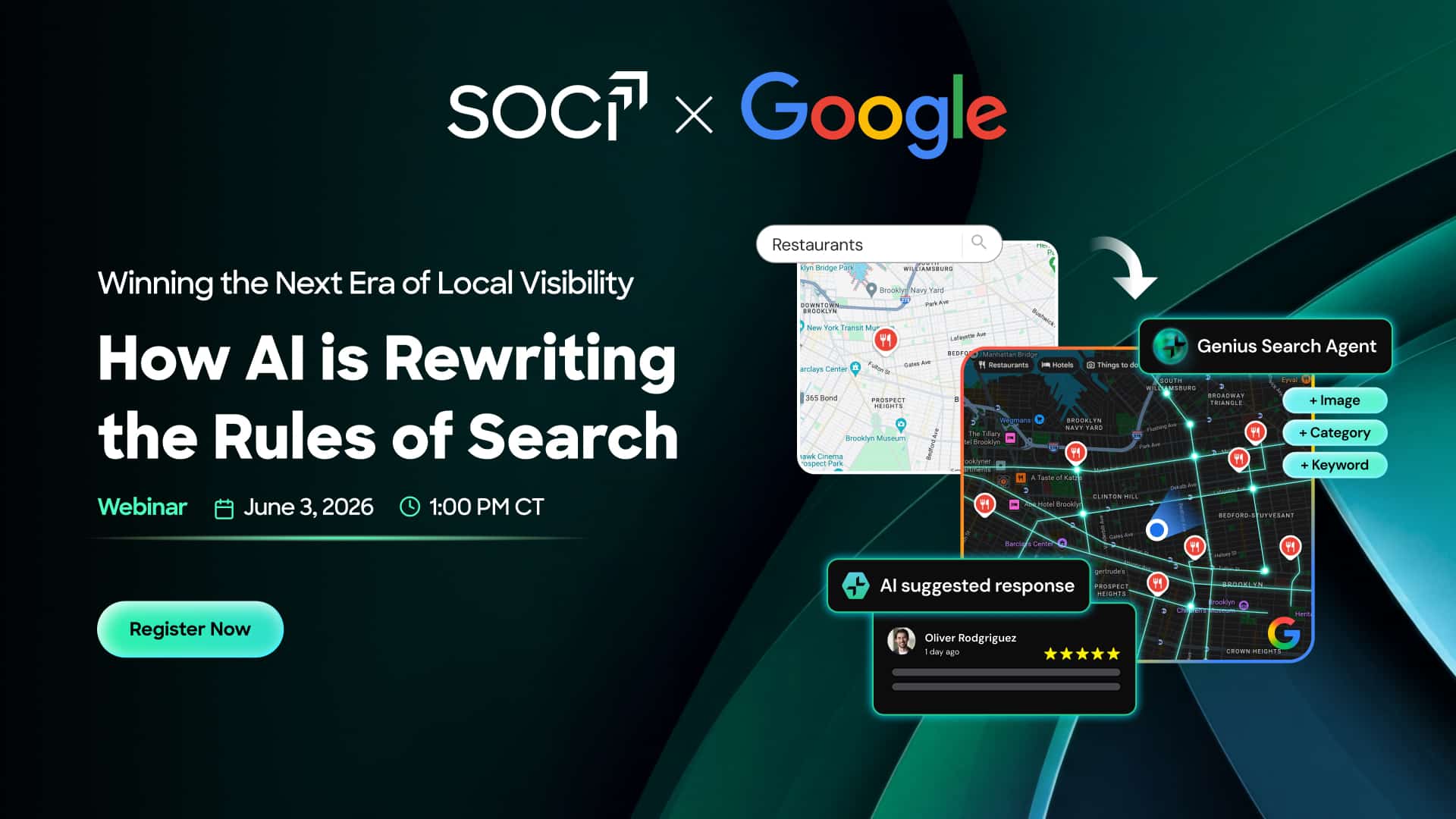
    I recently discovered how AI is revolutionizing the way customers find local businesses. Tools like Google AI Overviews, Gemini, and Ask Maps are paving the way for more detailed, conversational searches.

    It’s clear to me that traditional search rankings are no longer the sole factor in gaining visibility. Ensuring your business details are complete and accurate—like your Google Business Profile, reviews, and local content—can make a big difference.

    I’m excited to join SOCi and Google for an exclusive webinar, Winning the Next Era of Local Visibility, on June 3. It’s a golden opportunity for anyone looking to stay ahead of the curve.

    During this webinar, I look forward to learning:

    • How AI is transforming local search dynamics.
    • The types of signals that AI considers for recommendations.
    • Strategies to boost visibility on Search, Maps, and Gemini.
    • The implications of Ask Maps for your brand.

    I’m convinced that AI is already shaping customer discovery, so it’s crucial to ensure your business isn’t left behind.

    Register now to secure your spot.


    Inspired by this post on Search Engine Land.


    crushpress.ai community screenshot
  • AI-Driven Acquisition: Build Brand Discovery Bottom-Up

    AI-Driven Acquisition: Build Brand Discovery Bottom-Up

    Your next prospect may not begin with your homepage, an ad, or even a conventional search result. They may ask an AI assistant to define the problem, compare possible approaches, narrow the field, and recommend a provider. Because AI tools can answer, compare, and recommend without sending the user to a website, your brand can lose consideration before a measurable visit ever occurs.

    The practical response is not to abandon awareness marketing. It is to change the order in which you prepare for organic discovery. First make the brand understandable. Then make its claims credible and its expertise easy to retrieve. Only then should you expect AI systems to introduce it confidently. This bottom-up sequence gives your acquisition work a foundation instead of leaving an assistant to infer what your brand is from scattered pages and inconsistent mentions.

    The buyer funnel remains top-down, but AI readiness starts at the bottom

    A translucent funnel points downward while connected data blocks rise from below to meet it at the center.

    People still move through a familiar progression: awareness, consideration, and decision. AI does not remove that progression. It changes who can influence the early stages and what that intermediary needs to know before it will mention you.

    That creates two connected sequences:

    • The human sequence moves from discovering a need or brand to evaluating options and making a commitment.
    • The machine sequence moves from identifying your brand to validating its relevance and credibility, then deciding whether to include it in an answer.

    The second sequence has to be built before it can support the first. An assistant cannot reliably recommend a company when it cannot determine what the company does, who it serves, how its products relate to the category, or whether anyone beyond the company supports its claims. That is why AI-oriented acquisition starts with understanding and credibility, even though the buyer still starts with awareness.

    This distinction also prevents a costly overreaction. Paid media, direct outreach, events, and other controlled channels can still create reach. Keep using them when they produce qualified demand. Just do not assume that awareness spend also teaches organic answer engines how to represent you. A memorable campaign can increase human recognition while leaving the underlying entity confused.

    Before expanding an awareness campaign, ask three readiness questions:

    • Can a machine identify the brand, its category, its offerings, and its intended customers without reconciling contradictory descriptions?
    • Can it find direct answers to the questions buyers ask while comparing and choosing?
    • Can it find credible corroboration outside the brand’s own website?

    If any answer is no, the immediate acquisition problem is not reach. It is missing or unreliable information at the layer that produces reach.

    Give machines a canonical version of your brand

    Brand understanding begins with facts, not slogans. A buyer may appreciate an expressive positioning line, but a retrieval system still needs unambiguous answers to basic questions: What is this entity? What does it provide? Who is it for? Which problems does it address? Where does it operate? How are its products, services, founders, and parent organization related?

    Create a canonical brand fact sheet before editing individual pages. It should record the approved form of your name, a plain-language category description, core offerings, primary audiences, supported locations or markets, important entity relationships, and the claims you are prepared to substantiate. Add the URLs where each fact should appear. Give every field an owner so that a positioning change does not produce five competing versions across the site.

    Then reconcile the public surfaces in a deliberate order:

    1. Correct the identity layer: the homepage, about page, contact information, organization profiles, and other pages that establish who you are.
    2. Correct the offering layer: product, service, solution, integration, and category pages that explain what you provide.
    3. Correct the decision layer: comparison criteria, use cases, limitations, implementation requirements, and proof that help a buyer judge suitability.
    4. Align applicable structured data with the visible page content. Use the most specific relevant schema type, but do not add a relationship or claim that the page itself does not support.
    5. Update important third-party profiles and partner descriptions so that the wider web is not repeating an obsolete category, name, or offering.

    Prioritize incorrect information over missing information. An omitted detail limits what a system can say. A contradiction gives it competing versions to choose from, which can contaminate descriptions, comparisons, and recommendations. Resolve naming, category, audience, and product-relationship conflicts before producing another broad batch of content.

    Structured data helps machines identify the type and relationships of information, but it is not a substitute for evidence. JSON-LD can label an organization, service, product, person, or relationship. It cannot make a vague claim credible or repair a visible page that says something different. Treat schema as a precise representation layer over clear, supported content.

    You can turn this into a repeatable brand-understanding audit. Ask representative questions using several natural phrasings, inspect the answers, and classify each important fact as correct, absent, ambiguous, outdated, or unsupported. Each classification points to a different fix. Correct errors at the canonical location, add absent facts where they belong, clarify ambiguous relationships, retire outdated descriptions, and remove or substantiate unsupported claims.

    This work may feel less visible than a campaign launch, but it is not administrative cleanup. Machines have been forming entity-level interpretations of brands since developments such as Google’s Knowledge Graph in 2012. Generative discovery makes the commercial effect more obvious because those interpretations can now appear directly inside an answer.

    Turn expertise into passages an AI system can retrieve

    Once the entity is clear, examine whether your content can supply a useful answer. Conventional SEO often encourages teams to think in pages: choose a query, publish a comprehensive URL, and earn a ranking. Generative systems may instead retrieve a passage that answers one part of a larger conversation. A page can be thorough and still be difficult to use if the answer is buried under scene-setting, dispersed across tabs, or dependent on context elsewhere.

    A retrieval-ready passage usually needs five elements:

    • A descriptive heading that makes the question or decision clear.
    • A direct opening sentence that gives the answer before elaboration.
    • A qualifier that states the relevant audience, condition, market, product, or limitation.
    • An explanation or evidence that lets the reader judge why the answer holds.
    • A logical next step for someone who needs implementation detail, proof, or a related decision.

    The goal is not to turn every heading into an awkward search query or reduce expert material to fragments. The goal is local clarity. If a passage is extracted from the page, it should retain enough nouns, qualifiers, and context to remain accurate. Replace unexplained pronouns such as “it” or “this solution” with the relevant entity or offering where confusion is possible.

    Build this content around decisions rather than keyword variations. Cover the questions a buyer needs to resolve: how the category works, when an approach is suitable, when it is not, what requirements apply, which tradeoffs matter, how alternatives differ, and what evidence supports a claim. Comparison content should disclose the criteria and constraints behind the comparison instead of declaring a universal winner.

    The technical layer must preserve that clarity. Clean HTML, structured data, directly available content, extraction-friendly sections, and capable on-site search all make it easier for systems to locate and interpret the answer. Important information should not exist only after an interaction that a crawler may never perform. Structured data should agree with the visible text, and headings should describe the section beneath them rather than act as decorative labels.

    Use a practical extraction test on every high-value decision page:

    • Enter the buyer’s question into your own site search. Does the correct page appear?
    • Open the page without expanding accordions, switching tabs, or starting a tool. Is the essential answer already available?
    • Copy the most relevant passage into a blank document. Does it remain clear and correctly qualified on its own?
    • Compare the visible wording with the structured data. Do names, types, claims, and relationships match?
    • Follow the next-step links. Do they deepen the same decision, or send the reader back into generic navigation?

    If your own search cannot find the answer, the page requires several interactions to reveal it, or the extracted text loses its meaning, fix retrieval before adding more schema. Machine readability begins with information architecture and writing; markup reinforces it.

    Build external corroboration, then measure the recommendation layer

    Multiple document, profile, and reference shapes send evidence into a central prism that produces several recommendation paths.

    Earn descriptions that do not originate on your site

    Your website establishes what you say about the brand. External coverage, profiles, discussions, reviews, and partner materials help a system judge whether that description is recognized elsewhere. This is why third-party mentions across publications, communities, Reddit, and social channels belong inside an AI-discovery strategy rather than being treated as unrelated PR activity.

    Start with accuracy, not volume. Give PR, partnerships, social, community, and reputation teams the same canonical facts used on the website. Correct important external profiles that use an old name or category. Make current product details easy for partners to reference. Contribute useful, attributable expertise where relevant conversations already happen. Do not manufacture community discussions or seed disguised endorsements; unreliable promotion creates reputational risk and weak evidence.

    Do not reduce this work to link building. A brand mention can contribute context even when it is not a conventional backlink, and a linked mention can still be unhelpful when it repeats the wrong positioning. Inspect the wording around the name, the relevance of the domain and discussion, the accuracy of the claim, and whether the mention helps distinguish the brand from similarly named entities.

    Measure inclusion, accuracy, citation, and suitability

    Traffic alone cannot reveal a decision that ended inside an AI answer. Add a prompt-based observation layer to your existing SEO and acquisition reporting. Build the prompt set from real buyer decisions, not from vanity questions designed to force a brand mention.

    • For discovery, test questions that ask how to solve the underlying problem or identify a suitable category.
    • For consideration, test comparisons involving actual requirements, constraints, and use cases.
    • For decisions, test questions about suitability, implementation, evidence, risk, or choosing among credible options.

    For each observation, record the prompt, date, model or interface, whether the brand appeared, how it was described, whether it was recommended, which competitors appeared, and which URLs or domains were cited. Preserve the answer or relevant excerpt so that a later review can distinguish a real change from a reporting mistake.

    A simple internal rubric can make the findings actionable:

    • Absent: the brand does not appear where it is genuinely relevant.
    • Present but unclear: the name appears, but the category, offering, or relationship is vague.
    • Present but inaccurate: a material description or claim is wrong or outdated.
    • Accurate but unsupported: the representation is correct, but no useful citation or external corroboration appears.
    • Accurately recommended: the brand is included for a suitable use case with correct context and defensible support.

    Do not average a serious error into a visibility score. A wrong product relationship, unsupported capability, or obsolete brand description should become a correction task even when mention frequency is rising. Visibility without accuracy can amplify the problem you need to solve.

    Make AI visibility an operating process

    The work crosses too many systems to live in an isolated SEO backlog. Brand owners define canonical identity and positioning. Product and subject experts verify claims. Content teams create retrieval-ready answers. Web teams manage rendering, structured data, and on-site search. PR and community teams develop legitimate external corroboration. Analytics teams preserve observations and report changes.

    Write a short publishing and maintenance SOP that specifies the canonical fact sheet, required reviewers, passage structure, structured-data checks, third-party update responsibilities, and the events that trigger revalidation. A rebrand, renamed product, changed audience, new market, retired capability, or revised claim should update the website, markup, profiles, partner materials, and prompt observations as one coordinated change.

    Assign a decision owner who can resolve conflicts between teams. AI discovery becomes a leadership concern when inconsistent positioning, publishing incentives, or ownership boundaries prevent the organization from supplying one reliable version of itself. Governance, versioning, shared procedures, and new visibility metrics keep the system current after the initial cleanup.

    Key takeaways

    • The buyer still moves from awareness to consideration and decision, but AI readiness must be built from identity and credibility upward.
    • A canonical brand fact sheet should resolve names, categories, offerings, audiences, relationships, markets, and supportable claims before awareness is scaled.
    • JSON-LD labels clear information; it cannot substitute for visible content, supporting evidence, or consistent positioning.
    • Decision content should provide direct, qualified passages that remain accurate when retrieved outside the full page.
    • External corroboration should be judged by relevance, context, and accuracy, not reduced to mention volume or backlinks.
    • AI-discovery reporting should track inclusion, accuracy, recommendations, competitors, citations, and citation locations alongside conventional traffic metrics.
    • Named owners, change triggers, and versioning turn GEO from a one-time optimization project into a maintained acquisition system.

    Start with the offering closest to revenue and the buyer questions closest to a decision. Correct its identity gaps, make its answers retrievable, document credible external support, and establish a baseline across the recommendation layer. Expand only after that path is coherent. The result is a brand that can be introduced accurately before the prospect ever knows to search for it by name.

    References


  • Yelp AI-Assisted Bookings: A Local Optimization Playbook

    Yelp AI-Assisted Bookings: A Local Optimization Playbook

    If your Yelp profile gets seen but still produces too few bookings, the problem may no longer be simple visibility. A customer can now ask a detailed question, compare the suggested businesses, and act without following the familiar path from search result to website.

    Your job is to make that compressed journey work. Yelp needs clear business facts, customers need credible evidence of fit, and the booking or ordering connection needs to survive the handoff. A weakness in any one of those layers can turn a recommendation into an abandoned transaction.

    Optimize the decision, not just the listing

    Traditional local SEO often treats discovery and conversion as separate stages. You rank or appear in a marketplace, earn a click, and then persuade the visitor on your own site. Yelp Assistant narrows that distance because it can answer complex questions, recommend businesses, explain why a business fits, refine the results conversationally, and continue into supported booking, ordering, or quote flows.

    That changes the optimization target. A conversational local request usually contains several constraints at once: the service, location, occasion, timing, preferences, and desired next step. A profile can be relevant to the broad category while failing to resolve one of those constraints. The customer may never reach your website to investigate further.

    Audit your Yelp presence against four questions:

    • What does the business actually provide? Categories, service names, menu items, and descriptive copy should agree about your core offer.
    • Who or what situation is it suitable for? Include meaningful distinctions customers use when choosing, but only where they are accurate and supported by your operation.
    • Why should the customer believe the fit? Reviews and photos should give the customer evidence, not merely repeat promotional claims.
    • What can the customer do next? The appropriate reservation, appointment, quote, or ordering action should be visible, current, and connected to a working destination.

    Build the audit from real customer language. Collect the questions that appear in calls, messages, quote requests, appointment notes, and reviews. Group them by intent, then check whether a person could answer each one from the information visible in Yelp. If the answer depends on an assumption or an old photo, you have found a content gap.

    Correct the underlying field wherever possible. Put hours in the hours field, services in the relevant service area, menu information in the menu, and the primary transaction in the appropriate action. Descriptive copy can clarify the offer, but it should not become a container for disconnected phrases. Treat this as an answerability audit, not as a claim that repeating keywords will influence Yelp’s selection logic.

    Your website still matters, including its LocalBusiness structured data. Keep the name, address, telephone number, URL, hours, and applicable business subtype aligned with the facts you publish elsewhere. Use a sameAs link when it accurately identifies your Yelp profile. That consistency helps search systems understand the same entity, but JSON-LD on your website cannot repair stale Yelp information or reconnect a broken booking calendar.

    Close every gap between recommendation and transaction

    A recommendation is not the conversion. The final action may depend on Yelp, your profile configuration, a scheduling or delivery partner, inventory or calendar data, and the confirmation experience. Every connection can look present while still sending the customer to the wrong service, location, or availability view.

    Yelp has expanded integrations involving Vagaro, Zocdoc, and Calendly across areas such as beauty, healthcare, and home services, alongside delivery support involving DoorDash. The practical implication is not that every business automatically receives every transaction type. It is that a connected marketplace profile and the external system behind it must be managed as one customer journey.

    Test the journey in the environment where customers encounter it:

    1. Open the Yelp profile on a supported mobile experience and identify the primary action presented to a customer.
    2. Confirm that the action matches the intent you want to win. A restaurant reservation, food order, healthcare appointment, service appointment, and home-service quote are not interchangeable conversions.
    3. Follow the action into the connected system. Verify the business name, location, selected service, availability, and contact information at each step.
    4. Continue to the final confirmation screen, but do not consume a real appointment or reservation unless your operation has a safe test procedure.
    5. Check the resulting confirmation or lead record. It should give both the customer and your staff enough information to fulfil the request without another round of clarification.

    Test more than the happy path. Try a service that has limited availability, a different location if you operate more than one, and a request that should become a quote rather than an instant booking. The purpose is to find mismatches between what the profile promises and what the connected system can actually accept.

    Assign ownership for each layer. The person updating the Yelp profile may not control the scheduling platform, menu, delivery availability, or service calendar. Record who owns each one and where changes originate. Otherwise, a corrected profile can be overwritten by old partner data, or the profile can continue advertising an option that operations no longer fulfils.

    The initial feature availability was described as mobile-first on iOS and Android, with broader category and desktop expansion planned. Rollout scope can differ by experience, so verify what customers can actually see instead of assuming that an announcement describes every account, category, or device.

    Give the assistant evidence it can explain

    An abstract AI lens gathers visual details about a restaurant's amenities, service, atmosphere, and customer evidence to guide a recommendation.

    Yelp Assistant draws on Yelp’s reviews and photos to tailor recommendations and explain why a business may be a good match. That makes customer-generated evidence part of the conversion surface. Your description can state that you provide a service; reviews and photos can show what receiving it is like.

    Do not translate that into a campaign for generic praise. Broad comments such as great service reveal little about the specific situations in which the business succeeds. Honest reviews are more useful when customers naturally mention the service received, the type of need, the location, and the experience. Any request for feedback should remain neutral and comply with the platform’s current policies.

    Use reviews as an operating dataset, not as copy you control:

    • Identify recurring service names and customer questions. Check whether your profile uses the same clear, accurate terminology.
    • Notice repeated misunderstandings. If customers arrive expecting an option you do not provide, correct the promise in your profile or connected flow.
    • Look for evidence gaps. A service may be listed but rarely described or photographed, leaving a customer with little basis for choosing it.
    • Respond to factual confusion calmly. Clarify the business detail that matters, then fix the underlying listing or operational issue when you control it.

    Photos need a similar job-based audit. Cover the decision points a new customer cannot infer: what the exterior looks like on arrival, what the relevant space or service looks like, what is actually delivered, and how distinct options differ. Accuracy matters more than decorative volume. An attractive image that no longer represents the current offer can create a stronger expectation mismatch than having no image at all.

    Restaurants have an additional surface to watch. Yelp’s revised Menu Vision can place dish information, reviews, and photos into visual overlays while a customer browses a menu. Menu item names, current availability, and corresponding images therefore need to describe the same dish. Remove or update obsolete material wherever your listing or connected system gives you control; do not let a retired item become the evidence for a current order.

    The same principle applies outside restaurants. A salon service name, healthcare appointment type, contractor quote category, and the evidence surrounding each one should remain consistent from recommendation through confirmation. The assistant can shorten the journey, but it cannot reconcile a profile, photograph, review pattern, and booking system that tell different stories.

    Measure the compressed funnel with transaction outcomes

    If a customer can complete more of the journey inside Yelp or a connected partner flow, website traffic alone becomes an incomplete scorecard. Flat website sessions do not prove that local visibility is stagnant, and more profile activity does not prove that qualified business increased.

    Choose the completed outcome that matches the action:

    • For restaurants, distinguish completed reservations or orders from action taps.
    • For appointment businesses, track booked appointments separately from completed appointments and cancellations.
    • For home services, separate raw quote requests from requests that fit the service area and become qualified opportunities.
    • For delivery, distinguish an ordering action from a completed order that the business successfully fulfils.

    Use the reporting fields available in Yelp and the connected platform, and keep definitions stable. If a partner exposes an origin label or channel field, preserve it through your export or customer-management workflow. If it does not, do not manufacture precise attribution from incomplete data. Record the limitation and compare only metrics that are defined consistently.

    Read funnel patterns as diagnostic clues, not proof of a single cause. If profile visibility rises while actions stay flat, start by checking whether the listing resolves fit and presents a clear next step. If actions rise while completed transactions do not, inspect the partner handoff, availability, eligibility rules, and confirmation flow. If transactions rise but cancellations, no-shows, or poor-fit requests also rise, compare the promise in Yelp with what the customer can actually book.

    Keep a change log alongside those measures. Record which profile fact, image set, menu item, service name, or transaction connection changed and when. Without that record, several simultaneous edits can make an improvement impossible to interpret and a regression hard to reverse.

    Key takeaways

    • Optimize for the customer’s complete decision, not for a broad category phrase in isolation.
    • Keep business facts, customer evidence, and the connected transaction system consistent.
    • Test booking, ordering, appointment, and quote paths from Yelp through confirmation.
    • Use reviews and photos to find unanswered questions and expectation mismatches; do not treat them as keyword containers.
    • Measure completed business outcomes because an in-platform transaction may never appear as a website visit.
    • Use website schema to reinforce accurate entity information, not as a substitute for maintaining the Yelp profile itself.

    Run the audit around one valuable customer intent

    A business owner examines a visual pathway from customer intent through recommendation, comparison, scheduling, payment, and booking confirmation.

    A full profile overhaul can hide the problem you need to solve. Start with one commercially meaningful intent: the reservation type, appointment, service request, or order you most need Yelp to support.

    1. Write the exact questions and constraints a suitable customer brings to that intent.
    2. Mark where each answer lives: profile field, service or menu information, review evidence, photo, booking system, or confirmation.
    3. Correct contradictions and remove unsupported promises before adding more copy.
    4. Test the transaction path on the customer-facing experience available to your category.
    5. Record the current funnel outcomes, the change made, and the operational owner responsible for keeping it accurate.
    6. Recheck the path whenever hours, services, locations, menus, calendars, or integration settings change.

    The businesses best prepared for AI-assisted local bookings will not necessarily be those with the longest descriptions. They will be the ones whose facts answer the question, whose evidence supports the choice, and whose transaction path does exactly what the recommendation promised. Pick the path tied most closely to revenue or qualified demand, and make that one dependable first.

    References


  • How to Improve Visibility in Personalized Google Maps Results

    How to Improve Visibility in Personalized Google Maps Results

    If your business appears for a broad search such as electrician nearby but disappears when the customer describes an older home, a panel upgrade, and a need for responsive service, a conventional ranking report is showing only part of the problem. Ask Maps may evaluate which businesses fit the stated situation, not merely which listings match the category.

    Your practical goal is to make that fit understandable and supportable. Your Google Business Profile should establish what the business is, your website should explain the work in enough depth to resolve a specific need, and your reviews should provide credible customer evidence. The following process turns those surfaces into a local discovery system you can audit and improve.

    Personalized recommendations change what visibility means

    Traditional local tracking usually reduces visibility to a position: where did the business rank for a keyword in a location? That remains useful, but it misses an important layer of conversational discovery. A person can now supply the job, property type, constraint, urgency, trust concern, or decision criterion inside the request.

    As those details accumulate, Ask Maps has been observed moving from a relatively simple set of nearby businesses toward a more selective answer that interprets fit and explains its choices. Basic prompts tend to produce broader retrieval. More involved prompts can trigger guidance about which options appear suitable and why.

    That distinction changes the question you should ask. It is no longer only, Can Google associate this business with electricians in this city? It is also, Can Google find enough consistent evidence to associate this business with panel upgrades in older homes, responsive communication, and the other details a customer included?

    Use personalized carefully here. The actionable behavior is personalization to expressed intent: the result changes as the person gives the system a more specific problem to solve. You do not need to speculate about private account history or undocumented signals to work on that problem.

    The observed pattern is directional rather than universal. It came from locality-specific testing and was not exhaustive across every market or query. Treat it as a reason to expand your audit, not as proof that every Ask Maps result follows an identical formula.

    Build a consistent evidence map across profile, site, and reviews

    An abstract business profile, service website, and customer review cards connected by glowing lines to a local storefront and a customer's home.

    Ask Maps can draw from Google Business Profiles, reviews, business websites, and external material. These surfaces play different roles. A useful working model is identity, explanation, and corroboration:

    • Google Business Profile establishes identity. It tells the system what the business is, where it operates, and which services it presents.
    • The website explains capability. It gives a specific service or situation enough context to be understood beyond a short listing.
    • Reviews corroborate experience. They show how customers describe the work, service, communication, and outcomes in their own words.
    • External mentions can reinforce or complicate the picture. Information elsewhere may help confirm the business, but stale or inconsistent claims can create ambiguity.

    Create an evidence map before you edit anything. For every commercially important service, write down the customer need, the relevant profile fact, the page that explains it, and the review themes that could honestly support it. A blank cell is a content or data gap. A contradictory cell is an accuracy problem.

    Make the Business Profile precise, not expansive

    Your profile should describe the business customers can actually hire. Confirm that its category, services, description, hours, contact details, and service-area information are accurate. Do not add adjacent services merely to look comprehensive. A larger but unreliable service list makes it harder to build a consistent explanation across the rest of your presence.

    Use operational language where the profile permits it. Electrical contractor offering residential panel upgrades communicates more than a string of broad adjectives. If responsiveness matters to customers, publish accurate contact and availability information. Let real customer accounts support the quality claim rather than describing the business as responsive without evidence.

    Check consistency at the fact level. A service should not appear on the profile while the website gives no indication that you provide it. Hours, names, locations, phone details, and stated coverage should not conflict across your owned pages. Consistency does not guarantee selection, but inconsistency makes the business harder to interpret confidently.

    Publish pages that resolve a situation, not just a keyword

    A generic Electrician in City page can establish category and location. It may not answer whether the company handles a panel upgrade in an older home. That difference matters when the query contains the job and its context.

    For each meaningful service-intent combination, give the reader a page that answers the decision they are making. Include:

    • The exact work offered: name the service plainly and distinguish it from neighboring services a customer may confuse with it.
    • The situations you handle: describe relevant property, equipment, business, or project contexts only where they genuinely affect fit.
    • The boundaries of the service: state exclusions, prerequisites, or geographic limitations that would otherwise produce a poor match.
    • How the next step works: explain what information you need, how scope is assessed, and what the customer should do next.
    • Decision-useful answers: address the questions customers ask when choosing a provider, not merely the phrases an SEO tool reports.
    • Visible evidence: use accurate examples, credentials, service details, and customer feedback when you have them. Do not manufacture specificity.

    The page does not need to repeat every possible conversational prompt. It needs clear facts that can answer several versions of the same underlying need. Write for the decision, then use headings and direct language to make each answer easy to extract.

    JSON-LD can encode those visible facts after the page is complete. Use the appropriate business and service vocabulary, keep marked-up information consistent with what a visitor can read, and avoid adding claims solely in structured data. Schema is a machine-readable clarity layer, not a substitute for missing service information or customer evidence. There is no basis for assuming markup alone will force Ask Maps to recommend a business.

    Treat reviews as evidence, not a bag of keywords

    Reviews appear especially influential in the initial impression of a business, while more complex requests can lead Ask Maps deeper into websites and other informative material. That makes review quality relevant, but it does not justify scripting customer language.

    Ask customers for honest feedback about the work they received. Open questions can invite useful context: What problem were you trying to solve? What work was completed? What part of the process was helpful? The customer should decide what to mention and how to say it.

    Then analyze the patterns already present. Group review language by service, situation, communication, specialization, and trust. Compare those themes with your profile and service pages. If customers repeatedly describe a capability that the website barely mentions, you may have a documentation gap. If the site promotes a specialty that customers never discuss, investigate whether the claim is unclear, unimportant to buyers, too new to have accumulated evidence, or unsupported.

    Do not turn that analysis into review manipulation. Repeating a target phrase is not the same as demonstrating fit. The useful signal is a coherent relationship between the stated service, the detailed explanation, and genuine accounts of customer experience.

    Audit discovery with a five-level intent ladder

    A person follows a glowing path up five platforms marked by progressively more specific home-service symbols toward a contractor van.

    A single near me query cannot tell you whether the system understands your specialties. Use a five-level progression from a basic local need to a conversational decision request. Keep the underlying service and locality consistent so you can see what changes as intent becomes richer.

    1. Basic local need: HVAC company nearby. This checks whether the business enters a broad category-and-location result.
    2. Defined service: Electrician for a panel upgrade in an older home. This introduces a named job and a meaningful context.
    3. Situational fit: I need a panel upgrade in an older home and want a company that regularly handles this kind of work. This asks the system to interpret suitability rather than category alone.
    4. Trust requirement: Which local electrician appears dependable for this job, and what evidence supports that? This tests whether the answer can attach a reason to the selection.
    5. Decision request: Help me choose a local electrician for an older-home panel upgrade, prioritizing relevant experience and responsive communication. This combines service, context, trust, and a decision criterion.

    These prompts are templates, not universal keywords. Replace the service and context with the real decisions your customers face. A plumber might test a specific repair and property situation. An HVAC company might test a system type, service need, and availability concern. A professional practice might test the matter handled, client context, and trust requirement.

    Do not include your brand name unless you are deliberately testing branded comprehension. The purpose of an unbranded audit is to discover whether the business can be selected from evidence, not whether Google recognizes a name you supplied in the prompt.

    Record more than presence or absence for every prompt:

    • Inclusion: Did the business appear anywhere in the answer?
    • Selection: Was it merely listed, or framed as a suitable option?
    • Explanation: What reason, if any, was attached to it?
    • Evidence: Did the explanation appear to rely on the profile, reviews, the website, or another visible source?
    • Accuracy: Was the description correct, incomplete, stale, or unsupported?
    • Missing fit: Which part of the prompt could not be connected to clear evidence about the business?

    Document the locality, prompt wording, account context, and date alongside the output. A result from a particular setup is an observation, not a universal rank. Keeping the setup visible makes later checks interpretable and prevents a changed prompt from being mistaken for improved visibility.

    Turn recommendation gaps into a prioritized backlog

    The audit becomes useful when each failure leads to a different response. Do not answer every disappointing result by adding more keywords to the same page.

    • Broad discovery gap: The business is absent even for the basic local need. Check fundamental profile accuracy, business identity, locality, and whether the service is actually represented before expanding content.
    • Service comprehension gap: The business appears for the broad request but drops out when a specific job is added. Build or improve the page that explains that job, and align the profile service information with it.
    • Situational gap: The service is understood, but a property type, use case, or constraint breaks the match. Add the context only if the business genuinely serves it, and explain how it affects the engagement.
    • Evidence gap: The business appears but receives no meaningful rationale, or the rationale is thin. Look for credible detail across reviews, service pages, and external mentions rather than adding unsupported superlatives.
    • Accuracy gap: The answer describes the business incorrectly. Correct conflicting facts on surfaces you control and investigate visible third-party information that may be stale. Do not publish a new claim merely to overpower an old one.
    • Conversion gap: The recommendation is accurate, but the destination page leaves the customer unsure what to do. Make the service boundary, contact route, and next step explicit.

    Prioritize accuracy first because an incorrect recommendation can create poor leads and erode trust. Then work from broader comprehension toward narrower situational evidence. There is little value in polishing a specialized page if the profile and site still disagree about the basic service.

    Measure progress with a small set of diagnostic fields rather than one supposed Ask Maps ranking:

    • Intent coverage: which important customer situations have clear supporting facts across the profile and site?
    • Selection depth: at what point in the intent ladder does the business stop appearing or stop being treated as a fit?
    • Explanation accuracy: do the reasons attached to the business match what it actually provides?
    • Evidence alignment: do profile facts, website explanations, reviews, and visible external information tell a compatible story?
    • Change history: which factual or content update preceded a meaningful change in observed answers?

    Avoid claiming causation from a single before-and-after check. Locality-based results are not exhaustive, and several information sources may contribute to an answer. Build a change log, repeat the same useful prompts over time, and look for consistent movement in selection and explanation.

    Key takeaways

    • Ask Maps can move beyond listing nearby businesses and interpret which options appear to fit a detailed local request.
    • Your Business Profile establishes identity, your website explains capability, and reviews provide customer evidence. Improve them as one connected system.
    • Build service pages around real jobs, contexts, boundaries, and decisions rather than producing interchangeable city-and-keyword pages.
    • Test broad, service-specific, situational, trust-focused, and decision-oriented prompts to find where the system loses confidence in the match.
    • Track inclusion, selection, explanation, evidence, and accuracy. A single position cannot describe personalized local discovery.
    • Use structured data to encode accurate visible information, not to manufacture relevance that the page and business cannot support.

    Choose a service that matters to your business and build its intent ladder now. The first useful output is not a better-looking rank report. It is the first point where the recommendation breaks, the evidence missing at that point, and a specific profile, page, or accuracy update you can make to close the gap.

    References


  • LLM Nudges: How AI Steers Decisions After the Answer

    LLM Nudges: How AI Steers Decisions After the Answer

    You can earn a favorable mention in an AI answer and still lose the decision one sentence later. If the model closes by offering to find a cheaper option, compare competitors, or build a personalized shortlist, it has changed what the user is likely to consider next.

    That closing prompt belongs in your AI visibility strategy. You need to inspect where it sends the conversation, follow the suggested path, and make sure your content supplies the evidence the model will need on the next turn.

    The next-turn prompt is part of your visibility surface

    An LLM nudge is the invitation that appears near the end of an answer: "Would you like a comparison?", "Tell me your budget," or "I can find current deals." It looks like a courteous way to keep the conversation open. Functionally, it creates a low-effort next action.

    The user doesn’t have to formulate another query, choose a new search result, or decide which criterion matters. The model has already proposed the criterion and the next step. A brief "yes" can move the conversation from discovery to comparison, from quality to price, or from a general recommendation to a shortlist built around personal constraints.

    That makes the nudge more than an engagement device. It can influence digital decision-making in three ways:

    • It frames the next question. An offer to compare prices makes cost more prominent, even when the original request was about quality or suitability.
    • It requests decision data. Asking for a budget, location, use case, or preference gives the model new filters for the next recommendation.
    • It narrows the action. An invitation to compare two named options can turn a broad market into a two-brand decision.

    A nudge is not proof that the model prefers the suggested action or any brand involved. It is evidence about the direction of the conversation. Keep that distinction clear: the initial answer measures answer visibility, while the accepted nudge reveals journey visibility.

    When you monitor AI responses, capture the final invitation as its own field. Don’t bury it in a screenshot or treat it as disposable wording. Record the proposed action, the decision criterion it introduces, and the information the user is asked to provide.

    Read each nudge as a change in decision criteria

    Budget and deal prompts are the dominant pattern in observed LLM interactions, representing roughly half of closing suggestions. Product comparisons are the next most common route. Specification-led follow-ups appear much less often, even though specifications can still help a model evaluate and rank competing options.

    This distribution matters because each route changes what your brand must prove. A premium brand may enter the first answer on quality, expertise, or fit, then face a next-turn comparison organized around price. A challenger may receive an opportunity when the user accepts a comparison. A complex product may disappear when the model asks for details that its public content never states clearly.

    The platforms also express these invitations differently. Their wording is less important than the behavior it produces, but the differences help you design a realistic monitoring set.

    PlatformTypical closing styleCommon next-turn behaviorWhat to inspect
    ChatGPT"If you want…"Deals and product comparisonsWhether your brand survives a price-led or head-to-head follow-up
    Microsoft Copilot"If you tell me…"Clarification and personalizationWhich user details become filters and whether your content answers them
    Google Gemini"Would you like me…"Permission-based continuationThe task proposed after permission is granted
    Perplexity"I can help…" or "If you’d like…"Utility-oriented follow-up, often including commerceThe sources and attributes used when the offered help is accepted
    Meta AI"Let me know…"More passive continuation, often involving comparisons or specificationsWhether a less forceful invitation still narrows the decision set

    Don’t turn these platform tendencies into permanent rules. LLM outputs can vary with wording, context, model changes, and the conversation that came before. Use the patterns to choose what to test, then judge the responses you actually receive.

    The practical question is not simply, "Did the model mention us?" Ask, "Which criterion did the model introduce next, and does our public evidence support us under that criterion?" That question exposes the content gap behind most nudge failures.

    Audit the conversation chain instead of one answer

    An analyst examines a connected sequence of blank conversation panels that changes direction across several turns.

    A conventional AI visibility check often stops once it records cited domains, named brands, and answer sentiment. A nudge audit continues until you can see how the model changes the decision after the user accepts its offer.

    1. Start with a real decision. Choose a commercially important question your customer would ask, such as selecting between product types, finding an option within a constraint, or solving a post-purchase problem. A broad keyword without a decision behind it won’t reveal a useful journey.
    2. Run the same intent across relevant platforms. Preserve the meaning but include natural variations in phrasing. Record the platform, available model identifier, prompt wording, and run date so later checks remain interpretable.
    3. Separate the answer from the closing nudge. Save the exact invitation, classify it as budget, deal, comparison, clarification, specification, support, or another observed route, and note any brands or attributes named in it.
    4. Accept the nudge as written. If the model offers a comparison, accept the comparison. If it asks for a budget, provide a plausible budget that fits the audience you are testing. Don’t substitute a different follow-up, because that would test your prompt rather than the model’s proposed journey.
    5. Inspect the next response. Record which brands remain, which disappear, which new competitors enter, what evidence supports the recommendation, and whether the model introduces another nudge.
    6. Map the missing evidence to a page. Every unsupported price, comparison criterion, qualification question, or support problem should point to a specific content asset that needs to be created, corrected, or made easier to retrieve.

    Use a structured worksheet rather than a folder of screenshots. The minimum useful record looks like this:

    FieldWhat to record
    Starting decisionThe user’s underlying choice, constraint, or problem
    Initial brand positionMentioned, recommended, omitted, or cited only as evidence
    Closing nudgeThe invitation exactly as displayed
    Nudge categoryBudget, deal, comparison, clarification, specification, support, or other
    Accepted inputThe reply used to continue the suggested path
    Next-turn positionWhether the brand persists and how its role changes
    Decision evidencePrices, attributes, limitations, policies, proof, or support instructions used
    Content actionThe exact page or data element to create, update, or clarify

    Repeat important prompts with natural paraphrases and at different checkpoints. The available evidence is still based on individual interactions rather than a complete view of every user journey, so one response should be treated as an observation, not a stable market-share estimate.

    Build content for the four next-turn paths that matter

    Four visual paths branch from an abstract AI message toward comparison, affordability, personalization, and evidence-related choices.

    You cannot dictate the sentence an LLM will place at the end of an answer. You can make your brand easier to evaluate when the conversation moves into a predictable follow-up. Start with the route that creates the largest gap between your positioning and the model’s next criterion.

    Comparison: make the decision legible

    A useful comparison page does more than place two feature lists side by side. It explains which option fits which user, identifies the criteria that materially change the choice, and states where each option has an advantage or limitation. If your page claims that your product wins every category, it gives the model little reason to trust the distinction.

    Build comparison content around the decision, not the competitor’s name alone. Include a direct summary, a consistent attribute table, audience-fit statements, pricing context, important constraints, and evidence for differentiating claims. Date facts that can change, and assign an owner to keep them current.

    For health or financial choices, a comparison page must not pretend to make an individualized decision. Explain the criteria and scope, state material limitations, and direct personal decisions to an appropriately qualified professional.

    Budget and deals: publish the facts without cheapening the brand

    Ignoring price does not prevent an LLM from creating a price comparison. It leaves the model to assemble one from weaker, older, or third-party information. Even a premium brand needs a clear public explanation of what the buyer pays and what that price includes.

    Keep the visible page and structured data aligned. Where Product and Offer markup applies, populate accurate values for price, priceCurrency, availability, and url. Use priceValidUntil only when an offer has a real expiry date. If a price depends on configuration, eligibility, contract length, or location, state that condition rather than publishing a misleading headline number.

    Deal data needs the same discipline. Show the eligible products, start or end conditions, redemption requirements, exclusions, and the normal price where appropriate. Remove expired offers from the visible page and update the associated markup. The objective is not to manufacture a discount for AI visibility; it is to make valid commercial facts unambiguous.

    If low price is not your position, publish the evidence that explains the premium. That may be included service, durability, specialist capabilities, support terms, or a lower total cost for a defined use case. Use only claims you can substantiate. The model may still compare prices, but it will have a better chance of comparing value as well.

    Clarification: answer the filters the model asks for

    A clarification nudge reveals the variables the model considers necessary for a better recommendation. Treat those variables as an editorial brief. If it asks about budget, experience level, location, compatibility, team size, or intended use, check whether your pages state who the offer is for and where it does not fit.

    Add concise "best for," "not intended for," prerequisite, compatibility, and constraint sections where they genuinely help the decision. Use the same terminology across product pages, comparison pages, documentation, and structured data. Contradictory labels force the model to reconcile facts that your organization should have resolved first.

    Support and specifications: own the quieter opportunity

    LLMs are less proactive about troubleshooting and support than they are about commerce. That support gap creates a useful authority opportunity: publish the answer before the model learns to ask for it more often.

    A support page should identify the product or version, describe the exact symptom, list prerequisites, give ordered steps, explain the expected result, document known limitations, and provide an escalation path. Avoid placing critical instructions only in an image or an undifferentiated PDF when the same information can be published as accessible HTML.

    Specifications deserve similar care even though they account for a smaller share of closing nudges. Use consistent units, stable attribute names, explicit compatibility information, and version-specific values. Specifications may not trigger the next question, but they can supply the facts used inside a comparison, qualification, or support answer.

    Measure whether the nudge keeps your brand in the decision

    You generally won’t see a user’s private AI conversation in your analytics, so separate what you can observe in controlled prompts from what you can observe on your site. Combining the two as if they were one attribution trail creates false precision.

    Use your prompt audit to track nudge direction, brand continuity, evidence quality, and destination readiness. Brand continuity is the share of tested conversation chains in which your brand remains relevant after the suggested follow-up is accepted. Review the underlying chains alongside the rate; a brand can persist as the recommended choice, a weak alternative, or merely a cited source.

    Use analytics to monitor identifiable AI referrals, the landing pages they reach, engagement with comparison or pricing content, support journeys, and completed business outcomes. A referral from an AI platform does not prove that a particular closing nudge caused the visit. Treat referral behavior as supporting evidence, not a transcript of the user’s path.

    Re-run the audit after material changes to pricing, products, documentation, positioning, structured data, or major model behavior. Keep the original prompts and classification rules stable enough to compare observations, while adding new prompts when customers develop genuinely new decision patterns.

    Key takeaways

    • Capture the closing invitation separately from the main AI answer; it signals the next decision criterion.
    • Accept the model’s proposed follow-up and audit the second response before declaring an AI visibility win.
    • Prioritize accurate comparison, pricing, deal, qualification, support, and specification content based on the paths you actually observe.
    • Keep visible claims and structured data synchronized, especially when prices, availability, or promotions change.
    • Measure brand continuity across conversation chains, then use site analytics as supporting evidence rather than claiming perfect attribution.

    Start with one decision that materially affects your business. Record the answer, follow the nudge, and fix the first evidence gap that causes your brand to disappear or lose its position. That small extension turns an AI mention check into a usable view of the customer journey.

    References


  • How to Build an SEO Strategy for Visibility in AI Search

    How to Build an SEO Strategy for Visibility in AI Search

    Your pages rank, your crawl reports look clean, and your brand still disappears when an AI assistant answers the same question. That gap does not mean SEO has stopped working. It means ranking is now one checkpoint in a longer path through discovery, interpretation, citation, recommendation, and action.

    You need a strategy that can diagnose where that path breaks. The framework below will help you make important pages easier for search engines and language models to understand, support, select, and represent accurately without abandoning the technical and editorial fundamentals that already earn search visibility.

    Key takeaways

    • Keep technical SEO in place, but stop treating indexing as proof that an AI system understands the page correctly.
    • Make the primary entity, page purpose, relationships, authorship, scope, and date unmistakable in both visible copy and structured data.
    • Treat factual accuracy and citation grounding as separate requirements. An answer can be correct while its linked evidence fails to support it.
    • Give AI systems a defensible reason to recommend your brand, including a defined audience, meaningful distinctions, limitations, and corroborating evidence.
    • Measure mentions, factual representation, citations, recommendations, visits, and business outcomes separately. They are different stages, not interchangeable measures of success.

    Treat AI visibility as four separate outcomes

    A web page tile branches into four separate chambers containing discovery, organization, quotation, and recommendation symbols.

    AI visibility is too broad to be a useful diagnosis. A brand can be retrievable but misunderstood, correctly described but not cited, cited but not recommended, or recommended without receiving a visit. Calling all of these states visible hides the work you actually need to do.

    OutcomeWhat must happenWhat you should inspect
    EligibilityThe page can be discovered, crawled, indexed, and retrieved for a relevant need.Robots directives, index status, canonicals, internal links, renderability, page status, and information architecture.
    InterpretationThe system identifies the correct entity, attributes, relationships, intent, scope, and authorship.Opening copy, headings, bylines, dates, terminology, page context, structured data, and contradictory signals.
    SelectionThe page or brand is chosen as evidence, a citation, or a recommendation.Claim clarity, extractability, qualifications, supporting evidence, external corroboration, and differentiation.
    Business impactThe answer produces recognition, preference, a visit, or a valuable action.Referral traffic, branded demand, assisted conversions, landing-page fit, lead quality, and revenue-related outcomes.

    Not every engine exposes these stages, and different products implement retrieval differently. Use the model as a diagnostic framework, not as a claim that every system has an identical architecture.

    The important distinction is between storage and understanding. A page can be indexed while its entities, roles, intent, or useful passages are annotated with low confidence or classified incorrectly. That page is technically present but competitively weak for the questions it was meant to answer.

    A practical annotation model starts with gatekeepers such as language, geography, time, and entity identity. It then moves through attributes and relationships, query intent and expertise, confidence and corroboration, and finally extraction quality. A failure near the beginning contaminates everything that follows. If the system mistakes a reviewer for the author, an old price for the current price, or a regional service page for a global offer, more keyword coverage will not repair the underlying interpretation.

    This is why conventional SEO still matters. Technical optimization and site architecture remain part of the foundation. They create eligibility. They do not, by themselves, establish what the page means or why the brand deserves to be selected.

    Make every important page easy to classify and quote

    Start with pages tied to a meaningful audience decision: core service pages, product pages, category pages, comparison resources, original analysis, and authoritative explanations. Audit each page in the order below. The sequence matters because later improvements cannot reliably compensate for an ambiguous identity.

    1. State the page’s category and job early. The opening should identify the subject before it introduces a slogan, story, or broad market claim. A useful pattern is: [entity] is a [category] for [audience]. It helps with [task] in [context].
    2. Choose one primary entity. Decide whether the page is principally about a company, person, product, service, location, event, or concept. Use its exact name consistently, and make the relationship between that entity and any secondary entities explicit.
    3. Align names and roles. The visible byline, author biography, reviewer credit, publisher identity, organization page, and structured data should describe the same relationships. Do not place a prominent expert biography where a system could reasonably interpret that expert as the author.
    4. Qualify important claims locally. Put the relevant date, region, version, audience, unit, or limitation next to the claim it changes. A distant disclaimer is weak context for an extracted sentence.
    5. Make useful passages self-contained. A heading and its following paragraph should identify the subject without depending on several earlier sections. Pronouns such as it, they, and this approach become ambiguous when a passage is retrieved on its own.
    6. Remove competing answers. Reconcile old and new descriptions across product pages, help content, author profiles, location pages, PDFs, and structured data. If an old page must remain available, label its historical scope clearly.
    7. Inspect the rendered page, not only the editor. Navigation, related-content modules, biographies, popups, templates, and injected markup can introduce entity signals that are more prominent than the copy you intended an engine to interpret.

    The risk is concrete. Two Barry Schwartz articles were temporarily connected to another contributor’s Knowledge Panel after that contributor’s name and biography became a prominent person signal on the pages. Crawlability was not the problem. The system resolved the wrong person into the author role.

    Use JSON-LD to reinforce the visible page, not to create a second version of it. Entity names, authorship, publishing relationships, dates, page type, and material attributes should agree with what a reader can see. Passing a syntax validator only proves that the markup can be parsed. It does not prove that the graph identifies the correct entity or that its claims are supported.

    Run a simple extraction test after editing. Copy each important section without its site header or preceding paragraphs. Check whether a reader can still identify who or what the section concerns, what is being claimed, where the claim applies, when it applies, and what supports it. If you have to reconstruct those details from elsewhere on the page, the passage is not yet robust enough for independent retrieval.

    Give engines evidence to ground and reasons to recommend

    Correctness is not the same as grounding. In Oumi’s 4,326-query SimpleQA benchmark, Google AI Overviews answered 91% correctly in the February test, up from 85% in the October test. Yet 56% of the correct February answers were classified as ungrounded because their linked references did not fully support them, compared with 37% in October.

    Those figures should not be treated as a settled measure of everyday search quality. Google disputes the benchmark’s resemblance to normal search behavior and argues that its methodology has serious gaps. The useful lesson does not depend on choosing a side: you should audit whether an answer is accurate and whether its cited page actually substantiates that answer as two separate questions.

    Build a claim that survives verification

    For every commercially important or frequently repeated claim, create an evidence unit that contains the following information close together:

    • Claim: the precise assertion you want a person or system to understand.
    • Scope: the audience, location, product, plan, version, or situation to which it applies.
    • Basis: the method, documentation, data, policy, test, or first-party record that supports it.
    • Time: the publication, verification, or effective date when recency changes the meaning.
    • Limitation: the material exception, uncertainty, tradeoff, or condition that prevents overstatement.

    Keep the evidence on the page that makes the claim whenever practical. A generic references page may help a diligent reader, but it forces an extraction system to join distant context correctly. A short local explanation, followed by a relevant link to deeper evidence, creates a cleaner relationship.

    Do not manufacture certainty with structured data, repeated wording, or unsupported superlatives. No schema property can turn best, safest, fastest, or most trusted into evidence. Replace the superlative with a bounded fact the reader can evaluate, or remove it.

    Make the recommendation case explicit

    A page can explain a category perfectly and still give an answer engine no reason to favor its brand. Recommendation visibility requires a proposition, not merely topic coverage. The system needs evidence about who the offer suits, what makes it meaningfully different, and why that distinction matters in the user’s situation.

    • Define the audience and use case narrowly enough that suitability can be evaluated.
    • Describe meaningful differences in capabilities, process, scope, support, availability, or constraints.
    • Explain the consequence of each difference instead of presenting an unprioritized feature list.
    • State who or what the offer is not suitable for when that boundary affects the decision.
    • Support self-published claims with appropriate corroboration, such as substantive reviews, independent recognition, documented results, or consistent coverage beyond your own domain.

    AI-mediated recommendations can draw on reviews, brand prominence, positioning, and other signals of authority and preference. That makes brand building, public relations, reputation management, product clarity, and SEO connected parts of the same job. Publishing more informational pages will not compensate for a proposition nobody can distinguish or evidence nobody else confirms.

    Design for the question behind the query

    Traditional keyword lists are an incomplete map of AI demand. In ChatGPT clickstream data, roughly 65% to 85% of prompts took the form of complex, conversational inputs rather than conventional search queries. A user may supply a role, budget constraint, prior attempt, location, required integration, and desired outcome in the same prompt.

    Build topic coverage around decisions rather than endless keyword variations. Alongside a definitive category page, cover the problems that create demand, the situations in which different approaches work, evaluation criteria, important constraints, implementation questions, comparisons, and current facts that genuinely change the answer. Link these pages through shared entities and consistent terminology so the site forms a coherent explanation instead of a pile of loosely related posts.

    Write headings that reflect real subquestions, then answer each one directly before adding nuance. This does not require robotic question-and-answer copy. It requires a reader to know, within the first sentence of a section, whether that section resolves the condition they included in their prompt.

    Measure the path from answer to business result

    A glowing path leads from an abstract answer panel through a source tile and visitor doorway to a completed product interaction.

    Referral sessions are useful, but they are not a complete AI visibility metric. Many answers do not trigger a live web search, and many users receive enough information without clicking. A brand can therefore gain or lose influence inside an answer before analytics records a visit.

    Semrush’s analysis of more than a billion lines of U.S. clickstream data from October 2024 through February 2026 found that ChatGPT referrals grew 206%, but the outbound traffic remained concentrated. Google received 21.6% of outbound clicks, while the ten largest destinations collectively received more than 30%. The number of sites receiving any referral traffic peaked around 260,000 in 2025 and later settled near 170,000.

    Live search was also triggered for 34.5% of observed queries, down from 46% in late 2024. These findings concern one platform and one clickstream dataset, so they are directional rather than a universal forecast. They still expose the reporting error to avoid: more AI referrals across the market do not guarantee meaningful referral traffic for your site, and a missing referral does not prove your brand was absent from the answer.

    1. Define stable query families. Include prompts about the brand, category discovery, problem solving, comparison, suitability, objections, and facts where freshness matters. Use prompts that contain the context a real buyer would provide.
    2. Record the test conditions. Save the exact prompt, date, platform, visible model or mode, whether live search occurred, and whether the session had context that could affect the response.
    3. Score each stage separately. Record whether the brand was mentioned, represented accurately, supported with a citation, linked to the correct page, included in a recommendation, visited, and associated with a valuable action.
    4. Inspect the words around the brand. A mention framed as unsuitable, outdated, expensive, unverified, or intended for the wrong audience is not a visibility win. Capture the attributed category, strengths, weaknesses, and comparison set.
    5. Preserve a baseline before editing. Document the affected pages and the specific change, then rerun the same prompts under comparable visible conditions. Individual answers can vary, so do not declare a trend from one response.
    Observed patternLikely gap to investigateNext action
    No mention and no citationEligibility, relevance, or entity recognitionCheck crawl and index status, internal linking, category clarity, and whether the page directly addresses the prompt’s need.
    Brand mentioned inaccuratelyEntity or relationship classificationAlign names, roles, attributes, dates, visible content, profiles, and structured data; remove contradictory descriptions.
    Accurate answer with weak or irrelevant citationGrounding and evidence alignmentMove support closer to the claim, make passages self-contained, and strengthen the relationship between the assertion and its evidence.
    Cited but not recommendedPositioning, suitability, or corroborationClarify the intended audience, meaningful differences, tradeoffs, and credible proof beyond the brand’s own assertions.
    Recommended but rarely clickedPossibly no failure at all, or an answer that satisfies the user before a visitAssess brand representation and downstream demand alongside referrals; give users a legitimate reason to continue without withholding the basic answer.
    Referral traffic without valuable actionPrompt-to-page or page-to-offer mismatchCompare the referring conversation with the landing page’s promise, audience, next step, and conversion path.

    Start with one query family tied to a real decision. Confirm technical eligibility, audit entity and claim clarity, strengthen the evidence and recommendation case, and then measure every stage with the same prompts. The first useful win is not a larger content calendar. It is knowing exactly where your current pages stop being understood, trusted, selected, or acted on.

    References

  • AI-Mediated Content Discovery: An Optimization Playbook

    AI-Mediated Content Discovery: An Optimization Playbook

    You publish a precise title, a useful answer and a well-structured page. Then an AI system presents a different headline, compresses the answer into a few sentences or recommends a forum discussion instead. The immediate temptation is to chase whichever domain dominates the latest citation chart.

    That reaction solves the wrong problem. In AI-mediated discovery, your audience may encounter a machine-generated interpretation before it encounters your page. You therefore need content that is easy to select, difficult to misrepresent, clearly attributable and still worth visiting after the summary appears.

    Treat AI as a second presentation layer

    Two-layer content system with a detailed source page below and a compact AI-generated answer connected to selected source modules above.

    Publishing controls the material you make available. It doesn’t fully control how an intermediary presents that material. A search engine, answer engine or content platform may select a passage, combine it with other material, rewrite its label or generate a summary. Ranking is only one part of that process.

    Discovery outcomeQuestion to askTypical failure
    SelectionDoes the system use your content for the relevant question?A competitor, forum or reference site supplies the answer instead.
    RepresentationDoes the generated answer preserve your meaning and important conditions?A caveat disappears, a comparison becomes absolute or an old claim is repeated without context.
    AttributionCan the user connect the claim to your brand, expert or page?Your idea appears without a citation or with another entity presented as the authority.
    ActionDoes the presentation give the user a reason and a path to continue?The summary answers enough to stop the journey, or the destination doesn’t match the generated promise.

    The representation risk is not theoretical. In a limited YouTube experiment, some Android users saw familiar thumbnails accompanied by expandable AI summaries rather than the usual creator-written titles. The experiment was small, and no wider rollout was confirmed. It shouldn’t be treated as a permanent YouTube rule. It does show how easily the presentation layer can move away from the words a creator chose.

    Audit priority content against all four outcomes. Start with the rendered page, not just its keyword report, and ask:

    • Can someone identify the exact question the page answers from its title, opening and section headings?
    • If a single answer paragraph is extracted, do its subject, scope and conditions remain intact?
    • Does the passage name the relevant product, company, person or concept, or does it rely on pronouns and surrounding context?
    • Can a reader distinguish your verified claims from opinions, examples and predictions?
    • If the generated answer earns a visit, does the destination immediately continue the same task?

    A page can rank and still fail this audit. It can also be quoted accurately without producing a visit. Those are different outcomes, so don’t hide them inside one visibility score.

    Choose channels at the query level, not from citation charts

    Domain-level citation charts are distribution maps, not channel strategies. If an analysis pools a broad mix of pop-culture, consumer-advice and informational queries, large general-purpose domains such as Wikipedia, Reddit and YouTube will naturally occupy a large share of the results. That pattern doesn’t tell you which source type an AI system will prefer for a specific B2B buying question, technical objection or implementation problem.

    Make the query family your unit of analysis. Build a working inventory around the decisions your audience actually faces:

    • Problem recognition: What is happening, and what is the problem called?
    • Category education: How does the approach work, and when is it appropriate?
    • Comparison: Which options differ on the criteria that matter to this buyer?
    • Risk and objection: What can go wrong, what are the limitations and what evidence reduces uncertainty?
    • Implementation: What must the user configure, verify or troubleshoot?
    • Brand validation: Is this company or product credible for the stated use case?

    For each family, inspect which kind of material supplies the answer. A reference page may win a definition query. A practitioner discussion may win a question about lived trade-offs. Product documentation may win a configuration question. An original analysis may win when the user needs evidence or a defensible comparison. The point is not to force your site into every role. It is to identify the role your content can credibly own and the gaps that require another channel.

    Use community visibility only when participation is the real strategy

    Reddit can appear prominently for bottom-of-funnel software searches because authentic peer reviews, continuing discussion and accumulated consensus provide context that an isolated promotional message cannot reproduce. A campaign that manufactures posts or agreement may create mentions, but it doesn’t recreate the reason a trusted discussion became useful.

    Wikipedia is a different environment. Its editorial constraints make it unsuitable as a brand-controlled distribution surface. Treating either community as inventory misses the mechanism that gives it value.

    Use this decision gate before investing in an external community:

    • Would the contribution still help the reader if your company name and link were removed?
    • Can the contributor disclose an affiliation without weakening the substance of the answer?
    • Does your team have knowledge, evidence or direct product context that is missing from the discussion?
    • Can someone return to answer follow-up questions, correct errors and maintain the contribution?
    • Would the claim survive skeptical review from people who don’t share your commercial interest?

    If those conditions aren’t met, put the effort into a stronger owned resource. If they are met, participate under the community’s rules and measure usefulness before citations. On Reddit, answer the actual question, disclose the relationship and avoid manufacturing consensus. On Wikipedia, limit involvement to verifiable corrections and respect editorial review. On YouTube, make the video’s subject and central claim clear within the content itself, while continuing to write accurate creator-controlled titles wherever the interface displays them.

    Give every channel a defined job

    ChannelUseful roleWarning sign
    Owned websiteCanonical explanations, product facts, original evidence, documentation and conversion paths.The page makes claims that cannot be verified or understood without sales contact.
    Reddit or another forumFirsthand context, candid trade-offs, follow-up discussion and questions in the audience’s own language.The plan depends on disguised promotion, disposable accounts or coordinated agreement.
    WikipediaNeutral, verifiable reference information that meets the community’s editorial expectations.The goal is to control brand positioning or insert unsupported commercial claims.
    YouTubeDemonstration, explanation and visual evidence for questions that benefit from video.The meaning exists only in a clever title and isn’t stated clearly in the content.

    Build answer blocks that remain accurate after compression

    AI optimization doesn’t require flattening every page into short, generic answers. It requires making the smallest useful answer unit complete enough to stand on its own. A strong unit identifies the subject, states the answer, carries the necessary boundary and provides a reason to trust or continue.

    A practical answer block performs these jobs:

    • Name the entity and question. Don’t make an extracted passage depend on the previous heading or a chain of pronouns.
    • State the answer directly. Put the useful conclusion before background that only explains why the question matters.
    • Keep the qualifier attached. Version, market, audience, use case and exception should sit beside the claim they limit.
    • Show the mechanism or evidence. Explain why the answer holds, or point to the observable fact that supports it.
    • Offer the next useful step. Lead to a comparison, method, specification or decision that a short summary cannot fully replace.

    A reusable pattern is: entity plus answer plus condition, followed by mechanism or evidence, then the next decision. It is a drafting aid, not a rigid sentence template. Use as much space as accuracy requires. There is no universal paragraph length that guarantees extraction or citation.

    Keep the page, metadata and schema in agreement

    Your page title, visible heading, opening answer, section labels, internal anchor text and structured data should describe the same entity and promise. If the title offers a comparison but the page delivers a category overview, an intermediary has to infer the relationship. If the JSON-LD identifies an author or entity differently from the visible page, you have created another avoidable ambiguity.

    Use structured data for facts that are visible and supported on the page. Treat it as a consistency layer, not a citation switch. Schema cannot make a weak claim authoritative, force an answer engine to select the page or prevent a platform from generating a different presentation.

    Also separate author-controlled fields from generated output in your audits. A rewritten headline is not evidence that the original title was changed in your CMS. Record what you published and what the platform displayed. You need both to diagnose whether the problem is in the content, the markup or the intermediary’s presentation.

    Run a compression test before publishing

    1. Choose one high-value question the section must answer.
    2. Copy the smallest passage that contains the complete answer.
    3. Review that passage without the page title, navigation or preceding paragraphs.
    4. Identify the subject, conclusion, conditions, evidence and responsible entity using only that passage.
    5. Rewrite any point that becomes broader, stronger or less attributable when removed from its surroundings.

    Pay special attention to words such as it, this, they, best, always and should. They aren’t inherently wrong, but they often conceal a missing entity, comparison set, condition or rationale. Replace them when the isolated passage could support more than one reasonable interpretation.

    This test also catches a common content-design mistake: placing the caveat several paragraphs after the claim. A human reader may connect them. A generated answer built from a smaller passage may not. Keep a condition beside the statement it changes, then expand on the edge case later.

    Measure the generated answer and fix the correct layer

    Top-down illustration of a technician diagnosing a generated answer by inspecting four connected system components and adjusting the highlighted one.

    Referral analytics can’t tell you whether an AI system named your brand, represented a claim correctly, cited your page without a visit or recommended a competitor while borrowing your framing. Add output observation to your usual search and content reporting.

    Start with a stable panel of real audience questions. Preserve the exact wording, group each query by decision stage and record the platform, mode and other conditions that could affect what you see. Capture the answer on a consistent cadence. The purpose is not to declare a permanent rank from one response; it is to identify repeated representation problems and useful patterns.

    SignalWhat to recordWhat it helps you decide
    SelectionWhether your brand, page or claim appears at all.Whether the content is eligible and relevant for this query family.
    RepresentationThe claim as generated, including lost or added qualifications.Whether the source material needs a clearer answer block.
    AttributionWhich brand, author or organization receives credit.Whether entity naming and ownership are explicit enough.
    CitationThe destination cited and the passage that supports the answer.Whether the system is reaching a canonical, current and useful page.
    RecommendationThe option presented and the stated reason for choosing it.Which buyer criteria and evidence your content fails to address.
    Action pathWhether the user can continue to the relevant page or task.Whether discovery can become a productive visit or decision.
    VariationWhat changes across repeated observations under recorded conditions.Whether you are seeing a durable gap or unstable output.

    Keep these signals separate until you understand them. A mention with an inaccurate claim is not a success. A correct uncited answer is not the same problem as total omission. A citation to an outdated page requires a different fix from a recommendation that favors a competitor on a criterion you never addressed.

    Use the failure type to choose the response:

    • Selection failure: confirm that the page directly answers the query and that its purpose is clear in the title, opening and headings.
    • Representation failure: rewrite the relevant passage so the answer and its conditions survive extraction together.
    • Attribution failure: name the responsible entity inside the answer unit and align visible authorship with structured data.
    • Citation failure: consolidate duplicate explanations, strengthen internal paths to the canonical page and keep the preferred destination current.
    • Recommendation failure: address the actual decision criteria with evidence rather than adding more generic brand language.
    • Community-source dominance: determine whether users need experiential evidence that your owned page cannot credibly provide; participate only if you can contribute that evidence transparently.

    Don’t overhaul a content program because one platform runs a small interface experiment or one broad citation chart changes. Look for the same failure across a meaningful query family, then repair the layer responsible for it.

    Key takeaways

    • Optimize for selection, representation, attribution and action rather than treating a citation as the whole outcome.
    • Use query-level evidence to choose channels; a domain’s overall citation share is not a strategy for your audience.
    • Keep the answer, subject, qualifier and evidence close enough to survive compression as one coherent unit.
    • Align visible content, metadata and JSON-LD, while recognizing that no markup can force an AI-generated presentation.
    • Participate in Reddit, Wikipedia or another community only when you can add transparent, durable value under its rules.
    • Track generated claims and recommendations alongside referrals, then match each failure to the layer that can actually fix it.

    Choose one commercially important query family and inspect the generated answers before expanding your program. Repair the clearest selection or representation gap on the page that should own the answer, then observe the same queries again under recorded conditions. That cycle gives you a defensible AI discovery strategy without surrendering it to whichever platform happens to lead a headline chart.

    References