In today’s rapidly changing search landscape, I’ve noticed that answer engines like Grok, Google’s featured snippets, and voice assistants such as Alexa are transforming the way we access information. Unlike traditional search engines that direct users through links, these answer engines deliver direct, precise responses to user queries. This evolution has introduced a new strategy known as Answer Engine Optimization (AEO). It’s all about crafting content that these answer engines highlight. Let me share how I’ve crafted content that stands out in this new era.
Understanding User Intent
I’ve found that the foundation of AEO lies in grasping user intent. Answer engines are all about delivering accurate answers to specific questions like “How do I bake a cake?” or “What is the capital of France?” To optimize for these, I begin by researching questions my target audience is asking. Tools such as AnswerThePublic or various keyword research platforms reveal common question-based searches. Focusing on long-tail keywords and conversational phrases has helped me align with the natural language users use, especially during voice searches.
Once I’ve identified these questions, I structure my content to directly address them. I use question-based headings (e.g., “What Are the Benefits of Meditation?”) and provide clear, concise answers right below. This structure simplifies the extraction and display of my content as direct responses by answer engines.
Prioritizing Clarity and Conciseness
I’ve learned that answer engines favor content that’s straightforward and precise. While traditional SEO often favors longer content, AEO values brevity and clarity. I aim to keep my answers concise, around 50–100 words, ensuring they are complete yet succinct. For questions like “How to tie a tie,” I articulate the steps in a clear, numbered list or a short paragraph that answer engines can easily parse.
Avoiding complex language or unnecessary fluff is crucial for me. I use simple, everyday terms, mirroring the language users use in their queries. This not only boosts my chances of being featured but also enhances user experience, as people appreciate quick, digestible answers.
Leveraging Structured Data
Structured data, or schema markup, has become a powerful tool in my AEO strategy. By adding schema to my content, I provide a clear roadmap for answer engines to understand and categorize my information. For example, using FAQ schema for question-based content or HowTo schema for guides signals to engines like Google that my content is optimized for direct answers.
Implementing structured data with JSON-LD format and testing it using tools like Google’s Rich Results Test has been rewarding. This technical step significantly boosts my content’s visibility in answer boxes and voice search results.
Optimizing for Voice Search
Voice search has become a core driver of my AEO efforts, as users increasingly rely on devices like Siri or Google Assistant for rapid answers. Voice queries tend to be conversational and question-based, so I tailor my content to mimic natural speech patterns. Instead of just targeting “best coffee shops,” I optimize for queries like “What are the best coffee shops near me?”
To effectively capture voice search traffic, I focus on local intent, including region-specific details when appropriate. I also ensure my website is mobile-friendly, considering that most voice searches happen on smartphones.
Testing and Refining
I’ve realized that AEO is an ongoing process. Regularly monitoring performance using analytics tools helps me identify which content is getting picked up by answer engines. I experiment with different formats, such as bullet points, tables, or short paragraphs, to find what resonates best. I track changes in my rankings for question-based queries and refine my content as needed.
Conclusion
To craft content that appeals to answer engines, I blend strategic keyword research, clear writing, and technical optimization. By understanding user intent, prioritizing concise answers, leveraging structured data, and optimizing for voice search, I’ve positioned my content to dominate in answer engine results. As search continues to evolve, mastering AEO is crucial for staying visible and relevant in the digital field.
Inspired by this post on AnswerEngineOptimization.blog.
In the ever-changing world of search, I’ve come to see Answer Engine Optimization (AEO) as an essential approach for brands looking to gain visibility on platforms focused on direct answers. While Google reigns supreme in the search domain, other engines like Bing serve crucial roles in delivering precise, authoritative responses to searches. With Bing’s unique algorithms and its seamless integration into Microsoft’s ecosystem, I’ve noticed that businesses have specific opportunities to optimize their content for AEO. Let me guide you through Bing’s significance in AEO and actionable strategies to harness the power of non-Google answer engines.
Understanding Bing’s Role in AEO
Bing, Microsoft’s search engine, processes millions of queries daily, powering numerous answer-driven platforms like Cortana, Microsoft Edge, and Windows Search. Unlike Google, which casts a wider search net, Bing’s approach is more aligned with providing direct answers, often emphasizing structured data, rich snippets, and clarity. From my experience, I’ve seen how Bing’s AEO environment rewards content that provides quick, accurate responses, making it a strategic platform for brands targeting specific or localized audiences.
The algorithm Bing uses focuses on relevance, authority, and user experience, integrating AI-driven features like natural language processing to grasp conversational queries, increasingly common in voice search and virtual assistants. For businesses, what I’ve learned is that optimizing for Bing means employing strategies that deviate from Google-centric SEO methods.
Key Strategies for Optimizing for Bing in AEO
1. Leverage Structured Data and Schema Markup
Bing thrives on structured data to interpret and showcase content in answer boxes, knowledge panels, and rich snippets. By implementing schema markup—be it FAQ, How-To, or Product schemas—I’ve seen that Bing gains a clearer understanding of the content’s context, increasing its chances of featuring as a direct answer. Make sure your site’s schema aligns flawlessly with Bing’s Webmaster Guidelines to make a significant impact.
2. Focus on Conversational and Long-Tail Queries
Bing excels at handling natural language queries, especially those framed as questions (like “What is the best way to clean a laptop screen?”). To capture this demand, I’ve found optimizing content for long-tail keywords and conversational phrases effective. Creating FAQ sections, blog posts, or landing pages that directly target common inquiries in your field, in a language that mirrors user speech, works wonders.
3. Prioritize Content Clarity and Authority
Bing appreciates well-organized, readable, and authoritative content. Using clear headings, bullet points, and concise paragraphs enhances readability. To establish authority, I’ve always included credible sources, author bios, and current information. Bing tends to favor content from trusted domains, so focusing on high-quality backlinks and a solid domain reputation has been crucial.
4. Optimize for Local and Visual Search
With a strong emphasis on local search, especially for businesses linked with Microsoft Maps, I’ve learned to ensure business listings are accurate on Bing Places, incorporating location-specific keywords into content. Additionally, Bing’s growing visual search capabilities mean that optimizing images with descriptive alt text, high-quality resolution, and relevant metadata enhances discoverability.
5. Align with Microsoft’s Ecosystem
Bing’s integration with Microsoft products presents unique AEO opportunities. Content tailored for Bing often finds its way into Windows Search or Cortana results. To best leverage this, I ensure my site is mobile-friendly, considering most Microsoft users access Bing via Edge or Windows devices. Additionally, using Microsoft Advertising can effectively complement organic AEO efforts.
Why Bing Matters for AEO
While Google dominates search traffic, Bing’s user base—holding around 7-10% of the U.S. market—cannot be overlooked. Bing primarily serves enterprise customers, older demographics, and users tied to Microsoft’s ecosystem, offering brands a chance to reach untapped audiences. In an environment that’s often less competitive, I’ve found that with focused AEO strategies, it’s easier to achieve greater visibility.
Conclusion
Bing plays a crucial role in AEO for brands seeking to expand beyond Google. Through the use of structured data, optimization for conversational queries, emphasis on content clarity, and alignment with Microsoft’s ecosystem, the potential power of Bing as an answer engine becomes apparent. As AEO shapes the future of search, investing in platforms like Bing ensures that brands stand out in an answer-driven world.
Inspired by this post on AnswerEngineOptimization.blog.
The digital landscape is shifting at an unprecedented pace, altering how I search for information online. While Search Engine Optimization (SEO) has traditionally been vital for digital visibility, a new era is upon us: Answer Engine Optimisation (AEO). Focused on directly addressing user inquiries, especially through conversational AI and voice assistants, AEO marks a significant change. At the heart of this revolution is ChatGPT, an advanced language model by OpenAI, which is redefining content creation, consumption, and optimization. Here, I delve into how ChatGPT is influencing the future of AEO and its implications for businesses and content creators.
The Rise of AEO and Conversational Queries
While Google and other search engines traditionally rely on keyword-driven searches, I find myself and others increasingly drawn to conversational platforms like ChatGPT, Siri, or Alexa for quick, clear answers. These ‘answer engines’ prioritize delivering direct, natural-language answers over presenting a list of links. AEO involves crafting content that ranks well within these engines by providing straightforward, concise, and contextually pertinent answers.
ChatGPT hastens this trend with its human-like conversational proficiency. Its aptitude for understanding nuanced questions and producing in-depth answers has made it a preferred tool for users craving instant information. Consequently, businesses, including mine, need to reshape their content strategies to fit the conversational model of answer engines, with ChatGPT defining what optimized content should be.
ChatGPT’s Role in Content Creation for AEO
One of ChatGPT’s most notable roles in AEO is generating high-quality, user-focused content. As a content creator, I can use ChatGPT to formulate answers that mimic the natural language users employ in their inquiries. For example, if someone asks, “What’s the best way to improve my website’s loading speed?” ChatGPT can craft a concise, actionable answer adhering to AEO principles: direct, informative, and conversational.
Furthermore, ChatGPT can assess trending questions and foresee user intentions, assisting me in developing content that anticipates frequent queries. By incorporating structured data like FAQs or how-to guides, I ensure that my content is easily interpreted by answer engines. ChatGPT’s flexibility means it can generate content in diverse forms—blog posts, snippets, or even voice-friendly responses—positioning it as a formidable tool for AEO-driven methodologies.
Enhancing User Experience with Personalization
Success in AEO pivots on delivering personalized, context-responsive answers; ChatGPT excels in this domain. Its ability to process conversational context allows it to customize responses based on user preferences or past interactions. For instance, when I ask follow-up questions on a subject, it refines its responses to build on earlier interactions, facilitating a seamless experience.
Businesses can harness ChatGPT to create dynamic content systems like chatbots or interactive FAQs that emulate this personalization. By embedding ChatGPT-powered tools on their websites, companies can engage users directly, enhance dwell time, and improve AEO performance. This movement toward interactive, user-centric content is a defining feature of AEO’s future.
Challenges and Ethical Considerations
While ChatGPT presents vast potential for AEO, challenges remain. Relying too heavily on AI-generated content may lead to generic or repetitive answers, potentially undermining credibility. Assuring factual accuracy is vital since answer engines prioritize reliable sources. Balancing AI efficiency with human oversight is crucial to maintaining quality and authenticity.
Ethical issues, such as transparency about AI-generated content, cannot be overlooked. Users expect genuine, trustworthy responses, and failing to disclose AI involvement might erode trust. AEO strategies must prioritize ethical standards to meet user expectations and satisfy answer engine algorithms.
The Future of AEO with ChatGPT
With ChatGPT evolving, its influence on AEO is only set to deepen. Future versions may include more sophisticated contextual understanding, resulting in even more precise answers. Businesses that adopt ChatGPT for AEO will gain a competitive advantage by offering content that resonates with both users and answer engines.
To thrive in this environment, content creators should emphasize conversational clarity, structured data, and user intent. By leveraging ChatGPT’s abilities, businesses can position themselves at the helm of AEO, influencing the future of online information discovery and delivery.
Inspired by this post on AnswerEngineOptimization.blog.
In today’s fast-paced digital world, delivering precise answers to user questions is essential. I’ve discovered that Answer Engine Optimization (AEO) is a pivotal strategy for aligning with AI-driven search technologies. At the forefront of this evolution is Google’s Gemini, a powerful AI model that transforms how answers are generated and presented. By tapping into Gemini’s capabilities, I can deliver high-quality, contextually relevant responses that truly meet user needs.
Understanding AEO in the AI Era
I’ve learned that AEO focuses on making content the go-to answer for user queries in AI-powered search environments. Unlike traditional SEO, which emphasizes webpage ranking, AEO is about structuring content to deliver concise and contextually accurate answers. As conversational AI and voice search become more prevalent, mastering AEO is crucial for maintaining competitive edge in search ecosystems.
Google’s Gemini is leading this transition. As a multimodal AI model, it processes diverse data types, from text to images, and understands nuanced queries to provide tailored answers. For me, aligning content with Gemini’s capabilities means rethinking how I craft and present information.
How Gemini Enhances AEO
With its advanced natural language processing, Gemini interprets user intent with precision. Whether dealing with simple or complex queries, it parses context and key details to generate user-friendly responses. This ability enhances AEO, optimizing my content for real-world searches.
Gemini excels in handling long-tail queries, which are specific and detailed. By creating content that directly answers these queries—like FAQs or how-to guides—I increase the chances of my content being selected as the primary source. Plus, its multimodal nature, integrating visuals with text, is perfect for optimizing rich media content.
Strategies for AEO with Gemini
To make the most of Gemini for AEO, I focus on a few strategies:
Focus on User Intent: I analyze common queries in my niche and craft content that directly answers them, using tools like Google’s Question Hub for insight.
Structure Content for Clarity: I ensure clarity with bullet points and headings. Using structured data like “FAQPage” signals the readiness of my content to Gemini.
Optimize for Multimodal Search: I include visuals alongside text to take advantage of Gemini’s data processing capabilities, ensuring my alt text and captions are relevant.
Prioritize Authority and Trust: I build authority by thoroughly researching my content and earning backlinks from reputable sources.
Test and Iterate: By monitoring performance analytics, I refine my content based on what resonates with Gemini’s selection criteria, boosting engagement and visibility.
The Future of AEO with Gemini
As AI continues to revolutionize search, AEO’s integration with models like Gemini will intensify. With Gemini’s knack for delivering personalized, context-rich answers, it’s changing how users engage with information. Staying ahead means aligning my content with Gemini’s strengths—ensuring clarity, relevance, and trustworthiness are at the forefront.
By embracing AEO and Gemini’s AI potential, I can ensure that my answers stand out, driving engagement and fostering meaningful audience connections in this AI-driven world.
Inspired by this post on AnswerEngineOptimization.blog.
For years, I measured digital success through impressions, backlinks, and clicks. Ranking high in search results and getting those clicks meant I controlled the funnel. But, the landscape is rapidly shifting.
Large Language Models (LLMs) like ChatGPT, Claude, Gemini, and Perplexity are now often the first stop for decision-makers seeking answers. These systems don’t provide a list of links; instead, they offer synthesized responses. Whether my brand is part of those answers or overlooked greatly affects its relevance in the buyer’s journey.
This evolution requires a new playbook. It’s no longer just about Google rankings. It’s about being present in AI-generated responses, how those responses frame my brand, and what sources they credit. In this new paradigm, being mentioned is the new click.
The challenge I face is not just tracking these new AI KPIs. It’s about understanding the signals and turning them into actionable strategies. Let’s explore four core AI KPIs: mentions, sentiment, competitive share of voice, and sources, and see how each can shape my approach.
The first KPI, mentions, assesses how often my brand appears in LLM responses. An absence from queries such as “top SaaS tools for analytics” indicates my brand is missing from key conversations before they even start.
But mentions go beyond vanity metrics; they serve as diagnostic tools. Patterns in appearance can reveal which areas of my content strategy resonate and which need reinforcement.
If mentions are sparse in educational queries, I’m focused on developing thought-leadership content that establishes my voice in defining the category. If mentions are lacking in solution-oriented queries, I work on assets that clarify my unique differentiators. Mentions signal where my brand is either visible or invisible.
Now, let’s consider sentiment. Being mentioned is positive, but the accompanying descriptors—“fast,” “trusted,” “expensive”—impact deeply. These adjectives reflect the existing narrative in the data the model has processed.
By capturing the language used around my brand, I can track whether descriptors lean positive, neutral, or negative. Themes that consistently present my brand as “enterprise-grade” but “complex” suggest areas for messaging adjustments.
Negative sentiment shines a light on gaps that need addressing. If I’m perceived as costly, I create ROI calculators or case studies demonstrating value. For complex perceptions, content that simplifies onboarding can help. Positive sentiment means amplifying narratives that work, such as emphasizing “trust” in campaigns.
The competitive share is about more than mentions and sentiment. It’s about measuring my brand’s presence in LLM responses compared to my competitors.
Understanding not just how often I appear relative to them, but also the nature of these appearances, I can strategize accordingly. Insights from competitive share turn into actionable battle plans.
Finally, sources reveal who the AI trusts to tell the story. If a competitor’s whitepaper is cited over my content, it’s time to establish authority with comprehensive, structured, and credible content.
Crafting content recognized as authoritative helps shift my brand from being merely mentioned to being foundational to the answers generated by AIs.
The convergence of these KPIs forms a compass to guide my strategic efforts:
Marketers embracing AI KPIs now will not only forge ahead in this era but actively shape it as well.
It might seem early, with tools still in development and no universal dashboard available, but early adopters will reap the benefits.
Reflecting on the early 2000s and the birth of SEO, those who optimized early found themselves owning search visibility, a parallel moment for AI KPIs emerges now.
The effort required isn’t complex. Simply monitoring prompts, logging responses, and analyzing mentions, sentiment, share, and sources provides valuable insights that can shape strategies today.
The advent of LLMs redefines what visibility means. Increasingly, my brand’s story is communicated within AI-generated responses long before a prospect visits my website.
Thus, KPIs become crucial. Mentions are the new clicks in this evolving landscape. Embracing these insights allows me to fill visibility gaps, reshape perceptions, benchmark competitors, and secure authoritative positions.
At Brightspot, we’re guiding organizations in this shift, translating AI insights into actionable strategies that secure brands’ visibility and trust. Learn more at brightspot.com.
Canonicalization and SEO: A Personal Guide for 2026
Canonicalization has always been pivotal in SEO, yet it’s surprisingly easy to overlook. In 2026, managing duplicate content and optimizing for generative engines is becoming essential. Let’s explore this together.
Canonicalization helps search engines pinpoint original content sources and prevent duplicate versions from competing. This is a must-know for large sites aiming to stay organized and small ones looking to avoid ranking dilution.
As 2026 approaches, canonicalization is gaining even greater traction with the rise of generative engine optimization (GEO), alongside traditional SEO. AI and tools like ChatGPT are reshaping content selection and attribution processes. Let’s dig into why this matters.
This guide will walk you through essential canonical tags, practical strategies for implementation, and advanced insights benefiting both SEO and GEO.
What is canonicalization?
Canonicalization, a cornerstone of technical SEO, allows you to specify the preferred version of a webpage when similar content exists across different URLs. Think of it as designating the primary source or ‘master copy.’
Using canonical tags effectively tells search engines which URL to index and rank, sidestepping confusion and focusing your site’s authority and ranking power on the right page.
Key terms
The crucial terms we’ll cover include canonical tag, self-referencing canonical, origin, target URL, and duplicate content. Grasping these will enhance your understanding as we delve deeper.
Why canonicalization matters for SEO and GEO
Canonicalization is crucial for boosting SEO and GEO performance. It enables search engines to consolidate sources and choose the authoritative page while generative systems respond to precise canonical signals. Let’s explore the essentials of a solid strategy.
How to implement a canonical tag
You may need a developer to implement canonical tags, but many CMS platforms have features to add self-referencing canonicals automatically. However, some situations require manual specification for certain page types.
Practical applications for canonicalization
Deploying self-referencing canonicals even on unique content is a best practice. It ensures indexing efficiency and prevents confusion. Technical nuances like www/non-www, HTTP/HTTPS variations, and URL parameters can present issues that canonical tags can address.
Let’s also look at cross-domain canonicalization, pagination strategy, and managing ecommerce complexities associated with product variations and faceted navigation, ensuring your implementation remains current with 2026 best practices.
The role of tools and monitoring
Monitoring canonicalization through Google Search Console, Screaming Frog, and similar tools is critical. Catching issues early prevents them from affecting rankings. Regular checks for canonical conflicts ensure your strategy’s success.
Canonicalization trends to watch
With search evolving rapidly, canonicalization is now integral not just for managing duplicates but as a foundational signal for both indexing and appearing in AI-generated answers. Keeping up with 2026 trends will ensure your strategy remains effective.
Takeaways on canonicalization
Mastering the fundamentals of canonicalization, maintaining URL hygiene, and tailoring strategies to specific site needs are crucial. Regular monitoring and adapting to ongoing changes, especially with AI’s impact, sustains your site’s health and authority.
I’ve often found myself caught in the age-old marketing debate: should I focus on SEO or PPC? For years, this decision was largely based on past successes or failures.
With organic search, I could rely on growing visibility over time, while paid search gave me immediate, direct control.
Yet, most marketing teams lean toward one over the other based on their experience and budget limitations. But as we move into the future, this binary choice is no longer enough.
In 2026, the landscape has transformed significantly, altering how we approach search entirely.
Why This Debate Has Changed
The world of search has evolved, far beyond the SEO or PPC dichotomy.
Our search behavior is not the same. Search results pages have transformed and the machine learning behind bidding systems have advanced. And then there’s AI, the latest player on the scene, shaking things up.
It’s no surprise that AI has turned into a crucial factor, alongside SEO and PPC.
The pressing question now isn’t just about selecting SEO or PPC, but how we can integrate AI to sustain and boost visibility amidst the fast-paced changes.
This challenge also highlights another issue: fragmentation. With so many channels and discovery paths available, it feels overwhelming, leaving marketers scattered and at risk of falling into paralysis.
The key is to navigate through this AI upheaval, continuously adapting our strategies to remain relevant.
The Old Debate: SEO vs. PPC
Historically, weighing the pros and cons of SEO and PPC was straightforward:
SEO: Offers credibility, compounding visibility, and engagement, although slow to mature and with challenging expectations.
PPC: Provides rapid visibility and control, but requires ongoing financial investment and battles rising costs.
In my experience, a combined strategy proves most effective.
SEO fuels demand.
PPC captures it.
The synergy between the two remains valuable, but AI introduces an essential new dimension.
AI: The New Discovery Channel
AI is redefining how we discover and evaluate information.
Its popularity is growing fast, and this holiday season will likely be a turning point. Simple, integrated tools mean AI is embedded in our daily tech use.
Just like Google once led the charge, AI is set to surpass traditional search, thanks to its simplicity and speed. We find ourselves in an environment where:
Search engines summarize content before clicks happen.
Chat tools offer answers without redirecting traffic.
Product exploration starts with AI, moving beyond Google Search.
Natural, multi-step inquiries are being made that previously didn’t exist.
Thus, visibility hinges on AI presence. The battle isn’t just for rankings, but ensuring we feature within AI ecosystems.
Lacking AI visibility means being edged out. While this may not fully manifest today, it will soon dominate the scene.
Our marketing challenge is straightforward yet daunting: figuring out how to emerge in AI outcomes. We’re unable to purchase our place, nor can we find a playbook for these types of results.
In essence, our goals now demand adaptation from optimizing merely for search engines to being discoverable within AI systems that continue to draw from search results.
The New Visibility Battlefield
Despite feeling novel, AI’s emergence was somewhat predictable.
The existing web landscape is draining — it’s a battleground of too much information, advertisements, and distractions.
Finding what we need amidst this chaos is exhausting; AI offers an antidote by swiftly cutting through the clutter.
It’s undoubtedly refreshing. Yet, we must ponder the potential downsides.
Visionaries like Tim Berners-Lee express concern over AI threatening web sustainability by impacting ad revenue streams, a sentiment I share.
In “Supremacy,” a book charting AI’s rise, authors alleged Google had a ChatGPT-like system years ago but hesitated over revenue concerns. Their claim seems plausible to me.
AI’s efficiency is undeniable. It’s cleaner, faster — and hence will dominate. It stands as a true advancement.
The world of digital marketing has devolved into a war of endurance. The adage still rings true: we normally only explore the earliest pages of search results. We need no longer hide on these pages, as AI scours deep and wide.
Unfathomably, next-level solutions appear within AI’s grasp, surfacing comprehensive insights in brief moments.
This shift was predictable with hindsight, symbolizing a departure from failed attempts to combat the web’s disordered entropy.
AI signifies a fresh paradigm, rising from the modern web’s tumult.
Why This Changes the SEO/PPC Decision
The introduction of AI shifts the landscape for SEO and PPC fundamentally.
1. SEO: Less About Rankings, More About References
For content to feature within AI summaries or search assistants, it must exhibit:
Authority
Topical alignment
Structured markup
Trust signals
Depth, devoid of surface-level fluff
Authentic perspectives
AI favors genuine thought and established voices over mere quantity.
2. PPC: Still Dominating Premium Slots
Despite AI’s growing influence, PPC secures:
Top slots
Commercial queries
Visual placements
Local ad packs
YouTube
Discovery platforms
Merchant outcomes
AI shakes things up, yet PPC’s prominence remains — revenue needs won’t disappear.
3. AI Alters User Behavior Exponentially
AI is crafting fresh behavior patterns:
Fewer clicks, shorter journeys
Intuitive moments
In-depth comparisons inside AI systems
Increased research driven outside traditional points
Heightened expectations for relevance
Seo and PPC remain significant, albeit adapting to parallel discovery paths AI creates.
Is SEO vs. PPC vs. AI Even the Right Question?
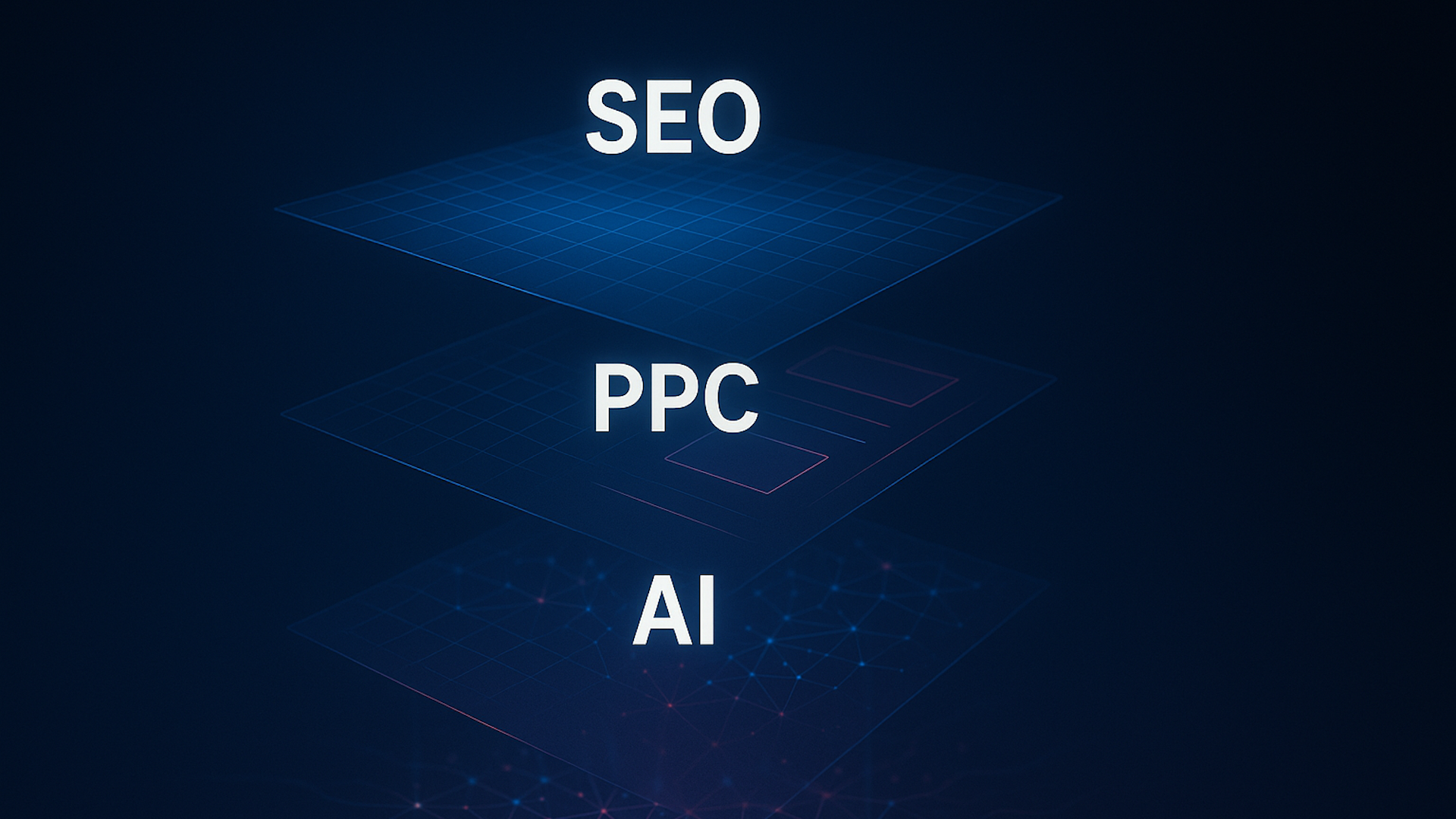
Marketers often see SEO, PPC, and AI as competitors. Truthfully, they’re three intertwined visibility layers.
SEO fosters presence, providing foundational visibility.
PPC amplifies position, stimulating awareness.
AI frames discovery, offering context and relevance.
Each component complements the others:
SEO supplies content AI distills.
PPC fosters initial visibility, attracting early engagement.
AI delves into extensive analysis, shaping your market presence.
I embarked on this article seeking an answer to the age-old question: which reigns supreme — SEO, PPC, or AI?
Mid-journey, clarity emerged: this outdated question will no longer suffice by 2026.
General counsel proves challenging, given unique circumstances.
For example, a local plumbing business may have started with PPC while growing through local SEO and referrals.
Eventually, reducing PPC reliance might have been tested unless leads dwindled.
Contrarily, a college with complex site structures, coupled with strong authority, could transition from ads — assuming proper planning and site optimization.
Now, a third ingredient has emerged: AI, with SEO, PPC, and AI forming a unified strategy.
Separating AI from SEO is no longer feasible. The disciplines of AEO, GEO, and related labels are increasingly married.
Understanding AI and SEO’s connections in retrieval-focused generation contexts becomes crucial.
While PPC’s link to AI isn’t as prominent, early integration is already in motion, evidenced by Google incorporating ads into AI summaries.
Optimizing AI echoes optimizing SEO’s practices.
While early, the need to optimize for AI is evident, demanding attention from SEOs and GEOs in the near term.
Inaction is costly; we lack a complete guide, yet actionable insights remain available.
How to Build Visibility Across SEO, PPC, and AI
By 2026, success isn’t mere “ranking,” but “being referenced.”
Staying afloat requires optimizing for machine-led content evaluation.
1. Adopt GEO
Format your content for AI retrieval.
Two to three short, concise sentences followed by layered context appeals to LLMs.
Utilize bullet points, clear logic, and data tables for AI to parse easily.
2. Feed the Knowledge Graph with Entity SEO
AI confirms facts using entities like people, brands, and ideas.
Your About page, schema markup, and author bios must be impeccable.
Without Google’s understanding of your identity, authority citations become unlikely.
3. Target Citation Gaps
AI systems link to trusted sources, favoring niche gurus and major outlets.
Redirect digital PR efforts toward “mentions” on sites AI deems authoritative.
4. Invest in Freshness and Data
LLMs lean towards recent data. Regularly update facts, timestamps, and comparisons.
Static content may falter against continually refreshed material.
5. Embrace Redundancy: The Hybrid Approach
No channel stands alone. Execute PPC for instant visibility, nurture SEO for long-term authority, and set AI-ready data structures simultaneously.
6. Build a Content Engine
Leverage “They Ask, You Answer” frameworks to tailor content that addresses audience needs.
In the ever-evolving world of AI-driven advertising, I’ve noticed that Performance Max campaigns have become absolutely crucial. Both Google and Microsoft offer these innovative opportunities, allowing advertisers to bring together creative assets, audience signals, and automation into a single seamless campaign type.
While Google and Microsoft share this foundational concept, they execute it uniquely. I am excited to offer an in-depth comparison of Google PMax and Microsoft PMax as they stood toward the end of 2025, hoping to shed light on the intricacies that could shape your 2026 advertising strategies.
What I found universally true across both platforms is the replacement of ad groups with asset groups. These groups encompass a blend of creatives, such as images and headlines, along with audience signals, but also carry an absence of any prioritization.
Significantly, PMax is built for automation. Both platforms request the use of Maximize Conversions or Maximize Conversion Value strategies, underlining the need for conversion tracking that can keep pace with no less than 30 conversions in a month.
Goal alignment is another crucial aspect. I realized that accurate reflection of business goals in your campaigns is imperative, for an artificially low ROAS target will likely backfire by yielding unexpectedly lower returns.
Search term visibility is an area where Google offers broader negative keyword support, unlike Microsoft who is still piloting this feature. However, Microsoft’s PMax creatives have been involved in AI placements longer, demonstrating proven results and thus indicating a stronger track record in this area.
Google’s PMax has evolved impressively, offering tools such as channel-level reporting and video asset support, which are particularly beneficial for visual marketing endeavors.
On the flip side, Microsoft’s edge, especially for B2B advertising, includes higher campaign limits, impression-based remarketing, and the integration of LinkedIn targeting signals, appealing for advertisers looking at high-quality lead generation.
Reflecting on both platforms, I believe PMax should be seen as a tool for incrementality rather than a replacement for proven search campaigns. The optimal approach involves leveraging both platforms’ strengths, whether it’s Google’s affinity for creative automation or Microsoft’s prowess in B2B targeting and remarketing.
In my experience, the open web often feels like the Wild West, especially in recent times. Many creators, myself included, have watched as our hard work is scraped and fed into large language models without any hint of permission.
This situation has become a free-for-all, leaving website owners with almost no means to opt out or safeguard their creative endeavors. There have been attempts to address this, such as Jeremy Howard’s llms.txt initiative. Much like robots.txt helps us manage site crawlers, llms.txt aims to provide guidelines for AI companies’ crawling bots.
However, a promising new protocol is on the horizon, potentially granting site owners like myself more control over how AI firms utilize our content. It looks like this might become part of robots.txt, allowing us to set definitive rules around AI system access and usage.
IETF AI Preferences Working Group
In response to this issue, the Internet Engineering Task Force (IETF) began the AI Preferences Working Group earlier this year in January. Their mission is to craft standardized, machine-readable rules to empower site owners to articulate AI usage preferences for their content.
Since its inception in 1986, the IETF has established core Internet protocols like TCP/IP, HTTP, DNS, and TLS. Now, they’re laying down foundations for the open web’s AI era. Leading this group are co-chairs Mark Nottingham and Suresh Krishnan, joined by figures from Google, Microsoft, Meta, and more.
Of particular interest is Google’s involvement via Gary Illyes, who is part of this working group.
“The AI Preferences Working Group will standardize building blocks that allow for expressing preferences about how content is collected and processed for Artificial Intelligence (AI) model development, deployment, and use.”
What the AI Preferences Group is Proposing
This group aims to deliver new standards that empower site owners to determine how LLM-powered systems can utilize their open web content.
A standard track document detailing a vocabulary to express AI-related preferences, independent of content association methods.
Standard track document(s) that explain how to associate these preferences with content using IETF-defined protocols and formats, for example, Well-Known URIs and HTTP response headers.
A standard approach for reconciling multiple preference expressions.
At the time of writing, nothing is set in stone yet. Early documents, however, provide a sneak peek into potential standards.
This working group published two crucial documents in August.
These documents propose significant updates to the Robots Exclusion Protocol (RFC 9309), suggesting new rules and definitions enabling site owners to specify AI content usage permissions.
How It Might Work
AI systems on the web are categorized and assigned standard labels. Whether a directory will exist for site owners to identify system labels remains unclear.
Currently, the defined labels include:
search: for indexing/discoverability
train-ai: for general AI training
train-genai: for generative AI model training
bots: for all types of automated processing, such as crawling and scraping
For each label, you can set two values:
y to allow
n to disallow.
I found it interesting that these rules can be applied at the folder level and customized for different bots. In robots.txt, they’re implemented using a new Content-Usage field, akin to existing Allow and Disallow fields.
Here’s an example robots.txt that the working group shared in their document:
Explanation Content-Usage: train-ai=n indicates that no content on this domain may be used for training any LLM model, whereas Content-Usage: /ai-ok/ train-ai=y permits model training using content within the /ai-ok/ folder.
Why Does This Matter?
There’s significant buzz about llms.txt within the SEO community and its use alongside robots.txt. Yet, no AI company has confirmed adherence to these guidelines, and Google disregards llms.txt.
Website owners, including myself, crave more explicit control over how AI companies leverage our content—be it for training models or RAG-based responses.
I feel that the IETF’s new standards signify positive progress. With Illyes as a contributing author, I remain optimistic that once finalized, companies like Google will embrace these standards, respecting new robots.txt rules during content scraping.
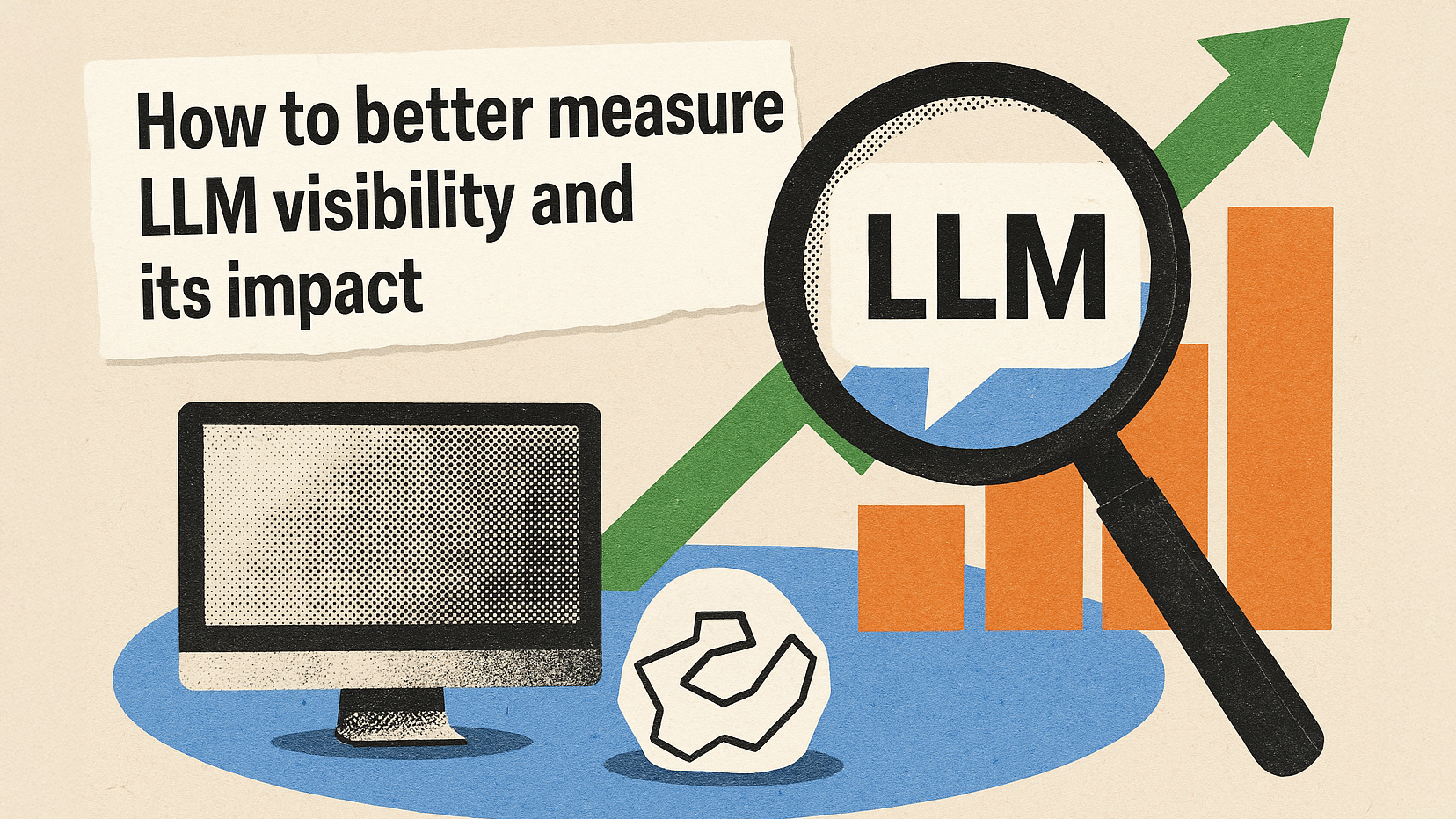
I’ve been deeply involved in the compelling discussions around AI, especially the intriguing intersection of ‘AI hype meets AI reality.’ Tools like Semrush One and its Enterprise AIO tool have taken center stage, offering invaluable insights into what’s happening inside LLMs. The big questions I often ponder are: How many citations are we capturing and just how many mentions are our brands accumulating?
When this data first emerged, it felt revolutionary. However, it quickly prompted other questions, like ‘What’s the ROI here?’ and ‘How can I integrate this data into my team’s marketing strategy?’ Ensuring that this valuable and fascinating data translates into actionable insights is a challenge I enjoy tackling.
It’s no secret that the data these tools provide is incredibly valuable. But, what steps do I take next? Let’s uncover this journey together.
The Fundamental Challenges of Tracking LLMs
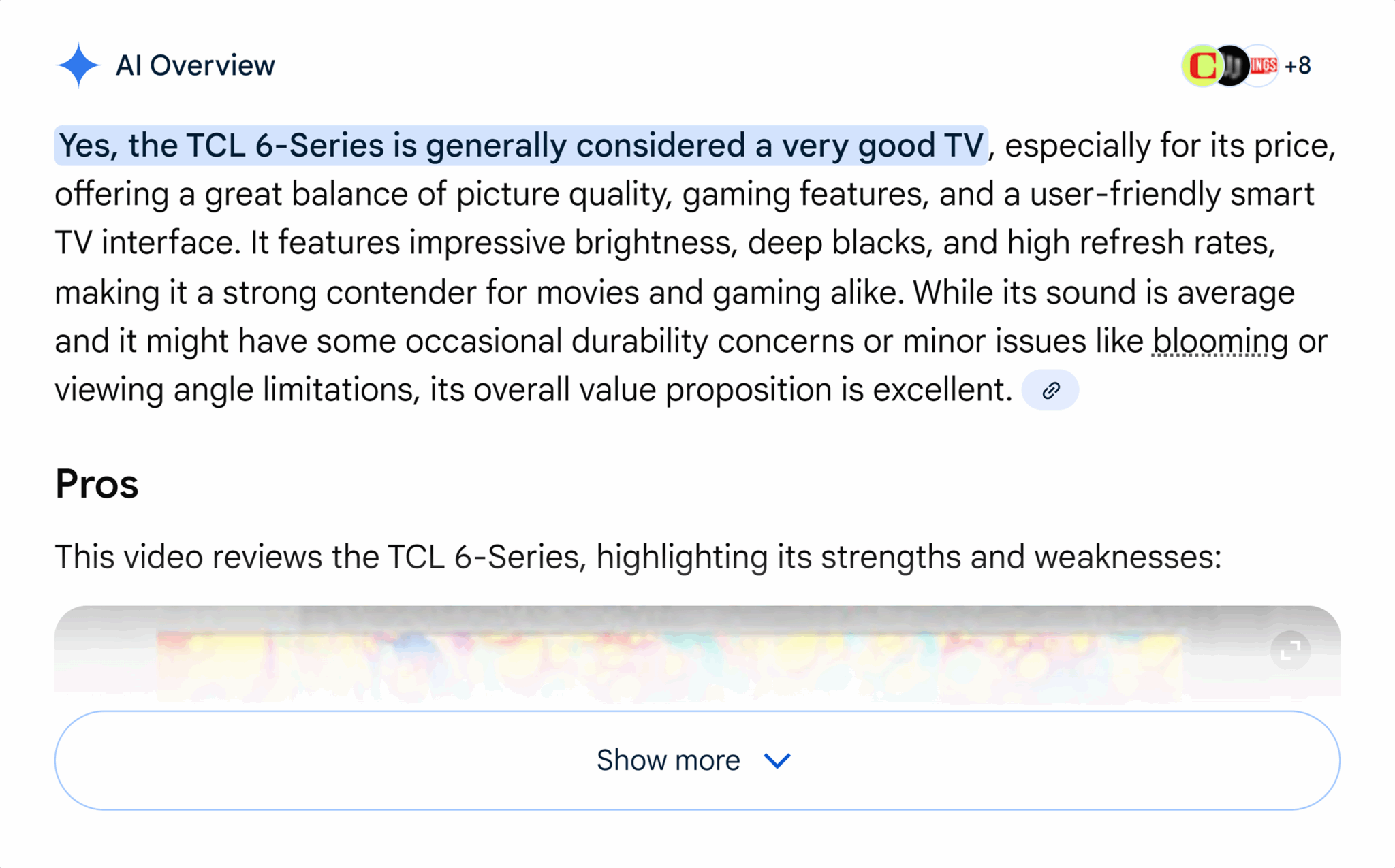
Tracking LLMs can be more challenging than traditional metrics like Google rankings. Google rankings may show where I stand, but ranking doesn’t always correlate with traffic or revenue. Even if I rank highly, an AI Overview could dominate the search, reducing my traffic for a given keyword. I need to ask myself, is this the right traffic for my business goals?
The big difference between traditional SEO rankings and LLM visibility is the straightforward correlation between strong rankings and increased revenue, which is more complex with LLMs. I can easily track user behavior after they land on my site from organic search, but it’s not so clear-cut with LLMs.
SEO effectively drives traffic to my site, allowing me to evaluate the success of my conversion rate optimization (CRO) strategies. However, LLMs operate differently, leaving me with the task of creatively connecting the dots.
The Problem with Methodology
As I dive deeper into using LLM-related data, I realize this approach requires me to step out of my comfort zone as a performance marketer. My usual reliance on direct attribution and data points is shifted toward constructing a narrative that ties LLM visibility to larger brand storytelling.
This method isn’t novel, however. Brand marketers have dealt with indirect metrics since the days of billboard advertising. Still, the shift requires me to create insights from what might seem like fragmented LLM data.
Metrics and Approach to LLM Impact Measurement
Uncovering the true value brought by LLM visibility metrics is a layered and comprehensive process. To do this accurately, I need to understand the wider ecosystem of my organization’s promotional efforts. This understanding allows me to determine the root cause of site traffic or branded searches effectively.
For instance, if a TV ad campaign runs concurrently with optimizing for LLM mentions, analyzing their impact becomes essential. Only with complete awareness of such activities can I identify true causality or correlation.
From here, I find that LLM visibility data is usually just the starting point. It’s unlike traditional SEO insights, which might be more apparent and direct. My task is to delve deeper, probing these data points to uncover richer insights.
The Branded Search of It All
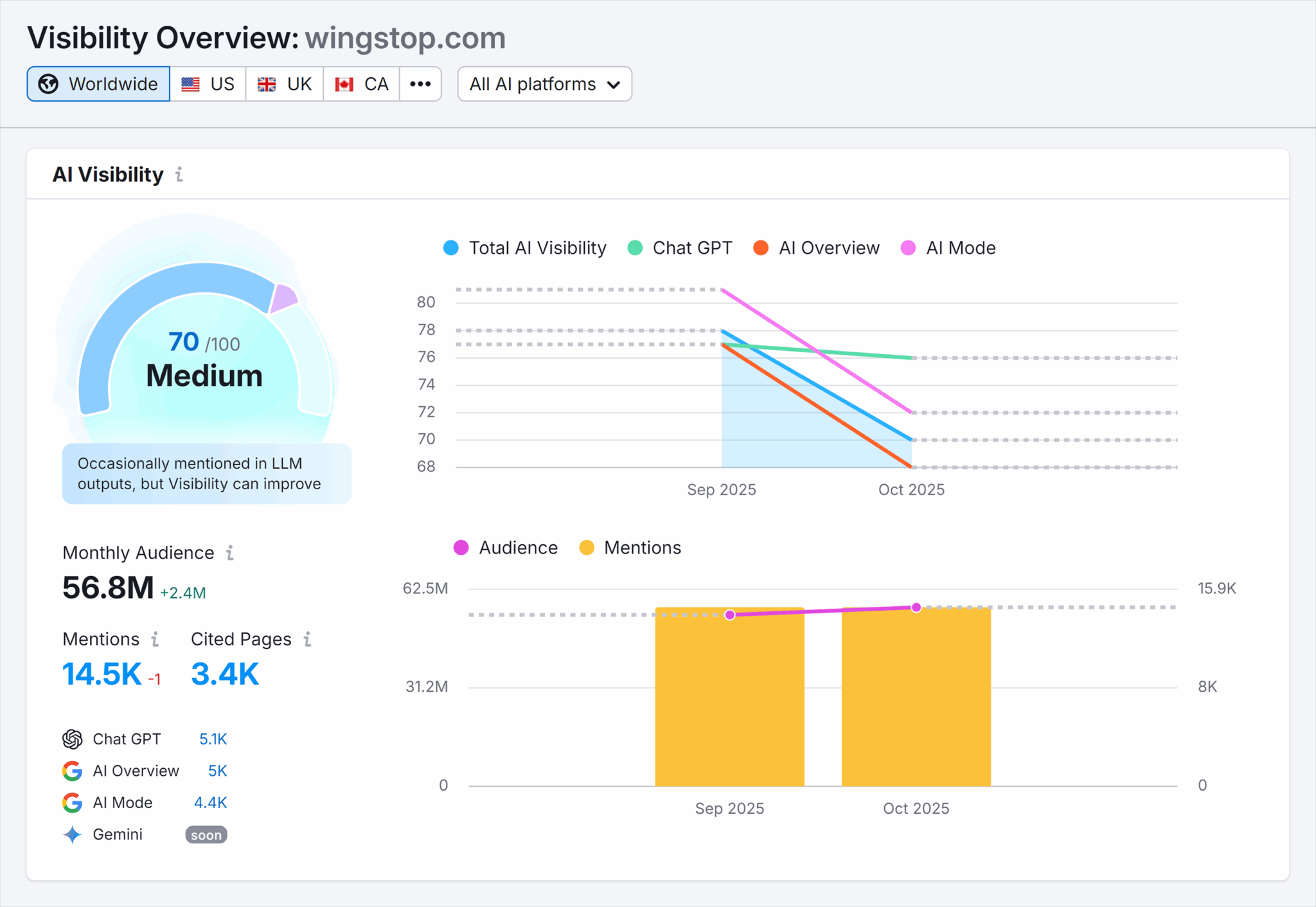
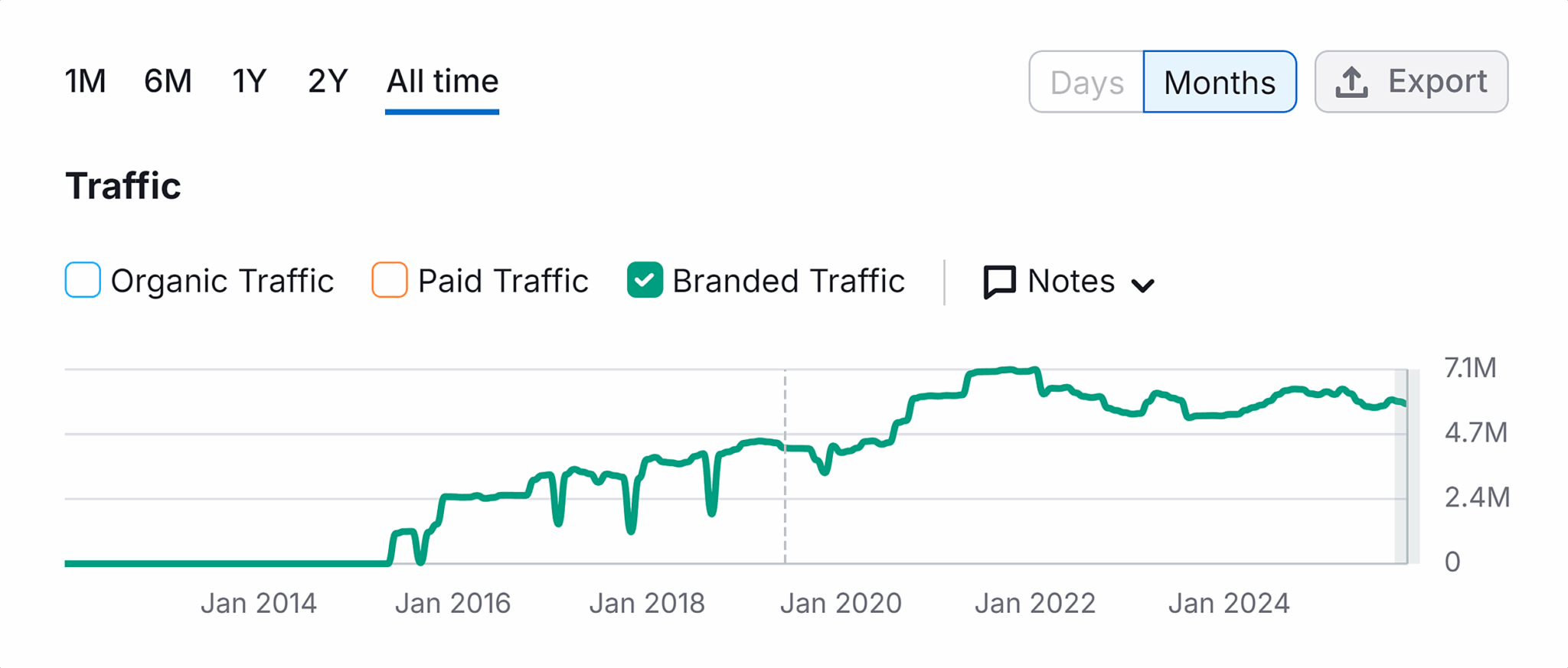
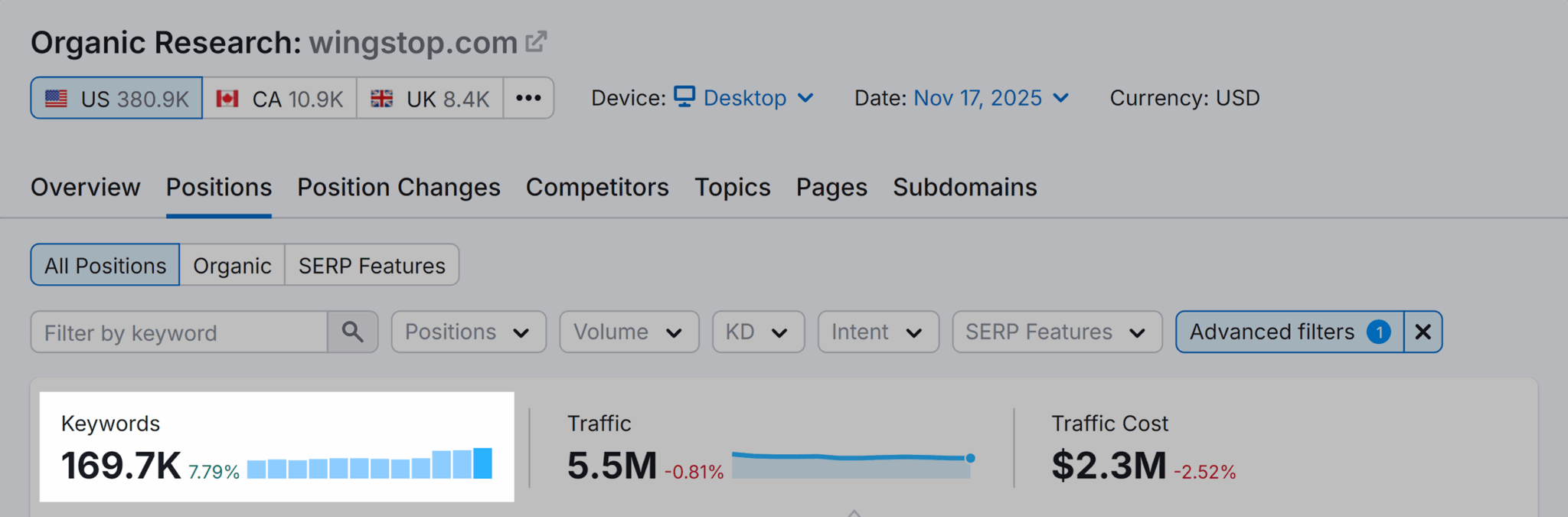
I’ve noticed that brand search provides exceptional insights into LLM performance, offering a rich vein of marketing intelligence. The comparison between two competing chicken wing chains, Buffalo Wild Wings and Wingstop, brightened this understanding for me. While their LLM citations differ, their brand awareness through social media presence offers a clearer picture of market positioning.
Simply examining the branded search traffic showed me how both brands performed similarly on Google, despite their different social media followings. Here lies the heart of utilizing search data creatively to find LLM visibility data strategies.
Rather than merely counting traffic, I am now compelled to consider the number of branded keywords involved, providing a sometimes surprising view on brand awareness and diversity. This approach provides a richer understanding of LLM visibility’s impact.
Direct Traffic: My Trusted LLM Data Companion
I’ve come to see direct traffic as an essential part of my LLM data narrative. Far from being a black hole, direct traffic can often indicate brand awareness and affinity, especially when correlated with LLM visibility metrics. Understanding these correlations allows me to paint a clearer picture of AI’s practical impact on consumer behavior.
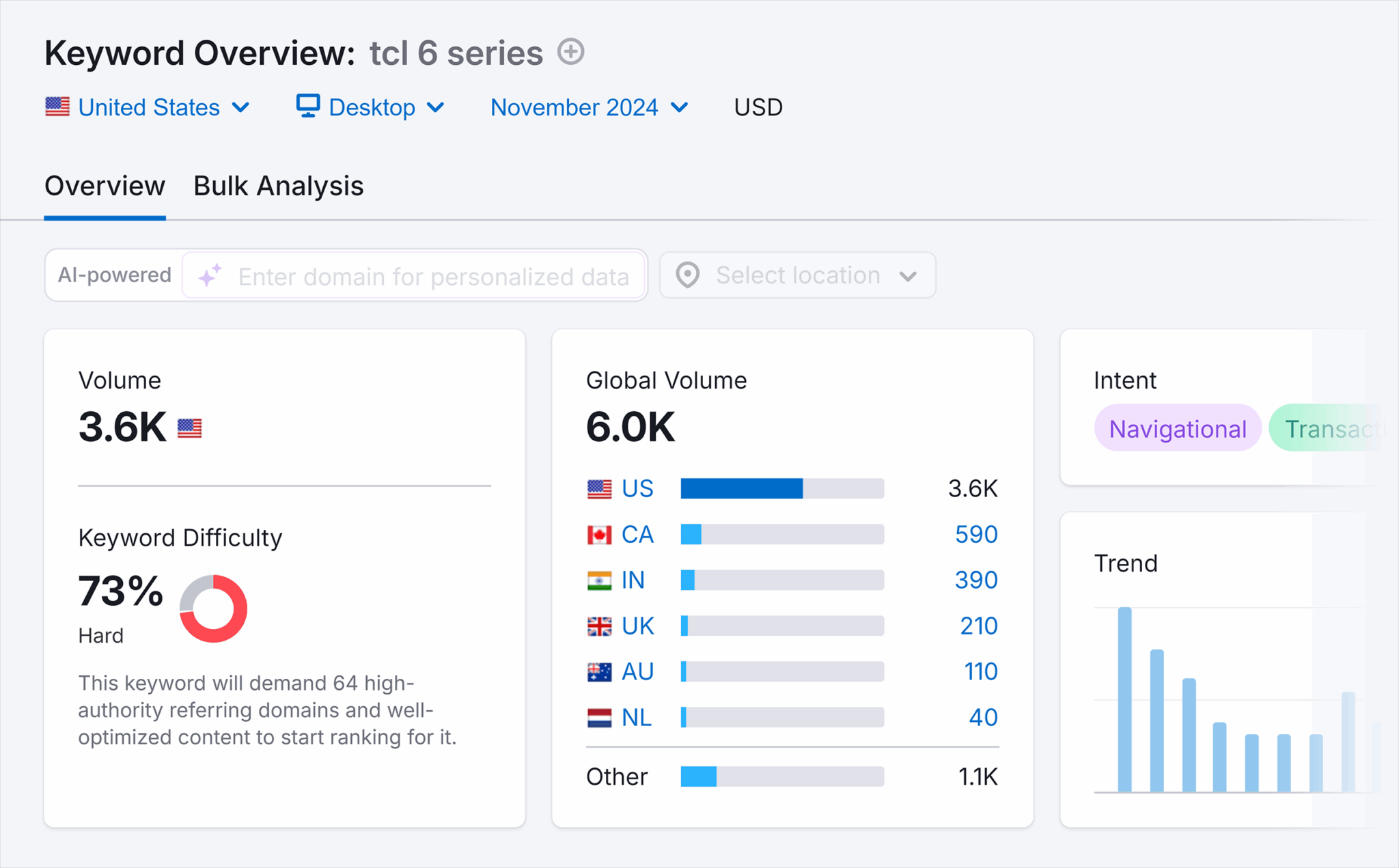
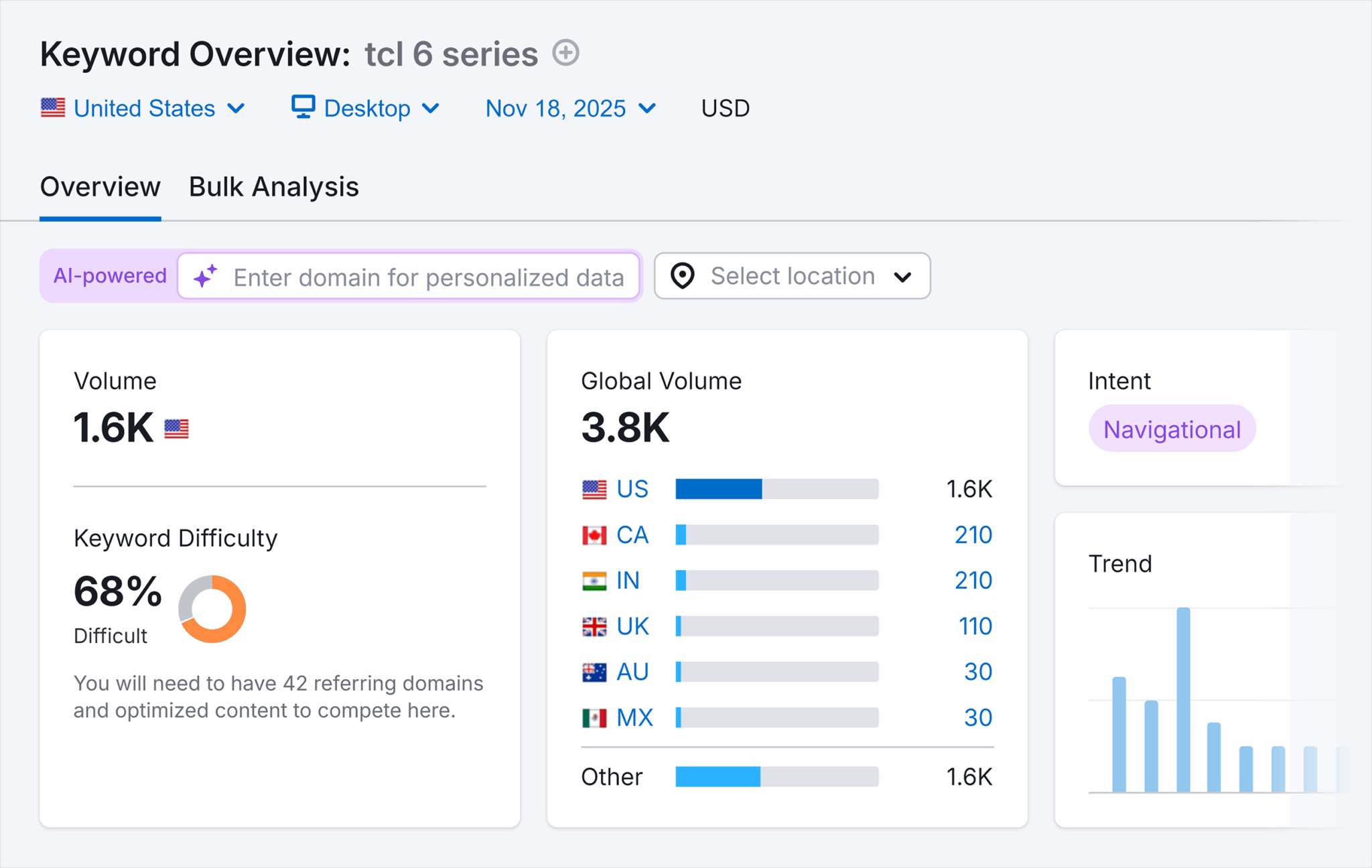
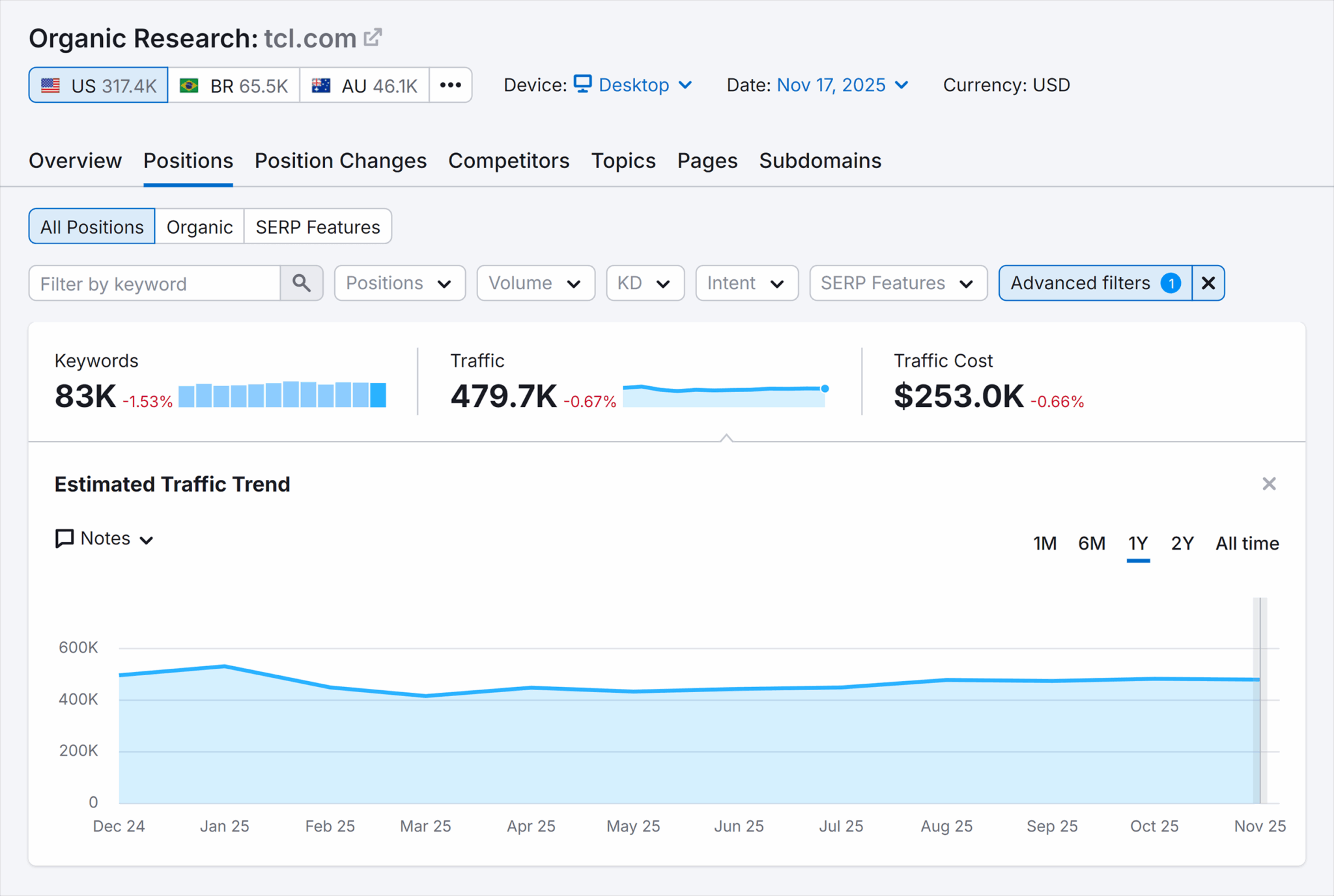
For instance, if I compare LG and TCL, LG’s superior direct traffic and increasing momentum in LLM visibility suggest a tangible AI-driven influence, a possibility I must explore through multi-metric analysis.
Considering various metrics together and identifying shared trends offer insight into how LLM visibility might be affecting my brand’s overall recognition and engagement.
Not Just One Metric: Stitching Together LLM Data Stories
Ultimately, it’s about developing a comprehensive data story from LLM visibility insights. This story goes beyond direct KPIs, utilizing various data sources, such as bounce rates and organic traffic, to add depth and relevance to the narrative. Every piece of performance-focused data stands as testimony to the expertise we can bring to LLM visibility.
Total LLM visibility data, when creatively amalgamated with performance data, can transform insights into actionable strategies that align with pragmatic business objectives, showcasing our value in the AI-driven landscape.