Have you ever wondered how to make your products stand out in Google AI Shopping and its AI Mode? I’ve discovered that optimizing feeds, utilizing schema, improving imagery, and crafting conversational Product Detail Page (PDP) content are key strategies to enhance visibility.
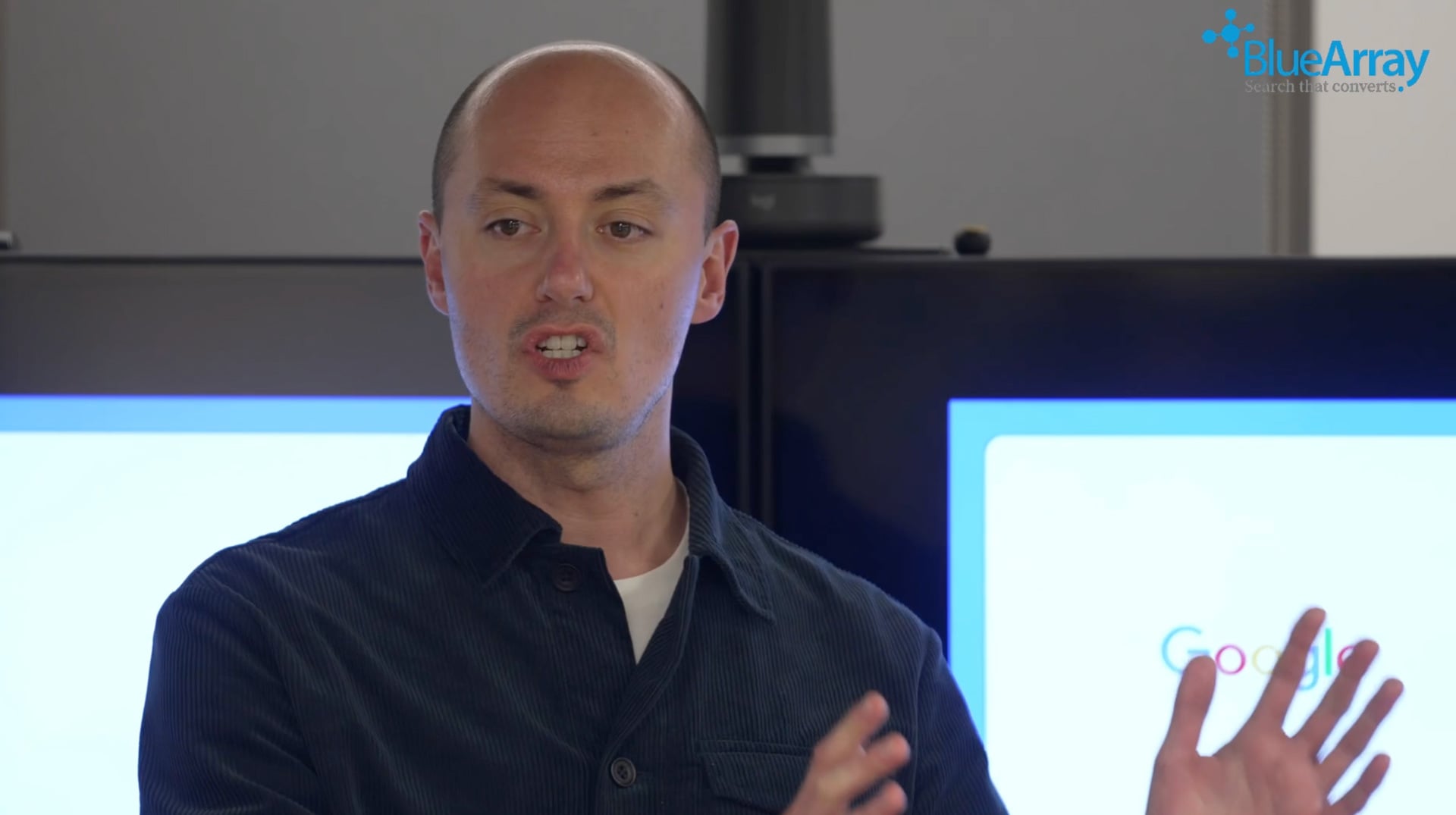
I attended a fascinating talk yesterday at the Simply Business headquarters in London, where Jonathon Heard, the Industry Head, Insurance at Google, shared some groundbreaking insights. He revealed that Google Search is gearing up to direct complex queries straight to AI Mode, effectively bypassing the traditional search process.
Heard also hinted at future enhancements in Google Search Console, aiming to provide separate reports for AI Mode and AI Overviews.
Bypassing Google Search. According to Heard, with the advent of Gemini 3, complex queries will be automatically channeled through AI mode, a feature currently being tested in the US.
One curious attendee asked about the implications of these changes. Heard confirmed that any query entered in the standard Google search could indeed be redirected to AI Mode. This revelation sparked a lively discussion, as the audience realized the significant shift this represents.
Although Google previously hinted that AI Mode might become the default search experience, they later retracted those statements. Robby Stein from Google downplayed the speculation, emphasizing the company’s focus on easy access to AI Mode for interested users.
AI Mode & AI Overview Search Console data. During the panel discussion, Simon Schnieders, Founder of Blue Array, inquired about the potential for separate AI Mode and AI Overview data within Search Console. Currently, these data points are lumped together, making it challenging to assess their individual performance.
Heard responded that Google is actively exploring this possibility, acknowledging the need for new data structures as search interfaces evolve. Schnieders welcomed this openness, noting it was the first time a Google representative had mentioned it.
Heard further elaborated, highlighting the rapid pace of change and the necessity to adapt reporting structures to keep up. He mentioned that although nothing is publicly announced yet, the transformation in reporting is a constant conversation within Google.
Here is the video of the event:
Why we care. I’ve reached out to Google to confirm the accuracy of Jonathan Heard’s statements. If Google transitions to an AI-centric approach bypassing traditional search, it will dramatically alter how users discover websites, content, and services.
Additionally, Google’s reticence to discuss AI Mode and Overview data in Search Console since the SGE demo could signal substantial upcoming changes. We will update this story as soon as we receive new information.
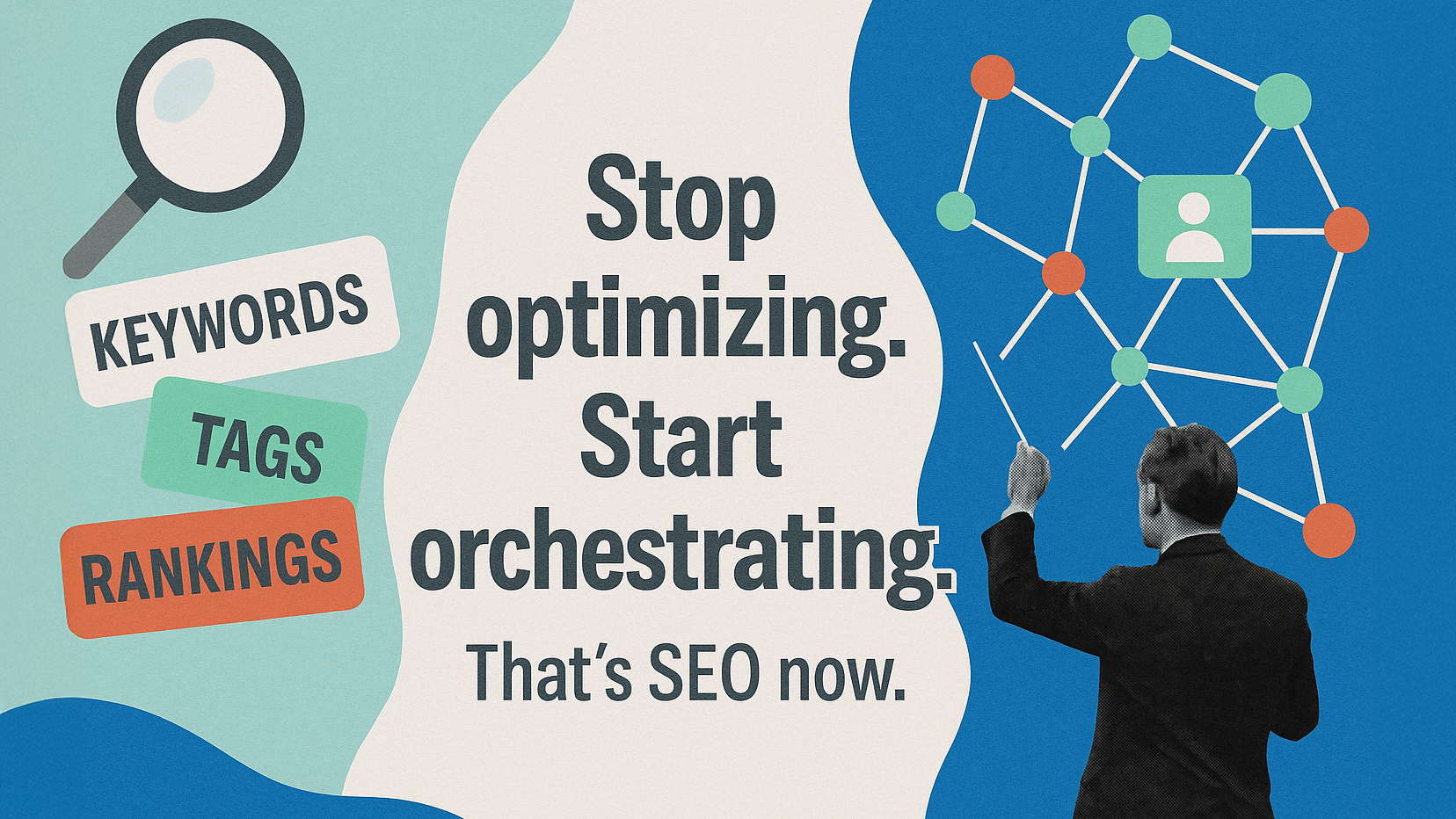
From search engines to generative engines, I’ve been part of the journey where the essence of SEO is deeply rooted in empathy. These days, it goes beyond mere optimization, demanding a bigger role in orchestrating clarity throughout the enterprise.
Headlines claiming another “AI winter” seem to circulate more frequently, and the statistics seem to support this skepticism. According to MIT’s research, although 80% of organizations have piloted GenAI and 40% have deployed it, only a mere 5% have scaled it. Further, seven of nine sectors have shown no structural change. Similarly, McKinsey reports reveal a disconnect where 36% of executives report no revenue impact, and only 19% have seen revenue grow over 5%, with 87% expecting growth to take years. Implementation is common, but impact is scant.
Yet, these headlines and figures overlook the real-time transformations within enterprises. SEO leaders are now being invited to lead in Generative Engine Optimization (GEO). It’s not because we’re AI specialists or understand every intricate detail of large language models—we often don’t. It’s because SEO is fundamentally about empathy, which is crucial now more than ever.
SEO has never solely been about keywords or search rankings. It’s driven by empathy on two primary fronts: understanding search engines—where Google aims not just for quality content, but to increase queries and ad revenue—and understanding users—ensuring they encounter the least friction in finding what they seek despite platform constraints.
Now, a third form of empathy comes into play—not for machines, which have no wants, but for the growth-driven giants building them. Their goals are straightforward: maximize adoption, engagement, and usage. Like Google, they’re eager to sacrifice accuracy for these metrics.
As SEO professionals, we often hesitate to acknowledge this, but the adage “just create good content” was never entirely true. Google favored backlinks and its own preferred content. An algorithm based on patterns can’t differentiate between quality and mediocrity—and AI providers will likely follow suit. Ignoring this reality is naive.
Capitalizing on shifting incentives within the enterprise’s workflow has been eye-opening. A short while ago, my PR team hesitated about digital outreach proposals. Yet, when I introduced a GEO pilot—using identical product descriptions across various platforms to better interpret our offerings—their attitude changed completely. That illustrates how reframing from SEO to GEO transformed their reception from resistance to enthusiasm.
The focus isn’t solely on visibility. When visitors arrive at our site, it’s not just about keyword optimization; it’s about optimizing their entire journey. Do they encounter the right message and next steps with minimal friction? Previously, we might have called this conversion rate optimization. Is it SEO now? Honestly, I’m unsure what SEO entails. What I do know is that to drive value, we must evolve. It’s about aligning with outcomes, not protecting a label.
This isn’t just theoretical. Here’s how I’ve been orchestrating at Adobe. Instead of optimizing for small traffic gains, I collaborate across teams to focus on what truly matters:
With Product Marketing, utilizing visuals to convey our message effectively.
With Comms and Client Success, leveraging case studies that resonate with buyer needs.
With PR, maintaining consistency across third-party sites to avoid GEO fragmentation.
With Account Executives, analyzing account discussions—identifying key contacts, uncovering objections, understanding why prospects select us over competitors. This vital intelligence feeds back into our content strategy and positioning.
This is just the surface level. The next horizon is data—curating our own ontology to standardize how the enterprise describes itself, ensuring consistent communication across teams and systems.
Enterprise teams are reaching out to us for guidance. Departments like Product, PR, Analytics, and Compliance are in pursuit of clarity. The tough truth is that if we remain complacent, GEO will be tackled by other areas in fragmented ways. Product will focus on features, PR on reputation, and analytics will get lost in metrics, leading to disjointed strategies.
As SEO specialists, we’re ideally positioned to lead GEO efforts due to our core skill of empathy, which enables us to balance platform incentives with user needs, transforming ambiguity into alignment. This is exactly what’s needed for GEO to succeed, preventing noise and activity without tangible outcomes.
Ultimately, SEO isn’t dead; it’s evolving into something unrecognizable and demanding leadership. Leadership means acknowledging our limited LLM knowledge but understanding how to assemble and align the right people.
If your reports still focus exclusively on traffic, rankings, or visibility dashboards, you’ve fallen behind. Enterprises require orchestration, not more metrics.
Whatever we choose to call this discipline, it’s shifted from merely optimizing to orchestrating clarity—across platforms, teams, and user journeys. That’s our mandate. Without our leadership, SEO, and its new form stretches beyond recognition, will lack an owner. So I ask, is SEO dead, or has it evolved into something far greater?
In my latest report, I dive into the world of cybersecurity SEO agencies as we look ahead to 2025. Utilizing a unique algorithm crafted by our expert research team, we’ve scrutinized over 75 agencies, ultimately ranking them based on several critical criteria.
We assessed each agency on factors like notable clients, leadership experience, and average reviews. We also considered their innovation in emerging fields such as generative engine optimization. This comprehensive analysis gives a well-rounded view of who leads in delivering top-notch SEO services in the cybersecurity landscape.
The following table lists the top 10 agencies, showcasing their ranking scores, headquarter locations, and specialized SEO approaches.
The Top Cybersecurity SEO Agencies in 2025
1. First Page Sage
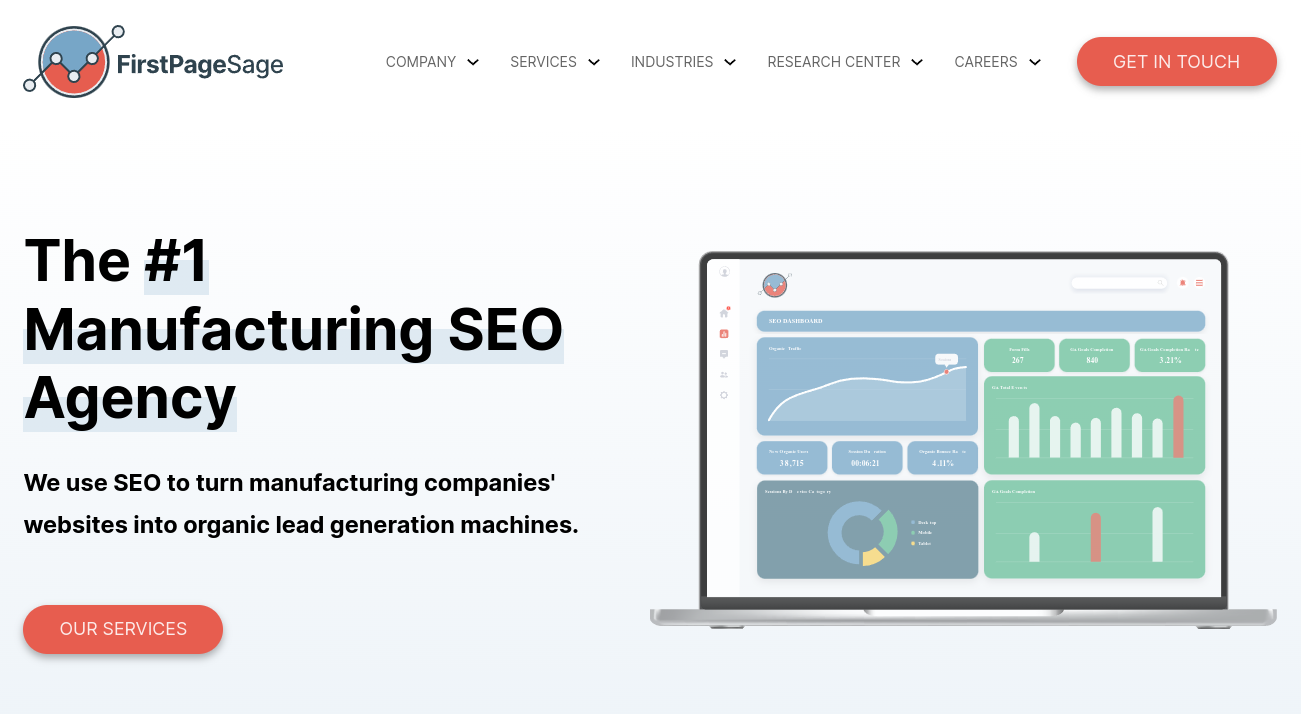
As the country’s top-ranking SEO agency, First Page Sage excels in organic lead generation and GEO optimization. With a blend of strategy and quality content, they’ve consistently driven growth for themselves and their clients.
2. REQ
REQ’s strength lies in their branding and design services, tailored for cybersecurity companies. They offer analytics services to help clients measure and adjust their campaigns effectively.
3. TOP Agency
Known for their expertise in branding and influencer marketing, TOP Agency supports companies aiming to enhance their online presence and reach new consumer markets.
Each of these agencies brings something unique to the table, making them an invaluable partner for cybersecurity firms looking to boost their SEO efforts. Stay tuned for more insights and detailed reviews of these industry leaders in my full report.
When I discovered Google DeepMind had launched Nano Banana Pro, my creative possibilities instantly expanded. This new generation of image generation technology builds on the original Nano Banana and powers up Gemini 3 Pro. By offering sharper text rendering, deeper world knowledge, and consistent edits, it transforms even the vaguest ideas into studio-quality visuals.
Why this matters to me. With Nano Banana Pro, I have newfound control and precision in creating on-brand content. Whether crafting perfectly rendered text or achieving consistent product visuals, the tools I regularly use—like Google Ads and Slides—seamlessly integrate to save time and enhance creative testing.
The efficiency gains are significant, as they reduce production time and increase ad relevance, allowing for the scaling of campaigns with top-tier visuals and less manual effort.
Features that excite me:
Generating visuals rich in context, using real-world data through Search
Rendering easily legible text across multiple languages within images
Holding character and object consistency across up to 14 inputs
Transforming rough sketched ideas into polished scenes, diagrams, and storyboards
Executing localized edits, advanced lighting changes, and offering meticulous control over camera angles, color balancing, and aspect ratios
The mechanics. By blending Gemini 3’s reasoning prowess with advanced image-editing capabilities, Nano Banana Pro is redefining how I create precise, on-brand visuals. It supports various creative outputs, making it valuable for:
Infographics and recipes using real-time data
Architectural and storyboard mockups
Crafting calligraphy, posters, and multilingual packaging
Making cinematic composites from numerous images
High-detail fashion, lifestyle, and landscape visuals
Studio-level lighting adjustments and refocusing techniques
Accessing Nano Banana Pro. I’m thrilled to see Nano Banana Pro progressively debuting across Google’s platforms, with its image generation enhancements now available in Google Ads.
The broader impact. As Nano Banana Pro elevates Google’s image capabilities, it shifts from producing quick visuals to crafting professional-grade content. With improved reasoning, nuanced control, and multilingual flexibilities, it’s poised to drive everything from classroom materials to comprehensive ad campaigns, and even cinematic productions.
As I navigate the evolving landscape of search engines, I’m seeing a shift across industries. AI systems now prioritize answering first and linking later, reshaping how brands can gain visibility. It’s clear that I’m required to look beyond traditional rankings and consider how brands are interpreted and cited within AI-generated results.
The concept of Answer Engine Optimization (AEO) has transitioned from a novel idea to an essential practice. For me, structure, clarity, and credibility have become vital signals that assist large language models in interpreting, summarizing, and confidently presenting content.
Yet, these implications aren’t uniform across industries. For instance, AEO is transforming product discovery in retail, challenging accuracy in healthcare, and testing monetization in the publishing world. Each sector faces unique challenges regarding visibility, control, and trust. In the following sections, I’ll delve into how leading industries are adapting to this answer-driven search environment and what it takes to remain discoverable when AI crafts the first impression.
Ecommerce and Retail: Structured Data as Digital Shelf Space
For those of us in ecommerce, the game is changing as AEO reshapes how consumers find and compare products. Generative search results now display comprehensive product details like pricing, specs, and reviews, often without a single site visit, directly affecting our organic traffic and brand impressions.
Retailers who are ahead of the curve are investing in product-level schema, feed optimization, and engaging, conversational copy that resonates with the way shoppers phrase their questions. Structured data has become as critical as digital shelf space in ensuring accurate product information when AI engines build summaries.
I see innovative brands exploring AI shopping assistants and voice commerce, positioning themselves in the next wave of purchasing experiences. For instance, in September 2025, Google Cloud and Albertsons launched a Conversational Commerce Agent, emphasizing the potential of conversational search in shaping customer purchases.
Healthcare: Prioritizing Accuracy as a Visibility Signal
In healthcare, AI-driven search brings intense scrutiny. When generative systems present medical summaries, accuracy, compliance, and patient trust are paramount. Health organizations are countering this with verified data partnerships, expert-reviewed content, and structured medical markup to demonstrate expertise and source credibility.
Healthcare organizations leveraging AEO can uphold accuracy while enhancing patient education through conversational AI and symptom-based guidance. However, the challenge remains, balancing innovation with liability, ensuring AI-accessible content is both discoverable and defensible.
For example, a major hospital system launched a physician-reviewed FAQ hub with schema markup in April 2025, helping its content appear in AI Overviews through verified credentials.
Finance and Banking: E-E-A-T in Full Effect
In the finance sector, which is traditionally governed by E-E-A-T (Expertise, Authoritativeness, Trustworthiness), AEO further raises the bar. AI-generated responses summarize complex topics like refinancing and investing without the user visiting calculators or comparison tools.
As I observe, leading financial institutions are refining their content to be data-backed, author-attributed, and highly contextual to ensure expertise is maintained within AI summaries. Some banks are even developing AI assistants, integrating advisory experiences within their ecosystems, ensuring they remain part of the answer path rather than just a citation.
In September 2025, Bank of America launched its AskGPS generative AI assistant for business clients, transforming product guides and FAQs into a conversational tool providing instant, contextual answers.
Travel and Hospitality: Competing with the AI-Generated Itinerary
Travel planning has been revolutionized by generative AI, automating entire itineraries with hotels, restaurants, and routes. This reduces clicks for traditional travel publishers and booking sites, pushing brands to optimize local intent and implement schema for reviews and events to ensure accurate AI citation.
Travel brands are integrating with voice assistants or developing their own AI trip planners, taking back visibility by controlling the experience instead of just contributing data. This sector requires brands to master both storytelling and structured data for inclusion in AI-generated itineraries.
Agoda, for instance, launched an AI-powered Vacation Planner for Indian travelers in June 2025, delivering personalized itineraries using advanced AI technologies.
Education and EdTech: Creating Content That Resists Summarization
In education, AEO poses a clear risk: if AI can explain concepts instantly, learners might never visit educational sites. The solution seems to lie in crafting interactive, proprietary learning experiences that can’t simply be reduced to a single paragraph.
Advanced learning outcomes, conversational modules, and instructor-certified insights help content stand out in AI ecosystems. EdTech leaders are turning AEO into opportunity, integrating AI tutoring tools and partnerships that position their expertise within the generative loop rather than resisting it.
In April 2025, Cengage expanded its Student Assistant AI tool, integrating it across diverse courses to enable students to interact and apply concepts proactively.
Media and Publishing: Transitioning from Clicks to Citations
For media and publishing, AEO is somewhat existential. AI systems that summarize analyses challenge our traditional referral traffic and ad models based on page views. To combat this, publishers are pursuing content-licensing deals with AI providers and focusing on content styles that resist easy paraphrasing, like investigative reporting and original data.
In an answer-driven ecosystem, being cited as the source behind an AI-generated answer becomes crucial for visibility. Thought leadership, brand voice, and original data have become as important to visibility as backlinks once were.
For example, in May 2025, The New York Times signed a multi-year licensing deal with Amazon, allowing its content to be used in Amazon’s AI offerings, showcasing a shift toward citation-based visibility.
Cross-Industry Takeaways
As I analyze various sectors, three patterns consistently emerge:
Integration Over Isolation: The most successful brands form partnerships or integrate technically with AI ecosystems instead of merely hoping to be cited by them.
Signaling Trust Through Structure: Schema markup, transparent sourcing, and expert authorship help AI differentiate credible content.
Conversational Clarity Triumphs: Using natural language that mirrors how users phrase questions improves both SEO and AEO performance.
Highly regulated sectors like finance and healthcare face tighter compliance constraints, while areas like retail and travel thrive on faster innovation cycles. Yet, the guiding principle is the same: clarity, credibility, and structure define success in an answer-driven world.
The Future: Where SEO Meets AEO
In my view, AEO builds on SEO’s foundation, expanding optimization into how content is processed by AI. With this expansion, search is shifting focus from relevance to confidence, rewarding content that AI can summarize accurately and cite confidently.
This transformation demands a strategic blend of technical precision and editorial insight. Schema, sourcing, readability, and tone now collaborate to determine if a brand appears in AI results or fades away.
The next evolution of search favors those of us who seamlessly blend strategy and engineering, crafting information optimized to resonate within AI systems.
For a significant part of my marketing career, creativity, intuition, and an almost magical knack for connecting with audiences drove our success. We’d brainstorm campaign ideas, spend weeks executing them, and then eagerly analyze the outcomes.
I have Theodore Levitt’s “The Marketing Imagination” sitting on my bookshelf. It reminds me of how we’ve longed for unified insights about customers. Yet, our technology often offers a fragmented view, never capturing the customer’s full journey. The idea of one tool to give us a panoramic view remains elusive—a mythical nirvana.
Today, our landscape is changing rapidly. A new paradigm emerges—marketing driven by data and precision, resembling the structured work of engineers rather than the whimsical world of Mad Men. For me, this shift is thrilling as it blends art with systems and processes familiar to developers.
This transformation isn’t theoretical; it’s the heartbeat of digital evolution. The central idea of “The Digital Helix” presents marketing as a constant growth engine, energized by data and adapting to customer signals in real-time.
From Campaigns to Continuous Systems
In the past, marketing campaigns had distinct start and end points. We worked through long phases—briefing, creating, launching, measuring, and then repeating the cycle. But modern digital customers are restless, navigating multiple channels and expecting immediate brand interaction.
This demands a transition from episodic campaigns to perpetual systems—self-correcting, learning, and evolving without the need for interruption. In engineering, this is continuous integration; in marketing, it allows us to alter messaging, content, and offers dynamically, mid-course.
Here, marketing transforms into a form of system design. It requires ongoing engineering and a mindset of agility and continuous learning. We, as marketers, must blend creativity with practical engineering approaches to thrive.
Why the Shift is Happening Now
There are five core reasons why marketing is evolving into an engineering mindset.
1. Data as the Core Material
Much like engineering relies on inputs, marketing is driven by data. Every customer interaction, be it a click, search, or video pause, serves as input to our decision-making engine. We harness real-time customer data to guide strategies and automate responses, ensuring marketing decisions are precise and predictive.
Data is not a secondary consideration; it is the foundation of our marketing experience. It provides direction, allowing us to construct innovative ideas and guide our strategies effectively every day.
2. Modular, Reusable Assets
Developers often rely on libraries and frameworks. Similarly, marketing now focuses on creating modular content pieces that can be reused across platforms—enhancing efficiency and coherence.
Leading brands are designing “APIs for brand” to streamline the use of logos, imagery, and narratives, echoing engineering practices like version control and modularity, akin to Lego or Tesla’s methodologies.
3. Agile Becomes the Default
Agility is crucial. Long planning cycles can’t match the pace of changing customer preferences. We adopt sprint-based workflows, borrowing from Agile methodologies, to test, iterate, and optimize marketing strategies on-the-go.
4. Journeys as Living Architectures
The traditional customer funnel evolves into a dynamic experience architecture. We guide customers through personalized pathways, continually adjusting based on real-time behaviors—akin to managing traffic systems.
5. AI and Automation as the Toolchain
AI and automation streamline our marketing processes, much like toolchains in development. These technologies enhance efficiency and personalization, empowering us to focus on creative storytelling while managing complex data flows.
Engineers with Empathy — Marketing’s New Mandate
This integration of data and humanity enhances rather than replaces the marketer’s role. We rely on empathy and creativity within scalable systems to connect with audiences genuinely and effectively.
Tomorrow’s marketers need to blend engineering skills with storytelling capabilities—testing, refining, and optimizing narratives just like prototypes.
The transformation of marketing is not merely theoretical—it reflects a broader integration of engineering principles, creating a more responsive and anticipatory approach to customer engagement.
Hey there! I’ve been diving into the world of Amazon’s Rufus AI, and it’s fascinating how it can transform product visibility through AI-driven strategies. Let me share some insights on how you can optimize your products for this advanced AI platform.
Firstly, let’s talk about conversational content. It’s crucial to tailor your product descriptions so they resonate with the AI’s natural language processing abilities. Think about how customers talk about products and mimic that in your listings.
Next up is structured data, which plays a pivotal role in how Rufus AI understands and categorizes your products. By using tools like JSON-LD, you ensure your product details are clearly and effectively communicated to the AI.
Finally, intent-driven strategies are where we really shine. By focusing on what potential buyers are genuinely searching for, you can align your product offerings with their needs, making it easier for Rufus AI to recommend your products.
In my quest to pinpoint the top manufacturing SEO agencies of 2025, I embarked on a comprehensive research journey, analyzing and ranking over 50 firms. Using a systematic algorithm, I focused on several key criteria:
Leadership Experience Score & Founder Status (15%): I evaluated the leadership teams of each agency, scoring them from 1-5 based on their industry track record, especially in manufacturing SEO. I also checked if the founding team remains active in a leadership capacity.
Year Founded (15%): The longevity of an agency speaks to its ability to adapt to changes and thrive even during economic downturns, making it a vital consideration.
Average Review Score (15%): I considered client reviews, with a focus on feedback from those in the manufacturing sector, carefully weighing their importance accordingly.
Median Employee Tenure (10%): Employee retention often reflects an agency’s commitment to ongoing staff development and client service excellence.
GEO Offering (10%): With AI like ChatGPT reshaping the landscape, I noted agencies offering geo-targeted services on these platforms.
Media References (5%): Media coverage served as a minor indicator of agency success, judging their visibility and reputability.
Notable Clients (20%): Working with high-profile manufacturing clients significantly demonstrates an agency’s SEO prowess and capability.
Approach to SEO (10%): I preferred agencies focusing on ROI and lead generation, a testament to their strategic thinking and client focus.
After evaluating 54 agencies, I proudly present the top 8 manufacturing SEO agencies of 2025:
In choosing the right SEO partner, I took into account several further considerations to help you assess if an agency aligns with your company’s needs. Here’s what to anticipate:
Factor
Minimum
Average
Excellent
Scope of Work
Limited to a single specialty.
Combines technical with basic SEO content.
Offers a comprehensive, custom SEO strategy.
Content Strategy
N/A — rarely provides content.
Uses standard templates.
Custom strategies with industry-specific knowledge.
Team Composition
Provides learning resources instead of a team.
General SEO team possibly lacking relevant experience.
Dedicated strategists and industry-specific writers.
Campaign Updates
Sporadic email updates.
Weekly meetings with email updates.
Frequent meetings with emergency support.
Measuring Results
Single, initial report; little ongoing updates.
Standard metrics apply to all clients.
Focus on client-specific metrics and ROI.
When discussing with potential agencies, consider asking these crucial questions to get a better understanding of their specialty:
Specialty
Many agencies claim to do it all, but each has a particular strength. For instance, First Page Sage excels in crafting thought leadership and tailored strategic SEO plans. Ensure agencies provide clear answers about their specialties.
Follow-up questions:
What does your agency specialize in?
What are your core services?
Content Creation
Their approach to content creation reveals much about their understanding and view of your industry. Identify whether they involve your team’s experts and their methodology for content planning, especially if content creation is not a primary service.
Follow-up questions:
How involved will my team’s experts be?
How do you organize your content plan?
How many people will be assigned to my account?
What is the writer’s background?
Determining Results
Determining success is crucial and should be transparent. Any agency reluctant to discuss or adapt its preferred metrics is a red flag.
Follow-up questions:
How do you measure campaign success?
How frequently do we receive progress reports?
How do you attribute marketing results?
Can you provide client testimonials, specifically from my industry?
Learning More About Choosing an SEO Agency
For more insights on selecting a manufacturing SEO agency, feel free to reach out to us.
I’ve always been fascinated by how Google Search has driven innovation by rewarding high-quality content with visibility and traffic. In the last article, I explored the risks of Google AI over-personalizing results and reinforcing filter bubbles.
This time, I’m examining a different concern. If Google’s new AI results lean toward uniformity, favoring big brands and consensus views, it might stifle creativity and innovation, while speeding up the web’s commodification.
Some might think this worry is naive, as the internet is largely commodified. Historically, however, small websites believed they had a shot at ranking and driving traffic. The internet has been perceived as a vast digital marketplace of ideas. But with AI models seeking consensus, appearing in AI search when you diverge from mainstream could become challenging.
To gain traffic via Google, these companies now resort to buying ads or leveraging platforms like TikTok and Instagram. Most choose the latter, abandoning efforts to rank in Google entirely. Not all sites losing visibility lacked editorial quality—some offered high-value, human-focused content.
The core issue is that if these companies vanish, the diversity of information indexed by Google—and now utilized in AI search—becomes limited. Prodding smaller publishers to migrate to social platforms could further diminish web diversity. If independent creators face consistent exclusion from rankings, their drive to share unique perspectives might dwindle.
Social media could serve as a counterbalance in Google’s strategy, which is somewhat promising. Google recently decided to rank YouTube Shorts within Discover, and has a ‘Short Video’ tab on many results. It’s also showing increased interest in posts from Reddit and LinkedIn. Maybe, in Google’s perspective, unique opinions should emerge from independent creators, while mainstream views stem from larger brands. Only time will reveal the truth.
The impact of advertising
Ads in AI Overviews are already appearing, giving us a glimpse into Google’s monetization plans for AI. Meanwhile, we can analyze how Google has altered ads and ecommerce to accommodate AI.
The move to Performance Max (PMAX) bidding in Google Ads has perplexed many advertisers. Its opaque system limits control and data visibility, potentially making advertisers complacent as Google assures better returns with reduced effort. However, what happens if advertisers wish to understand their audience deeply?
When Google manages PMAX bidding without disclosing what works, it learns about your customers using your resources without sharing insights. This deprives you of applying these learnings across other advertising channels. In some sectors, Google might learn enough to bypass you with customers, similar to Google Travel integrating Flights, Hotels, and more. Truly, AI is a double-edged sword.
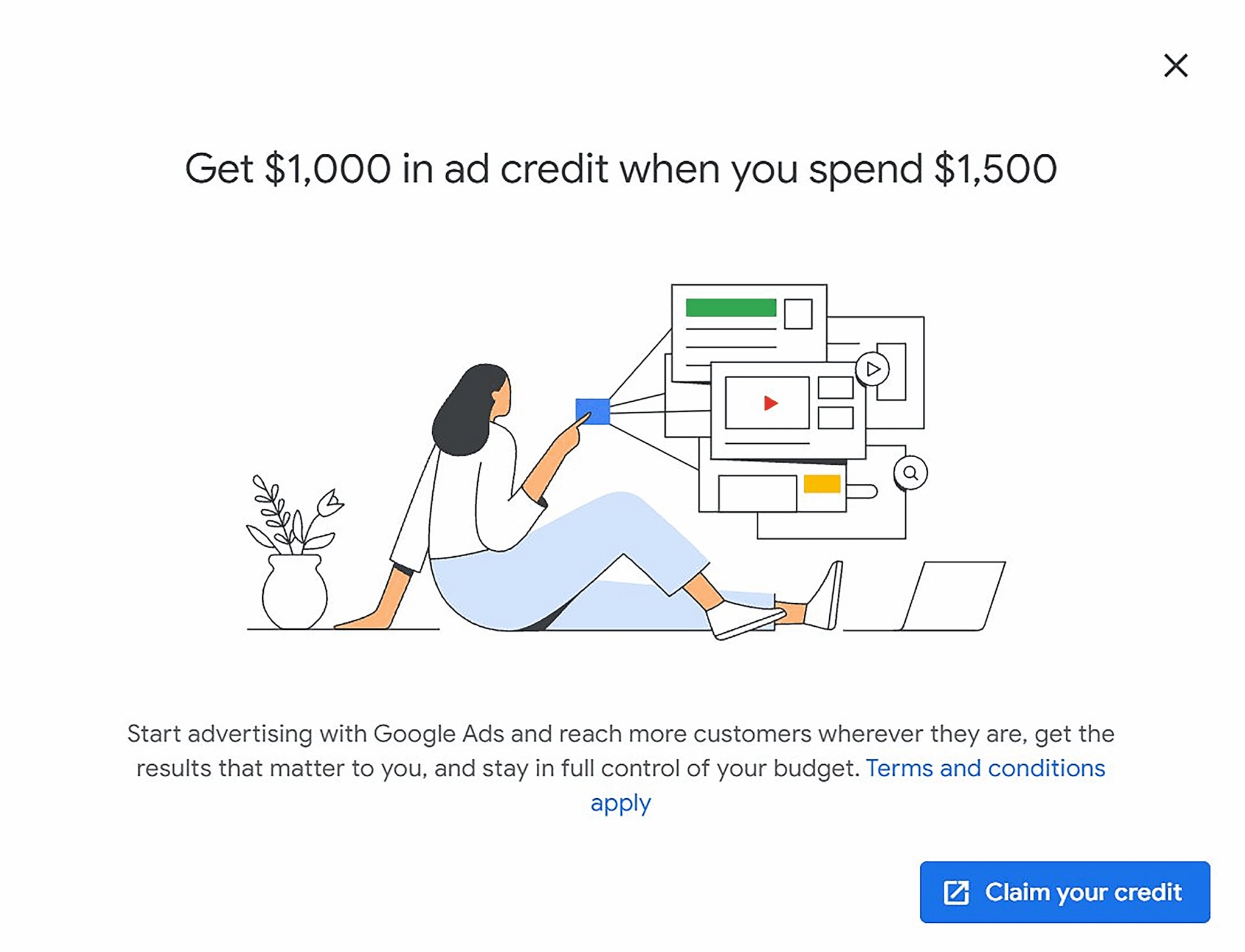
Google’s aggressiveness in promoting its ad options strikes me distinctly. I encountered an ad via a full-screen takeover on an organic SERP—a rarity for Google whose full-screen takeovers usually signal terms changes or opt-ins.
Recent Terms and Conditions underline Google’s user data sharing across Alphabet properties to personalize advertising. This sharing combines with modeled data to fine-tune targeting on both micro and macro levels.
It seems Google will continue this path unless opposed. Google’s vast market share limits alternatives for searchers, publishers, and advertisers, offering them few escape options. This enables Google to prioritize monetized AI results over organic traffic, though adjusted ad labeling might blur distinctions further.
The updated Terms and Conditions, shown to EU users, emphasize Google’s data use across platforms. Including Google Ad services in the update illustrates their reach through our ad data, indicating how advertisers fund Google’s platform enhancements, despite limited data access.
So what can we do to protect the health of the internet?
I’m captivated by AI’s potential, often diving in with reckless excitement. I confess to leaning towards “AI doomism,” believing negative scenarios are more probable due to our tendencies and lack of oversight.
Once technology manifests, it cannot be undone, particularly online, where it is ever rememberable. Human memory is flawed, but the internet remembers, so the AI genie is now out of the bottle.
So, how do we prepare for AI’s future and craft frameworks, guidelines, and rules preserving internet health while fostering AI innovation? How do we allow diverse content discoveries without stifling AI progress?
I believe in collaboration between digital marketing and publishing industries, which are already uniting to protect copyright interests. Operating separately won’t generate internet-protecting measures on either side.
Until solid AI regulations are created and enforced, setting collective, collaborative internet protection standards surpasses individual interests. Like unionized workers defend against exploitation by powerful companies, we need collective bargaining and protection.
Some EU movements aim for broader digital and AI regulation, but digital marketing and SEO might benefit from self-developed, community-enforced standards, moving beyond “black hat” or “white hat” labels, especially for AI. It’s a dialogue worth pursuing.