Video is undeniably one of the most compelling and information-rich marketing tools I have at my disposal.
While text can convey a message, video brings it to life, offering emotional depth and context like nothing else.
For AI, these videos are a treasure trove of data, enabling precise information processing and understanding.
There was a time when video perplexed search engines, but today, AI can effectively ‘watch’ and decode video content by breaking it down into visual, auditory, and textual streams.
Join me as I dive into optimizing videos for AI to maximize visibility and accuracy.
Why Video Matters in AI: Contextual Density Optimization
Back in the day, understanding a video relied heavily on meta descriptions like titles, tags, and transcripts. Now, video files themselves directly inform AI training.
AI models such as Gemini 1.5 Pro ‘view’ videos through discrete tokenization, translating video content into an understandable language.
AI performs three key functions when processing video:
- Seeing: It captures snapshots at set intervals to interpret on-screen actions.
- Hearing: It analyzes audio far beyond words, capturing emotions and background nuances.
- Connecting: By associating actions like someone holding a wrench with the word “wrench,” it creates meaningful links.
Precision and quality are crucial—videos that focus on specific, clear data, or what’s termed content granularity, have a stronger impact than drawn-out ones.
AI can even glean ‘silent’ information, like:
- Text on presentation slides
- Product labels in demos
- A presenter’s facial expressions
These elements translate videos into a language that AI understands. A blurry video or unclear audio could lead AI to erroneously favor a clearer competitor source.
Dig deeper: How to Dominate Video-Driven SERPs
Preventing AI Misunderstandings About Your Business
Sometimes AI may fill in gaps about my brand using competitor data.
For instance, if competitors offer trials and I don’t, AI might incorrectly assume I follow the same practice, leading to brand drift.
High-quality video is an effective remedy, serving as factual ground truth that prevents speculative guessing by AI.
- Nuance: Videos featuring expert insights on complex services provide details often missing in written content.
- Correction: Fresh videos replace outdated AI knowledge, updating its understanding.
- Trust: AI is less inclined to guess with high-trust visual signals.
Tip: Incorporate video transcripts and audio into RAG systems to ensure AI accurately narrows your brand narrative.
How AI Engages with Videos
With models like Gemini 1.5 Pro, AI processes text, images, and audio simultaneously.
Other AIs depend on distinct specialized models for processing, which handle each element separately.
No matter how AI interacts with my videos, its performance improves with structured text—carefully review transcripts, optimize titles, and ensure captions are spot-on.
FYI: Gemini 1.5 Pro can process entire movies or webinars without trouble, tokenizing video content at 300 tokens per second.
This one-frame-per-second sampling influences video editing trends like smash cuts, popular on platforms like TikTok and Instagram Reels, but these may not mesh well with AI’s need for clarity.
Fast edits risk missing important visual information; frames should be visible long enough for accurate sampling.
Revisit “slow TV” to maintain visual clarity in technical content, with slow pans and deliberate scene changes.
Dig deeper: YouTube SEO in the Age of AI Overviews
Visual Layers
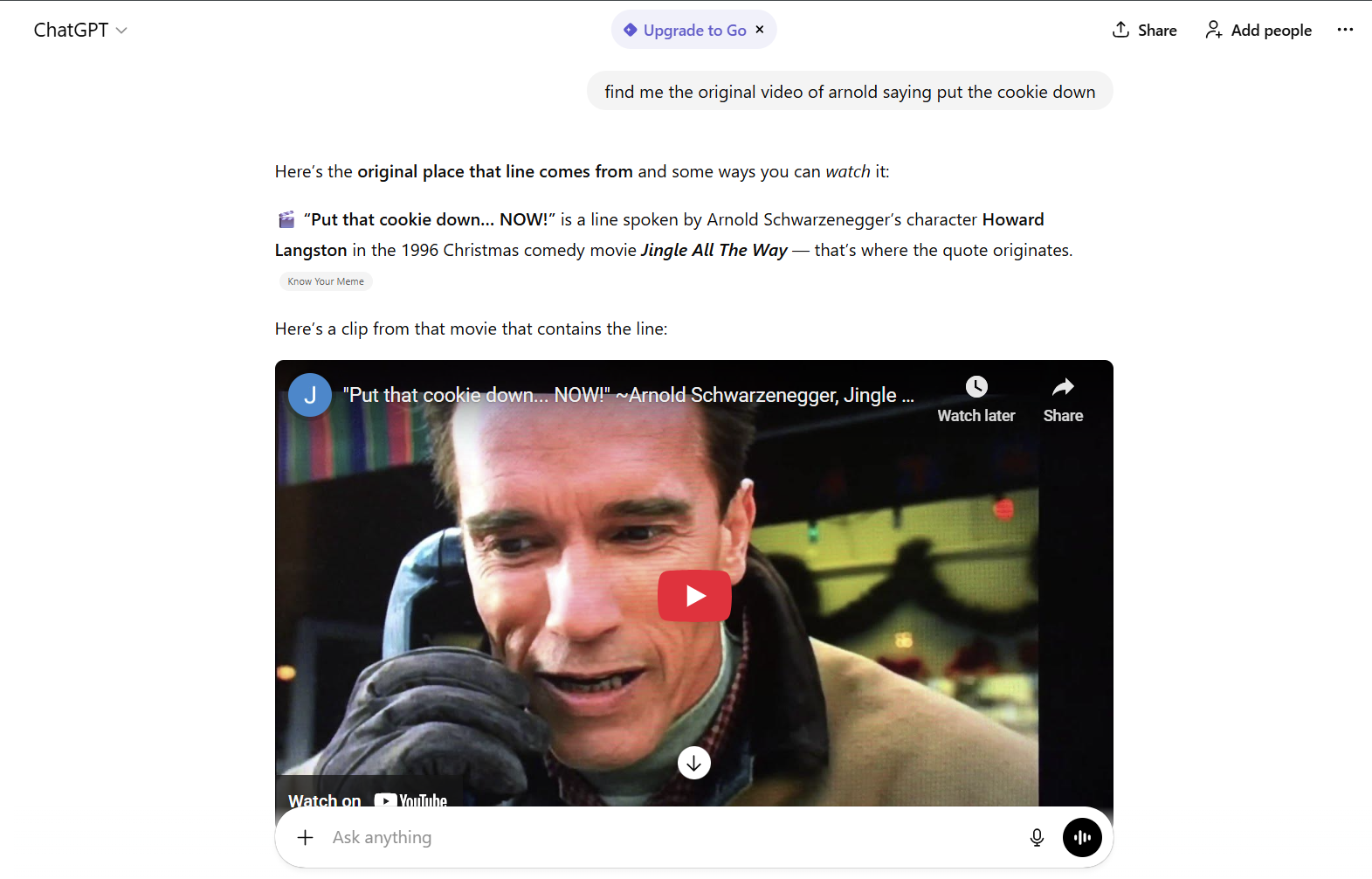
Even with cutting-edge AI, elements like facial recognition and text scanning (OCR) are vital in decoding video content.
Key focus areas include:
Resolution and Readability
Avoid blurry videos as OCR struggles with anything below 360p despite super-resolution techniques. Aim for crisp 1080p for optimal results.
Contrast and Font Selection
For machine readability, choose bold fonts like Arial or Helvetica on a high-contrast background, such as white on black.
Visual Anchors
Clear visual anchors help AI visualize and connect information, whether it’s the UI of software or rotating a physical product for spatial understanding.
Audio Layers
My voice in a video shapes the message. AI analyzes patterns and emphasis to identify significant content.
Advanced models process audio like text, converting speech via ASR models.
- Speaker Identification: Clarify speakers to enhance AI understanding.
- Audio Bolding: Use pauses like punctuation to emphasize key points.
- Consistency: Align spoken and visual content for cohesive messaging.
Tip: Sync scripts with visuals for cohesive communication.
Dig deeper: The SEO Shift: Videos as Source Material
Text Layers
AI is improving at ‘watching’ video, but text remains crucial.
Transcripts Are So Important
Transcripts act as a Rosetta Stone, making video content easy for AI to process quickly and accurately.
- Speed: AI quickly understands an entire video through text.
- Accuracy: It removes guesswork from AI’s processing.
- Compatibility: Essential for AI unable to watch video directly.
Provide a human-verified transcript in the description or captions for ultimate accuracy.
Meet VideoObject Schema
Utilize VideoObject schema for metadata communication, ensuring elements like clips and transcripts are clear.
- HasPart: Define specific video segments for precise AI understanding.
- Transcript: Provides near-perfect accuracy.
- InteractionStatistic: Highlights authority and engagement levels.
Start Optimizing Videos for AI
Investing in video ensures my brand is accurately represented by AI, enhancing my online presence and authority.
Without video, AI might inaccurately conclude who I am based on competitors, impacting brand perception.
Ultimately, video is the best way to assert myself as an industry authority for both humans and AI.
Dig deeper: Technical Guide to Video SEO
Inspired by this post on Search Engine Land.