Tag: AI Discovery

  • SEO Strategy for AI Discovery: A Practical Operating Plan

    SEO Strategy for AI Discovery: A Practical Operating Plan

    You may still be earning rankings while becoming less visible at the moment a buyer forms a shortlist. SEO hasn’t stopped working. The path to a decision now runs through search results, AI-generated answers, brand verification, and sometimes a much later visit to your website.

    If your plan still equates success with sessions, publishes interchangeable answers, and treats every audit warning as urgent, your team will spend more without learning much. The practical shift is to make your knowledge easy for machines to extract, easy for people and systems to verify, and connected to pages where a buyer can act.

    Design for selection, verification, and action

    AI-driven discovery is not a separate funnel that replaces organic search. It is another layer in a fragmented journey. A buyer may investigate a category inside an assistant, verify a vendor through Google, visit a pricing or solution page, leave, and return through a branded search. That makes the eventual website session valuable, but it does not make the session a complete record of how the decision began.

    Your strategy therefore has to do more than win a position for a keyword. It has to help your brand become a plausible answer, provide evidence that the answer is accurate, and give the buyer a useful next step. Treat those as distinct jobs:

    JobWhat the buyer or system needsAssets to inspectQuestion for your team
    SelectionA clear match between a need, topic, entity, and answerEducational pages, category pages, definitions, and problem-led resourcesCan someone identify the subject and main answer without reconstructing it from vague copy?
    VerificationConsistent facts, boundaries, evidence, and relationshipsAbout pages, author information, methodologies, specifications, policies, and supporting evidenceCan an outside system check who made the claim, what it applies to, and why it is credible?
    ActionFit, cost, trade-offs, availability, and a sensible next stepHomepage, product pages, solution pages, pricing pages, and commercial contentDoes the page answer the questions that remain after basic research is complete?

    Assign every important page a primary job. A discovery page can support verification and action, but it should not try to perform every role equally. Once the role is clear, add contextual internal links to the evidence and decision pages a reader would logically need next.

    This also changes how you judge top-of-funnel content. Generic informational visits are increasingly vulnerable because buyers can get basic explanations without opening a website. Commercial and high-intent pages deserve their own reporting because a decline in broad informational traffic can coexist with stronger conversion performance. Discovery content is still useful when it establishes recognizable expertise, earns consideration, or moves a qualified reader toward verification. Traffic for its own sake is not enough.

    Turn expertise into machine-readable evidence

    Isometric illustration of an expert's source materials being organized into linked, verifiable information blocks.

    Many organizations already possess the knowledge needed to become useful answers. The problem is its form. Important facts can be trapped in PDFs, hidden behind forms, disconnected from structured data, or diluted by vague marketing language. A person with enough time may piece the meaning together. A retrieval system has a harder job.

    Run an extraction audit before adding more content

    Choose the entities, claims, and commercial facts that matter to a buying decision. Then inspect whether each one can be accessed, interpreted, and corroborated. Ask:

    • Is the essential information available in crawlable HTML, or does it exist only inside a PDF, image, gated download, script-dependent interface, or sales conversation?
    • Does the claim identify its subject, scope, audience, geography, conditions, and limitations?
    • Are company names, offering names, locations, credentials, and contact details consistent across the site?
    • Can a reader tell who is responsible for the information and what evidence or methodology supports it?
    • Do internal links connect the claim to the relevant organization, person, offering, location, and supporting material?
    • Does the structured data describe the same facts that a visitor can see, or has markup become a second and conflicting version of the business?

    When a critical document must remain a PDF, publish a useful HTML summary beside it. State what the document covers, expose the decisive facts in page text, and link to the full file for verification. Do not merely upload another copy and assume that availability equals understandability.

    Replace slogans with bounded statements. Innovative solutions for modern businesses gives a system almost nothing to work with. A stronger pattern is: the company provides a defined service, for a defined audience, in a defined market, with an explicit scope and boundary. The exact language will vary, but the statement should survive extraction without losing its subject or meaning.

    Use JSON-LD as a map, not as a substitute for evidence

    JSON-LD can make entities and relationships explicit. It cannot turn an unsupported assertion into a verified fact, rescue unclear page copy, or create authority by itself. Begin with visible, accurate information. Then use structured data to express the relationships among the business, its people, offerings, locations, and supporting material.

    Validation is only the syntax check. A technically valid graph can still be strategically empty. After validation, read every important property as if you were an unfamiliar buyer: Is the value specific? Is it consistent with the page? Does it distinguish the entity from similarly named entities? Does the relationship help explain why this business is relevant to the topic?

    Use descriptive headings, answer-first paragraphs, lists for criteria, and tables for genuine comparisons. This makes sections easier to retrieve without turning the page into disconnected fragments. Each section should identify its subject and answer a complete question, while internal links preserve the larger context.

    Treat platform-specific files as supporting infrastructure

    An llms.txt file may help systems that choose to use it even though Google does not require it. Treat it as a maintained navigation aid, not a universal ranking switch. It should point toward canonical, useful resources and stay aligned with the site. It does not replace crawlability, internal linking, structured data, or clear HTML content.

    The broader rule is important: do not let the requirements of a single platform define your entire discovery strategy. Preserve the technical foundations that conventional search needs, but evaluate additional systems on their own behavior, interfaces, and publisher support. AI discovery is multi-platform, and infrastructure that serves one system may be irrelevant to another.

    Put the next sprint behind the highest-leverage pages

    An AI discovery plan can quickly become a second backlog full of schema requests, content rewrites, technical warnings, monitoring tools, and speculative experiments. The cure is not a longer checklist. It is a stricter definition of impact.

    Start with pages that can influence a decision

    Review the homepage, pricing pages, product and solution pages, and other commercial content before commissioning another batch of generic explainers. These pages need to answer fit, scope, differentiation, evidence, limitations, and next-step questions. They are also where a late-stage visitor is most likely to arrive after researching elsewhere.

    Then look for existing demand you can compound. Pages already performing on the first results page and pages ranking in positions 11-30 can be stronger candidates than brand-new topics with no demonstrated traction. Refresh outdated sections, clarify the answer, add missing decision criteria, improve the search snippet, and link from relevant authoritative pages.

    When you do create content, ask what it contributes that an answer engine cannot reproduce from a collection of interchangeable pages. Useful differentiators include precise specifications, transparent methodology, original evidence, explicit limitations, expert reasoning, and decision criteria grounded in the actual offering. A page does not become non-commodity content merely because it is long.

    Filter every task through impact, reach, effort, and risk

    Audit software is good at detecting conditions and poor at understanding your commercial context. A warning affecting an abandoned legacy URL is not equivalent to a noindex directive on a revenue page. More importantly, a third-party audit score is not itself a ranking input.

    • Impact: Could the work materially improve qualified visibility, conversions, revenue, or the accuracy of how the brand is represented?
    • Reach: Does the issue affect an isolated legacy URL, an important page group, or the entire site?
    • Effort: What development, content, subject-matter, data, and approval work does the change require?
    • Risk: Could delay cause lost indexation, broken navigation, poor usability, compliance exposure, security problems, or an inaccurate public claim?

    Fix high-impact blockers immediately. These include serious crawlability and indexation failures, incorrect canonicals on important pages, server problems, migration defects, and issues with security or compliance implications. Schedule high-impact work that needs substantial resources. Bundle low-impact, low-effort cleanup with adjacent work. Deliberately leave low-impact, high-effort defects alone unless their context changes.

    That last choice is strategic neglect, not carelessness. Minor errors on non-indexable legacy URLs, insignificant redirect chains, non-critical HTML defects, and marginal performance refinements after a page reaches an acceptable state should not displace work on discoverability, evidence, internal linking, or conversion. Record the decision and its trigger for reconsideration so the same warning does not restart the debate every month.

    Measure influence without treating every click equally

    Conceptual illustration of a buyer moving through search, AI, verification, recommendation, and website touchpoints before a decision.

    Traffic remains useful, but it is no longer a sufficient definition of success. Even if the exact share varies by query and methodology, an estimated 60% of searches ending without a click to the open web makes session totals structurally incomplete. A missing click can mean the user received a satisfactory answer, never saw your brand, remembered your brand for later, or abandoned the task. Traffic alone cannot tell you which occurred.

    Separate your dashboard by page role and business intent. Do not blend a high-volume definition page with a pricing page and then judge both by the same traffic target.

    • Business outcomes: Track qualified leads, purchases, booked demonstrations, pipeline, and revenue where attribution is dependable.
    • Decision-page health: Monitor impressions, landing visits, engagement with meaningful next steps, and conversion rate for the homepage, pricing, product, solution, and commercial-content groups.
    • Discovery-page contribution: Track whether educational pages earn relevant visibility, attract qualified visitors, and lead people toward evidence or decision pages.
    • Visibility indicators: Watch branded search direction, detectable assistant referrals, and repeated appearance or citation across a stable set of buyer questions.
    • Technical eligibility: Monitor indexability, canonical behavior, server reliability, structured-data validity, and other conditions that can prevent an important page from being retrieved or trusted.

    Branded search volume can be a directional proxy for increased awareness, including awareness created inside AI systems, but it is not proof of AI attribution. Pair it with a stable prompt set. Use recurring discovery, evaluation, and decision questions; check the platforms your audience actually uses; and record whether your brand appears, which page is cited, whether the description is accurate, and which alternatives appear beside it. Look for repeated patterns rather than reacting to a single volatile answer.

    Your analytics may still miss the beginning of the journey. Add a simple first-heard-about-us field to an appropriate conversion flow, and include AI assistants among the response options when relevant. Self-reported attribution will not produce perfect channel accounting, but it can reveal influence that last-click reports hide.

    Most importantly, report trade-offs honestly. If broad organic sessions fall while qualified visits, decision-page conversions, and revenue rise, the program may be improving. If branded searches rise but the site cannot convert or verify the claims buyers encounter elsewhere, visibility is growing faster than readiness. Those are different problems and require different work.

    Key takeaways

    • Build for the full journey: selection as a possible answer, verification as a credible entity, and action on a decision-ready page.
    • Move decisive facts out of inaccessible files and vague copy into clear HTML, then use JSON-LD to describe the visible entities and relationships.
    • Prioritize commercial pages, proven search opportunities, differentiated evidence, and true technical blockers before broad cleanup.
    • Use impact, reach, effort, and risk to decide what enters the roadmap and what can be left alone.
    • Measure qualified outcomes, page-group health, branded demand, and repeatable AI visibility signals alongside traffic.

    For your next planning session, bring the page group closest to revenue, its recurring buyer questions, its extraction problems, and its conversion data into the same conversation. Fix the largest break in that chain first. That will tell you more about AI discovery readiness than another sitewide score ever could.

    References

  • How to Measure AI Discovery Traffic for B2B Pipeline Growth

    How to Measure AI Discovery Traffic for B2B Pipeline Growth

    You can see buyers using ChatGPT, Claude and Gemini to research vendors, yet your pipeline report may still reduce the result to organic, referral or direct traffic. If you cannot connect that activity to qualified demand, you cannot tell whether AI discovery deserves more investment or merely produces interesting charts.

    The practical answer is not a single AI metric. Build an evidence chain from visibility, to an identifiable site visit, to an onsite action, to an opportunity. Google Analytics can now cover the middle of that chain more cleanly. Your CRM, LinkedIn activity and measurement rules must cover the rest.

    Measure three layers instead of one AI traffic number

    Three connected translucent layers depict AI visibility signals, a website session and a conversion path leading to business account and opportunity nodes.

    AI discovery is not the same thing as AI referral traffic. A buyer can encounter your brand in an assistant without clicking, visit through an identifiable assistant link, or return later through another channel. Those behaviors create different evidence and should not be combined under one label.

    Measurement layerEvidence you can recordDecision it supports
    Discovery visibilityYour company, product or page appears for a controlled set of buyer questionsWhether assistants associate your brand with the right problem and category
    Identifiable trafficA supported assistant sends a visit that Google Analytics recognizesWhich assistants and cited pages generate site demand
    Business outcomeThe visitor completes a qualified action and the lead or account advancesWhether AI discovery contributes to pipeline, not just sessions

    For visibility, maintain a fixed set of questions that reflect how a buyer researches your category. Record the assistant, exact prompt, date, brands mentioned, cited URLs and whether your brand appears in the answer or only in a citation. Keep the prompt wording and access conditions consistent when you repeat the check. The result is an observation, not a universal ranking, because assistant outputs can vary.

    For traffic, use the native AI classification in Google Analytics. For business outcomes, use your existing definitions of a qualified action, lead, opportunity and revenue. This division prevents a common reporting error: treating a mention, a visit and a sale as interchangeable proof of success.

    Build a GA4 view your revenue team can trust

    Google Analytics now identifies supported assistant referrals automatically. Recognized visits can use the medium ai-assistant, the channel group AI Assistant and the campaign value (ai-assistant). This removes much of the custom filtering previously needed to isolate traffic from supported tools.

    1. Confirm that AI Assistant appears in your acquisition reporting. If it does not, check the date range and whether you have any identifiable assistant referrals before changing channel definitions.
    2. Break the channel down by source and landing page. The channel total tells you the size of the stream; the source shows which supported assistant sent it; the landing page reveals which answers or resources earned the click.
    3. Compare AI Assistant and organic search over the same date range. Use the same qualified actions and conversion definitions for both channels. Otherwise, the comparison answers a reporting question rather than a business question.
    4. Show counts beside rates. A high conversion rate based on a very small number of sessions is useful as an early signal, but it is not yet a dependable forecast.
    5. Keep unidentified traffic unidentified. Do not relabel direct visits as AI traffic merely because AI visibility increased during the same period.

    Your recurring report should include identifiable AI sessions, source, landing page, qualified action count, qualified action rate and any matched opportunities. Add the number of leads that explicitly named an AI assistant even when analytics did not record an AI referral. That last field exposes influence the channel report cannot see without pretending the attribution is certain.

    The pattern matters more than the channel total. If AI traffic is small but converts well, protect the pages earning those visits and expand the buyer questions they answer. If traffic grows while qualified actions remain flat, inspect the landing page promise, offer and next step. More assistant visibility will not repair a page that attracts one intent and presents a call to action for another.

    The AI Assistant channel is a measurement improvement, not complete AI attribution. It covers identifiable referrals from supported assistants. It cannot count an answer that satisfies the buyer without a click, and it cannot automatically recover an AI touch when the buyer returns later through direct traffic, branded search or a different device.

    Connect assistant referrals to leads, accounts and opportunities

    Anonymous referral streams pass through a website gateway and connect in sequence to a lead, a company account and a qualified opportunity.

    B2B attribution becomes difficult after the click because evaluation often continues across sessions and people. Solve that problem with explicit evidence labels rather than a more aggressive attribution claim.

    • Observed AI referral: Google Analytics placed the session in the AI Assistant channel.
    • Self-reported AI discovery: A lead named an assistant when asked how they found the company.
    • AI-influenced opportunity: the account has either form of documented AI evidence before opportunity creation.
    • AI-sourced opportunity: AI discovery met your narrower, written rule for the first known acquisition touch.

    Do not merge these labels. An observed referral has stronger click evidence than an inferred influence, while a self-reported answer can reveal discovery that analytics missed. Both are useful as long as the dashboard preserves the distinction.

    1. Choose the onsite action that represents meaningful intent for your sales motion. It might be a demo request, contact submission, trial start, pricing interaction or another event your team already treats as qualified.
    2. When a visitor becomes a lead, carry permitted acquisition fields into the CRM: original source, current source, landing page, campaign and the date of the qualifying action. Retain the original values rather than overwriting them on every return visit.
    3. Add a short, optional discovery question to the form or sales qualification process. Allow the buyer to name ChatGPT, Claude, Gemini or another route in their own words instead of forcing every answer into a fixed channel list.
    4. Join the evidence at the lead and account levels where your consent and data practices allow it. Account-level reporting matters when one person researches and another submits the form.
    5. Write the attribution rule directly in the dashboard. State which touch qualifies an opportunity as sourced, which touches count only as influenced, and whether the evidence must occur before lead or opportunity creation.

    Track progression as counts and rates: identifiable AI sessions, qualified actions, leads, opportunities and closed revenue. Keep pipeline value beside opportunity count because one large deal can otherwise make a small channel look predictably scalable. For the same reason, do not forecast from conversion rate alone while the denominator remains small.

    This model also gives sales a useful feedback role. When a prospect mentions an assistant, record the assistant, the question they were trying to answer and any page or claim they remember seeing. That information can reveal buyer language, missing content and attribution gaps without turning an anecdote into a performance benchmark.

    Turn LinkedIn activity into a measurable discovery loop

    LinkedIn can strengthen the public evidence around a B2B company, but activity alone is not a growth result. Treat the company page, employee expertise, long-form content and distribution as inputs. Measure assistant visibility, referral traffic and pipeline separately as outputs.

    Remove ambiguity from your company and expert profiles

    Start with factual consistency. Keep the business address, contact details and product descriptions accurate on your website. Update the LinkedIn company page’s About section and services, including relevant industry language. Treat the profiles of executives and active subject-matter experts as extensions of the same entity, with current roles and clear areas of expertise. These are core surfaces for B2B AI discovery work.

    Assign an owner to each surface and update all of them when the company changes a product name, category, service or positioning statement. If your site publishes corresponding organization or product structured data, include it in the same update. Consistency does not guarantee an assistant mention, but it removes avoidable uncertainty about what the company does and who represents it.

    Publish one complete answer for each valuable buyer question

    Use LinkedIn articles and newsletters for questions that require more than a short update. The 800-1,200-word range associated with stronger AEO mentions is a useful starting hypothesis, not a universal ranking requirement. A complete 700-word answer is more useful than 1,000 words padded to satisfy a target.

    Give each long-form asset a specific job:

    • Use the buyer’s question or decision in the headline.
    • Answer it directly near the beginning.
    • Name the product category, intended user and relevant constraints plainly.
    • Explain criteria and tradeoffs that help the buyer make a decision.
    • Link to the corresponding website resource when the reader needs evidence, implementation detail or a next step.
    • Connect the content to an identifiable expert whose profile supports the subject.

    Add campaign parameters to links you control from LinkedIn so you can measure LinkedIn visits accurately. Keep those visits classified as LinkedIn traffic. A tracked LinkedIn click is not an AI referral, even when the content was also designed to improve AI discovery.

    Use engagement thresholds as experiments, not ranking factors

    If your team needs an initial promotion checkpoint, start with at least 10 substantive comments or 60 reactions. These figures can guide a campaign test, but they are not verified causal ranking factors for every LLM. Record them as engagement outcomes, then look independently for changes in assistant mentions, AI Assistant referrals and qualified demand.

    Count comments that contribute a question, example, objection or informed response. A pile of generic replies may increase the visible total without improving the information around the topic. Employee participation, expert partnerships, boosted company updates, Thought Leader Ads and follower ads can expand distribution, but paid and organic exposure should remain separate in your campaign log.

    Test one topic cluster from publication to pipeline

    1. Choose one buyer question tied to a product or service that can create qualified demand.
    2. Record the current website answer, LinkedIn coverage, controlled prompt observations and identifiable AI traffic.
    3. Correct company and expert profile details before publishing, so entity changes and content changes happen in a documented sequence.
    4. Publish the complete website resource and its LinkedIn treatment. Record the URL, author, publication date, distribution method, paid support and engagement.
    5. Watch all three measurement layers through a reporting period appropriate to your traffic volume and sales cycle.
    6. Compare the result with a similar topic cluster you did not change. Treat the difference as directional evidence unless your test design supports a stronger causal conclusion.

    Read breaks in the chain literally. More LinkedIn engagement without more assistant visibility proves distribution, not AI discovery. More assistant visibility without referral growth may mean the answer resolves the question without a click or does not present a useful next step. More AI referrals without qualified actions points to the landing page or intent match. More qualified leads without opportunities points to qualification, offer fit or the sales handoff.

    Key takeaways

    • Measure AI discovery as visibility, identifiable traffic and business outcomes. No single metric covers all three.
    • Use GA4’s AI Assistant channel for recognized referrals from supported assistants, but do not relabel direct traffic to fill attribution gaps.
    • Preserve observed referrals, self-reported discovery, influenced opportunities and sourced opportunities as separate evidence classes.
    • Keep website facts, LinkedIn company details and expert profiles current before trying to scale content distribution.
    • Treat the 800-1,200-word content range and engagement thresholds as test inputs, not universal LLM ranking rules.
    • Scale a topic only after you can follow its path from buyer question to content, assistant visibility, qualified action and pipeline.

    Start with one revenue-relevant buyer question. Establish the baseline, publish a complete answer, track the assistant referral and carry the evidence into your CRM. The first broken link in that chain tells you what to fix next. Repair it before increasing content volume or promotion spend.

    References

  • Unlock Local Visibility: Harness AI in Local Search Now

    Unlock Local Visibility: Harness AI in Local Search Now

    I recently discovered how AI is revolutionizing the way customers find local businesses. Tools like Google AI Overviews, Gemini, and Ask Maps are paving the way for more detailed, conversational searches.

    It’s clear to me that traditional search rankings are no longer the sole factor in gaining visibility. Ensuring your business details are complete and accurate—like your Google Business Profile, reviews, and local content—can make a big difference.

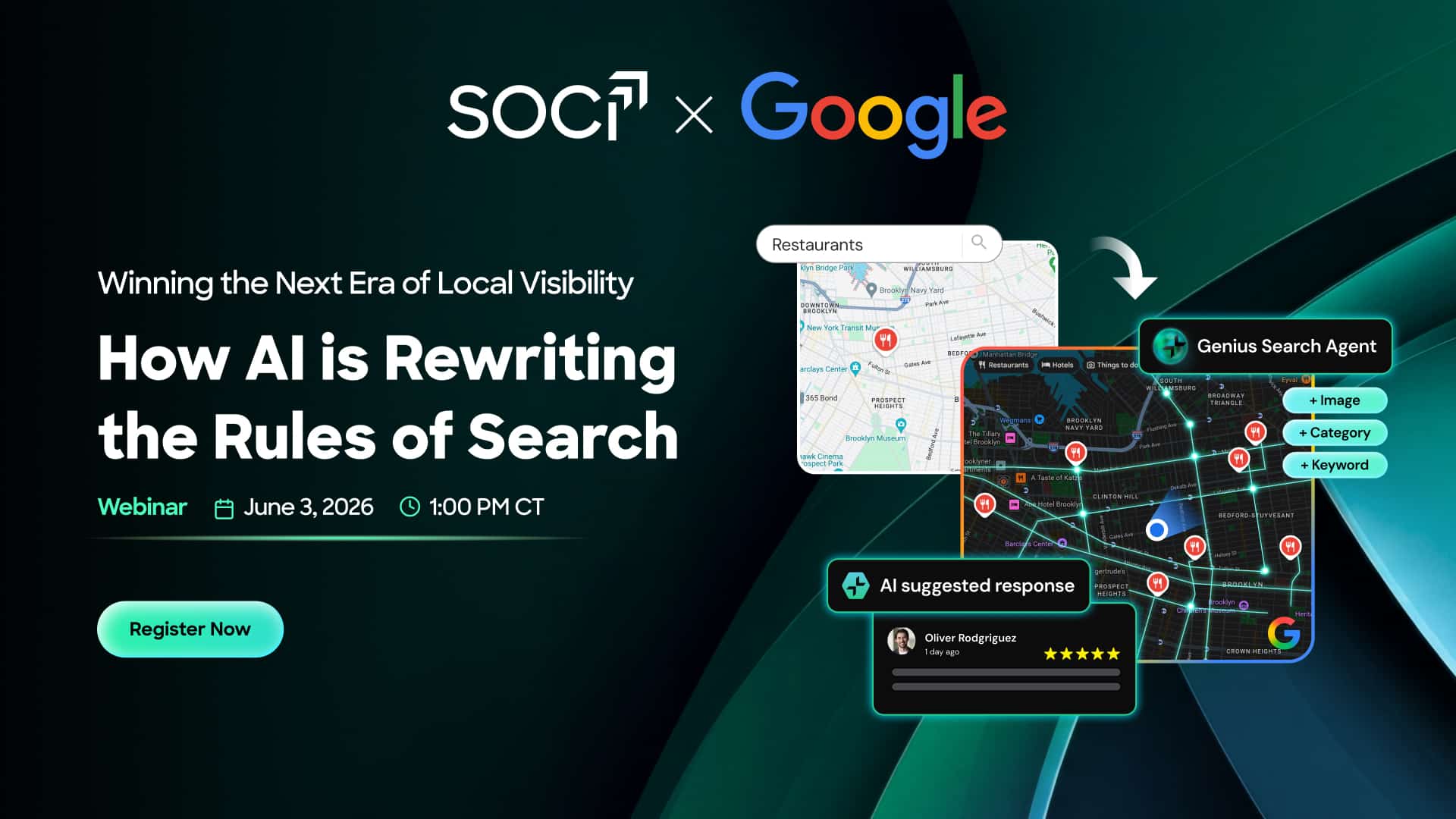
    I’m excited to join SOCi and Google for an exclusive webinar, Winning the Next Era of Local Visibility, on June 3. It’s a golden opportunity for anyone looking to stay ahead of the curve.

    During this webinar, I look forward to learning:

    • How AI is transforming local search dynamics.
    • The types of signals that AI considers for recommendations.
    • Strategies to boost visibility on Search, Maps, and Gemini.
    • The implications of Ask Maps for your brand.

    I’m convinced that AI is already shaping customer discovery, so it’s crucial to ensure your business isn’t left behind.

    Register now to secure your spot.


    Inspired by this post on Search Engine Land.


    crushpress.ai community screenshot
  • JavaScript SEO for Ecommerce: A Practical Build Standard

    JavaScript SEO for Ecommerce: A Practical Build Standard

    Your storefront can look complete in a browser while sending a nearly empty page to crawlers. The failure usually sits in the handoff: the server returns a shell, then JavaScript fetches the product content, navigation, filter state or structured data. If that second step is delayed or skipped, the page loses the information that makes it discoverable.

    You do not need to remove JavaScript or give up a fast, interactive storefront. You need a clear division of responsibility: the initial HTML should explain what the page is and where its important links lead; JavaScript should improve how shoppers interact with it.

    Define the minimum HTML contract for every template

    Start with an output standard, not a framework decision. For each page template, write down what must be present in the server’s initial HTML response before any client-side code runs.

    On a product page, that normally includes the product name, descriptive copy, current price, availability, review information intended for search, relevant Q&A content and breadcrumbs. A category page should identify the category and expose its primary product and subcategory destinations. These elements can be delivered in the initial HTML while comparison carousels and other engagement features wait for JavaScript.

    Key takeaways

    • Put the page’s identity, primary content and current commercial facts in the initial HTML.
    • Render important destinations as real anchor elements with href attributes.
    • Give every filter state intended for search a stable, readable URL that works when requested directly.
    • Include Product structured data in the same server response as the visible product information.
    • Keep recommendation widgets, comparison tools and nonessential third-party scripts out of the critical rendering path.

    Use View Source or an HTTP client when checking this contract. The Elements panel in browser developer tools shows the DOM after JavaScript has had a chance to repair or populate it. A complete rendered DOM does not prove that the server response was complete.

    Framework choice is not a substitute for this test. Next.js can combine server rendering and static generation, Astro can send content with no JavaScript by default and hydrate selected interactive islands, and Shopify Hydrogen can support deferred client-side behavior. The relevant question is not which label appears in your technology stack. It is what each template actually sends before hydration.

    Make the catalog discoverable before shoppers interact

    An isometric catalog of product rooms connected by illuminated corridors, with a small crawler robot following a direct route from the entrance to a product alcove.

    A crawler should not have to open a menu, trigger a click handler or run a search to discover your important categories and products. Render navigation links in the initial response, using anchor elements whose href values point to real destinations.

    This distinction matters in component-based storefronts. A button is appropriate for opening a drawer, changing a local view or adding an item to a cart. A link is appropriate when the shopper is moving to another URL. A styled div with an on-click event may look like a link, but it does not provide the same dependable discovery path. Ecommerce navigation built as ordinary anchors remains visible to crawlers even when JavaScript supplies the interactive behavior.

    Treat every filter state as a URL decision

    Faceted navigation needs two separate decisions: which states help shoppers, and which states deserve to become search landing pages. Do not make every possible combination indexable by default. That can produce a large collection of thin or repetitive URLs. Classify each facet and combination according to its intended role.

    • Search landing state: Give it a stable URL, meaningful page context and a server response containing the expected product set.
    • Discovery path: Use crawlable links when the state helps crawlers reach important inventory, but decide separately whether the resulting page should be indexed.
    • Shopper-only interaction: Keep purely presentational states, such as a view toggle, as interface controls rather than pretending they are distinct landing pages.

    Client-side grid updates are fine after the initial load. The URL still needs to represent any state you expect people or search systems to revisit. Prefer readable URLs over hash fragments or opaque, bracket-heavy parameters when a filtered page is meant to be shared, bookmarked, crawled and indexed.

    Test a filter URL by copying it into a fresh session and requesting it directly. The correct category context, selected state and core product results should be available without replaying the clicks that created the URL. If the server returns the unfiltered category and only browser memory restores the selection, the URL is not yet a dependable landing page.

    Send Product structured data with the visible facts

    Product structured data should arrive in the initial HTML, not appear only after a client-side component mounts. Place the JSON-LD script in the server response and generate it from the same current product data used for the visible page.

    This is particularly important for price and availability because those values can change frequently. When the visible page, the structured data and the underlying commerce record use separate rendering paths, they can drift apart. Server-delivered structured data removes one avoidable dependency and gives crawlers immediate access to Product data without waiting for rendering.

    • Confirm that the Product JSON-LD exists in the raw response, not only in the rendered DOM.
    • Match the product identity in the markup to the title and description shoppers can see.
    • Keep price and availability consistent with the visible offer at the time the page is served.
    • Keep breadcrumb markup and visible breadcrumb navigation aligned.
    • Do not use structured data as a replacement for missing product content. It describes the page; it does not make an empty page complete.

    Valid markup does not guarantee a search feature or enhanced result. It does, however, remove a preventable technical reason for the product information to be missed or misunderstood.

    Protect the first render from third-party scripts

    Third-party code accumulates quietly on ecommerce sites. Analytics, chat, reviews, recommendations, personalization and advertising tools can all compete with the product page for browser resources. If they delay the main content, they also increase the work required to render and understand the page.

    Keep essential product information outside third-party widgets wherever possible. A review widget can provide interaction, for example, while the review summary or indexable review content remains part of the server response. A comparison carousel can load later because it enhances the shopping session rather than defining the product.

    Use script-loading behavior deliberately. Async suits an independent script that can execute whenever it finishes downloading. Defer suits a script that should wait until HTML parsing is complete and preserve its order relative to other deferred scripts. Both approaches require testing because the script’s own loader may create additional requests or inject more code.

    Deferring nonessential scripts can protect Largest Contentful Paint and reduce the rendering burden. The practical priority order is straightforward: deliver the product and navigation first, make the buying controls usable next, then initialize supporting services.

    • Inventory every third-party script on product and category templates.
    • Record what breaks if each script is blocked. If the product disappears, the dependency is too deep.
    • Mark the scripts that are essential for the initial buying path.
    • Load engagement and measurement code without blocking the initial content whenever its behavior permits.
    • Remove tags that no longer have a current owner or business purpose.

    Use a release test that catches invisible storefronts

    A quality assurance workstation compares an initial product-page view with an enhanced interactive view while an automated device scans both displays.

    A JavaScript SEO audit is most useful when it becomes a release check. Run it on representative product, category and filtered pages whenever you change rendering, navigation, data fetching or third-party tooling.

    1. Request the raw HTML for each representative URL without executing JavaScript.
    2. Search that response for the page title, descriptive content, price, availability, breadcrumbs, primary links and Product JSON-LD.
    3. Disable JavaScript and follow the main catalog links. The experience can be less interactive, but the destinations and page meaning should remain present.
    4. Open indexable filter URLs directly in a fresh session. Confirm that each response represents the requested state without requiring a previous click sequence.
    5. Enable JavaScript and compare the rendered page with the raw response. JavaScript may add interaction and secondary content, but it should not replace the page’s essential identity.
    6. Review the loading order of third-party scripts and check whether they delay the primary content or Largest Contentful Paint.
    7. Repeat the checks against the deployed production response. Do not rely solely on what the application produced in a local development environment.

    The raw-response test also provides a useful baseline for AI visibility. Some AI systems do not handle JavaScript efficiently, so a page that communicates its product, offer and hierarchy in HTML is easier to process without relying on a browser-like rendering stage.

    What you findLikely dependencyFix first
    Product name or grid is absent from raw HTMLClient-side content renderingFetch and render the core content on the server
    Destinations appear only after a menu interactionClient-only navigationRender real anchors with href values in the initial response
    Product JSON-LD exists only in the rendered DOMClient-side schema injectionSerialize the markup into the server response
    A filter works only after a click sequenceInterface state is not represented by the URLCreate a stable URL and return the corresponding state directly
    Primary content waits behind vendor codeBlocking third-party scriptsDefer, load asynchronously or remove nonessential scripts

    Start with one important product template and one category template. Write the HTML contract, disable JavaScript and fix the first essential element that disappears. Once the server response carries the meaning of the catalog, you can keep adding interactivity without asking every crawler and AI system to reconstruct the store for you.

    References

  • AI-Driven Acquisition: Build Brand Discovery Bottom-Up

    AI-Driven Acquisition: Build Brand Discovery Bottom-Up

    Your next prospect may not begin with your homepage, an ad, or even a conventional search result. They may ask an AI assistant to define the problem, compare possible approaches, narrow the field, and recommend a provider. Because AI tools can answer, compare, and recommend without sending the user to a website, your brand can lose consideration before a measurable visit ever occurs.

    The practical response is not to abandon awareness marketing. It is to change the order in which you prepare for organic discovery. First make the brand understandable. Then make its claims credible and its expertise easy to retrieve. Only then should you expect AI systems to introduce it confidently. This bottom-up sequence gives your acquisition work a foundation instead of leaving an assistant to infer what your brand is from scattered pages and inconsistent mentions.

    The buyer funnel remains top-down, but AI readiness starts at the bottom

    A translucent funnel points downward while connected data blocks rise from below to meet it at the center.

    People still move through a familiar progression: awareness, consideration, and decision. AI does not remove that progression. It changes who can influence the early stages and what that intermediary needs to know before it will mention you.

    That creates two connected sequences:

    • The human sequence moves from discovering a need or brand to evaluating options and making a commitment.
    • The machine sequence moves from identifying your brand to validating its relevance and credibility, then deciding whether to include it in an answer.

    The second sequence has to be built before it can support the first. An assistant cannot reliably recommend a company when it cannot determine what the company does, who it serves, how its products relate to the category, or whether anyone beyond the company supports its claims. That is why AI-oriented acquisition starts with understanding and credibility, even though the buyer still starts with awareness.

    This distinction also prevents a costly overreaction. Paid media, direct outreach, events, and other controlled channels can still create reach. Keep using them when they produce qualified demand. Just do not assume that awareness spend also teaches organic answer engines how to represent you. A memorable campaign can increase human recognition while leaving the underlying entity confused.

    Before expanding an awareness campaign, ask three readiness questions:

    • Can a machine identify the brand, its category, its offerings, and its intended customers without reconciling contradictory descriptions?
    • Can it find direct answers to the questions buyers ask while comparing and choosing?
    • Can it find credible corroboration outside the brand’s own website?

    If any answer is no, the immediate acquisition problem is not reach. It is missing or unreliable information at the layer that produces reach.

    Give machines a canonical version of your brand

    Brand understanding begins with facts, not slogans. A buyer may appreciate an expressive positioning line, but a retrieval system still needs unambiguous answers to basic questions: What is this entity? What does it provide? Who is it for? Which problems does it address? Where does it operate? How are its products, services, founders, and parent organization related?

    Create a canonical brand fact sheet before editing individual pages. It should record the approved form of your name, a plain-language category description, core offerings, primary audiences, supported locations or markets, important entity relationships, and the claims you are prepared to substantiate. Add the URLs where each fact should appear. Give every field an owner so that a positioning change does not produce five competing versions across the site.

    Then reconcile the public surfaces in a deliberate order:

    1. Correct the identity layer: the homepage, about page, contact information, organization profiles, and other pages that establish who you are.
    2. Correct the offering layer: product, service, solution, integration, and category pages that explain what you provide.
    3. Correct the decision layer: comparison criteria, use cases, limitations, implementation requirements, and proof that help a buyer judge suitability.
    4. Align applicable structured data with the visible page content. Use the most specific relevant schema type, but do not add a relationship or claim that the page itself does not support.
    5. Update important third-party profiles and partner descriptions so that the wider web is not repeating an obsolete category, name, or offering.

    Prioritize incorrect information over missing information. An omitted detail limits what a system can say. A contradiction gives it competing versions to choose from, which can contaminate descriptions, comparisons, and recommendations. Resolve naming, category, audience, and product-relationship conflicts before producing another broad batch of content.

    Structured data helps machines identify the type and relationships of information, but it is not a substitute for evidence. JSON-LD can label an organization, service, product, person, or relationship. It cannot make a vague claim credible or repair a visible page that says something different. Treat schema as a precise representation layer over clear, supported content.

    You can turn this into a repeatable brand-understanding audit. Ask representative questions using several natural phrasings, inspect the answers, and classify each important fact as correct, absent, ambiguous, outdated, or unsupported. Each classification points to a different fix. Correct errors at the canonical location, add absent facts where they belong, clarify ambiguous relationships, retire outdated descriptions, and remove or substantiate unsupported claims.

    This work may feel less visible than a campaign launch, but it is not administrative cleanup. Machines have been forming entity-level interpretations of brands since developments such as Google’s Knowledge Graph in 2012. Generative discovery makes the commercial effect more obvious because those interpretations can now appear directly inside an answer.

    Turn expertise into passages an AI system can retrieve

    Once the entity is clear, examine whether your content can supply a useful answer. Conventional SEO often encourages teams to think in pages: choose a query, publish a comprehensive URL, and earn a ranking. Generative systems may instead retrieve a passage that answers one part of a larger conversation. A page can be thorough and still be difficult to use if the answer is buried under scene-setting, dispersed across tabs, or dependent on context elsewhere.

    A retrieval-ready passage usually needs five elements:

    • A descriptive heading that makes the question or decision clear.
    • A direct opening sentence that gives the answer before elaboration.
    • A qualifier that states the relevant audience, condition, market, product, or limitation.
    • An explanation or evidence that lets the reader judge why the answer holds.
    • A logical next step for someone who needs implementation detail, proof, or a related decision.

    The goal is not to turn every heading into an awkward search query or reduce expert material to fragments. The goal is local clarity. If a passage is extracted from the page, it should retain enough nouns, qualifiers, and context to remain accurate. Replace unexplained pronouns such as “it” or “this solution” with the relevant entity or offering where confusion is possible.

    Build this content around decisions rather than keyword variations. Cover the questions a buyer needs to resolve: how the category works, when an approach is suitable, when it is not, what requirements apply, which tradeoffs matter, how alternatives differ, and what evidence supports a claim. Comparison content should disclose the criteria and constraints behind the comparison instead of declaring a universal winner.

    The technical layer must preserve that clarity. Clean HTML, structured data, directly available content, extraction-friendly sections, and capable on-site search all make it easier for systems to locate and interpret the answer. Important information should not exist only after an interaction that a crawler may never perform. Structured data should agree with the visible text, and headings should describe the section beneath them rather than act as decorative labels.

    Use a practical extraction test on every high-value decision page:

    • Enter the buyer’s question into your own site search. Does the correct page appear?
    • Open the page without expanding accordions, switching tabs, or starting a tool. Is the essential answer already available?
    • Copy the most relevant passage into a blank document. Does it remain clear and correctly qualified on its own?
    • Compare the visible wording with the structured data. Do names, types, claims, and relationships match?
    • Follow the next-step links. Do they deepen the same decision, or send the reader back into generic navigation?

    If your own search cannot find the answer, the page requires several interactions to reveal it, or the extracted text loses its meaning, fix retrieval before adding more schema. Machine readability begins with information architecture and writing; markup reinforces it.

    Build external corroboration, then measure the recommendation layer

    Multiple document, profile, and reference shapes send evidence into a central prism that produces several recommendation paths.

    Earn descriptions that do not originate on your site

    Your website establishes what you say about the brand. External coverage, profiles, discussions, reviews, and partner materials help a system judge whether that description is recognized elsewhere. This is why third-party mentions across publications, communities, Reddit, and social channels belong inside an AI-discovery strategy rather than being treated as unrelated PR activity.

    Start with accuracy, not volume. Give PR, partnerships, social, community, and reputation teams the same canonical facts used on the website. Correct important external profiles that use an old name or category. Make current product details easy for partners to reference. Contribute useful, attributable expertise where relevant conversations already happen. Do not manufacture community discussions or seed disguised endorsements; unreliable promotion creates reputational risk and weak evidence.

    Do not reduce this work to link building. A brand mention can contribute context even when it is not a conventional backlink, and a linked mention can still be unhelpful when it repeats the wrong positioning. Inspect the wording around the name, the relevance of the domain and discussion, the accuracy of the claim, and whether the mention helps distinguish the brand from similarly named entities.

    Measure inclusion, accuracy, citation, and suitability

    Traffic alone cannot reveal a decision that ended inside an AI answer. Add a prompt-based observation layer to your existing SEO and acquisition reporting. Build the prompt set from real buyer decisions, not from vanity questions designed to force a brand mention.

    • For discovery, test questions that ask how to solve the underlying problem or identify a suitable category.
    • For consideration, test comparisons involving actual requirements, constraints, and use cases.
    • For decisions, test questions about suitability, implementation, evidence, risk, or choosing among credible options.

    For each observation, record the prompt, date, model or interface, whether the brand appeared, how it was described, whether it was recommended, which competitors appeared, and which URLs or domains were cited. Preserve the answer or relevant excerpt so that a later review can distinguish a real change from a reporting mistake.

    A simple internal rubric can make the findings actionable:

    • Absent: the brand does not appear where it is genuinely relevant.
    • Present but unclear: the name appears, but the category, offering, or relationship is vague.
    • Present but inaccurate: a material description or claim is wrong or outdated.
    • Accurate but unsupported: the representation is correct, but no useful citation or external corroboration appears.
    • Accurately recommended: the brand is included for a suitable use case with correct context and defensible support.

    Do not average a serious error into a visibility score. A wrong product relationship, unsupported capability, or obsolete brand description should become a correction task even when mention frequency is rising. Visibility without accuracy can amplify the problem you need to solve.

    Make AI visibility an operating process

    The work crosses too many systems to live in an isolated SEO backlog. Brand owners define canonical identity and positioning. Product and subject experts verify claims. Content teams create retrieval-ready answers. Web teams manage rendering, structured data, and on-site search. PR and community teams develop legitimate external corroboration. Analytics teams preserve observations and report changes.

    Write a short publishing and maintenance SOP that specifies the canonical fact sheet, required reviewers, passage structure, structured-data checks, third-party update responsibilities, and the events that trigger revalidation. A rebrand, renamed product, changed audience, new market, retired capability, or revised claim should update the website, markup, profiles, partner materials, and prompt observations as one coordinated change.

    Assign a decision owner who can resolve conflicts between teams. AI discovery becomes a leadership concern when inconsistent positioning, publishing incentives, or ownership boundaries prevent the organization from supplying one reliable version of itself. Governance, versioning, shared procedures, and new visibility metrics keep the system current after the initial cleanup.

    Key takeaways

    • The buyer still moves from awareness to consideration and decision, but AI readiness must be built from identity and credibility upward.
    • A canonical brand fact sheet should resolve names, categories, offerings, audiences, relationships, markets, and supportable claims before awareness is scaled.
    • JSON-LD labels clear information; it cannot substitute for visible content, supporting evidence, or consistent positioning.
    • Decision content should provide direct, qualified passages that remain accurate when retrieved outside the full page.
    • External corroboration should be judged by relevance, context, and accuracy, not reduced to mention volume or backlinks.
    • AI-discovery reporting should track inclusion, accuracy, recommendations, competitors, citations, and citation locations alongside conventional traffic metrics.
    • Named owners, change triggers, and versioning turn GEO from a one-time optimization project into a maintained acquisition system.

    Start with the offering closest to revenue and the buyer questions closest to a decision. Correct its identity gaps, make its answers retrievable, document credible external support, and establish a baseline across the recommendation layer. Expand only after that path is coherent. The result is a brand that can be introduced accurately before the prospect ever knows to search for it by name.

    References


  • Yelp AI-Assisted Bookings: A Local Optimization Playbook

    Yelp AI-Assisted Bookings: A Local Optimization Playbook

    If your Yelp profile gets seen but still produces too few bookings, the problem may no longer be simple visibility. A customer can now ask a detailed question, compare the suggested businesses, and act without following the familiar path from search result to website.

    Your job is to make that compressed journey work. Yelp needs clear business facts, customers need credible evidence of fit, and the booking or ordering connection needs to survive the handoff. A weakness in any one of those layers can turn a recommendation into an abandoned transaction.

    Optimize the decision, not just the listing

    Traditional local SEO often treats discovery and conversion as separate stages. You rank or appear in a marketplace, earn a click, and then persuade the visitor on your own site. Yelp Assistant narrows that distance because it can answer complex questions, recommend businesses, explain why a business fits, refine the results conversationally, and continue into supported booking, ordering, or quote flows.

    That changes the optimization target. A conversational local request usually contains several constraints at once: the service, location, occasion, timing, preferences, and desired next step. A profile can be relevant to the broad category while failing to resolve one of those constraints. The customer may never reach your website to investigate further.

    Audit your Yelp presence against four questions:

    • What does the business actually provide? Categories, service names, menu items, and descriptive copy should agree about your core offer.
    • Who or what situation is it suitable for? Include meaningful distinctions customers use when choosing, but only where they are accurate and supported by your operation.
    • Why should the customer believe the fit? Reviews and photos should give the customer evidence, not merely repeat promotional claims.
    • What can the customer do next? The appropriate reservation, appointment, quote, or ordering action should be visible, current, and connected to a working destination.

    Build the audit from real customer language. Collect the questions that appear in calls, messages, quote requests, appointment notes, and reviews. Group them by intent, then check whether a person could answer each one from the information visible in Yelp. If the answer depends on an assumption or an old photo, you have found a content gap.

    Correct the underlying field wherever possible. Put hours in the hours field, services in the relevant service area, menu information in the menu, and the primary transaction in the appropriate action. Descriptive copy can clarify the offer, but it should not become a container for disconnected phrases. Treat this as an answerability audit, not as a claim that repeating keywords will influence Yelp’s selection logic.

    Your website still matters, including its LocalBusiness structured data. Keep the name, address, telephone number, URL, hours, and applicable business subtype aligned with the facts you publish elsewhere. Use a sameAs link when it accurately identifies your Yelp profile. That consistency helps search systems understand the same entity, but JSON-LD on your website cannot repair stale Yelp information or reconnect a broken booking calendar.

    Close every gap between recommendation and transaction

    A recommendation is not the conversion. The final action may depend on Yelp, your profile configuration, a scheduling or delivery partner, inventory or calendar data, and the confirmation experience. Every connection can look present while still sending the customer to the wrong service, location, or availability view.

    Yelp has expanded integrations involving Vagaro, Zocdoc, and Calendly across areas such as beauty, healthcare, and home services, alongside delivery support involving DoorDash. The practical implication is not that every business automatically receives every transaction type. It is that a connected marketplace profile and the external system behind it must be managed as one customer journey.

    Test the journey in the environment where customers encounter it:

    1. Open the Yelp profile on a supported mobile experience and identify the primary action presented to a customer.
    2. Confirm that the action matches the intent you want to win. A restaurant reservation, food order, healthcare appointment, service appointment, and home-service quote are not interchangeable conversions.
    3. Follow the action into the connected system. Verify the business name, location, selected service, availability, and contact information at each step.
    4. Continue to the final confirmation screen, but do not consume a real appointment or reservation unless your operation has a safe test procedure.
    5. Check the resulting confirmation or lead record. It should give both the customer and your staff enough information to fulfil the request without another round of clarification.

    Test more than the happy path. Try a service that has limited availability, a different location if you operate more than one, and a request that should become a quote rather than an instant booking. The purpose is to find mismatches between what the profile promises and what the connected system can actually accept.

    Assign ownership for each layer. The person updating the Yelp profile may not control the scheduling platform, menu, delivery availability, or service calendar. Record who owns each one and where changes originate. Otherwise, a corrected profile can be overwritten by old partner data, or the profile can continue advertising an option that operations no longer fulfils.

    The initial feature availability was described as mobile-first on iOS and Android, with broader category and desktop expansion planned. Rollout scope can differ by experience, so verify what customers can actually see instead of assuming that an announcement describes every account, category, or device.

    Give the assistant evidence it can explain

    An abstract AI lens gathers visual details about a restaurant's amenities, service, atmosphere, and customer evidence to guide a recommendation.

    Yelp Assistant draws on Yelp’s reviews and photos to tailor recommendations and explain why a business may be a good match. That makes customer-generated evidence part of the conversion surface. Your description can state that you provide a service; reviews and photos can show what receiving it is like.

    Do not translate that into a campaign for generic praise. Broad comments such as great service reveal little about the specific situations in which the business succeeds. Honest reviews are more useful when customers naturally mention the service received, the type of need, the location, and the experience. Any request for feedback should remain neutral and comply with the platform’s current policies.

    Use reviews as an operating dataset, not as copy you control:

    • Identify recurring service names and customer questions. Check whether your profile uses the same clear, accurate terminology.
    • Notice repeated misunderstandings. If customers arrive expecting an option you do not provide, correct the promise in your profile or connected flow.
    • Look for evidence gaps. A service may be listed but rarely described or photographed, leaving a customer with little basis for choosing it.
    • Respond to factual confusion calmly. Clarify the business detail that matters, then fix the underlying listing or operational issue when you control it.

    Photos need a similar job-based audit. Cover the decision points a new customer cannot infer: what the exterior looks like on arrival, what the relevant space or service looks like, what is actually delivered, and how distinct options differ. Accuracy matters more than decorative volume. An attractive image that no longer represents the current offer can create a stronger expectation mismatch than having no image at all.

    Restaurants have an additional surface to watch. Yelp’s revised Menu Vision can place dish information, reviews, and photos into visual overlays while a customer browses a menu. Menu item names, current availability, and corresponding images therefore need to describe the same dish. Remove or update obsolete material wherever your listing or connected system gives you control; do not let a retired item become the evidence for a current order.

    The same principle applies outside restaurants. A salon service name, healthcare appointment type, contractor quote category, and the evidence surrounding each one should remain consistent from recommendation through confirmation. The assistant can shorten the journey, but it cannot reconcile a profile, photograph, review pattern, and booking system that tell different stories.

    Measure the compressed funnel with transaction outcomes

    If a customer can complete more of the journey inside Yelp or a connected partner flow, website traffic alone becomes an incomplete scorecard. Flat website sessions do not prove that local visibility is stagnant, and more profile activity does not prove that qualified business increased.

    Choose the completed outcome that matches the action:

    • For restaurants, distinguish completed reservations or orders from action taps.
    • For appointment businesses, track booked appointments separately from completed appointments and cancellations.
    • For home services, separate raw quote requests from requests that fit the service area and become qualified opportunities.
    • For delivery, distinguish an ordering action from a completed order that the business successfully fulfils.

    Use the reporting fields available in Yelp and the connected platform, and keep definitions stable. If a partner exposes an origin label or channel field, preserve it through your export or customer-management workflow. If it does not, do not manufacture precise attribution from incomplete data. Record the limitation and compare only metrics that are defined consistently.

    Read funnel patterns as diagnostic clues, not proof of a single cause. If profile visibility rises while actions stay flat, start by checking whether the listing resolves fit and presents a clear next step. If actions rise while completed transactions do not, inspect the partner handoff, availability, eligibility rules, and confirmation flow. If transactions rise but cancellations, no-shows, or poor-fit requests also rise, compare the promise in Yelp with what the customer can actually book.

    Keep a change log alongside those measures. Record which profile fact, image set, menu item, service name, or transaction connection changed and when. Without that record, several simultaneous edits can make an improvement impossible to interpret and a regression hard to reverse.

    Key takeaways

    • Optimize for the customer’s complete decision, not for a broad category phrase in isolation.
    • Keep business facts, customer evidence, and the connected transaction system consistent.
    • Test booking, ordering, appointment, and quote paths from Yelp through confirmation.
    • Use reviews and photos to find unanswered questions and expectation mismatches; do not treat them as keyword containers.
    • Measure completed business outcomes because an in-platform transaction may never appear as a website visit.
    • Use website schema to reinforce accurate entity information, not as a substitute for maintaining the Yelp profile itself.

    Run the audit around one valuable customer intent

    A business owner examines a visual pathway from customer intent through recommendation, comparison, scheduling, payment, and booking confirmation.

    A full profile overhaul can hide the problem you need to solve. Start with one commercially meaningful intent: the reservation type, appointment, service request, or order you most need Yelp to support.

    1. Write the exact questions and constraints a suitable customer brings to that intent.
    2. Mark where each answer lives: profile field, service or menu information, review evidence, photo, booking system, or confirmation.
    3. Correct contradictions and remove unsupported promises before adding more copy.
    4. Test the transaction path on the customer-facing experience available to your category.
    5. Record the current funnel outcomes, the change made, and the operational owner responsible for keeping it accurate.
    6. Recheck the path whenever hours, services, locations, menus, calendars, or integration settings change.

    The businesses best prepared for AI-assisted local bookings will not necessarily be those with the longest descriptions. They will be the ones whose facts answer the question, whose evidence supports the choice, and whose transaction path does exactly what the recommendation promised. Pick the path tied most closely to revenue or qualified demand, and make that one dependable first.

    References


  • How to Build an AI Discovery-to-Publishing Workflow

    How to Build an AI Discovery-to-Publishing Workflow

    You can have AI finding topics, another tool drafting copy, and a CMS waiting at the end, yet still spend most of your time repairing handoffs. The idea loses its original purpose, evidence disappears during drafting, and the CMS entry arrives without the context an editor needs to approve it.

    The fix is a controlled workflow in which every stage produces a clear artifact for the next one. Discovery should become an evidence-backed brief. The brief should constrain drafting. The approved draft should map cleanly into CMS fields. Publishing should happen only after editorial, technical, and discovery checks pass.

    Start with an answer gap, not a draft request

    A researcher examines an illuminated empty space among knowledge tiles while source materials collect into a brief folder.

    Treat AI-mediated discovery as a reasoning layer in which original insights and citations shape visibility. That changes the unit of work. A keyword is not enough. You need to identify a question, the situation behind it, the missing answer, and the contribution your page can make.

    A useful discovery record should answer the following before anyone opens a drafting tool:

    • User question: Write the question in the language a real reader would use, without turning it into a target keyword.
    • Reader situation: Record what the reader is trying to decide, fix, compare, or implement.
    • Existing-answer gap: State what is missing, unclear, fragmented, or difficult to apply in the current coverage.
    • Proposed contribution: Define the method, distinction, framework, evidence, or practical decision rule your content will add.
    • Evidence available: Attach the URLs, internal knowledge, approved data, and expert material that can support the contribution.
    • Desired next action: Specify what the reader should be able to do after getting the answer.
    • Acceptance decision: Record why the opportunity should move forward, wait for more evidence, or be rejected.

    This record prevents a common failure: a discovery system finds a promising theme, but the production team receives only a phrase such as “AI content workflow.” That phrase does not explain who needs the content, what problem is unresolved, or why another page deserves to exist.

    A production-ready opportunity is much sharper: a content lead wants to move AI-discovered questions into a CMS without allowing unreviewed copy to publish, and needs a field map, approval states, and quality gates. That statement gives the writer a job to complete. It also gives the editor a basis for rejecting a draft that drifts into a generic discussion of AI writing.

    Group related questions by reader decision rather than by shared wording. Questions about choosing a workflow, configuring it, approving output, and diagnosing failures may contain overlapping terms, but they belong on the same page only when they help the same reader complete the same job. If they represent different decisions, give them separate discovery records.

    Reject an opportunity when nobody can name its distinctive contribution. “We should cover this because competitors do” is not a contribution. Neither is “AI can write it quickly.” Speed lowers the cost of producing a redundant page; it does not give that page a reason to be discovered or cited.

    Turn the accepted opportunity into a production contract

    The brief is the contract between discovery, drafting, review, and publishing. It should preserve the reasoning that made the opportunity worth pursuing. If the brief contains only a title, keywords, and a word-count target, the drafting stage has to reconstruct that reasoning and will often invent the missing parts.

    Build the brief around decisions and claims:

    • Promise: State the outcome the page must deliver for the reader.
    • Primary answer: Write a concise answer that the completed page must be able to defend.
    • Supporting questions: Include only questions needed to understand or apply the primary answer.
    • Required contribution: Describe the original method, analysis, example, or distinction that must survive into the final copy.
    • Claim map: List the important claims, their types, and the evidence allowed for each one.
    • Structure: Assign a reader purpose to every planned section. Remove sections that exist only to make the page look comprehensive.
    • Internal destinations: Identify relevant pages that genuinely help the reader continue the task.
    • CMS destination: Map the future title, excerpt, body, taxonomy, structured-data inputs, owner, and workflow status.
    • Stop conditions: Define what must send the work back to discovery instead of being patched during drafting.

    The claim map deserves particular care. Classify each important statement as an established fact, an interpretation, an original finding supplied by your organization, a recommendation, or an unsupported hypothesis. These labels can remain internal, but they force the team to apply the right standard of proof.

    For each claim, store the exact wording, claim type, evidence URL or internal evidence location, permitted interpretation, uncertainty, and destination section. This makes citation review mechanical. An editor can see whether the evidence supports the actual sentence instead of merely discussing the same general subject.

    Original insight does not mean unsupported novelty. It can be a useful synthesis, a clearly explained method, a distinction that resolves confusion, or an analysis grounded in material you are permitted to publish. The workflow should preserve the connection between original insight, citation, credibility, and discovery, not ask a model to manufacture something that merely sounds new.

    Give the drafting model the approved brief, claim map, evidence, house rules, and explicit boundaries. A practical instruction is: Use only the supplied evidence for factual claims. Mark missing support as [EVIDENCE NEEDED]. Do not create quotations, figures, examples presented as real, product behavior, or conclusions that the evidence does not establish.

    Draft in controlled passes. Generate the answer structure first, then develop sections, then review claim-to-evidence alignment, and only then polish the prose. This makes drift visible. If a section cannot fulfill its assigned reader purpose with the approved evidence, send it back to the brief instead of hiding the weakness beneath smoother language.

    Use AI as a challenger after it has been a drafter. Ask it to identify unsupported claims, vague nouns, missing steps, repeated ideas, and recommendations that lack a stated mechanism. Treat those findings as review leads, not automatic corrections. A model can flag a possible gap, but the responsible editor still decides whether the content is accurate and sufficiently supported.

    Connect drafting to the CMS through explicit states

    Blank content modules move through separated editorial review gates before assembling into a complete CMS page.

    Direct integrations can remove copy-and-paste work. Profound Agents, for example, can read from and write to Framer CMS while moving content from insight into staged CMS items. That is valuable when the integration carries editorial context with the copy. It is risky when “write to CMS” silently becomes “publish whatever the model produced.”

    Give every item an explicit workflow state. Each state should define what the automation may do and what a person must approve before the item can advance.

    Workflow stateRequired inputPermitted automationHuman gate
    DiscoveredQuestion, reader situation, gap, and available evidenceCluster related questions and populate the discovery recordConfirm that the opportunity represents a real reader decision and has a defensible contribution
    BriefedAccepted discovery recordAssemble the production brief, structure, and initial claim mapApprove scope, evidence, uncertainty, and stop conditions
    DraftedApproved brief and evidenceGenerate and revise copy within the stated constraintsVerify accuracy, usefulness, originality, and claim-to-evidence alignment
    StagedReviewed copy and CMS field mapCreate or update the CMS item and fill mapped fieldsInspect the rendered preview, links, taxonomy, metadata, and structured data
    ApprovedCMS item that passed reviewPrepare the approved item for its authorized releaseConfirm the final URL, publication status, ownership, and timing
    PublishedLive URLCollect workflow and discovery observationsDecide whether to update, expand, consolidate, or retire the content

    Use a stable content ID from discovery through publication. The connector should update the CMS item associated with that ID rather than creating a new item whenever a job is retried. This is an idempotent write: running the same approved action again reaches the same intended state instead of producing duplicates.

    Your field map should distinguish editorial content from workflow control data. At minimum, map the stable content ID, workflow state, owner, working title, public title, slug, excerpt, body, taxonomy, internal links, evidence record, approval status, and structured-data inputs. Keep nonpublic notes and evidence metadata out of public body fields.

    Generate JSON-LD from the approved, visible page rather than from an earlier draft. Structured data must not introduce claims, entities, authorship, dates, or relationships that the reader cannot verify on the page. If the body changes after schema generation, send both through the same review state again.

    Keep live publication behind a separate permission. Discovery, brief assembly, drafting, linting, and CMS staging are suitable candidates for automation because their output can still be inspected. Acceptance of the original contribution, resolution of contested claims, and release to the public need an accountable owner.

    When a connector fails, preserve the last approved state and return a clear error. Do not let a partial write produce a live item with a title but no body, a body with stale schema, or a revised page without its approved citations. Recovery should resume from the failed state, not restart the entire workflow without context.

    Review the page as content, a CMS object, and an answer

    A polished draft can still fail after publishing. The copy may not answer the target question clearly, the CMS may render it incorrectly, or the most important claim may be too vague to cite. Separate these checks so a general “looks good” approval cannot conceal a technical or evidence problem.

    Editorial review

    • Confirm that the opening addresses the reader’s situation and gives a direct path toward the promised outcome.
    • Compare every important factual claim with its evidence record.
    • Open every external citation and verify that the linked material supports the linked words.
    • Separate fact from interpretation and recommendation in the wording.
    • Remove invented examples, quotations, measurements, product behavior, and implied firsthand experience.
    • Check that every section helps the reader do, decide, or notice something specific.
    • Delete repeated explanations rather than disguising them with different wording.

    CMS and technical review

    • Inspect the rendered preview rather than approving raw field values.
    • Check the title, slug, excerpt, heading hierarchy, lists, tables, links, categories, and tags.
    • Confirm that the item is in the intended draft, scheduled, or published state.
    • Verify that canonical and indexing controls reflect the intended public page.
    • Compare structured data with the final visible content.
    • Confirm that an update changed the intended CMS item instead of creating a duplicate.
    • Test the recovery path when a required field or integration step fails.

    Discovery and answer review

    • Restate the target question and confirm that the page answers it without requiring the reader to infer the conclusion.
    • Name important entities consistently so products, organizations, concepts, and roles are not confused.
    • Place support near the claim it supports.
    • Use descriptive headings that reveal what each section resolves.
    • Make each section understandable without depending on a distant paragraph for essential context.
    • Preserve the distinctive contribution identified during discovery. A draft that loses it should not pass merely because the prose is clean.
    • Check whether the conclusion gives the reader a concrete next action rather than repeating the introduction.

    After publication, measure the workflow and the outcome separately. Workflow records can show where work stalls: discovery awaiting evidence, briefs waiting for approval, drafts accumulating revisions, or CMS items failing at preview. Outcome records can capture whether the target question produces a relevant AI answer, whether your brand or URL is mentioned or cited, whether the landing page receives useful visits, and whether those visits support the intended next action.

    Do not collapse those observations into a single visibility score. A page can be cited without receiving meaningful traffic. It can receive traffic while attracting the wrong reader. It can also be a useful page that has not yet been surfaced for the question you tracked. Keep the observations distinct so the next action addresses the actual problem.

    • No relevant appearance: Check public accessibility, indexing intent, question fit, and whether the page provides a distinctive answer.
    • Appearance without citation: Inspect whether the useful claim is explicit, well supported, and attributable to the page rather than expressed as generic advice.
    • Citation with weak engagement: Check whether the page satisfies the same intent as the answer and offers a relevant next step. Do not assume citation automatically produces conversion.
    • Incorrect representation: Remove ambiguous wording, correct unsupported statements, align structured data, and make the intended relationship between entities explicit.
    • Repeated editorial rework: Change the discovery record, evidence requirements, or brief template. Recurring downstream errors usually belong in an upstream control.

    Feed each diagnosis back into the appropriate stage. Do not respond to every disappointing outcome by generating more content. Sometimes the right action is a clearer answer, better evidence, corrected CMS data, a merged page, or a decision to stop pursuing an opportunity that never had a defensible contribution.

    Key takeaways

    • Discovery is complete only when you can state the reader’s decision, the missing answer, your contribution, and the evidence available.
    • The content brief should preserve discovery reasoning through a claim map, explicit scope, CMS destination, and stop conditions.
    • AI may draft and challenge the work, but it should not invent the evidence, uncertainty, or editorial constraints.
    • A CMS connector should write to controlled workflow states. Staging and live publication are separate permissions.
    • The final JSON-LD, metadata, and CMS fields must reflect the approved visible page, not an earlier draft.
    • Measure workflow friction, AI visibility, citations, traffic, and reader outcomes as separate observations.

    Start with one repeatable content type. Create its discovery record, claim map, CMS field map, and approval states, then run a real item through the entire path. Keep the connector in staging mode until the team can recover from failed writes, explain every status change, and show who approved the live version. Once that path is dependable, you can expand automation without giving up editorial control.

    References


  • How to Improve Visibility in Personalized Google Maps Results

    How to Improve Visibility in Personalized Google Maps Results

    If your business appears for a broad search such as electrician nearby but disappears when the customer describes an older home, a panel upgrade, and a need for responsive service, a conventional ranking report is showing only part of the problem. Ask Maps may evaluate which businesses fit the stated situation, not merely which listings match the category.

    Your practical goal is to make that fit understandable and supportable. Your Google Business Profile should establish what the business is, your website should explain the work in enough depth to resolve a specific need, and your reviews should provide credible customer evidence. The following process turns those surfaces into a local discovery system you can audit and improve.

    Personalized recommendations change what visibility means

    Traditional local tracking usually reduces visibility to a position: where did the business rank for a keyword in a location? That remains useful, but it misses an important layer of conversational discovery. A person can now supply the job, property type, constraint, urgency, trust concern, or decision criterion inside the request.

    As those details accumulate, Ask Maps has been observed moving from a relatively simple set of nearby businesses toward a more selective answer that interprets fit and explains its choices. Basic prompts tend to produce broader retrieval. More involved prompts can trigger guidance about which options appear suitable and why.

    That distinction changes the question you should ask. It is no longer only, Can Google associate this business with electricians in this city? It is also, Can Google find enough consistent evidence to associate this business with panel upgrades in older homes, responsive communication, and the other details a customer included?

    Use personalized carefully here. The actionable behavior is personalization to expressed intent: the result changes as the person gives the system a more specific problem to solve. You do not need to speculate about private account history or undocumented signals to work on that problem.

    The observed pattern is directional rather than universal. It came from locality-specific testing and was not exhaustive across every market or query. Treat it as a reason to expand your audit, not as proof that every Ask Maps result follows an identical formula.

    Build a consistent evidence map across profile, site, and reviews

    An abstract business profile, service website, and customer review cards connected by glowing lines to a local storefront and a customer's home.

    Ask Maps can draw from Google Business Profiles, reviews, business websites, and external material. These surfaces play different roles. A useful working model is identity, explanation, and corroboration:

    • Google Business Profile establishes identity. It tells the system what the business is, where it operates, and which services it presents.
    • The website explains capability. It gives a specific service or situation enough context to be understood beyond a short listing.
    • Reviews corroborate experience. They show how customers describe the work, service, communication, and outcomes in their own words.
    • External mentions can reinforce or complicate the picture. Information elsewhere may help confirm the business, but stale or inconsistent claims can create ambiguity.

    Create an evidence map before you edit anything. For every commercially important service, write down the customer need, the relevant profile fact, the page that explains it, and the review themes that could honestly support it. A blank cell is a content or data gap. A contradictory cell is an accuracy problem.

    Make the Business Profile precise, not expansive

    Your profile should describe the business customers can actually hire. Confirm that its category, services, description, hours, contact details, and service-area information are accurate. Do not add adjacent services merely to look comprehensive. A larger but unreliable service list makes it harder to build a consistent explanation across the rest of your presence.

    Use operational language where the profile permits it. Electrical contractor offering residential panel upgrades communicates more than a string of broad adjectives. If responsiveness matters to customers, publish accurate contact and availability information. Let real customer accounts support the quality claim rather than describing the business as responsive without evidence.

    Check consistency at the fact level. A service should not appear on the profile while the website gives no indication that you provide it. Hours, names, locations, phone details, and stated coverage should not conflict across your owned pages. Consistency does not guarantee selection, but inconsistency makes the business harder to interpret confidently.

    Publish pages that resolve a situation, not just a keyword

    A generic Electrician in City page can establish category and location. It may not answer whether the company handles a panel upgrade in an older home. That difference matters when the query contains the job and its context.

    For each meaningful service-intent combination, give the reader a page that answers the decision they are making. Include:

    • The exact work offered: name the service plainly and distinguish it from neighboring services a customer may confuse with it.
    • The situations you handle: describe relevant property, equipment, business, or project contexts only where they genuinely affect fit.
    • The boundaries of the service: state exclusions, prerequisites, or geographic limitations that would otherwise produce a poor match.
    • How the next step works: explain what information you need, how scope is assessed, and what the customer should do next.
    • Decision-useful answers: address the questions customers ask when choosing a provider, not merely the phrases an SEO tool reports.
    • Visible evidence: use accurate examples, credentials, service details, and customer feedback when you have them. Do not manufacture specificity.

    The page does not need to repeat every possible conversational prompt. It needs clear facts that can answer several versions of the same underlying need. Write for the decision, then use headings and direct language to make each answer easy to extract.

    JSON-LD can encode those visible facts after the page is complete. Use the appropriate business and service vocabulary, keep marked-up information consistent with what a visitor can read, and avoid adding claims solely in structured data. Schema is a machine-readable clarity layer, not a substitute for missing service information or customer evidence. There is no basis for assuming markup alone will force Ask Maps to recommend a business.

    Treat reviews as evidence, not a bag of keywords

    Reviews appear especially influential in the initial impression of a business, while more complex requests can lead Ask Maps deeper into websites and other informative material. That makes review quality relevant, but it does not justify scripting customer language.

    Ask customers for honest feedback about the work they received. Open questions can invite useful context: What problem were you trying to solve? What work was completed? What part of the process was helpful? The customer should decide what to mention and how to say it.

    Then analyze the patterns already present. Group review language by service, situation, communication, specialization, and trust. Compare those themes with your profile and service pages. If customers repeatedly describe a capability that the website barely mentions, you may have a documentation gap. If the site promotes a specialty that customers never discuss, investigate whether the claim is unclear, unimportant to buyers, too new to have accumulated evidence, or unsupported.

    Do not turn that analysis into review manipulation. Repeating a target phrase is not the same as demonstrating fit. The useful signal is a coherent relationship between the stated service, the detailed explanation, and genuine accounts of customer experience.

    Audit discovery with a five-level intent ladder

    A person follows a glowing path up five platforms marked by progressively more specific home-service symbols toward a contractor van.

    A single near me query cannot tell you whether the system understands your specialties. Use a five-level progression from a basic local need to a conversational decision request. Keep the underlying service and locality consistent so you can see what changes as intent becomes richer.

    1. Basic local need: HVAC company nearby. This checks whether the business enters a broad category-and-location result.
    2. Defined service: Electrician for a panel upgrade in an older home. This introduces a named job and a meaningful context.
    3. Situational fit: I need a panel upgrade in an older home and want a company that regularly handles this kind of work. This asks the system to interpret suitability rather than category alone.
    4. Trust requirement: Which local electrician appears dependable for this job, and what evidence supports that? This tests whether the answer can attach a reason to the selection.
    5. Decision request: Help me choose a local electrician for an older-home panel upgrade, prioritizing relevant experience and responsive communication. This combines service, context, trust, and a decision criterion.

    These prompts are templates, not universal keywords. Replace the service and context with the real decisions your customers face. A plumber might test a specific repair and property situation. An HVAC company might test a system type, service need, and availability concern. A professional practice might test the matter handled, client context, and trust requirement.

    Do not include your brand name unless you are deliberately testing branded comprehension. The purpose of an unbranded audit is to discover whether the business can be selected from evidence, not whether Google recognizes a name you supplied in the prompt.

    Record more than presence or absence for every prompt:

    • Inclusion: Did the business appear anywhere in the answer?
    • Selection: Was it merely listed, or framed as a suitable option?
    • Explanation: What reason, if any, was attached to it?
    • Evidence: Did the explanation appear to rely on the profile, reviews, the website, or another visible source?
    • Accuracy: Was the description correct, incomplete, stale, or unsupported?
    • Missing fit: Which part of the prompt could not be connected to clear evidence about the business?

    Document the locality, prompt wording, account context, and date alongside the output. A result from a particular setup is an observation, not a universal rank. Keeping the setup visible makes later checks interpretable and prevents a changed prompt from being mistaken for improved visibility.

    Turn recommendation gaps into a prioritized backlog

    The audit becomes useful when each failure leads to a different response. Do not answer every disappointing result by adding more keywords to the same page.

    • Broad discovery gap: The business is absent even for the basic local need. Check fundamental profile accuracy, business identity, locality, and whether the service is actually represented before expanding content.
    • Service comprehension gap: The business appears for the broad request but drops out when a specific job is added. Build or improve the page that explains that job, and align the profile service information with it.
    • Situational gap: The service is understood, but a property type, use case, or constraint breaks the match. Add the context only if the business genuinely serves it, and explain how it affects the engagement.
    • Evidence gap: The business appears but receives no meaningful rationale, or the rationale is thin. Look for credible detail across reviews, service pages, and external mentions rather than adding unsupported superlatives.
    • Accuracy gap: The answer describes the business incorrectly. Correct conflicting facts on surfaces you control and investigate visible third-party information that may be stale. Do not publish a new claim merely to overpower an old one.
    • Conversion gap: The recommendation is accurate, but the destination page leaves the customer unsure what to do. Make the service boundary, contact route, and next step explicit.

    Prioritize accuracy first because an incorrect recommendation can create poor leads and erode trust. Then work from broader comprehension toward narrower situational evidence. There is little value in polishing a specialized page if the profile and site still disagree about the basic service.

    Measure progress with a small set of diagnostic fields rather than one supposed Ask Maps ranking:

    • Intent coverage: which important customer situations have clear supporting facts across the profile and site?
    • Selection depth: at what point in the intent ladder does the business stop appearing or stop being treated as a fit?
    • Explanation accuracy: do the reasons attached to the business match what it actually provides?
    • Evidence alignment: do profile facts, website explanations, reviews, and visible external information tell a compatible story?
    • Change history: which factual or content update preceded a meaningful change in observed answers?

    Avoid claiming causation from a single before-and-after check. Locality-based results are not exhaustive, and several information sources may contribute to an answer. Build a change log, repeat the same useful prompts over time, and look for consistent movement in selection and explanation.

    Key takeaways

    • Ask Maps can move beyond listing nearby businesses and interpret which options appear to fit a detailed local request.
    • Your Business Profile establishes identity, your website explains capability, and reviews provide customer evidence. Improve them as one connected system.
    • Build service pages around real jobs, contexts, boundaries, and decisions rather than producing interchangeable city-and-keyword pages.
    • Test broad, service-specific, situational, trust-focused, and decision-oriented prompts to find where the system loses confidence in the match.
    • Track inclusion, selection, explanation, evidence, and accuracy. A single position cannot describe personalized local discovery.
    • Use structured data to encode accurate visible information, not to manufacture relevance that the page and business cannot support.

    Choose a service that matters to your business and build its intent ladder now. The first useful output is not a better-looking rank report. It is the first point where the recommendation breaks, the evidence missing at that point, and a specific profile, page, or accuracy update you can make to close the gap.

    References


  • How to Make Your Brand Clear Enough for AI Discovery

    How to Make Your Brand Clear Enough for AI Discovery

    You can publish more content, refine your metadata and add structured data, yet still leave AI systems with a vague picture of your brand. The problem is often upstream of SEO: your site never makes one coherent case for who you help, when you matter and what specific outcome you enable.

    Fix that before you scale production. A clear solution definition gives your pages, schema, brand mentions and conversion paths the same job. It also makes it easier for an AI-generated answer to place your brand in the right decision, rather than describing you as one more member of a broad category.

    The real failure is ambiguity, not a lack of content

    People no longer have to search with a short category phrase, open a row of tabs and assemble their own shortlist. They can describe a situation, constraint and desired result in one prompt. Generative systems can then break that request into related questions and synthesize an answer.

    That changes the competitive unit. Your product category may get you considered, but the problem you solve determines whether you belong in the final answer. An AI system needs enough consistent information to connect your brand to a particular customer situation.

    Four ideas are commonly blurred together:

    • Category: what kind of company or product you are.
    • Offering: what the customer can buy or use.
    • Problem: the undesirable situation that creates a reason to act.
    • Outcome: the progress the customer expects after choosing you.

    A project-management platform is a category. Automated client approvals may be an offering. Work stalling because feedback is scattered across email and chat is a problem. Getting approved work into production without repeated follow-up is an outcome. Those statements are related, but they are not interchangeable.

    Category-only language is especially weak in AI discovery. Phrases such as complete platform, innovative solution and tools for growing businesses give a system almost nothing with which to match your brand to a specific request. They omit the trigger, the affected customer, the consequence and the reason your approach fits.

    Look for ambiguity wherever your company could give several plausible answers to the same question. If the homepage emphasizes efficiency, the sales deck leads with cost control, the About page claims innovation and product pages focus on collaboration, you have activity without a stable position. Each claim may be defensible alone. Together, they make the brand harder to classify.

    Define the decision in which your brand should appear

    A glowing route links a faceted object to a person at an open doorway while other paths disappear into fog.

    Start with a solution statement written for internal use. It should be precise enough to guide a homepage, a content brief and a structured-data review:

    For [specific customer] facing [trigger or situation], [brand] helps [desired progress] through [relevant mechanism], especially when [important constraint or decision criterion].

    This is not a tagline. It is a decision rule. Each field forces a useful choice:

    • Specific customer: name the role, operating context or level of need that changes the decision. A useful audience is narrower than businesses or consumers.
    • Trigger or situation: identify what has happened to make the problem urgent. The trigger might be a failed handoff, an expanding workload, a new requirement or an existing process that no longer works.
    • Desired progress: describe what becomes easier, safer, faster or more reliable for the customer. Do not substitute a feature for the result it supports.
    • Relevant mechanism: explain how your approach produces the result. This may be a workflow, service model, specialization or product capability.
    • Constraint or criterion: state the condition under which your difference matters. This is often where real positioning appears.

    Do not force every capability into the statement. Choose the situation in which you have the clearest combination of relevance, differentiation and evidence. Secondary use cases can branch from that center. If every use case has equal priority, no use case guides the rest of the brand.

    Stress-test the statement before publishing it

    Put the draft through these tests:

    • Substitution test: remove your name and insert a typical competitor. If the statement remains equally true, the mechanism or criterion is too generic.
    • Prompt test: turn the situation into a natural-language request beginning with Which option is right for someone who… Your brand should be a logical candidate without adding facts that are absent from your site.
    • Exclusion test: state who would not be well served by the promise. A position that excludes nothing usually distinguishes nothing.
    • Evidence test: underline every implied claim. Each one should connect to visible support such as a demonstrated capability, documented process, relevant credential, customer result or clearly explained limitation.
    • Internal consistency test: ask people responsible for leadership, sales, product and support to complete the statement independently. Materially different answers reveal a positioning decision that has not actually been made.

    If the evidence test fails, narrow the promise. Do not compensate with stronger adjectives. Clear, supportable language is more useful than a sweeping claim that your public footprint cannot substantiate.

    Make every public signal support the same solution

    Once the solution statement is stable, translate it across the places where people and machines encounter the brand. Consistency does not mean repeating one sentence word for word. It means preserving the same audience, problem, outcome and explanation while adapting the detail to each page.

    Use a simple signal hierarchy:

    • Identity signals: the brand name, category, primary offering and audience should not change casually between the homepage, About page, profiles and structured data.
    • Positioning signals: core pages should connect the brand to the same primary problem and desired outcome.
    • Explanatory signals: service, product and educational pages should show how the approach works, when it fits and where it does not.
    • Evidence signals: claims should lead to the appropriate proof rather than relying on unsupported superlatives.
    • Action signals: the next step should match the visitor’s decision stage, whether that means inspecting technical detail, comparing options, reviewing evidence or starting a conversation.

    Create a small messaging record that lists the approved category, primary audience, problem, outcome, mechanism and evidence. Add preferred names for products and services. Use that record when editing webpages, writing press materials, creating partner profiles or implementing schema.

    Use structured data to confirm facts, not manufacture positioning

    JSON-LD can help label an Organization, Product or Service and connect related facts. It cannot rescue a proposition that remains contradictory in visible copy. The structured version should describe the same entity, offering and relationship that a reader sees on the page.

    Check for mismatches such as these:

    • The homepage calls the company an enterprise platform while pricing and customer examples point primarily to individual operators.
    • A service page promises strategic consulting while structured data describes only a software application.
    • The About page defines the mission around one problem while the main navigation organizes every offering around a different one.
    • Product names, company names or category labels vary enough across profiles that they appear to describe separate entities.

    Resolve the underlying business language first, then update both visible copy and markup. Adding more schema properties to conflicting statements only makes the conflict more elaborate.

    Build content around situations, not isolated funnel stages

    The old assumption that awareness, research and conversion will occur in a tidy sequence is less dependable when streaming, scrolling, searching and shopping blend within a compressed decision process. A person can encounter a problem, request options, compare tradeoffs and decide what to do next inside one interaction.

    Your content plan therefore needs to create, capture and help convert demand at the same time. That does not mean turning every page into a sales pitch. It means giving each page enough context to connect a problem with an informed next step.

    Replace the generic keyword brief with a decision-situation brief containing:

    • Trigger: what caused the person to seek help now?
    • Stakes: what happens if the problem remains unresolved?
    • Constraints: what limits the acceptable options?
    • Alternatives: what other approaches could reasonably solve the problem?
    • Decision criteria: what would make one approach a better fit than another?
    • Evidence: what would a careful buyer need before trusting the answer?
    • Next action: what is the smallest useful step after reading?

    A useful page answers the immediate question near the top, explains the important distinction, identifies fit and non-fit conditions, supports its claims and offers a relevant next action. That structure helps a reader make a decision and gives an AI system explicit passages it can associate with the underlying situation.

    Organize the plan in a working matrix with one row for each decision situation. Track the natural-language question, the best page, the claim being made, the available evidence and the next action. Empty cells reveal what to create. Repeated rows reveal where several pages compete to say the same thing.

    This also prevents volume from becoming the strategy. A large library of loosely related content can expand your topical footprint while weakening the connection between the brand and its best problem. Publish when a page fills a real decision gap, clarifies an important tradeoff or supplies missing evidence.

    Audit brand clarity before scaling AI visibility work

    Abstract digital touchpoints on an inspection table project mostly aligned beams toward one central model as a calibration tool adjusts two outliers.

    A brand-clarity audit is a claim audit, not a design critique. Its purpose is to discover what an outside system could reasonably conclude from the signals you already publish.

    1. Collect the major surfaces. Include the homepage, About page, primary offering pages, high-visibility educational content, public profiles and relevant structured data.
    2. Extract the claims. Copy the exact language each surface uses for the audience, problem, outcome, mechanism, category and evidence.
    3. Group equivalent language. Different wording is acceptable when it preserves the same meaning. Separate genuine synonyms from statements that point to different positions.
    4. Mark contradictions and omissions. Flag surfaces that target a different buyer, imply a different outcome, rename the offering or make claims without visible support.
    5. Repair the central surfaces first. Align the homepage, primary offering pages, About page and structured data before updating peripheral content. Those central definitions should guide the rest.
    6. Test realistic decision prompts. Use prompts that include a customer situation, constraint and desired result. Record whether the resulting description places your brand in the intended category and whether it connects the brand to the intended problem.

    Do not treat one generated answer as a verdict. Outputs can vary by model, prompt and available context. Look for a pattern across relevant prompts: Is the brand described consistently? Does it appear for the right situations? Are the cited pages the ones that contain your clearest explanation and evidence?

    Pair visibility observations with business signals. Relevant discovery should lead the right people toward the right pages and actions. A higher mention count is not automatically useful if the brand appears for a problem it does not solve well.

    Repeat the audit when you introduce a major offering, change the target customer, reposition the company or restructure the site. Those changes can create conflicting definitions even when every individual update appears reasonable.

    Key takeaways

    • AI discovery depends on whether your public signals connect the brand to a specific customer situation, not merely a broad product category.
    • Define one primary audience, trigger, outcome, mechanism and decision criterion before producing more content.
    • Keep visible copy, product naming, public profiles and JSON-LD aligned around the same facts.
    • Plan pages around complete decision situations so they can educate, establish fit and support a sensible next action.
    • Measure whether your brand appears in the right context, not just whether it receives more mentions.

    Before approving the next content brief, write your solution statement and compare it with the homepage, primary offering pages, About page and structured data. If those surfaces tell different stories, pause expansion and repair the central promise. Once the brand is clear at its core, every SEO, AEO and GEO effort has a more coherent signal to amplify.

    References

  • Local Discovery Across Google and ChatGPT: A Practical Plan

    Local Discovery Across Google and ChatGPT: A Practical Plan

    A customer who searches Google for a nearby provider and another who asks ChatGPT for a local recommendation may want the same outcome, but they reach it through different discovery systems. If you optimize only for the map pack or only for conversational answers, your business can be easy to find in one place and absent in the other.

    Your job is to establish one dependable record of each location, then present and measure that record appropriately on each surface. That means treating your Google Business Profile, location page, visible business facts and structured data as one system without pretending Google and ChatGPT have the same ranking model.

    Google and ChatGPT answer different versions of a local question

    Google local discovery is strongly tied to explicit profile fields and geography. Your business name, primary category, secondary categories, services, reviews, linked landing page and physical proximity can all shape where the business appears. A geo-grid can show that visibility changing from one neighborhood or city boundary to the next.

    ChatGPT handles the discovery moment as a conversation. The user can describe a service, constraint and area in ordinary language, and shared location can make the local response more precise. Location is therefore a meaningful input, but that does not establish a permanent ChatGPT rank comparable to a map-pack position.

    This distinction changes how you work. Measure Google across physical points on a grid. Evaluate ChatGPT with repeatable prompts and controlled location context. A strong result on either surface is useful, but it cannot serve as a proxy for the other.

    Key takeaways

    • Build a single, accurate location record before optimizing individual discovery surfaces.
    • Audit Google Business Profile signals against the businesses that actually rank in your local grid, not against generic benchmarks.
    • Use a dedicated page for each real location and align it with the profile that links to it.
    • Keep LocalBusiness structured data consistent with facts a visitor can see on the page.
    • Test ChatGPT with fixed prompts and compare responses with and without shared location when that option is available.
    • Treat proximity limits and conversational omissions as different problems requiring different fixes.

    Start with a five-part Google Business Profile audit

    A business owner uses a tablet while five icon-based checkpoints surround a neighborhood storefront, including a map pin, clock, phone, category symbol, and rating stars.

    A profile audit becomes useful when it explains a visibility gap. Begin with the competitors appearing for the same commercial query in the areas you want to reach. Their lifetime review totals may look impressive, but totals alone do not tell you which signals separate the current winners.

    1. Compare review recency and velocity. Look at how frequently leading competitors have earned reviews recently, not just how many they have accumulated. Fresh and consistent review activity can matter more than a large historical total. There is no universal target in this evidence, so derive your benchmark from the listings winning your own searches. Places Scout or Whitespark geo-grid data can help you connect review patterns with visibility. If you manage many markets, Places Scout API data can turn that comparison into a recurring monitor.
    2. Verify the business name. A relevant keyword in a legitimate business name can have an outsized effect on local visibility. Do not add a service or city merely as a profile tactic when it is not part of the documented name. A DBA may make a name change legitimate, but it also creates legal, administrative and brand consequences. Treat it as a business decision, not a metadata shortcut.
    3. Inspect the primary category first. The primary category can substantially influence local ranking. Compare the primary categories used by top businesses for the query you care about, then choose the closest truthful description of your core offering. Add relevant secondary categories and review the available service selections, but do not dilute the profile with categories the location cannot support.
    4. Evaluate the linked landing page. A generic homepage forces both customers and machines to work out which location, service and contact details apply. A dedicated, keyword-focused location page can create better alignment between the profile and its destination. Check that the page identifies the same business, location and services as the profile.
    5. Map the proximity ceiling. Visibility often contracts as the search point moves away from the location or crosses a city boundary. A ranking-radius view helps you distinguish an optimization problem from a geographic limitation. Local Falcon’s Share of Local Voice can help show the realistic reach of a location. If the business is strong nearby and consistently weak farther away, more profile edits may not solve the actual constraint.

    Complete the audit before changing fields. Otherwise, a category edit, review campaign and page rewrite can overlap, leaving you unable to tell which change helped or hurt. Record the starting grid, profile configuration, linked page and recent review pattern, then make the change supported by the clearest gap.

    Turn each location page into a reliable entity record

    The page linked from your profile should resolve local uncertainty quickly. A visitor should not have to infer whether the location offers the requested service, whether it serves the relevant area or how to contact it. The same clarity also gives parsers less ambiguity to reconcile.

    Make the visible page complete before adding schema

    • Identify the business and location in the opening copy using the same legitimate name shown on the profile.
    • Describe the primary services in plain language and keep them aligned with the profile’s categories and service selections.
    • Show the applicable address, service area, telephone number, opening hours and contact path.
    • Explain meaningful local constraints such as appointment coverage, access, service boundaries or location-specific availability.
    • Address the questions that determine whether a nearby customer is a fit instead of filling the page with interchangeable city-name paragraphs.
    • Link the corresponding Google Business Profile directly to this location page rather than sending every profile to the homepage.

    If you operate multiple locations, give each real location its own URL and its own accurate details. Do not manufacture local relevance with addresses, service areas or location pages that do not represent an operating business. Besides misleading the reader, false location claims make your first-party record harder to keep consistent.

    Use LocalBusiness JSON-LD to describe, not embellish

    Choose the most specific LocalBusiness subtype that truthfully describes the location. Give the entity a stable @id and include relevant properties such as name, URL, telephone, address and openingHoursSpecification when those facts apply. Each physical location should have its own URL, identifier and location-specific values.

    The markup should agree with the page and profile. Do not put a different name in JSON-LD, mark up an address the visitor cannot find, or use areaServed to claim places the business does not genuinely serve. Validate the syntax before deployment, then verify the rendered page still exposes the underlying facts to a human reader.

    Structured data is useful for explicit entity description, but it is not a substitute for the profile, reviews, landing-page content or physical relevance. It also should not be treated as a guaranteed switch for ChatGPT inclusion. Its immediate job is simpler: prevent your own publishing stack from telling conflicting stories about the business.

    Measure Google visibility and ChatGPT answers in separate loops

    Two separate circular icon loops for map search and conversational recommendations connect to the same miniature storefront.

    Use a geo-grid to diagnose Google

    Run the same commercially meaningful query from fixed points around the location. Record where the business appears, where visibility fades and which competitors replace it. Mark city borders and meaningful neighborhood changes on the grid so that a geographic pattern does not get misread as a page problem.

    Then compare the profile variables that can explain the pattern: recent review activity, primary and secondary categories, selected services, business name and landing-page alignment. If visibility is weak even close to the location, begin with those controllable signals. If it is strong nearby and falls away predictably, revise the target area or query expectations before considering another location. A new location should exist because demand and operations justify it, not merely to color more grid points.

    Use a prompt set to diagnose ChatGPT

    Build prompts from real customer decisions rather than from your brand name. Include requests for a provider offering a specific service near a named place, requests with a meaningful constraint and broader nearby requests that depend on the user’s location.

    • Keep the wording fixed when comparing results.
    • When location sharing is available, run the same local request with location shared and not shared.
    • Record whether the business appears, what reason is given, which business facts are used and which links or citations are shown, if any.
    • Flag incorrect names, services, locations and hours separately from a complete omission.
    • Retest under the same conditions after a meaningful profile, page or data correction.

    A single conversational response is an observation, not a stable ranking report. Look for repeated patterns across the intents that matter. If the system describes the business incorrectly, inspect your visible location page, profile and structured data for conflicts. If the facts are correct but the business is not mentioned, improve the page’s explanation of who the location serves and which needs it can meet; do not randomly rewrite the profile in response to one answer.

    What you observeLikely constraint to investigateBest next move
    Google visibility is weak across the grid, including near the locationProfile relevance, review activity or landing-page alignmentRun the complete profile audit and correct the clearest competitor gap
    Google is strong nearby but fades near borders or outer neighborhoodsProximity and city geographyTarget areas where the location can compete and reconsider unrealistic radius expectations
    Google is strong but ChatGPT rarely mentions the businessConversational fit or unclear first-party informationTest actual customer prompts and make services, location and constraints explicit on the page
    ChatGPT mentions the business with incorrect factsAmbiguous, incomplete or conflicting location dataCorrect the visible page, profile and JSON-LD, then retest the same prompt
    ChatGPT mentions the business but Google is weakGoogle-specific profile or proximity signalsUse the geo-grid to separate an optimization gap from a geographic ceiling

    Begin with a baseline, then choose the mismatch supported by the clearest evidence. If the Google grid collapses at a city boundary, stop expecting a title edit to erase geography. If ChatGPT gets a service wrong, correct the underlying fact before chasing mentions. If the profile is weak close to the location, audit categories, reviews and the linked page first. Fix the smallest defensible problem, rerun the same test and keep the two measurement loops separate.

    References