Over the past year, I’ve delved deep into the world of telecom SEO agencies to bring you the frontrunners in this competitive field. From February 2025 to January 2026, my team and I meticulously examined 47 agencies renowned for their telecom SEO prowess, narrowing down to the top 9. Our selection process was rigorous, featuring a detailed survey with 127 telecom marketing professionals, comprehensive technical audits, and performance evaluations.
Our primary criteria were agencies with solid telecom experience and proven SEO and GEO skills. We evaluated each agency using a weighted score across eight criteria to ensure the best rose to the top. Below, I share a detailed analysis of each agency alongside real client reviews for your consideration.
Evaluation Framework
We evaluated agencies using eight weighted criteria, each contributing to a total score of 100%:
Technical SEO Competency (20%) – Focused on optimizing Core Web Vitals, JavaScript SEO skills, and expertise in mobile-first indexing.
Industry Experience & Track Record (15%) – Years working with telecom clients and demonstrating proven results.
Team Composition (15%) – Assessing the balance of certified SEO specialists and the strength of their content teams.
Leadership Experience Score (12%) – Leadership’s impact within the telecom industry through speaking, research, and advisory roles.
Standing at the pinnacle, First Page Sage excelled with an impressive 4.9 out of 5 review score across platforms. Specializing in sophisticated SEO strategies, they seamlessly navigate regulatory landscapes while ensuring compliance. Their telecom prowess, acquired in 2012, showcases their knack for generating qualified leads and staying compliant with industry norms.
Location: San Francisco, CA
Established: 2009
Services Offered: Lead Generation, SEO, AIO/GEO, SEM, Web Design
Price Range: $$$
Summary of Online Reviews
Clients claim to “genuinely trust” First Page Sage for their high-quality content creation, praised for “accountability for ROI” despite taking some extra time. Overall, their service is unanimously lauded.
Exciting news! I’ve just launched brand-new Profound Data nodes within our Workflows. This makes it effortless to integrate Profound’s top-tier AEO data right into the heart of your content creation and optimization processes.
Whether you’re focused on reporting, monitoring, or refining your content strategies, these nodes are designed to enhance the efficiency and precision of your media tasks.
Have you ever wondered what it would be like if Google knew exactly what you wanted to search for even before you started typing? Well, that’s the future Google is aiming for.
Currently, Google is pushing this innovation onto our devices with small AI models that rival much larger ones in performance.
What’s happening. In a recent research paper presented at EMNLP 2025, Google researchers have introduced a groundbreaking approach. By dividing “intent understanding” into smaller, manageable steps, they have enabled small multimodal LLMs (MLLMs) to deliver results comparable to more powerful systems like Gemini 1.5 Pro. These models operate faster, at a lower cost, and crucially, they keep data processing on the device.
The future is intent extraction. Presently, most large AI models infer intent from user behavior via the cloud, leading to speed, cost, and privacy issues. By dividing the process into two straightforward steps, Google addresses these concerns effectively with on-device models.
Step one: Each interaction is individually summarized. The model records what appeared on the screen, what action the user took, and a preliminary guess of their intent.
Step two: Another model reviews these summaries, focusing solely on factual information. It dismisses guesses and formulates a concise statement outlining the user’s overall goal for their session. This targeted approach prevents the common pitfalls when smaller models are asked to process long chains of actions at once.
How the researchers measure success. Success is determined with Bi-Fact, where small models employing the step-by-step strategy consistently outperform other small-model methods, as evidenced by their F1 scores.
Models like Gemini 1.5 Flash, despite being only 8B, match the performance of the Gemini 1.5 Pro on mobile data. Errors diminish since unfounded guesses are removed, speeding up operation and reducing costs compared to large cloud-based models.
How it works. Intent is analyzed by breaking it down into distinct facts, identifying missing or fabricated details. This process reveals how and where understanding fails, offering insights into how systems misinterpret meaning and miss crucial information.
The research further shows that noisy training data impacts large end-to-end models more significantly than this structured approach. The decomposed system remains robust against the unpredictability of real user behavior.
Why we care. For Google to develop tools that suggest actions or answers before a query is entered, understanding user intent from behavioral patterns across apps, browsers, and screens is essential. This research is a major step towards that vision. Although keywords will remain important, optimizing for clear, logical user paths will take precedence over mere query inputs.
As I delve into the recent statements from Google, I am struck by the urgency in Elizabeth Reid’s affidavit. She warns us that if Google is compelled by the court to share its search index and ranking data, it could seriously jeopardize user privacy, potentially inviting spam abuse.
Reid, who heads Google’s Search department, presented her affidavit as part of Google’s motion to pause the implementation of some antitrust remedies. Her warning highlights the potential “immediate and irreparable harm” that such data sharing could cause to both Google and its users.
What strikes me is how Reid articulates the danger of exposing Google’s sensitive Search assets, which could lead to reverse engineering and an escalation in spam.
Imagine, for a moment, how revealing the web search index could become problematic. Under the court’s Section IV ruling, Google might have to provide competitors with crucial web index data. This includes every URL in Google’s index, a DocID-to-URL map, and more. For us at Google, this just seems like handing over the results of 25 years of meticulous work.
Reid explains that the web index is born from proprietary systems that decide the inclusion of pages in Google Search. Knowing which URLs are indexed by Google could allow potential competitors to bypass comprehensive crawling, thereby gaining undue advantage.
Further adding to the complexity, metadata like crawl frequency offers insight into how Google prioritizes content, which again, could provide competitors with unfair advantages if unveiled.
Reid’s affidavit includes images illustrating Google’s processes. One notably shows most webpages labeled as “Spam, Duplicates, & Low Quality Pages,” an insight into how meticulous our web crawling is. It’s fascinating to think that as of 2020, Google’s index boasted around 400 billion documents.
There is also a dire warning about exposing spam scores. Such a leak could greatly weaken Google’s spam-fighting mechanisms, making it harder to protect users from low-quality content.
In terms of user data, the transparency required by the judgment would mean sharing extensive search logs used by Google’s Glue and RankEmbed models, including detailed user interactions. This suggests a large-scale disclosure of Google’s proprietary data signals, something Reid is quite concerned about.
Finally, the requirement to syndicate Google’s core search results to competitors for five years poses a significant challenge. Despite contractual limits, our control over our systems would diminish, with possible data misuse or leaks.
Reid’s testimony underscores her knowledge and dedication as she stands by Google’s motion to stay antitrust remedies while the appeal is pending. If you’re interested, you can explore Reid’s affidavit further.
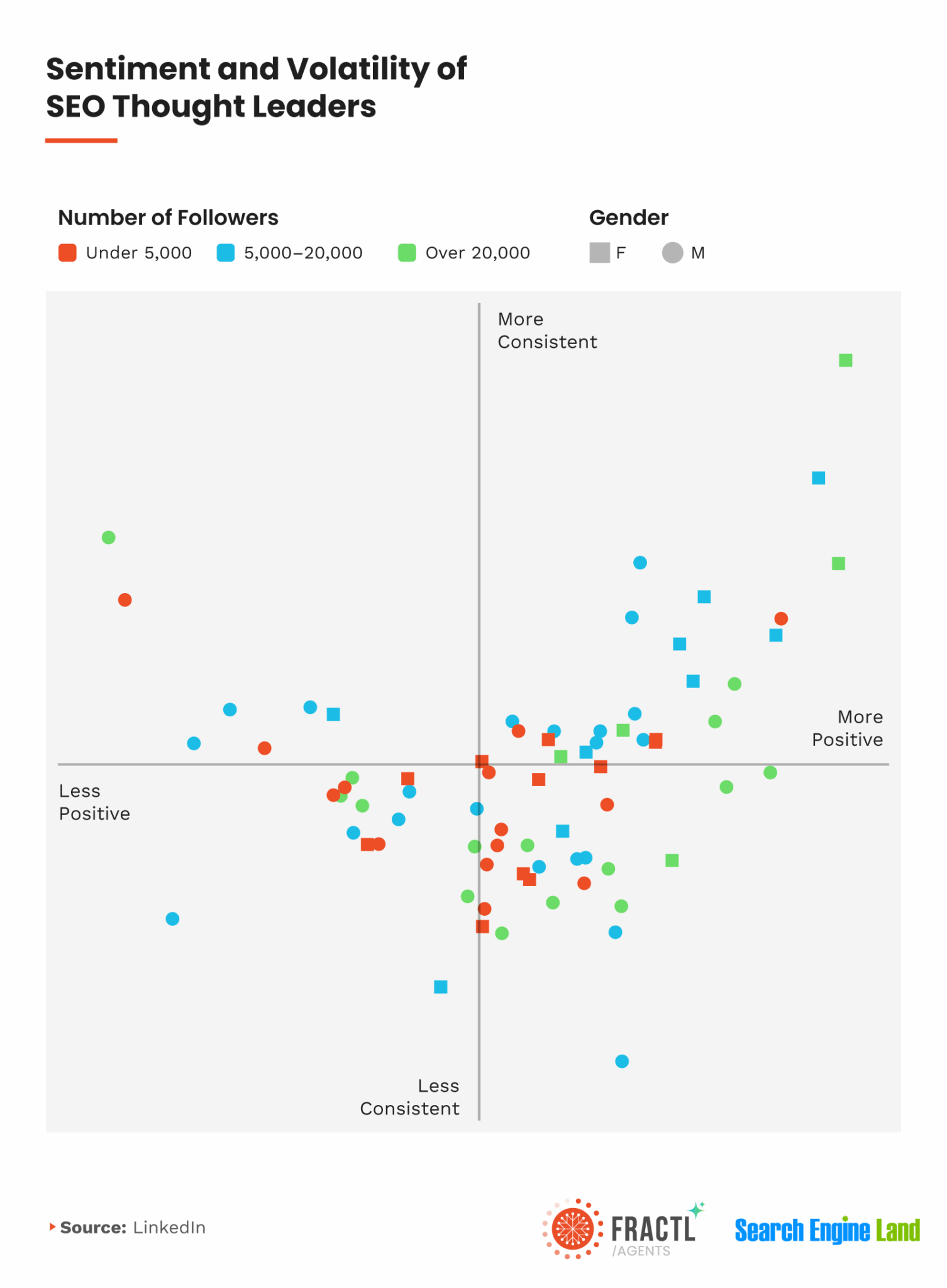
AI search sentiment seems largely positive, yet there’s a real risk that isn’t in the acronyms – it’s in the volatility of the debate.
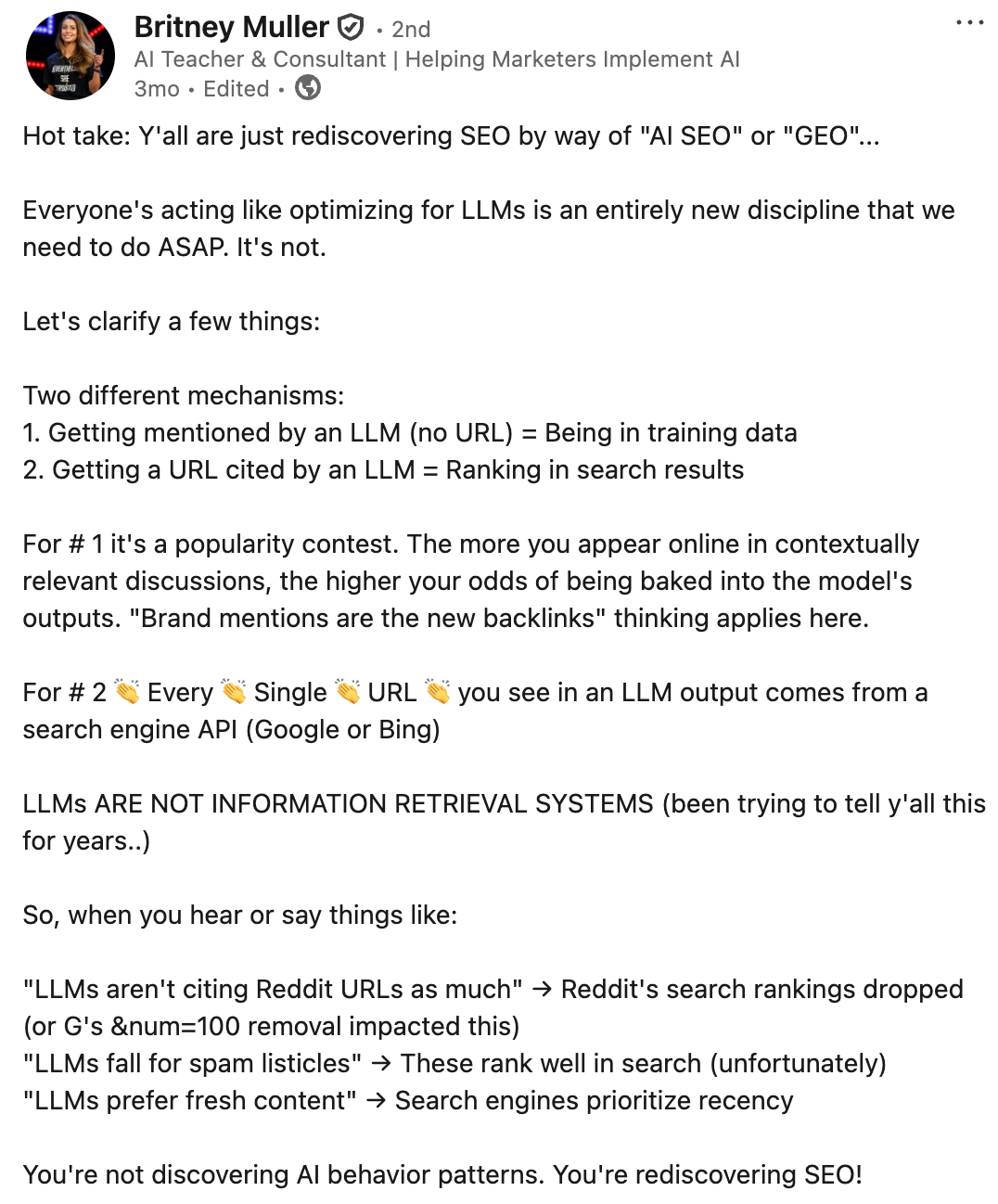
The SEO versus GEO debate has been a significant topic in our industry for the past year. New acronyms pop up almost weekly, and the sentiment can flip rapidly, with even the most reliable voices changing their stances from time to time.
This volatility isn’t confined to the periphery. It’s evident among a small group of highly visible SEO influencers who adjust their perspectives on AI-era searches in reaction to news, platform updates, and branding pressures.
My curiosity drove me to delve into how 75 leading SEO influencers discuss AI-driven search on LinkedIn. The objective wasn’t to identify the winning acronym but to gauge consistency, sentiment, and volatility in the discourse surrounding discovery shifts.
Teaming up with Danny Goodwin from Search Engine Land, I reviewed 2,025 LinkedIn posts from these influencers, examining references to various AI-related SEO terms including GEO, AIO, AISEO, AEO, LLMO, SXO, and ASO.
Each post’s sentiment was analyzed using VADER, providing a score between -1 to +1, while volatility was measured by tracking the standard deviation of sentiment over time. The data was anonymized to safeguard individual identities while retaining relational trends.
In 2025, while industry leaders engaged passionately in debates about AI-era search terms in their LinkedIn posts, they were reluctant to integrate these new terms into their personal headlines.
Our analysis reveals that 43% of SEO thought leaders still use “SEO” in their LinkedIn headlines, compared to 21% with “AI” and a mere 3% with “GEO.”
The gap is notable, indicating a hesitation to move away from the proven SEO strategies we’ve relied on for over a decade.
Well-Structured Content Hubs: Essential for Both AI and Traditional SEO
Successful digital strategies focus on creating comprehensive, persona- and buyer-journey-led content hubs that address genuine FAQs and buying intentions. By nurturing content depth throughout all stages – from awareness to decision-making, brands can provide compounded value to users and reinforce AI search algorithms.
Generate Authority with Off-site Brand Trust Signals
Publishing original research and expert insights helps earn recognition from authoritative sources, which in turn boosts your brand’s trust and recognition.
Mainstream news outlets.
Niche-relevant publishers.
Leading podcasters.
Engaged Reddit communities.
Expanding these digital footprints strengthens entity recognition and reinforces brand trustworthiness.
Leveraging audience intelligence tools like SparkToro identifies which platforms, communities, and topics should be prioritized in your digital PR strategy.
New AI Terms Gain Momentum: See the Enthusiasm Rise
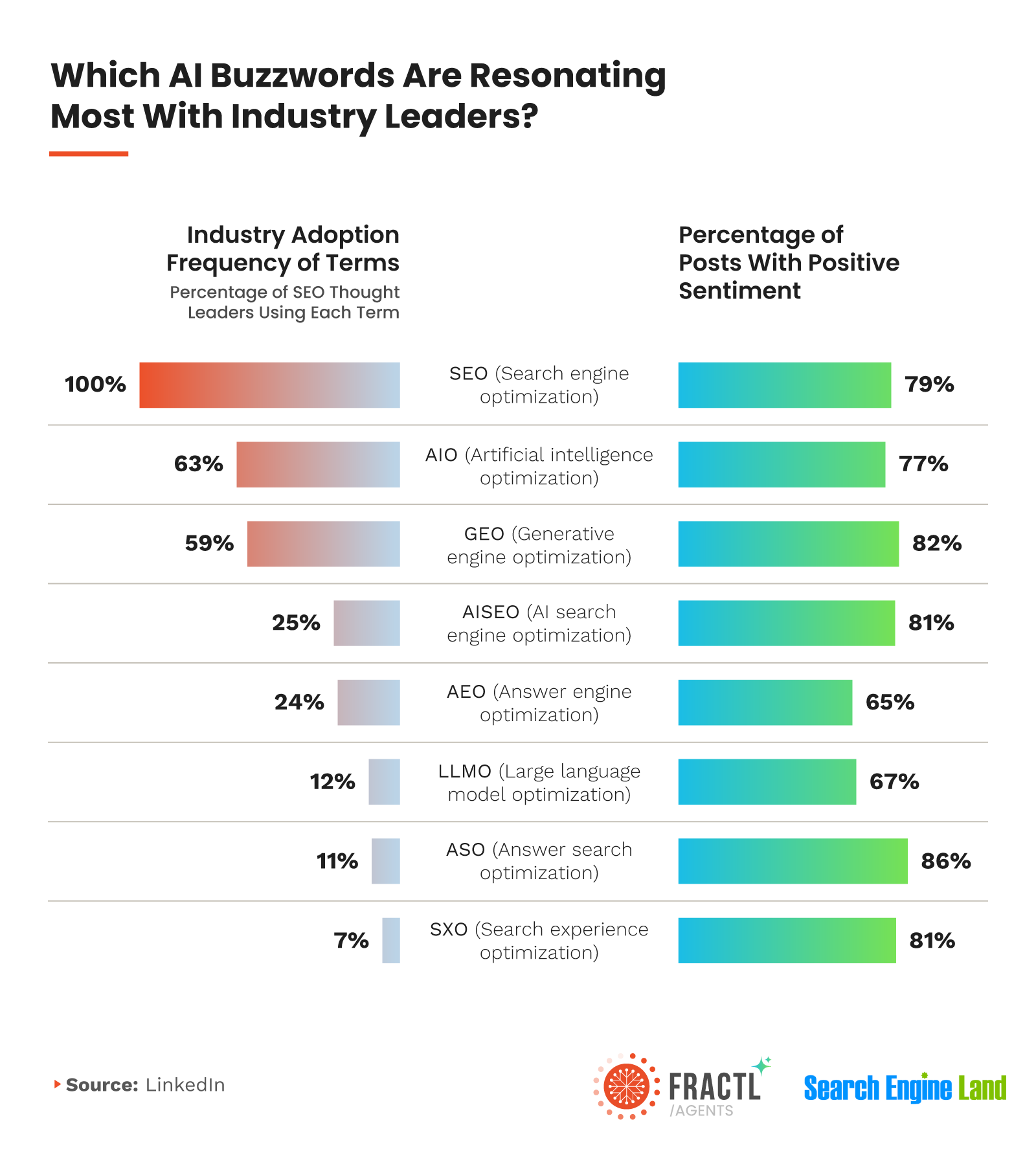
Though few are updating their LinkedIn headlines just yet, industry leaders’ posts reveal growing interest in three specific terms.
63% of leaders mention AIO, with 77% positivity.
59% mention GEO, with 82% positivity.
With over 70% of posts expressing positivity, sentiment often indicates adoption likelihood. When positivity wanes, so does usage. Yet, that’s not what’s happening here.
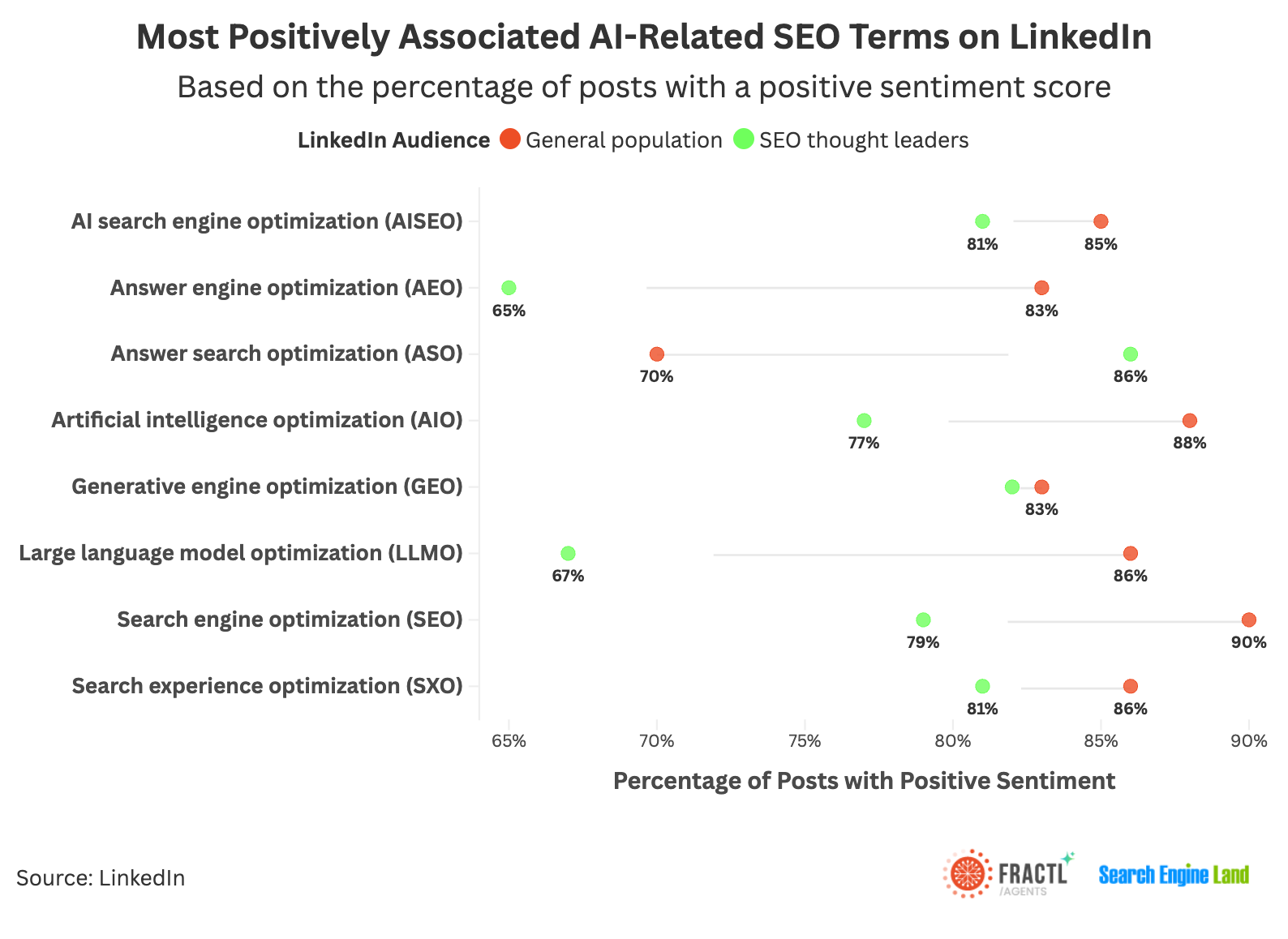
While AEO, LLMO, and AIO attract broader audiences, GEO stands out for consistent positivity, especially among SEO influencers and LinkedIn users alike.
SEO continues as the industry’s backbone, but it’s clear: we’re witnessing the alignment phase of an emerging platform.
The focus isn’t on acronyms; it’s about accurately describing brand visibility in AI-era searches.
The Real Strategy: Timely, Value-Driven Content
Brands should refrain from over-optimizing towards any singular term, strategy, or platform. Instead, develop value-focused content, repurpose it, and engage with audiences across their existing platforms.
This adaptability ensures brands endure platform shifts, avoiding pitfalls like those seen in once-dominant platforms such as Vine and Clubhouse.
Nomenclature Volatility: A Subtle Yet Critical Indicator
Our research highlights this critical insight: less than a third of thought leaders consistently use AI-related SEO terminology with stable sentiment over the past year.
35% express positive sentiment toward these terms but lack consistency.
Just over a third are consistently positive and stable.
The discourse isn’t about being right or wrong. It’s about reframing discussions as the landscape evolves, with volatility often mirroring visibility.
By evaluating sentiment against volatility, we revealed scattered positions rather than a distinct divide.
The uncomfortable truth is that the most vocal aren’t always the most dependable. The impact of their shifting narratives is vital, as their guidance influences budgets, plans, and careers.
Leaders who maintain a balanced outlook – driven by data and tempered by experience – offer a different perspective compared to those swayed by every update.
The Key Lesson: It’s Not a Strategy Reset; It’s an Emerging Platform
Effective content marketing, digital PR, and technical SEO are the foundation for building brand visibility. AI is simply the next platform evolution, much like social media, enhancing but not replacing existing strategies.
Our analysis indicates the industry isn’t unsure about what to do. It is negotiating how to convey this rapidly evolving discovery system. This discussion is typical at this stage, but volatile shifts harm trust.
Terms like AEO, LLMO, and AIO may gain some traction, but GEO remains consistent among both practitioners and broader audiences, suggesting its potential as a stable narrative bridge as execution evolves.
Crafting a Resilient Digital Footprint: Navigating the AI Era
Market strategies shouldn’t revolve around what’s trending quarterly. Instead, focus on timeless marketing principles:
Create content that delivers real value to your market.
Repurpose and circulate it on platforms where your audience is active.
Generate citations, engagement, and trust that impact search, social, and AI systems.
In today’s era, where answers are synthesized rather than ranked, the voices that resonate won’t be the ones coining the next big label, but those that remain consistent, building trust and visibility over time.
The analysis focused on the top 75 SEO thought leaders, including agency owners, directors, industry speakers, and consultants.
I’ve decided to transform my expertise in SEO into a powerful fundraising initiative to assist those affected by recent ICE raids in Minnesota. Instead of standing by, I’m trading my consulting hours for donations to support immigrant families in need.
The tipping point for me came when recent events in Minnesota crossed ethical lines I had drawn. I felt a strong urge to act rather than just watch from the sidelines. I shared my initiative on LinkedIn and my blog, inviting the community to join this cause.
What’s happening. I’m leveraging my skills by offering my services in return for donations through GiveMN. This Minnesota-based platform channels funds to families and individuals hit hardest by the ICE raids.
Within just seven hours, we raised $1,850, which soon increased to $1,950. It’s heartwarming to see backing from renowned SEO agencies, SaaS companies, and individual practitioners rallying behind this cause.
Why we care. My efforts showcase a vital aspect of the search marketing industry: our community’s ability to rally resources for broader social causes. This isn’t just about professional skills; it’s about standing up for humanity and activating swift collective action.
Catch up quick. The fundraiser springs from widespread outrage following the launch of Operation “Metro Surge” by federal immigration authorities in December. This operation deployed roughly 3,000 ICE and Border Patrol agents into the Twin Cities, resulting in significant unrest.
The operation triggered issues like racial profiling, unwarranted home invasions, detentions at workplaces, and tragically, the shooting of 37-year-old Renee Nicole Good in downtown Minneapolis, sparking massive protests.
What I’m saying. As I put it, “This is NOT about politics. This is about treating all people as humans.” It’s a call to action to see beyond political lines and focus on our shared humanity.
Recently, I’ve been delving into the nuances of Google Search Console and its impression counts.
I learned from John Mueller of Google that when a URL shows up in both an AI Overview and the traditional blue links on SERPs, it is counted as just one impression, not two.
This clarification came to light through John Mueller, after a lively discussion among SEO experts, sparked by Jamie Indigo and publicly shared by Mark Williams-Cook from Candour on LinkedIn.
The background. Initially, Mark Williams-Cook had assumed that because of historical practices with SERP features like tweet boxes, the URL might be counted twice.
Testing this theory was challenging, but ultimately, Mueller confirmed that the Search Console treats these appearances as a single impression.
What’s happening. Google’s policy treats an AI Overview as a singular position in search results. Each link within the Overview shares that position, governed by standard impression rules.
So, when a URL appears more than once in the same search experience, the Search Console doesn’t double count these for the same query.
Why this happens. Google defines an impression based on a user’s visibility of a link within the current set of results. Multiple instances of the same URL on one results page are aggregated, not counted separately.
This approach aligns with other SERP features like knowledge panels, where scrolling past and returning, or seeing the URL in different elements, won’t create additional impressions.
Why we care. In this AI-centric era, interpreting performance metrics can be a challenge. Knowing that both AI Overviews and blue links count as a single impression clarifies how these listings influence visibility. Although the impression count doesn’t rise, appearing in both strengthens brand visibility and boosts credibility among Google users.
Have you ever wondered why some businesses never make it to the top of the local pack rankings on Google? It’s not just about lacking reviews, links, or even proximity. The real challenge starts before any of these factors. Allow me to walk you through how Google determines if your business is eligible in the first place.
Think of it this way: Google first confirms the identity of your business before considering its relevance. It’s a critical step that many overlook.
From Exact Matches to Broad Intent: How Eligibility Shifts
For niche queries, Google searches for a precise 1:1 match, ensuring there’s no room for misunderstanding. But when the query broadens, as in searching for “restaurants,” the landscape changes dramatically, opening up more possibilities based on various categories.
This highlights hidden ranking elements like clicks, reviews, and even real-time data like whether a business is open.
Your business name and category must create a cohesive signal, defining what I like to call your “entity boundary.” For many businesses, a name that’s too specific can become an anchor, limiting your visibility in broader searches. If you’re aiming to conquer a niche, aligning your name and category perfectly can be your secret weapon.
The Eligibility Gatekeeper: Interpretation First, Rankings Second
Competing isn’t just about outperforming other businesses; it’s also about meeting Google’s stringent need for certainty. Thanks to the Google Content Warehouse API Leak, we now understand the engine that decides which businesses are eligible before considering traditional ranking factors like reviews or links.
This mechanism pre-qualifies businesses using a machine-learning classifier to filter out those unlikely to fulfill a query, ensuring only the most confident matches appear.
Your business name and primary category aren’t just descriptors; they set boundaries that determine your eligibility for specific queries.
Understanding the intricacies of these “entity boundaries” can help you determine how Google perceives the essence of what your business offers. I’ve seen this factor repeatedly transform ranking outcomes.
Business name + category: A unified signal
Google evaluates your business name and category as one unit. They process parallel through semantic models, each playing a distinct role: while your business name acts as a self-identification signal, the category offers authoritative structure.
Understanding how these two elements interact can be pivotal in leveraging your business’s online visibility and eligibility to show up for desired queries.
As someone who has been deeply engaged with international SEO strategies, I’ve noticed a significant transformation in 2026. With AI-mediated searches redefining the landscape, the traditional playbook has evolved. Yet, despite these changes, certain strategies remain effective.
For years, international SEO followed a well-trodden path: creating unique URLs for different countries and languages, localizing content, deploying hreflang, and ensuring search engines present the correct version. However, those basics aren’t enough in today’s AI-driven world.
Today, it’s not just about ranking; it’s about how well my content is retrieved, interpreted, and validated globally. Consistent visibility hinges more on these elements than on the traditional methods we’ve relied upon.
The elements that still perform effectively in 2026 are quite fascinating. Market-scoped URLs continue to triumph when they highlight real differences, reflecting true market variations rather than simple translations. For example, legal disclosures, pricing, and regional compliance are crucial.
Local intent, beyond mere language translation, proves critical for content retrieval and retention. AI systems are increasingly adept at understanding when two pages address the same user intent, even across different languages.
Although hreflang tags are still effective within traditional SERPs, their influence is somewhat diminished in AI-mediated environments where market differentiation and data clarity become essential before retrieval.
Understanding how entities are clarified is crucial. AI systems quickly need to ascertain the company’s identity, brands, products, market context, and credibility for robust content consideration.
Local authority signals are vital as well. AI systems now evaluate trust within specific market contexts, emphasizing local expertise and affiliations over global brand authority.
On the flip side, several traditional strategies no longer offer the same value. Basic translation without localization fails to deliver meaningful AI response, with English versions often taking precedence globally.
Indexing alone no longer guarantees visibility. AI retrieval now focuses on selection and prioritization of content with clear, confident disclosures.
Moreover, individual page-centric SEO strategies fall short as AI synthesis works at the level of concepts and entities, not isolated pages.
Uncoordinated publishing can lead to semantic drift, where AI may prioritize the most current or authoritative content, even if it’s from a less strategic market.
In adjusting to these changes, companies must now manage international SEO as a complex system focused on trust, relevance, and alignment across global markets, rather than just a straightforward localization task.
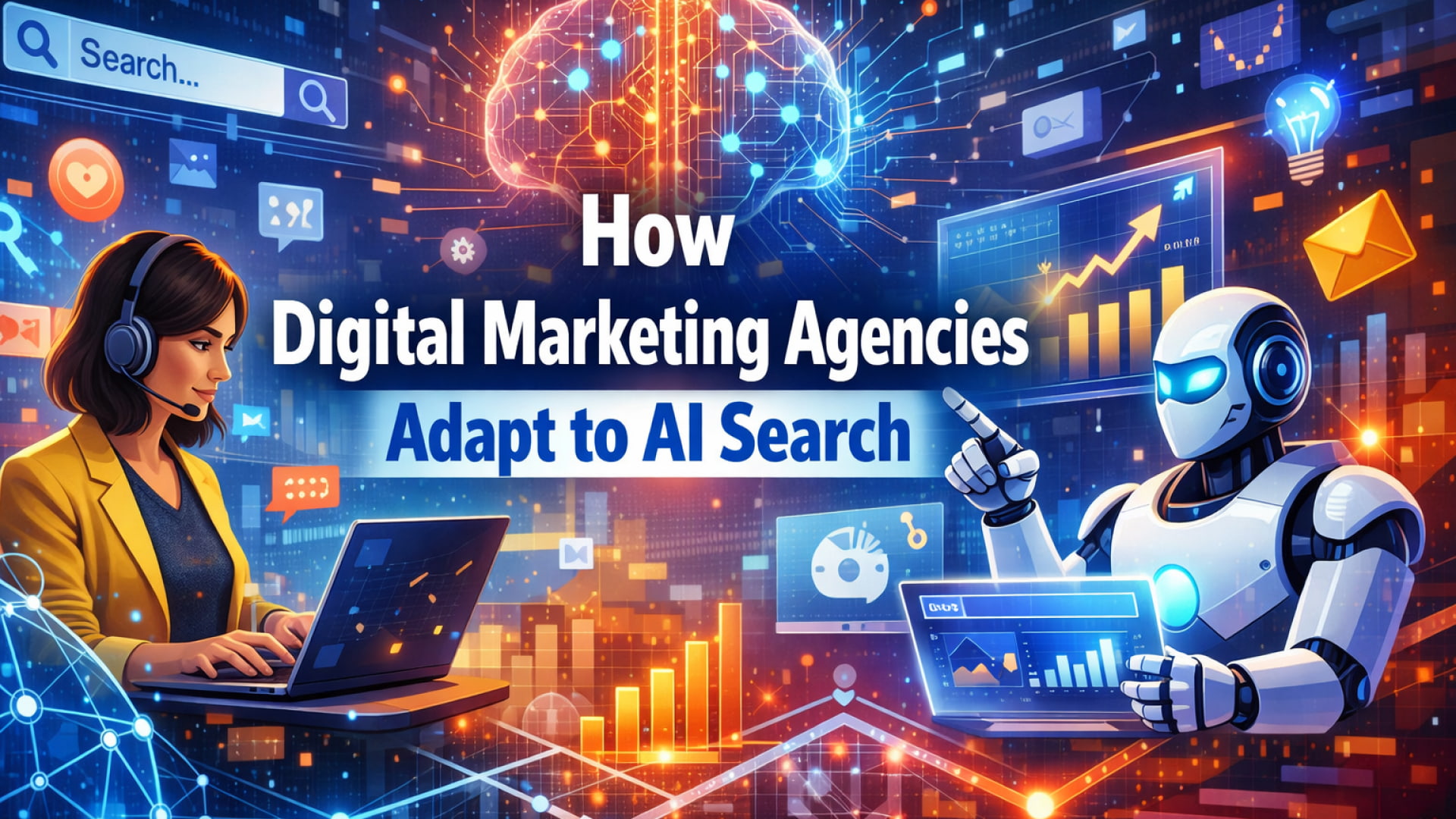
I’ve been watching how AI search platforms, like ChatGPT and Google’s AI Overviews, drastically change the way people find information. It’s remarkable to see this unfold.
As someone working closely with digital marketing agencies, I notice that they must quickly adapt to these shifts to stay relevant. Ensuring that our processes remain outcome-driven and that our results are provable has become crucial.
I’ve delved into how ten agencies are evolving their strategies and client relationships to thrive in this era of AI-driven search.
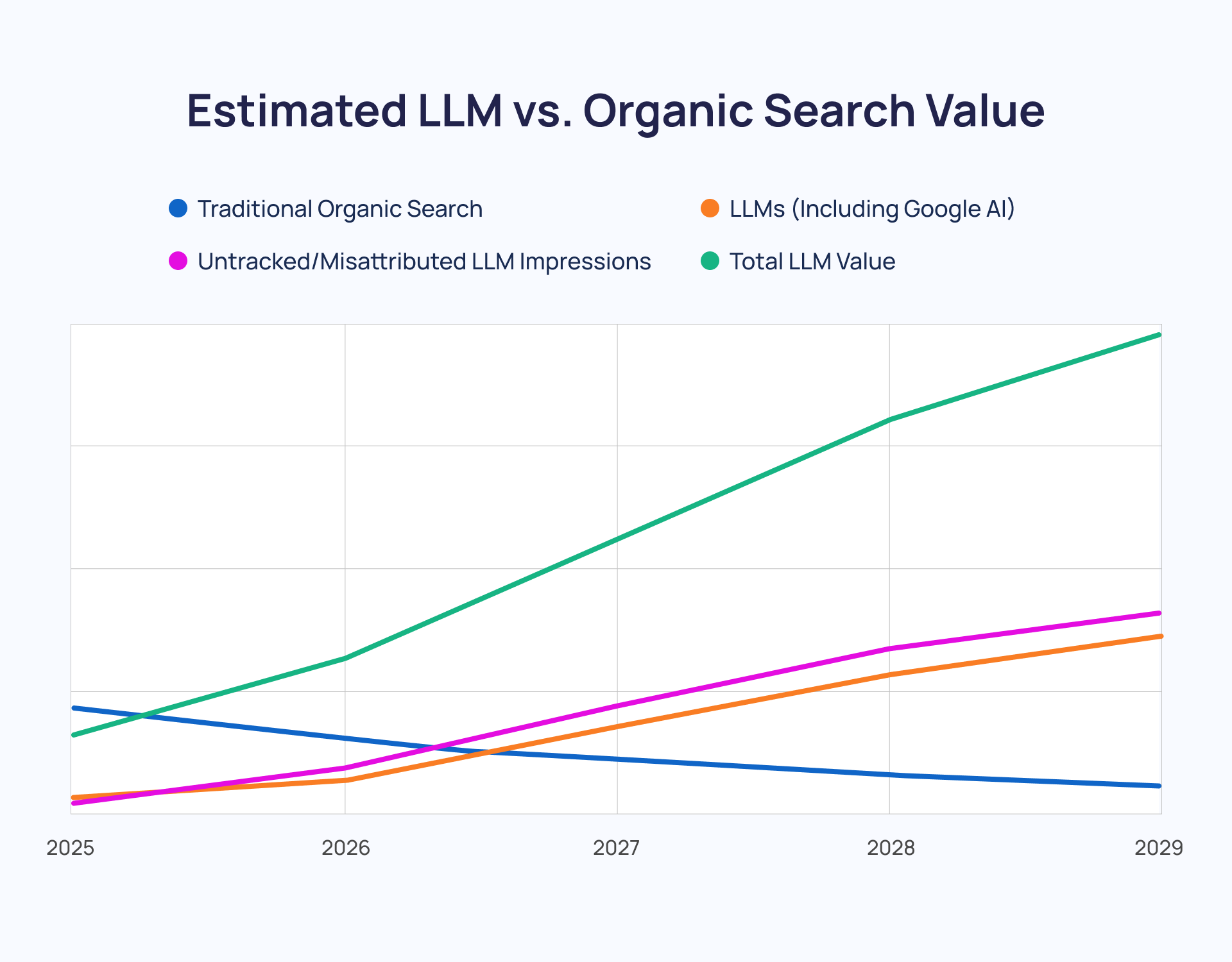
According to Semrush, AI search might surpass organic traffic by 2028. It’s fascinating that more people are starting their searches directly with AI, rather than traditional engines like Google or Bing.
During informational inquiries, the journey often concludes with the AI assistant providing a complete answer, sparking a significant drop in click-through rates. This compression of the customer journey is quite fascinating; AI-guided research leads to conversions at a rate 440% higher than traditional methods.
Interestingly, while AI continues to rise, people still verify AI’s recommendations using Google. Adapting to this new landscape requires agencies, like mine, to expand offerings to address AI search while maintaining strength in organic search.
In speaking with industry leaders, I learned about the growing importance of tactics like listicle placements and brand entity building, as discussed by agencies such as Editorial.Link and Ignite SEO. These discussions further stress the need to shift from keyword optimization to a greater focus on establishing brand authority.
CEO Garry Grant of SEO Inc. emphasized the transformative potential of using AI to decode complex search algorithms, a fascinating area that I’m keenly watching.
We also explore how agencies are broadening their scope to optimize not just for Google but for the entire ecosystem of AI-driven platforms, ensuring our clients shine across all surfaces their audience engages with.
For local businesses, optimizing reviews for AI search visibility becomes crucial, as agencies like InboundREM emphasize leveraging reviews to capture search visibility effectively.
As all these changes unfold, I realize the importance of treating AI as an opportunity rather than a threat. It’s an intriguing time to work in digital marketing, seeing how we adapt and evolve in response to AI search dynamics.