Category: SEO

  • 7 Creative GPT Automations to Boost Your SEO Workflow

    7 Creative GPT Automations to Boost Your SEO Workflow

    I’ve discovered how custom GPTs can revolutionize how we handle SEO, transforming repetitive tasks into efficient workflows. By leveraging AI, we can speed up our processes, from planning and analysis to reporting and technical work.

    If you don’t have access to paid ChatGPT, don’t worry. You can still utilize these prompts by saving them as standalone references in your notes. Remember, they’re just starting points, so modify them to fit your team’s requirements.

    Working with AI requires trial and error. My advice is to start with small tasks to practice writing prompts. Iterate on them and take notes on what produces good outputs.

    AI can sometimes be verbose, so it’s helpful to set strict formatting guidelines and clear context. Upload resources and articles to guide AI results, and always define the role and audience upfront.

    Let’s dive into seven prompts that I’ve found incredibly useful for developing custom GPTs dedicated to planning, analysis, and ongoing SEO tasks:

    1. Project plan GPT

    By analyzing previous project plans, I can create a GPT that assists in drafting this year’s focus areas.

    How to set it up

    • Input project plans from previous years.
    • Specify a format for consistency.
    • Determine the number of items or sections to include.
    • Include specific details unique to your team.
    • Optionally, integrate team feedback and retrospectives.

    Example prompt

    Based on last year’s project plan, outline this year’s focus. List three critical items for each quarter, ensuring at least one covers link building.

    Include a one-sentence summary for each recommended item and at least two KPIs to measure success.

    [Insert last year’s plan.]

    Now critique the plan. Offer three reasons against focusing on these items, providing sources for your notes.

    Dig deeper: How to use ChatGPT Tasks for SEO

    2. Site performance GPT

    By connecting performance dashboards or custom GA reports to ChatGPT, it can handle initial issue identification. This allows me to focus on investigating critical trends.

    How to set it up

    • Hook up reporting tools or upload data directly.
    • Direct AI on specific aspects to investigate.
    • Set frequency for data review, such as daily or weekly.
    • Provide examples of pages or categories to analyze.

    Example prompt

    Here’s the weekly site report. Analyze this week’s performance against last week’s data, summarizing sessions, conversions, and engagement.

    Highlight three successes and three areas needing improvement, color-coded by significance.

    [Insert report doc.]

    3. Competitor analysis GPT

    I’ve found it invaluable to scrutinize what works on competitor sites. This often involves tools like Semrush or Ahrefs.

    How to set it up

    • Integrate Ahrefs, Semrush, or upload relevant reports.
    • Select competitors and identify top-performing pages.
    • List key metrics for evaluation.
    • Create unique prompts for various levels of analysis.
    • Optionally, document metrics requiring deeper scrutiny.

    Example prompt

    As an SEO analyst, compare these URLs. Present a table detailing backlinks, average rank, top keyword, sessions, and value for each URL.

    Provide a concise summary of category leaders, referencing this link for criteria and citing sources.

    URL 1:
    URL 2:
    URL 3:
    Article reference:

    Dig deeper: Advanced SEO competitor analysis for better rankings

    Now, more than ever, custom GPTs are making a significant impact alongside existing SEO tools and workflows. They’re not about replacing the tools we use, but about making initial tasks smoother so that we can focus on insightful and strategic actions. By integrating them into our everyday processes, from planning to technical checks, we can really enhance our productivity.


    Inspired by this post on Search Engine Land.


    crushpress.ai community screenshot
  • SEO as a Brand and Performance Channel: The New Reality

    SEO as a Brand and Performance Channel: The New Reality

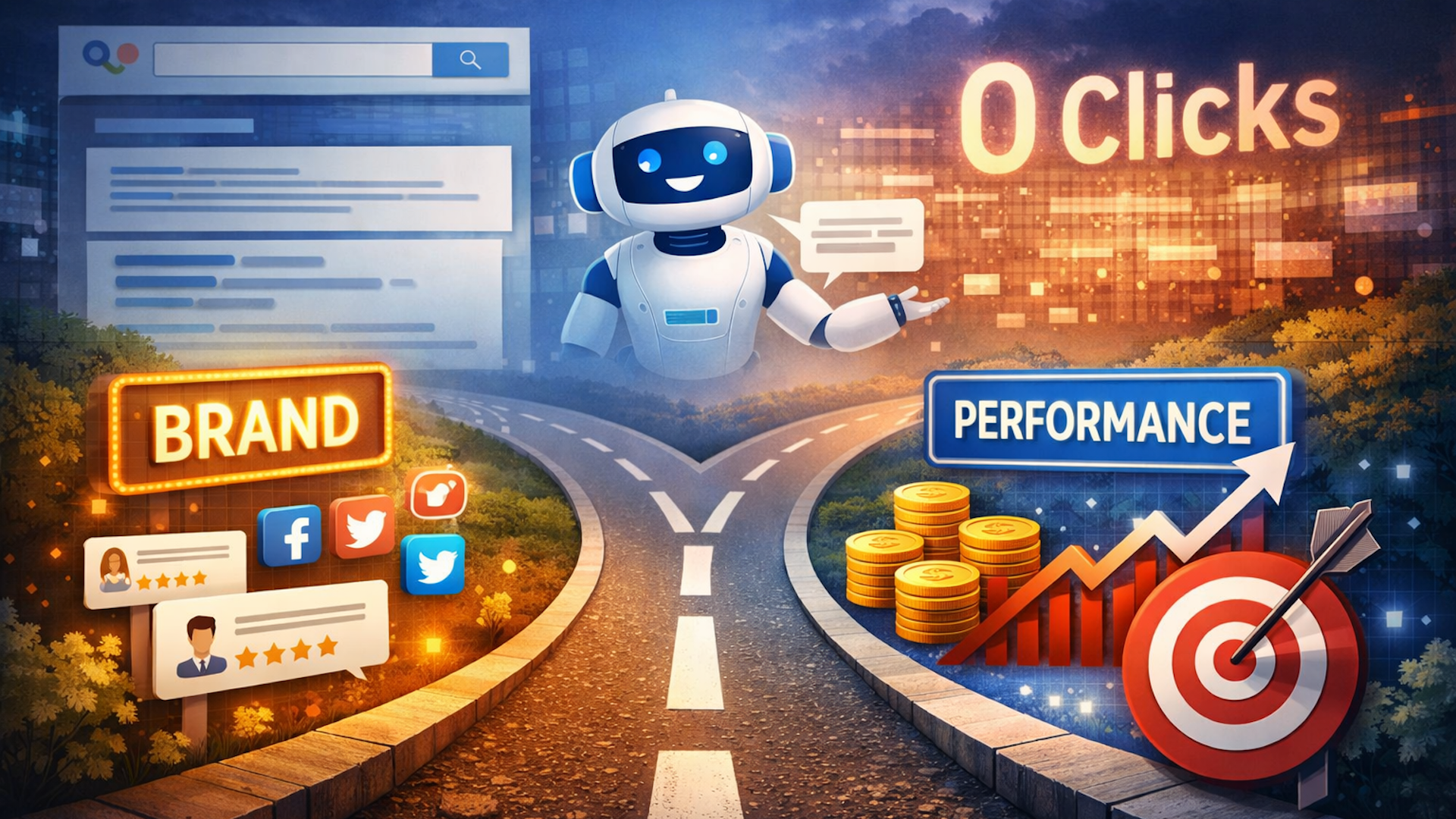
    I’ve come to realize that SEO now serves as both a brand and performance channel. The traditional traffic model has been disrupted by AI Overviews and zero-click SERPs, making brand strength crucial for SEO ROI.

    For years, SEO was straightforward: rank higher, get more traffic, then boost the sales pipeline. However, this simple equation is rapidly evolving, much to the frustration of marketing leaders.

    With AI Overviews and users getting answers directly from LLMs, the idea of “rank and receive traffic and leads” is less effective now. Even top keyword positions don’t guarantee the clicks they once did.

    This shift has sparked challenging discussions in boardrooms. Executives often question, “If traffic is down, how can we measure SEO success?”

    It’s obvious now: the traffic model has changed, yet the demand for ROI remains. We must treat SEO as a brand-dependent performance channel, not just a traffic provider.

    Why traffic and pipeline are no longer in lockstep

    Linear attribution has never fully reflected the dynamic nature of organic search. While ChatGPT isn’t replacing Google, it’s augmenting it.

    Users now verify information across platforms due to skepticism of search and LLM results. Where research once happened solely within Google’s ecosystem, it has become more scattered.

    Today’s organic search is akin to a pinball machine, with buyers bouncing across channels unpredictably. This introduces complexity that traditional attribution software struggles to follow.

    Such complexity has broken the linearity executives crave. Traffic and pipeline charts, once aligned, now often diverge.

    Across B2B SaaS portfolios, a common pattern emerges: organic sessions may be flat or declining, yet rankings for high-intent terms stay stable, and the pipeline from organic search grows.

    This mismatch doesn’t indicate SEO failure. Rather, it shows that traffic is no longer a reliable business impact measure.

    The traffic lost to zero-click searches often consists of informational, low-intent content. What remains is higher-intent traffic, closer to conversion.

    We’re seeing the “atomization” of search demand. Short-head, broad keywords are declining, while specific, long-tail queries with higher intent are rising.

    Many leaders mistakenly react to dropping sessions by pushing for quantity, aiming to regain the lost numbers through top-of-funnel content. This often inflates vanity metrics without delivering qualified leads.

    ```json
{
  "alt": "Metrics table showing increases in demo requests, pipelines, and other areas, but a 2% decrease in organic traffic highlighted.",
  "caption": "Despite organic traffic slightly dipping by 2%, other key metrics like demo requests and conversion rates soar, showcasing business growth.",
  "description": "This image displays a metrics table with a focus on conversion and pipeline metrics. It indicates substantial increases in demo requests (up 130%) and other areas, despite a highlighted 2% decrease in organic traffic. The data suggests overall positive performance with significant growth in multiple areas, emphasizing the message 'Traffic Flat → Revenue Up!' SEO, performance metrics, and business analytics keywords are relevant."
}
```

    SEO ROI is now the downstream outcome of brand traction

    For years, SEO was viewed as a pure performance channel. We believed optimizing some keywords would suffice.

    In reality, SEO has always depended on brand strength. The rise of AI-driven engines highlights this, expecting reputations, not just keywords.

    If your brand lacks authority, technical optimizations alone won’t elevate your status. Brand strength determines organic performance limits. Search engines seek web-wide consensus, and weak associations hinder results.

    Brand strength for LLMs means owning topical authority, aligning with customer queries, being validated by trusted sources, and having clear positioning.

    SEO captures pre-existing demand validated by your brand, not creating it from nothing.

    The new defensibility metrics for SEO

    As traffic no longer headlines KPIs, new defensibility metrics are necessary. Successful teams focus on revenue and reputation impact, not just volume.

    Metrics proving business impact include stable top-10 rankings for commercial keywords, increased Ahrefs traffic value, stable solution page traffic, growing homepage traffic, and developing LLM referral traffic.

    When pipeline per organic visitor rises, even with falling sessions, the dialogue shifts from “SEO is broken” to recognizing SEO’s evolution.

    Modern SEO is moving from acquisition to influence

    Successful SEO isn’t about recovering traffic but influencing buyer decisions and enhancing organic visibility. In an AI-first context, zero-click doesn’t imply zero-value.

    SEO remains key in building market readiness, positioning brands as authorities even before buyers enter the funnel.


    Inspired by this post on Search Engine Land.

    crushpress.ai community screenshot
  • Unlocking the Secrets of Query Fan-Out in AI SEO

    Unlocking the Secrets of Query Fan-Out in AI SEO

    When I first stumbled upon the concept of query fan-out, I realized how misunderstood it often is in the world of AEO and SEO. It’s fascinating how AI searches can take a single prompt and transform it into numerous sub-queries, expanding the scope of search in unimaginable ways.

    Understanding this process opened my eyes to the hidden potential these sub-queries hold. By leveraging the data generated from them, I discovered new strategies to enhance SEO effectiveness, making my digital marketing efforts more robust.


    Inspired by this post on HiGoodie Blog.


    crushpress.ai community screenshot
  • 1/3 of Publishers Plan to Block Google’s AI Features

    1/3 of Publishers Plan to Block Google’s AI Features

    I recently discovered that Google is considering ways to allow websites to opt out of its AI-generated search features, such as AI Mode and AI Overviews. Naturally, I was curious about how the SEO community felt about it, so I conducted a poll on X to see if site owners would actually opt out.

    The results were intriguing. Out of over 350 respondents, the majority mentioned they wouldn’t opt out. However, around one-third indicated they would prefer to block or opt out of these features. Here’s how the responses broke down:

    Question: Would you block Google from using your content for AI Overviews and AI Mode?

    • 33.2% – Yes, I’d block Google
    • 41.9% – No, I wouldn’t block
    • 24.9% – I am not sure yet.

    Here’s the actual poll for reference:

    But how do you opt out? Right now, that remains a mystery. Google has only mentioned it is exploring possibilities, without providing a clear mechanism. Frankly, the ease or difficulty of opting out could significantly influence decisions. If it’s straightforward, more sites might choose to opt out; if not, fewer will do so.

    So why does this matter? We won’t truly know how many sites will opt out until Google officially offers a way to do so. Rest assured, once they do, there will be extensive reporting on the number of sites that decide to opt out.

    To give you an idea, The Press Gazette recently reported that around 79% of nearly 100 top news websites in the UK and US are already blocking at least one AI training crawler, including OpenAI’s GPTBot, ClaudeBot, and others.

    My advice is simple: Once Google makes this opt-out feature available, give it a test. See firsthand what the impact of opting in or out could be.


    Inspired by this post on Search Engine Land.


    crushpress.ai community screenshot
  • Master AI Search: Boost Visibility with 12 Proven Tactics

    Master AI Search: Boost Visibility with 12 Proven Tactics

    One of the biggest challenges I face in SEO isn’t AI itself—it’s battling the wave of misinformation about it.

    SEO isn’t dying — it’s evolving. So, I need to be proactive in understanding these changes and be discerning about the voices I trust in the industry.

    I’m not easily surprised, but some of the AEO (or GEO) talks I attended last year were genuinely shocking—even for someone like me who may have had a bit of Botox.

    I recall one speaker apologetically addressing a room of marketers, only to promptly suggest outdated tactics as the “secret sauce” for LLM visibility. It was painful to witness.

    Thankfully, trusted voices like Lily Ray, Kevin Indig, Steve Toth, and Ross Hudgens came together this week for an enlightening roundtable on the future of search. It was by far the most beneficial AEO session I’ve ever attended, each sharing tactics they’ve successfully used to enhance LLM visibility.

    Here’s what they shared and what I’ve learned:

    1. Advertorials work

    I discovered that LLMs don’t currently differentiate between paid and organic editorial content. Well-placed advertorials on reputable sites can boost a brand’s visibility in AI search, similar to earned coverage. As with traditional PR, the publication’s credibility remains crucial.

    2. Syndication can scale visibility

    Paid syndication increases reach, but focusing on quality over quantity is essential. I learned to prioritize reputable and relevant publications when employing this tactic.

    3. Map pages to every audience and use case you serve

    By creating clearly defined pages for each audience, industry, and use case, I can better position my brand as AI search becomes more personalized. This structure assists LLMs in understanding relevance and remains a strong SEO strategy.

    4. Homepage clarity

    I ensure that my homepage clearly communicates who I serve and what I do. LLMs analyze homepage content more effectively than navigation menus, so relying on the latter alone is a missed opportunity.

    5. Optimize your footer

    I’ve started optimizing the footer of my site. As Wil Reynolds demonstrated in a compelling case study, LLMs pick up on brand and service signals located there, enhancing visibility.

    6. Don’t prioritize llm.txt

    Despite ongoing speculation, there’s been no confirmation from significant LLMs about the use of llm.txt files, and Google explicitly states they don’t. I focus my efforts elsewhere for better results.

    7. Go multimodal

    To improve brand recognition across multiple sources, I repurpose core content in various formats like text, video, audio, and imagery, maximizing the chances for LLMs to pick it up.

    8. Actively shape your brand narrative

    It’s estimated that 250 documents are needed to meaningfully influence an LLM’s perception of a brand. By consistently publishing and promoting content, I ensure that my brand narrative remains in my control.

    9. Freshness carries disproportionate weight

    Fresh content generally performs better in AI searches, reflecting LLMs’ preference for recent information. However, purely artificial “refreshing” without meaningful updates is not advisable.

    10. Social works fast

    Updates on platforms like LinkedIn, including Pulse articles, can appear in AI search within hours, sometimes minutes. Platforms with high trust like Reddit and YouTube display similar rapid visibility.

    11. Authority accelerates inclusion

    Publishing on respected, niche industry sites can lead to rapid inclusion in LLM responses, sometimes in mere hours.

    12. Don’t hide FAQs

    FAQs should be accessible and well-detailed, not concealed within accordions. Eight to ten well-addressed questions can effectively signal expertise, intent, and relevance to both users and LLMs.

    Is AEO the same as SEO?

    John Mueller from Google clarified at Google Search Live that AEO relies on SEO fundamentals: doing tricks may work short-term, but long-term success relies on proven stability.

    The correlation is logical when considering modern LLMs like GPT-5, which utilizes Retrieval-Augmented Generation (RAG) to query real-time data. To gain LLM visibility, showing up in search results is essential.

    For a deeper dive, Lily Ray’s excellent video is worth watching.

    In essence, good AEO practices align with good SEO, though there’s nuance, and while these tactics are effective now, they will evolve as LLMs grow more sophisticated.

    The best AI search strategy for 2026

    Forget the magic button. Keep testing, remain skeptical about the hype, and be selective about the advisors you trust.

    Thanks to Bernard Huang and Clearscope for hosting this insightful panel.


    Inspired by this post on Search Engine Land.


    crushpress.ai community screenshot
  • Boost SEO Success Without Compromising Your Sales Funnel

    Boost SEO Success Without Compromising Your Sales Funnel

    I’ve noticed that while many search teams are celebrating improved rankings, greater visibility, and a surge in traffic, the feedback regarding pipeline, revenue, and sales outcomes isn’t exactly echoing this enthusiasm.

    Even when SEO KPIs are all green and the graphs are trending upward, the business outcomes don’t always reflect this apparent success.

    Search performance can seem robust on the surface, yet falter in areas that the search teams don’t own or fully understand.

    The immediate inclination might be to examine attribution models, data quality, or the KPIs themselves.

    However, often the breakdown occurs post-click, in spaces the search teams don’t control.

    Despite advancements in automation, software, and workflows making search efforts easier to scale, there’s more to it than execution; it’s about understanding and control.

    This is a long-standing challenge, one that scaling often exacerbates.

    An early halt or too shallow an analysis limits the understanding of performance within the broader business context.

    In larger organizations, siloed operations widen the gap. Without tight CRM and sales integration with search, the journey often lacks a unified owner.

    Leadership pressure can further exacerbate these issues.

    When results appear promising yet fail to impact the bottom line, the ambiguity becomes troubling. Though not new, this dynamic is increasingly apparent.

    To bridge these gaps, focusing on five key breakpoints can be pivotal.

    1. Intent Misalignment

    Intent forms the backbone of how we tailor content and target our audiences through search, yet it’s sometimes out of sync with deeper factors like buying stages, urgency, or seasonal sales expectations.

    Even when aligned with the latest research, the readiness or stage of a prospect can remain elusive.

    Understanding the problem a searcher aims to solve and comparing it with sales’ positioning can bridge the gap between search and actual sales, refining the way teams optimize their approaches.

    Dig deeper: How to explain flat traffic when SEO is actually working

    2. Conversion Friction

    It’s awkward when leads driven by search don’t convert to customers, sparking tensions around conversion quality.

    While technically compliant leads meet criteria, issues like unaligned CTAs or vague follow-ups often go unnoticed, focusing on conversion rate optimization as a quick fix when it’s usually more complex.

    Conversions rarely guarantee committed customers, making it crucial to evaluate if the initial search promise and subsequent visitor journey align with their intentions.

    Dig deeper: 6 SEO tests to help improve traffic, engagement, and conversions

    3. Lead Qualification Gaps

    Achieving a shared understanding of what qualifies as a marketing or sales-ready lead is vital, particularly when definitions, scoring models, and expectations vary.

    Aligning on these criteria aids in demonstrating search’s true value to the business, though it may require navigating uncomfortable discussions.

    Dig deeper: How to monitor your website’s performance and SEO metrics

    4. Sales Handoff and Follow-up

    This point often stings the most, whether you’re part of marketing-to-sales transitions or not.

    Speed, messaging, and context must align from the start to secure a promising lead.

    It’s essential to understand sales’ awareness of lead origins, their follow-up speed, and whether messaging resonates with initial intent.

    Dig deeper: 9 things to do when SEO is great but sales and leads are terrible

    5. Measurement Blind Spots

    Even when everything seems right, lack of CRM movement prompts teams to fall back on independent metrics, creating trust issues.

    A lack of shared KPIs or a core source of truth allows for incomplete decision-making.

    Dig deeper: Measuring what matters in a post-SEO world

    The Cost of Not Knowing What’s Working

    I’m not critiquing search leaders; these challenges aren’t new, nor are they solely search team’s problems, but cross-functional issues needing better communication, agreed definitions, and ownership.

    Rather than perfection, marketing leaders need actionable insights and a unified understanding of results.

    The true danger isn’t declining performance but thriving metrics with unclear reasons behind them, impeding confident scaling efforts.

    Every move aims to enhance credibility and influence far beyond traditional KPI mastery. Embrace understanding over sheer execution.


    Inspired by this post on Search Engine Land.

    crushpress.ai community screenshot
  • Unlocking AI’s Favor: 7 Content Strategies That Boost Visibility

    Unlocking AI’s Favor: 7 Content Strategies That Boost Visibility

    Ever wonder what kind of content catches the eye of AI search engines? I’ve been exploring the fascinating patterns and trends that determine why certain content is frequently cited, while others are easily ignored. Allow me to share with you seven key content patterns that consistently gain visibility in AI-powered searches, alongside five that typically get overlooked.

    In our tech-driven world, crafting AI-friendly content isn’t just a bonus—it’s crucial for staying relevant. I’ll guide you through practical frameworks tailored to boost your content’s reach and appeal to AI systems.


    Inspired by this post on genmark.ai Blog.


    crushpress.ai community screenshot
  • SEO in 2026: Expert Predictions for a Transforming Landscape

    SEO in 2026: Expert Predictions for a Transforming Landscape

    I’ve been thinking a lot about how the search landscape is evolving. It’s not just a shift; it’s a complete reimagining of the digital roadmaps we’re used to. To dig deeper, I reached out to six trailblazers in the SEO world to get their insights on where we’ll be by 2026. Here’s what they shared.

    Our interactions with AI are going beyond simple Q&A scenarios. Enter the era of AI acting as your executive aide, seamlessly handling everything from finding the right product to processing your purchase. This shift demands that we optimize not just for clicks, but for machine readability and compatibility with AI protocols.

    Jim Yu, CEO of BrightEdge, emphasized the need for preparation as AI takes on a more agentic role. According to him, the brands that embrace structured data and machine-readability will stand out as AI-driven commerce becomes mainstream.

    Samanyou Garg, CEO of Writesonic, predicted a future where AI will take users straight from discovery to transaction within a single conversation. Meanwhile, Crystal Carter from Wix warned that simply being discoverable isn’t enough if you’re ignoring the agentic potential.

    Key takeaway: Your product data needs to be machine-readable. Without it, AI agents may overlook your brand in favor of more compliant competitors.

    As AI matures, advertising will become more integrated, moving away from traditional placements to conversational approaches. Jim Yu suggested that AI responses embedded throughout search result pages will become routine, reinforcing the importance of broad optimization strategies.

    ```json
{
  "alt": "Google search result page with extended 'o's in logo indicating multiple pages.",
  "caption": "Discovering deeper into Google's search results with a twist in the logo as it humorously stretches across multiple pages.",
  "description": "This image features a Google search results page in dark mode with an amusing twist. The Google logo humorously extends with multiple 'o's, symbolizing additional result pages numbered 1 to 10. This visual emphasizes exploring the depths of Google's search results. The bottom text indicates results personalization with an option to try without personalization, adding a layer of user control over the search experience."
}
```

    By 2026, we’ll see SEO professionals functioning more like engineers, using natural language tools to create marketing solutions. According to Garg, this approach allows for a significant increase in productivity, reducing manual labor and cutting costs.

    Key takeaway: Automation is the future. Teams that embrace tool-building over task-completing will speed up their progress significantly.

    The concept of singular search rankings is becoming obsolete as search results become personalized in real-time. Mike King views this as an opportunity to tailor content to specific audiences, enhancing relevance and engagement.

    Key takeaway: Generic content risks invisibility. Tailor your SEO strategy to focus on specific audience segments.

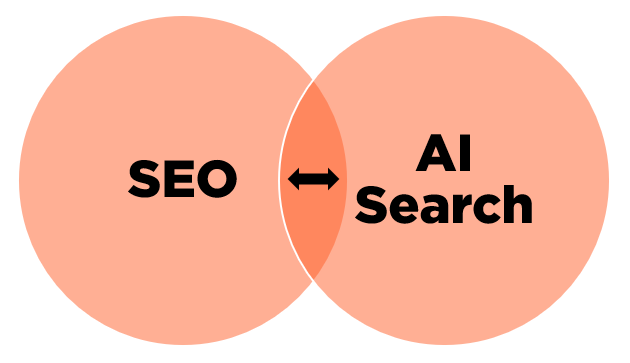
    We are witnessing a divergence in SEO roles: one focusing on traditional human users and the other on AI agents. Understanding both audiences will be crucial for future SEO success, as traditional metrics like rankings and clicks may no longer measure true impact.

    ```json
{
  "alt": "Venn diagram showing the overlap between SEO and AI Search.",
  "caption": "Exploring the intersection of SEO and AI Search—where digital marketing meets advanced technology for optimized results.",
  "description": "This image is a Venn diagram illustrating the overlap between SEO (Search Engine Optimization) and AI Search. Two peach-colored circles intersect, with 'SEO' labeled on one side and 'AI Search' on the other, highlighting their intersection in digital marketing strategies. This visual representation emphasizes the synergy between traditional SEO techniques and modern AI-driven search capabilities, crucial for enhancing web visibility and search accuracy."
}
```

    Key takeaway: Optimize for human interactions and AI processes separately to ensure you’re not missing hidden opportunities for engagement.

    Proprietary data and unique, authentic content are becoming increasingly valuable as AI-generated content proliferates. Brands that own distinctive datasets will stand out, as their information becomes essential for AI models to cite.

    Key takeaway: Develop proprietary data and unique content to maintain an edge in an AI-saturated landscape.

    AI literacy is essential. In 2026, the ability to effectively integrate AI into processes will differentiate market leaders from the rest. Neil Patel stresses the importance of linking AI usage to measurable business outcomes.

    Key takeaway: Equip your team with the right AI tools and training to translate AI initiatives into tangible results and growth.

    Ultimately, achieving search visibility in 2026 will involve being more than just relevant in rankings. It means becoming a reliable resource for both human users and AI systems. Investing in the right data and AI strategies now will secure your success in the upcoming year.


    Inspired by this post on Search Engine Land.


    crushpress.ai community screenshot
  • U.S. Google Searches Drop: The Impact of AI on User Behavior

    U.S. Google Searches Drop: The Impact of AI on User Behavior

    I recently came across a fascinating Datos/SparkToro report revealing a significant change in our search habits. It’s no surprise that U.S. Google users are searching less than they did a year ago. While Google isn’t losing users, it’s clear they’re experiencing fewer repeat searches.

    Why this matters to me. Google still reigns supreme in the search world, but fewer searches mean dwindling opportunities for clicks, ads, and traffic—even if the total search volume seems stable.

    The numbers speak for themselves. The report showed a nearly 20% year-over-year decline in desktop searches per U.S. user, based on data from millions of users.

    • This sharp decline is unlike the European trend, where searches only fell by 2-3%.
    • Despite fewer searches per person, traditional search still constitutes about 10% of all U.S. desktop activity—a share that held steady throughout 2025.

    Reasons behind the drop. The rise of AI-powered answers and instant results appears to be the main culprit:

    • Users now get the information they need without conducting multiple follow-up searches.
    • Zero-click searches remain high but have leveled off in the low-20% range by year-end.
    • Little change is observed in repeat searches and clicks within Google-owned properties, hinting at a plateau in user behavior.

    The reshaping of search by AI. AI isn’t pulling users away from search; rather, it’s enhancing it. Despite ongoing AI buzz, the report discovered:

    • AI tools contribute to less than 1% of total U.S. desktop activity (0.77%), though they’ve seen remarkable growth.
    • Google AI Mode remains small, accounting for about 0.06% of U.S. desktop events by December, with steady adoption increase.

    Query evolution. One notable behavior change is how we phrase our searches:

    • Mid-length queries of six to nine words are increasing rapidly in the U.S.
    • Very long queries (15 words or more) are still rare but show significant experimentation and volatility.
    • People seem to find it easier to express complex needs directly in their searches.

    Discovery becomes a challenge. With concentrated search-driven discovery, breaking into post-search destinations is tougher:

    • YouTube, Reddit, Amazon, Wikipedia, and Facebook remain dominant.
    • ChatGPT soared to No. 7 among U.S. search destinations, a rare significant mover.
    • Meanwhile, Quora has fallen out of the top 15.

    AI’s few dominators. AI-driven traffic largely directs users to already established platforms like Google, YouTube, GitHub, and Wikipedia rather than new or independent publishers. When it comes to AI platforms:

    • ChatGPT is the leading tool in the U.S., reaching around one-quarter to one-third of desktop AI users.
    • Google’s Gemini emerged as a strong No. 2, consistently growing throughout 2025 and surpassing DeepSeek.
    • Other tools like Claude, Perplexity, and Copilot stay niche with modest reach.

    Industry insight. Rand Fishkin, co-founder and CEO of SparkToro, highlighted in the report:

    “The big highlight here is the decline in # of Google searches/searcher from 2024–2025. It’s a nearly 20% decline in the US, though only 2–3% in the EU/UK. Other studies have shown that Google is sending less traffic than in years past, especially to the long-tail of the web, and I suspect that AI answers have dramatically altered the way many users engage with Google, answering their questions before they ever need to click on an organic result or perform a second/third/fourth search.”

    The complete report. Discover more in the Q4 State of Search report


    Inspired by this post on Search Engine Land.


    crushpress.ai community screenshot
  • Control Google’s Use of Your Content in AI Searches

    Control Google’s Use of Your Content in AI Searches

    I recently came across some intriguing news that Google might soon allow us to prevent our content from being used in their AI search features. Imagine having the power to opt out of AI Overviews and AI Mode!

    Google is looking at ways to enable site owners to stop Google from using site content for Search AI’s generative features, like AI Mode and AI Overviews. They’re doing this in response to new guidelines from the UK’s Competition and Markets Authority (CMA). However, Google wants to ensure any new tools don’t disrupt the core functionality of Google Search.

    What Google Has Shared. Google mentioned in a recent blog post:

    • “We’re now exploring updates to our controls to let sites specifically opt out of Search generative AI features.”

    They clearly state that these options shouldn’t compromise Google Search, saying:

    • “Any new controls need to avoid breaking Search in a way that leads to a fragmented or confusing experience for people.”

    Anticipated Timeline. It’s uncertain when these new controls will be introduced, but the idea of having more control excites many of us! Many of us—publishers, content creators, site owners—desire control over whether Google can use our content for AI features such as AI Overviews and AI Mode. These forthcoming controls, whenever they appear, will afford us the ability to better manage how Google utilizes our content.

    Full Insights. Here’s the full message from Google’s blog this morning:

    User behavior is evolving rapidly, and features like AI Overviews help people discover new content and explore more topics. Today, the UK’s Competition and Markets Authority (CMA) initiated a consultation on potential new requirements for Google Search, including the controls we offer websites to manage their content in Search AI features. This matter is complex, as it impacts how people find information and how websites get discovered in Search.

    We’ve long provided publishers with a variety of controls, based on standards like robots.txt, to dictate how their content appears in Search. As tech evolves, so do our tools. We’ve added controls for Featured Snippets and image previews (relevant to AI Overviews). Recently, we unveiled Google-Extended, a new tool allowing sites to dictate how their content helps train our Gemini models.

    Building on this framework and working alongside the web ecosystem, we’re exploring updates to our controls that specifically allow sites to opt out of Search generative AI features. Our mission is to protect Search’s helpfulness while giving websites the right tools to manage their content. We anticipate engaging in the CMA’s process and continuing our discussions with stakeholders.

    New controls need to prevent fragmentation or confusion in Search. As AI becomes central to information discovery, new controls must remain simple and scalable for website owners.

    We remain hopeful that we can provide more choice to content creators while ensuring a top-tier and innovative Search experience for users.

    Why This Matters. It’s clear that more control is better than less. SEOs, publishers, and site owners have long called on Google to provide controls over how our content is used in AI features. These anticipated controls could arrive soon, so stay tuned for updates!


    Inspired by this post on Search Engine Land.


    crushpress.ai community screenshot