Category: SEO

  • Unveiling Agentic AI: Guiding E-commerce Execs with Clarity

    Unveiling Agentic AI: Guiding E-commerce Execs with Clarity

    Agentic AI is now a hot topic among executives. I’m here to break down precisely what’s happening, what remains unchanged, and how e-commerce brands should adapt.

    As an SEO leader working with e-commerce brands, I’m often in the position of clarifying the realities behind buzzwords like ‘agentic AI’. Executives frequently inquire about its implications for growth, risk, and competition.

    Executives crave facts over hype. They seek concise explanations, grounded insights, and actionable advice.

    My role as an SEO leader becomes essential here, not in predicting the future, but in enlightening leadership about the changes, the constants, and how to proceed pragmatically. Here’s my roadmap.

    Start with Defining ‘Agentic’

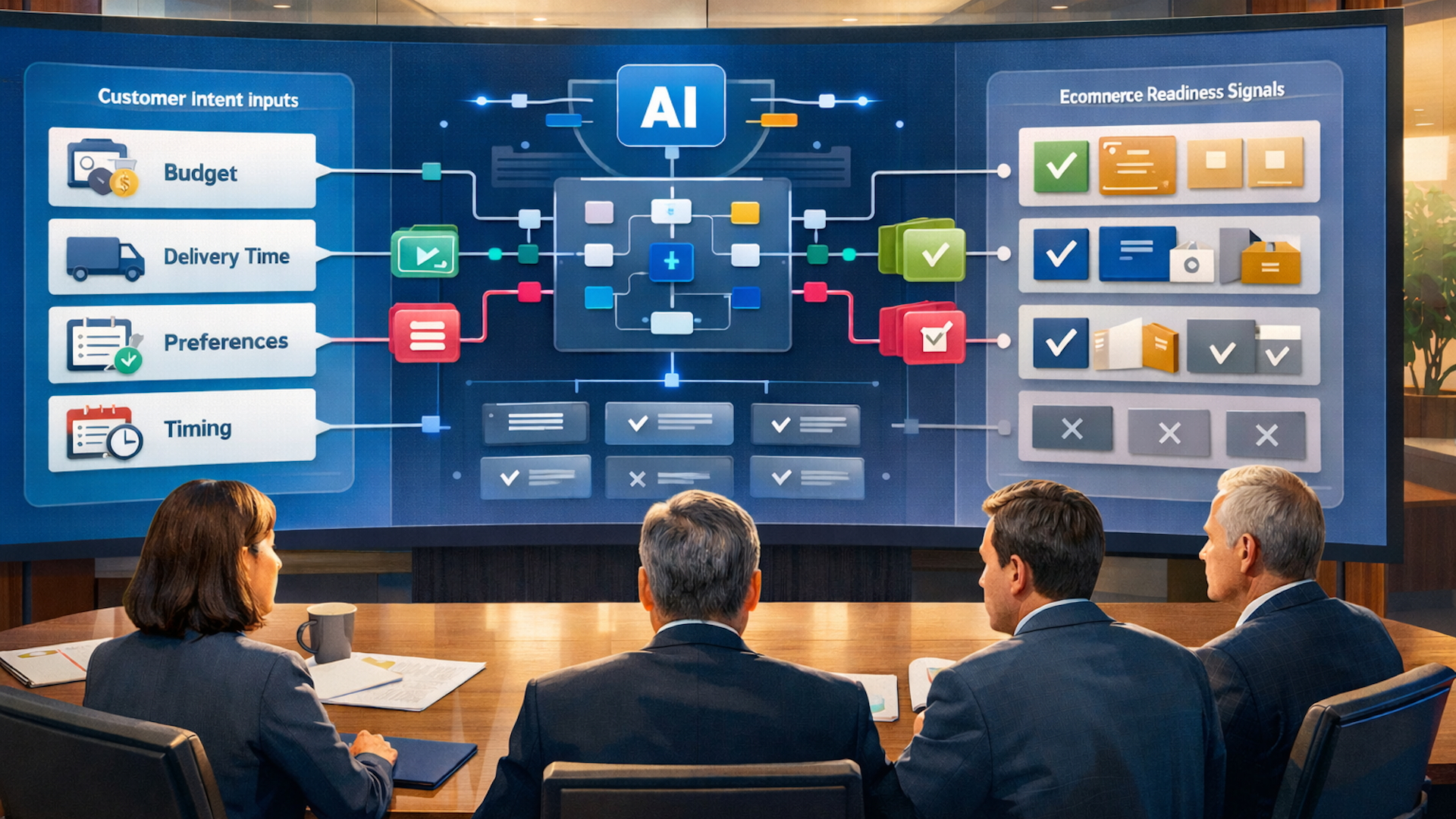
    First, I focus on demystifying the term. Agentic systems don’t replace customers; they work on their behalf. While the intent and preferences originate from individuals, the execution is taken over by the software.

    The working dynamics shift, where tasks like discovery, comparison, and even execution are now managed by software, processing data faster than any human.

    In discussions with executive teams, I emphasize simple illustrations:

    • “We’re not losing customers; instead, we’re incorporating a new decision-maker, which is the software acting as a customer proxy.”

    Understanding this calms the conversation and steers focus away from fear towards preparation.

    Manage Expectations to Avoid Hype

    Another key role I play is in tempering expectations. Agentic AI won’t sweep over all at once. Its effects will be gradual and varied across different categories.

    Some industries, with standardized products and organized data, will adapt faster. Others will face more challenges due to complexities and regulatory hurdles.

    I often see leadership teams falling into two detrimental traps:

    1. Panic: Hastily altering strategies and budgets without clarity.
    2. Dismissal: Ignoring changes until it impacts performance, leading to rushed responses.

    I offer a steady perspective, noting that agentic AI merely accelerates existing trends. It’s not about chasing new features but reinforcing strong fundamentals.

    Dig deeper: Are we ready for the agentic web?

    Shift Focus from Rankings to Eligibility

    I encourage conversations to evolve beyond search rankings. When agents lead the journey, the critical question becomes, “Are we eligible to be chosen?”

    Eligibility hinges on clear, consistent, and trustworthy data. Agents must grasp your offerings, target audience, pricing, availability, and risk factors associated with choosing your brand.

    Raising thoughts about data consistency, pricing reliability, and whether policies add or reduce uncertainty positions SEO as a practical bridge between strategy and execution.

    SEO Beyond Marketing

    There’s a misconception that SEO is confined to marketing. Agentic behavior challenges this notion.

    Selection by an agent involves variables beyond marketing, like data accuracy, technical integrity, inventory management, and payment reliability.

    My explanations revolve around broadening SEO’s scope—it’s about ensuring the business is machines-readable, trustworthy, and consistent.

    SEO becomes vital in helping leaders identify system or data gaps that could hinder the brand’s selection, highlighting its connection to both risk management and operational resilience.

    Dig deeper: How to integrate SEO into your broader marketing strategy

    Discovery’s Evolution

    In most e-commerce brands, agentic systems affect the top of the funnel first. Discovery shifts towards more personalized, conversational interactions.

    ```json
{
  "alt": "The CapmatchOne logo with a gradient circle and bold text.",
  "caption": "Discover innovation with the CapmatchOne logo, featuring sleek typography and a modern gradient circle.",
  "description": "The CapmatchOne logo features bold, modern typography coupled with a gradient circle, symbolizing connection and innovation. The sleek design conveys a sense of progress and creativity. This image can be used for branding or promotional purposes, appealing to audiences interested in innovative solutions and forward-thinking designs."
}
```

    Instead of brief search phrases, users convey needs, constraints, and preferences, which the agent then transforms into actions.

    This decreases the significance of owning category head terms. If an agent has comprehensive user data, it acts like a knowledgeable repeat customer.

    This presents a new reporting challenge. Not all SEO work will appear as direct demand creation, yet it still impacts outcomes. Leaders need to anticipate this shift.

    Rethink Consideration

    The consideration phase evolves too. Traditionally, it involves hosting reviews, comparisons, and reassurances.

    With agentic intervention, consideration morphs into a filtering process, retaining only the options that align with user preferences.

    This necessitates a quality over quantity strategy in content, emphasizing structural trust signals and consistent, verifiable information.

    Brands might be selected without user awareness. While this could boost conversions, it also poses a risk to brand recognition if not addressed elsewhere.

    Dig deeper: Align your SEO strategy with buyer intent stages

    Establish Honest Measurement Expectations

    Measurement often concerns executives, and agentic AI complicates this. With more processes happening inside AI, fewer interactions leave traceable or clear data.

    I address this early by stressing that while this isn’t a failure of optimization, it merely highlights the analytics limits in a complex digital landscape.

    The focus should shift to directional indicators and blended performance over precise attribution, acknowledging the new decision-making landscape.

    Advocate Proactive, Low-risk Responses

    The crux of leadership dialogue is next steps. Fortunately, most appropriate responses to agentic AI carry low risk.

    Enhancing product information, eliminating inconsistencies, strengthening reliability signals, and addressing technical vulnerabilities benefit the business now and pave the way for the future.

    Building brand trust outside search also plays a critical role. Trusted brands are more likely to be selected by agents performing comparisons.

    This strategy reassures leaders that success doesn’t require radical change but calls for focused improvement.

    Agentic AI: Focus Shifts, Fundamentals Persist

    For us SEO leaders, agentic AI modifies our focus. Instead of solely optimizing for visibility, we aim to protect eligibility, reduce ambiguities, and illustrate influence.

    This demands confidence and clear articulation, challenging hype with grounded perspectives. Agentic AI renders SEO more strategic and no less crucial.

    Agentic AI isn’t an imminent threat or foolproof advantage. It’s a transformation in decision-making approaches.

    For e-commerce brands, the winners are those who stay composed, communicate effectively, and transition their SEO approach from driving clicks to securing selections.

    This transition forms the backbone of the current SEO leadership discussions.

    Dig deeper: SEO Predictions for 2026: Insights from Leaders


    Inspired by this post on Search Engine Land.


    crushpress.ai community screenshot
  • Reddit Search Revolution: 80 Million Users Embrace New AI Features

    Reddit Search Revolution: 80 Million Users Embrace New AI Features

    Every week, I’m amazed by how 80 million people, just like you and me, are using Reddit’s search feature. During Reddit’s Q4 2025 earnings call, they highlighted this incredible surge in usage following a pivotal transformation. They seamlessly integrated their core search with AI-powered Reddit Answers, setting the stage for Reddit to be a platform where we can both initiate and complete our search journeys.


    What struck me about this change is how Reddit executives addressed the shift in user behavior. People, including myself, are increasingly turning to community discussions to research and make decisions, rather than solely relying on traditional search engines. Reddit sees this as an opportunity to capture that intent within its platform, moving beyond just being a hub of outbound links.


    Why this matters to us. It’s fascinating to consider how Reddit’s evolution affects our daily search habits. Brands need to recognize that visibility on this platform is as crucial as securing a spot on traditional search engines. It’s an exciting development, particularly for those of us who value Reddit’s unique contribution to information discovery.


    Exploring Reddit’s ambitious plans. Steve Huffman, Reddit’s CEO, emphasized significant advancements through unifying keyword search with Reddit Answers. I love how this offers a seamless transition between typical search results and AI-driven insights within a single user-friendly interface.


    Huffman expressed his vision of Reddit as an “end-to-end search destination,” where our curiosity about topics doesn’t just start but expands. It’s exciting to see such growth—more than 80 million of us flock to Reddit weekly, a leap from 60 million a year prior, to deeply explore our interests.


    Reddit Answers is a game-changer. Spearheading much of this growth, Reddit Answers skyrocketed from 1 million to 15 million queries in the last year. Huffman noted its effectiveness with open-ended questions that invite diverse viewpoints—perfect for decisions about what to buy, watch, or try.


    Moreover, Reddit is beta testing “dynamic agentic search results” which include media formats. It’s a move towards more engaging and interactive searches, something I’m thrilled to explore personally.


    Search: A pivotal priority for Reddit. Huffman also revealed ongoing tests with new app layouts, prominently featuring an easily accessible search bar. This move reflects the platform’s intent to prioritize search experiences significantly.


    COO Jennifer Wong sees tremendous opportunity in search and Answers, even as monetization strategies evolve. What resonates with me is her description of Reddit search as an “incremental and additive” engagement tool. It’s aligned with high-intent activities such as researching purchases—an insight into future consumer behavior shifts.


    AI answers elevate Reddit’s importance. The platform’s integration with AI partners like Google and OpenAI is central to this narrative. It’s fascinating how Reddit content has become a primary source cited in AI-generated answers, showcasing its growing role in shaping information access.


    There’s immense potential in steering users from AI answers into active Reddit communities to engage deeper in discussions. Imagine searching for “the best speaker” and not just reading a summary but diving into a vibrant community debate—that’s where Reddit shines.


    Reddit earnings. If you’re interested, you can explore more about Reddit’s financial insights and strategic decisions in their recent report here.


    Inspired by this post on Search Engine Land.


    crushpress.ai community screenshot
  • Google AI Mode: Why Content Placement Isn’t Key

    Google AI Mode: Why Content Placement Isn’t Key

    I recently came across an intriguing study by SALT.agency, focused on Google’s AI Mode and its citation practices. Contrary to popular belief, this analysis shows that AI Mode doesn’t have a preference for content placed “above the fold.”

    After sifting through over 2,300 URLs cited by AI Mode, researchers discovered no link between a text’s vertical position on a page and its likelihood of being cited by Google.

    Pixel depth is irrelevant. The study revealed that AI Mode pulls text from all over a page, even from content located thousands of pixels down.

    Page layout vs. content visibility. While different layouts like large hero images or narrative formats might push text deeper down the page, this doesn’t impact whether it gets cited.

    Subheadings make a difference. One key pattern identified was AI Mode’s tendency to highlight a subheading and the subsequent sentence. This suggests Google’s heading structures are crucial for content navigation.

    Google’s approach. The assumption is that AI Mode employs fragment indexing technology, breaking pages into sections and pulling the most relevant fragment, irrespective of its position.

    Dan Taylor, a partner at SALT.agency, confirms that there’s no secret formula for appearing in AI Mode citations. The focus should always be on crafting well-structured, authoritative content that meets customer needs.

    Our takeaway. This study challenges the notion that specific AI-focused templates or rigid structures enhance content visibility in AI Mode. The real work lies in creating meaningful, structured content.

    Research background. SALT scrutinized 2,318 URLs in AI Mode responses. The vertical pixel position of each cited fragment was meticulously recorded using a Chrome bookmarklet and a 1920×1080 viewport.

    The study. Research: Does Structuring Your Content Improve the Chances of AI Mode Surfacing?


    Inspired by this post on Search Engine Land.


    crushpress.ai community screenshot
  • Transforming AI Search: Yahoo Scout’s Innovative Approach

    Transforming AI Search: Yahoo Scout’s Innovative Approach

    I’m thrilled to share how Yahoo Scout is revolutionizing the way we experience AI-powered searches. By anchoring responses in Yahoo’s esteemed content ecosystem, it ensures that the information we receive is not only consistent but also reliable.

    By prioritizing sourcing, consistency, and enduring distribution, Yahoo Scout flips traditional AI search paradigms on their heads. This approach not only enhances user trust but also sets a new standard for how search engines can function within a trusted network.


    Inspired by this post on HiGoodie Blog.


    crushpress.ai community screenshot
  • Measure PR Success: SEO, PPC, and GEO Strategies Unveiled

    Measure PR Success: SEO, PPC, and GEO Strategies Unveiled

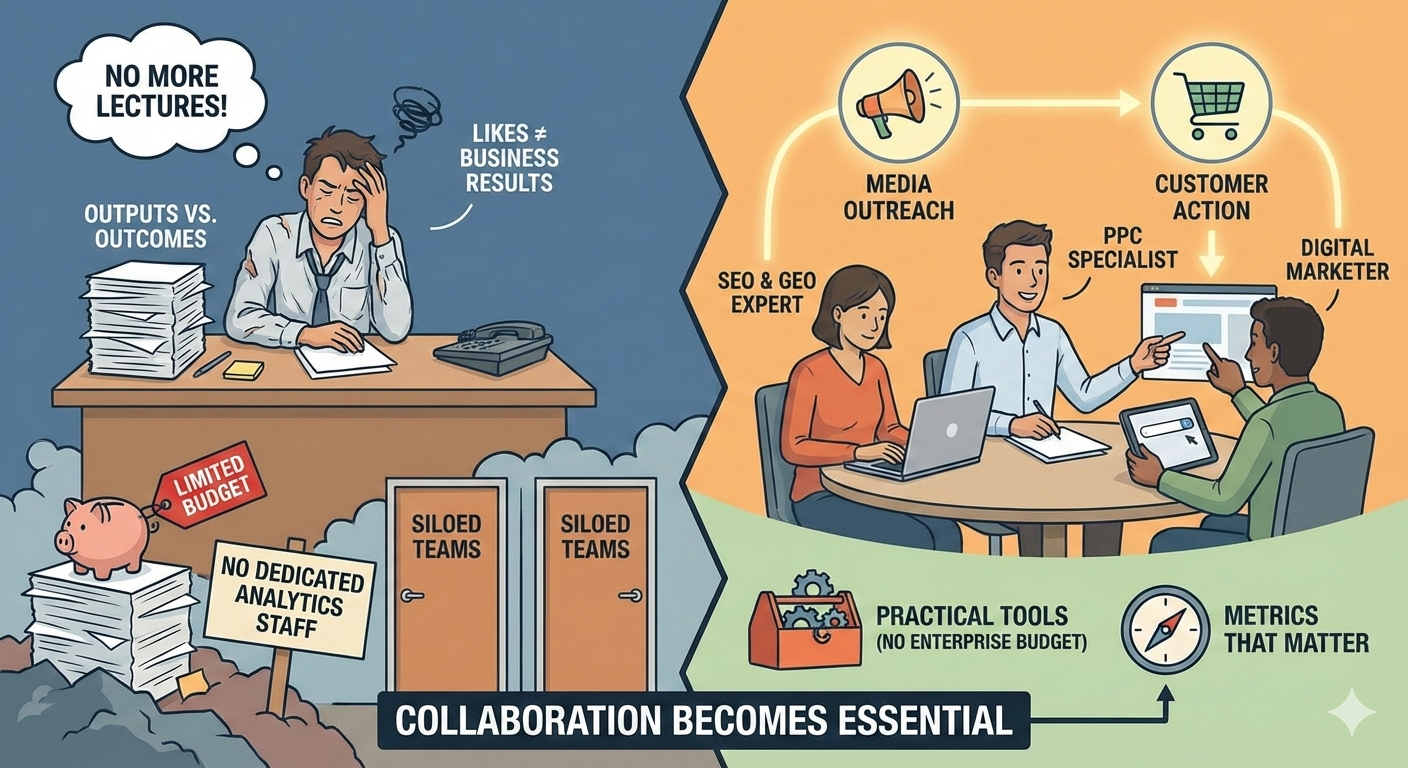
    As I reflect on the challenges of PR measurement, it becomes clear that many hurdles exist. Limited budgets and siloed teams often make it tough to connect our media efforts with tangible results.

    That’s why I’m convinced that collaboration with SEO, PPC, and digital marketing teams is key. Together, we can achieve what feels impossible on our own:

    Specifically, by linking media outreach with customer actions, integrating SEO and GEO into our measurement, and choosing the right tools, we can truly measure impact.

    This piece offers a practical roadmap for achieving this without needing an enterprise budget or specialized analytics team.

    Our digital age of communication isn’t linear. Audiences often engage with content across various channels before taking action, if they do at all. Understanding this loop is essential for measurement.

    ```json
{
  "alt": "Illustration highlighting challenges and solutions in business strategy with a frustrated man and a collaborating team.",
  "caption": "From Isolation to Integration: Transforming Business Outcomes Through Collaborative Strategy.",
  "description": "This illustration contrasts two business scenarios: a frustrated individual overwhelmed by limited resources, siloed teams, and ineffective outcomes, against a collaborative team utilizing practical tools and expertise for media outreach, SEO, and digital marketing to drive customer action. The image emphasizes the importance of collaboration and practical action over isolated efforts in achieving business success, underscoring the importance of metrics and strategic teamwork."
}
```

    I’m reminded of how SEO and PPC professionals focus on actions like searches, clicks, and conversions. We in PR should adopt this action-oriented mindset to enhance our measurement strategies.

    First, we need to prove the link between media outreach and customer actions. This often requires cross-departmental collaboration to access valuable data currently scattered across different systems.

    By incorporating PR touchpoints into analytics tools like Google Analytics 4, I can see our earned media’s influence on downstream behavior, turning PR from a cost center into a demand-creation channel.

    Second, while SEO is widely accepted, understanding its measurement in PR is less clear. Traditional metrics like coverage volume or sentiment don’t fully capture SEO’s impact.

    ```json
{
  "alt": "SEMRUSH ad promoting AI optimization with brand share of voice chart at 70%.",
  "caption": "Explore the future of search with SEMRUSH's AI Optimization. Discover if your brand will be seen in the changing digital landscape.",
  "description": "This SEMRUSH advertisement highlights the importance of AI optimization in modern search strategies. The image features a brand share of voice chart indicating 70%, along with a list of AI tools like Perplexity, Gemini, ChatGPT, and Claude. A call-to-action button invites users to get a demo. The vibrant purple design emphasizes innovation and technology. Keywords: AI optimization, SEMRUSH, brand visibility, search tools, digital marketing."
}
```

    GEO presents a new frontier, focusing on whether our content is a source for AI-generated answers. Tools like Profound and Semrush’s AI Visibility Toolkit offer insights into this new layer of measurement.

    Lastly, it’s crucial that we select tools based on strategic goals, not just what’s trendy. This involves working backward from the desired audience actions to choose the right measurement tools.

    In collaboration, PR, SEO, and PPC teams can integrate their strategies, avoid duplication, and create comprehensive insights that inform and improve future campaigns.

    Ultimately, this collaborative approach gives us the edge, allowing us to adapt swiftly to evolving measurement tactics and strengthen our collective impact.


    Inspired by this post on Search Engine Land.


    crushpress.ai community screenshot
  • Unlocking AI Visibility: Why Ranking Content Falls Short

    Unlocking AI Visibility: Why Ranking Content Falls Short

    I’ve been contemplating how even when content ranks well on search engines, it can still falter when it comes to AI retrieval. These AI systems assess pages very differently, based not just on their rank, but also on how information is extracted, embedded, and structured.

    There’s an intriguing disconnect between traditional ranking and being successfully parsed by AI. A webpage can comply with excellent SEO guidelines and still miss the mark with AI-generated responses and citations.

    In many situations, content quality isn’t the issue. It’s about whether the information can be reliably extracted after being segmented and embedded by AI systems.

    This challenge is becoming increasingly common as search engines view pages as complete entities, but AI systems dive into the raw HTML to extract meaning from fragments rather than entire pages.

    Crucial insights can get lost if they’re not appropriately structured or if they rely too heavily on visual rendering or inference.

    This leads to a divergence between what’s visible in search and what’s accessible via AI, where content might exist in an index but lacks substantial meaning for AI retrieval.

    The visibility gap is something I’ve been grappling with: Understanding the difference between ranking versus retrieval is key.

    ```json
{
  "alt": "Curl command example displaying user-agent GPTBot accessing a website",
  "caption": "An example of a curl command showcasing how to use GPTBot as a user-agent to access a web URL.",
  "description": "This image illustrates a simple curl command example, where the user-agent is set to 'GPTBot' to fetch data from 'https://www.yourwebsite.com/'. It's a useful snippet for developers or technical users aiming to test or demonstrate command-line interactions with web servers, particularly with a specified user-agent. Keywords: curl command, user-agent, GPTBot, web access, command-line."
}
```

    As search winds its processes around rankings, AI systems engage with fragments operated within a different representation of similar information. It’s here the visibility gap takes shape.

    A page might rank high, but if its embedded content is incomplete or poorly organized, then the AI retrieval process becomes unreliable.

    Treat retrieval as an entirely unique visibility factor. It doesn’t override SEO, but increasingly defines whether content can be effectively surfaced, summarized, or cited when AI filters come into play.

    Dig deeper: What is GEO (generative engine optimization)?

    Another structural issue arises when content never even becomes accessible to AI. Many AI crawlers only parse raw HTML without executing JavaScript or client-side rendering. This creates blind spots, especially for JavaScript-heavy sites where the core content may appear in Google’s index but remains invisible to AI.

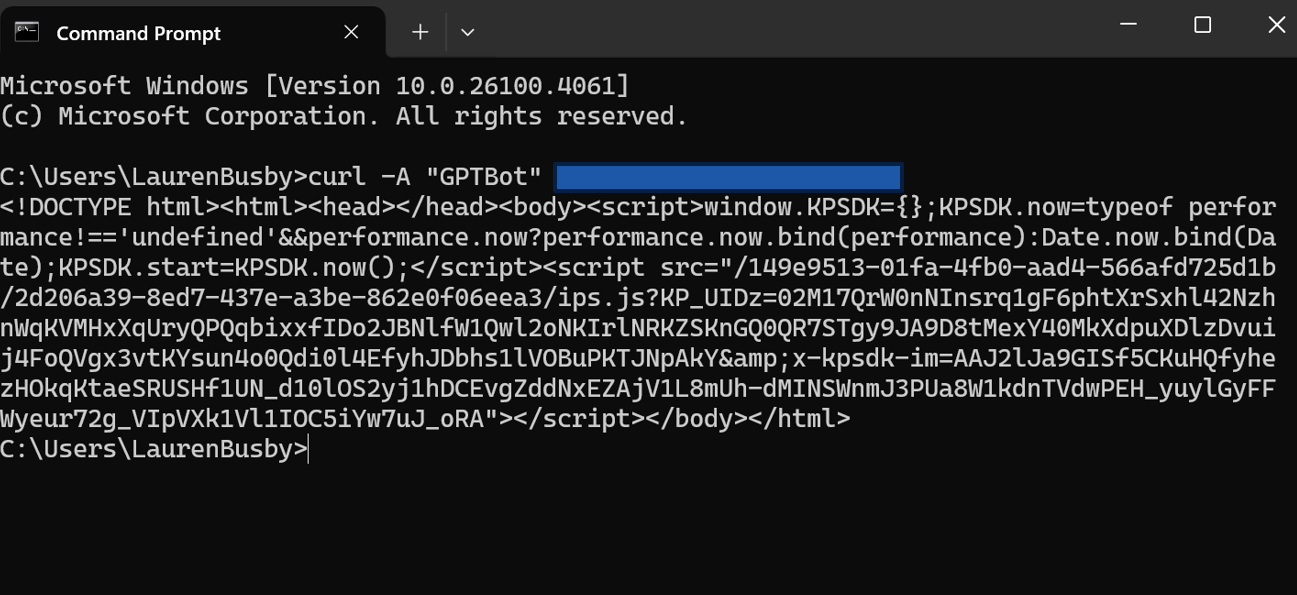
    Testing if your content appears in initial HTML is quite straightforward. Simply inspect the HTML response at fetch time rather than the version rendered in a browser.

    ```json
{
  "alt": "Command prompt window displaying a curl command and HTML code output.",
  "caption": "Exploring the command prompt as a tool, this image shows a curl command execution and its webpage source code result.",
  "description": "This image captures a screenshot of a command prompt window running on a Microsoft Windows operating system. It displays a 'curl' command executed with user-agent 'GPTBot', resulting in an output containing HTML source code, including script and document type declarations. The visible HTML suggests fetching website performance data using JavaScript. Keywords: command prompt, Windows, curl command, HTML output, scripting."
}
```

    Running requests with AI user agents like “GPTBot” reveals if your site returns blank HTML even if it appears fully populated to users, highlighting its absence in initial responses.

    Tools like Screaming Frog can validate this at scale. Disabling JavaScript rendering can reveal what AI systems see—if your essential content only displays with JavaScript, it can be indexed by Google’s search but not by AI retrieval systems.

    Keep in mind that even with content returned, excessive code and scripts can hinder extraction by AI systems. Cleaner HTML results in more reliable embeddings, enhancing AI visibility.

    To tackle this, deliver fully rendered HTML when AI systems fetch your content. Pre-rendering can often fix these retrieval issues, ensuring content is present in initial responses.

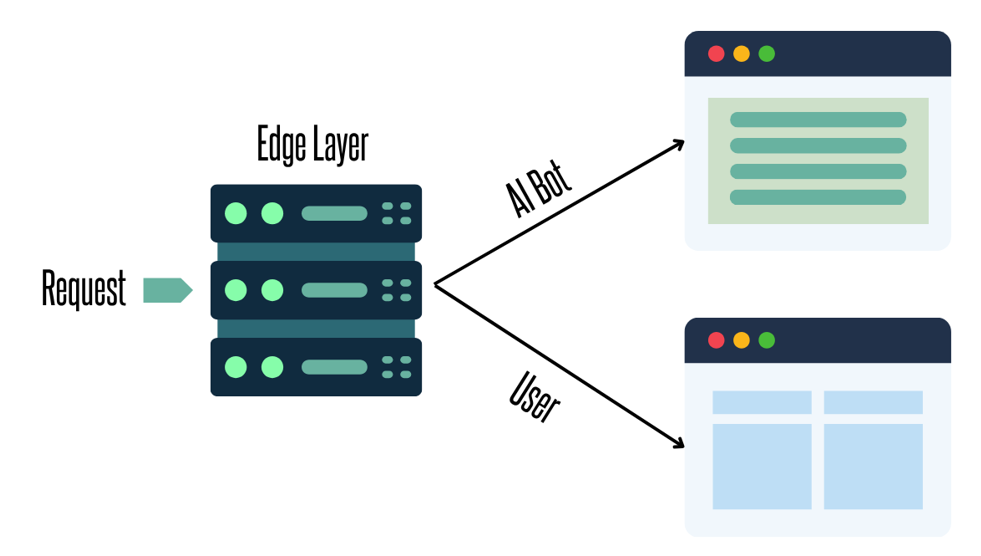
    Delivery can be managed effectively at the edge layer, providing AI crawlers with complete pages instantly. Human users receive a dynamic version while AI sees what it needs to extract meaning.

    If pre-rendering isn’t viable, focus on ensuring primary content is accessible in a clean initial HTML response, even without script execution.

    ```json
{
  "alt": "Diagram showing request to edge layer, branching to AI bot and user interfaces.",
  "caption": "Illustrating the flow from request to edge layer, branching to AI bot and user interfaces, highlighting seamless interaction.",
  "description": "This image depicts a flowchart illustrating a request directed to an edge layer. From the edge layer, the flow branches out to both an AI bot interface and a user interface. The diagram signifies the seamless interaction between back-end systems and front-end services, emphasizing split-routing technologies. Useful for understanding data distribution in network systems, the graphic serves as a visual representation of optimized communication paths in modern tech environments. Keywords: edge layer, AI bot, user interface, network flow, data distribution."
}
```

    Columns laden with excessive markup can interfere with proper extraction, diminishing the content’s value.

    The next structural failure to consider is when content is optimized for keywords rather than the entities AI seeks. Traditional SEO applies keyword relevance, but AI retrieves based on entity relationships.

    Without clear definition, entity signals can weaken, causing pages to underperform in retrieval even if they rank well for queries.

    AI evaluates sections independently once extracted, making the consistency of header tags essential to maintaining coherence.

    Ensuring sections have a single, defined purpose allows for better embedding when isolated from larger context.

    Finally, conflicting signals or metadata can dilute the semantics retrieved by AI, creating noise and ambiguity.

    SEO doesn’t have to mean choosing between ranking and retrieval anymore. Both must be prioritized to succeed in today’s landscape.


    Inspired by this post on Search Engine Land.


    crushpress.ai community screenshot
  • Master B2B Sales with Strategic Video on Day 1

    Master B2B Sales with Strategic Video on Day 1

    Starting out in the B2B market, I quickly realized the power of making an impact right at the beginning of a buying decision. It’s surprising to learn that 86% of buyers have already picked their preferred vendors on Day 1. In this article, I’ll share how a strategic video approach can connect with buying groups and drive demand.

    There’s a common misconception in B2B marketing: video is often seen merely as a tool for brand awareness. Many believe it either serves as a ‘viral’ content piece that gets views but no leads, or as a tedious demo that attracts leads but no engagement.

    However, this black-and-white approach can actually harm your sales pipeline.

    Being a part of LinkedIn, I have a unique perspective on the B2B buying ecosystem. The data clearly indicates that the most successful companies don’t confine video to one part of the sales funnel. Instead, they use it like a leverage for growth.

    By integrating video across the entire buying journey, linking brand with demand, companies see a noticeable increase in lead generation—up to 1.4 times more leads.

    Let’s delve into the framework that backs this success, guided by fresh insights into B2B buying behaviors.

    The reality: The ‘first impression rose’

    Many marketers underestimate how soon they need to influence a deal.

    At LinkedIn’s B2B Institute, we refer to this critical window as the “first impression rose.” Much like in “The Bachelor,” not getting noticed early reduces your chances of winning at all.

    Research by LinkedIn and Bain & Company shows that 86% of buyers’ decisions are practically made on Day 1, and 81% will eventually buy from the vendors on their initial list.

    If your video strategy shows up only when buyers are actively looking, you’re left fighting for the remaining 19% who aren’t already committed. To truly compete, you need to be at the top of the list even before a request for proposal (RFP) is crafted.

    This is where a three-play strategy becomes crucial.

    Play 1: Reach and prime the ‘hidden’ buying committee

    The goal: Reach the people who can say ‘no’

    Many video strategies focus on the “champion” or the user, but often, they aren’t the decision-makers.

    Picture this: After investing time in wooing the VP of Marketing, you find them enthusiastic about your solution and ready to proceed. But at the procurement meeting, the CFO questions, “Who is this company?” Due to a lack of recognition with those controlling the budget, you face unexpected hurdles.

    Data shows you are over 20 times more likely to be chosen if the entire buying group is aware of you on Day 1.

    The strategic shift: Cut-through creative

    To capture this broader audience, mere visibility isn’t enough; you need to stand out. Reach and recall go hand in hand.

    LinkedIn data highlights what makes content “cut-through creative”:

    1. Be bold: Utilize bold, vibrant colors in video ads to boost engagement by 15%.
    2. Be process-oriented: Simplify messaging into clear steps to enhance viewer retention by 13%.
    3. The “Goldilocks” length: Videos running for 7-15 seconds hit the sweet spot for brand lift—outperforming both ultra-short and long-form ads.
    4. The “Silent Movie” rule: Craft visuals that communicate without sound since 79% of LinkedIn users scroll soundlessly. If your video leans on spoken content initially, you’ve missed engaging 80% of your audience. Implement visual hooks and captions for instant engagement.

    Dig deeper: 5 tips to make your B2B content more human

    Play 2: Educate and nudge by selling ‘buyability’

    The goal: Mitigate personal and professional risk

    This is the stage where many B2B efforts fall short. Most content pushes capability—features and specs—while true buyability is often neglected.

    Buyers are weighing personal and career risks when drawing up their list of vendors.

    Our joint research with Bain & Company uncovered that buyers prioritize emotional assurance, with only two out of five primary considerations being centered around product capability.

    The top priority (34%) was ensuring confidence in defending their decision if things went awry.

    The strategic shift: Market the safety net

    Video content should be more than a list of features; it should act as a safety net. What can this look like in practice?

    Momentum is safety (the “buzz” effect)

    Buyers gravitate toward leaders. By building a buzz, brands can increase leads by 10%.

    You can generate buzz via cultural references, which increase engagement by 41% and even more significantly with memes, boosting it by 111%. This approach shows you’re in tune, relatable, and part of the conversation.

    Authority builds trust (the “expert” effect)

    If momentum draws them in, then expertise builds lasting trust. The presentation of that expertise is crucial.

    Utilize video ads with executive experts for a 53% boost in engagement, and capture them on stage at conferences to increase this by 70%.

    The implication of authority communicates a powerful message—”This person is insightful enough to be worth listening to.”

    Consistency is credibility

    Constant engagement, rather than sporadic bursts, is key. Maintaining an always-on campaign enhances conversions by 10% compared to brands that pause and restart their efforts. Trust is cumulative.

    ```json
{
  "alt": "Bar chart titled 'Number of Buyability Drivers Influenced' showing various influences such as working styles and recommendations.",
  "caption": "Discover what drives buyability! This chart highlights key factors like working style alignment and strategic partnerships influencing purchase decisions.",
  "description": "This bar chart, titled 'Number of Buyability Drivers Influenced,' illustrates various factors that impact buyability decisions. The categories include 'Working styles matched ours,' 'Recommended by customers like us,' 'Recommended by colleagues,' 'Wanted to be a strategic partner,' 'Specific focus on companies like us,' 'Seen as a category leader,' 'Recommended by experts,' 'Focused on social responsibility,' and 'Seen as innovative & up-and-coming.' Each category is represented by a blue bar indicating the number of drivers influenced, with values ranging from 1 to 4. Source: LinkedIn, Bain & Company."
}
```

    Dig deeper: The future of B2B authority building in the AI search era

    Play 3: Convert and capture by removing friction

    The goal: Stop convincing, start helping

    At this juncture, the potential buyer is familiar with and trusts your company.

    Instead of hard selling, focus on easing the transition into the next step of the customer journey.

    Buyers typically face three main areas of concern:

    1. Execution risk: Will it deliver results?
    2. Decision risk: Am I making the right choice?
    3. Effort risk: How challenging will implementation be?

    Here’s where recommendations, relationships, and relatability come into play, helping to secure the deal.

    The strategic shift: Answer the anxiety

    Your content must directly alleviate these concerns.

    Scale social proof – kill execution risk

    90% of buyers rely on social proof, but don’t settle for showcasing logos alone.

    Utilize video to highlight peers; seeing someone in a similar role experiencing success reduces decision risk.

    Activate your employees – kill decision risk

    Individuals trust people more than brands. Tech startups have succeeded by engaging their employees, personalizing the brand.

    Our LinkedIn data highlights a startling fact: Regular posts from just 3% of employees can boost lead generation by 20%.

    Let potential clients see the real people ready to assist when needed.

    The conversion combo – kill effort risk

    Avoid bland “Learn More” prompts.

    Combining video ads with immediate lead gen forms triples open rates. The video elaborates, while the form captures intent on the spot.

    1. Short sales cycle (under 30 days): Use video and forms for a swift engagement.
    2. Long sales cycle: Retarget video viewers with thoughtful ads from industry leaders, encouraging dialogue over transactions.

    Dig deeper: LinkedIn’s new playbook taps creators as the future of B2B marketing

    It’s a flywheel, not a funnel

    If this strategy is indeed effective, why isn’t everybody using it? Often, the barrier isn’t resources but organizational constraints.

    In many firms, the ‘brand’ and ‘demand’ teams operate independently.

    1. Brand teams manage the initial encounters (Play 1).
    2. Demand teams focus on closing (Play 3).

    They frequently vie for budget, sharing little to no creative collaboration.

    This lack of integration stifles growth potential.

    By merging these functions into one cohesive strategy, we’re seeing a shift in outcomes.

    An integrated approach yields 1.4 times more leads than when branding and demand efforts are siloed.

    It builds a continuous cycle where:

    1. Broad reach (Play 1) creates pools for retargeting.
    2. Engaging content (Play 2) primes these audiences, improving click-through rates.
    3. Conversion offers (Play 3) harness demand from informed buyers, reducing costs per lead.

    Balancing memory building with action-driven tactics ensures brands make it onto the sought-after ‘Day 1’ list.

    Those on that list secure their path to revenue success.


    Inspired by this post on Search Engine Land.

    crushpress.ai community screenshot
  • Google & Bing Advise Against Separate LLM Markdown Pages

    Google & Bing Advise Against Separate LLM Markdown Pages

    I’ve been following the lively debate around creating separate markdown pages for LLMs, and it appears that both Google and Bing are advising against this approach.

    Recently, I noticed that representatives from Google Search and Bing Search have specifically recommended not to create separate markdown (.md) pages designed exclusively for LLMs. This practice involves presenting different content to the LLMs compared to what users see, which can be considered a form of cloaking—a direct violation of Google’s policies.

    The question arose when Lily Ray inquired on Bluesky about the prevalence of creating markdown or JSON pages targeted at bots.

    • “Not sure if you can answer, but starting to hear a lot about creating separate markdown / JSON pages for LLMs and serving those URLs to bots.”

    Google’s stance, as explained by John Mueller, is clear. He replied to Lily’s query saying that LLMs have always interacted with standard web pages and don’t require separate markdown pages.

    • “I’m not aware of anything in that regard. In my POV, LLMs have trained on—read & parsed—normal web pages since the beginning, it seems a given that they have no problems dealing with HTML. Why would they want to see a page that no user sees? And, if they check for equivalence, why not use HTML?”

    John Mueller even criticized the whole idea, stating:

    • “Converting pages to markdown is such a stupid idea. Did you know LLMs can read images? WHY NOT TURN YOUR WHOLE SITE INTO AN IMAGE?” Of course, converting your entire site to a markdown format is an extreme measure.

    I’ve collected many of John Mueller’s remarks on this topic, which you can find here.

    Bing’s perspective is shared by Fabrice Canel from Microsoft Bing, who suggested that creating duplicate, non-user content isn’t effective.

    • “Lily: really want to double crawl load? We’ll crawl anyway to check similarity. Non-user versions (crawlable AJAX and like) are often neglected, broken. Humans eyes help fixing people and bot-viewed content. We like Schema in pages. AI makes us great at understanding web pages. Less is more in SEO!”

    Why this matters to us: Many of us are tempted by shortcuts to improve search engine performance. Yet, these shortcuts often backfire or yield short-lived benefits. As Lily Ray remarked on LinkedIn, managing duplicate and differing content for bots violates established search engine policies.

    Lily Ray’s thoughts on this are clear:

    • “I’ve had concerns the entire time about managing duplicate content and serving different content to crawlers than to humans, which I understand might be useful for AI search but directly violates search engines’ longstanding policies about this (basically cloaking).”

    Inspired by this post on Search Engine Land.

    crushpress.ai community screenshot
  • Enhance Teamwork: Profound’s Seamless Slack Integration

    Enhance Teamwork: Profound’s Seamless Slack Integration

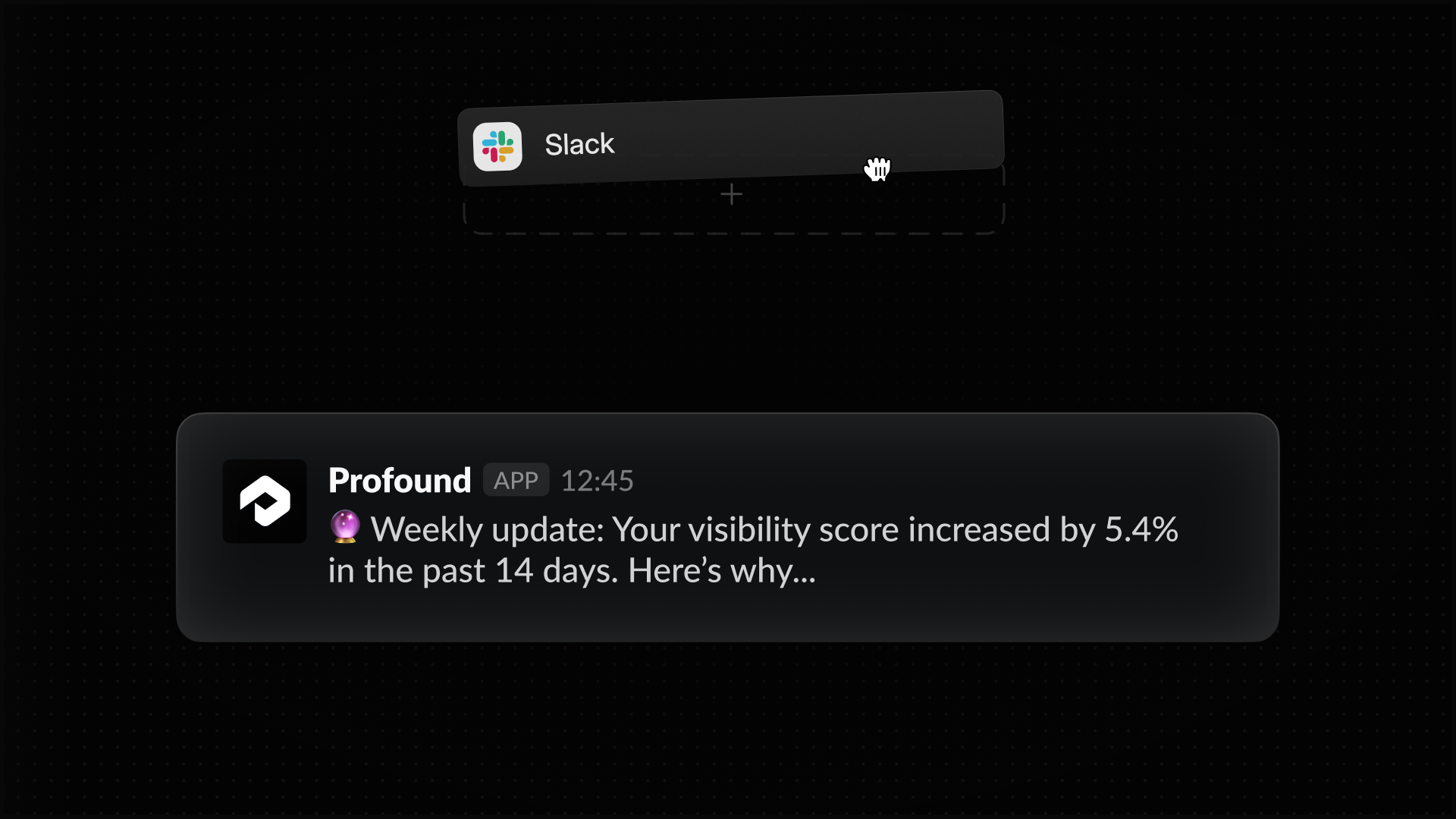
    Integrating Slack with Profound has made my marketing team’s workflow incredibly smooth. I love how it keeps us in sync by automatically sending notifications about crucial updates from our Profound instance. Now, rather than constantly checking for updates on our brand’s visibility and sentiment in AI search, I can relax knowing that timely alerts will pop up directly in Slack, right where I work.


    Inspired by this post on Try Profound Blog.


    crushpress.ai community screenshot
  • Why Your Local Search Rankings Hold but Calls Vanish

    Why Your Local Search Rankings Hold but Calls Vanish

    I’ve noticed something puzzling in my local business performance lately. Despite high rankings, the number of calls and website visits from Google Business Profiles seems to be dropping at an alarming rate.

    This disconnect is becoming increasingly common in local search. Rankings are stable, but visibility and customer engagement are not keeping pace.

    The alligator of local SEO, if you will, has made its presence known.

    The visibility crisis behind stable rankings

    I’ve observed that across various U.S. industries, the familiar local 3-packs are often getting replaced or supplemented by AI-run local packs. These new formats differ significantly from the traditional map results many of us are used to optimizing.

    According to Sterling Sky’s analysis of Google Business Profiles, a startling pattern emerges. Clicks-to-call are taking a nosedive, particularly for law firms managed by Jepto.

    When AI-powered packs take over, the landscape changes notably in four key areas:

    • Shrinking real estate: AI packs frequently display only two businesses instead of the usual three.
    • Missing call buttons: The summaries generated by AI often omit the instant click-to-call functionality, complicating the customer’s journey.
    • Different businesses appear: Companies featured in AI packs do not necessarily align with those in the traditional 3-pack.
    • Accelerated monetization of local search: The presence of paid ads increasingly results in the loss of direct call and website buttons in traditional 3-packs, thereby reducing opportunities for organic conversion.

    There’s an additional challenge compounding this issue:

    ```json
{
  "alt": "Line graph showing the percentage of keywords with local pack ads from Nov 2024 to Jan 2026, peaking at 21.99% in Jan 2026.",
  "caption": "Tracking the Rise: The graph illustrates the increasing trend of keywords displaying local pack ads, peaking dramatically by early 2026.",
  "description": "This line graph presents data on the percentage of keywords featuring local pack ads from November 2024 to January 2026. Starting at 0.96% in November 2024, the graph shows fluctuations and a significant rise, culminating at 21.99% in January 2026. Key points include a peak of 6.48% in July 2025 and another sharp increase starting November 2025. This visual aids in understanding trends in local ad visibility over time, highlighting shifts in digital advertising strategies."
}
```
    • Measurement blind spots: Most rank trackers have yet to account for AI local packs. A business may hold a top spot in a traditional 3-pack that users rarely encounter.

    In 2026, AI local packs surfaced only 32% as many unique businesses as traditional map packs, according to Sterling Sky. Astonishingly, in 88% of the 322 markets examined, the total number of visible businesses plummeted.

    Meanwhile, paid ads are steadily claiming the space that once belonged to organic results, marking a clear transition toward a pay-to-play environment in local search.

    What Google Business Profile data shows

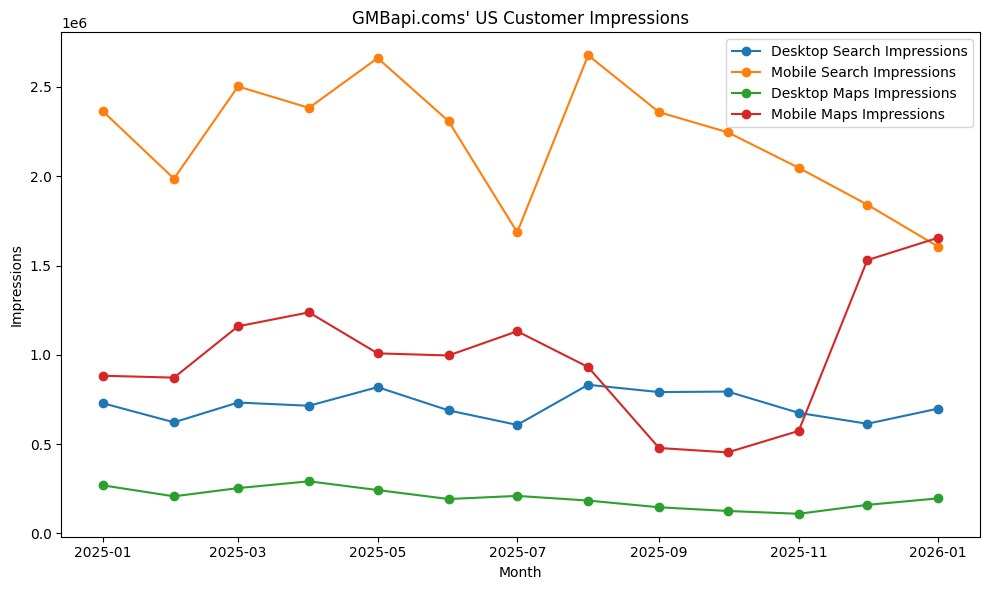
    This trend is echoed in the U.S., where Google is proactively testing new local formats, as indicated by data from GMBapi.com. Increased impressions from traditional 3-packs are being nudged out by:

    • AI-powered local packs.
    • Paid placements inside traditional map packs: Sponsored listings now appear adjacent to or within the map pack, relegating organic results and removing essential call and website buttons. This interrupts organic customer interactions.
    • Expanded Google Ads units: Even Local Services Ads are consuming space that once granted organic visibility.

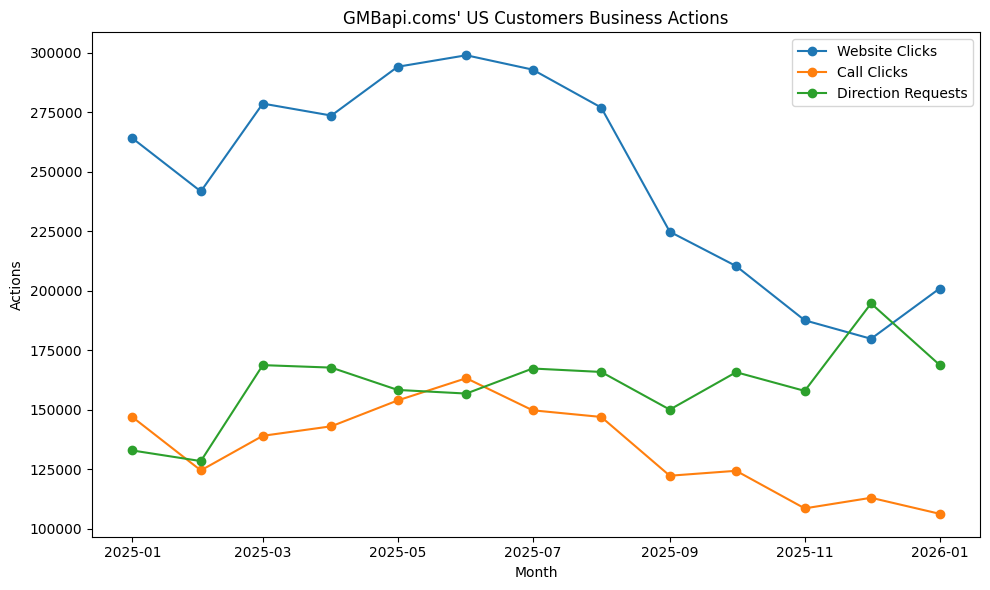
    Impression trends continue to vary due to seasonal factors, market disparities, and occasional API glitches. Nevertheless, a clearer picture emerges by focusing on GBP actions rather than mere impressions.

    Mentions within AI-generated results still count as impressions, even if they no longer convert into calls, clicks, or visits.

    ```json
{
  "alt": "Line graph showing GMBapi.com's US customer impressions from 2025-01 to 2026-01, split by desktop and mobile impressions.",
  "caption": "Explore the trends in GMBapi.com's US customer impressions over 2025, with distinct patterns across desktop and mobile platforms.",
  "description": "This line graph illustrates GMBapi.com's US customer impressions from January 2025 to January 2026. Four lines represent different impression sources: Desktop Search (blue), Mobile Search (orange), Desktop Maps (green), and Mobile Maps (red). The graph shows fluctuation patterns, with Mobile Search impressions notably higher and more volatile. A legend on the top right aids in distinguishing data sources. Keywords: customer impressions, GMBapi.com, desktop, mobile, trends, data visualization."
}
```

    External factors, such as known Google API issues in June, also contribute to these fluctuations. Additionally, the spike in Google Ads investment by significant advertisers towards year-end heavily affects Mobile Maps impressions.

    Currently, there’s no method to differentiate these impressions by Google Ads, organic results, or AI Mode.

    Despite these challenges, user behavior is undeniably shifting. Interaction rates are dwindling, with fewer direct actions taken from local listings.

    Year-on-year data from the U.S. indicates that while impression losses remain moderate and somewhat seasonal, GBP actions are disproportionately affected.

    In contrast, data from the Dutch market, where SERP experiments are limited, shows far more stable action trends.

    The evidence is clear. AI-driven SERP alterations, increasing Google Ads, and the removal of call and website buttons from the Map Pack are eroding organic real estate. Despite appearances, businesses have fewer opportunities to convert visibility into actual user actions.

    Local SEO is becoming an eligibility problem

    Traditionally, local optimization focused on key ranking factors like proximity, relevance, prominence, reviews, citations, and engagement.

    ```json
{
  "alt": "Line graph showing impressions for GMBapi.com NL customers from 2025 to 2026, divided into desktop and mobile, search, and maps categories.",
  "caption": "Explore the trends in desktop and mobile impressions for search and maps from GMBapi.com NL customers from 2025 to 2026. Notice the fluctuations that offer insights into digital engagement.",
  "description": "This line graph illustrates the number of impressions for GMBapi.com NL customers from January 2025 to January 2026. It categorizes data into Desktop Search, Mobile Search, Desktop Maps, and Mobile Maps impressions. The horizontal axis represents months, while the vertical axis indicates the number of impressions, with values in millions. Key trends include a decline in Mobile Maps impressions and fluctuations in Mobile Search impressions, suggesting varying digital user engagement levels across platforms over the year."
}
```

    There’s now an additional layer to consider: eligibility.

    Some businesses find themselves absent in AI-powered local results not due to a lack of authority, but because Google’s systems deem them inadequate for the specific query context. Research from Yext and experiences shared by experts like Claudia Tomina emphasize the importance of aligning three core signals:

    • Business name
    • Primary category
    • Real-world services and positioning

    Misalignment in these areas can prevent businesses from appearing in certain result types, regardless of how well their Google Business Profile is optimized.

    How to future-proof local visibility

    Navigating today’s zero-click reality involves moving beyond reliance solely on a well-optimized Google Business Profile. Here’s a new playbook for local SEO.

    The eligibility gatekeeper

    Inclusion in local packs is now influenced more by perceived relevance and classification than by links or review quantity.

    ```json
{
  "alt": "Line graph showing website clicks, call clicks, and direction requests from GMBapi.com's US customers from 2025-01 to 2026-01.",
  "caption": "A dynamic line graph illustrating trends in website clicks, call clicks, and direction requests by GMBapi.com's US customers over a year.",
  "description": "This line graph depicts trends in three types of business actions—website clicks, call clicks, and direction requests—by GMBapi.com's US customers from January 2025 to January 2026. The blue line represents website clicks, which peaked around mid-2025 before declining. The orange line shows call clicks with a steady decrease throughout the year. The green line indicates direction requests with fluctuations over time. This graph helps in understanding customer interaction patterns and trends in digital engagement."
}
```

    Hyper-local entity authority

    AI systems rely on platforms like Reddit, social media, forums, and local directories to evaluate if a business is legitimate and active. Inconsistencies across these platforms can erode visibility without any obvious signs.

    Visual trust signals

    High-quality and frequently updated photos, along with video, are critical. Google’s AI evaluates visual content to gauge services, intent, and categorization.

    Embrace the pay-to-play reality

    The hard truth is that Google Ads, particularly Local Services Ads, is now essential to retaining prominent call buttons that organic listings are steadily losing. Adopting a hybrid strategy that merges local SEO with paid search is no longer optional but necessary.

    What this means for local search now

    Local SEO has evolved beyond a simple directory exercise. Google Business Profiles remain central to local discoverability but now exist within a broader ecosystem informed by AI validation, constant SERP changes, and Google’s pursuit of local search monetization.

    ```json
{
  "alt": "Line graph showing GMBapi.com's NL customers' business actions including website clicks, call clicks, and direction requests from 2025 to 2026.",
  "caption": "Tracking the trends: A closer look at GMBapi.com's NL customers' business actions, showcasing fluctuations in clicks and requests over the span of a year.",
  "description": "This line graph illustrates business actions by GMBapi.com's NL customers over 2025 to early 2026, detailing website clicks, call clicks, and direction requests. The data shows higher engagement with website clicks and direction requests, while call clicks remain consistently lower. This visual provides insights into customer behavior and engagement trends over time."
}
```

    Visibility no longer depends solely on where your GBP ranks against local rivals. Search engines, including AI-infused SERP features and advanced models like ChatGPT and Gemini, are increasingly focused on understanding a business’s genuine purpose, not merely its listing position.

    Success lies in being widely verified, consistently active, and contextually relevant within the AI-visible ecosystem.

    Our findings reveal that there is little correlation between businesses ranking well in traditional Map Packs and those prioritized in Google’s AI-generated local answers. This discrepancy offers a real opportunity for businesses willing to adapt.

    In essence, this entails blending local input with central management.

    Authentic engagement across multiple channels, locally tailored content, and actual community signals are necessary alongside brand governance, data consistency, and operational scale. Businesses deeply ingrained in their community, discussed, recommended, and referenced, both online and offline, find themselves halfway there.

    For agencies and brands with multiple locations, the challenge is balancing control with local nuances and ensuring trusted signals extend beyond Google, encompassing Apple Maps, Tripadvisor, Yelp, Reddit, and other pertinent review ecosystems. Producing locally relevant content and citations at scale without losing authenticity is the real test.

    Even if rankings appear stable, true performance is occurring elsewhere.

    The full data. Local SEO in 2026: Why Your Rankings are Steady but Your Calls are Vanishing


    Inspired by this post on Search Engine Land.


    crushpress.ai community screenshot